𝗙𝗨𝗟𝗟 𝗦𝗧𝗢𝗥𝗬 He Vanished After a Date and Was Found Burned in a Cave—Then a TV Show Made the Killer’s Secret Collapse
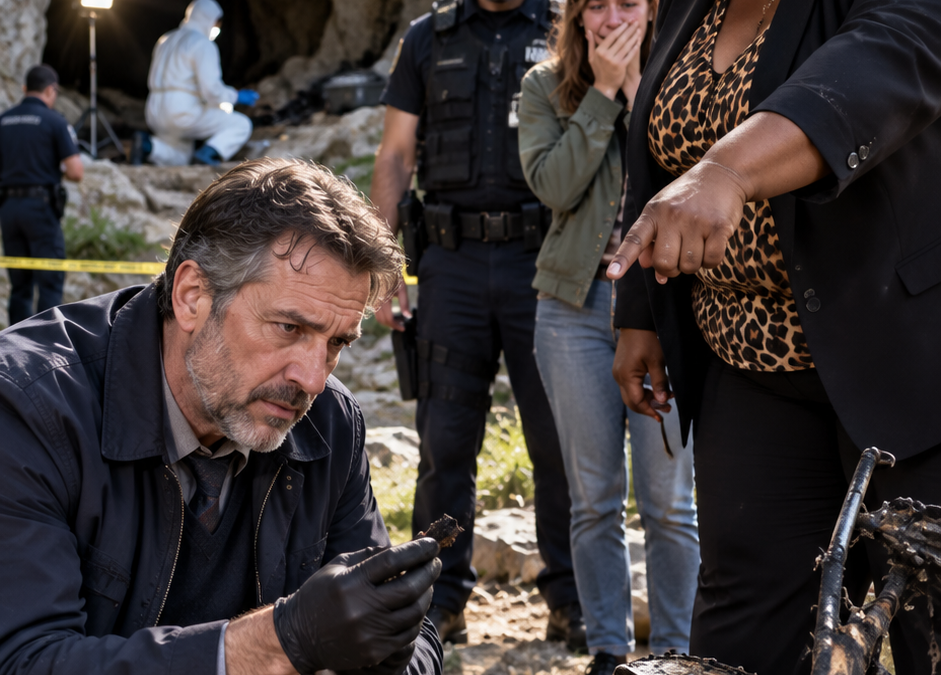
𝗣𝗔𝗥𝗧 𝟮
That part, I believed.
The morning after Patri vanished, Mark called friends, coworkers, anyone who might know where his brother had gone.
Nobody had heard from him.
They knew Patri left the hospital late in the afternoon.
Almost nothing after that.
So Mark began searching.
He and several friends checked cafés, streets, canals, bars, and places where Patri sometimes spent time.
Hours passed.
Nothing.
Then one of Patri’s friends found the scooter.
It was still parked outside the park.
Untouched.
Mark later told me that when he saw it, he knew.
Not knew that Patri was dead.
But knew this was no ordinary absence.
His brother would not abandon the scooter.
He would not intentionally leave the phone inside it.
And he certainly would not do both and then skip Alabama’s recital.
Local police interviewed Audrey.
She admitted she had been with Patri.
But she offered what sounded, on the surface, like a perfectly reasonable explanation.
They walked.
They talked.
He accompanied her toward a bus stop.
They separated.
She went home.
She assumed he returned to his scooter and left for the recital.
That was her story.
And for almost two years, it never fundamentally changed.
When I took over the investigation, I tried to approach Patri as though I knew nothing about him.
Families often give investigators a polished version of missing people.
Not because they are deliberately lying.
Because grief edits.
A brother remembers kindness.
A mother remembers childhood.
A daughter remembers affection.
The dead—or possibly dead—become simpler than the people they really were.
My job was to make Patri complicated again.
I met Claude, his ex-wife.
We sat in her living room.
I turned on my recorder.
“Tell me about June twenty-third,” I said.
She said it had been an ordinary Monday.
Work.
School pickup.
Preparing Alabama for the dance recital.
She expected Patri to be there.
When he didn’t arrive, she initially assumed he was late.
Then late became absent.
Then absent became frightening.
“He wouldn’t miss that intentionally,” she told me.
“Even after the divorce?”
She shook her head.
“Whatever happened between us, Alabama was different.”
I asked about Patri’s problems.
Claude hesitated.
She did not want her daughter’s missing father reduced to his worst behavior.
I understood.
But I needed the truth.
Finally, she talked.
Alcohol.
Gambling.
Debt.
The incident that ended their marriage.
The affair.
“Did he owe dangerous people money?”
“I don’t know.”
“Did anyone threaten him?”
“Not that he told me.”
“Did anyone hate him?”
She went quiet.
Eventually, she said, “There is someone you should look at.”
But before giving me the name, she told me there was something else.
She called Alabama into the room.
The girl was twelve years old.
Even now, I remember how small she looked sitting beside her mother.
Children in investigations often understand more than adults assume and less than adults fear.
Alabama had been watching everyone around her whisper for weeks.
She knew her father was missing.
She knew the police were worried.
What she did not yet understand was how important something she had seen could become.
Claude held her hand.
I spoke gently.
“Your mother says you went somewhere unusual with your father before he disappeared.”
Alabama nodded.
About a week before June 23, Patri had driven with her to a tunnel.
He told her to remain in the vehicle.
Then he walked inside.
She could see him meeting someone.
A man.
The tunnel was too dark for her to describe his face.
But she saw her father give him some kind of package.
When Patri returned, he seemed frightened.
She asked what was wrong.
He would not explain.
Eventually, he told her only that he had done something stupid.
And because of it, he owed people money.
That statement immediately pulled the investigation toward Patri’s gambling.
Debts create motives.
Especially debts owed to people who do not use courts to collect them.
I asked Claude whether she knew who the man in the tunnel might have been.
She didn’t.
Then she gave me the name she had been holding back.
Remy Shen.
Nadesh’s husband.
I returned to the station and pulled the 2009 file.
There it was.
Patri.
Nadesh.
The affair.
The confession.
The argument.
The suicide.
Remy.
I stared at his name.
Five years was a long time to wait for revenge.
But grief does not operate on a calendar.
Neither does hatred.
On July 7, I brought Remy in for questioning.
He was smaller than I expected.
Lean.
Tightly wound.
The kind of man whose face looked irritated even when he was silent.
I decided not to waste time being gentle.
“We know you were involved in Patri Ewire’s disappearance.”
It was a bluff.
A complete bluff.
At that point, I had no physical evidence connecting Remy to June 23.
I wanted a reaction.
Fear.
Anger.
A denial that came too fast.
Something.
Instead, Remy laughed.
Actually laughed.
“Patri who?”
I watched him carefully.
“You know exactly who.”
“No.”
“Your wife worked with him.”
A pause.
Then recognition.
Or performance.
“Ah.”
“Nadesh.”
His smile vanished.
I leaned forward.
“Patri had an affair with her.”
“So?”
“She died after telling you.”
“That was five years ago.”
“You expect me to believe that meant nothing to you?”
Remy shook his head.
“You expect me to spend five years planning revenge against a hospital cleaner?”
It was a good answer.
Almost too good.
He reminded me that he had dated other women.
Moved on.
Built a life.
Then he asked me a question investigators hate hearing from suspects.
“Why now?”
I had no good response.
Why would Remy wait five years and suddenly kill Patri in June 2014?
I asked where he had been on June 23.
He thought for a moment.
“Cleaning my storage unit.”
“Who was with you?”
“No one.”
“Anyone see you?”
“Probably not.”
“Receipts?”
“No.”
It was a terrible alibi.
And still not enough.
I let him go.
Then I went back to Audrey.
She was the last known person to see Patri alive.
That made her important whether I believed her or not.
By the time I interviewed her, local police had already questioned her more than once.
I watched those recordings beforehand.
She seemed nervous.
But nervousness proves nothing.
Innocent people behave strangely when sitting in police stations.
Guilty people sometimes behave perfectly.
I asked her to describe the date again.
She told me the same story.
She had known Patri years ago.
They had dated casually.
Lost touch.
She happened to think about him.
Called him.
They met.
Walked.
Talked.
Then she took the bus.
“When you left Patri,” I asked, “which direction did he walk?”
She stared at me.
“I don’t remember.”
“Toward the park?”
“I’m not sure.”
“Toward his scooter?”
“I assumed so.”
“I’m not asking what you assumed.”
Her fingers tightened together.
“I really don’t remember.”
That answer irritated me.
Patri had vanished.
Audrey was supposedly the final person who saw him.
And she could not tell me which direction he went.
So I pushed.
Hard.
I told her I believed she was hiding something.
I told her the investigation would become much worse for her if she kept lying.
Her eyes filled with tears.
“I’m not lying.”
“You were the last person with him.”
“I know.”
“Then help me.”
“I told you what happened.”
“Did you hurt him?”
“No!”
“Did someone meet you?”
“No.”
“Did you bring him there for someone?”
She began crying.
I kept pressing.
Sometimes truth comes after panic.
Sometimes false confessions do too.
An investigator has to know the difference.
After several minutes, something in Audrey’s reaction began to bother me.
Not because I thought she was innocent.
Because the fear seemed too deep for the questions I was asking.
It did not look like the fear of a person worried that I had discovered a lie.
It looked like something older.
Something already living inside her.
But I had no evidence to identify it.
Eventually, I stopped.
Audrey left.
I sat alone in the interrogation room afterward, angry at myself.
I had Remy with a motive but no evidence.
Audrey with inconsistent details but no provable lie.
A mysterious man from Alabama’s tunnel story.
Possible gambling debts.
A missing man.
And no body.
Without Patri, every theory remained possible.
Accident.
Suicide.
Voluntary disappearance.
Murder.
We needed to find him.
Ten days later, we did.
On July 17, a group of teenagers entered one of the caves in the cliffs near where Patri’s scooter had been found.
The caves were known locally.
Graffiti.
Beer bottles.
Places teenagers explored and young people used for parties.
That morning, the teenagers came running into the police station frightened and barely coherent.
They had found something.
A body.
When I received the call, I drove directly to the scene.
The cave was less than half a mile from where Patri’s scooter had been parked.
That distance mattered immediately.
I ducked beneath the police tape and walked across dry grass toward the cliff.
The opening looked almost insignificant.
A dark wound in pale stone.
I switched on my flashlight.
Forensics officers followed.
Inside, the air became cooler.
Then heavier.
Graffiti covered sections of rock.
Broken bottles crunched beneath our shoes.
The tunnels divided.
Left.
Right.
Narrow passageways disappearing into darkness.
Then I smelled it.
There are smells in this job that never truly leave you.
Even years later, something ordinary can bring them back.
Smoke.
Damp soil.
Decay.
I turned toward one narrow tunnel.
The odor intensified.
My flashlight moved across the stone.
Then downward.
There was a shallow depression in the cave floor.
Something black lay inside.
At first, it almost looked like burned fabric.
Then the beam reached the skull.
I knew.
A human body.
Badly burned.
I crouched as close as the forensic team allowed.
There appeared to be ballistic trauma to the head.
Another wound in the torso.
Burning had likely been an attempt to destroy evidence.
One shot to the head.
One to the body.
Then fire.
That did not look accidental.
And it did not look spontaneous.
Someone had wanted this person dead.
Someone had brought a weapon.
Someone had enough control afterward to try to conceal what happened.
For a moment, the entire case shifted toward organized crime.
A gambling debt suddenly seemed more plausible.
Execution-style killing.
Body burned in a cave.
Patri’s cryptic statement to Alabama.
Maybe he had owed money to dangerous men after all.
DNA testing eventually confirmed what we already suspected.
The body was Patri Ewire.
When I told Mark, he went silent.
For months, he had demanded answers.
Now the only answer I could give him was the one he feared most.
His brother was dead.
Alabama had lost her father.
An elderly mother had lost her son.
And I still could not tell any of them why.
Finding the body should have accelerated the investigation.
Instead, it almost made the confusion worse.
We processed the cave.
Cigarette butts.
Trash.
Burn residue.
Possible DNA.
Footprints were useless because the location had been visited by countless people.
The weapon was gone.
The killer had left no obvious personal item.
We interviewed the teenagers.
Nothing.
They had stumbled upon the body by chance.
We reexamined Patri’s gambling.
No debt large enough to explain an execution.
No credible organized-crime connection.
No threatening phone calls we could prove.
No lender emerging from the shadows.
The mysterious tunnel man from Alabama’s story remained unidentified.
Remy remained under suspicion.
Audrey remained under suspicion.
But suspicion is not evidence.
Weeks became months.
Months became a year.
Every time Mark called, I felt the weight of the case before answering.
“Anything?”
Usually that was his first word.
Not hello.
Anything?
And too often, my answer was no.
I hated saying it.
By late 2015, the investigation had become what detectives fear most.
A file that was alive only because the family refused to let it die.
Remy had been watched.
Nothing useful.
Audrey had been watched.
Nothing.
Financial records were reviewed again.
Old witnesses reinterviewed.
The evidence did not move.
Just before Christmas, Mark called me once more.
I told him there had been no arrest.
He exploded.
“If you people can’t solve this, I’ll find somebody who can.”
“Mark—”
“No. He was my brother.”
“I know.”
“No, you don’t. You go home at night.”
I let him speak.
Families often imagine detectives can switch cases off when they leave the office.
Sometimes we can.
This one followed me.
Eventually, Mark contacted a national television program specializing in unsolved crimes.
When I heard the episode was being produced, I was furious at first.
Mark knew details that had never been made public.
If those details appeared on television, witnesses could be contaminated.
False confessors could repeat facts they learned from the show.
Evidence could become harder to evaluate.
I called him.
“What exactly did you tell them?”
“The truth.”
“That is not an answer.”
“I told them about Patri.”
“What about the cave?”
“They already know he was found.”
“What about evidence?”
“I didn’t give them your file, Boris.”
His voice softened.
“I just need people to remember him.”
The episode aired in March 2016.
I watched from my couch.
Not because I enjoyed seeing one of my failures turned into entertainment.
Because I needed to know what the public had just been told.
The program focused heavily on Patri as a person.
Mark spoke about his brother’s better qualities.
His love for Alabama.
His work.
His mistakes were acknowledged, but they did not become the entire story.
Near the end, Mark looked directly toward the camera.
His appeal was simple.
If anyone knew anything about Patri’s murder, speak.
That was it.
No explosive secret evidence.
No accusation.
No suspect named publicly.
When the program ended, I switched off the television.
I felt relieved.
Also disappointed.
Nothing new had been revealed.
I did not believe the broadcast would solve the case.
I was wrong.
That same night, in Lunel, two women were sitting together watching the program.
One of them was named Sophie.
The other was someone who had carried a secret since June 23, 2014.
As Mark spoke about Patri, the woman beside Sophie suddenly stood up.
She began pacing.
Muttering.
Sophie asked what was wrong.
The woman initially said nothing.
Then the pressure of almost two years finally broke through.
She confessed.
The next morning, Sophie contacted police.
Within an hour of receiving the information, I was driving to Lunel.
I remember gripping the steering wheel too tightly.
By then I had received tips from people who believed Patri had been killed by everyone from gangsters to foreign criminals to members of his own family.
Most tips die within ten minutes.
This one did not.
Sophie opened the door.
I showed my identification.
She brought me into her kitchen.
I placed the recorder on the table.
“Start at the beginning.”
She did.
And as she spoke, the scattered pieces of the case finally moved into place.
The affair.
Remy.
Audrey.
The park.
The caves.
The fear I had seen during Audrey’s interrogation.
Everything.
Sophie told me that Audrey Lou had confessed to her after watching the program.
Audrey knew what happened to Patri.
Not because she had merely gone on a date with him.
Because she had been inside the cave.
And because the killer had used her to bring him there.
We reconstructed the crime from Audrey’s eventual statement, physical evidence, telecommunications records, and what could still be corroborated.
The truth was far more personal than the organized-crime theory.
And crueler.
Remy Shen had never forgotten the affair between Patri and Nadesh.
He had spent years carrying the belief that Patri helped destroy his marriage and contributed to the chain of events ending in Nadesh’s death.
But Remy could not simply approach Patri without creating an obvious connection.
He needed a lure.
That lure was Audrey.
What we had not understood during the early investigation was that Audrey and Remy knew each other intimately.
After Nadesh died, Remy and Audrey became involved.
He knew Audrey had previously dated Patri.
And eventually, he realized that history gave him a way to place Patri exactly where he wanted him.
According to Audrey, Remy told her a story.
He claimed Patri owed him money.
He made it sound serious but not murderous.
He said he wanted to frighten Patri.
Pressure him.
Force him to repay what he owed.
Audrey agreed to contact Patri.
Years had passed since she last saw him.
So when she called unexpectedly, Patri saw opportunity rather than danger.
He believed he was reconnecting with an old girlfriend.
He had no idea another man was arranging the entire meeting from behind the scenes.
June 23 was selected.
Audrey and Patri met near the park.
Remy watched.
From higher ground, he tracked them from a distance.
Patri and Audrey walked.
Talked.
Held hands.
At some point, they went toward one of the caves.
Whether Audrey deliberately guided him there or merely helped create the opportunity became one of the most disputed parts of the case.
But once Patri entered the cave, Remy moved.
He carried a duffel bag.
Inside was a firearm.
Duct tape.
A mask.
The killing had not been improvised.
He had arrived prepared.
That fact mattered enormously later.
This was not an argument that became violent.
Not a confrontation gone wrong.
Remy had brought the tools necessary to isolate, restrain, frighten, and kill another human being.
Inside the cave, Patri and Audrey initially did not realize they were being followed.
Then they heard footsteps.
They turned.
A masked man appeared holding a rifle.
Audrey screamed.
Patri froze.
Even though Audrey knew Remy intended to frighten Patri, she later insisted that the weapon and mask made her realize the situation was far beyond what he had described.
Remy threw her the duct tape.
He ordered her to bind Patri.
Audrey hesitated.
He threatened her.
She obeyed.
She wrapped Patri’s wrists.
Then his ankles.
I have thought often about what Patri understood during those minutes.
Maybe he recognized Remy’s voice.
Maybe he understood immediately that this was connected to Nadesh.
Maybe he believed he was about to be beaten and released.
Maybe he looked at Audrey and understood that the date had never been real.
We can reconstruct actions.
We cannot reconstruct the final thoughts of the dead.
Once Patri was restrained, Remy ordered Audrey out.
She ran.
That left the two men alone.
Five years after Nadesh’s death.
Five years after the affair.
Five years after whatever hatred Remy had allowed to grow.
Remy raised the rifle.
He shot Patri in the head.
Then in the torso.
Patri collapsed.
Remy dragged his body deeper through the cave.
He placed him in the shallow depression where the teenagers would eventually find him.
Then he poured accelerant over the body.
And set it on fire.
The burning was not rage alone.
It was concealment.
Destroy DNA.
Destroy fibers.
Destroy identification.
Destroy whatever could connect killer to victim.
Then Remy walked back into daylight.
He removed the mask.
And went searching for Audrey.
He had one remaining problem.
A witness.
Audrey later said Remy threatened to kill her.
More importantly, he threatened her children.
He told her what would happen if she went to police.
And Audrey did what frightened people sometimes do when they have already made one terrible decision.
She made another.
She stayed silent.
Then another.
She lied during her first police interview.
And another.
She lied to me.
And another.
She allowed Patri’s mother, brother, daughter, and ex-wife to live without answers.
When I had shouted at Audrey in the interrogation room, I knew she was afraid.
I simply misunderstood the source of the fear.
She was not frightened because I was falsely accusing an innocent woman.
She was frightened because I was standing inches from a secret that could get her killed—or that she believed could.
That did not make her innocent.
She had helped lure Patri.
She had bound him.
She had concealed what she knew.
Her silence allowed Remy to remain free for almost two years.
But it explained the contradiction I had felt in that room.
Why her terror seemed larger than my questions.
Once Sophie’s account gave us the breakthrough, we moved quickly.
Audrey was brought back in.
This time, we did not begin with vague accusations.
We confronted her with what Sophie had told us.
Audrey collapsed.
The story came out in pieces.
Crying.
Stopping.
Starting again.
Remy.
The plan.
The cave.
The tape.
The gun.
The threats.
Patri dying.
The body burning.
Every detail pulled us closer to what we had been searching for since July 2014.
Proof.
Audrey’s statement alone could not be enough.
So we corroborated.
Timeline.
Locations.
Relationships.
Details about the cave not widely publicized.
Information about how Patri had been restrained and killed.
Connections between Audrey and Remy.
The structure became clear.
Then we arrested them.
March 31, 2016.
Almost twenty-one months after Patri left the hospital believing he was going on a date before watching his daughter dance.
Remy Shen was arrested for Patri’s murder.
Audrey Lou was arrested for her role in the kidnapping and concealment.
When I told Mark, there was no celebration.
People imagine solving a murder produces a feeling of victory.
Sometimes it does.
More often, there is relief.
Then sadness.
Because an arrest does not reverse anything.
Patri remained dead.
Alabama still grew up without him.
His mother still had an empty room in her house.
Mark still had a brother he could no longer call.
Justice is not resurrection.
It is accounting.
It is the moment when someone can no longer hide what they did.
During the legal proceedings, prosecutors presented Remy’s actions as deliberate revenge.
The history between Remy, Nadesh, and Patri gave motive.
The mask, weapon, duct tape, surveillance, and planned location demonstrated preparation.
The attempt to burn Patri’s body showed consciousness of guilt.
Remy had not simply encountered Patri and lost control.
He created the circumstances.
Audrey’s role was more complicated.
She maintained that she did not know Patri would be murdered when she agreed to contact him.
She believed Remy’s story that the goal was intimidation over money.
But she knowingly participated in bringing Patri into the situation.
Inside the cave, she restrained him.
After witnessing enough to understand the severity of what had happened, she did not report it.
She then lied repeatedly to investigators.
Fear explained part of that silence.
It did not erase it.
Remy was ultimately sentenced to thirty years in prison for murder.
Audrey received twelve years for her role as an accessory in the kidnapping.
Those sentences closed the criminal case.
But for me, the investigation ended somewhere else.
It ended in my memory of Alabama.
She had been twelve when her father vanished.
She was the person who told us he had met a mysterious man in a tunnel.
For almost two years, I wondered whether that encounter represented the key to the murder.
In the end, it was part of Patri’s troubled life, but not the answer.
That happens in investigations more often than people realize.
Some clues are real and still lead nowhere.
Some suspects lie but are not killers.
Some witnesses tell the truth incompletely.
And sometimes the person who can solve the case is sitting in front of you crying, and you still do not have the piece that allows her fear to make sense.
I also think about Mark.
His frustration with us had become almost unbearable by the end.
At the time, part of me resented him for going to television.
Police investigators tend to distrust publicity.
Publicity creates noise.
False tips.
People seeking attention.
Leaks.
Complications.
But Mark understood something I did not.
He was out of patience.
His brother had been reduced to a cold case file.
So he put Patri’s face back in front of people.
He asked strangers to remember that behind the police photographs, the gambling debts, the affair, the divorce, the violence, and the mistakes was a human being who had been murdered.
That broadcast did not persuade Remy to confess.
It did something far less predictable.
It reached Audrey.
Not at a police station.
Not under interrogation.
Not while I was shouting across a table.
It reached her sitting beside a friend in a living room.
For almost two years, she had survived by compartmentalizing what happened.
Then Patri appeared on the television.
Mark talked about him.
A brother talked about a brother.
And whatever walls Audrey had built around that cave finally failed.
She stood up.
Started pacing.
And Sophie asked one simple question.
“What’s wrong?”
That question solved what hundreds of hours of police work could not.
I have never liked saying the television program solved the case.
That gives too little credit to the forensic teams, local officers, witnesses, and investigators who spent almost two years eliminating false paths.
But I also cannot pretend the breakthrough came from us.
The breakthrough came because guilt finally met the right moment.
There is another image from the case that stays with me.
Patri hurrying out of the hospital.
Fresh shirt.
Scooter.
Checking his watch.
Trying to make a date and a dance recital in the same evening.
For years, his life had been messy.
He had hurt people.
He had hurt himself.
He drank too much.
Gambled too much.
Destroyed his marriage.
Had an affair with another man’s wife.
Those things were true.
But something else was also true.
On June 23, 2014, he was trying to get somewhere.
He thought maybe an old relationship was beginning again.
And afterward, he wanted to sit in an audience and watch his twelve-year-old daughter dance.
People often want murder victims to be uncomplicated.
Perfect parents.
Perfect spouses.
Perfect citizens.
Patri was none of those things.
But justice cannot depend on perfection.
A flawed man does not become disposable.
A bad husband can still be a loved father.
A person can have made terrible mistakes and still deserve to walk out of a cave alive.
Remy did not have the right to turn grief into a death sentence.
Audrey did not have the right to decide fear justified nearly two years of silence.
And Patri’s family deserved something better than unanswered questions.
Eventually, we were able to give them the truth.
Not a comforting truth.
Not one that made the loss easier.
Just the truth.
Patri had not abandoned Alabama.
He had not skipped her recital because he forgot.
He had not run away.
He had not disappeared to escape debt.
He had been lured into a cave by someone he trusted.
A man who had carried hatred for years was waiting there.
And by the time Alabama stepped onto that stage for her recital, her father was already dead.
That was the hardest part for me to accept.
Because while Claude watched their daughter perform, she must have glanced toward the empty seat where Patri should have been.
Maybe Alabama looked too.
Maybe they were angry.
Maybe embarrassed.
Maybe they thought, for just a few hours, that he had disappointed them again.
They could not have known that Patri had tried to make it.
He left work in a hurry because he intended to be there.
He raced through traffic.
He checked his watch.
He had somewhere important to go.
He just never got the chance.
Years have passed since the case ended.
Most investigations eventually become boxes.
Paper.
Photographs.
Evidence logs.
Court records.
Names that once consumed every waking hour move into archives.
But some cases remain alive in a detective’s memory.
This one does.
Not because Remy was some criminal mastermind.
He wasn’t.
His plan worked largely because Audrey remained silent and because the cave gave him enough isolation to destroy evidence.
Not because the crime was impossible to solve.
It wasn’t.
It was difficult because every piece initially pointed somewhere different.
Gambling suggested debt.
The execution style suggested organized crime.
The old affair suggested revenge.
Audrey’s story suggested Patri walked away alive.
The scooter suggested he never left the area.
Alabama’s tunnel story suggested a secret creditor.
And Patri’s history made every theory believable enough to waste weeks.
The truth was hiding among them.
A jealous husband.
An old affair.
A former girlfriend.
A carefully chosen date.
A cave.
And fear.
That was all.
Human motives are often disappointingly simple once the mystery disappears.
Remy believed Patri had helped destroy his life.
He decided that gave him the right to destroy Patri’s.
Audrey believed cooperating with Remy would help frighten a man over money.
Then when she realized what she had helped create, fear kept her quiet.
Sophie knew none of this until one night in March 2016.
Two friends sat on a couch in Lunel watching television.
A murder victim appeared on the screen.
His brother asked for help.
One woman stood up.
And the other noticed something was wrong.
There are cases solved by fingerprints.
DNA.
Surveillance cameras.
Phone records.
Ballistics.
This one was ultimately broken by a friend paying attention.
By one woman looking at another woman pacing across a living room and refusing to ignore it.
By asking what was wrong.
Sometimes that is all a secret needs.
Not a brilliant detective.
Not an elaborate trap.
Just one person who finally sees that someone else can no longer carry the weight alone.
Patri Ewire spent nearly two years as an unanswered question.
A scooter in a parking lot.
A burned body in a cave.
A father who never arrived.
Then the truth finally caught up with everyone who had tried to bury it.
And when it did, the most important thing we learned was not simply who killed Patri.
We learned that on the last afternoon of his life, Patri had not chosen to disappear from the people who loved him.
He had been trying to get back to them.
Have you finished reading the story and want to read it again?
He Vanished After a Date and Was Found Burned in a Cave—Then a TV Show Made the Killer’s Secret Collapse
For nearly two years, I knew a killer was walking free.
The dead man had left behind a scooter, a terrified daughter, and a date who could never quite explain his final minutes.
Then one night, hundreds of thousands of people watched his story on television—and somewhere in a living room miles away, one woman finally broke.
My name is Boris Verier.
I was a senior investigator based near Montpellier, France, when the case of forty-nine-year-old Patri Ewire was handed to me in July of 2014.
By then, Patri had already been missing for almost two weeks.
And almost everything about his disappearance seemed ordinary until you looked at the details closely.
He was not wealthy.
He was not famous.
He was not involved in politics, organized business, or anything that would normally create an obvious list of enemies.
He worked as a hospital janitor.
He lived with his elderly mother.
He rode a scooter.
And on the afternoon he vanished, he had only two things planned.
A date.
And his twelve-year-old daughter’s dance recital.
He never made it to the recital.
That was the detail his family could not forgive themselves for ignoring at first.
Because whatever else could be said about Patri—and there was plenty—he loved his daughter.
By the time I became involved, I had already read every statement taken by the local police.
I had seen photographs of Patri.
I had spoken to his brother.
I had studied his financial history.
And I had listened to people describe him in completely different ways.
To his brother Mark, Patri was generous, loyal, unlucky.
To his ex-wife, Claude, he was complicated.
To his daughter Alabama, he was simply Dad.
To the police file, he was something else entirely.
A middle-aged man with a history of drinking, gambling, infidelity, emotional instability, and financial trouble.
In missing-person cases, those contradictions matter.
Because people rarely disappear from the version of their life that relatives tell you about.
They disappear from the real one.
And Patri’s real life had left behind more than one reason for me to wonder who might have wanted him gone.
To understand what happened, I had to go back to Monday, June 23, 2014.
I reconstructed that day dozens of times.
Eventually, I could picture it almost minute by minute.
At about 4:30 in the afternoon, Patri hurried out through a side entrance of the hospital in Sète.
He had changed out of his work clothes and into a fresh collared shirt.
He was running late.
That mattered to him.
He climbed onto his scooter, checked the time, and accelerated into traffic faster than he should have.
Several drivers reportedly sounded their horns as he cut between cars.
Normally, Patri was not a man in a hurry.
That afternoon, he was.
He had arranged to meet a woman named Audrey Lou near a park not far from the hospital.
Afterward, he intended to go directly to his daughter’s dance recital.
From everything I later learned, that recital mattered enormously to him.
Patri’s relationship with Alabama had survived almost everything else he had destroyed.
Years earlier, his drinking had gotten out of control.
So had his gambling.
During one drunken argument, he struck his wife.
Claude divorced him after that.
He lost custody.
Patri moved back in with his mother, and instead of improving immediately, his life deteriorated.
He drank.
He gambled away money he could not afford to lose.
He drifted.
Then he began an affair with a married coworker at the hospital.
Her name was Nadesh Shen.
That relationship would eventually become one of the most important pieces of the murder investigation, although Patri could not possibly have known that when he left work that Monday afternoon.
Nadesh’s husband was a man named Remy Shen.
In 2009, Nadesh returned home from a hospital gathering and confessed to Remy that she had been sleeping with Patri.
According to the original investigation, Nadesh and Remy argued for hours.
Eventually, Remy went upstairs.
Nadesh remained downstairs.
The next morning, Remy found his wife dead in their garage.
Her death was ruled a suicide.
Patri was interviewed as a witness because of the affair.
Afterward, from what people told me, something inside him changed.
Maybe guilt.
Maybe fear.
Maybe grief.
Probably all three.
For almost five years, he hardly dated at all.
Then Audrey Lou called.
Patri and Audrey had known each other years earlier, shortly after his divorce.
Their relationship had never become serious.
She was younger.
Unpredictable.
She had stood him up before.
But Patri remembered her as fun.
And when she suddenly contacted him again in June of 2014, he accepted the invitation.
They agreed to meet near a park beneath a rocky hillside overlooking the Mediterranean.
It was a beautiful place.
Cliffs.
Old caves.
Sea views.
Walking trails.
Exactly the kind of location someone might choose when trying to convince himself that life was finally turning in a better direction.
Patri arrived late.
Audrey waited.
That alone probably encouraged him.
He parked his scooter and placed his cell phone inside the locked compartment beneath the seat.
That decision would later frustrate us enormously.
If he had carried the phone with him, we might have had location data.
Calls.
Movement.
Something.
Instead, when he walked away from that scooter, he effectively disappeared from the digital world.
Audrey told police they held hands and walked.
She later described Patri as relaxed.
Happy.
Hopeful.
Nothing appeared wrong.
And sometime during that walk, the two of them moved toward the rocky area near the caves.
The following morning, Patri’s mother realized he had never come home.
At first, that alone did not necessarily mean disaster.
Patri was forty-nine.
He had his own social life.
His mother was not monitoring his every movement.
But then she learned he had missed work.
And the dance recital.
That changed everything.
She called Patri’s older brother, Mark.
I spoke to Mark many times over the next two years.
He was one of those men whose anger and love seemed to come from the same place.
Whenever we discussed Patri, Mark became defensive before I had even criticized him.
“My brother wasn’t perfect,” he once told me, “but he wasn’t the kind of man who disappears on his kid.”
That part, I believed.
The morning after Patri vanished, Mark called friends, coworkers, anyone who might know where his brother had gone.
Nobody had heard from him.
They knew Patri left the hospital late in the afternoon.
Almost nothing after that.
So Mark began searching.
He and several friends checked cafés, streets, canals, bars, and places where Patri sometimes spent time.
Hours passed.
Nothing.
Then one of Patri’s friends found the scooter.
It was still parked outside the park.
Untouched.
Mark later told me that when he saw it, he knew.
Not knew that Patri was dead.
But knew this was no ordinary absence.
His brother would not abandon the scooter.
He would not intentionally leave the phone inside it.
And he certainly would not do both and then skip Alabama’s recital.
Local police interviewed Audrey.
She admitted she had been with Patri.
But she offered what sounded, on the surface, like a perfectly reasonable explanation.
They walked.
They talked.
He accompanied her toward a bus stop.
They separated.
She went home.
She assumed he returned to his scooter and left for the recital.
That was her story.
And for almost two years, it never fundamentally changed.
When I took over the investigation, I tried to approach Patri as though I knew nothing about him.
Families often give investigators a polished version of missing people.
Not because they are deliberately lying.
Because grief edits.
A brother remembers kindness.
A mother remembers childhood.
A daughter remembers affection.
The dead—or possibly dead—become simpler than the people they really were.
My job was to make Patri complicated again.
I met Claude, his ex-wife.
We sat in her living room.
I turned on my recorder.
“Tell me about June twenty-third,” I said.
She said it had been an ordinary Monday.
Work.
School pickup.
Preparing Alabama for the dance recital.
She expected Patri to be there.
When he didn’t arrive, she initially assumed he was late.
Then late became absent.
Then absent became frightening.
“He wouldn’t miss that intentionally,” she told me.
“Even after the divorce?”
She shook her head.
“Whatever happened between us, Alabama was different.”
I asked about Patri’s problems.
Claude hesitated.
She did not want her daughter’s missing father reduced to his worst behavior.
I understood.
But I needed the truth.
Finally, she talked.
Alcohol.
Gambling.
Debt.
The incident that ended their marriage.
The affair.
“Did he owe dangerous people money?”
“I don’t know.”
“Did anyone threaten him?”
“Not that he told me.”
“Did anyone hate him?”
She went quiet.
Eventually, she said, “There is someone you should look at.”
But before giving me the name, she told me there was something else.
She called Alabama into the room.
The girl was twelve years old.
Even now, I remember how small she looked sitting beside her mother.
Children in investigations often understand more than adults assume and less than adults fear.
Alabama had been watching everyone around her whisper for weeks.
She knew her father was missing.
She knew the police were worried.
What she did not yet understand was how important something she had seen could become.
Claude held her hand.
I spoke gently.
“Your mother says you went somewhere unusual with your father before he disappeared.”
Alabama nodded.
About a week before June 23, Patri had driven with her to a tunnel.
He told her to remain in the vehicle.
Then he walked inside.
She could see him meeting someone.
A man.
The tunnel was too dark for her to describe his face.
But she saw her father give him some kind of package.
When Patri returned, he seemed frightened.
She asked what was wrong.
He would not explain.
Eventually, he told her only that he had done something stupid.
And because of it, he owed people money.
That statement immediately pulled the investigation toward Patri’s gambling.
Debts create motives.
Especially debts owed to people who do not use courts to collect them.
I asked Claude whether she knew who the man in the tunnel might have been.
She didn’t.
Then she gave me the name she had been holding back.
Remy Shen.
Nadesh’s husband.
I returned to the station and pulled the 2009 file.
There it was.
Patri.
Nadesh.
The affair.
The confession.
The argument.
The suicide.
Remy.
I stared at his name.
Five years was a long time to wait for revenge.
But grief does not operate on a calendar.
Neither does hatred.
On July 7, I brought Remy in for questioning.
He was smaller than I expected.
Lean.
Tightly wound.
The kind of man whose face looked irritated even when he was silent.
I decided not to waste time being gentle.
“We know you were involved in Patri Ewire’s disappearance.”
It was a bluff.
A complete bluff.
At that point, I had no physical evidence connecting Remy to June 23.
I wanted a reaction.
Fear.
Anger.
A denial that came too fast.
Something.
Instead, Remy laughed.
Actually laughed.
“Patri who?”
I watched him carefully.
“You know exactly who.”
“No.”
“Your wife worked with him.”
A pause.
Then recognition.
Or performance.
“Ah.”
“Nadesh.”
His smile vanished.
I leaned forward.
“Patri had an affair with her.”
“So?”
“She died after telling you.”
“That was five years ago.”
“You expect me to believe that meant nothing to you?”
Remy shook his head.
“You expect me to spend five years planning revenge against a hospital cleaner?”
It was a good answer.
Almost too good.
He reminded me that he had dated other women.
Moved on.
Built a life.
Then he asked me a question investigators hate hearing from suspects.
“Why now?”
I had no good response.
Why would Remy wait five years and suddenly kill Patri in June 2014?
I asked where he had been on June 23.
He thought for a moment.
“Cleaning my storage unit.”
“Who was with you?”
“No one.”
“Anyone see you?”
“Probably not.”
“Receipts?”
“No.”
It was a terrible alibi.
And still not enough.
I let him go.
Then I went back to Audrey.
She was the last known person to see Patri alive.
That made her important whether I believed her or not.
By the time I interviewed her, local police had already questioned her more than once.
I watched those recordings beforehand.
She seemed nervous.
But nervousness proves nothing.
Innocent people behave strangely when sitting in police stations.
Guilty people sometimes behave perfectly.
I asked her to describe the date again.
She told me the same story.
She had known Patri years ago.
They had dated casually.
Lost touch.
She happened to think about him.
Called him.
They met.
Walked.
Talked.
Then she took the bus.
“When you left Patri,” I asked, “which direction did he walk?”
She stared at me.
“I don’t remember.”
“Toward the park?”
“I’m not sure.”
“Toward his scooter?”
“I assumed so.”
“I’m not asking what you assumed.”
Her fingers tightened together.
“I really don’t remember.”
That answer irritated me.
Patri had vanished.
Audrey was supposedly the final person who saw him.
And she could not tell me which direction he went.
So I pushed.
Hard.
I told her I believed she was hiding something.
I told her the investigation would become much worse for her if she kept lying.
Her eyes filled with tears.
“I’m not lying.”
“You were the last person with him.”
“I know.”
“Then help me.”
“I told you what happened.”
“Did you hurt him?”
“No!”
“Did someone meet you?”
“No.”
“Did you bring him there for someone?”
She began crying.
I kept pressing.
Sometimes truth comes after panic.
Sometimes false confessions do too.
An investigator has to know the difference.
After several minutes, something in Audrey’s reaction began to bother me.
Not because I thought she was innocent.
Because the fear seemed too deep for the questions I was asking.
It did not look like the fear of a person worried that I had discovered a lie.
It looked like something older.
Something already living inside her.
But I had no evidence to identify it.
Eventually, I stopped.
Audrey left.
I sat alone in the interrogation room afterward, angry at myself.
I had Remy with a motive but no evidence.
Audrey with inconsistent details but no provable lie.
A mysterious man from Alabama’s tunnel story.
Possible gambling debts.
A missing man.
And no body.
Without Patri, every theory remained possible.
Accident.
Suicide.
Voluntary disappearance.
Murder.
We needed to find him.
Ten days later, we did.
On July 17, a group of teenagers entered one of the caves in the cliffs near where Patri’s scooter had been found.
The caves were known locally.
Graffiti.
Beer bottles.
Places teenagers explored and young people used for parties.
That morning, the teenagers came running into the police station frightened and barely coherent.
They had found something.
A body.
When I received the call, I drove directly to the scene.
The cave was less than half a mile from where Patri’s scooter had been parked.
That distance mattered immediately.
I ducked beneath the police tape and walked across dry grass toward the cliff.
The opening looked almost insignificant.
A dark wound in pale stone.
I switched on my flashlight.
Forensics officers followed.
Inside, the air became cooler.
Then heavier.
Graffiti covered sections of rock.
Broken bottles crunched beneath our shoes.
The tunnels divided.
Left.
Right.
Narrow passageways disappearing into darkness.
Then I smelled it.
There are smells in this job that never truly leave you.
Even years later, something ordinary can bring them back.
Smoke.
Damp soil.
Decay.
I turned toward one narrow tunnel.
The odor intensified.
My flashlight moved across the stone.
Then downward.
There was a shallow depression in the cave floor.
Something black lay inside.
At first, it almost looked like burned fabric.
Then the beam reached the skull.
I knew.
A human body.
Badly burned.
I crouched as close as the forensic team allowed.
There appeared to be ballistic trauma to the head.
Another wound in the torso.
Burning had likely been an attempt to destroy evidence.
One shot to the head.
One to the body.
Then fire.
That did not look accidental.
And it did not look spontaneous.
Someone had wanted this person dead.
Someone had brought a weapon.
Someone had enough control afterward to try to conceal what happened.
For a moment, the entire case shifted toward organized crime.
A gambling debt suddenly seemed more plausible.
Execution-style killing.
Body burned in a cave.
Patri’s cryptic statement to Alabama.
Maybe he had owed money to dangerous men after all.
DNA testing eventually confirmed what we already suspected.
The body was Patri Ewire.
When I told Mark, he went silent.
For months, he had demanded answers.
Now the only answer I could give him was the one he feared most.
His brother was dead.
Alabama had lost her father.
An elderly mother had lost her son.
And I still could not tell any of them why.
Finding the body should have accelerated the investigation.
Instead, it almost made the confusion worse.
We processed the cave.
Cigarette butts.
Trash.
Burn residue.
Possible DNA.
Footprints were useless because the location had been visited by countless people.
The weapon was gone.
The killer had left no obvious personal item.
We interviewed the teenagers.
Nothing.
They had stumbled upon the body by chance.
We reexamined Patri’s gambling.
No debt large enough to explain an execution.
No credible organized-crime connection.
No threatening phone calls we could prove.
No lender emerging from the shadows.
The mysterious tunnel man from Alabama’s story remained unidentified.
Remy remained under suspicion.
Audrey remained under suspicion.
But suspicion is not evidence.
Weeks became months.
Months became a year.
Every time Mark called, I felt the weight of the case before answering.
“Anything?”
Usually that was his first word.
Not hello.
Anything?
And too often, my answer was no.
I hated saying it.
By late 2015, the investigation had become what detectives fear most.
A file that was alive only because the family refused to let it die.
Remy had been watched.
Nothing useful.
Audrey had been watched.
Nothing.
Financial records were reviewed again.
Old witnesses reinterviewed.
The evidence did not move.
Just before Christmas, Mark called me once more.
I told him there had been no arrest.
He exploded.
“If you people can’t solve this, I’ll find somebody who can.”
“Mark—”
“No. He was my brother.”
“I know.”
“No, you don’t. You go home at night.”
I let him speak.
Families often imagine detectives can switch cases off when they leave the office.
Sometimes we can.
This one followed me.
Eventually, Mark contacted a national television program specializing in unsolved crimes.
When I heard the episode was being produced, I was furious at first.
Mark knew details that had never been made public.
If those details appeared on television, witnesses could be contaminated.
False confessors could repeat facts they learned from the show.
Evidence could become harder to evaluate.
I called him.
“What exactly did you tell them?”
“The truth.”
“That is not an answer.”
“I told them about Patri.”
“What about the cave?”
“They already know he was found.”
“What about evidence?”
“I didn’t give them your file, Boris.”
His voice softened.
“I just need people to remember him.”
The episode aired in March 2016.
I watched from my couch.
Not because I enjoyed seeing one of my failures turned into entertainment.
Because I needed to know what the public had just been told.
The program focused heavily on Patri as a person.
Mark spoke about his brother’s better qualities.
His love for Alabama.
His work.
His mistakes were acknowledged, but they did not become the entire story.
Near the end, Mark looked directly toward the camera.
His appeal was simple.
If anyone knew anything about Patri’s murder, speak.
That was it.
No explosive secret evidence.
No accusation.
No suspect named publicly.
When the program ended, I switched off the television.
I felt relieved.
Also disappointed.
Nothing new had been revealed.
I did not believe the broadcast would solve the case.
I was wrong.
That same night, in Lunel, two women were sitting together watching the program.
One of them was named Sophie.
The other was someone who had carried a secret since June 23, 2014.
As Mark spoke about Patri, the woman beside Sophie suddenly stood up.
She began pacing.
Muttering.
Sophie asked what was wrong.
The woman initially said nothing.
Then the pressure of almost two years finally broke through.
She confessed.
The next morning, Sophie contacted police.
Within an hour of receiving the information, I was driving to Lunel.
I remember gripping the steering wheel too tightly.
By then I had received tips from people who believed Patri had been killed by everyone from gangsters to foreign criminals to members of his own family.
Most tips die within ten minutes.
This one did not.
Sophie opened the door.
I showed my identification.
She brought me into her kitchen.
I placed the recorder on the table.
“Start at the beginning.”
She did.
And as she spoke, the scattered pieces of the case finally moved into place.
The affair.
Remy.
Audrey.
The park.
The caves.
The fear I had seen during Audrey’s interrogation.
Everything.
Sophie told me that Audrey Lou had confessed to her after watching the program.
Audrey knew what happened to Patri.
Not because she had merely gone on a date with him.
Because she had been inside the cave.
And because the killer had used her to bring him there.
We reconstructed the crime from Audrey’s eventual statement, physical evidence, telecommunications records, and what could still be corroborated.
The truth was far more personal than the organized-crime theory.
And crueler.
Remy Shen had never forgotten the affair between Patri and Nadesh.
He had spent years carrying the belief that Patri helped destroy his marriage and contributed to the chain of events ending in Nadesh’s death.
But Remy could not simply approach Patri without creating an obvious connection.
He needed a lure.
That lure was Audrey.
What we had not understood during the early investigation was that Audrey and Remy knew each other intimately.
After Nadesh died, Remy and Audrey became involved.
He knew Audrey had previously dated Patri.
And eventually, he realized that history gave him a way to place Patri exactly where he wanted him.
According to Audrey, Remy told her a story.
He claimed Patri owed him money.
He made it sound serious but not murderous.
He said he wanted to frighten Patri.
Pressure him.
Force him to repay what he owed.
Audrey agreed to contact Patri.
Years had passed since she last saw him.
So when she called unexpectedly, Patri saw opportunity rather than danger.
He believed he was reconnecting with an old girlfriend.
He had no idea another man was arranging the entire meeting from behind the scenes.
June 23 was selected.
Audrey and Patri met near the park.
Remy watched.
From higher ground, he tracked them from a distance.
Patri and Audrey walked.
Talked.
Held hands.
At some point, they went toward one of the caves.
Whether Audrey deliberately guided him there or merely helped create the opportunity became one of the most disputed parts of the case.
But once Patri entered the cave, Remy moved.
He carried a duffel bag.
Inside was a firearm.
Duct tape.
A mask.
The killing had not been improvised.
He had arrived prepared.
That fact mattered enormously later.
This was not an argument that became violent.
Not a confrontation gone wrong.
Remy had brought the tools necessary to isolate, restrain, frighten, and kill another human being.
Inside the cave, Patri and Audrey initially did not realize they were being followed.
Then they heard footsteps.
They turned.
A masked man appeared holding a rifle.
Audrey screamed.
Patri froze.
Even though Audrey knew Remy intended to frighten Patri, she later insisted that the weapon and mask made her realize the situation was far beyond what he had described.
Remy threw her the duct tape.
He ordered her to bind Patri.
Audrey hesitated.
He threatened her.
She obeyed.
She wrapped Patri’s wrists.
Then his ankles.
I have thought often about what Patri understood during those minutes.
Maybe he recognized Remy’s voice.
Maybe he understood immediately that this was connected to Nadesh.
Maybe he believed he was about to be beaten and released.
Maybe he looked at Audrey and understood that the date had never been real.
We can reconstruct actions.
We cannot reconstruct the final thoughts of the dead.
Once Patri was restrained, Remy ordered Audrey out.
She ran.
That left the two men alone.
Five years after Nadesh’s death.
Five years after the affair.
Five years after whatever hatred Remy had allowed to grow.
Remy raised the rifle.
He shot Patri in the head.
Then in the torso.
Patri collapsed.
Remy dragged his body deeper through the cave.
He placed him in the shallow depression where the teenagers would eventually find him.
Then he poured accelerant over the body.
And set it on fire.
The burning was not rage alone.
It was concealment.
Destroy DNA.
Destroy fibers.
Destroy identification.
Destroy whatever could connect killer to victim.
Then Remy walked back into daylight.
He removed the mask.
And went searching for Audrey.
He had one remaining problem.
A witness.
Audrey later said Remy threatened to kill her.
More importantly, he threatened her children.
He told her what would happen if she went to police.
And Audrey did what frightened people sometimes do when they have already made one terrible decision.
She made another.
She stayed silent.
Then another.
She lied during her first police interview.
And another.
She lied to me.
And another.
She allowed Patri’s mother, brother, daughter, and ex-wife to live without answers.
When I had shouted at Audrey in the interrogation room, I knew she was afraid.
I simply misunderstood the source of the fear.
She was not frightened because I was falsely accusing an innocent woman.
She was frightened because I was standing inches from a secret that could get her killed—or that she believed could.
That did not make her innocent.
She had helped lure Patri.
She had bound him.
She had concealed what she knew.
Her silence allowed Remy to remain free for almost two years.
But it explained the contradiction I had felt in that room.
Why her terror seemed larger than my questions.
Once Sophie’s account gave us the breakthrough, we moved quickly.
Audrey was brought back in.
This time, we did not begin with vague accusations.
We confronted her with what Sophie had told us.
Audrey collapsed.
The story came out in pieces.
Crying.
Stopping.
Starting again.
Remy.
The plan.
The cave.
The tape.
The gun.
The threats.
Patri dying.
The body burning.
Every detail pulled us closer to what we had been searching for since July 2014.
Proof.
Audrey’s statement alone could not be enough.
So we corroborated.
Timeline.
Locations.
Relationships.
Details about the cave not widely publicized.
Information about how Patri had been restrained and killed.
Connections between Audrey and Remy.
The structure became clear.
Then we arrested them.
March 31, 2016.
Almost twenty-one months after Patri left the hospital believing he was going on a date before watching his daughter dance.
Remy Shen was arrested for Patri’s murder.
Audrey Lou was arrested for her role in the kidnapping and concealment.
When I told Mark, there was no celebration.
People imagine solving a murder produces a feeling of victory.
Sometimes it does.
More often, there is relief.
Then sadness.
Because an arrest does not reverse anything.
Patri remained dead.
Alabama still grew up without him.
His mother still had an empty room in her house.
Mark still had a brother he could no longer call.
Justice is not resurrection.
It is accounting.
It is the moment when someone can no longer hide what they did.
During the legal proceedings, prosecutors presented Remy’s actions as deliberate revenge.
The history between Remy, Nadesh, and Patri gave motive.
The mask, weapon, duct tape, surveillance, and planned location demonstrated preparation.
The attempt to burn Patri’s body showed consciousness of guilt.
Remy had not simply encountered Patri and lost control.
He created the circumstances.
Audrey’s role was more complicated.
She maintained that she did not know Patri would be murdered when she agreed to contact him.
She believed Remy’s story that the goal was intimidation over money.
But she knowingly participated in bringing Patri into the situation.
Inside the cave, she restrained him.
After witnessing enough to understand the severity of what had happened, she did not report it.
She then lied repeatedly to investigators.
Fear explained part of that silence.
It did not erase it.
Remy was ultimately sentenced to thirty years in prison for murder.
Audrey received twelve years for her role as an accessory in the kidnapping.
Those sentences closed the criminal case.
But for me, the investigation ended somewhere else.
It ended in my memory of Alabama.
She had been twelve when her father vanished.
She was the person who told us he had met a mysterious man in a tunnel.
For almost two years, I wondered whether that encounter represented the key to the murder.
In the end, it was part of Patri’s troubled life, but not the answer.
That happens in investigations more often than people realize.
Some clues are real and still lead nowhere.
Some suspects lie but are not killers.
Some witnesses tell the truth incompletely.
And sometimes the person who can solve the case is sitting in front of you crying, and you still do not have the piece that allows her fear to make sense.
I also think about Mark.
His frustration with us had become almost unbearable by the end.
At the time, part of me resented him for going to television.
Police investigators tend to distrust publicity.
Publicity creates noise.
False tips.
People seeking attention.
Leaks.
Complications.
But Mark understood something I did not.
He was out of patience.
His brother had been reduced to a cold case file.
So he put Patri’s face back in front of people.
He asked strangers to remember that behind the police photographs, the gambling debts, the affair, the divorce, the violence, and the mistakes was a human being who had been murdered.
That broadcast did not persuade Remy to confess.
It did something far less predictable.
It reached Audrey.
Not at a police station.
Not under interrogation.
Not while I was shouting across a table.
It reached her sitting beside a friend in a living room.
For almost two years, she had survived by compartmentalizing what happened.
Then Patri appeared on the television.
Mark talked about him.
A brother talked about a brother.
And whatever walls Audrey had built around that cave finally failed.
She stood up.
Started pacing.
And Sophie asked one simple question.
“What’s wrong?”
That question solved what hundreds of hours of police work could not.
I have never liked saying the television program solved the case.
That gives too little credit to the forensic teams, local officers, witnesses, and investigators who spent almost two years eliminating false paths.
But I also cannot pretend the breakthrough came from us.
The breakthrough came because guilt finally met the right moment.
There is another image from the case that stays with me.
Patri hurrying out of the hospital.
Fresh shirt.
Scooter.
Checking his watch.
Trying to make a date and a dance recital in the same evening.
For years, his life had been messy.
He had hurt people.
He had hurt himself.
He drank too much.
Gambled too much.
Destroyed his marriage.
Had an affair with another man’s wife.
Those things were true.
But something else was also true.
On June 23, 2014, he was trying to get somewhere.
He thought maybe an old relationship was beginning again.
And afterward, he wanted to sit in an audience and watch his twelve-year-old daughter dance.
People often want murder victims to be uncomplicated.
Perfect parents.
Perfect spouses.
Perfect citizens.
Patri was none of those things.
But justice cannot depend on perfection.
A flawed man does not become disposable.
A bad husband can still be a loved father.
A person can have made terrible mistakes and still deserve to walk out of a cave alive.
Remy did not have the right to turn grief into a death sentence.
Audrey did not have the right to decide fear justified nearly two years of silence.
And Patri’s family deserved something better than unanswered questions.
Eventually, we were able to give them the truth.
Not a comforting truth.
Not one that made the loss easier.
Just the truth.
Patri had not abandoned Alabama.
He had not skipped her recital because he forgot.
He had not run away.
He had not disappeared to escape debt.
He had been lured into a cave by someone he trusted.
A man who had carried hatred for years was waiting there.
And by the time Alabama stepped onto that stage for her recital, her father was already dead.
That was the hardest part for me to accept.
Because while Claude watched their daughter perform, she must have glanced toward the empty seat where Patri should have been.
Maybe Alabama looked too.
Maybe they were angry.
Maybe embarrassed.
Maybe they thought, for just a few hours, that he had disappointed them again.
They could not have known that Patri had tried to make it.
He left work in a hurry because he intended to be there.
He raced through traffic.
He checked his watch.
He had somewhere important to go.
He just never got the chance.
Years have passed since the case ended.
Most investigations eventually become boxes.
Paper.
Photographs.
Evidence logs.
Court records.
Names that once consumed every waking hour move into archives.
But some cases remain alive in a detective’s memory.
This one does.
Not because Remy was some criminal mastermind.
He wasn’t.
His plan worked largely because Audrey remained silent and because the cave gave him enough isolation to destroy evidence.
Not because the crime was impossible to solve.
It wasn’t.
It was difficult because every piece initially pointed somewhere different.
Gambling suggested debt.
The execution style suggested organized crime.
The old affair suggested revenge.
Audrey’s story suggested Patri walked away alive.
The scooter suggested he never left the area.
Alabama’s tunnel story suggested a secret creditor.
And Patri’s history made every theory believable enough to waste weeks.
The truth was hiding among them.
A jealous husband.
An old affair.
A former girlfriend.
A carefully chosen date.
A cave.
And fear.
That was all.
Human motives are often disappointingly simple once the mystery disappears.
Remy believed Patri had helped destroy his life.
He decided that gave him the right to destroy Patri’s.
Audrey believed cooperating with Remy would help frighten a man over money.
Then when she realized what she had helped create, fear kept her quiet.
Sophie knew none of this until one night in March 2016.
Two friends sat on a couch in Lunel watching television.
A murder victim appeared on the screen.
His brother asked for help.
One woman stood up.
And the other noticed something was wrong.
There are cases solved by fingerprints.
DNA.
Surveillance cameras.
Phone records.
Ballistics.
This one was ultimately broken by a friend paying attention.
By one woman looking at another woman pacing across a living room and refusing to ignore it.
By asking what was wrong.
Sometimes that is all a secret needs.
Not a brilliant detective.
Not an elaborate trap.
Just one person who finally sees that someone else can no longer carry the weight alone.
Patri Ewire spent nearly two years as an unanswered question.
A scooter in a parking lot.
A burned body in a cave.
A father who never arrived.
Then the truth finally caught up with everyone who had tried to bury it.
And when it did, the most important thing we learned was not simply who killed Patri.
We learned that on the last afternoon of his life, Patri had not chosen to disappear from the people who loved him.
He had been trying to get back to them.








