𝗣𝗔𝗥𝗧 𝟮 The HOA President Thought Breaking My Camera Would Erase What Happened on My Porch
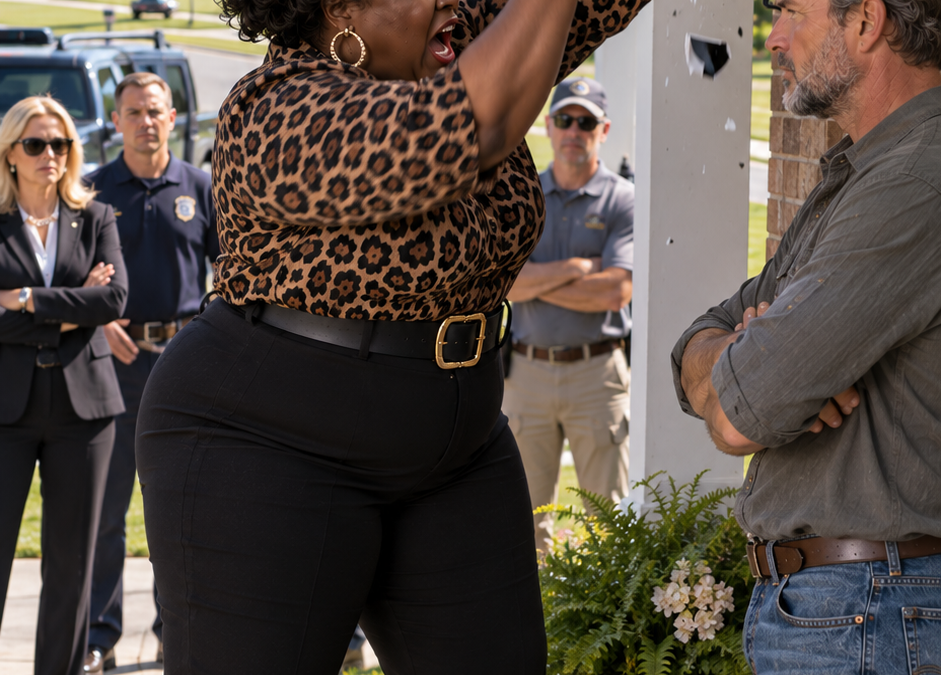
𝗣𝗔𝗥𝗧 𝟮
She looked almost surprised.
“Then remove it.”
“No.”
Her face barely changed.
I went inside.
Came back with the folder.
I opened it to the highlighted sections.
“Exterior security devices are permitted. This is the field of view.”
She took the pages.
Looked at maybe two lines.
Then folded the paper.
“I’ve been running this association longer than you’ve lived here.”
“I know.”
“There are responsibilities that aren’t always captured in one sentence of a document.”
“That may be true.”
“It is true.”
“But this one is.”
Her eyes narrowed slightly.
I pointed at the page.
“The rule says cameras can’t invade another residence’s privacy. Mine doesn’t.”
“You’re missing the larger issue.”
“What is it?”
“This community has standards.”
There it was.
Not a rule.
A category.
A word broad enough to hold whatever she wanted inside it.
I took the papers back.
She looked up toward the camera.
Then at me.
“You’ll receive something in writing.”
“That’s fine.”
She walked away.
Her heels clicked against the concrete.
I remember watching her and thinking the entire thing would disappear once somebody at the management office actually read the documents.
I gave it forty-eight hours.
Then the violation letter arrived.
Official letterhead.
Seventy-two hours to remove the device.
Daily penalties after that.
The notice cited a specific section of the covenants.
I sat at my kitchen table with coffee and opened the binder.
The section Whitney cited concerned storage of recreational vehicles and unregistered trailers.
I read it twice.
Then checked the number again.
Nothing about cameras.
Nothing about exterior fixtures.
Nothing even remotely related to surveillance.
That was the first moment I stopped treating the situation as a misunderstanding.
Whitney had not misinterpreted a camera rule.
She had chosen a rule number that looked official and attached it to a decision she had already made.
My response was three paragraphs.
No anger.
No threats.
I attached a photograph showing the camera’s view.
Closing survey.
The exterior-device section of the covenants.
The board’s own supplemental rule permitting exterior cameras.
Then I asked one question.
Which provision, specifically, does this installation violate?
Whitney never answered it.
Instead, she copied the full board on a six-hundred-word email about me.
According to her, I was deliberately challenging the association’s ability to govern.
My conduct threatened enforcement consistency.
Allowing one homeowner to “negotiate” compliance would weaken the rules.
Volunteers might become unwilling to serve if residents could subject every board decision to adversarial debate.
Not one sentence identified a camera restriction.
That was smart.
Not legally.
Politically.
She had moved the argument.
The question was no longer whether my camera complied.
That question was too easy.
Now the issue was authority.
Who decided what happened in Brier Glenn?
Whitney had been answering that question for years.
The next board meeting was held on a Tuesday.
Fourteen residents.
Folding chairs.
Long table at the front.
Whitney sat in the center.
When my item came up, I stood.
“I’m asking for clarification on—”
She interrupted.
“Mr. Reigns, you’re not an attorney.”
“I didn’t say I was.”
“You are attempting to turn a routine compliance matter into a legal proceeding.”
“I asked which provision—”
“You’ve already submitted correspondence.”
A couple of people laughed.
Not because anything was funny.
Because people sometimes laugh when authority tells them something is absurd and they don’t want to be the one person sitting silently.
I waited.
The laughter stopped.
Then I asked again.
“Which provision prohibits my camera?”
The room went still.
Whitney looked toward Leah Winslow, the secretary.
Then toward the treasurer.
Then at the clock.
“The board will take the matter under advisement.”
She moved to landscaping expenses.
That told me everything.
After the meeting, Graham Pike caught me in the parking lot.
He was forty-five.
Property manager.
Worked for an outside company.
Not hostile.
He spoke quietly.
“You’re making this harder on yourself.”
“How?”
“Whitney has a long memory.”
“That’s not an answer.”
“It’s a camera, Malcolm.”
“I know.”
“It’s a few hundred dollars.”
“I know what it cost.”
“Take it down and this ends.”
I looked at him.
“No.”
He sighed.
“You really want months of this over a camera?”
“No.”
I pointed toward the clubhouse.
“She does.”
He said nothing.
“If they can invent a rule and force me to remove something perfectly legal because the president dislikes being questioned, then it isn’t about the camera.”
“What is it about?”
“Whether rules mean what they say.”
Graham looked tired.
“I’m telling you as someone who’s seen these disputes before. They get expensive.”
“I believe you.”
He walked away.
The fines started.
One hundred dollars.
Eleven days later, another notice.
Two hundred fifty.
Then language about continuing penalties.
Then notice of a formal enforcement hearing.
The letters always seemed to arrive on Saturdays.
I eventually decided that probably wasn’t accidental.
A Saturday letter lives in your head through the weekend.
No office open.
No one to call.
Numbers sitting on paper beside your coffee.
Whitney believed the numbers would eventually become scarier than the principle.
She wasn’t entirely wrong about most people.
During those same weeks, I changed one setting on the camera.
Originally, motion clips were stored locally.
Internal memory.
That is acceptable for a homeowner who believes the device itself is secure.
I no longer believed that.
So I switched the camera to immediate cloud transmission.
Every motion event began uploading the moment recording started.
Then I added cellular failover.
If home internet disappeared, the unit would continue sending over the mobile network.
I didn’t do it because I expected somebody to smash the camera.
I did it because security professionals learn a simple rule early.
Evidence stored only in the device collecting it is evidence a person can carry away.
I tested the cloud system twice.
Verified time synchronization.
Checked the cellular handoff.
Then forgot about it.
Eleven days later, I was nearly an hour north on a contract job.
Half-finished server room.
Open ceiling.
Metal racks.
Coffee sitting untouched on a shelf.
My phone vibrated.
Motion detected: Side entry.
I opened the application.
Whitney Caldwell stood in my driveway.
Navy blazer.
Graham Pike stood behind her with a clipboard.
A maintenance worker was beside him.
Russell Dayne.
Heavyset.
Maybe mid-fifties.
I recognized him from grounds crews.
Canvas tool bag over one shoulder.
Nothing about the scene suggested emergency access.
No fire.
No leak.
No damaged utility.
No deputy.
No court order.
Three people on my property on a bright Friday morning.
Whitney pointed toward the eave.
“Take it down.”
Russell didn’t move.
“That’s attached to the man’s house.”
His voice came through perfectly.
Whitney answered.
“It’s HOA property.”
I remember standing in that server room thinking:
No.
It isn’t.
Not remotely.
The camera was purchased by me.
Mounted into my fascia.
Above my porch.
On my deeded lot.
Russell shifted the tool bag.
“I think we should have paperwork.”
Whitney turned toward Graham.
“Malcolm likes playing tough.”
Graham said something too low for the microphone.
Whitney continued.
“He likes the attention. Get it down. I’ll deal with him when he gets home.”
Russell tried again.
“I don’t think I’m comfortable doing that without something written.”
Then Whitney said:
“We can make the paperwork match afterward.”
Everything inside me went very calm.
I started documenting.
Screenshot of the alert.
Timestamp.
Exported the email chain.
Confirmed active cloud upload.
Then I called Graham.
No answer.
Called again.
Voicemail.
I called Whitney.
Two rings.
Declined.
The call log recorded it.
I wrote down the time.
When I returned to the camera feed, Whitney was walking toward the porch.
She stopped underneath the lens.
Tilted her face up.
Smiled.
A small smile.
Not nervous.
Not angry.
Certain.
Russell spoke behind her.
“I’m not doing that.”
Whitney reached into his open tool bag.
Pulled out a small claw hammer.
The first strike hit the camera housing.
The audio clipped from the impact.
The picture jolted sideways.
Second strike.
The mounting bracket tore loose.
The camera swung downward.
Driveway tilted out of frame.
I heard someone say:
“Whitney.”
Third strike.
Black screen.
I stood holding the phone.
Then a status line appeared.
Clip uploaded successfully.
I read it three times.
There was no triumph.
Someone had just damaged my house.
Broken equipment.
Entered my property after weeks of manufactured fines.
All I felt was something settling into place.
I opened the cloud portal from my laptop.
Downloaded the original file.
Then copied it to an encrypted drive.
Then to a second independent archive account.
Three copies.
Three places.
Original file hash recorded.
Timestamp preserved.
I drove home that afternoon.
The camera hung broken.
Plastic in the mulch.
Fascia gouged.
One mounting screw lying on the porch.
Ten minutes after I walked inside, an email arrived.
Whitney.
Copied to the full board.
I read it twice.
She said an HOA delegation had visited my property for a routine inspection.
She said the camera was already damaged and inoperative when they arrived.
She said nobody from the association had touched, handled, or interfered with the device.
Then she suggested that I may have damaged my own camera in an effort to harass and intimidate the board.
Attached was an updated fine statement.
One thousand five hundred dollars.
Thirty days to pay.
Collection referral after that.
My first impulse was immediate.
Reply.
Attach video.
Done.
I opened the file dialogue.
Then stopped.
If I sent the recording right then, Whitney had an exit.
Misremembered.
Confused.
Poor wording.
Device was already loose.
Contact accidental.
Chaotic inspection.
She could apologize for an “inaccuracy.”
Offer replacement.
Board would call it misunderstanding.
She would remain president.
And nothing about the underlying problem would change.
One false email can be explained away.
A pattern is harder.
So I closed the attachment window.
My reply contained two sentences.
I denied the allegations.
I requested a formal board hearing and demanded preservation of all records, communications, notes, and documentation relating to the matter.
I did not mention the video.
Whitney apparently believed that meant I had none.
Her tone became stronger.
She circulated a memorandum describing a “pattern of hostility.”
She asked association counsel to prepare a collection demand.
Then she did something I could never have arranged myself.
She signed a formal statement of facts.
Dated.
Signed.
Filed with the association.
At no time, it said, did Whitney Caldwell or any person under her direction touch or interfere with the security device.
The camera was already damaged when the delegation arrived.
Then came another paragraph.
I was allegedly conducting a sustained intimidation campaign against a female board president through surveillance and confrontation.
That part bothered me more than I expected.
I had never followed Whitney.
Never approached her home.
Never contacted her outside normal HOA correspondence.
Never raised my voice.
She had entered my property and destroyed my equipment.
Then she had taken what she did and rearranged it into a story where she needed protection from me.
I decided emotion wasn’t useful.
So I built a file.
Full covenants.
Every amendment.
Survey.
Property line.
Camera rules.
Original field-of-view image.
Every email in chronological order with headers.
Fine notices.
System logs.
Cloud records.
Original video.
Hash values.
Camera purchase receipt.
Account access logs showing only my credentials had accessed the system.
Call logs.
Everything.
Then I drove to the sheriff’s substation.
Deputy Grant Hollis took the report.
Early forties.
Patient.
Good listener.
I played the video.
He watched once.
Then again.
He didn’t tell me what crime had occurred.
I didn’t ask.
He documented what he saw.
Fixed camera attached to private residence.
Visible individual.
Hammer.
Damage.
He gave me a report number.
That number went into the folder.
The hearing was scheduled for the second Thursday of the next month.
Seven o’clock.
I arrived five minutes early with a laptop bag.
Whitney looked at it.
Then at me.
“Bringing a computer doesn’t make you an attorney.”
“I know.”
The room had been arranged to feel official.
Long table.
Single chair facing the board.
Whitney center.
Leah Winslow on one side with the minutes open.
Caleb Harlan, sixty-one, longtime board member.
Two additional directors.
Graham Pike at the end.
Beside him sat a man in a gray suit.
Nathan Crowe.
Association counsel.
He nodded when we were introduced.
Whitney opened.
For almost four minutes, she barely mentioned the camera.
She described me.
Uncooperative.
Adversarial.
Hostile.
Pattern of noncompliance.
Disrespect toward volunteers.
Refusal to follow reasonable requests.
When my turn came, I began.
“I’m requesting that the board identify—”
Whitney interrupted with a date correction.
The date wasn’t wrong.
I restarted.
She interrupted to state the fine total.
Third attempt.
Nathan Crowe set his pen down.
“Ms. Caldwell.”
She looked toward him.
“I think Mr. Reigns should be permitted to complete his statement.”
Her jaw tightened.
“Of course.”
I looked at the board.
“Which provision does my camera violate?”
Whitney answered.
“This matter is broader than one provision.”
“Then what provision started the violation?”
“The board has authority to regulate exterior installations.”
“Where?”
She leaned back.
“I don’t think this hearing is the place for amateur legal argument.”
Nathan’s pen stopped again.
I asked another question.
“What authority permitted the association to enter the private portion of my lot on the morning the camera was damaged?”
Whitney answered quickly.
“The HOA does not need individual consent every time representatives perform association duties.”
Nathan turned toward her.
“Was there an emergency?”
“No.”
“Did the association have a recorded easement over that part of the lot?”
Whitney hesitated.
“Our authority has always been understood.”
Nathan spoke slower.
“Was there a recorded easement?”
“No.”
He wrote something.
Whitney opened her leather folder.
Pulled out the signed statement.
Then read part of it aloud.
She had never touched my camera.
I waited until she finished.
“Are you certain?”
She looked directly at me.
“Absolutely.”
“And you’re stating the camera was already broken before you arrived?”
“Yes.”
Nathan stopped writing.
He was looking at me now.
A lawyer recognizes a question with an answer behind it.
Whitney apparently did not.
She moved to the proposed sanctions.
All fines upheld.
Legal fees assessed.
Removal of all exterior cameras.
Final collection demand.
Potential lien.
Caleb uncrossed his arms.
Reached for his pen.
I could see what was happening.
He was preparing to vote.
Not because he hated me.
Because for years, the person in Whitney’s chair had provided the version of events everyone else relied upon.
Before anyone voted, I said:
“I’d like to present one file.”
Whitney folded her arms.
“More screenshots?”
“No.”
I opened my laptop.
“Video.”
Something crossed her face.
Tiny.
Not fear.
Recognition had not reached that far yet.
Just hesitation.
The clubhouse had a wall display.
I connected the cable.
My desktop appeared behind the board.
I opened the original cloud recording.
No editing.
No captions.
No music.
No zoom.
No cut.
Original platform interface visible.
Timestamp in the corner.
File properties beside it.
Hash displayed.
I pressed play.
The board watched the empty driveway.
Then Whitney entered frame.
Graham.
Russell.
The recording showed the camera functioning perfectly when they arrived.
Clean image.
Clear audio.
Whitney pointed toward the eave.
“Take it down.”
Russell:
“That’s attached to the man’s house.”
Whitney:
“It’s HOA property.”
I saw Nathan Crowe write.
Russell refused.
Asked for paperwork.
Then everyone heard Whitney say:
“We can make the paperwork match afterward.”
Nathan looked up.
Slowly.
Then turned toward her.
Three seconds.
Maybe four.
No expression.
That was worse than surprise.
The video continued.
Whitney called me a man who liked playing tough.
Said I enjoyed attention.
Said she would handle me when I got home.
Then another sentence came through.
“You’re about to find out who actually runs this place.”
The room listened.
Months of emails had described me as hostile.
Now everyone heard what hostility actually sounded like.
Whitney walked beneath the camera.
Looked directly into it.
Smiled.
Russell said:
“I’m not doing it.”
She took the hammer.
First strike.
The sound exploded through the clubhouse speakers.
Leah covered her mouth.
Second strike.
The picture collapsed sideways.
Graham looked down at the table.
Caleb turned toward Whitney and stayed there.
Then came the moment I had almost forgotten because I had been too focused on the physical damage the first time I watched it.
Right before the final strike, with the lens hanging downward toward the porch boards, Whitney said four words.
“No camera, no proof.”
Third hit.
Black.
I waited two seconds.
Then closed the video.
Opened the transfer log.
Expanded the final entry.
Upload complete.
Timestamp.
The file had reached the remote server before the camera lost connection.
I looked toward Whitney.
“You broke the camera.”
She said nothing.
“You couldn’t break what it had already sent.”
For the first time all evening, nobody moved.
Then Whitney recovered.
“The video lacks context.”
Nathan looked at her.
“It appears fairly direct.”
“This is a selectively presented fragment.”
“It is forty-one continuous seconds.”
“The situation had been developing for weeks.”
Nathan leaned back.
“What context would make intentionally striking a homeowner’s camera with a hammer authorized?”
Whitney didn’t answer.
Nathan stood.
“I recommend the board suspend this hearing.”
His language changed.
No more “alleged.”
No more treating it as a disagreement over architecture.
He spoke in plain terms.
Unauthorized entry onto private portions of a lot.
No emergency.
No recorded easement.
Destruction of homeowner property by a sitting board officer.
Fines based on a covenant provision that did not correspond with the violation described.
A signed association statement contradicted directly by contemporaneous video.
Potential misuse of enforcement authority.
Then he asked Whitney one question.
“Did you tell my office that you personally destroyed the device before requesting that we prepare the demand letter against Mr. Reigns?”
Whitney looked at him.
“No.”
That was the moment the board understood this was no longer only about me.
She had given them a false account.
Allowed them to rely on it.
Created fines from it.
Asked their attorney to act on it.
Put her signature on it.
She hadn’t merely tried to control a homeowner.
She had used the board itself as cover.
Graham spoke.
“I was there only in a management capacity.”
I looked at him.
“I was following direction.”
I reopened the video.
Played the first twenty seconds.
There he stood.
Eighteen inches behind Whitney.
Russell objecting.
Whitney saying paperwork could be made to match afterward.
Graham silent.
I stopped the recording.
No commentary.
The file was enough.
Then Leah Winslow spoke.
That surprised me.
She said she had objected in executive sessions for two years to the way some enforcement matters were handled.
She had warned that the camera language was ambiguous.
She had warned that aggressive enforcement without a specific covenant basis was risky.
Each time, she said, she had been told:
“The president will handle it.”
Then she said something I remember almost word for word.
“I am tired of writing minutes for decisions I objected to and then discovering my objection isn’t reflected anywhere.”
Whitney turned toward me.
“You let me do this.”
I stared at her.
“I was an hour away.”
“You watched it.”
“I called Graham twice.”
He looked down.
“I called you.”
“You knew what would happen.”
“No.”
I kept my voice level.
“You were holding the hammer.”
That ended it.
There was no entrapment.
No setup.
No invitation.
No conversation with me that morning.
I had not asked her to come.
Had not told her to touch anything.
Had not placed the hammer in her hand.
A camera recorded a choice she made without me being there.
Caleb spoke.
“All fines against Mr. Reigns should be suspended immediately.”
He made a formal motion.
Review the fines.
Open an investigation into the entry and damage.
Whitney should step aside as president pending the investigation.
Whitney objected.
Her voice rose for the first time.
She talked about eleven years of unpaid service.
Late-night calls.
Resident complaints.
Hours spent protecting property values.
Nobody else wanting the responsibility.
She said the board was rewarding a hostile homeowner and punishing the only person willing to enforce standards.
Nobody at the table looked afraid of her anymore.
Leah seconded the motion.
Caleb voted yes.
The other two board members voted yes.
Whitney stared at them.
Graham had no vote.
The meeting ended at 8:41.
People gathered papers quietly.
I disconnected the laptop.
Coiled the display cable.
Put it back where I found it.
Nathan asked me to stay.
I assumed I was about to receive a legal warning.
Instead, he closed the door and sat across from me.
“Mr. Reigns.”
“Yes?”
“We need to discuss how the association fixes this.”
Nothing dramatic happened afterward.
Nobody became rich.
There was no giant lawsuit.
No television crew.
What happened was slower.
Better.
The insurance carrier reviewed the original video.
Requested the hash.
Verified the file.
Obtained the sheriff’s report.
Reviewed the association records.
The camera violation was rescinded completely.
Every fine was voided.
All fifteen hundred dollars.
The proposed legal fees disappeared.
The HOA reimbursed the camera.
Reimbursed the cellular module.
Paid a carpenter to repair the fascia.
Paid to repaint the damaged section.
I received a signed letter stating that the camera complied with the governing documents and had never constituted a valid violation.
Three sets of meeting minutes were corrected.
Collection action terminated in writing.
Then came the special session about Whitney.
I wasn’t required to attend.
I did anyway.
The room was fuller.
Residents who hadn’t attended my hearing wanted to know why the board president had been temporarily removed.
The video played again.
Forty-one seconds.
Nobody talked.
When the hammer struck, a woman in the second row made a small sound.
Whitney was given time to speak.
She said she had been protecting the community.
She said the camera created a hostile environment for volunteer board members.
She said she made a judgment call.
She said she had been vilified for doing a difficult job nobody else wanted.
Leah answered.
“You didn’t protect the community.”
Whitney looked at her.
“You made the community legally responsible for something you chose to do yourself.”
Silence.
Leah continued.
“Then you asked the rest of us to accept a false account of it.”
The board voted.
Whitney Caldwell was removed as president.
She wasn’t evicted.
Wasn’t bankrupted.
Wasn’t humiliated in some theatrical way.
She still owned her house.
Still paid dues.
Still voted.
Still had perfectly trimmed boxwoods four streets over.
What she lost was the position that had allowed her to walk into rooms for eleven years believing her version automatically became the official version.
Graham Pike received a formal warning.
His management company reassigned Brier Glenn to someone else.
Russell Dayne kept his job.
I made sure of that.
I wrote the board myself.
Russell had objected.
Twice.
He had refused to remove the camera.
The only person who behaved correctly on my property that morning should not suffer because he happened to be standing beside the person who didn’t.
A new policy followed.
No board officer.
No director.
No association agent.
No contractor.
Nobody enters the private portion of an owner’s lot for enforcement unless the governing documents and law permit it and proper notice has been provided.
No one removes, alters, damages, or takes personal property as part of HOA enforcement without clear legal authority.
The rule passed unanimously.
Whitney crossed paths with me after the special meeting.
Near the door.
Close enough to speak quietly.
“Are you satisfied now?”
I thought about it.
Then gave her the only honest answer.
“I wanted you to leave my camera alone.”
Her face changed.
Maybe she expected more.
Gloating.
A speech.
A threat.
There was none.
That probably bothered her more.
Three weeks later, I installed a replacement camera.
Exact same location.
New fascia.
Same field of view.
Driveway.
Side gate.
My grass.
Nothing else.
I submitted the plan to the architectural committee before installing it.
Not because I believed I needed special permission.
Because after everything, I wanted one more piece of paper in the file.
Written approval.
Signed.
Dated.
I added a small sign near the walkway.
PROPERTY UNDER VIDEO SURVEILLANCE.
Nothing threatening.
Nothing clever.
Just accurate.
People ask what part of the whole thing stays with me.
They assume it was watching Whitney swing the hammer.
It isn’t.
A hammer is simple.
Physical damage has clarity.
What I remember is her face during the hearing.
Not when the video started.
Later.
When I opened the cloud transfer log.
Upload complete.
For weeks, Whitney had constructed a version of the story.
Emails.
Fine notices.
Board memoranda.
A signed statement.
Witnesses.
Legal correspondence.
Layer after layer.
Then one line on a screen made all of it irrelevant.
The footage had already left the camera.
Breaking the housing didn’t destroy the recording.
It only created the ending.
That expression on her face wasn’t anger.
It was arithmetic.
She was calculating every document she had signed.
Every person she had copied.
Every sentence she had made official.
And realizing none of it could survive forty-one seconds of unedited video.
I don’t think Whitney lost because I was smarter than she was.
She was capable.
Organized.
Persistent.
She had successfully run that association for eleven years.
She lost because success had made her careless.
For years, residents probably backed down.
Maybe because the fines were cheaper than resistance.
Maybe because meetings were exhausting.
Maybe because she was often right.
And every time somebody surrendered, it reinforced the same lesson.
Speak with enough confidence.
Use the official letterhead.
Mention fines.
Mention liens.
Most people move.
Then she met a situation where the documents didn’t support her.
Instead of stopping, she treated the missing authority as a problem of resistance.
Then she escalated.
Fine.
Hearing.
Entry.
Hammer.
False email.
Signed statement.
Attorney.
She didn’t lose everything in one mistake.
She built the outcome herself, one choice at a time.
The narrowest part still bothers me.
If I had left the camera recording only to internal storage, the evidence would have been inside the housing.
Whitney had the housing.
The recording could have disappeared.
Then there would have been three people at my house.
Whitney saying the device was already broken.
Graham saying he was there only to inspect.
Russell saying he refused to touch it but maybe not knowing what happened after he stepped back.
Me an hour away.
The HOA file would show fines.
Warnings.
Claims that I was hostile.
A damaged camera.
Whitney’s signed statement.
And no video.
Her version might have become the official version simply because it had more letterhead around it.
One setting prevented that.
Instant cloud upload.
Nothing dramatic.
A technical choice.
The kind of option most people scroll past during setup.
That was the entire margin.
Last month, I was watering hydrangeas along the walkway when a silver sedan slowed near my driveway.
I recognized it.
Whitney.
She didn’t stop completely.
Just slowed.
Her eyes moved toward the porch.
Toward the new white camera.
The unit has gentle motion tracking.
It turned maybe fifteen degrees as the car passed.
Whitney looked forward.
Drove on.
I didn’t wave.
Didn’t call after her.
Didn’t say anything.
I shut off the hose.
Wound it onto the reel.
Then pulled my phone from my pocket.
The notification was already there.
Event uploaded to cloud.
I stood in my own yard.
On my own property.
In the quiet I had moved to Brier Glenn to find.
And I smiled.
Not because someone was being watched.
Because this time, everyone understood the same rule.
The camera was allowed to be there.
The property was mine.
And whatever happened in front of that lens no longer depended on the most powerful person in the room deciding afterward what the truth had been.
Have you finished reading the story and want to read it again?
The HOA President Thought Breaking My Camera Would Erase What Happened on My Porch
Whitney Caldwell looked directly into my camera before she destroyed it.
Ten minutes later, she told the board she had never touched the thing.
What she didn’t know was that the evidence had already left my house.
My name is Malcolm Reigns.
I was forty-eight years old when the president of Brier Glenn Estates decided a small white security camera under my porch eave was enough of a threat to justify walking onto my property with a hammer.
I had lived there three years.
I moved to Brier Glenn because I wanted quiet.
That really was the whole plan.
For nearly two decades, I had designed and installed commercial security systems for hospitals, warehouses, office buildings, distribution centers, and a few sites where the insurance carrier cared more about camera placement than the people who worked there.
My job had taught me three things.
People rarely notice cameras until they dislike what a camera might prove.
Documentation is only useful if the other person cannot quietly make it disappear.
And whenever somebody tells you a rule exists, read the rule instead of arguing about how confidently they quoted it.
By the time I moved to Brier Glenn, I was tired of being around conflict professionally.
I bought a modest brick house at the end of a curved street.
Deep-green shutters.
Small front porch.
Side yard just wide enough for a gate between the house and fence.
Nothing extravagant.
I paid the HOA dues on the first of every month.
Cut my grass.
Trimmed the shrubs.
Kept the garbage bins behind the house.
I didn’t attend association meetings unless something directly concerned me.
I had already spent enough of my life in conference rooms listening to people debate things that could have been solved with one drawing and a ruler.
I had no interest in spending Tuesday nights arguing about mailbox paint or how many days Christmas lights could remain after New Year’s.
For almost three years, that arrangement worked.
Then I started noticing maintenance workers cutting across my side yard.
The first time, I assumed somebody made a mistake.
A crew was working behind several houses near the drainage area, and one man walked through the grass beside my driveway and out through the rear.
No harm.
No damage.
I ignored it.
Then it happened again.
Then a third time.
By the fourth, I realized it wasn’t accidental.
The strip they were using wasn’t common property.
It wasn’t the drainage easement.
It wasn’t an HOA maintenance corridor.
It was mine.
The survey from my closing packet showed the line clearly.
The side gate, the narrow grass strip, and the ground all the way to my fence were part of my lot.
Nobody ever called.
Nobody knocked.
Nobody left a notice.
No one stole anything.
No one threatened me.
But there is a particular kind of irritation that comes from standing at your kitchen sink and watching strangers move through your property as though your fence is decorative.
So I solved the problem the way I knew how.
I installed a camera.
Small.
White housing.
Mounted under the porch eave.
Before I drilled the first hole, I spent an evening studying the HOA documents.
Declaration.
Architectural guidelines.
Supplemental rules.
Every amendment I had received since moving in.
Security devices were permitted.
Exterior cameras were permitted.
There were restrictions against pointing recording equipment into neighboring homes.
There were nuisance provisions.
Nothing unreasonable.
I followed all of them.
I adjusted the camera’s field of view until it covered exactly what I needed.
My driveway.
My side gate.
The strip of my yard where the maintenance crews kept walking.
It didn’t see into either neighbor’s windows.
It didn’t see beyond my side property line.
It didn’t see anyone’s backyard.
I had installed hundreds of cameras in places where a privacy complaint could cost a client money.
I wasn’t going to become careless at my own house.
Once the camera was positioned, I took screenshots of the view.
Printed the relevant HOA rules.
Highlighted them.
Put the whole package into a folder.
That probably sounds excessive.
It wasn’t to me.
Paperwork is cheap before trouble starts.
Three days later, Whitney Caldwell walked up my driveway.
Whitney was fifty-three.
She had been president of the Brier Glenn board longer than many residents had lived there.
She wore a cream jacket and sunglasses pushed into her hair.
Everything about her looked deliberate.
Not flashy.
Controlled.
She stopped about ten feet from my porch.
Looked at the camera.
Then looked at me.
“Men like you always think a few extra cameras make you look important.”
That was her opening sentence.
Not hello.
Not what is that for?
Not where does it point?
I had learned years earlier not to answer insults before determining whether the other person was capable of discussing facts.
So I said, “It’s covering my property.”
“I can see where it’s mounted.”
“It covers the side gate and driveway.”
“Residents have privacy rights.”
“I agree.”
She looked almost surprised.
“Then remove it.”
“No.”
Her face barely changed.
I went inside.
Came back with the folder.
I opened it to the highlighted sections.
“Exterior security devices are permitted. This is the field of view.”
She took the pages.
Looked at maybe two lines.
Then folded the paper.
“I’ve been running this association longer than you’ve lived here.”
“I know.”
“There are responsibilities that aren’t always captured in one sentence of a document.”
“That may be true.”
“It is true.”
“But this one is.”
Her eyes narrowed slightly.
I pointed at the page.
“The rule says cameras can’t invade another residence’s privacy. Mine doesn’t.”
“You’re missing the larger issue.”
“What is it?”
“This community has standards.”
There it was.
Not a rule.
A category.
A word broad enough to hold whatever she wanted inside it.
I took the papers back.
She looked up toward the camera.
Then at me.
“You’ll receive something in writing.”
“That’s fine.”
She walked away.
Her heels clicked against the concrete.
I remember watching her and thinking the entire thing would disappear once somebody at the management office actually read the documents.
I gave it forty-eight hours.
Then the violation letter arrived.
Official letterhead.
Seventy-two hours to remove the device.
Daily penalties after that.
The notice cited a specific section of the covenants.
I sat at my kitchen table with coffee and opened the binder.
The section Whitney cited concerned storage of recreational vehicles and unregistered trailers.
I read it twice.
Then checked the number again.
Nothing about cameras.
Nothing about exterior fixtures.
Nothing even remotely related to surveillance.
That was the first moment I stopped treating the situation as a misunderstanding.
Whitney had not misinterpreted a camera rule.
She had chosen a rule number that looked official and attached it to a decision she had already made.
My response was three paragraphs.
No anger.
No threats.
I attached a photograph showing the camera’s view.
Closing survey.
The exterior-device section of the covenants.
The board’s own supplemental rule permitting exterior cameras.
Then I asked one question.
Which provision, specifically, does this installation violate?
Whitney never answered it.
Instead, she copied the full board on a six-hundred-word email about me.
According to her, I was deliberately challenging the association’s ability to govern.
My conduct threatened enforcement consistency.
Allowing one homeowner to “negotiate” compliance would weaken the rules.
Volunteers might become unwilling to serve if residents could subject every board decision to adversarial debate.
Not one sentence identified a camera restriction.
That was smart.
Not legally.
Politically.
She had moved the argument.
The question was no longer whether my camera complied.
That question was too easy.
Now the issue was authority.
Who decided what happened in Brier Glenn?
Whitney had been answering that question for years.
The next board meeting was held on a Tuesday.
Fourteen residents.
Folding chairs.
Long table at the front.
Whitney sat in the center.
When my item came up, I stood.
“I’m asking for clarification on—”
She interrupted.
“Mr. Reigns, you’re not an attorney.”
“I didn’t say I was.”
“You are attempting to turn a routine compliance matter into a legal proceeding.”
“I asked which provision—”
“You’ve already submitted correspondence.”
A couple of people laughed.
Not because anything was funny.
Because people sometimes laugh when authority tells them something is absurd and they don’t want to be the one person sitting silently.
I waited.
The laughter stopped.
Then I asked again.
“Which provision prohibits my camera?”
The room went still.
Whitney looked toward Leah Winslow, the secretary.
Then toward the treasurer.
Then at the clock.
“The board will take the matter under advisement.”
She moved to landscaping expenses.
That told me everything.
After the meeting, Graham Pike caught me in the parking lot.
He was forty-five.
Property manager.
Worked for an outside company.
Not hostile.
He spoke quietly.
“You’re making this harder on yourself.”
“How?”
“Whitney has a long memory.”
“That’s not an answer.”
“It’s a camera, Malcolm.”
“I know.”
“It’s a few hundred dollars.”
“I know what it cost.”
“Take it down and this ends.”
I looked at him.
“No.”
He sighed.
“You really want months of this over a camera?”
“No.”
I pointed toward the clubhouse.
“She does.”
He said nothing.
“If they can invent a rule and force me to remove something perfectly legal because the president dislikes being questioned, then it isn’t about the camera.”
“What is it about?”
“Whether rules mean what they say.”
Graham looked tired.
“I’m telling you as someone who’s seen these disputes before. They get expensive.”
“I believe you.”
He walked away.
The fines started.
One hundred dollars.
Eleven days later, another notice.
Two hundred fifty.
Then language about continuing penalties.
Then notice of a formal enforcement hearing.
The letters always seemed to arrive on Saturdays.
I eventually decided that probably wasn’t accidental.
A Saturday letter lives in your head through the weekend.
No office open.
No one to call.
Numbers sitting on paper beside your coffee.
Whitney believed the numbers would eventually become scarier than the principle.
She wasn’t entirely wrong about most people.
During those same weeks, I changed one setting on the camera.
Originally, motion clips were stored locally.
Internal memory.
That is acceptable for a homeowner who believes the device itself is secure.
I no longer believed that.
So I switched the camera to immediate cloud transmission.
Every motion event began uploading the moment recording started.
Then I added cellular failover.
If home internet disappeared, the unit would continue sending over the mobile network.
I didn’t do it because I expected somebody to smash the camera.
I did it because security professionals learn a simple rule early.
Evidence stored only in the device collecting it is evidence a person can carry away.
I tested the cloud system twice.
Verified time synchronization.
Checked the cellular handoff.
Then forgot about it.
Eleven days later, I was nearly an hour north on a contract job.
Half-finished server room.
Open ceiling.
Metal racks.
Coffee sitting untouched on a shelf.
My phone vibrated.
Motion detected: Side entry.
I opened the application.
Whitney Caldwell stood in my driveway.
Navy blazer.
Graham Pike stood behind her with a clipboard.
A maintenance worker was beside him.
Russell Dayne.
Heavyset.
Maybe mid-fifties.
I recognized him from grounds crews.
Canvas tool bag over one shoulder.
Nothing about the scene suggested emergency access.
No fire.
No leak.
No damaged utility.
No deputy.
No court order.
Three people on my property on a bright Friday morning.
Whitney pointed toward the eave.
“Take it down.”
Russell didn’t move.
“That’s attached to the man’s house.”
His voice came through perfectly.
Whitney answered.
“It’s HOA property.”
I remember standing in that server room thinking:
No.
It isn’t.
Not remotely.
The camera was purchased by me.
Mounted into my fascia.
Above my porch.
On my deeded lot.
Russell shifted the tool bag.
“I think we should have paperwork.”
Whitney turned toward Graham.
“Malcolm likes playing tough.”
Graham said something too low for the microphone.
Whitney continued.
“He likes the attention. Get it down. I’ll deal with him when he gets home.”
Russell tried again.
“I don’t think I’m comfortable doing that without something written.”
Then Whitney said:
“We can make the paperwork match afterward.”
Everything inside me went very calm.
I started documenting.
Screenshot of the alert.
Timestamp.
Exported the email chain.
Confirmed active cloud upload.
Then I called Graham.
No answer.
Called again.
Voicemail.
I called Whitney.
Two rings.
Declined.
The call log recorded it.
I wrote down the time.
When I returned to the camera feed, Whitney was walking toward the porch.
She stopped underneath the lens.
Tilted her face up.
Smiled.
A small smile.
Not nervous.
Not angry.
Certain.
Russell spoke behind her.
“I’m not doing that.”
Whitney reached into his open tool bag.
Pulled out a small claw hammer.
The first strike hit the camera housing.
The audio clipped from the impact.
The picture jolted sideways.
Second strike.
The mounting bracket tore loose.
The camera swung downward.
Driveway tilted out of frame.
I heard someone say:
“Whitney.”
Third strike.
Black screen.
I stood holding the phone.
Then a status line appeared.
Clip uploaded successfully.
I read it three times.
There was no triumph.
Someone had just damaged my house.
Broken equipment.
Entered my property after weeks of manufactured fines.
All I felt was something settling into place.
I opened the cloud portal from my laptop.
Downloaded the original file.
Then copied it to an encrypted drive.
Then to a second independent archive account.
Three copies.
Three places.
Original file hash recorded.
Timestamp preserved.
I drove home that afternoon.
The camera hung broken.
Plastic in the mulch.
Fascia gouged.
One mounting screw lying on the porch.
Ten minutes after I walked inside, an email arrived.
Whitney.
Copied to the full board.
I read it twice.
She said an HOA delegation had visited my property for a routine inspection.
She said the camera was already damaged and inoperative when they arrived.
She said nobody from the association had touched, handled, or interfered with the device.
Then she suggested that I may have damaged my own camera in an effort to harass and intimidate the board.
Attached was an updated fine statement.
One thousand five hundred dollars.
Thirty days to pay.
Collection referral after that.
My first impulse was immediate.
Reply.
Attach video.
Done.
I opened the file dialogue.
Then stopped.
If I sent the recording right then, Whitney had an exit.
Misremembered.
Confused.
Poor wording.
Device was already loose.
Contact accidental.
Chaotic inspection.
She could apologize for an “inaccuracy.”
Offer replacement.
Board would call it misunderstanding.
She would remain president.
And nothing about the underlying problem would change.
One false email can be explained away.
A pattern is harder.
So I closed the attachment window.
My reply contained two sentences.
I denied the allegations.
I requested a formal board hearing and demanded preservation of all records, communications, notes, and documentation relating to the matter.
I did not mention the video.
Whitney apparently believed that meant I had none.
Her tone became stronger.
She circulated a memorandum describing a “pattern of hostility.”
She asked association counsel to prepare a collection demand.
Then she did something I could never have arranged myself.
She signed a formal statement of facts.
Dated.
Signed.
Filed with the association.
At no time, it said, did Whitney Caldwell or any person under her direction touch or interfere with the security device.
The camera was already damaged when the delegation arrived.
Then came another paragraph.
I was allegedly conducting a sustained intimidation campaign against a female board president through surveillance and confrontation.
That part bothered me more than I expected.
I had never followed Whitney.
Never approached her home.
Never contacted her outside normal HOA correspondence.
Never raised my voice.
She had entered my property and destroyed my equipment.
Then she had taken what she did and rearranged it into a story where she needed protection from me.
I decided emotion wasn’t useful.
So I built a file.
Full covenants.
Every amendment.
Survey.
Property line.
Camera rules.
Original field-of-view image.
Every email in chronological order with headers.
Fine notices.
System logs.
Cloud records.
Original video.
Hash values.
Camera purchase receipt.
Account access logs showing only my credentials had accessed the system.
Call logs.
Everything.
Then I drove to the sheriff’s substation.
Deputy Grant Hollis took the report.
Early forties.
Patient.
Good listener.
I played the video.
He watched once.
Then again.
He didn’t tell me what crime had occurred.
I didn’t ask.
He documented what he saw.
Fixed camera attached to private residence.
Visible individual.
Hammer.
Damage.
He gave me a report number.
That number went into the folder.
The hearing was scheduled for the second Thursday of the next month.
Seven o’clock.
I arrived five minutes early with a laptop bag.
Whitney looked at it.
Then at me.
“Bringing a computer doesn’t make you an attorney.”
“I know.”
The room had been arranged to feel official.
Long table.
Single chair facing the board.
Whitney center.
Leah Winslow on one side with the minutes open.
Caleb Harlan, sixty-one, longtime board member.
Two additional directors.
Graham Pike at the end.
Beside him sat a man in a gray suit.
Nathan Crowe.
Association counsel.
He nodded when we were introduced.
Whitney opened.
For almost four minutes, she barely mentioned the camera.
She described me.
Uncooperative.
Adversarial.
Hostile.
Pattern of noncompliance.
Disrespect toward volunteers.
Refusal to follow reasonable requests.
When my turn came, I began.
“I’m requesting that the board identify—”
Whitney interrupted with a date correction.
The date wasn’t wrong.
I restarted.
She interrupted to state the fine total.
Third attempt.
Nathan Crowe set his pen down.
“Ms. Caldwell.”
She looked toward him.
“I think Mr. Reigns should be permitted to complete his statement.”
Her jaw tightened.
“Of course.”
I looked at the board.
“Which provision does my camera violate?”
Whitney answered.
“This matter is broader than one provision.”
“Then what provision started the violation?”
“The board has authority to regulate exterior installations.”
“Where?”
She leaned back.
“I don’t think this hearing is the place for amateur legal argument.”
Nathan’s pen stopped again.
I asked another question.
“What authority permitted the association to enter the private portion of my lot on the morning the camera was damaged?”
Whitney answered quickly.
“The HOA does not need individual consent every time representatives perform association duties.”
Nathan turned toward her.
“Was there an emergency?”
“No.”
“Did the association have a recorded easement over that part of the lot?”
Whitney hesitated.
“Our authority has always been understood.”
Nathan spoke slower.
“Was there a recorded easement?”
“No.”
He wrote something.
Whitney opened her leather folder.
Pulled out the signed statement.
Then read part of it aloud.
She had never touched my camera.
I waited until she finished.
“Are you certain?”
She looked directly at me.
“Absolutely.”
“And you’re stating the camera was already broken before you arrived?”
“Yes.”
Nathan stopped writing.
He was looking at me now.
A lawyer recognizes a question with an answer behind it.
Whitney apparently did not.
She moved to the proposed sanctions.
All fines upheld.
Legal fees assessed.
Removal of all exterior cameras.
Final collection demand.
Potential lien.
Caleb uncrossed his arms.
Reached for his pen.
I could see what was happening.
He was preparing to vote.
Not because he hated me.
Because for years, the person in Whitney’s chair had provided the version of events everyone else relied upon.
Before anyone voted, I said:
“I’d like to present one file.”
Whitney folded her arms.
“More screenshots?”
“No.”
I opened my laptop.
“Video.”
Something crossed her face.
Tiny.
Not fear.
Recognition had not reached that far yet.
Just hesitation.
The clubhouse had a wall display.
I connected the cable.
My desktop appeared behind the board.
I opened the original cloud recording.
No editing.
No captions.
No music.
No zoom.
No cut.
Original platform interface visible.
Timestamp in the corner.
File properties beside it.
Hash displayed.
I pressed play.
The board watched the empty driveway.
Then Whitney entered frame.
Graham.
Russell.
The recording showed the camera functioning perfectly when they arrived.
Clean image.
Clear audio.
Whitney pointed toward the eave.
“Take it down.”
Russell:
“That’s attached to the man’s house.”
Whitney:
“It’s HOA property.”
I saw Nathan Crowe write.
Russell refused.
Asked for paperwork.
Then everyone heard Whitney say:
“We can make the paperwork match afterward.”
Nathan looked up.
Slowly.
Then turned toward her.
Three seconds.
Maybe four.
No expression.
That was worse than surprise.
The video continued.
Whitney called me a man who liked playing tough.
Said I enjoyed attention.
Said she would handle me when I got home.
Then another sentence came through.
“You’re about to find out who actually runs this place.”
The room listened.
Months of emails had described me as hostile.
Now everyone heard what hostility actually sounded like.
Whitney walked beneath the camera.
Looked directly into it.
Smiled.
Russell said:
“I’m not doing it.”
She took the hammer.
First strike.
The sound exploded through the clubhouse speakers.
Leah covered her mouth.
Second strike.
The picture collapsed sideways.
Graham looked down at the table.
Caleb turned toward Whitney and stayed there.
Then came the moment I had almost forgotten because I had been too focused on the physical damage the first time I watched it.
Right before the final strike, with the lens hanging downward toward the porch boards, Whitney said four words.
“No camera, no proof.”
Third hit.
Black.
I waited two seconds.
Then closed the video.
Opened the transfer log.
Expanded the final entry.
Upload complete.
Timestamp.
The file had reached the remote server before the camera lost connection.
I looked toward Whitney.
“You broke the camera.”
She said nothing.
“You couldn’t break what it had already sent.”
For the first time all evening, nobody moved.
Then Whitney recovered.
“The video lacks context.”
Nathan looked at her.
“It appears fairly direct.”
“This is a selectively presented fragment.”
“It is forty-one continuous seconds.”
“The situation had been developing for weeks.”
Nathan leaned back.
“What context would make intentionally striking a homeowner’s camera with a hammer authorized?”
Whitney didn’t answer.
Nathan stood.
“I recommend the board suspend this hearing.”
His language changed.
No more “alleged.”
No more treating it as a disagreement over architecture.
He spoke in plain terms.
Unauthorized entry onto private portions of a lot.
No emergency.
No recorded easement.
Destruction of homeowner property by a sitting board officer.
Fines based on a covenant provision that did not correspond with the violation described.
A signed association statement contradicted directly by contemporaneous video.
Potential misuse of enforcement authority.
Then he asked Whitney one question.
“Did you tell my office that you personally destroyed the device before requesting that we prepare the demand letter against Mr. Reigns?”
Whitney looked at him.
“No.”
That was the moment the board understood this was no longer only about me.
She had given them a false account.
Allowed them to rely on it.
Created fines from it.
Asked their attorney to act on it.
Put her signature on it.
She hadn’t merely tried to control a homeowner.
She had used the board itself as cover.
Graham spoke.
“I was there only in a management capacity.”
I looked at him.
“I was following direction.”
I reopened the video.
Played the first twenty seconds.
There he stood.
Eighteen inches behind Whitney.
Russell objecting.
Whitney saying paperwork could be made to match afterward.
Graham silent.
I stopped the recording.
No commentary.
The file was enough.
Then Leah Winslow spoke.
That surprised me.
She said she had objected in executive sessions for two years to the way some enforcement matters were handled.
She had warned that the camera language was ambiguous.
She had warned that aggressive enforcement without a specific covenant basis was risky.
Each time, she said, she had been told:
“The president will handle it.”
Then she said something I remember almost word for word.
“I am tired of writing minutes for decisions I objected to and then discovering my objection isn’t reflected anywhere.”
Whitney turned toward me.
“You let me do this.”
I stared at her.
“I was an hour away.”
“You watched it.”
“I called Graham twice.”
He looked down.
“I called you.”
“You knew what would happen.”
“No.”
I kept my voice level.
“You were holding the hammer.”
That ended it.
There was no entrapment.
No setup.
No invitation.
No conversation with me that morning.
I had not asked her to come.
Had not told her to touch anything.
Had not placed the hammer in her hand.
A camera recorded a choice she made without me being there.
Caleb spoke.
“All fines against Mr. Reigns should be suspended immediately.”
He made a formal motion.
Review the fines.
Open an investigation into the entry and damage.
Whitney should step aside as president pending the investigation.
Whitney objected.
Her voice rose for the first time.
She talked about eleven years of unpaid service.
Late-night calls.
Resident complaints.
Hours spent protecting property values.
Nobody else wanting the responsibility.
She said the board was rewarding a hostile homeowner and punishing the only person willing to enforce standards.
Nobody at the table looked afraid of her anymore.
Leah seconded the motion.
Caleb voted yes.
The other two board members voted yes.
Whitney stared at them.
Graham had no vote.
The meeting ended at 8:41.
People gathered papers quietly.
I disconnected the laptop.
Coiled the display cable.
Put it back where I found it.
Nathan asked me to stay.
I assumed I was about to receive a legal warning.
Instead, he closed the door and sat across from me.
“Mr. Reigns.”
“Yes?”
“We need to discuss how the association fixes this.”
Nothing dramatic happened afterward.
Nobody became rich.
There was no giant lawsuit.
No television crew.
What happened was slower.
Better.
The insurance carrier reviewed the original video.
Requested the hash.
Verified the file.
Obtained the sheriff’s report.
Reviewed the association records.
The camera violation was rescinded completely.
Every fine was voided.
All fifteen hundred dollars.
The proposed legal fees disappeared.
The HOA reimbursed the camera.
Reimbursed the cellular module.
Paid a carpenter to repair the fascia.
Paid to repaint the damaged section.
I received a signed letter stating that the camera complied with the governing documents and had never constituted a valid violation.
Three sets of meeting minutes were corrected.
Collection action terminated in writing.
Then came the special session about Whitney.
I wasn’t required to attend.
I did anyway.
The room was fuller.
Residents who hadn’t attended my hearing wanted to know why the board president had been temporarily removed.
The video played again.
Forty-one seconds.
Nobody talked.
When the hammer struck, a woman in the second row made a small sound.
Whitney was given time to speak.
She said she had been protecting the community.
She said the camera created a hostile environment for volunteer board members.
She said she made a judgment call.
She said she had been vilified for doing a difficult job nobody else wanted.
Leah answered.
“You didn’t protect the community.”
Whitney looked at her.
“You made the community legally responsible for something you chose to do yourself.”
Silence.
Leah continued.
“Then you asked the rest of us to accept a false account of it.”
The board voted.
Whitney Caldwell was removed as president.
She wasn’t evicted.
Wasn’t bankrupted.
Wasn’t humiliated in some theatrical way.
She still owned her house.
Still paid dues.
Still voted.
Still had perfectly trimmed boxwoods four streets over.
What she lost was the position that had allowed her to walk into rooms for eleven years believing her version automatically became the official version.
Graham Pike received a formal warning.
His management company reassigned Brier Glenn to someone else.
Russell Dayne kept his job.
I made sure of that.
I wrote the board myself.
Russell had objected.
Twice.
He had refused to remove the camera.
The only person who behaved correctly on my property that morning should not suffer because he happened to be standing beside the person who didn’t.
A new policy followed.
No board officer.
No director.
No association agent.
No contractor.
Nobody enters the private portion of an owner’s lot for enforcement unless the governing documents and law permit it and proper notice has been provided.
No one removes, alters, damages, or takes personal property as part of HOA enforcement without clear legal authority.
The rule passed unanimously.
Whitney crossed paths with me after the special meeting.
Near the door.
Close enough to speak quietly.
“Are you satisfied now?”
I thought about it.
Then gave her the only honest answer.
“I wanted you to leave my camera alone.”
Her face changed.
Maybe she expected more.
Gloating.
A speech.
A threat.
There was none.
That probably bothered her more.
Three weeks later, I installed a replacement camera.
Exact same location.
New fascia.
Same field of view.
Driveway.
Side gate.
My grass.
Nothing else.
I submitted the plan to the architectural committee before installing it.
Not because I believed I needed special permission.
Because after everything, I wanted one more piece of paper in the file.
Written approval.
Signed.
Dated.
I added a small sign near the walkway.
PROPERTY UNDER VIDEO SURVEILLANCE.
Nothing threatening.
Nothing clever.
Just accurate.
People ask what part of the whole thing stays with me.
They assume it was watching Whitney swing the hammer.
It isn’t.
A hammer is simple.
Physical damage has clarity.
What I remember is her face during the hearing.
Not when the video started.
Later.
When I opened the cloud transfer log.
Upload complete.
For weeks, Whitney had constructed a version of the story.
Emails.
Fine notices.
Board memoranda.
A signed statement.
Witnesses.
Legal correspondence.
Layer after layer.
Then one line on a screen made all of it irrelevant.
The footage had already left the camera.
Breaking the housing didn’t destroy the recording.
It only created the ending.
That expression on her face wasn’t anger.
It was arithmetic.
She was calculating every document she had signed.
Every person she had copied.
Every sentence she had made official.
And realizing none of it could survive forty-one seconds of unedited video.
I don’t think Whitney lost because I was smarter than she was.
She was capable.
Organized.
Persistent.
She had successfully run that association for eleven years.
She lost because success had made her careless.
For years, residents probably backed down.
Maybe because the fines were cheaper than resistance.
Maybe because meetings were exhausting.
Maybe because she was often right.
And every time somebody surrendered, it reinforced the same lesson.
Speak with enough confidence.
Use the official letterhead.
Mention fines.
Mention liens.
Most people move.
Then she met a situation where the documents didn’t support her.
Instead of stopping, she treated the missing authority as a problem of resistance.
Then she escalated.
Fine.
Hearing.
Entry.
Hammer.
False email.
Signed statement.
Attorney.
She didn’t lose everything in one mistake.
She built the outcome herself, one choice at a time.
The narrowest part still bothers me.
If I had left the camera recording only to internal storage, the evidence would have been inside the housing.
Whitney had the housing.
The recording could have disappeared.
Then there would have been three people at my house.
Whitney saying the device was already broken.
Graham saying he was there only to inspect.
Russell saying he refused to touch it but maybe not knowing what happened after he stepped back.
Me an hour away.
The HOA file would show fines.
Warnings.
Claims that I was hostile.
A damaged camera.
Whitney’s signed statement.
And no video.
Her version might have become the official version simply because it had more letterhead around it.
One setting prevented that.
Instant cloud upload.
Nothing dramatic.
A technical choice.
The kind of option most people scroll past during setup.
That was the entire margin.
Last month, I was watering hydrangeas along the walkway when a silver sedan slowed near my driveway.
I recognized it.
Whitney.
She didn’t stop completely.
Just slowed.
Her eyes moved toward the porch.
Toward the new white camera.
The unit has gentle motion tracking.
It turned maybe fifteen degrees as the car passed.
Whitney looked forward.
Drove on.
I didn’t wave.
Didn’t call after her.
Didn’t say anything.
I shut off the hose.
Wound it onto the reel.
Then pulled my phone from my pocket.
The notification was already there.
Event uploaded to cloud.
I stood in my own yard.
On my own property.
In the quiet I had moved to Brier Glenn to find.
And I smiled.
Not because someone was being watched.
Because this time, everyone understood the same rule.
The camera was allowed to be there.
The property was mine.
And whatever happened in front of that lens no longer depended on the most powerful person in the room deciding afterward what the truth had been.








