“Your son has been sitting outside our supermarket since four this afternoon, and he says there isn’t any adult at home.” For a second, I did not understand the words.
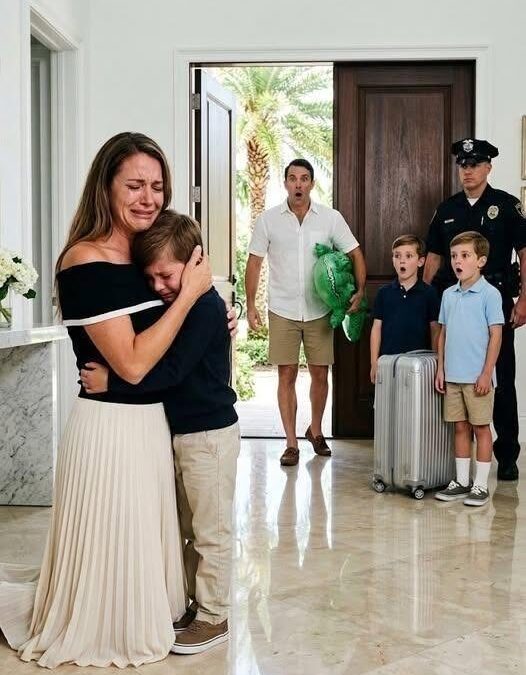
“Please don’t faint, ma’am.”
The woman on the phone spoke slowly, carefully, as though she was afraid that if she said the next sentence too quickly, I might stop breathing before she finished.
“Your son has been sitting outside our supermarket since four this afternoon, and he says there isn’t any adult at home.”
For a second, I did not understand the words.
Not really.
I heard them.
But my mind rejected them.
My son?
Outside a supermarket?
No adult at home?
I was standing in the parking lot behind the funeral home in Milwaukee with my mother’s house key still clutched in one hand and a folder of death certificates pressed against my chest.
It had been twelve days since my mother died.
Twelve days of signing forms.
Calling insurance companies.
Meeting with the funeral director.
Sorting clothing.
Opening drawers that still smelled like her hand cream.
Deciding what to do with forty-three years of photographs, Christmas ornaments, old tax returns, coffee mugs, recipe cards, and a hundred tiny things that were worthless to everyone except the person who no longer existed.
I had barely slept.
Barely eaten.
And through all of it, there had been one thought keeping me upright.
Liam was safe.
My eight-year-old son was home in Columbus with my husband.
Brandon.
His stepfather.
The man who had hugged me before I left Milwaukee and said,
“You take care of everything with your mom. I’ll take care of the kids here.”
I pressed the phone harder to my ear.
“I’m sorry. What did you say?”
The woman repeated herself.
“Your son. Liam. He’s here with us. He says he’s been alone.”
My knees weakened.
I grabbed the side of my car.
“That’s impossible.”
Even as I said it, something cold moved through me.
“My husband is home.”
There was a pause.
“Ma’am…”
“Yes?”
“Your son says your husband left six days ago.”
The parking lot tilted.
Six days.
“No.”
I shook my head even though she could not see me.
“No, Brandon is there.”
“I understand that’s what you believed.”
“No. I talked to him yesterday.”
My voice rose.
“He told me Liam was fine.”
The woman became even gentler.
“I think you should speak to your son.”
I could hear movement.
A door opening.
Muffled voices.
Then breathing.
Small.
Uneven.
Familiar.
My entire body went cold.
“Liam?”
Silence.
“Sweetheart?”
“Mom?”
That one word broke me.
His voice was so quiet.
Not excited.
Not relieved.
Ashamed.
As if he had done something wrong.
“Baby, where are you?”
“At the store.”
“What store?”
“The one near the gas station.”
“Why?”
Another pause.
“I needed food.”
My throat closed.
“Where is Brandon?”
No answer.
“Liam.”
“At the beach.”
I stared at the asphalt.
“With Lucas and Alyssa?”
“Yes.”
“Since when?”
“I don’t know.”
His breathing trembled.
“Six days, I think.”
I could not speak.
Brandon’s children from his first marriage.
Lucas, eleven.
Alyssa, nine.
The three of them were supposed to be home.
All four children were supposed to be home.
No.
Not four.
Three.
My brain was failing.
Liam.
Lucas.
Alyssa.
Three children.
Brandon was supposed to be with all of them.
I pressed my palm over my mouth.
“And who are you with right now?”
“The lady.”
“No, I mean at home.”
Silence.
“Liam?”
“Nobody.”
The word landed physically.
“Nobody?”
“I’m by myself.”
For six days.
I wanted to scream.
Instead, my voice became terrifyingly calm.
“What have you been eating?”
“Stuff.”
“What stuff?”
“Cereal.”
Pause.
“Peanut butter.”
Another pause.
“One pizza.”
“Where is your phone?”
“He took it.”
My fingers went numb.
“He what?”
“Brandon took it before he left.”
“Why?”
“He said I didn’t need one.”
I turned away from the funeral home because suddenly I could not bear the sight of anything connected to death.
“When did he tell you he was coming back?”
“Thursday.”
Today was Sunday.
Three days late.
I swallowed.
“Why didn’t you call me?”
That was when Liam began to cry.
Not loudly.
He tried to stop himself.
That made it worse.
“Because Brandon said not to.”
My blood ran cold.
“What exactly did he say?”
“He said Grandma died and you were already sad.”
I closed my eyes.
“He said what was happening to me wasn’t important.”
I stopped breathing.
Liam continued.
“And if I called you, you would get upset.”
I gripped the roof of the car so hard my fingernails hurt.
“He told me not to bother you.”
There are sentences that divide your life into before and after.
That was one.
My eight-year-old son had spent six days alone because the man I married convinced him his fear was less important than my grief.
“Listen to me.”
My voice shook.
“Liam, you will never be a bother to me.”
He sniffed.
“Okay.”
“No. I need you to hear me.”
I wiped my face.
“You never have to protect me by being scared alone.”
He was crying harder now.
“I’m sorry.”
“No.”
“Mom—”
“You have nothing to apologize for.”
The supermarket manager took the phone again.
“Ma’am?”
“Yes.”
“I’ve called the police.”
“Good.”
My voice sounded like someone else’s.
“Please don’t let Liam leave with anyone except an officer.”
“We won’t.”
“I’m getting there.”
“You’re in Milwaukee?”
“Yes.”
“That’s several hours.”
“I know.”
“Do you have someone local?”
I thought.
Neighbor.
School parent.
Brandon’s brother.
None of them.
Not anyone I trusted with what I was hearing.
“I’m coming.”
“Okay.”
Then a man’s voice came on.
Police officer.
Calm.
Professional.
“Mrs. Carter?”
“Yes.”
“My name is Officer Reynolds. Your son is safe with us.”
I almost collapsed.
Safe.
That word.
Safe now.
Not safe six days ago.
Not safe yesterday.
Now.
“We’re going to keep him with us while we figure out what happened.”
“Can he stay on the phone?”
“Yes.”
“And Officer?”
“Yes?”
“Do not let Brandon take him.”
Pause.
“We’ll document everything first.”
I knew what that meant.
This was already beyond a family disagreement.
Beyond a bad decision.
Beyond irresponsible parenting.
Evidence.
My son had been abandoned.
I ended the call only after Liam promised he would stay beside the manager.
Then I stood alone in the parking lot.
The folder slid from my arm.
Death certificates scattered across the pavement.
My mother’s name.
Date of birth.
Date of death.
Official seals.
I stared at them.
I had just buried the woman who raised me.
And now I had to get back to Ohio because the man I married had abandoned my child.
I laughed once.
A small, ugly sound.
Then I dropped to my knees and gathered the papers.
My mother used to tell me,
“When something goes wrong, don’t decide what it means until you know what happened.”
I had rolled my eyes when I was younger.
That night, I clung to it.
I did not know everything yet.
But I knew one thing.
My son had been alone for six days.
Nothing Brandon told me later could erase that.
I called the airline.
No flight that would get me there fast enough.
I rented a car.
Six hours if traffic cooperated.
Maybe more.
Before leaving, I called Aunt Denise, my mother’s closest friend.
She answered immediately.
“Are you okay?”
“No.”
“What happened?”
“Liam’s alone.”
“What?”
I explained enough.
She stopped me halfway through.
“Go.”
“My mom’s things—”
“Go.”
“The house—”
“I have the key.”
“The funeral home—”
“I’ll handle it.”
I started crying.
“I can’t lose anything else.”
“You’re not losing anything here.”
Her voice hardened.
“Go get your baby.”
So I did.
The drive from Milwaukee to Columbus was a blur of headlights, gas stations, and phone calls.
Police.
Supermarket.
Child protective services.
A hotel reservation for me and Liam because officers were not sure I should take him directly back to the house before they documented it.
Every time the phone rang, my heart stopped.
Every time it was not Liam, I felt sick.
I called Brandon.
Straight to voicemail.
Again.
Voicemail.
Then I texted.
WHERE ARE YOU?
No response.
CALL ME NOW.
Nothing.
I checked our location-sharing app.
His phone was offline.
That was not normal.
Brandon never turned his phone off.
Not even at movies.
I called Lucas.
Voicemail.
Alyssa did not have her own phone.
I called their mother.
No answer.
Then I remembered something.
San Diego.
The beach trip.
In March, Brandon had come home carrying glossy brochures.
A hotel near Mission Bay.
Ocean view.
Two pools.
Kids’ activities.
He laid everything on the kitchen counter.
“We should do this after school ends.”
All five of us.
That was the plan.
Brandon.
Me.
Lucas.
Alyssa.
Liam.
Liam had nearly exploded.
“California?”
“Yes.”
“Like real California?”
Brandon laughed.
“No, fake California.”
Liam grabbed the brochure.
“Can I see the ocean?”
“Probably.”
“Can we fish?”
“Maybe.”
“Can I get a seashell?”
“As many as you want.”
He carried that brochure around for a week.
Then my mother died.
May twenty-fourth.
Sudden cardiac arrest.
By the time I flew to Milwaukee, I barely remembered the trip.
I assumed it was canceled.
Or postponed.
Brandon never said otherwise.
Every day I called home.
Every day I asked about Liam.
“How is he?”
“Fine.”
“What did he eat?”
“Pizza.”
“Homework?”
“School’s basically over.”
“Is he sleeping okay?”
“Yeah.”
One evening, I heard waves in the background.
I asked,
“What is that?”
“TV.”
I believed him.
Another night, he said Lucas and Alyssa were watching a movie.
I did not ask where.
Why would I?
My husband was home with our children.
That was the foundation under every conversation.
Except it was not true.
Maybe the beach trip had not been canceled.
Maybe Brandon took his two children and left mine behind.
The thought made me grip the steering wheel.
No.
There had to be more.
Nobody leaves an eight-year-old alone for six days intentionally.
Not someone who lives in the same house.
Not someone who has tucked him into bed.
Driven him to school.
Signed birthday cards.
Called himself Dad sometimes when it was convenient.
There had to be an explanation.
Then I remembered Christmas.
Lucas got a new bicycle.
Alyssa got a tablet.
Liam got an electric shoe dryer.
“It’s practical,” Brandon said.
I had laughed.
Not because it was funny.
Because I was uncomfortable.
Liam smiled.
“Thanks. I can warm my gloves too.”
That was Liam.
Always finding a way to make disappointment easier for everyone else.
I told myself Brandon did not know what to buy him.
Lucas was his son.
Alyssa was his daughter.
Of course he understood them better.
Blended families take time.
That had been my excuse for years.
Fishing trips.
“Can I come?”
“When you’re older.”
Lucas had started fishing with Brandon at eight.
Exactly Liam’s age.
Theme park passes.
Two premium bands.
One basic.
“Liam doesn’t care about rides as much.”
Soccer registration.
“He already has enough activities.”
Birthday gifts.
Weekend errands.
Tiny differences.
Never dramatic enough alone.
Together?
A pattern.
I drove faster.
Then forced myself to slow down.
Getting into an accident would help no one.
Around midnight, Officer Reynolds called.
“We have your son at the station.”
“Is he okay?”
“He’s tired.”
“Did you take him to a doctor?”
“A paramedic checked him. He appears physically okay. Dehydrated, hungry, but no obvious acute injury.”
I breathed for what felt like the first time in hours.
“Has Brandon contacted you?”
“No.”
“Did Liam say where he went?”
“California.”
I closed my eyes.
“So it was the beach trip.”
“Looks that way.”
“Was Liam supposed to go?”
“We’ll talk when you get here.”
That answer frightened me.
“What does that mean?”
“We found some information at the house, but we haven’t entered fully yet.”
“You went there?”
“We did an exterior check. We’ll do a documented entry once you arrive or once we have the appropriate authority.”
“Officer…”
“Yes?”
“Was the house locked?”
“Yes.”
My eight-year-old had been locked inside a house alone.
“Okay.”
Another breath.
“I’m three hours away.”
“Drive safely.”
I almost laughed.
Safely.
The word kept appearing when nothing felt safe.
I reached Columbus after two in the morning.
The supermarket was closed.
The police station lobby smelled like coffee and floor cleaner.
I walked through the doors.
Liam was sitting in a small interview room.
His backpack beside him.
Shoes dusty.
Hair messy from running his hands through it.
The moment he saw me, he stood.
“Mom.”
I dropped everything.
Bag.
Keys.
Phone.
I got to my knees and pulled him into my arms.
He wrapped his arms around my neck.
So tight.
Too tight.
“I’m sorry.”
I pulled back.
“Why are you apologizing?”
“I ruined everything.”
“No.”
I held his face.
“You did not ruin anything.”
“Brandon said—”
“I don’t care what Brandon said.”
He flinched at the sharpness in my voice.
I softened immediately.
“Sorry.”
Then corrected myself.
“No. I’m not sorry for being angry at him.”
Liam stared.
“I’m just not angry at you.”
His eyes filled.
“He said if I called you, you would blame him.”
“I do blame him.”
Liam looked frightened.
“And that is not your fault.”
Officer Reynolds sat nearby.
He waited until I nodded.
Then asked,
“Liam, can you tell us what happened Monday morning?”
Liam looked at me.
I squeezed his hand.
“You can tell them.”
He took a breath.
“Brandon was packing.”
“For the trip?” the officer asked.
“I thought so.”
“Were Lucas and Alyssa there?”
“Yes.”
“Did you have a suitcase?”
Liam shook his head.
“I had packed one.”
My heart stopped.
“Where is it?”
“My room.”
“Why?”
“Brandon told me to unpack.”
“When?”
“Sunday night.”
“Why?”
Liam looked down.
“He said there weren’t enough beds at the hotel.”
I closed my eyes.
The hotel reservation had been for five.
I saw it.
Two queen beds and a sleeper sofa.
Not luxurious.
Enough.
Officer Reynolds wrote.
“What happened Monday?”
“They left early.”
“Did Brandon tell you when he’d return?”
“Thursday.”
“And what food did he leave?”
“Cereal.”
“Bread.”
“Peanut butter.”
“Two frozen pizzas.”
“Anything else?”
“Some apples.”
“How many?”
“Three.”
“For six days.”
Liam shrugged.
“He said four.”
Because Brandon claimed Thursday.
Still unacceptable.
Still dangerous.
“Did he leave money?”
“Twenty dollars.”
“Emergency number?”
“No.”
“Neighbor?”
“No.”
“Your phone?”
“He took it.”
“Did he leave another phone?”
“The house phone.”
We did not have a house phone.
I looked at Liam.
“What phone?”
“An old one.”
“Where?”
“Kitchen drawer.”
“Did it work?”
“Only sometimes.”
“Could you call 911?”
“I think.”
“Did Brandon tell you not to use it?”
“Yes.”
My hands turned cold.
“What exactly did he say?”
“Not to call anybody unless the house was on fire.”
Officer Reynolds’s pen stopped.
“Did he tell you to keep the doors locked?”
“Yes.”
“Did he tell you to go outside?”
“No.”
“When did you first leave?”
Liam swallowed.
“Yesterday.”
Saturday.
He had been alone since Monday.
“What happened?”
“I was hungry.”
My chest tightened.
“What food was left?”
“Bread was hard.”
“The peanut butter tasted weird.”
“I ate the pizzas.”
I could barely listen.
“So you walked to the supermarket?”
He nodded.
“Alone?”
“Yes.”
“Did you know the way?”
“We go there sometimes.”
“How long?”
“I don’t know.”
The supermarket was almost a mile away.
Across two busy intersections.
An eight-year-old walking alone because the food ran out.
The manager had given him crackers.
Milk.
A sandwich.
Water.
He had tried to pay with his twenty dollars.
That detail destroyed me.
He was not asking for help.
He was shopping.
Trying to solve it himself.
Officer Reynolds asked,
“Why didn’t you tell someone sooner?”
Liam looked at me.
Then whispered,
“Brandon said never tell anyone he was gone.”
I felt something inside me snap cleanly in half.
This was not irresponsibility.
This was deliberate.
Brandon had isolated him.
Removed his phone.
Ordered silence.
Lied about his return date.
Left insufficient food.
Then spent six days telling me everything was fine.
I wanted to stand up and break something.
Instead, I squeezed Liam’s hand.
Officer Reynolds said,
“We need to document the house.”
I nodded.
“I’m coming.”
He looked at Liam.
“We can have another officer stay with him.”
Liam grabbed my sleeve.
“No.”
I looked at him.
“You want to come?”
He nodded.
Officer Reynolds considered.
“He can stay in the patrol car initially.”
“Okay.”
We reached the house after three.
Two police cars.
One unmarked vehicle.
The neighborhood looked exactly as it always did.
Porch lights.
Lawns.
Cars.
Normal.
That made me furious.
How could the world look normal when my son had been alone behind one of those doors for nearly a week?
I unlocked the house.
The smell hit first.
Stale food.
Trash.
Closed windows.
No disaster.
No dramatic destruction.
Just the smell of a house without an adult.
Dirty dishes in the sink.
A cereal bowl on the table.
Milk carton empty.
Peanut butter jar open.
One apple core in the trash.
Freezer empty except ice and vegetables.
I saw the pizza box.
One.
Then another folded underneath.
Liam’s dinners.
Officer Reynolds photographed everything.
The sink.
Food.
Kitchen drawer.
Old prepaid phone.
The counter.
Then I saw the refrigerator.
Yellow sticky note.
LIAM — FOLLOW THE RULES. I’LL BE BACK THURSDAY. DON’T CALL MOM. SHE NEEDS TO FOCUS ON GRANDMA. — B.
I stared.
There it was.
Not memory.
Not Liam’s word against Brandon’s.
His handwriting.
His instructions.
Don’t call Mom.
I pulled it off carefully.
The officer stopped me.
“Let me bag that.”
I handed it over.
Underneath was a folded printout.
Airline confirmation.
Columbus to San Diego.
Monday departure.
Sunday return.
I stared at the passenger list.
Brandon Carter.
Lucas Carter.
Alyssa Carter.
Rebecca Wells.
No Liam.
No me.
Rebecca.
“Who is Rebecca?”
Officer Reynolds looked.
“You know her?”
“No.”
“Friend?”
“I don’t know.”
“Relative?”
“No.”
My stomach tightened.
Affair.
Of course.
What else was I supposed to think?
Beach.
Secret trip.
Unknown woman.
My husband lying to me.
Then the hotel reservation.
Original reservation for five.
I found the printout in the junk drawer.
Five guests.
But the flight?
Four.
Liam’s seat had been canceled.
Maybe mine had been repurposed.
No.
I had never booked separately.
Brandon handled everything.
My hands shook.
“Can you tell when this was changed?”
“We’ll request records.”
Liam appeared in the doorway with another officer.
His face went pale when he saw the paper.
“Mom?”
I turned.
“What?”
“There’s something else.”
Officer Reynolds crouched.
“What is it?”
“Before Brandon left, he told me not to go in his room.”
I looked toward our bedroom.
“Why?”
“I don’t know.”
“What did he say?”
“That it wasn’t my business.”
Officer Reynolds asked,
“Did you see anything?”
Liam nodded.
“Papers.”
“What papers?”
“I don’t know.”
“He was packing them?”
“In a black bag.”
“Suitcase?”
“No.”
“Like a backpack?”
“Like a work bag.”
I knew the bag.
Brandon used it for financial documents.
Then Liam looked at the refrigerator.
“There was another note.”
My heart accelerated.
“Where?”
“Behind the calendar.”
Officer Reynolds moved first.
He lifted the paper calendar from the side of the fridge.
A small envelope fell.
My name.
MOM.
No.
Not Mom.
My first name.
Claire.
Actually—my name in this story had not been spoken yet.
My name is Claire Carter.
The handwriting looked like Brandon’s at first glance.
Four words.
DON’T LET HER SEE THIS.
Officer Reynolds stopped me.
“Don’t open it yet.”
“Why?”
“We don’t know who handled it.”
Then Liam whispered,
“That isn’t Brandon’s handwriting.”
We all turned.
“What?”
“His B’s are different.”
There was no B on the front.
Then I realized he meant the note inside? Or the writing style from earlier?
Officer Reynolds compared the envelope to the refrigerator note.
Small differences.
Someone imitating Brandon?
He opened it carefully.
Photograph.
Beach.
Brandon.
Lucas.
Alyssa.
Rebecca.
No Liam.
On the back:
SHE KNOWS WHAT BRANDON DID.
My knees weakened.
“What did he do?”
Nobody answered.
Officer Reynolds’s phone rang.
He stepped away.
Listened.
His expression changed.
“What address?”
Pause.
“Are you sure?”
He looked at me.
“Mrs. Carter.”
“Yes?”
“The San Diego hotel contacted local police.”
“Why?”
“Your husband checked out today.”
“Okay.”
“He didn’t check out alone.”
I looked at the photograph.
Rebecca.
Before I could ask, Liam spoke.
“I know her.”
Everyone turned.
“What?”
“She came here before.”
“When?”
“Before Grandma died.”
I stared.
“Rebecca came to our house?”
“I think that’s her.”
“Why?”
“She asked for you.”
“For me?”
“Yes.”
“Did you talk to her?”
“Only a little.”
“What did she say?”
“That Brandon owed her something.”
My stomach tightened.
“What?”
“I don’t know.”
“Money?”
He shrugged.
Then Liam’s eyes moved toward the hallway.
“I heard them arguing.”
“About what?”
“He said…”
Liam stopped.
“Sweetheart?”
“He said you could never find out.”
“Find out what?”
“I don’t know.”
“Exactly what did he say?”
Liam’s face crumpled with effort.
“Mom can never find out that Liam isn’t really his first secret.”
Silence.
Officer Reynolds looked at me.
I looked at Liam.
First secret.
What did that mean?
Secret child?
Debt?
Affair?
Crime?
The phrase was too vague to mean anything and too disturbing to ignore.
I wanted answers immediately.
Officer Reynolds stopped me.
“Not tonight.”
I almost snapped at him.
Then looked at Liam.
Exhausted.
Eight years old.
Three in the morning.
My son had already answered enough questions.
“You’re right.”
We spent the rest of the night at a hotel.
Liam slept beside me.
Not in the second bed.
Beside me.
At first, I thought he was asleep.
Then around five, he whispered,
“Mom?”
“I’m here.”
“Are you mad at me?”
“No.”
“Because I went to the store?”
“No.”
“Because I didn’t call?”
“No.”
“Because I ate both pizzas?”
I turned toward him.
“Liam.”
“What?”
“If you had eaten the couch, I would not be angry.”
He almost smiled.
“You can’t eat a couch.”
“Exactly.”
Silence.
Then:
“Did Brandon leave me because I’m not his real kid?”
There it was.
The question I had feared.
I sat up.
“No.”
Liam looked at the blanket.
“Lucas and Alyssa got to go.”
“Yes.”
“I packed.”
“I know.”
“He said not enough beds.”
“I know.”
“But there were.”
“Yes.”
His eyes filled.
“So why?”
I could have lied.
Protected him.
Said misunderstanding.
Mistake.
Maybe something changed.
But Brandon had already used lies to isolate him.
I would not build safety with another.
“I don’t know yet.”
Liam stared.
“But whatever the reason was, it was not because there is something wrong with you.”
“He doesn’t like me.”
I swallowed.
“I think Brandon treated you unfairly.”
“That means he doesn’t like me.”
“Not necessarily.”
“Mom.”
Eight years old.
Still smart enough to hear adult evasion.
I sighed.
“I don’t know what Brandon feels.”
I took his hand.
“But I know what he did.”
“What?”
“He left you alone.”
“Was that bad?”
My heart broke.
“Yes.”
“How bad?”
“Very.”
He looked frightened.
“Am I in trouble?”
“No.”
“Is Brandon?”
I paused.
“That is for police and other adults to decide.”
He nodded.
Then rolled toward me.
“Can I sleep here?”
“You never had to ask.”
He slept.
I did not.
At eight the next morning, my phone rang.
Unknown number.
San Diego.
I answered.
“Mrs. Carter?”
“Yes.”
“My name is Detective Morales with San Diego Police. Your husband has been located.”
My chest tightened.
“Is he under arrest?”
“Not currently.”
I forced myself to breathe.
“Where are Lucas and Alyssa?”
“They’re safe.”
Relief.
Real.
Because whatever Brandon had done to Liam, his children were still children.
They did not deserve fear.
“Is Rebecca Wells with them?”
Pause.
“She was with your husband earlier.”
“Who is she?”
“That’s something we’re still clarifying.”
“What does that mean?”
“She contacted us voluntarily.”
“What?”
“She says she wants to cooperate.”
My head spun.
“Cooperate with what?”
“Financial matters involving your husband.”
Not lover.
Maybe.
“Can I speak to her?”
“Not yet.”
“Why?”
“She’s giving a statement.”
I looked at sleeping Liam.
“What did Brandon do?”
“We’re coordinating with Columbus officers.”
“I am his wife.”
“I understand.”
“No, you don’t.”
My voice cracked.
“My eight-year-old was alone for six days.”
“I know.”
“He canceled his ticket.”
“We’re verifying.”
“He lied to me every day.”
Pause.
“We are documenting that too.”
That sentence calmed something.
Documenting.
Not arguing.
Not defending.
Records.
Rebecca’s story came through investigators that afternoon.
Former business partner.
Not affair.
At least according to all evidence eventually gathered.
She and Brandon had started a small consulting company before I met him.
It failed.
Or so he told me.
He said they closed cleanly.
No debt.
No loose ends.
False.
Brandon owed Rebecca money.
A lot.
Not millions.
Enough.
Over the previous eighteen months, his finances had unraveled.
Credit cards.
Personal loans.
Old business obligations.
Money transferred from our joint savings.
Small amounts at first.
Then larger.
Always explained.
Roof repair.
Tax adjustment.
Insurance increase.
Lucas’s camp.
Travel.
I believed him because he handled most of our bills.
Another mistake.
Not because spouses should distrust each other.
Because trust should not require blindness.
Rebecca had loaned him money again the year before.
He promised to repay after a business deal.
He did not.
She began demanding records.
That was when she came to our house.
She thought I knew.
When Liam answered the door, she asked for me.
Brandon intercepted.
They argued.
The “first secret” phrase?
According to Rebecca, Brandon had several hidden debts and accounts before I ever knew about the beach trip.
Liam was not “the first secret” in the sense of another child.
That phrasing had been part of an argument about how many things Brandon had concealed.
Rebecca later told police she had said,
“You’ve lied about money, you’ve lied about the trip, and now you’re lying about that boy.”
Brandon answered,
“Claire can never find out. Liam isn’t even the first secret.”
He was talking about his debts.
His hidden withdrawals.
His false explanations.
His financial mess.
Ugly.
Not the darkest possible interpretation.
But enough.
The photograph behind the refrigerator?
Rebecca had left it.
She admitted that too.
Why?
Because she had been afraid Brandon would continue lying to me.
She tried to warn me in a dramatic, confusing way.
Bad choice.
But not a criminal conspiracy.
The note “She knows what Brandon did” referred to her knowing about the debts, canceled reservation changes, and his plan to exclude Liam from the trip.
She had gone to San Diego partly because Brandon promised to repay her there after receiving money from another contact.
Again, terrible judgment.
But not an affair.
The truth was almost worse.
An affair would have been selfish.
This was calculated.
Two days before leaving, Brandon canceled Liam’s ticket.
Two days.
Not at the airport.
Not because of a booking mistake.
Not because a flight attendant said there was no seat.
He went into the reservation.
Selected Liam.
Canceled.
Then told Liam the hotel did not have enough beds.
Then told Lucas and Alyssa something different.
That detail came later.
At the time, all I knew was what investigators showed me.
Messages.
One to an old friend:
CLAIRE WON’T FIND OUT UNTIL I HAVE EVERYTHING SORTED.
Another:
LIAM IS ALONE BUT HE’S FINE. SHE DOESN’T NEED TO KNOW.
Fine.
I stared at that word for a long time.
Eight years old.
No parent.
Limited food.
No working personal phone.
Orders not to call anyone.
Fine.
I cried.
Not loudly.
I covered my face.
That was all.
Officer Reynolds sat across from me.
He did not tell me to calm down.
Thank God.
People who tell grieving or frightened women to calm down often mean become easier to manage.
I cried until I could speak.
Then asked,
“Why?”
He slid another printout toward me.
Message between Brandon and Rebecca.
His words:
I JUST WANT ONE TRIP WITH LUCAS AND ALYSSA WITHOUT EXTRA RESPONSIBILITY.
My son.
Extra responsibility.
I stared.
Rebecca’s reply:
THEN TELL CLAIRE.
Brandon:
SHE’LL NEVER AGREE.
Rebecca:
THEN DON’T GO.
Brandon:
YOU DON’T UNDERSTAND.
No.
We understood.
He wanted the vacation.
Wanted his children.
Did not want mine.
Did not want the argument.
So he removed the obstacle.
An eight-year-old.
I thought about every fishing trip.
Every gift.
Every “when you’re older.”
Every moment Liam stood nearby while Brandon poured attention into Lucas.
I had spent years translating.
Blended families are hard.
He’s trying.
He loves differently.
Give it time.
He did care about Liam sometimes.
That was what confused me.
He had taken him to school.
Helped build a science project.
Sat beside him during a fever once.
Cheered at one soccer game.
People are rarely cruel every minute.
If they were, leaving them would be easier.
Brandon could be kind.
And still make my son feel second.
Both were true.
That afternoon, Liam woke from a nap and asked for cereal.
We were still at the hotel.
I poured it into a paper bowl.
He looked at the tiny refrigerator.
“Do we have enough?”
“For what?”
“Tomorrow.”
I had to turn away.
Six days had already changed him.
“There will always be food tomorrow.”
He watched me.
“Promise?”
“Yes.”
I sat.
“And if there isn’t, you tell me.”
“Even if you’re sad?”
“Yes.”
“Even if someone dies?”
My eyes filled.
“Yes.”
“Even Grandma?”
“Yes.”
He thought.
“Okay.”
Then he ate.
Child protective services interviewed me.
That was humiliating.
Necessary.
They asked why I had not known Brandon left.
Because I was in another state burying my mother.
They asked whether I had checked on Liam directly.
Yes.
Texts.
Short.
I showed them.
I ALREADY ATE MOM.
EVERYTHING FINE.
LOVE YOU.
The investigator asked,
“Did you speak by phone?”
“Once.”
“What did he say?”
“He was okay.”
“Was Brandon present?”
I thought.
“Yes.”
Speakerphone.
Of course.
“Could Liam have spoken freely?”
I closed my eyes.
“I don’t know.”
The investigator nodded.
Not accusatory.
Still painful.
Then she asked,
“Had you noticed differential treatment before?”
That one hurt.
“Yes.”
“What kind?”
I told her.
Fishing.
Gifts.
Trips.
She asked,
“What did you do?”
“I explained it.”
“To whom?”
“Mostly myself.”
Silence.
I started crying again.
“I kept telling myself Brandon needed time.”
The investigator said quietly,
“Recognizing a pattern now doesn’t mean you approved of what happened.”
“I should have seen it.”
“Maybe.”
I looked up.
I expected comfort.
She did not give cheap comfort.
She continued.
“What matters next is what you do with what you see.”
That became important.
Two days later, Brandon came home.
He returned from California with Lucas and Alyssa.
Suitcases.
Beach bags.
Souvenir shirts.
Alyssa carried a stuffed dolphin.
Lucas had a baseball cap with SAN DIEGO stitched across the front.
They looked tired.
Confused.
Normal children returning from vacation.
Two police cars were parked outside our house.
Brandon stepped from the rideshare.
Saw them.
His face hardened.
Then he saw me.
“Why are the police here?”
Not:
Where’s Liam?
Not:
Is he okay?
Why are police here?
I stood on the porch.
Calm.
I had rehearsed nothing.
I did not need to.
“Send Lucas and Alyssa inside.”
His jaw tightened.
“Claire.”
“Inside.”
Lucas looked between us.
“Dad?”
“Go.”
They walked toward the door.
Lucas stopped beside me.
“Where’s Liam?”
Brandon answered before I could.
“With his mom.”
I looked at him.
His mom.
As if he were not married to me.
As if Liam had always belonged to a separate category.
Lucas frowned.
“But she is his mom.”
Alyssa stared at the police.
“Did something happen?”
Brandon said,
“No.”
I said,
“Yes.”
We spoke at the same time.
The children looked at him.
He looked at me.
“Claire, not in front of them.”
I almost laughed.
He had left an eight-year-old alone for six days to avoid an uncomfortable conversation.
Now suddenly he cared about children hearing truth.
“Go inside,” I told Lucas gently.
“Both of you.”
Alyssa went first.
Lucas followed slowly.
Brandon stepped toward me.
“What are you doing?”
“Talking to police.”
“About what?”
I stared.
“Liam.”
His face changed.
Very slightly.
Then he looked toward the house.
“How did you find out?”
There it was.
Not denial.
How did you find out?
My hands began shaking.
I clasped them together.
“You knew.”
“Claire.”
“You knew he was found alone.”
“I was coming back.”
“Sunday.”
“Yes.”
“You told him Thursday.”
His face tightened.
“It was a misunderstanding.”
“No.”
“The hotel situation changed.”
“No.”
“I can explain.”
“You had six days.”
He looked at the officers.
“Can we do this privately?”
“No.”
“Why are you trying to humiliate me?”
That sentence nearly made me lose control.
Humiliate you?
My son walked to a grocery store because he was hungry.
But I did not yell.
I walked into the dining room.
Brandon followed.
Officer Reynolds remained near the doorway.
I placed four things on the table.
The summons.
The printed messages.
Liam’s canceled ticket.
The refrigerator note.
One by one.
Brandon stared.
I pointed at the ticket.
“You canceled this two days before the trip.”
He said nothing.
“The hotel had enough beds.”
Nothing.
“You told Liam there weren’t.”
“Claire—”
I pointed at the note.
“You told him not to call me.”
“I thought you needed space.”
“You took his phone.”
“It was a punishment.”
“For what?”
Brandon opened his mouth.
Nothing.
“For what?”
“He had been disrespectful.”
My vision narrowed.
“Eight-year-old disrespect deserves six days alone?”
“No.”
“Then explain.”
“I thought he could handle it.”
“Handle what?”
“He’s mature.”
“He is eight.”
“He knows how to microwave food.”
I stared.
That sentence.
As if knowing how to heat pizza was a substitute for adult care.
“Do you hear yourself?”
He rubbed his face.
“I made a bad call.”
“No.”
“It was a mistake.”
“No.”
“Claire—”
“A mistake is forgetting an appointment.”
My voice shook now.
“A mistake is buying the wrong size shirt.”
I pointed toward the hallway.
“What you did was a sequence.”
“You canceled his ticket.”
“You removed his phone.”
“You left food.”
“You wrote instructions.”
“You told him not to call me.”
“You lied to me every day.”
“You lied to him about Thursday.”
“You told your friend he was alone.”
“You knew.”
“That is not a mistake.”
He lowered his eyes.
“It is a choice.”
Silence.
Then a voice behind us.
“Dad?”
Lucas.
He stood in the doorway.
Alyssa beside him.
Brandon straightened.
“Go upstairs.”
Lucas looked at the table.
“No.”
“Lucas.”
“What is that?”
He pointed toward the refrigerator note.
Brandon moved to cover it.
Too late.
Lucas picked it up.
Read.
His face changed.
LIAM — FOLLOW THE RULES. I’LL BE BACK THURSDAY. DON’T CALL MOM. SHE NEEDS TO FOCUS ON GRANDMA. — B.
Lucas looked up.
“What does this mean?”
“Nothing.”
I watched Brandon lie to his own son in real time.
Lucas looked at me.
“Was Liam here?”
I did not answer immediately.
Brandon said,
“Lucas, upstairs.”
Alyssa stepped closer.
“Was he supposed to come with us?”
Brandon closed his eyes.
“Kids.”
Lucas looked at the canceled ticket.
He recognized the airline logo.
“What’s that?”
I looked at Brandon.
“This is your chance.”
He stared.
“Tell them.”
“Claire.”
“Tell them what you told Liam.”
Lucas’s eyes moved between us.
“What did you tell him?”
Brandon said nothing.
So I did.
“He told Liam there weren’t enough beds.”
Lucas frowned.
“What?”
Alyssa shook her head.
“There were two beds and the couch.”
Exactly.
Lucas turned to his father.
“You said Liam didn’t want to come.”
The room stopped.
I looked at Brandon.
“What?”
Lucas continued.
“You said he wanted to stay because Grandma died and he wanted to be home when Claire came back.”
Alyssa nodded.
“You said he changed his mind.”
I stared at my husband.
One lie for me.
Another for Liam.
Another for his children.
All tailored.
Brandon looked trapped.
“It was complicated.”
Lucas’s face hardened in a way I had never seen.
“No.”
He held up the note.
“You left him here?”
Brandon stepped forward.
“Give me that.”
Lucas moved back.
“How long?”
“Lucas.”
“How long?”
Alyssa whispered,
“Dad.”
Her eyes filled.
“How long was Liam alone?”
Nobody answered.
I said,
“Six days.”
Alyssa covered her mouth.
Lucas stared at his father.
“Six?”
Brandon tried.
“I checked on him.”
“No, you didn’t.”
I pointed at the messages.
“You texted him through the old phone once.”
“You knew he had food.”
“I left food.”
Lucas suddenly shouted,
“He’s eight!”
Brandon flinched.
So did I.
Because Lucas sounded like an adult.
No child should have needed to become one in that room.
Alyssa started crying.
“I thought he didn’t want to come.”
I moved toward her instinctively.
Then stopped.
Would she want me?
She stepped into me.
I hugged her.
She whispered,
“We bought him something.”
My heart broke.
“What?”
“A shell.”
She looked at Brandon.
“We thought he stayed because he wanted to.”
Lucas turned away.
Then back.
“Did you cancel his ticket?”
Brandon said,
“I was trying to give you two some time with me.”
Lucas’s face twisted.
“Without him?”
“It wasn’t like that.”
“Yes, it was.”
Brandon’s own son.
Eleven years old.
Still saw more clearly than his father wanted.
Officer Reynolds stepped in.
“That is enough for the children.”
He called their mother.
Arrangements were made.
Lucas and Alyssa would stay with her temporarily.
Brandon looked furious.
At everyone except himself.
I watched him.
For years, anger from him made me negotiate.
Soften.
Translate.
Not anymore.
He asked to speak privately.
I refused.
Later, with police present, he tried again.
“I love you.”
I looked at him.
Maybe he did.
In whatever way he understood love.
But love had not protected Liam.
“Maybe you loved the life.”
He stared.
“What?”
“The house.”
“The family pictures.”
“Being the guy with three kids at the barbecue.”
“Maybe you loved me.”
I swallowed.
“But you did not protect my son.”
“I never wanted him hurt.”
“You left him alone.”
“I thought he’d be okay.”
“No.”
I shook my head.
“You thought I wouldn’t find out.”
He cried then.
Real tears.
That would once have destroyed me.
I felt almost nothing.
Not because I was cruel.
Because my son had already cried enough.
Brandon said,
“I was scared.”
“Of Rebecca?”
“Of everything.”
“The money?”
“Yes.”
“The debt?”
“Yes.”
“Why didn’t you tell me?”
“I thought I could fix it.”
Of course.
People hide disasters using that sentence.
I can fix it.
Just one more lie.
One more transfer.
One more week.
One more secret.
Then everything will be okay.
“What did Rebecca know?”
“That I owed her.”
“What else?”
He looked down.
“I used money from our account.”
“How much?”
Silence.
“How much?”
“About thirty thousand.”
My stomach turned.
“Thirty?”
“Some went to debt.”
“Some?”
He looked away.
“The trip.”
I almost laughed.
“You used our money and borrowed money to take your two kids to California while leaving mine at home.”
He cried harder.
I felt no sympathy.
“What did ‘Liam isn’t your first secret’ mean?”
His face changed.
So he knew.
“The debts.”
“All of them?”
“Yes.”
“Another family?”
“No.”
“Another child?”
“No.”
“Affair?”
“No.”
“Rebecca?”
“No.”
“She was not your lover?”
“No.”
I believed evidence later.
Not him.
At that moment, his word meant nothing.
He said,
“I had old accounts you didn’t know about.”
“Loans?”
“Yes.”
“Business losses?”
“Yes.”
“Anything illegal?”
“No.”
Police and financial review later determined the ugly truth was financial deception, not some hidden second life.
That mattered.
Truth mattered even when a more dramatic version might have been satisfying.
Brandon was not secretly running another family.
He was not a criminal mastermind.
He was a frightened, dishonest man who kept making decisions that placed his comfort above everyone else’s safety.
That was enough.
He asked,
“Can we fix this?”
I stared.
“You left my child alone.”
“I know.”
“For six days.”
“I know.”
“You made him believe calling me would hurt me.”
His eyes closed.
“I know.”
“You taught him that he was a burden.”
“No.”
“Yes.”
“I never said that.”
“You did not have to.”
I pointed toward the canceled ticket.
“You showed him.”
He had no answer.
The legal process started quickly.
Emergency orders.
Child welfare review.
Temporary restrictions.
Brandon was not permitted to be alone with Liam.
That was not something I negotiated.
Our marriage ended.
Not with one dramatic courtroom explosion.
Paperwork.
Attorneys.
Statements.
Financial disclosures.
Parenting issues involving his children handled separately with their mother.
My focus was Liam.
The first week after we returned home, he asked permission for everything.
“Can I open the refrigerator?”
“Yes.”
“Can I eat this yogurt?”
“Yes.”
“Can I use the TV?”
“Yes.”
“Can I call you?”
“Always.”
“What if you’re working?”
“Call.”
“What if you’re sleeping?”
“Call.”
“What if you’re at Grandma’s house?”
I froze.
Grandma was gone.
He realized.
His face changed.
“Sorry.”
I sat beside him.
“No.”
“What?”
“You are allowed to say Grandma.”
He looked down.
“Brandon said talking about her made you sad.”
“It does.”
“Then I shouldn’t.”
“No.”
I took his hand.
“Sad is not dangerous.”
He stared.
That sentence became something we repeated.
Sad is not dangerous.
Angry is not dangerous if handled safely.
Questions are not dangerous.
Asking for food is not dangerous.
Calling Mom is not dangerous.
Needing help is not dangerous.
Those were lessons Liam needed because Brandon had taught him the opposite.
Therapy began.
Child therapist.
Gentle.
Patient.
The first time she asked him about the six days, he said,
“It was fine.”
I almost cried.
Brandon’s word.
Fine.
She did not challenge him.
Instead:
“What does fine mean?”
He thought.
“I didn’t die.”
My stomach twisted.
The therapist stayed calm.
“Is not dying the same as feeling safe?”
Liam looked at me.
Then her.
“No.”
“What did you feel?”
“Scared.”
“What else?”
“Hungry.”
“What else?”
“Mad.”
“Who were you mad at?”
“Me.”
That broke me.
“Why?”
“Because I forgot to save pizza.”
I covered my mouth.
The therapist said,
“Who was responsible for making sure you had food?”
“Brandon?”
“Yes.”
Liam looked uncertain.
Then she asked again a week later.
“Who was responsible?”
“The adult.”
Progress.
Not dramatic.
A child learning that adult failure was not his fault.
I had work too.
My therapist asked why I had ignored years of unequal treatment.
I became defensive.
“I didn’t ignore it.”
“What did you do?”
“I talked to Brandon.”
“What happened?”
“He explained.”
“And then?”
“I accepted it.”
“Why?”
Because every explanation was individually plausible.
Fishing?
Lucas needed one-on-one time.
Gifts?
Different children need different things.
Trips?
Scheduling.
Attention?
Biological kids sometimes have different bonds.
All true in some families.
But I had used nuance to avoid a pattern.
“I wanted it to work.”
The therapist nodded.
“Why?”
“Because Liam’s father died.”
There it was.
I cried.
Liam had been two.
His biological father, Aaron, died from an aneurysm.
No warning.
One morning he kissed Liam.
That night he was gone.
I spent years believing Liam needed a father figure so badly that when Brandon entered our lives, I elevated the role.
A man.
A husband.
A family.
I thought structure itself would protect Liam.
But a title does not protect a child.
Behavior does.
I had wanted Liam to have a father so much that I sometimes protected Brandon’s image instead of examining Brandon’s actions.
That was painful to admit.
But guilt without change is useless.
So I changed.
Finances first.
Separate accounts.
Full review.
I discovered more debt.
Not ruinous.
Enough.
Brandon had moved money from savings.
Used credit.
Borrowed from Rebecca.
Paid one debt with another.
The California trip itself was partly financed with money he did not really have.
That almost made it more absurd.
He endangered my son for a vacation he could not afford.
Rebecca met me once.
With attorneys.
I wanted to hate her.
Unknown woman.
Beach photograph.
Money.
Secrets.
Instead, she looked exhausted.
“I’m sorry.”
“For what part?”
She accepted the question.
“For helping him hide the financial problems as long as I did.”
“You knew about Liam?”
“I knew Brandon wanted to exclude him.”
My jaw tightened.
“Did you know he planned to leave him alone?”
“No.”
“Would you have gone if you knew?”
“No.”
“You went anyway.”
She looked down.
“Yes.”
“Why?”
“He said the child would be with a neighbor.”
Another lie.
“Did you believe him?”
“At the time.”
I laughed bitterly.
“That makes two of us.”
Rebecca gave me copies of messages.
One struck me.
Rebecca:
YOU CANNOT JUST REMOVE THE BOY FROM THE RESERVATION.
Brandon:
HE’LL BE FINE.
Rebecca:
WITH WHO?
Brandon:
I’LL HANDLE IT.
He handled it by leaving Liam alone.
Rebecca said,
“When I realized he had actually left your son, I went to police.”
“When?”
“The day you found out.”
“Why not call me?”
“I didn’t have your number.”
“You came to my house.”
“He blocked me from speaking to you.”
I believed that.
“And the photograph?”
She winced.
“Bad decision.”
“Yes.”
“I thought if you saw me on the trip, you’d ask questions.”
“You wrote ‘She knows what Brandon did.’”
“I meant me.”
“I figured.”
“I’m sorry it scared your son.”
I looked at her.
“He had already been scared for six days.”
She nodded.
No defense.
That mattered.
We never became friends.
We did not need to.
She cooperated.
That was enough.
Lucas called two weeks later.
I saw his name.
Hesitated.
Then answered.
“Hi.”
“Can I talk to Liam?”
His voice was small.
“Why?”
“I want to tell him something.”
I asked Liam.
He nodded.
I handed him the phone.
They talked in his room.
I stayed nearby but not inside.
Later, Liam came out holding the phone.
“Lucas said sorry.”
“For what?”
“He said he didn’t know.”
“Do you believe him?”
“Yes.”
“So do I.”
Liam looked at me.
“He said Dad told them I didn’t want to go.”
“I know.”
“He thought I was weird for not wanting California.”
I smiled sadly.
“You wanted California more than anybody.”
“Exactly.”
He looked almost offended.
Then his face softened.
“He said he would’ve told Dad to come back if he knew.”
I hugged him.
“He’s eleven.”
“I know.”
“He was not responsible.”
“I know.”
Those words mattered.
I did not want Liam transferring anger from father to children.
Alyssa sent a package.
Small box.
Inside:
A seashell.
White with a pink edge.
Card written in huge nine-year-old handwriting.
LIAM,
I WISH YOU HAD BEEN THERE.
I THOUGHT YOU DIDN’T WANT TO COME.
I SAVED THIS FOR YOU.
LOVE,
ALYSSA
Liam put the shell beside his bed.
I saw it every night.
At first, it made me sad.
Then I understood.
It was not a symbol of exclusion anymore.
It was proof the children had not rejected him.
Brandon had created the separation.
Not Lucas.
Not Alyssa.
That distinction helped all of them.
The divorce moved forward.
Brandon apologized repeatedly.
Some apologies were real.
Others became bargaining.
I’m sorry.
Can we slow down?
I’m sorry.
Think about five years.
I’m sorry.
The kids need stability.
I’m sorry.
I’m in therapy.
I’m sorry.
I made one terrible decision.
That last one made me angry.
One decision?
No.
Cancel ticket.
Lie to Liam.
Take phone.
Leave food.
Give return date.
Leave.
Lie to me.
Lie to Lucas.
Lie to Alyssa.
Ignore changed return date.
Tell friend Liam was fine.
Continue vacation.
Those were decisions.
Plural.
I wrote them down once.
Not for court.
For myself.
Because manipulation often compresses a pattern into one event.
I made a mistake.
No.
You made twenty choices.
Remembering the sequence protected me from being softened by the word mistake.
Brandon asked for one final conversation.
Neutral location.
Attorney aware.
I agreed.
He looked thinner.
Tired.
No wedding ring.
Neither of us.
“I’m not asking you to come back.”
“Good.”
He almost smiled.
“I deserve that.”
Silence.
He said,
“I treated Liam differently.”
“Yes.”
“I didn’t realize how much.”
“I think you did.”
He looked down.
“Maybe.”
“Why?”
Long pause.
“Because he wasn’t mine.”
There.
Finally.
Not dressed up.
“He wasn’t my son.”
I swallowed.
“He lived with you five years.”
“I know.”
“He called you when he needed help.”
“I know.”
“You signed school forms.”
“I know.”
“You told people you had three kids.”
“I know.”
“But inside?”
Brandon looked at the table.
“I always felt responsible for him.”
“Responsible.”
“Yes.”
“Not attached?”
“I cared.”
I waited.
“But?”
He started crying.
“But not the same.”
Painful.
True.
I preferred it to five years of explanations.
“Then why marry me?”
“I loved you.”
“And Liam came with me.”
“I thought love would grow.”
“Did it?”
“Some.”
My eyes filled.
“That is a terrible answer.”
“I know.”
“But it is the honest one.”
“Yes.”
I looked out the window.
Rain.
Of course.
“It would have hurt if you’d told me five years ago.”
“I know.”
“But I could have chosen.”
He closed his eyes.
“I know.”
“Instead you let me believe we were building one family.”
“I wanted to.”
“You were building tiers.”
His face tightened.
“Lucas and Alyssa on one.”
“Liam on another.”
“No.”
“Yes.”
I did not yell.
I did not need to.
He whispered,
“I’m sorry.”
“I believe you.”
Hope flickered.
I continued.
“That does not change my decision.”
He nodded.
“I know.”
That was our last personal conversation for a long time.
The legal restrictions remained.
Brandon could not be alone with Liam.
Over time, whether Liam wanted any contact became a question handled carefully with professionals.
At first, no.
Then maybe.
Then no again.
I followed Liam’s pace.
Not Brandon’s guilt.
That distinction became central.
Adults often want children to forgive because adults are uncomfortable with broken relationships.
I refused.
Liam was not responsible for making Brandon feel redeemed.
Months passed.
My mother’s house in Milwaukee finally sold.
That grief had been pushed aside by everything with Liam.
Then one afternoon, I opened a box Aunt Denise sent.
My mother’s recipe cards.
Her old scarf.
A wooden spoon.
Photo of me at eight.
I sat on the floor and cried.
Liam came in.
“Mom?”
“I’m okay.”
He froze.
Then I corrected myself.
“No.”
I smiled through tears.
“I’m sad.”
He sat beside me.
“Because Grandma?”
“Yes.”
He leaned against my shoulder.
For a moment, neither of us spoke.
Then he said,
“Sad isn’t dangerous.”
I laughed.
“No.”
“Remember?”
“I remember.”
We sat.
That moment healed something in both of us.
He learned he did not need to protect me from grief.
I learned letting him see me sad did not make me unsafe.
The first time I traveled after everything, I almost canceled.
Work conference.
One night.
Liam would stay with Aunt Denise, who had moved closer temporarily to help.
I packed.
Unpacked.
Packed again.
Liam watched.
“Mom.”
“What?”
“Go.”
I laughed.
“I don’t want to.”
“You do.”
“How do you know?”
“You keep checking the schedule.”
Fair.
He said,
“I’ll call you.”
“Whenever you want.”
“What if it’s midnight?”
“Call.”
“What if you’re in a meeting?”
“Call.”
“What if—”
“Liam.”
He smiled.
“Okay.”
I went.
At 7:13 p.m., he called.
“Hi.”
“Hi.”
“What are you doing?”
“Eating pasta.”
“Did you eat?”
“Yes.”
“Show me.”
He turned camera.
Aunt Denise laughed in the background.
“He interrogated me before dinner.”
Good.
At midnight, no call.
At two, I woke and checked my phone.
Nothing.
My anxiety told me something was wrong.
I called Denise.
She answered groggily.
“Claire?”
“Is he okay?”
“He’s asleep.”
“Sorry.”
Pause.
“Do not apologize.”
My mother’s friend had inherited my mother’s bluntness.
“Go back to sleep.”
I did.
Trust rebuilt in tiny pieces.
Not declarations.
Liam’s food anxiety improved.
He stopped asking whether we had enough for tomorrow.
He stopped hiding granola bars in his backpack.
That one broke me.
The therapist found three.
“Why?”
“In case.”
“In case what?”
“Mom goes away.”
I took a breath.
“What do you want us to do with them?”
He thought.
“Can I keep one?”
“Yes.”
Not every coping mechanism needed to be ripped away immediately.
Months later, he removed it himself.
Left it on the counter.
“I don’t need this.”
I almost cried.
Did not.
Too much pressure.
I just said,
“Okay.”
Then ate it later.
The shell from Alyssa stayed beside his bed.
Lucas visited eventually.
Supervised by their mother.
The three children sat awkwardly at first.
Then within twenty minutes they were arguing over a video game.
Normal.
Beautiful.
At one point, Lucas said,
“Dad is stupid.”
I stepped in.
“You can be angry.”
Lucas looked at me.
“But don’t make Liam responsible for agreeing.”
He nodded.
Liam said,
“I think Dad did a stupid thing.”
Lucas replied,
“Many stupid things.”
Fair.
Alyssa rolled her eyes.
They laughed.
Children sometimes find clarity faster than adults when given room.
A year after the beach trip, I took Liam to the ocean.
Just us.
No complicated itinerary.
No family performance.
No matching shirts.
No secrets.
We chose a quiet beach in North Carolina.
Small motel.
Balcony.
Mini fridge.
Before the trip, Liam asked three times,
“You’re coming too, right?”
“Yes.”
“You won’t change your mind?”
“No.”
“At the airport?”
“No.”
“After I pack?”
“No.”
I understood.
He packed his suitcase two days early.
Then checked whether it was still beside mine.
At the airport, he held my hand longer than he had in years.
On the plane, he stared out the window.
When the ocean appeared, he shouted,
“There!”
People smiled.
I cried quietly.
The first afternoon, we walked the beach.
Liam picked up every shell.
Rejected most.
Kept four.
He compared one to Alyssa’s.
“Hers is better.”
“Rude.”
“It’s true.”
We laughed.
At sunset, he stood with his feet in the water.
Then turned.
“Mom?”
“Yes?”
“Are we okay now?”
I thought about lying.
Yes.
Everything fixed.
But healing had taught me better.
“We’re okay.”
He studied me.
“Like really?”
“Yes.”
“Nothing bad?”
“Bad things can still happen.”
His face tightened.
I walked closer.
“But we know what to do.”
“What?”
“We tell.”
“We call.”
“We ask for help.”
“We don’t keep scary secrets for adults.”
He nodded.
“And I won’t leave you alone.”
“Ever?”
“At eight?”
“No.”
He smiled.
“What about when I’m thirty?”
“I will consider it.”
He laughed.
Then asked,
“Can I go fishing tomorrow?”
My throat closed.
Fishing.
The thing Brandon always told him he was too young for.
“Absolutely.”
His entire face changed.
“Really?”
“Yes.”
“Like on a boat?”
“Maybe from the pier first.”
“Okay.”
“Safety jacket.”
“Fine.”
“Sunblock.”
“Mom.”
“Water.”
“Mom.”
“Snacks.”
He grinned.
“Okay.”
The next morning, we went fishing.
I knew almost nothing.
Bought the wrong bait.
Tangled line.
A retired man on the pier helped us.
Liam caught one tiny fish.
Maybe six inches.
He reacted like he landed a shark.
“Mom!”
“I see it!”
“Take a picture!”
I took fifteen.
He released it.
Then stood there smiling.
I thought about all the times he asked Brandon to go.
All the times I accepted “when you’re older.”
He had been old enough.
Brandon just had not wanted to take him.
That truth still hurt.
But here was another.
I could take him.
Family did not require the person who refused.
That night, we sat on the balcony.
Liam leaned against me.
“Grandma would’ve liked this.”
“Yes.”
“She liked beaches?”
“She liked complaining about sand.”
He laughed.
Then quiet.
“Do you think Brandon misses us?”
I swallowed.
“Probably.”
“Do you miss him?”
Sometimes.
Memory is not obedient.
Five years of marriage does not vanish because of one terrible week.
“Yes.”
Liam looked surprised.
“Really?”
“Sometimes.”
“But you’re still divorcing him.”
“Yes.”
“How?”
I thought.
“You can miss somebody and still know they’re not safe for your life.”
He processed.
“Do I have to miss him?”
“No.”
“Can I?”
“Yes.”
“Okay.”
Children need permission for complexity too.
He leaned against me again.
For years I believed family meant keeping everyone together.
I no longer did.
Family meant the people around a child made him safer.
If togetherness required a child to become smaller, quieter, hungrier, more afraid—
that was not family unity.
That was containment.
My mother had understood this before I did.
She never liked Brandon much.
Not openly.
She was polite.
Once, after Christmas with the shoe dryer, she called me.
“Claire?”
“Yes?”
“Did Brandon really buy that child a shoe appliance?”
I laughed.
“Mom.”
“I’m serious.”
“It’s useful.”
“So is a vacuum cleaner.”
“Liam likes it.”
“Liam likes making people happy.”
I went silent.
She continued.
“Watch the difference between gratitude and joy.”
I had been annoyed.
Now those words returned.
Liam thanked Brandon for everything.
That did not mean he felt equally loved.
My mother saw it.
I wish I had asked more questions.
But regret cannot parent a child.
Presence can.
So I became present.
Not perfect.
Present.
The divorce finalized without drama.
Brandon’s financial deception affected division of assets.
The abandonment incident remained part of custody and safety considerations.
He continued therapy.
I did not monitor whether he “became a better person.”
That was his work.
Mine was Liam.
Lucas and Alyssa remained in his life under arrangements handled with their mother.
They called Liam occasionally.
Birthday cards.
Video games.
Alyssa sent another shell the next summer.
Liam sent her a fishing lure.
Lucas came to one of Liam’s soccer games.
There was pain.
But not complete destruction.
Brandon’s children had not caused what happened.
I refused to make them casualties too.
One afternoon, almost two years later, Brandon requested a supervised visit with Liam.
Liam was ten.
We discussed it with his therapist.
He said yes.
Then changed to no.
Then yes again.
Finally, he asked one question.
“Will you be there?”
“In the building.”
“Can I leave whenever?”
“Yes.”
“Even after one minute?”
“Yes.”
“Okay.”
The visit lasted twenty-three minutes.
Afterward, Liam walked out.
No tears.
He got into the car.
I waited.
Finally:
“He said sorry.”
“What did you say?”
“Okay.”
“Do you forgive him?”
Liam shrugged.
“He asked.”
“What did you say?”
“I said I don’t know.”
I smiled.
“Good answer.”
“He cried.”
“How did that make you feel?”
“Bad.”
“Responsible?”
“Kind of.”
“You’re not.”
“I know.”
Pause.
“I told him that.”
Proud.
But I did not make it about me.
“What do you want now?”
“Burger.”
So we got burgers.
Ordinary after difficult.
That became our rhythm.
Years later, Liam barely remembered the exact layout of the supermarket office.
He remembered the manager.
He remembered crackers.
He remembered being afraid his twenty-dollar bill would not be enough.
He remembered my voice on the phone.
“I thought you were going to be mad.”
“Why?”
“Because Brandon said you would.”
“Were you?”
“At you?”
“Yes.”
“No.”
“I know now.”
That mattered.
He knew now.
When he was twelve, a school counselor called me.
Liam had written an essay about trust.
I panicked.
Then read it.
It was not about Brandon.
Not directly.
He wrote:
Trust is not believing someone will never make a mistake.
Trust is knowing they will tell you the truth when the mistake happens.
I cried in the parking lot.
Then called him.
“Your essay made me cry.”
He groaned.
“You cry at everything.”
“True.”
“Can I go?”
“Yes.”
“Love you.”
“Love you.”
Normal.
At thirteen, he asked why I married Brandon.
Hard question.
“Because I loved him.”
“Even though he treated me different?”
“I didn’t understand how much at first.”
“You saw some.”
“Yes.”
He stared.
I did not dodge.
“I explained too much away.”
“Why?”
“Because I wanted us to be a family.”
“We already were.”
My throat closed.
“What?”
“You and me.”
I looked away.
That one sentence repaired something I had carried for years.
He was right.
We had already been a family.
I thought adding a husband completed us.
We were not incomplete.
I had treated the absence of a father like a hole that required filling.
Liam never asked me to.
Maybe he wanted a father figure.
Maybe he did not.
But what he needed was safety.
Love.
Consistency.
We had that before Brandon.
We had it again after.
“I’m sorry,” I said.
Liam sighed.
“Mom.”
“What?”
“You apologize too much.”
Therapy language coming back at me.
“Fine.”
He smiled.
“Good.”
When Liam was fourteen, he finally asked for the canceled ticket.
I had kept a copy.
Evidence originally.
Then history.
I handed it to him.
He looked at his name.
CANCELED.
Date.
Two days before departure.
“He did it on purpose.”
“Yes.”
“I knew.”
“I know.”
“But seeing it is different.”
“Yes.”
He stared.
Then tore the copy in half.
I did not stop him.
Original remained in legal records.
He did not need his own.
“Can I throw it away?”
“Yes.”
He did.
Then asked,
“Do you still have the fridge note?”
“Yes.”
“Why?”
“I don’t know.”
He thought.
“Maybe throw that away too.”
I did.
Not because evidence no longer mattered.
The case was finished.
Because I no longer needed objects to prove to myself that what happened was real.
That took years.
At sixteen, Liam got his first job.
Supermarket.
Different one.
When he told me, I laughed.
“What?”
“Nothing.”
“Mom.”
“The universe has a sense of humor.”
He rolled his eyes.
He worked checkout.
Saved money.
Bought his own fishing rod.
One evening, he came home and said,
“A little kid was waiting outside today.”
My body went cold.
“He was with his sister. Their mom was in the car.”
I exhaled.
He noticed.
“Still?”
“Sometimes.”
“I’m okay.”
“I know.”
He hugged me.
Teenage boys do not always hug their mothers willingly.
I accepted it without comment.
When he graduated high school, Lucas and Alyssa both came.
Brandon did not.
Liam’s choice.
Alyssa handed him a small box.
Inside was the old seashell.
The one she gave him after San Diego.
He laughed.
“You stole my shell?”
“I borrowed it.”
“For eight years?”
She smiled.
“I had it mounted.”
A small frame.
Below the shell:
I WISH YOU HAD BEEN THERE.
Then another line.
BUT I’M GLAD WE FOUND OUR WAY BACK.
Liam hugged her.
I cried.
Of course.
Lucas laughed.
“Claire’s crying.”
“Shut up.”
They laughed.
Family had changed shape.
Not vanished.
That mattered.
Brandon’s choices damaged relationships, but they did not own every relationship that came after.
Lucas and Alyssa grew up.
They developed their own understanding of their father.
Not mine to dictate.
I answered questions honestly.
Never recruited them into my anger.
That was hard.
Worth it.
Rebecca disappeared from our lives after the legal process.
Years later, I heard her business recovered.
Good.
No resentment.
She had made mistakes.
She also gave police evidence.
Complexity.
Life had a lot of that.
Brandon eventually repaid part of what he owed through settlements.
His relationship with Liam remained distant.
There were occasional messages.
Birthday cards.
One graduation letter Liam read alone.
I asked once,
“Do you want to talk about it?”
“No.”
“Okay.”
Then I did not ask again.
Boundaries are not only saying no.
They are also not forcing intimacy.
When Liam left for college, I helped pack.
He put the framed shell in his box.
I smiled.
“Taking that?”
“Yes.”
“Why?”
“History.”
I nodded.
Then he held up the electric shoe dryer.
I burst out laughing.
“You still have that?”
“It works.”
“Of course it does.”
He grinned.
“I’m bringing it.”
“Why?”
“Dorms have wet shoes.”
We both laughed until I cried.
That stupid Christmas gift.
Once a symbol of difference.
Now just an appliance.
Healing can be that ordinary.
Taking something that hurt.
Using it until it no longer carries the same meaning.
Before he left, we went fishing.
Same tradition.
Different state.
He was taller than me.
Stronger.
Independent.
He cast the line.
Then asked,
“Mom?”
“Yes?”
“Are we okay now?”
I smiled.
That question.
Beach at eight.
Years later.
Same words.
“Yes.”
He looked at me.
“Really?”
“Yes.”
“What changed?”
I thought.
“Nothing magical.”
He waited.
“We stopped lying to ourselves.”
He nodded.
Fair enough.
The truth had been hard.
Brandon treated Liam differently.
I ignored too much.
He abandoned him.
He lied.
Financial problems existed.
Rebecca was not an affair.
Lucas and Alyssa were lied to too.
Brandon’s children cared about Liam.
My son blamed himself.
I blamed myself.
None of those truths were comfortable.
But every honest one gave us something lies never could.
Choice.
The day Brandon came home from the beach, he asked,
“Why are there police here?”
For years afterward, I thought about that question.
Not:
Where is Liam?
Not:
Is Liam okay?
Not:
What happened?
Why are police here?
He was afraid of consequences before he was afraid for the child.
That told me everything I needed.
I did not need to scream.
I did not need revenge.
I placed the summons on the table.
The messages.
The canceled ticket.
The refrigerator note.
Then his own children walked in and discovered they had been lied to too.
That was the moment the story stopped being mine against his.
The evidence was simply there.
A ticket canceled two days early.
A note ordering an eight-year-old not to call his grieving mother.
Messages saying he was alone but “fine.”
Three separate lies told to three separate parts of the family.
Nothing dramatic needed to be added.
The truth was already enough.
I still think about the supermarket manager.
I sent her a thank-you card after everything settled.
Then another at Christmas.
She called once.
“You don’t need to keep thanking me.”
“Yes, I do.”
“We just helped a child.”
“Exactly.”
Sometimes people say just as if ordinary kindness is small.
It is not.
She saw an eight-year-old sitting alone.
She asked questions.
She listened.
She called police.
She called me.
She did not decide he was probably fine.
She did not tell herself someone else would handle it.
She acted.
That saved my son from another night alone.
Maybe more.
I never forgot.
Liam did not either.
Years later, when he was in college, he volunteered with a youth outreach program.
I asked why.
He shrugged.
“Sometimes kids don’t know they’re allowed to ask for help.”
My throat tightened.
“Yeah.”
He looked at me.
“I know.”
That was the legacy I could live with.
Not abandonment.
Awareness.
Not fear.
Help.
My mother would have liked that.
Sometimes I imagine telling her everything.
The supermarket.
Brandon.
Police.
Rebecca.
Canceled ticket.
Divorce.
Therapy.
Beach.
Fishing.
College.
She would probably say,
“I told you about that shoe dryer.”
And I would roll my eyes.
Then cry.
Grief never left.
It simply stopped being the only thing in the room.
The same happened with what Brandon did.
For a long time, every family decision passed through that week.
Can Liam stay home alone for thirty minutes?
Too dangerous.
Can I travel?
What if.
Can he go camping?
What if.
Can he walk to the store?
My body remembered.
Eventually I had to stop parenting from the worst six days of our lives.
Safety is not permanent surveillance.
That was another lesson.
When Liam was old enough to stay alone legally and emotionally, we practiced.
Twenty minutes.
Then an hour.
Phone charged.
Neighbor informed.
Food.
Emergency numbers.
Choice.
I asked,
“Are you okay?”
He said,
“Yes.”
Not the old fine.
A real yes.
I left.
Sat in a coffee shop three blocks away.
Hands shaking.
Came home.
He was playing video games.
“See?”
He grinned.
“I survived.”
I laughed.
Not dying is not the same as safety.
But now both existed.
Safety.
Autonomy.
Trust.
The six days no longer owned him.
Or me.
People sometimes ask whether I regret marrying Brandon.
I hate that question.
If I say yes, do I erase every good day?
Every barbecue?
Every family trip?
The relationships Liam eventually built with Lucas and Alyssa?
If I say no, do I minimize what happened?
So my answer is:
I regret what I ignored.
I regret what he did.
I do not regret surviving it.
I do not regret the family Liam and I rebuilt afterward.
And I do not waste energy rewriting a past I cannot change.
Brandon once apologized years later in a letter.
Not asking for reconciliation.
Not even forgiveness.
He wrote:
I kept telling myself I was protecting you from stress.
The truth is I was protecting myself from consequences.
I read that sentence twice.
It was the most honest thing he ever said.
He continued:
I treated Liam like responsibility instead of family.
I thought because I never hit him or yelled constantly that I was not hurting him.
I was wrong.
I thought the beach trip was one selfish choice.
It wasn’t.
It was the result of every smaller selfish choice I had made before it.
I folded the letter.
Liam was an adult by then.
I asked whether he wanted it.
“No.”
“Sure?”
“Yes.”
I kept it for a year.
Then shredded it.
Not angrily.
Just done.
Sometimes closure is a machine turning paper into strips.
The refrigerator note was gone.
The ticket gone.
The letter gone.
The shell remained.
So did the shoe dryer.
Funny what survives.
Not always the evidence.
Sometimes the absurd little objects.
The things children transform.
The last time Liam and I visited the beach together before he moved across the country for work, he was twenty-four.
We walked near sunset.
He pointed toward a pier.
“Fishing tomorrow?”
I laughed.
“You’re still asking permission?”
“Tradition.”
“Absolutely.”
He nodded.
Then:
“Mom?”
“Yes?”
“I’m glad you came.”
Same words from years earlier.
I looked at him.
Tall.
Healthy.
Safe.
“I’ll always come.”
He smiled.
This time, the sentence did not sound desperate.
It sounded true.
That is the difference.
Family is not the person who promises to stay while everything is easy.
Family is not the person who appears in matching vacation photos.
Family is not the adult who demands the title Dad without doing the work underneath it.
Family is the person who notices when a child is hungry.
Who answers the phone.
Who tells the truth.
Who makes sure fear never has to stay quiet to protect an adult.
Brandon spent years making Liam feel like he occupied the extra seat.
The extra responsibility.
The child who could wait until he was older.
The child who could stay home.
He failed.
Because Liam was never extra.
He was never the burden.
He was my son.
He belonged.
And after those six days, I made sure he never had to wonder about that again.
When Brandon left him, he thought the biggest risk was that I would discover the canceled ticket.
Then the financial secrets.
Then Rebecca.
Then the messages.
He was wrong.
The worst thing he exposed was something far simpler.
He showed me how my son felt in our own family.
Second.
Optional.
Replaceable.
Once I saw that, there was nothing Brandon could say that would make me unsee it.
No apology.
No explanation.
No therapy session.
No promise.
The marriage ended because leaving Liam alone for six days was not one isolated act.
It was the clearest version of a pattern I had spent years softening.
Fishing.
Christmas.
Vacations.
Attention.
Language.
One child central.
One child extra.
The beach trip simply removed the disguise.
Lucas and Alyssa learned the truth too.
That mattered.
Because Brandon had tried to use them as part of the lie.
He told them Liam chose not to come.
He let them enjoy a vacation believing their stepbrother was home by choice.
Then Lucas read the refrigerator note.
Alyssa saw the canceled ticket.
They discovered that their father had manipulated them too.
Children should never be used to validate an adult’s lie.
That was another damage Brandon caused.
But they healed.
Not perfectly.
Enough.
Lucas and Liam still fish together sometimes.
Alyssa sends ridiculous birthday cards.
They call each other siblings.
Not step when they don’t feel like it.
Step when it matters legally.
Family on their own terms.
Brandon did not get to decide whether Liam belonged.
None of us should ever have given him that power.
If I could return to the woman standing in the Milwaukee funeral home parking lot, I would put a hand on her shoulder.
She is holding her mother’s key.
Death certificates.
Phone.
She thinks she has already reached her emotional limit.
She has not.
I would tell her:
Your son is alive.
Go.
Do not spend the drive inventing excuses for your husband.
Do not blame yourself before you know what happened.
When you see Liam, do not ask why he did not call sooner.
Ask what made him afraid to.
Listen carefully.
When police tell you the house is evidence, believe them.
When you find the note, preserve it.
When the ticket shows only four passengers, do not accept “misunderstanding.”
When Rebecca appears, do not assume affair before facts.
When Brandon says mistake, remember the sequence.
When his children discover the lie, do not make them responsible for their father’s choices.
And when Liam asks whether you are okay, do not promise perfection.
Promise presence.
That is what I would say.
I cannot go back.
But I can tell the truth now.
An eight-year-old boy sat outside a supermarket because the food in his house had run out.
His stepfather was on a beach hundreds of miles away.
His mother was burying her own mother in another state.
He thought calling her would be selfish.
That is the part I will never forgive.
Not just that Brandon left.
That he made Liam believe he deserved to be left quietly.
My son learned differently.
He learned to call.
He learned to ask.
He learned that adults can be sad and still help.
He learned that needing food is not a burden.
He learned that being excluded says something about the person excluding you, not your worth.
And I learned too.
A family photograph can lie.
A vacation reservation can lie.
A husband can say “I’ve got the kids” and lie.
But patterns tell the truth.
So do canceled tickets.
So do notes on refrigerators.
So do hungry children sitting outside supermarkets.
I wish I had listened sooner.
I did listen eventually.
And when I finally did, I never looked away again.
Years after everything, Liam asked me one last time,
“Mom?”
“Yes?”
“Are we okay?”
We were sitting by the ocean.
Fishing rods against the railing.
Sun almost gone.
I looked at my son.
Really looked.
No fear.
No hidden food.
No checking whether my sadness was too heavy.
No asking whether he belonged.
“Yes.”
I took his hand.
“We are.”
He smiled.
Then looked back at the water.
I thought of my mother.
Her voice.
Family isn’t the person who promises to stay.
Family is the person who makes sure you are safe when nobody is watching.
I finally understood.
Brandon had promised.
I had believed him.
But promises are easy when someone is standing in the room.
Character is what happens after everyone leaves.
Six days alone showed me who Brandon was.
The years after showed Liam who I intended to become.
He leaned against my shoulder.
“I’m glad you came.”
I kissed the top of his head, even though he complained he was too old for that now.
“I’ll always come.”
And this time, I meant it.








