MY 75 YEAR OLD MOTHER WAS SHOVED IN HER OWN DINER AND THE SHERIFF CALLED IT A FALL THEN TWO BLACK SUVS ARRIVED AND AN OFFICER CALLED ME COLONEL
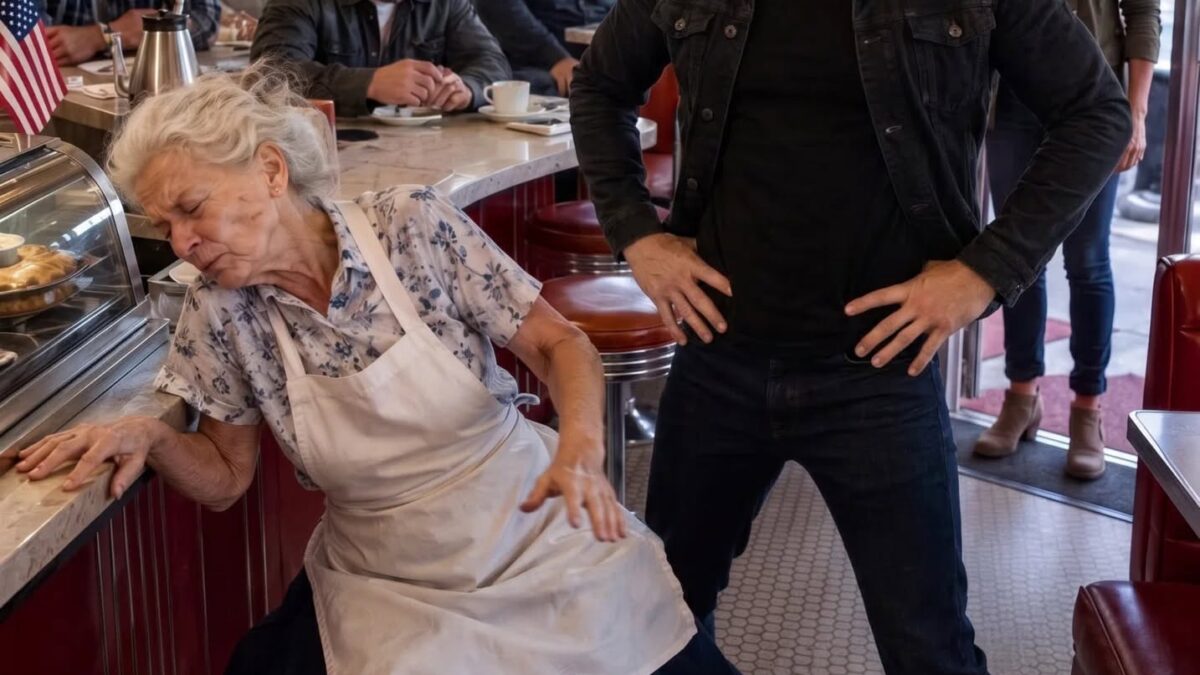
MY 75 YEAR OLD MOTHER WAS SHOVED IN HER OWN DINER AND THE SHERIFF CALLED IT A FALL THEN TWO BLACK SUVS ARRIVED AND AN OFFICER CALLED ME COLONEL
The video lasted twelve seconds.
That was all it took to pull me out of a briefing room at Fort Bragg and send me back to the North Carolina town I had spent most of my adult life avoiding.
Twelve seconds.
My mother behind the counter.
Travis Cain leaning toward her.
A hand rising.
My seventy five year old mother falling.
Regular customers lowering their eyes.
And one sentence from Travis that I replayed so many times on the drive home that I could hear it even after I shut off the phone.
“Around here, I do whatever I want.”
At first, I thought the worst part was seeing my mother hit the floor.
I was wrong.
The worst part came later.
It came when I realized everyone in that diner already knew Travis was telling the truth.
My phone vibrated against the conference table at 1420 hours.
Twelve officers were looking at a logistics map projected across the wall.
I still had a laser pointer in my hand.
Colonel Nicole Turner.
Commanding officer.
More than twenty years in the United States Army.
I had spent most of my adult life learning to control my face when bad information entered a room.
Equipment failure.
Weather.
Casualty reports.
Operational problems.
You do not react first.
You assess.
You verify.
You decide.
Then Carol’s name appeared on my phone.
Carol lived three houses from my mother.
She had known me since I was thirteen.
She did not call during duty hours.
I stepped into the hallway.
“Carol?”
“Nicole.”
Her voice shook.
“You need to see what happened to your mother.”
The video arrived before she finished speaking.
I pressed play.
Turner’s Family Diner filled the screen.
Red vinyl booths.
Chrome edged tables.
The brass bell above the front door.
The pie display Dad built himself in 1989.
My mother stood behind the counter in the faded apron she had been wearing since the Clinton administration.
There was a brown stain near the pocket shaped vaguely like Ohio.
I had offered to replace it at least ten times.
She always gave the same answer.
“This one has another ten good years left.”
At seventy five, Evelyn Turner still opened the diner before sunrise.
She knew who took sugar.
Who lied about being on a diet.
Who had lost a spouse.
Whose son had come home from college.
Which truckers needed coffee strong enough to make their hands shake.
My father used to say the diner was not really a restaurant.
It was the town’s living room.
The video showed why that description no longer felt true.
A man stood across from Mom.
I recognized Travis Cain almost immediately.
Photographs.
Local newspaper articles.
Cain Realty charity events.
His father, Wade Cain, owned enough commercial property in the county that people often joked you needed his permission to sneeze downtown.
Travis pointed at something on the counter.
A document.
Mom shook her head.
Then she made a gesture I knew better than my own signature.
Both hands slightly raised.
Palms out.
No.
She used to do it when Dad tried to convince her to buy something unnecessary.
No.
When I was sixteen and asked if I could stay out after midnight.
No.
When the doctor told her after shoulder surgery that she should close the diner for two weeks.
Absolutely no.
Travis moved.
His hand rose.
The frame shifted.
Mom fell beside the counter.
Her glasses skidded underneath a booth.
Nobody stood.
That was the detail that stayed with me.
Six people were visible.
Men and women who had known my mother for decades.
One man had eaten breakfast at that counter almost every morning since his wife died.
Another had borrowed money from Mom when his daughter needed medicine.
A woman in the corner had once left her two children with my parents during an emergency.
They all looked down.
Travis adjusted his jacket.
Then he looked around the room.
“Around here,” he said, “I do whatever I want.”
The clip ended.
I stared at the black screen.
Once.
Twice.
Three times.
Then I requested emergency leave.
I gave command the minimum necessary explanation.
Family emergency.
My executive officer asked if I wanted transportation arranged.
“No.”
I returned to the briefing room.
Finished the immediate handoff.
Delegated everything necessary.
I do not remember much of what I said.
Training carried me.
My body remained at Fort Bragg.
My mind was already standing beside my mother.
Rank meant something in briefing rooms.
It meant nothing on the flight home.
I was not Colonel Turner.
I was Evelyn Turner’s daughter.
And someone had put my mother on the floor of the diner my parents had spent nearly fifty years keeping alive.
The hospital sat twenty minutes outside town.
Mom had bruising along her face and a significant injury to her shoulder.
Nothing immediately life threatening.
That should have calmed me.
It did not.
I entered her room.
She looked at me.
For one second, neither of us spoke.
Then she said:
“You shouldn’t have come.”
Not hello.
Not thank God.
Not I’m okay.
You shouldn’t have come.
That frightened me more than the video.
I set my bag down.
“Someone put you on the floor of your own restaurant.”
“I fell.”
“Mom.”
“I lost my balance.”
“I have video.”
Her expression changed.
Only slightly.
But I saw it.
“Who sent you that?”
“Carol.”
Mom looked toward the door.
Not at me.
The door.
That movement told me she was afraid someone might be listening.
I lowered my voice.
“What does Wade Cain want?”
She pulled the blanket higher.
“The diner.”
“What else?”
“The land behind it.”
“Why?”
“He says he wants to redevelop the block.”
“And you said no.”
“Your father said no first.”
My stomach tightened.
“What?”
Mom closed her eyes.
“He tried to buy us out years ago.”
“How many years?”
“Before your father died.”
My father, Thomas Turner, had died six years earlier on Route 9.
Single vehicle accident.
Dry road.
Daylight.
A curve he had taken thousands of times.
The sheriff’s report said mechanical failure was possible but inconclusive.
Dad supposedly lost control.
Hit a guardrail.
Rolled down an embankment.
Dead before paramedics arrived.
At the time, grief made questions feel pointless.
He was gone.
Nothing would return him.
But sitting beside my mother, hearing that Wade Cain had pressured him over the diner before the crash, I felt an old locked door inside me move.
“How long before Dad died?”
Mom’s eyes filled.
“Nicole.”
“How long?”
“A few weeks.”
I stared.
“Why didn’t you tell me?”
“Because you were deployed.”
“That does not answer the question.”
“It answers enough.”
“No.”
She turned away.
I saw tears now.
“Don’t gather a storm.”
Mom had used that phrase my whole life.
If I wanted to confront a teacher.
Don’t gather a storm.
If somebody insulted the family.
Don’t gather a storm.
If Dad and I argued.
Don’t gather a storm.
It meant trouble grows when fed attention.
Usually she was right.
This time, trouble had already entered her diner.
“Mom.”
She looked at me.
“The storm is already here.”
Her good hand reached across the blanket and closed around mine.
Still strong.
“You don’t know these people anymore.”
“I know enough.”
“No.”
Her grip tightened.
“You know the boy.”
“Travis?”
“Yes.”
“You don’t know the father.”
“Wade.”
“No.”
Her voice dropped.
“You don’t know who protects them.”
That sentence followed me into the next morning.
I started with witnesses.
Not as a colonel.
Not in uniform.
Jeans.
Sweatshirt.
Hair tied back.
No rank insignia.
No official car.
Just Nicole Turner asking what happened to her mother.
Kayla, the waitress, wiped the same section of counter so many times the stainless steel looked polished.
“I didn’t see anything.”
“You were three feet away.”
“I was busy.”
“With what?”
“Coffee.”
I looked at the empty diner.
“Kayla.”
Her hands stopped.
Then started again.
“I didn’t see anything.”
The cook claimed he had been in the freezer.
One regular said he was in the bathroom.
Another stared into his coffee and told me Mom had simply slipped.
Nobody believed themselves.
That was obvious.
Fear lives in the body before it enters words.
White knuckles.
Dry swallowing.
Eyes toward the windows.
Voices that lower whenever a name is mentioned.
Every person in that diner was afraid of the same family.
Then I spoke to the building owner.
“The camera system malfunctioned.”
“All cameras?”
“Unfortunately.”
“On the same day?”
He shrugged.
“Old equipment.”
“Can I see the system?”
“No.”
“Why?”
“Private property.”
I stared.
He looked away.
Then Sheriff Don Harper invited me to his office.
Or technically, I invited myself.
Harper had been sheriff almost eleven years.
He had known Dad.
Attended the funeral.
Shook my hand.
Told me Thomas Turner had been “one of the good ones.”
Now he sat behind a large oak desk with framed photographs of politicians and charity dinners behind him.
“Nicole.”
“Sheriff.”
“I heard you’ve been asking questions.”
“My mother was injured.”
“She fell.”
I waited.
He smiled faintly.
“Unfortunate accident.”
“Have you seen the video?”
“No.”
“Would you like to?”
“No.”
That answer surprised even me.
“You don’t want to see evidence related to an incident you’re calling accidental?”
“There’s no cooperating victim alleging a crime.”
“My mother is afraid.”
“That’s speculation.”
“Six witnesses are also afraid.”
“Again, speculation.”
I set my phone on his desk.
“Watch twelve seconds.”
He did not touch it.
“Without a cooperating witness, there is nothing meaningful to investigate.”
“You haven’t asked me what the video shows.”
“I’ve heard.”
“From who?”
He folded his hands.
“This town has enough problems without outsiders creating more.”
I almost smiled.
“Outsider?”
“You’ve been gone a long time.”
“My family has paid taxes here for fifty years.”
“You know what I mean.”
Actually, I did.
I had left.
Military.
Assignments.
Deployments.
Promotions.
Different states.
Different countries.
To people like Harper, absence weakened belonging.
To families like the Cains, absence created opportunity.
“What exactly does the incident report say?”
He paused.
“An elderly woman lost her balance during a verbal disagreement.”
“Elderly woman.”
His jaw tightened.
“You know her name.”
“Nicole.”
“You attended my father’s funeral.”
“This isn’t personal.”
“That’s what worries me.”
I stood.
Harper stayed seated.
“Leave it alone.”
There it was.
No official language now.
No neutral sheriff.
Just a warning.
I picked up my phone.
“Why?”
His eyes hardened.
“Because sometimes digging through old dirt only makes everybody filthy.”
I walked out.
By dusk, I knew three things.
One, Travis Cain had confronted my mother over property.
Two, every local witness was frightened.
Three, the sheriff had decided the result before viewing the evidence.
That usually meant the incident was not isolated.
People do not build a system of fear around one shove.
At 8:17 that evening, someone knocked softly on Mom’s front door.
Not the doorbell.
Knock.
Pause.
Two more.
I opened it.
Kayla stood beneath the porch light wearing a gray hoodie.
She looked toward the road before speaking.
“I lied.”
I let her inside.
Mom was sleeping.
Kayla sat at the kitchen table.
Her hands shook.
“I recorded more.”
“How much more?”
She unlocked her phone.
“Forty seven seconds.”
The video started earlier.
Travis entered.
Wade followed.
Gray suit.
Calm.
He stood near the pie display while his son placed papers in front of my mother.
Travis demanded her signature.
Mom refused.
He pushed the document closer.
She refused again.
Then the shove.
The fall.
The silence.
And Wade Cain watched.
No surprise.
No attempt to intervene.
No concern.
Just a man observing a process.
That detail mattered.
Travis behaved like a bully.
Wade behaved like someone supervising a procedure.
I made three copies.
One on encrypted storage.
One sent off device.
One preserved locally.
Kayla touched my wrist before leaving.
“They know people talk.”
“Who?”
“The Cains.”
“How?”
“I don’t know.”
“Has anybody threatened you?”
“No.”
Too fast.
“Kayla.”
She stared at the table.
“My brother works for a company that rents equipment from Wade.”
I understood.
Economic pressure.
Not a gun.
Not a written threat.
Something more effective in a small county.
“Did anyone tell you your brother would lose his job?”
“No.”
“Did you believe he might?”
“Yes.”
There it was.
“How long has this been happening?”
She looked at me.
“Longer than I’ve worked at the diner.”
“How long is that?”
“Eight years.”
My father died six years ago.
I did not sleep much.
The next morning I began with county property records.
Thirty families had sold land to Cain Realty Group over six years.
That number alone meant nothing.
Then I looked at timing.
Most rejected initial offers.
Then came problems.
Lien disputes.
Building inspections.
Permit failures.
Code complaints.
Property damage.
Drainage issues.
Tax irregularities.
One farmer had a gate destroyed.
A widow received three code citations in two months after refusing to sell.
A mechanic’s shop suddenly failed an inspection despite passing three weeks earlier.
Every complaint went through Harper’s office or agencies controlled by people closely connected to Mayor Linda Brooks.
Every zoning request Cain Realty submitted was eventually approved.
Pattern.
Not proof yet.
But enough to keep digging.
Then I found my father.
Thomas Turner.
Property assessor file.
Diner parcel.
Rear land.
Three rejected offers from Cain Realty.
The final notation was handwritten.
OWNER UNCOOPERATIVE.
Below it:
RECOMMEND ESCALATION.
Date.
Three weeks before Dad died.
I did not accuse anyone.
Accusations make people defensive.
Documents make them explain.
I copied the page.
Photographed the original.
Logged the location and time.
Preserved metadata.
Old habits.
Military training teaches process.
So does years of dealing with systems where one missing detail can destroy credibility.
I carried everything back to the diner the next morning.
Mom had returned to work despite the sling.
Of course she had.
She was pouring coffee one handed.
“Doctor tell you to do this?”
“No.”
“So he told you not to.”
“He’s young.”
“He has a medical degree.”
“So did the man who told your father coffee caused his back pain.”
“That was probably correct.”
“Traitor.”
For five seconds, we were normal.
Then the bell rang.
Travis Cain entered smiling.
The diner went quiet.
Again.
It happened so naturally I almost missed it.
Conversation stopped.
Spoons stopped.
A man lowered his newspaper.
Travis walked to the counter.
“I hear your daughter has been digging through records.”
Mom kept the coffee pot in her hand.
“She is worried about me.”
“She should worry about herself.”
I stood from the corner booth.
“You must be Travis.”
He turned.
He looked me up and down.
Not impressed.
Good.
“Nichole?”
“Nicole.”
He smiled.
“Right. Soldier girl.”
I had been called worse.
“I saw your video.”
His smile remained.
“What video?”
“The one where my mother falls.”
“Old people fall.”
“After people put hands on them?”
He leaned against the counter.
“I think you’ve been away too long.”
“I hear that a lot.”
“My family has done business here longer than you’ve been alive.”
“My family has served eggs here almost as long.”
He smiled.
“Eggs don’t control zoning.”
There it was.
Not subtle.
I waited.
Travis lowered his voice.
“Let me explain something. Around here, my family decides what becomes a problem and what disappears.”
I looked at him.
“My father’s accident disappeared quickly.”
For half a second, his face changed.
Tiny.
Surprise.
Then something almost pleased.
“Accidents happen to people who don’t know when to leave things alone.”
Behind him, Mom froze.
Coffee stopped inches above a mug.
The entire diner heard it.
Travis realized that too late.
He recovered with a smile.
I kept my voice calm.
“The law is coming, Travis.”
He laughed.
“No, it isn’t.”
“It’s simply late.”
He stepped closer.
Pressed his shoulder into mine.
Testing.
Provoking.
I did not move.
A person used to power expects reaction.
Fear.
Anger.
Retreat.
I gave him none.
Then the brass bell rang again.
Sheriff Harper walked in.
Too quickly.
Almost as if somebody had called him before Travis entered.
He looked at me.
Not Travis.
“Ms. Turner, you need to leave.”
I almost laughed.
“From my mother’s diner?”
“We won’t tolerate disturbances.”
“What disturbance?”
“You’ve been antagonizing people.”
“Travis just threatened me.”
“I didn’t hear a threat.”
“You walked in five seconds ago.”
“That’s enough.”
He rested one hand near his duty belt.
Not drawing.
Signaling.
I looked around.
The regulars stared down.
Same posture as the video.
Trained silence.
Then two black SUVs pulled up outside.
Engines running.
Windows dark.
Harper looked toward them.
Travis did too.
Mom frowned.
The front passenger door of the first vehicle opened.
A man in Army service uniform stepped out.
Major Daniel Price.
My executive officer.
He removed his cap beneath the awning.
Entered the diner.
Looked past Harper.
Past Travis.
Straight at me.
“Good afternoon, Colonel Turner.”
Somebody dropped a coffee cup.
It hit the counter and broke into three white pieces.
Nobody moved.
My mother stared at Major Price.
Then at me.
“Colonel?”
I had never hidden my career from her.
But the regulars did not know.
Travis did not know.
Harper apparently did not know.
Small towns freeze people at the age they remember.
To them, I was Tom Turner’s daughter who joined the Army after college.
The mechanic.
The girl who left.
They did not know I had stayed.
Twenty years.
Promotions.
Commands.
Deployments.
Responsibility for people and equipment worth more than most county budgets.
Travis’s expression drained.
For the first time since I returned, he looked ordinary.
Not connected.
Not untouchable.
Just a man realizing he had miscalculated.
He swallowed.
“Convoy?”
Major Price glanced toward the vehicles.
“Yes.”
Harper stepped forward.
“This is a local matter.”
Price did not look at him.
He looked at me.
“Colonel Turner, I was instructed to inform you that the convoy is waiting whenever you’re ready.”
I turned toward Travis.
“You heard him.”
Harper’s jaw tightened.
“Nicole, whatever game you think you’re playing—”
“It isn’t a game.”
I reached into my jacket.
Military identification.
No dramatic display.
I placed it on the counter.
Harper looked.
Then outside.
Then at me.
His face changed.
Travis leaned forward.
“What exactly are you?”
I stared.
“The person you should have bothered to investigate before putting my mother on the floor.”
Silence.
My mother lowered her eyes.
Her fingers trembled around the coffee pot.
That hurt.
Mom had survived a recession.
Dad’s death.
A collapsed roof.
Cancer scares.
Years of working before dawn.
She had never been a timid person.
Now she was quiet.
Not because Travis frightened her alone.
Because she knew more.
I stepped behind the counter.
“Mom.”
She looked at me.
“Tell me what Dad knew.”
Her lips parted.
Nothing.
Harper stepped between us.
“That’s enough.”
I turned slowly.
“No.”
“You’re interfering with an investigation.”
“You told me yesterday there was no investigation.”
“We have new information.”
“My video?”
He said nothing.
“You never asked for it.”
“I didn’t need to.”
“You called my mother’s injuries an accidental fall without viewing footage, properly interviewing witnesses, or asking why Travis Cain was present.”
Harper’s expression hardened.
“You don’t understand how this county works.”
“I understand exactly how it works.”
I looked toward the booths.
Six people.
Six sets of eyes down.
“That’s why everyone is afraid.”
Only Kayla looked at me.
She stood near the kitchen.
Eyes wet.
Then she nodded once.
Enough.
“Where is the original report?”
“Sheriff’s office.”
“Who wrote it?”
“Deputy Mills.”
“Who reviewed it?”
Silence.
“Who authorized language saying accidental fall?”
Still silence.
Major Price stepped closer.
“Colonel, perhaps we should move the conversation somewhere more appropriate.”
Harper snapped:
“This is my jurisdiction.”
Price looked calmly at him.
“I didn’t say it wasn’t.”
Calmness unsettled bullies more than aggression.
The second SUV opened.
Another officer entered carrying a black case.
He handed me an envelope.
No logo.
No return address.
Inside:
PROPERTY TRANSFER — TURNER FAMILY DINER
ORIGINAL RECORD LOCATED
DO NOT TRUST COUNTY CHANNELS
I read it twice.
“Where did this come from?”
“Your father’s archived files.”
Mom’s coffee pot slipped.
It struck the counter.
She whispered:
“Your father burned those.”
I turned.
“What?”
“He burned everything.”
“What did he burn?”
“Papers.”
“What papers?”
“I don’t know.”
Her voice broke.
“He wouldn’t tell me.”
I crouched beside her.
“Why did you never tell me?”
She touched my cheek.
“You were already carrying too much.”
“I’m your daughter.”
“I know.”
“You were always the one who thought you could fix everything.”
I almost laughed.
Instead my eyes burned.
“I couldn’t fix Dad.”
She looked away.
“No.”
“And I couldn’t save you from this.”
Mom gripped my hand.
“You weren’t supposed to come home.”
I froze.
“What does that mean?”
She looked toward the windows.
“You didn’t call me.”
“What?”
“Carol called.”
Mom stared.
“I never asked her to.”
Cold moved through me.
“Where is Carol?”
No one answered.
I called.
Voicemail.
Again.
Nothing.
Major Price checked his phone.
His face tightened.
“Colonel.”
“What?”
He turned the screen.
CAROL’S HOUSE IS EMPTY.
My mouth went dry.
Then Travis laughed.
Quiet.
Almost amused.
Everyone looked at him.
“You people really don’t understand.”
I stepped closer.
“What?”
“You think Wade is the problem.”
I followed his gaze.
Wade Cain stood near the pie display.
Same gray suit as the extended video.
Silent.
Watching.
Smiling slightly.
“Ask your mother,” Travis said.
“Ask her what?”
“Ask why your father kept a second key.”
Mom went white.
I turned.
“Second key?”
She closed her eyes.
For the first time, she looked more afraid of the truth than the Cains.
“Under the floor.”
“What?”
“The floor beneath the counter.”
The counter my mother had worked behind for fifty years.
The counter Dad had repaired repeatedly.
The counter beneath which he carved a tiny T because, according to him, every carpenter should leave a mark where nobody else would look.
I crouched.
Ran my hand along the trim.
Wood.
Screws.
Then metal.
A plate.
I pressed it.
Click.
A floor panel lifted.
Harper moved instantly.
“Don’t touch that.”
I looked at him.
“Why?”
His face answered.
He knew.
I opened the panel.
Metal box.
Old.
Dusty.
Locked.
A faded photograph attached to the lid.
My father stood outside the diner.
Younger.
Beside Wade Cain.
Between them, a third man.
Unknown.
On the back, Dad’s handwriting:
If anything happens to me, find out who he is.
I studied the stranger.
Familiar.
Then memory snapped into place.
I had seen him in an official military briefing photograph three years earlier.
Standing behind a senior federal official.
My hands went cold.
Major Price noticed.
“You know him?”
“Yes.”
“Who?”
I looked at Harper.
Wade.
Mom.
“I don’t know yet.”
Wade stopped smiling.
I held up the box.
“Open it.”
Price produced a small tool.
Harper stepped forward.
“You cannot remove evidence from a local business.”
I looked at him.
“This isn’t your evidence.”
“Then whose is it?”
“That’s what we’re about to find out.”
The lock snapped.
Inside:
Cassette tape.
Property deed.
Brass key.
Three photographs.
A folded piece of paper.
Dad’s handwriting.
I opened it.
Nicole — if you are reading this, they finally found out what I knew.
I stopped breathing.
Mom covered her mouth.
Behind me, Travis whispered:
“No.”
He stared at the brass key.
Not me.
Not Wade.
The key.
I lifted it.
“What does this open?”
Travis backed away.
Wade grabbed his arm.
“Enough.”
Travis looked at him.
“You said it was gone.”
Silence.
“What was supposed to be gone?”
No answer.
Price’s radio crackled.
“Colonel, we have a situation.”
“What situation?”
Pause.
“Someone just entered the old Turner property.”
“My father’s house?”
“Yes, ma’am.”
“Who?”
“We don’t know.”
Mom cried silently.
I squeezed the photograph.
“Take me there.”
Price nodded.
I turned toward the door.
Then Wade spoke.
“You don’t want to go there.”
I stopped.
He no longer smiled.
“Because if you open that door, Colonel Turner, you’ll finally learn what happened to your father.”
I stared.
“And you’ll learn his accident wasn’t the first time someone tried to kill him.”
Pause.
“It was the second.”
The drive to Dad’s old house took seven minutes.
It felt like seven years.
I sat in the rear seat of the lead SUV holding the photograph.
Dad looked forty in it.
Alive.
Confident.
Before grief aged all our memories.
People say grief becomes smaller.
It doesn’t.
You become larger around it.
You build work.
Habit.
Duty.
Relationships.
Eventually grief occupies less percentage of the total structure.
But the original weight remains.
Now mine had changed shape.
My father had been afraid.
He had left evidence.
And for six years, I had accepted a story written by a sheriff who might have helped bury the truth.
The old house appeared.
Porch light on.
It had not worked in years.
An officer stepped out first.
“Stay behind me.”
I almost smiled.
“I’m a colonel.”
“I know.”
He looked at the house.
“That’s why I’m telling you to stay behind me.”
Fair.
We approached.
Door unlocked.
Inside:
Old wood.
Dust.
Faint trace of Dad’s aftershave, or maybe memory inventing it.
For one impossible second, I expected him to call from the kitchen.
You’re late, Nicole.
Instead, officers cleared room after room.
Empty.
Then:
“Colonel.”
Study.
Dad’s desk drawer pulled open.
Papers on floor.
Nothing obviously stolen.
The search was targeted.
Wall behind the desk.
I remembered the brass key.
Under the molding, almost invisible, a keyhole.
I inserted it.
Click.
A narrow compartment opened.
Inside:
Digital recorder.
Red light blinking.
Waiting.
I pressed play.
Dad’s voice entered the room.
“If you’re hearing this, Nicole, I’m sorry.”
My knees nearly failed.
I sat.
“I discovered Wade Cain wasn’t simply buying property.”
Pause.
“He was using pressure, threats, forged documents, and people inside local government to force families out.”
I looked at the officers.
Nobody moved.
“But that’s not the worst part.”
The recording crackled.
“The sheriff’s office wasn’t merely looking the other way.”
My stomach tightened.
“They were helping.”
Dad described a system.
Every family refusing to sell received trouble.
Lien.
Inspection.
Complaint.
Property damage.
Permit.
Pressure.
“And when those methods failed, Wade had another solution.”
The recording stopped.
“That’s it?”
An officer examined the compartment.
“Memory card.”
Twenty three files.
Property records.
Photos.
Audio.
Names.
Dates.
Payments.
Then my father’s crash.
Not Harper’s report.
The original documentation.
Photographs of tire marks.
Damaged steering assembly.
Mechanic report.
One highlighted line:
BRAKE LINE FAILURE INCONSISTENT WITH COLLISION DAMAGE.
My hands began shaking.
Dad had not simply lost control.
Someone had interfered with the brakes.
I closed my eyes.
For six years, I had imagined his final seconds.
Now a new image appeared.
Dad pressing the pedal.
Nothing.
The road curving.
The realization.
Home only miles away.
My father had known something was wrong.
And he still tried to get back.
He taught me to change bicycle chains.
Stayed up through my childhood fevers.
Waited at the airport the day I left for military training.
His final instruction before I boarded had been:
“Don’t become hard just because the world is.”
I whispered:
“I’m sorry, Dad.”
Then the study door opened.
Everyone turned.
Wade Cain stood there.
Alone.
No sheriff.
No Travis.
No smile.
“I came to tell you the truth.”
I stood.
“You’re six years late.”
“Yes.”
His shoulders seemed lower.
Older.
“My son shoved your mother.”
“He assaulted her.”
“Yes.”
“You watched.”
He closed his eyes.
“Yes.”
“Why?”
“Because I was afraid of my own family.”
I said nothing.
He sat.
“My father built Cain Realty.”
That surprised me.
Wade always acted like the empire was his creation.
“He taught me land was leverage. People were obstacles. Fear was cheaper than lawsuits.”
“And you became him.”
“I tried to.”
His voice broke slightly.
“Until your father found out.”
Dad discovered the property scheme years before.
He confronted Wade.
Wade warned him.
Dad refused.
Then Wade’s father ordered somebody to sabotage Dad’s vehicle.
According to Wade, the first attempt failed.
“What first attempt?”
“Someone loosened hardware on his truck.”
“When?”
“Two months before the crash.”
Dad had mentioned a repair.
He thought a shop had made a mistake.
My stomach turned.
“And the second?”
“The brake line.”
“You knew?”
“Not before.”
I stared.
Wade could not hold my gaze.
“I knew something might happen.”
“That means yes.”
“I didn’t know the exact plan.”
“You knew enough to warn him.”
“Yes.”
“But you didn’t.”
“No.”
“Why?”
He looked at me.
“Because I was a coward.”
The answer almost made me angrier than another lie.
Cowardice sounds passive.
It is not always.
Sometimes cowardice is a decision repeated every day while somebody else pays the price.
“Where is your father?”
“Gone.”
“Dead?”
“No.”
My pulse changed.
“Where?”
“I don’t know.”
“When did he leave?”
“Yesterday.”
“Why?”
Wade looked toward the window.
“Because he knew you were coming.”
Behind me, radio traffic.
“Colonel, courthouse server accessed.”
I turned.
“By whom?”
“Login traces to sheriff’s office.”
Everything aligned.
Harper was not protecting Travis.
Not protecting Wade alone.
He was destroying records.
I picked up my phone.
“Send everything.”
“To whom?”
“State investigators. Federal investigators. Every agency with jurisdiction.”
The officer nodded.
“And send the diner videos.”
Twelve seconds.
Forty seven seconds.
The property files.
Dad’s recordings.
The crash report.
No more local chain of custody as the only copy.
No quiet office.
No one sheriff controlling what existed.
Wade looked at me.
“You’re going to destroy this town.”
I shook my head.
“No.”
I held up the recorder.
“The people who did this already damaged it.”
The officer beside me started transmitting files.
Wade sat with his head down.
I looked at Dad’s desk.
For years, I thought grief meant preserving the dead exactly as we remembered them.
Now Dad became more complicated.
He had been afraid.
Investigating.
Hiding evidence.
Keeping secrets from Mom.
Maybe trying to protect us.
Maybe making mistakes.
Still my father.
Truth did not diminish him.
It made him human again.
The next morning, the county woke to sirens.
State investigators arrived before sunrise.
The sheriff’s office was sealed.
Deputy Mills surrendered his computer.
Mayor Linda Brooks resigned before lunch.
Harper tried to describe the server access as routine maintenance.
It did not survive digital review.
Kayla gave a formal statement.
Then the witnesses began arriving.
One at a time.
Fear is contagious.
So is courage once somebody survives speaking first.
The diner regular who claimed he was in the bathroom admitted he saw Travis shove Mom.
The man who stared at his coffee produced photographs of damage to his farm after refusing a Cain purchase offer.
A widow brought letters.
A mechanic brought copies of repair notes.
An elderly couple produced an audio recording of Wade offering to “make inspection problems disappear” if they sold.
Thirty property transactions became forty questions.
Then sixty.
The story stopped being about one shove.
It became an entire town trained to lower its eyes.
Mom stood at the diner doorway while investigators carried boxes from sheriff vehicles.
Her arm remained in a sling.
Ohio shaped stain still on the apron.
She looked tired.
But she stood.
That mattered.
I approached.
“You okay?”
“No.”
Honest.
“Good.”
She frowned.
“Good?”
“Better than telling me you’re fine.”
A tiny smile.
Then:
“Your father wanted you kept out of this.”
I looked at her.
“How do you know?”
“He told me once.”
“When?”
“Before he died.”
“What did he say?”
She looked toward the road.
“That you had enough dangerous people in your life already.”
I laughed bitterly.
“He seriously thought the Army was more dangerous than this town?”
“Your father was not always sensible.”
“No.”
She touched my hand.
“He loved you.”
“I know.”
“He was afraid you’d come home and try to fix everything.”
“He knew me.”
“Yes.”
I looked through the window at the investigators.
“Maybe that’s why he left the key.”
Mom’s eyes filled.
“Maybe.”
Weeks followed.
Charges.
Interviews.
Subpoenas.
Audits.
I returned to duty when necessary and came home when required.
I refused to use military rank as a substitute for civilian process.
That distinction mattered.
People in town started telling a simpler story.
Colonel comes home.
Army convoy arrives.
Corrupt sheriff exposed.
It sounded dramatic.
It was also misleading.
My rank did not arrest anybody.
My uniform did not invalidate county corruption.
Evidence did.
Kayla’s video.
Dad’s records.
Digital logs.
Property documents.
Witnesses.
The convoy changed the psychological balance in the diner.
That mattered.
Bullies who believed everyone was isolated suddenly saw I was not.
But power without evidence is theater.
I wanted more than theater.
Travis was charged over the assault on Mom.
Harper faced investigations involving evidence manipulation and abuse of office.
Other officials faced corruption related allegations.
The investigation into Dad’s death reopened.
Wade cooperated.
Cooperation did not make him innocent.
I told Mom that once.
She said:
“I know.”
“He watched Travis.”
“I know.”
“He knew Dad was in danger.”
“I know.”
“And stayed quiet.”
“I know.”
“Then why do I still feel sorry for him?”
Mom looked at me.
“Because you’re not your enemy.”
I stared.
“What?”
“You don’t have to become cruel to recognize someone else did cruel things.”
That sounded exactly like something Dad would have said.
I looked away.
“Don’t do that.”
“Do what?”
“Sound like him.”
She smiled.
“You got your stubbornness from both of us.”
Three months later, Turner’s Family Diner looked almost the same.
Same booths.
Same brass bell.
Same cracked tile near the kitchen.
Same old clock above the pie case.
But the room felt different.
The regulars looked up now.
That was the first thing I noticed.
Kayla poured coffee.
Mom worked behind the counter one handed longer than any doctor would approve.
The man who had claimed not to see anything approached her.
He removed his cap.
“Evelyn.”
Mom looked at him.
“I owe you an apology.”
She waited.
“I should’ve stood up.”
Silence.
“I was afraid.”
Mom placed the coffee pot down.
“Yes.”
He looked surprised.
“You should have.”
No quick absolution.
No “It’s okay.”
Because it had not been okay.
He nodded.
“I know.”
That was enough.
Maybe forgiveness came later.
Maybe not.
Truth did not require immediate emotional comfort.
Mom had spent months being told she fell.
She deserved one moment where somebody named his own failure accurately.
After he left the counter, Mom looked at me.
“You going back?”
“To base?”
“Yes.”
I looked toward my uniform hanging over the back of a chair.
“Yes.”
“When?”
“Soon.”
She smiled.
“You always did like leaving.”
I laughed.
“No.”
I looked around the diner.
“I just needed to know this place was safe before I left.”
Mom squeezed my hand.
“You saved me.”
I shook my head.
“No.”
She frowned.
“The truth saved you.”
She rolled her eyes.
“That sounds like something from a recruitment poster.”
“Then stop trying to make me emotional.”
The bell rang.
A little girl entered holding her father’s hand.
She looked at Mom.
“Are you the lady who makes the best pancakes?”
Mom’s face changed.
Warm.
Normal.
“I used to be.”
The girl frowned.
“Used to?”
Mom straightened the stained apron.
“Let me show you.”
She walked toward the kitchen.
I watched.
Plates.
Coffee.
Conversation.
Someone laughing.
Life.
For the first time in months, the diner sounded normal.
I reached beneath the counter.
Found Dad’s tiny carved T.
Ran my thumb over it.
“I’m home, Dad.”
Then Mom yelled from the kitchen:
“Nicole! Stop standing around and come help me!”
I smiled.
“Yes, Mom.”
I went.
But that was not the end of what Dad left behind.
The investigation into his death continued.
Forensic review of the old crash documentation confirmed what the hidden report suggested.
The vehicle defect had not matched ordinary collision damage.
The tampering predated the crash.
There were also inconsistencies in Harper’s original handling.
Photographs omitted.
A mechanic’s written concern never entered the final county file.
A witness statement summarized inaccurately.
One missing evidence log.
Each omission looked small alone.
Together, they formed structure.
I had spent my career learning that corruption rarely announces itself with a signed confession.
It lives in gaps.
A form not filed.
A call not recorded.
An inspection done at the wrong time.
A deputy who “forgets.”
A mayor who approves.
A sheriff who decides twelve seconds do not matter.
Then years later, people ask how nobody knew.
People knew.
They simply knew in fragments.
Kayla knew Travis was dangerous.
The building owner knew cameras should stay off.
The regulars knew speaking came with consequences.
Dad knew landowners were being pressured.
Mom knew he had burned papers.
Wade knew his father ordered escalation.
Harper knew reports needed to sound accidental.
Everybody held one piece.
Power survived because no one person held enough pieces safely at the same time.
That was why preservation mattered.
Copies.
Separate channels.
Multiple witnesses.
The extended video changed the assault case.
Dad’s hidden box changed the property investigation.
The memory card changed the crash.
Harper’s server activity changed the corruption investigation.
Truth became stronger because no single person could erase it anymore.
That lesson followed me back to Fort Bragg.
One afternoon, Major Price asked:
“You okay?”
We were outside headquarters.
“Define okay.”
“You didn’t throw anyone through a diner window.”
“I considered it.”
“I know.”
“How?”
“You have a face.”
“I command a battalion.”
“You still have a face.”
I laughed.
Then he grew serious.
“Your mother?”
“Working.”
“Of course.”
“She thinks the sling is a suggestion.”
“Sounds familiar.”
I stared.
“Careful.”
He smiled.
Then:
“You know everyone thinks the convoy was some secret operation.”
I sighed.
“Of course they do.”
“People like a story.”
“What really happened?”
“You asked for transport and legal coordination.”
“Very boring.”
“Extremely.”
That mattered to me.
I did not want the lesson of the diner to become:
Have a powerful daughter.
Have a rank.
Have black SUVs.
Most people do not.
My mother deserved protection because she was a citizen, not because her daughter was a colonel.
The farmer deserved honest zoning.
The widow deserved property rights.
Kayla deserved to testify without fearing for her brother’s job.
Justice that depends on knowing somebody powerful is not justice.
That was one of the ugliest things the Cain system had demonstrated.
So when reporters eventually called, I said very little about my rank.
I talked about evidence.
Local accountability.
Witness protection.
Independent review.
Boring things.
Necessary things.
One reporter asked:
“Did Travis Cain underestimate you?”
I said:
“He underestimated my mother.”
That was closer to the truth.
Travis thought seventy five meant fragile.
He saw a woman in an old apron.
A small diner.
A widow.
No visible power.
Easy pressure.
He never understood that a person’s vulnerability does not make abuse legitimate.
He also misunderstood the town.
Fear had made people quiet.
Quiet did not mean loyal.
Once evidence existed outside Cain control, silence cracked quickly.
That frightened the family more than my rank ever could.
Months later, Wade requested to speak with me through attorneys.
I almost refused.
Then agreed.
Not because I needed closure.
Because his father remained unaccounted for and Wade still knew things.
The meeting took place in a monitored office.
He looked ten years older.
No gray suit.
No confidence.
“You hate me.”
It was not a question.
“I don’t know you well enough to hate you.”
That surprised him.
“You knew my father was going to be hurt.”
“Yes.”
“You said nothing.”
“Yes.”
“You watched your son assault my mother.”
“Yes.”
“Why should I care what you have to say?”
“Because my father didn’t stop with yours.”
I waited.
He gave names.
Families.
People pressured.
One former contractor who disappeared after threatening to release records.
An inspector who suddenly moved away.
A deputy transferred.
More.
I listened.
Then asked:
“Why now?”
Wade looked down.
“Because fear only works when you think obeying will save you.”
“And?”
“I finally understood it never saved me.”
I did not comfort him.
That insight came at other people’s expense.
Still useful.
Not absolution.
“Your son?”
“He blames me.”
“Reasonable.”
Wade almost smiled.
Then didn’t.
“He says I raised him to believe consequences were for people without money.”
“That sounds accurate.”
Wade looked toward me.
“You enjoy this?”
“What?”
“Watching us fall.”
I considered.
“No.”
He seemed disappointed.
Maybe he wanted hatred.
Hatred can make guilt easier.
If the victim hates you, you can imagine the conflict as mutual.
But I did not need emotional symmetry.
“My father is still dead.”
I continued.
“My mother still hit the floor.”
“People lost land.”
“Families lived scared.”
“Your collapse does not restore those things.”
Wade looked down.
“What do you want?”
“The truth.”
“That’s all?”
“No.”
I leaned forward.
“I want systems changed so another seventy five year old woman does not need a colonel daughter to get a sheriff to look at a video.”
He stared.
“That sounds harder.”
“It is.”
Revenge is simpler than reform.
That lesson bothered me.
A villain goes to prison.
Audience applauds.
Story ends.
Real systems leave vacancies.
Another sheriff.
Another developer.
Another politician.
If the incentives remain, somebody else learns the same tricks.
So the county investigation grew into audits.
Conflict of interest rules.
Property complaint review.
External oversight.
Witness procedures.
Some reforms lasted.
Some became paperwork people hated.
Good.
Sometimes inconvenience is the price of preventing power from becoming invisible.
Mom did not care about any of that.
Not really.
She cared whether the diner stayed open.
Whether Kayla felt safe.
Whether someone would fix the back freezer.
Whether the Saturday breakfast crowd still complained about toast.
Normal things.
Her priorities helped me.
I could have made the diner a monument to what happened.
She refused.
“No plaques.”
“I didn’t suggest one.”
“You were thinking it.”
“I was not.”
“You get that look.”
“What look?”
“Colonel look.”
I laughed.
“Fine.”
“No commemorative nonsense.”
“Okay.”
“No news cameras inside.”
“Agreed.”
“And absolutely no renaming pancakes after me.”
“That wasn’t even a possibility.”
She pointed a spatula.
“I know you.”
We laughed.
That was healing.
Not pretending nothing happened.
Refusing to let it become everything.
Dad’s hidden recorder eventually came home after evidentiary processing.
I listened once more.
Alone.
This time, I noticed something at the end of the file I had missed.
Breathing.
Then Dad speaking more softly.
“Nicole, if this reaches you, don’t let what happened to me make you hard.”
I stopped.
Same sentence.
Years apart.
Airport.
Recorder.
Don’t become hard just because the world is.
He had worried about that.
Maybe because he knew me.
I had always been good at converting fear into action.
Anger into structure.
Grief into work.
Useful traits.
Dangerous too.
You can become so functional that softness begins to feel irresponsible.
Dad did not want that for me.
Mom didn’t either.
That explained her silence differently.
She had not only been afraid of the Cains.
She was afraid of what I would become if I came home furious.
That did not justify hiding truth.
But I understood her better.
I called her.
“Did Dad ever tell you he thought I was hard?”
She laughed.
“All the time.”
“What?”
“Not hard exactly.”
“What exactly?”
“Intense.”
“That is worse.”
“He loved you.”
“You keep using love to protect his insults.”
“He said you could turn a grocery list into an operation order.”
“That is efficient.”
“You color coded Thanksgiving.”
“There were twenty people.”
Mom laughed harder.
The sound loosened something in me.
Dad had died.
But not every memory had to become evidence.
He had also been annoying.
Funny.
Stubborn.
Human.
The investigation had temporarily turned him into a victim.
I wanted my father back.
Not the file.
The man who burned toast.
Who forgot anniversaries until Mom threatened him.
Who taught me to change oil.
Who carved a T where nobody could see.
Justice mattered.
So did refusing to let murder become the most important fact about his life.
That balance took time.
Travis pleaded not to some charges and fought others through legal process.
I did not attend every hearing.
People found that strange.
“Don’t you want to see him answer for it?”
The first time, yes.
The fifth?
No.
My mother’s recovery mattered more.
My command mattered.
My own life mattered.
Accountability does not require victims to build a home inside courtrooms.
That was another lesson.
Mom attended one hearing.
She wore the Ohio stained apron beneath her coat because she said it made her feel stubborn.
The prosecutor asked if she wanted to make a statement later.
She did.
Short.
“I said no to selling my property.”
Pause.
“That should have been the end of the conversation.”
That was all.
Perfect.
Not because it was dramatic.
Because it identified the original violation.
No.
A complete answer.
Travis and his family treated it like negotiation.
Dad had said no.
Pressure increased.
Mom said no.
Travis escalated.
Thirty families said no.
Then liens.
Inspections.
Damage.
Corruption.
The entire system existed because powerful people refused to accept that another person’s property, body, or decision remained theirs after saying no.
I thought about that often.
Respecting no is a small test of character.
People who fail it in small ways sometimes build large systems to avoid hearing it.
Wade’s father built one.
Harper enforced one.
The mayor facilitated one.
Travis inherited one.
Then a seventy five year old woman said no in a diner.
He shoved her.
That one act exposed much more.
Not because Mom planned it.
Because power had become arrogant enough to perform itself in public.
Arrogance leaves evidence.
Twelve seconds.
Then forty seven.
Then property files.
Then the box.
Then Dad’s recorder.
Then server logs.
A structure collapsed through accumulation.
I kept a copy of the original twelve second clip.
For a while, I watched it too often.
Punishment.
Why didn’t I know?
Why wasn’t I here?
Why did the regulars do nothing?
Why did Mom keep secrets?
Why did Dad?
Eventually, my therapist asked why I kept replaying it.
“To remember.”
“You need twelve seconds to remember your mother was assaulted?”
“No.”
“Then what are you trying to find?”
I had no answer.
Maybe an alternate outcome.
A frame where someone stands.
A frame where Mom steps back.
A frame where Travis doesn’t move.
Video cannot create alternatives.
It only preserves one past.
I stopped watching.
Saved it.
Did not delete.
But stopped.
Memory does not need constant re injury to remain valid.
That helped.
Mom’s shoulder improved.
Her face healed.
Her fear took longer.
The first time a stranger entered the diner wearing an expensive suit, I saw her freeze.
She recovered quickly.
But I noticed.
“You okay?”
“Yes.”
I waited.
She sighed.
“No.”
“Better.”
“You’re irritating.”
“Genetic.”
She looked toward the man.
“He’s just selling insurance.”
“Probably terrifying.”
“Nicole.”
I smiled.
She eventually went to counseling.
She complained constantly.
“The woman asks too many questions.”
“That’s the profession.”
“She wants to know how I feel.”
“Disgusting.”
Mom laughed.
Then kept going.
That mattered.
Strength had been her identity so long that fear felt like failure.
It wasn’t.
A seventy five year old woman can be strong and frightened.
A colonel can too.
I had to learn the same lesson.
The first time I drove Route 9 after reading Dad’s crash report, my hands tightened on the wheel.
I knew the curve.
I slowed.
Too much.
A car behind me honked.
I pulled over.
Sat.
Anger.
Grief.
Fear.
I had driven routes under fire overseas.
Yet one North Carolina road nearly broke me.
Trauma does not respect résumé.
I called Mom.
“Where are you?”
“Route 9.”
Silence.
“Pull over.”
“I am.”
“Good.”
“I feel ridiculous.”
“No.”
“I’m a colonel.”
“You’re also my daughter.”
There it was.
The identity beneath rank.
I breathed.
Mom stayed on the phone until I drove home.
Roles reverse without asking.
Once she taught me to drive.
Now I protected her.
Then she steadied me on Dad’s road.
Family is healthiest when care moves both directions.
Not ownership.
Not debt.
Care.
I understood that more clearly after watching the Cain family destroy itself through fear.
Wade obeyed his father.
Travis obeyed Wade until obedience became identity.
Everyone called it family.
But loyalty without morality becomes complicity.
I thought of officers under command.
The Army teaches obedience too.
But lawful obedience.
Professional duty.
Ethical limits.
Authority is not absolute.
That distinction matters in every institution.
Family included.
Mom had refused Wade because Dad had refused him.
But eventually, she explained another reason.
“The back parcel.”
“What about it?”
“Your father wanted to turn it into a community garden.”
I stared.
“Dad?”
“He had terrible tomatoes.”
“That’s why I’m surprised.”
She smiled.
“He said the diner had taken care of us. He wanted the land to take care of people too.”
“Why didn’t he do it?”
“Money.”
“Then cancer?”
“No, that was Uncle Ray.”
“Right.”
“Your father just procrastinated.”
That sounded more like him.
After the investigations stabilized, Mom and I used part of the rear parcel exactly that way.
Not because I wanted to fulfill every unfinished dream.
But because this one felt right.
Raised beds.
Local volunteers.
Produce for families.
Dad’s terrible tomato legacy became a joke.
We named no buildings.
Mom enforced the rule.
One little wooden sign read:
TURNER GARDEN.
That was enough.
The first season, half the tomatoes split.
Mom said:
“Your father is supervising.”
I laughed until I cried.
Grief had become capable of humor again.
That was progress.
Carol returned.
Not dramatically.
Police located her two counties away.
She had left after sending me the first video because somebody followed her home.
No direct assault.
No written threat.
A truck parked outside for two hours.
Then moved when she called a friend.
She panicked.
Stayed with relatives.
Her empty house triggered our fear, but she was alive.
When I saw her, I hugged her harder than expected.
“You should have told me.”
“I did tell you.”
“Then disappeared.”
“I was scared.”
“Fair.”
She looked guilty.
“I thought sending the video would help.”
“It did.”
“I didn’t know what would happen.”
“Neither did I.”
She stared.
“You looked like you knew.”
“That’s the uniform.”
We laughed.
Carol eventually gave a statement too.
That twelve second clip had been recorded from a different angle than Kayla’s forty seven second video.
Together, they established timing better than either alone.
Again:
Fragments.
Truth assembled through people each holding one part.
Sheriff Harper’s defense centered on insufficient evidence at the beginning.
Technically, he was right about one narrow thing.
A twelve second video can omit context.
That is exactly why investigators investigate.
You do not refuse evidence because it may be incomplete.
You seek more.
His failure was not merely reaching the wrong conclusion.
He avoided the process that could have challenged the conclusion he preferred.
That distinction mattered to me professionally.
Bias often hides behind premature certainty.
I remembered it at work.
Whenever a subordinate brought information that contradicted expectations, I became more deliberate about asking:
“What would change my mind?”
Not because of Harper alone.
Because nobody is immune from deciding too early.
Even me.
Especially when family is involved.
I initially saw Travis as the entire problem.
He was not.
He was a product and participant in something larger.
That did not reduce his responsibility.
It improved the map.
Wade seemed central.
Then his father appeared above him.
Harper.
Mayor.
Officials.
No single villain.
A network.
Networks require different solutions than punches.
Good thing I had not broken Travis’s jaw on day one.
Tempting.
Unhelpful.
Evidence traveled farther.
One year after Mom’s assault, the diner held an anniversary breakfast.
Not an anniversary of the assault.
Mom refused.
“Anniversary of the new garden.”
Much better.
Kayla brought her kids.
Carol brought muffins nobody ate because Mom’s pancakes were better.
The regular who had apologized helped serve coffee.
Dad’s photograph sat near the register.
No speech.
No press.
I wore civilian clothes.
At one point, a boy asked Mom:
“Is she really a colonel?”
Mom pointed at me with a spatula.
“Unfortunately.”
I stared.
“Unfortunately?”
“She gives orders.”
“That is literally my job.”
“Not in my diner.”
Everyone laughed.
That moment mattered more to me than the SUV arrival.
Power returning to normal scale.
Inside the diner, I was not Colonel Turner.
I was Nicole.
Evelyn’s daughter.
The person ordered to refill syrup.
The uniform had helped crack intimidation.
But I did not want rank to colonize home.
The town had suffered enough from people turning status into entitlement.
I could not condemn the Cains for that while expecting special treatment myself.
So when someone tried to move me to the front of the breakfast line, I went to the back.
Mom yelled:
“She’s family. She doesn’t get customer privileges.”
Correct.
Dad would have approved.
Maybe.
He probably would have stolen bacon off my plate.
I touched the carved T beneath the counter before leaving.
Still there.
Some marks do not need plaques.
Years passed.
The reopened investigation into Dad’s death eventually reached legal conclusions through a process more complicated than any story headline captured.
Some evidence strong.
Some degraded by time.
Some people charged with related crimes.
Some never faced everything I believed they deserved.
That frustrated me.
Then I remembered something I told young officers.
Justice is not the same as emotional symmetry.
The law proves what evidence can support under standards designed for more than one victim’s certainty.
That can feel insufficient.
But replacing standards with anger creates the kind of system Harper built.
I accepted what could be established.
Not happily.
But consciously.
Dad’s death became officially recognized as something more than a simple accident.
That mattered to Mom.
She sat with the corrected records in her lap.
For a long time.
Then said:
“He knew.”
“What?”
“That I believed him.”
“About what?”
“The threats.”
I looked at her.
“You knew?”
“Some.”
“How much?”
“Enough that he told me he was worried.”
Anger returned.
“Mom.”
“I know.”
“You hid that.”
“Yes.”
“Why?”
“Because he asked me to.”
I stood.
Walked to the window.
Years of secrets.
Protection through silence.
The same logic that helped corruption survive.
Mom spoke quietly.
“We thought we were protecting you.”
“I was an adult.”
“You were deployed.”
“I was still your daughter.”
“Yes.”
I turned.
“You let me bury him believing he lost control of the car.”
Mom cried.
“I know.”
For a moment, I was furious.
Not at Travis.
Not Harper.
My mother.
Healing is rude that way.
It complicates loyalty.
Mom did something wrong trying to protect me.
Both true.
I did not excuse it.
She did not ask me to.
“I’m sorry.”
That mattered.
“I should have told you.”
“Yes.”
“I was scared.”
“I know.”
“I thought if we stopped talking about it, it would be over.”
I sat.
“That never works.”
“No.”
We were quiet.
Then I took her hand.
Not forgiveness in one cinematic moment.
Beginning.
Trust can be injured by loving people too.
Repair still requires truth.
That conversation brought Mom and me closer eventually because we stopped treating protection as permission to withhold reality.
I had done similar things with her.
Minimized deployments.
Said I was safe when I was not.
Told her missions were routine because she would worry.
Different stakes.
Same instinct.
Protect by controlling information.
I began seeing the pattern in myself.
That humbled me.
Families repeat behaviors even while criticizing them.
The Cains repeated domination.
The Turners repeated secrecy disguised as care.
One pattern was more destructive.
But our own still needed correction.
So Mom and I made a rule.
“No protective lies.”
She immediately said:
“That haircut looks good.”
I stared.
“You hate it.”
“I was trying to be supportive.”
“That violates the rule.”
We laughed.
Then applied it to more serious things.
Pain.
Fear.
Money.
Health.
The rule improved our relationship.
Truth does not mean dumping every detail.
It means not inventing false reassurance.
That distinction served me at work too.
One of the strangest consequences of everything was that the diner became busier.
People drove from other counties after news coverage.
Mom hated it.
“They take pictures of the counter.”
“Tourists.”
“This is not a museum.”
“They buy pancakes.”
“That part is acceptable.”
She installed a small sign:
NO VIDEO WITHOUT PERMISSION.
Perfect.
One afternoon Travis’s name appeared on a television news crawl above the counter.
Mom muted it.
I noticed.
“Don’t want to hear?”
“No.”
“Why?”
She flipped a pancake.
“Because he already took enough hours from me.”
That sentence changed how I handled my own attention.
We often give people who harm us additional years through obsession.
Every update.
Every appeal.
Every rumor.
Sometimes necessary.
Often not.
I stopped following every development.
My legal contacts told me what I needed.
The rest could happen without my emotional attendance.
Freedom is partly deciding what no longer gets your focus.
Mom understood before I did.
She had pancakes to make.
The county changed slowly.
New sheriff election.
Different mayor.
Oversight.
People remained skeptical.
Good.
Blind trust had been expensive.
But cynicism can become another prison.
So institutions had to earn confidence through behavior.
Transparency.
Records.
Meetings.
Tedious civic work.
No black SUVs.
That amused me.
The dramatic image everyone remembered was the convoy.
The real repair looked like paperwork, audits, elections, and people speaking at county meetings.
Boring democracy.
I respected it more afterward.
One farmer who lost land under pressure eventually received partial legal relief.
Others did not.
Some property could not simply be returned.
Money had moved.
Buildings demolished.
Lives rearranged.
That bothered me.
Truth does not restore everything.
I told Mom once.
“What’s the point if some people never get back what was taken?”
She looked at me like I had asked a stupid question.
“So they stop taking more.”
Simple.
Correct.
Justice has forward value even when backward repair is incomplete.
I wrote that down.
Not in an official notebook.
On a diner napkin.
Dad would have appreciated the medium.
The man in the old photograph, the one I recognized from the military briefing image, eventually became another branch of the investigation.
He had acted as an intermediary in development financing and political access.
My recognition did not prove wrongdoing.
Records did.
I was careful about that.
Familiarity creates suspicion.
Evidence creates conclusions.
He had appeared behind a senior official because of legitimate work.
He had also maintained relationships with people connected to Cain deals.
Investigators separated those facts.
Not every shadow was conspiracy.
That lesson mattered too.
Once you discover a real network, the mind wants to connect everything.
Dangerous.
You can become the mirror image of people who dismissed evidence.
They ignored connections that existed.
You can invent connections that do not.
Discipline means resisting both.
So when people asked whether military officials were part of the Cain scheme because I recognized the man from a briefing photo, I said:
“I have no evidence of that.”
Some were disappointed.
People like larger conspiracies.
Reality was already serious enough.
No embellishment needed.
That principle became personal.
I did not need Travis to have planned Dad’s death.
He was younger.
Not involved.
I did not need every Cain employee guilty.
Some simply worked.
I did not need every diner witness cowardly in every part of life.
Fear can silence decent people.
Accountability still mattered.
Complexity did not weaken the story.
It made truth stronger.
The first time I returned to the exact place where Mom fell, I noticed a dent in the lower cabinet.
Tiny.
Probably from years earlier.
For months I had assumed her body caused it.
Kayla told me no.
“That’s been there since I started.”
I laughed.
“How much else have I attached to that day that wasn’t actually from that day?”
“Probably a lot.”
Trauma reorganizes surroundings.
Everything becomes evidence.
The table.
The floor.
The bell.
The coffee cup.
Eventually those objects become objects again.
That is healing too.
One day I realized I had eaten breakfast at the same counter without thinking about Travis for forty minutes.
I almost celebrated.
Then decided not to turn forgetting into another performance.
I ate my eggs.
Mom complained I used too much hot sauce.
Normal.
Beautifully normal.
On the sixth anniversary of Dad’s death after the investigation reopened, Mom and I drove Route 9 together.
We stopped near the curve.
Not exactly where the crash occurred.
Safe turnout.
We stood beside the car.
Mom held flowers despite Dad’s opinion that roadside flowers were “traffic hazards with sentiment.”
“He said that?”
“Your father had opinions.”
“Yes.”
We did not place them near the road.
Mom put them in the car afterward.
We stood.
I expected some revelation.
Nothing.
Cars passed.
Birds.
Wind.
Road.
The location did not explain grief.
It was simply where one terrible event occurred.
That helped.
Places lose mystical power when revisited safely.
Not all.
But some.
Mom said:
“He would be furious you became a colonel.”
I stared.
“What?”
“He’d say you work too much.”
“That is not the same as furious.”
“He’d brag to everyone, then complain privately.”
“Accurate.”
We smiled.
I looked down the road.
“Do you think he knew he was going to die?”
“No.”
She answered quickly.
“How can you know?”
“I don’t.”
She looked at me.
“But I refuse to give his final moments to fear without evidence.”
That was wise.
We knew the brakes had been tampered with.
We did not know exactly what he thought in those seconds.
My mind had filled the gap with terror.
Mom refused.
Good.
Not every unknown needs the darkest interpretation.
We already had enough facts.
I let the imagined scene go.
Or started to.
Back at Fort Bragg, I eventually briefed a group of younger officers on decision making under uncertainty.
I did not tell the full personal story.
Only a principle.
“Do not confuse absence of testimony with absence of information.”
They looked at me.
I explained.
People can remain silent because they are afraid.
Witness behavior matters.
System incentives matter.
Data gaps matter.
But also:
“Do not fill silence with whatever answer you prefer.”
Both.
Investigate.
Document.
Verify.
That was the lesson Harper failed.
It was also the lesson I nearly failed when I first assumed Travis alone explained everything.
We learn from enemies sometimes.
Unpleasant.
Useful.
Mom joked afterward that I had turned being angry about the diner into a leadership seminar.
“She would,” Major Price said.
I ignored him.
One Christmas, the diner closed for a full day.
Rare.
Mom came to stay with me.
She looked around my quarters.
“Too neat.”
“It’s clean.”
“Sterile.”
“You live above a diner.”
“Which has personality.”
“It has grease.”
“Personality.”
We cooked.
Badly.
Dad had been the better holiday cook.
At dinner, Mom raised a glass.
“To no storms.”
I looked at her.
“No.”
She frowned.
“To weathering them.”
That was better.
We drank.
Because avoiding every storm is impossible.
Sometimes trouble arrives.
Sometimes family secrets surface.
Sometimes somebody powerful believes nobody will challenge him.
The goal is not a life without conflict.
It is having enough truth, support, and courage to survive conflict without becoming owned by fear.
Mom understood that now.
So did I.
Travis’s original sentence became almost famous locally.
“Around here, I do whatever I want.”
People quoted it sarcastically.
T-shirts appeared.
Mom refused to sell them.
“Profiting from an idiot is still letting him advertise.”
Fair.
One local kid painted a mural near city hall instead.
Not Travis.
A raised coffee cup.
Underneath:
AROUND HERE, WE LOOK UP.
Mom hated that too.
“Corny.”
“I like it.”
“You would.”
“It’s community art.”
“It’s corny community art.”
She secretly took a photograph.
I saw it on her phone.
Said nothing.
Years after the incident, I asked one of the regulars why nobody stood.
He looked ashamed.
“I thought somebody else would.”
Classic.
“And?”
“Then Travis looked around.”
He swallowed.
“I remembered what happened to Frank’s shop.”
“What happened?”
“Inspection shut him down after he argued with Wade.”
I knew that case.
“So you were afraid.”
“Yes.”
“For yourself?”
“My son worked for county maintenance.”
Economic networks again.
Fear rarely needs explicit threats when everyone knows examples.
“Do you still feel guilty?”
“Every day I walk in here.”
I looked at Mom.
She was laughing with Kayla.
“What do you do with it?”
“Try not to look away now.”
That was enough.
Not self punishment.
Changed behavior.
Maybe that is what accountability should aim for when repair is possible.
Guilt that produces honesty.
Not endless shame.
I thought of Wade.
His cowardice eventually became testimony.
Too late for Dad.
Useful for others.
Human beings rarely arrive at courage on ideal timelines.
We still have to decide what to do when it finally appears.
Accept information.
Do not erase responsibility.
Again, complexity.
Mom eventually retired.
Sort of.
She announced retirement at seventy nine.
Then continued working four mornings a week.
I said:
“That is not retirement.”
“It is reduced hours.”
“Words mean things.”
“I own the diner.”
Hard to argue.
At eighty, she sold partial ownership to Kayla and the cook.
Not Cain Realty.
Never.
The rear garden remained protected through a community trust.
She insisted.
“Learned from your father.”
“Which part?”
“Hide things under floors.”
I stared.
“Mom.”
She laughed.
“No. Proper paperwork.”
Good.
I watched her sign.
No pressure.
No fear.
Her hand steady.
That image replaced another.
The original video.
Travis demanding signature.
Mom falling.
Now:
Mom choosing.
Signing.
Transferring on her own terms.
Agency restored.
That mattered.
The diner remained Turner’s Family Diner.
Kayla offered to change the name.
Mom nearly fired her.
“I have seventy years invested in that sign.”
“You’ve owned the place fifty.”
“I’m counting childhood.”
Of course.
I returned for the reopening under the new ownership structure.
No convoy.
Rental car.
Jeans.
The bell rang.
A teenager behind the counter looked at me.
“Can I help you?”
Before I answered, Mom shouted from a booth:
“She thinks she’s important because she’s a colonel!”
The teenager’s eyes widened.
I sighed.
“Coffee.”
Mom laughed.
Home.
That is what home finally meant again.
Not a crime scene.
Not the place Dad’s secrets were hidden.
Not the town that looked away.
A place where history remained complicated but ordinary life had returned.
Some people left.
Some apologized.
Some never did.
The town did not become morally perfect because corrupt officials were removed.
No place does.
But people knew silence had a cost.
Maybe that changed enough.
One morning, years later, I found Mom cleaning the underside of the counter.
“What are you doing?”
“Looking for your father’s T.”
I crouched beside her.
There.
Tiny carving.
She touched it.
“He thought nobody knew.”
“You knew?”
“Of course.”
“Why didn’t you tell him?”
“Let the man have one mystery.”
We both laughed.
Then Mom grew quiet.
“He was scared near the end.”
“I know.”
“He hid it.”
“I know.”
“I wish he trusted me more.”
That surprised me.
“I thought he told you everything.”
“No.”
She shook her head.
“He thought protecting me meant carrying it alone.”
I looked at the carved letter.
“So did I.”
Mom looked at me.
“Yes.”
Another family pattern.
Strong people hiding burdens because they believe love means insulation.
Maybe Turner stubbornness.
Maybe human.
We had both changed.
I told her more now.
Not classified details.
Feelings.
Fear.
Stress.
She did the same.
It made us less heroic.
More connected.
I preferred that.
The old story of me arriving as Colonel Turner sometimes still circulated online.
People exaggerated it.
Said federal agents stormed the diner.
Said I had Travis arrested personally.
Said the Army seized the sheriff’s office.
Nonsense.
I corrected it when asked.
Not always.
You cannot chase every version.
But the truth mattered enough that I preserved my own.
My mother was assaulted.
Local authorities minimized it.
A longer video and property records indicated a broader pattern.
My father had preserved evidence.
Independent investigators acted.
Witnesses came forward.
Cases proceeded.
That is less cinematic than:
Colonel destroys corrupt town.
It is also more useful.
Because anyone can preserve evidence.
Anyone can seek independent channels.
Anyone can document.
Not everyone commands a battalion.
The story should not teach people they need rank to matter.
The first person who changed everything was Kayla.
Gray hoodie.
Shaking hands.
Forty seven seconds.
No rank.
No convoy.
Just courage.
Then Dad, years earlier.
A hidden box.
A recorder.
Then Carol.
Twelve seconds.
Then the farmer.
Widow.
Mechanic.
Witnesses.
I was one link.
Important.
Not singular.
That understanding kept me humble.
Mostly.
Mom would disagree.
“You’re still bossy.”
“Leadership.”
“Bossy.”
“No.”
She would smile.
“Colonel.”
I miss that now.
Mom lived years after the incident.
Long enough to complain about three more presidents, two diner refrigerators, rising coffee prices, and my inability to visit often enough.
She never stopped wearing that apron until Kayla finally stole it.
Not literally.
She replaced it and hid the old one.
Mom protested for weeks.
We framed the stained apron.
She hated that too.
Then secretly showed everyone.
People are complicated.
When Mom eventually passed, peacefully, nothing like Dad, I inherited the framed apron and the carved counter section Kayla had saved during renovations.
I kept both.
Not as symbols of victimhood.
As symbols of stubbornness.
The last time Mom and I talked about Travis, she said:
“Poor fool.”
I stared.
“Poor?”
“He thought strength meant people being afraid.”
“And?”
“Fear expires.”
She looked toward the diner.
“Respect lasts longer.”
That was Mom.
Simple sentences.
No leadership seminar.
Better.
I think that was what the whole story became for me.
Fear versus respect.
The Cains built fear.
Harper maintained it.
People complied.
But fear required maintenance.
Threats.
Examples.
Silence.
Control.
My parents built something smaller.
A diner.
Coffee.
Credit tabs.
Names remembered.
Meals.
Dad’s T under the counter.
Mom’s awful apron.
Respect took longer.
It also survived them.
Years after the Cain system collapsed, people still told stories about my parents.
Not because they were powerful.
Because they showed up.
That is a different kind of legacy.
I prefer it.
If I close my eyes, I can still see the first twelve seconds.
Mom falling.
Glasses sliding.
Regulars looking down.
Travis adjusting his jacket.
“Around here, I do whatever I want.”
But the video does not end there anymore in my mind.
I see the next parts.
Kayla on the porch.
The forty seven second recording.
County records.
Dad’s name.
The note saying escalation.
The diner the next morning.
Travis’s threat.
Harper walking in.
Two black SUVs outside.
Major Price entering.
“Good afternoon, Colonel Turner.”
The broken coffee cup.
Harper’s face.
The envelope.
The floor panel.
Dad’s photograph.
The brass key.
His voice in the old house.
The brake report.
Wade finally speaking.
Investigators arriving.
Witnesses looking up.
Mom standing behind the counter months later.
The little girl asking about pancakes.
Dad’s T beneath my fingers.
“I’m home.”
That is the full memory now.
Not twelve seconds of helplessness.
Years of truth afterward.
I once believed power meant arriving with enough force to stop someone.
Sometimes it does.
But the deeper power was preservation.
A video that survives deletion.
A document copied before disappearing.
A witness who speaks.
A mother who finally says she is afraid.
A daughter who refuses to accept “fall” when evidence says assault.
A town that eventually decides looking down is more dangerous than looking up.
My rank mattered in one moment.
It changed how Travis saw me.
Changed how Harper calculated.
But rank was not the ending.
Someday uniforms come off.
Commands change.
People retire.
Titles disappear.
What remains is whether people act when acting becomes costly.
Kayla did.
Carol did.
Dad tried.
Mom did.
The regulars eventually did.
I hope I did too.
Years after everything, a young officer asked me why I stayed in the Army so long.
I gave him several professional answers.
Service.
People.
Purpose.
Then he asked:
“What did your parents think?”
I smiled.
“My father thought I worked too much.”
“And your mother?”
“She thought everyone worked too much unless they worked in her diner.”
He laughed.
Then I thought about Dad’s sentence.
Don’t become hard just because the world is.
Maybe that was the best answer.
I stayed because service taught me structure.
But home taught me what structure was for.
Not control.
Protection.
Not authority for its own sake.
Responsibility.
That distinction separated me from men like Wade Cain.
I hope.
The final time I visited Turner’s Family Diner before Mom’s health declined, the morning crowd filled every booth.
Nobody knew it would be one of our last ordinary mornings together.
Those are the ones that hurt most afterward.
Not dramatic goodbyes.
Routine.
Mom slid coffee toward me.
“You staying all day?”
“Maybe.”
She frowned.
“What?”
“I have customers.”
“I’m a customer.”
“You don’t tip enough.”
“I’m your daughter.”
“Exactly.”
I laughed.
She moved away.
The bell rang.
People entered.
No one lowered their eyes.
I noticed that.
Years later.
Still.
They looked toward the door.
Normal reflex.
No fear.
I looked at Mom.
She caught me staring.
“What?”
“Nothing.”
“Colonel face again.”
“No.”
“You’re thinking too much.”
“Probably.”
She pointed toward the syrup bottles.
“Then think while working.”
I stood.
Refilled them.
Because some battles happen in briefing rooms.
Some on roads.
Some inside courtrooms and records offices.
Some happen under old diner floors.
But the battles that matter most can begin quietly.
A waitress deciding to save a video.
A father hiding evidence.
A mother refusing a signature.
A daughter asking one more question after the sheriff says there is nothing to investigate.
One frightened person deciding not to look away.
That is how the silence broke.
Not with two black SUVs.
Those came later.
The silence broke the moment somebody preserved the truth.
And once the truth existed in enough places, Wade Cain could no longer buy all of them.
Sheriff Harper could no longer bury all of them.
Travis could no longer frighten all of them.
One voice became three.
Three became ten.
Ten became a town.
My mother had been right when I was a child.
Bullies are powerful when everyone around them becomes quiet.
What she had not said was the opposite.
Their power starts dying the moment someone speaks.
That morning at Turner’s Family Diner, months after the investigations began, I looked around the room.
Coffee.
Pancakes.
Conversation.
The old wall clock.
The pie case.
Mom’s faded apron.
Nothing dramatic.
Nothing heroic.
Then a local man entered who had once refused to testify.
He removed his hat.
Looked directly at my mother.
“Morning, Evelyn.”
Mom looked back.
“Morning.”
Eye contact.
Simple.
Ordinary.
Once, he had stared at his plate because Travis Cain entered the room.
Now he looked up.
So did everybody else.
And that was when I knew the town had changed more than any indictment could prove.
The diner was noisy again.
Not frightened noise.
Life.
I reached beneath the counter one final time.
Touched Dad’s carved T.
Closed my eyes.
Then Mom shouted from the kitchen:
“Nicole! I can hear you pretending to be sentimental instead of helping!”
I opened my eyes.
“Yes, Mom.”
“Table four needs coffee!”
“I’m a colonel.”
“Not in here.”
The regulars laughed.
I picked up the coffee pot.
And I went.
Because she was right.
Inside Turner’s Family Diner, rank had never been the most important thing I carried.
The most important thing was the truth.
And once we stopped letting powerful people decide which version of the truth we were allowed to tell, nobody in that diner ever lowered their eyes the same way again.








