A 7 Year Old Girl Called 911 at 2:17 a.m. Because Her Mother Never Came Home Then Police Found One Photograph That Changed Everything
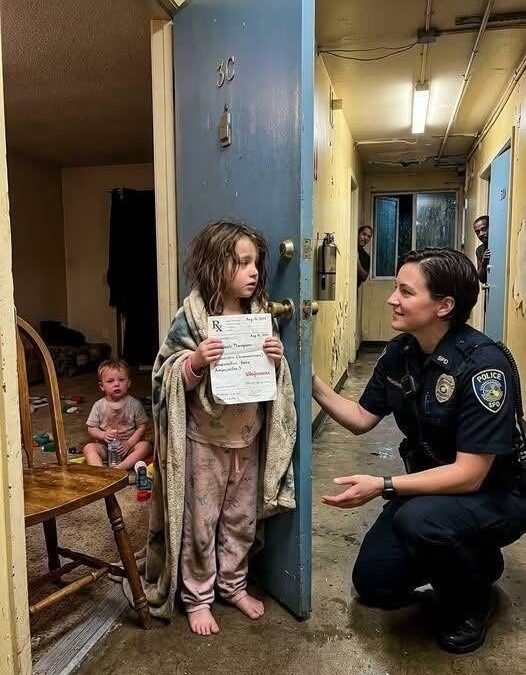
A 7 Year Old Girl Called 911 at 2:17 a.m. Because Her Mother Never Came Home Then Police Found One Photograph That Changed Everything
At 2:17 in the morning, the emergency line opened with static, rain, and the sound of a child trying very hard not to cry.
Marcus Thorne had been working the graveyard shift for six hours.
His coffee had gone cold.
Half a donut sat untouched beside his keyboard.
Outside, rain hammered the dispatch center windows hard enough to make the glass tremble in its frame.
Inside, everything smelled like old coffee, printer paper, and the kind of exhaustion people stopped noticing after midnight.
Marcus adjusted his headset.
“911. What’s your emergency?”
For several seconds, nobody answered.
Then a little girl whispered:
“My mom told me not to open the door for anyone.”
Marcus moved his hand away from the coffee.
The voice was young.
Too young.
Careful in a way children usually were only when they had been warned repeatedly that making noise could make something worse.
He straightened.
“That’s okay. You don’t have to open the door for me. Can you tell me what’s happening?”
Static.
Rain.
Then another sound.
A child crying somewhere behind her.
Smaller.
Younger.
The girl lowered her voice.
“The power went out.”
Marcus began typing.
“Okay.”
“We’re out of food.”
Another keystroke.
“And my little brother won’t stop crying.”
Marcus’s expression changed.
This was not a prank.
Not a child playing with a phone.
There was strain in the girl’s voice that came from carrying responsibility too large for her.
“What’s your name, sweetheart?”
Silence.
Not empty silence.
The toddler continued crying.
Marcus could hear the acoustics of a small apartment.
Hard walls.
Bare floor somewhere nearby.
A faint dripping sound.
Possibly water leaking.
“Lily,” she finally whispered.
“Okay, Lily. My name is Marcus.”
He kept his voice soft.
“How old are you?”
“Seven.”
Marcus looked toward the supervisor’s desk.
Seven.
He entered it.
“Is your little brother with you right now?”
“Yes.”
“What’s his name?”
“Leo.”
“How old is Leo?”
“Two.”
Marcus closed his eyes for half a second.
Seven and two.
Alone.
No power.
No food.
“Where are your parents, Lily?”
The crying behind her became louder.
Lily spoke to the toddler.
“Leo, it’s okay.”
Her voice changed when she spoke to him.
Still frightened.
But trying to sound grown.
Marcus had heard children do that before.
They borrowed the voices adults used with them.
Sometimes they copied comfort.
Sometimes fear.
“Lily?”
“My mom went to get medicine.”
“When?”
“Leo was burning.”
“You mean he had a fever?”
“Yes.”
“Was it tonight?”
A pause.
“She said she’d be right back.”
Marcus looked at the time.
2:18.
“How long ago did she leave?”
Lily did not answer in hours.
Children rarely measured fear that way.
“We went to sleep a lot.”
Marcus’s fingers stopped.
“What do you mean?”
“We slept.”
“Okay.”
“Then Leo woke up.”
“Okay.”
“Then we slept again.”
Marcus stared at the screen.
“And your mom still wasn’t home?”
“No.”
“How many times did you sleep?”
“I don’t know.”
Her voice cracked slightly.
“She said half an hour.”
Marcus began escalating the call.
Location trace.
Nearest units.
Medical response on standby.
“Lily, you’re doing really well.”
“I’m not supposed to bother people.”
“You’re not bothering me.”
“Mom said only call if it’s a real emergency.”
“This is a real emergency.”
Silence.
Then Lily exhaled.
It was the first sound she made that resembled relief.
Not because the situation had changed.
Because an adult had finally given her permission to admit she was scared.
Marcus asked:
“Where is your dad?”
The call changed.
He felt it immediately.
Not through words.
Through silence.
The toddler still cried.
Rain still hissed through the connection.
But Lily stopped breathing loudly.
When she answered, her voice was barely audible.
“My dad doesn’t live here.”
“Okay.”
Marcus chose his next words carefully.
“Do you know where he is?”
“No.”
Another pause.
Then:
“Mom says if he comes, don’t open the door.”
Marcus stared at the computer screen.
That sentence was not normal.
Children were sometimes told not to open doors.
Do not open for strangers.
Do not go outside.
Wait for Mom.
But the specificity mattered.
If he comes.
The father was not included in safety.
He was part of the warning.
Marcus did not press.
Not while Leo cried.
Not while Lily was alone.
“Is your door locked?”
“Yes.”
“Good.”
“Mom put a chair there.”
“Where?”
“Under the handle.”
Marcus leaned back.
Apartment barricaded from inside.
A mother leaving for medicine but taking time to wedge furniture beneath the front door.
That did not sound like someone casually walking away.
“What did your mom tell you before she left?”
“Don’t go outside.”
“Anything else?”
“Don’t open the door.”
“Even if someone knocks?”
“Yes.”
Marcus looked at the dispatch information.
Apartment 4B.
A deteriorating complex on Detroit’s east side.
Multiple prior calls to the building.
Noise complaints.
Domestic disputes.
Medical calls.
Nothing immediately connected to Lily.
He sent the nearest officer.
Rachel Brooks.
Three minutes away.
“No siren if possible,” Marcus added.
A loud arrival might frighten Lily or whoever her mother feared.
Then he returned all his attention to the call.
“Lily, is Leo awake?”
“Yes.”
“What is he doing?”
“Crying.”
“Is he talking?”
“A little.”
“Can he drink?”
“I gave him water.”
“Good.”
“The bottle is empty.”
Marcus swallowed.
“Any more water?”
“The sink doesn’t work.”
“Okay.”
“You’re not mad?”
The question stunned him.
“Why would I be mad?”
“Because I didn’t call sooner.”
“No.”
He leaned closer to the microphone.
“Lily, listen to me carefully. You did exactly the right thing by calling.”
She sniffed.
“Really?”
“Really.”
“Mom said not to bother anybody.”
“You’re not bothering anybody.”
A small sound came through the line.
Possibly crying.
Possibly relief.
Marcus kept her talking.
“What color is your front door?”
“Blue.”
“Do you have shoes on?”
“No.”
“That’s okay. Stay inside.”
“I have Leo’s blanket.”
“Good.”
“He keeps throwing it.”
Marcus smiled despite himself.
“Two year olds do that.”
“Do you have kids?”
“Not yet.”
“Then how do you know?”
“Experience.”
It was not the time to explain emergency dispatch.
Lily went quiet.
Then whispered:
“Somebody’s coming.”
Marcus’s heartbeat changed.
“Where?”
“The hallway.”
He looked at Rachel’s location.
Almost there.
“Can you hear them?”
“Steps.”
“Do not open the door until I tell you.”
“I know.”
Chair scrape?
No.
Not yet.
“Stay with me.”
Footsteps on Lily’s end.
Slow.
Then a voice through the apartment door.
“Police. Lily? My name is Officer Brooks.”
Marcus exhaled.
“That’s my officer.”
Lily did not answer.
Good.
She was following instructions.
Rachel’s voice came again.
“I’m not going to touch your door. Marcus is still on the phone with you.”
Marcus said:
“Lily, her name is Rachel. She’s wearing a police uniform.”
“What color?”
Marcus almost smiled.
“Dark blue.”
Lily said nothing.
Rachel waited.
She did not bang.
Did not try the knob.
Did not order the child to open.
Because everything about the call suggested Lily’s mother had built safety around one rule.
Do not open the door.
Helping meant respecting that rule long enough to replace it safely.
Apartment 4B
Officer Rachel Brooks had been on patrol for nine years.
She had entered apartments after fights.
Overdoses.
Break ins.
Fires.
Missing child calls.
She had learned that buildings carried moods.
Some were loud.
Some defensive.
Some chaotic.
This one was watchful.
The rain had darkened the exterior concrete until the entire complex looked almost black beneath weak yellow lamps.
Water ran along the curb.
The front entrance did not close properly.
Inside, the hallway smelled of damp clothes, backed up plumbing, cheap cooking oil, and wet carpet.
Buckets sat beneath brown ceiling stains.
Someone had stretched clothing lines between pipes because the building’s laundry room had apparently lost power with everything else.
Rachel climbed toward the fourth floor.
Marcus’s voice came through her radio.
“Female child, seven. Male toddler, two. Mother missing after leaving for medication. Door barricaded. Child says mother instructed her not to open if father appears.”
Rachel slowed.
“Any history on dad?”
“Working on it.”
She reached the fourth floor.
Before she got to 4B, a door opened three inches.
Woman’s face appeared.
“Who are you looking for?”
Rachel kept walking.
“A child who called emergency services.”
“4B.”
The neighbor’s expression shifted into something Rachel recognized immediately.
Not concern.
Satisfaction.
The excitement people felt when private rumors became public drama.
“That mother is always running around.”
Rachel stopped.
“What?”
“God knows what she’s mixed up in.”
“Did you check on the kids?”
The woman blinked.
“What?”
“You seem to know they’ve been alone.”
“I didn’t say that.”
“Did you knock?”
“No.”
“Did you ask whether they needed anything?”
The neighbor’s face tightened.
“That’s not my business.”
Rachel looked at her.
“You decided the mother’s character was your business.”
No answer.
“But the children weren’t?”
The door closed.
Click.
Rachel continued.
Other doors remained shut.
She could feel people listening.
Apartment 4B sat at the far end.
Faded blue paint.
Water damage around the frame.
And exactly what Marcus described.
The door bowed slightly inward.
A heavy kitchen chair had been jammed beneath the handle from the inside.
Rachel crouched near the door without touching it.
“Lily?”
Nothing.
“My name is Officer Rachel Brooks.”
Silence.
“I’m here because you called Marcus.”
From inside:
“Marcus?”
“Yes.”
Rachel smiled slightly.
“He’s still listening.”
Marcus confirmed through Lily’s phone.
“It’s okay, Lily.”
Chair legs scraped.
Slowly.
The door opened one inch.
One eye.
Tangled hair.
Blanket.
Rachel showed her badge.
“Hi.”
Lily stared at it.
Then Rachel.
“Marcus said dark blue.”
Rachel looked down at her uniform.
“He got that right.”
The door opened another inch.
“Can I come inside?”
Lily looked behind her.
Leo sat on the floor.
Flushed.
Crying weakly.
Empty plastic bottle against his stomach.
The child looked exhausted.
“Leo needs a doctor,” Rachel said.
Lily’s face tightened.
“Will I have to leave him?”
“No.”
That answer did not require thought.
Lily moved the chair.
Rachel entered.
The apartment was colder than expected.
Power failure.
No working heater.
The smell hit first.
Spoiled chicken soup.
Wet clothes.
Old air.
Fear.
Two plates on the kitchen table.
One with a few dried pieces of bread.
Empty pharmacy bag.
Small saucepan.
No obvious alcohol.
No party.
No sign anybody had left in a hurry carrying luggage.
Then the note.
Paper on the table.
I’ll be back in half an hour.
Don’t open the door.
I love you.
Mom.
Rachel read it twice.
A note was not proof of innocence.
People lied.
Parents abandoned children.
Terrible things happened behind ordinary handwriting.
But context mattered.
The chair.
Medication prescription.
Food.
Warning about father.
Nothing aligned with the story already developing in the hallway.
Lily watched her.
“Mom wrote it.”
“I know.”
“She’s coming back.”
Rachel crouched.
“I hope so.”
Not a promise.
Children remembered promises.
“When did she leave?”
“Leo was really hot.”
“Did she call anyone?”
“No.”
“Did she have a car?”
Lily shook her head.
“Bus.”
“In this weather?”
“She said pharmacy was closing.”
Rachel looked at the prescription.
Name.
Medication.
Time stamped earlier.
Real.
“Did she take her phone?”
“She doesn’t have one.”
“You called on this?”
Lily showed an old cell phone.
Cracked screen.
Likely WiFi calling or emergency capability.
“Mom keeps it for emergencies.”
Rachel’s jaw tightened.
Mother without a working personal phone.
Two kids.
Threat from father.
No car.
Very little money.
The story was becoming narrower.
And darker.
She moved toward Leo.
“Can I pick him up?”
Lily nodded.
Rachel lifted the toddler.
Heat came through his pajamas instantly.
Too hot.
Leo barely resisted being held by a stranger.
Bad sign.
Rachel keyed the radio.
“Ambulance now.”
Marcus acknowledged.
Lily asked:
“Is he dying?”
The question hit harder than it should have.
Rachel sat.
“No.”
She would not lie completely.
“He’s sick, and we’re going to get him help.”
“Mom said medicine would make him better.”
“Maybe it will.”
“Then we need Mom.”
Rachel looked toward the door.
“Yes.”
“We need to find her too.”
The Neighborhood Decides
Emergency lights painted the wet windows red and blue.
That was all it took.
The same hallway that had stayed silent while two children sat behind a barricaded door came alive.
Blinds snapped upward.
Doors opened.
People appeared.
Phones first.
Faces second.
A man near the stairs said:
“I bet she ditched them.”
Someone answered:
“Always knew she was sketchy.”
Another person:
“Get this on video.”
Then the sentence Rachel hated most.
“This is going viral.”
Lily heard.
She tightened her grip around the prescription.
“My mom didn’t ditch us.”
Nobody filming answered her.
“She always comes back.”
Rachel moved between Lily and the nearest phone.
“Back up.”
“I’m just recording.”
“You are recording a seven year old during a medical emergency.”
“It’s public.”
Rachel stared until the man lowered the phone slightly.
Not completely.
Of course.
Another neighbor whispered:
“I heard the father’s been looking for them.”
Rachel heard.
That mattered.
She turned.
“Which father?”
The woman went quiet.
“You just said something.”
“I don’t want trouble.”
“Neither do the children.”
The woman looked toward Lily.
Then closed her door.
Again.
Rachel felt anger rise.
Contain it.
Leo first.
Lily first.
Mother next.
Rumor last.
Paramedics arrived.
Leo was transferred carefully.
Lily followed.
Rachel kept one hand near her shoulder.
Not gripping.
Available.
Lily looked back at the apartment.
“Can Mom get in?”
“Yes.”
“The chair.”
Rachel paused.
The chair was no longer blocking the door.
Good point.
“I’ll make sure officers watch the apartment.”
Lily nodded.
Then looked at the people recording.
“Can they stop?”
Rachel wished she could promise.
“I’m going to get you away from them.”
Inside the ambulance, rain distorted the building outside.
Leo lay on the stretcher.
A paramedic checked him.
Temperature high.
Dehydration.
Lily sat beside Rachel.
Still holding that prescription.
Like evidence.
Like a contract.
Mom left for medicine.
Mom did not leave us.
Rachel looked at her.
“Lily.”
The girl remained focused on the building.
“Your mom was scared.”
Lily’s eyes moved toward her.
“You know?”
“You told Marcus not to open the door if your dad came.”
Lily tightened.
Rachel softened her tone.
“I’m not asking you to tell me anything you don’t want to.”
Rain tapped against the ambulance roof.
Then Lily whispered:
“My mom was scared.”
“Of who?”
The child looked past her.
Toward the dark stairwell.
“Of the man who knocks without saying his name.”
Rachel felt something settle in her stomach.
That was not the language of imagination.
It sounded rehearsed.
A household rule.
A threat converted into instructions simple enough for a child.
“What man?”
Lily immediately shut down.
She looked at Leo.
Rachel did not push.
“Okay.”
The ambulance doors closed.
The neighborhood disappeared behind rain.
Marcus Stays on the Line
Back at dispatch, Marcus remained at his station even after Lily was physically safe.
That was not always necessary.
Calls transferred.
Reports began.
Other emergencies waited.
But he kept watching updates.
Child fever.
Mother missing.
Possible domestic violence.
Father unknown location.
He pulled every accessible prior call connected to apartment 4B.
Noise complaint six months earlier.
No report taken.
Neighbor called about shouting.
Then cancellation.
Another call three months later.
Caller disconnected.
No location confirmation.
One officer note:
Female resident declined assistance. Stated male had left.
Marcus stared.
Male.
Who?
He dug farther.
Address linked to one previous domestic incident involving a man with a different listed residence.
Record partially restricted.
He flagged it for Rachel.
Then thought about Lily’s exact words.
The man who knocks without saying his name.
Not Dad.
Not my dad.
The man.
Interesting.
Maybe Lily was distancing.
Maybe her mother called him that.
Maybe someone else entirely.
No assumptions.
Marcus had learned how quickly assumptions poisoned cases.
He documented the language exactly.
At 3:04 a.m., another emergency call came in.
He handled it.
Then another.
But part of his attention remained with apartment 4B.
The seven year old’s voice stayed in his head.
Mom said only call if it’s a real emergency.
Sometimes the hardest emergency calls were not loud.
They whispered.
The ER
The hospital lights were too bright for 3:30 in the morning.
Lily sat in a molded plastic chair wrapped in a hospital blanket.
Leo had been taken through double doors.
A pediatric nurse promised updates.
Rachel stayed.
Technically, social services needed notification.
Missing parent.
Minor children.
Possible domestic violence.
Possible abandonment until facts established.
The system needed categories.
Rachel understood why.
Categories created procedures.
But she disliked what happened when a category became a verdict before evidence arrived.
A woman from child services joined them.
Her name was Tasha Green.
Calm.
No clipboard barrier at first.
She sat one chair away.
“Hi, Lily.”
Lily barely looked at her.
“I’m Tasha.”
Silence.
“I’m not here to take you anywhere right now.”
That got Lily’s attention.
“People say that.”
Rachel glanced at Tasha.
Tasha did not react defensively.
“Who says that?”
Lily looked down.
“People.”
“What people?”
No answer.
Tasha nodded.
“That’s okay.”
Good.
Rachel liked her already.
Doctors reported Leo’s fever was high but responding.
Dehydrated.
Likely infection.
They needed history.
Mother missing.
Father location unclear.
Rachel provided what she knew.
Then returned to Lily.
The girl had not let go of two pieces of paper.
Prescription.
Mother’s note.
“What’s in your bag?” Rachel asked eventually.
Lily immediately put one hand over the frayed canvas strap.
“Mine.”
“Yes.”
“I’m not taking it.”
Lily watched her.
“Can we look together?”
After several seconds, Lily nodded.
Rachel moved slowly.
Three quarters.
Tissue.
Small envelope.
A few folded twenty dollar bills.
Forty?
Sixty?
Not much.
Hidden.
Emergency money perhaps.
Then a photograph.
Torn.
Rachel lifted it by the edges.
A young woman.
Lily’s mother.
Same eyes.
Older fatigue.
Makeup badly covering a bruise.
Rachel’s stomach tightened.
Beside her stood a man.
Half his face had been cut away with scissors.
Not torn accidentally.
Cut.
Deliberately.
Rachel showed Lily.
“Your mom?”
“Yes.”
“Who’s the man?”
Lily looked away.
“No.”
Rachel stopped.
Not I don’t know.
No.
Different.
She turned the photograph over.
Red ink.
Address.
County location.
She read it.
Not the pharmacy.
Not urgent care.
Not hospital.
Wooded area beyond the city.
Sparse houses.
Long driveways.
The kind of place where neighbors did not hear much.
Rachel’s pulse changed.
She used her phone to map it.
Forty minutes away in normal weather.
Longer tonight.
Why was this address in Lily’s bag?
Who wrote it?
Why red ink?
She asked gently:
“Have you seen this before?”
Lily looked.
All color left her face.
Her hands began shaking.
The prescription crackled.
Rachel immediately lowered the photo.
“Okay.”
Lily looked at the officers gathering farther down the corridor.
People had begun to understand the case might be something else.
Not abandonment.
Potential missing endangered adult.
Possible domestic violence.
Possible abduction.
Possible location clue.
No conclusions yet.
But direction changed.
Rachel knelt.
“Lily.”
The child looked at her.
“You are not in trouble.”
Silence.
“Your mom is not in trouble because of what you tell me.”
That mattered.
Lily’s eyes filled.
“Promise?”
Rachel had learned never to promise outcomes she could not control.
“I promise I’m going to listen.”
Not enough.
Maybe honest enough.
Lily looked at her mother’s note.
Half an hour.
Then photograph.
Then hallway.
Her mouth opened.
Closed.
Rachel waited.
Nobody spoke.
The hospital continued around them.
Wheels.
Intercom.
Footsteps.
But the small circle around Lily became still.
At seven years old, she was making another adult decision.
Could these people be trusted?
Could she break a rule?
Could telling the truth bring her mother back?
When Lily finally opened her mouth, every officer stopped moving.
Before the Answer
Rachel noticed one detail before Lily spoke.
The girl was not looking at the photograph anymore.
She was looking at the exit.
As if she expected someone to walk in.
Rachel shifted slightly, placing herself between Lily and the corridor.
Tasha noticed.
So did another officer.
Small movement.
Protective formation.
No drama.
Lily’s eyes darted between adults.
She whispered:
“Mom said…”
Then stopped.
Rachel waited.
Lily swallowed.
“Mom said if something happened…”
Another pause.
Her hands shook.
“She said I should…”
She stopped again.
Tasha lowered her voice.
“You can take your time.”
Lily looked angry suddenly.
Not at them.
At herself.
“I’m trying.”
“You’re doing fine.”
“No.”
Tears rose.
“I forgot.”
Rachel’s chest tightened.
“What did you forget?”
“The rule.”
“What rule?”
Lily looked at the photograph.
Then at the prescription.
Then her mother’s note.
“I wasn’t supposed to show that.”
“The picture?”
She nodded.
“Who told you?”
“Mom.”
“Why?”
No answer.
Rachel did not press.
Seven year old child.
Missing mother.
Sick brother.
Potential abuser.
Memory under stress.
She needed safety before chronology.
Tasha asked:
“Did your mom put the picture in your bag?”
Lily nodded.
“When?”
“Before.”
“Before she left for medicine?”
Another nod.
Rachel looked at Tasha.
Important.
The address was deliberately placed in the child’s emergency bag before the mother left.
That meant the mother had anticipated something.
Maybe not tonight specifically.
But danger.
Rachel asked:
“Did she tell you when to show it?”
Lily’s lips trembled.
“If…”
She stopped.
“What?”
“If she didn’t come back.”
There it was.
Rachel felt a chill.
The mother left an address in her daughter’s bag with instructions tied to her own disappearance.
This was no impulsive abandonment.
It looked like contingency planning.
“Did she say who lives there?”
Lily shut down again.
Rachel nodded.
“Okay.”
She stood.
Walked several feet away.
Spoke quietly with the other officers.
“We need that location checked.”
One officer said:
“County jurisdiction.”
“Coordinate.”
“Warrant issue?”
“We have a missing endangered adult, possible domestic violence, minor witness, contingency address.”
“Still need lawful entry basis.”
“Then do it right.”
Rachel was not interested in contaminating anything through impatience.
Search perimeter.
Contact local unit.
Determine ownership.
Vehicles.
Prior calls.
The process began.
Lily watched from the chair.
For once, adults moved because of what she said.
Not around her.
Not over her.
Because of her.
That mattered.
What the Apartment Said
While county units coordinated around the address, Rachel returned briefly to apartment 4B with another officer.
Evidence preservation.
Not a full search beyond lawful scope.
The apartment looked even sadder without children inside.
Small.
Cold.
Power still out.
She noticed details she had missed during medical urgency.
One bedroom.
Mattress shared by mother and kids?
Second small sleeping area.
A chair behind the door.
Another chair positioned near the window.
Curtains pinned completely shut.
No family photos displayed openly.
Cabinet containing only a few food items.
A medicine bottle with mother’s name.
Old bruising ointment.
A printed domestic violence hotline number folded beneath cleaning supplies.
Rachel stared.
That mattered.
She photographed where permitted and documented.
Another thing.
The window latch had been reinforced with a wooden stick.
Front door chair.
Window stick.
A home built around keeping somebody out.
Abandonment story weakened by the minute.
On the refrigerator:
Child drawing.
Three figures.
Mom.
Lily.
Leo.
No father.
Beside them, a dark figure drawn outside a door.
Rachel felt her stomach tighten.
Children draw all kinds of things.
It was not evidence by itself.
But context.
She left it untouched.
Another paper near the table.
Pharmacy hours.
Route map.
Bus times.
The mother had planned to go and return.
Half an hour may have been optimistic.
But she clearly expected return.
Rachel stepped into the hallway.
The neighbor from earlier opened her door again.
“You find her?”
“No.”
“I told you she’s trouble.”
Rachel looked at her.
“What’s her name?”
The woman hesitated.
“You know so much about her.”
Silence.
“Do you know her name?”
“Marissa.”
At least something.
“Last name?”
The woman gave it.
“Do you know the father?”
“She had some man.”
“What man?”
“Tall.”
“Name?”
“No.”
“How often did he come?”
The woman shifted.
“A few times.”
“Did she let him in?”
“Sometimes.”
“Did you hear arguments?”
Silence.
Rachel waited.
The neighbor’s certainty evaporated.
“Maybe.”
“Police ever called?”
“I don’t know.”
“You called once.”
The woman looked startled.
Rachel had checked building calls.
“You reported shouting.”
“That was months ago.”
“What did you hear?”
The neighbor looked down the hall.
“A man telling her she couldn’t hide.”
Rachel’s face hardened.
“What else?”
“He said the kids were his.”
“Anything else?”
“Something about money.”
“Did Marissa sound afraid?”
The neighbor crossed her arms.
“I don’t get involved.”
Rachel said:
“You already did.”
The woman looked away.
Not accusation.
Fact.
Anonymous noise call.
Rumors.
Filming.
All involvement.
Just not useful involvement.
“Did you see Marissa leave tonight?”
“No.”
“Did anyone?”
“I don’t know.”
“Did you hear anything?”
The woman hesitated.
“A knock.”
Rachel became still.
“When?”
“Maybe around ten.”
“Before or after Marissa left?”
“I don’t know.”
“What kind of knock?”
The woman frowned.
“What do you mean?”
“Normal? Loud?”
“Three knocks.”
“Voice?”
“No.”
Rachel felt cold.
The man who knocks without saying his name.
“Did anyone answer?”
“I heard the chair move.”
That might have been Lily.
Or Marissa.
“Then?”
“Quiet.”
“What time?”
“Maybe ten thirty.”
Rachel documented.
“Why didn’t you tell anyone?”
The woman bristled.
“I didn’t know.”
No.
She did not.
That was the point.
Rumor fills gaps evidence has not.
Rachel returned to hospital.
Lily and the Rules
Leo slept after medication lowered his fever.
Lily refused to sleep.
Rachel found her still holding the note.
Tasha sat nearby.
“Can I ask you something?” Rachel said.
Lily nodded.
“Your mom had rules.”
“Yes.”
“Can you tell me some?”
“Don’t open the door.”
“We know that one.”
“Don’t stand near windows.”
Rachel’s expression changed.
“Anything else?”
“Keep Leo quiet if someone knocks.”
Tasha and Rachel exchanged a glance.
“How?”
“Turn cartoons up.”
No power tonight.
Interesting.
“What else?”
Lily hesitated.
“If we hear three knocks, go to the bathroom.”
Rachel felt cold.
“Why the bathroom?”
“No windows.”
“Did that happen before?”
Lily nodded.
“How many times?”
She held up fingers.
Four.
Maybe exactly.
Maybe approximation.
“What happened after?”
“Mom talked.”
“To who?”
“The man.”
“What did he say?”
“I don’t know.”
“You could hear voices?”
“Yes.”
“Was he angry?”
Lily nodded.
“Did he hurt your mom?”
The girl’s eyes moved toward the photograph.
Rachel immediately regretted pushing that far.
But Lily whispered:
“Sometimes.”
Tasha leaned forward slightly.
“Did he hurt you?”
“No.”
“Leo?”
“No.”
“Did your mom ever say why she didn’t call police?”
Lily nodded.
“What did she say?”
“That police can’t stay forever.”
Rachel’s throat tightened.
That sentence came from experience.
A victim who had sought help or considered it.
Who understood a patrol car eventually left.
Who feared what came after.
Rachel did not take it personally.
Systems had limits.
Lily continued.
“Mom said we needed to get far away first.”
“Were you planning to leave?”
Lily shrugged.
“Mom saved money.”
The envelope in the bag.
Folded twenties.
Rachel understood.
Escape money.
Barely enough for bus fare and food.
But a start.
“Did your dad know where you lived?”
Lily looked frightened.
Rachel corrected.
“The man.”
Lily nodded.
“Yes.”
“How?”
“He always finds us.”
The words silenced both adults.
Always.
Multiple moves?
Rachel asked:
“Have you lived somewhere else?”
“Yes.”
“How many places?”
Lily counted.
Three.
Possibly four.
The apartment was not just poverty.
It was hiding.
The address on the photograph became even more important.
The Address
County records returned.
The wooded house belonged to a holding company.
Not helpful.
Utilities in another name.
No obvious connection to Marissa.
One vehicle registered at address.
Older black SUV.
A local deputy reported the driveway was long and partially obscured.
No visible activity from road.
Storm complicated everything.
Rachel coordinated with detectives now assigned.
No reckless entry.
But circumstances supported urgent investigation.
Missing woman.
Documented fear.
Possible abuser.
Child’s contingency address.
A detective named Cole Ramirez arrived at hospital.
He was patient with children.
That mattered.
He did not wear a suit.
No dramatic interrogation.
He introduced himself to Lily.
“I help find people.”
She looked at him.
“Like Mom?”
“Yes.”
“Are you good?”
He almost smiled.
“I try to be.”
“That’s not yes.”
Rachel looked down to hide a smile.
Ramirez said:
“Fair. I’m pretty good.”
Lily considered.
Then nodded.
He sat.
“Officer Brooks told me your mom left you a picture.”
Lily tightened.
“We’re not taking it away forever.”
“She said don’t show.”
“Unless she didn’t come back?”
Lily looked sharply at Rachel.
Rachel had not said that aloud in front of him.
But of course information had been shared.
Lily understood adults were coordinating now.
Maybe frightening.
Maybe reassuring.
“She didn’t come back,” Lily whispered.
“No.”
Ramirez waited.
“Do you know the house?”
Lily’s eyes filled.
The room became still again.
She nodded.
Rachel’s pulse changed.
There.
Not full answer.
But enough.
“You’ve been there?”
Lily shook her head.
“Then how do you know it?”
No answer.
Ramirez tried differently.
“Did your mom talk about it?”
Nod.
“What did she call it?”
Lily’s fingers tightened.
“The bad house.”
Rachel felt the phrase land.
Child language.
But powerful.
“What makes it bad?”
Lily shut down.
Ramirez did not push.
“Okay.”
He changed direction.
“Does the man live there?”
Lily whispered something.
Too quiet.
“What?”
She looked at Rachel.
Then said:
“He takes people there.”
Silence.
Ramirez’s expression did not change.
Professional.
Inside, every alarm was likely firing.
“What people?”
Lily shook her head.
“Did your mom go there?”
The child’s face collapsed.
Tears.
Rachel moved closer.
“Okay. Stop.”
Enough.
The answer was somewhere behind that reaction.
But extracting it through fear would not help.
Ramirez nodded.
“We have what we need to keep looking.”
That was important for Lily to hear.
She had done enough.
The Neighborhood Story Changes
By dawn, clips from the apartment had started circulating.
Rachel saw one on a colleague’s phone.
A woman narrating over emergency lights.
Mother abandons two babies in Detroit storm.
Hundreds of comments.
Monster.
Lock her up.
Some people should not have children.
The speed disgusted Rachel.
No confirmed facts.
No mother located.
No mention of barricaded door.
No prescription.
No domestic violence warning.
No child saying her mother always returned.
Just a visually satisfying story.
By 6:00 a.m., another version began spreading.
Police investigating possible missing mother.
Then people changed tone.
Maybe she was kidnapped.
Prayers.
This is why we shouldn’t judge.
The same accounts.
Same people.
Rachel hated that too.
Not because minds changed.
Because none of them had waited for evidence before deciding either time.
Truth became entertainment.
Lily did not need to see it.
Rachel asked Tasha to make sure phones stayed away from her.
The child already carried enough adult judgment.
Marissa
Through records, detectives built a basic picture of Lily’s mother.
Marissa Cole.
Twenty eight.
Two children.
Unstable employment.
Several short term addresses.
One documented domestic incident.
No active warrant.
No criminal pattern matching the neighbors’ insinuations.
Recent pharmacy prescription for Leo.
Clinic visit.
The timeline confirmed she had sought medical care.
Paid partially in cash.
Left clinic.
Likely went home.
Then left for medication.
Pharmacy surveillance request pending.
Bus route.
Weather.
Possible detour.
Anything could have happened.
Accident.
Medical emergency.
Abduction.
Voluntary disappearance.
Police kept possibilities open.
But the address in red ink refused to sit quietly.
Neither did Lily’s rules.
Three knocks.
Bathroom.
No windows.
Dad must not enter.
He always finds us.
The bad house.
These were not proof of a specific crime.
They were enough to take danger seriously.
What Lily Remembered
Around 7:00 a.m., after eating half a piece of toast, Lily remembered another thing.
“Mom had a red bag.”
Rachel leaned closer.
“What red bag?”
“When she left.”
“Purse?”
“No.”
“Backpack?”
Lily used her hands.
“Little.”
“Did she always carry it?”
“No.”
“What was inside?”
“I don’t know.”
“Did she say?”
Lily shook her head.
Then:
“She put papers in.”
“What papers?”
“I couldn’t see.”
“Anything else?”
“A key.”
“What kind?”
“Silver.”
Rachel documented.
“Did she take the torn photograph?”
“No.”
That stayed with Lily.
The contingency clue stayed behind.
Marissa had carried other documents.
Maybe evidence.
Maybe identification.
Maybe medical paperwork.
Maybe unrelated.
No guessing.
“Was your mom planning to go somewhere after pharmacy?”
Lily frowned.
“No.”
“She said she’d come right back?”
“Yes.”
“Did she seem scared before leaving?”
“Yes.”
“Why?”
“She saw the car.”
Rachel became still.
“What car?”
“Black.”
The registered SUV at the isolated address was black.
Could be coincidence.
“What happened?”
“Outside.”
“Before she left?”
“Yes.”
“Did she know who was inside?”
Lily nodded.
“Did you see?”
“No.”
“What did your mom do?”
“She closed the curtain.”
“Then?”
“Cried.”
“Then Leo got hotter.”
Rachel understood the trap.
Marissa believed someone dangerous was outside.
Her child needed medicine.
No power.
No food.
No working phone.
She had to leave.
The chair under the door may have been for the children while she risked going out.
“Did your mom wait for the car to leave?”
Lily nodded.
“Did it?”
“Yes.”
That tightened the timeline.
The isolated address was no longer simply mysterious.
Vehicle type possibly connected.
Still not enough.
But closer.
Rachel Calls Marcus
At 7:23 a.m., Rachel called dispatch directly.
Marcus was nearing end of shift.
“You still there?”
“Unfortunately.”
“You were right to keep her talking.”
“I didn’t do much.”
“You kept her from opening the door for anybody else.”
Silence.
Marcus accepted that.
“How’s Leo?”
“Stable.”
“Mother?”
“Still missing.”
Rachel hesitated.
“Kid had a photograph.”
She described it.
Address.
Bruise.
Face cut out.
Marcus went silent.
“Jesus.”
“Yeah.”
“You think father?”
“I think nothing until we know.”
“Good answer.”
“But I don’t like it.”
“Different answer.”
She almost smiled.
“Did you find anything in old calls?”
Marcus gave her the domestic incident.
Male telling woman she couldn’t hide.
Rachel’s jaw tightened.
“Send everything.”
“Already did.”
Before ending, Marcus asked:
“How’s Lily?”
Rachel looked across hospital corridor.
Seven year old wrapped in blanket.
Feet not touching floor.
“Still trying to be forty.”
Marcus sighed.
“Tell her she doesn’t have to.”
“I have.”
“Tell her again.”
A Child Finally Eats
Breakfast arrived.
Lily refused.
“I’m saving it for Leo.”
Rachel explained Leo had hospital food.
“He gets his own.”
“Really?”
“Yes.”
Lily looked suspicious.
Food scarcity had taught her to count portions.
She ate slowly.
Half banana.
Toast.
Juice.
Then wrapped part of muffin in napkin.
Rachel noticed.
“Saving?”
Lily nodded.
“For Mom.”
Rachel’s throat tightened.
“Okay.”
She did not tell her not to.
Hope had functions.
Sometimes one folded muffin could hold a child together.
County Road
As officers approached the wooded address, rain weakened.
They reported no obvious movement.
Black SUV present.
Lights off.
Mailbox no name.
Property set back.
A detective contacted Rachel.
“We may have a vehicle match.”
She stepped away from Lily.
“What else?”
“Signs someone was here recently.”
“What signs?”
“Not discussing over unsecured line.”
Rachel’s stomach tightened.
“Any person?”
“Not yet.”
“Marissa?”
“Unknown.”
No more.
Procedure.
Evidence.
She returned to Lily.
No promises.
The girl looked at her immediately.
“Did you find Mom?”
“Not yet.”
Lily’s face fell.
“But people are looking.”
“Where?”
Rachel could not tell her operational details.
“At the place from the photograph.”
Lily became pale again.
“Don’t go inside.”
Rachel crouched.
“Why?”
Lily’s mouth trembled.
“He gets mad.”
“Who?”
Silence.
“The man?”
Nod.
“Is he your father?”
Lily stared.
Then whispered:
“He says he is.”
That was different.
Rachel felt the distinction.
He says he is.
Maybe biological.
Maybe contested.
Maybe child rejecting him.
“Does your mom say he is?”
No answer.
Enough.
The Mother Everyone Judged
By morning, reporters began calling the department.
Rachel’s supervisor handled it.
Missing woman.
Children safe.
Investigation active.
No confirmation of abandonment.
Those last words mattered.
But online rumor rarely corrected itself with equal force.
The neighbor who filmed had already posted a follow up.
I knew something was wrong.
Rachel almost threw her phone.
You knew enough to film.
Not enough to knock.
She forced herself to stop reading.
Anger at strangers would not find Marissa.
But the case exposed something familiar.
Communities sometimes noticed everything except what required responsibility.
Who came home late.
Whose boyfriend visited.
What somebody wore.
Who owed rent.
Who looked tired.
Then when danger arrived, people claimed nobody could have known.
Sometimes signs existed.
What did not exist was willingness to act.
Rachel looked at Lily.
Seven years old.
She had acted.
At 2:17 a.m.
After waiting too long because she had been taught adults should not be bothered.
A child had done what the entire hallway had not.
Asked for help.
The Torn Face
Detectives enhanced a copy of the torn photograph.
Only half a male face remained.
Jaw.
Ear.
Part of cheek.
Clothing.
Possibly enough for comparison if suspects emerged.
The cut itself mattered psychologically.
Who cut it?
Marissa?
Lily?
Someone else?
Lily said:
“Mom did.”
“When?”
“Long time ago.”
“Why?”
“She said he doesn’t get to be in our pictures.”
Rachel wrote that exactly.
No interpretation.
Then Lily added:
“She burned the other ones.”
“What other ones?”
“Wedding.”
Rachel’s pen paused.
Marissa had been married to the man?
Possibly.
“Your mom and him were married?”
Lily shrugged.
“Maybe.”
At seven, legal history was not reliable.
But another lead.
Records search.
Marriage certificate.
Name.
Potential father.
The investigation finally had a clearer target.
Rachel did not say the name in front of Lily.
Not yet.
Source material stopped before any verified identity reveal.
So did certainty.
The Note
I’ll be back in half an hour.
Don’t open the door.
I love you.
Mom.
Rachel photographed it.
Lily refused to surrender original until someone explained.
“It belongs to Mom.”
“Yes.”
“Then why do you need it?”
“Because her handwriting and the time might help us understand what happened.”
“Will I get it back?”
“We’ll do everything we can.”
Again, careful promise.
Lily finally allowed an evidence bag.
Watching the paper disappear hurt her.
Rachel saw it.
She asked whether Lily wanted a photocopy.
“Yes.”
Hospital staff helped.
Lily held the copy immediately.
Adults sometimes forgot how important physical objects were when everything else disappeared.
A note could become proof that a mother intended return.
Against neighbors.
Against rumors.
Against fear.
Mom said half an hour.
Mom said love you.
Mom planned home.
Leo Wakes
Around 8:30, Leo woke.
Fever lower.
Still weak.
He cried:
“Mama.”
Lily climbed beside him.
“Mom’s coming.”
Rachel looked away.
She did not know.
Nobody did.
But she would not correct hope unless facts required it.
Leo reached for Lily.
The seven year old immediately began caretaking again.
Rachel gently said:
“Nurses have him.”
Lily froze.
Then slowly let one hand fall.
“You can be his sister.”
“What?”
“You don’t have to be his mom.”
Lily stared at her.
The words seemed foreign.
“My mom says I help.”
“You do.”
Rachel smiled.
“But helping and being responsible for everything are different.”
Lily considered.
“Can I still give him water?”
“Yes.”
“Then okay.”
Tiny negotiation.
But maybe important.
Another Rule
Later, Lily whispered:
“There’s one more.”
“One more what?”
“Rule.”
Rachel sat.
“What?”
“If Mom says bluebird, we leave.”
“Bluebird?”
Lily nodded.
“What does it mean?”
“I don’t know.”
“Has she said it?”
“Once.”
“What happened?”
“We went to Auntie’s.”
“Which auntie?”
“Not real auntie.”
Name provided.
Detectives followed.
Safe person.
Possible shelter connection.
Rachel felt the mother’s planning become clearer.
Door rule.
Three knocks.
Bathroom.
Emergency call.
Photograph address.
Code word.
This woman had built an entire safety system from scraps.
And still disappeared.
That realization made Rachel more afraid for her.
The Prescription
The pharmacy confirmed Marissa never picked up the medication.
That changed the timeline.
She left to get it.
Never completed task.
Whatever happened occurred before or at the pharmacy.
Surveillance showed weather obscuring some views.
Investigators traced bus stops.
Potential black SUV.
No definitive conclusion yet.
Rachel did not tell Lily everything.
Only:
“Your mom didn’t get to the part where she bought the medicine.”
Lily immediately said:
“Then he took her.”
Rachel stayed neutral.
“Who?”
“The man.”
“You think so?”
Lily nodded hard.
“Because Mom always comes back.”
That belief was not evidence.
But it was not meaningless either.
Children knew patterns.
Marissa always came back.
This time she did not.
Something disrupted the pattern.
Rachel’s Anger
Around noon, Rachel finally ate something from a vending machine.
She stood near the ER doors.
Tasha joined her.
“You okay?”
“Fine.”
“Police fine or real fine?”
Rachel gave her a look.
Tasha smiled.
“Thought so.”
Rachel looked through glass.
Rain had stopped.
Gray sky.
“You know what bothers me?”
“Which part?”
“The hallway.”
Tasha nodded.
“All those people.”
“Everybody had a story.”
“Nobody had food.”
“Exactly.”
Rachel bit into a granola bar.
“They knew she was broke. Knew there was a man. Knew she moved around. Knew she looked rough.”
“Knowing isn’t helping.”
“I know.”
Tasha looked toward Lily.
“Sometimes people gossip because helping creates obligation.”
Rachel hated how accurate that sounded.
“Then they film.”
“Filming feels like action without responsibility.”
Rachel threw wrapper away.
“Seven year old had more courage than the building.”
Tasha answered quietly:
“She had no choice.”
That was also true.
The Address Again
The county team found enough to escalate investigation.
Rachel received only partial updates.
No verified location of Marissa yet.
No confirmed identity disclosure to Lily.
The isolated property was being treated seriously.
The case had moved beyond neighborhood abandonment.
But not yet to a clean answer.
That was where stories often become dangerous.
Readers want revelation.
Police need evidence.
Children need safety.
Reality rarely coordinates its timing.
Rachel returned to Lily.
The photograph lay in evidence.
The copied note in her lap.
Leo sleeping.
“Officer?”
“Yes?”
“If you find Mom, will you be mad at her?”
Rachel felt her chest tighten.
“No.”
“Even because we were alone?”
“We need to understand what happened.”
“That’s not the same.”
“No.”
Lily looked down.
“People say she left us.”
“People say things before they know.”
“Why?”
Rachel thought.
“Sometimes because guessing is easier than waiting.”
Lily considered.
“That’s dumb.”
“Yes.”
Rachel smiled.
“It can be.”
The Question
Detective Ramirez returned.
He had new information.
He did not share it all.
He sat near Rachel.
Lily watched him.
“Did you go to the bad house?”
“We sent people there.”
“Did they find Mom?”
“Not yet.”
Lily’s face fell.
“But we found things that make what you told us important.”
“What things?”
“I can’t tell you everything yet.”
She frowned.
Adults again.
Secrets.
Ramirez recognized the mistake.
“I know you’re tired of people hiding things from you.”
Lily looked at him sharply.
“That’s not fair.”
“You’re right.”
He corrected.
“I can tell you this. We believe your mom had a reason to be afraid.”
Lily’s eyes filled.
Rachel felt the significance.
Not abandoned.
Not crazy.
Not liar.
Afraid.
Believed.
“Do you remember what your mom said about the address?”
Lily stared at her hands.
“She said never go there.”
“Anything else?”
“If she’s missing…”
The room stilled.
Lily stopped.
Rachel waited.
“If she’s missing what?”
Lily shook her head.
“No.”
“Okay.”
“No, I have to say it.”
The child became frustrated with herself.
“I promised.”
Rachel moved closer.
“Promised who?”
“Mom.”
“Did she tell you not to tell?”
“Yes.”
“Unless something happened?”
Lily nodded.
“Something happened.”
Tears spilled.
“She didn’t come back.”
“No.”
Rachel’s voice broke slightly.
“She didn’t.”
Lily looked at the officers.
Her entire body trembling.
Then she took a breath.
The same way she had at 2:17 when Marcus told her the call was not a bother.
The same child who had cared for a feverish toddler.
Who had counted sleep instead of hours.
Who had waited behind a chair because her mother told her doors could be dangerous.
Who had defended the missing woman while adults filmed.
Now she had reached another threshold.
Tell.
Or keep the rule.
Rachel did not rescue her from the choice.
She made the space safer.
“You can say it.”
Lily looked toward Leo.
Then back.
Her mouth opened.
Every officer stopped moving.
And the truth she had been protecting was finally close enough to change everything.
But that is where the source ends.
Not with the mother found.
Not with the man identified.
Not with the address explained.
With Lily deciding whether the adults around her had earned enough trust to hear what her mother had taught her never to say.
That is what made the moment terrifying.
Not the dark apartment.
Not the storm.
Not even the rumors.
A seven year old had spent the entire night following rules designed by a frightened woman.
Do not open the door.
Keep Leo quiet.
Call only if it becomes a real emergency.
Do not show the photograph unless I fail to come home.
Those rules had kept two children alive long enough for help to reach them.
They also revealed something worse.
Marissa had expected danger.
Maybe not that exact night.
Maybe not that exact disappearance.
But enough danger to prepare her daughter.
Enough fear to wedge a chair beneath a door before leaving for medicine.
Enough fear to cut a man’s face out of a photograph.
Enough fear to write an isolated address in red ink and hide it in a child’s bag.
The neighborhood had seen only the easiest version.
A missing mother.
Hungry children.
Emergency lights.
Bad parenting.
A video.
Something to upload.
But Rachel had seen the chair.
Marcus had heard the warning about the father.
The doctors had seen Leo’s fever.
The photograph carried a bruise.
The note promised half an hour.
And Lily had spent every minute defending the woman who failed to return.
Maybe that was the difference between rumor and investigation.
Rumor decides first.
Investigation waits.
At 2:17 a.m., the easiest story was abandonment.
By morning, nobody in that hospital believed the easiest story anymore.
Lily looked down at the copied note one last time.
I’ll be back in half an hour.
Don’t open the door.
I love you.
Mom.
Then she looked at the photograph.
At the red address.
At Rachel.
At Detective Ramirez.
At every adult who had finally stopped talking long enough to listen.
Her lips parted.
And the hallway became completely silent.
Whatever she was about to say would not simply explain why Marissa had been afraid.
It would explain why a mother desperate enough to walk through a storm for her sick child had prepared for the possibility that she might never make it home.
And for the first time that night, the people around Lily were no longer asking why Marissa abandoned her children.
They were asking who had made her believe she might disappear.
REVIEW
A 7 Year Old Girl Called 911 at 2:17 a.m. Because Her Mother Never Came Home Then Police Found One Photograph That Changed Everything
At 2:17 in the morning, the emergency line opened with static, rain, and the sound of a child trying very hard not to cry.
Marcus Thorne had been working the graveyard shift for six hours.
His coffee had gone cold.
Half a donut sat untouched beside his keyboard.
Outside, rain hammered the dispatch center windows hard enough to make the glass tremble in its frame.
Inside, everything smelled like old coffee, printer paper, and the kind of exhaustion people stopped noticing after midnight.
Marcus adjusted his headset.
“911. What’s your emergency?”
For several seconds, nobody answered.
Then a little girl whispered:
“My mom told me not to open the door for anyone.”
Marcus moved his hand away from the coffee.
The voice was young.
Too young.
Careful in a way children usually were only when they had been warned repeatedly that making noise could make something worse.
He straightened.
“That’s okay. You don’t have to open the door for me. Can you tell me what’s happening?”
Static.
Rain.
Then another sound.
A child crying somewhere behind her.
Smaller.
Younger.
The girl lowered her voice.
“The power went out.”
Marcus began typing.
“Okay.”
“We’re out of food.”
Another keystroke.
“And my little brother won’t stop crying.”
Marcus’s expression changed.
This was not a prank.
Not a child playing with a phone.
There was strain in the girl’s voice that came from carrying responsibility too large for her.
“What’s your name, sweetheart?”
Silence.
Not empty silence.
The toddler continued crying.
Marcus could hear the acoustics of a small apartment.
Hard walls.
Bare floor somewhere nearby.
A faint dripping sound.
Possibly water leaking.
“Lily,” she finally whispered.
“Okay, Lily. My name is Marcus.”
He kept his voice soft.
“How old are you?”
“Seven.”
Marcus looked toward the supervisor’s desk.
Seven.
He entered it.
“Is your little brother with you right now?”
“Yes.”
“What’s his name?”
“Leo.”
“How old is Leo?”
“Two.”
Marcus closed his eyes for half a second.
Seven and two.
Alone.
No power.
No food.
“Where are your parents, Lily?”
The crying behind her became louder.
Lily spoke to the toddler.
“Leo, it’s okay.”
Her voice changed when she spoke to him.
Still frightened.
But trying to sound grown.
Marcus had heard children do that before.
They borrowed the voices adults used with them.
Sometimes they copied comfort.
Sometimes fear.
“Lily?”
“My mom went to get medicine.”
“When?”
“Leo was burning.”
“You mean he had a fever?”
“Yes.”
“Was it tonight?”
A pause.
“She said she’d be right back.”
Marcus looked at the time.
2:18.
“How long ago did she leave?”
Lily did not answer in hours.
Children rarely measured fear that way.
“We went to sleep a lot.”
Marcus’s fingers stopped.
“What do you mean?”
“We slept.”
“Okay.”
“Then Leo woke up.”
“Okay.”
“Then we slept again.”
Marcus stared at the screen.
“And your mom still wasn’t home?”
“No.”
“How many times did you sleep?”
“I don’t know.”
Her voice cracked slightly.
“She said half an hour.”
Marcus began escalating the call.
Location trace.
Nearest units.
Medical response on standby.
“Lily, you’re doing really well.”
“I’m not supposed to bother people.”
“You’re not bothering me.”
“Mom said only call if it’s a real emergency.”
“This is a real emergency.”
Silence.
Then Lily exhaled.
It was the first sound she made that resembled relief.
Not because the situation had changed.
Because an adult had finally given her permission to admit she was scared.
Marcus asked:
“Where is your dad?”
The call changed.
He felt it immediately.
Not through words.
Through silence.
The toddler still cried.
Rain still hissed through the connection.
But Lily stopped breathing loudly.
When she answered, her voice was barely audible.
“My dad doesn’t live here.”
“Okay.”
Marcus chose his next words carefully.
“Do you know where he is?”
“No.”
Another pause.
Then:
“Mom says if he comes, don’t open the door.”
Marcus stared at the computer screen.
That sentence was not normal.
Children were sometimes told not to open doors.
Do not open for strangers.
Do not go outside.
Wait for Mom.
But the specificity mattered.
If he comes.
The father was not included in safety.
He was part of the warning.
Marcus did not press.
Not while Leo cried.
Not while Lily was alone.
“Is your door locked?”
“Yes.”
“Good.”
“Mom put a chair there.”
“Where?”
“Under the handle.”
Marcus leaned back.
Apartment barricaded from inside.
A mother leaving for medicine but taking time to wedge furniture beneath the front door.
That did not sound like someone casually walking away.
“What did your mom tell you before she left?”
“Don’t go outside.”
“Anything else?”
“Don’t open the door.”
“Even if someone knocks?”
“Yes.”
Marcus looked at the dispatch information.
Apartment 4B.
A deteriorating complex on Detroit’s east side.
Multiple prior calls to the building.
Noise complaints.
Domestic disputes.
Medical calls.
Nothing immediately connected to Lily.
He sent the nearest officer.
Rachel Brooks.
Three minutes away.
“No siren if possible,” Marcus added.
A loud arrival might frighten Lily or whoever her mother feared.
Then he returned all his attention to the call.
“Lily, is Leo awake?”
“Yes.”
“What is he doing?”
“Crying.”
“Is he talking?”
“A little.”
“Can he drink?”
“I gave him water.”
“Good.”
“The bottle is empty.”
Marcus swallowed.
“Any more water?”
“The sink doesn’t work.”
“Okay.”
“You’re not mad?”
The question stunned him.
“Why would I be mad?”
“Because I didn’t call sooner.”
“No.”
He leaned closer to the microphone.
“Lily, listen to me carefully. You did exactly the right thing by calling.”
She sniffed.
“Really?”
“Really.”
“Mom said not to bother anybody.”
“You’re not bothering anybody.”
A small sound came through the line.
Possibly crying.
Possibly relief.
Marcus kept her talking.
“What color is your front door?”
“Blue.”
“Do you have shoes on?”
“No.”
“That’s okay. Stay inside.”
“I have Leo’s blanket.”
“Good.”
“He keeps throwing it.”
Marcus smiled despite himself.
“Two year olds do that.”
“Do you have kids?”
“Not yet.”
“Then how do you know?”
“Experience.”
It was not the time to explain emergency dispatch.
Lily went quiet.
Then whispered:
“Somebody’s coming.”
Marcus’s heartbeat changed.
“Where?”
“The hallway.”
He looked at Rachel’s location.
Almost there.
“Can you hear them?”
“Steps.”
“Do not open the door until I tell you.”
“I know.”
Chair scrape?
No.
Not yet.
“Stay with me.”
Footsteps on Lily’s end.
Slow.
Then a voice through the apartment door.
“Police. Lily? My name is Officer Brooks.”
Marcus exhaled.
“That’s my officer.”
Lily did not answer.
Good.
She was following instructions.
Rachel’s voice came again.
“I’m not going to touch your door. Marcus is still on the phone with you.”
Marcus said:
“Lily, her name is Rachel. She’s wearing a police uniform.”
“What color?”
Marcus almost smiled.
“Dark blue.”
Lily said nothing.
Rachel waited.
She did not bang.
Did not try the knob.
Did not order the child to open.
Because everything about the call suggested Lily’s mother had built safety around one rule.
Do not open the door.
Helping meant respecting that rule long enough to replace it safely.
Apartment 4B
Officer Rachel Brooks had been on patrol for nine years.
She had entered apartments after fights.
Overdoses.
Break ins.
Fires.
Missing child calls.
She had learned that buildings carried moods.
Some were loud.
Some defensive.
Some chaotic.
This one was watchful.
The rain had darkened the exterior concrete until the entire complex looked almost black beneath weak yellow lamps.
Water ran along the curb.
The front entrance did not close properly.
Inside, the hallway smelled of damp clothes, backed up plumbing, cheap cooking oil, and wet carpet.
Buckets sat beneath brown ceiling stains.
Someone had stretched clothing lines between pipes because the building’s laundry room had apparently lost power with everything else.
Rachel climbed toward the fourth floor.
Marcus’s voice came through her radio.
“Female child, seven. Male toddler, two. Mother missing after leaving for medication. Door barricaded. Child says mother instructed her not to open if father appears.”
Rachel slowed.
“Any history on dad?”
“Working on it.”
She reached the fourth floor.
Before she got to 4B, a door opened three inches.
Woman’s face appeared.
“Who are you looking for?”
Rachel kept walking.
“A child who called emergency services.”
“4B.”
The neighbor’s expression shifted into something Rachel recognized immediately.
Not concern.
Satisfaction.
The excitement people felt when private rumors became public drama.
“That mother is always running around.”
Rachel stopped.
“What?”
“God knows what she’s mixed up in.”
“Did you check on the kids?”
The woman blinked.
“What?”
“You seem to know they’ve been alone.”
“I didn’t say that.”
“Did you knock?”
“No.”
“Did you ask whether they needed anything?”
The neighbor’s face tightened.
“That’s not my business.”
Rachel looked at her.
“You decided the mother’s character was your business.”
No answer.
“But the children weren’t?”
The door closed.
Click.
Rachel continued.
Other doors remained shut.
She could feel people listening.
Apartment 4B sat at the far end.
Faded blue paint.
Water damage around the frame.
And exactly what Marcus described.
The door bowed slightly inward.
A heavy kitchen chair had been jammed beneath the handle from the inside.
Rachel crouched near the door without touching it.
“Lily?”
Nothing.
“My name is Officer Rachel Brooks.”
Silence.
“I’m here because you called Marcus.”
From inside:
“Marcus?”
“Yes.”
Rachel smiled slightly.
“He’s still listening.”
Marcus confirmed through Lily’s phone.
“It’s okay, Lily.”
Chair legs scraped.
Slowly.
The door opened one inch.
One eye.
Tangled hair.
Blanket.
Rachel showed her badge.
“Hi.”
Lily stared at it.
Then Rachel.
“Marcus said dark blue.”
Rachel looked down at her uniform.
“He got that right.”
The door opened another inch.
“Can I come inside?”
Lily looked behind her.
Leo sat on the floor.
Flushed.
Crying weakly.
Empty plastic bottle against his stomach.
The child looked exhausted.
“Leo needs a doctor,” Rachel said.
Lily’s face tightened.
“Will I have to leave him?”
“No.”
That answer did not require thought.
Lily moved the chair.
Rachel entered.
The apartment was colder than expected.
Power failure.
No working heater.
The smell hit first.
Spoiled chicken soup.
Wet clothes.
Old air.
Fear.
Two plates on the kitchen table.
One with a few dried pieces of bread.
Empty pharmacy bag.
Small saucepan.
No obvious alcohol.
No party.
No sign anybody had left in a hurry carrying luggage.
Then the note.
Paper on the table.
I’ll be back in half an hour.
Don’t open the door.
I love you.
Mom.
Rachel read it twice.
A note was not proof of innocence.
People lied.
Parents abandoned children.
Terrible things happened behind ordinary handwriting.
But context mattered.
The chair.
Medication prescription.
Food.
Warning about father.
Nothing aligned with the story already developing in the hallway.
Lily watched her.
“Mom wrote it.”
“I know.”
“She’s coming back.”
Rachel crouched.
“I hope so.”
Not a promise.
Children remembered promises.
“When did she leave?”
“Leo was really hot.”
“Did she call anyone?”
“No.”
“Did she have a car?”
Lily shook her head.
“Bus.”
“In this weather?”
“She said pharmacy was closing.”
Rachel looked at the prescription.
Name.
Medication.
Time stamped earlier.
Real.
“Did she take her phone?”
“She doesn’t have one.”
“You called on this?”
Lily showed an old cell phone.
Cracked screen.
Likely WiFi calling or emergency capability.
“Mom keeps it for emergencies.”
Rachel’s jaw tightened.
Mother without a working personal phone.
Two kids.
Threat from father.
No car.
Very little money.
The story was becoming narrower.
And darker.
She moved toward Leo.
“Can I pick him up?”
Lily nodded.
Rachel lifted the toddler.
Heat came through his pajamas instantly.
Too hot.
Leo barely resisted being held by a stranger.
Bad sign.
Rachel keyed the radio.
“Ambulance now.”
Marcus acknowledged.
Lily asked:
“Is he dying?”
The question hit harder than it should have.
Rachel sat.
“No.”
She would not lie completely.
“He’s sick, and we’re going to get him help.”
“Mom said medicine would make him better.”
“Maybe it will.”
“Then we need Mom.”
Rachel looked toward the door.
“Yes.”
“We need to find her too.”
The Neighborhood Decides
Emergency lights painted the wet windows red and blue.
That was all it took.
The same hallway that had stayed silent while two children sat behind a barricaded door came alive.
Blinds snapped upward.
Doors opened.
People appeared.
Phones first.
Faces second.
A man near the stairs said:
“I bet she ditched them.”
Someone answered:
“Always knew she was sketchy.”
Another person:
“Get this on video.”
Then the sentence Rachel hated most.
“This is going viral.”
Lily heard.
She tightened her grip around the prescription.
“My mom didn’t ditch us.”
Nobody filming answered her.
“She always comes back.”
Rachel moved between Lily and the nearest phone.
“Back up.”
“I’m just recording.”
“You are recording a seven year old during a medical emergency.”
“It’s public.”
Rachel stared until the man lowered the phone slightly.
Not completely.
Of course.
Another neighbor whispered:
“I heard the father’s been looking for them.”
Rachel heard.
That mattered.
She turned.
“Which father?”
The woman went quiet.
“You just said something.”
“I don’t want trouble.”
“Neither do the children.”
The woman looked toward Lily.
Then closed her door.
Again.
Rachel felt anger rise.
Contain it.
Leo first.
Lily first.
Mother next.
Rumor last.
Paramedics arrived.
Leo was transferred carefully.
Lily followed.
Rachel kept one hand near her shoulder.
Not gripping.
Available.
Lily looked back at the apartment.
“Can Mom get in?”
“Yes.”
“The chair.”
Rachel paused.
The chair was no longer blocking the door.
Good point.
“I’ll make sure officers watch the apartment.”
Lily nodded.
Then looked at the people recording.
“Can they stop?”
Rachel wished she could promise.
“I’m going to get you away from them.”
Inside the ambulance, rain distorted the building outside.
Leo lay on the stretcher.
A paramedic checked him.
Temperature high.
Dehydration.
Lily sat beside Rachel.
Still holding that prescription.
Like evidence.
Like a contract.
Mom left for medicine.
Mom did not leave us.
Rachel looked at her.
“Lily.”
The girl remained focused on the building.
“Your mom was scared.”
Lily’s eyes moved toward her.
“You know?”
“You told Marcus not to open the door if your dad came.”
Lily tightened.
Rachel softened her tone.
“I’m not asking you to tell me anything you don’t want to.”
Rain tapped against the ambulance roof.
Then Lily whispered:
“My mom was scared.”
“Of who?”
The child looked past her.
Toward the dark stairwell.
“Of the man who knocks without saying his name.”
Rachel felt something settle in her stomach.
That was not the language of imagination.
It sounded rehearsed.
A household rule.
A threat converted into instructions simple enough for a child.
“What man?”
Lily immediately shut down.
She looked at Leo.
Rachel did not push.
“Okay.”
The ambulance doors closed.
The neighborhood disappeared behind rain.
Marcus Stays on the Line
Back at dispatch, Marcus remained at his station even after Lily was physically safe.
That was not always necessary.
Calls transferred.
Reports began.
Other emergencies waited.
But he kept watching updates.
Child fever.
Mother missing.
Possible domestic violence.
Father unknown location.
He pulled every accessible prior call connected to apartment 4B.
Noise complaint six months earlier.
No report taken.
Neighbor called about shouting.
Then cancellation.
Another call three months later.
Caller disconnected.
No location confirmation.
One officer note:
Female resident declined assistance. Stated male had left.
Marcus stared.
Male.
Who?
He dug farther.
Address linked to one previous domestic incident involving a man with a different listed residence.
Record partially restricted.
He flagged it for Rachel.
Then thought about Lily’s exact words.
The man who knocks without saying his name.
Not Dad.
Not my dad.
The man.
Interesting.
Maybe Lily was distancing.
Maybe her mother called him that.
Maybe someone else entirely.
No assumptions.
Marcus had learned how quickly assumptions poisoned cases.
He documented the language exactly.
At 3:04 a.m., another emergency call came in.
He handled it.
Then another.
But part of his attention remained with apartment 4B.
The seven year old’s voice stayed in his head.
Mom said only call if it’s a real emergency.
Sometimes the hardest emergency calls were not loud.
They whispered.
The ER
The hospital lights were too bright for 3:30 in the morning.
Lily sat in a molded plastic chair wrapped in a hospital blanket.
Leo had been taken through double doors.
A pediatric nurse promised updates.
Rachel stayed.
Technically, social services needed notification.
Missing parent.
Minor children.
Possible domestic violence.
Possible abandonment until facts established.
The system needed categories.
Rachel understood why.
Categories created procedures.
But she disliked what happened when a category became a verdict before evidence arrived.
A woman from child services joined them.
Her name was Tasha Green.
Calm.
No clipboard barrier at first.
She sat one chair away.
“Hi, Lily.”
Lily barely looked at her.
“I’m Tasha.”
Silence.
“I’m not here to take you anywhere right now.”
That got Lily’s attention.
“People say that.”
Rachel glanced at Tasha.
Tasha did not react defensively.
“Who says that?”
Lily looked down.
“People.”
“What people?”
No answer.
Tasha nodded.
“That’s okay.”
Good.
Rachel liked her already.
Doctors reported Leo’s fever was high but responding.
Dehydrated.
Likely infection.
They needed history.
Mother missing.
Father location unclear.
Rachel provided what she knew.
Then returned to Lily.
The girl had not let go of two pieces of paper.
Prescription.
Mother’s note.
“What’s in your bag?” Rachel asked eventually.
Lily immediately put one hand over the frayed canvas strap.
“Mine.”
“Yes.”
“I’m not taking it.”
Lily watched her.
“Can we look together?”
After several seconds, Lily nodded.
Rachel moved slowly.
Three quarters.
Tissue.
Small envelope.
A few folded twenty dollar bills.
Forty?
Sixty?
Not much.
Hidden.
Emergency money perhaps.
Then a photograph.
Torn.
Rachel lifted it by the edges.
A young woman.
Lily’s mother.
Same eyes.
Older fatigue.
Makeup badly covering a bruise.
Rachel’s stomach tightened.
Beside her stood a man.
Half his face had been cut away with scissors.
Not torn accidentally.
Cut.
Deliberately.
Rachel showed Lily.
“Your mom?”
“Yes.”
“Who’s the man?”
Lily looked away.
“No.”
Rachel stopped.
Not I don’t know.
No.
Different.
She turned the photograph over.
Red ink.
Address.
County location.
She read it.
Not the pharmacy.
Not urgent care.
Not hospital.
Wooded area beyond the city.
Sparse houses.
Long driveways.
The kind of place where neighbors did not hear much.
Rachel’s pulse changed.
She used her phone to map it.
Forty minutes away in normal weather.
Longer tonight.
Why was this address in Lily’s bag?
Who wrote it?
Why red ink?
She asked gently:
“Have you seen this before?”
Lily looked.
All color left her face.
Her hands began shaking.
The prescription crackled.
Rachel immediately lowered the photo.
“Okay.”
Lily looked at the officers gathering farther down the corridor.
People had begun to understand the case might be something else.
Not abandonment.
Potential missing endangered adult.
Possible domestic violence.
Possible abduction.
Possible location clue.
No conclusions yet.
But direction changed.
Rachel knelt.
“Lily.”
The child looked at her.
“You are not in trouble.”
Silence.
“Your mom is not in trouble because of what you tell me.”
That mattered.
Lily’s eyes filled.
“Promise?”
Rachel had learned never to promise outcomes she could not control.
“I promise I’m going to listen.”
Not enough.
Maybe honest enough.
Lily looked at her mother’s note.
Half an hour.
Then photograph.
Then hallway.
Her mouth opened.
Closed.
Rachel waited.
Nobody spoke.
The hospital continued around them.
Wheels.
Intercom.
Footsteps.
But the small circle around Lily became still.
At seven years old, she was making another adult decision.
Could these people be trusted?
Could she break a rule?
Could telling the truth bring her mother back?
When Lily finally opened her mouth, every officer stopped moving.
Before the Answer
Rachel noticed one detail before Lily spoke.
The girl was not looking at the photograph anymore.
She was looking at the exit.
As if she expected someone to walk in.
Rachel shifted slightly, placing herself between Lily and the corridor.
Tasha noticed.
So did another officer.
Small movement.
Protective formation.
No drama.
Lily’s eyes darted between adults.
She whispered:
“Mom said…”
Then stopped.
Rachel waited.
Lily swallowed.
“Mom said if something happened…”
Another pause.
Her hands shook.
“She said I should…”
She stopped again.
Tasha lowered her voice.
“You can take your time.”
Lily looked angry suddenly.
Not at them.
At herself.
“I’m trying.”
“You’re doing fine.”
“No.”
Tears rose.
“I forgot.”
Rachel’s chest tightened.
“What did you forget?”
“The rule.”
“What rule?”
Lily looked at the photograph.
Then at the prescription.
Then her mother’s note.
“I wasn’t supposed to show that.”
“The picture?”
She nodded.
“Who told you?”
“Mom.”
“Why?”
No answer.
Rachel did not press.
Seven year old child.
Missing mother.
Sick brother.
Potential abuser.
Memory under stress.
She needed safety before chronology.
Tasha asked:
“Did your mom put the picture in your bag?”
Lily nodded.
“When?”
“Before.”
“Before she left for medicine?”
Another nod.
Rachel looked at Tasha.
Important.
The address was deliberately placed in the child’s emergency bag before the mother left.
That meant the mother had anticipated something.
Maybe not tonight specifically.
But danger.
Rachel asked:
“Did she tell you when to show it?”
Lily’s lips trembled.
“If…”
She stopped.
“What?”
“If she didn’t come back.”
There it was.
Rachel felt a chill.
The mother left an address in her daughter’s bag with instructions tied to her own disappearance.
This was no impulsive abandonment.
It looked like contingency planning.
“Did she say who lives there?”
Lily shut down again.
Rachel nodded.
“Okay.”
She stood.
Walked several feet away.
Spoke quietly with the other officers.
“We need that location checked.”
One officer said:
“County jurisdiction.”
“Coordinate.”
“Warrant issue?”
“We have a missing endangered adult, possible domestic violence, minor witness, contingency address.”
“Still need lawful entry basis.”
“Then do it right.”
Rachel was not interested in contaminating anything through impatience.
Search perimeter.
Contact local unit.
Determine ownership.
Vehicles.
Prior calls.
The process began.
Lily watched from the chair.
For once, adults moved because of what she said.
Not around her.
Not over her.
Because of her.
That mattered.
What the Apartment Said
While county units coordinated around the address, Rachel returned briefly to apartment 4B with another officer.
Evidence preservation.
Not a full search beyond lawful scope.
The apartment looked even sadder without children inside.
Small.
Cold.
Power still out.
She noticed details she had missed during medical urgency.
One bedroom.
Mattress shared by mother and kids?
Second small sleeping area.
A chair behind the door.
Another chair positioned near the window.
Curtains pinned completely shut.
No family photos displayed openly.
Cabinet containing only a few food items.
A medicine bottle with mother’s name.
Old bruising ointment.
A printed domestic violence hotline number folded beneath cleaning supplies.
Rachel stared.
That mattered.
She photographed where permitted and documented.
Another thing.
The window latch had been reinforced with a wooden stick.
Front door chair.
Window stick.
A home built around keeping somebody out.
Abandonment story weakened by the minute.
On the refrigerator:
Child drawing.
Three figures.
Mom.
Lily.
Leo.
No father.
Beside them, a dark figure drawn outside a door.
Rachel felt her stomach tighten.
Children draw all kinds of things.
It was not evidence by itself.
But context.
She left it untouched.
Another paper near the table.
Pharmacy hours.
Route map.
Bus times.
The mother had planned to go and return.
Half an hour may have been optimistic.
But she clearly expected return.
Rachel stepped into the hallway.
The neighbor from earlier opened her door again.
“You find her?”
“No.”
“I told you she’s trouble.”
Rachel looked at her.
“What’s her name?”
The woman hesitated.
“You know so much about her.”
Silence.
“Do you know her name?”
“Marissa.”
At least something.
“Last name?”
The woman gave it.
“Do you know the father?”
“She had some man.”
“What man?”
“Tall.”
“Name?”
“No.”
“How often did he come?”
The woman shifted.
“A few times.”
“Did she let him in?”
“Sometimes.”
“Did you hear arguments?”
Silence.
Rachel waited.
The neighbor’s certainty evaporated.
“Maybe.”
“Police ever called?”
“I don’t know.”
“You called once.”
The woman looked startled.
Rachel had checked building calls.
“You reported shouting.”
“That was months ago.”
“What did you hear?”
The neighbor looked down the hall.
“A man telling her she couldn’t hide.”
Rachel’s face hardened.
“What else?”
“He said the kids were his.”
“Anything else?”
“Something about money.”
“Did Marissa sound afraid?”
The neighbor crossed her arms.
“I don’t get involved.”
Rachel said:
“You already did.”
The woman looked away.
Not accusation.
Fact.
Anonymous noise call.
Rumors.
Filming.
All involvement.
Just not useful involvement.
“Did you see Marissa leave tonight?”
“No.”
“Did anyone?”
“I don’t know.”
“Did you hear anything?”
The woman hesitated.
“A knock.”
Rachel became still.
“When?”
“Maybe around ten.”
“Before or after Marissa left?”
“I don’t know.”
“What kind of knock?”
The woman frowned.
“What do you mean?”
“Normal? Loud?”
“Three knocks.”
“Voice?”
“No.”
Rachel felt cold.
The man who knocks without saying his name.
“Did anyone answer?”
“I heard the chair move.”
That might have been Lily.
Or Marissa.
“Then?”
“Quiet.”
“What time?”
“Maybe ten thirty.”
Rachel documented.
“Why didn’t you tell anyone?”
The woman bristled.
“I didn’t know.”
No.
She did not.
That was the point.
Rumor fills gaps evidence has not.
Rachel returned to hospital.
Lily and the Rules
Leo slept after medication lowered his fever.
Lily refused to sleep.
Rachel found her still holding the note.
Tasha sat nearby.
“Can I ask you something?” Rachel said.
Lily nodded.
“Your mom had rules.”
“Yes.”
“Can you tell me some?”
“Don’t open the door.”
“We know that one.”
“Don’t stand near windows.”
Rachel’s expression changed.
“Anything else?”
“Keep Leo quiet if someone knocks.”
Tasha and Rachel exchanged a glance.
“How?”
“Turn cartoons up.”
No power tonight.
Interesting.
“What else?”
Lily hesitated.
“If we hear three knocks, go to the bathroom.”
Rachel felt cold.
“Why the bathroom?”
“No windows.”
“Did that happen before?”
Lily nodded.
“How many times?”
She held up fingers.
Four.
Maybe exactly.
Maybe approximation.
“What happened after?”
“Mom talked.”
“To who?”
“The man.”
“What did he say?”
“I don’t know.”
“You could hear voices?”
“Yes.”
“Was he angry?”
Lily nodded.
“Did he hurt your mom?”
The girl’s eyes moved toward the photograph.
Rachel immediately regretted pushing that far.
But Lily whispered:
“Sometimes.”
Tasha leaned forward slightly.
“Did he hurt you?”
“No.”
“Leo?”
“No.”
“Did your mom ever say why she didn’t call police?”
Lily nodded.
“What did she say?”
“That police can’t stay forever.”
Rachel’s throat tightened.
That sentence came from experience.
A victim who had sought help or considered it.
Who understood a patrol car eventually left.
Who feared what came after.
Rachel did not take it personally.
Systems had limits.
Lily continued.
“Mom said we needed to get far away first.”
“Were you planning to leave?”
Lily shrugged.
“Mom saved money.”
The envelope in the bag.
Folded twenties.
Rachel understood.
Escape money.
Barely enough for bus fare and food.
But a start.
“Did your dad know where you lived?”
Lily looked frightened.
Rachel corrected.
“The man.”
Lily nodded.
“Yes.”
“How?”
“He always finds us.”
The words silenced both adults.
Always.
Multiple moves?
Rachel asked:
“Have you lived somewhere else?”
“Yes.”
“How many places?”
Lily counted.
Three.
Possibly four.
The apartment was not just poverty.
It was hiding.
The address on the photograph became even more important.
The Address
County records returned.
The wooded house belonged to a holding company.
Not helpful.
Utilities in another name.
No obvious connection to Marissa.
One vehicle registered at address.
Older black SUV.
A local deputy reported the driveway was long and partially obscured.
No visible activity from road.
Storm complicated everything.
Rachel coordinated with detectives now assigned.
No reckless entry.
But circumstances supported urgent investigation.
Missing woman.
Documented fear.
Possible abuser.
Child’s contingency address.
A detective named Cole Ramirez arrived at hospital.
He was patient with children.
That mattered.
He did not wear a suit.
No dramatic interrogation.
He introduced himself to Lily.
“I help find people.”
She looked at him.
“Like Mom?”
“Yes.”
“Are you good?”
He almost smiled.
“I try to be.”
“That’s not yes.”
Rachel looked down to hide a smile.
Ramirez said:
“Fair. I’m pretty good.”
Lily considered.
Then nodded.
He sat.
“Officer Brooks told me your mom left you a picture.”
Lily tightened.
“We’re not taking it away forever.”
“She said don’t show.”
“Unless she didn’t come back?”
Lily looked sharply at Rachel.
Rachel had not said that aloud in front of him.
But of course information had been shared.
Lily understood adults were coordinating now.
Maybe frightening.
Maybe reassuring.
“She didn’t come back,” Lily whispered.
“No.”
Ramirez waited.
“Do you know the house?”
Lily’s eyes filled.
The room became still again.
She nodded.
Rachel’s pulse changed.
There.
Not full answer.
But enough.
“You’ve been there?”
Lily shook her head.
“Then how do you know it?”
No answer.
Ramirez tried differently.
“Did your mom talk about it?”
Nod.
“What did she call it?”
Lily’s fingers tightened.
“The bad house.”
Rachel felt the phrase land.
Child language.
But powerful.
“What makes it bad?”
Lily shut down.
Ramirez did not push.
“Okay.”
He changed direction.
“Does the man live there?”
Lily whispered something.
Too quiet.
“What?”
She looked at Rachel.
Then said:
“He takes people there.”
Silence.
Ramirez’s expression did not change.
Professional.
Inside, every alarm was likely firing.
“What people?”
Lily shook her head.
“Did your mom go there?”
The child’s face collapsed.
Tears.
Rachel moved closer.
“Okay. Stop.”
Enough.
The answer was somewhere behind that reaction.
But extracting it through fear would not help.
Ramirez nodded.
“We have what we need to keep looking.”
That was important for Lily to hear.
She had done enough.
The Neighborhood Story Changes
By dawn, clips from the apartment had started circulating.
Rachel saw one on a colleague’s phone.
A woman narrating over emergency lights.
Mother abandons two babies in Detroit storm.
Hundreds of comments.
Monster.
Lock her up.
Some people should not have children.
The speed disgusted Rachel.
No confirmed facts.
No mother located.
No mention of barricaded door.
No prescription.
No domestic violence warning.
No child saying her mother always returned.
Just a visually satisfying story.
By 6:00 a.m., another version began spreading.
Police investigating possible missing mother.
Then people changed tone.
Maybe she was kidnapped.
Prayers.
This is why we shouldn’t judge.
The same accounts.
Same people.
Rachel hated that too.
Not because minds changed.
Because none of them had waited for evidence before deciding either time.
Truth became entertainment.
Lily did not need to see it.
Rachel asked Tasha to make sure phones stayed away from her.
The child already carried enough adult judgment.
Marissa
Through records, detectives built a basic picture of Lily’s mother.
Marissa Cole.
Twenty eight.
Two children.
Unstable employment.
Several short term addresses.
One documented domestic incident.
No active warrant.
No criminal pattern matching the neighbors’ insinuations.
Recent pharmacy prescription for Leo.
Clinic visit.
The timeline confirmed she had sought medical care.
Paid partially in cash.
Left clinic.
Likely went home.
Then left for medication.
Pharmacy surveillance request pending.
Bus route.
Weather.
Possible detour.
Anything could have happened.
Accident.
Medical emergency.
Abduction.
Voluntary disappearance.
Police kept possibilities open.
But the address in red ink refused to sit quietly.
Neither did Lily’s rules.
Three knocks.
Bathroom.
No windows.
Dad must not enter.
He always finds us.
The bad house.
These were not proof of a specific crime.
They were enough to take danger seriously.
What Lily Remembered
Around 7:00 a.m., after eating half a piece of toast, Lily remembered another thing.
“Mom had a red bag.”
Rachel leaned closer.
“What red bag?”
“When she left.”
“Purse?”
“No.”
“Backpack?”
Lily used her hands.
“Little.”
“Did she always carry it?”
“No.”
“What was inside?”
“I don’t know.”
“Did she say?”
Lily shook her head.
Then:
“She put papers in.”
“What papers?”
“I couldn’t see.”
“Anything else?”
“A key.”
“What kind?”
“Silver.”
Rachel documented.
“Did she take the torn photograph?”
“No.”
That stayed with Lily.
The contingency clue stayed behind.
Marissa had carried other documents.
Maybe evidence.
Maybe identification.
Maybe medical paperwork.
Maybe unrelated.
No guessing.
“Was your mom planning to go somewhere after pharmacy?”
Lily frowned.
“No.”
“She said she’d come right back?”
“Yes.”
“Did she seem scared before leaving?”
“Yes.”
“Why?”
“She saw the car.”
Rachel became still.
“What car?”
“Black.”
The registered SUV at the isolated address was black.
Could be coincidence.
“What happened?”
“Outside.”
“Before she left?”
“Yes.”
“Did she know who was inside?”
Lily nodded.
“Did you see?”
“No.”
“What did your mom do?”
“She closed the curtain.”
“Then?”
“Cried.”
“Then Leo got hotter.”
Rachel understood the trap.
Marissa believed someone dangerous was outside.
Her child needed medicine.
No power.
No food.
No working phone.
She had to leave.
The chair under the door may have been for the children while she risked going out.
“Did your mom wait for the car to leave?”
Lily nodded.
“Did it?”
“Yes.”
That tightened the timeline.
The isolated address was no longer simply mysterious.
Vehicle type possibly connected.
Still not enough.
But closer.
Rachel Calls Marcus
At 7:23 a.m., Rachel called dispatch directly.
Marcus was nearing end of shift.
“You still there?”
“Unfortunately.”
“You were right to keep her talking.”
“I didn’t do much.”
“You kept her from opening the door for anybody else.”
Silence.
Marcus accepted that.
“How’s Leo?”
“Stable.”
“Mother?”
“Still missing.”
Rachel hesitated.
“Kid had a photograph.”
She described it.
Address.
Bruise.
Face cut out.
Marcus went silent.
“Jesus.”
“Yeah.”
“You think father?”
“I think nothing until we know.”
“Good answer.”
“But I don’t like it.”
“Different answer.”
She almost smiled.
“Did you find anything in old calls?”
Marcus gave her the domestic incident.
Male telling woman she couldn’t hide.
Rachel’s jaw tightened.
“Send everything.”
“Already did.”
Before ending, Marcus asked:
“How’s Lily?”
Rachel looked across hospital corridor.
Seven year old wrapped in blanket.
Feet not touching floor.
“Still trying to be forty.”
Marcus sighed.
“Tell her she doesn’t have to.”
“I have.”
“Tell her again.”
A Child Finally Eats
Breakfast arrived.
Lily refused.
“I’m saving it for Leo.”
Rachel explained Leo had hospital food.
“He gets his own.”
“Really?”
“Yes.”
Lily looked suspicious.
Food scarcity had taught her to count portions.
She ate slowly.
Half banana.
Toast.
Juice.
Then wrapped part of muffin in napkin.
Rachel noticed.
“Saving?”
Lily nodded.
“For Mom.”
Rachel’s throat tightened.
“Okay.”
She did not tell her not to.
Hope had functions.
Sometimes one folded muffin could hold a child together.
County Road
As officers approached the wooded address, rain weakened.
They reported no obvious movement.
Black SUV present.
Lights off.
Mailbox no name.
Property set back.
A detective contacted Rachel.
“We may have a vehicle match.”
She stepped away from Lily.
“What else?”
“Signs someone was here recently.”
“What signs?”
“Not discussing over unsecured line.”
Rachel’s stomach tightened.
“Any person?”
“Not yet.”
“Marissa?”
“Unknown.”
No more.
Procedure.
Evidence.
She returned to Lily.
No promises.
The girl looked at her immediately.
“Did you find Mom?”
“Not yet.”
Lily’s face fell.
“But people are looking.”
“Where?”
Rachel could not tell her operational details.
“At the place from the photograph.”
Lily became pale again.
“Don’t go inside.”
Rachel crouched.
“Why?”
Lily’s mouth trembled.
“He gets mad.”
“Who?”
Silence.
“The man?”
Nod.
“Is he your father?”
Lily stared.
Then whispered:
“He says he is.”
That was different.
Rachel felt the distinction.
He says he is.
Maybe biological.
Maybe contested.
Maybe child rejecting him.
“Does your mom say he is?”
No answer.
Enough.
The Mother Everyone Judged
By morning, reporters began calling the department.
Rachel’s supervisor handled it.
Missing woman.
Children safe.
Investigation active.
No confirmation of abandonment.
Those last words mattered.
But online rumor rarely corrected itself with equal force.
The neighbor who filmed had already posted a follow up.
I knew something was wrong.
Rachel almost threw her phone.
You knew enough to film.
Not enough to knock.
She forced herself to stop reading.
Anger at strangers would not find Marissa.
But the case exposed something familiar.
Communities sometimes noticed everything except what required responsibility.
Who came home late.
Whose boyfriend visited.
What somebody wore.
Who owed rent.
Who looked tired.
Then when danger arrived, people claimed nobody could have known.
Sometimes signs existed.
What did not exist was willingness to act.
Rachel looked at Lily.
Seven years old.
She had acted.
At 2:17 a.m.
After waiting too long because she had been taught adults should not be bothered.
A child had done what the entire hallway had not.
Asked for help.
The Torn Face
Detectives enhanced a copy of the torn photograph.
Only half a male face remained.
Jaw.
Ear.
Part of cheek.
Clothing.
Possibly enough for comparison if suspects emerged.
The cut itself mattered psychologically.
Who cut it?
Marissa?
Lily?
Someone else?
Lily said:
“Mom did.”
“When?”
“Long time ago.”
“Why?”
“She said he doesn’t get to be in our pictures.”
Rachel wrote that exactly.
No interpretation.
Then Lily added:
“She burned the other ones.”
“What other ones?”
“Wedding.”
Rachel’s pen paused.
Marissa had been married to the man?
Possibly.
“Your mom and him were married?”
Lily shrugged.
“Maybe.”
At seven, legal history was not reliable.
But another lead.
Records search.
Marriage certificate.
Name.
Potential father.
The investigation finally had a clearer target.
Rachel did not say the name in front of Lily.
Not yet.
Source material stopped before any verified identity reveal.
So did certainty.
The Note
I’ll be back in half an hour.
Don’t open the door.
I love you.
Mom.
Rachel photographed it.
Lily refused to surrender original until someone explained.
“It belongs to Mom.”
“Yes.”
“Then why do you need it?”
“Because her handwriting and the time might help us understand what happened.”
“Will I get it back?”
“We’ll do everything we can.”
Again, careful promise.
Lily finally allowed an evidence bag.
Watching the paper disappear hurt her.
Rachel saw it.
She asked whether Lily wanted a photocopy.
“Yes.”
Hospital staff helped.
Lily held the copy immediately.
Adults sometimes forgot how important physical objects were when everything else disappeared.
A note could become proof that a mother intended return.
Against neighbors.
Against rumors.
Against fear.
Mom said half an hour.
Mom said love you.
Mom planned home.
Leo Wakes
Around 8:30, Leo woke.
Fever lower.
Still weak.
He cried:
“Mama.”
Lily climbed beside him.
“Mom’s coming.”
Rachel looked away.
She did not know.
Nobody did.
But she would not correct hope unless facts required it.
Leo reached for Lily.
The seven year old immediately began caretaking again.
Rachel gently said:
“Nurses have him.”
Lily froze.
Then slowly let one hand fall.
“You can be his sister.”
“What?”
“You don’t have to be his mom.”
Lily stared at her.
The words seemed foreign.
“My mom says I help.”
“You do.”
Rachel smiled.
“But helping and being responsible for everything are different.”
Lily considered.
“Can I still give him water?”
“Yes.”
“Then okay.”
Tiny negotiation.
But maybe important.
Another Rule
Later, Lily whispered:
“There’s one more.”
“One more what?”
“Rule.”
Rachel sat.
“What?”
“If Mom says bluebird, we leave.”
“Bluebird?”
Lily nodded.
“What does it mean?”
“I don’t know.”
“Has she said it?”
“Once.”
“What happened?”
“We went to Auntie’s.”
“Which auntie?”
“Not real auntie.”
Name provided.
Detectives followed.
Safe person.
Possible shelter connection.
Rachel felt the mother’s planning become clearer.
Door rule.
Three knocks.
Bathroom.
Emergency call.
Photograph address.
Code word.
This woman had built an entire safety system from scraps.
And still disappeared.
That realization made Rachel more afraid for her.
The Prescription
The pharmacy confirmed Marissa never picked up the medication.
That changed the timeline.
She left to get it.
Never completed task.
Whatever happened occurred before or at the pharmacy.
Surveillance showed weather obscuring some views.
Investigators traced bus stops.
Potential black SUV.
No definitive conclusion yet.
Rachel did not tell Lily everything.
Only:
“Your mom didn’t get to the part where she bought the medicine.”
Lily immediately said:
“Then he took her.”
Rachel stayed neutral.
“Who?”
“The man.”
“You think so?”
Lily nodded hard.
“Because Mom always comes back.”
That belief was not evidence.
But it was not meaningless either.
Children knew patterns.
Marissa always came back.
This time she did not.
Something disrupted the pattern.
Rachel’s Anger
Around noon, Rachel finally ate something from a vending machine.
She stood near the ER doors.
Tasha joined her.
“You okay?”
“Fine.”
“Police fine or real fine?”
Rachel gave her a look.
Tasha smiled.
“Thought so.”
Rachel looked through glass.
Rain had stopped.
Gray sky.
“You know what bothers me?”
“Which part?”
“The hallway.”
Tasha nodded.
“All those people.”
“Everybody had a story.”
“Nobody had food.”
“Exactly.”
Rachel bit into a granola bar.
“They knew she was broke. Knew there was a man. Knew she moved around. Knew she looked rough.”
“Knowing isn’t helping.”
“I know.”
Tasha looked toward Lily.
“Sometimes people gossip because helping creates obligation.”
Rachel hated how accurate that sounded.
“Then they film.”
“Filming feels like action without responsibility.”
Rachel threw wrapper away.
“Seven year old had more courage than the building.”
Tasha answered quietly:
“She had no choice.”
That was also true.
The Address Again
The county team found enough to escalate investigation.
Rachel received only partial updates.
No verified location of Marissa yet.
No confirmed identity disclosure to Lily.
The isolated property was being treated seriously.
The case had moved beyond neighborhood abandonment.
But not yet to a clean answer.
That was where stories often become dangerous.
Readers want revelation.
Police need evidence.
Children need safety.
Reality rarely coordinates its timing.
Rachel returned to Lily.
The photograph lay in evidence.
The copied note in her lap.
Leo sleeping.
“Officer?”
“Yes?”
“If you find Mom, will you be mad at her?”
Rachel felt her chest tighten.
“No.”
“Even because we were alone?”
“We need to understand what happened.”
“That’s not the same.”
“No.”
Lily looked down.
“People say she left us.”
“People say things before they know.”
“Why?”
Rachel thought.
“Sometimes because guessing is easier than waiting.”
Lily considered.
“That’s dumb.”
“Yes.”
Rachel smiled.
“It can be.”
The Question
Detective Ramirez returned.
He had new information.
He did not share it all.
He sat near Rachel.
Lily watched him.
“Did you go to the bad house?”
“We sent people there.”
“Did they find Mom?”
“Not yet.”
Lily’s face fell.
“But we found things that make what you told us important.”
“What things?”
“I can’t tell you everything yet.”
She frowned.
Adults again.
Secrets.
Ramirez recognized the mistake.
“I know you’re tired of people hiding things from you.”
Lily looked at him sharply.
“That’s not fair.”
“You’re right.”
He corrected.
“I can tell you this. We believe your mom had a reason to be afraid.”
Lily’s eyes filled.
Rachel felt the significance.
Not abandoned.
Not crazy.
Not liar.
Afraid.
Believed.
“Do you remember what your mom said about the address?”
Lily stared at her hands.
“She said never go there.”
“Anything else?”
“If she’s missing…”
The room stilled.
Lily stopped.
Rachel waited.
“If she’s missing what?”
Lily shook her head.
“No.”
“Okay.”
“No, I have to say it.”
The child became frustrated with herself.
“I promised.”
Rachel moved closer.
“Promised who?”
“Mom.”
“Did she tell you not to tell?”
“Yes.”
“Unless something happened?”
Lily nodded.
“Something happened.”
Tears spilled.
“She didn’t come back.”
“No.”
Rachel’s voice broke slightly.
“She didn’t.”
Lily looked at the officers.
Her entire body trembling.
Then she took a breath.
The same way she had at 2:17 when Marcus told her the call was not a bother.
The same child who had cared for a feverish toddler.
Who had counted sleep instead of hours.
Who had waited behind a chair because her mother told her doors could be dangerous.
Who had defended the missing woman while adults filmed.
Now she had reached another threshold.
Tell.
Or keep the rule.
Rachel did not rescue her from the choice.
She made the space safer.
“You can say it.”
Lily looked toward Leo.
Then back.
Her mouth opened.
Every officer stopped moving.
And the truth she had been protecting was finally close enough to change everything.
But that is where the source ends.
Not with the mother found.
Not with the man identified.
Not with the address explained.
With Lily deciding whether the adults around her had earned enough trust to hear what her mother had taught her never to say.
That is what made the moment terrifying.
Not the dark apartment.
Not the storm.
Not even the rumors.
A seven year old had spent the entire night following rules designed by a frightened woman.
Do not open the door.
Keep Leo quiet.
Call only if it becomes a real emergency.
Do not show the photograph unless I fail to come home.
Those rules had kept two children alive long enough for help to reach them.
They also revealed something worse.
Marissa had expected danger.
Maybe not that exact night.
Maybe not that exact disappearance.
But enough danger to prepare her daughter.
Enough fear to wedge a chair beneath a door before leaving for medicine.
Enough fear to cut a man’s face out of a photograph.
Enough fear to write an isolated address in red ink and hide it in a child’s bag.
The neighborhood had seen only the easiest version.
A missing mother.
Hungry children.
Emergency lights.
Bad parenting.
A video.
Something to upload.
But Rachel had seen the chair.
Marcus had heard the warning about the father.
The doctors had seen Leo’s fever.
The photograph carried a bruise.
The note promised half an hour.
And Lily had spent every minute defending the woman who failed to return.
Maybe that was the difference between rumor and investigation.
Rumor decides first.
Investigation waits.
At 2:17 a.m., the easiest story was abandonment.
By morning, nobody in that hospital believed the easiest story anymore.
Lily looked down at the copied note one last time.
I’ll be back in half an hour.
Don’t open the door.
I love you.
Mom.
Then she looked at the photograph.
At the red address.
At Rachel.
At Detective Ramirez.
At every adult who had finally stopped talking long enough to listen.
Her lips parted.
And the hallway became completely silent.
Whatever she was about to say would not simply explain why Marissa had been afraid.
It would explain why a mother desperate enough to walk through a storm for her sick child had prepared for the possibility that she might never make it home.
And for the first time that night, the people around Lily were no longer asking why Marissa abandoned her children.
They were asking who had made her believe she might disappear.








