A Corrupt Texas Cop Stole From Drivers for Years Until He Pulled Over an FBI Agent and Learned Whose Daughter She Really Was
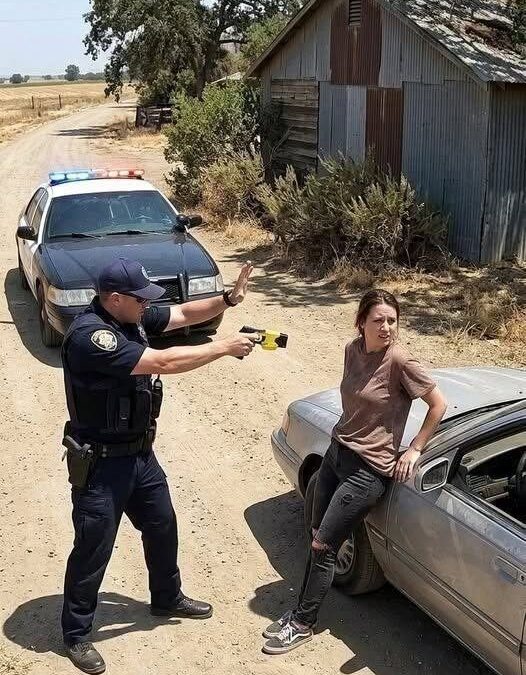
A Corrupt Texas Cop Stole From Drivers for Years Until He Pulled Over an FBI Agent and Learned Whose Daughter She Really Was
Officer Harlon Quill’s weapon flashed beneath the brutal Texas sun, aimed directly at my chest.
Heat rolled off the blacktop in shimmering waves.
Gravel cracked beneath my boots.
Behind me, the rental SUV ticked softly as the engine cooled, and somewhere in the dry grass beside the highway, cicadas screamed like the entire afternoon had become electrically charged.
Quill smiled.
Not nervously.
Not uncertainly.
He smiled like a man who had already decided how the next ten minutes would end.
A woman alone.
Out of state plates.
Rental vehicle.
Paper coffee cup in the console.
Plain gray shirt.
Jeans.
No obvious witness.
No reason, in his mind, to believe I was anything other than another person he could frighten.
He had no idea who I was.
More importantly, he had no idea what was recording him.
“Hands where I can see them,” he said.
“They are.”
“Don’t get smart.”
I looked at the weapon.
Then at him.
“My hands are visible.”
His smile tightened.
“You think that attitude is going to help you?”
I said nothing.
That seemed to bother him more.
Men like Quill expected reactions.
Fear.
Anger.
Defensiveness.
Begging.
Each one gave them something to manipulate.
I had spent most of my adult life learning not to give people information they had not earned.
That afternoon, the most important information was simple.
Quill believed he had control.
I needed him to keep believing it.
Because this did not begin on the side of a Texas highway.
It began three nights earlier with my little brother crying in a gas station bathroom.
Three Days Earlier
Ronan called me at 7:18 p.m.
He tried to sound normal.
Failed before he finished saying my name.
“Delaney?”
I sat up.
I knew his voice.
Nineteen years old.
Too proud to ask for help unless something was seriously wrong.
“What happened?”
“Nothing.”
“Ronan.”
He went silent.
I could hear a hand dryer somewhere behind him.
Then the hollow echo of a public restroom.
“Where are you?”
“Gas station.”
“Where?”
“Outside Austin.”
“You were supposed to be on the highway.”
“I was.”
His breathing changed.
I stood.
“What happened?”
“I got stopped.”
“Accident?”
“No.”
“Ticket?”
“I don’t know.”
That answer made no sense.
“What do you mean you don’t know?”
“I mean he took it.”
“Took what?”
“My money.”
I stopped.
“What money?”
There was only one amount Ronan had been obsessing over for months.
Tuition.
He had saved everything he could.
Warehouse shifts.
Weekend delivery work.
No restaurants.
No new clothes.
He carried the tuition money in a worn bank envelope because the college finance office had given him a final deadline for part of his orientation payment.
“How much?”
He said the number.
I closed my eyes.
Everything.
Nearly all of it.
“Tell me exactly what happened.”
He sniffed once.
I pretended not to notice.
“I was driving.”
“Speed?”
“No.”
“Registration?”
“Fine.”
“Insurance?”
“Fine.”
“Then why did he stop you?”
“He said lane violation.”
“Were you drifting?”
“I don’t think so.”
“Okay.”
“He asked where I was going.”
“Then?”
“I said school.”
“Then?”
“He asked if I had drugs.”
I stared at the wall.
“What did you say?”
“No.”
“Then?”
“He said I looked nervous.”
“You were being stopped by police.”
“I told him that.”
Despite everything, I nearly smiled.
Of course Ronan did.
“What happened next?”
“He made me get out.”
My expression changed.
“Search?”
“Yes.”
“Consent?”
“He didn’t ask.”
“What did he find?”
“The envelope.”
The room seemed colder.
“What did you tell him?”
“That it was tuition.”
“And?”
“He said cash was suspicious.”
I felt anger rise.
“Did he arrest you?”
“No.”
“Citation?”
“I don’t know.”
“Receipt for seizure?”
“No.”
“Property form?”
“No.”
“Case number?”
“No.”
“Business card?”
“No.”
“Dash camera?”
“I don’t know.”
“Body camera?”
“I don’t know.”
“Did he say the money was being seized?”
“He said if I wanted to fight him, I could explain it to investigators.”
“Which investigators?”
“He didn’t say.”
“Then what?”
“He took the envelope.”
“And let you go?”
“Yeah.”
“Without documentation?”
“Yes.”
That was no longer unusual procedure.
It was theft.
“Name.”
“I got part of it.”
“What?”
“He had a citation pad.”
“You said you didn’t get a citation.”
“He started writing one, then took it back.”
“But?”
“I took a picture when he turned.”
My heart sped up.
“Send it.”
A few seconds later, the image arrived.
Blurry.
Crooked.
But at the bottom:
H. QUILL.
I zoomed.
Badge number partially visible.
Enough.
“Harlon Quill,” I said.
Ronan went quiet.
Then:
“Delaney…”
Something in his voice changed.
“What?”
“If somebody asks you about Dad…”
My entire body tightened.
“What about Dad?”
Another silence.
“What do I say?”
“Ronan, who asked you about Dad?”
“No one.”
“You just brought him up.”
“I’m tired.”
“Ronan.”
“I have to go.”
“No.”
“Please.”
“Did Quill say Dad’s name?”
“No.”
That answer came too quickly.
“Did somebody else?”
Silence.
“Ronan.”
He whispered:
“I just need to know what to say.”
My father had been dead for eight years.
Officially, an accident.
His vehicle found near a river.
Body recovered downstream.
Accidental drowning.
At least, that was the version entered into reports.
I had been seventeen when he died.
Ronan was eleven.
Our father worked for the state.
Investigations.
Oversight.
The kind of work that made people uncomfortable.
I spent years believing his death had nothing to do with it because that was what everyone told us.
Then, gradually, I stopped asking.
Grief can exhaust curiosity.
But hearing Ronan mention him during a highway theft brought every old doubt back.
“Tell anyone who asks that Dad is dead.”
Ronan breathed.
“Okay.”
“And do not go back to that road.”
“Fine.”
“I mean it.”
“I know.”
“Go somewhere public.”
“I am.”
“Call me when you reach the motel.”
“You’re doing the agent thing.”
“Yes.”
“I’m fine.”
“No, you’re not.”
Pause.
“No.”
His voice cracked.
“I’m not.”
That was when I decided I was going to Texas.
Officially, I was on administrative leave.
I will not pretend that sentence meant I was free to conduct an FBI operation on my own.
I was not.
There were reasons agents followed procedure.
Evidence integrity.
Jurisdiction.
Safety.
Conflicts of interest.
And Ronan made this deeply personal.
I knew all of that.
I also knew if I reported a corrupt officer through the wrong channel before understanding how wide the problem went, the evidence might disappear.
Ronan had no receipt.
No official seizure.
No case number.
Nothing.
Just one photograph.
One name.
So I called someone I trusted.
Not my supervisor.
Not yet.
A former colleague who owed me enough honesty to answer one question.
“Harlon Quill,” I said.
Long pause.
“Why?”
“That bad?”
“Why?”
“My brother got stopped.”
The silence changed.
“How much?”
That question told me everything.
“You knew.”
“I knew there were complaints.”
“How many?”
“Nothing formal enough to survive.”
“Meaning?”
“Drivers claim cash disappears.”
“Receipts?”
“Rarely.”
“Investigations?”
“Internal review went nowhere.”
“Body cameras?”
“Equipment problems.”
“Dash video?”
“Missing.”
I closed my eyes.
“Who protects him?”
“I didn’t say anyone does.”
“You did without saying it.”
“Delaney.”
“What?”
“Stay out.”
I laughed once.
“You knew that wouldn’t work before you said it.”
“Exactly why I had to say it.”
I rented an SUV the next morning.
Different name variation on the reservation but completely legal identification.
Out of state plates.
Nothing special.
I dressed deliberately ordinary.
Phone mounted.
Secondary recording system concealed.
Cloud backup configured.
If the roadside camera was discovered and destroyed, a copy would transmit automatically as soon as enough signal existed.
I did not drive to Cedar Ridge for revenge.
I drove there because guilty people repeat themselves when they believe circumstances are safe.
Quill had stolen from Ronan.
If he had done it before, I needed him to behave naturally enough to prove it.
The Road
East Texas in summer felt like the sun had lowered itself specifically to punish asphalt.
I drove under the speed limit.
Signal.
Full stop.
Seat belt.
No broken lights.
Rental paperwork in order.
Nothing in the vehicle remotely resembling contraband.
I passed a barbecue sign faded almost white.
Feed store.
Tiny American flag snapping in the heat.
Then I saw the patrol cruiser.
Partially hidden.
Quill.
I did not turn my head.
He pulled out.
Stayed several car lengths behind me.
Then closer.
Closer.
His grille filled the mirror.
I tapped the brake once.
Not aggressively.
Just enough to maintain distance.
Red and blue lights exploded.
“Here we go.”
I pulled onto the gravel shoulder.
Engine off.
Windows down.
Hands on steering wheel.
Wait.
Quill stepped out.
Big shoulders.
Heavy boots.
One hand near his holster.
He approached like the road belonged to him.
No greeting.
“You know how fast you were going, darling?”
“Below the limit.”
“My radar says otherwise.”
“How fast?”
He hesitated.
Interesting.
“Reckless.”
“That isn’t a speed.”
“Construction zone.”
I looked down the empty road.
“No construction signs for miles.”
His smile disappeared.
“You calling me a liar?”
“I’m stating what I observed.”
“Girl, I asked you a question.”
“I’d appreciate you not calling me that.”
That was enough.
His face hardened.
“Out of the vehicle.”
“What is the basis for the order?”
“Out.”
I knew arguing law on the roadside was rarely productive.
Especially with an officer already operating outside it.
I opened the door slowly.
“Hands.”
“Visible.”
“Turn around.”
I did.
He pushed me toward the hood.
Harder than necessary.
“Spread your feet.”
I complied.
His hand pressed between my shoulders.
Then:
“I smell marijuana.”
There it was.
The oldest shortcut.
“I don’t have marijuana.”
“I didn’t ask.”
“My rental was cleaned this morning.”
“Everybody says that.”
He began searching.
Not professionally.
Possessively.
Eyes moving toward interior.
Passenger bag.
“What’s in there?”
“My identification.”
He looked.
“And?”
“My badge.”
He laughed.
“What are you, mall security?”
I turned my head enough for him to hear clearly.
“Special Agent Delaney Voss. Federal Bureau of Investigation.”
Silence.
For one second, his face emptied.
Then amusement returned.
“Sure you are.”
“I can retrieve credentials.”
“Don’t move.”
“I am telling you what I am going to do before I move.”
He drew his weapon.
Fast.
The barrel aimed at my chest.
Now we were back where this story started.
Hot road.
Dry wind.
Gun.
Quill smiling.
He had just threatened a federal agent after inventing probable cause.
My camera had everything.
I thought the trap was complete.
Then I saw the second vehicle.
Dark blue pickup.
No markings.
No siren.
Dusty.
Dent above rear wheel.
Rolling slowly behind Quill’s cruiser.
That vehicle had not been part of my plan.
I had seen it twice.
Gas station mirror outside Austin.
Across from Ronan’s apartment.
My pulse changed.
Quill noticed something in my face.
“Eyes on me.”
I did.
The pickup stopped.
Driver door opened.
A man stepped out.
Mid forties.
Gray work shirt.
Ball cap.
No visible weapon.
He closed the door gently.
Then looked at Quill.
Not me.
Quill.
That bothered me immediately.
Quill’s jaw tightened.
“What are you doing out here, Wade?”
The man smiled faintly.
“Trying to get home before dark.”
“This isn’t your business.”
Wade glanced at the weapon.
“Looks like it might be.”
“Get back in the truck.”
Wade did not move.
“I’m giving you an order.”
Something changed in Wade’s eyes.
“You still giving orders, Harlon?”
Quill froze.
The name landed differently.
History.
I could hear it.
“What’s your name?” I asked.
Quill snapped:
“You don’t ask questions.”
Wade answered.
“Wade Mercer.”
My stomach tightened.
I knew the name.
An internal report I had read three weeks earlier.
Witness.
Potential corruption case.
Refused cooperation.
No usable statement.
I looked at him.
“You knew Ronan?”
Everything changed.
Wade’s eyes hardened.
Quill’s weapon shifted.
“Don’t say that name.”
I stared.
“Why?”
Wade answered.
“Because your brother wasn’t the first.”
Silence.
“How many?”
“Twenty seven I know about.”
My breathing stopped for half a second.
Twenty seven.
Drivers.
Stops.
Missing cash.
No records.
Quill moved toward Wade.
“Enough.”
Wade shook his head.
“No.”
For the first time, I saw fear in Quill.
Not fear of me.
Fear of Wade.
That mattered more than the gun.
I had assumed missing documentation was the crime.
Now I understood missing documentation might be evidence of a system.
“How many people lost money?”
Wade said:
“Twenty seven I can prove.”
Quill shouted:
“You have no idea what you’re talking about.”
I looked at him.
“I’m beginning to.”
“On your knees.”
I did not move.
“Officer…”
“Get on your knees!”
The gun rose.
Wade’s hand moved toward his waistband.
Quill saw.
“Don’t.”
Wade stopped.
Then a faint electronic chime came from my SUV.
Backup transmission.
The footage had uploaded.
Outside this road.
Beyond Quill’s reach.
Proof.
I breathed once.
Quill heard.
“What?”
“Nothing.”
“You smiling?”
“Maybe.”
His eyes narrowed.
I said:
“Officer Quill, lower your weapon and step back.”
He laughed.
“You think you have control?”
“No.”
I looked directly at him.
“I think you lost it ten minutes ago.”
His cruiser radio crackled.
“Unit twelve, status?”
Quill reached for his shoulder mic.
Then another voice came through.
Male.
Calm.
“Unit twelve, do not transmit.”
Quill froze.
Wade looked at me.
I looked at the cruiser.
Someone else had access to the frequency.
“Officer Quill, put the weapon down.”
Quill stared.
“Identify yourself.”
Pause.
“You already know.”
Color drained from his face.
I did not recognize the voice.
Quill did.
“That’s impossible.”
The voice returned.
“Look in the rearview mirror.”
Quill turned.
A black sedan approached.
Unmarked.
Slow.
Twenty yards.
Fifteen.
Ten.
Stopped.
Driver door opened.
A woman stepped out.
Dark suit.
White shirt.
Silver hair.
Badge clipped at waist.
Quill whispered:
“Director?”
My blood went cold.
Not local.
Not county.
Not state.
Someone higher.
She walked toward us.
“Agent Voss.”
I stared.
“Ma’am.”
She stopped several feet away.
Looked at Quill’s weapon.
Then me.
Then Wade.
“You were supposed to wait.”
“For what?”
She ignored the question.
“Harlon. Put it down.”
He swallowed.
“Ma’am, I can explain.”
“No.”
Quiet.
Final.
“You can’t.”
Quill looked like a child being called by his full name.
The Director continued.
“For four years you’ve been stopping motorists along this corridor.”
“I haven’t done anything wrong.”
“Then why did you bury twenty seven reports?”
Silence.
“Why confiscate cash without receipts?”
Nothing.
“Why did every victim leave believing they had no recourse?”
Quill stared at the road.
“And why did money from those stops reach three accounts connected to a company that does not officially exist?”
There it was.
Not one crooked officer.
System.
She looked at me.
“Your brother’s tuition money wasn’t the target.”
“What?”
“His envelope was.”
I frowned.
“Why?”
“Something was written on it.”
She produced a photograph.
Ronan at the gas station.
Holding envelope.
On the back, partially visible beneath his thumb:
Numbers.
Not school information.
Not routing number I recognized.
I studied them.
Then realized.
“Account number.”
“Yes.”
“Where did he get it?”
“That is what we were trying to determine.”
My memory returned.
Delaney, if somebody asks you about Dad, what do I say?
My throat tightened.
“Dad.”
The Director’s expression changed.
Wade looked away.
“Our father has been dead eight years.”
Nobody answered.
“Why is his name in this?”
Quill stopped smiling completely.
“Where’s Ronan’s envelope?”
Nothing.
“Where’s his money?”
Silence.
Wade stepped toward the pickup.
“I know.”
He removed a battered black folder.
Opened.
Photographs.
Receipts.
Names.
Dates.
License plates.
Cash totals.
Notes.
“Quill wasn’t keeping everything.”
“Who was?”
Wade looked toward the tree line.
“That isn’t the question to ask out here.”
A branch moved.
I saw it.
Wade saw it.
The Director turned.
“Everyone back to vehicles.”
Quill frowned.
“Why?”
Gunshot.
Glass exploded from the patrol cruiser.
We dropped.
Another shot.
Then another.
Not at me.
At Quill.
He crawled behind the cruiser.
“Help me!”
The man who had pointed a gun at me minutes earlier now sounded terrified.
I moved behind cover.
“Who’s shooting?”
Quill looked at me.
“Please.”
I leaned close enough to hear.
“What are you afraid of?”
His eyes met mine.
“Your father.”
Everything stopped.
“My father is dead.”
“I know.”
Quill looked at the trees.
“And that’s why they’re coming for all of us.”
An engine started somewhere beyond the brush.
Then disappeared down an unseen road.
I stared into the trees.
Eight years of grief shifted under my feet.
Ronan had found something connected to our dead father.
Quill feared our dead father.
Someone had just tried to kill Quill before he could explain.
And somewhere inside that black folder was a history I suddenly realized had started long before my brother lost his tuition money.
PART TWO
Marlow
For several seconds, I could not move.
“My father is dead.”
I said it again because repeating a fact can feel like protection when reality begins to bend.
Quill stared from behind the cruiser.
“I know.”
“Then explain.”
“I can’t.”
I almost laughed.
“You just told me people are coming for us because of him.”
“I said what I said.”
“And now you are going to say the rest.”
Quill looked at the Director.
She said:
“Tell her.”
His shoulders sagged.
Slowly, he placed his weapon on the cruiser hood.
Raised his hands.
“I didn’t start it.”
“Start what?”
“The stops.”
Wade scoffed.
“You were more than a bystander.”
Quill closed his eyes.
“I know.”
The Director stepped closer.
“Names.”
Quill hesitated.
“Give Agent Voss the names.”
He opened his cruiser.
We tensed.
“Slow.”
He reached beneath the passenger seat.
Small metal box.
Scratched.
Old.
He set it on the hood.
“What’s inside?”
“Everything I kept.”
He opened it.
Envelopes.
Dozens.
Names.
Dates.
Amounts.
I found Ronan’s.
My hands shook.
Inside:
Receipt.
Not an official seizure receipt.
Something private.
A bookkeeping slip.
And a photograph.
Ronan outside the gas station.
Behind him, an older man.
Gray jacket.
Hat.
I stared.
My body recognized him before my brain permitted it.
Face.
Posture.
Shoulders.
The angle of his head.
I had seen him in family pictures.
Birthday mornings.
Fishing trips.
My high school graduation.
Dad.
“No.”
I turned the photograph.
Recent timestamp.
Three days ago.
I looked at the Director.
“My father died eight years ago.”
“Yes.”
“Then who is this?”
No answer.
Wade stepped closer.
“That is what your brother found.”
“You knew?”
“I suspected.”
“That Dad was alive?”
“No.”
He pointed.
“I knew somebody wanted people to believe he was.”
The man in the photo was not watching Ronan.
He stared toward the camera.
Directly.
Like he knew.
I flipped the photograph.
Three words.
ASK ABOUT MARLOW.
My chest tightened.
“Marlow.”
The Director nodded.
“Your father’s last case.”
Memory returned.
I had been seventeen.
Dad worked for state oversight.
He rarely discussed cases at home.
But Marlow had been different.
Long hours.
Locked office.
Arguments on the phone.
One night, I heard him tell someone:
“Evidence doesn’t disappear by itself.”
At the time, I barely listened.
Teenager.
College applications.
Friends.
The world felt permanent.
Then he disappeared.
Vehicle found near a river.
Body recovered.
Officially accidental drowning.
There had been questions.
My mother asked them until grief exhausted her.
I asked for reports.
Nothing useful.
Ronan was too young to understand.
We buried him.
Moved forward badly.
“What did he find?”
Quill answered.
“A ledger.”
“What ledger?”
“Payments.”
“How much?”
“Millions.”
Wade added:
“Not only stolen roadside cash.”
I looked at him.
“Then what?”
“Bribes.”
“From who?”
“Judges. Contractors. Business owners. Politicians. Officers.”
The road suddenly seemed much smaller.
The highway stops were collection points.
Some cash simply theft.
Some tied to intimidation.
Some designed to make evidence vanish.
“Quill?”
The Director nodded toward him.
“He was one collection arm.”
Quill looked away.
“How many drivers?”
Wade had said twenty seven.
“Hundreds,” the Director said.
“Possibly more.”
I felt sick.
Ronan had stumbled onto something while carrying an account number tied to a dead man’s investigation.
“Why did you take his money?”
Quill said:
“I was told.”
“By who?”
Silence.
I stepped closer.
“By who?”
His eyes met mine.
“Your father.”
I laughed.
No humor.
“You need a better lie.”
“He contacted me six months ago.”
“My father is dead.”
“I know.”
“That is not how contact works.”
Quill looked exhausted.
“That was the point.”
“What point?”
“Somebody is using his identity.”
The Director watched him carefully.
“Explain.”
“I started getting messages.”
“When?”
“Six months.”
“How?”
“Burner numbers. Encrypted account.”
“What did they ask?”
“At first nothing major.”
“Then?”
“Specific stops.”
My stomach tightened.
“Ronan?”
“Eventually.”
“How did you know his route?”
Quill swallowed.
“I was sent the vehicle description.”
“Who knew?”
“I don’t know.”
“You expect me to believe you worked for a ghost?”
“No.”
He took a folded paper from his pocket.
The Director ordered him to move slowly.
He handed it to me.
One sentence.
THE LAST NAME ON THE LIST IS YOURS.
I looked up.
“What does this mean?”
Quill’s face changed.
“Whoever has the ledger doesn’t want you investigating.”
The Director stepped closer.
“We leave now.”
“No.”
“Delaney.”
“No.”
I raised the paper.
“I want answers.”
“You will get them.”
“When?”
“When we survive the next twenty four hours.”
Engine.
Distant.
Fast.
Wade turned.
“That’s not police.”
A black pickup burst from the trees.
Same vehicle.
Same dent.
The truck accelerated toward us.
I ran for my SUV.
“Get in!”
Wade passenger side.
Director behind.
Quill stood frozen.
“Quill!”
He looked.
“Get in!”
He ran.
The pickup slammed into his cruiser as Quill threw himself into the back seat.
Metal screamed.
Glass exploded.
I hit accelerator.
The rental SUV tore down the highway.
For several miles, nobody spoke.
Quill finally whispered:
“They’ll keep coming.”
I watched the road.
“Good.”
He looked at me.
“Good?”
“Yes.”
“Why?”
“Because now I know what they’re protecting.”
The Director leaned forward.
“What?”
I glanced at Wade’s black folder.
“The truth.”
Ronan
We moved Ronan immediately.
He hated that.
“I have orientation.”
I stared.
“Your tuition was stolen by a corrupt officer who may be part of the network connected to Dad’s death.”
“Orientation is mandatory.”
For one second, I saw nineteen again.
I laughed.
He glared.
“What?”
“Nothing.”
“This isn’t funny.”
“No.”
I hugged him.
He stiffened.
Then held me.
“You scared me.”
“You scared me first.”
“What did you write on the envelope?”
He pulled away.
“Numbers.”
“I know.”
“Then why ask?”
“Where did you get them?”
He looked toward the Director.
She had introduced herself more fully by then but made it clear certain information remained compartmentalized.
Ronan did not trust her.
Good instinct.
“Gas station.”
“Where?”
“Bathroom.”
“What?”
“Somebody scratched numbers into the stall.”
“That makes no sense.”
“I know.”
“Why copy them?”
“Because Dad’s name was underneath.”
My heart stopped.
“What exactly?”
Ronan closed his eyes.
“VOSS MARLOW.”
Silence.
“Why didn’t you tell me?”
“Because I thought it was graffiti.”
“But then Quill took the envelope.”
“Yes.”
“And you connected it.”
“Yes.”
“Did Quill see Dad’s name?”
“No. The numbers were on the envelope.”
“Then how did he know?”
“I don’t know.”
He looked ashamed.
“I thought maybe somebody was watching me.”
“You were right.”
Wade’s truck had appeared near his apartment.
Possibly protection.
Possibly surveillance.
Still unclear then.
Ronan said:
“Do you think Dad is alive?”
I looked at him.
Eight years.
Funeral.
Body identification handled by authorities.
Records.
Everything.
“No.”
He nodded.
Disappointed and relieved.
“Then who was in the photo?”
“I don’t know.”
That answer would become the center of everything.
The Director
Her name was Evelyn Shaw.
Assistant Director level authority within a federal corruption task structure connected to the case.
She had known my father.
That mattered.
“You knew him?”
“Yes.”
“How well?”
“Well enough to know he was difficult.”
I almost smiled.
“Accurate.”
“He did not trust bureaucracy.”
“Also accurate.”
“Sometimes for good reason.”
I stared.
“Did you know Marlow was connected to his death?”
“We suspected.”
“Eight years?”
“No.”
“When?”
“Later.”
“How much later?”
“Two years.”
“And nobody told us.”
“No.”
“Why?”
“Because the evidence was weak.”
“My family deserved to know.”
“Yes.”
I expected defense.
Instead she said:
“We failed you.”
That answer disarmed me.
“Was his body really recovered?”
“Yes.”
“You are certain?”
“As certain as records allow.”
“That sounds evasive.”
“It is cautious.”
“DNA?”
She hesitated.
“Partial.”
My stomach tightened.
“What does that mean?”
“Condition of remains complicated identification.”
“You buried a body.”
“Yes.”
“We buried my father.”
“Yes.”
“Was it him?”
Shaw looked at me.
“I believed it was.”
“Past tense.”
She said nothing.
Rage rose.
“If there is a chance…”
“I am not going to create hope from uncertainty.”
“Then create truth.”
“We are trying.”
That was the beginning of my distrust of Shaw.
Not because she lied obviously.
Because she knew more than she wanted to say.
I knew the technique.
I used it professionally.
Necessary sometimes.
Infuriating when you were the person outside the circle.
Wade Mercer
Wade had spent four years gathering evidence.
Not because he was a hero.
He said that repeatedly.
“I should have spoken earlier.”
“Why didn’t you?”
“Fear.”
“Of Quill?”
“Of everybody above him.”
Wade once owned a small towing company.
Police rotation contracts.
Accident scenes.
Vehicle impounds.
He saw seized property disappear.
Cash recorded incorrectly.
Cars searched without reports.
Complaints dropped.
At first, he ignored it.
Business.
Family.
Mortgage.
Then one driver came back asking about an envelope missing from an impounded vehicle.
Wade checked.
No record.
Then another.
Then another.
“Twenty seven?”
“That I documented.”
“Why did you follow Ronan?”
“Because I knew Quill had been given his plate.”
“How?”
“Source.”
“Name.”
“No.”
I stared.
“Wade.”
“You need source alive more than you need name.”
Fair.
I hated fair answers.
“Why come to the road?”
“I thought Quill would take you.”
“Take me where?”
Wade looked away.
“Not jail.”
That settled cold in my stomach.
“What does that mean?”
“They had a place.”
“Who?”
“Officers involved.”
“Place for what?”
“To scare people. Recover evidence. Sometimes worse.”
“Where?”
“Marlow.”
The word again.
“What is Marlow?”
“Not a person.”
I frowned.
Shaw entered before he explained.
“Enough.”
I looked at her.
“No.”
She said:
“Marlow was the internal name associated with your father’s last corruption case.”
Wade shook his head.
“That’s the sanitized version.”
“Then give me the real one.”
He looked at Shaw.
She did not stop him.
“Marlow was a county property network.”
“What does that mean?”
“Warehouses. Seized vehicles. contractor yards. Evidence storage.”
“Used for laundering?”
“Everything.”
Cash.
Narcotics.
Weapons.
Vehicles.
Evidence.
Bribes.
Traffic stops fed the system.
Judges dismissed cases.
Contractors moved property.
Officers collected.
Politicians protected budgets and appointments.
“Dad found it.”
“Yes.”
“And died.”
“Yes.”
My hands turned cold.
Then why was someone using his identity now?
Twenty Four Hours
We did not sleep.
Teams moved records.
Wade’s folder duplicated.
Quill separated and interviewed.
Ronan protected.
Accounts frozen where authority existed.
Shaw pushed emergency warrants.
I sat in a secure room reading records until words stopped looking like language.
Twenty seven known victims.
Cash amounts.
Stops without cause.
Some drivers immigrants.
Some college students.
Some retirees.
One family traveling to a funeral.
Quill had selected people least likely to fight.
Out of county.
Out of state.
Cash visible.
Nervous.
Young.
Old.
People he could describe as suspicious.
The pattern was ugly because it was simple.
Authority plus isolation.
I listened to Quill’s interview through authorized observation.
“Why Ronan?”
“Order.”
“From?”
“Account.”
“What account?”
“Ghost Dad.”
That was what Quill called it.
Messages signed with my father’s old case identifier.
Instructions included details only people familiar with Marlow should know.
“Why obey?”
“Because they had proof on me.”
“What proof?”
“Everything.”
His first theft.
Then the next.
Once he crossed the line, the network owned him.
Blackmail.
Profit.
Fear.
Classic.
“Did you kill anyone?”
“No.”
“Did you know people were killed?”
Silence.
That answer was enough.
“Did you know Voss was targeted?”
“His father?”
“Agent Voss’s father.”
“Yes.”
“Who ordered it?”
“I don’t know.”
Quill looked toward camera.
Then:
“But I know who cleaned it.”
Shaw entered the room personally after that.
I was not allowed.
I argued.
Lost.
Two hours later, Shaw emerged.
“He gave us a judge.”
“Name?”
“No.”
“Why not?”
“Active operation.”
“Was that judge part of Dad’s death?”
“Possibly.”
“Possibly is doing a lot of work.”
“I know.”
The Data Drop
At 6:02 the next morning, everything changed.
Documents appeared simultaneously across dozens of newsrooms.
Not local leak.
Coordinated.
Bank records.
Traffic stop recordings.
Photographs.
Seizure logs.
Names.
Amounts.
Dates.
Body camera clips thought lost.
Four years of evidence.
I stared at the first alert.
“Did we do this?”
Shaw looked stunned.
“No.”
“Wade?”
He shook his head.
“Not me.”
Quill?
In custody.
Then who?
Someone had released enough evidence to force the case public before anybody could bury it.
Arrests started.
Quill.
Six other officers.
Three county officials.
Private contractor.
Judge.
By noon, the investigation crossed state lines.
By evening, the shell company tied to stolen money was frozen.
Known suspected victims:
Not twenty seven.
Four hundred thirteen.
Wade stared at the number.
“I only found twenty seven.”
“You found the door,” I said.
Ronan’s tuition money returned.
Every dollar.
He called.
“They refunded it.”
“Good.”
“I’m still behind on orientation.”
I laughed.
He did too.
For the first time since his original call, he sounded nineteen.
I should have celebrated.
Instead, I sat outside the federal building holding a photograph of my father.
Eight years of questions.
Had he died because of Marlow?
Now, apparently yes.
He found a ledger.
Tried to expose network.
Someone killed him.
That was enough to rewrite our entire family history.
Still one question:
Who was pretending to be him?
Shaw walked toward me.
“You were right.”
“About what?”
“Your father.”
I stood.
“What did you find?”
She handed me a sealed evidence envelope.
“Original case file.”
I opened it.
Final report.
Last page missing.
Then a handwritten note.
Dad’s handwriting.
I knew instantly.
If Delaney ever finds this, tell her I was proud of her.
I read it twice.
Then again.
My eyes blurred.
For eight years, anger had protected me from grief.
Anger at the department.
The accident ruling.
Myself.
Why did I not push harder?
Why did I accept anything?
Why did I move on?
Now the anger loosened.
And underneath:
My father.
Gone.
I pressed the paper against my chest.
“I found you, Dad.”
Shaw stood silently.
I wiped my eyes.
Then noticed something.
The evidence envelope had been sealed that morning.
Inside was another photograph.
Recent.
Very recent.
Man outside a courthouse.
Older.
Gray hair.
Alive.
I stared.
Same face.
Dad.
No hat this time.
Clear.
Impossible.
I turned the photograph over.
Four words.
YOU FOUND THE WRONG QUILL.
My blood went cold.
I looked at Shaw.
“You knew?”
Her face had gone pale.
“No.”
For the first time, I believed her instantly.
“Wrong Quill.”
She repeated it.
“Harlon?”
“Maybe.”
“Another Quill?”
I looked toward courthouse.
Eight years of answers had arrived.
And somehow the biggest mystery had just begun.
PART THREE
The Wrong Quill
The phrase would not leave my head.
You found the wrong Quill.
Harlon Quill was real.
Corrupt.
Documented.
In custody.
His role was undeniable.
So wrong could not mean innocent.
It meant incomplete.
Maybe Harlon was not the Quill who mattered.
I searched available records.
Family.
Employment history.
Relatives.
Names.
Nothing obvious enough.
Shaw restricted access.
“Why?”
“Because somebody sent that photo directly into a secured evidence chain.”
That frightened me more than the message.
“Meaning?”
“They had access after sealing.”
“Inside?”
“Yes.”
“So network is in here.”
“Possibly.”
I laughed bitterly.
“Again with possibly.”
“Agent Voss, accuracy matters.”
“So does urgency.”
“I know.”
I looked at the photograph.
Dad.
Or someone almost perfectly resembling him.
“Facial analysis?”
“Running.”
“DNA?”
“No sample.”
“Could be manipulated?”
“Yes.”
“Is it?”
“Initial review says photograph is physical and image appears unaltered, but that is preliminary.”
Preliminary.
Everything important lived behind qualifying language.
Ronan saw it.
He sat down.
“That’s him.”
“You were eleven.”
“I know Dad.”
“So do I.”
“Then why are you pretending?”
“Because dead people do not usually stand outside courthouses eight years later.”
“Maybe he wasn’t dead.”
The hope in his voice hurt.
“Ronan.”
“What?”
“We need evidence.”
“You sound like him.”
Dad.
Always evidence.
Maybe that was how grief passed through families.
The Body
We reopened every record.
Recovery.
Autopsy.
Identification.
Dental.
DNA.
Personal effects.
Vehicle.
Everything.
The body had been badly damaged by water.
Identification relied heavily on circumstantial evidence and dental comparison.
DNA technology existed then, of course, but the retained sample quality and handling were not as clean as I wanted.
A new review began.
I sat across from a forensic specialist.
“Could the body have been misidentified?”
She chose words carefully.
“Possible.”
“How possible?”
“I cannot quantify without new testing.”
“Was intentional substitution possible?”
“That is an investigative question.”
“Could somebody have made another body look like my father?”
She looked at me.
“In broad terms, identification systems can fail when information is manipulated.”
Not answer.
Enough.
“What personal item was recovered?”
“Watch.”
Dad’s watch.
I remembered giving it to him with Mom.
Could someone else possess it?
Yes.
“Wedding ring?”
“No.”
Why had I never noticed that?
“Wallet?”
“Damaged.”
“Identification?”
“Yes.”
Everything portable.
Everything transferable.
My certainty weakened.
Then test returned.
Retained biological material did not produce enough quality for definitive comparison with Ronan and me.
Not proof of life.
Not proof of death.
Uncertainty.
Worse than grief.
Harlon Talks
I requested interview with Quill.
He laughed when I entered.
“You came back.”
“You knew I would.”
“Your dad was like that.”
My entire body tightened.
“You knew him.”
“No.”
“Then don’t talk like you did.”
Quill leaned back.
“I knew the stories.”
“What stories?”
“Marlow.”
“Who told them?”
“Other Quill.”
There.
I stayed still.
“Name.”
Quill smiled.
Not powerful anymore.
But still enjoying information.
“Protection first.”
“You are in federal custody.”
“Exactly.”
“Who is the other Quill?”
“My uncle.”
I felt cold.
“Name.”
“Gareth.”
“Harlon Quill and Gareth Quill.”
“Yes.”
“What did he do?”
“Everything I didn’t.”
“Meaning?”
“He recruited.”
“Officers?”
“Everybody.”
“Where is he?”
Quill laughed.
“If I knew, I’d tell you.”
“Why?”
“Because he is the one trying to kill me.”
“The shooter?”
“His people.”
“Why after all these years?”
“Because Ronan copied the account number.”
“What account?”
“Marlow clearing account.”
My stomach tightened.
“The same number from the envelope.”
“Yes.”
“How did it end up in a gas station bathroom?”
Quill shook his head.
“That I don’t know.”
“Who wrote VOSS MARLOW?”
“No clue.”
“Did Gareth know my father?”
“Yes.”
My heart pounded.
“How well?”
Quill looked at me.
“Too well.”
“Explain.”
“They worked together.”
Silence.
“My father investigated him.”
“Eventually.”
“Eventually?”
“Hale Voss and Gareth Quill started on the same side.”
My father’s first name.
Hale.
I had not heard it spoken by Quill before.
“How do you know?”
“Uncle kept photographs.”
“What side?”
“State task force.”
Dad had worked with a Quill.
The message:
You found the wrong Quill.
Not Harlon.
Gareth.
“Did Gareth kill my father?”
Quill stopped smiling.
“I don’t know.”
“Did he fake his death?”
“I don’t know.”
“Was my father corrupt?”
That question hurt to say.
Quill studied me.
“I don’t think so.”
Not enough.
“Why?”
“Because Uncle hated him.”
Strangely comforting.
Marlow Was Not a Case
Wade finally told me the part he had withheld.
“Marlow wasn’t originally the case name.”
“What was it?”
“A person.”
My chest tightened.
“Who?”
“Daniel Marlow.”
Former evidence contractor.
The company network started through his storage facilities.
Police seized property.
Marlow moved it.
Items disappeared.
Later, cash routing.
Then bribes.
My father investigated.
Gareth Quill was assigned alongside him.
At some point, Gareth switched sides.
Or had always been compromised.
“Daniel Marlow?”
“Dead.”
“How?”
“Heart attack.”
“Convenient?”
“Maybe real.”
“What did Dad find?”
“Ledger.”
The ledger again.
“Where is it?”
“Nobody knows.”
Then why did network react to account number?
Maybe ledger connected to account.
Ronan had accidentally copied a key.
Wade said:
“Your father believed the ledger had two versions.”
“One official?”
“One payment record.”
“And the other?”
“Insurance.”
“Meaning?”
“Names of people too important to expose unless somebody tried to kill him.”
My father built a dead man switch.
Except it apparently failed.
Or had not.
The data dump of 413 victims appeared from nowhere.
Maybe the switch just activated eight years late.
“Who released the files?”
Wade shook his head.
“You already know what you want the answer to be.”
Dad.
“Yes.”
“That doesn’t make it true.”
I hated him for being right.
The Courthouse Photograph
We traced metadata.
None.
Physical print.
Security footage outside courthouse reviewed.
At the time photograph was supposedly taken, cameras had an unexplained nine minute gap.
Of course.
Witnesses?
One food cart vendor remembered older man.
Gray hair.
No name.
“He bought coffee.”
“Accent?”
“Local.”
“Anything unusual?”
“He left cash.”
“How much?”
“Ten.”
Coffee cost three.
Dad always overtipped.
Meaningless.
Or everything.
“Did he say anything?”
The vendor thought.
“Asked where county records were.”
I stared.
Dad.
Again.
Or someone studying him.
The man left before cameras returned.
No vehicle.
No plate.
No clear trail.
Somebody wanted us to find the photograph.
Not the man.
Ronan Confesses Another Detail
Ronan came to me late one night.
“I lied.”
I stared.
“About?”
“The gas station.”
“Which part?”
“I didn’t just find the numbers.”
Anger rose.
“What happened?”
“There was a man.”
“What man?”
“In the bathroom.”
I stood.
“You told me you were alone.”
“I know.”
“Ronan.”
“He looked old.”
“Dad?”
“No.”
“Sure?”
“Yes.”
“What did he say?”
“He asked if my name was Voss.”
My stomach dropped.
“You answered?”
“He already knew.”
“Then?”
“He wrote the numbers on paper.”
“Why did you put them on tuition envelope?”
“I didn’t have anything else.”
“Why not phone?”
“He told me not to.”
“Who?”
“I don’t know.”
“Description.”
Ronan gave it.
Older.
Scar on jaw.
Work boots.
Texas accent.
“Then what?”
“He said, ‘If the badge takes the money, your sister will finally look where her father did.’”
I stopped breathing.
“What?”
“I thought he was crazy.”
“Why didn’t you tell me?”
“Because then Quill stopped me ten minutes later.”
Everything had been staged.
Ronan’s route.
The account number.
Quill.
Me.
Someone wanted me to investigate.
“Did the man say Dad was alive?”
“No.”
“Any name?”
“No.”
“What else?”
“He said one thing before leaving.”
“What?”
“Tell Delaney Marlow was never buried.”
A chill moved through me.
Marlow was never buried.
Not a person?
Ledger?
Network?
Truth?
Someone Was Leading Us
I confronted Shaw.
“This entire thing was triggered.”
She nodded.
“I agree.”
“By who?”
“Unknown.”
“They used Ronan.”
“Yes.”
“They knew I would come.”
“Likely.”
“They knew Quill’s behavior.”
“Yes.”
“They knew Wade would appear.”
“Possibly.”
“Stop saying possibly.”
“No.”
I looked at her.
“Why?”
“Because you are becoming emotionally committed to one theory.”
“Which?”
“Your father is alive.”
I froze.
“Is that your theory?”
“No.”
“Then why say it?”
“Because you want it.”
That hurt.
“I want truth.”
“You want both.”
She was right.
I wanted Dad alive.
And I hated myself for wanting something impossible.
Hope can corrupt judgment as efficiently as fear.
I stepped away.
Shaw said:
“Your father taught me that.”
I turned.
“What?”
“Never investigate toward the answer you prefer.”
Dad’s voice.
Exactly.
I sat.
“Tell me about him.”
Finally.
Not case.
Dad.
She smiled faintly.
“He hated meetings.”
I laughed.
“He hated ties.”
“He believed every coffee maker in government buildings was intentionally terrible.”
“That sounds right.”
“He trusted evidence more than people.”
“Probably why he died.”
Shaw’s smile vanished.
“Maybe.”
“Were you on Marlow?”
“Junior analyst.”
I stared.
“You were there.”
“Yes.”
“Did you betray him?”
“No.”
“You expect me to trust that.”
“No.”
Good answer.
“What do you know about Gareth Quill?”
“Former state investigator.”
“Partnered with Dad?”
“Temporarily.”
“Then?”
“Transferred.”
“Why?”
“Unclear.”
“Still alive?”
“Yes.”
That was the first confirmed fact.
“Where?”
“Missing for approximately seven years.”
I laughed bitterly.
“Everybody in this case disappears.”
“Correct.”
The Ledger
The data dump had one strange file.
Corrupted.
Named MLRW_FINAL.
Technicians recovered fragments.
Account numbers.
Initials.
Dates.
One recurring code:
HV.
My father:
Hale Voss.
Or something else.
Another:
GQ.
Gareth Quill.
Payments?
Investigative notes?
No labels.
One line:
HV refused.
My chest tightened.
Another:
GQ cleared.
“Could mean payments.”
“Could.”
Shaw looked at me.
“HV refused.”
Meaning Dad refused bribe?
GQ accepted?
Maybe.
Then final fragment:
If H.V. falls, use D.V.
D.V.
Delaney Voss.
Me.
I sat back.
My father had put my initials in the ledger?
Or network had.
“When was this written?”
“Timestamp uncertain.”
“Before his death?”
“Likely.”
“Then someone anticipated me.”
I had been seventeen.
Not FBI.
Not investigator.
Just daughter.
Why would a corruption ledger reference me?
Wade said:
“Maybe D.V. isn’t you.”
Could be.
I clung to that.
Then a second fragment recovered:
daughter.
No.
It was me.
If H.V. falls, use D.V. daughter.
Use for what?
Insurance?
Leak?
Trigger?
Eight years later, someone did exactly that.
Used me.
The Missing Page
Dad’s original report lacked final page.
We searched archives.
Copies.
Backup systems.
Retired staff.
Nothing.
Then Ronan said:
“Mom.”
I stared.
“What?”
“Dad used to give Mom papers.”
I had forgotten.
Our mother died three years after Dad.
Cancer.
She kept boxes.
We stored them.
Ronan and I went through everything.
Tax.
School papers.
Family photos.
Receipts.
Then inside a cookbook:
Folded page.
Dad’s handwriting.
Not formal report.
List.
Names.
At top:
IF I DON’T COME HOME, DELANEY GETS THIS.
My hands shook.
I had owned this box for years.
The truth sat beneath old recipes.
Names.
Some already arrested.
Judge.
Contractor.
Officer.
Then Gareth Quill.
Beside it:
NOT CLEAN.
Below:
HARLON KNOWS NOTHING YET.
I stopped.
Eight years earlier, Harlon apparently had not yet been part of network.
Dad knew Gareth.
Then final line:
Marlow ledger moved. GQ thinks river.
River.
Dad’s death.
Was he hiding ledger near river?
Did Gareth search?
“Ronan.”
“Yeah?”
“Dad may have gone there intentionally.”
“What?”
“His car was found near river because something was hidden there.”
Not necessarily murder location.
Maybe meeting.
Maybe storage.
We alerted team.
Search records.
Old maps.
Everything.
The River
Eight years changes landscapes.
Floods.
Construction.
Erosion.
But property records showed an abandoned municipal storage facility near where Dad’s vehicle had been recovered.
Used during Marlow investigation.
We searched with warrant.
Dust.
Rust.
Nothing obvious.
Then one wall cavity.
Metal box.
Inside:
Water damaged notebooks.
Drive.
Photographs.
And a badge.
Gareth Quill.
Not Dad.
My heart stopped.
“What does that mean?”
Nobody knew.
Drive recovery started.
One photograph showed Dad and Gareth arguing beside same facility.
Date:
Night before Dad disappeared.
Another showed Gareth handing something to a third man.
The third man looked like Harlon.
Impossible.
Harlon would have been younger, but facial structure.
We compared.
It was not Harlon.
Similar.
Another Quill.
The family had more layers.
Back of photo:
Elias.
Gareth’s brother.
Harlon’s father.
I stared.
“You found the wrong Quill.”
Maybe not Gareth.
Maybe Elias.
Records:
Elias Quill officially dead twelve years.
Another dead man.
I laughed.
Shaw did not.
“This is becoming ridiculous.”
“No. It’s becoming patterned.”
Dead men.
Stolen identities.
False records.
Marlow network survived by making people legally disappear.
Dad might have learned that.
Maybe he used their method against them.
Harlon Breaks
When shown photograph, Harlon cried.
First time.
“That’s my dad.”
“You thought he was dead.”
“He is.”
“Are you sure?”
He laughed through tears.
“Apparently nobody is.”
“What did he do?”
“He was sheriff’s investigator.”
“Connected to Marlow?”
“I didn’t know.”
“Uncle Gareth?”
“They hated each other.”
“Why?”
“Dad said Gareth was dirty.”
“And Dad?”
“He said he was clean.”
“Do you believe him?”
Harlon looked away.
“No.”
That mattered.
“Who recruited you?”
“Uncle Gareth.”
“When?”
“Four years ago.”
“Same period your thefts began.”
“Yes.”
“Your father already dead?”
“Five years by then.”
“Cause?”
“Car crash.”
Another convenient death.
“Body?”
“Yes.”
“Identification?”
“I never looked.”
Of course.
“Did Gareth ever mention Hale Voss?”
“All the time.”
“What did he say?”
“That your father ruined everything.”
“How?”
“He stole something.”
“The ledger.”
“Yes.”
“Where?”
“He never knew.”
“Then why fake messages from Dad?”
“To scare people.”
“Why?”
“Because everybody in Marlow remembered Hale Voss.”
My father had become a ghost story.
A dead investigator whose name could control criminals.
Somebody weaponized his reputation.
But who sent recent photos?
Still unanswered.
The Drive
Technicians recovered enough.
Audio file.
Dad’s voice.
I heard it and nearly stopped breathing.
Eight years gone.
Still him.
“If this is being heard, Gareth is compromised.”
Shaw closed her eyes.
Audio continued.
“Elias may be worse.”
Harlon’s father.
“I moved the Marlow ledger. No one person gets the full copy. If they come after my family, fragments release.”
Dead man switch.
Delayed fragments.
Why eight years?
“Delaney should never be involved unless every other channel fails.”
I cried.
Dad had tried to keep me out.
Not groom me into case.
Final line:
“If she is involved, then I failed.”
I paused audio.
For years, I wondered if Dad planned all this.
No.
He wanted opposite.
Somebody else activated me.
The audio continued.
“There is one person I still trust.”
Static.
Name corrupted.
Then:
“If he survives, he’ll know where I went.”
Where I went.
Not if I die.
Where I went.
Everyone in room went silent.
I replayed.
Where I went.
Shaw whispered:
“That sounds like he planned disappearance.”
My pulse exploded.
“Or planned travel.”
“Maybe.”
“Stop.”
She nodded.
Alive
Could Dad have staged death?
Emotionally, I wanted yes.
Professionally, problems.
Why abandon children?
Why let us grieve?
Why never contact Mom during cancer?
Why let eight years pass?
Unless contact would kill us.
Unless he died later.
Unless photo was impersonation.
Every answer created three more.
Facial recognition on recent courthouse photo returned.
Probability extremely high match to historical Hale Voss.
Not definitive.
Age progression consistent.
I sat alone afterward.
Ronan joined.
“So?”
I told him.
He cried.
Then became angry.
“If he is alive, I hate him.”
I understood.
“I do too.”
“You want to find him.”
“Yes.”
“Me too.”
Contradictions.
Family.
The Last Name on the List
The threatening note said my name was last.
But Dad’s hidden materials showed something else.
List of people to protect.
Our names.
Delaney.
Ronan.
Mom.
The network may have copied protective list and converted it into target list.
I realized Quill had misunderstood.
The last name on the list is yours.
Could mean target.
Could mean key.
Maybe whoever messaged him wanted Quill to believe I needed eliminating.
Or wanted him frightened enough to confess.
Again:
Someone manipulating both sides.
I returned to first principle.
Who benefits?
Data drop destroyed large portion of network.
Quill arrested.
Officials exposed.
Marlow reopened.
Someone wanted corruption uncovered.
But they also endangered Ronan and me.
That sounded like a person willing to sacrifice us for outcome.
Not Dad I remembered.
Maybe Gareth.
Maybe Elias.
Maybe unknown.
Wade’s Source
I cornered Wade.
“Enough.”
“What?”
“Source.”
“No.”
“My brother was used.”
“I know.”
“I was put under Quill’s gun.”
“I know.”
“You followed us.”
“To protect.”
“From what?”
“Source said Ronan would be stopped.”
My stomach dropped.
“You knew.”
“Hours before.”
“You could have warned him.”
“Then operation disappeared.”
I stepped close.
“You gambled with my brother’s tuition and safety.”
“Yes.”
At least honest.
“Who told you?”
Wade looked exhausted.
“Man named Mercer.”
I frowned.
“That’s your name.”
“My father.”
Another family.
“Alive?”
“Yes.”
“Where?”
“Missing.”
I almost laughed.
“He worked Marlow?”
“Driver.”
“For Dad?”
“Sometimes.”
“Did he know where Dad went?”
Wade looked at me.
“That is why I stayed involved.”
“So your father disappeared too.”
“Yes.”
“How long?”
“Eight years.”
Same time.
Two men vanished.
Maybe together.
Dad’s audio:
one person I still trust.
If he survives, he’ll know where I went.
Mercer.
Wade’s father.
“What’s his first name?”
“Thomas.”
T.M.
I remembered a fragment:
TM route clear.
There.
“Your father helped mine disappear.”
Wade closed his eyes.
“I think so.”
“Did you know?”
“I hoped.”
Thomas Mercer
Records painted a quiet man.
Tow contractor.
Occasional state contractor.
Access to seized vehicles.
No criminal history.
Vanished two days after Dad’s supposed death.
Family believed he ran.
Wade spent years angry.
Then anonymous envelopes started arriving.
Evidence of corruption.
No return.
No signature.
That was how Wade built folder.
“Your father sent them.”
“Maybe.”
“Or mine.”
“Maybe.”
Again uncertainty.
Then one envelope contained phrase only Thomas used with Wade.
Not proof.
But personal.
“Why not tell investigators?”
“Because the last investigator I trusted died.”
Fair.
“Dad?”
“No.”
Another.
Network bigger.
The Courthouse Man Moves
Surveillance from private business across courthouse captured the gray haired man entering an alley.
Then vehicle.
Plate obscured.
But partial VIN from traffic camera.
Vehicle registered to shell company.
Company director:
Thomas Mercer.
Wade sat down when told.
“Dad.”
The vehicle had been purchased six months earlier.
Recent activity.
Someone using Thomas’s identity.
Same pattern as Dad.
Could be both alive.
Could be identity reuse.
But network of ghosts had purpose.
Dead identities move without scrutiny.
“What if Gareth is using all of them?”
Shaw asked.
Possible.
“Then why expose network?”
“To eliminate rivals?”
Possible.
“What if Dad and Thomas are alive and dismantling it?”
Ronan asked.
Possible.
Too many possibilities.
We needed person.
The Meeting
A message arrived to my secure work email.
No spoofing obvious.
One line:
Marlow was never buried.
Same phrase Ronan heard.
Coordinates.
Time.
No signature.
Shaw said:
“Trap.”
“Yes.”
“You’re not going.”
“Yes.”
“That wasn’t a discussion.”
“It never is with you.”
She almost smiled.
We went with team.
Remote property.
Old quarry.
Texas dusk.
No one.
Then headlights.
One truck.
Stops.
Driver steps out.
Older.
Scar on jaw.
Ronan’s bathroom man.
Hands raised.
“I’m unarmed.”
I approached with cover.
“Name.”
“Thomas Mercer.”
Wade’s father.
Wade made a sound behind me.
The man looked at him.
“Son.”
Wade froze.
Eight years.
“Dad?”
Thomas cried.
Actual tears.
I wanted to give them moment.
Could not.
“Where is Hale Voss?”
Thomas looked at me.
“You look like him.”
“Answer.”
“He is alive.”
World stopped.
Ronan made a sound beside me.
I stared.
“Where?”
Thomas’s face changed.
“I don’t know anymore.”
Of course.
“When did you last see him?”
“Six months ago.”
The photograph timeline.
“Why did he fake his death?”
“To protect you.”
Anger exploded.
“He let us bury someone.”
“Yes.”
“My mother died believing her husband was dead.”
Thomas looked down.
“I know.”
“He knew she was sick?”
Silence.
I stepped closer.
“Did he know?”
“Yes.”
I wanted to hit him.
Not Thomas.
Dad.
A living father became instantly more painful than a dead one.
“Why didn’t he come?”
“If Hale surfaced, Marlow would activate everyone tied to ledger.”
“She died.”
Thomas’s eyes filled.
“He almost did.”
“Almost does not matter.”
“No.”
Good.
No defense.
“Who died in river?”
Thomas answered.
“Elias Quill.”
Everything shifted.
Harlon’s father.
Supposedly died years earlier in car crash.
Timeline impossible?
Unless death records switched.
“You’re saying Dad’s body was Elias?”
“Yes.”
“And Elias’s car crash body?”
“Unknown.”
“Why?”
“Elias had tried to kill Hale.”
“How did Elias die?”
Thomas looked away.
“Fight.”
“Dad killed him?”
“Self defense.”
“Who staged drowning?”
Thomas.
“I did.”
Wade stared at his father.
“You did all of this?”
“To keep them alive.”
Wade laughed bitterly.
“You left me.”
Thomas flinched.
“Yes.”
No heroic excuse.
Just yes.
“Gareth?”
“Still running network.”
“There’s your wrong Quill.”
Thomas nodded.
“Harlon is criminal. Gareth is architect.”
“What about photographs of Dad?”
“Hale sent them.”
My knees nearly weakened.
“He wanted me to know he was alive.”
“Eventually.”
“Eventually?”
“Once network exposure started, hiding served less purpose.”
“Why not call?”
Thomas looked toward darkness.
“Because Gareth has people inside federal agencies.”
Shaw stiffened.
“Names.”
Thomas handed over drive.
“Some.”
Shaw took it.
I said:
“Where is my father?”
Thomas looked at me.
“He’s hunting Gareth.”
“Alone?”
“Mostly.”
“Then he’s an idiot.”
Thomas almost smiled.
“He said you would say that.”
My throat closed.
Dad.
Alive.
Talking about me.
Recently.
I hated him.
Loved him.
Wanted him in front of me.
The Real Marlow Network
Thomas explained what Dad had done.
Ledger divided into sections.
No one person held everything.
Dead man releases delayed.
Thomas managed one.
Dad another.
A third entrusted to Shaw?
She stared.
“No.”
Thomas looked at her.
“Not knowingly.”
He named her former supervisor.
Dead.
Information may have passed into agency archive.
That explained data dump.
Someone activated multiple fragments.
Maybe Dad.
Maybe automatic trigger after Ronan copied account number connected to old ledger.
How did Ronan encounter it?
Thomas arranged bathroom meeting.
“Why use him?”
I nearly shouted.
“Hale refused.”
That stopped me.
“What?”
“I wanted contact through you. Hale said leave his children out.”
“Then why did you?”
“Because Gareth was already tracking Ronan.”
Thomas looked ashamed.
“I thought controlled exposure was safer.”
“You sound exactly like every man who risks somebody else for a plan.”
He accepted it.
“I was wrong.”
I was tired of men apologizing after deciding for us.
Ronan said:
“Did Dad know?”
“No.”
“Good.”
That mattered to him.
To me too.
Gareth Quill
Drive identified properties.
Accounts.
Contacts.
But Gareth remained elusive.
Until Harlon agreed to help.
He wanted protection.
Reduced exposure considered by prosecutors.
Not my decision.
He sent a message through old channel.
Claimed Delaney had ledger.
Response:
BRING HER TO MARLOW.
Location.
Abandoned warehouse complex.
Original evidence network.
We prepared operation.
This time, no improvisation.
No solo roadside stunt.
Full authorization.
Teams.
Surveillance.
Warrants.
Ronan stayed far away.
He complained.
Ignored.
Wade insisted.
Also excluded.
Thomas vanished again before operation.
Infuriating.
Maybe necessary.
I went as bait.
Yes, again.
But this time informed.
My choice.
Difference.
The Warehouse
Marlow smelled like rust and old oil.
Harlon walked beside me.
Hands visible.
Wire.
Monitoring.
“You nervous?”
He laughed.
“About walking into my uncle’s house with the FBI agent who put me in custody?”
“Fair.”
“You?”
“Yes.”
He looked surprised.
“Thought agents don’t admit that.”
“Bad agents don’t.”
We entered.
One light.
Then another.
Gareth Quill stepped out.
Older.
Lean.
Face similar to Harlon.
Cold eyes.
“Harlon.”
“Uncle.”
Gareth looked at me.
“Delaney Voss.”
“You knew my father.”
“I did.”
“Where is he?”
Gareth smiled.
“Closer than you think.”
I hated that line.
“Did you kill him?”
“No.”
“Try?”
“Yes.”
At least straightforward.
“Elias?”
His brother.
Gareth’s face hardened.
“Hale killed him.”
“Self defense.”
“That is what Hale calls it.”
“What do you call it?”
“Opportunity.”
Meaning Elias’s death gave Dad identity switch.
“You spent eight years looking for him.”
“Yes.”
“Why?”
“He has what belongs to me.”
“Ledger.”
“Power.”
Same thing to him.
“What did you do with stolen roadside cash?”
Gareth almost looked amused.
“Do you truly think I built a statewide protection network for envelope money?”
“No.”
“Good.”
Traffic theft was discipline.
Collection.
Blackmail.
Officers who stole once became controllable.
Quill’s first theft may have been test.
Then leverage.
“You corrupted them deliberately.”
“I revealed them.”
He believed that.
“If one bad act makes them yours, they were never good.”
Convenient philosophy for a criminal.
“Where’s Dad?”
Gareth looked behind me.
“Ask him.”
Footsteps.
My body froze.
A man emerged from darkness.
Gray hair.
Older.
Thinner.
But no photograph distortion now.
Hale Voss.
My father.
Alive.
I forgot every procedure.
Every tactical plan.
Every question.
“Dad?”
His face broke.
“Delaney.”
I could not breathe.
Gareth smiled.
Then reached for weapon.
Everything happened at once.
Harlon shouted.
Teams moved.
Gunfire.
I hit floor.
Dad moved behind steel column.
Gareth fired toward him.
Not me.
Again.
Eight years of obsession.
Agents entered.
Commands.
Harlon dropped.
Dad fired once.
Gareth collapsed.
Alive.
Weapon kicked away.
Cuffed.
Noise ended.
And then there was only my father.
Standing twenty feet away.
Alive.
I walked toward him.
Slow.
He opened his arms.
I hit him.
Open hand across face.
The sound echoed.
Everyone froze.
Dad did not move.
I hit his chest next.
“You were alive.”
“Yes.”
“Mom died.”
His face collapsed.
“I know.”
“You knew.”
“Yes.”
“She cried for you.”
Tears filled his eyes.
“I know.”
“Ronan grew up without you.”
“I know.”
“I buried you.”
“I know.”
“Stop saying you know!”
My voice broke.
He stood there.
I punched his chest again.
Then he held my wrists gently.
“Nothing I say can make what I did fair.”
I cried.
“I hate you.”
“I know.”
“Stop.”
“Okay.”
I collapsed against him.
And hugged him.
Because love is cruel that way.
Eight years of anger and grief did not wait for moral clarity.
I held my father.
He held me.
Neither of us deserved simplicity.
Why He Stayed Dead
Later.
Secure room.
No dramatic reunion.
Just interrogation and family.
Dad explained.
After Elias attacked him at river storage site, Elias died.
Thomas proposed identity substitution because Gareth’s network controlled local officials.
Dad initially refused.
Then learned there was an active plan targeting Mom, me and Ronan.
He agreed to vanish long enough to move ledger and trigger investigation.
“Long enough became eight years.”
“Yes.”
“Why?”
“Network grew.”
“Why not federal protection?”
“Compromised contacts.”
“Shaw?”
He looked at her.
“I didn’t know if she was safe.”
She nodded.
“Fair.”
“You watched us?”
“From distance.”
Rage returned.
“You watched Mom die?”
His eyes filled.
“Yes.”
“Were you there?”
“Outside hospital once.”
I stood.
He let me.
“You coward.”
“Yes.”
No defense.
That made it harder to hate him.
“Why didn’t you come in?”
“Because two men tied to Gareth were watching the building.”
“Maybe they were watching because of you.”
“Yes.”
“Then leave!”
“I tried.”
“Not hard enough.”
He closed his eyes.
“Probably not.”
Ronan entered later.
He looked at Dad.
Dad stood.
Neither moved.
Ronan said:
“You’re old.”
Dad laughed and cried.
“So are you.”
“I was eleven.”
“I know.”
“You missed everything.”
“Yes.”
Ronan punched him too.
Then hugged him.
Family reunion.
Not beautiful.
Real.
The Wrong Quill
Gareth survived.
Arrested.
Evidence from Marlow warehouse tied him to laundering, conspiracy, bribery, obstruction, theft and attempted murder.
Other investigations continued.
Harlon cooperated.
He did not become hero.
Important.
He had victimized people.
Pointed gun at me.
Stolen money.
Fear did not erase guilt.
Cooperation mattered.
So did consequences.
Wade testified.
Thomas eventually surrendered formally.
Dad too.
Yes.
My father had committed crimes while hiding.
Identity fraud.
Evidence concealment.
Obstruction.
Potential issues around Elias’s death, though self defense supported.
He did not get to walk into sunset because motive was noble.
I respected that.
He said:
“If I taught you anything useful, it was that nobody gets to be above evidence.”
“Even you?”
“Especially me.”
That helped.
Ronan Goes to College
Three weeks later, I drove Ronan to orientation.
He complained the entire way.
“You don’t need to come inside.”
“I know.”
“You’re going to scare people.”
“I’m in jeans.”
“You still look federal.”
“What does federal look like?”
“You.”
At finance office, tuition processed.
Every dollar restored.
He held new receipt.
Stared.
“Feels weird.”
“What?”
“That all this started with an envelope.”
“No.”
I smiled.
“It started eight years ago.”
He shook his head.
“No. Before that.”
Maybe.
Marlow began before Dad.
Gareth.
Elias.
Daniel Marlow.
Corruption accumulates.
So does resistance.
Ronan hugged me before dorm.
“Don’t investigate anything while I’m in class.”
“No promises.”
“Seriously.”
“Fine.”
He walked away.
Normal.
That was what I wanted for him.
Not legacy.
Not ghost cases.
College.
Bad food.
Friends.
A life.
The Victims
413 became more.
Complaints surfaced once people realized they were not alone.
That mattered.
Isolation protects corruption.
Every victim thought:
Maybe I misunderstood.
Maybe cash seizure was legal.
Maybe paperwork comes later.
Maybe fighting is dangerous.
Maybe nobody will believe me.
Then hundreds saw pattern.
Statements came.
Families.
Workers.
Students.
Travelers.
Some money recovered.
Some not.
Some cases too old.
Justice incomplete.
Still important.
I met one older man who lost cash intended for his granddaughter’s surgery travel.
He said:
“I thought I was stupid.”
I answered:
“You weren’t.”
Quill targeted trust in authority.
That is what corruption steals beyond money.
Confidence that rules mean something.
Restoring that takes longer.
The Data Dump Source
Eventually we learned who released the records.
Dad.
Mostly.
He had built delayed release architecture with Thomas.
But one piece came from inside Shaw’s old unit.
A deceased supervisor had maintained archive.
When network touched specific account after Ronan’s envelope seizure, conditions triggered.
The system activated.
Not elegant.
Years late.
But enough.
“Why Ronan’s account number?”
Dad explained.
It was a marker.
Marlow clearing account had been dormant.
Someone reactivated it.
Gareth.
The bathroom message came from Thomas, who realized activity meant network was moving.
Then Ronan copied.
Quill seized.
The old trigger recognized the number moving through documented corrupt channel.
Data released.
That was the technical answer.
Human answer:
Men spent years building a trap and eventually their children stepped into it.
I told Dad:
“Never do that again.”
He almost smiled.
“I’m retired.”
“You’re under investigation.”
“That too.”
My Badge
Months later, I looked at my badge differently.
Quill had laughed.
Mall security?
Then pointed gun.
That moment became symbolic to others.
FBI agent takes down corrupt cop.
Headline.
Not accurate.
I did not take down anything alone.
Ronan noticed.
Wade documented.
Thomas carried history.
Shaw moved federal authority.
Victims spoke.
Quill’s fear cracked him.
Dad built evidence.
Even Gareth’s arrogance exposed him.
Cases are ecosystems.
So is corruption.
So is accountability.
Harlon’s Sentencing
I attended.
Not because I needed revenge.
Because Ronan asked me to.
Harlon addressed court.
Apologized.
Some victims accepted.
Some did not.
I felt neither hatred nor forgiveness.
He was a man who chose wrong repeatedly.
Then became trapped.
Then kept choosing wrong.
Eventually cooperated.
All true.
Judge imposed sentence.
I will not turn legal outcome into a morality play.
Consequences came.
Victims remained.
Harlon looked at me before being led away.
“You really were the wrong woman.”
I answered:
“No.”
He frowned.
“You pulled over the wrong brother.”
He almost laughed.
Because Ronan was the one who copied the number.
Ronan triggered everything.
Nineteen year old with a tuition envelope.
Not an FBI agent.
That was the irony.
Dad Comes Home
There was no simple homecoming.
My father could not just move back into old life.
Mom was gone.
House sold.
Friends believed him dead.
Legal proceedings.
Security concerns.
He rented a small apartment after release conditions allowed.
First dinner:
Ronan burned chicken.
Dad complained.
Ronan said:
“You don’t get culinary opinions after pretending to be dead for eight years.”
I laughed so hard I cried.
Dad did too.
Then silence.
Mom’s empty chair existed even though there was no chair.
We all felt it.
Dad whispered:
“I’m sorry.”
Ronan said:
“You should be.”
I said nothing.
Forgiveness came in pieces.
Maybe never complete.
That was okay.
My Mother
Dad eventually visited her grave.
I went.
He stood for a long time.
Then knelt.
I moved away.
Some grief belongs privately even when decisions caused it.
Later he said:
“She would never forgive me.”
“I don’t know.”
“I do.”
“Then why go?”
“Because apology isn’t only for forgiveness.”
That stayed with me.
Wade and Thomas
Wade did not forgive his father quickly either.
Thomas had abandoned him to maintain cover.
Same argument.
Protection.
Danger.
Greater good.
Children left behind.
One day Wade said:
“Our fathers thought keeping us alive was enough.”
I looked at him.
“They forgot we had to live.”
Exactly.
Safety without presence has costs.
Sometimes necessary.
Never free.
Thomas accepted Wade’s anger.
That helped.
The Last Photograph
The courthouse photograph sat in evidence.
Dad confirmed he stood there.
“Why send it?”
“Because I knew Delaney would find it.”
I stared.
“You could have called.”
“No.”
“That is your answer for everything.”
“I was still watching Gareth.”
“You wanted me chasing.”
“I wanted you cautious.”
“You wrote YOU FOUND THE WRONG QUILL?”
“No.”
Silence.
“What?”
Dad looked at me.
“I did not send that message.”
Everything cold again.
“Then who did?”
We checked.
Photograph was Dad.
Someone else intercepted or duplicated it.
Wrote message.
Placed it in evidence envelope.
Insider.
Even after Gareth’s arrest.
I looked at Shaw.
She swore not her.
Dad frowned.
“Then there is another layer.”
I laughed.
“No.”
Everyone looked at me.
“No more.”
I was tired.
“Investigation can continue. I’m not turning my life into another eight years of ghosts.”
Dad nodded.
Proud.
Maybe that was the real lesson.
Truth matters.
But obsession can become another prison.
Six Months Later
The corruption case had grown enormous.
Hundreds of victims.
Multiple jurisdictions.
Assets frozen.
Officials indicted.
Some convicted.
Some cases ongoing.
The network did not disappear because Gareth fell.
Institutions do not heal in one arrest.
But sunlight made old behavior harder.
Ronan finished his first semester.
Passed everything except statistics.
He blamed professor.
I blamed Xbox.
Dad attended one hearing, then another.
Legal consequences for his actions continued.
He accepted them.
Wade reopened a towing business under stricter contracts.
Thomas testified.
Shaw retired from one role and remained advisory.
And I returned to work.
Not unchanged.
One afternoon, I drove past a patrol car on the interstate.
For half a second, my body tightened.
Then relaxed.
Authority had become complicated.
Maybe it always was.
Badges are tools.
People decide what they mean.
Quill used his as permission to steal.
Dad used his career as permission to sacrifice too much.
I used mine at times to believe I could handle danger alone.
All of us had lessons.
The Roadside Again
One year later, I returned to the exact road where Quill stopped me.
Not official.
Personal.
The barbecue sign still faded.
Feed store flag.
Weeds.
No dramatic marker.
Traffic moved.
I parked safely.
Stood on shoulder.
Heat.
I remembered gun.
Wade’s truck.
Black sedan.
Shots from tree line.
Your father.
At the time, I thought the story was about catching one corrupt cop.
It was not.
Quill was a doorway.
Ronan was trigger.
Dad was ghost.
Marlow was history refusing to stay buried.
I looked toward the trees.
No engine.
No shooter.
Just wind.
Sometimes places shrink after truth.
I returned to car.
What Corruption Needs
Years of case work taught me something, but Quill’s network made it clearer.
Corruption needs more than bad people.
It needs silence.
Fear.
Confusion.
Isolation.
Procedural gaps.
People assuming someone else will act.
Quill stole because drivers believed individual experience would never become pattern.
Gareth survived because institutions held fragments without connecting them.
Dad disappeared because he stopped trusting systems completely.
All of them were shaped by separation.
The case broke when information connected.
Ronan’s call.
Wade’s folder.
Quill’s box.
Dad’s ledger.
Victim statements.
Records.
No one piece was enough.
Together:
Truth.
Ronan’s Envelope
Ronan kept the original tuition envelope after it was returned.
I asked why.
“Reminder.”
“Of what?”
“To use electronic payments.”
I laughed.
“Good lesson.”
Then he became serious.
“That I wasn’t crazy.”
“What?”
“When Quill took it, I kept thinking maybe cash really looked suspicious.”
“That’s what he wanted.”
“I know now.”
He held envelope.
“People in uniform can make you doubt basic things.”
I nodded.
That was the deepest damage.
Not money.
Reality.
I told him:
“If someone with authority makes you doubt yourself, slow down. Document. Ask for process.”
He smiled.
“You sound like Dad.”
I groaned.
“Take it back.”
Dad and the River
Eventually, Dad took me to the river.
Same area.
Not exact spot.
He showed me where Elias attacked.
Where Thomas staged evidence.
Where vehicle went.
I stood near water.
“Were you scared?”
“Yes.”
“You chose this.”
“Yes.”
“Regret?”
“Every day.”
“Would you do it again?”
Long silence.
“No.”
That mattered.
“Why?”
“Because surviving isn’t enough if the people you love spend years believing you chose death over them.”
I looked at him.
“You didn’t choose death.”
“I chose absence.”
Same result emotionally.
We stood.
No forgiveness speech.
No need.
The Wrong Quill Again
Gareth’s records revealed he had used the phrase wrong Quill in internal messages.
Meaning Harlon drew attention while Gareth stayed hidden.
But he denied writing the note.
Could be lie.
Could be truth.
The evidence envelope breach remained unresolved.
Someone inside system had inserted photograph.
Maybe sympathizer.
Maybe remaining network member.
Maybe warning.
The case did not end with perfect certainty.
Neither did life.
I learned to tolerate that.
Final Conversation With Harlon
Years later, during a formal follow up, Harlon said:
“You know what I hated most about you?”
“What?”
“You weren’t scared enough.”
I looked at him.
“I was terrified.”
He seemed surprised.
“At the road?”
“Yes.”
“You didn’t show it.”
“That’s training.”
He laughed.
“Thought you were cold.”
“No.”
Fear and control can coexist.
Important distinction.
“What made you draw?”
“My badge.”
He looked down.
“I thought you were bluffing.”
“Why?”
“Because nobody important ever came down that road alone.”
That sentence said everything about his victim selection.
Nobody important.
Meaning everyone else was disposable.
I answered:
“Every person you stopped was important.”
He closed his eyes.
“I know.”
Maybe he did.
Too late.
Still better than never.
My Father’s Note
I still keep a copy.
If Delaney ever finds this, tell her I was proud of her.
At first, I read it as message from dead man.
Then living man.
Now simply father.
Complicated.
Flawed.
Loved.
I am proud of him for exposing Marlow.
Angry he left us.
Grateful he survived.
Furious Mom died without him.
All can coexist.
People prefer simple heroes.
Reality gives humans.
The Final Truth
A corrupt Texas cop stole from drivers for years until he pulled over the wrong woman.
That is the headline.
Good headline.
Incomplete story.
He did not fall because I was FBI.
He fell because Ronan took a picture.
Because Wade kept records.
Because victims remembered.
Because Quill’s network became arrogant.
Because someone preserved Dad’s work.
Because evidence survived people who wanted it buried.
I was one piece.
Maybe the loudest visible piece.
Not the only one.
And that matters.
The phrase wrong woman makes a satisfying ending.
But I prefer another.
Quill believed he was choosing people who did not matter.
That was his mistake.
There are no people who do not matter.
Only systems that train powerful men to believe some lives are safer to exploit than others.
Once those people connect their stories, power changes.
One More Envelope
On Ronan’s graduation day years later, he handed me an envelope.
I stared.
“No cash.”
He laughed.
“Relax.”
Inside:
Photo.
Ronan in cap and gown.
Dad beside him.
Me on other side.
Three of us.
A family photo we never expected to take.
On back Ronan wrote:
THIS ONE STAYS WITH US.
I cried.
He complained.
“You’re ruining graduation.”
I hugged him.
Dad laughed.
For a second, everything felt normal.
Not restored.
Built.
Different.
Maybe better because we knew what it cost.
The Last Road
Driving home that evening, a patrol car appeared behind us.
Ronan saw.
“Oh no.”
“What?”
“If we get stopped, you’re handling it.”
Dad said:
“I’m staying quiet.”
I laughed.
The cruiser passed.
Nothing happened.
Just a police car.
Just a road.
That felt important too.
Trauma can turn symbols into permanent threats.
Healing lets some things become ordinary again.
Not blind trust.
Not fear.
Proportion.
I watched the cruiser disappear.
Then looked at Dad.
Alive.
Ronan driving.
Future ahead.
Eight years earlier, someone tried to bury truth with a body and a river.
Four years earlier, Harlon Quill began using a badge as a collection tool.
Three days before I reached Texas, he stole one envelope from the wrong nineteen year old.
Then he pulled over the sister who refused to accept that missing paperwork meant missing truth.
Everything cracked.
Gareth.
Marlow.
Ledger.
The false death.
The bribes.
The victims.
The ghost identity.
All because corruption made the same mistake it always eventually makes.
It believed silence was permanent.
It never is.
Someone remembers.
Someone saves a receipt.
Someone takes a photograph.
Someone writes down a number.
Someone refuses to delete a file.
Someone who was afraid decides they are more tired than afraid.
And eventually all those small acts meet.
That is what happened in Texas.
Harlon Quill thought the dangerous thing on that roadside was my badge.
It was not.
The dangerous thing was evidence.
The camera.
Wade’s folder.
Ronan’s envelope.
Dad’s ledger.
The stories of hundreds of drivers who had been told, directly or indirectly, that nobody would believe them.
Once those things came together, his weapon could not save him.
Neither could Gareth’s judges.
Contractors.
Accounts.
Officers.
Political friends.
Not forever.
Power can delay truth.
It can frighten it.
Discredit it.
Hide it.
But truth has one advantage corruption never respects enough.
It can survive in pieces.
A photograph.
A receipt.
A number scratched in a bathroom stall.
A handwritten note in a cookbook.
A daughter who still has questions.
A brother who takes one blurry picture before a corrupt cop snatches the paper away.
Years later, when people asked when the case truly began, I never said the moment Quill drew his weapon.
I never said the moment Wade stepped out of the pickup.
I never even said the night my father disappeared.
For me, it began at 7:18 p.m.
Ronan in a gas station bathroom.
Trying to sound calm.
Failing.
“Delaney?”
One word.
My name.
That was enough.
Because behind every giant corruption case, somewhere, there is often one ordinary person saying:
Something happened to me.
And another person finally answering:
I believe you.
Ronan had believed nobody would care about one tuition envelope.
Quill believed the same thing.
Four hundred thirteen victims later, we proved them both wrong.
And when I think about Harlon standing on that road with his gun pointed at me, smiling because he thought a woman alone had no power, I no longer remember his weapon first.
I remember the twitch in his smile when Wade’s truck rolled onto the shoulder.
That tiny change.
The moment he realized the road no longer belonged entirely to him.
He did not know yet that his recording was uploading.
He did not know Director Shaw was approaching.
He did not know Wade carried years of evidence.
He did not know his uncle’s network was already beginning to fracture.
He did not know Ronan’s envelope contained the number that would wake a case everybody believed was dead.
And he certainly did not know the ghost he feared had been alive all along.
Harlon thought he had pulled over the wrong woman.
In the end, that was not quite true.
He had pulled over the daughter of the man his family had spent eight years trying to erase.
And when I finally learned that man was still alive, I understood why the corruption had survived so long.
Everybody had been hunting one another through secrets.
Gareth hunting Dad.
Dad hunting Gareth.
Thomas hiding.
Wade collecting.
Shaw watching.
Harlon stealing.
Victims scattering.
All of them protecting fragments.
The case broke when fragments stopped belonging to individuals and became shared truth.
That is why, in the end, the biggest victory was not Gareth in handcuffs.
Not Harlon’s sentence.
Not the frozen accounts.
Not even Dad coming home.
It was 413 people discovering they had never been alone.
Ronan got his tuition money back.
Dad got his name back.
I got answers.
Not all of them.
Enough.
And somewhere in an evidence room, the battered black folder Wade carried still holds the first twenty seven names.
The people who existed before headlines.
Before federal arrests.
Before anybody admitted the pattern.
Twenty seven drivers who thought they were unlucky.
Then 413.
Then more.
That folder reminds me of something every investigator should remember.
Patterns are just people standing close enough together that someone finally notices.
Harlon Quill counted on distance.
I counted the names.
That was the difference.
Years after the roadside stop, I returned to Texas one last time for work.
Different case.
Different road.
The sun was just as brutal.
I stopped for coffee at a gas station outside Austin.
When I came out, a college kid stood beside an old sedan counting bills into an envelope.
I froze.
For half a second, memory swallowed the parking lot.
Ronan.
Quill.
Gun.
Dad.
Then the young man shoved the envelope safely into his backpack.
Got in.
Drove away.
Nothing happened.
I stood with coffee in my hand and smiled.
Sometimes justice looks dramatic.
Raid.
Arrests.
Confessions.
Sometimes it looks like nothing happening to somebody who should have been safe all along.
That young man drove away with his money.
Nobody stopped him.
Nobody invented suspicion.
Nobody took what belonged to him.
Nobody made him afraid of the badge behind him.
I watched until his car disappeared.
Then I got into mine.
The rearview mirror showed an empty road.
No blue pickup.
No patrol cruiser.
No ghost.
Just Texas.
I started the engine.
And drove.








