My Son in Law Dumped My Injured Daughter at a Bus Terminal on Thanksgiving, Then Learned Her Quiet Mother Was a Retired Federal Prosecutor
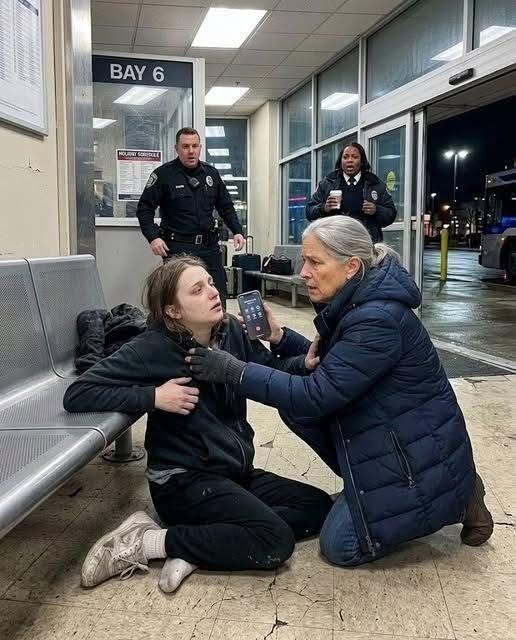
My Son in Law Dumped My Injured Daughter at a Bus Terminal on Thanksgiving, Then Learned Her Quiet Mother Was a Retired Federal Prosecutor
The clock on my nightstand read 5:02 a.m.
Thanksgiving morning.
For several seconds, I lay still beneath the blankets and listened to sleet strike the bedroom window.
The house smelled faintly of pumpkin pie, coffee, and cinnamon from the baking I had finished after midnight.
My turkey was brining in the refrigerator.
Two pies waited on the counter.
A small American flag outside my front porch snapped violently in the wind.
Then my phone rang.
Marcus.
My son in law.
Marcus never called me before sunrise.
Actually, Marcus rarely called me at all unless he wanted something signed, moved, explained, forgiven, or forgotten.
At thirty two, newly promoted and increasingly impressed with himself, Marcus had developed the habit of speaking to everyone as though life were a meeting and he was the only person authorized to set the agenda.
His mother, Sylvia, was worse.
She could turn a compliment into a debt.
A favor into leverage.
A moment of silence into proof that everybody else had accepted her version of events.
For three years, I had watched the two of them slowly reshape my daughter’s life.
Little things first.
Chloe stopped choosing restaurants because Marcus always knew somewhere “more appropriate.”
She stopped wearing certain clothes because Sylvia had opinions about what a married woman should look like.
She stopped visiting me without checking Marcus’s schedule.
Then she started apologizing.
For arriving late.
For leaving early.
For not calling.
For calling too much.
The word sorry began appearing in conversations where Chloe had done nothing wrong.
I noticed.
I said too little.
That remains one of my regrets.
To Marcus and Sylvia, I was simply Eleanor.
Chloe’s widowed mother.
A woman with a ten year old SUV, grocery coupons folded in her wallet, a modest house, and cash tucked into birthday cards because I still distrusted gift cards.
They knew my husband had died.
They knew I had retired.
They had never asked what I retired from.
Marcus once guessed I had worked “somewhere in government.”
Sylvia assumed administrative work.
I did not correct either of them.
I had learned long ago that people reveal more when they believe the person listening has no power.
I answered the phone.
“Hello?”
Marcus did not say good morning.
He said:
“Come pick up your garbage.”
My hand tightened around the edge of my nightstand.
“What?”
“Your daughter.”
I sat up.
“Where is Chloe?”
“Downtown bus terminal.”
For one second, I thought I had misunderstood.
“Why?”
“Because she decided last night was the perfect time for another hysterical breakdown.”
My pulse changed.
Chloe was twenty eight.
An engineer.
The kind of woman who built spreadsheets for vacations and labeled moving boxes according to room, weight, and priority.
When she was sixteen, she changed a tire beside an icy highway while I held a flashlight.
She had cut two knuckles, ruined a pair of gloves, and never once raised her voice.
Chloe did not have hysterical breakdowns.
“Is she hurt?”
Marcus sighed.
Not worried.
Annoyed.
“I don’t know, Eleanor.”
“Is she conscious?”
“I assume so.”
“You assume?”
A woman laughed somewhere behind him.
Sylvia.
Then her voice came closer.
“Tell her to get that pathetic girl away from us before the caterers arrive.”
My blood went cold.
Sylvia continued.
“And tell Eleanor I expect reimbursement for my Persian rug. Five thousand dollars. Chloe ruined it.”
“What happened to Chloe?”
I was no longer speaking to Marcus.
I was speaking to both of them.
Neither answered directly.
Marcus said:
“I’m hosting my CEO for Thanksgiving. I don’t have time for drama in the house.”
“Where exactly is my daughter?”
“I already told you.”
“What bay?”
Pause.
“Six, I think.”
“You think?”
“Go get her.”
Then, casually:
“Do not bring her back.”
The line disconnected.
I sat on the edge of my bed.
The clock now read 5:04.
My first impulse was to call him back.
Demand answers.
Tell him exactly who he had just spoken to.
Tell Sylvia that the quiet woman she dismissed had spent more than two decades preparing federal cases involving fraud, conspiracy, public corruption, witness intimidation, obstruction, and men who believed money made them untouchable.
I wanted to tell Marcus that I had stood in courtrooms with people far more dangerous than him and watched their confidence disappear one document at a time.
I did none of that.
Because anger is useful later.
Facts are useful immediately.
I dressed in less than three minutes.
Sweater.
Jeans.
Boots.
Heavy coat.
Keys.
Phone charger.
Gloves.
Then I stopped in the hallway.
The closet door was half open.
On the top shelf sat a small black lockbox.
I had not opened it in years.
I pulled it down.
Placed it on the table.
Typed the code.
Click.
Inside were old credentials.
A badge.
Several business cards.
A photograph of me outside a courthouse twenty years younger and forty pounds less tired.
I stared at the badge.
For more than two decades, it had represented a life I rarely discussed anymore.
Fraud.
Conspiracy.
Threatened witnesses.
Executives who deleted emails.
Politicians who called favors misunderstandings.
People who believed influence could erase evidence.
People who learned too late that quiet investigators were usually more dangerous than loud enemies.
I closed the box.
Then changed my mind.
Opened it again.
Took the badge.
Slipped it inside my coat.
At 5:19, my SUV backed out of my driveway.
The roads were nearly empty.
Thanksgiving decorations glowed in windows.
A gas station attendant dragged a bag of salt across an icy sidewalk.
A church sign read:
GIVE THANKS IN ALL THINGS.
I drove faster than I should have.
At every red light, I called Chloe.
Straight to voicemail.
Again.
Voicemail.
Again.
Nothing.
I called Marcus.
No answer.
Sylvia.
No answer.
At 5:43, I turned into the downtown bus terminal.
The place looked half abandoned.
Fluorescent lights buzzed behind large glass windows.
A handwritten Thanksgiving schedule had been taped to one door.
A security guard sat behind scratched plexiglass holding a paper cup.
Two buses idled near the far bays.
Steam rolled from their exhaust into the freezing air.
Bay 6 sat near the end.
I saw the bench.
Then I saw my daughter.
For half a second, my brain refused to understand what I was looking at.
Chloe was curled sideways on the metal seat.
No coat.
One shoe.
A thin sweater torn near the shoulder.
Her hair hung across her face.
One bare foot rested against the concrete.
Her fingers were blue.
I stopped the SUV so abruptly that the tires skidded.
I left the engine running.
Ran.
“Chloe.”
No response.
“Chloe!”
Her head moved.
Barely.
I dropped to my knees.
The cold from the pavement cut through my jeans.
“Baby.”
Her one visible eye opened.
Unfocused.
“Mom.”
The word barely existed.
“I’m here.”
Her hand lifted an inch.
Fell.
I caught it.
Her skin was freezing.
“What happened?”
She tried to swallow.
“Mom…”
“Don’t force it.”
“They hurt me.”
Everything inside me went still.
Not exploded.
Still.
That was always how real fear reached me.
Quietly.
“Who?”
“Marcus.”
Her mouth trembled.
“And Sylvia.”
“What did they do?”
She closed her eyes.
“Please.”
“I’m here.”
“He has someone else.”
I already suspected that much.
Chloe continued.
“Sylvia said I had to go.”
“Why?”
“So Vivian could sit at the table.”
Vivian.
The name meant nothing to me yet.
“She said…”
Chloe struggled for breath.
“What?”
“I was embarrassing him.”
Her hand tightened weakly around my sleeve.
“They said she belongs there now.”
I looked at the torn sweater.
The bruising beginning around Chloe’s wrist.
A dark mark beneath her hair.
“Who brought you here?”
“Marcus.”
“Did he drive?”
She nodded weakly.
“Sylvia cleaned.”
My skin went cold for a reason that had nothing to do with the weather.
“Cleaned what?”
“Everything.”
Her eyes opened again.
“They said nobody would believe me.”
I leaned closer.
“Who said that?”
“Both.”
Then she whispered:
“They said you were only an old woman.”
Something moved behind us.
The terminal doors opened.
A brief wash of heated air rolled across the sidewalk and vanished into the wind.
Chloe tried to smile.
Couldn’t.
I said:
“Look at me.”
Her eyes moved toward mine.
“You did exactly the right thing by telling me.”
She swallowed.
“I found…”
“What?”
Something changed in her face.
Fear.
Not about Marcus.
Something else.
“I found…”
Her eyes rolled upward.
“Chloe?”
Her entire body went limp.
“Chloe!”
I caught her shoulders before she slid from the bench.
Checked breathing.
Pulse.
Weak.
At 5:47 a.m., I called 911.
The dispatcher answered.
“Emergency services. What is your location?”
“Downtown bus terminal, Bay 6. Adult female, twenty eight, unconscious after prolonged exposure to freezing temperatures. Possible serious assault. Send Advanced Life Support and police.”
“Is she breathing?”
“Yes.”
“Do not move her unless she is in immediate danger.”
“I won’t.”
“Do you know what happened?”
“I have reason to believe she was assaulted inside her residence, evidence may have been deliberately destroyed, and she was abandoned here.”
The dispatcher’s voice sharpened.
“Are you safe?”
“Not relevant yet.”
“Ma’am—”
“My daughter is the patient. Focus on her.”
Then I opened my coat.
Removed the badge.
“My name is Eleanor.”
I gave my full name.
“I’m a retired federal prosecutor.”
Silence.
Half a second.
Then:
“Ma’am, are you saying you previously served as a federal prosecutor?”
“Yes.”
“Do you have reason to believe the injuries were inflicted by someone known to her?”
“Yes.”
“Officers are being dispatched.”
“Good.”
Then I gave the instruction Marcus had never imagined an old woman would know to give.
“Preserve the terminal surveillance footage immediately. Notify responding officers that the potential scene at her residence may already be undergoing evidence destruction. I want the time of this call documented, and I want law enforcement to know the suspect has already made direct contact with a potential witness.”
The dispatcher paused.
“Understood.”
I closed the lockbox I had carried from the car and pushed it aside.
Then I looked carefully at Chloe.
Pale lips.
Torn sweater.
Bare foot.
Bruises around one wrist.
A smear of dried blood near her ear.
I took photographs.
Not because she was evidence to me.
Because somebody had already told my daughter nobody would believe her.
I wanted the scene preserved exactly as I found it.
Her position.
The bench.
Her missing shoe.
Her clothing.
The injury near her scalp.
The security guard finally came outside.
“Ma’am, ambulance is coming.”
“Did you see her arrive?”
He hesitated.
“Yes.”
“With whom?”
“A man.”
“Describe him.”
“Tall. Dark jacket.”
“Vehicle?”
“Gray SUV.”
Marcus drove a gray SUV.
“Did you see the plate?”
The guard looked uncomfortable.
“I might have.”
“Might?”
He swallowed.
“I wrote it down.”
That got my attention.
“Why?”
He looked toward Chloe.
“The guy seemed wrong.”
“Wrong how?”
“He didn’t help her.”
I waited.
“He opened the passenger door. She almost fell getting out.”
My jaw tightened.
“Then?”
“He drove off.”
“Did he say anything?”
“No.”
“Did she?”
“I couldn’t hear.”
“Why did you write the plate?”
The guard lowered his voice.
“Because before he drove away, he looked back.”
“At Chloe?”
“Yes.”
“What about it bothered you?”
The guard looked ashamed that he couldn’t explain.
Finally:
“He looked like he wanted to make sure she stayed there.”
I photographed the plate number he had written.
Sirens arrived less than a minute later.
Two cruisers.
Then an ambulance.
Everything became motion.
Paramedics.
Equipment.
Questions.
I stepped away enough for them to work.
“Female, twenty eight. Found unconscious after possible prolonged cold exposure. Possible assault. Unknown duration. No known chronic conditions.”
One paramedic looked up.
“Relationship?”
“Mother.”
They cut away part of the torn sleeve.
One of them looked at the bruising.
His expression changed.
Police approached.
An older officer showed his badge.
“Detective Harris.”
“Eleanor.”
I gave my full name.
His eyes dropped to the retired badge inside my coat.
Then back up.
“You were federal?”
“Retired.”
“How long?”
“Long enough.”
His partner whispered.
Harris looked at me more closely.
“You’re that Eleanor?”
Apparently my old name had survived longer than I expected.
“I was.”
He glanced toward Chloe.
“Did you touch anything?”
“My daughter.”
“Anything else here?”
“No. I photographed the scene.”
His eyebrows lifted.
“The blood?”
“Didn’t touch it.”
“Good.”
He turned.
“Secure the cameras.”
His younger partner headed toward the booth.
Harris looked at the plate photograph.
“You know the driver?”
“I suspect my son in law.”
“Marcus?”
“Yes.”
“Last name?”
I told him.
“What happened?”
“I don’t know yet.”
That answer mattered.
I was not going to build a case out of rage.
“My son in law called me at 5:02 and told me to collect my daughter here.”
“His exact words?”
“Come pick up your garbage.”
Harris stopped writing for one second.
“Exact?”
“Yes.”
“Anything else?”
“He said she had a hysterical breakdown, told me not to bring her back, and said he was hosting his CEO for Thanksgiving.”
Harris looked toward Chloe.
“She say anything before losing consciousness?”
“Yes.”
I repeated it.
Marcus.
Sylvia.
Vivian.
Mistress.
They hurt me.
Sylvia cleaned everything.
Nobody will believe me.
Harris wrote every word.
At 6:31, paramedics transported Chloe.
Before I left, Harris stopped me.
“Phone.”
“What?”
“Did she have a phone?”
“No.”
“You’re sure?”
“Chloe never goes anywhere without it.”
“Could she have dropped it?”
“Possible.”
“Where do you think it is?”
“Marcus’s house.”
His expression changed.
“Why?”
“Because if someone is trying to control the story, the first thing they control is the device containing the victim’s version.”
He nodded.
“You really did this for a living.”
“Yes.”
Then I got into my SUV.
For the first time that morning, my hands shook.
Not while Chloe was unconscious.
Not while talking to dispatch.
Not while preserving evidence.
Only once she was inside the ambulance.
Because I suddenly understood how close I might have come to finding her too late.
At the hospital, Thanksgiving played silently on a television in the waiting room.
Parade floats.
Children waving.
Families smiling beneath scarves.
I hated every image.
A doctor came through the doors.
“Mrs. Eleanor?”
I stood.
“Your daughter is alive.”
My knees nearly gave out.
“But she is in serious condition.”
“Tell me.”
“Moderate hypothermia. Multiple contusions. Possible concussion. We need additional imaging.”
“Is she conscious?”
“Not yet.”
“Any internal bleeding?”
“Nothing obvious so far.”
Then the doctor hesitated.
“There is something else.”
“What?”
“She appears to have been restrained.”
The world narrowed.
“How?”
“Bruising around both wrists.”
I looked down at my own hands.
Twenty four years prosecuting federal cases.
Hundreds of witnesses.
Threats.
Fraud victims.
People who sat across from me describing what others had done to them.
I thought I understood fear.
I didn’t.
Not fully.
Not until somebody used the word restrained about my child.
“Can I see her?”
“In a few minutes.”
The doctor left.
I sat.
And cried.
Thirty seconds.
Maybe forty.
Then my phone rang.
Marcus.
I stared.
Answered.
“Eleanor.”
He sounded irritated.
Not frightened.
“Where are you?”
I said nothing.
“I told you not to bring Chloe back.”
Still nothing.
“She’s making accusations, isn’t she?”
That caught me.
“How do you know?”
Silence.
Long enough.
Then:
“Because I know my wife.”
“No.”
I stood.
“You know what you did.”
His breathing changed.
“What are you talking about?”
“You abandoned her.”
“She left voluntarily.”
“She was unconscious when I found her.”
“She was pretending.”
There it was.
The prepared version.
Not confusion.
Not surprise.
A lie.
Already polished.
“Marcus.”
“What?”
“Where is Chloe’s phone?”
Silence.
“Why are you asking that?”
“Because she didn’t have it.”
“You’re crossing a line.”
“No.”
I touched the badge inside my coat.
“You crossed it.”
He laughed.
Nervous.
“You think you can threaten me?”
“I haven’t threatened you once.”
“You’re acting like some kind of investigator.”
“No.”
I looked through the hospital window.
“I’m acting like her mother.”
Silence.
Then Marcus said something he should never have known to say.
“You should have stayed retired.”
The call ended.
I stared at the screen.
That sentence bothered me more than everything before it.
Not because Marcus knew I had once worked.
Because he knew enough to tell me to stay retired.
I had never told him.
Never told Sylvia.
Chloe knew.
My late husband knew.
A few old friends.
That was all.
How had Marcus learned?
Before I could decide, my phone rang again.
Detective Harris.
“We have a problem.”
“What?”
“The vehicle from the terminal.”
“What about it?”
“It wasn’t registered to Marcus.”
My heart slowed.
“Who?”
“A woman.”
“Name?”
“Registration transferred three days ago.”
“To?”
“Vivian Cole.”
The name Chloe had whispered.
The woman supposedly taking her chair at Thanksgiving.
“Who is she?”
“We’re still working on that.”
“Connection to Marcus?”
“Not officially.”
“Unofficially?”
Harris paused.
“We found a photograph.”
“Where?”
“In Marcus’s house.”
I gripped the phone.
“Of Marcus and Vivian?”
“No.”
Pause.
“Of Chloe.”
My stomach dropped.
“What kind of photograph?”
“We don’t know yet. Patrol had contact at the residence after we started preliminary inquiries. Someone inside inadvertently confirmed Vivian had been there.”
“Who?”
“Not discussing that by phone.”
Fair.
Then my phone vibrated.
A text.
Unknown number.
Seven words.
You should have asked Chloe about the basement.
I read it three times.
“Detective.”
“What?”
“I just received something.”
I read it aloud.
Silence.
Then:
“Do not go anywhere.”
“Why?”
“I’m sending officers to Marcus’s house.”
“There is no basement.”
“You sure?”
“That’s what Marcus always told me.”
“Not the same thing.”
No.
It wasn’t.
I checked the clock.
7:14 a.m.
Somewhere across town, caterers were likely glazing turkey.
Setting crystal.
Arranging flowers.
Marcus had wanted his Thanksgiving perfect.
And police were now driving toward the house where my daughter nearly died.
I looked through the hospital glass.
Chloe’s monitor changed rhythm.
A nurse hurried inside.
Another followed.
My heart stopped.
I moved to the window.
Chloe’s eyes opened.
Unfocused.
Searching.
Then they found me.
Her lips moved.
I leaned closer.
One word.
Basement.
Then the monitor alarms intensified.
The curtain closed.
I stood outside it with my hand against the glass.
“I heard you.”
Two minutes later, Harris arrived.
“She woke up.”
“What did she say?”
“Basement.”
“That’s all?”
“Twice.”
He pulled out his phone.
“Units are moving.”
“I’m coming.”
“No.”
“Yes.”
“Your daughter is here.”
“And officers are about to enter the place where whatever happened to her began.”
“Eleanor.”
“I will not interfere.”
“That is exactly what retired prosecutors say immediately before interfering.”
Despite everything, I almost smiled.
“Harris.”
He sighed.
“Stay behind officers.”
“I know how searches work.”
“I’m beginning to regret knowing that.”
At 7:31, we left.
The sky had brightened.
Ice melted along curbs.
People carried grocery bags into houses.
Ordinary Thanksgiving morning.
I followed Harris.
Marcus called three times.
I ignored the first two.
Answered the third.
“Eleanor.”
Different voice now.
No arrogance.
Fear.
“Where are you?”
“Why?”
“I heard police are coming.”
“You heard quickly.”
“I don’t understand.”
“You will.”
“Whatever Chloe told you, she’s confused.”
“Then a search should help clarify things.”
“You can’t do this.”
“I already did.”
He disconnected.
I looked at Harris’s car ahead.
Fear.
That was evidence too.
Not legal evidence by itself.
But information.
We arrived at 7:46.
The driveway was crowded.
Caterer van.
Florist.
Two black SUVs.
A Mercedes.
The front door opened.
Sylvia stood in a silk robe.
Pearls already around her neck.
Even before eight in the morning, she looked prepared for photographs.
“What is the meaning of this?”
Harris showed his badge.
“Police investigation.”
She looked at me.
“You.”
I said nothing.
“You brought police into my son’s home on Thanksgiving?”
“No.”
Her eyes narrowed.
“You brought them.”
Her face hardened.
“Jealous woman.”
I almost laughed.
“Where is Marcus?”
“Inside.”
“Where is Chloe’s phone?”
A flicker.
Tiny.
But Harris saw it too.
“Why would I know?”
“Because she didn’t have it.”
“She loses things.”
“No.”
I stepped forward.
“She doesn’t.”
Harris interrupted.
“We need access.”
“You need a warrant.”
He produced one.
That was the first time Sylvia stopped talking.
Inside, the house smelled magnificent.
Turkey.
Rosemary.
Butter.
Coffee.
Fresh flowers.
A Thanksgiving table stretched across the dining room.
Sixteen place settings.
Crystal.
Polished silver.
Name cards.
I stopped.
One card read:
CHLOE.
For a moment, I could not breathe.
They had injured her.
Abandoned her in freezing weather.
Then kept her name at the table.
Why?
I stepped closer.
A second card had been placed over Chloe’s.
VIVIAN.
Harris photographed it.
Sylvia snapped:
“Vivian is a friend.”
“Where is she?”
No answer.
Marcus appeared at the top of the stairs.
White shirt.
Dark trousers.
Hair perfect.
Face gray.
When he saw me:
“You.”
I stared.
“You told me Chloe was garbage.”
“I was angry.”
“You told me not to bring her home.”
“She needed space.”
“You left her without a coat.”
“I didn’t.”
“You drove her to a bus terminal.”
He looked toward Harris.
“I didn’t hurt her.”
“You left her to die.”
“I didn’t know she would pass out.”
Harris’s head turned.
Marcus realized too late what he had just said.
“You knew she was injured.”
“No.”
“Then how could you know whether she would pass out?”
Marcus said nothing.
I continued.
“Why did Sylvia clean the house?”
His face changed.
Harris stepped forward.
“What did you clean?”
Sylvia said:
“A glass broke.”
“Where?”
“Living room.”
“Any blood?”
“No.”
“Then why was Chloe bleeding?”
Silence.
Harris looked at Marcus.
“Where is the basement?”
“We don’t have one.”
Immediate.
Too immediate.
I looked around.
The house was large.
Newer construction.
I had visited dozens of times.
Never downstairs.
Never even saw a basement door.
Still.
Something bothered me.
The footprint.
The raised back foundation.
The interior staircase running deeper than necessary.
I pointed toward the kitchen.
“This house was built with one.”
Marcus froze.
Harris looked at me.
“How do you know?”
“I don’t.”
Then:
“But the architecture suggests lower level space.”
Marcus swallowed.
Officers began searching.
Pantry.
Garage.
Utility spaces.
Five minutes later:
“Detective!”
We moved toward the pantry.
A tall shelving unit had been shifted.
Behind it:
A door.
Narrow.
Locked.
Harris looked at Marcus.
“Key.”
“I don’t have one.”
Sylvia whispered:
“Marcus.”
He looked at her.
That glance told me enough.
Then I noticed Sylvia’s necklace.
Gold chain.
Small brass key.
I pointed.
“That.”
Her hand flew to it.
“No.”
Harris removed it.
Unlocked the door.
Cold air moved upward.
Bleach.
And something metallic.
We descended.
I had prosecuted cases involving hidden rooms.
Secret accounts.
False walls.
People imagine those things look dramatic.
Usually they look ordinary.
This basement did too.
Concrete floor.
Fluorescent lights.
Metal shelving.
A table.
A chair.
Camera equipment.
Medical supplies.
Storage cabinets.
Then I saw the wall.
Photographs.
Chloe leaving work.
Chloe at a grocery store.
Chloe jogging.
Chloe in a restaurant.
Chloe entering her car.
Chloe standing outside my house.
Chloe sleeping.
I stopped breathing.
“How?”
Harris stared.
“She was being watched.”
Months of photographs.
Maybe longer.
Some had dates.
Others notes.
I felt sick.
This was not a jealous husband hiding a mistress.
It was organized.
One officer opened a drawer.
Folders.
Copies of Chloe’s emails.
Medical records.
Bank statements.
Printouts from her work schedule.
Photographs of bruises.
Older than Thanksgiving.
Months old.
I turned toward Marcus.
“Why?”
He stared at the floor.
Harris opened another folder.
Financial transfers.
Thousands.
Then tens of thousands.
The recipient:
Cole Strategic Consulting.
Vivian Cole.
Harris looked at Marcus.
“Where is she?”
No answer.
Sylvia began crying.
Not remorse.
Panic.
The kind people experience when secrecy ends.
Then an officer found a small audio recorder.
Harris bagged it.
Another device sat nearby.
Digital.
He played one preserved file.
Marcus’s voice filled the room.
“She doesn’t know about the account.”
A woman answered.
Vivian.
“She’ll find it eventually.”
Marcus:
“Then make sure she doesn’t.”
Nobody moved.
My chest hurt.
Not from shock.
Confirmation.
Chloe had found something.
Something financial.
Something Marcus and Vivian needed hidden.
The affair had not been the center of the story.
It was camouflage.
Partnership disguised as romance.
Harris looked through another file.
Shell entities.
Transfers.
Expense reports.
Company records.
Marcus had been moving money through consulting companies.
Vivian helped.
Chloe, an engineer who loved spreadsheets and noticed irregularities, had discovered records.
Of course she had.
My daughter noticed numbers that did not belong.
Then someone decided she did not belong.
I looked at the Thanksgiving table upstairs in my mind.
Vivian’s name over Chloe’s.
This had not simply been about replacing a wife.
They were replacing a witness.
An officer opened a final notebook.
Handwritten.
Dates.
Tasks.
Then one line:
Thanksgiving. 6:00 PM. Chloe must be gone.
Below it:
Permanent solution approved.
The basement went silent.
Harris looked at me.
I did not need twenty four years of prosecution experience to understand those words.
This had been planned.
Not a fight that escalated.
Not an impulsive abandonment.
A plan.
At 9:12 a.m., Marcus was placed under arrest.
He looked at me as an officer cuffed him.
For the first time since I had known him, Marcus did not look superior.
He looked young.
Frightened.
Small.
“Eleanor.”
I said nothing.
“I didn’t mean for this.”
I looked at the basement.
“The note says permanent solution.”
“That wasn’t me.”
“Whose handwriting?”
No answer.
“Marcus.”
He looked toward Sylvia.
That was enough.
Sylvia was detained shortly afterward.
She screamed.
Loud enough for caterers outside to hear.
“This is absurd.”
“My son has a career.”
“You don’t know who his guests are.”
“My lawyer will destroy this.”
I had heard versions of those sentences throughout my career.
My favorite remained:
Do you know who I am?
The answer was usually yes.
That was why the paperwork was so carefully prepared.
Vivian was found two hours later at a hotel across town.
She tried leaving through a service corridor.
Police stopped her before she reached the parking lot.
Her vehicle matched the plate from the bus terminal.
The same car that had delivered Chloe into freezing weather.
The same registration transferred only three days before.
Everything began connecting.
Not neatly.
Real investigations rarely do.
But enough.
The financial records from the basement triggered broader review.
Local detectives contacted federal authorities.
Banks froze accounts.
Search warrants expanded.
Companies were subpoenaed.
Digital evidence came back.
Emails.
Transfers.
Messages.
People who had planned to spend Thanksgiving praising Marcus’s promotion started calling attorneys before dinner.
I did not care.
I was back at the hospital.
Chloe was what mattered.
When I entered her room, she was conscious for short periods.
Bruised.
Exhausted.
An IV in each arm.
Bandage near her temple.
Both wrists discolored.
She looked smaller than she had as a teenager.
“Mom.”
“I’m here.”
Her eyes filled.
“You found it?”
“Yes.”
“The basement?”
“Yes.”
She closed her eyes.
For a moment, relief looked almost painful.
“I thought I made it up.”
“What?”
“They kept telling me…”
She swallowed.
“Marcus said I was paranoid.”
“About what?”
“The money.”
I pulled a chair closer.
“Tell me only what you can.”
She looked toward the door.
“Is he here?”
“No.”
“Sylvia?”
“No.”
“Vivian?”
“No.”
She exhaled.
“Okay.”
Then slowly, Chloe told me.
Three months earlier, Marcus had asked her to review a spreadsheet.
Nothing unusual.
He trusted her with numbers.
Or thought he did.
She noticed consulting payments inconsistent with the work described.
Cole Strategic Consulting.
At first, she assumed accounting error.
She asked Marcus.
He laughed.
Told her not to worry.
That answer bothered her.
So she looked again.
Payments repeated.
Different descriptions.
Same destination.
Then Chloe found emails.
Marcus and Vivian.
Not romantic at first.
Financial.
Transfers.
Invoices.
Requests to delete records.
She confronted Marcus privately.
He denied everything.
Two weeks later, the affair began appearing publicly enough for Chloe to notice.
“I thought I was losing my mind.”
“No.”
“I kept thinking maybe I was jealous and that was making me suspicious.”
“That was useful to them.”
She looked at me.
“What?”
“People hide larger crimes behind emotionally believable explanations.”
Her eyes filled.
“The affair.”
“Yes.”
“If everybody thinks you’re a jealous wife, any accusation about money becomes revenge.”
Chloe nodded slowly.
“That’s what Sylvia said.”
“What?”
“She told Marcus I was dangerous because I’d started digging.”
“When?”
“A month ago.”
“How do you know?”
“I heard them.”
She shivered.
I pulled the blanket higher.
“What happened last night?”
Her breathing changed.
“You don’t have to—”
“No.”
She squeezed my hand.
“I want to.”
I waited.
Marcus’s family had gathered Wednesday evening to prepare for Thanksgiving.
Sylvia brought flowers.
A caterer delivered desserts.
Marcus told Chloe his CEO would attend.
He insisted everything needed to be perfect.
Then Vivian arrived.
Not hidden.
Invited.
Chloe asked why.
Marcus said she was helping with an “important company issue.”
Sylvia told Chloe to be gracious.
At dinner prep, Vivian sat at the kitchen island drinking wine.
In Chloe’s house.
Laughing with Marcus.
Sylvia moving around them as though Vivian belonged.
Chloe finally confronted them.
Not about the affair.
About the money.
She told Marcus she had copied the records.
He went silent.
Vivian asked:
“What records?”
That was when Chloe knew.
“She looked scared.”
Chloe whispered.
“Not guilty. Scared.”
Then Marcus took Chloe’s phone.
“Did he hit you?”
She looked away.
My chest tightened.
“Baby.”
“He grabbed my wrist.”
I said nothing.
“Sylvia blocked the hallway.”
“What happened?”
“I tried to leave.”
Marcus pushed her back.
Not hard enough to knock her down.
Hard enough to make the message clear.
Then Vivian told them Chloe could not leave until they knew where the copies were.
I felt cold.
“They restrained you.”
Chloe’s eyes filled.
“I fought.”
“Good.”
“I broke Sylvia’s vase.”
“The rug.”
She almost smiled.
“Red wine.”
I breathed.
“So the five thousand dollar rug was damaged.”
“Yes.”
“Tragic.”
A tiny laugh escaped her.
Then vanished.
“They took me downstairs.”
“How?”
“Marcus kept saying I was making everything worse.”
She stared at her wrists.
“Sylvia tied them.”
My vision narrowed.
“With what?”
“Plastic ties.”
“Vivian?”
“She kept asking where the records were.”
“How long?”
“I don’t know.”
“What did they do?”
Chloe closed her eyes.
Questions.
Threats.
Marcus insisting the marriage was already over.
Sylvia saying Vivian would be a better wife.
Vivian demanding passwords.
At some point Chloe tried to stand.
She fell.
Hit her head.
That explained the blood.
Then everything became fragmented.
Cold.
The SUV.
Terminal lights.
Marcus telling her:
“You wanted out. Now you’re out.”
She remembered one shoe disappearing while he pulled her from the vehicle.
Then me.
I sat quietly.
No courtroom voice.
No prosecutor.
Just mother.
“Where were the records?”
Chloe looked at me.
“Your house.”
I stared.
“What?”
“I mailed a drive to you two weeks ago.”
I thought.
Then remembered.
A padded envelope.
Chloe’s handwriting.
I assumed it was photographs from a family trip because she had written:
FOR MOM. KEEP SAFE.
I had placed it unopened in my desk.
My daughter smiled weakly.
“They kept asking.”
“You never told them.”
“No.”
“Why me?”
“Because nobody takes you seriously.”
For one absurd second, we both laughed.
It hurt her, so she stopped.
Then whispered:
“They really thought you were just an old woman.”
“I am an old woman.”
“Mom.”
“Relative to you.”
She smiled.
That smile saved me.
The next day, Detective Harris came to the hospital.
He was no longer alone.
A federal investigator accompanied him.
Special Agent Priya Shah.
I knew the type immediately.
Quiet.
Precise.
No wasted motion.
She introduced herself.
Then:
“Mrs. Eleanor, I believe we know some of the same people.”
“Unfortunately for both of us.”
A small smile.
“We retrieved the drive from your residence pursuant to Chloe’s consent.”
“Good.”
“It contains extensive records.”
“How extensive?”
She looked toward Chloe.
“Enough that this is no longer solely a domestic assault investigation.”
Chloe’s face tightened.
Shah continued.
“Marcus appears to have used Cole Strategic Consulting and several related entities to divert corporate funds.”
“How much?”
“Still calculating.”
“Ballpark.”
“Seven figures.”
Chloe closed her eyes.
Marcus had been newly promoted.
The promotion suddenly looked different.
Access.
Authority.
Accounts.
Not achievement.
Opportunity.
Shah continued.
“We also found communications suggesting Sylvia assisted with document destruction.”
I thought of Chloe’s words.
Sylvia cleaned everything.
“And Vivian?”
“More than a mistress.”
“I know.”
“She helped establish entities and move funds.”
“Driver?”
“Yes.”
The SUV.
The abandonment.
“Who sent me the basement message?”
Shah and Harris exchanged a look.
“We don’t know yet.”
That surprised me.
“Not Vivian?”
“No.”
“Marcus?”
“No evidence.”
“Sylvia?”
“Unlikely.”
“Then who?”
Shah closed her folder.
“Somebody else knew what was happening.”
Another layer.
I hated it.
But unlike previous stories in my career, I did not want a dramatic new conspiracy.
I wanted the simplest truth possible.
For Chloe’s sake.
The message was traced two days later.
One of Marcus’s employees.
A junior accountant named David.
He had suspected irregularities.
Chloe contacted him weeks earlier.
He was too afraid to come forward openly.
After learning Chloe disappeared from the house, he sent the anonymous message.
He knew about the basement because Marcus once mentioned “keeping sensitive files downstairs.”
David did not know Chloe had been held there.
He guessed she had discovered it.
That was all.
No mastermind.
No secret relative.
Just another frightened person who knew enough to point police toward a door.
I was relieved.
Reality was already terrible enough.
Thanksgiving dinner never happened.
That detail became almost legendary in my old circles.
By noon, the turkey remained untouched.
Candles burned low.
Flowers wilted slightly under heat vents.
Several invited guests arrived to find police vehicles.
Marcus’s CEO never made it past the driveway.
The dining room became part of the documented scene.
That name card mattered.
CHLOE underneath.
VIVIAN above.
Replacement made physical.
Not because Marcus planned to literally swap wives at dinner in some theatrical announcement.
But because Sylvia had already begun rewriting the family arrangement before Chloe had been removed safely.
Harris later told me:
“I’ve seen a lot of ugly things.”
I knew.
“That table bothered me.”
“Why?”
“Because somebody took the time to print the replacement card.”
Yes.
Violence is terrifying.
Administration around violence can be worse.
The label.
The schedule.
The note.
The tidy decisions.
Chloe must be gone.
People imagine evil as rage.
Sometimes it uses a printer.
Chloe remained hospitalized for five days.
The concussion stabilized.
Hypothermia resolved.
Bruising took longer.
Emotionally, everything took longer still.
On the third day, she woke from sleep and panicked because she could not immediately see the door.
I moved her chair.
On the fourth, a male orderly entered unexpectedly.
She flinched so hard the IV monitor alarmed.
He apologized.
She apologized too.
That upset me.
After he left:
“Why did you say sorry?”
She stared.
“I don’t know.”
“Try something.”
“What?”
“For one week, do not apologize automatically.”
She almost smiled.
“That sounds impossible.”
“Engineering problem.”
She rolled her eyes.
There she was.
My daughter.
Under everything.
Still there.
The prosecutor in me wanted documents.
Timelines.
Charges.
The mother in me wanted to put Chloe back together with my hands.
Neither was possible alone.
So I learned a third role.
Witness.
Not legal witness.
Personal.
Sit.
Listen.
Do not correct the emotion.
Do not rush the healing.
When she said:
“I should have left sooner.”
I did not answer:
Yes.
When she said:
“I was stupid.”
I did not answer:
No, because it’s not your fault.
I said:
“What made you stay?”
That was different.
She thought.
“Because every bad thing happened slowly.”
There it was.
Marcus had not become cruel in one day.
First criticism.
Then isolation.
Then money.
Then Sylvia.
Then secrecy.
Then fear.
Each step only slightly worse than the one before.
By the time the basement existed in Chloe’s life, she had already been trained to question whether her fear was reasonable.
“I kept thinking I could fix it.”
She whispered.
“Fix what?”
“Him.”
I held her hand.
“You can’t prosecute a marriage.”
She looked at me.
“That sounds like something you learned the hard way.”
“Different century.”
She smiled.
We did not discuss my career much before then.
Chloe knew the broad version.
Federal prosecutor.
Long hours.
Why I missed school events sometimes.
Why her father did more weekday parenting when she was young.
But I had deliberately kept the details away from her.
Not because I was ashamed.
Because I did not want my career becoming a family mythology.
I did not want Chloe believing authority made someone right.
Including me.
Marcus apparently learned about my past through a background search.
That answered the mystery.
He knew before Thanksgiving.
He simply underestimated what the information meant.
Shah found searches on his laptop:
Eleanor federal prosecutor
Eleanor corruption case
Eleanor retirement
Eleanor federal conviction
He had researched me.
Likely after Chloe mentioned mailing documents to me.
That was why he said:
You should have stayed retired.
He knew enough to fear the name.
Not enough to respect the woman.
That mistake amused Harris.
“He Googled you and still called you garbage pickup.”
“Arrogance interferes with reading comprehension.”
Harris laughed.
Marcus requested contact through his attorney.
Chloe refused.
Good.
Then Sylvia tried.
Chloe refused again.
Better.
Then Vivian’s attorney requested an interview for potential cooperation.
That decision was harder.
Vivian knew the financial scheme.
She also participated in Chloe’s confinement.
Any cooperation would be filtered through counsel and investigators.
Chloe asked me:
“What would you do?”
“I am not answering that.”
“Mom.”
“No.”
“Why?”
“Because for most of your marriage, other people told you what the reasonable choice was.”
She looked annoyed.
“Not helpful.”
“It is exactly helpful.”
“What if I make the wrong choice?”
“You might.”
Her eyes widened.
“Great.”
“You are allowed to.”
I leaned closer.
“But make the choice with complete information.”
That was the prosecutor talking.
“Talk to your lawyer.”
“Ask what cooperation means.”
“Ask what rights you have.”
“Then decide.”
She eventually agreed to a formal interview under controlled conditions.
Not because she forgave Vivian.
Because she wanted answers.
Vivian’s story was ugly but simple.
Marcus recruited her through work.
The affair came later.
At first, financial partnership.
He needed someone who understood vendor systems.
She created consulting structures.
Invoices.
Transfers.
He promised money.
Then affection.
Then a future.
Sylvia knew about Vivian as a business partner before she knew about the affair.
Once she discovered both, she did not object.
She preferred Vivian.
Why?
Vivian was useful.
Ambitious.
Connected.
No moral objections to the money.
Chloe had become dangerous because Chloe asked questions.
Sylvia reframed danger as instability.
“She kept calling me hysterical.”
Chloe said after the interview.
“Yes.”
“Marcus used the same word.”
“Yes.”
“They planned language too.”
“Maybe not consciously.”
I thought.
“People in the same system often learn the same vocabulary.”
Hysterical.
Difficult.
Ungrateful.
Unstable.
Words that move attention from conduct to personality.
I had seen it in court.
Victims forced to defend whether they were likable while defendants avoided explaining what they had done.
Chloe’s case became the first time I experienced that machinery from the family side.
Marcus’s attorney suggested the incident grew out of “a volatile marital dispute.”
I wanted to throw something.
Chloe’s lawyer said:
“Let the evidence answer.”
She was right.
The basement answered.
The ties.
The recordings.
The photographs.
The bank records.
The terminal footage.
The security guard.
Marcus’s own call to me.
Come pick up your garbage.
And his later statement:
She was pretending.
Facts accumulated.
The story narrowed.
Eventually there was less room left for euphemism.
Three months after Thanksgiving, Chloe returned to the house.
Not alone.
Police had released personal belongings no longer needed.
I went with her.
The property felt smaller.
Empty.
No holiday decorations.
No flowers.
No turkey smell.
Just a house.
The dining table remained.
The name cards had been collected as evidence, then released.
Chloe picked up hers.
CHLOE.
She turned it over.
Nothing on the back.
Simple cardstock.
“They put Vivian over me.”
“Yes.”
Chloe stared.
Then slipped the card into her purse.
“What are you doing?”
“Keeping it.”
“Why?”
“I don’t know yet.”
We packed clothing.
Books.
Her grandmother’s dishes.
Engineering manuals.
A framed photograph from college.
She left the wedding album.
I asked:
“Sure?”
“Yes.”
No dramatic burning.
No tearing photographs.
She simply left it on the shelf.
Some chapters do not need a funeral.
Before leaving, Chloe stood near the pantry.
The hidden basement door had been removed as part of evidence processing.
The opening remained boarded temporarily.
She stared.
“Do you want to go?”
I asked.
“No.”
Then:
“Yes.”
We stood there together.
She touched the wall beside the door.
“I thought I was going to die down there.”
I did not say:
But you didn’t.
People say that because survival makes them uncomfortable with fear.
Instead:
“I know.”
“I thought Marcus would stop them.”
My heart broke.
“Did he?”
“No.”
“I know.”
“He watched.”
That mattered.
Marcus later claimed he had lost control of events.
Chloe remembered differently.
He participated.
Even if Sylvia tightened the ties.
Even if Vivian asked the questions.
Marcus allowed his wife to become an obstacle instead of a person.
Chloe whispered:
“I keep trying to remember the man I married.”
“Can you?”
“Sometimes.”
“What was he like?”
She smiled sadly.
“Funny.”
“Kind?”
“Yes.”
“Then?”
“I don’t know.”
That was hard.
People want a clean explanation.
He was always evil.
You missed the signs.
The marriage was fake.
Sometimes none of those are true.
People change.
Or parts of them grow larger.
Ambition.
Entitlement.
Cowardice.
The person who once brought soup when you were sick may later make a choice you never imagined.
The good does not erase the bad.
The bad does not necessarily make every good memory fraudulent.
That complexity made Chloe’s grief harder.
She was not only losing a dangerous husband.
She was grieving someone who once made her laugh.
We left the house.
She did not look back.
Six months after Thanksgiving, Marcus accepted a plea agreement.
I did not attend every hearing.
That surprised people.
“You were a prosecutor.”
Yes.
Which was exactly why I knew the courtroom did not need me sitting in the gallery every day.
This was Chloe’s case.
Not my return to federal service.
I attended when she wanted me.
Stayed home when she didn’t.
Marcus’s plea addressed criminal conduct arising from the assault, confinement, abandonment, and financial wrongdoing within the scope prosecutors could prove.
Sylvia was convicted for obstruction and evidence tampering.
Vivian faced federal charges connected to the financial scheme and her role in what happened.
The exact sentences mattered less to me than they once would have.
Maybe retirement changed me.
Maybe motherhood did.
A sentence cannot restore body temperature at 5:43 a.m.
It cannot erase wrists bruised by restraints.
It cannot give Chloe back the moment before she learned her husband was willing to sacrifice her.
Justice mattered.
But it was not healing.
Healing happened elsewhere.
At my kitchen table.
In therapy.
During walks.
In the grocery store when Chloe realized she had gone twenty minutes without thinking about Marcus.
The first night she slept eight hours.
The first time she returned to work.
The first time someone raised his voice in a meeting and she did not freeze.
The first time she laughed so hard coffee came out her nose.
That was healing.
Messy.
Unrecorded.
No case number.
The house was eventually sold.
The basement emptied.
The dining room table disappeared.
The Thanksgiving decorations went into storage or trash.
But Chloe kept the name card.
She framed it.
Placed it in her office.
When I first saw it there, I asked:
“Why that?”
She leaned against the desk.
“Because they tried to erase me.”
Then smiled.
“They failed.”
I understood.
Not revenge.
Evidence.
Personal evidence.
I was here.
I had a place.
You tried to cover my name.
It remained underneath.
Thanksgiving the following year was different.
Small.
My house.
Chloe.
Two of her friends.
Detective Harris came by for dessert because he was working and made the mistake of mentioning he liked pumpkin pie.
Agent Shah stopped by long enough to steal coffee.
No formal invitations.
No sixteen place settings.
No CEO.
No crystal.
At five in the afternoon, Chloe stood beside me in the kitchen.
Same hour Marcus had planned his perfect dinner the previous year.
She was mashing potatoes.
Badly.
“You’re abusing those.”
“They’re potatoes.”
“They have feelings.”
“You prosecuted organized crime?”
“Public corruption too.”
“And this is what retirement did to you.”
“Respect the potatoes.”
She laughed.
Then went quiet.
“What?”
“Nothing.”
“Chloe.”
She looked toward the dining room.
“I thought today would be harder.”
“Is it?”
“A little.”
“Okay.”
She nodded.
Then:
“I’m glad we’re here.”
“So am I.”
I did not take out the badge.
Did not make a speech.
Did not toast to survival.
Sometimes healing means letting dinner just be dinner.
At 6:00, we ate.
No one carved the turkey ceremonially.
Harris complained mine was dry.
I threatened to revoke his pie privileges.
Chloe laughed.
That was enough.
People later asked me why I never told Marcus I had been a prosecutor.
The implication was that perhaps things would have been different if he knew.
Maybe he would have been cautious.
Maybe respectful.
Maybe afraid.
I hate that idea.
Why should my daughter have needed a powerful mother to deserve safety?
Why should Marcus behave decently only if consequences stood behind the woman he insulted?
No.
I am glad he underestimated me.
Not because it made the ending satisfying.
Because it revealed the truth.
Marcus believed people mattered according to usefulness and power.
Sylvia did too.
They looked at my old SUV.
My coupons.
My quiet house.
My age.
They saw harmless.
They looked at Chloe’s patience.
Saw weakness.
That mistake did not create their behavior.
It exposed it.
I never showed Marcus the badge to frighten him.
I showed it because the moment required clarity.
I knew how to preserve evidence.
How to speak to dispatch.
How to distinguish suspicion from fact.
How to stop anger from contaminating a statement.
Retirement did not erase that.
But the most important thing I did that morning required no law degree.
I went.
He called me at 5:02.
I was at Bay 6 by 5:43.
My daughter needed her mother.
So I went.
Everything after that was skill.
That was love.
Sometimes Chloe asks whether I blame myself.
My answer changes depending on the day.
For not confronting Marcus earlier?
Yes.
Sometimes.
For not recognizing how afraid she had become?
Yes.
For trusting her when she said things were fine?
Complicated.
Adults are allowed privacy.
Parents cannot inspect marriages like prosecutors inspect corporations.
There is a line between noticing and controlling.
I refuse to cross it simply because the outcome was terrible.
What I regret is smaller.
There were moments Chloe hinted.
I redirected.
She would say:
“Marcus gets weird about money.”
I answered:
“Marriage makes finances complicated.”
She would say:
“Sylvia is staying again.”
I answered:
“Set boundaries.”
She would say:
“Sometimes I feel crazy around them.”
I answered:
“You need rest.”
None of those answers were cruel.
But they were shallow.
Now, when someone I love says:
“I feel crazy around this person,”
I ask:
“What happens before you feel that way?”
Better question.
The federal case continued beyond six months.
People outside Marcus’s household became involved.
Companies.
Accounts.
Records.
I kept distance.
I had spent enough of my life inside investigations.
This one did not need to become my identity.
Agent Shah kept me updated where appropriate.
Once she said:
“You know, you could consult.”
“No.”
“You didn’t even let me finish.”
“I’m retired.”
She smiled.
“Finally.”
“Yes.”
I meant it.
The badge returned to the lockbox.
Not thrown away.
Not displayed.
Stored.
The first time Chloe saw me put it back, she asked:
“That’s it?”
“What?”
“You’re just putting it away?”
“Yes.”
“After everything?”
I closed the lid.
“The badge did its job.”
She looked at me.
“What job?”
I smiled.
“It reminded people to listen.”
She shook her head.
“You did that.”
Maybe.
But the truth is, Marcus’s downfall did not happen because I had once been powerful.
It happened because evidence existed.
A guard noticed a plate.
A dispatcher documented a call.
Paramedics recorded injuries.
Doctors identified restraint marks.
Police secured footage.
Chloe preserved records.
A frightened accountant sent a message.
Detectives found a door.
Investigators followed money.
No single dramatic act.
A chain.
That is how justice usually works.
Stories like to create one hero.
Reality rarely does.
If the security guard had shrugged and thrown away the plate number, we still might have solved it.
But slower.
If David had not sent the basement message, police might still have found the hidden door.
But later.
If Chloe had not mailed me the drive, investigators might still have reconstructed the fraud.
But after more damage.
Everybody contributed a piece.
Including Chloe.
Especially Chloe.
That mattered because for months afterward, people called her brave.
She hated it.
“Why?”
I asked.
“Because it makes it sound like I chose this.”
Fair.
“Do you want people to stop?”
“Yes.”
So I stopped calling her brave.
Instead, I said:
“You did what you could with what you knew.”
She liked that better.
Marcus wrote her a letter from custody.
She did not open it for three months.
When she finally did, she asked me to sit nearby.
Not read.
Just sit.
I respected that.
She opened it.
Read two pages.
Then folded it.
“What does he say?”
She looked at me.
“That he loved me.”
I waited.
“He says he panicked.”
I said nothing.
“He says Sylvia controlled everything.”
Still nothing.
“He says Vivian manipulated him.”
I finally asked:
“What do you think?”
Chloe stared at the letter.
“I think everybody manipulated Marcus except Marcus.”
Exactly.
“He says he wants forgiveness.”
“Do you?”
“No.”
“Then don’t.”
She looked surprised.
“That simple?”
“For now.”
“What if I change my mind?”
“Then change it.”
“What if I forgive him someday?”
“Then forgive him.”
“Would you be angry?”
There it was.
She was still checking whether her choice would create someone else’s emotional consequence.
“No.”
“Really?”
“Yes.”
I took her hand.
“Forgiveness belongs to the person doing it.”
“So does refusing.”
She nodded.
Then tore the letter in half.
I raised an eyebrow.
“That was decisive.”
She laughed.
“Temporary decisiveness.”
Good enough.
Sylvia sent no apology.
At least not for a long time.
Her first letter was about herself.
Her reputation.
Her age.
Her fear.
The humiliation of arrest.
Her health.
Chloe stopped reading after the first paragraph.
Months later, another came.
Shorter.
I was cruel to you.
I treated your questions as disobedience.
I helped Marcus hide things.
I restrained you.
I am sorry.
Chloe read it twice.
Then put it in a drawer.
“You believe her?”
I asked.
“I believe she finally wrote an accurate sentence.”
That was enough.
Vivian’s role remained hardest for Chloe to understand.
“Did she want Marcus?”
“Probably.”
“Did she want the money?”
“Yes.”
“Did she hate me?”
“Maybe.”
“I keep thinking if I know why she did it, it will make sense.”
“It may never.”
“That’s awful.”
“Yes.”
People want motive because motive creates structure.
Sometimes motives are ordinary and disappointing.
Money.
Fear.
Greed.
Jealousy.
Opportunity.
Cowardice.
No deep secret.
No childhood prophecy.
Just adults making choices because they think they can.
Vivian believed Chloe was an obstacle.
Marcus believed Chloe could be controlled.
Sylvia believed family image mattered more than Chloe’s safety.
That was enough.
No larger mythology needed.
Two years after Thanksgiving, Chloe bought a condo.
Small.
Bright.
Top floor.
Huge windows.
When we toured it, she checked every lock.
Every window.
Every closet.
Then she opened a utility door and froze.
Concrete steps descended toward a shared storage area.
I watched.
“Want to leave?”
She shook her head.
“No.”
We stood there.
She switched on the light.
Walked down.
Three steps.
Five.
All the way.
Then back up.
“Okay.”
I did not congratulate her.
Did not call it brave.
I simply asked:
“Still like the kitchen?”
She smiled.
“Yes.”
She bought the condo.
That was healing too.
The first Thanksgiving there, she hosted.
Six people.
No assigned seating.
When I arrived, I carried a pumpkin pie.
She opened the door.
“Mom.”
“What?”
“You made two.”
“One is backup.”
“Nobody needs backup pie.”
“That attitude is why civilizations collapse.”
She laughed.
Her framed CHLOE card sat on a bookshelf.
Not center stage.
Just there.
Part of history.
Not the whole room.
At dinner, Chloe’s friend asked:
“Any family traditions?”
She looked at me.
I looked at her.
Then she said:
“Apparently Mom threatens people who criticize her potatoes.”
True.
No mention of Marcus.
Good.
He did not get to own Thanksgiving forever.
Years passed.
The case became a story people around me knew vaguely.
Some details entered public records.
Others stayed private.
I stopped correcting exaggerated versions.
Except one.
People said:
“Eleanor took down her son in law.”
No.
I didn’t.
Marcus took himself down.
He made the transactions.
He hid records.
He participated in hurting Chloe.
He called me.
He abandoned her where cameras recorded the vehicle.
He left evidence in his own house.
I followed.
There is a difference.
I never wanted revenge.
I wanted facts.
That morning, facts happened to be devastating.
The last time I saw Marcus was years later at a proceeding related to remaining financial matters.
He looked older.
Not dramatically.
Just diminished.
He recognized me across the hallway.
Walked closer.
Stopped several feet away.
“Eleanor.”
“Marcus.”
“I heard Chloe is doing well.”
“She is.”
He looked relieved.
That irritated me.
“You don’t get credit for being relieved.”
His face fell.
“I know.”
Silence.
Then:
“I didn’t know they would leave her outside that long.”
I stared.
He still did it.
Passive language.
They.
Would leave her.
As though he had not driven.
As though his hands had not touched the steering wheel.
“Marcus.”
“Yes?”
“You drove the SUV.”
He looked down.
“Yes.”
“You left her there.”
“Yes.”
“That sentence will get easier only when you stop changing the subject.”
He closed his eyes.
Then:
“I left her there.”
Good.
Not absolution.
Accuracy.
“Why did you call me?”
He looked at me.
“What?”
“That morning.”
“I could have found Chloe later.”
He swallowed.
“Why call?”
He thought for a long time.
Finally:
“Because some part of me knew.”
“Knew what?”
“That if I called you, she wouldn’t die.”
That answer stopped me.
I had expected cruelty.
Maybe selfishness.
Not that.
“Did you think she might?”
He stared at the floor.
“Yes.”
Rage returned even years later.
“You knew the danger.”
“Yes.”
“And still left her.”
“Yes.”
“Then called me.”
“Yes.”
I wanted to hate him completely.
That answer made it harder.
Not because it excused anything.
Because human beings rarely fit the clean categories we want.
Marcus was willing to abandon Chloe.
And some remnant of conscience made sure somebody came.
Too late to call that kindness.
Too little to call it rescue.
But there.
I left without answering.
Later Chloe asked what we discussed.
I told her.
She sat quietly.
Then said:
“I hate that.”
“Why?”
“Because now I have to know he wasn’t completely empty.”
“No.”
She frowned.
“No?”
“You never had to believe he was empty.”
“He hurt you.”
“Yes.”
“People who hurt us can still contain pieces of humanity.”
“That doesn’t make them safe.”
She nodded.
“Right.”
That distinction helped both of us.
Safety does not require demonizing someone.
It requires taking their behavior seriously.
Even if they also have good memories.
Even if they once loved you.
Even if they called your mother at 5:02 because some part of them did not want you dead.
Chloe never reconciled with Marcus.
She did not need to.
Eventually she stopped checking case updates.
Stopped mentioning Vivian.
Stopped flinching when Thanksgiving advertisements started in October.
The framed name card stayed.
One year, I asked:
“Still need it?”
She looked at it.
“Need?”
“No.”
“Want?”
She smiled.
“Yes.”
“Then keep it.”
Simple.
My old badge remains in the same lockbox.
Sometimes I open it.
Not often.
The metal has dulled slightly.
My photograph looks absurdly young.
I recognize the woman.
Barely.
She believed cases ended when verdicts came down.
Retirement taught me otherwise.
Legal endings are not human endings.
Marcus’s plea did not end Chloe’s nightmares.
Sylvia’s conviction did not restore trust.
Vivian’s charges did not make Thanksgiving safe again.
Those things happened afterward.
Quietly.
One ordinary day at a time.
That is why, when people ask what I did that Thanksgiving, I do not say:
I used my old federal connections.
I did make calls.
I knew terminology.
I knew what evidence mattered.
I knew whom to contact.
But the important things were much simpler.
I listened.
I believed my daughter before I knew every detail.
I preserved what I could.
I let professionals do their work.
I stayed.
At 5:02, Marcus thought he was disposing of a problem.
“Come pick up your garbage.”
That sentence remained in police reports.
In transcripts.
In lawyers’ files.
Maybe it embarrassed him later.
I hope it did.
Not because humiliation is justice.
Because language reveals what people have trained themselves to believe.
He had stopped seeing Chloe as his wife.
Then as a person.
She became inconvenience.
Obstacle.
Garbage.
Once people choose language like that, cruelty becomes easier.
That lesson frightened me more than the basement.
The basement was hidden.
The contempt was spoken aloud.
Years before Thanksgiving, I heard smaller versions.
“She’s too sensitive.”
“She overthinks.”
“She always needs things explained.”
“Chloe makes everything complicated.”
I let too many pass.
Not anymore.
When someone repeatedly describes a loved one as a burden, I listen.
Not every rude spouse is dangerous.
Not every bad marriage becomes a crime scene.
But contempt deserves attention.
It changes what people permit themselves to do.
Sylvia perfected contempt.
She once told me:
“Chloe was lucky Marcus chose her.”
I answered:
“They chose each other.”
She smiled.
“If you say so.”
I should have asked what she meant.
Maybe nothing would have changed.
Still, I wonder.
Then I remember Harris’s advice years later.
Do not turn hindsight into evidence you supposedly had at the time.
Good advice.
I had fragments.
Not proof.
What mattered was what I did once proof appeared.
At 5:43, Bay 6.
Everything changed.
Cold bench.
One shoe.
Blue fingers.
Mom.
They hurt me.
I still dream about it sometimes.
In the dream, I arrive late.
The bench is empty.
I wake before knowing why.
Then I call Chloe.
She answers, annoyed.
“Mom, it’s six in the morning.”
“Sorry.”
“Are you having the bus terminal dream?”
Silence.
She sighs.
“I’m alive.”
“I know.”
“Go back to sleep.”
“Yes, ma’am.”
She hangs up.
I smile.
My daughter giving orders.
Good.
One Thanksgiving, years later, she finally asked about my prosecutor years in detail.
We sat after dinner.
Everyone else gone.
She held the old badge.
“What was your worst case?”
“I don’t rank suffering.”
She rolled her eyes.
“Most complicated.”
I thought.
“Public corruption case.”
“Why?”
“Everybody knew everybody.”
“Sounds familiar.”
“Yes.”
“Did you ever get scared?”
“Of course.”
She looked surprised.
“You never looked scared.”
“That was part of the job.”
“What did you do when you were?”
“Prepared.”
She nodded.
“That morning at the terminal…”
“I was terrified.”
“You didn’t look it.”
“I was preparing.”
She handed me the badge.
“I’m glad you knew what to do.”
“So am I.”
Then:
“But I wish you had never needed me to.”
Her eyes filled.
“Me too.”
That was the truth.
Parents often secretly enjoy being needed.
Not like that.
I would trade every satisfying moment of Marcus’s accountability to have Chloe never sit on that bench.
There is no revenge worth a child’s trauma.
That is why I dislike people calling what happened a comeback.
I did not win.
Chloe survived.
Different.
Eventually she remarried.
Years later.
A man named Daniel.
Quiet.
Teacher.
No interest in corporate status.
The first Thanksgiving he joined us, he asked Chloe:
“Where should I sit?”
She laughed so hard she had to put down a bowl.
“What?”
He looked confused.
“Where should I sit?”
“Anywhere.”
“No assigned seats?”
She looked at me.
Then at the framed card on the shelf.
“No.”
Daniel never understood why the question was funny until later.
When Chloe told him, he did not say:
I would never do that.
Good.
I distrust dramatic promises.
He said:
“That must have been terrifying.”
Then listened.
Much better.
At their wedding, Chloe asked me to walk her down the aisle.
I said:
“You know that tradition comes from transferring ownership.”
She stared.
“Mom.”
“Historical fact.”
“Please wear the blue dress and walk normally.”
I did.
At the end of the aisle, Daniel hugged me.
I whispered:
“Take care of each other.”
Not:
Take care of her.
Chloe was not being handed over.
She was choosing.
That difference mattered.
Sylvia died before that wedding.
Chloe did not attend her funeral.
I did not ask why.
Marcus remained alive somewhere beyond our regular lives.
Vivian too.
Their stories continued.
Ours did not require updates.
That may be the final form of freedom.
Not winning.
Not watching consequences.
Indifference.
The Thanksgiving table from Marcus’s house was eventually sold with the property.
I saw it once in an estate listing.
Large mahogany.
Sixteen seats.
Beautiful.
For a moment, I imagined another family buying it.
People laughing.
Children spilling gravy.
Nobody knowing what had almost happened around it.
Good.
Objects do not need to inherit human cruelty.
A table can become a table again.
A holiday can become a holiday again.
A badge can become metal in a box.
A name card can become paper in a frame.
A basement can become evidence.
A daughter can become herself.
That is the ending I care about.
Not the arrests.
Though yes, they happened.
Not the financial investigation.
Though it mattered.
Not the fact that people who had laughed over Thanksgiving preparations were speaking with attorneys before lunch.
What I remember is Chloe three days later.
Hospital bed.
Weak voice.
“Mom?”
“I’m here.”
“Did you find it?”
“Yes.”
Tears.
“I thought nobody would believe me.”
“I believed you.”
“They said you were just an old woman.”
I smiled.
“They got one part right.”
She frowned.
“I am old.”
She laughed.
Painful.
Small.
Real.
Then I opened my purse.
Took out the badge.
She stared.
“You kept that?”
“All these years.”
“Why didn’t you tell Marcus?”
“Because I wanted him to judge me by who I am now.”
“And?”
I looked through the hospital window.
Snow falling.
“Now he knows.”
I returned the badge to my purse.
Chloe squeezed my hand.
“You scared him.”
“No.”
“What?”
“Evidence scared him.”
She smiled.
“Still sounds like you.”
Maybe.
Six months later, the legal cases had moved forward.
Marcus entered a plea.
Sylvia was convicted for obstruction and evidence tampering.
Vivian faced federal charges tied to the financial scheme.
The house was sold.
The basement documented, emptied, and eventually stripped.
The Thanksgiving table disappeared.
But Chloe’s name card remained.
Framed in her office.
Because they tried to erase me.
They failed.
That sentence became more important than anything I could have said as a prosecutor.
The people who hurt Chloe believed power meant controlling the room.
Who sat at the table.
Who held the phone.
Who told the story.
Who had the money.
Who cleaned the evidence.
Who sounded credible.
They forgot something.
Control is temporary when facts survive.
Quiet does not mean weak.
Kindness does not mean blind.
Age does not mean irrelevant.
Retirement does not erase what you know.
And a frightened woman on a frozen bus terminal bench is not powerless simply because the people who hurt her have already started telling their version.
At 5:02 on Thanksgiving morning, Marcus thought he was calling an old woman to remove an inconvenience.
At 5:43, I found my daughter.
At 5:47, I called 911.
Before breakfast, police had the plate.
Before eight, they were at his house.
Before ten, the hidden basement had been found.
Before lunch, the first arrests had begun.
The turkey was still warm.
Candles still stood on the table.
Vivian’s card still covered Chloe’s.
Guests were arriving.
But nobody carved the turkey that Thanksgiving.
Because before the first plate was served, the truth had already taken its seat at the table.








