MY SON H.I.T ME 30 TIMES IN FRONT OF HIS WIFE… SO THE NEXT MORNING, WHILE HE WAS SITTING IN HIS OFFICE, I SOLD THE HOUSE HE THOUGHT BELONGED TO HIM
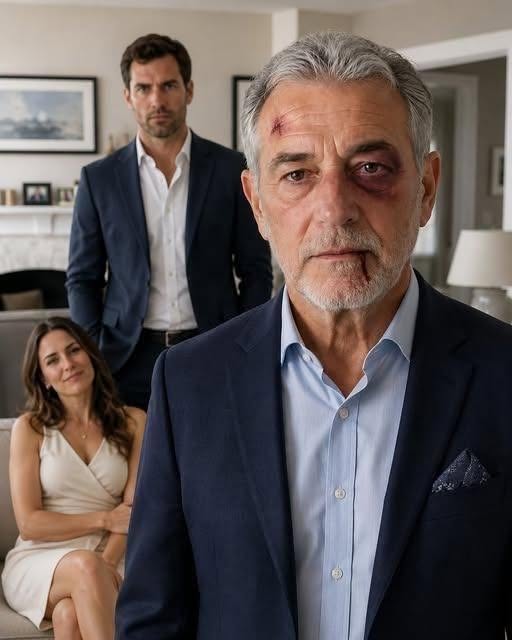
MY SON H.I.T ME 30 TIMES IN FRONT OF HIS WIFE… SO THE NEXT MORNING, WHILE HE WAS SITTING IN HIS OFFICE, I SOLD THE HOUSE HE THOUGHT BELONGED TO HIM
I counted every time my son hit me.
One.
Two.
Three.
By the fifth blow, the birthday dinner had gone completely silent.
By the twelfth, somebody near the dining room whispered Brandon’s name.
By the twentieth, my left cheek had gone numb.
By the thirtieth, my lip was split, blood had filled my mouth with the taste of copper, and whatever excuses I had spent thirty years making for my only son were finally gone.
Thirty.
That was the number.
I remember it because I made myself remember.
Not because I wanted revenge.
Because I knew if I survived that night and woke up the next morning, the father in me would eventually begin rewriting what had happened.
He had been angry.
He had been drinking.
He was under pressure.
He did not mean it.
He was still my son.
Parents can manufacture an astonishing number of excuses when the person hurting them is somebody they once carried in their arms.
So I counted.
Thirty.
My son, Brandon Reeves, stood over me in the dining room of a seven million dollar River Oaks mansion I had bought with my money.
His chest rose and fell.
His expensive white shirt was wrinkled at the sleeves.
One cufflink was missing.
His face was red with anger.
Behind him, his wife Amber sat at the table.
She had not tried to stop him.
Not once.
She had not called his name.
Had not gotten out of her chair.
Had not even looked shocked.
Instead, she watched me with a small expression I will remember until the day I die.
Satisfaction.
That hurt almost as much as Brandon’s hands.
Almost.
The other guests looked away.
That was another thing I learned that night.
People who enjoy your generosity when life is comfortable often become fascinated by the floor when you finally need them to show character.
Brandon wiped his mouth with the back of his hand.
“You need to understand something, Dad.”
I was down on one knee beside the dining table.
Blood ran from my lip.
My right ear was ringing.
But my mind was clear.
Clearer than it had been in years.
“What?” I asked.
“This is my house.”
Nobody moved.
I looked around the room.
Italian marble.
Imported fixtures.
Handmade walnut cabinets.
The chandelier Amber had flown to New York to select because she said the original one looked “too middle class.”
Everything I had paid for.
Brandon pointed toward the front door.
“You do not walk in here and embarrass me in front of my friends.”
I tasted blood.
Then I smiled.
That seemed to make him angrier.
“Something funny?”
“Yes.”
“What?”
“You.”
His jaw tightened.
Amber finally spoke.
“Franklin, I think you should leave.”
I looked at her.
She was wearing a diamond bracelet I had given her after she and Brandon married.
I wondered if she remembered.
Probably not.
People who believe they deserve everything rarely remember who gave them anything.
I pushed myself upright using the edge of the table.
My knees hurt more than my face.
At sixty eight, gravity no longer treated me like an old friend.
Brandon stepped closer.
“You hear her?”
“I heard.”
“Then go.”
On the table, near the birthday cake, lay my gift.
A small box wrapped in brown paper.
The antique watch I had spent six months restoring.
It was not particularly valuable by River Oaks standards.
Maybe a few thousand dollars.
But that was not why I bought it.
My father had owned one like it.
Brandon’s grandfather.
The man who taught me how to use a level before I was tall enough to see across a workbench.
I had found the same model at an estate sale and paid an old watchmaker in Austin to restore every original component.
I had imagined giving it to my son on his thirtieth birthday.
Maybe telling him about his grandfather.
Maybe reminding him that everything worth building requires time.
Instead, Brandon had opened the box, barely looked at it, and tossed it beside an expensive bottle of bourbon.
“This?” he had said.
That was how the evening started.
Not with violence.
With contempt.
Amber had laughed.
One of their friends had asked whether the watch was “vintage.”
Brandon said, “Vintage is what people call old things when they want you to think they’re valuable.”
Everybody laughed except me.
I told myself it did not matter.
Then Brandon looked at my clothes.
A brown sports coat.
Blue shirt.
Work boots.
The same brand I had worn for decades.
He said I could have made an effort.
I asked what he meant.
He said, “You show up looking like you just came off a construction site.”
I told him construction sites had paid for the floor under his feet.
That was the sentence that did it.
The room changed.
His smile disappeared.
He stood.
“Here we go again.”
“I only stated a fact.”
“You always do this.”
“Do what?”
“Remind everybody you paid for everything.”
“I didn’t mention money.”
“You didn’t have to.”
Amber rolled her eyes.
“Franklin, tonight is about Brandon.”
“I know.”
“Then maybe stop making everything about you.”
I looked at her.
“I gave him a watch.”
She laughed.
“A watch nobody asked for.”
I should have left then.
Maybe some part of me already knew.
But I stayed.
Because I had not gone there only for the birthday.
Three months earlier, I had discovered something about my son.
Something ugly.
Something I desperately hoped was not what it seemed.
That dinner was supposed to be his final chance to tell me the truth.
Instead, he hit me thirty times.
When the thirtieth blow ended, I knew my answer.
I reached for the watch box.
Brandon slapped my hand away.
“Leave it.”
“No.”
“I said leave it.”
“It belongs to me.”
“I don’t care.”
I picked it up anyway.
Then I looked at my son.
Really looked at him.
Thirty years old.
Educated.
Healthy.
A vice president at a commercial development firm because I had introduced him to the owner.
Living in a house I had bought.
Driving a car I had helped him purchase.
Wearing a watch worth more than the first pickup truck I ever owned.
I had spent half my life making sure Brandon never struggled the way I had.
Standing there with blood in my mouth, I realized I had succeeded.
He had never struggled.
And maybe that had been the problem.
I said nothing.
No threat.
No warning.
No dramatic speech.
I turned toward the door.
Amber called after me.
“Maybe next time call before you come.”
That stopped me.
I turned.
“What?”
She crossed her arms.
“It’s basic respect.”
I stared at her.
Then at Brandon.
He nodded.
“She’s right.”
“You want me to call before entering this house?”
“Yes.”
I smiled again.
“Understood.”
I left.
Nobody followed.
Outside, the February air was cold enough to sting my face.
My old sedan was parked two blocks away because their driveway had been crowded with luxury SUVs and sports cars.
I walked slowly.
Each step hurt.
I could feel swelling forming beneath my left eye.
My ribs ached where Brandon had shoved me into a chair before he started striking me.
I reached the car.
Opened the door.
Sat down.
Then I looked at myself in the rearview mirror.
I barely recognized the man staring back.
Gray hair.
Blood at the corner of his mouth.
A bruise already darkening under one eye.
Sixty eight years old.
And humiliated.
I had spent forty years in construction.
Roads.
Bridges.
Hospitals.
Office towers.
Shopping centers.
Warehouses.
I had negotiated contracts with people who lied as easily as breathing.
I had survived bankrupt partners, recessions, lawsuits, collapsing credit markets, supply crises, hurricanes, and one project manager who once threatened me with a tire iron because I refused to approve fraudulent invoices.
I had never considered myself soft.
Yet my own son had reduced me to a man walking away quietly because some part of me still believed calling the police would destroy his life.
That realization disgusted me.
I sat in the car for several minutes.
Then I placed the watch on the passenger seat.
My phone rang.
My younger sister.
I ignored it.
Another call.
My business attorney, Nathan Cole.
I ignored that too.
I started the engine.
Halfway home, blood started running from my lip again.
I pulled into a gas station and went into the restroom.
The fluorescent light was brutal.
My cheek was swollen.
My lip looked worse than I thought.
There were red marks across my jaw.
I washed my face.
A man standing beside me looked over.
“You okay?”
“Yes.”
He looked at the blood.
“You sure?”
“No.”
He nodded.
Sometimes strangers know exactly when not to ask another question.
I dried my face.
Then I drove home.
My house was nothing like Brandon’s.
Smaller.
Older.
Comfortable.
My wife, Elaine, and I had bought it thirty eight years earlier when I could barely afford the mortgage.
She died eight years ago.
I never moved.
Brandon hated that.
He said the neighborhood was outdated.
Amber once told me the kitchen looked like it belonged in a museum.
Maybe it did.
Elaine chose the tile.
She chose the cabinets.
There were scratches on the kitchen table from when Brandon was seven and decided scissors were an artistic tool.
Every room contained a memory.
I did not need marble.
I needed home.
I walked inside.
Placed the antique watch on the kitchen table.
Then I went into the bathroom and cleaned my face properly.
When I finished, I sat in my wife’s old chair.
For a long time, I did nothing.
Then I opened my phone.
One message from Amber.
YOU SHOULD APOLOGIZE TOMORROW WHEN EVERYONE HAS CALMED DOWN.
I read it twice.
Then I laughed.
Not because it was funny.
Because there are moments when arrogance becomes so complete that laughter is the only sane response.
Another message came from Brandon.
YOU PUSHED ME TOO FAR.
No apology.
No concern.
No question about whether I was hurt.
You pushed me too far.
I stared at the words.
Then I opened a drawer beside the chair.
Inside was a red folder.
REDWOOD CAPITAL.
The company had existed for twenty two years.
Most people assumed it was a small investment firm.
It was more than that.
During the strongest years of my construction business, I started moving assets into separate entities.
Properties.
Land.
Long term investments.
A few commercial buildings.
Not to hide money.
To protect it.
Construction is unpredictable.
One lawsuit can freeze accounts.
One bad partner can destroy a project.
One recession can turn confidence into panic.
Redwood Capital became the wall between my operating business and my family’s future.
Five years earlier, when Brandon married Amber, I bought them the River Oaks property.
Cash.
No mortgage.
I told them they could treat it like their home.
Over time, that became something else in their minds.
They believed I had given them the property.
I never corrected them.
The deed remained with Redwood Capital.
I was the sole owner.
That had not been an accident.
At first, I told myself I was protecting Brandon from himself.
Then I told myself I was protecting the property from divorce.
Eventually, I admitted the truth.
I did not trust either of them enough to transfer ownership.
The strange thing was that Brandon never asked to see the deed.
Neither did Amber.
Entitled people rarely inspect the foundation beneath a gift.
They simply assume ownership because possession feels like proof.
I opened the Redwood folder.
There it was.
Legal title.
Tax records.
Operating agreement.
My signature.
My property.
I looked at the clock.
1:14 a.m.
My face hurt.
My son had hit me thirty times.
And I realized something.
I did not want revenge.
I wanted clarity.
For years, I had blurred the line between love and financial support.
The house.
The job connection.
The vacations I quietly paid for.
Emergency cash that somehow always became luxury upgrades.
Every time Brandon made a bad decision, I softened the consequences.
Then I told myself that was what fathers did.
Maybe fathers were also supposed to know when to stop.
I slept badly.
At 6:40 the next morning, I woke before the alarm.
My eye was purple.
My lip had swollen overnight.
I made coffee.
At 7:15, I opened the antique watch.
The crystal had cracked when Brandon knocked it from my hand.
I ran my thumb over it.
Then I closed the box.
At 8:06, I called Nathan Cole.
He answered after two rings.
“Franklin?”
“Nathan.”
“You sound strange.”
“I need you to sell a house.”
Pause.
“What house?”
“River Oaks.”
Longer pause.
“You mean Brandon’s property?”
“No.”
I looked at the Redwood folder.
“My property.”
Nathan was quiet.
Then he said, “What happened?”
“Does it matter?”
“Yes.”
“I want it sold.”
“Franklin.”
“As quickly as legally possible.”
“Why?”
“I changed my mind.”
“You don’t change your mind quickly.”
“I did this time.”
He sighed.
“Do Brandon and Amber know?”
“No.”
“That could create a problem.”
“It’s my property.”
“I know.”
“Then list it.”
“Do they have a lease?”
“No.”
“Written occupancy agreement?”
“No.”
“Any ownership interest?”
“No.”
“Improvements they paid for?”
“Some decorating.”
Nathan sighed again.
“Franklin, I’m asking one more time. What happened?”
I looked at my reflection in the kitchen window.
“Nathan.”
“Yes?”
“My son hit me.”
Silence.
“How badly?”
“Thirty times.”
“What?”
“I counted.”
“Have you called the police?”
“No.”
“Why the hell not?”
“I’m not discussing that.”
“Franklin.”
“Sell the house.”
His voice changed.
Professional.
Controlled.
“All right.”
“Fast.”
“I know a buyer who has been trying to get into River Oaks for months.”
“Call him.”
“He may move quickly.”
“Good.”
“Franklin, selling the property and dealing with occupancy are two separate matters.”
“I understand.”
“You cannot simply throw them onto the street today.”
“I know.”
“Good.”
“I want everything legal.”
“That part I can promise.”
At 8:23, I called the manager of Redwood Capital.
By 9:10, Nathan had a private buyer interested.
The man had already lost two properties in bidding wars.
He knew the neighborhood.
He knew the value.
He wanted a fast deal.
At 9:44, he made an offer.
Slightly under what we might get through a traditional listing.
I accepted.
Nathan asked whether I was sure.
“Yes.”
“Even after transaction costs?”
“Yes.”
“You could make more.”
“I already made what mattered.”
“What?”
“A decision.”
At 11:49, I signed the sale documents.
I sat in Nathan’s conference room with my face bruised and my lip still swollen.
Nobody congratulated me.
Nathan watched me sign.
Then he removed his glasses.
“You know he’ll call.”
“I know.”
“What are you going to say?”
“The truth.”
“Which version?”
“The simple one.”
Nathan leaned back.
“Franklin, I’ve represented you for twenty six years.”
“Yes.”
“I’ve seen you angry.”
“Yes.”
“I’ve seen you ruthless.”
“Rarely.”
“More often than you remember.”
I smiled.
He continued.
“I have never seen you like this.”
“What am I like?”
“Done.”
That word stayed with me.
Done.
Not angry.
Not vengeful.
Done.
My phone rang at 12:17.
BRANDON.
I stared at his name.
The room went quiet.
Nathan watched me.
I did not answer.
The call stopped.
Then came again.
I let it ring.
Stopped.
A third time.
I answered.
“Hello.”
There was only breathing at first.
Fast.
Angry.
Afraid.
“Where are you?”
“I’m working.”
“What did you do?”
“Nothing.”
“You sold the house.”
Not a question.
“Yes.”
Silence.
Then he laughed.
Strange.
Disbelieving.
“You can’t sell my house.”
“Apparently I can.”
“That is my home.”
“No.”
My voice stayed calm.
“It was never your house.”
Nothing.
I could almost hear his mind trying to reorganize reality.
“The deed,” he whispered.
“Yes.”
“Whose name is on it?”
“Redwood Capital.”
He swore.
Nathan raised an eyebrow.
Brandon started shouting.
“You lied to me!”
“No.”
“You said it was ours!”
“I said you could live there.”
“You bought it for us!”
“I bought it.”
“That means it was a gift!”
“No, Brandon. You decided it was a gift.”
“You tricked me.”
I felt something inside me harden.
“No.”
I spoke slowly.
“I trusted you.”
He stopped.
That sentence hit harder than the sale.
I could hear Amber in the background.
“What did he say?”
Brandon covered the phone.
Not well enough.
“Ask him about the money.”
I looked at Nathan.
His expression changed.
“What money?” I asked.
Silence.
Brandon returned.
“Nothing.”
Too fast.
One word.
Nothing.
People say that word quickly when there is very much something.
I leaned back.
“Brandon.”
“What?”
“Where did you get the money?”
“What money?”
“The money Amber just mentioned.”
“I’m not discussing this.”
“You should.”
“Why?”
“Because the house wasn’t the only thing connected to Redwood.”
The silence became absolute.
“What does that mean?”
I smiled faintly.
“You’ll find out.”
Then I ended the call.
My hands shook afterward.
Nathan noticed.
“You all right?”
“No.”
“What money?”
“I don’t know yet.”
That was not entirely true.
Three months earlier, I had received an envelope at my office.
No return address.
Inside was a photograph.
Brandon standing outside a private bank.
Beside him was a man I had not seen in fifteen years.
Daniel Cross.
A commercial developer.
Smooth.
Intelligent.
Dangerous in the quiet way.
Daniel had nearly destroyed one of my largest construction projects seventeen years earlier.
He had been involved in financing.
When the project collapsed, millions disappeared.
We eventually recovered.
Daniel disappeared from my professional life.
I assumed permanently.
On the back of the photograph were four handwritten words.
ASK HIM ABOUT REDWOOD.
I thought it was a threat.
Then a mistake.
Then I hired a private investigator.
His name was Michael Stone.
Former fraud investigator.
Patient.
Annoyingly thorough.
Three weeks after I hired him, he sat across from me with a black folder.
“You’re not going to like this.”
“Nobody pays investigators for things they’ll like.”
He opened the file.
Brandon.
Daniel.
Restaurants.
A bank.
Two office buildings.
Several meetings.
“How long?”
“Approximately eighteen months.”
“Business?”
“Some.”
“What kind?”
“Hard to determine.”
He turned the page.
Emails.
Company searches.
Questions about Redwood Capital.
Not the house.
Everything.
Properties.
Accounts.
Investments.
Beneficial ownership.
Succession.
Estate structure.
I looked up.
“Why is my son investigating my assets?”
Michael did not answer.
He turned another page.
One email.
Six words.
HOW SOON CAN I INHERIT?
I read it.
Then again.
“Who did he send this to?”
“Daniel Cross.”
My stomach twisted.
“Context?”
“Unknown.”
“Could mean something harmless.”
“It could.”
“You don’t believe that.”
“I don’t get paid to believe.”
I appreciated that.
I hated him for it.
That evening, I went home and opened an old storage box.
Photographs.
Brandon at five.
Brandon at ten.
His graduation.
His wedding.
Elaine holding him the day he was born.
His first baseball glove.
His first paycheck from one of my construction crews.
At the bottom was a drawing.
Three stick figures.
Me.
Elaine.
Brandon.
Above them, written in blue crayon:
MY FAMILY FOREVER.
I sat there until midnight.
Then I made a decision.
I would not confront him through lawyers.
I would not freeze accounts.
I would not assume the worst.
I would give my son one chance to look me in the eye and tell me the truth.
That was why I went to his birthday dinner.
That was why I brought the watch.
I thought maybe family history would remind him who we were.
Instead, he hit me thirty times.
At 1:04 p.m., several minutes after Brandon’s call, Nathan’s phone rang.
He answered.
Listened.
Then his face changed.
“Franklin.”
“What?”
“We have a problem.”
“What kind?”
“The buyer wants to meet you.”
“Why?”
“He says something was discovered in the basement.”
I frowned.
“What?”
“He refuses to explain by phone.”
“That makes no sense.”
“He wants you to meet him privately.”
“Where?”
Nathan read the address.
My old warehouse.
I had not been there in nearly ten years.
The building once stored equipment and project files.
We shut it down after I retired from active construction work.
“Who is this buyer?”
I asked.
Nathan hesitated.
“What?”
“I should probably tell you.”
“Tell me what?”
“He’s connected to Michael Stone.”
I stood.
“My investigator?”
“Yes.”
“Nathan.”
“The buyer is a retired federal investigator.”
“Why did you not tell me?”
“Because he asked that the purchase stay private until he understood what was happening inside the property.”
A chill moved down my back.
“Inside my house.”
“Yes.”
I took my coat.
Nathan stood.
“You are not going alone.”
“I am.”
“That wasn’t a suggestion.”
I looked at him.
“Nathan.”
“Franklin.”
“I have been hit thirty times in my own property and discovered my son has been investigating how quickly he inherits my assets.”
“That is exactly why you shouldn’t go alone.”
I paused.
He had a point.
I hated that.
“You can follow.”
“Fine.”
“I drive.”
“Fine.”
“Do not bring three lawyers.”
“One.”
“None.”
He glared.
I left.
Before reaching the elevator, I remembered something.
I returned to my office and opened the bottom desk drawer.
Inside was a black box.
I had not touched it in years.
An old warehouse key.
And beneath it, folded twice, a note in Elaine’s handwriting.
I had forgotten it existed.
I unfolded it.
Franklin,
If you ever have to choose between protecting our son and protecting the truth, choose the truth.
I stared.
Two sentences.
No explanation.
Elaine had written it years earlier.
I remembered the handwriting.
The stationery.
But not the context.
My wife had always been better at understanding people than I was.
That note suddenly felt less like advice.
More like warning.
At 2:37, I arrived at the warehouse.
Old brick.
Broken windows.
Rusting loading bays.
The smell of oil still lingered even after a decade.
A black SUV waited outside.
A man leaned against it.
Daniel Cross.
Older.
Thinner.
Gray at the temples.
Still wearing a suit too expensive for the surroundings.
I got out.
Nathan parked behind me.
Daniel smiled.
“Franklin.”
I did not shake his hand.
“What do you want?”
“Straight to business.”
“You lost the right to small talk fifteen years ago.”
“Seventeen.”
“You’ve been counting?”
“I count everything.”
I almost laughed.
“So do I.”
His smile faded.
“What happened to your face?”
“My son.”
For the first time, Daniel looked surprised.
“Brandon did that?”
“Thirty times.”
“Jesus.”
“Do not pretend you care.”
“I don’t need to pretend anything.”
“Then explain why my son has been meeting you.”
Daniel looked toward the warehouse.
“You’re asking the wrong question.”
“What should I ask?”
“Why was your son searching the house?”
My stomach tightened.
“Searching for what?”
Daniel reached inside his jacket.
Nathan took one step closer.
Daniel noticed.
“Relax.”
He produced a photograph.
I took it.
The basement of the River Oaks house.
But not the basement I knew.
The picture showed a narrow opening behind finished drywall.
A hidden passage.
At the far end, a small metal door.
Stamped into it was an old logo.
My original company mark.
FR.
Franklin Reeves.
I looked at Daniel.
“What is that?”
“A room.”
“There is no room there.”
“There is.”
“I built that property five years ago.”
“No. You bought it five years ago.”
He was right.
The original structure was older.
We had renovated it extensively.
“What is behind the door?”
Daniel looked at me.
“Your son wasn’t trying to take the house.”
“Then what?”
“He was trying to find what Elaine hid there twenty years ago.”
My heart seemed to stop.
“My wife?”
“Yes.”
“Elaine never lived in that house.”
“No.”
“Then how could she hide something there?”
Daniel looked toward the warehouse.
“Because the property belonged to one of your old holding companies before it was redeveloped.”
I searched my memory.
He was right again.
The parcel had been part of an older commercial acquisition.
Transferred.
Reclassified.
Eventually converted.
I had forgotten.
“She hid something there?”
“Yes.”
“What?”
“I don’t know everything.”
“You know enough to be terrified.”
His jaw tightened.
I stepped closer.
“Why are you helping me?”
His eyes held mine.
“I’m not.”
“What?”
“I’m trying to survive.”
Before I could ask more, a phone rang inside the warehouse.
An old landline.
Impossible.
The service had been disconnected years ago.
Ring.
Ring.
Daniel went white.
Nathan whispered, “Who is that?”
Daniel shook his head.
“Don’t answer it.”
I looked toward the building.
“Why?”
“Because whoever is calling already knows Franklin is here.”
The phone rang again.
I walked toward the entrance.
Daniel grabbed my arm.
“Don’t.”
I looked at his hand.
He released me.
“Explain.”
“I can’t.”
“Then get out of my way.”
“If I tell you everything, I may not walk out of this building.”
“Welcome to my week.”
The ringing stopped.
Silence.
Then a metallic click came from inside.
A door unlocking.
Daniel backed away.
“He’s here.”
“Who?”
A shadow crossed the old office window.
The door opened.
My son stepped out.
Brandon.
His suit was wrinkled.
His hair uncombed.
He looked exhausted.
And frightened.
“Dad.”
I stared.
“What are you doing here?”
He looked at Daniel.
“You said he wouldn’t come.”
Daniel’s expression hardened.
“I never said that.”
Brandon looked back at me.
“We need to talk.”
I laughed.
“Yesterday you hit me thirty times.”
His eyes fell.
“I know.”
“You continued after I was down.”
“I know.”
“Your wife watched.”
His jaw tightened.
“I know.”
“And now you need me to listen?”
“I didn’t know what else to do.”
That sentence made anger explode through me.
“You could have started with not hitting your father.”
“I know.”
“You could have told me the truth.”
He looked at the photograph in my hand.
His face changed.
“You know about the room.”
“I know there is one.”
Brandon closed his eyes.
“Mom put it there.”
The word hit me.
Mom.
Elaine.
“What is inside?”
He swallowed.
“Everything.”
We went into the warehouse.
Nathan stayed close.
Daniel followed.
Brandon opened an old steel cabinet.
Inside were rolled architectural plans.
Project drawings.
Maps.
Records from companies I had forgotten.
One folder was different.
Cream colored.
My wife’s handwriting across the front.
FOR FRANKLIN
ONLY WHEN THERE IS NO OTHER CHOICE
My hands trembled.
I opened it.
A letter.
Twenty years old.
Franklin,
If you are reading this, something has gone terribly wrong.
There are things I never told you because I was afraid telling you would place you and Brandon in danger.
Brandon is not the person you think he is.
But neither is the man who may someday advise him.
Trust no one until you understand what happened to the Reeves projects.
I stopped.
“The Reeves projects?”
Daniel lowered his eyes.
“What happened?”
He inhaled.
“Your biggest construction company was not destroyed by the recession.”
I stared.
“What?”
“You were betrayed.”
“By whom?”
Daniel looked at Brandon.
My son could not meet my eyes.
“No.”
Brandon began crying.
“I didn’t know.”
“Know what?”
He shook his head.
I turned to Daniel.
“You tell me.”
He removed bank statements.
Old ones.
Millions transferred through accounts associated with subsidiaries tied to my companies.
The authorization signatures looked like mine.
They were not.
Several transfers eventually passed through accounts connected to Daniel Cross.
I looked at him.
“You stole from me.”
“Yes.”
The word came easily.
Too easily.
“How much?”
“Initially? Four point eight million.”
“Initially?”
“There were other transactions.”
My hands tightened.
“You nearly destroyed my company.”
“Yes.”
“You came back through my son.”
“Yes.”
I stepped toward him.
Nathan grabbed my shoulder.
“Franklin.”
I stopped.
Not because Daniel deserved mercy.
Because I refused to become Brandon.
I turned to my son.
“You knew?”
“No.”
“You were meeting him for eighteen months.”
“He told me something different.”
“What?”
Brandon wiped his face.
“He told me you had hidden money.”
I laughed bitterly.
“From you?”
“From the family.”
“What family? Your mother is dead. You are my only child.”
“He said Redwood was where you moved everything you stole before the company nearly collapsed.”
“I created Redwood to protect us.”
“I know that now.”
“No, Brandon. You know what somebody told you now.”
He lowered his head.
“He showed me records.”
“Fake records.”
“I didn’t know.”
“You never asked me.”
“You would have denied it.”
“How do you know?”
“Because you never tell me anything.”
I stared at him.
“That is your defense?”
“No.”
“Then what is?”
He looked at my bruised face.
“I don’t have one.”
Silence.
For the first time since the birthday dinner, he said something honest.
I looked back at Elaine’s letter.
There was more.
Brandon will eventually be approached.
They will tell him his father stole money.
They will promise him access to accounts.
They will use his anger against you.
Do not punish him before you understand who is pulling the strings.
My knees weakened.
I sat.
“She knew.”
Brandon looked up.
“What?”
“Your mother knew this could happen.”
Daniel spoke quietly.
“Elaine discovered the fraud.”
I turned.
“What?”
“She found discrepancies.”
“When?”
“About seventeen years ago.”
“She never told me.”
“She tried.”
“You seem to know a great deal about my marriage.”
His face tightened.
“I worked with her.”
My stomach twisted.
“You what?”
“After the first project failed, Elaine contacted me.”
“Why?”
“Because she thought I knew who had taken the money.”
“You did.”
“Yes.”
“Because you were taking it.”
“Yes.”
I stood again.
“You sat with my wife while helping steal from me?”
“I was not the person running the operation.”
“You participated.”
“Yes.”
“Who was?”
Daniel looked away.
Nathan stepped closer.
“Names.”
Daniel rubbed both hands over his face.
“It involved several people.”
“Names.”
“A finance executive inside your company.”
“Who?”
“Martin Vale.”
I knew the name.
Former chief financial officer.
Dead twelve years.
“Who else?”
“A lender.”
“Who?”
“David Leary.”
Also dead.
Daniel continued.
“Two outside developers. A broker. People who controlled distressed acquisitions.”
“What was the purpose?”
“To force Reeves Construction into liquidity trouble.”
“Why?”
“Assets.”
My chest tightened.
“You crashed my company to buy the properties.”
“Parts of it.”
“Pennies on the dollar.”
“Yes.”
I remembered that recession.
Payroll.
Layoffs.
Selling equipment.
Elaine sitting with me at midnight while I decided which projects to abandon so the company could survive.
I thought I had failed.
For seventeen years, I had carried shame over decisions other men had engineered.
“You let me believe I destroyed it.”
Daniel looked down.
“Yes.”
I wanted to hit him.
Instead, I asked, “Why come back?”
His eyes went to Brandon.
“Because somebody else did.”
“Who?”
“I don’t know his real name.”
Brandon interrupted.
“He called himself Mr. Grey.”
I looked at him.
“Who is Mr. Grey?”
“The man who first contacted me.”
“When?”
“Eighteen months ago.”
“Why?”
“He said he represented investors who knew about Redwood.”
“And?”
“He told me Dad had stolen money from Mom.”
I stared.
“From your mother?”
“He said some of her assets were inside Redwood.”
“They were ours.”
“I know.”
“You keep saying that.”
“I know!”
His voice broke.
“I know now.”
I stood inches from him.
“Why did you hit me?”
He said nothing.
“Look at me.”
He did.
“Why?”
“I thought you ruined everything.”
“What everything?”
“My life.”
I almost laughed.
“The seven million dollar house?”
“No.”
“The car?”
“No.”
“The job I helped you get?”
“Dad.”
“Which part of your life exactly did I ruin?”
He started crying again.
“I thought my entire life was built on money you stole.”
That stopped me.
He continued.
“Daniel told me Mom found out. He said she hated what you became. He said she spent years trying to protect me.”
I looked at Daniel.
He shook his head.
“I didn’t tell him that.”
“Then who?”
“Mr. Grey.”
Brandon covered his face.
“He showed me documents. Emails. Bank records. He said Redwood belonged to Mom too. He said you hid everything after she died.”
“And you believed him.”
“Yes.”
“Why?”
He looked at me.
“Because part of me wanted to.”
That answer hurt.
“Why?”
“Because I was angry at you.”
“For what?”
“Everything.”
“Be specific.”
“You were never impressed.”
“What?”
“No matter what I did, you acted like it was ordinary.”
“I was proud of you.”
“You never said it.”
“I told everyone.”
“You never told me.”
I opened my mouth.
Nothing came.
He continued.
“You paid for things instead.”
The words were quiet now.
“You gave me a house instead of asking whether I was happy.”
I stared.
“You got me a job instead of asking whether I wanted the career.”
“You took it.”
“Because I wanted you to respect me.”
“I did.”
“No. You respected work.”
I looked at my hands.
Calluses had softened with age.
But I remembered forty years of measuring worth in hours.
Projects.
Contracts.
Results.
Maybe Brandon was not wrong about everything.
But then I touched my split lip.
Pain brought me back.
Understanding was not absolution.
“You were angry at me,” I said.
“Yes.”
“So you let a stranger convince you I was a criminal.”
“Yes.”
“You investigated my money.”
“Yes.”
“You asked how soon you could inherit.”
His face collapsed.
“You saw that.”
“Yes.”
“It wasn’t what it looked like.”
“Then tell me.”
“I asked because Grey said the accounts could disappear if you died before they were traced.”
“That is not what the email said.”
“I know.”
“You wrote, ‘How soon can I inherit?’”
“I was ashamed even when I wrote it.”
“But you wrote it.”
“Yes.”
“And last night?”
He looked at the floor.
“Daniel called before dinner.”
Daniel raised his head.
“I called to warn him.”
“About what?”
“That the buyer connected to Franklin had started asking questions.”
I stared at Brandon.
“So you thought I knew.”
“Yes.”
“And when I mentioned who built the foundation beneath your feet…”
“I thought you were mocking me.”
“So you hit me.”
His voice almost disappeared.
“Yes.”
I looked at him for a long time.
Then I said, “You could have killed me.”
He started to answer.
I stopped him.
“No. Listen.”
He went still.
“I am sixty eight years old.”
“I know.”
“You knocked me down.”
“I know.”
“You kept hitting.”
“I know.”
“Thirty times.”
Tears ran down his face.
“I know.”
“Understanding why you were angry does not make what you did less real.”
“I know.”
“Being manipulated does not erase what you chose.”
“I know.”
“Your mother’s letter does not excuse you.”
“I know.”
“Stop saying you know.”
He swallowed.
“All right.”
“You do not know yet.”
He nodded.
“What happens now?” he asked.
I laughed softly.
“You lose the house.”
His face tightened.
“That already happened.”
“You lose access to Redwood.”
He stared.
“Dad.”
“No.”
“I don’t want your money.”
“Good.”
“I mean it.”
“Good.”
“I want to fix this.”
“You can’t.”
He flinched.
I continued.
“You cannot fix thirty blows. You cannot make me forget your wife watching. You cannot erase eighteen months of lies.”
His voice cracked.
“Then what can I do?”
“Become somebody who would never do it again.”
The warehouse went quiet.
That was the first answer I had given him that did not come from anger.
He nodded slowly.
“I will.”
“We’ll see.”
Nathan cleared his throat.
“There’s another issue.”
He looked at Daniel.
“Why was the buyer directed to the basement?”
Daniel answered.
“Because Elaine’s hidden room may contain original evidence.”
“May?”
“Nobody has opened it.”
“Brandon?”
My son shook his head.
“I found the entrance, but not the final key.”
I looked at the old key in my pocket.
Elaine’s note.
The warehouse.
The room.
My hand closed around it.
We drove back to River Oaks.
The new buyer had not taken possession yet.
His name was Henry Lawson.
Retired federal investigator.
Sixty two.
Quiet.
He met us outside.
Brandon looked at the house.
His house.
Not his house.
Everything about his expression had changed.
Twenty four hours earlier, he had stood inside those walls ordering me out.
Now he waited for permission to enter.
I noticed.
So did he.
Henry led us downstairs.
Behind built in shelving was a section of wall that had been opened.
A narrow passage.
At the end, the metal door.
FR.
My initials.
I inserted the key.
It turned.
The room was small.
Dry.
Windowless.
Shelves lined both walls.
Boxes.
Binders.
Documents.
Photographs.
Tape recordings.
My wife had built an archive.
Seventeen years of secrets.
On the center table lay another envelope.
FRANKLIN.
I opened it.
Elaine’s letter was longer this time.
My dearest Franklin,
If you are reading this, then I failed to solve this before I left you.
I wish I had told you sooner.
I was afraid.
Not of you.
For you.
I discovered that the collapse of the Reeves projects was engineered by people who wanted access to land, contracts, and distressed assets.
Somebody inside our company helped them.
Daniel Cross was part of it, but I do not believe he was the highest person involved.
When I confronted Daniel, he agreed to give me records in exchange for protection.
I never knew whether I could trust him.
If Brandon is old enough to be involved by the time you discover this, please remember something.
Our son has always wanted your approval more than your money.
If someone makes him believe those two things are the same, they will be able to manipulate him.
Do not protect him from consequences.
But do not confuse consequences with abandonment.
Choose the truth.
Always.
Elaine.
I sat down.
For eight years, I had missed that woman every day.
That afternoon, I missed her with an almost physical violence.
She knew me.
Knew Brandon.
Knew exactly how both of us could fail.
I looked at my son.
He was crying silently.
“She knew me.”
“Yes.”
“She knew I’d become this.”
“No.”
He looked up.
“She knew you could.”
That distinction mattered.
He nodded.
Henry began examining the files.
There was enough evidence to reopen old fraud investigations.
Daniel gave a full statement.
Not because he suddenly became honorable.
Because the people behind the old scheme had started eliminating evidence and threatening participants.
Daniel had returned to Brandon hoping to get access to Elaine’s archive before somebody else did.
He admitted that.
Brandon had been a tool.
Not innocent.
A tool.
There is an important difference.
Innocent people do not hit their fathers thirty times.
But manipulated people can still be responsible for what they choose.
Two weeks later, Daniel Cross was arrested on fraud and conspiracy related charges tied to the old financial scheme.
His cooperation eventually led investigators to additional participants.
Some were long dead.
Some had retired.
A few were still active in real estate and finance.
The records Elaine preserved were devastating.
The collapse of my largest construction division had not been caused only by the recession.
The recession created the opening.
People I trusted exploited it.
They falsified financing documents.
Accelerated debt.
Redirected funds.
Bought distressed assets through intermediaries.
For seventeen years, I had carried the shame of believing I had failed hundreds of employees.
I had made mistakes.
Every business owner does.
But I had not destroyed the company alone.
That truth freed something in me I did not realize I still carried.
Amber was not so fortunate.
Financial investigators discovered she had known more than Brandon realized.
Some of the money Brandon had been asking about came through accounts she controlled.
She had encouraged his paranoia because she believed access to Redwood would make both of them wealthy.
She had communicated separately with people connected to Grey.
When Brandon confronted her, she left.
Not dramatically.
No screaming scene.
No apology.
She packed luggage while he was at work and disappeared into a luxury hotel.
Three weeks later, divorce papers arrived.
Brandon called me that night.
I did not answer.
The next morning he texted.
AMBER LEFT.
I responded.
I’M SORRY.
That was all.
I was not ready to become his rescuer again.
He needed consequences.
So did I.
Because parents rarely talk about the addiction of being needed.
For thirty years, I had solved Brandon’s problems.
Then resented him for bringing me problems to solve.
That was not entirely fair.
I taught him the pattern.
He learned it.
The house sale went through.
Brandon and Amber had to leave.
I did not reverse it.
People asked whether I regretted that.
No.
The house had become a monument to everything wrong between us.
Money.
Status.
Expectation.
Entitlement.
Control.
I could have transferred it back.
I did not.
Instead, I paid three months on a small apartment for Brandon.
Nothing luxurious.
One bedroom.
Older building.
Clean.
Safe.
He objected.
“I can pay for it.”
“Good.”
“Then why are you?”
“Because you need time to organize your life.”
“I don’t want charity.”
I looked at him.
“Then consider it the final financial gift.”
He went quiet.
“Final?”
“Yes.”
“What does that mean?”
“It means after three months, every bill is yours.”
“Redwood?”
“No.”
“Inheritance?”
“We are not discussing inheritance.”
His face flushed with shame.
“I wasn’t asking because I wanted it.”
“I know.”
“No, Dad, I need you to understand.”
I raised a hand.
“You need to understand something too.”
He stopped.
“For thirty years I gave you money because I thought making life easier was love.”
He stared.
“It wasn’t?”
“Sometimes.”
I paused.
“But sometimes it was guilt.”
“Guilt for what?”
“Working too much when you were young.”
He looked away.
“Sometimes it was control.”
His eyes returned to mine.
“You wanted me close.”
“Yes.”
“Even if I resented you.”
“Yes.”
“That isn’t fair.”
“No.”
He looked surprised.
I continued.
“I made mistakes too.”
His eyes filled.
“But I never hit you.”
“No.”
“That boundary matters.”
“Yes.”
“So we start there.”
“How?”
“You live your life.”
“And you?”
“I live mine.”
“That’s it?”
“For now.”
Months passed.
We spoke rarely.
Sometimes weeks went by.
At first, the silence felt unnatural.
Then peaceful.
I started working less.
I visited my sister.
Went fishing.
Rejoined an old group of retired contractors who met for breakfast every Thursday and spent two hours complaining about building codes and modern architects.
I had not realized how much of my life revolved around worrying about Brandon.
Was he happy?
Was he spending too much?
Was Amber controlling him?
Was he working hard enough?
Was he calling enough?
Would he be responsible if I died?
Parents can spend decades treating an adult child like an unfinished project.
Brandon was not my project.
He was a man.
A flawed one.
So was I.
The assault remained difficult.
Sometimes my cheek seemed to ache even after the bruising vanished.
Not physically.
Memory can create its own pain.
I would hear his voice.
This is my house.
Then remember.
Thirty.
I began seeing a counselor.
That surprised everyone, including me.
The first session, she asked why I had come.
“My son hit me.”
“How did that make you feel?”
“Angry.”
“What else?”
“Humiliated.”
“What else?”
I hated the question.
“Old.”
She waited.
I stared at the floor.
“Disposable.”
That was the word.
Not weak.
Not injured.
Disposable.
I had spent my life providing.
Then the person I provided for treated me as though my value ended the moment I became inconvenient.
The counselor asked whether selling the house had been revenge.
“No.”
“Are you sure?”
I thought about it.
“Partly.”
There it was.
Truth.
I had wanted Brandon to feel loss.
I had wanted him to understand power could disappear.
But I had also known the house needed to go.
Both could be true.
Healing became easier when I stopped pretending every choice I made was noble.
Brandon started therapy too.
I did not suggest it.
He told me months later.
He found work at another firm after resigning from the position I had helped him get.
That mattered.
No connection from me.
No recommendation.
He started at a lower level than before.
For the first time, his career belonged to him.
One Sunday morning, there was a knock on my door.
I opened it.
Brandon stood outside.
No expensive suit.
Jeans.
Simple shirt.
He drove an ordinary used SUV.
In one hand was a paper bag.
“What is that?”
“Breakfast.”
“I have food.”
“I know.”
“Then why bring breakfast?”
He smiled nervously.
“Because I remember you like the breakfast tacos from the place on Westheimer.”
I stepped aside.
He entered.
His eyes moved around the house.
“This place looks exactly the same.”
“Your mother had good taste.”
“She did.”
We sat at the kitchen table.
Silence.
Not hostile.
Just cautious.
He reached into his pocket.
The antique watch.
Restored.
New crystal.
Original case.
I stared.
“I found it after the party.”
“You threw it.”
“I know.”
“You almost broke it.”
“I did break it.”
“Then?”
“I found the watchmaker.”
I looked up.
“What?”
“The one who restored it for you.”
“How?”
“Nathan.”
“Traitor.”
Brandon smiled.
“He told me who it was.”
He placed the watch on the table.
“I asked him what it meant.”
“What?”
“He said you had spent months looking for the right model.”
I said nothing.
“He told me Grandpa wanted one.”
“Yes.”
“He told me why you bought it.”
I looked at the watch.
“Time.”
Brandon nodded.
“I finally understand.”
“Do you?”
“I think so.”
“What do you think I was trying to give you?”
He looked at me.
“Not a watch.”
“No.”
“History.”
I smiled slightly.
“That too.”
“Time?”
“Yes.”
He swallowed.
“More time.”
I nodded.
His eyes filled.
“Dad.”
“What?”
“I am sorry.”
We had said the words before.
But that morning they felt different.
No crisis.
No police.
No house.
No lawyers.
Just my son.
“I know.”
“No.”
He shook his head.
“I need to say it correctly.”
I waited.
“I am sorry I hit you.”
I looked at him.
“I am sorry I blamed you for things I did not understand.”
He took a breath.
“I am sorry I believed strangers because believing them gave me permission to be angry at you.”
My throat tightened.
“I am sorry I treated everything you gave me like something I had earned.”
He looked down.
“And I am sorry I let Amber sit there while I hurt you.”
I stared at my hands.
“Do you blame her?”
“For what happened?”
“Yes.”
He thought.
“For encouraging me? Yes.”
“For watching? Yes.”
“For some of the money? Yes.”
“For my hand hitting you?”
He shook his head.
“No.”
“That was me.”
I nodded.
That mattered.
I looked at him.
“I forgive you.”
He closed his eyes.
“But.”
He opened them.
“There is a but?”
“There is always a but.”
Despite himself, he laughed.
I continued.
“I forgive you.”
He waited.
“I do not trust you the way I did before.”
The laugh disappeared.
“I understand.”
“Trust is not automatically restored because somebody apologizes.”
“I know.”
“It may take years.”
“I know.”
“Maybe some part never comes back.”
His eyes filled.
“I understand.”
I looked at the watch.
“But trust can become something new.”
He looked up.
“What does that mean?”
“It means we stop pretending.”
He nodded.
“No more pretending.”
We ate breakfast.
Talked about small things.
Work.
The apartment.
A baseball game.
My sister’s terrible driving.
For two hours, nobody mentioned money.
That may sound ordinary.
It was not.
Money had been a third person in every conversation between us for years.
That morning, it disappeared.
The River Oaks house remained under investigation for several months because of the hidden archive.
When the authorities released it, I sold it again through Henry.
The final buyer never knew most of what had happened inside those walls.
Just another expensive property.
Another family.
Another beginning.
I did not keep the profits.
At first, Nathan thought I was joking.
“You want to give away how much?”
“Most of it.”
“To whom?”
“People who worked for me.”
“Current employees?”
“Old ones.”
I created a trust.
Retired project managers.
Foremen.
Office workers.
People who stayed with Reeves Construction through the worst years.
Some had taken pay cuts.
Some had delayed bonuses.
Some had kept projects moving when the company was weeks from collapse.
The money from River Oaks went to them.
Not Brandon.
Not Amber.
Not me.
Brandon eventually heard.
He called.
“You gave the house money away?”
“Yes.”
“All of it?”
“Most.”
“To employees?”
“Former employees.”
Pause.
“Good.”
That surprised me.
“That’s all you have to say?”
“What did you expect?”
“I don’t know.”
“The old me would have been angry.”
“Yes.”
“I’m trying not to be the old me.”
I smiled.
“Good.”
Several months later, Daniel Cross accepted a plea agreement and provided testimony about the larger fraud network.
Investigators confirmed that Elaine had spent years quietly collecting evidence.
The hidden room was hers.
The files were hers.
The plan was hers.
I had spent eight years mourning the woman I thought I knew completely.
Then I discovered she had carried an entire secret war beside me.
At first, that made me angry.
Why had she not trusted me?
Then I reread her letters.
She had trusted me.
She did not trust what I would do with the truth.
There is a difference.
I had always been a man of action.
If Elaine had told me seventeen years earlier that people had deliberately destroyed my company, I would have confronted them.
Immediately.
Loudly.
Probably recklessly.
She knew that.
She protected me.
Maybe too much.
Just as I had protected Brandon too much.
That became the strangest lesson of all.
Love can become dangerous when protection replaces truth.
Elaine protected me from information.
I protected Brandon from consequences.
Amber protected Brandon’s ego because it benefited her.
Brandon protected his resentment because it allowed him to avoid examining himself.
Everybody called it something different.
Love.
Loyalty.
Marriage.
Family.
But eventually, the truth did what truth always does.
It demanded payment.
One afternoon, I visited Elaine’s grave.
I had not brought flowers.
She hated cut flowers.
Said they were already dying when you bought them.
I sat on the bench beside her marker.
“You knew.”
Wind moved through the oak trees.
“You knew he would be angry at me.”
Nothing.
“You knew someone could use it.”
I smiled.
“You always did think three steps ahead.”
I looked down.
“I sold the house.”
If ghosts laugh, I imagine she did.
“You would have told me I was being dramatic.”
I sat there a long time.
Then I said something I had never admitted aloud.
“I made him weak in places where I thought I was making him safe.”
That was painful.
But true.
I paid every emergency.
Solved every mistake.
Used money to fill every distance.
And when Brandon became entitled, I blamed him entirely.
He was responsible for his behavior.
But I had helped build the environment where it grew.
There is a difference between responsibility and influence.
I had influence.
He had responsibility.
Both truths could exist together.
A year after the birthday dinner, Brandon invited me to lunch.
Not River Oaks.
Not some restaurant where the valet knew the price of your watch before your name.
A small barbecue place.
He paid.
I did not argue.
Afterward, we sat outside.
He looked healthier.
Less polished.
More real.
“How’s work?”
“Hard.”
“Good.”
He laughed.
“You really enjoy hearing that.”
“Yes.”
“I’m managing a smaller team now.”
“How many?”
“Eight.”
“Do they respect you?”
He thought.
“Some.”
“Why not all?”
“Because I’m learning.”
“Good answer.”
He looked at me.
“I used to think you walked into every room knowing what to do.”
“No.”
“You looked like you did.”
“That’s management.”
He smiled.
Then became serious.
“Dad?”
“Yes?”
“Did you ever hate me?”
I looked at him.
“After that night?”
“Yes.”
I could have lied.
Instead, I said, “For moments.”
He looked down.
“That’s fair.”
“I hated what you did.”
“I know.”
“I hated what you became.”
He nodded.
“But I never stopped loving you.”
His jaw tightened.
I continued.
“That was the problem.”
“What do you mean?”
“I thought loving you meant saving you from every consequence.”
He stared at me.
“It didn’t.”
“No.”
“What does it mean now?”
I looked at him.
“Letting you become a man without me controlling the result.”
He nodded slowly.
“And if I fail?”
“You fail.”
“That simple?”
“Yes.”
“And if I ask for help?”
“I decide whether helping is actually help.”
He laughed softly.
“That sounds complicated.”
“It is.”
We sat in silence.
Then Brandon pulled the antique watch from his pocket.
He wore it now.
Not every day.
But often.
I pointed.
“You wear it.”
“Yes.”
“Thought vintage things weren’t valuable.”
He smiled.
“I was an idiot.”
“Yes.”
“You don’t have to enjoy saying that.”
“I absolutely do.”
For the first time in years, we laughed together without something hidden underneath.
No resentment.
No transaction.
No audience.
Just father and son.
I never moved into River Oaks.
I never bought Brandon another house.
I changed my estate plan.
Not to punish him.
To make everything clear.
A portion would go to him.
A portion to employees.
A portion to charities Elaine supported.
Redwood Capital would eventually be managed by professionals.
Brandon would not inherit automatic control.
When I told him, he surprised me.
“Probably smart.”
“You agree?”
“I don’t trust the man I was either.”
That sentence stayed with me.
People like simple redemption stories.
Bad son becomes good.
Cruel father learns lesson.
Manipulative wife disappears.
Villain arrested.
Family healed.
Real life is not that clean.
Brandon did not become perfect.
Neither did I.
Sometimes he became defensive.
Sometimes I became controlling.
Sometimes months of progress disappeared in one argument.
But neither of us crossed certain lines again.
He never raised a hand to me.
I never used money as a threat.
We learned how to disagree without turning love into leverage.
Amber eventually faced civil consequences related to some financial transactions.
Brandon finalized the divorce.
He rarely spoke about her.
I never celebrated the marriage ending.
Whatever she had done, Brandon had loved her once.
Loss was still loss.
Daniel Cross disappeared from my life after the case.
The last time I saw him was outside a federal courthouse.
He stopped me.
“Franklin.”
I kept walking.
“I’m sorry.”
I stopped.
He looked older than seventy.
“What exactly are you sorry for?”
“All of it.”
“That is a large category.”
“I know.”
“You almost destroyed my business.”
“Yes.”
“You lied to my wife.”
“Yes.”
“You manipulated my son.”
“Yes.”
“And now you want forgiveness?”
He shook his head.
“No.”
That surprised me.
“What do you want?”
“To say I’m sorry before I no longer have the chance.”
I looked at him.
Then I nodded.
“I heard you.”
“That’s it?”
“That’s it.”
I walked away.
Not every apology deserves reconciliation.
Sometimes hearing it is enough.
Two years after the birthday dinner, I was at home when my phone rang.
Brandon.
“Dad?”
“Yes?”
“I just wanted to say something.”
“What?”
Pause.
“I love you.”
I closed my eyes.
For a moment, I was back in the backyard of our first house.
Brandon was six.
Missing two front teeth.
Sitting on my shoulders.
Certain his father could fix anything.
I had spent decades trying to live up to that belief.
The truth was simpler.
I could not fix everything.
I could not fix my son.
Could not fix my marriage after death.
Could not erase seventeen years of fraud.
Could not erase the thirty blows.
Could not turn back time.
What I could do was stop lying to myself.
The house had never been the real thing I took back.
Not really.
I took back my dignity.
My boundaries.
My peace.
I took back the right to love my son without financing every part of his life.
I took back the right to say no.
The right to be hurt.
The right to let him face consequences.
And Brandon had to take something back too.
Responsibility.
For years, he blamed me.
Then Amber.
Then Daniel.
Then Mr. Grey.
Some of those people deserved blame.
But eventually, he had to own the hand that struck me.
Nobody manipulated that hand thirty times.
That was his.
And until he accepted that, nothing between us could change.
The mansion in River Oaks is gone.
Another family lives there now.
They probably do not know there was once a hidden room behind the basement wall.
They certainly do not know a sixty eight year old man walked out of that house bleeding one night and sold it the next morning.
That is fine.
Houses do not remember people.
People remember houses.
I remember the chandelier.
The blood.
Amber’s expression.
Brandon telling me it was his house.
And then I remember something else.
My small kitchen.
Years later.
Breakfast tacos on the table.
My son placing an antique watch between us.
Not asking for money.
Not asking for forgiveness he had not earned.
Just showing up.
Maybe that was the real inheritance.
Not Redwood.
Not the properties.
Not the seven million dollar house.
Time.
A second chance with boundaries.
Love without blindness.
Forgiveness without pretending nothing happened.
My wife understood that before either of us.
She wrote it down twenty years before I needed it.
Choose the truth.
That was her final gift.
The truth was that my son hurt me.
The truth was that I enabled him.
The truth was that he was manipulated.
The truth was that manipulation did not excuse him.
The truth was that I loved him.
The truth was that love did not require me to keep rewarding him.
The truth was that losing the house was good for him.
And maybe losing the son I thought I had was good for me.
Because only after the arrogant version of Brandon collapsed did I finally meet the man he could become.
He became quieter.
More careful.
Less interested in being impressive.
He learned what rent costs.
He learned what happens when your car needs repairs and nobody sends money.
He learned that a job title means very little when you have not earned trust.
He learned how quickly people disappear when the mansion is gone.
Most of those birthday guests vanished.
The people who had watched me bleed never called Brandon afterward.
Not because they disapproved.
Because the lifestyle had disappeared.
That hurt him.
It also taught him.
One night he called and said, “I think most of them liked the house.”
I replied, “Probably.”
“Not me.”
“Some liked you.”
“How do you know?”
“Because two of them still call you.”
He laughed bitterly.
“Two.”
“Two is better than twenty fake ones.”
He thought about that.
“Dad?”
“Yes?”
“How many real friends do you have?”
“Four.”
“That’s it?”
“At sixty eight, four is a fortune.”
He laughed.
Another lesson money could not buy.
There were dozens like that.
Small conversations.
No dramatic music.
No giant revelation.
Just two men slowly rebuilding something after one of them nearly destroyed it.
That is what people misunderstand about forgiveness.
They think it happens in one moment.
An apology.
A hug.
A tear.
A declaration.
Maybe forgiveness can begin that way.
Trust does not.
Trust comes back in boring pieces.
A phone call returned.
A promise kept.
A bill paid without asking for help.
An argument that ends without threats.
A boundary respected.
A visit with no request attached.
One ordinary act after another.
Brandon rebuilt trust like that.
Slowly.
So did I.
Because I had to prove something too.
That when I said I would stop controlling him with money, I meant it.
The first time he called with a financial problem, I almost failed.
His transmission died.
Repair estimate was enormous.
He told me only because he was late meeting me.
“What are you going to do?”
“Bus for a while.”
I nearly said, I’ll pay for it.
The words reached my throat.
Then stopped.
“Sounds inconvenient.”
He laughed.
“Very.”
“You’ll figure it out.”
“I already did.”
“What?”
“A coworker is selling an old Honda.”
“Reliable?”
“Ugly.”
“That wasn’t my question.”
He laughed again.
“Probably reliable.”
“Then buy ugly.”
He did.
Six months later, he loved that Honda.
Said it was the best car he had ever owned.
Not because it was.
Because he paid for it.
There is pride in ownership that cannot be gifted.
I wish I had taught him that earlier.
Eventually, the scars on my face disappeared.
The scar between us remained.
I stopped trying to pretend otherwise.
Scars are not always signs that something failed to heal.
Sometimes they are evidence that healing happened and left a record.
Brandon remembers the thirty hits.
So do I.
Neither of us minimizes them.
That is important.
If he ever did, our relationship would end.
He knows that.
I know that.
Clear boundaries create strange freedom.
You stop wondering what will happen because the answer is already decided.
Years later, Brandon once asked me whether I would sell the house again if I could go back.
“Yes.”
“Even knowing everything?”
“Yes.”
“Immediately?”
“Probably faster.”
He smiled.
“I deserved that.”
“You needed that.”
“Difference?”
“Yes.”
“What?”
“Deserving is about punishment.”
“And needing?”
“Change.”
He nodded.
“I needed it.”
“So did I.”
He looked surprised.
“You?”
“I needed to stop being the father who thought money could protect us from every difficult truth.”
We sat quietly.
Then he said, “Mom would have liked that.”
“Yes.”
“She would also have yelled at both of us.”
“Definitely.”
We laughed.
Elaine was still part of our family.
Not as a saint.
Not as a ghost holding everything together.
As a woman who made choices.
Some good.
Some questionable.
Some brilliant.
She hid evidence from me.
Maybe she should have told me.
Maybe secrecy created its own damage.
But she understood the central truth.
Family survives honesty better than it survives protection built on lies.
That was the final lesson.
People hear this story and think it is about a father selling his son’s mansion after being assaulted.
It is.
But not only that.
It is about what happens when money becomes the language a family uses because the real language is too difficult.
I said I love you with houses.
Brandon said I need you by demanding more.
Amber said you owe us through lifestyle.
Elaine said I am protecting you through secrecy.
Everybody spoke around the truth.
Until the truth became impossible to avoid.
Thirty hits.
A sold house.
A hidden room.
A dead woman’s letters.
Seventeen years of fraud.
One destroyed marriage.
And eventually, a father and son sitting at an old kitchen table with an antique watch between them.
If you asked me which moment changed everything, most people would expect me to say the thirtieth blow.
It did change me.
But the moment that mattered most came later.
Brandon was standing in my kitchen.
No house.
No Amber.
No luxury car.
No audience.
He looked at the watch.
Then at me.
And said, “I finally understand what you were trying to give me.”
Time.
Not money.
Not property.
Time.
Time to become better.
Time to stop pretending.
Time to decide whether we wanted to remain father and son after the version of our relationship built on money collapsed.
We did.
Not because biology demanded it.
Because both of us changed enough to choose it.
The last time Brandon called, he told me he had been promoted.
“Congratulations.”
“Thanks.”
“You earn it?”
He laughed.
“I think so.”
“Then I’m proud of you.”
He went silent.
“Brandon?”
“I’m here.”
“What?”
“You said it.”
“Said what?”
“That you’re proud of me.”
I leaned back.
For a moment, I hated myself.
How many years had he waited to hear those words?
How many houses had I bought instead?
“I should have said it more.”
“Yes.”
“I’m saying it now.”
“I know.”
“And I mean it.”
“I know.”
That was one of my consequences.
Living with all the things I thought money had communicated but never had.
I could not change the past.
Neither could he.
We could only stop repeating it.
I still own Redwood Capital.
Smaller now.
Cleaner.
Simpler.
No maze of unnecessary companies.
No hidden expectations.
Every legal document is clear.
Every beneficiary knows the structure.
No surprises.
No inheritance games.
No house disguised as a gift while secretly serving as a test.
That part was my fault too.
If I wanted Brandon to know the home was not legally his, I should have told him.
I thought ambiguity would reveal his character.
Maybe it did.
But healthy families do not test one another with hidden rules.
I learned that.
Painfully.
Brandon learned his lessons too.
Thirty of them.
One for every blow he never gets to take back.
When I look at him now, I do not see only the man standing over me in River Oaks.
But I do not erase that man either.
He existed.
He is part of Brandon.
So is the six year old missing his front teeth.
So is the arrogant thirty year old.
So is the ashamed man in the warehouse.
So is the son repairing an antique watch.
People are rarely only their worst moment.
But their worst moment still belongs to them.
That is the balance I finally found.
I did not have to hate Brandon forever to take what he did seriously.
I did not have to keep supporting him to prove I loved him.
I did not have to forget the assault to forgive him.
I did not have to punish him forever to protect myself.
Those distinctions saved us.
And maybe they saved me more than him.
At sixty eight, I thought I understood construction.
Foundations.
Loads.
Stress.
Failure points.
Turns out families are not that different.
You can build something beautiful on a weak foundation.
For years, nobody notices.
Then pressure arrives.
The cracks appear.
And you have two choices.
Cover them.
Or tear back the surface and repair what is underneath.
The house in River Oaks looked perfect.
Our family did too.
Both had something hidden behind the walls.
The house had Elaine’s archive.
Our family had resentment.
Money.
Fear.
Secrets.
Entitlement.
When the wall finally opened, everything ugly came out.
That was not the destruction.
That was the beginning of repair.
I am seventy now.
Brandon is thirty two.
Sometimes he comes for breakfast.
Sometimes I go weeks without seeing him.
He no longer asks about inheritance.
I no longer ask whether he needs money.
We talk about work.
Baseball.
His therapy.
My blood pressure.
His mother.
The future.
Sometimes we talk about that night.
Not often.
But we do not avoid it.
Once, he asked the question I knew would eventually come.
“Dad, why didn’t you call the police?”
I looked at him.
“I was protecting you.”
He nodded.
“Would you make the same choice now?”
I thought about it.
“No.”
His face changed.
“You would have me arrested?”
“Yes.”
He swallowed.
“Why?”
“Because protecting you from the legal consequences of hurting me would have been another form of the same mistake.”
He nodded slowly.
“I understand.”
“I should have called.”
“You still could.”
“I know.”
He looked at me.
“Why don’t you?”
“Because enough has happened since then that I’ve decided not to.”
He nodded.
No gratitude.
No entitlement.
Just acceptance.
That was growth too.
I still have the photograph from when he was six.
Brandon on my shoulders.
Two missing teeth.
Both of us laughing.
I used to look at it and mourn the child he had been.
Now I see something else.
Neither of us knew who the other would become.
That is parenthood.
You raise a child.
Then one day, a stranger with your child’s face stands in front of you.
Sometimes you like that stranger.
Sometimes you do not.
Sometimes you have to decide whether you can build a new relationship with the adult after the old relationship with the child is gone.
I chose to try.
Brandon did too.
But the trying only began after I stopped rescuing him.
That was the paradox.
I thought selling the house would cost me my son.
Instead, keeping it might have.
Because as long as Brandon lived inside that mansion, he could continue believing he was entitled to everything surrounding him.
The sale removed the illusion.
He thought I had taken his home.
In reality, I took away a lie.
The lie that somebody else’s money could make him powerful.
The lie that possession meant ownership.
The lie that love meant unlimited access.
The lie that a father would always absorb whatever his son did.
The lie that consequences were cruelty.
They were not.
Consequences were the first honest gift I gave him in years.
Sometimes I wonder what would have happened if I had transferred the deed five years earlier.
Maybe Amber would have sold it.
Maybe Brandon would have borrowed against it.
Maybe the fraud network would have gotten access through him.
Maybe we would have lost more.
Maybe nothing would have changed.
You can spend your life building alternative histories.
They never help.
What happened happened.
My son hit me thirty times.
I sold the house.
That sale led us to Elaine’s hidden evidence.
The evidence exposed Daniel.
Daniel exposed the fraud.
The fraud exposed Amber.
Losing Amber forced Brandon to face himself.
Facing himself allowed him to apologize without excuses.
And eventually, my son became somebody I could sit across from again without remembering only the blood.
Maybe that is as close to a happy ending as real families get.
Not forgetting.
Not perfection.
Not pretending.
Just truth.
The last time Brandon left my house, he stood at the door.
“Dad?”
“Yes?”
“Can I ask something weird?”
“You usually do.”
He smiled.
“Do you still count them?”
I knew exactly what he meant.
The blows.
“Sometimes.”
His smile vanished.
“I’m sorry.”
“I know.”
“Thirty.”
“Yes.”
He looked away.
“I hate that number.”
“So do I.”
He nodded.
Then I said something I had never said before.
“But it isn’t the only number anymore.”
He looked at me.
“What does that mean?”
“Two years.”
He frowned.
“Two years since what?”
“Since you last lied to me about money.”
He blinked.
“Six months.”
“Since?”
“Since you paid off your own debt.”
He smiled slightly.
“Forty three.”
“What?”
“The number of Sundays you’ve come here for breakfast.”
His eyes filled.
I continued.
“One.”
He waited.
“One son.”
His face crumpled.
“And?”
“One father.”
He stepped forward.
For half a second, I tensed.
Old memory.
Then he hugged me.
Carefully.
Like a man who understood exactly how much strength could hurt.
I put my arms around him.
Not because everything was forgotten.
Because it wasn’t.
Because it never would be.
But because there are some things stronger than pretending the past did not happen.
Accountability.
Boundaries.
Time.
Truth.
When he left, I sat at the kitchen table.
The antique watch ticked softly on my wrist.
I had eventually started wearing it.
Brandon insisted.
“It’s yours,” he said.
Maybe.
Maybe it belonged to both of us now.
A reminder of his grandfather.
My wife.
The birthday dinner.
The house.
The warehouse.
Everything we lost.
Everything we rebuilt.
Tick.
Tick.
Tick.
Thirty blows took less than two minutes.
Repair took years.
That is another truth nobody likes.
Damage can happen very quickly.
Healing rarely does.
But slow does not mean impossible.
I looked around the kitchen.
Old cabinets.
Old tile.
Scratched table.
No marble.
No chandelier.
Nothing impressive.
And I smiled.
Because for the first time in a long time, my life felt like mine.
My son thought the biggest thing I did after he hit me was sell his house.
He was wrong.
The biggest thing I did was stop confusing love with surrender.
I stopped accepting humiliation because he was my child.
I stopped protecting him from the adult consequences of adult decisions.
I stopped using money to keep him close.
I stopped pretending my own mistakes did not matter.
I stopped treating forgiveness like the same thing as trust.
The mansion was just property.
What I really took back was myself.
And what Brandon eventually earned back was not the house.
It was a place at my table.
Not because he was my son.
Because he finally learned how to sit there as a man.
That is how the story ends.
Not with a mansion.
Not with revenge.
Not with me standing over my son while he loses everything.
With breakfast.
An old watch.
An ordinary kitchen.
A father.
A son.
And nothing between us that money needed to explain.








