My Mother in Law Shaved My Eight Year Old Daughter Bald and My Husband Called It Discipline, So I Took Her to the Doctor and Filed for Custody
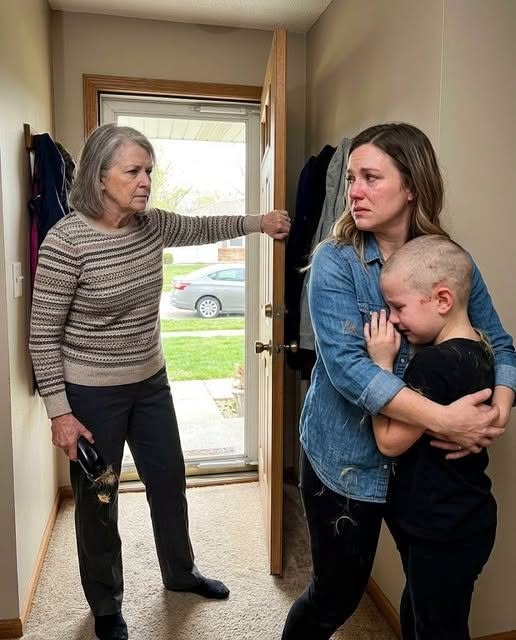
My Mother in Law Shaved My Eight Year Old Daughter Bald and My Husband Called It Discipline, So I Took Her to the Doctor and Filed for Custody
The judge looked directly at my husband.
“Did you give your mother permission to shave your daughter’s head against her will?”
Dustin glanced at Judith before answering.
It was fast.
Barely a second.
But I saw it.
The judge saw it too.
“I told Mom to handle the behavior,” he said carefully. “I didn’t tell her exactly what to do.”
The judge placed the photograph of Meadow’s scalp on top of the file.
“That was not my question.”
Dustin shifted beside his mother.
His hand was still resting on Judith’s shoulder.
I could not stop looking at it.
Five feet away, our eight year old daughter sat wearing a pink winter hat in May, clutching a purple stuffed elephant against her stomach because she was too frightened to sit in a courtroom without something familiar.
Dustin had walked past her.
Past his daughter.
Past the empty chair beside her.
And chosen to sit next to his mother.
Not even after the judge opened the photographs did he move.
Not when she studied the red scrape above Meadow’s ear.
Not when she read the pediatrician’s report.
Not when our attorney submitted the messages in which Dustin accused me of “destroying the family over hair.”
His hand stayed on Judith’s shoulder.
As though she were the victim.
“I trusted my mother’s judgment,” Dustin finally said.
The judge remained expressionless.
“Did you speak to your daughter before giving your mother authority to discipline her?”
Dustin hesitated.
“I was at work.”
“That is not what I asked.”
“No.”
“Did you know your daughter did not want her hair cut?”
“I knew she’d been acting out.”
My stomach turned.
Acting out.
Meadow’s crime had been brushing her hair in front of a mirror.
The judge looked at the doctor’s report again.
“Do you believe forcibly shaving an eight year old child’s head to punish her for being ‘vain’ is appropriate discipline?”
Dustin’s attorney shifted.
“Your Honor, my client is not saying—”
“I’m asking your client.”
Dustin looked at Judith.
Again.
The judge noticed again.
“I think my mother went too far.”
Judith snapped her head toward him.
For the first time since entering the room, she looked offended.
Dustin immediately added:
“But the intention was discipline.”
There it was.
The sentence that ended whatever small piece of hope I had left.
Not:
My daughter was hurt.
Not:
I should have protected her.
Not:
I cannot believe my mother did this.
The intention was discipline.
Meadow moved beside me.
A tiny movement.
Her knees pulled closer together.
I slipped my hand under the table.
She found it immediately.
Her fingers were cold.
The judge asked:
“Have you spoken to Meadow since the incident?”
“I tried.”
“How?”
“My wife took her away.”
The judge looked at the messages again.
“Your first message to your wife was, ‘Bring my daughter home before you make this worse.’”
Dustin looked down.
“The next said, ‘Mom was trying to help.’”
Silence.
“The third asked whether a doctor had documented anything.”
Dustin’s face tightened.
“I was worried about how this was escalating.”
The judge looked at him.
“Were you worried about your daughter?”
“I am worried about my daughter.”
“Then perhaps you can explain why none of the messages submitted to this court ask whether she was injured.”
His attorney leaned toward him.
Judith suddenly spoke.
“He didn’t ask because there was no injury.”
The judge turned slowly.
“Mrs. Holloway, you were specifically instructed not to interrupt.”
Judith folded her arms.
“I’m only trying to correct the lies.”
The judge’s voice cooled.
“What lie?”
“That I abused her.”
Meadow’s fingernails pressed into my palm.
I looked down.
Her eyes were fixed on Judith.
The judge asked:
“Did you shave Meadow’s head?”
“Yes.”
“Did she consent?”
“She is eight.”
“That does not answer the question.”
“She didn’t need to consent. I’m her grandmother.”
“No.”
Judith blinked.
The judge continued.
“Being a grandparent does not automatically give you authority to alter a child’s body as punishment.”
Judith’s cheeks flushed.
“She was becoming obsessed with her appearance.”
“She is eight.”
“She cried over her hair.”
“Most children would cry if somebody forcibly removed something important to them.”
“She needed humility.”
The judge glanced toward Meadow.
Then back at Judith.
“Did Meadow ask you to stop?”
Judith said nothing.
The room became painfully quiet.
“Mrs. Holloway.”
Judith lifted her chin.
“She was emotional.”
“Did she ask you to stop?”
“Yes.”
Meadow squeezed my hand.
My throat burned.
The judge asked another question.
“Did you continue?”
Judith stared.
“Yes.”
I heard Francine exhale beside our attorney.
The judge turned one page.
“Did Meadow attempt to leave the room?”
Judith’s expression changed.
“I don’t remember.”
The judge looked at the medical notes.
“The child reportedly told the pediatrician she moved away repeatedly and was instructed to sit still.”
“She was being disciplined.”
“Did you physically prevent her from leaving?”
“No.”
Meadow shifted.
For the first time all morning, she spoke.
Barely above a whisper.
“She locked the door.”
Every adult in the room froze.
I turned toward her.
“Sweetheart—”
The judge raised a hand gently.
“Meadow, you do not have to answer questions.”
My daughter’s eyes stayed on the table.
Judith looked furious.
Not ashamed.
Furious.
“She’s confused.”
Meadow flinched.
The judge’s expression finally changed.
Not dramatically.
Just enough.
A tightening around the mouth.
“Mrs. Holloway, do not speak about this child as though she is not sitting directly in front of you.”
Judith leaned back.
The judge turned to Meadow.
“You do not have to say anything else today. Do you understand?”
Meadow nodded.
“Would you like to leave the room with someone you trust while the adults finish?”
Meadow’s hand tightened around mine.
“No.”
The judge softened.
“All right.”
Then she closed the file.
“The court is issuing an immediate temporary order.”
Dustin sat straighter.
Judith looked almost relieved.
I stopped breathing.
The judge continued.
“Pending further investigation, temporary sole physical custody of Meadow will remain with her mother.”
My knees nearly weakened.
Dustin whispered something to his attorney.
“The father will have supervised visitation at an approved facility.”
Judith’s face changed.
Dustin looked stunned.
“Supervised?”
The judge kept speaking.
“No visitation will occur in the presence of Judith Holloway.”
Judith stood.
“What?”
“Sit down.”
“You cannot keep me from my granddaughter over a haircut.”
The judge looked directly at her.
“This order prohibits you from having direct or indirect contact with Meadow until further review.”
Judith stared as though she had been slapped.
“You’re giving me a restraining order?”
“I am issuing a temporary no contact provision related to the child.”
“This is insane.”
“Sit down.”
Judith did not.
A court officer stepped forward.
She sat.
The judge continued.
“Mr. Holloway may not bring Meadow to his mother’s residence, permit telephone or video communication between Meadow and Mrs. Holloway, relay messages, photographs, or information concerning the child’s location, school schedule, medical appointments, counseling sessions, or daily routine.”
Dustin stared.
“This is my mother.”
“Yes.”
“She’s Meadow’s grandmother.”
“Yes.”
“She’s not dangerous.”
The judge slowly lifted the photograph showing the scrape near Meadow’s ear.
“Mr. Holloway, the court is looking at evidence that your mother forcibly shaved a frightened eight year old child after the child asked her to stop.”
Dustin’s mouth closed.
The judge placed the photograph down.
“There will also be a child welfare assessment.”
My stomach tightened.
I knew that was coming.
It still frightened me.
“Meadow will be referred for trauma informed counseling.”
Good.
“Both parents will cooperate fully.”
Good.
“Mr. Holloway, your visitation supervisor will provide reports regarding your interactions with your daughter.”
Dustin’s face hardened.
“I have never hurt Meadow.”
The judge looked at him for several seconds.
“Protection is not limited to refraining from personally inflicting injury.”
That sentence changed the room.
Even Judith became quiet.
The judge continued.
“A parent also has an obligation to protect a child from foreseeable harm by others.”
Dustin looked down.
“And one final condition.”
Both he and Judith looked up.
The judge’s voice remained calm.
“Mr. Holloway, before any request for unsupervised visitation will be considered, you will complete a parenting assessment and demonstrate that you understand your child’s bodily autonomy, appropriate discipline, and the necessity of maintaining boundaries between your role as Meadow’s father and your relationship with your mother.”
Judith’s mouth fell open.
Dustin stared.
The judge was not finished.
“You will also be required to acknowledge the no contact provision regarding Mrs. Holloway in writing.”
Dustin shook his head.
“So I have to choose between my mother and my daughter?”
My breath stopped.
The judge leaned back.
“No, Mr. Holloway.”
She looked directly at him.
“Your daughter should never have been placed in a position where protecting her felt like a choice.”
Silence.
Absolute silence.
Judith’s face burned red.
Dustin looked toward Meadow.
Finally.
Really looked.
She immediately lowered her eyes.
That tiny movement hurt more than anything said in court.
Because Meadow had always adored him.
Before Tuesday, she ran when she heard his truck.
She climbed onto his lap during movies.
She made him drawings and hid them inside his work bag.
She believed her father could fix anything.
Now she could barely look at him.
And Dustin noticed.
His face changed.
Not enough.
But something cracked.
The judge adjourned the hearing.
The court officer opened the door.
People began standing.
I did not move immediately.
Meadow remained beside me.
Her hand still inside mine.
“Mom?”
“Yes?”
“Are we going home?”
I swallowed.
Not our house.
Not yet.
Francine had helped us move into a small furnished apartment across town.
Two bedrooms.
One bathroom.
A kitchen barely large enough for the two of us to stand in at the same time.
Nothing like the house I had shared with Dustin.
But Judith did not have a key.
That made it home.
“Yes.”
Meadow nodded.
Then:
“Is Grandma coming?”
“No.”
Her shoulders relaxed.
The change was immediate.
So small nobody else might have noticed.
I did.
Dustin stood several feet away.
He heard.
His face tightened.
Judith stormed out first.
She passed close enough to hiss:
“You are destroying this family.”
Francine stepped between us.
“Keep walking.”
Judith looked at her.
“This is none of your business.”
Francine smiled.
“It became my business when my niece stopped speaking.”
Judith left.
Dustin remained.
His attorney spoke quietly to him.
Then Dustin walked toward us.
Meadow pressed against my side.
He stopped.
That hurt him.
I could see it.
“Meadow.”
She did not answer.
He crouched several feet away.
“Sweetheart.”
Nothing.
“I’m sorry you got scared.”
Every muscle in my body tightened.
Got scared.
Not hurt.
Not violated.
Got scared.
Meadow’s eyes remained on her elephant.
Dustin continued.
“Grandma shouldn’t have taken it that far.”
I almost interrupted.
Francine touched my arm.
Let him speak.
Sometimes people reveal themselves best when nobody rescues them from their own sentences.
“Grandma was trying to teach you something.”
There it was.
Meadow finally looked at him.
“What?”
Dustin froze.
Her voice was tiny.
“What was she teaching me?”
He looked toward me.
I did not help him.
“Meadow…”
She touched her hat.
“What did I do?”
His mouth opened.
Closed.
She asked again.
“What did I do that was bad?”
Nothing.
His face went pale.
Meadow’s eyes filled.
“I just brushed my hair.”
Dustin looked destroyed.
For the first time since Tuesday, I saw the reality reach him without Judith translating it.
An eight year old child.
A mirror.
A hairbrush.
A grandmother who decided confidence required punishment.
A father who said:
Mom knows best.
Meadow stood.
“I want to go.”
Dustin reached toward her.
She stepped behind me.
He stopped.
I did not say anything.
We left.
The parking garage smelled like rain and concrete.
Meadow climbed into the back seat.
I buckled her.
She still wanted me to do it.
Before Tuesday, she would have complained that she was not a baby.
Trauma changes independence.
Not permanently, I hoped.
But enough that I learned to ask instead of assume.
“Want me beside you?”
She nodded.
Francine drove.
I sat in the back with Meadow.
Halfway home, she fell asleep against me.
The purple elephant rested between us.
Her pink hat had shifted slightly.
A small section of uneven stubble showed near her neck.
I pulled a blanket over her.
Then I cried silently.
Not because we had won.
We had not.
A temporary order is not a victory.
It is an emergency pause.
A legal breath.
The hard part was beginning.
The child welfare investigator came the following Monday.
Her name was Marisol Vega.
She had a soft voice and a notebook she barely used in front of Meadow.
She did not arrive wearing anything that looked official.
That helped.
Meadow sat on the living room floor building a house out of wooden blocks.
Marisol sat several feet away.
“Can your elephant have a house?”
Meadow looked at her.
Then built one.
They talked about school.
Favorite colors.
Dogs.
Cartoons.
Nothing about Judith.
I waited.
Marisol did too.
Eventually Meadow said:
“Grandma doesn’t like my hair.”
Marisol nodded.
“What makes you think that?”
“She says pretty girls become bad girls.”
My stomach twisted.
Marisol did not react visibly.
“What does ‘bad girl’ mean?”
Meadow shrugged.
“She says girls who want people to look at them get in trouble.”
I closed my eyes briefly.
Judith had always been strange about appearance.
When Meadow wore sparkly shoes, Judith called them “attention seeking.”
When she asked for lip gloss because another girl at school had some, Judith lectured her for twenty minutes.
I thought it was generational.
Old fashioned.
Annoying.
I had not understood the depth of it.
Marisol asked:
“Tell me about Tuesday.”
Meadow’s hands stopped.
The wooden block remained in midair.
I almost intervened.
Marisol waited.
Meadow whispered:
“Grandma said I was bad.”
“What happened next?”
“She made me sit.”
“Where?”
“In the chair.”
“The chair in the hallway?”
Meadow nodded.
“Did you know she was going to cut your hair?”
“No.”
“When did you know?”
“When she plugged the thing in.”
My heart broke again.
“She called Daddy.”
Marisol’s voice stayed gentle.
“Before or after?”
“Before.”
“Did you speak to him?”
“Yes.”
“What did he say?”
Meadow looked toward me.
I smiled as calmly as I could.
“You’re safe.”
She hugged her elephant.
“I said Grandma was mad.”
“What did Daddy say?”
“He said stop giving Grandma trouble.”
My throat tightened.
“Anything else?”
Meadow whispered:
“He said she knows best.”
The words landed differently hearing them again.
Not because I doubted her.
Because each repetition made the betrayal more concrete.
Marisol asked:
“What happened when Grandma turned the clippers on?”
Meadow put both hands over her ears.
I moved toward her.
Marisol immediately stopped.
“We can be done.”
Meadow began crying.
I held her.
Her whole body shook.
Marisol closed her notebook.
“That is enough for today.”
After Meadow went to the bedroom with Francine, Marisol sat across from me.
Her expression had changed.
“Has Judith ever used physical punishment before?”
“Not that I know.”
“Humiliation?”
I thought.
“Yes.”
“Examples?”
I hated how many came to mind.
Judith once made Meadow stand facing a wall during Thanksgiving because she interrupted an adult.
Once threw away a drawing because Meadow used purple grass and Judith said she was “showing off.”
Once made her change out of a dress because the skirt had glitter.
“Girls don’t need to advertise themselves.”
I had rolled my eyes afterward.
I had told Meadow Grandma was old fashioned.
Had I normalized it?
The guilt hit hard.
Marisol must have seen my face.
“You can’t answer questions I haven’t asked.”
I looked at her.
“What?”
“You’re blaming yourself.”
I said nothing.
She continued.
“Right now, focus on what you can document and what your daughter needs.”
I nodded.
“Will she have to speak in court?”
“Possibly not directly. There are ways to minimize that.”
Relief.
“What about Dustin?”
“That depends on the investigation and the court.”
“He approved it.”
“Yes.”
“But he says he did not know she would shave her head.”
“That distinction may matter legally.”
“And morally?”
Marisol closed her folder.
“That is for him to answer.”
I hated that answer.
Because she was right.
Dustin’s first supervised visit happened Wednesday.
At a family visitation center.
Bright walls.
Toys.
Cameras.
A social worker in the room.
Meadow did not want to go.
The order required it.
I spent an hour beforehand telling her:
“You can ask for a break.”
“You can tell the supervisor if you’re uncomfortable.”
“You do not have to hug anyone.”
“You can keep your hat on.”
She held the purple elephant.
“Will Grandma be there?”
“No.”
“You promise?”
“Yes.”
“What if Daddy brings her?”
“He cannot.”
“What if she waits outside?”
I swallowed.
“Then the adults handle it.”
Meadow looked at me.
“You won’t leave?”
“I’ll be nearby.”
That was enough to get her through the door.
I sat in another room while the visit happened.
The longest ninety minutes of my life.
Afterward, the supervisor spoke with me.
“Dustin was appropriate.”
I nodded.
“Did Meadow speak?”
“Some.”
“Was she afraid?”
“At first.”
My stomach tightened.
“He apologized.”
That surprised me.
“For what?”
“He told her he should have listened when she said Judith was angry.”
Not enough.
But more than before.
“He also told her she never has to change her body because an adult is angry.”
That stopped me.
“Really?”
“Yes.”
Something in my chest loosened.
Tiny.
The supervisor continued.
“But he also attempted several times to explain Judith’s intentions.”
Of course.
“What did he say?”
“That Judith was raised differently. That she believed discipline should be memorable.”
I closed my eyes.
“So he still doesn’t understand.”
“I would say he is conflicted.”
“Between his mother and his daughter.”
The supervisor looked at me carefully.
“Between the family system he grew up in and the responsibility he has now.”
That was more precise.
It did not make me less angry.
Dustin called after the visit through the court approved messaging app.
I did not have to answer calls.
Everything stayed written.
His first message:
I’m starting to see why Meadow is upset.
I stared at the words.
Starting.
I typed:
She is not upset. She is traumatized.
His reply came five minutes later.
I know you’re angry, but don’t make this worse by using dramatic language.
I laughed.
Actually laughed.
Then saved the message.
My attorney later told me:
“Keep doing exactly that.”
“Saving them?”
“Letting him document himself.”
I hated how right she was.
Judith violated the no contact order six days later.
Not directly.
She sent Meadow a package.
Pink box.
No return address.
Inside:
A long blonde wig.
And a card.
Hair grows back. Grandma still loves you.
I stared at it.
My hands went numb.
Meadow never saw it.
Thank God.
I photographed everything.
Called Francine.
Called the attorney.
Then the police nonemergency number.
Dustin claimed he knew nothing.
I believed him.
At least initially.
Judith, however, left a voicemail after being contacted.
“You are poisoning that child against me.”
I saved it.
“You are teaching her that every uncomfortable experience is trauma.”
Saved.
“She needed to learn not to worship her appearance.”
Saved.
“Someday she will thank me.”
Saved.
That package changed the case.
The judge extended the no contact provision.
Judith was specifically ordered not to send gifts, messages, cards, photographs, emails, or communication through third parties.
She reacted exactly as expected.
She blamed me.
Then my mother called.
Not Judith.
My mother.
“You cannot keep Meadow away from her grandmother forever.”
I closed my eyes.
Here we go.
“Mom.”
“I’m not defending what Judith did.”
“That sentence is usually followed by defending what Judith did.”
“She made a terrible mistake.”
“No.”
“What?”
“A mistake is cutting hair too short.”
Silence.
“She plugged in clippers, ignored Meadow begging, continued while she cried, scraped her skin, and blocked the door when I tried to leave.”
My mother sighed.
“She comes from a different generation.”
“So do you.”
“That’s not fair.”
“What isn’t fair is asking an eight year old to absorb an adult’s cruelty because the adult is older.”
Mom became quiet.
Then:
“Dustin is her father.”
“Yes.”
“He deserves a chance.”
“I’m not preventing supervised visitation.”
“You filed for custody.”
“Yes.”
“Are you really going to end your marriage?”
I looked toward Meadow’s bedroom.
She was asleep.
Pink hat on the pillow beside her now instead of on her head.
That was progress.
“Yes.”
My mother whispered:
“Over hair?”
I closed my eyes.
I could have screamed.
Instead I said:
“No.”
Then slowly:
“I am ending my marriage because my husband authorized his mother to punish our daughter’s body, defended her after seeing what she did, and cared more about family embarrassment than Meadow’s pain.”
Mom said nothing.
“This is not about hair.”
“I understand.”
“No.”
I softened.
“You’re trying to.”
That conversation changed something in my own family too.
Mom stopped pushing.
Later, she brought Meadow three headbands.
Not wigs.
Not hats.
Headbands.
She laid them on the table and said:
“You can wear them or not.”
Meadow chose the purple one.
Choice.
Such a small word.
It became the center of everything.
Meadow’s therapist was named Dr. Lena Ortiz.
The first session, Meadow refused to remove her hat.
The second, same.
Third session, she took it off for three minutes.
Dr. Ortiz never praised her for removing it.
That mattered.
She simply continued talking.
One evening Meadow asked:
“Do I have to grow my hair back?”
I stared.
“What do you mean?”
“What if I like it short?”
My chest tightened.
“I thought you missed your hair.”
“I do.”
She touched the stubble.
“But if I grow it because Grandma took it, then she still decides.”
Eight years old.
That sentence destroyed me.
I crouched.
“You can grow it.”
“You can keep it short.”
“You can shave it someday if you choose.”
Her eyes widened.
“Really?”
“Yes.”
“Even bald?”
I smiled.
“If you want.”
She thought.
“Maybe not bald.”
“Fair.”
She touched her scalp again.
“I want a pixie cut.”
That weekend, we went to a salon recommended by her therapist.
The stylist had experience working with children after medical hair loss and traumatic cuts.
She did not touch Meadow until Meadow said yes.
She showed her each tool.
Asked before trimming.
Stopped whenever Meadow raised one finger.
When she finished, the remaining uneven patches became a soft, deliberate pixie cut.
Meadow stared at herself in the mirror.
My heart stopped.
I watched carefully.
She touched the side.
Then smiled.
Small.
But real.
“Mom.”
“Yes?”
“I look like me.”
I cried in the salon.
No dignity whatsoever.
The stylist handed me tissues.
Meadow laughed.
That was the first time I had heard her laugh since Tuesday.
I paid.
Tipped too much.
Did not regret it.
Dustin saw the haircut during his next supervised visit.
According to the report, he cried.
He told Meadow she looked beautiful.
She answered:
“I looked beautiful before.”
God, I loved that child.
Dustin reportedly said:
“You’re right.”
That mattered too.
He started parenting classes.
Initially because the court required them.
Then, unexpectedly, because he began learning things.
His messages changed.
Less defensive.
More direct.
I failed her.
The first time he wrote that, I stared for ten minutes.
Not Mom went too far.
Not you overreacted.
I failed her.
I did not answer immediately.
Finally:
Yes.
His reply:
I know.
Normally those words infuriated me.
This time they felt different.
He was not using them to end a conversation.
He was accepting it.
Weeks passed.
The temporary custody arrangement remained.
Dustin continued supervised visits.
Judith fought the no contact order through an attorney.
She claimed I had manipulated Meadow.
The court appointed a guardian ad litem.
Another stranger.
Another interview.
Another folder.
I hated every step.
Protection often requires making children repeat what you wish they could forget.
The guardian was careful.
She reviewed the pediatric report.
Therapy notes.
Visitation reports.
Messages.
Judith’s package.
Dustin’s texts.
Then she interviewed Meadow privately.
Afterward she met with me.
“What do you want?”
The question surprised me.
“Safety.”
“Legally.”
“Primary custody.”
“What about her father?”
I thought.
“I want him in her life if he can be safe.”
She watched me.
“You’re not seeking termination.”
“No.”
“Why?”
“Because Meadow loves him.”
“Do you?”
I almost laughed.
“That should not matter.”
“It does if reconciliation affects the stability of the case.”
I looked down.
“I don’t know what I feel.”
That was true.
Some days I hated Dustin.
Other days I remembered the man who stayed awake building a dollhouse on Christmas Eve.
The father who carried Meadow on his shoulders at the zoo.
The husband who held my hand during her birth.
How could that man also tell Judith:
Do whatever you think is best?
Family systems.
Fear.
Conditioning.
Words therapists use to make contradictions understandable.
None of them erase harm.
But they help explain how love and failure can occupy the same body.
“I’m filing for divorce,” I said.
The guardian nodded.
“That is clearer.”
I had filed the week before.
Dustin received the papers after a supervised visit.
He messaged me that night.
I expected anger.
Instead:
I understand.
That almost hurt more.
Then:
I don’t want to lose Meadow.
I answered:
Then stop protecting the person who hurt her.
No response for two hours.
Finally:
I told Mom I won’t speak to her while the order is active.
I stared.
Judith had controlled Dustin his entire life.
His father died when he was fourteen.
After that, Judith made Dustin her emotional partner.
Not romantically.
But in every other way.
He handled bills.
Fixed the house.
Listened to her grievances.
Was told he was “the man of the family.”
By twenty, he could not make a major decision without asking her opinion.
When we married, I thought love would change that.
For a while it seemed to.
Then Meadow was born.
Judith became constant.
Advice.
Criticism.
Rules.
Dustin always said:
“She means well.”
I had spent nine years competing with that sentence.
Now he had finally told her no.
Judith reacted spectacularly.
She came to the visitation center.
Not during Meadow’s appointment.
Thank God.
She confronted Dustin in the parking lot after he left.
Security called police.
I learned from the incident report that she screamed:
“You are choosing that woman over your own mother.”
Dustin answered:
“I’m choosing my daughter.”
I read the line three times.
Then cried.
Not because I wanted him back.
Because Meadow deserved to have a father capable of saying it.
Judith slapped him.
That detail shocked me.
Dustin did not retaliate.
He stepped away.
She slapped him again.
Security intervened.
Later he messaged:
I understand now why Meadow froze.
I did not know what to say.
He followed:
When Mom gets angry, your body learns to wait for it to end.
That was the first time Dustin acknowledged his childhood.
He began individual therapy.
Voluntarily.
The court had ordered parenting education.
Not therapy.
He chose therapy.
Our divorce mediation happened four months after the shaving incident.
Meadow’s hair had grown nearly two inches.
She no longer wore hats every day.
The purple elephant stayed home sometimes.
Her appetite returned.
She laughed more.
Still hated electric buzzing sounds.
Still froze when someone touched her head unexpectedly.
Still drew occasionally.
But now the drawings changed.
The little bald girl gained hair.
Sometimes short.
Sometimes long.
The huge woman became smaller.
Then disappeared.
One drawing showed three people.
Me.
Meadow.
Dustin.
Judith was not in it.
Dr. Ortiz told me not to overinterpret.
I didn’t.
I simply saved it.
Mediation was brutal.
Not because Dustin fought.
Because Judith’s shadow sat in every conversation.
The house.
School.
Holidays.
Medical decisions.
Grandparent contact.
Dustin agreed to primary physical custody with me.
That surprised his lawyer.
Maybe even mine.
He requested expanding visitation if supervisors and Meadow’s therapist agreed.
Reasonable.
He agreed Judith would have no contact unless a future court order and Meadow’s clinical team supported it.
That was enormous.
Then we reached holidays.
Dustin stared at the table.
“My mother has always hosted Christmas.”
Our mediator waited.
I waited.
Dustin laughed bitterly.
“I hear how stupid that sounds.”
Nobody answered.
He rubbed his face.
“I don’t know what my family looks like without her.”
I felt something soften.
Not enough to reunite.
Enough to see him.
“You build one.”
He looked at me.
“That easy?”
“No.”
“Then why say it like that?”
“Because simple and easy are different.”
He smiled faintly.
We signed an interim agreement.
The divorce was not final yet.
Custody remained subject to court approval.
But for the first time since Tuesday, I felt the shape of a future.
Then Judith filed for grandparent visitation.
Of course she did.
Her petition described herself as “a central maternal figure.”
Claimed I was alienating Meadow.
Called the haircut “a regrettable misunderstanding.”
She said Meadow had always loved spending time with her.
That part was true.
Which made the rest harder.
Children can love people who hurt them.
Adults too.
Love does not prove safety.
At the hearing, Judith’s attorney argued the child had enjoyed a substantial relationship with her grandmother.
Our attorney presented the no contact violation.
The wig.
The voicemail.
The medical report.
The therapist’s summary.
Dustin testified.
That changed everything.
He sat alone.
Not beside Judith.
She stared at him from across the room.
His attorney asked:
“Did you authorize your mother to discipline Meadow on May ninth?”
“Yes.”
My stomach tightened.
“Did you specifically authorize shaving her head?”
“No.”
“Did you know she might use corporal or humiliating punishment?”
Dustin closed his eyes.
“I should have.”
Judith’s face hardened.
“Why?”
“Because she did things like that to me.”
The room went still.
My breath caught.
Dustin continued.
“She cut my hair as punishment when I was thirteen.”
Judith whispered:
“Dustin.”
The judge raised a hand.
He continued.
“She threw away clothes she thought made me look arrogant.”
I stared.
He had never told me.
“She locked me in my room when I argued.”
Judith’s attorney objected.
The judge allowed limited testimony regarding Dustin’s knowledge of Judith’s disciplinary history.
Dustin swallowed.
“When I told her to handle Meadow, part of me knew she might do something extreme.”
Judith stood.
“You liar.”
Court security moved.
The judge ordered her seated.
Dustin looked at his mother.
For the first time, not like a son asking permission.
Like a father telling the truth.
“I knew.”
His voice cracked.
“And I still gave you permission.”
Judith began crying.
“You begged me for help.”
“No.”
He shook his head.
“I used you because I didn’t want to parent.”
That sentence landed harder than any accusation I could have made.
“I didn’t want Meadow mad at me.”
He looked toward me.
“So I let Mom be the bad guy.”
My eyes filled.
“I told myself she was stricter.”
He looked at the judge.
“But I knew what strict looked like in that house.”
The judge asked:
“Why are you testifying against your mother now?”
Dustin looked toward Meadow’s empty seat.
She was not required to attend.
“Because my daughter asked me what she did wrong.”
His voice broke.
“And I didn’t have an answer.”
Judith’s petition was denied.
The no contact order continued.
Outside court, Judith waited for Dustin.
I saw her from a distance.
She called his name.
He stopped.
She walked toward him.
“You humiliated me.”
Dustin said nothing.
“You told strangers things that belong in a family.”
Still nothing.
“I sacrificed everything for you.”
Dustin finally answered:
“And now you want Meadow to pay you back for it.”
Judith looked stunned.
I walked away before hearing more.
That conversation belonged to them.
The custody evaluation concluded six months after the incident.
Recommendation:
Primary physical custody with me.
Joint legal custody initially limited by specific decision making provisions.
Dustin’s visitation expanded from supervised center visits to daytime unsupervised visits, contingent on no contact with Judith.
No overnight visits until Meadow’s therapist agreed.
Continued parenting education.
Continued therapy.
No corporal punishment.
No forced alteration of appearance.
No contact with Judith.
The phrase “no forced alteration of appearance” looked almost absurd in a legal document.
Then I remembered hair around Meadow’s bare feet.
Nothing about it was absurd.
The judge adopted most of the recommendations.
She looked at Dustin.
“You have made progress.”
He nodded.
“Do not confuse progress with completion.”
“I won’t.”
She looked at me.
“Mrs. Holloway, continue supporting Meadow’s relationship with her father to the extent it remains safe.”
I nodded.
Then she looked at both of us.
“Your daughter is not the battlefield on which you resolve your marriage.”
That sentence became a rule.
The divorce finalized three months later.
I returned to my maiden name.
Not because I hated Dustin’s.
Because I needed something that was mine.
Meadow kept Holloway.
Her choice.
I asked once:
“Do you want to change it?”
“No.”
“Okay.”
She looked worried.
“Does that make you sad?”
“No.”
“It’s Daddy’s name.”
“It’s your name too.”
She smiled.
That mattered.
Dustin moved into a townhouse fifteen minutes away.
The first time Meadow visited for a full Saturday, I thought I would vomit from anxiety.
Not because I believed he would hurt her.
Because trauma teaches vigilance.
I checked my phone constantly.
At 10:12, he sent a photo.
Meadow making pancakes.
At 11:30:
We are going to the science museum. She chose.
The word chose was deliberate.
At 2:15:
She wants ice cream even though she barely ate lunch. I said yes. Don’t tell my mother.
I laughed despite myself.
Then cried.
At 6:00, Meadow came home carrying a paper dinosaur.
“How was it?”
“Good.”
“Did Daddy brush your hair?”
She frowned.
“Mom.”
“Sorry.”
“He asked.”
Good.
“Did you say yes?”
“No.”
“And?”
“He said okay.”
I closed my eyes.
Good.
Progress can sound like nothing to people who have never lost safety.
He asked.
She said no.
He stopped.
That was everything.
Meadow’s hair grew.
Slowly.
At first she kept it pixie short.
Then chin length.
Then, around her ninth birthday, she said:
“I want braids again.”
We went to the salon.
Same stylist.
Meadow sat in the chair without trembling.
Not completely calm.
But brave.
The stylist held up two ribbons.
“Purple or blue?”
Meadow chose purple.
When the braids were finished, she looked in the mirror.
Touched them.
Then smiled.
“Grandma said pretty makes girls bad.”
The stylist froze.
I held my breath.
Meadow looked at herself.
“She was wrong.”
“Yes.”
The stylist whispered:
“She was very wrong.”
Meadow smiled wider.
We took a picture.
I did not send it to Judith.
Dustin asked for one.
I sent it.
He replied:
Beautiful. Tell her I said I love the braids only if she loves them too.
I showed Meadow.
She smiled.
That evening she asked:
“Do you still love Daddy?”
Children wait until you are emotionally unprepared.
We were folding laundry.
I sat.
“Yes.”
Her eyebrows rose.
“But you divorced him.”
“Yes.”
“Why?”
“Because loving someone doesn’t always mean living with them is safe or healthy.”
She thought.
“Do you love Grandma?”
I swallowed.
“I care about what happens to her.”
“That’s not what I asked.”
Eight year olds are brutal attorneys.
“I loved her once.”
“Do you now?”
“I don’t know.”
She nodded as though that answer made sense.
“Daddy loves her.”
“Yes.”
“Does he love me more?”
The question hurt.
I chose words carefully.
“Love isn’t a scoreboard.”
She frowned.
“But he picked her in court.”
I stopped breathing.
She remembered.
Of course she remembered.
“He sat next to her.”
“Yes.”
“Why?”
“I think your dad was still learning something.”
“What?”
“That protecting someone doesn’t always mean standing beside them.”
Meadow looked at me.
“Did he learn?”
“I think he’s learning.”
She folded a shirt.
Badly.
“Okay.”
That was enough.
Judith attempted contact again around Meadow’s ninth birthday.
This time through a cousin.
A birthday card.
No wig.
No lecture.
Just:
I miss you. I’m sorry.
The cousin contacted me before delivering it.
I told her not to.
Then I told Dustin.
He did not defend Judith.
He called his attorney.
Documented it.
That mattered.
Later he admitted:
“I wanted Meadow to read it.”
“Why?”
“Because I want this fixed.”
“Dustin.”
“I know.”
He corrected himself.
“I understand.”
He sighed.
“I keep wanting an apology to be a shortcut.”
“There aren’t shortcuts.”
“Apparently not.”
The court eventually allowed Judith to send one therapeutic letter, screened by Meadow’s therapist.
Dr. Ortiz read it.
Then told us:
“I don’t recommend sharing it.”
“Why?”
Dustin asked.
“Too much justification.”
He closed his eyes.
“What did she say?”
“That she regrets Meadow was frightened.”
Not:
I am sorry I frightened Meadow.
“That she believed she was trying to prevent vanity.”
Dustin looked sick.
“And that she hopes one day Meadow understands.”
He shook his head.
“Don’t give it to her.”
I looked at him.
He did not hesitate.
That may have been the day I finally trusted his progress.
Not enough to remarry him.
Not enough to erase the divorce.
Enough to co parent.
There is a difference.
A year after the shaving, Meadow’s hair reached her shoulders.
We did not celebrate the anniversary.
I refused to make trauma into a holiday.
But I noticed.
Tuesday passed.
Nothing happened.
That itself felt like healing.
At bedtime Meadow brushed her hair.
Slowly.
Then looked at herself in the mirror.
For a second, my chest tightened.
She caught my reflection.
“What?”
“Nothing.”
She smiled.
“You’re doing the weird mom stare.”
“What stare?”
“The one where you look like you’re about to cry.”
“I do not have a stare.”
“You do.”
I laughed.
She kept brushing.
No fear.
No shame.
Just a girl looking in a mirror.
The most ordinary thing in the world.
I walked out before I cried.
Dustin’s overnights resumed later that year.
First one night.
Then occasional weekends.
The first overnight, Meadow packed the purple elephant.
She had not slept with it regularly in months.
I noticed.
Said nothing.
Dustin sent a message after bedtime:
She asked me to leave the hall light on.
I replied:
Please do.
He wrote:
Already did.
The next morning Meadow came home happy.
“Daddy burned waffles.”
“That sounds right.”
“He says your pancakes are better.”
“Correct.”
“He also said I could call you whenever I wanted.”
Good.
Then:
“He doesn’t talk to Grandma.”
I looked at her.
“How do you feel about that?”
She shrugged.
“I feel bad for him.”
That answer showed more empathy than most adults in the case.
“Do you miss her?”
Sometimes.”
My heart tightened.
“You’re allowed to.”
“Even though she hurt me?”
“Yes.”
She looked surprised.
“Missing someone doesn’t mean what they did was okay.”
She thought.
“Can I hate her and miss her?”
“Yes.”
“Can I love her and not see her?”
“Yes.”
She hugged me.
“Feelings are annoying.”
“Extremely.”
Years passed.
Not dramatically.
That is the part nobody tells you about family crises.
Eventually, ordinary life returns and asks you to participate.
School projects.
Dentist appointments.
Lost shoes.
Math homework.
Birthday cakes.
Dustin dated someone briefly.
I dated nobody for two years.
Then someone.
Slowly.
Meadow grew.
The purple elephant moved from her bed to a shelf.
Then into a storage box.
I asked before touching it.
Always.
Permission became natural.
“Can I braid your hair?”
“Yes.
“Can I trim the ends?”
“No.”
“Okay.”
“Can I hug you?”
Usually yes.
Sometimes no.
That was allowed.
Dustin did the same.
One day Meadow told me:
“Dad asks too much now.”
I laughed.
“That’s probably my fault.”
“He asked if he could move my backpack.”
“That might be excessive.”
“But I like it.”
She smiled.
“Because he listens.”
There it was.
That was what safety had become.
Not perfect behavior.
Listening.
Judith disappeared from our daily lives.
I heard about her through relatives.
She told people I had brainwashed Meadow.
Claimed therapists were teaching children to hate authority.
Said Dustin had become weak.
Sometimes relatives repeated these things to me.
Eventually I started answering:
“Please don’t bring me messages from Judith.”
Most stopped.
A few did not.
I stopped inviting them into my life.
Boundaries spread.
That was unexpected.
Once you learn to say no in one dangerous relationship, you begin noticing all the places you have been saying yes out of fear.
My marriage ended.
Some relatives disappeared.
Friendships changed.
I lost a house I loved.
Financial stability got harder.
Single parenting exhausted me.
Francine once asked:
“Do you ever regret filing?”
We were sitting on my kitchen floor assembling a bookshelf.
“Regret?”
“Yes.”
I thought about it.
“I regret that it was necessary.”
“That isn’t what I asked.”
“No.”
I tightened a screw.
“I don’t regret doing it.”
She smiled.
“You remember what I asked you?”
“What are you willing to lose?”
“Yes.”
I looked toward Meadow’s room.
“Everything except my child.”
Francine nodded.
“You did.”
“No.”
“What?”
“I lost a lot.”
I smiled.
“But not everything.”
Meadow laughed from the bedroom.
Exactly.
At eleven, Meadow decided to grow her hair long again.
It reached the middle of her back.
The first time Judith saw a photograph was accidental.
A relative posted one from a school event.
Apparently Judith cried.
Dustin told me.
I asked:
“Why are you telling me?”
He stopped.
Old habits.
“I don’t know.”
“Do you want me to feel guilty?”
“No.”
“Do you?”
He thought.
“Maybe I want someone else to carry it.”
I nodded.
“That’s honest.”
He looked ashamed.
“I’m sorry.”
“We can care that she’s hurting without giving her access to Meadow.”
He looked at me.
“That took me a long time to understand.”
“Yes.”
He smiled sadly.
“You were right.”
“Careful. I’ll frame that.”
“You would.”
Our relationship became almost friendly.
Not friends exactly.
Co parents with history.
Sometimes warmth.
Sometimes anger.
Always boundaries.
He never asked me to reconcile.
I appreciated that.
Once, years later, he said:
“I used to think if I changed enough, you might come back.”
I looked at him.
“What changed?”
“I realized changing so you would come back was still making you responsible for me.”
That was real growth.
“What do you want now?”
“To be Meadow’s father in a way she doesn’t have to recover from.”
My throat tightened.
“That’s a good goal.”
He nodded.
“And maybe someday forgive myself.”
I did not answer that part.
His forgiveness belonged to him.
Mine did too.
When Meadow was twelve, she asked to read the court records.
I said no.
She became furious.
“They’re about me.”
“I know.”
“Then I should get to see them.”
“You will.”
“When?”
“When you’re older.”
“That’s what adults say when they’re hiding stuff.”
The irony nearly killed me.
I sat.
“You’re right to question me.”
She folded her arms.
“But there are medical notes and statements from when you were very young.”
“So?”
“So I want your therapist involved before you read them.”
She thought.
“That sounds reasonable.”
Thank God.
We arranged it.
Dr. Ortiz helped decide which documents were appropriate.
Meadow read the judge’s temporary order.
The pediatric report.
Some of Dustin’s messages.
Not all.
She became quiet.
Then asked:
“Dad really said you were destroying the family over hair?”
“Yes.”
Her face hardened.
“Idiot.”
I almost laughed.
“Meadow.”
“What?”
“You can be angry without calling your father names.”
“Fine.”
Pause.
“He made an idiotic statement.”
“That is technically better.”
She smiled.
Then cried.
I held her.
“Does he know I read this?”
“Not yet.”
“I want to talk to him.”
“Okay.”
They met at his house.
I was not there.
Afterward, Dustin called.
“She asked me why I defended Mom.”
“What did you say?”
“The truth.”
“Which is?”
“I was afraid of my mother.”
I became still.
“Did you tell Meadow that?”
“Yes.”
“What else?”
“That I cared more about keeping Mom calm than keeping Meadow safe.”
That was a brutal sentence.
“Then?”
“She asked if I still love her.”
“Judith?”
“Yes.”
“What did you say?”
“Yes.”
“And Meadow?”
“She said she does too.”
My eyes filled.
Dustin cried quietly.
“She said she hates what Mom did but still remembers making cookies with her.”
I closed my eyes.
Children carry complexity better than adults give them credit for.
“What now?”
“Nothing.”
His voice steadied.
“We let her feel it.”
That was the right answer.
At fourteen, Meadow asked to see Judith.
My stomach dropped.
Dustin went silent when she told him.
“No,” he said immediately.
Meadow looked at me.
I said:
“Why?”
Dustin stared.
“Why?”
I looked at Meadow.
“Why do you want to?”
She shrugged.
“I want to know what she’s like now.”
Dustin shook his head.
“Absolutely not.”
Meadow’s face hardened.
I recognized myself.
“Dustin.”
“No.”
“She is fourteen.”
“She hurt her.”
“Yes.”
“She never took responsibility.”
“Yes.”
“And you’re considering this?”
“No.”
I looked at Meadow.
“I’m considering why she is asking.”
Meadow’s eyes filled.
“I don’t want Grandma back.”
“Okay.”
“I just don’t want to be scared of seeing her someday.”
That changed everything.
Dr. Ortiz supported a highly structured therapeutic meeting.
No physical contact unless Meadow requested it.
One hour.
Therapist present.
Dustin and I nearby but not inside unless Meadow wanted us.
Judith agreed.
For the first time in years.
The day came.
Meadow wore her hair in a ponytail.
Long.
Golden.
Not because of Judith.
Because she wanted it.
Before entering, she looked at me.
“Do I look okay?”
I smiled.
“Do you feel okay?”
She rolled her eyes.
“That was such a therapist answer.”
“Occupational hazard.”
“I’m going.”
“You can leave whenever you want.”
“I know.”
She entered.
The meeting lasted twenty seven minutes.
Not an hour.
When Meadow came out, she was crying.
I stood.
She hugged me.
Hard.
“Home.”
We left.
I did not ask questions in the car.
She told me later.
Judith had apologized.
Sort of.
“I’m sorry you were hurt.”
Meadow asked:
“Are you sorry you shaved my head?”
Judith said:
“I’m sorry it became such a terrible memory.”
Meadow asked again.
“Are you sorry you did it?”
Judith started explaining.
Girls.
Vanity.
Discipline.
Her generation.
Family values.
Meadow stood.
“I wanted to see if you changed.”
Judith cried.
“I love you.”
Meadow answered:
“I believe you.”
Then:
“But I don’t want you in my life.”
And left.
When Meadow told me, I cried.
Not because I was happy.
Because I knew how much strength it took to accept that somebody may love you and still be unsafe.
She had learned at fourteen what Dustin learned at forty.
What I had learned in court.
Love does not erase boundaries.
Judith did not contact her again.
Not directly.
Maybe the meeting finally taught her something.
Maybe the therapist warned her.
Maybe age changed her.
I do not know.
That was no longer my responsibility.
At sixteen, Meadow cut her hair short.
Completely her idea.
She came home from school one day with pictures saved on her phone.
“Mom.”
“No.”
“You don’t even know.”
“You said Mom in the haircut voice.”
“What is the haircut voice?”
“The one that costs me money.”
She laughed.
“I want this.”
A sharp bob.
Above the shoulders.
My stomach reacted before my brain.
I saw the guest room.
Hair on carpet.
Clippers.
Red skin.
Then Meadow looked at me.
She noticed.
“Mom.”
“I’m okay.”
“You don’t have to say yes.”
That broke my heart in a different way.
“This is your hair.”
“I know.”
“If you want it cut, we cut it.”
“You’re sure?”
“Yes.”
At the salon, the stylist asked:
“How short?”
Meadow smiled at me.
Then answered for herself.
“Here.”
She pointed.
The scissors cut through the first section.
My hands shook under the cape beside her.
Meadow caught my reflection in the mirror.
“Mom.”
“Yeah?”
“It grows back.”
My entire body froze.
Those words.
Judith’s words.
Hair grows back.
Meadow smiled gently.
Then said:
“But this time I asked.”
I cried.
Of course I did.
She laughed.
The stylist cried too.
We were ridiculous.
When the cut was finished, Meadow looked incredible.
More importantly, she looked like herself.
She shook her head.
The bob moved.
She smiled.
“I love it.”
That was the difference.
Not hair.
Choice.
Always choice.
Years later, when Meadow graduated high school, Dustin and I sat in the same row.
No Judith.
She was still alive.
We knew.
Meadow had chosen not to invite her.
The decision belonged to her.
When Meadow’s name was called, she walked across the stage with shoulder length hair dyed slightly darker at the ends.
I had not approved of the dye initially.
Then caught myself.
Her hair.
Her choice.
She received her diploma.
Dustin cried openly.
I did too.
Afterward Meadow hugged him.
Then me.
“Picture.”
We stood together.
A strange family.
Divorced parents.
Daughter between us.
History nobody in the photograph could see.
Dustin whispered:
“Look at her.”
“I am.”
“She’s incredible.”
“Yes.”
He looked at me.
“You protected her.”
I shook my head.
“We both protect her now.”
His eyes filled.
“Eventually.”
I nodded.
“Eventually.”
That mattered.
I never rewrote Dustin into a monster.
He failed her terribly.
He also changed.
Both were true.
I never rewrote Judith into a cartoon villain.
She had made cookies with Meadow.
Read her bedtime stories.
Bought birthday presents.
Loved her.
Then violated her.
Love does not make harm impossible.
Sometimes it makes harm harder to recognize.
That was part of what kept Dustin trapped.
He believed loving his mother required protecting her from consequences.
He learned too late that real love does not require lying about what someone did.
My own lesson was different.
I thought protecting Meadow meant acting immediately.
Leaving.
Doctor.
Documentation.
Court.
Custody.
Those things mattered.
But protection also meant the years after.
Not turning Judith into the center of Meadow’s identity.
Not asking Meadow to stay angry for my comfort.
Not using Dustin’s failure to recruit her into my side of the divorce.
Not treating every haircut as trauma forever.
Not making Meadow’s body a symbol.
Letting it belong to her again.
That was harder.
And more important.
On Meadow’s eighteenth birthday, I gave her the purple elephant.
She stared.
“You kept this?”
“Yes.”
One ear was still stitched.
The trunk faded.
The fabric worn smooth.
She held it.
“I thought we donated him.”
“No.”
“Why?”
“I wasn’t ready.”
She looked at me.
“Mom.”
“What?”
“He’s mine.”
I laughed.
“Fair.”
She hugged the elephant.
Then me.
“Thank you.”
“For what?”
“For leaving.”
I stopped breathing.
She continued.
“I don’t remember everything from that day.”
“You don’t have to.”
“But I remember you coming into the room.”
My eyes filled.
“You looked scary.”
I laughed through tears.
“Good.”
“And I remember Grandma blocking the door.”
“Yes.”
“And you saying move.”
I nodded.
“I remember thinking she would say no.”
“So did I.”
“But she moved.”
“Yes.”
Meadow looked at me.
“I think that’s the first time I knew adults could be wrong.”
That hurt.
“Sorry.”
“No.”
She shook her head.
“It’s okay.”
Then:
“I also learned Mom would come get me.”
That sentence became the one I carried.
Not the court order.
Not the photographs.
Not Judith’s package.
Not Dustin’s messages.
Mom would come get me.
That was enough.
Years later, Meadow went to college.
Psychology.
Of course.
I blamed Dr. Ortiz.
Meadow denied it.
She studied child development.
Trauma.
Family systems.
One day she called and said:
“Mom, I understand Dad better now.”
I became cautious.
“How?”
“Attachment stuff.”
“Dangerous phrase.”
She laughed.
“He was raised to regulate Grandma’s emotions.”
“Yes.”
“So when she was angry, he tried to make everyone else change.”
“Yes.”
“That’s why he always told us not to upset her.”
“Yes.”
Pause.
“That still doesn’t excuse it.”
“No.”
“I know.”
Another pause.
“Understanding people is annoying.”
I smiled.
“Extremely.”
She called Dustin later.
They spoke for two hours.
I did not ask what they discussed.
That was theirs.
A month later Dustin texted:
She understands me more than I deserve.
I replied:
Do not make her understanding into another responsibility.
He answered:
I won’t.
He had learned.
So had I.
Judith died when Meadow was twenty two.
Dustin called.
His voice shook.
“Mom died.”
I sat.
“I’m sorry.”
He cried.
I let him.
He had not seen Judith regularly for years.
He maintained limited contact after the no contact order became permanent through Meadow’s adolescence.
Phone calls.
Occasional lunches alone.
No Meadow.
People sometimes assumed he should have cut Judith off forever.
Life is more complicated than clean moral rules.
She was his mother.
She had hurt him too.
He loved her.
He kept boundaries.
That was his choice.
“Do you want me to tell Meadow?” he asked.
“No.”
“I should.”
“Yes.”
Meadow cried when she heard.
That surprised her.
She called me afterward.
“I thought I’d feel relieved.”
“Feelings don’t follow court orders.”
“I’m sad.”
“That’s okay.”
“I didn’t even want her in my life.”
“That doesn’t mean you wanted her dead.”
Silence.
“I remember her pancakes.”
I smiled sadly.
“People are rarely only the worst thing they did.”
Meadow cried harder.
“Does that mean I should have forgiven her?”
“No.”
“Does it mean I was cruel?”
“No.”
“Then why am I sad?”
“Because grief doesn’t ask permission.”
She breathed.
“Okay.”
At Judith’s funeral, Meadow chose to attend.
I did not.
Not because of anger.
Because it was Dustin and Meadow’s space.
Meadow wore her hair down.
Long again.
When she returned, she said:
“Dad spoke.”
“What did he say?”
“That Grandma loved hard and sometimes badly.”
I nodded.
“That sounds accurate.”
“He also said loving somebody doesn’t mean carrying their mistakes forward.”
My throat tightened.
“Your father has come a long way.”
“Yes.”
“So have you.”
She smiled.
“So have you, Mom.”
Maybe.
I still hated electric clippers.
Nobody is perfect.
When Meadow was twenty five, she got engaged.
His name was Caleb.
Not my brother.
Just coincidence.
The first thing Meadow told me was:
“He asks before touching my hair.”
I stared.
“That is your romantic standard?”
“It’s one of them.”
I laughed.
Then cried.
Obviously.
At her wedding, Dustin and I both walked her halfway down the aisle.
Then stopped.
Meadow looked at us.
“Go.”
“What?”
She smiled.
“I want the rest by myself.”
For one second, I remembered carrying her out of Judith’s house.
Her legs around my waist.
Bare scalp against my shoulder.
Now she stood in a white dress.
Hair braided down her back.
Calm.
Strong.
She took the last steps alone.
Not abandoned.
Not frightened.
By choice.
That was the ending I had wanted without knowing how to name it.
Choice.
She reached Caleb.
Turned.
Looked at us.
Smiled.
Dustin whispered beside me:
“We almost lost this.”
I looked at him.
“Yes.”
His eyes filled.
“I almost chose Mom.”
“No.”
He shook his head.
“I did choose her.”
I appreciated the correction.
Then:
“But Meadow gave me a chance to become someone else.”
I looked toward our daughter.
“No.”
“What?”
“You gave yourself that chance.”
He nodded slowly.
“You always do that.”
“Do what?”
“Make people responsible for their own choices.”
“Occupational hazard.”
He smiled.
We watched Meadow marry the person she loved.
Afterward, during the reception, she pulled me aside.
“Mom.”
“What?”
“I have something for you.”
She handed me a small box.
Inside was a lock of golden hair tied with a purple ribbon.
I froze.
“What is this?”
She smiled.
“Not from that day.”
I exhaled.
“Good God, Meadow.”
She laughed.
“It’s from when I cut it at sixteen.”
I touched the ribbon.
“Why?”
“Because I wanted you to have one memory of my cut hair that wasn’t terrible.”
That broke me.
Absolutely destroyed me.
I hugged her.
“You didn’t have to fix my memory.”
“I know.”
“Then why?”
“Because I wanted to.”
Choice.
Again.
Always.
I kept that little lock of hair in my jewelry box.
Not as proof.
Not as trauma.
As replacement.
Years earlier, Judith had left hair scattered across a carpet to teach an eight year old humility.
She thought removing something beautiful would make Meadow smaller.
She was wrong.
Meadow grew into a woman who understood beauty belonged to the person wearing it.
Hair grew back.
Yes.
Judith had been right about one thing.
Hair did grow back.
But trust did not grow back automatically.
Safety did not grow back automatically.
A child’s belief that adults would protect her did not grow back because time passed.
Those things required work.
Apologies.
Boundaries.
Therapy.
Consistency.
Choices repeated over years.
Dustin eventually rebuilt trust because he did the work.
Judith never truly did.
That difference mattered.
When people heard the story, they often focused on the shaved head.
“How could a grandmother do that?”
Or the courtroom.
“What did the judge say?”
Or Dustin.
“You divorced him over that?”
I learned to answer carefully.
No.
I did not leave my husband because somebody cut our daughter’s hair.
I left because when his mother violated our child’s body, frightened her, injured her skin, and physically blocked us from leaving, my husband called it discipline.
I left because his first instinct was to protect his mother from consequences.
I left because our daughter needed one parent who would not explain away what happened.
And I filed custody papers because love without protection is not enough.
That did not mean Dustin could never become a safe father again.
He did.
Eventually.
But safety was something he had to demonstrate.
Not demand.
That was another lesson.
Parenthood does not grant permanent trust.
It creates permanent responsibility.
The judge understood that before Dustin did.
“Protection is not limited to refraining from personally inflicting injury.”
I never forgot that sentence.
For years I had thought being a good parent meant not hurting Meadow.
Later I understood it also meant interrupting harm.
Even when the person causing it was family.
Especially then.
Judith believed grandmother gave her authority.
Dustin believed son gave him obligation.
I believed wife required compromise.
Every one of us had confused a relationship title with permission.
Then an eight year old child sat on a floor surrounded by her own hair.
And every title became irrelevant.
Grandmother.
Father.
Wife.
Mother.
Only one question mattered.
Who made her safe?
That afternoon, I did.
Later, Dustin learned how.
Eventually Meadow learned to make herself safe too.
That was the real ending.
Not custody.
Not divorce.
Not Judith’s death.
Meadow standing in a salon at sixteen saying:
“This time I asked.”
Meadow at fourteen walking out of a room because an apology was not good enough.
Meadow at eighteen remembering that her mother came to get her.
Meadow at her wedding choosing to walk the final part of the aisle alone.
That was what healing looked like.
Not forgetting Tuesday.
Outgrowing its control.
I still remember that guest room.
The chair.
The extension cord.
The clippers in Judith’s hand.
The hair across the carpet.
Meadow’s shaking shoulders.
Sometimes memory is cruelly precise.
But another image sits beside it now.
My daughter laughing in a salon mirror.
Short hair.
Her choice.
Another:
Long braids.
Her choice.
Another:
Wedding hair.
Her choice.
Another:
A lock of hair tied with a purple ribbon.
Given to me.
Her choice.
Judith said hair grows back.
She thought that meant harm disappeared.
It does not.
Things can grow back and still leave history.
But history does not have to become destiny.
Meadow taught me that.
Dustin learned it.
Even I had to learn it.
The morning I filed for custody, Francine asked:
“What are you willing to lose?”
At the time, I thought the answer was easy.
Everything except my child.
Years later, I understood something else.
I had not lost Meadow.
I had chosen her.
And in choosing her, I also found the version of myself I had been slowly giving away.
The woman who stopped explaining Judith.
The wife who stopped confusing endurance with loyalty.
The mother who understood protecting a child could mean blowing up the entire structure everyone else called family.
That Tuesday, I carried Meadow through Judith’s doorway while she whispered that Dustin would be furious.
She was right.
He was.
Then the doctor documented the cuts.
The court read the messages.
The judge asked the question Dustin could not answer honestly without destroying the story he had been telling himself.
And eventually, the truth did what I could not force it to do.
It made him choose.
Not between his mother and me.
Between the father he had been and the father Meadow needed.
For a while, he chose wrong.
Then he changed.
Judith never understood why that did not erase her place in Meadow’s life.
She thought family should automatically come back.
She thought apologies were keys.
They are not.
Access is not owed.
Not to grandparents.
Not to parents.
Not even to people who love you.
Safety first.
Then trust.
Then, maybe, relationship.
In that order.
If I could speak to the woman I was when I opened that guest room door, I would tell her one thing.
Do not waste time wondering whether everyone else thinks this is serious enough.
You know your child.
You know fear when it is shaking in your arms.
You know the difference between discipline and humiliation.
You know the difference between a haircut and punishment.
You know what you saw.
Act.
So I did.
I carried Meadow out.
Took her to the doctor.
Saved the messages.
Called my sister.
Packed a bag.
Filed papers.
Sat in court.
Listened while my husband defended the woman holding the clippers.
Then watched, slowly and painfully, as truth forced every person in our family to decide what they were willing to protect.
Judith protected her pride.
For years.
Dustin eventually protected Meadow.
I protected my daughter from the beginning.
And Meadow?
She grew up and learned to protect herself.
That mattered most.
The hair grew back.
The marriage did not.
The old family structure did not.
Good.
Some things should not grow back exactly as they were.
Sometimes healing means refusing restoration.
Building something new instead.
A safer father.
A stronger daughter.
A mother who finally learned that “keeping the family together” is meaningless if the child inside that family is breaking.
Years later, Meadow asked me whether I would make the same decision again.
We were sitting at my kitchen table.
She was twenty seven.
Pregnant with her first child.
She touched her hair absentmindedly while waiting for my answer.
“Yes.”
No hesitation.
“Even knowing everything it cost?”
“Yes.”
“The house?”
“Yes.”
“The divorce?”
“Yes.”
“Grandma?”
“Yes.”
“Dad losing all that time with me?”
That one hurt.
“Yes.”
She looked down.
I reached across the table.
“I wish your father had chosen differently sooner.”
“So do I.”
“But I would still leave.”
She nodded.
Then smiled.
“Good.”
“Why?”
“Because I’m having a daughter.”
My eyes filled.
“And?”
“I wanted to know if Grandma Fear would make you answer differently now.”
I laughed.
“Grandma Fear?”
“That’s what Dad calls her now.”
“Your father named a psychological concept after Judith?”
“Apparently therapy gave him hobbies.”
We laughed.
Then Meadow became serious.
“If anyone ever does something like that to my daughter…”
“You will know what to do.”
She squeezed my hand.
“I learned from you.”
I shook my head.
“No.”
“What?”
“You learned from what happened to you.”
She considered that.
“Both.”
Fair.
Months later, I held my granddaughter.
Tiny.
Dark hair.
Soft.
Meadow watched me carefully the first time I touched the baby’s head.
I noticed.
“Can I?”
She smiled.
“Yes, Mom.”
I gently stroked the hair.
No ownership.
No entitlement.
Permission.
The smallest act.
The whole lesson.
And standing there with three generations in one room, I finally understood exactly what I had saved when I walked out of Judith’s house all those years earlier.
Not Meadow’s hair.
Not my marriage.
Not my reputation as a good mother.
I had saved her right to believe her body belonged to her.
Everything else grew from that.
Including us.








