My Husband Told Me to Smile for His Mother—So I Threw His Clothes Into My Garden Before Lunch
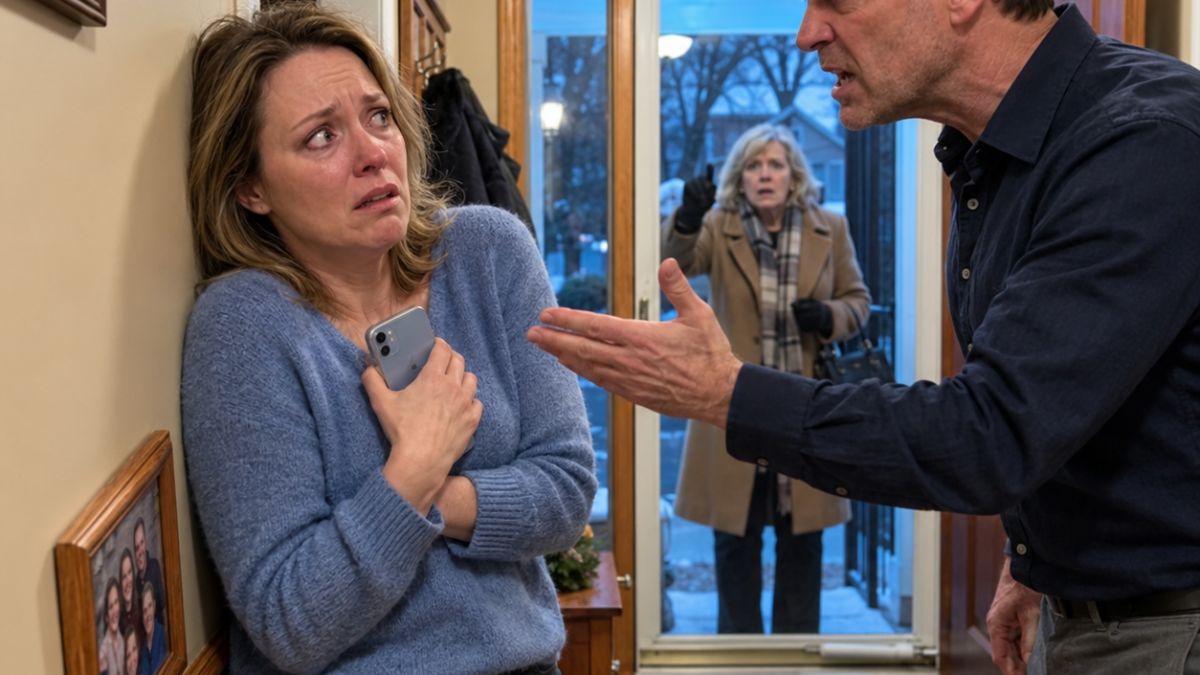
PART2
She moved a vase from the entry table to the dining room and said, “It breathes better here.”
She replaced my white guest towels with embroidered ones she brought herself and told me, “A house like this should look like adults live here.”
She made small comments about the paint color in the kitchen, the herbs I grew near the window, the books stacked beside my favorite chair.
Daniel brushed it off.
“She just likes helping.”
“She called my office too masculine.”
“She’s old-fashioned.”
“She rearranged my medicine cabinet.”
“She has anxiety.”
“She opened a package addressed to me.”
“She probably thought it was mine.”
That became Daniel’s rhythm.
Gloria crossed a line.
I named it.
Daniel translated it into something harmless.
By the second year, she stopped pretending it was help.
She arrived without calling. She let herself in with the emergency key Daniel gave her “just in case.” She criticized my cooking while eating seconds. She asked, in front of dinner guests, whether we had seen a fertility specialist yet, then tilted her head and said, “Some women wait too long and call it independence.”
Daniel said, “Mom.”
Not stop.
Not apologize.
Not leave my wife alone.
Just Mom, in the tired tone of a man annoyed by tension rather than injustice.
I was thirty-eight then. I had wanted children once. Desperately. But life had moved strangely. Grief came. Work came. Then Daniel came. Month after month, year after year, hope narrowed into appointments, tests, polite medical phrases, and the private shame people say you should not feel but somehow always expect you to manage gracefully.
Gloria knew where to put the knife.
At Thanksgiving that third year, she leaned close while Daniel carved turkey and said, “A house this size without children in it feels wasteful.”
I looked at her.
She smiled.
“As I said, wasteful.”
I told Daniel later.
He sighed.
“She didn’t mean it like that.”
“She meant exactly that.”
“You’re always looking for reasons to hate her.”
I remember standing in our bedroom, folding laundry I had washed for both of us, and realizing that Daniel did not need to agree with his mother to protect her. He only needed to insist I was the problem for noticing.
By the fifth year, Gloria was openly calling the property “Daniel’s house.”
At lunch with his cousins, she lifted her wineglass and said, “I told Daniel this place will be perfect when he finally puts in a proper guest wing. He needs more room for family.”
I corrected her.
“It’s my house.”
The table went silent.
Gloria blinked as if I had slapped her with a napkin.
Daniel laughed too loudly.
“What Emily means is we’re still deciding what to do with the space.”
“No,” I said, looking at him. “I mean it’s my house.”
His jaw tightened.
We argued that night for two hours.
Not because I was wrong.
Because I had embarrassed him by being right in front of his mother.
That was what mattered to Daniel.
Not the truth.
Not the deed.
Not the way Gloria’s entitlement was spreading through our marriage like mold behind walls.
His embarrassment.
That was when I began installing cameras.
Not because I expected Daniel to hurt me.
I told myself that, anyway.
I installed them because Gloria once accused me of stealing a necklace after she stayed in our guest room. She cried in the hallway, insisting the necklace had been in her suitcase and only I could have taken it. Daniel searched the house with a grim expression, not accusing me directly, but not defending me either.
Two days later, Gloria “found” it tucked inside the lining of her own suitcase.
She never apologized.
Daniel said, “Let’s just move on.”
I installed cameras the next week.
Entryway.
Hallway.
Kitchen.
Living room.
Back porch.
The old security company asked whether I wanted them visible or discreet.
“Discreet,” I said.
I told myself I wanted peace of mind.
I did not admit that I had already begun preparing for war.
The night everything broke began with Gloria pounding on my front door.
It was 8:43 on a Friday evening in late January. Snow had fallen lightly that afternoon, not enough to close roads, only enough to coat the garden roof and soften the stone path behind the house. I was in the kitchen making tea. Daniel was in his office, supposedly finishing a client proposal.
The doorbell rang first.
Once.
Then again.
Then came pounding.
Hard.
Demanding.
I checked the security app.
Gloria stood on the porch in a camel-colored wool coat, two suitcases beside her, a fur-trimmed hood framing her face like she had arrived in a personal blizzard of outrage.
I did not open the door.
Daniel came into the hallway, already irritated.
“Why is my mother outside?”
“Because she arrived without warning.”
He glanced at the monitor and frowned.
“She has bags.”
“I see that.”
He reached for the front door.
I stepped in front of him.
“No.”
His eyebrows rose.
“Excuse me?”
“No. She is not coming in.”
“Emily.”
That tone.
Half warning, half disbelief.
As if the word no sounded unnatural coming from my mouth.
“She’s staying indefinitely,” he said.
“No, she isn’t.”
“She had a fight with her landlord.”
“Then she can stay at a hotel.”
“She’s my mother.”
“And this is my house.”
His face changed.
The sentence had landed exactly where I intended.
Outside, Gloria pounded again.
“Daniel! Open this door!”
I kept my eyes on him.
“She threatened me last week,” I said.
His mouth tightened.
“She was upset.”
“She called me barren trash.”
He looked away.
So he knew.
That detail settled cold in my stomach.
“She said,” I continued, “that she would make you divorce me, take this house, and finally put a real woman in it.”
Daniel exhaled harshly.
“You always twist things.”
I stared at him.
“Did she say it?”
He said nothing.
From the porch, Gloria shouted, “Stop poisoning my son against me!”
I laughed once.
Not because it was funny.
Because sometimes cruelty becomes so predictable it turns absurd.
“Your son is standing ten feet from you,” I called toward the door. “And somehow still not hearing the truth.”
Daniel stepped closer.
“Open it.”
“No.”
The first time Daniel completely lost his temper, the sound was quieter than I expected.
Not a roar.
Not the crash of furniture.
A sharp crack echoed through the hallway while his mother kept pounding relentlessly on my front door.
For one second, I did not understand what had happened.
Then heat bloomed near my mouth.
My shoulder hit the wall hard enough to rattle the picture frame beside me. It slid crookedly, then fell, the glass splitting across the floor with a small, delicate sound.
I touched the sore spot near my mouth.
Daniel stared at me.
His expression was not horror.
That was what I remember most.
Not horror.
Disbelief.
As if I had done something by making him see what he had become.
He stepped closer.
“You will never embarrass my mother again.”
Something in me went completely still.
I did not cry.
I did not scream.
I did not beg.
I reached into my cardigan pocket and tapped my phone.
The smart lock engaged.
A firm mechanical click slid through the door.
Daniel turned and grabbed the handle.
It did not move.
He tried again.
Nothing.
Outside, Gloria kept shouting.
“Daniel? Daniel, what’s happening?”
He twisted back toward me.
“What did you do?”
“I locked the door.”
“Unlock it.”
“No.”
His face darkened.
“You think a phone makes you powerful?”
“No,” I said. “Documentation does.”
He did not understand that sentence yet.
He would.
For several minutes, he fought with the handle like force could override ownership. He cursed the lock. Cursed the door. Cursed the security system I had paid for. Cursed the house as if it were disloyal for obeying me.
Eventually, he grabbed his coat, stormed through the garage, and drove Gloria to a nearby hotel.
When he returned after midnight, I was sitting at the kitchen table with an ice pack wrapped in a dish towel pressed against my face.
The house was quiet except for the hum of the refrigerator.
The broken picture frame still lay by the wall.
I had not cleaned it up.
Daniel came in, saw me, saw the towel, and looked away.
No apology.
No shame.
He poured himself a whiskey.
“You pushed me too far.”
I held his gaze.
“Did I?”
He smirked, mistaking my quiet voice for surrender.
“Don’t start again.”
“I haven’t stopped.”
He drank half the whiskey.
“You’re sleeping on the couch?”
“No.”
“Fine. I will.”
He did not.
Ten minutes later, he went upstairs, undressed, and fell asleep in our bed.
I never closed my eyes.
At 3:17 a.m., Daniel rolled toward my empty side of the mattress and mumbled, still half asleep, “Mom likes roast chicken for lunch. Don’t over-season it.”
Even unconscious, he expected the next day to revolve around what Gloria wanted.
I stood in the bedroom doorway looking at the man I had married.
The man who had once brought me soup when I had the flu.
The man who cried at our wedding when I walked down the aisle.
The man who laughed with his mother when she called my house “too big for one woman’s ego.”
The man who had put his hands on me, then slept peacefully.
Something in me finally stopped negotiating.
I went downstairs.
First, I photographed everything.
The swelling near my mouth.
The red mark blooming beneath my skin.
My shoulder.
The damaged wall.
The broken frame.
The scuff marks near the front door where Daniel fought the lock.
Then I opened the security app and downloaded the hallway footage from the hidden camera Daniel had forgotten existed because he had never cared enough to ask why I installed it.
I watched it once.
Only once.
His hand.
The shove.
My body hitting the wall.
His face afterward.
That last part mattered most.
He had not looked frightened.
He had not looked sorry.
He had looked annoyed.
As though I had inconvenienced him.
I saved the footage to three separate locations.
Then I sent copies to Mara Chen.
At 4:26 a.m., I unlocked the fireproof cabinet in my office.
Inside were the documents I had not touched in years.
The deed.
The prenuptial agreement.
The Carter Trust papers my father had structured before he died.
The house.
The land.
Nearly everything inside it.
Mine.
Not Daniel Carter’s.
Not ours.
Mine.
By dawn, I was on the phone with Mara.
She answered on the second ring, voice hoarse with sleep but immediately alert.
“Emily?”
“He crossed a line.”
I heard fabric shift on her end, then a door close.
“Are you safe?”
“For the moment.”
“Where is he?”
“Asleep upstairs.”
“What happened?”
I told her.
Not emotionally.
Not all at once.
Sentence by sentence.
When I finished, Mara did not soften her voice.
That was one reason I trusted her.
She was kind, but never vague when danger entered the room.
“Listen to me carefully,” she said. “Do not argue with him. Do not threaten him. Do not explain more than necessary. If he leaves, let him leave. If he escalates, call emergency services. I’m preparing filings now.”
“I want him out before lunch.”
There was a pause.
Then Mara said, “Good.”
Morning light spread across the backyard as the last patches of snow melted from the garden roof.
Upstairs, Daniel was still sleeping peacefully, completely unaware that the woman he expected to cook lunch for his mother had spent the night documenting the end of his marriage.
At 7:40, I heard footsteps.
A drawer slammed.
Then another.
Daniel appeared at the top of the staircase wearing yesterday’s shirt, hair disheveled, eyes narrowed.
“Why didn’t you wake me?”
“You were sleeping.”
“My mother is coming at noon.”
“I know.”
“I told you to prepare the guest room.”
I took a slow sip of coffee.
“No.”
He stopped.
“What?”
“I said no.”
He descended the stairs slowly.
“You’re still doing this?”
“I’m finished doing anything for Gloria.”
He laughed under his breath.
“You’re unbelievable.”
“No,” I said. “I’m finally believable.”
He stared at me.
For the first time, I saw uncertainty flicker behind his anger.
Only for a second.
Then it vanished.
He crossed the kitchen and dropped something on the counter.
A small black makeup bag.
“Get dressed,” he said. “My mother will be here at noon. Freshen up and smile.”
I looked at the bag.
Then at him.
“Did you seriously bring me makeup?”
“She hates seeing you looking miserable.”
I almost laughed.
“She hates seeing me at all.”
“That attitude is exactly why she doesn’t like you.”
I pushed the makeup bag back toward him.
“Take it.”
His jaw tightened.
“You’re going to apologize to her.”
“No.”
“You’re going to make lunch.”
“No.”
“You’re going to behave like my wife.”
I stood.
“I have behaved like your wife for six years.”
“Then start acting like it.”
I stepped around the island.
“Daniel, pack a bag.”
He blinked.
“What?”
“Pack your things.”
A strange silence settled between us.
Then he laughed.
Not because anything was funny.
Because he thought I was bluffing.
“You’re kicking me out?”
“Yes.”
He shook his head.
“You wouldn’t.”
“I already called my attorney.”
That stopped him.
His face changed.
Only slightly.
But I noticed.
“Why?”
“Because you assaulted me.”
His expression immediately became defensive.
“I didn’t assault you.”
“You put your hands on me.”
“I barely touched you.”
“I have the footage.”
He went still.
For several seconds, neither of us spoke.
Then he smiled.
The same smile from the night before.
The smile of a man who believed consequences belonged to other people.
“You recorded me?”
“The house recorded you.”
His eyes moved toward the ceiling corners.
The hallway.
The staircase.
The living room.
He had never noticed the cameras.
“You’ve been spying on me.”
“No.” I picked up my phone. “I’ve been protecting myself.”
He stepped closer.
“Give me the phone.”
“No.”
“Emily.”
“No.”
His voice dropped.
“You don’t want to make me angry again.”
I stared at him.
“That sentence is exactly why you’re leaving.”
He looked as if I had slapped him.
Then he turned and marched upstairs.
For the next twenty minutes, drawers opened and closed. Closet doors slammed. Hangers scraped against rods. Shoes hit the floor. I sat at the kitchen island and listened without moving.
I expected shouting.
Instead, Daniel became strangely calm.
That frightened me more.
At 8:19, Mara called.
“Emily?”
“I’m here.”
“Don’t argue with him. Don’t be alone with him if you can avoid it. I’ve arranged for someone to meet you at the house.”
“Who?”
“Security.”
“I don’t need security.”
“You do now.”
I looked toward the staircase.
Daniel stood there with a duffel bag in one hand.
Watching me.
He could not hear Mara’s voice, but he could see my expression.
“What did your lawyer say?” he asked.
“Nothing that concerns you.”
His eyes narrowed.
“Everything that concerns you concerns me.”
I smiled faintly.
“That may have been true yesterday.”
He stared at me.
Then a car sounded outside.
Daniel walked toward the window.
A black SUV had stopped at the end of the driveway.
A woman in a dark coat stepped out.
She was not a police officer.
She was not Mara.
But I recognized her immediately.
And so did Daniel.
His face went pale.
“Why is she here?”
I looked at him.
“You know her?”
He did not answer.
The woman walked to the front door.
I opened it.
She was in her late forties, maybe early fifties, with dark hair pulled neatly back and sharp eyes that softened when they met mine.
She handed me a sealed envelope.
“Mrs. Carter?”
“Yes.”
“I’m sorry to arrive without warning.”
Daniel came into the hallway.
“What is this?”
The woman looked at him.
“Mr. Carter.”
Something about the way she said his name changed the air inside the house.
She knew him.
Not casually.
Not as my husband.
Personally.
Daniel took one step backward.
I looked between them.
“Who are you?”
The woman hesitated.
Then she said, “My name is Rebecca Hale.”
My heart snagged on the last name.
Hale.
My father’s last name before I married.
Daniel’s face had lost all color.
Rebecca looked at me.
“Your father hired me eight years ago.”
“My father?”
She nodded.
“Before he died.”
Daniel whispered something I could not hear.
Rebecca continued.
“He asked me to monitor certain financial matters involving your family.”
“My family?”
“Yes.”
She looked at Daniel.
“Specifically, anyone who might attempt to gain access to the Carter Trust.”
The room tilted.
Daniel’s head snapped toward her.
“You said you wouldn’t come here.”
Rebecca’s expression hardened.
“I said I wouldn’t come unless I had reason.”
“And now?”
“Now I do.”
She handed me another envelope.
This one was thicker.
My fingers trembled as I opened it.
Inside was a letter.
The handwriting was unmistakable.
My father’s.
I had not seen it in eight years.
The first line made my breath catch.
Emily, if you are reading this, something has gone wrong.
I sat down.
Daniel remained standing.
Rebecca closed the door behind her.
I read the next sentence.
I need you to understand that the trust was never only about protecting your inheritance.
My eyes moved down the page.
There is another reason I insisted the house remain entirely in your name.
I stopped.
Daniel whispered, “Don’t read that.”
I looked up.
“What?”
His face was terrified.
Not angry.
Terrified.
“Don’t read it.”
For six years, I had wondered why Daniel had always been strangely interested in my father’s estate.
Why he asked how much money remained in the trust.
Why he wanted to know whether the house could be refinanced.
Why he repeatedly suggested that we “put everything together” so we could “build our future.”
I had assumed it was greed.
Maybe it was something worse.
I looked back at the letter.
The man you married may already know more about this than he has told you.
My fingers went cold.
I slowly raised my eyes.
Daniel stared at me.
For the first time since I had known him, I saw no arrogance in his face.
Only fear.
“Emily,” he whispered.
I folded the letter.
“What did my father know about you?”
Daniel did not answer.
Rebecca did.
“He knew Daniel’s family.”
I looked at her.
“What does that mean?”
Rebecca took a breath.
“It means your marriage may not have been the coincidence you thought it was.”
The room seemed to shrink around me.
Six years.
Six years of memories.
Our first meeting at the restaurant.
His charming smile.
The flowers.
The proposal.
The wedding.
Every conversation about my childhood.
Every question about my father’s business.
Every time Daniel said, “I just want us to have a secure future.”
I suddenly heard those words differently.
Daniel stepped toward me.
“Emily, listen to me.”
I stood.
“Don’t come any closer.”
He stopped.
I held up my father’s letter.
“You knew.”
“No.”
“You knew something.”
“I didn’t know everything.”
“What did you know?”
His lips parted.
Nothing came out.
Then the doorbell rang.
Once.
Twice.
A third time.
Rebecca turned toward the door.
I did not move.
Daniel did.
He looked terrified again.
“Who is that?” I asked.
He whispered, “My mother.”
I stared at him.
“No.”
His eyes met mine.
“She knows.”
“Knows what?”
Before he could answer, Gloria’s voice came through the door.
“Emily!”
She pounded once.
Then twice.
Then she shouted the words that made Daniel close his eyes.
“Open this door, sweetheart. We need to talk about your father’s money.”
Silence.
I looked at Daniel.
Then at Rebecca.
Neither moved.
I slowly smiled.
Because suddenly I understood.
Gloria had not come for lunch.
She had never come for lunch.
She had come for the house.
Whatever my father had hidden eight years ago, they were terrified I was finally going to find it.
I walked toward the front door.
Rebecca grabbed my arm.
“Don’t open it.”
I looked at her.
“Why?”
Her voice dropped.
“Because the last person who asked questions about that trust disappeared.”
I froze.
“Who?”
Rebecca looked at Daniel.
Then back at me.
“Your father’s accountant.”
Behind the door, Gloria stopped pounding.
Her voice became strangely calm.
“Emily, darling…”
A pause.
Then she said, “You really should read the second page before you make any decisions.”
My heart slammed against my ribs.
I looked down at the letter in my hand.
There was no second page.
At least, I thought there was not.
Then I noticed something I had missed.
A thin seam ran along the bottom edge of the envelope.
I pulled it apart.
A folded sheet slid out.
Written across it in my father’s handwriting were five words.
DO NOT TRUST YOUR HUSBAND.
I looked up.
Daniel was already gone.
The back door was swinging open.
And scattered across the garden were his clothes.
Every shirt.
Every pair of trousers.
His shoes.
His expensive watch.
His wedding suit.
Everything he had packed.
Because before lunch, I had made one decision.
Daniel was leaving my house.
But I had no idea yet that he was not the only person I was about to throw out of my life.
For several seconds, I could not move.
The back door stood open.
Cold morning air moved through the kitchen, lifting the corner of my father’s letter.
Daniel was gone.
Not upstairs.
Not in the hallway.
Gone.
I ran to the back door.
His clothes were scattered across the garden exactly as I had left them.
A black suit jacket hung from the branch of the old maple tree.
One of his white shirts was caught beneath the garden bench.
His shoes had landed several feet apart.
His watch lay face down in the wet grass.
But Daniel himself was nowhere to be seen.
“Where did he go?” I asked.
Rebecca did not answer.
She was staring at the garden.
Then she noticed something.
“Emily.”
“What?”
“Don’t touch anything.”
I stopped.
She pointed toward the grass.
There were footprints.
Daniel’s footprints.
They led away from the house.
But they did not go toward the driveway.
They went toward the old stone wall at the far end of the property.
And stopped.
I frowned.
“There’s nowhere to go there.”
Rebecca looked at me.
“There is.”
She walked outside.
I followed.
The snow had almost completely melted, leaving the garden soaked and dark. We crossed the lawn carefully, stepping around Daniel’s abandoned shirts and the leather belt curled like a dead snake near the roses.
At the stone wall, Rebecca crouched.
Her fingers moved along the moss-covered stones.
Then she pressed one.
A section shifted.
I stared.
“What is that?”
“Your father called it the service entrance.”
My stomach tightened.
“My father never told me about this.”
“He didn’t want you to know.”
She pushed again.
A narrow section of stone swung inward.
Behind it was a passage.
Not large.
Just wide enough for one person.
Darkness disappeared beneath the trees.
I stared into it.
“Where does it lead?”
“To the old road.”
“Why would my father build a secret passage?”
Rebecca stood.
“He didn’t.”
I looked at her.
“Then who did?”
She did not answer.
A sound came from inside the passage.
A branch snapping.
We both froze.
Then footsteps.
Someone was walking toward us.
Rebecca immediately pulled me backward.
A man appeared from the darkness.
For one terrible second, I thought it was Daniel.
It was not.
The stranger was older, perhaps in his sixties, wearing a dark wool coat and carrying a leather briefcase. His face was lined, his hair silver, and he moved with the caution of a person who knew exactly how dangerous secrets could become once exposed to daylight.
He stopped when he saw us.
His eyes moved to Rebecca.
“You brought her here.”
Rebecca’s expression changed.
“I didn’t bring her.”
The man’s gaze shifted toward me.
“You’re Emily.”
It was not a question.
I swallowed.
“Who are you?”
He looked at the house behind me.
Then at the letter in my hand.
“You finally found the second page.”
My heart stopped.
“How do you know about that?”
He gave me a sad smile.
“Because I helped your father write it.”
Rebecca stepped forward.
“Thomas, you shouldn’t be here.”
The man’s face hardened.
“Neither should she.”
I looked between them.
“What is going on?”
Thomas opened his briefcase.
Inside were folders.
Photographs.
Bank statements.
Copies of legal documents.
And one photograph that made my blood run cold.
It showed my father standing outside a restaurant.
Beside him was a much younger Gloria.
And beside Gloria—
Daniel.
Daniel could not have been more than twenty-four.
I stared at the photograph.
“No.”
Thomas placed it in my hands.
“That was fifteen years ago.”
My fingers trembled.
“I met Daniel six years ago.”
“I know.”
“He told me he had never met my father.”
Thomas nodded.
“He lied.”
I looked toward the house.
Suddenly every memory felt contaminated.
The first time Daniel asked where I grew up.
The first time he asked about my father’s company.
The night he proposed and told me he wanted to build a life with me.
Had any of it been real?
“Why?” I whispered.
Thomas lowered his voice.
“Because your father discovered Gloria had been stealing from one of his charitable foundations.”
I stared at him.
“Stealing?”
“Money. Records. Donor information. Anything she could sell or manipulate.”
Rebecca added quietly, “Your father confronted her.”
“And Daniel?”
Thomas looked at the photograph.
“Daniel was already involved.”
I shook my head.
“No.”
“He was young.”
“That doesn’t mean anything.”
“No,” Thomas said. “It doesn’t.”
He opened another folder.
Inside were copies of old emails.
I recognized Daniel’s name.
Not his current email address.
An old one.
The first message was dated three months before I met him.
My throat tightened.
She still hasn’t transferred anything into her personal name.
Another message.
The house is the key.
Another.
Don’t rush her. If she suspects anything, the trust closes.
I could not breathe.
I looked at Rebecca.
“What’s the trust closing?”
She did not answer.
Thomas did.
“Your father created a condition.”
“What condition?”
“That if anyone attempted to pressure you into transferring the house, borrowing against it, selling it, or placing it into joint ownership, the entire trust would activate.”
I stared at him.
“What happens then?”
Thomas closed the folder.
“Everything becomes protected.”
“Protected from whom?”
He looked directly at me.
“Your husband.”
The world seemed to go silent.
I thought of Daniel asking me to refinance.
I thought of him insisting his name should be added to household accounts because “marriage is teamwork.”
I thought of Gloria calling the property “their family home.”
I thought of Daniel becoming furious whenever I refused to sign anything.
None of it had been random.
It had been a plan.
A long one.
A patient one.
And I had been living inside it.
I looked at the house.
My house.
The house my father had told me was supposed to be my safe place.
“Then why did Daniel marry me?”
Thomas’s expression changed.
“Because your father made one mistake.”
“What?”
“He didn’t realize Daniel was already obsessed with the inheritance.”
Rebecca shook her head.
“That isn’t the whole story.”
Thomas looked at her.
“Rebecca.”
She ignored him.
“Emily needs to know.”
“Know what?”
Rebecca hesitated.
Then she said, “Your father suspected Daniel wasn’t acting alone.”
I felt the blood drain from my face.
“Gloria?”
Rebecca shook her head.
“No.”
“Then who?”
She looked toward the house.
“Someone much closer.”
A car door slammed.
We all turned.
Gloria stood at the end of the driveway.
She was not alone.
Daniel stood beside her.
His clothes were different. He had changed into a dark coat, his hair combed, his face expressionless.
And beside him stood a man I recognized.
Mara’s associate.
The attorney who had handled Daniel’s side of our prenuptial agreement.
My stomach dropped.
Thomas whispered, “They came prepared.”
Daniel walked toward us.
“Emily.”
I did not answer.
He stopped several feet away.
“You’re misunderstanding everything.”
I held up the photograph.
“You knew my father.”
His eyes moved to it.
“Yes.”
“You lied to me.”
“I was trying to protect you.”
I almost laughed.
“From what?”
He looked at Gloria.
She stepped forward, wrapped in a black coat, chin lifted as though this were still a social call and not the collapse of everything she had tried to steal.
“From your father’s mistakes,” she said.
I turned toward her.
“My father’s mistakes?”
She smiled.
“You have no idea what that man did.”
“Then tell me.”
Her smile disappeared.
“He destroyed lives.”
Thomas stepped forward.
“Don’t listen to her.”
Gloria’s eyes flashed.
“You’re still alive, Thomas. You should be grateful.”
Thomas went pale.
I looked at him.
“What does she mean?”
He did not answer.
Gloria looked back at me.
“Your father wasn’t the innocent man you’ve imagined all these years.”
I felt something crack inside me.
Because there had always been one question I could not answer.
Why had my father died believing someone was following him?
Why had he left instructions that I should never investigate his business dealings?
Why had he suddenly become afraid during the final year of his life?
I had always assumed it was because he was sick.
Now I was not sure.
Daniel took a step toward me.
“Emily, come inside.”
“No.”
“You’re standing outside in the cold.”
“I don’t care.”
“Your father left things out of his letter.”
“So did you.”
His jaw tightened.
“Give me the letter.”
I laughed.
“No.”
“Emily.”
“No.”
Gloria suddenly said, “Ask him about the night your father died.”
I froze.
Daniel looked at his mother.
“Stop.”
Gloria smiled.
That was when I knew.
There was something there.
Something Daniel desperately did not want me to hear.
I turned toward her.
“What happened the night my father died?”
Daniel’s voice sharpened.
“Mom.”
She ignored him.
“Your father wasn’t alone.”
My heart began pounding.
“Who was with him?”
Gloria looked directly at Daniel.
Then she said, “My son.”
Everything inside me went cold.
I stared at Daniel.
He did not deny it.
He could not.
“You were there?”
His eyes dropped.
“Yes.”
“Why?”
He remained silent.
I stepped closer.
“You were there when my father died?”
“Yes.”
“And you never told me?”
“I was trying to protect you.”
“Stop saying that!”
My voice echoed across the garden.
“You have lied to me for six years!”
Daniel flinched.
I held up the letter.
“Did you kill him?”
His face went white.
“No.”
“Then tell me what happened.”
He looked at Gloria.
She shook her head.
Daniel finally whispered, “Your father gave me something.”
“What?”
“A file.”
“What file?”
“The original trust documents.”
I frowned.
“Why would he give them to you?”
Daniel looked at me.
“Because he knew your mother was going to die.”
I stopped breathing.
“My mother?”
I had been told my mother died of complications from surgery when I was nine.
Daniel continued.
“She didn’t.”
The words did not make sense.
“My mother died when I was nine.”
“No.”
“You’re lying.”
“She survived.”
My knees weakened.
Rebecca grabbed my arm.
Daniel’s voice broke.
“She disappeared.”
I looked at Gloria.
She was smiling.
Not kindly.
Not sadly.
Triumphantly.
And suddenly I understood why she had been so interested in my family.
Why she had always hated my father.
Why she treated me like an enemy rather than a daughter-in-law.
This had never been about lunch.
It had never been about my marriage.
It had never even been only about the house.
I looked at Daniel.
“Where is my mother?”
He did not answer.
Gloria did.
“She has been living ten miles from here for the last eighteen years.”
My heart stopped.
“Where?”
Gloria tilted her head.
“Ask your husband.”
I turned to Daniel.
He looked broken.
“Where is she?”
His eyes filled with tears.
Then he whispered the words that changed everything.
“She has been living in the house next door.”
I stared at him.
The house next door.
The empty house that supposedly belonged to an elderly couple who moved away years ago.
The house with boarded windows.
The house I had never once seen anyone enter.
I turned toward it.
A curtain moved in one of the upstairs windows.
Someone was watching us.
Someone who knew my name.
Someone who had been waiting.
For eighteen years.
Then the upstairs window slowly opened.
A woman’s voice drifted across the garden.
“Emily?”
I stopped breathing.
Because I knew that voice.
I had heard it once before.
In a childhood recording my father had kept hidden in a locked drawer.
My mother’s voice.
And she screamed, “Don’t trust Daniel! He wasn’t the one who came for me!”
The window slammed shut.
Behind me, Gloria whispered, “Now you understand why your father left the second page.”
I turned.
She was holding a match.
And the smile on her face told me exactly what she intended to burn.
For one terrible second, nobody moved.
Gloria held the match between two fingers.
The flame trembled in the cold morning air.
I stared at her.
“What are you going to burn?”
She smiled.
“Your father’s secrets.”
Then she dropped the match.
It landed on the edge of the papers in her hand.
The flame caught immediately.
Daniel lunged toward her.
“Mom!”
She stepped backward.
But before she could throw the burning papers into the garden, Rebecca moved faster.
She knocked them from Gloria’s hand.
The papers scattered across the wet grass.
The flames died almost instantly.
Gloria stared at her in disbelief.
Rebecca calmly picked up the documents.
“You really should have checked the weather.”
For the first time, Gloria looked frightened.
I almost laughed.
Almost.
Then the upstairs window opened again.
“Emily!”
I ran toward the neighboring house.
Daniel followed.
I turned around.
“Don’t.”
He stopped.
For once, he listened.
I crossed the narrow strip of grass between the two properties. The front door of the abandoned house was unlocked. I pushed it open.
“Mom?”
Silence.
The house smelled of dust, old wood, and closed rooms.
Then I heard footsteps above me.
I climbed the stairs.
At the end of the hallway stood a woman.
She was older than the mother I remembered from childhood photographs. Her hair was silver. Her face was thinner. Her body seemed fragile inside a cardigan too large for her shoulders.
But her eyes were exactly the same.
My mother’s eyes.
She covered her mouth.
“Emily.”
I could not move.
She took one step toward me.
Then another.
I whispered, “Mom?”
She nodded.
And that was all it took.
I ran into her arms.
She held me so tightly I could barely breathe.
For eighteen years, I had believed my mother was dead. For eighteen years, I had carried a grief that shaped every part of my life. I had mourned her at graduations. At my wedding. On birthdays. In grocery aisles when I saw women my age shopping with mothers who criticized fruit and bought flowers for no reason.
And suddenly she was standing in front of me.
Alive.
Crying.
Holding me like she had never stopped being my mother.
“I thought you were gone,” I sobbed.
“I tried to come back.”
“Why didn’t you?”
She pulled away and touched my face. Her fingers trembled when she saw the mark near my mouth.
Her expression changed.
“Daniel did this?”
I did not answer.
I did not have to.
My mother closed her eyes.
“Oh, Emily.”
“Why didn’t you come back?”
“Because they told me you would be killed if I did.”
My blood ran cold.
“Who?”
She looked toward the window.
“Gloria.”
Of course.
Of course it had always been Gloria.
My mother told me everything.
Not quickly.
Not cleanly.
Truth that has been locked away for eighteen years does not walk out in perfect order. It stumbles. It repeats. It breaks down in the middle and has to begin again.
After my father discovered Gloria had been stealing from one of his charitable foundations, he threatened to expose her. She had not been working alone. She had connections my father had not understood at first—people who knew how to move money through shell organizations, bury records, and frighten witnesses into silence.
My mother had found the first set of documents by accident.
A donor list.
A transfer code.
A private note with Gloria’s name on it.
She confronted my father.
Together, they began gathering evidence.
Then one night, my mother was taken from the house.
She was not killed.
She was threatened.
They told her if she returned to me, I would become the next target. They showed her photographs of my school, my bedroom window, the route my bus took every morning. They knew what lunchbox I carried.
So she disappeared.
My father spent years trying to find her.
Eventually, he did.
But by then, he was dying.
“He wanted to bring me home,” my mother said, sitting on the edge of the dusty bed in that abandoned house while I knelt in front of her like a child. “I told him no. I told him the people behind Gloria were still watching. I told him you were safer believing I was gone.”
I shook my head.
“You don’t get to decide that for me.”
Her face crumpled.
“I know.”
“He let me believe you were dead.”
“Yes.”
“You both did.”
“Yes.”
The anger came so fast it burned through the shock.
“I needed you.”
“I know.”
“Do you?” I stood, suddenly unable to stay still. “I was nine. I listened to people tell me God needed another angel. I watched Dad sit in the garage because he couldn’t cry in front of me. I grew up thinking my mother left the world, and all this time you were ten miles away?”
“I was not here the whole time,” she said softly. “Only after your father died. Before that, I moved constantly.”
“That doesn’t make it better.”
“No,” she said. “It doesn’t.”
I wanted to hate her.
For one clean second, I wanted to choose rage because rage was simpler than grief.
But she looked so tired. So hollowed by years. So clearly punished by the choice she had made that hating her felt like striking someone already on the floor.
Still, I did not forgive her.
Not then.
Not in that room.
“I can’t do this right now,” I said.
She nodded, tears slipping down her face.
“I understand.”
“No,” I said. “You don’t. Everyone keeps saying they protected me. You. Dad. Daniel. Gloria even tried it. But all of you made choices around me, over me, about me, and then called my ignorance safety.”
My mother flinched.
Good.
Truth should land somewhere.
“I am done being protected by lies.”
She lowered her head.
“You are right.”
The simplicity of that answer almost broke me.
No defense.
No excuse.
Just right.
I took a breath.
“What happened with Daniel?”
My mother looked down.
“He was young,” she said. “And frightened.”
“I saw the photograph. He knew my father.”
“Yes.”
“He lied to me.”
“Yes.”
“Did he marry me because of the trust?”
She hesitated.
“Not at first.”
I looked at her.
“What does that mean?”
“Your father discovered Daniel’s family was involved with Gloria. He warned Daniel to stay away from you.”
“And he didn’t.”
“No.”
“Did he ever love me?”
My mother looked at me for a long time.
“I think he did.”
That answer hurt more than a lie.
Because love did not erase betrayal.
It did not erase six years of secrets.
It did not erase the bruise on my face.
But it meant the story was not as simple as I wanted it to be.
I returned to the garden with my mother beside me.
Daniel was sitting on the stone steps.
His head was bowed.
Gloria was gone.
So was the attorney.
Rebecca stood beside Thomas near the driveway, talking to two police officers who had arrived while I was inside. Another officer stood near the wet papers Gloria had tried to burn.
“She tried to leave,” Rebecca said. “The police are speaking with her.”
Daniel looked up.
“Emily.”
I stopped several feet away.
He stood.
His eyes moved to my mother.
For a moment, guilt stripped him so bare he looked almost young.
Then he looked at me.
“I owe you the truth.”
“You owe me more than that.”
“I know.”
He swallowed.
“My mother approached me years before I met you. She told me your father had ruined her life.”
“She lied.”
“Yes.”
“You believed her.”
“I was twenty-four.”
“You were old enough to know better.”
He nodded.
“I was.”
His eyes filled with tears.
“I met you by accident.”
I stared at him.
“Was anything real?”
He closed his eyes.
“Yes.”
I did not answer.
“The first year,” he continued, “I was supposed to find out about the trust. I was supposed to convince you to change ownership of the house.”
My stomach tightened.
“But I fell in love with you.”
“Then why didn’t you tell me?”
“Because I was afraid.”
“Of what?”
“My mother.”
He looked toward the police cars at the end of the street.
“She threatened you. She threatened me. She told me if I confessed, she would hurt you. After your father died, she had people watching the property. I didn’t know your mother was next door until later. When I found out, I thought if I stayed close, I could keep things from getting worse.”
I stared at him.
“That is the most arrogant thing I have ever heard.”
He flinched.
“You thought you could protect me by lying to me, spying on my inheritance, letting your mother abuse me in my own home, and then punishing me when I refused to obey her?”
His face collapsed.
“No.”
“Yes.”
He lowered his head.
“You’re right.”
“And last night?”
He covered his face with both hands.
“I have no excuse.”
“No, you don’t.”
“I lost control.”
“No,” I said. “You took control. That is what you did. You used force because words stopped working.”
He dropped his hands.
Tears stood in his eyes.
“I’m sorry.”
I had imagined those words for years.
After every time he chose Gloria.
After every cold dinner.
After every insult dismissed as sensitivity.
After every conversation where I left feeling smaller than when I began.
Now that he finally said them, they did not heal anything.
They only proved he had known how all along.
“I hope you become a better person,” I said.
His face tightened with pain.
“I hope you become happy.”
Then he nodded.
“I hope you do too.”
He turned toward the police.
I did not stop him.
Some endings are not about revenge.
They are about finally choosing yourself.
The next weeks moved in fragments.
Police statements.
Attorney calls.
Bank records.
Protective filings.
Trust reviews.
Insurance documents.
Security upgrades.
Doctors documenting the injury Daniel had caused.
Mara became the center of the legal storm, calm and relentless. Rebecca stayed close enough to answer questions but far enough not to suffocate me. Thomas gave sworn statements about the old foundation theft and my father’s investigation. My mother gave testimony too, voice shaking but clear.
Gloria was charged with financial crimes first.
Then more followed.
Tampering.
Threats.
Conspiracy connected to the foundation.
Attempts to destroy evidence.
The investigation pulled names from old accounts like weeds from a neglected garden. People my father had suspected. People he had trusted. People who had smiled at charity dinners while stealing from the same foundation they praised.
Daniel cooperated.
Fully, Mara said.
I did not ask whether that helped him.
I did not want to build my healing around the size of his consequences.
That was between him, the law, and whatever conscience he finally decided to grow.
My divorce was quieter than people might expect.
No dramatic courtroom battle.
No screaming in hallways.
No public revenge.
The prenuptial agreement did exactly what Mara had designed it to do.
The deed remained untouched.
The trust activated the moment evidence showed pressure to transfer or refinance the property.
The house stayed mine.
The land stayed mine.
My father’s protections held.
Daniel signed.
I signed.
A final goodbye.
A door closing.
Still, grief came.
That surprised me.
I thought betrayal would kill love cleanly.
It does not.
Some mornings, I missed the Daniel who brought coffee to my office and kissed the top of my head. Some nights, I remembered dancing barefoot with him in the kitchen during our second year of marriage and hated that memory for being real.
My mother told me that was what made betrayal painful.
“The person you loved did exist,” she said one afternoon. “Just not alone. He existed beside the coward, the liar, the son who feared his mother, the man who hurt you. You are allowed to grieve the good without returning to the harm.”
We rebuilt slowly.
My mother moved into the guest room three months after that morning in the garden.
The first night she slept there, I sat outside her door for nearly an hour just listening to her breathe.
I was afraid she would disappear again.
She never did.
Rebuilding a mother-daughter relationship after eighteen years of false death is not sentimental in the way movies make it seem. There were awkward breakfasts where neither of us knew what to say. There were arguments that started over coffee and ended in both of us crying about my ninth birthday. There were questions I asked too sharply and answers she gave too carefully.
Sometimes I hated how much I needed her.
Sometimes she hated how much guilt stood between us.
But we stayed.
That became our miracle.
Not instant forgiveness.
Staying.
Mara helped finalize the trust. The foundation was restored. My father’s hidden documents came into the light. The old service passage was sealed after investigators finished documenting it. The neighboring house, where my mother had lived in shadows, was renovated into a small office for the restored foundation.
I refused to let that house remain a monument to fear.
It became a place where records were kept openly.
Where women fleeing coercive marriages could meet attorneys safely.
Where foundation money finally reached the people it had been meant to help.
A year later, I stood in the garden with my mother.
The snow had melted.
The maple tree was covered in new leaves.
I looked at the spot where Daniel’s clothes had once been scattered across the grass.
My mother smiled gently.
“You’re thinking about him.”
“A little.”
“Do you miss him?”
I considered the question.
“I miss who I thought he was.”
She squeezed my hand.
“That person existed.”
“I know.”
“That is what makes betrayal so painful.”
I looked at the house.
My house.
The house my father had fought to protect.
The house where I had spent years believing I was trapped.
I finally understood.
It had never been a prison.
It had been a promise.
My father had left me more than money.
He had left me a way home.
That evening, I found one final envelope inside the old fireproof cabinet.
My father’s handwriting was on the front.
For Emily, when she is finally safe.
I sat down before I opened it.
There was only one page.
My darling Emily,
If you are reading this, then you survived whatever I was afraid of.
I wish I could have protected you myself. I wish I could have been there to explain everything. But if there is one thing I want you to remember, it is this: never measure your worth by the person who chooses to stay or leave you.
You are not your marriage.
You are not your inheritance.
You are not the house.
You are my daughter.
And you were loved long before you ever learned to love someone else.
I pressed the letter against my heart.
My mother appeared in the doorway.
“Everything all right?”
I smiled through my tears.
“Yes.”
She walked over and hugged me.
Outside, the garden glowed beneath the evening sun.
For the first time in years, there was no shouting at the front door.
No footsteps following me.
No fear.
No secrets waiting behind locked rooms.
Just peace.
The house was finally quiet.
But this time, the silence did not feel lonely.
It felt like freedom.
And when I closed the front door that night, I did not lock it because I was afraid.
I locked it because the house was mine.
My life was mine.
And for the first time in six years, so was my future.
REVIEW
My Husband Told Me to Smile for His Mother—So I Threw His Clothes Into My Garden Before Lunch
The morning after my husband put his hands on me because I refused to open my own front door for his mother, he dropped a black makeup bag beside my coffee and told me to “freshen up and smile” because Gloria was coming for lunch.
For six years, Daniel had lived in my house as if patience were the same thing as permission, letting his mother rearrange my furniture, open my mail, insult my body, and call my father’s inheritance “our family future,” but he forgot one thing every controlling man eventually forgets: the woman who stays quiet may still be keeping receipts.
So when he returned at midday expecting roast chicken, obedience, and his mother seated proudly at my table, he found every shirt, shoe, suit, and watch he owned scattered across the melting snow in my garden—because the house had never belonged to him, and neither did I.
My name is Emily Carter.
For six years, I let my husband believe the gentleness in me was weakness.
That was my first mistake.
Not marrying Daniel. Not trusting him. Not believing a man could love me without trying to possess what my father left behind. Those were mistakes too, but they came later, wrapped in flowers, late-night conversations, soft apologies, and the kind of charm that makes a woman tell herself she is cautious enough to see danger before it reaches her door.
My first mistake was smaller.
I answered disrespect with patience.
I answered intrusion with politeness.
I answered cruelty with explanations.
By the time I understood that some people do not hear patience as grace but as permission, Daniel’s mother had already learned how far she could enter my life without knocking.
Gloria Carter was the kind of woman who made a room feel smaller the moment she stepped into it. She wore perfume too sweet for daylight, pearls even to grocery stores, and a smile that never reached her eyes unless someone else had been embarrassed. She believed every woman who married her son became a tenant in the kingdom she had built around him.
The problem was, the kingdom she wanted did not belong to Daniel.
It belonged to me.
The house sat at the end of a quiet lane outside Asheville, North Carolina, with a stone wall along the garden, white shutters, a steep slate roof, and a maple tree that turned blood-red every October. I bought it when I was thirty-two, three years before I ever met Daniel, while still grieving my father so sharply that some mornings I woke up reaching for my phone to call him before I remembered he was gone.
My father, Richard Hale, had been careful with everything.
Money.
Trust.
Paperwork.
People.
Especially people.
He used to tell me love was not a contract, but marriage often became one when the wrong person discovered what you owned.
“Never hand someone a weapon,” he said once, “and hope their affection keeps them from using it against you.”
At the time, I thought that was a bitter thing for a widower to say.
Now I know it was a loving thing for a father to teach.
He left me the trust after he died. Not one of those flashy fortunes people imagine when they hear the word trust, not yachts and summer houses and diamonds in velvet boxes. It was quieter than that. A foundation. Real estate. Protected accounts. The house. Enough to keep me safe if the world became ugly. Enough to give me choices if love ever became a cage.
Daniel knew the house was mine.
At least, he knew the story.
He knew I had bought it before we met. He knew my father’s trust had paid for it. He knew the deed had my name on it, because before our wedding my attorney, Mara Chen, had insisted on a prenuptial agreement so clear it could cut glass.
Daniel laughed when I first mentioned it.
We were sitting on the back porch, two weeks after he proposed. He had brought Chinese takeout because I had worked late, and he was barefoot, charming, handsome in that relaxed way that made strangers trust him too quickly.
“A prenup?” he asked, smiling as if I had suggested we both sign up for fencing lessons.
“Yes.”
“Do you really think I’m going to divorce you over money?”
“No.”
“Then why bother?”
Because my father taught me never to confuse affection with character.
I did not say that.
I only smiled and said, “Because it keeps everything simple.”
Daniel kissed my forehead.
“Whatever makes you feel safe.”
Those words had touched me then.
Now I remember how easily he said them.
I signed the agreement.
So did Daniel.
For six years, I never needed to look at it again.
Or maybe I simply never wanted to.
There is a difference.
The first year of our marriage, Gloria tested boundaries gently.
She moved a vase from the entry table to the dining room and said, “It breathes better here.”
She replaced my white guest towels with embroidered ones she brought herself and told me, “A house like this should look like adults live here.”
She made small comments about the paint color in the kitchen, the herbs I grew near the window, the books stacked beside my favorite chair.
Daniel brushed it off.
“She just likes helping.”
“She called my office too masculine.”
“She’s old-fashioned.”
“She rearranged my medicine cabinet.”
“She has anxiety.”
“She opened a package addressed to me.”
“She probably thought it was mine.”
That became Daniel’s rhythm.
Gloria crossed a line.
I named it.
Daniel translated it into something harmless.
By the second year, she stopped pretending it was help.
She arrived without calling. She let herself in with the emergency key Daniel gave her “just in case.” She criticized my cooking while eating seconds. She asked, in front of dinner guests, whether we had seen a fertility specialist yet, then tilted her head and said, “Some women wait too long and call it independence.”
Daniel said, “Mom.”
Not stop.
Not apologize.
Not leave my wife alone.
Just Mom, in the tired tone of a man annoyed by tension rather than injustice.
I was thirty-eight then. I had wanted children once. Desperately. But life had moved strangely. Grief came. Work came. Then Daniel came. Month after month, year after year, hope narrowed into appointments, tests, polite medical phrases, and the private shame people say you should not feel but somehow always expect you to manage gracefully.
Gloria knew where to put the knife.
At Thanksgiving that third year, she leaned close while Daniel carved turkey and said, “A house this size without children in it feels wasteful.”
I looked at her.
She smiled.
“As I said, wasteful.”
I told Daniel later.
He sighed.
“She didn’t mean it like that.”
“She meant exactly that.”
“You’re always looking for reasons to hate her.”
I remember standing in our bedroom, folding laundry I had washed for both of us, and realizing that Daniel did not need to agree with his mother to protect her. He only needed to insist I was the problem for noticing.
By the fifth year, Gloria was openly calling the property “Daniel’s house.”
At lunch with his cousins, she lifted her wineglass and said, “I told Daniel this place will be perfect when he finally puts in a proper guest wing. He needs more room for family.”
I corrected her.
“It’s my house.”
The table went silent.
Gloria blinked as if I had slapped her with a napkin.
Daniel laughed too loudly.
“What Emily means is we’re still deciding what to do with the space.”
“No,” I said, looking at him. “I mean it’s my house.”
His jaw tightened.
We argued that night for two hours.
Not because I was wrong.
Because I had embarrassed him by being right in front of his mother.
That was what mattered to Daniel.
Not the truth.
Not the deed.
Not the way Gloria’s entitlement was spreading through our marriage like mold behind walls.
His embarrassment.
That was when I began installing cameras.
Not because I expected Daniel to hurt me.
I told myself that, anyway.
I installed them because Gloria once accused me of stealing a necklace after she stayed in our guest room. She cried in the hallway, insisting the necklace had been in her suitcase and only I could have taken it. Daniel searched the house with a grim expression, not accusing me directly, but not defending me either.
Two days later, Gloria “found” it tucked inside the lining of her own suitcase.
She never apologized.
Daniel said, “Let’s just move on.”
I installed cameras the next week.
Entryway.
Hallway.
Kitchen.
Living room.
Back porch.
The old security company asked whether I wanted them visible or discreet.
“Discreet,” I said.
I told myself I wanted peace of mind.
I did not admit that I had already begun preparing for war.
The night everything broke began with Gloria pounding on my front door.
It was 8:43 on a Friday evening in late January. Snow had fallen lightly that afternoon, not enough to close roads, only enough to coat the garden roof and soften the stone path behind the house. I was in the kitchen making tea. Daniel was in his office, supposedly finishing a client proposal.
The doorbell rang first.
Once.
Then again.
Then came pounding.
Hard.
Demanding.
I checked the security app.
Gloria stood on the porch in a camel-colored wool coat, two suitcases beside her, a fur-trimmed hood framing her face like she had arrived in a personal blizzard of outrage.
I did not open the door.
Daniel came into the hallway, already irritated.
“Why is my mother outside?”
“Because she arrived without warning.”
He glanced at the monitor and frowned.
“She has bags.”
“I see that.”
He reached for the front door.
I stepped in front of him.
“No.”
His eyebrows rose.
“Excuse me?”
“No. She is not coming in.”
“Emily.”
That tone.
Half warning, half disbelief.
As if the word no sounded unnatural coming from my mouth.
“She’s staying indefinitely,” he said.
“No, she isn’t.”
“She had a fight with her landlord.”
“Then she can stay at a hotel.”
“She’s my mother.”
“And this is my house.”
His face changed.
The sentence had landed exactly where I intended.
Outside, Gloria pounded again.
“Daniel! Open this door!”
I kept my eyes on him.
“She threatened me last week,” I said.
His mouth tightened.
“She was upset.”
“She called me barren trash.”
He looked away.
So he knew.
That detail settled cold in my stomach.
“She said,” I continued, “that she would make you divorce me, take this house, and finally put a real woman in it.”
Daniel exhaled harshly.
“You always twist things.”
I stared at him.
“Did she say it?”
He said nothing.
From the porch, Gloria shouted, “Stop poisoning my son against me!”
I laughed once.
Not because it was funny.
Because sometimes cruelty becomes so predictable it turns absurd.
“Your son is standing ten feet from you,” I called toward the door. “And somehow still not hearing the truth.”
Daniel stepped closer.
“Open it.”
“No.”
The first time Daniel completely lost his temper, the sound was quieter than I expected.
Not a roar.
Not the crash of furniture.
A sharp crack echoed through the hallway while his mother kept pounding relentlessly on my front door.
For one second, I did not understand what had happened.
Then heat bloomed near my mouth.
My shoulder hit the wall hard enough to rattle the picture frame beside me. It slid crookedly, then fell, the glass splitting across the floor with a small, delicate sound.
I touched the sore spot near my mouth.
Daniel stared at me.
His expression was not horror.
That was what I remember most.
Not horror.
Disbelief.
As if I had done something by making him see what he had become.
He stepped closer.
“You will never embarrass my mother again.”
Something in me went completely still.
I did not cry.
I did not scream.
I did not beg.
I reached into my cardigan pocket and tapped my phone.
The smart lock engaged.
A firm mechanical click slid through the door.
Daniel turned and grabbed the handle.
It did not move.
He tried again.
Nothing.
Outside, Gloria kept shouting.
“Daniel? Daniel, what’s happening?”
He twisted back toward me.
“What did you do?”
“I locked the door.”
“Unlock it.”
“No.”
His face darkened.
“You think a phone makes you powerful?”
“No,” I said. “Documentation does.”
He did not understand that sentence yet.
He would.
For several minutes, he fought with the handle like force could override ownership. He cursed the lock. Cursed the door. Cursed the security system I had paid for. Cursed the house as if it were disloyal for obeying me.
Eventually, he grabbed his coat, stormed through the garage, and drove Gloria to a nearby hotel.
When he returned after midnight, I was sitting at the kitchen table with an ice pack wrapped in a dish towel pressed against my face.
The house was quiet except for the hum of the refrigerator.
The broken picture frame still lay by the wall.
I had not cleaned it up.
Daniel came in, saw me, saw the towel, and looked away.
No apology.
No shame.
He poured himself a whiskey.
“You pushed me too far.”
I held his gaze.
“Did I?”
He smirked, mistaking my quiet voice for surrender.
“Don’t start again.”
“I haven’t stopped.”
He drank half the whiskey.
“You’re sleeping on the couch?”
“No.”
“Fine. I will.”
He did not.
Ten minutes later, he went upstairs, undressed, and fell asleep in our bed.
I never closed my eyes.
At 3:17 a.m., Daniel rolled toward my empty side of the mattress and mumbled, still half asleep, “Mom likes roast chicken for lunch. Don’t over-season it.”
Even unconscious, he expected the next day to revolve around what Gloria wanted.
I stood in the bedroom doorway looking at the man I had married.
The man who had once brought me soup when I had the flu.
The man who cried at our wedding when I walked down the aisle.
The man who laughed with his mother when she called my house “too big for one woman’s ego.”
The man who had put his hands on me, then slept peacefully.
Something in me finally stopped negotiating.
I went downstairs.
First, I photographed everything.
The swelling near my mouth.
The red mark blooming beneath my skin.
My shoulder.
The damaged wall.
The broken frame.
The scuff marks near the front door where Daniel fought the lock.
Then I opened the security app and downloaded the hallway footage from the hidden camera Daniel had forgotten existed because he had never cared enough to ask why I installed it.
I watched it once.
Only once.
His hand.
The shove.
My body hitting the wall.
His face afterward.
That last part mattered most.
He had not looked frightened.
He had not looked sorry.
He had looked annoyed.
As though I had inconvenienced him.
I saved the footage to three separate locations.
Then I sent copies to Mara Chen.
At 4:26 a.m., I unlocked the fireproof cabinet in my office.
Inside were the documents I had not touched in years.
The deed.
The prenuptial agreement.
The Carter Trust papers my father had structured before he died.
The house.
The land.
Nearly everything inside it.
Mine.
Not Daniel Carter’s.
Not ours.
Mine.
By dawn, I was on the phone with Mara.
She answered on the second ring, voice hoarse with sleep but immediately alert.
“Emily?”
“He crossed a line.”
I heard fabric shift on her end, then a door close.
“Are you safe?”
“For the moment.”
“Where is he?”
“Asleep upstairs.”
“What happened?”
I told her.
Not emotionally.
Not all at once.
Sentence by sentence.
When I finished, Mara did not soften her voice.
That was one reason I trusted her.
She was kind, but never vague when danger entered the room.
“Listen to me carefully,” she said. “Do not argue with him. Do not threaten him. Do not explain more than necessary. If he leaves, let him leave. If he escalates, call emergency services. I’m preparing filings now.”
“I want him out before lunch.”
There was a pause.
Then Mara said, “Good.”
Morning light spread across the backyard as the last patches of snow melted from the garden roof.
Upstairs, Daniel was still sleeping peacefully, completely unaware that the woman he expected to cook lunch for his mother had spent the night documenting the end of his marriage.
At 7:40, I heard footsteps.
A drawer slammed.
Then another.
Daniel appeared at the top of the staircase wearing yesterday’s shirt, hair disheveled, eyes narrowed.
“Why didn’t you wake me?”
“You were sleeping.”
“My mother is coming at noon.”
“I know.”
“I told you to prepare the guest room.”
I took a slow sip of coffee.
“No.”
He stopped.
“What?”
“I said no.”
He descended the stairs slowly.
“You’re still doing this?”
“I’m finished doing anything for Gloria.”
He laughed under his breath.
“You’re unbelievable.”
“No,” I said. “I’m finally believable.”
He stared at me.
For the first time, I saw uncertainty flicker behind his anger.
Only for a second.
Then it vanished.
He crossed the kitchen and dropped something on the counter.
A small black makeup bag.
“Get dressed,” he said. “My mother will be here at noon. Freshen up and smile.”
I looked at the bag.
Then at him.
“Did you seriously bring me makeup?”
“She hates seeing you looking miserable.”
I almost laughed.
“She hates seeing me at all.”
“That attitude is exactly why she doesn’t like you.”
I pushed the makeup bag back toward him.
“Take it.”
His jaw tightened.
“You’re going to apologize to her.”
“No.”
“You’re going to make lunch.”
“No.”
“You’re going to behave like my wife.”
I stood.
“I have behaved like your wife for six years.”
“Then start acting like it.”
I stepped around the island.
“Daniel, pack a bag.”
He blinked.
“What?”
“Pack your things.”
A strange silence settled between us.
Then he laughed.
Not because anything was funny.
Because he thought I was bluffing.
“You’re kicking me out?”
“Yes.”
He shook his head.
“You wouldn’t.”
“I already called my attorney.”
That stopped him.
His face changed.
Only slightly.
But I noticed.
“Why?”
“Because you assaulted me.”
His expression immediately became defensive.
“I didn’t assault you.”
“You put your hands on me.”
“I barely touched you.”
“I have the footage.”
He went still.
For several seconds, neither of us spoke.
Then he smiled.
The same smile from the night before.
The smile of a man who believed consequences belonged to other people.
“You recorded me?”
“The house recorded you.”
His eyes moved toward the ceiling corners.
The hallway.
The staircase.
The living room.
He had never noticed the cameras.
“You’ve been spying on me.”
“No.” I picked up my phone. “I’ve been protecting myself.”
He stepped closer.
“Give me the phone.”
“No.”
“Emily.”
“No.”
His voice dropped.
“You don’t want to make me angry again.”
I stared at him.
“That sentence is exactly why you’re leaving.”
He looked as if I had slapped him.
Then he turned and marched upstairs.
For the next twenty minutes, drawers opened and closed. Closet doors slammed. Hangers scraped against rods. Shoes hit the floor. I sat at the kitchen island and listened without moving.
I expected shouting.
Instead, Daniel became strangely calm.
That frightened me more.
At 8:19, Mara called.
“Emily?”
“I’m here.”
“Don’t argue with him. Don’t be alone with him if you can avoid it. I’ve arranged for someone to meet you at the house.”
“Who?”
“Security.”
“I don’t need security.”
“You do now.”
I looked toward the staircase.
Daniel stood there with a duffel bag in one hand.
Watching me.
He could not hear Mara’s voice, but he could see my expression.
“What did your lawyer say?” he asked.
“Nothing that concerns you.”
His eyes narrowed.
“Everything that concerns you concerns me.”
I smiled faintly.
“That may have been true yesterday.”
He stared at me.
Then a car sounded outside.
Daniel walked toward the window.
A black SUV had stopped at the end of the driveway.
A woman in a dark coat stepped out.
She was not a police officer.
She was not Mara.
But I recognized her immediately.
And so did Daniel.
His face went pale.
“Why is she here?”
I looked at him.
“You know her?”
He did not answer.
The woman walked to the front door.
I opened it.
She was in her late forties, maybe early fifties, with dark hair pulled neatly back and sharp eyes that softened when they met mine.
She handed me a sealed envelope.
“Mrs. Carter?”
“Yes.”
“I’m sorry to arrive without warning.”
Daniel came into the hallway.
“What is this?”
The woman looked at him.
“Mr. Carter.”
Something about the way she said his name changed the air inside the house.
She knew him.
Not casually.
Not as my husband.
Personally.
Daniel took one step backward.
I looked between them.
“Who are you?”
The woman hesitated.
Then she said, “My name is Rebecca Hale.”
My heart snagged on the last name.
Hale.
My father’s last name before I married.
Daniel’s face had lost all color.
Rebecca looked at me.
“Your father hired me eight years ago.”
“My father?”
She nodded.
“Before he died.”
Daniel whispered something I could not hear.
Rebecca continued.
“He asked me to monitor certain financial matters involving your family.”
“My family?”
“Yes.”
She looked at Daniel.
“Specifically, anyone who might attempt to gain access to the Carter Trust.”
The room tilted.
Daniel’s head snapped toward her.
“You said you wouldn’t come here.”
Rebecca’s expression hardened.
“I said I wouldn’t come unless I had reason.”
“And now?”
“Now I do.”
She handed me another envelope.
This one was thicker.
My fingers trembled as I opened it.
Inside was a letter.
The handwriting was unmistakable.
My father’s.
I had not seen it in eight years.
The first line made my breath catch.
Emily, if you are reading this, something has gone wrong.
I sat down.
Daniel remained standing.
Rebecca closed the door behind her.
I read the next sentence.
I need you to understand that the trust was never only about protecting your inheritance.
My eyes moved down the page.
There is another reason I insisted the house remain entirely in your name.
I stopped.
Daniel whispered, “Don’t read that.”
I looked up.
“What?”
His face was terrified.
Not angry.
Terrified.
“Don’t read it.”
For six years, I had wondered why Daniel had always been strangely interested in my father’s estate.
Why he asked how much money remained in the trust.
Why he wanted to know whether the house could be refinanced.
Why he repeatedly suggested that we “put everything together” so we could “build our future.”
I had assumed it was greed.
Maybe it was something worse.
I looked back at the letter.
The man you married may already know more about this than he has told you.
My fingers went cold.
I slowly raised my eyes.
Daniel stared at me.
For the first time since I had known him, I saw no arrogance in his face.
Only fear.
“Emily,” he whispered.
I folded the letter.
“What did my father know about you?”
Daniel did not answer.
Rebecca did.
“He knew Daniel’s family.”
I looked at her.
“What does that mean?”
Rebecca took a breath.
“It means your marriage may not have been the coincidence you thought it was.”
The room seemed to shrink around me.
Six years.
Six years of memories.
Our first meeting at the restaurant.
His charming smile.
The flowers.
The proposal.
The wedding.
Every conversation about my childhood.
Every question about my father’s business.
Every time Daniel said, “I just want us to have a secure future.”
I suddenly heard those words differently.
Daniel stepped toward me.
“Emily, listen to me.”
I stood.
“Don’t come any closer.”
He stopped.
I held up my father’s letter.
“You knew.”
“No.”
“You knew something.”
“I didn’t know everything.”
“What did you know?”
His lips parted.
Nothing came out.
Then the doorbell rang.
Once.
Twice.
A third time.
Rebecca turned toward the door.
I did not move.
Daniel did.
He looked terrified again.
“Who is that?” I asked.
He whispered, “My mother.”
I stared at him.
“No.”
His eyes met mine.
“She knows.”
“Knows what?”
Before he could answer, Gloria’s voice came through the door.
“Emily!”
She pounded once.
Then twice.
Then she shouted the words that made Daniel close his eyes.
“Open this door, sweetheart. We need to talk about your father’s money.”
Silence.
I looked at Daniel.
Then at Rebecca.
Neither moved.
I slowly smiled.
Because suddenly I understood.
Gloria had not come for lunch.
She had never come for lunch.
She had come for the house.
Whatever my father had hidden eight years ago, they were terrified I was finally going to find it.
I walked toward the front door.
Rebecca grabbed my arm.
“Don’t open it.”
I looked at her.
“Why?”
Her voice dropped.
“Because the last person who asked questions about that trust disappeared.”
I froze.
“Who?”
Rebecca looked at Daniel.
Then back at me.
“Your father’s accountant.”
Behind the door, Gloria stopped pounding.
Her voice became strangely calm.
“Emily, darling…”
A pause.
Then she said, “You really should read the second page before you make any decisions.”
My heart slammed against my ribs.
I looked down at the letter in my hand.
There was no second page.
At least, I thought there was not.
Then I noticed something I had missed.
A thin seam ran along the bottom edge of the envelope.
I pulled it apart.
A folded sheet slid out.
Written across it in my father’s handwriting were five words.
DO NOT TRUST YOUR HUSBAND.
I looked up.
Daniel was already gone.
The back door was swinging open.
And scattered across the garden were his clothes.
Every shirt.
Every pair of trousers.
His shoes.
His expensive watch.
His wedding suit.
Everything he had packed.
Because before lunch, I had made one decision.
Daniel was leaving my house.
But I had no idea yet that he was not the only person I was about to throw out of my life.
For several seconds, I could not move.
The back door stood open.
Cold morning air moved through the kitchen, lifting the corner of my father’s letter.
Daniel was gone.
Not upstairs.
Not in the hallway.
Gone.
I ran to the back door.
His clothes were scattered across the garden exactly as I had left them.
A black suit jacket hung from the branch of the old maple tree.
One of his white shirts was caught beneath the garden bench.
His shoes had landed several feet apart.
His watch lay face down in the wet grass.
But Daniel himself was nowhere to be seen.
“Where did he go?” I asked.
Rebecca did not answer.
She was staring at the garden.
Then she noticed something.
“Emily.”
“What?”
“Don’t touch anything.”
I stopped.
She pointed toward the grass.
There were footprints.
Daniel’s footprints.
They led away from the house.
But they did not go toward the driveway.
They went toward the old stone wall at the far end of the property.
And stopped.
I frowned.
“There’s nowhere to go there.”
Rebecca looked at me.
“There is.”
She walked outside.
I followed.
The snow had almost completely melted, leaving the garden soaked and dark. We crossed the lawn carefully, stepping around Daniel’s abandoned shirts and the leather belt curled like a dead snake near the roses.
At the stone wall, Rebecca crouched.
Her fingers moved along the moss-covered stones.
Then she pressed one.
A section shifted.
I stared.
“What is that?”
“Your father called it the service entrance.”
My stomach tightened.
“My father never told me about this.”
“He didn’t want you to know.”
She pushed again.
A narrow section of stone swung inward.
Behind it was a passage.
Not large.
Just wide enough for one person.
Darkness disappeared beneath the trees.
I stared into it.
“Where does it lead?”
“To the old road.”
“Why would my father build a secret passage?”
Rebecca stood.
“He didn’t.”
I looked at her.
“Then who did?”
She did not answer.
A sound came from inside the passage.
A branch snapping.
We both froze.
Then footsteps.
Someone was walking toward us.
Rebecca immediately pulled me backward.
A man appeared from the darkness.
For one terrible second, I thought it was Daniel.
It was not.
The stranger was older, perhaps in his sixties, wearing a dark wool coat and carrying a leather briefcase. His face was lined, his hair silver, and he moved with the caution of a person who knew exactly how dangerous secrets could become once exposed to daylight.
He stopped when he saw us.
His eyes moved to Rebecca.
“You brought her here.”
Rebecca’s expression changed.
“I didn’t bring her.”
The man’s gaze shifted toward me.
“You’re Emily.”
It was not a question.
I swallowed.
“Who are you?”
He looked at the house behind me.
Then at the letter in my hand.
“You finally found the second page.”
My heart stopped.
“How do you know about that?”
He gave me a sad smile.
“Because I helped your father write it.”
Rebecca stepped forward.
“Thomas, you shouldn’t be here.”
The man’s face hardened.
“Neither should she.”
I looked between them.
“What is going on?”
Thomas opened his briefcase.
Inside were folders.
Photographs.
Bank statements.
Copies of legal documents.
And one photograph that made my blood run cold.
It showed my father standing outside a restaurant.
Beside him was a much younger Gloria.
And beside Gloria—
Daniel.
Daniel could not have been more than twenty-four.
I stared at the photograph.
“No.”
Thomas placed it in my hands.
“That was fifteen years ago.”
My fingers trembled.
“I met Daniel six years ago.”
“I know.”
“He told me he had never met my father.”
Thomas nodded.
“He lied.”
I looked toward the house.
Suddenly every memory felt contaminated.
The first time Daniel asked where I grew up.
The first time he asked about my father’s company.
The night he proposed and told me he wanted to build a life with me.
Had any of it been real?
“Why?” I whispered.
Thomas lowered his voice.
“Because your father discovered Gloria had been stealing from one of his charitable foundations.”
I stared at him.
“Stealing?”
“Money. Records. Donor information. Anything she could sell or manipulate.”
Rebecca added quietly, “Your father confronted her.”
“And Daniel?”
Thomas looked at the photograph.
“Daniel was already involved.”
I shook my head.
“No.”
“He was young.”
“That doesn’t mean anything.”
“No,” Thomas said. “It doesn’t.”
He opened another folder.
Inside were copies of old emails.
I recognized Daniel’s name.
Not his current email address.
An old one.
The first message was dated three months before I met him.
My throat tightened.
She still hasn’t transferred anything into her personal name.
Another message.
The house is the key.
Another.
Don’t rush her. If she suspects anything, the trust closes.
I could not breathe.
I looked at Rebecca.
“What’s the trust closing?”
She did not answer.
Thomas did.
“Your father created a condition.”
“What condition?”
“That if anyone attempted to pressure you into transferring the house, borrowing against it, selling it, or placing it into joint ownership, the entire trust would activate.”
I stared at him.
“What happens then?”
Thomas closed the folder.
“Everything becomes protected.”
“Protected from whom?”
He looked directly at me.
“Your husband.”
The world seemed to go silent.
I thought of Daniel asking me to refinance.
I thought of him insisting his name should be added to household accounts because “marriage is teamwork.”
I thought of Gloria calling the property “their family home.”
I thought of Daniel becoming furious whenever I refused to sign anything.
None of it had been random.
It had been a plan.
A long one.
A patient one.
And I had been living inside it.
I looked at the house.
My house.
The house my father had told me was supposed to be my safe place.
“Then why did Daniel marry me?”
Thomas’s expression changed.
“Because your father made one mistake.”
“What?”
“He didn’t realize Daniel was already obsessed with the inheritance.”
Rebecca shook her head.
“That isn’t the whole story.”
Thomas looked at her.
“Rebecca.”
She ignored him.
“Emily needs to know.”
“Know what?”
Rebecca hesitated.
Then she said, “Your father suspected Daniel wasn’t acting alone.”
I felt the blood drain from my face.
“Gloria?”
Rebecca shook her head.
“No.”
“Then who?”
She looked toward the house.
“Someone much closer.”
A car door slammed.
We all turned.
Gloria stood at the end of the driveway.
She was not alone.
Daniel stood beside her.
His clothes were different. He had changed into a dark coat, his hair combed, his face expressionless.
And beside him stood a man I recognized.
Mara’s associate.
The attorney who had handled Daniel’s side of our prenuptial agreement.
My stomach dropped.
Thomas whispered, “They came prepared.”
Daniel walked toward us.
“Emily.”
I did not answer.
He stopped several feet away.
“You’re misunderstanding everything.”
I held up the photograph.
“You knew my father.”
His eyes moved to it.
“Yes.”
“You lied to me.”
“I was trying to protect you.”
I almost laughed.
“From what?”
He looked at Gloria.
She stepped forward, wrapped in a black coat, chin lifted as though this were still a social call and not the collapse of everything she had tried to steal.
“From your father’s mistakes,” she said.
I turned toward her.
“My father’s mistakes?”
She smiled.
“You have no idea what that man did.”
“Then tell me.”
Her smile disappeared.
“He destroyed lives.”
Thomas stepped forward.
“Don’t listen to her.”
Gloria’s eyes flashed.
“You’re still alive, Thomas. You should be grateful.”
Thomas went pale.
I looked at him.
“What does she mean?”
He did not answer.
Gloria looked back at me.
“Your father wasn’t the innocent man you’ve imagined all these years.”
I felt something crack inside me.
Because there had always been one question I could not answer.
Why had my father died believing someone was following him?
Why had he left instructions that I should never investigate his business dealings?
Why had he suddenly become afraid during the final year of his life?
I had always assumed it was because he was sick.
Now I was not sure.
Daniel took a step toward me.
“Emily, come inside.”
“No.”
“You’re standing outside in the cold.”
“I don’t care.”
“Your father left things out of his letter.”
“So did you.”
His jaw tightened.
“Give me the letter.”
I laughed.
“No.”
“Emily.”
“No.”
Gloria suddenly said, “Ask him about the night your father died.”
I froze.
Daniel looked at his mother.
“Stop.”
Gloria smiled.
That was when I knew.
There was something there.
Something Daniel desperately did not want me to hear.
I turned toward her.
“What happened the night my father died?”
Daniel’s voice sharpened.
“Mom.”
She ignored him.
“Your father wasn’t alone.”
My heart began pounding.
“Who was with him?”
Gloria looked directly at Daniel.
Then she said, “My son.”
Everything inside me went cold.
I stared at Daniel.
He did not deny it.
He could not.
“You were there?”
His eyes dropped.
“Yes.”
“Why?”
He remained silent.
I stepped closer.
“You were there when my father died?”
“Yes.”
“And you never told me?”
“I was trying to protect you.”
“Stop saying that!”
My voice echoed across the garden.
“You have lied to me for six years!”
Daniel flinched.
I held up the letter.
“Did you kill him?”
His face went white.
“No.”
“Then tell me what happened.”
He looked at Gloria.
She shook her head.
Daniel finally whispered, “Your father gave me something.”
“What?”
“A file.”
“What file?”
“The original trust documents.”
I frowned.
“Why would he give them to you?”
Daniel looked at me.
“Because he knew your mother was going to die.”
I stopped breathing.
“My mother?”
I had been told my mother died of complications from surgery when I was nine.
Daniel continued.
“She didn’t.”
The words did not make sense.
“My mother died when I was nine.”
“No.”
“You’re lying.”
“She survived.”
My knees weakened.
Rebecca grabbed my arm.
Daniel’s voice broke.
“She disappeared.”
I looked at Gloria.
She was smiling.
Not kindly.
Not sadly.
Triumphantly.
And suddenly I understood why she had been so interested in my family.
Why she had always hated my father.
Why she treated me like an enemy rather than a daughter-in-law.
This had never been about lunch.
It had never been about my marriage.
It had never even been only about the house.
I looked at Daniel.
“Where is my mother?”
He did not answer.
Gloria did.
“She has been living ten miles from here for the last eighteen years.”
My heart stopped.
“Where?”
Gloria tilted her head.
“Ask your husband.”
I turned to Daniel.
He looked broken.
“Where is she?”
His eyes filled with tears.
Then he whispered the words that changed everything.
“She has been living in the house next door.”
I stared at him.
The house next door.
The empty house that supposedly belonged to an elderly couple who moved away years ago.
The house with boarded windows.
The house I had never once seen anyone enter.
I turned toward it.
A curtain moved in one of the upstairs windows.
Someone was watching us.
Someone who knew my name.
Someone who had been waiting.
For eighteen years.
Then the upstairs window slowly opened.
A woman’s voice drifted across the garden.
“Emily?”
I stopped breathing.
Because I knew that voice.
I had heard it once before.
In a childhood recording my father had kept hidden in a locked drawer.
My mother’s voice.
And she screamed, “Don’t trust Daniel! He wasn’t the one who came for me!”
The window slammed shut.
Behind me, Gloria whispered, “Now you understand why your father left the second page.”
I turned.
She was holding a match.
And the smile on her face told me exactly what she intended to burn.
For one terrible second, nobody moved.
Gloria held the match between two fingers.
The flame trembled in the cold morning air.
I stared at her.
“What are you going to burn?”
She smiled.
“Your father’s secrets.”
Then she dropped the match.
It landed on the edge of the papers in her hand.
The flame caught immediately.
Daniel lunged toward her.
“Mom!”
She stepped backward.
But before she could throw the burning papers into the garden, Rebecca moved faster.
She knocked them from Gloria’s hand.
The papers scattered across the wet grass.
The flames died almost instantly.
Gloria stared at her in disbelief.
Rebecca calmly picked up the documents.
“You really should have checked the weather.”
For the first time, Gloria looked frightened.
I almost laughed.
Almost.
Then the upstairs window opened again.
“Emily!”
I ran toward the neighboring house.
Daniel followed.
I turned around.
“Don’t.”
He stopped.
For once, he listened.
I crossed the narrow strip of grass between the two properties. The front door of the abandoned house was unlocked. I pushed it open.
“Mom?”
Silence.
The house smelled of dust, old wood, and closed rooms.
Then I heard footsteps above me.
I climbed the stairs.
At the end of the hallway stood a woman.
She was older than the mother I remembered from childhood photographs. Her hair was silver. Her face was thinner. Her body seemed fragile inside a cardigan too large for her shoulders.
But her eyes were exactly the same.
My mother’s eyes.
She covered her mouth.
“Emily.”
I could not move.
She took one step toward me.
Then another.
I whispered, “Mom?”
She nodded.
And that was all it took.
I ran into her arms.
She held me so tightly I could barely breathe.
For eighteen years, I had believed my mother was dead. For eighteen years, I had carried a grief that shaped every part of my life. I had mourned her at graduations. At my wedding. On birthdays. In grocery aisles when I saw women my age shopping with mothers who criticized fruit and bought flowers for no reason.
And suddenly she was standing in front of me.
Alive.
Crying.
Holding me like she had never stopped being my mother.
“I thought you were gone,” I sobbed.
“I tried to come back.”
“Why didn’t you?”
She pulled away and touched my face. Her fingers trembled when she saw the mark near my mouth.
Her expression changed.
“Daniel did this?”
I did not answer.
I did not have to.
My mother closed her eyes.
“Oh, Emily.”
“Why didn’t you come back?”
“Because they told me you would be killed if I did.”
My blood ran cold.
“Who?”
She looked toward the window.
“Gloria.”
Of course.
Of course it had always been Gloria.
My mother told me everything.
Not quickly.
Not cleanly.
Truth that has been locked away for eighteen years does not walk out in perfect order. It stumbles. It repeats. It breaks down in the middle and has to begin again.
After my father discovered Gloria had been stealing from one of his charitable foundations, he threatened to expose her. She had not been working alone. She had connections my father had not understood at first—people who knew how to move money through shell organizations, bury records, and frighten witnesses into silence.
My mother had found the first set of documents by accident.
A donor list.
A transfer code.
A private note with Gloria’s name on it.
She confronted my father.
Together, they began gathering evidence.
Then one night, my mother was taken from the house.
She was not killed.
She was threatened.
They told her if she returned to me, I would become the next target. They showed her photographs of my school, my bedroom window, the route my bus took every morning. They knew what lunchbox I carried.
So she disappeared.
My father spent years trying to find her.
Eventually, he did.
But by then, he was dying.
“He wanted to bring me home,” my mother said, sitting on the edge of the dusty bed in that abandoned house while I knelt in front of her like a child. “I told him no. I told him the people behind Gloria were still watching. I told him you were safer believing I was gone.”
I shook my head.
“You don’t get to decide that for me.”
Her face crumpled.
“I know.”
“He let me believe you were dead.”
“Yes.”
“You both did.”
“Yes.”
The anger came so fast it burned through the shock.
“I needed you.”
“I know.”
“Do you?” I stood, suddenly unable to stay still. “I was nine. I listened to people tell me God needed another angel. I watched Dad sit in the garage because he couldn’t cry in front of me. I grew up thinking my mother left the world, and all this time you were ten miles away?”
“I was not here the whole time,” she said softly. “Only after your father died. Before that, I moved constantly.”
“That doesn’t make it better.”
“No,” she said. “It doesn’t.”
I wanted to hate her.
For one clean second, I wanted to choose rage because rage was simpler than grief.
But she looked so tired. So hollowed by years. So clearly punished by the choice she had made that hating her felt like striking someone already on the floor.
Still, I did not forgive her.
Not then.
Not in that room.
“I can’t do this right now,” I said.
She nodded, tears slipping down her face.
“I understand.”
“No,” I said. “You don’t. Everyone keeps saying they protected me. You. Dad. Daniel. Gloria even tried it. But all of you made choices around me, over me, about me, and then called my ignorance safety.”
My mother flinched.
Good.
Truth should land somewhere.
“I am done being protected by lies.”
She lowered her head.
“You are right.”
The simplicity of that answer almost broke me.
No defense.
No excuse.
Just right.
I took a breath.
“What happened with Daniel?”
My mother looked down.
“He was young,” she said. “And frightened.”
“I saw the photograph. He knew my father.”
“Yes.”
“He lied to me.”
“Yes.”
“Did he marry me because of the trust?”
She hesitated.
“Not at first.”
I looked at her.
“What does that mean?”
“Your father discovered Daniel’s family was involved with Gloria. He warned Daniel to stay away from you.”
“And he didn’t.”
“No.”
“Did he ever love me?”
My mother looked at me for a long time.
“I think he did.”
That answer hurt more than a lie.
Because love did not erase betrayal.
It did not erase six years of secrets.
It did not erase the bruise on my face.
But it meant the story was not as simple as I wanted it to be.
I returned to the garden with my mother beside me.
Daniel was sitting on the stone steps.
His head was bowed.
Gloria was gone.
So was the attorney.
Rebecca stood beside Thomas near the driveway, talking to two police officers who had arrived while I was inside. Another officer stood near the wet papers Gloria had tried to burn.
“She tried to leave,” Rebecca said. “The police are speaking with her.”
Daniel looked up.
“Emily.”
I stopped several feet away.
He stood.
His eyes moved to my mother.
For a moment, guilt stripped him so bare he looked almost young.
Then he looked at me.
“I owe you the truth.”
“You owe me more than that.”
“I know.”
He swallowed.
“My mother approached me years before I met you. She told me your father had ruined her life.”
“She lied.”
“Yes.”
“You believed her.”
“I was twenty-four.”
“You were old enough to know better.”
He nodded.
“I was.”
His eyes filled with tears.
“I met you by accident.”
I stared at him.
“Was anything real?”
He closed his eyes.
“Yes.”
I did not answer.
“The first year,” he continued, “I was supposed to find out about the trust. I was supposed to convince you to change ownership of the house.”
My stomach tightened.
“But I fell in love with you.”
“Then why didn’t you tell me?”
“Because I was afraid.”
“Of what?”
“My mother.”
He looked toward the police cars at the end of the street.
“She threatened you. She threatened me. She told me if I confessed, she would hurt you. After your father died, she had people watching the property. I didn’t know your mother was next door until later. When I found out, I thought if I stayed close, I could keep things from getting worse.”
I stared at him.
“That is the most arrogant thing I have ever heard.”
He flinched.
“You thought you could protect me by lying to me, spying on my inheritance, letting your mother abuse me in my own home, and then punishing me when I refused to obey her?”
His face collapsed.
“No.”
“Yes.”
He lowered his head.
“You’re right.”
“And last night?”
He covered his face with both hands.
“I have no excuse.”
“No, you don’t.”
“I lost control.”
“No,” I said. “You took control. That is what you did. You used force because words stopped working.”
He dropped his hands.
Tears stood in his eyes.
“I’m sorry.”
I had imagined those words for years.
After every time he chose Gloria.
After every cold dinner.
After every insult dismissed as sensitivity.
After every conversation where I left feeling smaller than when I began.
Now that he finally said them, they did not heal anything.
They only proved he had known how all along.
“I hope you become a better person,” I said.
His face tightened with pain.
“I hope you become happy.”
Then he nodded.
“I hope you do too.”
He turned toward the police.
I did not stop him.
Some endings are not about revenge.
They are about finally choosing yourself.
The next weeks moved in fragments.
Police statements.
Attorney calls.
Bank records.
Protective filings.
Trust reviews.
Insurance documents.
Security upgrades.
Doctors documenting the injury Daniel had caused.
Mara became the center of the legal storm, calm and relentless. Rebecca stayed close enough to answer questions but far enough not to suffocate me. Thomas gave sworn statements about the old foundation theft and my father’s investigation. My mother gave testimony too, voice shaking but clear.
Gloria was charged with financial crimes first.
Then more followed.
Tampering.
Threats.
Conspiracy connected to the foundation.
Attempts to destroy evidence.
The investigation pulled names from old accounts like weeds from a neglected garden. People my father had suspected. People he had trusted. People who had smiled at charity dinners while stealing from the same foundation they praised.
Daniel cooperated.
Fully, Mara said.
I did not ask whether that helped him.
I did not want to build my healing around the size of his consequences.
That was between him, the law, and whatever conscience he finally decided to grow.
My divorce was quieter than people might expect.
No dramatic courtroom battle.
No screaming in hallways.
No public revenge.
The prenuptial agreement did exactly what Mara had designed it to do.
The deed remained untouched.
The trust activated the moment evidence showed pressure to transfer or refinance the property.
The house stayed mine.
The land stayed mine.
My father’s protections held.
Daniel signed.
I signed.
A final goodbye.
A door closing.
Still, grief came.
That surprised me.
I thought betrayal would kill love cleanly.
It does not.
Some mornings, I missed the Daniel who brought coffee to my office and kissed the top of my head. Some nights, I remembered dancing barefoot with him in the kitchen during our second year of marriage and hated that memory for being real.
My mother told me that was what made betrayal painful.
“The person you loved did exist,” she said one afternoon. “Just not alone. He existed beside the coward, the liar, the son who feared his mother, the man who hurt you. You are allowed to grieve the good without returning to the harm.”
We rebuilt slowly.
My mother moved into the guest room three months after that morning in the garden.
The first night she slept there, I sat outside her door for nearly an hour just listening to her breathe.
I was afraid she would disappear again.
She never did.
Rebuilding a mother-daughter relationship after eighteen years of false death is not sentimental in the way movies make it seem. There were awkward breakfasts where neither of us knew what to say. There were arguments that started over coffee and ended in both of us crying about my ninth birthday. There were questions I asked too sharply and answers she gave too carefully.
Sometimes I hated how much I needed her.
Sometimes she hated how much guilt stood between us.
But we stayed.
That became our miracle.
Not instant forgiveness.
Staying.
Mara helped finalize the trust. The foundation was restored. My father’s hidden documents came into the light. The old service passage was sealed after investigators finished documenting it. The neighboring house, where my mother had lived in shadows, was renovated into a small office for the restored foundation.
I refused to let that house remain a monument to fear.
It became a place where records were kept openly.
Where women fleeing coercive marriages could meet attorneys safely.
Where foundation money finally reached the people it had been meant to help.
A year later, I stood in the garden with my mother.
The snow had melted.
The maple tree was covered in new leaves.
I looked at the spot where Daniel’s clothes had once been scattered across the grass.
My mother smiled gently.
“You’re thinking about him.”
“A little.”
“Do you miss him?”
I considered the question.
“I miss who I thought he was.”
She squeezed my hand.
“That person existed.”
“I know.”
“That is what makes betrayal so painful.”
I looked at the house.
My house.
The house my father had fought to protect.
The house where I had spent years believing I was trapped.
I finally understood.
It had never been a prison.
It had been a promise.
My father had left me more than money.
He had left me a way home.
That evening, I found one final envelope inside the old fireproof cabinet.
My father’s handwriting was on the front.
For Emily, when she is finally safe.
I sat down before I opened it.
There was only one page.
My darling Emily,
If you are reading this, then you survived whatever I was afraid of.
I wish I could have protected you myself. I wish I could have been there to explain everything. But if there is one thing I want you to remember, it is this: never measure your worth by the person who chooses to stay or leave you.
You are not your marriage.
You are not your inheritance.
You are not the house.
You are my daughter.
And you were loved long before you ever learned to love someone else.
I pressed the letter against my heart.
My mother appeared in the doorway.
“Everything all right?”
I smiled through my tears.
“Yes.”
She walked over and hugged me.
Outside, the garden glowed beneath the evening sun.
For the first time in years, there was no shouting at the front door.
No footsteps following me.
No fear.
No secrets waiting behind locked rooms.
Just peace.
The house was finally quiet.
But this time, the silence did not feel lonely.
It felt like freedom.
And when I closed the front door that night, I did not lock it because I was afraid.
I locked it because the house was mine.
My life was mine.
And for the first time in six years, so was my future.








