MY HUSBAND THREW ME OUT AFTER INHERITING $75 MILLION AND CALLED ME DEAD WEIGHT BUT THE FINAL CLAUSE OF HIS FATHER’S WILL MADE HIS SMUG GRIN DISAPPEAR
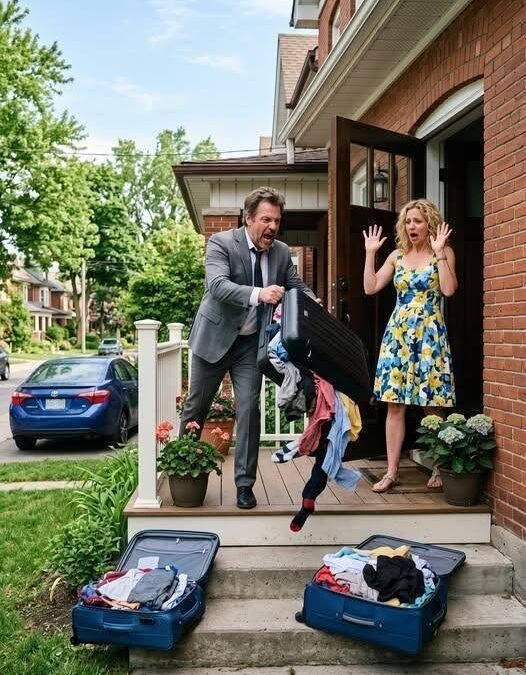
MY HUSBAND THREW ME OUT AFTER INHERITING $75 MILLION AND CALLED ME DEAD WEIGHT BUT THE FINAL CLAUSE OF HIS FATHER’S WILL MADE HIS SMUG GRIN DISAPPEAR
The night my husband threw me out of our home, he stood at the top of the staircase holding a glass of champagne and watched security escort me into the rain.
He did not look sad.
He did not look conflicted.
He looked relieved.
Almost excited.
As if the death of his father had finally removed the last inconvenience standing between him and the life he believed he deserved.
“Vanessa,” he called down casually while one of the guards picked up my second suitcase, “don’t make this uglier than it has to be.”
I looked up at him.
Ten years of marriage stood between us.
Ten years.
Birthdays.
Anniversaries.
Vacations.
Financial problems.
Family funerals.
His career changes.
My sacrifices.
His father’s illness.
Three years of my life spent bathing a dying man, managing medication, driving to appointments, cleaning up after chemotherapy, reading the newspaper aloud when his hands shook too badly to hold it.
And now Curtis was looking at me as if I were a piece of furniture he had decided no longer fit his new decorating scheme.
“You’re throwing me out two days after your father’s funeral.”
He took a sip of champagne.
“You keep saying that like Dad dying changes what our marriage has become.”
“What has our marriage become?”
He smiled.
“Expired.”
The rain blew beneath the front awning.
One of the guards looked away.
Even he seemed embarrassed.
Curtis was not.
“Ten thousand dollars is more than fair.”
I looked toward the check lying on the marble floor where he had thrown it.
Payment for your services, he had called it.
Not support.
Not a settlement.
Not money between spouses.
Payment.
As though the last decade had been employment.
As though I had been a nurse he no longer required.
“You really think that’s what I was?”
He leaned against the railing.
“What?”
“A free nurse.”
His expression did not change.
“That’s essentially what you became.”
I stared at him.
“I was your wife.”
“You were useful when Dad needed care.”
The sentence entered me slowly.
Maybe because my brain rejected it.
Maybe because sometimes cruelty is so complete that the mind protects itself by making the words arrive one at a time.
Useful.
When Dad needed care.
Now excess baggage.
That was what Curtis had called me earlier.
The phrase still echoed.
He had come down the stairs holding champagne and looked at my suitcases as if he had personally packed away a problem.
“My father is gone,” he had said. “I’m the only heir. Seventy five million dollars changes things.”
I had answered the way I still thought a wife should answer.
“It means responsibility.”
Curtis laughed.
“We?”
Then the expression.
The amusement.
“There is no we.”
Now I stood in the doorway while rain blew against my hair.
“Did any of it mean anything to you?”
Curtis glanced at his watch.
I hated him for that almost more than the money.
“You’re delaying people.”
“I’m asking about ten years of my life.”
“And I’m telling you we’ve grown apart.”
“No.”
I shook my head.
“You waited until Arthur died because you thought you were rich enough to replace me.”
Curtis’s jaw tightened.
“Do not make this about money.”
I almost laughed.
“You literally just told me seventy five million dollars changes things.”
“That is reality, Vanessa.”
“No. That is you.”
He stepped closer to the railing.
“Reality is that my life is about to become very different.”
His eyes moved over my formulaic black funeral dress, my old shoes, my wet hair.
“And you do not belong in it.”
I felt humiliated before I even walked outside.
Not because I had no money.
Because the person delivering the humiliation knew exactly which wounds to target.
Curtis knew I had spent the last three years putting almost everything else aside.
I had left a job I liked because Arthur needed full time care.
Curtis promised it would only be temporary.
“Dad trusts you.”
“He likes you.”
“We’ll figure out money.”
“We’re a family.”
Family.
The word would become almost funny later.
At the time, I believed it.
Arthur had not asked me to quit my job.
In fact, he protested.
“You have your own life.”
I told him I could work again later.
He looked embarrassed by how much care he needed.
Cancer had taken a proud, stubborn man and made him depend on someone to help him stand in the shower.
The first time I helped him, he apologized five times.
I finally said, “Arthur, if you apologize again, I’m charging you by the apology.”
He laughed.
That became our joke.
Curtis rarely heard it.
He was too busy.
Meetings.
Golf.
Dinners.
Trips.
Some legitimate.
Some probably not.
I did not know yet.
Every time Arthur asked where his son was, I found a kinder answer than the truth.
“He’s working.”
“He’ll come tomorrow.”
“He called earlier.”
“He’s thinking about you.”
Sometimes Curtis had not called.
Sometimes he had promised to visit and never arrived.
I covered for him because I thought that was part of marriage.
You protected the person you loved from being seen at their worst.
I did not understand that sometimes protecting someone from consequences only gives their worst behavior more room.
Arthur understood before I did.
That was the part that would eventually break my heart.
But that night in the rain, I knew nothing about Arthur’s plan.
I knew only that Curtis thought he had seventy five million dollars.
And he thought seventy five million dollars made me disposable.
The guard carried my bags toward my old sedan.
I stood under the awning.
Curtis tapped one finger against his glass.
“Do you need something else?”
“I need my home.”
He sighed.
“You have a car.”
The humiliation deepened.
“My home.”
“This house was Dad’s.”
“You and I have lived here for six years.”
“And now it’s mine.”
I did not know then that this was another lie.
“It was our marital home.”
“You signed the divorce paperwork.”
“Because your lawyer sent it to me while I was grieving.”
“You signed.”
“You told me you would freeze every account if I fought you.”
Curtis shrugged.
“You made your choice.”
“You gave me forty eight hours.”
“I was generous.”
I laughed.
A broken sound.
Curtis’s face hardened.
“Security.”
The guard beside me looked uncomfortable.
“I’m leaving.”
I grabbed my bag.
Then I turned one last time.
Curtis still stood above me.
Champagne.
Expensive watch.
Crisp shirt.
He looked like a man celebrating.
“Arthur would be ashamed of you.”
The words left my mouth before I thought.
Curtis’s expression changed.
Only for half a second.
Then he smiled again.
“Dad is dead.”
I stared.
“That’s the point.”
I walked into the rain.
I did not pick up the ten thousand dollar check.
That choice felt stupid by midnight.
Pride is easier when you have a bed.
I did not.
My bank account contained less than I expected because Curtis had controlled most household finances.
The hotel I checked cost more than I could justify.
So I parked outside a twenty four hour grocery store and slept in my car.
Or tried to.
Rain tapped against the roof.
Shopping carts rattled.
People came and went carrying bags.
A family walked past laughing.
A woman opened the back door of an SUV and strapped a sleepy child into a car seat.
I watched them.
My entire life had become visible through glass.
Other people had homes to return to.
I had a suitcase in my trunk.
At three in the morning, I started crying.
Not quietly.
Not elegantly.
I cried until my chest hurt.
Then I became angry at myself for crying because Curtis would have enjoyed it.
That made me cry harder.
By sunrise, I had decided I would never let him know I had slept there.
At the time, secrecy felt like dignity.
Later, I understood dignity had nothing to do with where I slept.
Curtis had put me there.
My shame belonged to the wrong person.
The next three weeks were the worst kind of slow collapse.
Nothing dramatic happened.
That was almost harder.
I looked for affordable housing.
Filled out rental applications.
One complex rejected me because I did not have current employment.
Another wanted a larger deposit.
Another had a waiting list.
I looked for jobs.
Updated a résumé that had a three year gap.
How do you explain full time caregiving to an employer who wants recent professional experience?
I wrote:
Family caregiving responsibilities.
It looked small on the page.
Three years compressed into four words.
It did not show Arthur shaking at two in the morning.
It did not show me learning every medication name.
It did not show the hospital visits.
The insurance calls.
The laundry.
The meals he could tolerate during chemo.
The nights he woke frightened and embarrassed because he had confused the room.
It certainly did not show Curtis dropping by in tailored suits and casually asking:
“Did Dad mention the will?”
He asked that question so often I should have understood.
At the time, I thought money was simply how Curtis processed fear.
Some people avoid hospitals.
Some become obsessed with logistics.
I told myself he was preparing.
I was very good at inventing compassionate explanations for selfish behavior.
I had ten years of practice.
The divorce moved absurdly fast.
Curtis wanted me erased before the inheritance settled.
His lawyer sent documents.
I barely had enough money to get my own legal advice.
I signed more quickly than I should have.
Part exhaustion.
Part humiliation.
Part desire to be done with him.
If a person can throw you into the rain two days after his father’s funeral, what exactly are you fighting to preserve?
I thought Curtis had already won.
Marriage gone.
House gone.
Career gone.
Arthur gone.
Money controlled by him.
I felt emptied out.
Then on a Tuesday morning, between an apartment rejection and a bill I could not pay, the envelope appeared.
Cream colored.
Thick.
My name written across the front.
Vanessa Hale.
I stopped breathing.
The handwriting.
Arthur.
I knew it instantly.
He wrote slowly near the end.
Careful, deliberate letters.
I had seen them on medication lists.
Birthday cards.
Notes left near the coffee machine.
One morning during treatment, he had written:
Vanessa, please buy the bad cookies. The healthy ones are depressing.
I kept that note.
Now the same hand had written my name across an envelope mailed after his death.
I sat in my car staring.
“Arthur?”
Ridiculous.
As if he could answer.
My fingers trembled when I opened it.
Inside was a legal summons.
Hale, Whitmore & Associates.
Arthur’s law firm.
The same firm Curtis constantly mentioned.
At the top:
A date.
A time.
Then:
You are hereby requested to appear in connection with the estate of Arthur Hale.
I read it three times.
Estate?
Curtis told me it was settled.
Seventy five million.
Only heir.
He had repeated those words like a prayer.
I pulled out my phone.
For a moment, I almost called him.
Old habits.
When something confusing happened, I called my husband.
Then I remembered the staircase.
Champagne.
Excess baggage.
I put the phone down.
Instead, I called the number printed on the summons.
A woman answered.
“Hale, Whitmore & Associates.”
“This is Vanessa Hale.”
Silence.
Not long.
But specific.
Expectant.
Then:
“Mrs. Hale.”
“Yes.”
“We’ve been waiting for your call.”
My stomach tightened.
“Why?”
“I’m afraid Mr. Whitmore needs to speak with you personally.”
“Is this about my divorce?”
“No.”
One word.
It changed something.
“Then what?”
“Mr. Arthur Hale’s estate.”
“Curtis said the estate was settled.”
Another pause.
“Mr. Curtis Hale may believe that.”
May believe.
I gripped the steering wheel.
“Am I in trouble?”
“No.”
“Then why am I being summoned?”
The woman lowered her voice slightly.
“Because Mr. Arthur Hale specifically instructed that you be present.”
“Before he died?”
“Yes.”
I closed my eyes.
Arthur.
What had you done?
The appointment was the next afternoon.
That night, I barely slept in my car.
Rain again.
As if weather had decided to become part of the humiliation.
I watched people walk through the grocery store parking lot carrying warm food.
A couple argued mildly about which entrance they had parked near.
A teenager pushed a cart while looking at his phone.
Normal life.
I wanted normal so badly it physically hurt.
Three weeks earlier, I had a house.
A husband.
A role.
Now I had an envelope from a dead man and shoes with a cracked heel.
The next morning, I changed clothes in a gas station restroom.
Navy blouse.
Black trousers.
Hair tied back.
I looked into the mirror.
I barely recognized myself.
Thinner.
Older.
Tired.
But something had changed.
Resolve.
Maybe because for the first time since Curtis threw me out, I was moving toward information instead of reacting to humiliation.
The law office occupied several floors of a glass building downtown.
Marble lobby.
Quiet elevators.
Expensive suits.
I became painfully aware of my shoes.
The receptionist asked my name.
“Vanessa Hale.”
Her expression changed.
Only slightly.
But I saw it.
She picked up the phone.
“She’s here.”
She.
Not a client.
Not Mrs. Hale.
She.
Someone expected.
Minutes later, a tall man in a charcoal suit approached.
“Mrs. Hale?”
“Yes.”
“Daniel Whitmore.”
I knew the name.
Arthur’s attorney for decades.
He shook my hand.
His expression was serious.
No polite legal smile.
“Please come with me.”
We entered the elevator.
Neither of us spoke.
When the doors opened, we walked down a hallway lined with photographs.
Arthur shaking hands with politicians.
Arthur in front of buildings.
Arthur at charity events.
Arthur holding awards.
Then one photograph stopped me.
Arthur and me.
His seventieth birthday.
I was laughing.
He had one hand on my shoulder.
Curtis stood behind us looking at his phone.
Of course he did.
My eyes filled.
“Arthur loved that photograph,” Daniel said.
I looked at him.
“You knew him well?”
“Twenty seven years.”
The answer held more than professional history.
Daniel opened an office door.
“Sit.”
I did.
He remained standing.
“Mrs. Hale, I need to ask you something before we proceed.”
“Okay.”
“Did Curtis tell you you were excluded from Arthur’s estate?”
“Yes.”
“Did he tell you he was sole beneficiary?”
“Yes.”
Daniel nodded.
“That’s interesting.”
My heart began racing.
“Why?”
He placed a file on his desk.
“Because that is not what Arthur’s final will says.”
I stared.
“What?”
“Your husband’s understanding is incorrect.”
“Who inherits?”
Daniel did not answer.
He opened the folder.
Will.
Signatures.
Dates.
Arthur’s handwriting.
My eyes stopped on one line.
Arthur Hale.
His signature.
“Is this real?”
“Yes.”
“When did he sign it?”
“Eleven days before his death.”
My chest tightened.
Arthur had been very weak then.
But mentally clear most mornings.
“What changed?”
Daniel sat.
“Arthur came here alone.”
“Curtis wasn’t here?”
“No.”
“Did Arthur tell you why?”
“He said he had finally learned the truth about someone close to him.”
My stomach dropped.
“Curtis?”
Daniel did not answer directly.
Instead, he opened another folder.
A handwritten letter.
Dear Vanessa.
I covered my mouth.
Daniel looked away.
I began reading.
If you are reading this, then I am gone, and I have failed to protect you in the way I intended.
My eyes blurred immediately.
I wiped them.
For years, I believed my son was simply immature. I told myself his selfishness was temporary. I was wrong.
I stopped.
I could hear Arthur saying it.
Not because he had ever spoken openly against Curtis.
Arthur defended his son too.
Maybe we had both been doing the same thing.
Turning selfishness into immaturity because admitting something darker felt unbearable.
I continued.
Curtis has been asking about my will for much longer than you realize.
Blood does not make a person worthy of inheritance. Character does.
Then the sentence that broke me.
Vanessa, you cared for me when you had no reason to. You stayed when others disappeared. You treated me like a human being when everyone else treated me like a fortune waiting to die.
I started crying.
Not because of money.
Because Arthur had noticed.
All those nights I thought nobody saw.
He saw.
All the mornings I read the paper to him while Curtis ignored calls.
He saw.
All the humiliating physical care.
He saw.
I kept reading.
There is something you do not know.
I discovered something about Curtis three months ago. Something serious enough that I feared what he might do if he realized I knew.
I looked up.
“What did Arthur discover?”
Daniel sat very still.
“I can’t tell you yet.”
“What?”
“Arthur left instructions.”
“What instructions?”
He turned the page toward me.
Do not tell Vanessa the truth until after Curtis attempts to remove her from the marital home.
My mouth opened.
“He knew?”
“Yes.”
“He knew Curtis would throw me out?”
“He predicted it.”
“How?”
Daniel’s expression looked almost sad.
“He knew his son.”
I shook my head.
“No.”
“Mrs. Hale.”
“That’s impossible.”
Daniel leaned forward.
“Arthur didn’t only predict Curtis would remove you.”
He opened another folder.
“He prepared for it.”
Inside was a property agreement.
I read the address.
The mansion.
The home Curtis had thrown me out of.
“Arthur transferred the house?”
“Not exactly.”
“What did he do?”
“Placed it in a trust.”
My stomach tightened.
“Controlled by who?”
Daniel looked directly at me.
“You.”
I laughed.
One sharp sound.
“No.”
“Yes.”
“Curtis owns that house.”
“No.”
“He told me…”
“Curtis told you many things.”
Daniel slid another document toward me.
The deed.
My name.
Vanessa Hale.
I stared.
“That can’t be real.”
“It is.”
“When?”
“Six months ago.”
Six months.
Arthur had done this before the last stages of cancer.
Before Curtis’s final obsession with the will.
Before I understood anything.
“Why?”
Daniel removed a small envelope.
Vanessa. Open only after you have been removed from the house.
My skin prickled.
“Arthur knew.”
“Yes.”
“He absolutely knew.”
“Yes.”
I broke the seal.
Inside:
Vanessa,
If Curtis has thrown you out, then the first part of my plan has worked.
First part.
I looked at Daniel.
“Plan?”
“Keep reading.”
Do not go back to him. Do not beg him. Do not sign anything else he sends you. And above all, do not tell him you have this letter.
Because Curtis has spent the last year believing he was preparing to inherit seventy five million dollars.
He is wrong.
My hands went numb.
Then the final paragraph.
The seventy five million dollars is not going to my son.
It is going to the woman he just threw away.
I dropped the letter.
For several seconds, I heard nothing except blood rushing in my ears.
“Me?”
Daniel nodded.
“Yes.”
“No.”
“Yes.”
I laughed.
Then cried.
Then laughed again.
It was not happiness.
It was shock.
Three weeks sleeping in a car.
Apartment rejections.
Job applications.
My husband looking down at me from a staircase like I had no value.
And somewhere in legal documents, seventy five million dollars had been assigned to my name.
I pressed both hands against my face.
“This is insane.”
Daniel did not smile.
That scared me.
“There is more.”
I lowered my hands.
“More?”
“The inheritance has conditions.”
My relief disappeared.
“What conditions?”
“You must help establish what Arthur discovered about Curtis.”
I stared.
“If I don’t?”
“The inheritance does not fully vest.”
I sat back.
“So Arthur left me seventy five million dollars but only if I investigate my husband?”
“That is an oversimplification.”
“It feels accurate.”
Daniel almost smiled.
Then opened another file.
Photographs.
Bank records.
Emails.
Property documents.
One photograph caught my attention.
Curtis.
Outside a hospital.
Holding hands with a woman.
I had never seen her.
The date:
Three months before Arthur died.
“What is this?”
“We’re still determining that.”
“That’s Curtis.”
“Yes.”
“That’s the oncology wing.”
“Yes.”
I stared.
Arthur had been receiving treatment there.
The next photograph showed Curtis entering alone.
Different date.
I knew the date.
I remembered that night.
Arthur had been frightened.
His pain had been terrible.
I sat beside him until almost sunrise.
Curtis had texted me:
Can’t come. Mentally exhausted. Seeing Dad like that is too much.
I stared at the photograph.
“He was there.”
“Yes.”
“He told me he couldn’t face his father.”
Daniel nodded.
“So what was he doing?”
“We don’t know yet.”
“Find out.”
Daniel watched me.
Something in me had shifted.
Not toward greed.
Toward anger.
Arthur trusted me enough to leave this trail.
Curtis had thrown me away because he believed I knew nothing.
Maybe that was the real reason.
Maybe I had not become dead weight.
Maybe I had become dangerous because I had spent three years close to the person Curtis was trying to exploit.
Daniel closed the folder.
“One more thing.”
A black flash drive.
“Arthur left this.”
“What’s on it?”
“Video.”
“Of Arthur?”
“Some.”
“And?”
“Curtis.”
My stomach twisted.
“Doing what?”
Daniel hesitated.
“You need to see it.”
I reached for the drive.
His phone rang.
He answered.
His expression changed instantly.
“Yes?”
Pause.
“Are you certain?”
Another pause.
“How long ago?”
He looked toward the door.
“Do not let anyone leave the building.”
He ended the call.
I stood.
“What happened?”
“Curtis knows you’re here.”
My entire body went cold.
“How?”
“We don’t know.”
Daniel crossed toward the window.
Below, black vehicles were pulling to the curb.
Then I saw him.
Curtis.
Perfect suit.
Expensive watch.
But no champagne.
No smug smile.
He looked terrified.
He stepped out of the car.
Then looked directly up toward the floor where I was standing.
I backed away from the glass.
“He knows.”
Daniel closed the blinds.
“I think he suspects.”
“He brought people.”
“Yes.”
“Who?”
“We don’t know.”
“What do we do?”
Daniel picked up the flash drive.
“We find out why Arthur was afraid of him.”
He led me to an interior conference room.
No windows.
Large screen.
Three files appeared.
VIDEO 1.
VIDEO 2.
VIDEO 3.
My heart hammered.
Daniel clicked the first.
Arthur appeared.
Thin.
Pale.
But eyes clear.
He sat in the study where I had brought tea so many nights.
“Vanessa, if you’re watching this, I’m sorry.”
I covered my mouth.
“I know what Curtis has done to you, and I know what he is going to do.”
Tears filled my eyes.
“He will tell you that you were never important. He will tell you that you contributed nothing. He will try to make you believe ten years of marriage were worthless.”
Arthur paused.
“Do not believe him.”
A sob escaped me.
“You were the only person who gave me something money could never buy.”
He leaned closer.
“Time.”
I cried harder.
Arthur continued.
Then the story changed.
“I discovered Curtis has been stealing from my companies.”
I looked at Daniel.
He looked equally grim.
Arthur explained.
Shell companies.
Consulting fees.
Construction expenses.
Investment losses.
Small amounts first.
Then millions.
Curtis had moved money for almost two years.
Arthur initially suspected accounting errors.
Then an employee.
Then he traced the pattern.
His own son.
I felt physically sick.
Curtis had claimed he was too busy to visit because he was running business.
He was stealing from the business.
Arthur had confronted him.
Curtis denied it.
Then threatened him.
Arthur’s voice became harder.
“He told me if I did not change the will, Vanessa would regret staying married to him.”
Daniel paused the video.
I stared.
“What does that mean?”
“We think Arthur took it as a threat against you.”
“Why didn’t he tell me?”
“Because he believed Curtis would act differently if he knew you were aware.”
I turned back to the screen.
Arthur continued.
“I did not leave you the money because I pity you.”
I froze.
“I left it because you earned my trust.”
He explained the trust.
House.
Investment accounts.
Real estate holdings.
Company shares.
Everything Curtis believed he was inheriting.
Protected.
Structured.
Away from his control.
But Arthur needed one thing from me.
Refuse a quiet settlement.
Help expose the theft.
Do not let Curtis persuade me to hide anything.
Arthur knew Curtis would try to remove me before legal details became clear.
He knew Curtis would want me isolated.
Financially weak.
Emotionally shattered.
Easier to pressure.
That realization changed how I remembered the night on the staircase.
Curtis had not merely become arrogant after inheriting money.
He had been removing a witness.
The second video began.
Documents.
Bank transfers.
Emails.
Shell companies.
Millions moving.
Then a medical file appeared.
Arthur’s medical information.
Daniel leaned forward.
“That file should be sealed.”
“What?”
“No one outside authorized medical personnel should have had access.”
On screen, Curtis spoke to a private investigator.
His voice unmistakable.
“How long does he have?”
“Months. Maybe less.”
“And the will?”
“We can’t touch it unless he changes it himself.”
Silence.
Then Curtis:
“Then make him believe Vanessa is the problem.”
I stopped breathing.
Me.
He had been targeting my relationship with Arthur.
Maybe that explained the strange arguments near the end.
Curtis accusing me of manipulating his father.
Curtis asking whether Arthur had given me anything.
Curtis telling me I was becoming “too attached.”
I thought it was jealousy.
No.
He was worried Arthur trusted me.
I was the obstacle.
The conference room door shook.
“Vanessa!”
I jumped.
Curtis.
Again.
“Open the door!”
Daniel stood.
“Stay here.”
Curtis hit the door.
“You don’t understand!”
I almost laughed.
He had said that for years.
You don’t understand business.
You don’t understand pressure.
You don’t understand my mother.
You don’t understand why I’m too tired.
You don’t understand why Dad frustrates me.
Every sentence designed to make me question my perception.
This time I stayed seated.
Security arrived.
Voices outside.
Curtis shouted.
Then:
“Vanessa! I can explain!”
I stood.
Daniel tried to stop me.
I walked toward the glass panel.
Curtis was being escorted away.
For the first time in ten years, he looked at me without superiority.
He looked afraid.
“Vanessa.”
I shook my head.
“No.”
“You have to listen.”
“You had ten years.”
His face crumbled.
“You don’t know what Dad did.”
“I know enough.”
“He manipulated you.”
I almost laughed.
“The dying man I bathed manipulated me?”
Curtis’s jaw tightened.
“He hated me.”
“No.”
I looked at him.
“He finally saw you.”
Security moved him away.
The investigation began that afternoon.
Not because I demanded revenge.
Because there were financial records too large to ignore.
Authorities uncovered more.
Fraudulent companies.
False invoices.
Stolen millions.
Manipulated financial records.
Attempts to interfere with Arthur’s estate.
The woman in the hospital photograph turned out to be involved in Curtis’s financial activity.
An intermediary.
Eventually she cooperated.
Her testimony connected transactions.
Meetings.
Instructions.
Curtis had been far more deliberate than I imagined.
The charming neglectful husband I had excused was not simply selfish.
He had spent years constructing systems around himself.
Money.
Appearances.
Influence.
He assumed everyone had a price.
I think that was why he misunderstood Arthur.
Arthur had spent his life building wealth.
Curtis assumed that meant money was the thing Arthur valued most.
It was not.
Near death, Arthur valued time.
Loyalty.
Character.
The qualities money could not purchase.
Curtis thought blood entitled him to inheritance.
Arthur decided behavior mattered more.
The divorce finalized months later.
This time, I had excellent legal representation.
Curtis’s threats stopped working once the truth about the estate became public to the relevant parties.
He could no longer freeze me financially.
He could no longer threaten housing.
The house he threw me out of was controlled by my trust.
The irony felt almost too theatrical to be real.
Eventually, I returned.
I stood outside the mansion where I had been humiliated.
For several minutes, I could not move.
Rain memory.
Suitcases.
Security.
Curtis above me.
Dead weight.
I almost left.
Then I remembered Arthur.
Not Curtis.
Arthur.
The house belonged to a chapter of my life with him too.
I opened the door.
Silence.
No champagne.
No Curtis.
No expensive music coming from his office.
I walked upstairs.
Arthur’s room remained almost exactly as I remembered.
Chair by the window.
Books.
A small table.
His reading glasses.
On that table sat another envelope.
Vanessa.
I opened it.
You may think I left you seventy five million dollars.
I didn’t.
I sat down.
I left you freedom.
I started crying.
The money is only proof that you never needed Curtis to determine your worth.
Don’t spend your life proving him wrong.
Spend it proving yourself right.
You are kind.
You are loyal.
You are stronger than you know.
And you were never dead weight.
You were the weight that kept this family from sinking.
I pressed the letter against my chest.
That was when I finally grieved Arthur properly.
Before then, grief had been tangled with survival.
Housing.
Divorce.
Lawyers.
Curtis.
Investigation.
Now there was simply Arthur.
The man who liked terrible cookies.
The man who pretended not to be afraid of chemotherapy.
The man who once woke at three in the morning and asked if he had been a good father.
At the time, I said yes.
I wonder now whether that answer haunted him.
Maybe it helped push him to change the will.
Maybe he realized love without accountability had protected Curtis too long.
I would never know.
I sat in his chair until sunlight changed.
The money did not make me feel powerful.
That surprised me.
Seventy five million sounds like power when you do not have it.
In reality, the first feeling was responsibility.
Arthur had spent his life building that estate.
He trusted me not merely to possess it.
To steward it.
The house felt too heavy after a while.
Every hallway contained Curtis.
Every room contained Arthur.
I sold it a year later.
People thought that was strange.
“Why sell a mansion you own outright?”
Because ownership does not create peace.
Because some homes are better remembered than inhabited.
Because I had spent too many years living according to what other people thought wealth should look like.
I bought a smaller house.
Near the ocean.
Windows.
A porch.
Enough rooms.
No staircase overlooking a marble entrance.
No place for someone to stand above another person while throwing them away.
With part of the inheritance, I created a foundation for families caring for terminally ill relatives.
Not because I wanted my suffering to become inspirational.
I hate that language.
There was nothing inspirational about sleeping in a car after caring for a dying man.
But I knew practical problems.
Caregiving destroys routines.
Jobs.
Savings.
Sleep.
Sometimes marriages.
People need respite care.
Temporary housing.
Transportation.
Counseling.
Help navigating medical systems.
Food.
Money.
Not applause.
So we built practical help.
The first family we assisted included a woman caring for her husband with late stage cancer.
She apologized during intake.
“I should be able to handle this.”
I almost cried.
I had said the same thing.
Instead I told her:
“Needing help does not mean you love him less.”
The foundation grew.
Arthur’s money became time for other people.
That felt right.
Maybe more right than keeping all of it as proof Curtis lost.
Arthur specifically told me not to spend my life proving Curtis wrong.
At first, that was difficult.
I imagined headlines.
Curtis arrested.
Curtis disgraced.
Curtis losing everything.
Some part of me wanted him to see me thriving.
Then I realized that was still living in relation to him.
If every success existed to punish my ex husband, he still controlled the direction.
So I stopped.
Or tried.
I made decisions based on what I wanted.
Not what would anger Curtis.
I did not remarry.
People sometimes assumed that meant he had ruined love for me.
He did not.
I dated eventually.
Carefully.
Sometimes badly.
Sometimes with humor.
But marriage stopped feeling like a necessary proof of a complete life.
I had spent ten years disappearing into roles.
Curtis’s wife.
Arthur’s caregiver.
The responsible one.
The one who kept peace.
The one who explained Curtis’s behavior.
After everything, I wanted to know who Vanessa was when no one else’s needs provided the job description.
That took time.
More time than becoming wealthy.
Money changes logistics quickly.
Identity does not.
I still bought sale items for months.
Still panicked at unexpected bills.
Still felt guilty spending money on myself.
The first time I bought a good mattress for the ocean house, I stood in the store calculating whether I could justify it.
My financial advisor laughed.
“You could buy the entire company.”
“I don’t want the company.”
“Then buy the mattress.”
It sounds ridiculous.
But poverty fear does not disappear the moment an account balance changes.
Neither does humiliation.
Sometimes I woke remembering the grocery store parking lot.
Rain against the roof.
Cars around me.
Curtis in the mansion.
At first, the memory made me angry.
Later, I became grateful to that version of myself.
Not grateful she suffered.
Grateful she survived without knowing rescue was already written into a will.
She did not know the house belonged to her.
She did not know seventy five million was coming.
She did not know Arthur had protected her.
She still got up.
Applied for housing.
Updated a résumé.
Made calls.
That woman mattered more to me than the wealthy one who came later.
Because she moved without certainty.
The legal case against Curtis unfolded over time.
Stolen money recovered.
Businesses collapsed.
Reputation destroyed.
People who once laughed with him at country clubs stopped returning calls.
That part interested me less than people expected.
My lawyers gave updates.
I listened.
Then returned to my work.
One afternoon, years later, a letter arrived from Curtis.
Prison mail.
I recognized his name.
I held the envelope.
For maybe ten seconds.
Then placed it unopened in a drawer.
Months later, I threw it away.
People asked why I did not read it.
Curiosity alone would have been reason enough.
Maybe he apologized.
Maybe blamed me.
Maybe explained.
Maybe asked for money.
Maybe said he loved me.
It did not matter.
Some doors are not closed because you hate what is behind them.
They are closed because you no longer need anything from the room.
I needed nothing from Curtis.
Not apology.
Not regret.
Not understanding.
Not proof that he suffered.
Arthur’s final letter had given me something more useful than vengeance.
Permission to stop measuring myself through the eyes of someone who benefited from making me feel small.
That took years to fully understand.
Curtis called me dead weight because he needed that story.
If I was useless, throwing me away was reasonable.
If caregiving was not work, my sacrifice meant nothing.
If our marriage was already dead, his betrayal was simply efficiency.
People often create narratives that make their cruelty feel logical.
I had spent ten years helping him.
“He’s stressed.”
“He doesn’t know how to handle illness.”
“Money scares him.”
“He loves Arthur in his own way.”
Maybe some of those were true.
None excused what he did.
Afterward, I became careful with compassion.
Compassion should illuminate behavior, not erase responsibility.
Curtis may have been afraid of losing his father.
He still stole from him.
He may have felt entitled because he grew up around wealth.
He still created shell companies.
He may have resented caregiving because death frightened him.
He still abandoned his father.
He may have convinced himself our marriage was over.
He still threw me out the moment he thought money made honesty unnecessary.
Explanations are not absolution.
That lesson became central to my life.
The strangest thing was realizing Arthur had also learned it late.
He loved Curtis.
That never stopped.
I believe that.
Changing the will did not mean Arthur stopped loving his son.
It meant he stopped allowing love to function as blindness.
Blood does not make a person worthy of inheritance.
Character does.
Those words mattered beyond money.
Parents sometimes believe unconditional love means unconditional access.
Unconditional protection.
Unconditional rescue from consequences.
Arthur had done some of that.
He regretted it.
His final plan was not only about punishing Curtis.
It was Arthur correcting his own failure.
He had created a system where his son expected wealth without responsibility.
Near death, Arthur changed the system.
That must have been agonizing.
I respected him more for it.
One of the foundation’s programs eventually carried his name.
The Arthur Hale Family Care Initiative.
Not because he was worth seventy five million.
Because during his final years he taught me something about dignity.
Cancer had stripped away almost everything he once used to define himself.
Business meetings.
Physical strength.
Independence.
Status.
Yet he still mattered when he could do nothing for anyone.
That was the exact lesson Curtis never understood.
People are not valuable because they are useful.
Arthur mattered when he needed help.
I mattered when Curtis decided I was no longer useful.
The caregiver sleeping in her car mattered before she inherited anything.
The money did not create value.
It revealed how differently Arthur and Curtis understood it.
Curtis thought seventy five million would make him important.
Arthur used seventy five million to say character already was.
That was the real inheritance.
Years after the legal case ended, I visited the old law office again.
Daniel Whitmore was older.
Still perfectly dressed.
He laughed when he saw my shoes.
Good shoes this time.
“Upgrade?”
“I can afford intact heels now.”
He smiled.
Arthur’s photograph remained in the hallway.
So did the one of us.
I stopped.
Curtis in the background.
Phone in hand.
For years, I thought the photograph captured a happy family with one distracted son.
Now I saw something else.
Arthur looking at me.
Me laughing.
Curtis emotionally absent.
Maybe photographs do not change.
We do.
Daniel came beside me.
“Arthur really did love that picture.”
“Why?”
“He said it showed him who was actually there.”
My throat tightened.
“Did he know all along?”
“About Curtis?”
“Yes.”
Daniel considered.
“Not all along.”
“When?”
“I think he suspected character problems for years.”
“That’s a lawyer answer.”
“It is.”
I smiled.
He continued.
“The theft gave him proof.”
“And me?”
“Your treatment after the estate mattered.”
I looked at him.
“He predicted Curtis would throw me out.”
“Yes.”
“How certain was he?”
“Very.”
“That must have hurt.”
Daniel looked toward Arthur’s photograph.
“It did.”
I imagined Arthur signing the trust documents.
Knowing his son might abandon his wife once he believed wealth was secure.
Knowing he was setting a test he desperately hoped Curtis would fail to fulfill.
That was the tragedy inside the plan.
Arthur did not want to be right.
Neither did I.
Sometimes people think catching betrayal brings satisfaction.
Usually it brings grief first.
The truth frees you.
It also destroys the version of reality you loved.
Both happen.
I spent years grieving a marriage that had never been what I thought.
Not because every moment was fake.
That would have been easier.
Curtis had been funny.
Charming.
Affectionate.
There were birthdays he remembered.
Trips we enjoyed.
Nights we talked until morning.
Human beings capable of terrible choices are not terrible every second.
That complexity kept me trapped longer.
“If he can be this kind sometimes, maybe the selfishness is temporary.”
But character is not measured only by tenderness when life is easy.
It is revealed by what someone does when your needs interfere with their wants.
Arthur’s illness interfered with Curtis’s comfort.
He disappeared.
My dependence after caregiving interfered with Curtis’s fantasy of wealthy freedom.
He threw me out.
Arthur’s will interfered with Curtis’s entitlement.
He tried to manipulate it.
Patterns matter.
I learned to stop judging relationships only by best moments.
A montage of anniversaries cannot cancel sustained contempt.
That lesson changed who I allowed close.
My future relationships became slower.
I paid attention to how people treated service workers.
Parents.
Money.
Boundaries.
Illness.
Other people’s vulnerability.
Anyone can be charming over dinner.
Character appears when convenience disappears.
Arthur’s final months had taught me that in ways Curtis never understood.
The foundation eventually helped thousands of families.
Some stories stayed with me.
A daughter caring for her mother while working nights.
A husband sleeping in hospital chairs for six months.
A grandmother raising children while her daughter underwent treatment.
None called themselves extraordinary.
They were tired.
Scared.
Often financially stressed.
They needed help.
I recognized them.
Caregiving is invisible work until nobody does it.
Curtis had called me a free nurse.
I eventually reclaimed the insult.
Yes.
I nursed.
I cleaned.
I fed.
I sat.
I listened.
I provided labor that would have cost enormous amounts if purchased professionally.
More importantly, I provided it with love.
Calling it “free” did not make it worthless.
It made Curtis incapable of seeing value without a price tag.
Arthur could.
That difference decided seventy five million dollars.
I sometimes wondered what Curtis thought when he learned the final will.
Daniel told me later his reaction was not dramatic at first.
Disbelief.
Then anger.
Then panic.
Curtis had already begun spending against expected inheritance.
Loans.
Commitments.
Deals.
He assumed money was coming.
He treated the future fortune like cash in hand.
That arrogance trapped him.
The same smug confidence he showed on the staircase evaporated when Arthur’s legal structure became clear.
I imagined the face.
For a while, that gave me satisfaction.
Then less.
Eventually, I stopped imagining him at all.
That was freedom.
Not winning every argument in memory.
Forgetting to have the argument.
One evening, years after everything, I sat on the porch of my ocean house.
Sunset across the water.
Wind in the trees.
No mansion.
No marble.
No Curtis.
I held Arthur’s final letter.
The paper had softened at the folds.
You were never dead weight.
I read it again.
Then thought about the woman in the car.
She had believed Curtis.
Not completely.
But enough.
When someone you love defines you for years, their voice can become internal.
I had called myself unproductive.
Dependent.
Behind.
Old.
Unmarketable.
Lucky Curtis supported me.
Lucky he stayed while I spent so much time on Arthur.
What a distortion.
I had spent three years carrying his father through death while Curtis stole from the company and complained about stress.
Yet I felt guilty.
That realization still angered me.
Then I remembered Arthur’s warning.
Do not spend your life proving him wrong.
So I stopped using anger as identity.
I did not build the foundation to show Curtis I mattered.
I built it because caregivers mattered.
I did not buy the ocean house because Curtis wanted a mansion.
I bought it because I loved water.
I did not stay unmarried because he ruined marriage.
I stayed unmarried because I liked my life and refused to treat partnership as mandatory.
Every decision became mine.
Not reaction.
Choice.
That was the freedom Arthur meant.
Seventy five million dollars bought lawyers.
Housing.
Security.
A foundation.
Investment stability.
All real.
But the deeper freedom was psychological.
Curtis could no longer define the terms.
I did not have to prove usefulness to stay.
I did not have to perform loyalty for housing.
I did not have to swallow contempt because financial dependence frightened me.
Money did matter.
I would never insult people struggling financially by pretending it did not.
Economic power changes options.
Arthur knew that.
That was why he placed the house in trust before Curtis could use housing against me.
That was why the inheritance mattered.
He gave me material freedom so emotional freedom became possible.
I was grateful.
But Arthur’s best gift remained the letters.
Words written by someone who saw me clearly at a time when I could not.
You were the weight that kept this family from sinking.
At first, I read it as praise.
Later, I read it as warning.
I had been carrying too much.
A family should not require one person to function as ballast.
I had carried Arthur.
Curtis.
The household.
Emotional excuses.
Financial sacrifices.
Marriage maintenance.
No wonder I felt exhausted.
Strength can become dangerous when everyone assumes the strong person will continue carrying whatever they refuse to hold.
The foundation incorporated respite care partly because of that.
Caregivers need relief before they break.
Love does not require self destruction.
I wish I understood that during Arthur’s illness.
He would have wanted me to rest.
He told me often.
“Go home.”
I laughed.
“I am home.”
“No. Go do something that isn’t me.”
I rarely listened.
Maybe caring for him gave me purpose when my marriage already felt empty.
That truth took years to admit.
Sometimes caregiving becomes a place to hide.
Arthur needed me.
Curtis did not seem to.
Being needed felt safer than confronting being unloved.
That was not Arthur’s fault.
It was mine to understand.
Therapy helped.
Money did not magically heal betrayal.
It simply removed some emergencies so I had space to deal with wounds.
I worked through anger.
Shame.
Grief.
My tendency to overfunction.
My fear that love had to be earned through usefulness.
That belief connected everything.
Why did Curtis’s “dead weight” comment destroy me?
Because somewhere inside, I already feared being useless meant being unlovable.
Arthur’s illness reinforced the opposite.
He could barely stand.
Could not run a company.
Needed help bathing.
Still worthy.
Still himself.
Why had I not given myself the same grace?
That became one of the hardest questions.
Eventually, I did.
Not perfectly.
Human beings do not complete healing like a project.
But better.
When I became sick once years later, a friend brought soup.
My first impulse:
“I’m fine.”
Then I stopped.
“Thank you.”
Small moment.
Huge progress.
Allowing care without earning it.
Arthur would have laughed.
Maybe proud.
Maybe just happy I finally sat down.
Curtis’s final letter remained unopened until I threw it away.
I sometimes wonder whether that was avoidance.
Maybe.
But closure is not always information.
Sometimes more information reopens systems you deliberately left.
I already knew enough.
He stole.
He lied.
He threatened.
He discarded.
He panicked when consequences arrived.
Anything he wrote afterward could not change those facts.
Maybe he became remorseful.
Good.
Remorse belongs to him.
Maybe he stayed angry.
Also his.
I did not owe him audience.
The right to communicate is not the right to be received.
That became another boundary I valued.
People who harm you often ask for one final conversation.
One final explanation.
One final chance.
Sometimes that helps.
Sometimes it is simply another attempt to regain access.
You are allowed to decline.
I did.
The unopened letter became symbolic.
Not because Curtis had nothing to say.
Because I no longer needed to know.
One afternoon, Daniel Whitmore called me unexpectedly.
He had found another note from Arthur in archived files.
Very short.
I visited.
The note said:
If Vanessa ever doubts why I chose her, remind her of this: Curtis counted what I owned. Vanessa counted my pills.
I laughed and cried.
Arthur always had a talent for reducing complicated things into one sentence.
Curtis counted the fortune.
I counted medication.
One saw an estate.
One saw a person.
That was the difference.
And maybe that was why the final will was not revenge.
It was a value judgment.
Not that I was perfect.
Not that Curtis was incapable of humanity.
But Arthur had to decide who would steward his life’s work.
He chose the person who demonstrated care when nothing was guaranteed in return.
I still believe inherited wealth should be treated carefully.
Seventy five million is more than one person needs.
That belief shaped my giving.
Not performative charity.
Structured support.
Investments.
Grants.
The foundation.
Education funds.
Caregiving programs.
Arthur’s money kept moving.
I liked that.
A fortune can become stagnant status.
Or motion.
I wanted motion.
Curtis would probably have bought more houses.
Cars.
Clubs.
Maybe expanded business.
I do not know.
Not my life.
I used money to reduce desperation for people like the woman I had been.
That mattered.
The first caregiver housing unit opened five years after Arthur’s death.
I stood outside.
A small building.
Nothing glamorous.
Families could stay there while relatives received long term treatment.
Someone asked me to cut a ribbon.
I almost refused.
Then I thought Arthur would enjoy the absurdity.
He loved ceremonies only when there was cake afterward.
I cut it.
Inside, one room had a small plaque.
TIME IS SOMETHING MONEY CAN BUY FOR SOMEONE ELSE.
Arthur had said I gave him time.
The foundation tried to return it.
Paying for respite means someone can sleep.
Paying for transportation means someone gets two hours back.
Providing home care means a daughter can spend an evening being a daughter instead of a nurse.
Money can buy time indirectly.
That felt like the best use of his estate.
Not proving Curtis wrong.
Extending Arthur’s final lesson.
Years later, someone asked during an interview whether I considered myself lucky.
I hesitated.
“I inherited seventy five million dollars. Of course there was extraordinary financial luck in that.”
Then I added:
“But I would rather Arthur were alive and Curtis had become the man I thought I married.”
That was true.
People assume wealth compensates for betrayal.
It does not.
Money solves money problems.
It does not resurrect people.
It does not restore ten years.
It does not turn a selfish husband into a loyal one.
It does not erase sleeping in a parking lot.
It does make recovery safer.
That distinction matters.
I never romanticized suffering.
If Arthur had not protected me, life would have been much harder.
Maybe I still would have rebuilt.
Probably.
But seventy five million made the path different.
I honored that truth.
Gratitude without mythology.
One summer evening, I returned to Arthur’s grave.
I had not visited in months.
I brought no flowers.
He disliked flowers.
“Dead plants for dead people,” he used to say.
I brought a newspaper.
His favorite.
I sat beside the stone and read headlines aloud.
Ridiculous.
Comforting.
“Your company is fine.”
Wind moved through the trees.
“Better than fine.”
I smiled.
“The foundation is growing.”
Nothing.
“Curtis is still… Curtis.”
I stopped.
“No.”
I laughed softly.
“I don’t know who he is now.”
That felt good.
I looked at Arthur’s name.
“You were right.”
Then:
“I wish you hadn’t been.”
Tears came.
Not violently.
Soft.
“I wish he had surprised you.”
Because that was the tragedy.
Arthur had set a trap for character and hoped, maybe somewhere inside, his son would not step into it.
Curtis did.
He threw me out.
Exactly as predicted.
That knowledge must have hurt Arthur before death.
I grieved for that father too.
Not billionaire Arthur Hale.
A father realizing his son might value money more than decency.
No fortune protects against that grief.
Arthur died knowing enough to protect me.
But not enough time to repair Curtis.
Maybe repair was impossible.
I stood.
Touched the stone.
“Thank you.”
Those words meant more than inheritance.
Thank you for seeing me.
Thank you for believing me before I knew I would need it.
Thank you for structuring protection.
Thank you for writing things down.
Thank you for refusing to let blood excuse character.
I left.
The ocean house waited.
My life waited.
That night, sitting on the porch, I thought about Curtis’s original sentence.
Seventy five million dollars changes things.
He had been right.
He simply misunderstood what would change.
He thought money would upgrade his life.
Instead, it exposed it.
He thought inheritance would make him powerful.
Instead, Arthur used inheritance to test him.
He thought throwing me away would remove a burden.
Instead, he removed himself from the one person Arthur trusted with everything.
He thought I was dead weight.
Arthur knew I was the person carrying everyone.
There is irony there.
I used to enjoy it.
Now I mostly feel sadness.
People who measure value badly eventually make expensive mistakes.
Curtis’s was catastrophic.
Mine was quieter.
I measured love by how much I could endure.
That cost ten years.
Arthur’s final gift helped me correct it.
Love is not proved by endurance alone.
Loyalty does not require self erasure.
Caregiving is not servitude.
Marriage is not permission for contempt.
Family is not immunity from consequence.
Money is not character.
Being needed is not the same as being loved.
Those truths became my actual inheritance.
Everything else was numbers.
Large numbers.
Useful numbers.
But numbers.
Years after Arthur died, I found myself answering one final question.
Who are you now?
Not Curtis’s wife.
Not Arthur’s caregiver.
Not the abandoned woman.
Not the beneficiary.
Not the founder.
Vanessa.
That took longer to say without qualification.
Vanessa.
A woman who cared deeply.
Sometimes too much.
Who ignored warning signs.
Who stayed longer than she should have.
Who slept in a car.
Who walked into a law office wearing shoes with a cracked heel.
Who discovered that the man who discarded her had completely misunderstood the estate.
Who inherited seventy five million dollars.
Who used it.
Who rebuilt.
Who stopped opening doors simply because someone knocked.
Who learned that being kind does not require remaining available to people who exploit kindness.
Who eventually stopped hearing Curtis’s voice every time she questioned her worth.
That was the ending.
Not him in prison.
Not the inheritance transfer.
Not the mansion deed.
Not the foundation ribbon cutting.
The ending was quiet.
A porch.
Ocean.
Sunset.
No one telling me who I needed to be.
I sat alone.
Not lonely.
There is a difference.
For years, being alone had terrified me.
Maybe that fear kept me in a marriage after love had been replaced by habit.
Now solitude felt spacious.
I could hear water.
Wind.
My own thoughts.
No Curtis explaining them back to me.
No one dismissing them.
I thought about the ten thousand dollar check on the marble floor.
I had not picked it up.
At the time, that was pride.
Now it seemed almost comical.
Curtis believed ten thousand dollars could purchase the meaning of three years of caregiving and ten years of marriage.
He believed seventy five million could purchase a new identity.
He believed everything had a price.
Arthur knew better.
Some things have value but no price.
Time.
Trust.
Character.
Presence.
Dignity.
Those were the things Curtis squandered.
Those were the things Arthur left me.
I looked toward the horizon.
Gold across water.
The same color as the champagne Curtis held the night he threw me out.
That memory no longer hurt the same way.
It had become distant.
A scene from a previous life.
I whispered:
“Thank you, Arthur.”
The trees moved in the wind.
No mystical answer.
No sign.
Just evening.
That was enough.
Because I finally understood.
Arthur had not rescued me by making me rich.
He had rescued me by refusing to let Curtis’s definition of me become the final one.
Then I spent the rest of my life doing the same for myself.
Curtis called me dead weight.
Arthur called me trustworthy.
For a long time, I needed Arthur’s voice to defeat Curtis’s.
Eventually, I needed neither.
I knew who I was.
And once I knew that, seventy five million dollars became what money should have been all along.
A tool.
Not identity.
Not love.
Not proof.
A tool.
Curtis spent his life chasing money because he thought it would tell him he mattered.
Arthur spent his final days arranging money to protect someone because he already knew what mattered.
And I?
I stopped letting money, marriage, caregiving, abandonment, or inheritance define me at all.
I was Vanessa.
That was enough.
The night Curtis threw me out, he believed I was leaving with nothing.
No house.
No job.
No marriage.
No place to sleep.
He stood above me with champagne and called me excess baggage.
He had no idea the house was already protected for me.
He had no idea Arthur had amended the will.
He had no idea the fortune he was celebrating would never become his.
He had no idea his shell companies had been documented.
He had no idea Arthur recorded videos.
He had no idea the woman he treated like free labor would become the person entrusted with everything he expected to own.
Most of all, he had no idea what throwing me out would actually do.
It would trigger Arthur’s instructions.
It would bring me to Daniel Whitmore.
It would open the letters.
It would expose the trust.
It would reveal the videos.
It would free me from the house where Curtis could intimidate me.
It would force the truth into rooms where charm no longer mattered.
Curtis thought he was ending my place in the family.
He was starting the collapse of his own lies.
That is why, when I remember his smug face now, I do not feel humiliated.
I see a man celebrating several days too early.
A man raising a glass to money he did not own.
A man throwing the actual beneficiary of the estate into the rain.
A man convinced he had finally won.
Then I remember the law office.
The final clause.
The letter.
The moment Daniel told me:
“The seventy five million dollars is not going to his son.”
Pause.
“It is going to you.”
That was the moment Curtis’s entire future changed without him in the room.
By the time he understood, his grin was gone.
So was the certainty.
So was the life he thought money had purchased.
But the most important thing Arthur gave me was not the pleasure of watching Curtis panic.
It was the freedom to stop watching him at all.
That is where my story truly ends.
Not with revenge.
Not with a fortune.
Not with a courtroom.
With a woman sitting on her own porch, looking at her own horizon, living a life no one else gets to define.
For the first time in ten years, I was not somebody’s wife.
Not somebody’s caregiver.
Not somebody’s burden.
Not somebody’s inheritance problem.
I was simply Vanessa.
And my life belonged to me.








