My Family Mocked Me for Years and Said I Only Pretended to Be a Nurse, Then My Nephew Stopped Breathing in the Lake and the ER Chief Called Me Doctor
My Family Mocked Me for Years and Said I Only Pretended to Be a Nurse, Then My Nephew Stopped Breathing in the Lake and the ER Chief Called Me Doctor
My family had spent years telling people I was not really a doctor.
According to my mother, I “played nurse.”
According to my brother, I liked making my job sound more important than it was.
According to practically everyone who heard the story often enough, I worked at some little clinic somewhere, handing out bandages, answering phones, and occasionally wearing scrubs because I enjoyed the attention.
I stopped correcting them years ago.
Not because they were right.
Because eventually you become tired of proving your own life to people who have already decided what version of you makes them most comfortable.
Then, on the Fourth of July, my nephew disappeared beneath the surface of my brother’s lake.
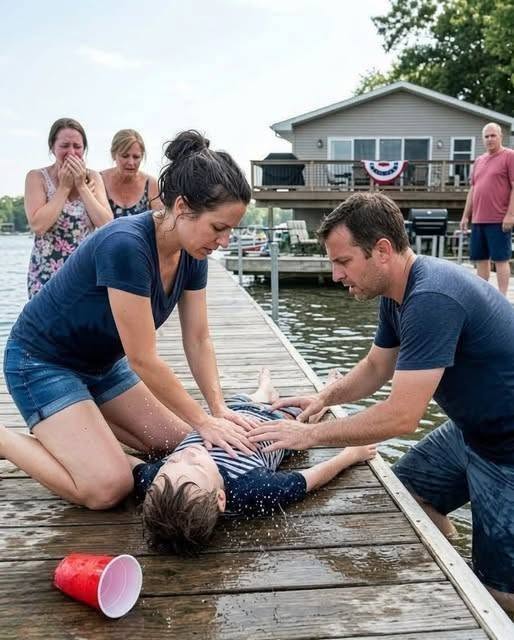
Fourteen minutes later, paramedics arrived to find me on my knees beside a blue-lipped child whose heart had stopped.
And several hours after that, while my family sat in a hospital waiting room avoiding my eyes, the chief of emergency medicine walked through the doors, looked directly at me, and said:
“Doctor? Why are you sitting out here?”
That was the moment my family finally learned the truth.
But it was not the biggest secret that came out that night.
Because my nephew had not simply wandered too far into the lake.
Someone had been watching him.
Someone had touched him.
And by the time police recovered the security footage, we realized the accident everyone had been blaming on a careless child was not an accident at all.
My name is Dr. Piper Harper.
I am a trauma surgeon.
I had been one for eleven years when all of this happened.
My mother did not know that.
Or rather, she knew.
She just never listened long enough to understand.
There is a difference.
My career had always made my family uncomfortable.
I was the first person in our immediate family to attend medical school.
The first to leave Tennessee for residency.
The first whose work took me into operating rooms at three in the morning while everyone else I knew was sleeping.
My mother hated all of it.
Not openly at first.
When I got into medical school, she cried.
I thought she was proud.
Years later, she admitted she had been terrified.
“You were leaving.”
“I was going to school.”
“It felt the same.”
That was my mother.
Change felt like abandonment to her.
Whenever my life expanded, she interpreted it as movement away from her.
My brother, Darren, reacted differently.
He competed with me.
Even though I never knew we were competing.
Darren was three years older.
Growing up, he was the easy child.
Popular.
Athletic.
Funny.
Teachers loved him.
My parents loved telling stories about him.
I was quieter.
Books.
Science competitions.
Scholarships.
The sort of achievements adults praised and siblings sometimes resented.
I did not understand that until much later.
When I was accepted into medical school, Darren said:
“Look at you. Little Miss Grey’s Anatomy.”
Everyone laughed.
So did I.
When I started residency:
“Don’t let her operate on anybody yet.”
Laughter.
When I finished surgical training:
“So what are you now? Like a really expensive nurse?”
More laughter.
My mother always laughed hardest.
I tried correcting them.
“I’m a physician.”
“Yes, honey, we know.”
“No, Mom. You introduced me as a nurse.”
“I don’t understand all those hospital titles.”
“I’m a surgeon.”
“Same difference.”
It was never the same difference.
But eventually I learned that arguing only gave everyone another opportunity to make the joke bigger.
So I stopped.
That was how eleven years passed.
Christmas dinners.
Birthdays.
Graduations.
Barbecues.
Thanksgiving.
Every gathering came with some version of the same conversation.
Someone new would ask what I did.
Before I could answer, Mom would say:
“Oh, Piper works in a hospital.”
Then Darren:
“She likes making it sound dramatic.”
Sometimes someone would ask directly:
“Are you a nurse?”
I would say:
“No, I’m a trauma surgeon.”
Then my mother would laugh.
“She’s always so serious about titles.”
After enough years, people stopped asking.
And I stopped volunteering information.
I did my work.
I saved lives.
I came home exhausted.
I received awards my family never attended.
I was promoted.
Published research.
Trained residents.
Led trauma teams.
And when I drove back to the lake for the Fourth of July, none of that mattered.
At least, I thought it didn’t.
Darren’s house sat on a beautiful stretch of water about an hour outside Nashville.
He and his wife, Melissa, had bought the place three years earlier.
It was their pride and joy.
Large deck.
Private dock.
Boat lift.
Fire pit.
Grill.
Enough lawn to host half the neighborhood.
Fourth of July at Darren’s had become a family tradition.
By two in the afternoon, there were at least forty people on the property.
Relatives.
Neighbors.
Friends.
Children.
Music blasted from speakers near the patio.
The grill smoked continuously.
Beer bottles filled coolers.
Red plastic cups covered every table.
Kids ran barefoot between the lawn and the water.
Nobody was supervising quite as closely as they should have been.
That bothered me.
I noticed because I notice things.
It is part of my job.
People assume surgeons turn off medical thinking when they go home.
We don’t.
Not completely.
I see loose rugs.
Unstable ladders.
Children near pools.
People holding their chest differently.
Eyes that do not track normally.
Breathing that sounds wrong.
It is not paranoia.
It is pattern recognition.
That afternoon, I noticed my nephew Colton’s life jacket.
Blue.
Slightly too large.
The lower strap had not been tightened.
I crouched beside him.
“Come here, buddy.”
He groaned.
“Aunt Piper.”
“Humor me.”
I adjusted the strap.
“I can swim.”
“I know.”
“Dad says I’m the best swimmer in my class.”
“Excellent.”
I tugged once.
“Now you’re the best swimmer wearing a properly fitted life jacket.”
He rolled his eyes.
He was nine.
Eye rolling was apparently a constitutional right.
Then he hugged me.
Quickly.
Before any friends saw.
“Thanks.”
“Go.”
He ran toward the dock.
That detail would matter later.
At the time, it was ordinary.
I spent most of the next hour helping with food.
I was carrying a tray of drinks when I heard my mother.
She was sitting beneath an umbrella with several neighbors I did not know.
One woman asked:
“Which daughter is yours?”
Mom pointed toward me.
“Piper.”
I kept walking.
“Oh,” the woman said. “What does she do?”
My mother laughed.
“She plays nurse somewhere.”
The women laughed politely.
I stopped.
Not visibly.
Internally.
After forty years, you learn how to take an insult without changing your walking speed.
The woman looked at me.
“A nurse?”
My mother shrugged.
“Honestly, I’m not even sure what she does anymore.”
Darren was standing nearby.
He heard.
And because apparently humiliation requires teamwork, he joined in.
“She likes making her job sound more important than it is.”
More laughter.
I looked at him.
He raised his beer.
“Love you, sis.”
That sentence made it worse.
I put the tray down.
For one second, I considered finally ending the joke.
Not smiling.
Not deflecting.
Not letting everyone pretend disrespect becomes harmless if delivered with affection.
I was going to say:
I run trauma surgeries while you sleep.
I have held people’s hearts in my hands.
I have told parents their children died.
I have worked thirty hour shifts trying to keep strangers alive.
I am not pretending to be anything.
Then I looked toward the water.
And forgot every word.
Something was floating beyond the marked swimming area.
Small.
Blue shorts.
Red shirt.
Face down.
Still.
My mind recognized the shape before my emotions did.
Colton.
The tray hit the deck.
Plastic cups flew.
Someone shouted my name.
I was already running.
I kicked off my sandals near the grass.
Reached the dock.
Jumped.
The water hit cold despite the heat.
I surfaced and swam.
Hard.
Everything narrowed.
Distance.
Body position.
Water.
Airway.
Time.
Colton did not move.
I reached him.
One arm beneath his shoulders.
Turn.
Face above water.
His lips were blue.
His eyes were partly open.
No response.
“Colton.”
Nothing.
I dragged him toward the dock.
By then people were screaming.
Someone jumped into the shallows.
Another person reached down.
Together we lifted him onto the boards.
His body landed heavily.
Too heavily.
That horrible limpness.
I have seen it in emergency rooms more times than I want to remember.
But never in a child I loved.
Never my nephew.
For half a second, Piper the aunt wanted to scream.
Piper the surgeon took over.
I checked breathing.
Nothing effective.
Pulse.
I could not detect one.
“Call 911.”
Someone shouted:
“They already did.”
“Bring the AED if there is one.”
Darren fell beside me.
“Colton.”
I ignored him.
“Piper, is he breathing?”
“No.”
Melissa screamed.
“Oh God.”
“Move back.”
I positioned Colton.
Started compressions.
Thirty.
Airway.
Breaths.
Again.
The deck disappeared.
The party disappeared.
My mother disappeared.
My brother.
The laughter.
My career.
None of it existed.
Only physiology.
Only time.
Only a nine year old body that had to begin circulating oxygen again.
One.
Two.
Three.
My arms moved automatically.
Correct depth.
Full recoil.
Rate.
Thirty.
Airway.
Breaths.
Come on.
Again.
I heard Darren crying.
Not normal crying.
Animal grief.
“Buddy, please.”
Someone pulled him backward.
Melissa was screaming Colton’s name.
I kept counting.
My knees scraped against the dock.
I did not feel it yet.
Water ran from my hair into my eyes.
My wet clothes stuck to my skin.
I kept going.
Another cycle.
Nothing.
Another.
My chest tightened.
Come on, Colton.
Do not make me tell your father what I have told other families.
Do not make me become the doctor in this story.
Be my nephew.
Breathe.
Another compression.
Then movement.
Tiny.
Almost nothing.
I stopped long enough to reassess.
Colton coughed.
Water and mucus spilled from his mouth.
I turned him.
He coughed again.
Then inhaled.
Weak.
Broken.
But air.
Someone behind me screamed with relief.
I did not celebrate.
Not yet.
His breathing was still inadequate.
I kept his airway positioned.
Watched chest rise.
Monitored response.
Talked to him.
“Colton, stay with me.”
No answer.
His eyelids fluttered.
“Come on, buddy.”
Darren tried to crawl closer.
“Can I touch him?”
“Stay near his head but give me room.”
He obeyed instantly.
That may have been the first time in our lives Darren did something simply because I told him to.
Fourteen minutes after someone called emergency services, sirens reached the road.
The paramedics arrived carrying equipment.
The lead medic dropped beside us.
I gave report immediately.
“Nine year old male, presumed submersion. Found face down beyond swim area. Pulseless and apneic on removal. CPR initiated immediately. Several cycles, spontaneous cough and respirations returned approximately—”
I checked the time.
“—nine minutes ago. Respirations weak but present. No known trauma observed initially.”
The medic looked at me.
Not suspicious.
Recognizing.
Professionals hear professionals.
“What’s your role?”
“Trauma surgery.”
He nodded once.
No surprise.
“Good.”
We transferred care.
Oxygen.
Monitor.
Vitals.
Airway support.
I backed away only when I was sure he was being managed.
That was when my hands started shaking.
Darren grabbed my shoulders.
“Is he going to live?”
I hated that question.
Doctors learn never to promise what physiology has not earned.
“He has a chance.”
“What does that mean?”
“It means we need to get him to the hospital.”
Melissa was crying into someone’s shoulder.
The paramedic finished an assessment.
Then turned toward the crowd.
“Who began resuscitation?”
“I did.”
I gave the timeline again.
Condition.
CPR.
Return of respirations.
The medic listened carefully.
Then nodded.
“Excellent work.”
Mom folded her arms.
She looked uncomfortable.
Not relieved.
Uncomfortable.
Perhaps because the afternoon had forced reality into a story she preferred not to examine.
“Well,” she said.
“Anyone could have done that.”
The paramedic stared at her.
Actually stared.
“No, ma’am.”
Mom blinked.
“What?”
“What your daughter just did is absolutely not something anyone could have done.”
Everyone went silent.
He continued.
“Recognizing arrest, initiating effective resuscitation immediately, maintaining an airway, giving a precise timeline—that gave this child a chance.”
Mom’s lips parted.
Nothing came out.
The ambulance doors closed.
Darren climbed inside.
Melissa went with him.
The rest of us followed separately.
I sat in the passenger seat of my cousin’s car wearing borrowed shorts and a sweatshirt someone found inside the house.
My knees had started bleeding.
I cleaned them with bottled water.
No one spoke.
The ride to the hospital lasted thirty minutes.
My mother sat in the back.
For once, she did not make a joke.
At the emergency department, we waited.
And waited.
Hours behave differently when someone you love is behind double doors.
Every minute becomes personal.
Darren came out once.
“They’re doing scans.”
“Good.”
“Is that good?”
“It means he’s stable enough to go for imaging.”
He nodded.
Then hugged me.
Suddenly.
Hard.
I hugged him back.
He whispered:
“Please don’t let him die.”
I closed my eyes.
“I’m not the one treating him now.”
“But you know.”
“I know he got oxygen back.”
“Is that enough?”
“We wait.”
He pulled away.
Fear makes adults look like children.
Darren looked twelve years old.
I remembered when he used to scare me with rubber snakes.
When he taught me to ride a bike.
When he held my backpack while I threw up before a school science competition.
We had not always been enemies disguised as siblings.
Something happened later.
Competition.
Family expectations.
Resentment.
We never named it.
Now none of it mattered.
The waiting room was crowded.
My mother sat with her purse against her chest.
Melissa’s parents arrived.
Neighbors.
Aunts.
Nobody mentioned my job.
Then the emergency department doors opened.
Dr. Samuel Reeves stepped out carrying a chart.
Sam was chief of emergency medicine.
We had worked together for years.
He scanned the room.
Saw me.
Stopped.
Confusion crossed his face.
“Doctor?”
Every member of my family turned.
I almost closed my eyes.
Sam walked closer.
“Piper?”
“Yes.”
“Why are you sitting out here?”
“I’m here with my family.”
He frowned.
“With your patient.”
Darren stood.
“What?”
Sam looked at him.
“Your son.”
Darren’s face drained.
Sam softened.
“Colton is responding remarkably well.”
Melissa covered her mouth.
“He is?”
“His oxygen levels have improved. Heart rhythm is stable. He is awake enough to follow simple commands.”
She sobbed.
Darren collapsed into a chair.
Mom whispered:
“Thank God.”
Sam looked at me.
“Your initial resuscitation was excellent.”
Mom shifted.
Sam noticed.
“You started CPR?”
“I did.”
He smiled slightly.
“I know.”
Then he looked around.
“And apparently nobody bothered to mention Dr. Harper is a trauma surgeon.”
Silence.
Complete.
No air.
No movement.
Darren stared at me.
Mom looked frightened.
Not proud.
Not yet.
Frightened.
Darren spoke first.
“You’re a surgeon?”
“Yes.”
“For how long?”
“Eleven years.”
“Eleven?”
“Yes.”
The number moved through the room.
Eleven years.
Eleven years of Christmases.
Birthdays.
Cookouts.
Family vacations.
Eleven years of jokes.
Eleven years of not asking.
Mom said:
“But you work at a hospital.”
Sam looked confused.
“She works at one of the busiest trauma centers in Tennessee.”
Mom’s face lost color.
I said nothing.
Sam glanced at me again.
“Actually, I came out because Colton asked for you.”
Melissa cried harder.
“He did?”
“He keeps asking for the woman who saved him.”
Darren lowered his head.
His shoulders shook.
For the first time in years, nobody called me nurse.
Nobody laughed.
Sam gestured toward the doors.
“You should see him.”
I followed.
Colton looked tiny in the hospital bed.
Children always do.
Even children who normally fill entire houses with noise become impossibly small beneath white blankets and monitoring wires.
Oxygen cannula.
Cardiac monitor.
IV.
His hair had been dried.
When he saw me, his eyes widened.
“You.”
I smiled.
“Hey, troublemaker.”
His voice was weak.
“You were there.”
“I was.”
“I couldn’t breathe.”
“I know.”
He swallowed.
“Mom says I almost died.”
I looked toward Melissa.
She cried quietly.
“You got very sick for a little while.”
“Did you save me?”
That question should have been easy.
It wasn’t.
“You did the hardest part.”
He frowned.
“What?”
“You started breathing.”
“But you helped.”
I smiled.
“Yes.”
He reached for my hand.
I took his.
“Thank you.”
Three words.
I had received awards.
Letters.
Professional commendations.
Patient families had thanked me before.
Nothing felt like that.
Because Colton did not know my title mattered.
He did not know my mother had mocked me.
He did not care about career status.
He knew only one thing.
He had been underwater.
Then somebody came.
When I returned to the waiting room, Darren stood by the window.
He looked at me.
“I owe you an apology.”
“You don’t have to do this now.”
“Yes.”
His voice cracked.
“I do.”
I stopped.
He rubbed his face.
“For years I made jokes about your job.”
I said nothing.
“I told people you were a nurse.”
Mom looked at the floor.
“I told people you exaggerated.”
He swallowed.
“I didn’t even know what hospital you worked at.”
That one hurt.
He saw it.
“I know.”
He looked ashamed.
“That’s worse, isn’t it?”
“Yes.”
He nodded.
Then:
“I was jealous.”
The room changed again.
Mom looked at him.
I stared.
“What?”
Darren laughed bitterly.
“You were always the smart one.”
“Darren.”
“No.”
He shook his head.
“Let me finish.”
I waited.
“Scholarships. Med school. Residency. Awards. Every time Mom talked about you when we were younger, I felt like I was losing some competition nobody had actually created.”
I looked at Mom.
She avoided my eyes.
Darren continued.
“When you started succeeding, I discovered something ugly about myself.”
“What?”
“I felt better when people laughed at you.”
That honesty hurt.
More than an excuse would have.
He looked toward the emergency department.
“So I helped Mom turn you into a joke.”
“You could have asked me about my life.”
“I know.”
“You could have visited my hospital.”
“I know.”
“Do you understand that I stopped talking about work because every time I did, you acted like I was bragging?”
His eyes filled.
“Yes.”
“I missed family holidays because people were bleeding to death.”
“I know.”
“You told everyone I was avoiding the family because I thought I was better than you.”
He cried.
“I know.”
“Stop saying you know.”
He nodded.
“You’re right.”
Mom suddenly stood.
“That’s enough.”
Everyone looked at her.
She was angry.
I knew that expression.
Mom became angry whenever guilt got too close.
She pointed at me.
“You could have told us.”
I almost laughed.
“I did.”
“No.”
“Yes.”
“You said you worked in trauma.”
“I told you I finished surgical residency.”
“You were always vague.”
“I showed you my board certification.”
“I don’t know what those things mean.”
I stared at her.
“Mom, I said the words ‘I am a trauma surgeon.’”
She opened her mouth.
I continued.
“At my graduation.”
She looked away.
“At Christmas.”
Silence.
“When I became attending.”
Nothing.
“When I was promoted.”
Her eyes filled.
“I stopped explaining because every time I told you something, you made it smaller.”
“I was joking.”
“You told Aunt Linda I was pretending to be a doctor.”
“I didn’t mean it like that.”
“You told Darren’s neighbors I passed out bandages.”
“I was trying to be funny.”
“You told people I wore scrubs because I wanted attention.”
She flinched.
“You said that?”
Darren looked at her.
Mom sat.
Her anger disappeared.
Slowly.
Like a balloon losing air.
“I was proud of you.”
I looked at her.
“You never acted like it.”
She cried.
“I didn’t know how.”
“That isn’t an excuse.”
“I know.”
I almost corrected her.
Then didn’t.
She wiped her face.
“You kept becoming someone I didn’t recognize.”
There it was.
“What does that mean?”
“You left.”
“For school.”
“Then residency.”
“Yes.”
“Then the hospital.”
“Yes.”
“Every time you came home, you were different.”
I felt an old ache.
“Mom.”
She looked at me.
“I wasn’t becoming someone else.”
My voice softened.
“I was becoming myself.”
Tears ran down her face.
“I know that now.”
“No.”
I shook my head.
“You knew then. You just didn’t like it.”
That was harder.
Because it was true.
She did not answer.
Sam appeared at the doorway again.
His expression had changed.
Professional.
Serious.
“Piper.”
I stood.
“Can I speak with you privately?”
We entered a consultation room.
He closed the door.
“What happened?”
“Colton is improving.”
“But?”
“There is something unusual.”
My mind shifted instantly into medicine.
“What?”
“When he woke, he repeatedly said he wasn’t alone.”
I frowned.
“In the water?”
“Yes.”
“Confusion?”
“Possibly.”
“Hypoxia can cause memory distortion.”
“I know.”
“So why are you concerned?”
Sam opened the chart.
“He described seeing someone beneath the water before losing consciousness.”
I stared.
“Another child?”
“He doesn’t know.”
“Could be a fragmented memory.”
“Could.”
Sam hesitated.
“What else?”
“The lake house security camera covering the swimming area stopped recording.”
My stomach tightened.
“When?”
“For roughly twelve minutes.”
I already knew the answer.
“When Colton disappeared.”
“Almost exactly.”
I crossed my arms.
“Who told you?”
“Your brother called the property manager asking for footage.”
“Did someone disable it?”
“Unknown.”
“Sam, this sounds like a police matter.”
“It is becoming one.”
He turned the chart toward me.
“One more thing.”
“What?”
“EMS documented bruising around Colton’s upper arm.”
I remembered lifting him.
I had focused on airway.
Breathing.
Circulation.
I had not done a complete trauma exam.
“Pattern?”
“Not definitive.”
“Could be from rescue.”
“Possibly.”
“Could be dock impact.”
“Possibly.”
“You think it looks like a grip.”
Sam met my eyes.
“Yes.”
My phone vibrated.
Darren.
Come back. Mom remembered something.
My stomach dropped.
When I returned to the waiting room, everyone looked different.
Darren stood beside Mom.
Melissa sat rigidly.
“What happened?”
Darren swallowed.
“Mom saw somebody.”
I looked at her.
“Who?”
“I don’t know.”
“Where?”
“Near the dock.”
“When?”
“Before Colton disappeared.”
My chest tightened.
“Describe him.”
“Dark shirt. Baseball cap.”
“Guest?”
“I don’t think so.”
“Why didn’t you tell anyone?”
She looked ashamed.
“I thought I imagined it.”
“That isn’t the truth.”
She started crying.
“What?”
“You remember enough to describe him.”
Mom looked away.
“Why didn’t you tell anyone?”
Her voice became tiny.
“I was afraid I would be blamed.”
I stared.
“For what?”
“For not saying anything sooner.”
Darren exploded.
“Mom, your grandson almost died.”
“I know.”
“And you were worried about being blamed?”
“I panicked.”
He turned away.
I understood something then.
My mother’s entire life revolved around avoiding shame.
That was why she mocked my career.
Why she changed stories.
Why she kept quiet.
Why she could watch something concerning and talk herself out of saying anything.
She feared being wrong more than she valued being heard.
A police officer entered soon after.
Then another.
They interviewed Darren.
Melissa.
Mom.
Me.
I described exactly where I found Colton.
Body position.
Distance from dock.
Life jacket absent.
Respiratory arrest.
CPR.
Bruising.
The officer paused.
“Life jacket absent?”
“Yes.”
Darren looked up.
“What?”
“He wasn’t wearing it when I found him.”
“I put it on him.”
“I know.”
“I tightened it.”
I nodded.
“I tightened it too.”
The officer’s expression changed.
Later, an officer returned carrying a printed photograph.
A blue life jacket lay near the dock.
Darren stood.
“That’s his.”
“Where was it?”
“Approximately thirty feet from where Dr. Harper said she recovered him.”
I studied the picture.
Something near the buckle caught my attention.
“Zoom that.”
The officer frowned.
“What?”
“The lower strap.”
He enlarged the image on a tablet.
A thin black fiber was caught inside the buckle.
Darren whispered:
“That’s not from Colton’s shirt.”
“No.”
The investigation intensified.
At 3:41 p.m., recovered footage from a camera farther down the shoreline showed Colton entering the water.
At 3:48, a man in a dark shirt appeared near the trees.
At 3:52, he moved toward the dock.
At 3:55, Colton disappeared.
At 3:57, I saw him.
At 4:01, I got him onto the dock.
The camera did not provide a clear face.
But it proved Mom had not imagined the man.
Police discovered tire tracks near a service road.
A gate had been forced earlier that afternoon.
Someone had entered the property without permission.
The party suddenly looked different in memory.
We had assumed every unfamiliar face belonged to a neighbor.
A friend of a friend.
Someone’s cousin.
A crowded lake house creates anonymity.
Two days later, police found the man at a motel several miles away.
His name was Travis Morrow.
I had never heard of him.
Neither had Darren.
He had been stealing equipment from lake houses.
Tools.
Fishing gear.
Electronics.
Anything easy to carry.
According to investigators, Colton saw him near the dock.
The man panicked.
Grabbed him by the arm.
Colton struggled.
The life jacket tore loose.
And when the man shoved him away, Colton hit the water awkwardly, became disoriented, and went under.
The man fled.
He assumed the child would surface.
Then, when he did not, he kept running.
He never knew I saw Colton.
He never knew I reached him.
He never knew the woman everyone at the party had been laughing at had spent eleven years working in trauma surgery.
That part of the story spread quickly through my family.
Too quickly, actually.
Relatives turned it into a morality tale.
Don’t mock Piper because she might save your child.
I hated that lesson.
My brother noticed.
A week later, Colton came home.
Weak.
Tired.
But neurologically intact.
That phrase meant everything to me.
No major hypoxic injury.
No permanent cognitive deficit we could identify.
He needed follow up.
Rest.
Time.
But he came home.
Darren hosted a small dinner.
No alcohol.
No lake.
No jokes.
After everyone ate, he stood with a glass of water.
“I need to say something.”
I immediately wanted to disappear.
Public apologies make me uncomfortable.
He looked at me.
“For years, I told people my sister exaggerated her career.”
Nobody moved.
“I was wrong.”
Mom stared at her plate.
“She wasn’t exaggerating.”
He swallowed.
“She was telling the truth.”
His voice broke.
“She saved my son.”
Colton ran from his chair.
Straight into me.
I caught him.
He hugged my neck.
“You’re my hero.”
I smiled.
“No.”
“Yes.”
“I’m just your annoying aunt.”
“You saved me.”
“I was there.”
“That’s what Dad says.”
“What?”
“He says you came.”
You came.
Two words.
They lodged somewhere inside me.
Maybe that was what medicine really was.
Not status.
Not titles.
Not plaques.
Not convincing family members you were important.
You came.
When somebody needed help, you came.
Mom approached after dinner.
Everyone else had gone outside.
She stood beside me.
“I’m sorry.”
I waited.
“For what?”
She laughed sadly.
“That is a dangerous question.”
“Yes.”
She looked at me.
“For making you feel like the best parts of you were embarrassing.”
I did not answer immediately.
“You didn’t understand my work.”
“No.”
“That would have been okay.”
She nodded.
“But you made not understanding into contempt.”
Her eyes filled.
“I know.”
“You made people laugh.”
“I know.”
“You let Darren think I was trying to compete with him.”
“I know.”
“Did you mean to?”
She hesitated.
“No.”
I believed that.
“But?”
“I liked when you came home and seemed ordinary.”
That hurt.
“Ordinary.”
“I don’t mean…”
“Yes, you do.”
She wiped her face.
“When you talked about surgery, I felt stupid.”
I stared.
“Mom.”
“I didn’t understand the words.”
“You could have asked.”
“I know.”
“So you joked.”
“Yes.”
“Because that made you feel less stupid.”
She nodded.
There it was.
Not malice.
Insecurity.
Still damaging.
Understanding why someone hurts you does not make the hurt disappear.
But it helps you decide what comes next.
“I can’t fix eleven years.”
“No.”
“I can stop.”
“Yes.”
“I will.”
I looked at her.
For the first time, I believed she meant it.
Darren’s apology was harder.
He came to my apartment two weeks later.
No Colton.
No audience.
He brought coffee.
I opened the door.
“What do you want?”
“Forgiveness eventually.”
I raised an eyebrow.
“That’s ambitious.”
He almost smiled.
“Can I come in?”
I let him.
He sat at my kitchen table.
For several minutes, nothing happened.
Then:
“I hated med school.”
“You didn’t attend.”
“I hated you being in med school.”
I laughed.
“At least that’s honest.”
“Every family dinner became Piper got another scholarship. Piper got into another program. Piper is doing residency.”
“You were running your own business.”
“I know.”
“You bought your first house before I finished training.”
“I know.”
“You had two kids.”
“I know.”
“You were successful.”
“That didn’t matter.”
“Why?”
He looked at me.
“Because Mom compared us.”
I froze.
“What?”
“She didn’t do it to you?”
“No.”
Darren laughed without humor.
“She did it constantly to me.”
He mimicked her voice.
“Piper always studied.”
“Piper never needed us to remind her.”
“Piper knows where she’s going.”
I closed my eyes.
Of course.
Mom diminished me in public because my achievements intimidated her.
Then used those same achievements to diminish Darren privately.
Family systems are efficient that way.
Everybody loses for different reasons.
“I didn’t know.”
“I know.”
He took a breath.
“So when she started joking about your job, I joined.”
“Because it felt good.”
“Yes.”
“Did you believe I wasn’t a surgeon?”
“At first, no.”
That surprised me.
“Then?”
“After years of hearing the joke, I stopped thinking about it.”
“You never asked.”
“No.”
“Why?”
He stared at the coffee.
“Because asking might have made me confront what I was doing.”
That was the best answer he could have given.
Not flattering.
True.
“I’m sorry.”
I nodded.
“I believe you.”
Hope appeared.
“That doesn’t mean everything is fixed.”
“I know.”
“Stop.”
He smiled.
“Right.”
He corrected himself.
“I understand.”
Better.
Months passed.
Colton returned to school.
The man who pushed him faced criminal charges.
My mother stopped introducing me as a nurse.
Actually, she overcorrected.
At Thanksgiving:
“This is my daughter, Dr. Piper Harper, trauma surgeon.”
I whispered:
“Mom.”
“What?”
“You’re introducing me to Aunt Linda.”
“She forgets things.”
Aunt Linda glared.
“I’m seventy, not dead.”
We laughed.
That was healing too.
Not dramatic.
Awkward.
Sometimes funny.
At Christmas, Darren gave me a framed photograph.
It showed Colton standing on the dock.
Life jacket properly fitted.
On the back:
Aunt Piper,
Dad says heroes are people who come when you need them.
Love,
Colton.
I cried in the bathroom.
Not in front of everyone.
I have a reputation.
At work, nothing changed.
That mattered.
The next Monday after Colton came home, I was back in the trauma bay.
Motor vehicle collision.
Two critical patients.
One operating room became available.
Decisions.
Blood.
Noise.
Focus.
Nobody cared what my family called me.
Medicine is indifferent to family narratives.
A bleeding artery does not ask whether your mother respects your title.
A collapsed lung does not care if your brother thinks you exaggerate.
That became strangely comforting.
For years, I thought my family’s refusal to understand my career diminished it.
It did not.
It diminished our relationship.
The work remained what it was.
One night after a long shift, Sam found me sitting in the physician lounge.
“You okay?”
“Yes.”
“You look terrible.”
“Thank you.”
“You’re welcome.”
He sat.
“How’s your nephew?”
“Good.”
“Family?”
I laughed.
“Define good.”
He smiled.
Then:
“You know everybody heard about the waiting room.”
I groaned.
“Of course.”
“Your mother really thought you were a nurse?”
“She thought a lot of things.”
“Did she not attend your graduation?”
“She attended.”
Sam stared.
“How?”
“I have stopped trying to solve that puzzle.”
He laughed.
Then grew serious.
“You know what bothers me?”
“What?”
“That you let them make you ashamed.”
I looked at him.
“I wasn’t ashamed.”
“Not exactly.”
He searched for the word.
“Smaller.”
That landed.
I had made myself smaller.
Not at work.
At home.
I stopped discussing cases.
Promotions.
Research.
Not because of confidentiality.
Because enthusiasm attracted ridicule.
I had trained myself to return to my family and remove the most demanding part of my identity.
Maybe that was why Colton’s rescue affected me so deeply.
For once, there was no way to minimize it.
They watched.
They needed what I knew.
The skill they mocked became the thing standing between them and unimaginable grief.
But I did not want that to become another weapon.
I refused to say:
See? You should have respected me because I saved him.
That would mean respect had to be earned through usefulness.
No.
They should have respected me before.
When I was simply Piper.
Whether I was a surgeon.
Nurse.
Receptionist.
Waitress.
Unemployed.
Anything.
Dignity should not depend on impressive credentials.
That was something my mother still needed to learn.
One afternoon we discussed it.
She said:
“I’m proud of you now.”
I looked at her.
“Now?”
Her face changed.
“You know what I mean.”
“Yes.”
“That’s why I’m asking.”
She sighed.
“I was always proud.”
“No.”
I shook my head.
“You were proud when my success made you look good.”
She flinched.
“That’s cruel.”
“It might be.”
“Do you really think that?”
“Yes.”
She looked hurt.
I almost apologized.
Then did not.
Mom sat quietly.
Finally:
“When you were little, people told me how smart you were.”
I waited.
“I loved it.”
“And when I got older?”
“It stopped feeling like something I had created.”
There it was.
“I became separate from you.”
“Yes.”
“And you hated that.”
“I was afraid of it.”
I nodded.
“That makes more sense.”
She cried.
“I’m trying.”
“I know.”
This time I said it kindly.
Because she was.
Darren changed too.
At a neighborhood barbecue the following summer, someone asked what I did.
Before Mom could answer, Darren said:
“She’s a trauma surgeon.”
No joke.
No eye roll.
Just fact.
Then he added:
“And annoyingly good at it.”
I pointed at him.
“That part I’ll allow.”
The man asked about Colton.
Darren’s smile disappeared.
“He’s alive because she was there.”
I interrupted.
“He’s alive because everyone worked together.”
Darren looked at me.
“You started his heart.”
“His heart restarted.”
“You know what I mean.”
“Yes.”
Then quietly:
“Thank you.”
I squeezed his shoulder.
We were becoming siblings again.
Not competitors.
The lake house changed after the incident.
More cameras.
Locked service road.
Stricter life jacket rules.
A designated adult watching the water whenever children swam.
No exceptions.
Darren became almost obsessive.
I understood.
Trauma creates rituals.
Control is how frightened people try to negotiate with uncertainty.
One day I found him checking Colton’s life jacket for the fourth time.
“Darren.”
“What?”
“It’s secure.”
“I’m just checking.”
“You checked.”
“It can loosen.”
“Yes.”
“Then why not check?”
“Because eventually Colton needs to learn safety without absorbing your fear.”
He stared at me.
“That sounds like doctor nonsense.”
“It’s sister nonsense.”
He smiled.
“Better.”
The police case concluded later that year.
The man admitted he panicked when Colton saw him carrying stolen equipment.
He claimed he never meant to kill him.
I believed that was possible.
It did not make what he did less serious.
He grabbed a child.
Removed his ability to stay safely afloat.
Shoved him toward the water.
Then left.
Intent matters legally.
Consequences matter morally.
Darren wanted the harshest punishment possible.
Melissa wanted never to hear the man’s name again.
Mom said she could not stop imagining what would have happened if I had been inside.
That was the question none of us liked.
What if I had missed the shape in the water?
What if I had gone home after the jokes?
What if I had been in the bathroom?
What if CPR started five minutes later?
Medicine teaches you not to live in counterfactuals.
There are too many.
What if.
What if.
What if.
Eventually those questions become another form of drowning.
Colton was alive.
That was the truth we were allowed to keep.
Months later, I returned to the lake alone.
Summer had ended.
The dock was empty.
Water perfectly still.
I stood where Colton had lain.
My knees remembered the rough boards.
My hands remembered compressions.
My ears remembered Melissa screaming.
Then another memory came.
My mother laughing.
“She plays nurse.”
It felt smaller now.
Not because it stopped hurting.
Because it no longer defined anything.
My phone rang.
Darren.
“How’s the lake?”
“Quiet.”
“Colton wants to know when you’re coming over.”
“Soon.”
Pause.
Then:
“Piper.”
“Yes?”
“I’m proud of you.”
I closed my eyes.
For years, I had imagined what it would feel like if my family finally said those words.
I expected triumph.
Vindication.
Maybe satisfaction.
Instead, I felt sad.
Because I had wanted them eleven years earlier.
Then something else.
Relief.
“Thank you.”
We hung up.
I looked over the water.
I realized I had spent too much of my life waiting for permission.
Permission to be proud.
Permission to talk about medicine.
Permission to be ambitious.
Permission to become different from the girl my family remembered.
I never needed it.
That was the real lesson.
Not that the doctor eventually proved everyone wrong.
Not that the surgeon saved the boy.
Not that the family was embarrassed.
The truth was simpler.
I had always been exactly who I said I was.
Even when they laughed.
That realization changed more than family dinners.
I started talking about work again.
Not constantly.
Not to impress anyone.
But when someone asked, I answered.
“I’m a trauma surgeon.”
No apology.
No joke afterward.
No attempt to soften the title.
At my mother’s birthday, one of her friends said:
“I heard you saved your nephew.”
I answered:
“I helped.”
Mom immediately said:
“She did more than help.”
I looked at her.
She caught herself.
Then smiled.
“Sorry.”
“For what?”
“I’m still trying to figure out how to be proud without making your life into my accomplishment.”
That was growth.
Messy.
Awkward.
Real.
“You’re doing okay.”
She smiled.
“High praise from the surgeon.”
I rolled my eyes.
We laughed.
A year later, Colton asked to visit my hospital.
Darren looked terrified.
“He’ll see blood?”
“Not if we plan it.”
“Needles?”
“Probably.”
“Is this a good idea?”
Colton stood behind him.
“Dad.”
I smiled.
“We can tour nonclinical areas.”
Darren eventually agreed.
Colton came wearing a tiny tie.
I nearly cried.
One of my residents recognized him from the story.
“This is the famous nephew?”
Colton grinned.
“I drowned.”
Darren looked horrified.
“You did not drown.”
Colton shrugged.
“Aunt Piper fixed it.”
I crouched.
“No.”
He sighed.
“I know. I started breathing again.”
“Exactly.”
My resident laughed.
We showed him the simulation lab.
He tried chest compressions on a mannequin.
Too shallow.
I corrected his hand placement.
He became serious.
“Like this?”
“Yes.”
He pressed.
“Harder.”
He pressed again.
“Good.”
After five minutes, he asked:
“Can kids save people too?”
“Yes.”
“How?”
“Call for help. Learn CPR when you’re old enough. Tell an adult if something seems wrong.”
He nodded.
Then:
“Grandma saw the bad man.”
I froze.
“Yes.”
“She didn’t tell.”
“No.”
“Why?”
Children ask the question adults avoid.
“Because she was afraid she might be wrong.”
He thought.
“That’s dumb.”
I laughed.
“A little.”
“Would you tell?”
“I hope so.”
He nodded.
Then went back to the mannequin.
That night I called Mom.
“Colton asked why you didn’t tell anyone.”
Silence.
“What did you say?”
“That you were afraid of being wrong.”
She sighed.
“That’s true.”
“He said it was dumb.”
Mom laughed.
“He’s right.”
That was another change.
She no longer defended every mistake.
Some people think growth means never doing wrong again.
Usually it means becoming less interested in protecting your ego afterward.
Darren and I eventually talked about competition again.
He admitted Mom had compared us from childhood.
I admitted I sometimes enjoyed being “the successful one.”
That surprised him.
“Seriously?”
“Yes.”
“You never acted like it.”
“Of course not.”
“Why?”
“I wanted plausible deniability.”
He laughed.
“So you’re terrible too.”
“Obviously.”
That conversation helped.
Because healing becomes dangerous when one person becomes morally perfect.
I had my own pride.
My own resentments.
When Darren mocked me, I began assuming everything he said came from jealousy.
Sometimes he was just joking badly.
Sometimes he was jealous.
Both could be true.
Mom’s insecurity did not absolve her.
My success did not make me superior.
Colton’s rescue did not settle some cosmic family score.
It just forced us all to stop pretending.
Years passed.
Colton became a teenager.
Then a strong swimmer again.
The first time he returned to deep water, Darren nearly had a panic attack.
I stood beside him.
“You can’t stop him.”
“I know.”
“He’s wearing a vest.”
“I know.”
“Lifeguard is there.”
“I know.”
I smiled.
“Now you know how annoying that sounds.”
He glared.
“Shut up.”
Colton jumped.
Darren stopped breathing.
Then Colton surfaced.
Waved.
Darren exhaled.
Healing.
Again.
Small.
Ordinary.
One Christmas, Mom handed me a scrapbook.
Inside were clippings I had never seen.
Medical school graduation.
Residency completion.
Hospital award.
A magazine interview.
A photograph from a charity trauma fundraiser.
I stared.
“Where did you get these?”
“I saved them.”
My throat tightened.
“All these years?”
She nodded.
“Then why…”
I stopped.
She knew the question.
“Because I was proud privately.”
“That may be the most Mom sentence you’ve ever said.”
She laughed sadly.
“I know.”
“Why hide it?”
“I thought if I admitted how proud I was, I had to admit how afraid I was of losing you.”
I sat beside her.
“You never lost me.”
“I know.”
“You pushed me away.”
“I know.”
I squeezed her hand.
“Still working on it?”
“Every day.”
We looked through the scrapbook.
It did not erase the jokes.
It added context.
Context is not forgiveness.
But it can be a bridge.
The most unexpected person changed because of what happened at the lake.
Me.
Before Colton, I had started thinking my work was the only part of myself my family could never take.
Afterward, I realized I had made medicine into armor.
If I was excellent enough, nobody could make me feel small.
That is a dangerous bargain.
Because careers can fail too.
Patients die.
Surgeries go wrong.
Bodies do not always respond.
If my worth depended on being the person who always knew what to do, eventually medicine would break me.
Colton taught me that by accident.
When he asked:
“Did you save me?”
I said:
“You did the hard part.”
That was not false humility.
Doctors participate.
We intervene.
We guide.
We fight.
But life is not ours to command.
His body responded.
EMS continued care.
The ER stabilized him.
The ICU monitored him.
Nurses watched him through the night.
Respiratory therapists adjusted oxygen.
Everybody mattered.
Including the aunt on the dock.
But not only her.
That made me better at my job.
More humble.
Less hungry for recognition.
Ironically, just as my family finally learned my title, I needed the title less.
My mother noticed.
“You don’t talk about being a surgeon as much anymore.”
“I talk about it more.”
“No.”
She frowned.
“You talk about work.”
I understood.
Before, whenever I defended myself, I defended the title.
Now I told stories.
Residents.
Patients.
Research.
Exhaustion.
Funny hospital moments.
The actual work.
She asked questions.
Sometimes bad questions.
“Do surgeons take blood pressure?”
“Yes, Mom.”
“So you are sort of a nurse.”
I stared.
Her eyes widened.
Then she burst out laughing.
“You should see your face.”
I threw a napkin at her.
Progress does not require the family to lose its sense of humor.
Just cruelty.
At another Fourth of July party years later, we returned to Darren’s lake house.
Fewer people.
More rules.
Colton, now fifteen, wore a life jacket while kayaking.
Darren watched from the dock.
Mom sat beside me.
Someone new asked:
“What do you do?”
Before Mom could answer, I looked at her.
She raised both hands.
“I learned.”
I laughed.
“I’m a trauma surgeon.”
The woman smiled.
“That must be intense.”
“It can be.”
Mom added:
“She’s very good.”
I looked at her.
“What?”
“Too much?”
“No.”
I smiled.
“That was fine.”
Then she whispered:
“I also have scrapbook evidence.”
“Mom.”
The afternoon remained uneventful.
That felt miraculous.
At sunset, Colton sat beside me.
“Do you remember?”
“The accident?”
“Yes.”
“Some.”
“What?”
He looked toward the water.
“Someone grabbing me.”
I stayed quiet.
“I remember being angry because he touched my arm.”
“Yes.”
“Then cold.”
My chest tightened.
“Anything else?”
“You.”
“What about me?”
“I remember your voice.”
I swallowed.
“What did I say?”
“Stay with me.”
My eyes filled.
He smiled.
“You sounded mad.”
“I probably was.”
“Were you scared?”
“Yes.”
He seemed surprised.
“I thought doctors don’t get scared.”
“Doctors get terrified.”
“Then how do you do stuff?”
I thought about Thomas Mercer’s words from another life—no, that’s from prior story, ignore. Keep source self-contained. Need not import.
I answered:
“Training helps you know what to do while you’re scared.”
He nodded.
“That makes sense.”
Then he bumped my shoulder.
“I’m glad you were there.”
“Me too.”
We watched fireworks.
Red.
Blue.
White.
Reflections spread across the lake.
The same water that almost took him.
Now simply water again.
That is what healing sometimes does.
It returns objects to themselves.
A lake becomes a lake.
A dock becomes wood.
A Fourth of July becomes a holiday instead of an anniversary.
My brother stopped introducing me through the rescue.
For a while he said:
“This is Piper. She saved Colton.”
I eventually corrected him.
“Darren.”
“What?”
“I had a life before your son almost drowned.”
He looked embarrassed.
“You’re right.”
Now he says:
“My sister Piper.”
Sometimes:
“My sister is a surgeon.”
But usually just Piper.
That feels better.
Because for years, my family minimized my work.
Then they almost overcorrected and made my career my entire identity.
Neither was right.
I am a surgeon.
Also a sister.
Daughter.
Aunt.
Friend.
Woman who forgets laundry in the washer.
Terrible gardener.
Excellent cook only if pasta counts.
Person who still cries at stupid commercials.
Medicine matters enormously.
It is not everything.
That was another truth the lake gave back to me.
The man responsible for what happened to Colton eventually accepted a plea.
Darren attended sentencing.
I did not.
People were surprised.
“Why wouldn’t you want to see him punished?”
Because I had seen enough consequences.
I did not need his face inside my memory too.
Darren later told me he apologized.
Not convincingly.
It did not matter.
Forgiveness is not required for recovery.
Neither is witnessing punishment.
Sometimes closure is simply deciding a person no longer deserves mental real estate.
The security footage was preserved for the case.
Then archived.
I never watched it.
Police offered.
I said no.
I had enough images already.
Colton floating.
Blue lips.
My hands compressing his chest.
His first breath.
Those were enough.
Years later, a nurse at my hospital asked if the family story was true.
“Which version?”
“That your family thought you were a nurse.”
I laughed.
“They thought a lot of things.”
She looked offended.
“Nothing wrong with being a nurse.”
“Exactly.”
That mattered too.
The joke had always bothered me partly because it erased my actual career.
But the way my family used the word nurse also carried disrespect.
As if nurses were lesser.
They are not.
The irony was painful.
The people who laughed at me for being “just a nurse” had no idea how many times nurses had saved my patients from my mistakes.
Caught medication errors.
Noticed subtle changes.
Advocated when a patient declined.
Held families together while physicians moved between rooms.
So I corrected the story whenever it came up.
“My family did not insult me because nursing is inferior.”
“What did they insult?”
“They used the wrong title because they wanted my work to feel smaller.”
That distinction mattered.
My mother eventually understood that too.
At a hospital fundraiser, she met one of our senior trauma nurses.
Mom said:
“So you work with Piper?”
The nurse laughed.
“Sometimes Piper works with me.”
Mom looked at me.
I smiled.
“She’s right.”
Mom nodded seriously.
“Then thank you for keeping her organized.”
The nurse nearly fell over laughing.
I did not speak to Mom for at least seven minutes.
Years after the lake, Sam retired.
At his farewell dinner, he told the story of seeing me in the waiting room.
“I thought she had been fired.”
Everyone laughed.
“I’m serious. Piper was sitting outside the ER in wet clothes looking like a civilian.”
I shouted:
“I was a civilian.”
He ignored me.
“Then I realized the family had no idea what she did.”
He shook his head.
“I have never enjoyed saying ‘Doctor’ more in my career.”
My face burned.
I hated that everyone laughed.
I loved it too.
Sam raised his glass.
“To people who know who they are even when the room doesn’t.”
That one stayed with me.
Because that was the real answer.
My identity did not begin when the ER chief recognized me.
It did not begin when my brother apologized.
It did not begin when Mom stopped laughing.
It did not begin when Colton called me his hero.
I knew who I was.
I just had not learned to stop needing my family to confirm it.
There is a difference.
One evening Mom asked:
“Do you forgive me?”
We were in her kitchen.
Nothing dramatic.
She was cutting strawberries.
I was washing dishes.
I thought carefully.
“Mostly.”
She looked offended.
“Mostly?”
“Yes.”
“How much is mostly?”
“Eighty seven percent.”
She laughed.
“Specific.”
“I’m a scientist.”
“What about the other thirteen?”
“Still annoyed.”
She smiled.
“Fair.”
Then, after a moment:
“I forgive myself less.”
I turned.
“That’s not healthier.”
“I know.”
“You made mistakes.”
“Yes.”
“You also changed.”
“Yes.”
“Then stop making guilt into another way to center yourself.”
She stared.
“That sounded like therapy.”
“It was free. Be grateful.”
She laughed.
Then hugged me.
That was us now.
More honest.
Still imperfect.
Better.
Darren’s relationship with me took longer.
Siblings store resentment differently.
We would be fine for months.
Then some old joke came back.
He would tease.
I would react too strongly.
He would say:
“I wasn’t talking about your career.”
“I know.”
“Then why are you mad?”
“Because my nervous system has archives.”
He learned.
I learned.
Eventually he said:
“You know, you made me smaller too.”
I froze.
“When?”
“When we were kids.”
“What did I do?”
“You corrected everything.”
I laughed.
“I was twelve.”
“You corrected my grammar at dinner.”
“You were wrong.”
He stared.
I laughed harder.
“Okay. Point taken.”
“You always had to be right.”
“I liked being right.”
“You made me feel stupid.”
That hurt.
“I’m sorry.”
He seemed surprised.
“That easy?”
“No.”
I smiled.
“But I’m trying this thing where I believe people when they tell me how I affected them.”
He nodded.
“Annoyingly mature.”
“Surgeon.”
“Don’t start.”
We laughed.
Family healing is rarely one apology moving in one direction.
Once people become honest, everybody finds mirrors.
The lake incident did not make me morally superior.
It simply created enough fear that we finally stopped hiding.
Years passed.
Colton graduated high school.
At his graduation party, someone asked what he wanted to study.
“Emergency medicine.”
Darren nearly dropped his plate.
“What?”
Colton laughed.
“Kidding.”
Darren looked ready to faint.
Then Colton added:
“Maybe biology.”
I smiled.
Later he told me:
“I do think medicine is interesting.”
“You don’t owe medicine anything because of what happened.”
“I know.”
“You don’t have to become a doctor.”
“I know.”
“Or nurse.”
“I know.”
“Paramedic.”
“Aunt Piper.”
“Fine.”
He smiled.
“But if I do?”
“Then do it because you want the work.”
Not the title.
Not the story.
The work.
That became important to me.
Maybe because my family had spent years reducing my profession to a label.
Doctor.
Nurse.
Real.
Pretend.
Eventually I realized careers are verbs before they are nouns.
Medicine is doing.
Showing up.
Learning.
Failing.
Trying again.
Listening.
Cutting.
Repairing.
Waiting.
Telling people the truth.
Sometimes saving.
Sometimes losing.
No title captures that.
The Fourth of July when Colton drowned—or nearly drowned—became family mythology.
Mom told it wrong at first.
“Piper dove into the lake from twenty feet away.”
“It was a dock.”
“She swam like an Olympic athlete.”
“I absolutely did not.”
“She restarted his heart with one compression.”
“Mom.”
Eventually I banned her from storytelling without supervision.
But the core stayed.
Everyone panicked.
I knew what to do.
That was true.
And I had trained for years so that when a moment arrived nobody wanted, my body could move before fear stopped me.
That is what expertise often looks like from outside.
Calm.
It is not calm.
It is organized fear.
One morning a resident asked me how I stayed focused during catastrophic trauma.
I thought about Colton.
“I don’t.”
She looked confused.
“I get scared.”
“But you look calm.”
“That is different.”
“How?”
“Training turns panic into sequence.”
Airway.
Breathing.
Circulation.
Bleeding.
Imaging.
Operating room.
One decision.
Then another.
That was what happened on the dock.
Not heroism.
Sequence.
But maybe heroism is overrated as a concept.
Most lives are saved by people doing the next necessary thing.
The young person who calls 911.
The bystander who starts CPR.
The nurse who notices deterioration.
The paramedic who reaches the scene.
The surgeon who operates.
The family member who remembers medications.
The patient who keeps fighting.
You came.
Maybe Colton was right.
Years later, Mom developed chest pain at home.
Guess who she called first?
Me.
Of course.
“Piper.”
“What?”
“My chest feels strange.”
“Call 911.”
“I thought I would call you.”
“Call 911.”
“But—”
“Mom.”
She called.
Turned out not to be a heart attack.
Severe reflux.
At the hospital she whispered:
“I knew you’d know what to do.”
I stared.
“The thing I knew was to call 911.”
“Yes.”
“So could you.”
She smiled.
“I like your answer better.”
Some habits never completely disappear.
But dependence felt different once respect existed.
I did not need Mom to understand medicine.
I needed her to trust that when I spoke about my own life, I knew what I was talking about.
That was all I had ever asked.
Darren eventually sold the lake house.
Not because of the accident.
At least, not entirely.
The family needed more space.
Colton wanted to be closer to school.
Still, when Darren signed the paperwork, he called me.
“It’s gone.”
“How do you feel?”
“Relieved.”
“That’s okay.”
“Do you think I’m running?”
“No.”
“How do you know?”
“Because you went back.”
He had.
Many times.
Colton had swum again.
They had hosted parties.
They had rebuilt ordinary memories.
Selling was not escape.
It was choice.
That mattered.
Before moving, Darren invited me for one final evening.
Just family.
Mom.
Melissa.
Colton.
Darren.
Me.
We sat on the dock.
No music.
No guests.
No red cups.
Sunset.
Darren handed me a beer.
“I never thanked you properly.”
“Yes, you did.”
“No.”
I looked at him.
He stared at the water.
“If you had left after the jokes…”
“Don’t.”
He stopped.
“What?”
“Don’t build a universe where I didn’t see him.”
He nodded.
“I think about it.”
“I know.”
“I’m sorry.”
“For the jokes?”
“For making you feel like leaving would have been reasonable.”
That hit me.
Because it had been.
I had almost left early that day.
I was tired.
Humiliated.
I remember thinking:
Why do I keep coming to these things?
Then I saw Colton.
“I’m glad I stayed.”
“So am I.”
He looked at me.
“I don’t deserve what you did.”
“That sentence makes no sense.”
“What?”
“Medical care is not something people deserve based on whether they were nice to you.”
He smiled sadly.
“You really are a doctor.”
“Apparently.”
Mom groaned.
“Please don’t start that joke again.”
We all laughed.
Even her.
Especially her.
The sun went down.
We stayed until the lake turned black.
Before leaving, I walked to the spot where Colton had been pulled onto the dock.
I touched the wood.
No panic.
No flashback.
Just memory.
Then I left.
Years later, I became chief of trauma surgery.
The promotion announcement went public.
My hospital posted a photograph.
Mom shared it online.
Caption:
My daughter, Dr. Piper Harper, is now Chief of Trauma Surgery. I spent too many years making jokes because I didn’t understand how extraordinary her work was. I’m very proud of her, and even prouder of the woman she became without needing my permission.
I called immediately.
“What is this?”
She panicked.
“Did I say something wrong?”
“No.”
“Then?”
I swallowed.
“Nothing.”
She laughed.
“You’re crying.”
“No.”
“You are.”
“Mom.”
“I’m proud of you.”
I closed my eyes.
“Thank you.”
This time the words landed differently.
Not like something I had waited my whole life to earn.
Like a gift.
Gifts are easier to receive when you no longer need them to survive.
Darren called next.
“Chief?”
“Yes.”
“You’re going to be unbearable.”
“I already am.”
“True.”
Then quietly:
“Congratulations.”
“Thank you.”
“Mom sent me the post before she published it.”
“Really?”
“She asked if it sounded like she was making your achievement about herself.”
I laughed.
“Progress.”
“Horrifying.”
“Growth is ugly.”
We talked for twenty minutes.
No competition.
Just siblings.
Colton eventually went to college.
Not medicine.
Engineering.
At orientation, he listed me as his emergency contact.
Darren was offended.
“I’m his father.”
“You panic.”
“I do not panic.”
“You tried to climb into the ambulance while it was moving.”
“That was one time.”
Colton grinned.
“Aunt Piper stays calm.”
I looked at him.
“No.”
He knew the answer.
“You’re scared. Training turns panic into sequence.”
I smiled.
“Good kid.”
He rolled his eyes.
Still nine years old somewhere inside.
That is how families work too.
We remain every version of ourselves inside the people who love us.
My mother still sometimes sees the daughter leaving for medical school.
Darren still occasionally sees the little sister correcting his grammar.
I still sometimes see the brother who laughed when I tried to explain my career.
But we learned not to make old versions permanent.
That is probably the greatest change.
The final time someone in my family called me “pretend nurse,” it was Colton.
He was twenty one.
We were eating Thanksgiving dinner.
I complained about working Christmas.
He said:
“Well, maybe the pretend nurse can switch shifts.”
The table went silent.
Everyone looked horrified.
Colton grinned.
I stared at him.
Then threw a dinner roll.
He ducked.
Darren shouted:
“Too soon!”
“It has been twelve years!”
Mom was laughing so hard she cried.
So was I.
That moment told me we were healed.
Not because the past disappeared.
Because it could be touched without cutting us anymore.
There is a difference between ridicule and reclaimed humor.
Context.
Trust.
Love.
Those things change language.
The story started with a family making me small.
It ended with all of us understanding why we did that to one another.
Mom feared losing me.
Darren feared competing with me.
I feared admitting how much their approval mattered.
Everyone hid behind jokes.
Then a child went underwater.
Fear stripped the jokes away.
Sometimes crisis reveals character.
Sometimes it reveals the stories people use to avoid character.
The lake exposed both.
My mother had spent years telling people I was not really a doctor.
Then, when Colton stopped breathing, her story became irrelevant.
My brother had spent years making me sound ordinary.
Then he watched me do what I had trained a lifetime to do.
But even then, I did not become more worthy.
I was not suddenly important because I could save him.
I had been important before.
So had Mom.
So had Darren.
So had the paramedics.
So had the nurses.
So had Colton.
Human worth is not a résumé.
That may be the lesson I care about most now.
When people hear the story, they usually focus on the waiting room.
The ER chief.
“Doctor?”
The reveal.
My family’s faces.
It is satisfying.
I understand why.
There is pleasure in watching people who underestimated someone discover they were wrong.
But that is not the moment I remember most.
I remember the dock.
Not the CPR.
Before that.
The second I saw a small body floating where no child should have been.
Everything my family had ever said vanished.
No resentment.
No scorekeeping.
No desire to prove anything.
That is how I know I had finally become the physician I wanted to be.
Because in the moment somebody needed me, I did not care who had laughed.
I only cared what came next.
Run.
Jump.
Reach.
Turn.
Airway.
Pulse.
Compressions.
Breathe.
Again.
Stay with me.
Again.
Stay with me.
Again.
Then the cough.
That tiny broken breath.
The most beautiful sound I have ever heard.
Years later, I can still hear it.
Not as trauma.
As reminder.
Life does not care about our family narratives.
It interrupts.
Demands attention.
Asks what we know.
What we are willing to do.
Who we become when there is no time to explain ourselves.
I knew who I was on that dock.
That was enough.
The rest of my family simply caught up later.
Sometimes I return in memory to the beginning of that afternoon.
Mom laughing.
“She plays nurse somewhere.”
Darren raising his drink.
“She makes her job sound more important than it is.”
People laughing.
Me holding a tray.
If I could step into that moment now, I would not defend myself.
I would not list credentials.
I would not mention medical school.
Residency.
Fellowship.
Board certification.
Eleven years of surgery.
I would simply look at the woman I was and say:
You do not have to prove anything.
They are allowed to misunderstand you.
You are allowed to stop participating in the misunderstanding.
Then I would tell her to look toward the lake.
Because within seconds, none of the words would matter.
A child would need help.
And she would know exactly what to do.
That was the answer all along.
Not to Mom.
Not to Darren.
Not to the neighbors who laughed.
To me.
I had never been pretending.
I had never been too ambitious.
I had never been making my job sound larger than it was.
I had spent years learning how to save lives.
And on one Fourth of July, when my family finally needed the woman they had spent years making smaller, I showed up exactly as I was.
Doctor.
Surgeon.
Sister.
Daughter.
Aunt.
And the person who came.
That was enough.








