My Family Excluded Me From Every Vacation For Ten Years Because I Had Bad Energy Then Demanded My New Cabin And Got Exposed In Front Of Everyone
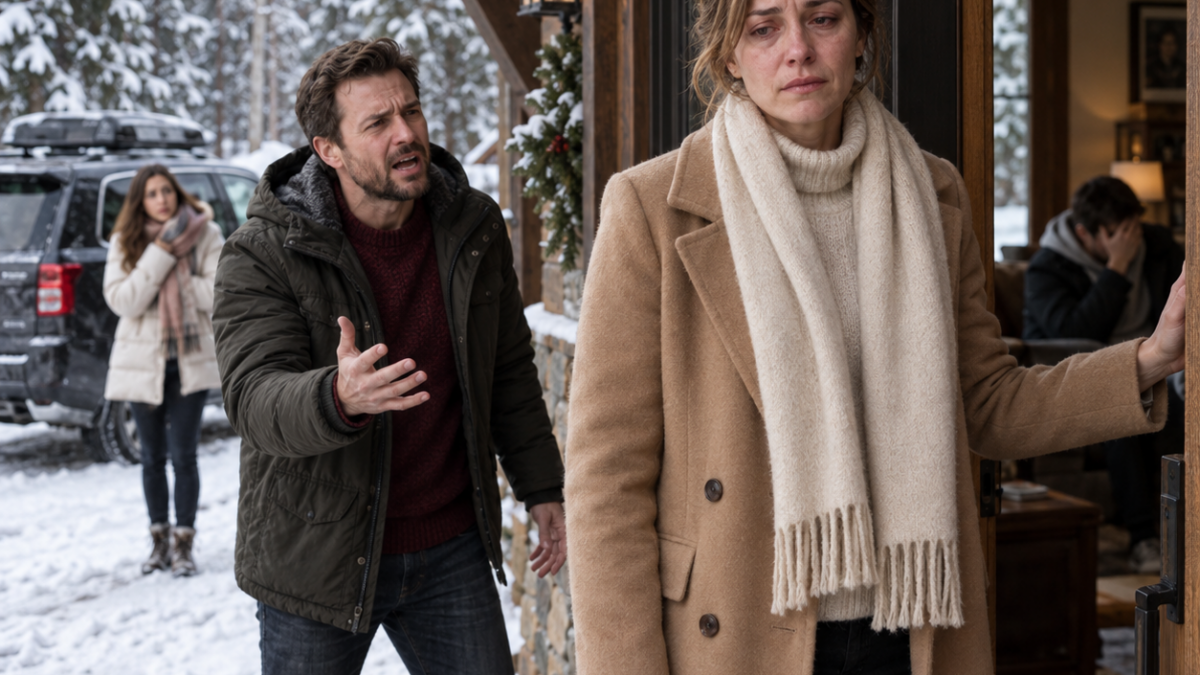
PART2
He breathed sharply through his nose.
“You’re proving why we didn’t invite you.”
“Good,” I said. “Then you won’t miss being here.”
He hung up.
I stood there for a long moment with the phone still in my hand.
The snow kept falling.
The trees did not care.
The cabin did not demand that I apologize.
That alone felt like luxury.
I went inside, locked the glass door, and made coffee even though it was already late afternoon. The kitchen smelled like cedar, dark roast, and the cinnamon candle I had bought at a tiny shop in town because nobody was there to tell me it was too strong.
I sat at the island and watched the snow through windows so clean they looked invisible.
For the first time in years, I did not feel left out.
I felt unreachable.
Then my phone rang again.
Mom.
Of course.
She did not start with hello.
“Sophie, what did you say to your brother?”
I closed my eyes.
“I told him no.”
“You mocked him.”
“I repeated the family rule.”
Mom sighed, the dramatic kind she had perfected when I was twelve and had accused me of embarrassing her by crying at my own birthday dinner.
“You know that was never meant to hurt you.”
That was another family specialty.
They decided the injury expired if they claimed the intention was different.
“Being excluded for ten years hurt me,” I said.
“You made trips difficult.”
“How?”
“You always noticed problems.”
I looked at the framed deed sitting on the counter, waiting to go into the safe. My name was printed clearly across the documents. No co signer. No family loan. No husband. No inheritance. Just me.
“Problems like Dad yelling at waiters?” I asked. “Problems like Nathan and Claire leaving me with their kids without asking? Problems like you calling my job cute because I didn’t marry rich?”
Mom went quiet.
Then she said, “This is exactly what I mean. You keep score.”
“No,” I said. “I remember.”
There was a difference.
Keeping score meant waiting to punish.
Remembering meant refusing to be fooled twice.
The first trip they excluded me from was a beach rental in South Carolina.
I found out from Facebook.
A photo appeared on Mom’s page of everyone standing barefoot on a wooden boardwalk at sunset. Mom, Dad, Nathan, Claire, their kids, Aunt Carol, Uncle Mike, three cousins, and even Claire’s parents, who were not related to us at all.
The caption read, Family is everything.
I stared at that photo for fifteen minutes before I called Mom.
“Oh, honey,” she said, sounding almost bored. “We thought you were busy.”
I was not busy.
She knew I was not busy.
I had spent that weekend cleaning my apartment, grocery shopping, and pretending I did not care that nobody had asked what I was doing.
The second trip was a ski weekend.
Nathan said, “You hate the cold.”
I did not hate the cold.
I hated being assigned the couch in a rental house while couples took bedrooms and then being told to watch the children because I was “already up.”
The third was a lake house for Dad’s birthday.
Every cousin was invited except me because, as Aunt Carol accidentally told me later, “Your mom wanted a peaceful weekend.”
After that, they stopped explaining.
They simply went.
Every holiday became a photo gallery of my absence.
Matching pajamas.
Airport selfies.
Rented boats.
Disney ears.
Group dinners.
Fire pits.
Board games.
Captions about memories.
Captions about blessings.
Captions about how nothing mattered more than family.
And every time I saw those photos, I told myself the same thing.
Stop looking.
Then I looked anyway.
Because exclusion has a strange cruelty. It does not only hurt because you were left out. It hurts because some part of you keeps checking to see if they finally noticed you were gone.
They did not.
Not until I bought the cabin.
Mom’s voice softened in that dangerous way mothers use when they are about to make guilt sound like love.
“Your nieces and nephew are innocent.”
That one almost worked.
Lily was twelve. Emma was nine. Jack was six. Nathan’s kids had nothing to do with the choices their parents made. They sent me awkward birthday videos when reminded. They hugged me at holidays. Jack once asked why I never came on vacation, and Claire had laughed too loudly before changing the subject.
“They are innocent,” I said. “And Nathan can take them somewhere else.”
“He can’t afford winter rates right now.”
“But he could afford every trip I wasn’t invited to?”
Mom snapped, “You don’t have children. You don’t understand how expensive life is.”
There it was again.
The assumption that my life cost less because fewer people cared about it.
I stared at my coffee.
“I understand perfectly,” I said. “That’s why I bought my own place.”
Mom lowered her voice.
“Your father is very upset.”
“Dad hasn’t called me in seven months.”
“He feels rejected.”
I laughed softly.
“Tell him good energy only, Mom.”
She hung up too.
For a moment, I thought that would be the end of it.
I should have known better.
My family did not accept no. They translated it into a negotiation opening.
By dinner, my phone had become a courtroom where everyone had already decided I was guilty.
Claire texted first.
I know things have been complicated, but punishing children because you have issues with adults is low.
I stared at the message for a long time.
Punishing children.
Not protecting my peace.
Not maintaining ownership over my own home.
Punishing children.
I did not answer.
Then Aunt Carol texted.
Your mother is crying. Whatever happened between you and Nathan, this is not the time to be selfish.
I almost replied, What time should I schedule selfishness for?
Instead, I put the phone face down.
Then my cousin Megan messaged.
Did you really tell Nathan your cabin is only for people with good energy?
I hesitated.
Megan was different.
Not safe exactly, but not cruel. We had grown up close before the family sorting system pushed us into different corners. She had married young, moved to Oregon, and mostly stayed out of family drama.
I replied.
Yes.
Three dots appeared.
Then disappeared.
Then appeared again.
Finally, she wrote:
Honestly? Iconic.
I laughed so hard coffee nearly came out of my nose.
Then another message arrived from her.
But you need to know something.
The laugh died.
What?
Megan sent a screenshot.
It was from a group chat called Winter Break Plan.
A group chat I was not in.
Of course.
At the top were Mom, Dad, Nathan, Claire, Aunt Carol, Uncle Mike, two cousins, Claire’s parents, and Megan.
The messages started two days earlier.
Two days before Nathan called me.
Claire had written:
If Sophie really bought that Breckenridge place, we should lock in winter break before prices get crazy.
Nathan replied:
I’ll talk to her. She won’t say no to the kids if I frame it right.
Mom:
Don’t make it sound like asking. Family shares.
Aunt Carol:
How many bedrooms?
Claire:
County listing says four plus loft. Sleeps at least twelve if people bring air mattresses.
My stomach turned.
County listing.
They had looked up my property.
They had counted my bedrooms.
They had assigned bodies to rooms in a home none of them had been invited to enter.
Dad:
Make sure she understands this does not mean she gets to control the whole thing. If everyone is there, it’s a family cabin.
I read that line three times.
If everyone is there, it’s a family cabin.
Megan sent another screenshot.
Claire:
Should we invite Sophie to stay too?
Nathan:
If she wants, but she’ll probably make it weird. Maybe tell her she can come for New Year’s dinner, not the whole week.
Mom:
That might be best. She gets overwhelmed in groups.
I put the phone down and stood up.
The room was suddenly too warm.
For ten years, they left me out because I supposedly ruined trips.
Now they were planning a trip to my cabin and debating whether I should be allowed to attend.
My cabin.
My mortgage free, paid in cash, signed in my name, stocked by my hands, dreamed of during lonely holidays cabin.
They were going to use it while I was allowed to appear for dinner.
Maybe.
If I did not make it weird.
My phone buzzed again.
Megan:
I’m sorry. I should have told you sooner. I thought they were just fantasizing until Nathan said he called you.
I picked the phone up with shaking hands.
Thank you for telling me.
She replied immediately.
They’re mad because you were not supposed to say no.
I looked around the cabin.
At the clean counters.
At the untouched guest rooms.
At the fireplace I had not yet learned how to use.
At the front door, where a small wreath of pinecones hung because I had chosen it for myself.
Not supposed to say no.
That sentence explained my entire childhood.
I was not supposed to say no when Mom commented on my clothes before family dinners.
I was not supposed to say no when Dad asked me to pour him another drink and then winked like it was our little secret.
I was not supposed to say no when Nathan handed me a diaper bag at Thanksgiving and said, “You don’t mind, right?”
I was not supposed to say no when Claire told me I was lucky to have free time because I had no husband and no kids.
I was not supposed to say no when they left me out.
And I was definitely not supposed to say no when I finally owned something they wanted.
I opened the family group chat.
The main one.
The one they used for birthday reminders, prayer requests, passive aggressive announcements, and photos from trips I was not invited to.
I typed one sentence.
My cabin is not available for family vacations.
I hit send.
The response came fast.
Nathan:
Wow.
Claire:
Unbelievable.
Mom:
Sophie, do not embarrass us in the group chat.
Dad:
You need to stop acting like money makes you better than everyone.
I laughed.
Money.
Not exclusion.
Not entitlement.
Money.
I wrote back:
Money did not make me better. It made it harder for you to pretend I had nothing worth respecting.
Nobody answered for twelve whole seconds.
Then Nathan wrote:
This is why nobody wants you around.
There it was.
The sentence.
The family verdict.
The thing they had been telling me in prettier language for a decade.
I stared at it until my eyes blurred.
Then I typed:
Then stay away from my cabin.
Nathan blocked me.
I knew because his contact photo disappeared first.
Then every message I sent afterward showed only one check mark.
It should have hurt less than it did.
After all, he had barely been in my life.
But being officially blocked by someone who already abandoned you is like watching a door lock on a room you were never allowed inside anyway.
It still makes a sound.
I turned off my phone.
Then I sat on the floor in front of the fireplace and cried.
Not loudly.
Not dramatically.
Just finally.
For ten years, I had trained myself not to ask why I was not invited.
I had told myself I was too old to care.
Too independent to need them.
Too busy to notice.
Too successful to be hurt by Facebook photos.
But pain does not disappear because you are productive.
It waits.
It waits in airport selfies.
In empty holiday weekends.
In group chats you are not included in.
In your mother’s sigh.
In your brother’s voice when he wants something.
And sometimes, it waits until you are sitting in the beautiful cabin you bought for yourself, realizing your family can recognize the value of your property but not your presence.
I cried until the fire died down.
Then I got up, washed my face, and called a local security company.
By the next afternoon, the cabin had new smart locks, exterior cameras, driveway sensors, and a local property manager named Hank who looked like he had been carved out of a pine tree and had absolutely no patience for nonsense.
Hank stood on the porch with a clipboard while snow dusted his gray beard.
“You expecting trouble?” he asked.
“Family.”
He nodded gravely.
“Worse.”
I liked him immediately.
I gave him the names of people not allowed access without my written permission.
Nathan.
Claire.
Mom.
Dad.
Aunt Carol.
Uncle Mike.
Claire’s parents.
Anyone claiming to be family.
Hank wrote slowly.
“That all?”
“For now.”
He looked at the list.
“Big family.”
“Only when they want something.”
He grunted.
Three days passed.
Then the social media campaign started.
Claire posted first.
Some people talk about healing but punish children during the holidays over adult grudges. Praying for softer hearts.
No names.
Of course.
Cowards love vague posts because they get the thrill of accusation without the burden of proof.
Mom commented with a broken heart emoji.
Aunt Carol wrote:
Children should never be used as weapons.
I stared at that comment until my jaw hurt.
Then I opened my photos and found ten years of screenshots.
I had not kept them intentionally at first.
But at some point, saving proof became a reflex.
The South Carolina beach trip caption.
Family is everything.
The ski weekend.
Nothing like the whole crew together.
The lake house birthday trip.
Dad surrounded by everyone except me.
Disney.
Cousin reunion.
Thanksgiving in Vermont.
Christmas in Aspen.
Fourth of July at the lake.
I had them all.
Ten years of proof that I had been erased from the family story and then accused of being cruel when I refused to provide the setting for the next chapter.
I did not post them.
Not yet.
Instead, I called Megan.
She answered on the first ring.
“I was waiting.”
“Are they all talking about me?”
“Oh, Sophie,” she said. “They’ve turned you into a Netflix villain.”
I sank onto the couch.
“What are they saying?”
“That you’re rich now and think you’re above everyone. That you bought the cabin to flaunt it. That Nathan only asked because the kids have had a hard year.”
“The kids have had a hard year?”
“Apparently Jack failed reading tests, Lily had friend drama, and Emma cried when the ski trip got canceled.”
I closed my eyes.
“I didn’t cancel a ski trip. I declined to donate my house.”
“I know.”
Megan hesitated.
“What?”
“They told the kids before asking you.”
Of course they did.
My chest tightened.
“What did they tell them?”
“That Aunt Sophie bought a snow house and the whole family was going for winter break.”
I stood up.
“Before Nathan called me?”
“Yes.”
Something hot moved through my body.
Not hurt this time.
Rage.
They had not only tried to use my cabin. They had used the children as emotional leverage before I even knew the demand was coming.
“Claire has Lily making a packing list,” Megan said quietly. “I’m sorry.”
I covered my eyes.
The kids were innocent.
Mom had been right about that.
But innocent children are exactly why selfish adults use them.
Because they know decent people hesitate when small hearts are involved.
I took a breath.
“Send me everything.”
“Sophie.”
“Please.”
Megan sent more screenshots.
A spreadsheet.
A literal spreadsheet.
Claire had made a winter break cabin schedule with arrival times, sleeping assignments, meal rotations, activity plans, and a note labeled Sophie.
Under my name, she had written:
Can stay Dec 31 to Jan 1 if she agrees not to bring up old issues.
I read it once.
Then again.
Then I laughed.
It sounded strange in the empty cabin.
Hard. Bright. Almost calm.
They had assigned me one night in my own house.
And only if I behaved.
I called my attorney.
Her name was Priya Shah, and I had hired her for business contracts years earlier. She was brilliant, precise, and had once told a city procurement officer that “confusion is not a legal strategy” without raising her voice.
I sent her everything.
She called twenty minutes later.
“Sophie,” she said, “please tell me these people do not have a key.”
“No.”
“Alarm code?”
“No.”
“Any prior permission to use the property?”
“No.”
“Good. Send written notice now that they are not permitted on the property. Keep it short. No emotion. No debate.”
She drafted it.
I emailed it to Nathan, Claire, Mom, Dad, Aunt Carol, Uncle Mike, and Claire’s parents.
This property is privately owned by me. No one has permission to enter, occupy, access, reserve, use, advertise, or invite others to the property without my written consent. Any attempt to enter without authorization will be treated as trespassing.
For once, I loved legal language.
It did not cry.
It did not explain.
It did not try to be understood by people committed to misunderstanding.
Mom called within minutes.
I did not answer.
Dad called.
I did not answer.
Claire texted from a new number.
You are insane. We already told the kids.
I replied:
That was your mistake.
She wrote back:
You need help.
I sent:
Good energy only.
Then I blocked her.
The next morning, Dad finally called from his own phone.
I let it ring until it stopped.
Then it rang again.
And again.
On the fourth call, I answered.
His voice was rough.
“Sophie.”
“Dad.”
“I don’t know what kind of game you’re playing.”
“I’m not playing.”
“You sent your mother into hysterics.”
“I did not send her anywhere.”
“You know what I mean.”
I walked to the window. Snow was falling again, thick and slow.
“I know what you always mean.”
He exhaled sharply.
“You’ve always had a mouth.”
I smiled sadly.
“No. I developed one after realizing silence didn’t make you kinder.”
He was quiet for a second.
Then he said, “This is about old trips, isn’t it?”
“Partly.”
“Jesus, Sophie. You’re still mad about vacations?”
“I’m not mad about vacations. I’m mad about being erased from the family and then expected to donate property to it.”
“You were not erased.”
“Name the last trip I was invited on.”
He did not answer.
“Dad.”
“I don’t keep track of that stuff.”
“I do.”
“That’s your problem.”
There it was.
My pain was my problem.
Their actions were weather.
“I’m hanging up now.”
“Don’t you dare.”
Something in his voice snapped back to the father of my childhood. The man who could turn a room cold by lowering his tone. The man everyone protected because his anger was easier to manage than his accountability.
For the first time, I did not shrink.
“I’m thirty seven years old, Dad. You don’t get to don’t you dare me anymore.”
His breath caught.
I continued.
“You watched them exclude me. You laughed at the jokes. You accepted the peaceful weekends. You let Mom call me difficult because it kept me from asking why your drinking ruined half of our holidays.”
“You watch your mouth.”
“No.”
The word came out clean.
Small.
Final.
“No,” I repeated. “I watched my mouth for twenty years. I watched it when you yelled at restaurant servers. I watched it when you drank before lunch. I watched it when you called Nathan the easy one because he learned to laugh while I learned to notice. I am done watching my mouth so everyone else can pretend.”
He went silent.
Then his voice dropped.
“You think that cabin makes you safe from family?”
I looked around at the walls I owned.
“Yes,” I said.
Then I hung up.
My hands shook afterward.
Not because I regretted it.
Because my body still remembered when his anger was bigger than mine.
Healing does not mean you stop shaking.
Sometimes it means you stop obeying while you shake.
Winter break arrived like a storm I had seen coming on the radar.
I had planned to spend it quietly. Read. Cook. Snowshoe badly. Watch movies. Maybe invite Megan for a few days if she could get away.
Instead, I found myself sleeping lightly, checking cameras, and waiting for the family that claimed they wanted nothing to do with me to prove how badly they wanted my house.
They arrived December 27 at 3:42 p.m.
The driveway sensor chimed while I was kneading bread dough.
I wiped my hands and opened the camera app.
Three vehicles turned into my driveway.
Nathan’s SUV.
Mom and Dad’s Lexus.
A rented passenger van.
For a few seconds, I could not move.
They had come anyway.
Despite the written notice.
Despite the no.
Despite the fact that I was inside.
I watched them unload through the camera.
Suitcases.
Coolers.
Ski bags.
Pillows.
Children in puffy coats.
Claire stepped out of the SUV wearing sunglasses even though the sky was gray. Nathan came around to the back, opened the trunk, and pulled out a large plastic bin labeled cabin pantry.
My cabin pantry.
Mom got out next, clutching her coat closed like a woman arriving at a resort with poor service.
Dad stood beside her, scanning the property.
Then Claire looked toward the front door and smiled.
She thought I would cave because the children were there.
That was their real plan.
Not persuasion.
Ambush.
I called Hank first.
Then Priya.
Then I opened the front door but kept the storm door locked.
Cold air rushed into the entryway.
Nathan turned.
For one second, surprise crossed his face.
He had not expected me to be there.
That almost made me laugh.
He had planned a family vacation at my cabin and still somehow expected me to be absent from my own life.
“Sophie,” he said, spreading his arms as if we had arranged this. “Hey.”
Behind him, Lily smiled uncertainly.
“Aunt Sophie?”
My heart hurt.
Not because I was wavering.
Because I hated him for putting her in this position.
“Hi, Lily,” I said gently.
Emma waved with mittened fingers.
Jack shouted, “Is this the snow house?”
Claire clapped her hands once.
“Kids, stay by the car while the grown ups talk.”
I looked at Nathan.
“You need to leave.”
His smile tightened.
“Come on. Don’t do this in front of the kids.”
“You did this in front of the kids when you brought them to a property you were told you could not use.”
Mom marched forward.
“Sophie, open the door. It’s freezing.”
“Then get back in the car.”
Her mouth opened.
Dad stepped beside her.
“You’ve made your point.”
“I’m glad.”
“Open the door.”
“No.”
Nathan glanced back at the children, then lowered his voice.
“We drove two hours.”
“You can drive two more.”
Claire’s face flushed.
“We have groceries.”
“There are hotels in town.”
“Everything is booked,” she snapped.
“That sounds like poor planning.”
Her eyes widened.
Maybe because those were the kinds of words she usually reserved for me.
Nathan stepped closer to the storm door.
“Sophie. Enough.”
I did not move.
His voice hardened.
“You really going to leave kids outside in the cold?”
I looked past him at the three children standing beside the warm running SUV, wrapped in expensive coats, holding travel mugs and snacks.
“No,” I said. “Their parents are going to put them back in the heated car and take them to legal lodging.”
Mom’s eyes filled with instant tears.
I used to fall for those tears.
They came fast and vanished faster once she got what she wanted.
“I cannot believe this is who you’ve become,” she whispered.
I tilted my head.
“Someone with a locked door?”
“Someone cruel.”
“No. Cruel was telling your grandchildren they were invited before asking the homeowner.”
Dad’s jaw tightened.
“This is not how family acts.”
I laughed once.
The sound cut through the snow.
“You have spent ten years teaching me I am not part of family trips.”
Aunt Carol emerged from the passenger van.
Of course she was there.
“Sophie,” she called, “this is embarrassing.”
“For you,” I said.
Her face turned red.
Uncle Mike stayed near the van pretending to adjust luggage. Smart man.
Claire walked forward, phone in hand.
“Maybe you should say all this while I’m recording.”
“Please do.”
That stopped her.
I opened my own phone, pressed record, and held it up.
“In fact, let’s both record.”
Nathan’s face changed.
“Sophie.”
“No. Say it clearly. Say you received written notice that none of you had permission to use this property. Say you came anyway with your children and luggage because you thought I would be too embarrassed to enforce my own boundary.”
Claire lowered her phone.
Mom whispered, “You’re acting insane.”
“No, Mom. I’m acting documented.”
That was when Hank’s truck pulled in.
He parked behind the rented van, stepped out slowly, and adjusted his hat. He looked at the scene, then at me behind the storm door.
“You alright, Ms. Lawson?”
“Yes, Hank. Thank you.”
Nathan turned on him.
“Who are you?”
“Property manager.”
“This is a family matter.”
Hank looked at the luggage in the snow.
“Looks like trespassing with extra steps.”
I nearly smiled.
Dad stepped forward.
“Listen, we are her parents.”
Hank did not look impressed.
“Congratulations.”
Dad’s face darkened.
“We have a right to be here.”
“No,” I said through the door. “You don’t.”
Hank looked at his clipboard.
“I got a no access list. You folks are on it.”
Mom gasped as if being on a clipboard was the cruelest thing anyone had ever done to her.
“You put your mother on a list?”
“Yes.”
“Sophie.”
“Yes,” I said. “I put the people who planned to take over my house without permission on a no access list.”
Nathan’s face went pale.
Claire looked at him.
“What is she talking about?”
Interesting.
I looked at Claire.
“You didn’t know I had screenshots?”
Claire’s expression flickered.
Nathan said quickly, “Ignore her.”
I unlocked the storm door.
Hank shifted slightly, but I did not open it all the way. I stepped onto the porch with my phone still recording.
“I have the Winter Break Plan chat,” I said. “The spreadsheet. The sleeping assignments. The part where you debated whether I could come to my own cabin for one night if I agreed not to bring up old issues.”
Claire turned slowly toward Nathan.
“You said she offered New Year’s.”
Nathan’s mouth tightened.
Oh.
That was new.
Claire had known they were pushing.
But she had not known the full lie.
The children stood silently now.
Lily’s eyes were wide.
I hated every adult there.
Nathan glared at me.
“You’re really doing this?”
“You brought your children to my door as props. Do not ask me why there’s an audience.”
Mom said, “Lower your voice.”
I looked at her.
“No.”
Dad stepped toward the porch.
Hank moved between us.
“Sir.”
Dad stopped, eyes burning.
“You think you’re powerful now because you have some mountain house?”
“No,” I said. “I think I’m finally allowed to decide who comes inside.”
Jack began to cry.
That sound hit me in the chest.
Claire turned and snapped, “See what you’re doing?”
I looked at Jack, then crouched slightly so my voice softened.
“Jack, honey, this is not your fault.”
Claire’s mouth tightened.
I continued, “The grown ups made a plan without asking me. I know that is disappointing, and I am sorry they put you in the middle.”
Nathan snapped, “Don’t talk to my son like that.”
I stood.
“Then parent him honestly.”
Sirens sounded in the distance.
Mom looked panicked.
“You called the police?”
“Hank did,” I said.
Hank shrugged.
“Standard procedure.”
Aunt Carol began whispering to Uncle Mike near the van. Claire’s parents suddenly looked fascinated by the snow on their shoes.
Nathan moved close enough that Hank lifted one hand.
“This is ridiculous,” Nathan said. “We were going to pay you.”
That was the first time money had been mentioned.
“How much?”
He hesitated.
Claire stared at him.
“Nathan.”
He snapped, “I was going to offer something.”
“How much?” I repeated.
He looked away.
Mom cut in.
“Family does not charge family.”
“There it is,” I said.
Two sheriff’s deputies arrived six minutes later.
By then, the kids were back in the SUV with the heat on, and the adults had arranged themselves into victim poses.
Mom crying.
Claire angry.
Nathan pacing.
Dad silent and dangerous.
Aunt Carol whispering loudly about mental health.
The older deputy spoke to Hank first, then to me. I showed the deed, my ID, the no access notice, and the emails.
Then he turned to my family.
“You folks need to leave.”
Dad said, “This is a misunderstanding.”
The deputy looked at the luggage.
“Looks pretty understood.”
Nathan said, “She’s my sister.”
“She’s the property owner.”
Mom stepped forward.
“Officer, please. Our grandchildren are devastated.”
The deputy looked toward the SUV.
“Then I suggest you get them somewhere warm.”
Claire finally lost it.
“You smug little bitch.”
Everything went still.
The deputy looked at her.
Hank raised his eyebrows.
Nathan closed his eyes.
I looked at Claire and felt something inside me release.
Not anger.
Attachment.
Whatever fantasy I had left that these people might one day see me clearly burned out right there in the snow.
“Thank you,” I said.
Claire blinked.
“For what?”
“For saying what this was always about out loud.”
She opened her mouth, but no words came.
Nathan grabbed her arm.
“We’re leaving.”
He shoved luggage back into the SUV with stiff, furious movements. Mom climbed into the Lexus without looking at me. Dad stood in the driveway a moment longer.
His face was red from cold and rage.
“You’ll need family one day,” he said.
I looked at the three vehicles, the luggage, the crying children, the adults who had driven through snow to steal a holiday from me and call it love.
“I needed family for ten years,” I said. “You were busy taking pictures without me.”
He flinched.
Not much.
But enough.
Then he got into the car.
The convoy backed out slowly, blocked for one awkward moment by Hank’s truck until he moved it with theatrical slowness.
When they were gone, the driveway looked huge and empty.
Snow had already begun covering their tire tracks.
Hank stood beside me in silence.
After a while, he said, “You want me to check the locks?”
“Yes, please.”
He nodded.
Then he added, “For what it’s worth, that was some impressive boundary work.”
I laughed weakly.
“Is that a property management term?”
“No. My ex wife’s therapist said it to me once.”
That startled a real laugh out of me.
After he left, I went inside and locked the door.
The cabin felt different.
Not spoiled.
Tested.
Like a home that had just learned it could hold.
I made tea.
Then I opened my laptop.
Claire had posted already.
Some people would rather call the police on children than share a roof for Christmas. I hope the view was worth it.
Mom commented:
My heart is broken.
Aunt Carol:
I have no words.
Megan texted me privately.
Want me to say something?
I stared at the screen.
For ten years, I had stayed quiet because I thought defending myself would make me look bitter.
That day, I finally understood something.
People who are committed to calling you bitter will do it whether you bleed quietly or speak clearly.
So I spoke clearly.
I made one post.
No names.
No rage.
Just receipts.
For ten years, I was excluded from family vacations because I was told I brought negative energy. This week, some of those same relatives found out I bought a cabin and planned a winter break trip there without my permission. They discussed whether I could attend my own home for one night if I agreed not to bring up old issues. After I sent written notice that the property was not available, they arrived anyway with children and luggage.
Children should never be used to pressure adults into giving up their home. Boundaries are not cruelty. Showing up uninvited is not family.
Then I added four screenshots.
The Winter Break Plan chat.
The spreadsheet.
Nathan’s message saying I could come for New Year’s dinner if I behaved.
Mom’s message saying family shares.
I did not post the children’s names.
I did not post addresses.
I did not post the driveway video.
I did not have to.
Within an hour, the post had spread through the extended family faster than any vacation photo they had ever posted.
Megan commented first.
I was in that chat. Sophie is telling the truth. It was wrong.
Then my cousin Daniel wrote:
Wait, Sophie was not invited on the past trips?
Aunt Carol replied:
This is private family business.
Megan responded:
You made it public when you commented on Claire’s post.
I stared at that line with pure admiration.
Then something unexpected happened.
People started remembering out loud.
Cousin Emily wrote:
I always wondered why Sophie was not at the lake house. I was told she had work.
My uncle’s second wife, Patricia, wrote:
I was told Sophie did not like traveling with family.
Daniel again:
Nobody ever asked her?
Mom called.
I did not answer.
Nathan, despite blocking me, apparently unblocked long enough to comment.
You’re insane for posting private chats.
I replied:
You were comfortable planning a private trip to my public property record.
He deleted his comment.
Then blocked me again.
This time, it did not hurt as much.
By midnight, Claire had deleted her post.
Mom posted a quote about betrayal coming from those closest to you.
Aunt Carol announced she was taking a break from social media to protect her peace.
Dad did nothing publicly.
That worried me more.
Dad’s anger never performed when it could plot.
The next morning, an email arrived from him.
Subject line: You went too far.
Sophie,
You humiliated your mother. You embarrassed your brother. You made children cry. I hope that cabin keeps you warm when nobody is left to care about you.
I read it once.
Then I forwarded it to Priya.
Then I replied with one sentence.
Do not contact me again unless you are ready to apologize without asking for anything.
He did not answer.
For six weeks, my family went silent.
No calls.
No texts.
No vague posts that named me without naming me.
No invitations, obviously, but those had never come anyway.
At first, the silence felt like punishment.
Then it started feeling like space.
I stayed at the cabin through January. My consulting clients did not care where I worked as long as contracts were clean and deadlines were met. I built proposals in the mornings, walked snowy trails in the afternoons, and learned which floorboards creaked at night.
I bought a blue mug from a local pottery shop.
I hung curtains in the bedrooms.
I taught myself to stack firewood badly, then Hank corrected me with the patience of a man watching a raccoon operate machinery.
I invited Megan for a weekend in February.
She arrived with wine, board games, and three bags of snacks because she said betrayal required sodium.
The moment she stepped inside, she looked around and whispered, “Oh, Sophie.”
“What?”
Her eyes filled.
“No wonder they wanted it.”
I laughed.
Then she shook her head.
“No. I mean, no wonder you needed it.”
That made me cry.
Megan hugged me in the entryway while the snow melted off her boots.
For two days, we cooked, drank coffee, watched bad movies, and talked about what our family had become when nobody was pretending.
She told me things I had not known.
Like the Thanksgiving in Vermont when Mom told everyone I had chosen not to come because I “didn’t enjoy family chaos.”
The Disney trip where Nathan said I was invited but probably thought it was too expensive.
The lake house weekend when Dad got drunk before dinner and Mom cried in the bathroom, then told everyone I would have made it worse if I had been there.
I listened quietly.
At one point, Megan said, “I should have asked you.”
“Yes,” I said.
She looked down.
“I’m sorry.”
I believed her.
That surprised me.
Maybe because her apology did not come with a request attached.
“I missed you,” she said.
“I missed you too.”
“Do you think you’ll ever forgive them?”
I looked at the fire.
“I don’t know.”
“That’s fair.”
“No,” I said slowly. “Actually, I know the answer. I might forgive some things eventually. But forgiveness does not mean they get keys.”
Megan smiled.
“That should be stitched on a pillow.”
The first real crack came through Lily.
Nathan’s oldest daughter texted me from her own phone in early March.
Hi Aunt Sophie. This is Lily. I wanted to say I am sorry we came to your cabin when you said no. Dad said you invited us then changed your mind. I did not know. Mom says not to text you but I felt bad.
I read the message three times.
Then I set the phone down and cried for the girl who had been dragged into adult entitlement and left to sort the truth herself.
I replied carefully.
Hi Lily. Thank you for texting me. You did nothing wrong. Adults should not put children in the middle of disagreements. I love you, and I am sorry you were hurt.
She answered a few minutes later.
Can I still talk to you sometimes?
My throat tightened.
Yes. Always.
Then another message.
Did Grandma really not invite you on trips?
I stared at the screen.
There are moments when honesty must be gentle but not dishonest.
Yes, I wrote. That happened for a long time. It was not your fault.
She sent back only:
I’m sorry.
I pressed the phone against my chest.
That was the first apology anyone from Nathan’s branch of the family had given me.
It came from a twelve year old.
Of course it did.
Children often see the truth before adults teach them not to.
I did not tell Nathan.
I did not tell Claire.
I did tell Priya, who advised me to be kind but careful and keep all communication appropriate in case the adults weaponized it later.
So I kept it simple.
School.
Books.
Her soccer games.
A photo of the snowman Megan and I built that looked mildly threatening.
Lily sent laughing emojis and a picture of her dog wearing sunglasses.
It was small.
It was something.
Spring came late in the mountains.
Snow softened. Roads cleared. The pines shook off their white coats. I returned to my city apartment for client meetings but found myself driving back to the cabin whenever I could.
The place became more than a purchase.
It became proof.
Proof that I could build a life outside the family weather system.
Proof that being left out did not mean being empty.
Proof that doors could stay closed without guilt swallowing me whole.
Then Mom came.
Not with a suitcase.
Not with Dad.
Alone.
The camera alert came on a Saturday afternoon in April. I was planting herbs in pots on the back deck when my phone chimed.
Front driveway motion.
I opened the app and saw Mom standing beside her car, wearing a cream coat and holding a bakery box.
For one second, my body reacted like I was sixteen.
Stomach tight.
Breath shallow.
Immediate urge to fix the mood.
Then I remembered.
My house.
My door.
My rules.
I went to the front door but did not open it fully.
“Hi, Mom.”
Her eyes moved past me into the cabin.
That annoyed me immediately.
Not because she looked.
Because even then, part of her was assessing what could be used.
“Sophie,” she said softly. “Can I come in?”
“No.”
She blinked.
“I drove all this way.”
“You should have called first.”
“I was afraid you wouldn’t answer.”
“You were probably right.”
Her mouth tightened, but she recovered.
“I brought banana bread.”
I looked at the bakery box.
“You bought banana bread.”
“That’s not the point.”
“No. It never is.”
She looked tired.
Older, somehow.
Not fragile enough to erase what she had done, but human enough to complicate my anger.
“I wanted to talk,” she said.
“So talk.”
“On the porch?”
“Yes.”
She looked at the locked storm door between us.
“You really won’t let your own mother in?”
“Not today.”
Her eyes filled.
I waited.
The tears came.
I waited again.
They did not move me the way they used to.
That seemed to frighten her.
“I don’t know how we got here,” she whispered.
I laughed once, not kindly.
“We drove, Mom. One excluded trip at a time.”
She flinched.
“I did what I thought kept peace.”
“No. You protected comfort.”
“What does that mean?”
“It means every time Dad drank too much, you blamed whoever noticed. Every time Nathan took advantage, you said he was stressed. Every time Claire insulted me, you said motherhood was hard. Every time I spoke up, I became the problem because I was easier to punish than the people creating the mess.”
Mom looked away toward the trees.
The wind moved through them softly.
“I wanted family trips to be happy,” she said.
“Were they?”
Her mouth opened.
Closed.
That answer was enough.
I leaned against the doorframe.
“Was it worth it?”
She looked back.
“What?”
“Leaving me out. Did it make everyone happy?”
She swallowed.
“They were calmer without conflict.”
“That wasn’t happiness. That was choreography.”
Her lips trembled.
“Your father doesn’t like being challenged.”
“I know.”
“And Nathan was overwhelmed with the kids.”
“I know.”
“And Claire never felt comfortable around you.”
“Because I said no to being unpaid childcare.”
Mom looked exhausted now.
“I am trying to explain.”
“No. You’re trying to make the pattern sound reasonable.”
She looked down at the bakery box.
For a moment, I thought she might actually apologize.
Instead, she said, “Couldn’t you have let them stay one night?”
The door inside me closed again.
There it was.
Under the tears.
Under the banana bread.
Under the long drive.
The request.
I smiled sadly.
“You came here to ask that?”
“No. I came to understand.”
“And to ask if I could have softened my no.”
“They were children, Sophie.”
“They were children when you taught them I was difficult. They were children when you let them believe I chose not to come. They were children when you told them they were going to my cabin before asking me. Stop using them as shields after using them as bait.”
Mom recoiled.
“That is a cruel thing to say.”
“It is a cruel thing to do.”
For once, she had no answer.
I stepped back.
“Goodbye, Mom.”
“Sophie.”
“When you can say, ‘I hurt you and I am sorry,’ without a but, without a request, and without mentioning how embarrassed everyone is, you can call me.”
She stood there, crying silently.
I closed the door.
My hands shook afterward.
I watched through the camera as she stood on the porch for three more minutes. Then she placed the bakery box by the door and left.
I did not eat the banana bread.
Not because I was dramatic.
Because I did not want anything that arrived wrapped around another demand.
I threw it away.
That night, I expected guilt to devour me.
It tried.
It told me she was my mother.
It told me she drove hours.
It told me I should have let her in.
Then another voice answered.
She drove hours and still did not apologize.
I slept better than expected.
In June, Nathan unblocked me.
I knew because a text arrived while I was in a meeting with a municipal planning board.
We need to talk about Lily.
My heart dropped.
I stepped outside.
What happened?
His reply came fast.
She has been asking why you never came on trips. Thanks for putting that in her head.
I stared at the message.
Lily asked me. I answered honestly.
She is a child.
Then stop making her carry adult lies.
He called immediately.
I declined.
He called again.
I declined again.
Then he texted:
You are poisoning my daughter against me because you are bitter that nobody wanted you around.
There it was again.
Nobody wanted you around.
Only this time, it did not land in the same place.
Maybe because I had heard birds outside my cabin windows.
Maybe because Megan had slept in the guest room and told me she missed me.
Maybe because Lily had texted me without wanting anything.
Maybe because my life was getting louder than their rejection.
I wrote back:
I am not discussing this while you insult me. If Lily has questions, tell her the truth or tell her to ask the adults who made those choices.
He replied:
You are not welcome near my family.
I looked at that sentence.
Then I laughed quietly.
After all those years, he still thought exclusion was a punishment.
Nathan, I wrote, you came to my house with luggage.
He blocked me again.
This time, I screenshotted it for Megan, who replied:
He blocks like a man who owns three coolers labeled for your pantry.
Summer arrived, and with it came the first family vacation photo without me after the cabin incident.
They rented a lake house in Missouri.
Smaller than usual.
Cheaper, Megan told me.
Not everyone went.
The caption on Mom’s post read:
Grateful for those who choose love over pride.
I did not react.
I was at my cabin that weekend with Megan, Daniel, his husband Marcus, and two friends from Denver. We grilled badly, burned corn, played cards, and watched a thunderstorm roll over the mountains.
Nobody asked me why I was quiet when I stepped out onto the deck.
Nobody followed me with accusations.
Nobody said I ruined the mood.
After a few minutes, Marcus came out and handed me a blanket.
“Figured you were cold.”
That was it.
No pressure.
No performance.
No demand that I explain my face.
I wrapped the blanket around my shoulders and realized, suddenly and painfully, how easy care could be when nobody treated it like a transaction.
In August, Dad had another fall.
Mom called from the hospital.
I answered because old fear still has muscle memory.
“He’s asking for you,” she said.
My first feeling was not love.
It was suspicion.
That made me sad.
“Is he okay?”
“He broke his wrist. He’s embarrassed.”
“Was he drinking?”
Silence.
“Mom.”
“He had a few.”
“At noon?”
“Sophie, please.”
There it was.
Please.
The family emergency word.
Please meant do not name the obvious.
Please meant make this easier.
Please meant return to your assigned role.
“What do you need from me?” I asked.
She hesitated.
That hesitation told me everything.
“We may need help for a little while. Nathan has the kids, and your father can’t drive, and I’m exhausted.”
I leaned against my kitchen counter in the city apartment.
For years, I would have said yes before she finished.
I would have rearranged clients, driven hours, cooked meals, managed appointments, endured Dad’s moods, and then heard later that I had made things tense.
This time, I breathed first.
“I can send you a list of home care agencies.”
Mom went quiet.
“That’s not what I asked.”
“I know.”
“He is your father.”
“And I am not his consequence manager.”
She made a wounded sound.
“How can you be so cold?”
I looked at the photo on my counter.
The cabin in winter.
The porch light glowing.
The front door closed.
“I learned from being left outside.”
She hung up.
I cried after that call.
Not because I thought I was wrong.
Because doing the right thing does not always feel clean when you were raised to confuse guilt with duty.
I sent the home care list anyway.
Mom did not reply.
September brought an email from Aunt Carol.
Subject line: Family Healing.
I knew before opening it that nothing healing would be inside.
Dear Sophie,
It has been painful watching this division grow. Your mother is heartbroken, your brother feels attacked, and your father is not well. I hope you can reflect on how your reactions have affected the whole family. Nobody is perfect. Vacations were never meant to exclude you maliciously. Sometimes your personality made group settings challenging, but that does not mean you were unloved.
We would like to have a family meeting before Thanksgiving. No lawyers. No screenshots. Just honest conversation.
Love,
Aunt Carol
I read it twice.
Then I forwarded it to Megan with the message:
Translation?
She replied:
Please come alone so we can outnumber you emotionally.
I laughed.
Then I wrote back to Aunt Carol.
Dear Aunt Carol,
I am willing to have honest conversation with anyone who can begin with a direct acknowledgment of what happened.
I was excluded from family vacations for ten years.
When I bought a cabin, several relatives planned to use it without permission.
After I refused, they arrived anyway with children and luggage despite written notice.
If the family meeting starts with those facts, I will consider attending with a support person.
If the goal is to discuss my reaction while minimizing the behavior that caused it, I decline.
Sophie
No one replied.
Thanksgiving came.
For the first time in my adult life, I did not wait to see where they were going before deciding what I would do.
I invited people to the cabin.
Megan and her husband.
Daniel and Marcus.
My friend Priya, who said attorneys deserve stuffing too.
Hank and his sister Ruth, because they had nowhere special to be and because Ruth made pies that could end wars.
I also invited Lily privately through Nathan, properly, with both parents copied.
Lily is welcome to visit for a day during Thanksgiving weekend if you and Claire approve and arrange transportation. This invitation is for Lily only and does not include overnight stay or additional guests.
Nathan did not reply.
Claire replied:
Absolutely not.
So that was that.
I did not push.
Boundaries worked both ways.
Thanksgiving morning at the cabin was chaotic in the best possible way.
Megan burned the first batch of rolls.
Marcus took over the playlist and declared sad acoustic covers illegal.
Priya chopped vegetables with alarming precision.
Hank brought a smoked turkey and said nothing when everyone acted impressed, which somehow made him look more impressed with himself.
Ruth made three pies and threatened anyone who touched them before dinner.
I stood in the kitchen watching people move through my space.
My space.
Not invading.
Not claiming.
Not assigning me one night if I behaved.
Just existing there because I wanted them there.
At one point, Megan came beside me.
“You okay?”
I nodded.
“You sure?”
I looked at the table.
At mismatched plates.
At wine glasses.
At Ruth arguing with Daniel about cranberry sauce.
At the fire burning low.
At snow beginning to fall beyond the windows.
“I thought having a full house would make me anxious,” I said.
“And?”
“It doesn’t. Turns out I don’t hate groups. I hate being managed by people who dislike me.”
Megan squeezed my shoulder.
“That’s a pretty big discovery.”
Dinner was loud.
Messy.
Late.
Nobody cared.
After we ate, everyone wrote one thing they were grateful for on slips of paper because Ruth insisted it was tradition and nobody argued with women holding pie knives.
When it was my turn to read mine, my throat tightened.
I had written:
I am grateful for doors that open by choice.
The room went quiet.
Not awkward quiet.
Kind quiet.
The kind where nobody rushes to patch over feeling because they are uncomfortable with sincerity.
Megan raised her glass.
“To Sophie’s door.”
Hank lifted his beer.
“And her no access list.”
Everyone laughed.
I did too.
That night, after guests went to sleep, I stepped out onto the back deck.
Snow was falling again, thick and soft. The pine branches bent under it. The mountains were dark shapes against the sky.
My phone buzzed.
For a moment, I expected another attack.
Instead, it was Lily.
Happy Thanksgiving Aunt Sophie. I am grateful you still text me.
My eyes filled.
I typed carefully.
Happy Thanksgiving, Lily. I am grateful for you too.
A minute later, another message.
Dad said we are not supposed to talk about the cabin.
I smiled sadly.
Then we can talk about your dog’s sunglasses.
She sent back a laughing emoji.
I stood there in the cold, holding the phone close, realizing that love did not have to arrive all at once to be real.
Sometimes it came through a locked door.
Sometimes it came from a cousin who finally told the truth.
Sometimes it came from a child who knew enough to apologize.
Sometimes it came from yourself when you stopped begging people to include you in places where they had already taught you not to breathe.
Christmas was harder.
It always was.
Mom posted old photos that year.
Childhood Christmases.
Nathan and me in pajamas.
Dad holding us in front of the tree.
Me missing my two front teeth.
Nathan wearing a superhero cape.
The caption read:
Before pride divided us.
I stared at the post for a long time.
Then I opened my old photo box.
I found the same Christmas picture.
But I remembered what happened after it was taken.
Dad got drunk by noon.
Mom cried in the kitchen because he forgot to assemble Nathan’s bike.
I spent the afternoon distracting my brother so he would not notice.
That was my childhood.
Photos first.
Damage later.
I closed the box.
Then I made hot chocolate and watched a movie where nobody learned the meaning of family through forced forgiveness.
In January, almost one year after I bought the cabin, Mom wrote me a letter.
A real one.
Paper.
Handwritten.
No bakery box.
No surprise visit.
No request at the end.
I sat at the cabin kitchen island and opened it slowly.
Sophie,
I have started this letter five times.
The first versions were full of explanations. I wanted to tell you why things happened the way they did. Your father’s drinking. Nathan’s stress. My fear of conflict. How hard it was to plan trips around everyone’s moods.
But I think explanations are what I have always given you instead of apologies.
You were excluded.
I allowed it.
Sometimes I arranged it.
I told myself it was easier. I told myself you preferred independence. I told myself you would have complained anyway. Those were excuses.
When Nathan asked about the cabin, I saw it as a solution for the family before I saw it as your home. That was wrong.
When you said no, I made your boundary into cruelty because it was easier than admitting we had trained you to accept less than everyone else.
I am sorry.
You do not have to respond.
Mom
I read it once.
Then again.
Then a third time.
There it was.
No but.
No request.
No mention of embarrassment.
No appeal to the children.
No family meeting.
Just the thing I had asked for.
I cried so hard the words blurred.
Then I put the letter on the counter and walked outside into the snow.
For almost an hour, I walked the trail behind the cabin, boots crunching through fresh powder, breath clouding in front of me.
An apology did not erase ten years.
It did not invite her inside automatically.
It did not fix Dad.
It did not unteach Nathan.
It did not give me back the birthdays, trips, and holidays where I had been made into a problem so everyone else could relax.
But it mattered.
Because accountability always matters.
Even late.
Especially late.
I wrote back two days later.
Mom,
Thank you for writing this.
I needed to hear it without explanations attached.
I am not ready to go back to how things were. I do not think I ever want to go back to how things were.
But I am willing to have coffee with you in town sometime. Just us. No Dad. No Nathan. No cabin visit. No requests.
Sophie
She answered:
I would like that.
We had coffee three weeks later.
In a café halfway between my apartment and her house.
She looked nervous when she arrived.
So did I.
We talked about small things first.
Weather.
Her garden.
My work.
Sophie safe topics.
Then she looked down at her coffee and said, “Your father refused to read my letter.”
I was not surprised.
“He says I made it sound like everything was our fault,” she continued.
I said nothing.
She gave a sad little laugh.
“Which I suppose means he understood it perfectly.”
That was new.
Not enough.
But new.
She looked at me.
“Nathan is still angry.”
“I know.”
“He says you humiliated him.”
“He humiliated himself.”
Mom nodded slowly.
“I know.”
I studied her face.
There was grief there.
Real grief.
Maybe she was finally seeing the family without the captions.
“He keeps saying you turned Lily against him,” she said.
“I didn’t.”
“I know. She asked me why we never invited you.”
My chest tightened.
“What did you say?”
Mom’s eyes filled.
“I told her we were wrong.”
I looked out the café window because if I kept looking at her, I would cry.
“That must have been hard.”
“Yes.”
“Good.”
She flinched, then nodded.
“You’re right.”
We did not hug when we left.
But she did not ask to see the cabin.
She did not mention Dad needing help.
She did not tell me Nathan was suffering.
She simply said, “Thank you for meeting me.”
I said, “Thank you for apologizing.”
It was a beginning.
Not a reunion.
A beginning.
Dad never apologized.
Not directly.
He sent one text months later after another hospital scare.
Your mother says I should say I’m sorry. I don’t know what you want from me.
I deleted it.
That was not an apology.
That was a man annoyed by the entrance fee to access.
Nathan stayed blocked most of the time.
Sometimes he unblocked me to send a bitter message, then blocked me again before I could answer. I stopped checking.
Claire remained convinced I had traumatized her children by not allowing them to enjoy winter break at my house.
Aunt Carol returned to social media after six weeks and posted inspirational quotes about toxic people.
Megan sent me every one until I begged her to stop.
But Lily kept texting.
With boundaries.
With care.
With no secret invitations.
By summer, Nathan allowed her to meet me for lunch once, probably because Mom pushed him. Lily hugged me hard in the restaurant parking lot.
“You look the same,” she said.
“So do you.”
“I’m taller.”
“That’s true. Horribly rude of you.”
She laughed.
During lunch, she asked questions carefully.
“Were you sad when we went on trips?”
“Yes.”
“Why didn’t you tell us?”
“You were children. It wasn’t your job to fix grown up choices.”
She nodded.
“Dad says you hate him.”
“I don’t hate him.”
“Are you mad?”
“Yes.”
“For how long?”
I thought about that.
“As long as I need to be.”
She accepted that better than most adults.
When I dropped her off, Nathan was waiting in the parking lot.
He did not speak to me.
I did not speak to him.
Lily hugged me again and whispered, “Good energy only.”
I laughed before I could stop myself.
Nathan heard.
His face hardened.
Then he looked away.
That was fine.
Some lessons skip a generation.
Two years after buying the cabin, I hosted a winter weekend.
Not for the whole family.
For people who knew the difference between invitation and entitlement.
Megan came.
Mom came for one afternoon, after asking three weeks ahead and accepting when I said she could stay for lunch but not overnight.
That was progress too.
She stood in the entryway, looking around with tears in her eyes.
“It’s beautiful,” she said.
“Thank you.”
“I understand why you protected it.”
I watched her carefully.
She did not add from us.
She did not have to.
We both heard it.
She helped me make soup. We talked quietly. Before she left, she stood by the front door and touched the handle.
“I’m glad you have this place,” she said.
I believed her.
Not completely without caution.
But enough for that day.
That was how trust returned, if it returned at all.
Not as a flood.
As teaspoons.
Dad never came.
Nathan never came.
Claire definitely never came.
The cabin did not miss them.
Neither did I, most days.
On the second anniversary of the driveway incident, I found the old Winter Break Plan screenshots in a folder on my laptop.
I almost deleted them.
Then I stopped.
Not because I wanted to hold onto bitterness.
Because evidence had saved me from doubting myself.
For years, my family made me feel like the problem was my memory.
You keep score.
You take things wrong.
You make everything heavy.
You’re too sensitive.
Screenshots did not fix the pain, but they anchored reality.
I moved them to an archive folder labeled Lessons.
Then I closed the laptop.
That evening, I sat on the back deck wrapped in a blanket, watching snow collect on the railing exactly like it had the day Nathan called.
My phone was quiet.
The house was warm.
A pot of soup simmered on the stove.
There was a puzzle half finished on the coffee table from Megan’s last visit.
A pair of Lily’s gloves sat in the guest room drawer from her first approved weekend stay, which happened with written permission, clear rules, and no extra guests.
She had loved the cabin.
Not because it was free lodging.
Because it was peaceful.
The first morning she was there, she stood by the windows and said, “It’s quiet here.”
I said, “That’s why I bought it.”
She looked at me.
“Did our family make you feel loud?”
I thought about that for a long time.
“No,” I said. “They made me feel like I was too much. There’s a difference.”
She nodded like she understood.
Maybe she did.
That weekend, we baked cookies, watched movies, and built a snow fort that collapsed immediately. She called her parents every night. I never asked her to keep secrets. I never criticized them in front of her. I did what adults should have done for me.
I let a child be a child.
When she left, she hugged me and said, “Thanks for inviting me.”
I smiled.
“Thanks for being invited.”
She laughed.
After she was gone, I stood in the doorway for a long time.
That was when I realized the cabin had become what I wanted it to be.
Not revenge.
Not proof I was better.
Not a prize my family could fight over.
A place where invitation meant something.
A place where no one was allowed to turn my peace into their convenience.
A place where the door opened by choice.
People sometimes tell me I should let go.
They say family is family.
They say life is short.
They say kids should know their relatives.
They say everyone makes mistakes.
They say vacations are not worth losing people over.
And every time, I think about Nathan’s voice on the phone.
You probably don’t need the whole place to yourself.
I think about Mom saying I kept score.
I think about Dad asking if I thought the cabin made me safe from family.
I think about Claire standing in my driveway, calling me cruel in front of children she had lied to.
I think about the spreadsheet where I was assigned one night in my own home if I agreed not to bring up old issues.
And I know the truth.
This was never about a vacation.
It was about who had the right to decide whether I belonged.
For ten years, they decided I did not.
Then I bought a place where their vote did not count.
That was what they could not forgive.
Not the locked door.
Not the police.
Not the screenshots.
The fact that I finally owned a space where their story about me had no authority.
My brother blocked me because I said the cabin was only for people with good energy.
But the truth was even simpler than that.
It was only for people who understood that I was not an extra bedroom, a free babysitter, a backup wallet, an emotional punching bag, or a single woman with too much space.
I was a person.
I was the owner.
I was the invitation.
And after ten years of watching my family smile in photos from places I was never asked to be, I learned something they should have taught me from the beginning.
Being excluded from the wrong rooms can save your life.
Because one day, you might build your own.
And when the people who locked you out suddenly show up with suitcases, children, coolers, and entitlement, you do not have to explain the whole history at the door.
You can simply smile and say the rule they wrote for you.
Good energy only.
Then close the door and let the snow cover their tracks.








