MY DAUGHTER WHISPERED “DAD, HELP” BEFORE THE CALL WENT DEAD THEN HER HUSBAND MET ME WITH A BASEBALL BAT AND SAID SHE HAD TO BE DISCIPLINED
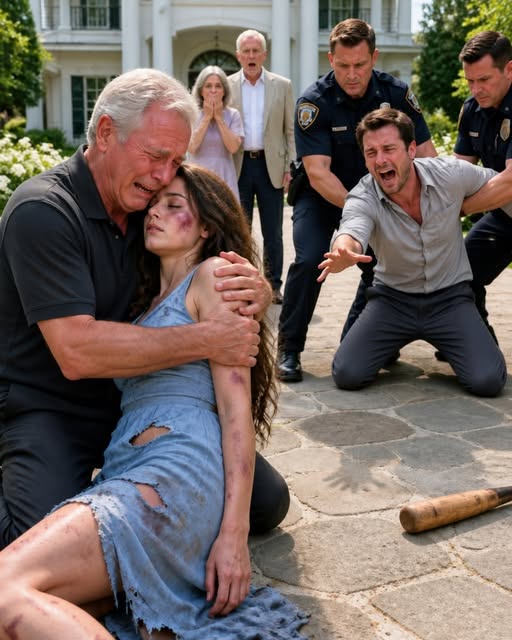
MY DAUGHTER WHISPERED “DAD, HELP” BEFORE THE CALL WENT DEAD THEN HER HUSBAND MET ME WITH A BASEBALL BAT AND SAID SHE HAD TO BE DISCIPLINED
My daughter whispered two words into the phone.
“Dad, help.”
Then the call went dead.
No explanation.
No scream.
No second chance to ask what was wrong.
Just silence.
I stared at my phone for perhaps half a second before I was already moving.
There are voices a father learns to recognize even when the speaker is trying desperately to hide what she feels.
Audrey had been that way since childhood.
She did not panic easily.
She did not exaggerate.
She did not call people for rescue because a situation felt uncomfortable.
When she was nine, her mother collapsed in our kitchen.
Audrey called me from the neighbor’s house.
Her voice had been so steady that I almost thought everything was under control.
Then she said, “Dad, Mom won’t wake up.”
That was the first time I heard real fear underneath my daughter’s words.
The second time was tonight.
“Dad, help.”
I grabbed my truck keys.
The rain outside was already pounding against the windows.
Silver Street was twenty three minutes away if traffic cooperated.
I made it in less.
I am not proud of how fast I drove.
The speedometer passed ninety.
Then one hundred.
Headlights smeared across the wet highway.
Rain hammered the windshield so hard the wipers could barely keep up.
Every rational part of me knew speeding through a storm could create another emergency.
Every part of me trained by years of investigation knew I should slow down, call local police, and approach the situation methodically.
But the father inside me heard only those two words.
Dad, help.
Audrey had married Julian Thorne eighteen months earlier.
I had never liked him.
That is easy to say after the fact.
People always rewrite instincts once something goes wrong.
They say they knew.
They felt something.
They saw darkness in someone’s eyes.
The truth was less dramatic.
Julian was polished.
Educated.
Wealthy.
Good at speaking to older people.
He shook my hand firmly, remembered names, sent expensive Christmas gifts, and understood exactly how much charm to use without looking desperate for approval.
What bothered me was smaller.
He corrected Audrey in public.
Not loudly.
Never enough for anyone else to react.
If she told a story, he would interrupt.
“That wasn’t Thursday. It was Friday.”
If she ordered something he considered unhealthy, he would smile.
“You sure you want that?”
If she disagreed with him, he would tilt his head and say, “You’re getting emotional.”
Tiny things.
Enough to irritate me.
Not enough to accuse a man of abusing my daughter.
Audrey defended him.
“He’s just particular.”
“He likes things organized.”
“He worries.”
“He’s not like that when we’re alone.”
That last sentence bothered me more than she realized.
I asked once whether she was afraid of him.
She laughed.
“Dad, please.”
I let it go.
Not completely.
Two months before that call, I installed an emergency application on Audrey’s phone.
I did not hide it from her.
I told her exactly what it did.
“If you press this sequence, it records automatically and uploads off device.”
She rolled her eyes.
“Normal fathers buy their daughters pepper spray.”
“I bought you pepper spray.”
“You bought me three.”
“Then humor an old man.”
“You’re sixty two.”
“Ancient.”
She finally agreed.
The application was a modified version of software we had once used for vulnerable witnesses.
I still had access to a secure evidence server through a retired investigators’ emergency protocol.
Nothing dramatic.
No secret federal system.
Just encrypted off device storage designed so a frightened person could create a record even if someone destroyed the phone afterward.
Audrey had never activated it.
Until tonight.
As I drove, a notification appeared on my dashboard.
EMERGENCY RECORDING RECEIVED.
I did not play it.
I already knew the first words.
I sent one message instead.
Daniel Mercer.
Possible unlawful confinement. Armed suspect possible. Thorne residence. Hold position until my signal.
Daniel responded less than thirty seconds later.
Understood.
That was all.
Daniel had worked beside me for nearly eight years in the state attorney general’s public corruption unit.
After leaving the Army, I spent twelve years investigating people who believed money and connections made them untouchable.
Judges.
Contractors.
Police officials.
Political donors.
Businessmen who smiled for charity photographs while bribing public employees in private offices.
Audrey knew I had worked for the attorney general.
She did not know much more.
Most people did not.
When I retired, I let the simpler version survive.
Military mechanic.
State employee.
Widower.
Father.
I liked that life.
I had spent enough years walking into rooms where everyone lied.
After Audrey’s mother died, my daughter asked me to stop.
“Please be my dad instead of everybody’s investigator.”
So I did.
At least, I thought I did.
Then her call came.
The gates to Thorne House were open.
That was the first thing that felt wrong.
The estate sat at the end of Silver Street behind iron fencing, old trees, and enough stone to make the place look less like a family home than a private courthouse.
Audrey’s wedding had been held there.
That was the only time I had spent more than an hour inside.
The mansion had belonged to Julian’s family for three generations.
Old money.
Old portraits.
Old secrets, apparently.
I drove through the gate and stopped hard near the front steps.
Audrey’s car sat crooked near the garage.
One headlight broken.
Driver’s door closed.
Her purse was visible through the passenger window.
That mattered immediately.
Audrey carried her purse everywhere.
Phone.
Wallet.
Medication.
Keys.
If she had left voluntarily, she would not leave it behind.
I opened the truck door.
Rain hit me instantly.
Julian was waiting on the porch.
Baseball bat across one shoulder.
No coat.
White shirt.
Dark trousers.
A small smile.
For one second, I thought maybe I was misunderstanding everything.
Maybe Audrey and Julian had fought.
Maybe she had locked herself upstairs.
Maybe the bat had some innocent explanation.
Then he spoke.
“This is a private family matter.”
I stopped at the bottom of the marble steps.
“Where is Audrey?”
Julian’s smile widened.
“Your daughter had to be disciplined.”
Every violent instinct I had spent decades learning to control woke up at once.
I imagined crossing the space.
Taking the bat.
Breaking his jaw.
Putting him on the ground.
Then I imagined Audrey somewhere inside.
Possibly injured.
Possibly listening.
Possibly depending on me not to turn one crime scene into two.
I kept my voice low.
“Where is my daughter?”
Julian laughed.
“You were a military mechanic, right?”
I said nothing.
“Don’t pretend you’re some action hero.”
His father appeared behind him.
Arthur Thorne.
Late sixties.
Silk robe.
Bourbon glass.
Hair perfect despite the hour.
He looked less alarmed by my arrival than annoyed.
Miriam Thorne appeared beside him.
Elegant.
Straight posture.
Hands folded.
Expression almost bored.
I had met her several times.
She was the kind of woman who could make politeness sound like judgment.
“Audrey has emotional problems,” Miriam said.
I looked at her.
“She became hysterical.”
“Where is she?”
“Julian corrected her behavior.”
Corrected.
There are words that expose more than the speaker intends.
That was one of them.
Before I answered, movement appeared above them.
Upstairs window.
A pale hand.
Five fingers pressed against the glass.
Then suddenly yanked away.
My body moved before thought.
One step.
Julian lifted the bat.
“One more step and you’re trespassing.”
I stopped.
Not because of the bat.
Because I wanted him talking.
I pulled out my phone and held it low beside my thigh.
Recording.
“You’re admitting Audrey is inside?”
“I’m saying she’s my wife.”
Julian’s voice became colder.
“And wives learn boundaries.”
Behind him, Arthur smirked.
“Men like you always threaten things they can’t deliver.”
I looked at him.
“You think I’m threatening you?”
Arthur took another drink.
“You came onto private property in the middle of the night.”
“My daughter called me for help.”
“Your daughter is unstable.”
“Then let me see her.”
Miriam answered.
“No.”
One word.
Immediate.
Clean.
That was when I knew something was far worse than a marital argument.
People telling the truth usually want evidence seen.
Let the father look.
Let him speak to his daughter.
Let him discover she is safe.
Instead, every person on that porch wanted visual separation between me and Audrey.
I slipped my phone into my coat pocket.
The recording continued.
My thumb pressed the screen twice.
Signal to Daniel.
Hold closer.
Observe.
I raised my voice.
“Audrey!”
No answer.
I tried again.
“Audrey, it’s Dad!”
For several seconds, only rain.
Then:
Knock.
Knock.
Knock.
Faint.
Above me.
My stomach tightened.
Three knocks.
When Audrey was nine and her mother first became seriously ill, I taught her a simple emergency signal.
Three knocks.
If she could not speak.
Three means yes.
Three means danger.
Three means I am still here.
Julian heard them.
I watched his face.
A tiny shift.
Enough.
“You heard that.”
He shrugged.
“Old house.”
“Three knocks are not an old house.”
Arthur’s eyes narrowed.
Miriam spoke.
“Mr. Vale, leave.”
I almost laughed.
“Your son is standing between me and my daughter with a baseball bat.”
“She is not in danger.”
“Then let me see her.”
“No.”
Again.
I looked at Julian’s hands.
His right knuckles were bruised.
Dried blood beneath one thumbnail.
Could be Audrey’s.
Could be his.
Then something else.
A thin red mark circled his wrist.
Like someone had grabbed him hard.
Or tied something there.
That did not fit.
If Julian was the only aggressor, why did he look recently restrained?
I looked past him.
“Where’s Mrs. Bell?”
Miriam’s eyes sharpened.
“What?”
“The housekeeper.”
I remembered her from the wedding.
Mrs. Bell had managed that household for years.
Audrey once told me the woman slept in a small apartment over the rear service wing.
Julian’s expression hardened.
“She isn’t here.”
“She always stays overnight.”
“Not tonight.”
“Why?”
Arthur answered.
“She resigned.”
“Tonight?”
Silence.
Tiny crack.
I smiled without humor.
“That’s convenient.”
Arthur stepped closer.
“You have no authority here.”
“No.”
I looked directly at him.
“But someone does.”
His face changed slightly.
I pulled out my phone.
“I contacted law enforcement.”
Not entirely true.
Not yet.
Daniel was law enforcement once.
Still connected enough to move things quickly.
But I needed more.
Arthur glanced toward Julian.
Julian looked toward Miriam.
Miriam looked up.
The hand appeared at the window again.
Five fingers.
Gone.
I stepped forward.
Julian lifted the bat.
“Stay there.”
“Audrey!”
For the first time, I heard her voice.
Weak.
“Dad…”
Everything inside me stopped.
Alive.
My daughter was alive.
“I’m coming.”
Julian swung.
There is a point when waiting becomes more dangerous than action.
This was it.
I moved inside the arc.
Caught his wrist with both hands.
The bat struck the porch railing instead of my skull.
Wood cracked.
Julian cursed.
I drove my shoulder into his chest.
He stumbled.
The bat fell.
Arthur shouted.
Miriam screamed.
Not frightened.
Angry.
“Stop!”
Julian came at me with both hands.
I caught him again and drove him against the marble column.
His head struck stone.
Not hard enough to knock him unconscious.
Hard enough to change the conversation.
I leaned close.
“Where is my daughter?”
His eyes opened.
The smirk was gone.
Fear.
But something about it bothered me.
He was not looking at me.
He was looking behind me.
I turned.
Rain.
Driveway.
Truck.
Trees.
Nothing.
When I looked back, Julian whispered:
“You don’t understand.”
“What?”
He swallowed.
“You think I’m the monster.”
Arthur stepped forward sharply.
“Julian.”
Julian ignored him.
“You have no idea what she brought into this house.”
My blood went cold.
“What did Audrey bring?”
“Ask her.”
A crash came from upstairs.
Then another.
Glass shattered.
I ran through the front door.
No one stopped me.
That should have warned me.
The mansion swallowed me.
First thing I noticed was the smell.
Bleach.
Disinfectant.
Something chemical.
The foyer was almost completely dark.
One lamp burned near the staircase.
Rainwater dropped from my coat onto white marble.
I heard footsteps overhead.
Then Audrey screamed.
“Dad!”
I ran.
Halfway up the staircase, Julian grabbed my coat from behind.
I spun.
Blood ran from his forehead.
“Don’t!”
I shoved him away.
“My daughter is upstairs.”
“You can’t go up there.”
“Why?”
No answer.
I grabbed his shirt.
“Why?”
His eyes went toward the second floor.
“Because that’s what they want.”
I released him.
“Who?”
Nothing.
A door slammed above us.
Audrey cried.
Not screamed.
Cried.
Weakly.
The kind of crying a person does after fear has exhausted itself.
I climbed.
Six doors lined the second floor.
I remembered five.
The sixth stood at the far end.
Narrow.
Black.
No handle.
No visible keyhole.
Audrey’s voice came from behind it.
“Dad.”
I moved toward her.
“I’m here.”
“Don’t open it.”
I stopped.
“Why?”
“I don’t know.”
Her breathing was ragged.
“Dad, listen.”
I stood inches from the door.
“How are you talking to me?”
“There’s a vent.”
I looked up.
Small metal grille.
“Are you hurt?”
Pause.
“Yes.”
“How badly?”
“I don’t know.”
My hands curled.
“Who did this?”
Silence.
“Audrey.”
“I need you to promise something.”
“Anything.”
“Don’t trust Julian.”
I glanced down the hallway.
No Julian.
“Okay.”
“And don’t trust Arthur.”
“Okay.”
“And Dad…”
Her voice cracked.
“Don’t let Mom come here.”
Every part of me froze.
“What?”
“Don’t let Mom come here.”
“Audrey.”
My voice dropped.
“Your mother is dead.”
Six years.
I buried her.
I stood beside Audrey at the grave.
My wife died from what doctors called a catastrophic aneurysm.
No warning.
No recovery.
One moment she had been complaining of a headache.
Hours later, dead.
I never believed the story completely.
But belief without evidence is grief, not a case.
“Audrey.”
Silence.
Then laughter came through the vent.
Not hers.
A man.
Low.
Close.
I stepped backward.
“Audrey?”
Footsteps moved inside the room.
Then someone whispered through the other side of the door.
“Hello, David.”
My name.
Not Mr. Vale.
Not Audrey’s father.
David.
And the voice.
Something old moved in my memory.
A warehouse.
Eleven years earlier.
Boxes of financial records.
An informant who disappeared.
A corruption network that had seemed impossible to reach.
A name.
Elias Voss.
I backed away.
“Who are you?”
The voice laughed.
“You really don’t remember?”
The memory came fully now.
Elias Voss.
Confidential source.
Business fixer.
Accountant for people who preferred money to become invisible.
He approached my unit twelve years earlier claiming he could expose a network moving bribes through construction contracts, charities, shell companies, and offshore accounts.
We believed him.
Enough to build an operation.
Then people started disappearing.
Records vanished.
Witnesses changed testimony.
Evidence boxes went missing.
Elias disappeared before he could testify.
His abandoned vehicle was found near a river.
No body.
Everyone assumed he was dead.
Soon afterward, my wife died.
I eventually left the investigation.
Now his voice was behind a hidden door in my daughter’s in laws’ mansion.
“Where is Audrey?”
“She isn’t why you’re here.”
“What?”
“She was bait.”
The hallway seemed to move.
“No.”
“She knew you would come.”
I pulled out my phone.
Recording active.
Then a notification appeared.
EVIDENCE SERVER CONNECTION COMPROMISED.
My blood went cold.
That server was protected.
Not impossible to breach.
Nothing is.
But whoever had accessed it knew where Audrey’s emergency recording would go.
Someone had anticipated the app.
Anticipated me.
I turned toward the staircase.
Julian stood at the bottom.
Arthur behind him.
Miriam was gone.
Julian stared at my phone.
“You understand now?”
“No.”
“You will.”
A click behind me.
I spun.
Part of the wall beside the black door opened.
Hidden passage.
Narrow staircase descending into darkness.
Then a woman’s voice rose from below.
Weak.
Terrified.
“David?”
My knees almost failed.
Impossible.
Absolutely impossible.
I knew that voice.
My wife.
Audrey’s mother.
The woman I buried six years earlier.
I stood frozen.
Julian whispered behind me.
“Now you know why Audrey called.”
I turned.
“What is down there?”
He looked terrified.
“Everything your family has been hiding from you.”
A door slammed downstairs.
Then every light in the mansion died.
Darkness.
My phone flashlight flickered.
Once.
Twice.
Then died.
Audrey screamed.
“DAD, RUN!”
Something heavy began climbing the hidden stairs.
One step.
Then another.
I did not run.
I had run from too many questions already.
After my wife died, people praised me for moving forward.
I returned to work briefly.
Then retired.
I told myself Audrey needed me.
True.
I also needed an excuse not to keep asking why my wife’s death arrived so close to the collapse of the Voss investigation.
There had been inconsistencies.
A missing toxicology sample.
An unexplained photograph.
A phone call she never told me about.
I told myself grief was making patterns from coincidence.
Maybe I was right.
Maybe not.
Then years passed.
Audrey grew.
I became simply Dad.
And the old case buried itself.
Now it was climbing the stairs toward me.
I reached into my coat.
Small emergency flashlight.
Old habit.
I clicked it on.
The beam shook across the passage.
Julian stood several feet behind.
Arthur was gone.
“Miriam?”
Julian shook his head.
“She went downstairs.”
“Why?”
“To stop him.”
“Who?”
Julian said nothing.
A shadow appeared.
Then a man stepped into the beam.
Older.
Gray hair.
Thin face.
Dark coat.
But the eyes were the same.
Patient.
Cold.
I whispered:
“Elias Voss.”
He smiled.
“Hello, David.”
“You’re alive.”
“Obviously.”
“What did you do to Audrey?”
“Nothing.”
“She’s injured.”
“She injured herself trying to escape.”
“Open the door.”
He looked amused.
“You still give orders like you have that badge.”
“I haven’t worn one in twelve years.”
“No.”
His smile disappeared.
“You wore something worse.”
“What does that mean?”
“You knew where the money went.”
“Some of it.”
“Offshore accounts.”
“Some.”
“Shell companies.”
“Yes.”
“Judges.”
“Yes.”
“Politicians.”
“Yes.”
“Police officers burying evidence.”
My jaw tightened.
“That was why I was investigating you.”
Elias stepped closer.
“That was why they destroyed the investigation.”
“Who?”
He looked toward the staircase.
“You know who.”
I remembered the photograph my wife received two weeks before she died.
Elias beside three men.
One was Arthur Thorne.
One was a state senator.
The third never identified.
My wife had gone pale when she saw it.
I asked if she recognized anyone.
She said no.
Two weeks later, she died.
I looked at Elias.
“You knew my wife.”
“Yes.”
“You were there the night she died.”
For the first time, his confidence shifted.
“Yes.”
The word barely came.
My world narrowed.
“What happened?”
“Your wife found the ledger.”
“What ledger?”
“The one Arthur has spent twelve years trying to recover.”
Julian stepped into the beam.
“My father killed people for that ledger.”
Elias looked at him sharply.
“Careful.”
Julian’s voice shook.
“You killed my mother too.”
I turned.
“What?”
“Miriam found out.”
I stared.
“The woman on the porch…”
Julian looked down.
“My mother died three years ago.”
The hallway suddenly felt colder.
“Then who was standing beside Arthur?”
Julian did not answer.
The hidden panel behind me opened farther.
A woman stepped out.
She wore Miriam Thorne’s clothes.
Same silk.
Same posture from a distance.
But as she lifted her face into the flashlight beam, I knew immediately she was not Miriam.
Older than Audrey.
Similar eyes.
A face I had seen in family photographs.
My wife’s sister.
Clara.
I stared.
“Clara?”
She looked at me.
“David.”
“No.”
Clara had supposedly died before Audrey was born.
Car accident.
Closed coffin.
I had met my wife only later.
I knew Clara through photographs and stories.
“You’re dead.”
A sad smile.
“No.”
“Why?”
“To survive.”
“Why were you pretending to be Miriam?”
“Because Arthur trusts appearances more than people.”
Nothing made sense.
“You faked your death?”
“Yes.”
“Why?”
“To protect what your wife eventually found.”
A sob came from behind the locked door.
“Dad?”
Everything else disappeared.
“Audrey.”
Elias moved aside.
“Open it.”
I stared.
“Why?”
“Because you deserve the truth now.”
I found a hidden release beneath the wall.
The door clicked.
I pulled it.
Audrey sat on the floor.
Wrists bruised.
Blood on her temple.
Hair tangled.
Dress torn near one shoulder.
Alive.
I dropped beside her.
She threw her arms around me.
For several seconds, I was not an investigator.
Not military.
Not anything.
I was a father holding his child.
“I thought you wouldn’t come.”
“I always come.”
She cried into my shoulder.
“I knew you would.”
I pulled back.
“Who hurt you?”
Her eyes moved.
Julian.
Elias.
Clara.
Then back to me.
“No one here.”
I frowned.
“What?”
She reached beneath her shirt.
Small metal drive.
“This is what they wanted.”
My stomach tightened.
“The ledger?”
She nodded.
“I found it six months ago.”
“Where?”
“Mom’s things.”
My breathing stopped.
“Your mother?”
Audrey swallowed.
“Dad, Mom didn’t die from an aneurysm.”
“I know something was wrong.”
“No.”
Tears spilled down her face.
“She was poisoned.”
The room disappeared around me.
Six years.
Six years of grave visits.
Dreams.
Questions.
Guilt.
Audrey held the drive.
“Mom discovered the network. She copied everything.”
I looked at Clara.
“She gave it to you?”
Clara nodded.
“Before she died.”
“Why didn’t you come to me?”
“Because they watched you.”
“Who?”
Clara looked toward the staircase.
“Arthur.”
Movement.
I turned.
Arthur Thorne stood at the far end of the hall.
Blood ran down one side of his face.
No bourbon now.
Pistol in hand.
Everything became simple.
Weapon.
Distance.
Audrey beside me.
Julian between us.
Elias near the passage.
Clara exposed.
Arthur raised the gun.
“Give me the drive.”
Audrey’s hand closed around it.
Julian stepped between his father and us.
“Dad.”
“Move.”
“No.”
Arthur’s expression barely changed.
“Julian.”
“You killed Mom.”
“She was going to destroy everything.”
“You killed her.”
“She made her choice.”
Julian’s face twisted.
“No.”
His voice shook.
“You made yours.”
Arthur raised the weapon.
I moved.
Elias moved too.
Gunshot.
The sound exploded inside the hallway.
Julian fell.
“Audrey!”
I grabbed her and pulled her behind the wall.
Another shot.
Then a struggle.
Silence.
I looked out.
Arthur was on the floor.
Elias stood over him.
The gun several feet away.
Julian lay against the wall gripping his shoulder.
Blood.
But conscious.
Alive.
Sirens rose outside.
Daniel.
For the first time all night, I almost laughed.
I had wondered if he would know when to move.
He did.
The recording from the porch had captured Julian calling Audrey’s confinement “discipline.”
It captured the bat.
The refusal to let me see her.
Then the screams.
Daniel had enough.
State police.
Local officers.
Emergency response.
They had moved onto the property while I was inside.
Minutes later, Thorne House filled with lights.
Uniforms.
Commands.
Radios.
People running through halls where the Thorne family had spent decades controlling who was allowed to enter.
Arthur was arrested.
Elias surrendered.
Clara gave investigators documents.
Audrey handed over the drive.
Julian went to the hospital under guard while his role was sorted out.
The investigation I had buried twelve years earlier came back to life before sunrise.
Names.
Bank accounts.
Bribes.
Property schemes.
Judges.
Public officials.
Police officers.
Secret payments.
Violence.
Murder.
Evidence linked Arthur Thorne to my wife’s death.
Evidence linked him to Miriam’s death.
Elias was not innocent.
He had operated inside the network.
He had helped move money.
He had disappeared rather than testify.
He had secrets of his own.
Clara had been living under false identities for years.
Julian knew more about the family than Audrey had ever suspected.
Almost nobody in that house was what they appeared.
Including me.
Audrey learned the full version of my career that night.
Not military mechanic.
Not quiet state employee.
Chief investigator.
Public corruption.
Years of confidential sources.
Cases powerful people wanted dead.
She sat wrapped in a blanket after paramedics treated her head.
Daniel sat nearby.
I looked at her.
“I should have told you.”
She gave me a tired smile.
“You think?”
Despite everything, I laughed.
Then she cried.
So did I.
The adrenaline disappeared.
That was when fear arrived fully.
Not while Julian had the bat.
Not while Arthur had the gun.
After.
When my daughter was safe enough for my body to understand how close I came to losing her.
I sat beside her.
“Why didn’t you tell me about the drive?”
She looked down.
“Because I knew what you’d do.”
“What?”
“This.”
She gestured weakly around the room.
“Drive a hundred miles an hour into a mansion full of armed people?”
“Pretty much.”
“That is not funny.”
“I know.”
“Why were you investigating Arthur?”
“I wasn’t at first.”
She took a breath.
“I found Mom’s things in a storage box.”
“What things?”
“Old papers.”
“From the house?”
“Yes.”
“Why were they at Thorne House?”
Audrey looked at Julian across the room.
He was being loaded onto a stretcher.
“She had hidden things there before she died.”
That made no sense.
“Why there?”
Clara answered.
“Your wife had been tracing Arthur.”
I looked at her.
“She knew he was connected to Elias.”
“Yes.”
“She never told me.”
“She wanted proof first.”
Anger flared.
“She should have trusted me.”
Clara’s face hardened.
“She was trying to protect you.”
“By investigating a corruption network alone?”
“You were already compromised.”
I stared.
“What?”
“Not corrupt.”
She shook her head.
“Watched.”
She explained.
After the Voss investigation began, people followed me.
Phones monitored.
Sources leaked.
My wife saw what was happening.
She believed anything she told me directly would become part of surveillance.
So she began collecting separately.
The ledger was the key.
A record of payments linking businessmen, officials, officers, judges, and contractors.
Enough to collapse careers.
Enough to send people to prison.
Enough to motivate murder.
“She found it?”
“Yes.”
“And copied it.”
“Yes.”
“Then gave it to you.”
Clara nodded.
“Before she died.”
“Where was the original?”
“Moved.”
“By who?”
“Elias.”
I looked at him.
He sat with officers.
Hands visible.
Exhausted.
Everything tangled.
Truth rarely arrives clean.
It came contaminated by people who had lied for reasons good and bad.
Clara lied to survive.
Elias lied to disappear.
Julian lied because he feared his father.
Arthur lied to control an empire.
Audrey withheld truth because she wanted to protect me.
I had hidden my career because I wanted to protect Audrey.
Every person believed concealment served some purpose.
Eventually, lies created a house where nobody knew who was safe.
I hated that.
Three days later, I sat across from Elias in an interview room.
He had counsel.
I was not part of the official investigation.
I was there as someone with historical knowledge.
And as the husband of a murdered woman.
I asked one question first.
“Why Audrey?”
Elias looked at me through the glass reflection.
“She wasn’t supposed to become involved.”
“She was locked in a room.”
“That was not my plan.”
“Whose?”
“Arthur’s.”
“Julian said she had to be disciplined.”
“Julian was protecting himself.”
“That does not answer me.”
Elias sighed.
“Audrey found the drive. Arthur learned she had it.”
“How?”
“Someone saw her searching old storage.”
“Mrs. Bell?”
Elias looked at me.
“Yes.”
My mind returned to the porch.
Housekeeper resigned.
No.
Removed.
“Where is she?”
“Safe.”
“Can you prove that?”
“She is cooperating.”
I leaned back.
One question solved.
Another opened.
“Why did Audrey call me?”
Elias smiled faintly.
“Because she knew the only person Arthur could not control was you.”
“That sounds flattering.”
“It isn’t.”
He leaned forward.
“You were dangerous because you stopped caring about their world.”
“What?”
“You retired.”
“Yes.”
“You walked away from politics, prosecutors, money, influence.”
“Yes.”
“You became difficult to pressure.”
I understood.
People with careers can be threatened with careers.
People seeking promotions can be offered promotions.
People with secrets can be blackmailed.
I had simplified my life until the only thing that mattered was Audrey.
That made leverage harder.
Except they used Audrey anyway.
Elias continued.
“Your wife believed you would come.”
I stared.
“What?”
“She told me years ago.”
“Told you what?”
“If anything happened to her, you’d spend the rest of your life blaming yourself.”
He paused.
“She was wrong about one thing.”
“What?”
“She did not know you’d spend the rest of your life protecting Audrey instead.”
My eyes burned.
I looked through the glass.
Audrey sat outside beside Daniel.
Blanket around her shoulders.
Hair pulled back.
For the first time since the phone call, she looked like my daughter again.
Not evidence.
Not bait.
Not someone’s wife.
My little girl.
I stood.
“We’re done.”
Elias nodded.
I walked out.
Audrey looked up.
“Did he answer?”
“Yes.”
“Good answer?”
“No.”
She smiled sadly.
“Those exist?”
“Rarely.”
We went home.
Not Thorne House.
My home.
Small.
Plain.
No marble.
No hidden staircases.
Audrey slept in her childhood bedroom for the first time in years.
I stood outside the door the first night.
Listened.
Not because I thought someone was inside.
Because fathers become irrational after almost losing a child.
I heard her breathing.
I went downstairs.
Could not sleep.
At three in the morning, she appeared.
“Dad.”
I turned.
“Can’t sleep?”
She shook her head.
Neither could I.
She sat across from me.
For a while, we said nothing.
Then:
“Are you mad at me?”
“Yes.”
Her face fell.
I continued.
“I am also relieved, terrified, grateful, and confused.”
She looked down.
“I should have told you.”
“Yes.”
“You would have tried to stop me.”
“Yes.”
“That’s why.”
“That is not a defense.”
“I know.”
I rubbed my eyes.
“You were in over your head.”
“So were you twelve years ago.”
That landed.
I looked at her.
“You want to fight about this now?”
She almost smiled.
“No.”
“Good.”
Silence.
Then she asked:
“Did Mom really know all this?”
“Apparently.”
“Did she know Arthur killed her?”
“I don’t think she knew he would.”
“Did she know she was in danger?”
“Yes.”
Audrey’s eyes filled.
“Why didn’t she leave?”
The question hit me harder than expected.
Why don’t people leave?
A question strangers ask easily.
People inside danger rarely experience choices as clean.
“She thought she could finish what she started.”
“Was she wrong?”
“Yes.”
The answer hurt.
“Do you blame her?”
I took a long time.
“I used to.”
Audrey looked surprised.
“For dying?”
“For not telling me.”
“And now?”
“I don’t know.”
Honest.
Grief does not always mature into elegant forgiveness.
Sometimes it remains unfinished.
“She made choices trying to protect us.”
“So did you.”
“Yes.”
“So did Clara.”
“Yes.”
“And Elias?”
I frowned.
“Do not get philosophical about Elias.”
She laughed.
First real laugh.
It felt like oxygen.
Then her expression changed.
“Julian.”
I waited.
“He told you I had to be disciplined.”
“Yes.”
“I don’t understand him.”
“Neither do I.”
“He didn’t hit me.”
I looked at her wrists.
“Then these?”
“Arthur’s men.”
My jaw tightened.
“Julian knew?”
“Yes.”
“And stood outside with a baseball bat.”
“Yes.”
“Why?”
“He was trying to keep you from coming inside.”
“That does not help his case.”
“I know.”
“Did he know Arthur had a gun?”
“I don’t know.”
“Did he know about the ledger?”
“Some.”
“Did he know his mother was murdered?”
“Yes.”
“And he stayed?”
Audrey looked away.
“He was afraid.”
I wanted to say something harsh.
Then remembered fear makes cowards out of ordinary people and collaborators out of frightened ones.
That did not absolve Julian.
But accuracy mattered.
“He still threatened me.”
“I know.”
“He still participated in keeping you there.”
“I know.”
“He called it discipline.”
“I know.”
Tears filled her eyes.
“I married him.”
I moved closer.
“That is not a crime.”
“I should have seen…”
“No.”
She looked at me.
“You always tell me to trust my instincts.”
“Yes.”
“What if they were wrong?”
“They were incomplete.”
She frowned.
“Julian was not one thing.”
I continued.
“He could have loved you and still failed you.”
Tears fell.
“He could have been afraid and still participated.”
Another.
“He could have hated Arthur and still obeyed him.”
I took her hand.
“Complexity does not erase responsibility.”
She squeezed my fingers.
“Do you hate him?”
“Yes.”
She laughed through tears.
“At least you’re honest.”
“I did not say I’m objective.”
“You’re definitely not.”
The criminal investigation unfolded for months.
Arthur Thorne faced charges tied to financial corruption, conspiracy, obstruction, and murder related evidence.
The ledger reopened cases people thought were dead.
State officials resigned.
Some denied everything.
Some cooperated.
Some lawyers held press conferences.
News stations rediscovered footage of people standing beside Arthur at charity events.
Reporters called me.
I declined almost all of them.
I had spent enough of my career watching serious cases become entertainment.
Audrey’s face appeared in some coverage anyway.
She hated it.
Julian’s role took longer to untangle.
He had participated in intimidation.
He had blocked access.
He had known about confinement.
But evidence also showed he had been threatened by his father and had tried at certain moments to disrupt Arthur’s plan.
That red mark on his wrist?
Someone inside had restrained him earlier after he tried to help Audrey leave.
The bruised knuckles?
A fight with one of Arthur’s men.
The dried blood?
Not Audrey’s.
None of that erased the bat.
None erased the words on the porch.
But it complicated the picture.
Audrey eventually filed for divorce.
She did not ask my opinion.
Smart woman.
When she told me, I said only:
“Okay.”
She stared.
“That’s it?”
“What do you want?”
“I expected a speech.”
“I have several.”
“Please don’t.”
“Then okay.”
She smiled.
Months later, she admitted she still loved him.
“That happens.”
“You’re not angry?”
“At love?”
“No.”
“I’m angry at his choices.”
She nodded.
“I don’t want to hate him forever.”
“You don’t have to.”
“I also don’t want to forgive too quickly.”
“Then don’t.”
She stared.
“You’ve become annoyingly reasonable.”
“Retirement.”
She laughed.
I learned to stop trying to solve her emotional life.
Fathers often confuse protection with control.
I had spent years thinking my job was to prevent pain.
Impossible.
My job was to be someone she could call when pain arrived.
Dad, help.
I came.
That was enough.
Three months after the night at Thorne House, Audrey asked me to drive back with her.
“Why?”
“I want to see it.”
“No.”
She raised an eyebrow.
I sighed.
“Fine.”
The mansion stood empty.
Crime scene processing complete.
Property tied up in legal proceedings.
The rain had stopped.
Morning sunlight covered the marble steps.
No Julian.
No Arthur.
No bat.
No bourbon.
Just a building.
Audrey stood beside me.
For several seconds, neither of us moved.
Then she took my hand.
She had not done that since she was a teenager.
“Dad?”
“Yeah?”
“Do you think Mom knew you’d come?”
I looked at the windows.
The upstairs room.
The place where I saw her hand against the glass.
“Yes.”
“How?”
“Because your mother knew me.”
Audrey leaned against my shoulder.
“I was scared.”
“I know.”
“I thought I was going to die.”
My throat tightened.
“I know.”
“When I heard you downstairs…”
She stopped.
Her eyes filled.
“I knew everything was going to be okay.”
I almost told her that was ridiculous.
I had not known anything would be okay.
I was terrified.
Julian had a bat.
Arthur had a network behind him.
I walked into a mansion without understanding who controlled what.
My evidence server was compromised.
A dead informant appeared.
A dead aunt appeared.
A dead mother’s voice seemed to rise from a hidden staircase.
I had no idea what I was doing for large parts of that night.
But children sometimes need the myth.
Dad came.
Therefore safety.
Maybe there was truth inside it.
Not that fathers are invincible.
That presence matters.
“I wasn’t sure.”
I told her.
She looked up.
“What?”
“I wasn’t sure anything would be okay.”
“You looked sure.”
“That’s because you were upstairs.”
She smiled.
“I was terrified too.”
“Good.”
“What?”
“Means you’re human.”
We stood there.
For years, I thought being a father meant keeping darkness away from your child.
Locking doors.
Teaching safety.
Installing emergency apps.
Watching boyfriends.
Staying alert.
That night taught me something else.
Sometimes darkness gets in anyway.
Sometimes the person your child loves becomes part of it.
Sometimes wealth builds walls high enough to hide violence.
Sometimes old secrets crawl into a new generation.
And sometimes the only thing a father can do is walk straight into the darkness after his child.
Not because he is fearless.
Because fear becomes irrelevant when someone you love is calling.
I looked at Thorne House one final time.
The hidden hallway.
The locked room.
The passage below.
For decades, the building had protected secrets because everyone inside believed stone, money, reputation, and fear could keep truth contained.
They were wrong.
Truth does not always win quickly.
Sometimes it takes twelve years.
Sometimes witnesses disappear.
Sometimes cases collapse.
Sometimes people die before anyone listens.
Sometimes children discover the evidence their parents never finished using.
But secrets have a weakness.
They require everyone to keep choosing silence.
Eventually someone stops.
My wife stopped.
She copied the ledger.
Clara stopped.
She preserved evidence.
Audrey stopped.
She called me.
Julian stopped, too late and imperfectly, but enough to stand between Arthur and a gunshot.
Daniel stopped waiting the moment the threat became clear.
And I stopped pretending the old case had died just because I had walked away.
The mansion stayed silent behind us.
Audrey squeezed my hand.
“Ready?”
“Yes.”
We walked toward the truck.
Halfway there, she stopped.
“Dad.”
“What?”
“You really drove a hundred miles an hour?”
“Allegedly.”
She stared.
“Your truck records speed.”
“Traitorous technology.”
“That is insane.”
“You called me.”
“That does not make traffic laws disappear.”
“I’m aware.”
“You could’ve died.”
“I’m aware.”
She shook her head.
“I cannot believe I’m the responsible one in this conversation.”
I smiled.
“You get that from your mother.”
Her face softened.
For a second, grief stood between us.
Not sharp.
Familiar.
We got into the truck.
As I started the engine, Audrey looked at the mansion one more time.
Then forward.
That mattered.
Forward.
Not because the past was resolved perfectly.
It was not.
My wife remained dead.
No conviction could change that.
Audrey had scars no investigation could erase.
Julian would live with his choices.
Clara had lost decades to hiding.
Elias would face consequences for his own actions.
Arthur’s empire of influence was collapsing.
Nothing about truth restored the world to what it had been before.
Truth is not a time machine.
It does something more difficult.
It gives you an accurate place to begin again.
For six years, I dreamed about my wife’s voice.
Sometimes she called my name.
Sometimes I woke before I could reach her.
After Thorne House, those dreams changed.
I still dreamed about her.
But she stopped calling from darkness.
Sometimes she sat at our old kitchen table.
Sometimes she complained about the coffee.
Sometimes she laughed at something Audrey said.
Ordinary dreams.
I think my mind no longer needed to keep asking how she died.
The answer hurt.
But uncertainty had hurt differently.
Mystery can become a room the dead never leave.
Truth opened the door.
Three months later, Thorne House stood empty.
Newspapers called it a crime scene.
The state called it evidence.
The Thorne family’s remaining relatives called it cursed.
I called it a grave.
Not because bodies were buried beneath it.
Because too many lives had been hidden there.
Too many decisions made in silence.
Too many people treated as obstacles.
That house represented what happens when families protect reputation instead of truth.
When power becomes private law.
When fear is mistaken for loyalty.
When abuse gets renamed discipline.
That word still angered me most.
Disciplined.
Julian said it on the porch because he thought marriage gave him authority over Audrey.
Maybe he repeated language Arthur used.
Maybe he did not understand how much it revealed.
Either way, that sentence became evidence.
Your daughter had to be disciplined.
No.
Adults in marriages are not parents and children.
A spouse does not discipline another spouse.
A wealthy family does not acquire jurisdiction over the person who married into it.
Love does not create ownership.
I wish Audrey never had to learn that through fear.
But she did.
And afterward, she built different rules.
She stopped explaining every boundary.
Stopped apologizing for distance.
Stopped defending Julian to people who already understood enough.
She returned to work.
Moved into a small apartment.
Hated the kitchen.
Loved the windows.
The first time I visited, she apologized.
“It’s tiny.”
I looked around.
“Any hidden staircases?”
She laughed.
“No.”
“Then I approve.”
She threw a pillow at me.
Normal life returned in pieces.
Not all at once.
That is another thing people misunderstand about rescue.
The dramatic moment is easy to identify.
Door opens.
Police arrive.
Gun removed.
Daughter safe.
But the real work happens afterward.
Audrey checking locks three times.
Waking from nightmares.
Freezing when someone raised his voice in a restaurant.
Feeling guilty for still missing Julian.
Hating herself for having married into the Thorne family.
Then therapy.
Time.
Sleep.
Work.
Ordinary mornings.
Healing is repetitive.
Less cinematic than danger.
More important.
I had my own work.
The revelation about my wife reopened everything.
I returned to therapy too.
Audrey laughed when I told her.
“You?”
“Yes.”
“The man who thinks feelings are mechanical failures?”
“I do not think that.”
“You once told me grief has diagnostic stages.”
“I was trying to help.”
“You made a chart.”
“It was a good chart.”
She laughed until she cried.
I missed that sound.
In therapy, I admitted something I had never told Audrey.
I blamed myself for my wife’s death.
Not rationally.
Professionally.
The investigation touched our home.
My work created exposure.
If I had left earlier, maybe she would have lived.
The therapist asked:
“Did you poison her?”
“No.”
“Did you give Arthur her location?”
“No.”
“Did you know she was investigating separately?”
“No.”
“Then what exactly are you taking responsibility for?”
“I brought the case near my family.”
“You investigated public corruption.”
“Yes.”
“Someone chose murder to protect that corruption.”
“Yes.”
“Whose choice was that?”
Arthur’s.
The answer looked simple in the room.
It had not felt simple for six years.
Guilt sometimes survives because it gives us imaginary control.
If I caused it, then maybe I could have prevented it.
Accepting that someone else made a terrible choice means accepting how little control we sometimes have.
That is harder.
I began giving Arthur back his responsibility.
Not all at once.
But piece by piece.
Audrey did something similar with Julian.
“I keep thinking if I had found the ledger and come directly to you…”
“Maybe.”
“If I had never married him…”
“Maybe.”
“If I had left after the first controlling argument…”
“Maybe.”
I stopped her.
“You can build infinite alternate timelines.”
She looked at me.
“None change this one.”
“I know.”
“Then use hindsight to build the future, not prosecute the past.”
She smiled.
“Therapy?”
“Maybe.”
“Definitely.”
We were both learning.
The corruption investigation produced years of consequences.
Not everyone went to prison.
Evidence ages.
Witnesses die.
Records disappear.
Some charges were easier than others.
But Arthur’s network never returned to its old shape.
Names became public.
Money trails became visible.
People who had built careers on secrecy had to answer questions.
Some resigned.
Some cooperated.
Some fought.
I let professionals handle it.
That was difficult.
I wanted to return.
Badge.
Files.
Interviews.
Old instincts.
Daniel told me no.
“You’re a witness.”
“I know.”
“You’re too close.”
“I know.”
“You’re retired.”
“I know.”
“Then act retired.”
“I hate you.”
“Good.”
He did his job.
That mattered.
Systems fail when personal grief replaces process.
I wanted justice.
That meant accepting limits on my own role.
Years earlier, I might have forced myself into the center.
Age had improved me slightly.
Not much.
But enough.
Elias eventually told investigators what happened the night my wife died.
I did not attend.
I received the summary later.
She had found financial evidence.
Arthur learned.
People were sent to recover it.
A poison was used because an aneurysm like event would look medically plausible.
There were accomplices.
Cover records.
A compromised official.
I read enough.
Then stopped.
People often think victims’ families want every detail.
Sometimes details become another form of violence.
I needed truth.
Not every image.
I placed the file in a drawer.
Audrey asked if she could read it.
“When you’re ready.”
“Are you?”
“No.”
She nodded.
We left it there.
Later.
That word again.
Healing includes choosing when information enters your mind.
The world had already forced enough on us without permission.
We reclaimed some control by deciding the timing.
One year after the call, Audrey and I drove past Silver Street without planning to.
The old gate had been removed.
Construction fencing surrounded the property.
“What are they doing?”
I shrugged.
“Probably selling.”
She looked at the road.
“Do you want to stop?”
“No.”
Neither did she.
We kept driving.
That was when I knew the house had lost some of its power.
A year earlier, every window carried terror.
Now it was real estate.
Stone.
Glass.
Wood.
A building does not create evil.
People choose what happens inside.
That distinction helped.
Audrey turned on the radio.
Bad song.
She sang anyway.
Very badly.
“You inherited your mother’s voice.”
“That is rude.”
“Accurate.”
She turned it louder.
I smiled.
The road continued.
No one followed.
No emergency app.
No recording.
No bat.
Just my daughter singing terribly in the passenger seat.
That became one of my favorite memories.
People later asked why Audrey called me instead of police.
The answer was complicated.
Part fear.
Part habit.
Part trust.
Part the belief that her father would come even if nobody else understood.
I told her eventually:
“Next time call police first.”
She stared.
“Next time?”
“Figure of speech.”
“Dad.”
“Fine. There will never be a next time.”
She smiled.
Then became serious.
“You know I called you because of Mom.”
“What?”
“She used to say something.”
I waited.
“When I was little.”
“What?”
“If you’re scared and you can reach your father, reach him.”
My throat tightened.
“She said that?”
“All the time.”
I looked away.
Audrey continued.
“She said you’d be annoying, overprepared, and probably angry.”
“That sounds like her.”
“But you’d come.”
I felt tears rise.
Audrey touched my arm.
“She was right.”
The two words echoed differently than Dad, help.
She was right.
Maybe that was why the question at Thorne House mattered so much.
Do you think Mom knew you would come?
Yes.
Because she knew me.
Not as an investigator.
Not as a soldier.
As a husband.
As a father.
That identity had outlived everything else.
The badge was gone.
Uniform gone.
Career gone.
My wife gone.
But when Audrey called, I came.
Sometimes life strips away titles until one remains.
Dad.
Enough.
I still keep the emergency application active on Audrey’s phone.
She complains.
I ignore her.
But I changed one thing.
It no longer uploads to the old compromised server.
Daniel arranged a new secure channel.
“Overprotective,” Audrey said.
“Prepared.”
“Paranoid.”
“Experienced.”
She sighed.
I smiled.
Some things fathers do not outgrow.
The difference now is she understands why.
And I understand technology cannot protect her from everything.
It is a tool.
Not a promise.
The real promise is simpler.
Call.
I come.
The final time I saw Julian was during a legal proceeding connected to his conduct at the mansion.
He looked thinner.
Older.
Shoulder healed.
No smugness.
He saw me outside the courtroom.
For a moment, neither of us spoke.
Then:
“Is Audrey okay?”
I studied him.
“That isn’t information you get from me.”
Pain crossed his face.
Fair.
Maybe deserved.
“I loved her.”
I believed him.
That surprised me.
“I know.”
His eyes changed.
“You do?”
“Yes.”
“Then why…”
I held up a hand.
“Love is not your defense.”
He looked down.
“You can love someone and still participate in harming them.”
Silence.
“You stood on a porch with a bat.”
“I was trying to keep you out because Arthur…”
“You called it discipline.”
He closed his eyes.
“I know.”
“That was you.”
“Yes.”
“Not Arthur.”
“Yes.”
“Not fear.”
His jaw tightened.
“Me.”
I nodded.
That was all I needed.
Not apology.
Ownership.
He looked at me.
“Tell her…”
“No.”
He stopped.
“No messages through me.”
He nodded.
Another boundary.
I walked away.
I never told Audrey about that conversation until much later.
Not because I hid it.
Because it belonged to Julian.
If she asked, I would answer.
Eventually she did.
“What did he say?”
“That he loved you.”
She started crying.
“I hate that.”
“I know.”
“Would be easier if he didn’t.”
“Yes.”
She wiped her face.
“What else?”
“He took responsibility for the porch.”
She nodded.
“That matters.”
“Does it?”
“To me.”
Then it mattered.
Not because it erased anything.
Because healing belongs to the harmed person, not the observer.
I had my opinion.
Audrey had hers.
I learned to separate them.
She never reconciled with Julian romantically.
But years later, she stopped speaking his name with anger.
That was her choice.
I did not interpret it as forgiveness.
It was freedom.
Anger is useful when danger is active.
Later, it can become heavy.
She put it down when ready.
I tried to do the same with Arthur.
Harder.
Some names remain bitter.
But even Arthur became less central.
Eventually, when I thought of my wife, I thought of her first.
Not her murderer.
That felt important.
Murder had stolen the end of her life.
I refused to let it steal every memory before it.
She loved terrible coffee.
Hated folding laundry.
Danced while cooking.
Made lists and lost them.
Pretended she did not cry at movies.
Called me David only when angry or afraid.
That was why the voice in Thorne House had frozen me.
Nobody alive had used my name that way in years.
Later, Clara admitted she had spoken through the passage.
Her voice resembled her sister’s enough to shock me.
In darkness and fear, grief completed the illusion.
That answered one of the strangest moments of the night.
For seconds, I believed my dead wife was beneath the house.
Reality was less supernatural.
Not less painful.
Clara had been trying to draw me toward the hidden passage without exposing herself.
I told her never to do that again.
She laughed.
“You think we’re doing this again?”
“Good point.”
Clara became part of Audrey’s life slowly.
An aunt declared dead before her niece was born.
There is no normal way to integrate that.
At first, Audrey stared at her.
“You look like Mom.”
Clara cried.
“So do you.”
They built something.
Not replacement.
New relationship.
I watched from a distance.
Families can survive bizarre truths if people stop forcing them into old shapes.
Clara did not become Audrey’s mother.
She became Clara.
That was enough.
Elias remained more complicated.
He helped expose the network.
He had also committed crimes.
Cooperation does not transform a guilty person into a hero.
I resisted anyone telling the story that way.
No heroes.
No monsters without history.
Actions.
Evidence.
Responsibility.
That was enough.
Even Arthur was not a creature from another world.
He was a human being who repeatedly chose power over people.
That made him more frightening, not less.
Calling someone evil can become a shortcut that lets us avoid studying how ordinary decisions become catastrophic.
Arthur protected money.
Then reputation.
Then the network.
Each compromise required another.
At some point, murder became another operational problem.
That progression mattered.
Corruption rarely begins with murder.
It begins with entitlement.
Small exceptions.
One lie.
One payoff.
One hidden account.
One person saying everyone does it.
Then bigger acts become possible.
I had seen that professionally.
Now I understood it personally.
Audrey asked once:
“Do you regret leaving the investigation twelve years ago?”
“Yes.”
She looked surprised.
“I thought you’d say no.”
“I regret things.”
“Would Mom be alive if you stayed?”
“I don’t know.”
“Then what do you regret?”
“Letting fear close the questions.”
She nodded.
“But you stayed for me.”
“Yes.”
“Do you regret that?”
“No.”
Both truths.
I could regret abandoning a case and still value the father I became.
Life is full of decisions where every option costs something.
I stopped expecting moral geometry to be clean.
That helped.
Eventually, Daniel retired too.
We had coffee.
He complained about retirement after six days.
“You told me to act retired.”
“That was you.”
“And now?”
“I’m different.”
I laughed.
He looked at me.
“You did well that night.”
“No.”
“You did.”
“I drove too fast.”
“Yes.”
“Entered before police arrived.”
“Yes.”
“Engaged an armed suspect.”
“Yes.”
“Went into a compromised building.”
“Yes.”
“That is not ‘well.’”
Daniel sipped coffee.
“You got your daughter out.”
“Police got everyone out.”
“You held long enough for evidence to develop.”
I shook my head.
He smiled.
“Still arguing.”
“Occupational disease.”
“Retired.”
“Allegedly.”
We laughed.
Then he became serious.
“You know what saved Audrey?”
“What?”
“She called early enough.”
I stared.
“And you believed her immediately.”
The second part mattered.
No interrogation.
No “Are you sure?”
No “What did Julian mean?”
She said help.
I moved.
Maybe sometimes love is that simple.
Believe the urgent sentence.
The rest can be sorted afterward.
I wish more people understood that.
Audrey rarely asked for help because she had always been independent.
I used to be proud of that.
After Thorne House, I became careful.
Independence is good.
Isolation is not.
Strong people still need doors they can knock on.
Three knocks.
Dad, I’m still here.
I still hear them sometimes.
Not as a nightmare.
As proof.
She was alive.
She found a way to signal.
I heard.
That old childhood code survived long enough to matter.
Small habits can become lifelines.
My wife helped create that too.
Hospitals made Audrey afraid.
Three knocks became our code.
Years later, inside a locked room, she remembered.
Family traditions are not always holidays.
Sometimes they are tiny systems of survival.
That realization made me love the memory instead of fear it.
The last time Audrey and I discussed Thorne House, she said:
“Do you think we’re done talking about this?”
“No.”
“Why?”
“Because people with therapists never stop talking.”
She laughed.
“I mean really.”
I thought.
“We’re done letting it define every conversation.”
“That’s different.”
“Yes.”
She nodded.
“Good.”
We were.
The case remained part of our history.
Not our identity.
There is a point when survival stories can become another prison if every future day is required to reference the worst one.
We chose otherwise.
Audrey built a career.
Friends.
Her own life.
I traveled.
Fixed old engines, ironically.
Volunteer work.
Coffee with Daniel.
Visits to my wife’s grave.
Ordinary things.
Sometimes ordinary life is the greatest victory available.
No dramatic confrontation.
No enemy watching you succeed.
Just Tuesday.
Groceries.
A text from your daughter complaining about work.
A leaking faucet.
Rain that means only weather.
Silver Street once meant terror.
Now sometimes I forget the street name.
That is progress.
I still remember the call.
I probably always will.
“Dad, help.”
Then silence.
Twenty three minutes later, Julian on the porch.
Bat across his shoulder.
“This is a private family matter.”
No.
Violence hidden inside a family is not protected by the word private.
Confinement does not become acceptable because the victim is someone’s wife.
Threats do not become discipline.
Money does not create law inside a mansion.
Marriage does not erase a person’s right to safety.
Those truths should be obvious.
Power often survives by making obvious truths sound complicated.
Arthur’s family had done that for generations.
Everything was family business.
Private.
Sensitive.
Handled internally.
That language protected the people causing harm.
The moment Audrey called outside the house, the system cracked.
The moment I recorded Julian’s words, another crack.
The moment Daniel involved law enforcement, another.
The moment the ledger reached investigators, the entire structure opened.
Abuse and corruption both depend on closed rooms.
Truth needs exits.
A phone call can be one.
A witness.
A recording.
A child remembering three knocks.
I think about that whenever someone says one person cannot change a powerful system.
Maybe one person cannot.
But one person can break silence.
Then another can document.
Another can believe.
Another can investigate.
Another can testify.
Power does not usually collapse because one hero arrives.
It collapses because enough people stop cooperating with the lie.
Audrey stopped.
I stopped.
Julian eventually stopped.
Clara stopped hiding.
Elias stopped protecting pieces.
Daniel moved.
Investigators followed.
The network cracked.
I wish my wife had lived to see it.
That remains the ache.
No ending fixes that.
But maybe she expected something.
Not justice exactly.
A possibility.
She copied evidence.
She gave it to Clara.
She preserved a future she might not survive to reach.
That is a kind of hope.
Dark hope.
But hope.
Years later, on the anniversary of her death, Audrey and I visited the cemetery.
She brought flowers.
Her mother hated flowers too.
Apparently I married into an anti flower family.
I said that.
Audrey laughed.
Then placed them anyway.
“Mom can complain.”
“That’s my girl.”
We stood.
Audrey whispered:
“Do you think she’d be proud?”
“Of you?”
“Yes.”
“Obviously.”
“How do you know?”
“Because she was proud when you learned to tie your shoes.”
Audrey smiled.
“That’s a low bar.”
“She was generous.”
Then I became serious.
“She would be proud because you were scared and still found a way to call.”
Audrey looked at the stone.
“I almost didn’t.”
My stomach tightened.
“Why?”
“Julian told me if I called anyone, Arthur would hurt you.”
I went cold even years later.
“You never told me that.”
“I know.”
“What made you call?”
She touched the headstone.
“Mom.”
I waited.
“I remembered her saying you would come.”
Tears burned my eyes.
There it was again.
The dead still shaping the living through small sentences.
Not ghosts.
Memory.
I put my hand on Audrey’s shoulder.
“She was right.”
“I know.”
We stayed until sunset.
Then left together.
That is how I prefer to remember the ending now.
Not Thorne House.
Not Arthur with a gun.
Not Julian’s bat.
Not Elias on the staircase.
A cemetery.
My daughter alive beside me.
The truth known.
The dead named correctly.
The living free enough to walk away.
For years, my wife’s death had been described by one word.
Aneurysm.
Clean.
Medical.
Final.
The truth was uglier.
Poison.
Corruption.
Murder.
People sometimes ask whether knowing was better.
Yes.
Painful truth did not restore her.
But false explanations trap grief inside confusion.
Truth gave grief a shape.
A target.
Then eventually, room to become something softer.
I no longer dreamed of chasing my wife through dark hallways.
That stopped after the case reopened.
Instead, I remembered ordinary things.
Her leaving cabinets open.
Her stealing blankets.
Her calling me stubborn.
That was the real victory.
Arthur had taken enough.
He did not get to own how I remembered her forever.
Thorne House eventually changed hands.
I heard it became some kind of rehabilitation property after legal proceedings.
I never checked.
People sent me articles.
I did not read them.
Buildings get new lives.
Good.
Audrey once asked if I wanted a piece of the old marble staircase after demolition.
I stared.
“Why would I want that?”
“A paperweight.”
“Absolutely not.”
She laughed.
“I knew you’d say that.”
“Why ask?”
“To annoy you.”
Normal daughter behavior.
Beautiful.
She still has the emergency app.
I still answer too quickly whenever she calls late.
She knows why.
Sometimes she says immediately:
“I’m fine.”
Then tells me something unimportant.
One night:
“Dad, I’m fine.”
My heart slowed.
“What?”
“How long do I bake salmon?”
I stared at the phone.
“You called me at eleven forty for fish?”
“You’re retired.”
“I hate you.”
“Love you too.”
I gave her instructions.
Hung up.
Then laughed alone in my kitchen.
That call meant more than she knew.
Late night phone.
No panic.
No dead line.
No highway.
Just dinner.
That is recovery.
Not forgetting danger.
Regaining ordinary inconvenience.
If I could speak to the version of myself driving one hundred miles an hour through rain, I would tell him:
Slow down slightly.
Your daughter is alive.
You will hear her voice again.
The bat is not the real danger.
The mansion contains an old case.
Your wife’s death was not what they told you.
The man you thought dead is alive.
The woman you thought dead is alive too.
You will hear impossible things.
Do not trust appearances.
Do not trust anger.
Document.
Listen.
Stay alive.
And most importantly:
When Audrey calls from behind that door, she does not need a hero.
She needs her father.
That would have helped.
But maybe I would not have listened.
Fear narrows everything.
Sometimes all you can do is move toward the person you love.
That night I did.
And when I finally walked away from Thorne House months later with Audrey’s hand in mine, I understood something I had missed for most of my life.
Being a father was never about making sure darkness could not reach my child.
That promise was impossible from the beginning.
Darkness reached us.
Illness.
Death.
Bad marriages.
Secrets.
Powerful people.
Violence.
Fear.
What I could promise was simpler.
If she called from inside it, I would not pretend I could not hear.
I would not tell her to endure it because marriage was private.
I would not tell her she was exaggerating.
I would not ask whether protecting the family name mattered more.
I would come.
Afraid or not.
Prepared or not.
Badge or no badge.
I would come.
That is what she remembered when she whispered:
“Dad, help.”
And that is why the line going dead was never the end of the story.
It was the moment the silence finally broke.








