MY DAD SLAMMED MY FACE INTO THE DINNER TABLE WHEN I REFUSED TO FUND MY SISTER THEN ONE WORD ON MY COMPANY DOCUMENT MADE THE WHOLE FAMILY GO SILENT
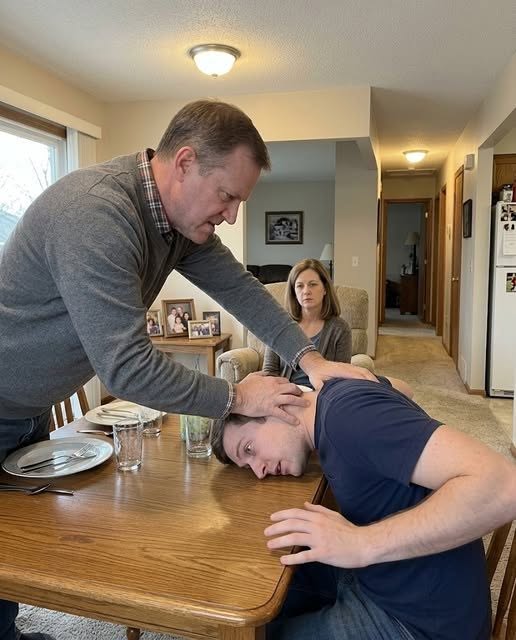
MY DAD SLAMMED MY FACE INTO THE DINNER TABLE WHEN I REFUSED TO FUND MY SISTER THEN ONE WORD ON MY COMPANY DOCUMENT MADE THE WHOLE FAMILY GO SILENT
My father slammed my mouth into the dinner table because I refused to pay for my sister’s move to Los Angeles.
The strange thing is, that wasn’t the moment I realized my family had never really seen me.
I had known that for years.
The moment I understood how little they knew me came several minutes later, when my father unfolded a county document I placed beside Madison’s wineglass and found one word printed beneath my name.
OWNER.
His hand stopped moving.
My mother stopped smiling.
Madison leaned forward.
And for the first time in my life, the Carter family dinner table became completely silent.
My lip was still bleeding.
I could feel warmth moving down my chin, but I didn’t wipe it away.
I wanted them to see me.
Not the document.
Me.
The son they had spent years treating like a wallet with a pulse.
The son they called selfish whenever he kept any part of his paycheck.
The son who was expected to work, save, sacrifice, and hand over money whenever the family decided someone else’s wants were more important.
The son who had quietly spent years building something none of them knew existed.
Dad stared at the document again.
Then at me.
Then back down.
“You said I had no options,” I said.
His jaw tightened.
“I said you had responsibilities.”
“No.”
My voice was surprisingly calm.
“You said I had no options.”
Mom leaned toward him.
“What is that?”
Dad didn’t answer.
The county recorder’s seal sat at the bottom of the page.
My full legal name appeared above it.
The company name.
The date.
The signatures.
Everything official.
Everything documented.
Exactly the kind of paperwork Dad used to mock.
“You think a piece of paper makes you important?” he asked.
“No.”
I paused.
“It makes something official.”
Mom snatched the page from his hand.
She read it once.
Then again.
Then a third time.
Her expression changed slowly.
The smile disappeared first.
Then the color around her mouth.
“How much?” she whispered.
I almost laughed.
Even then.
Even with blood on my mouth.
Even after her husband had grabbed my collar and driven my face into a table.
Her first question was money.
Not:
Are you okay?
Not:
Did Richard hurt you?
Not:
Why didn’t you tell us you owned a business?
How much?
I looked directly at her.
“How much what?”
She swallowed.
“How much is the company worth?”
Madison’s head snapped toward me.
Dad finally found his voice.
“Don’t play games.”
“I’m not.”
“You’re hiding money from your family.”
I stared at him.
“You just hit me because I wouldn’t give Madison money.”
His face hardened.
“Don’t change the subject.”
That sentence did something to me.
Not anger.
Something quieter.
For years, I had imagined this confrontation.
I imagined finally shouting.
Throwing every insult back at them.
Listing every check I had written.
Every bill I had covered.
Every weekend trip Madison took because Mom told me a good brother supported his sister.
Every time Dad demanded to know why I needed savings when family was supposed to share.
I imagined making them feel exactly what they had made me feel.
Reality was different.
I looked around the table.
At Dad.
At Mom.
At Madison.
At Lily.
The people who had taught me that love came with invoices.
And suddenly I did not want to scream.
I wanted them to understand that the person sitting in front of them was no longer available for purchase.
Maybe he never had been.
Maybe I had simply taken too long to understand it myself.
Lily was the only one not looking at the document.
My younger sister still held her phone near her chest.
Her eyes were fixed on the blood below my mouth.
She looked horrified.
“Lily,” Mom snapped. “Stop staring.”
Lily flinched.
Then she looked directly at me.
“I’m sorry.”
Barely audible.
Two words.
But they landed harder than anything else in that room.
I nodded.
She looked down.
Dad pushed the document toward me.
“You’ve been planning this.”
I said nothing.
“How long?”
Silence.
“How long have you been hiding money from us?”
I picked up a napkin and pressed it to my lip.
“Long enough.”
Madison scoffed.
“Oh, please.”
Everyone looked at her.
She folded her arms.
“So what? He started some little company. Congratulations.”
Dad glanced toward her.
“He’s acting like he’s some billionaire now.”
I nearly smiled.
She had no idea how close she was to understanding the scale of what I had built.
But I was not ready to show them that.
Not yet.
Because the company registration was not why I had come to dinner carrying a bag full of documents.
That was only the first page.
The easy truth.
The next truth belonged to my father.
And unlike my company, it was something he had spent years praying nobody would uncover.
I reached into my bag.
Dad stiffened.
“What now?”
I pulled out a black folder.
Thick.
Old.
The corners worn.
I placed it on the table.
Nobody touched it.
Madison frowned.
“What is that?”
I looked at Dad.
“This isn’t about my company.”
His face went blank.
I pushed the folder forward.
“It’s about yours.”
Mom turned toward him slowly.
“What does he mean?”
Dad said nothing.
And there it was.
The first real fear I had ever seen in my father’s eyes.
Not anger.
Not irritation.
Not the theatrical outrage he used whenever somebody questioned him.
Panic.
The realization took me back years.
To the first time Dad taught me that money inside our family never really belonged to the person who earned it.
I was twenty one.
Community college was behind me.
I had found my first full time job.
Not glamorous.
Operations support for a regional supplier.
The commute was almost an hour each way.
I left before sunrise.
Came home exhausted.
On my first Friday after receiving a real paycheck, Mom made spaghetti.
Dad sat at the head of the table.
Madison was in high school.
Lily was still a kid.
I remember feeling proud.
Not because the paycheck was huge.
It wasn’t.
But I had earned it.
Dad asked:
“How much?”
Not:
How was the job?
Not:
Do you like the people?
Not:
How was the commute?
How much?
I told him.
His eyebrows rose.
“That’s not bad.”
Mom smiled.
“You can help us now.”
I laughed because I assumed she was joking.
She wasn’t.
The next week Dad said the electric bill was unusually high.
I paid part of it.
Then groceries.
Then insurance.
Then Madison needed money for a school trip.
Then Mom said the washing machine was dying.
Then Dad needed help with something at his company.
Always temporary.
Always reasonable in isolation.
Always framed as family duty.
When I hesitated, Dad had the same speech.
“We fed you.”
“We clothed you.”
“We kept a roof over your head.”
I was twenty two when I finally said:
“Wasn’t that your responsibility as parents?”
Dad stared at me as if I had insulted him.
Mom cried.
Not loudly.
Quietly.
The effective kind.
“How can you talk like that after everything we did?”
By the end of the night, I apologized.
That became the pattern.
They asked.
I hesitated.
They made the hesitation the offense.
I paid.
Then apologized for making them ask twice.
Madison learned quickly.
If she wanted something, she rarely came directly to me.
She mentioned it around Mom.
Mom turned it into a need.
Dad turned the need into an order.
Madison received the money.
Nobody had to say what the system was.
We all knew.
“She needs a laptop.”
“She needs a better phone.”
“She needs money for graduation.”
“She deserves a trip.”
“She’s struggling.”
“She’s finding herself.”
I sometimes wondered when I was allowed to find myself.
But I never said it.
I was the son.
The worker.
The reliable one.
Reliable became another word for available.
Years passed.
Raises came.
I stopped mentioning the exact numbers.
That was the first secret.
Not because I was greedy.
Because every raise changed the size of what the family believed I owed.
When my salary went from one number to another, Dad somehow increased the emergencies.
I remember telling Mom once that I wanted to build a six month emergency fund.
She laughed.
“For what?”
“In case I lose my job.”
“You have family.”
I almost said:
Family is the reason I need the emergency fund.
Instead I stayed quiet.
Silence became one of my best financial tools.
The less they knew, the less they could demand.
My first real act of rebellion happened at 11:38 p.m. on a Tuesday.
I remember the time because the confirmation email still exists.
I was sitting in the laundry room of my apartment building.
Two dryers shaking the wall behind me.
The overhead light flickering.
A vending machine humming.
I had a laptop balanced across my knees.
I registered my company.
Nothing happened.
No champagne.
No investor.
No applause.
Just an email.
Registration accepted.
I stared at the screen for several minutes.
Then saved everything.
Confirmation.
Timestamp.
Articles.
Tax records.
Bank documents.
Every file in two digital locations and one physical folder.
Dad used to say paperwork was for people who did not trust each other.
He meant it as criticism.
I turned it into policy.
Paperwork does not become offended when you question it.
It does not remember events differently because memory is inconvenient.
It does not say:
That’s not what I meant.
You misunderstood.
You’re too sensitive.
I never said that.
Paperwork remains where you put it.
Dates.
Signatures.
Amounts.
Facts.
I built the company the same way.
Quietly.
My first contract was small.
I performed the work myself after hours.
I came home from my day job, ate whatever was easy, then worked until one or two in the morning.
I reinvested almost everything.
Software.
Legal fees.
Equipment.
Marketing.
Contract help.
Then another client.
Then another.
I made mistakes.
Lost one account.
Underpriced a project.
Trusted a supplier I shouldn’t have.
Recovered.
Learned.
Kept going.
When I eventually hired my first employee, I did not tell my parents.
When revenue passed six figures, I did not tell them.
When I bought a small commercial property through the company, I did not tell them.
When I reinvested profits into another operation, I did not tell them.
My salary remained modest.
My car remained ordinary.
My apartment remained small.
That was enough for my family to conclude they understood the size of my life.
They knew my paycheck.
Or thought they did.
They knew my rent.
They knew my car.
They knew the clothes I wore.
They assumed those things were my net worth.
That misunderstanding became protection.
I never expected to reveal everything at a family dinner.
Then Madison announced Los Angeles.
That Sunday, she walked into our parents’ house wearing sunglasses on her head even though it was cloudy.
Expensive purse.
Fresh manicure.
Coffee that cost more than some people’s lunch.
She kissed Mom.
Barely acknowledged me.
Then sat down with the smile she always wore when a decision had already been made for everyone.
“I’ve been thinking.”
That phrase always cost me money.
Dad leaned back.
“About what?”
“L.A.”
Mom gasped as if Madison had announced a Nobel Prize.
“You’re moving?”
“I’m seriously thinking about it.”
Seriously thinking.
Madison’s language for:
Please finance the experiment.
She talked about opportunities.
Creative work.
Networking.
Starting fresh.
No job.
No concrete plan.
No savings.
But she had found an apartment she loved.
Deposit required.
First month.
Furniture.
Moving expenses.
A car might be necessary.
I ate quietly.
Then she looked at me.
There it was.
The purpose of the dinner.
Dad set down his fork.
“You’re going to help your sister.”
I looked at him.
“With what?”
He frowned.
“Don’t start.”
“How much?”
Madison named a number.
I almost choked.
“That’s not helping. That’s funding her.”
Mom rolled her eyes.
“She needs a start.”
“So did I.”
“You’re different.”
There it was.
Different.
Responsible people are punished with more responsibility.
Irresponsible people are rewarded with rescue because they need it more.
“I’m not funding her lifestyle.”
Dad slapped the table.
“You’re going to help your sister. That’s what men do.”
“No.”
The word felt strange.
Small.
Calm.
Powerful.
Mom laughed.
“Listen to the parasite talk like he has options.”
I turned.
“Parasite?”
“You lived in our house for eighteen years.”
I stared.
“Children generally do.”
Madison rolled her eyes.
“Can we not make this dramatic?”
I looked at her.
“You’re asking me for enough money to cover months of rent.”
“I’m asking my brother for support.”
“No. You’re asking for sponsorship.”
Her face hardened.
Dad stood.
“Enough.”
I remained seated.
“You’re going to help.”
“No.”
“Hand it over.”
“What?”
“Your account information.”
I stared at him.
“Absolutely not.”
His face changed.
Years earlier, I would have recognized the expression and immediately softened.
Not tonight.
“Hand it over.”
“No.”
Mom shook her head.
“You need to learn gratitude.”
“For what?”
“Everything.”
Dad moved around the table.
“You think because you earn a little paycheck you’re above this family?”
“No.”
“Then act like family.”
“I am.”
He stopped beside me.
“Family helps.”
“Family doesn’t demand bank access.”
His hand closed around my collar.
Everything happened quickly.
Chair legs scraped.
Madison gasped.
Lily moved.
Then my face hit the edge of the table.
White light.
Pain.
Metal taste.
For several seconds I heard nothing correctly.
When my vision cleared, Dad was standing above me.
Mom remained seated.
She did not look horrified.
She looked satisfied.
“You need to remember who raised you,” Dad said.
I touched my mouth.
Blood.
Mom tilted her head.
“Obedience.”
Her voice was almost gentle.
“That’s all we ever wanted you to learn.”
Something inside me finally disconnected.
Not from reality.
From them.
Maybe it had already been weakening for years.
That sentence cut the last strand.
Obedience.
Not gratitude.
Not love.
Not generosity.
Obedience.
They had said the quiet part aloud.
I reached into my bag.
Dad sneered.
“Another excuse?”
That was when I put the company document on the table.
OWNER.
And now, minutes later, the black folder sat in front of him.
His company.
His debts.
His secrets.
I pushed it closer.
“Open it.”
He did not.
Mom reached toward it.
Dad grabbed her wrist.
“Don’t.”
Everyone froze.
Mom stared at his hand.
Then at his face.
“Why?”
Dad released her.
Too late.
We had all seen it.
Madison leaned forward.
“Dad?”
I tapped the folder.
“You should read it.”
Dad opened it.
First page.
Bank statement.
Second page.
Transfer record.
Third.
Old partnership agreement.
Fourth.
Signature.
His.
His hand started shaking.
Mom leaned over.
“What is this?”
I answered.
“Four years ago, Dad’s construction company started losing money.”
Madison frowned.
“I thought the company was doing great.”
“So did everyone.”
I looked at Dad.
“But it wasn’t.”
He kept staring down.
“You had debts.”
Nothing.
“Unpaid contractors.”
Nothing.
“Tax issues.”
Mom’s face went pale.
“Richard?”
Dad finally looked at me.
“Where did you get these?”
“You taught me something.”
His eyes narrowed.
“What?”
“Keep receipts.”
He looked confused.
“When I first started working, you told me paperwork was for people who didn’t trust family.”
I tapped the folder.
“I became one of those people.”
Madison pulled the papers toward her.
She scanned.
Then stopped.
“What’s this transfer?”
No answer.
She looked at Dad.
“Dad?”
He reached.
“Give me that.”
Madison pulled it back.
“No.”
Her voice cracked.
For the first time in my life, I saw fear in her eyes when she looked at our father.
Not frustration.
Not entitlement.
Fear.
“What did you do?”
“Sit down.”
“No.”
Mom stared at Dad.
“You told me everything was fine.”
“It was handled.”
“How?”
Dad looked at me.
And suddenly a pattern I had missed became obvious.
Madison had not been the reason he wanted my paycheck.
Not entirely.
She had been useful.
An excuse.
A socially acceptable reason to keep money flowing from me toward the family.
Dad needed cash.
Reliable cash.
My cash.
He had built a system where every one of Madison’s wants became another reason I had no right to save.
Meanwhile, he had been plugging holes in his business.
I stood slowly.
“You weren’t trying to help Madison.”
Dad said nothing.
“You were trying to keep the company alive.”
Silence.
Answer enough.
Mom’s eyes widened.
“You told me he was selfish.”
Dad turned.
“Not now.”
“No.”
Mom stood.
“You said he owed us.”
“I said he was family.”
“You said his paycheck could cover the shortfall.”
Madison stared.
“Wait.”
Everyone looked at her.
“My rent?”
No answer.
“My cards?”
Silence.
“My trip?”
Nothing.
She looked at me.
“You were paying my bills?”
“No.”
She frowned.
Then I understood the deeper truth.
“They were using my money to pay everyone’s bills.”
The room broke.
Madison started crying.
Mom shouted at Dad.
Dad accused me of spying.
Lily started crying too.
Voices overlapped.
For several seconds, I stood completely still.
The strange thing was, I felt detached.
I had already survived the worst part.
Not the physical hit.
Not discovering the debt.
The worst part had been realizing years earlier that I had helped build the system.
I paid because paying ended arguments.
I apologized because apologizing restored peace.
I gave because being needed felt like proof of love.
They had used me.
Yes.
But I had spent years confusing endurance with loyalty.
I had mistaken being useful for being valued.
That realization hurt more than any number in the folder.
Dad slammed it shut.
“You think you’ve won?”
I looked at him.
“No.”
He stepped toward me.
“You have no idea what you’re messing with.”
“I think I do.”
“You don’t.”
His voice dropped.
“You have no idea who else is involved.”
That stopped me.
Not because I was afraid.
Because the sentence was outside what I had uncovered.
“Who else?”
He said nothing.
Mom turned.
“Richard.”
Dad looked away.
Cold moved through my stomach.
“Who else?”
Still nothing.
So I reached into my bag again.
This time, my phone.
I placed it faceup on the table.
A recording was paused on screen.
Dad recognized the date.
I watched the color leave his face.
He recognized the voices too.
His.
Mom’s.
And a third person.
Someone nobody had mentioned.
I pressed play.
The recording filled the dining room.
Dad’s voice first.
Low.
Angry.
Then Mom.
Then another person.
Madison stopped crying.
Mom covered her mouth.
Dad sat down.
Because the third voice belonged to someone who had known far more about our family’s finances than any of us realized.
The conversation had been recorded weeks earlier.
I had not been in the room.
The file reached me through a trail of records I uncovered while investigating property tied to Dad’s company.
Most of the conversation was vague.
Debt.
Collateral.
Timing.
My name.
Then six words.
“He doesn’t know about the house.”
I stopped playback.
Silence.
I looked at Dad.
“What house?”
He closed his eyes.
“You weren’t supposed to find out.”
My heartbeat slowed.
“What house?”
Nothing.
Mom was crying.
Not angry now.
Guilty.
“Mom?”
She could not look at me.
I turned toward Lily.
She shook her head quickly.
“I don’t know.”
I believed her.
Madison picked up another page.
Her fingers trembled.
“Wait.”
She stared at the address.
“I know this.”
Dad’s eyes widened.
Madison looked at me.
“That’s Grandma’s house.”
Silence.
Grandma had been dead six years.
As far as I knew, the property had been sold after her death.
Dad told us it had.
Mom confirmed.
We never questioned it.
Why would we?
I pulled the page toward me.
Property transfer.
Date.
Legal description.
Then my name.
My full name.
I stared.
“That’s me.”
Nobody answered.
“But I never signed this.”
I looked at the signature.
It looked like mine.
Almost.
The loops were right.
The slant close.
But the last name ended differently.
I knew my own hand.
“That’s not my signature.”
Mom cried harder.
Dad stared at the table.
Suddenly my company was no longer the biggest secret in the room.
Someone had been moving property in my name.
Someone had hidden an inheritance.
Someone had forged my signature.
The life I thought I understood had only been the visible surface.
I picked up the document.
“Explain.”
Dad remained silent.
“Explain it.”
Louder.
Mom covered her face.
Madison looked sick.
Lily moved first.
She walked closer.
“There’s something you don’t know.”
I turned.
Dad closed his eyes.
“What?”
Lily looked at him.
Then at me.
“Grandma didn’t sell the house.”
The room seemed to tilt.
“What?”
“It was put into a trust.”
“When?”
“Before she died.”
I stared.
“For who?”
Lily swallowed.
“You.”
Nothing made sense.
“How do you know?”
“I found a copy of something once.”
Dad looked sharply toward her.
“You what?”
Lily stepped backward.
“In the office.”
“You went through my papers?”
“You left it open.”
“Lily.”
I moved between them.
“Do not.”
Dad stared at me.
I stared back.
He sat.
Suddenly he looked old.
Not weak.
Not innocent.
Just smaller.
“Your grandmother didn’t trust me,” he said.
I almost laughed.
“Smart woman.”
He ignored it.
“She knew I had debts.”
Mom covered her face again.
“She knew I moved money between accounts.”
I looked at the documents.
“So the house was mine.”
“Yes.”
“And you hid it.”
“Yes.”
“Why?”
Dad looked up.
“Because we needed money.”
The simplicity hurt more than a complicated lie would have.
No family emergency.
No misunderstanding.
No noble explanation.
They needed money.
I had something.
They took control.
That was it.
Dad continued.
“The company was under pressure.”
“So you stole my inheritance?”
“I didn’t steal it.”
“You hid it.”
“I managed it.”
“It was mine.”
“You were too young.”
“How old was I?”
“Twenty three.”
I laughed.
“I had a full time job.”
“You didn’t understand property.”
“So teach me.”
“You would have sold it.”
“You have no idea what I would have done.”
“We needed stability.”
“We?”
“This family.”
There it was again.
Family.
The magic word that transformed whatever Dad wanted into moral duty.
“What did Grandma’s trust say?”
Dad looked away.
I turned to the page.
Legal terms.
Beneficiary.
Restrictions.
No sale without my authorization.
No borrowing against the property without my signature.
My stomach turned.
“So you couldn’t sell it.”
“No.”
“You couldn’t take it.”
“No.”
“So you spent years making sure I never knew it existed.”
He did not answer.
“Then you treated my salary as family property because you couldn’t access the actual asset.”
Silence.
The truth assembled itself.
Every raise.
Every bonus.
Every emergency.
Every lecture about gratitude.
They had been keeping me financially available while protecting a secret asset that legally belonged to me.
My grandmother had tried to give me independence.
My parents had responded by making me feel dependent.
I felt sick.
“Who forged the signature?”
Nobody answered.
I looked at Mom.
She looked at Madison.
Madison went white.
No.
I turned slowly.
“Madison.”
She started crying.
“I didn’t know.”
My chest tightened.
“Did you sign my name?”
She nodded.
“I didn’t know what it was.”
“You signed my name.”
“Dad said it was company paperwork.”
“That makes no sense.”
“I know.”
“You knew it was my name.”
“I know.”
“Why would company paperwork need my signature?”
“I didn’t ask.”
Of course.
Madison rarely asked questions when somebody else would carry the consequences.
Dad spoke.
“Leave her out of this.”
I turned.
“You asked her to forge my signature?”
“It wasn’t supposed to hurt you.”
I laughed.
“What was it supposed to do?”
Dad said nothing.
I read farther.
Loan authorization.
Collateral.
The house.
My grandmother’s house.
My inheritance.
They had tried to borrow against it.
The one asset she had deliberately shielded from them.
I looked at Madison.
“What did he tell you?”
She cried.
“He had a form.”
“When?”
“Two years ago.”
“You were an adult.”
“I know.”
“He told you to copy my signature?”
“Yes.”
“And you did.”
“Yes.”
“Why?”
She looked at Dad.
“He said you already agreed.”
I closed my eyes.
That sounded exactly like him.
Your brother said yes.
He just doesn’t have time to come sign.
Help me.
Family.
Urgent.
Madison probably never questioned it.
That did not erase what she did.
But it explained the mechanism.
I wanted to hate her cleanly.
That would have been easier.
Instead, I looked at the sister everyone had protected from consequences her entire life.
She had been trained to believe somebody else would clean up whatever she did.
Usually me.
Now she looked less spoiled than frightened.
Still responsible.
But also created by the same family system that created me.
Different roles.
Same house.
Dad stood.
“You don’t understand.”
“No.”
I looked at him.
“I understand more than I ever have.”
“I made mistakes.”
“This was not a mistake.”
“You think I wanted any of this?”
“You chose it.”
“I was protecting the family.”
“You were protecting yourself.”
His face hardened.
I could see the old version of him returning.
Anger.
Authority.
The expectation that volume would restore control.
“You wouldn’t have anything without me.”
I stared.
That sentence used to work.
I remembered being twenty two.
Twenty five.
Twenty eight.
Hearing it.
Feeling guilty.
Tonight, with blood dried at the corner of my mouth, it sounded almost absurd.
“I wouldn’t have what?”
He stopped.
“My job?”
No answer.
“My company?”
Silence.
“My property?”
I held up the trust papers.
“The property Grandma tried to protect from you?”
His jaw tightened.
“You think because you started a business…”
“No.”
I reached into my bag.
One final document.
The one I had not intended to show unless necessary.
Dad’s eyes followed it.
“What is that?”
“The reason I stopped telling you about money.”
I placed it on the table.
Audited valuation.
Independent.
Verified.
Not a projection.
Not a fantasy number.
Not something I created in a spreadsheet.
Madison looked first.
Her lips parted.
Mom leaned closer.
She stopped crying.
Dad stared.
Then looked at me.
Then at the number again.
“You…”
I nodded.
“The company is worth more than you ever imagined.”
No one spoke.
For years, I had built it quietly.
Contract by contract.
Late night by late night.
One rejection after another.
I invested.
Reinvested.
Hired carefully.
Bought assets through the company.
Built reserves.
Diversified.
Protected ownership.
Used attorneys.
Accountants.
Insurance.
Separate entities where necessary.
I had learned from watching my father exactly what not to do.
No undocumented loans.
No family access.
No blurred accounts.
No promises without writing.
No debt disguised as growth.
Ironically, his financial chaos taught me discipline.
While Dad obsessed over my paycheck, I was building something beyond salary.
That was the secret none of them understood.
My wealth did not sit in checking.
It lived in ownership.
Equity.
Contracts.
Property.
Reserves.
Investments.
Knowledge.
Systems.
Things that could not be taken because someone shouted at the dinner table.
Dad lowered himself into the chair.
“So all those years…”
“Yes.”
“You had money.”
“Some.”
“How much?”
I smiled sadly.
“Enough.”
His face hardened.
“Why didn’t you tell us?”
I looked around the table.
The blood.
The documents.
The black folder.
Madison’s tears.
Mom’s guilt.
Lily’s fear.
Then answered the simplest truth.
“Because every time I gave you something, you asked for more.”
Mom started crying again.
This time, I did not move.
Usually that was my cue.
Comfort Mom.
Fix it.
Tell her everything would be okay.
Take the blame for making her upset.
Not tonight.
I did not hate her.
I also did not rescue her.
That difference felt enormous.
Dad called my name as I started gathering the documents.
“Sit down.”
“No.”
“We’re not finished.”
“I am.”
“You walk out now, don’t bother coming back.”
I stopped.
There it was.
The threat.
Belonging conditional on obedience.
Years earlier, I would have sat back down.
Tonight I looked at him.
“Okay.”
He stared.
The threat failed because I finally accepted the consequence.
He tried again.
“You’re really going to throw away your family over money?”
I almost smiled.
“This was never about money.”
“Then what?”
“Control.”
His eyes narrowed.
“You hit me because I said no.”
He looked away.
“Mom called me a parasite because I wouldn’t pay for Madison.”
Mom wiped her eyes.
“I was angry.”
“You helped hide an inheritance from me.”
Silence.
“You tried to borrow against it.”
Silence.
“You forged my signature.”
I looked at Madison.
She broke down.
Then I looked back at Dad.
“And you still think the problem is me leaving.”
Nobody answered.
I placed the valuation back into my bag.
Dad called my name again.
This time his voice changed.
Less command.
More desperation.
“I’m sorry.”
I stopped.
For years, I had imagined him saying those words.
Sometimes in anger fantasies.
Sometimes in quieter ones.
Dad finally realizing what he had done.
Mom apologizing.
Madison admitting I mattered.
Me standing tall while everyone understood.
The real apology felt different.
Late.
Small.
Not meaningless.
But not magical.
I turned.
“I believe you’re sorry.”
Hope appeared in his face.
“But I’m still leaving.”
It vanished.
“I can’t change what happened.”
“No.”
I shook my head.
“But I can decide what happens next.”
I picked up my bag.
Walked toward the door.
Nobody stopped me.
Except Lily.
She followed me outside.
Night air hit my face.
My lip throbbed.
For a moment, neither of us spoke.
Then she asked:
“Are you really never coming back?”
I looked at her.
“I’m not disappearing.”
She nodded.
“But I’m not going back to the way things were.”
Tears filled her eyes.
“Can I still call you?”
“Anytime.”
She hugged me.
I held her.
Lily had always been the quietest one in the family.
Quieter even than me.
Maybe that was why I understood her.
She pulled back.
“I should have said something.”
“About what?”
“Dad.”
I stared.
“When he hit you.”
“You froze.”
“I know.”
“That’s not the same as agreeing.”
She wiped her face.
“I recorded some of it.”
My body went still.
“On your phone?”
She nodded.
“I started when Madison asked for money.”
“Why?”
She looked embarrassed.
“Because I knew it was going to turn bad.”
A strange mixture of sadness and pride moved through me.
“Save it.”
“I already uploaded it.”
I almost smiled.
“Good.”
She looked at me.
“Did you really build all that?”
“Yes.”
“Why didn’t you tell me?”
“Because you live with them.”
She nodded slowly.
“I understand.”
“I’m not punishing you.”
“I know.”
“Privacy is not punishment.”
She looked down.
“I wish somebody had taught us that.”
So did I.
I got into my car.
Before leaving, I looked back at the house.
The place where I spent years trying to earn love.
The place where Dad preached that family came first.
He had been right about one thing.
Family should matter.
But family should never require surrendering dignity as proof of loyalty.
I drove away.
No dramatic music.
No victory.
My mouth hurt.
My head hurt.
I felt exhausted.
And strangely light.
The next morning, I called my attorney.
Not the company lawyer.
My personal attorney.
I sent everything.
Trust documents.
Forgery.
Loan authorization.
Dad’s financial records.
Lily’s recording.
My own evidence.
The first instruction was simple.
Protect the trust.
The fraudulent loan process was halted.
Not dramatically.
No police kicking down doors.
No courtroom speech.
Paperwork.
Notices.
Legal filings.
Verification.
The same boring mechanisms Dad had spent years teaching me to distrust.
They worked.
The property was secured.
No borrowing.
No transfer.
No access without proper authorization.
My company was already insulated.
Different accounts.
Different entities.
Clear ownership.
No family members.
No shared passwords.
No emergency access that could be abused.
For the first time, I understood exactly how wise my grandmother had been.
She had not merely left me a house.
She had anticipated the possibility that love and money inside our family would become dangerous together.
The trust was designed to slow people down.
Force signatures.
Force records.
Require consent.
Boundaries written into law.
I wished I could ask her why.
A few days later, my attorney arranged access to the trust records.
That was when I learned the full history.
Grandma created the trust because she did not trust Dad’s financial judgment.
Not because she hated him.
Because she had watched him borrow.
Refinance.
Chase deals.
Cover one loan with another.
She had helped him before.
More than once.
Eventually she stopped.
My name became beneficiary.
The house remained protected.
Income from part of the property had accumulated.
Not enough to explain my own business wealth.
But substantial.
Money I never knew existed.
Dad had not been able to legally take ownership.
So he controlled information.
That might have been the most revealing part.
When people cannot seize something directly, sometimes they seize your knowledge of it.
If I did not know the property was mine, I could not assert rights.
If I believed Dad controlled everything, I would keep asking him what was allowed.
If I believed my paycheck was my only financial power, he could keep targeting it.
Information had been part of the abuse.
That realization changed how I saw my childhood.
Dad did not only control money.
He controlled the family narrative.
What Grandma meant.
What relatives thought.
Why the company struggled.
Why Madison needed help.
Why I owed everyone.
He was narrator and authority.
If someone disagreed, he changed the meaning of their behavior.
I wasn’t private.
I was secretive.
I wasn’t saving.
I was selfish.
I wasn’t establishing boundaries.
I was abandoning family.
He understood the power of naming things.
So I started renaming them correctly.
Demanding my paycheck was financial control.
Forging my signature was fraud.
Hiding the trust was deception.
Hitting me was violence.
Saying “family” afterward did not change the category.
Accuracy became freedom.
Madison called three days later.
I almost ignored it.
Then answered.
“Hello?”
She was crying.
“I’m sorry.”
I said nothing.
“I know that doesn’t fix anything.”
“No.”
“I really didn’t know what that paper was.”
“I believe you.”
She sounded surprised.
“You do?”
“Yes.”
“Then…”
“That doesn’t mean it was okay.”
Silence.
“I know.”
“Do you?”
“I’m trying.”
For once, she sounded younger.
Not the polished sister announcing her latest expensive plan.
Just someone facing consequences without Mom and Dad translating them for her.
“I signed your name.”
“Yes.”
“I never thought…”
“That’s the problem.”
She cried quietly.
“I know.”
I let the silence sit.
Normally I would rescue her.
Say it was okay.
Tell her Dad manipulated her.
Make the guilt easier.
I did not.
Discomfort is not always harm.
Sometimes discomfort is where responsibility starts.
Finally she whispered:
“I canceled L.A.”
“That’s your choice.”
“I thought you’d be happy.”
“I’m not invested in whether you move.”
That hurt her.
I heard it.
But it was true.
“For years, my decisions revolved around what you needed.”
“I didn’t know.”
“You benefited from not knowing.”
Silence.
“I’m sorry.”
“I believe you.”
Again.
Not forgiveness.
Not rejection.
Accuracy.
She asked:
“Can we ever be okay?”
“I don’t know.”
That was honest.
“Do you hate me?”
“No.”
Another honest answer.
“I’m angry.”
“I deserve that.”
“Probably.”
She almost laughed through the tears.
“Can I call again sometime?”
“Yes.”
“But?”
“Don’t call asking for money.”
She went quiet.
Then:
“I won’t.”
We ended the call.
That conversation changed something.
Not the past.
The roles.
Madison had spent her life as the recipient.
I had spent mine as the provider.
For us to have any relationship, both roles had to die.
I did not know whether they would.
But at least we could see them.
Mom called next.
I did not answer.
She left voicemail.
First one:
“We need to talk.”
Second:
“You’re tearing this family apart.”
Third:
“I’m worried about your father.”
Fourth:
“I know we made mistakes.”
Fifth:
“We love you.”
I listened once.
Deleted none.
Saved everything.
Not because I wanted revenge.
Because documentation had kept me safe before.
I trusted it now.
A week later, Dad called.
I watched the phone ring.
Did not answer.
A message arrived.
Call me.
Then:
It’s important.
Then:
The company is in serious trouble.
There it was.
Even after everything.
Need.
Urgency.
Money.
He still believed crisis could reopen access.
I did not respond.
Two hours later:
I understand now.
Three words.
I stared at them.
What did he understand?
That I had more money than he knew?
That Grandma’s trust was protected?
That I would no longer pay?
That hitting me had finally pushed me past obedience?
Maybe all of it.
Maybe none.
I deleted the message.
Not because I needed to punish him.
Because I finally understood something too.
Closure does not always require the person who hurt you to achieve perfect insight.
Sometimes closure is recognizing that their insight no longer determines your next move.
Dad could understand.
Or not.
I was still done.
The legal process around the forged signature became complicated.
My attorney explained options.
I listened.
I did not immediately demand maximum punishment.
That surprised people.
Not because I was soft.
Because my goal was protection first.
Stop the loan.
Secure the trust.
Correct records.
Document forgery.
Protect company assets.
Then decide what accountability looked like.
I did not need anger making every legal decision.
Anger had helped me leave.
It did not need to manage the rest of my life.
That distinction became important.
Dad always confused force with strength.
I was learning strength could be procedural.
Quiet.
Patient.
Filed properly before a deadline.
A signature verified.
An account separated.
A boundary communicated once.
No shouting required.
Months later, I entered Grandma’s house for the first time as someone who knew it belonged to me.
The house stood outside town on a quiet street lined with mature trees.
Not a mansion.
Two stories.
Brick.
Old porch.
Paint fading near the windows.
Dad had told us it sold years ago.
I had driven past the neighborhood without knowing one of the homes there legally belonged to me.
That thought felt surreal.
My attorney gave me the key.
I stood at the door for several seconds.
Then unlocked it.
Dust.
Old wood.
Still air.
The smell of closed rooms.
Sunlight cut through the curtains.
Furniture had been covered.
Some items removed.
Others preserved.
I walked slowly.
Grandma’s kitchen.
The place where she made pancakes too dark because she always got distracted.
The hallway where Madison and I once raced and broke a lamp.
Dad screamed.
Grandma defended us.
“Children break things. Adults replace them.”
I smiled at the memory.
I had forgotten that sentence.
Maybe Grandma understood our family better than any of us.
Upstairs, one room still held boxes.
Photos.
Letters.
Old tax documents.
Nothing dramatic.
Then in the living room I saw a photograph on the mantel.
Grandma.
Gray hair.
Half smile.
The same expression she wore when she knew something everyone else did not.
I picked it up.
An envelope was tucked behind it.
My name.
Real handwriting this time.
Not forged.
I recognized every curve.
My hands shook.
I sat.
Opened it.
One page.
She wrote that she had watched me grow up.
That I was quiet.
That I hated conflict.
That I tried to make everyone happy even when happiness required giving away too much of myself.
She said she worried the family would mistake kindness for weakness.
I stopped reading.
Looked around the room.
The trust suddenly became more than financial planning.
Grandma had seen the pattern before I did.
Maybe not every detail.
Maybe she did not know Dad would forge documents.
But she understood enough to build protection.
I continued.
The final line was simple.
Build a life nobody can take from you.
I read it twice.
Then a third time.
I smiled while crying.
There it was.
Not:
Become rich.
Not:
Prove your father wrong.
Not:
Never help family.
Build a life nobody can take from you.
For years, I thought that meant money.
My secret company.
Ownership.
Assets.
Contracts.
The ability to survive without anyone’s permission.
Those mattered.
But sitting in Grandma’s house, I understood something larger.
A life nobody can take from you requires boundaries.
Identity.
Skills.
Information.
People you choose.
The ability to walk away.
Money helps.
Absolutely.
I would never insult struggling people by pretending financial independence is irrelevant.
Money creates options.
Housing.
Legal counsel.
Time.
Safety.
Dad knew that, which was exactly why he tried to control mine.
But money was only one layer.
The deeper wealth was knowing I could say no without becoming nothing.
My family had trained me to believe belonging could be revoked.
Give money or become selfish.
Obey or become ungrateful.
Stay quiet or become disrespectful.
I had spent years buying belonging with pieces of myself.
Grandma’s sentence offered a different model.
Belong to yourself first.
I sat beneath the window until evening.
No dramatic decision.
No speech.
Just quiet.
The kind of quiet that feels different after years of walking on eggshells.
I made one decision.
I would not spend the rest of my life trying to demonstrate my value to people committed to measuring me only by what I provided.
That would still make them the audience.
I did not want an audience.
I wanted a life.
I kept the house.
Not because of its market value.
Because I wanted time to decide.
Later became another useful boundary.
Dad always demanded immediate answers.
Family needs this now.
Madison needs help now.
Sign this now.
Transfer this now.
Urgency had been one of his tools.
I stopped letting urgency make decisions for me.
Think.
Document.
Ask.
Then decide.
My company continued growing.
Ironically, once the family conflict stopped consuming so much emotional energy, I became better at work.
I slept more.
Made clearer decisions.
Delegated.
Hired stronger people.
A business partner once asked why I remained so secretive about success.
I thought about it.
“I’m not secretive.”
He laughed.
“You drive a seven year old car.”
“It works.”
“You own enough commercial property to buy something better.”
“I like the car.”
“That is secretive wealth.”
“No.”
I smiled.
“It is wealth without an audience.”
That became important.
I did not want to swing from one extreme to another.
From hiding everything out of fear to showing everything out of revenge.
Buying expensive things simply because Dad thought I was poor would still make him part of the decision.
So I bought what I wanted.
Kept what I liked.
Changed what no longer served me.
That was freedom.
Madison eventually moved.
Not to Los Angeles.
Somewhere cheaper.
She got a job she hated.
Then a better one.
She started paying her own bills.
The first time she called to tell me she had paid off a credit card herself, she sounded proud.
I was proud too.
But I did not send money.
That was important.
“I almost asked you for help last month,” she admitted.
“Why didn’t you?”
“Because I knew what you’d say.”
“What?”
“No.”
I laughed.
She did too.
Our relationship rebuilt slowly.
Not because she apologized once.
Because behavior changed repeatedly.
That taught me something about forgiveness.
Words open the door.
Patterns determine whether you walk through it.
Madison stopped asking me for money.
She began asking about me.
My work.
My week.
The first time she called without needing anything, I almost distrusted it.
Then I realized how low the standard had been before.
Relationships should include curiosity.
Not only requests.
Lily was easier.
She had not participated in the financial scheme.
But she had lived under the same roof.
She called often.
Sometimes frightened that Dad would explode because she spent time with me.
I told her:
“You do not have to choose sides.”
She replied:
“They make everything a side.”
True.
So I set another rule.
“I will never ask you to report what happens in that house.”
She sounded relieved.
“No spying?”
“No.”
“But what if something important happens?”
“If you are unsafe, tell me. If someone else is unsafe, tell someone appropriate.”
I paused.
“But you are my sister, not my informant.”
That distinction mattered.
I knew too well what happens when family roles become transactions.
I would not turn Lily into a source just because information could help me.
She deserved a relationship.
Not a function.
Mom took longer.
She sent birthday messages.
Holiday messages.
Photos.
Occasional guilt.
“Your father misses you.”
“I miss how things were.”
“Families forgive.”
That last one irritated me.
Forgiveness often gets demanded most aggressively by people who want restoration without change.
I responded once.
Forgiveness and access are different.
She did not reply for two weeks.
Then:
I’m trying to understand.
That was enough for then.
I did not need to coach her into insight.
She was an adult.
My healing did not require supervising hers.
Dad and I remained mostly silent.
I heard about his company through public records and family.
It shrank.
Assets sold.
Some debts settled.
Some legal issues continued.
For years, I thought seeing him fail would feel satisfying.
It did not.
Mostly, I felt tired.
He had spent so much energy trying to control resources outside himself that he never learned to rebuild honestly.
I could have saved the company financially.
Probably.
That realization tempted me exactly once.
Not because I wanted him back.
Because old conditioning whispered:
You can fix this.
You should.
You have enough.
That voice sounded like family duty.
I called my attorney instead.
Not because I needed legal advice.
Because I needed someone outside the family system to hear the thought.
“I could pay everything.”
He paused.
“That is true.”
“I could stop the collapse.”
“Probably.”
“What do you think?”
“I think you’re asking the wrong question.”
“What’s the right one?”
“Why do you want to?”
I had no answer.
Then I did.
“Because I know how.”
He laughed softly.
“Capability is not obligation.”
The sentence hit hard.
I wrote it down.
Capability is not obligation.
Being able to rescue someone does not automatically mean you should.
Especially when rescue preserves the same behavior that created the crisis.
I did not pay.
Dad survived.
The company changed.
The world did not end.
That experience broke another piece of the conditioning.
I had always believed if I stopped holding things together, everything would collapse and the collapse would be my fault.
No.
People adapt.
Or face consequences.
Either way, not every falling object belongs in my hands.
The scar inside my lip faded.
That surprised me.
The physical evidence of the dinner disappeared quickly.
For a while I touched the spot with my tongue whenever I thought about Dad.
Nothing.
Skin healed.
Memory remained.
I had photos.
Medical documentation.
Lily’s recording.
But eventually I stopped needing the scar.
What happened did not become less real because my body recovered.
That lesson mattered.
Families love visible proof until it disappears.
“See? You’re fine.”
Healing does not erase the event.
Neither does financial success.
People sometimes assumed because I had built wealth, what my parents did mattered less.
No.
Money did not protect me from wanting my father’s approval.
Ownership documents did not stop the table from hurting.
Business success did not erase the child inside me who learned love was conditional.
Wealth solved practical vulnerability.
It did not automatically fix emotional wiring.
That required different work.
Therapy.
Boundaries.
Time.
One therapist asked:
“What did money mean in your family?”
“Love.”
I answered too quickly.
Then corrected.
“No.”
She waited.
“Proof of love.”
“How?”
“If I gave, I loved them.”
“And if you kept something?”
“I was selfish.”
“What did receiving mean?”
I thought.
“For Madison? Being loved.”
“And for you?”
I laughed bitterly.
“I don’t know.”
She let silence work.
Finally:
“Being useful.”
That was the real wound.
I had confused usefulness with love.
Dad praised me when I solved problems.
Mom became affectionate when I helped.
Madison called when she needed something.
I learned to produce value and call the reaction affection.
No wonder building a company felt natural.
Work rewards usefulness honestly.
Do good work.
Get paid.
Family is supposed to contain something beyond that.
Mine had not, at least not consistently.
Learning to receive care without earning it became harder than building wealth.
When Lily brought dinner to my apartment one night, my first reaction was:
“How much do I owe you?”
She looked offended.
“It’s pasta.”
“I know.”
“I made it.”
“Okay.”
“You owe me nothing.”
I felt uncomfortable.
She noticed.
“Wow.”
“What?”
“You’re really bad at this.”
“At pasta?”
“At letting someone do something for you.”
She was right.
We laughed.
Small moment.
Huge lesson.
Love without invoice.
I practiced.
Madison invited me to lunch and paid.
I resisted.
She said:
“If you touch the check, I’m leaving.”
I let her.
Mom mailed a birthday card with no request inside.
I kept it.
Dad remained silent.
Even that became less painful.
Not every relationship repaired.
That was another thing I had to accept.
People love stories where families reconcile after one dramatic truth.
Dinner confrontation.
Apology.
Hug.
Everybody changes.
Real families are slower.
Some people change.
Some partially.
Some not at all.
You can heal without unanimous participation.
That was freedom too.
Two years after the dinner, I held a small gathering at Grandma’s house.
Lily came.
Madison too.
Mom asked if she could.
I thought for several days.
Then said yes.
Dad was not invited.
Not punishment.
Boundary.
Mom arrived early.
She stood in the doorway.
For a moment, neither of us spoke.
Then she looked around.
“Your grandmother loved this place.”
“I know.”
“She wanted you to have it.”
“I know that now.”
Mom’s eyes filled.
“I should have told you.”
“Yes.”
No softening.
No “but.”
She nodded.
“I was afraid.”
“Of Dad?”
“Of losing everything.”
I looked at her.
“So you helped him take control of something that wasn’t yours.”
“Yes.”
Tears.
“I told myself it was temporary.”
I stayed quiet.
“I told myself we would fix it before you ever knew.”
Another tear.
“I told myself you were doing okay, so it wasn’t really hurting you.”
That sentence mattered.
Harm becomes easy to justify when the person appears capable.
The reliable child.
He’ll manage.
He always does.
Competence can become camouflage for pain.
Mom looked at me.
“I’m sorry.”
I believed her.
Not because she cried.
Because she named what she did without asking me to carry part of the blame.
“I believe you.”
She nodded.
“Can we be okay?”
“Maybe.”
The old me would have said yes immediately.
To end tension.
The new me could live inside maybe.
Mom accepted it.
That was progress.
During the gathering, Madison helped set food.
Lily played music.
Mom sat near the window with Grandma’s old photo.
No one asked me for money.
That felt almost absurdly significant.
At one point Madison said:
“Do you realize this is probably the first family dinner where nobody has asked what you earn?”
I laughed.
Mom looked embarrassed.
Lily said:
“Progress.”
We ate.
Not healed.
Not perfect.
Different.
That was enough.
Dad sent a letter through Mom afterward.
I almost refused it.
Then read.
Not because I owed him.
Because I wanted to.
Choice matters.
He apologized for hitting me.
Explicitly.
No excuse.
He acknowledged hiding the trust.
Using my income.
Pressuring me through Madison.
He wrote that he had spent his entire life believing a father’s role was to hold the family together, then became so afraid of losing control that he confused leadership with ownership.
That line stayed with me.
Leadership with ownership.
Maybe that was exactly what happened.
He thought because he had raised us, he retained rights over adulthood.
Our money.
Choices.
Loyalty.
He thought parenthood accumulated debt in his favor.
He had spent years collecting.
At the end he wrote:
I do not expect you to forgive me.
That was the first sentence that made forgiveness possible.
Not because I immediately did.
Because he stopped demanding it.
I placed the letter in a drawer.
Did not respond for months.
Then one day I wrote:
I received your letter.
That was all.
Sometimes the first step should remain small.
He replied:
Thank you for reading it.
No request.
No money.
No guilt.
We did not become close again quickly.
Maybe we never became what we once pretended to be.
But over time, conversations became possible.
Short.
Controlled.
Public places.
No financial discussion.
The first time he asked about my company, I said:
“I don’t discuss finances with family.”
He looked hurt.
Then nodded.
“Fair.”
One word.
Boundary accepted.
That mattered more than an elaborate apology.
Respect is visible in what someone does after hearing no.
Dad had once slammed my face into a table after hearing it.
Years later, he heard no and sat quietly.
People can change.
But change does not erase history.
Both truths can exist.
My company continued growing.
Eventually, someone wrote an article about it.
That was how the wider family learned.
Cousins.
Aunts.
People who had once heard from Mom that I was “struggling but proud.”
Suddenly messages appeared.
Congratulations.
Business ideas.
Investment proposals.
Requests to meet.
I laughed.
Then created another boundary.
No family investments.
Not because family and business can never mix.
Because mine had already taught me the cost of blurred roles.
One cousin called it cold.
I said:
“It’s clear.”
There is a difference.
Clarity often feels cold to people accustomed to ambiguity benefiting them.
I did not argue.
My business success eventually crossed the point where the word wealthy became unavoidable.
I still disliked saying it.
Not shame.
Just irrelevance.
Wealth had been the secret weapon in the original confrontation.
Later, it became boring.
Numbers change.
Markets shift.
Businesses grow or fail.
The more important transformation was internal.
The ability to say:
No.
And remain myself afterward.
That was the fortune.
Dad thought he could take my paycheck because he believed money flowed upward through authority.
I learned ownership flowed outward from documentation.
But emotional ownership worked differently.
Nobody owns an adult child’s labor because they parented them.
Nobody owns a sibling’s income because they share blood.
Nobody owns access because they apologize.
Those lessons were worth more than any valuation.
I returned often to Grandma’s note.
Build a life nobody can take from you.
At first I framed it and hung it in my office.
Then removed it.
Too public.
Too easy to turn into branding.
It belonged to me.
I kept it in the top drawer of my desk.
On difficult days, I read it.
Not when money was tight.
When guilt returned.
When Dad sounded tired on the phone.
When Mom mentioned a family expense.
When Madison had a setback.
When Lily needed help.
I asked myself:
Am I helping because I choose to, or because fear says I must?
Sometimes I helped.
I paid for one of Lily’s certifications because I wanted to.
Clear gift.
No strings.
Documented.
She argued.
I smiled.
“See? You learned.”
“What?”
“To feel weird receiving.”
She laughed.
I did not pay Madison’s debt.
Instead, I connected her with someone who helped build a budget.
She hated me for three days.
Then thanked me months later.
Helping is not always paying.
That lesson was huge.
Money had been our family’s universal language.
I started speaking others.
Advice.
Time.
Introductions.
Listening.
Sometimes nothing.
Love with boundaries became more diverse.
The family changed around that.
Not perfectly.
But enough.
Years later, someone asked during a business interview:
“What was the most important financial decision you ever made?”
They expected something technical.
Buying property.
Reinvesting profits.
Creating reserves.
I thought about the laundry room.
11:38 p.m.
The registration page.
Then the dinner table.
Blood.
OWNER.
Grandma’s trust.
I answered:
“Separating privacy from shame.”
The interviewer looked confused.
I explained.
“There’s a difference between hiding because you’re ashamed and keeping something private because not everyone has earned access.”
That was the core.
For years, I felt guilty not telling my family everything.
Salary.
Savings.
Plans.
Company.
Success.
They called privacy secrecy.
Secrecy dishonesty.
Dishonesty betrayal.
It was a chain designed to make information extraction feel moral.
Breaking that chain saved me.
You are allowed to have financial privacy.
You are allowed to build before announcing.
You are allowed to protect assets from people you love if those people have shown they do not respect boundaries.
Trust is not created by blood.
It is earned by behavior.
My parents taught me that accidentally.
Grandma taught me deliberately.
Her house became a place I visited when I needed perspective.
I renovated slowly.
Not luxury.
Preservation.
Refinished floors.
Repaired windows.
Updated plumbing.
Kept her kitchen table.
The first time Dad came there years later, he stopped in the doorway.
I watched his face.
Shame.
Memory.
Maybe grief.
“This place looks good.”
“Thanks.”
He stepped inside.
Did not assume.
Did not wander.
“Can I sit?”
The question almost broke me.
Can I?
Not:
This is family property.
Not:
I’m your father.
Permission.
“Yeah.”
We sat at Grandma’s table.
For a while, no one spoke.
Then Dad looked at me.
“I used to think she hated me.”
“Grandma?”
“Yes.”
“Did she?”
“Sometimes.”
He laughed.
Maybe the first genuine laugh between us in years.
Then he looked around.
“She didn’t trust me.”
“No.”
“She was right.”
That was new.
Not self pity.
Acknowledgment.
He continued.
“I thought if I controlled enough, nothing would fall apart.”
“And?”
“Everything fell apart because I tried to control it.”
I said nothing.
He looked at my mouth.
The scar was invisible.
“I still think about that night.”
“So do I.”
“I should never have touched you.”
“No.”
No comforting phrase.
No “it’s okay.”
Because it was not okay.
He nodded.
“I know.”
That was enough.
We drank coffee.
No perfect reconciliation.
No dramatic hug.
But something honest.
Maybe that was better.
When he left, I sat alone.
Grandma’s note upstairs.
Company thriving.
Family relationships rearranged.
And I realized something.
I had spent years thinking victory would be making Dad understand my worth.
Then I thought victory would be showing him the company valuation.
Then protecting the trust.
Then walking away.
All important.
But none was the final thing.
The real victory was reaching a point where his understanding became optional.
If Dad changed, good.
If not, my life still existed.
If Mom healed, good.
If not, boundaries remained.
If Madison grew up, wonderful.
If not, no more financing.
If Lily stayed close, I was grateful.
If she needed distance someday, I would respect it.
Love without ownership.
Grandma would have liked that.
Maybe that was what she wanted all along.
Not for me to become rich.
For me to become unowned.
That word felt stronger than wealthy.
Unowned.
By guilt.
By expectations.
By family debt.
By old roles.
By fear.
The night Dad slammed my face into the table, he thought he was reminding me who had authority.
Instead, he proved exactly why I needed independence.
Mom thought calling me a leech would shame me into obedience.
Instead, it showed me how easily affection became weaponized.
Madison’s Los Angeles request was supposed to be another transfer.
Instead, it exposed the entire system.
Lily’s silent horror became one of the first honest reactions in that room.
The company document with OWNER printed beneath my name mattered.
But not for the reason they thought.
Ownership was never only about the company.
It was about my life.
My time.
My labor.
My money.
My decisions.
My boundaries.
My future.
I owned those too.
Nobody at that table had understood that.
Neither had I, completely.
Not until that night.
Dad’s company never recovered to its old size.
He eventually closed one division.
Sold equipment.
Settled obligations.
Started something smaller.
Cleaner.
He once told me:
“I should have done that years ago.”
“What?”
“Admitted it was failing.”
I nodded.
Pride is expensive.
He had nearly mortgaged relationships to protect a company that needed restructuring.
Maybe that was his tragedy.
He confused financial failure with personal failure.
Then tried to use his children as insulation.
I understood the fear.
Did not excuse the choice.
Again, both.
Mom became quieter about money.
She sometimes slipped.
“Your cousin needs…”
I would look at her.
She would stop.
“Sorry.”
Progress.
Madison moved again later.
This time she saved first.
Called me after signing the lease.
“I did it.”
“Congratulations.”
“You’re not going to ask the rent?”
“No.”
“That feels weird.”
“Good weird?”
“Very.”
She laughed.
“I used to think you were stingy.”
“I know.”
“Now I think you were the only financially sane person in the house.”
“I’ll frame that.”
“Don’t.”
Lily eventually left home too.
She called the first night in her own apartment.
“Do you think the lock is good enough?”
“Yes.”
“You haven’t seen it.”
“Then why ask?”
She laughed.
“I don’t know.”
She had learned anxiety from our house in different ways.
We all had.
Maybe family healing is partly seeing what each person adapted to.
I adapted by overworking.
Madison by expecting rescue.
Lily by becoming invisible.
Mom by appeasing Dad.
Dad by controlling.
None of us were born into those roles.
We practiced them.
Which meant, maybe, they could be unpracticed.
Slowly.
Not always together.
But possible.
I no longer hate the Carter family dinner table.
For a long time, I did.
I wanted it gone.
Burned.
Sold.
Anything.
Then I understood the table was furniture.
The people brought the rules.
Eventually Mom replaced it anyway.
I laughed when Madison told me.
“What happened?”
“Mom said she couldn’t look at it.”
“Fair.”
“Dad wanted to keep it.”
“Of course.”
“They donated it.”
“Good.”
Some other family eats dinner on it now.
I hope they argue about normal things.
Who forgot milk.
Who gets the last piece.
Not who owns whose paycheck.
That thought makes me smile.
The document with OWNER is still in my files.
The original.
County seal.
My name.
Sometimes I think about the exact second Dad reached the word.
His thumb stopped.
Everything changed.
It would make a good ending if this were simply a story about hidden wealth.
Quiet son secretly rich.
Abusive family shocked.
He walks away wealthy.
They regret everything.
But that is too simple.
The money was useful.
The reveal was satisfying.
But the bigger truth came later.
If I had revealed wealth and remained emotionally trapped, nothing important would have changed.
Dad would have shifted tactics.
Mom would have created bigger emergencies.
Madison would have asked for larger amounts.
Wealth without boundaries would simply have made me a larger target.
The thing that saved me was not the valuation.
It was the word no.
No.
Simple.
The word that triggered Dad’s violence.
The word that exposed Mom’s contempt.
The word that forced Madison to confront entitlement.
The word that led to the documents.
The word that eventually created a different family structure.
No.
I had spent years afraid of it because I thought no ended love.
Instead, no revealed what kind of love was there.
Healthy love can survive no.
Entitlement cannot.
That may be the most valuable thing I learned.
Grandma’s note ends with:
Build a life nobody can take from you.
I would add one sentence now.
Build relationships that can survive hearing no.
Anything else is too expensive.
My father tried to take my paycheck.
Then my company became visible.
Then the trust.
Then the forged signature.
Then the hidden house.
Then years of deception.
But when I look back now, I do not think of the money first.
I think of my bleeding lip.
Lily staring at me.
Mom asking, “How much?”
Dad looking at OWNER.
Madison admitting she signed my name.
And myself standing in the middle of all of it, realizing I no longer needed to convince anyone that what happened was wrong.
That certainty changed everything.
I walked away.
The next morning, lawyers protected the property.
The company remained mine.
The wealth remained protected.
But the greatest asset I carried out of that house was something nobody could record at a county office.
The knowledge that I could leave.
Years earlier, Dad had told me family came before everything.
Today, I would answer differently.
Family matters.
But dignity matters too.
Truth matters.
Consent matters.
Safety matters.
A family that demands you surrender those things is not asking for loyalty.
It is asking for ownership.
I no longer confuse the two.
I still help people.
Probably more now than I did then.
Employees.
Friends.
Family when appropriate.
Charities.
Lily.
Sometimes Madison.
Even Mom in ways that do not recreate the old system.
The difference is choice.
I give because I choose.
Not because someone tells me I owe the world repayment for being raised.
Children do not incur debt by being children.
Adults do not remain property because parents sacrificed.
Love can inspire generosity.
It cannot demand tribute.
That distinction gave me my life back.
Years after the dinner, I sat alone in Grandma’s house during a rainstorm.
The room smelled faintly of old wood.
Her photograph was still on the mantel.
I took out the note.
Build a life nobody can take from you.
Outside, rain moved against the windows.
For some reason, I remembered the laundry room.
11:38 p.m.
The first company registration.
I had been broke by my current standards.
Tired.
Unsure.
No investor.
No guarantee.
Just a belief that maybe I could build something that belonged entirely to me.
I thought I was building a company.
I wasn’t.
Not only.
I was building an exit.
A financial identity separate from my family.
Proof I could create.
Proof I could keep records.
Proof I could trust myself.
Every contract became another brick.
Every late night.
Every reinvested dollar.
Every time I resisted telling Dad about a raise.
Every boundary before I had language for boundaries.
By the time he hit me, the exit already existed.
I simply had not walked through it.
That night I did.
I looked at Grandma’s photograph.
“Smart woman.”
Her expression, frozen in the picture, seemed almost amused.
Maybe she had known more than all of us.
Maybe not.
The dead become easy to romanticize.
I try not to.
Grandma had flaws.
Opinions.
Bad habits.
But she understood one thing clearly.
Independence is easier to protect before crisis than after it.
She used a trust.
I used a company.
Different tools.
Same principle.
Build something they cannot casually take.
That does not mean hide from everyone.
It means choose access carefully.
I eventually told more people about the company.
Not because secrecy was necessary anymore.
Because I had learned to distinguish privacy from fear.
Employees knew what they needed.
Partners knew.
Advisors knew.
Friends I trusted knew.
Family learned gradually.
Access based on trust.
Not blood.
That was healthier.
One day, a younger employee asked for advice.
His parents were demanding money constantly.
Not violent.
But relentless.
He looked embarrassed telling me.
“I make more than them.”
“So?”
“I feel guilty.”
“Why?”
“They sacrificed for me.”
I understood immediately.
I did not tell him to cut them off.
That would have been projecting my story onto his.
Instead I said:
“Decide what you genuinely want to give before they ask.”
He frowned.
“What?”
“Choose a number. Or no number. Decide what support looks like when you are calm.”
He listened.
“Then when pressure comes, you are not deciding inside guilt.”
He nodded slowly.
“And if they get angry?”
“Anger is information.”
Not instruction.
I almost said that too.
Instead:
“Their feelings matter. They just don’t automatically make the decision.”
That was the advice I wish someone had given me at twenty one.
Maybe my experience could become useful without becoming my identity.
That felt good.
Not inspirational.
Practical.
The older I get, the less interested I am in revenge stories.
Revenge keeps the other person central.
I prefer independence stories.
The ending is quieter.
No villain watching you drive away in a luxury car.
No dramatic humiliation.
Just your calendar.
Your home.
Your money.
Your relationships.
Your sleep.
All no longer organized around one person’s demands.
That is better.
Dad once asked, years later:
“Do you think I ruined your life?”
We were sitting in a diner.
Neutral location.
Public.
I considered.
“No.”
He looked surprised.
“You hurt me.”
He nodded.
“You changed our relationship.”
Another nod.
“But you didn’t ruin my life.”
I stirred coffee.
“I built one.”
Tears appeared in his eyes.
I did not rescue him from them.
He whispered:
“Your grandmother would be proud.”
I smiled.
“I hope so.”
That was enough.
When we left, Dad paid for his own coffee.
I paid for mine.
Two adults.
It sounds ridiculous that this mattered.
It did.
No hidden debt.
No obligation.
No invoice disguised as love.
Just coffee.
Sometimes healing is embarrassingly ordinary.
That dinner years earlier began because Madison wanted Los Angeles.
Dad believed my paycheck belonged to him.
Mom believed insulting me would return me to obedience.
Madison believed someone would cover the gap.
Lily believed staying quiet kept her safe.
I believed enduring everything kept the family together.
We were all wrong in different ways.
The truth broke the system.
Then we had to decide what to build after.
I built boundaries first.
Relationships second.
That order saved me.
If I had rushed to reconciliation, the old roles would have returned.
Instead, people who wanted access had to meet the new version of me.
Not richer.
Clearer.
That distinction still matters.
The valuation has changed since then.
Up.
Down.
Markets.
Expansion.
Assets.
None of it changes the lesson.
If my company disappeared tomorrow, I would still not return to that dinner table as the son they owned.
That is how I know the real wealth survived.
My father thought my paycheck was the prize.
It was only a fraction.
Then he discovered the company.
That was only one layer too.
The house.
Trust.
Investments.
Properties.
Knowledge.
Systems.
Yes.
But even those were not the whole fortune.
The deepest wealth was autonomy.
No balance sheet captures it.
No parent can demand it.
No sister can spend it.
No forged signature can transfer it.
No punch can erase it.
That is the thing I built in silence.
And unlike everything else, nobody can take it unless I hand it over.
I never will again.
The night my father slammed my mouth into the dinner table, he thought pain would teach me obedience.
Instead, it taught me the exact opposite.
My mother called me a leech.
Instead, I learned I had been the one feeding the system.
My sister wanted me to finance another life.
Instead, I finally started protecting mine.
The company document said OWNER.
At first, everyone thought that word referred to money.
It didn’t.
Not really.
It referred to the first thing I had built entirely outside their control.
Years later, I understand the word differently.
Owner of my work.
Owner of my choices.
Owner of my time.
Owner of my boundaries.
Owner of the life Grandma told me to build.
That is why I did not need to scream when Dad read the page.
The paperwork was already speaking.
So was the blood.
So was the black folder.
So was the forged signature.
So was the trust.
Facts do not need volume.
That family had spent years teaching me that whoever shouted loudest controlled reality.
They were wrong.
Reality was already sitting on the table.
Stamped.
Signed.
Recorded.
Documented.
And once I stopped arguing with people committed to misunderstanding me, I became free to act on it.
That is what changed everything.
Not the company valuation.
Not Grandma’s house.
Not even walking out.
The change happened when I finally accepted one simple truth.
I did not need their permission to stop being used.
Months after I first found Grandma’s letter, I added one line on the back.
My own handwriting.
I did not alter hers.
I just added mine below.
She wrote:
Build a life nobody can take from you.
I wrote:
And never confuse being needed with being loved.
Then I put the letter back in the envelope.
Some lessons belong together.
Today, Grandma’s house is quiet.
Sometimes Lily visits.
Madison too.
Mom occasionally.
Dad once in a while.
Nobody has a key unless I choose to give one.
That sounds like a small detail.
It is not.
Access is chosen now.
So is support.
So is forgiveness.
So is distance.
Everything that used to be demanded has become a decision.
That is what ownership finally means to me.
Not money.
Choice.
And the family that once believed my paycheck proved I belonged to them eventually learned the one thing they had never expected the quiet son to understand.
I was never their wallet.
I was never their emergency account.
I was never dead weight.
I was never a parasite.
I was a man building a future they could not see because they were too busy calculating what they could take from the present.
By the time they looked up, it was already built.
And by the time my father finally whispered that he was sorry, I no longer needed the apology to leave.
I simply picked up my documents.
Walked through the door.
And went home to the life I had built in silence.








