MY 15 YEAR OLD DAUGHTER VOMITED FOR 3 DAYS WHILE MY HUSBAND CALLED HER DRAMATIC THEN IN THE ER SHE SCREAMED HE KNOWS WHY IT HURTS
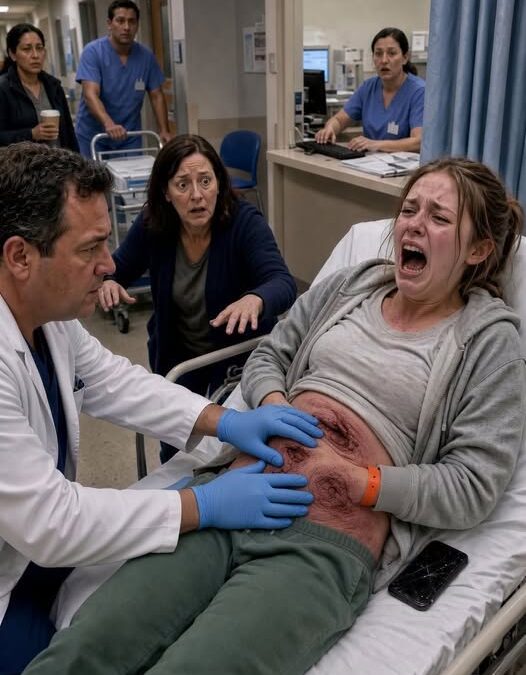
MY 15 YEAR OLD DAUGHTER VOMITED FOR 3 DAYS WHILE MY HUSBAND CALLED HER DRAMATIC THEN IN THE ER SHE SCREAMED HE KNOWS WHY IT HURTS
At 3:18 in the morning, I stood outside our bathroom listening to my fifteen-year-old daughter cry into the sink.
Not loudly.
That would have been easier.
Emily had learned how to cry quietly.
So had I.
The bathroom light buzzed overhead.
The air smelled like bleach, cheap hand soap, fever sweat, and the sour remains of everything she had tried to eat over the previous three days.
Emily was bent over the white porcelain sink with one arm locked around her stomach so tightly that the tips of her fingers had gone white.
Her other hand gripped the edge of the counter.
Her knees shook.
She had been vomiting for nearly seventy-two hours.
Then came the fever.
Then the pain.
But the thing that frightened me most was what happened after that.
She stopped complaining.
Emily had always been expressive.
Dramatic, Michael called it.
Excitable, I preferred.
When she was little, a paper cut could become a medical emergency in her imagination.
A bad grade could mean her life was over.
A headache came with a full description.
That was my daughter.
Until suddenly it wasn’t.
For two days, she barely spoke.
She moved through the hallway bent at the waist.
One hand against the wall.
The other pressing her lower abdomen.
When she stood straight, the color left her face.
When Michael’s footsteps crossed the bedroom floor, her eyes snapped toward the door.
Then down.
Every time.
I noticed.
I also told myself not to overreact.
That was what fifteen years with Michael had trained me to do.
Question my first instinct.
Then my second.
Then ask what he thought.
My husband stood in the bathroom doorway that morning wearing pajama pants and an old college T-shirt.
He rubbed his eyes like Emily’s illness was a scheduling inconvenience.
“If you drag her to the ER over one of her little performances, don’t expect me to pay a dime.”
I turned.
“She’s been vomiting for three days.”
“She has a test Monday.”
“It is Saturday.”
“Exactly.”
I stared at him.
“What does that even mean?”
“She has the whole weekend to recover if she gets her way.”
Emily made a small sound over the sink.
I moved toward her.
Michael sighed.
“Sarah, stop babying her.”
I ignored him.
“Em?”
She shook her head.
“Can you stand?”
“I am standing.”
Barely.
Her voice was hoarse.
I put my hand against her forehead.
Hot.
Far too hot.
Michael stepped closer.
“She doesn’t even have a real fever.”
I grabbed the thermometer.
“She was 102.4 earlier.”
“Those things are inaccurate.”
“They’re accurate enough.”
“You always do this.”
I looked at him.
“Do what?”
“Panic.”
One word.
The same one he had used for years.
Sarah panics.
Sarah worries.
Sarah gets emotional.
Sarah cannot think when she’s upset.
Michael could turn concern into weakness with one sentence.
He could turn a question into disrespect.
He could make silence feel like maturity.
For fifteen years, I had handed him more and more of my judgment.
At first because marriage meant partnership.
Later because disagreeing with him took too much energy.
I gave him my paycheck.
My passwords.
My schedule.
The family calendar.
Our insurance decisions.
Our investment logins.
Which doctor we saw.
What school Emily attended.
When my mother visited.
When his mother visited.
Which arguments were “worth having.”
Eventually, I stopped noticing how often I waited for Michael’s reaction before deciding whether my own feelings were reasonable.
Emily learned it too.
Stay quiet.
Stay small.
Don’t make Dad angry.
That morning, she lifted her head.
Then spit something pink into the sink.
I froze.
“Emily.”
She stared at it.
Michael leaned closer.
“Probably juice.”
“She hasn’t had juice.”
“Then food coloring.”
“She hasn’t eaten.”
He groaned.
I turned toward him.
“We are going to the emergency room.”
He took the thermometer from my hand.
Stared at the number.
“Don’t be ridiculous.”
“She’s sick.”
“You make her weak by treating every problem like an emergency.”
For once, the old guilt did not arrive.
I looked past him.
At my daughter.
Gray hoodie.
Pale face.
Dry lips.
One hand shaking against the counter.
Then I made the first decision in years that did not depend on whether Michael approved.
“We’re going.”
His face hardened.
“You want to waste six hours sitting in a hospital because your daughter has a stomach virus?”
“Yes.”
“If you take her, don’t put the bill on our account.”
I almost laughed.
Our account.
Money I had earned too.
But that argument could wait.
I helped Emily toward the shower because she said she needed to sit down.
She never made it.
At 3:43 a.m., her knees buckled beside the tub.
The shower curtain moved from the air vent.
Water from the faucet tapped against porcelain.
Her cracked phone was pressed against her chest.
Her hoodie had twisted beneath one shoulder.
“Emily!”
I dropped beside her.
Her eyes opened halfway.
“Mom.”
“I’ve got you.”
She grabbed my sleeve.
“Don’t tell Dad.”
Everything inside me stopped.
“What?”
“Don’t tell him.”
“Tell him what?”
Her eyes closed.
“I’m sick.”
“He knows you’re sick.”
“No.”
Her fingers tightened.
“Don’t tell him anything.”
I stared at my daughter.
She was not afraid of the hospital.
She was afraid of home.
That realization should have come earlier.
It didn’t.
Maybe because recognizing danger inside your own family requires admitting that all the small explanations you accepted were wrong.
At 4:06 a.m., I went to the linen closet.
Behind clean towels was a white envelope.
Emergency cash.
Seven hundred dollars.
I had started hiding it two years earlier without fully understanding why.
I told myself every woman should keep emergency cash.
I never asked why mine needed to be hidden from my husband.
I took it.
Grabbed Emily’s hoodie.
My purse.
Insurance card.
Phone.
Then helped her through the back door without turning on a light.
The rideshare smelled like pine air freshener.
Emily rested her head against my shoulder.
My hands shook in my lap.
She whispered,
“If he finds out…”
I looked down.
“What?”
“He’ll get worse.”
My stomach tightened.
“What does that mean?”
She closed her eyes.
“Nothing.”
“Emily.”
“Please.”
Her breathing was shallow.
I stroked her hair.
“It doesn’t matter anymore.”
The words came before I believed them.
“If he gets angry, it doesn’t matter.”
I needed them to become true before we reached the hospital.
At the county hospital intake desk, fluorescent lights made everyone look exhausted.
A nurse wrapped an orange triage band around Emily’s wrist.
The admission form reduced the worst three days of my life into three neat phrases.
ABDOMINAL PAIN.
FEVER.
PERSISTENT VOMITING.
“How long?” the nurse asked.
“Almost three days.”
Her eyes lifted.
“Three?”
“Yes.”
“Any blood?”
I thought of the sink.
“Something pink.”
The nurse’s expression changed.
Emily was taken back quickly.
That frightened me.
You spend hours complaining about hospital wait times until your child skips the waiting room.
Then suddenly you wish the staff were less concerned.
The doctor introduced himself as Dr. Patel.
Early forties.
Quiet voice.
No wasted movements.
He asked Emily where it hurt.
She pointed toward the lower right side of her abdomen.
He pressed gently.
She screamed.
Not cried out.
Screamed.
A woman holding coffee outside the curtain froze.
An orderly stopped pushing a bed.
The receptionist at the nearby station looked up.
Dr. Patel withdrew his hand immediately.
“I need blood work.”
He turned toward the nurse.
“Ultrasound. Now.”
My legs went weak.
“What do you think it is?”
“I don’t want to guess until we have imaging.”
He watched Emily.
Not the monitor.
Her.
A man’s voice echoed from another bay.
Emily flinched.
Her hand closed around my sleeve.
Footsteps approached.
Her eyes went to the opening in the curtain.
Dr. Patel noticed.
So did I.
“I need to speak with Emily alone for a few minutes,” he said.
I blinked.
“Why?”
“Routine questions.”
Emily’s fingers tightened.
“Mom.”
I looked at her.
“Do you want me to stay?”
Her eyes moved toward the doctor.
Then me.
“I don’t know.”
Dr. Patel said gently,
“You’re not in trouble.”
She swallowed.
Then whispered,
“Okay.”
I stepped outside.
My phone began vibrating.
Michael.
Fifteen missed calls.
Then a text.
WHERE ARE YOU?
Another.
DID YOU TAKE HER TO THE HOSPITAL?
Then:
IF YOU DID, YOU’RE GOING TO REGRET IT.
I stared at the words.
For fifteen years, I had read messages like that and automatically translated them.
He’s worried.
He hates losing control.
He doesn’t mean it.
He’ll calm down.
That morning, I read exactly what he wrote.
You’re going to regret it.
Threat.
Not concern.
Twenty minutes later, Dr. Patel came out.
He closed the curtain behind him.
“Mrs. Bennett?”
“Yes?”
“Your daughter needs urgent surgery.”
My knees almost gave out.
“What?”
“She has a perforated appendix with significant abdominal infection.”
The words blurred.
“Appendix?”
“Yes.”
“How bad?”
“Serious.”
I gripped the back of a plastic chair.
“Is she going to be okay?”
“We expect her to do well, but she needs surgery quickly.”
I could barely breathe.
“If we’d waited?”
His expression changed.
“If you had waited significantly longer, this could have become fatal.”
Fatal.
Michael’s voice replayed.
She’s exaggerating.
One of her little performances.
Don’t expect me to pay.
I sat.
Then heard shouting near reception.
A man’s voice.
Familiar.
“I am her father.”
My blood went cold.
“I want to see my daughter now.”
Michael had found us.
He stood near the desk with rain darkening the shoulders of his jacket.
He did not look frightened.
He looked angry.
That distinction finally became obvious to me.
“I’m her father,” he repeated. “Nobody asked my permission to bring her here.”
The receptionist glanced toward security.
Then toward me.
Michael saw me.
“Sarah.”
For fifteen years, that voice had triggered the same sequence.
Choose words carefully.
Apologize first.
Lower the temperature.
Make sure Emily hadn’t said anything that might provoke him.
But now there was a hospital curtain between Michael and my daughter.
For the first time, I did not feel responsible for his feelings.
“She’s going to surgery.”
His face changed.
“Surgery?”
“Yes.”
“For what?”
“Appendicitis.”
His jaw tightened.
“That’s impossible.”
Dr. Patel stepped out.
“Mr. Bennett?”
Michael immediately transformed.
Concerned father.
Controlled.
Professional.
“Yes. I’m her father. Tell me what’s happening.”
“Your daughter has a perforated appendix and serious abdominal infection. She is being prepared for emergency surgery.”
Michael blinked.
Then looked at me.
“You let it get this bad?”
Something strange happened.
I laughed.
Small.
Broken.
Nothing like happiness.
“You told me not to bring her.”
“I said she was exaggerating.”
“You said she was performing.”
“Sarah, don’t start this here.”
The phrase.
Don’t start.
As though the truth existed only when I created it.
Dr. Patel watched us.
“Mrs. Bennett, could you come with me?”
Michael reached for my arm.
His fingers closed around my wrist.
Not hard.
Not enough to bruise.
Exactly hard enough to remind me who usually controlled what happened next.
I looked down at his hand.
He released me.
Dr. Patel noticed.
No comment.
He opened a consultation room.
I followed.
Door closed.
Then he asked,
“Has anyone hurt your daughter?”
The question landed harder than the surgical diagnosis.
“No.”
Automatic.
Immediate.
Then I stopped.
Don’t tell Dad.
If he finds out, he’s going to get worse.
Her eyes tracking footsteps.
Her silence.
The hoodie.
“I don’t know.”
Dr. Patel nodded slightly.
“That is different from no.”
I sat.
My hands began shaking.
“She has been afraid of him.”
“Her father?”
“Yes.”
“How long?”
I tried to answer.
“Maybe…”
Years.
The realization made me sick.
“Years.”
“Has he hit her?”
“I don’t know.”
“Threatened her?”
“I don’t know.”
“Prevented medical treatment?”
I looked toward the door.
“Tonight.”
He waited.
Then said,
“Emily told a nurse something during the examination.”
My heart stopped.
“What?”
“She said, ‘He knows why it hurts.’”
I stared.
The room tilted.
“He knows why it hurts.”
Not:
Dad hurt me.
Not:
He caused this.
He knows.
Two words became enormous.
“What does that mean?”
“We don’t know.”
Dr. Patel leaned forward.
“She became very distressed when we asked about her abdomen.”
My mouth went dry.
“She said something else.”
“What?”
“She asked us to check her phone.”
I stared.
“Her phone?”
“She said there is something on it you need to see.”
The cracked phone.
Pressed against her chest when she collapsed.
I thought she was holding it because teenagers hold phones.
What if she had been guarding something?
Dr. Patel stood.
“She’s going to surgery shortly.”
I nodded.
Then he stopped.
“Mrs. Bennett?”
“Yes?”
“If you believe your daughter may be unsafe at home, tell us now.”
I looked at him.
For fifteen years, I had been terrified of what would happen if I told another person the truth about Michael.
That morning, for the first time, I was more afraid of what would happen if I didn’t.
“She isn’t going home with him.”
The words sounded unfamiliar.
But they were mine.
When I returned, Emily was awake.
Pale.
IV running.
A nurse adjusting tubing.
The second she saw me, she searched my face.
“Is Dad here?”
“Yes.”
Tears appeared.
“Mom.”
I sat beside her.
“I won’t let him take you home.”
She stared.
“You promise?”
I took her hand.
“I promise.”
Her fingers squeezed mine.
“I tried to tell you.”
“I know.”
“No.”
She shook her head.
“You don’t.”
The nurse quietly stepped out.
Emily looked toward the curtain.
“He didn’t make me sick.”
Relief hit first.
Then shame for feeling it.
“Okay.”
“But he knew I was sick.”
My blood ran cold.
“What does that mean?”
“He knew something was wrong before I did.”
“How?”
“I don’t know.”
She swallowed.
“The night before it started…”
Her voice broke.
“I saw Dad put something in my room.”
My skin prickled.
“What?”
“A bottle.”
“What bottle?”
“I couldn’t see.”
“Medicine?”
“I don’t know.”
“Where?”
“On my desk.”
“What did he say?”
“Nothing then.”
Her eyes filled.
“But the next morning, he said I was going to feel sick.”
I stared.
“What?”
“He said, ‘Don’t act surprised when your stomach starts hurting.’”
The monitor accelerated.
I leaned closer.
“Emily, where is the bottle?”
“I hid it.”
“Where?”
“At home.”
Before I could ask more, the operating-room nurse arrived.
“We’re ready.”
Emily grabbed my sleeve.
“Mom.”
“I’m here.”
“Don’t go home.”
“I won’t.”
“Even if he says sorry.”
My eyes burned.
“I won’t.”
She was wheeled away.
The doors closed.
I stood alone.
Then realized Michael was gone.
At first, relief.
Then I saw him.
End of the corridor.
Near a vending machine.
Holding Emily’s phone.
The cracked phone I had left charging beside her chair.
He stared at the screen.
His face had gone white.
Then he slid something small into his jacket.
White.
I walked toward him.
“Michael.”
He froze.
“What did you put in your pocket?”
He smiled.
No warmth.
“Nothing.”
“Show me.”
“Sarah, don’t make a scene.”
I kept moving.
“Show me.”
He took one step backward.
His phone rang.
He looked at the screen.
And for the first time in our marriage, I saw something in Michael I had rarely seen.
Fear.
Real fear.
He answered.
“Hello?”
Listened.
His face drained.
Then he whispered,
“No. She wasn’t supposed to remember.”
My entire body went still.
Call ended.
He looked at me.
Neither of us moved.
“What did you just say?”
“Nothing.”
“You said she wasn’t supposed to remember.”
“Sarah.”
“Who called?”
“Go sit down.”
“No.”
His jaw tightened.
“You don’t understand what’s happening.”
“Then explain.”
Silence.
Finally:
“Emily wasn’t supposed to find out.”
My heart hammered.
“Find out what?”
He looked at the floor.
“It was an accident.”
“What was?”
“The first time.”
Cold moved through me.
“What first time?”
No answer.
A security officer appeared.
Michael noticed.
Then walked quickly toward the exit.
“Michael!”
He did not stop.
The officer followed.
I stood shaking until my phone vibrated.
Unknown number.
DON’T TRUST HIM. CHECK THE BLUE FOLDER IN YOUR BEDROOM.
I stared.
Second message.
YOUR DAUGHTER HAS BEEN TRYING TO TELL YOU FOR MONTHS.
I called.
Disconnected.
The blue folder.
I knew it.
Michael kept important paperwork in a locked bedroom drawer.
Insurance.
Taxes.
Statements.
Months earlier, I had been cleaning when I accidentally found a blue folder among them.
Michael entered.
Took it from my hands.
“That is private.”
I apologized.
Of course I did.
Now I understood how strange that was.
Married fifteen years.
A folder in our bedroom.
And I apologized for seeing it.
I called my sister Linda.
“Can you come?”
“What happened?”
“Come to the hospital.”
“Sarah?”
“Bring someone with you.”
Silence.
“I’m coming.”
An hour later, the surgeon appeared.
I stood so fast the chair fell.
“How is she?”
“She is alive. Surgery went well.”
My knees weakened.
“But the infection was significant. We’ll monitor her closely.”
“Can I see her?”
“Soon.”
I stopped him.
“Doctor?”
“Yes?”
“I need to tell you something.”
I told him about Michael.
The phone.
The bottle.
The unknown message.
His expression became serious.
“We’ll contact the appropriate authorities.”
I nodded.
This was not a marriage problem anymore.
Not a difficult father.
Not an emotional teenager.
Something darker was sitting underneath all of it.
Linda arrived two hours later.
She hugged me.
No questions.
Then opened her coat.
“I brought your old house keys.”
I blinked.
“Why?”
“You said bring someone. My neighbor came too. She’s downstairs.”
I almost laughed.
Linda had always been the practical sister.
“I need to go home.”
She shook her head.
“No.”
“I need the folder.”
“Then I’m coming.”
We drove back after sunrise.
Every street looked normal.
That offended me.
Our house looked normal too.
Coffee mug.
Mail on the counter.
Michael’s shoes.
Family photographs.
One picture of the three of us at the Grand Canyon.
Michael smiling.
His arm around Emily.
My mind began asking a new question.
How many ordinary photographs can hide an extraordinary amount of fear?
Linda followed me upstairs.
The locked drawer.
I knew where Michael kept the spare key.
Behind a stack of old manuals in his office.
We opened it.
Blue folder.
Exactly where I remembered.
I pulled it out.
Hospital receipts.
Prescription records.
Photographs.
Then handwritten pages.
Emily’s handwriting.
I sat on the bed.
First page dated six months earlier.
Mom, if you’re reading this, I tried to tell you.
My vision blurred.
Linda sat beside me.
We kept reading.
Dad knows I’m scared.
He knows why.
He keeps telling me nobody will believe me because you always believe him.
I covered my mouth.
Then:
He didn’t poison me.
He doesn’t have to.
He only has to make me believe he will.
I stopped breathing.
“Sarah.”
Linda’s voice sounded far away.
There were more pages.
Threats.
Michael taking Emily’s phone.
Following her through the house.
Standing outside her bedroom.
Telling her she was unstable.
Telling her if she accused him, he would show people how “dramatic” she was.
Then a photograph.
White bottle.
Partial label.
Below:
THIS IS WHAT HE WANTED ME TO THINK HE PUT IN MY ROOM.
Date:
Almost one year earlier.
I stared.
This was not about appendicitis.
The bottle had nothing to do with her perforated appendix.
Michael had created fear.
He had spent months convincing Emily that whenever her body hurt, he might be responsible.
Why?
Control.
But why did he need that much control over his fifteen-year-old daughter?
My phone rang.
Hospital.
I answered.
“Mrs. Bennett?”
“Yes.”
“Emily is awake.”
I nearly collapsed.
“Can I talk to her?”
Pause.
Then her weak voice.
“Mom?”
“I’m here.”
She cried.
So did I.
“I remember everything now.”
My hand tightened around the phone.
“What do you remember?”
“The night Dad started threatening me.”
“Why?”
Silence.
Then:
“Because I saw him hurting someone.”
My stomach dropped.
“Who?”
“His business partner.”
I looked at Linda.
She stared.
“What did you see?”
“Dad standing over him.”
“Was he alive?”
“I think so.”
“Where?”
“I don’t know.”
“Emily.”
“He wasn’t alone.”
My fingers went numb.
“Who was with him?”
Silence.
Then the words.
“You were.”
The room stopped.
“What?”
“You were there, Mom.”
“I don’t remember.”
“I know.”
Emily started crying.
“That’s why Dad kept telling you that you were confused.”
Something flashed.
Not a memory.
A fragment.
Dark road.
Rain.
Windshield wipers.
Michael shouting.
A man’s hand against the passenger window.
My own voice.
Stop the car.
The phone slipped.
Linda caught it.
“Sarah?”
I stared.
“I remember.”
“What?”
“I was there.”
Sirens sounded outside.
Two police vehicles.
Officers entered minutes later.
One held a photograph.
“Mrs. Bennett?”
“Yes.”
“We arrested your husband.”
My chest tightened.
“Why?”
The officer glanced at the blue folder.
“Because someone finally came forward.”
“Who?”
“His former business partner.”
I stared.
“No.”
“What?”
“He died.”
The officer shook his head.
“No.”
Pause.
“He survived.”
The world shifted again.
For years, Michael had told me his business partner, Adam Reeves, died in an accident.
At least, that was what I remembered.
A car crash.
A terrible night.
Michael grieving.
Business transferred.
We never talked about it after.
Except maybe that was not what happened.
Maybe Michael had told the story so many times that it replaced my own memory.
That was the beginning.
Not the end.
The police asked me not to touch anything else.
The house became a scene.
Officers photographed the folder.
Collected the bottle Emily had hidden inside an old winter boot beneath her bed.
The bottle contained no poison.
No substance connected to appendicitis.
Just an over-the-counter veterinary antiseptic transferred into an unmarked container.
Harmless in the way Michael had used it.
Terrifying because Emily did not know that.
That was the point.
He did not need to poison her.
He needed her to believe he could.
If she developed a headache?
Maybe Dad did it.
Nausea?
Maybe Dad did it.
Stomach pain?
Maybe.
Fear made every normal symptom become a threat.
Then real appendicitis happened.
And Michael did something worse than cause it.
He discouraged treatment.
He knew she was terrified.
He knew she thought he had caused the pain.
And instead of getting help, he called her dramatic.
Why?
Because the emergency room might make her talk.
Because doctors might ask why she was afraid.
Because someone might check her phone.
Because she might remember.
The bottle was psychological control.
The untreated appendicitis nearly became fatal collateral damage.
That distinction mattered medically.
Legally.
Emotionally.
I sat in Linda’s car after police finished the first search.
“Adam is alive.”
Linda stared through the windshield.
“You knew him?”
“Yes.”
“How?”
“He and Michael started the consulting firm together.”
“What happened?”
I pressed my fingers against my temples.
“I don’t know.”
“You said you remembered.”
“Pieces.”
“What pieces?”
Rain.
Road.
Hand.
Screaming.
I closed my eyes.
Then something else came.
A warehouse.
No.
Parking structure.
Metal lights.
Adam arguing with Michael.
Me sitting in a car.
Emily—
No.
Emily would have been eleven or twelve.
Maybe.
Memory slipped.
I began crying.
“I don’t know what’s real.”
Linda took my hand.
“Then don’t force it.”
“I was there.”
“Yes.”
“I should remember.”
“Trauma doesn’t ask permission before scrambling things.”
“How do you know it was trauma?”
She looked at me.
“Because you look terrified.”
Fair.
Back at the hospital, Emily slept most of the day.
The surgeon explained infection.
Antibiotics.
Recovery.
She would stay several days.
Social services became involved because of the home safety concerns.
A detective introduced herself.
Detective Nora Hayes.
Direct.
Patient.
She sat beside Emily only after asking permission.
No Michael.
No pressure.
“Emily, do you know why your father was afraid of what you remembered?”
Emily looked at me.
I nodded.
“You can say anything.”
She took a long breath.
“Because of Mr. Reeves.”
Nora’s pen stopped.
“Adam Reeves?”
“Yes.”
“How do you know him?”
“Dad used to work with him.”
“Did you see him get hurt?”
Emily nodded.
“When?”
“Last year.”
My heart stopped.
Last year.
Not years ago.
I looked at her.
“Emily.”
Her eyes filled.
“I didn’t know how to tell you.”
Detective Hayes stayed calm.
“Where were you?”
“Outside Dad’s old office.”
“What happened?”
Emily closed her eyes.
“Mom and Dad were fighting.”
I froze.
“We were?”
“Yes.”
“You came with Dad.”
My head hurt.
“I don’t remember.”
Emily whispered,
“I know.”
Nora said,
“Take your time.”
Emily continued.
“Dad told me to stay in the car.”
“Why were you there?”
“I don’t know.”
She looked at me.
“Mom was already there.”
A cold wave moved through me.
“What?”
“You were standing near Mr. Reeves.”
The memory changed.
Warehouse lights.
Rain.
Adam’s face.
Blood near his temple.
Michael shouting.
I pressed a hand to my mouth.
Emily continued.
“Dad came out.”
“He was angry.”
“Mr. Reeves said something about money.”
“What money?” Nora asked.
“I don’t know.”
“Then?”
“Dad pushed him.”
I stopped breathing.
“Hard?”
“He fell against the car.”
The hand against the passenger window.
Not knocking for help.
Impact.
Adam falling.
That image returned.
I gasped.
“Mom?”
I stared at Emily.
“I remember that.”
She began crying.
“So do I.”
“What happened after?”
“Dad told me I didn’t see anything.”
“And me?”
“You were screaming.”
At Michael.
Stop the car.
No.
Different.
Stop.
Just stop.
I remembered Michael grabbing my shoulders.
Sarah, calm down.
You’re confused.
You did not see what you think you saw.
Adam slipped.
He slipped.
He slipped.
Repeated.
Again.
Again.
Then pills.
Something.
I looked at Nora.
“My husband gave me medication that night.”
Her expression changed.
“What?”
“Something for anxiety.”
“Prescription?”
“I don’t know.”
Michael handed me a tablet.
“You’re shaking.”
Take this.
Sleep.
The next morning, he told me Adam had gone to the hospital.
Then later:
Adam moved away.
Then later:
Adam died after complications from a car accident.
Wait.
The story changed.
I had accepted each version because my memory of the night felt foggy.
Nora asked,
“Did you see Adam after the incident?”
“No.”
“Did Michael tell you he died?”
“Yes.”
“Adam is alive.”
“I know.”
“Did Michael know?”
I looked at Emily.
She answered.
“Yes.”
Silence.
“He showed Dad that he survived.”
Nora turned.
“When?”
“Months ago.”
Emily’s hands trembled.
“That is when Dad started threatening me.”
Everything aligned.
Adam survived.
He contacted Michael.
Emily overheard or witnessed.
Michael realized she remembered enough.
So he began controlling her.
Threats.
Bottle.
Phone.
Gaslighting.
Making her believe no one would trust her.
Making me believe she was dramatic.
Making Emily believe I would always choose him.
He weaponized our family dynamic.
Not by inventing it.
By using something already true.
I had believed him too many times.
That was his greatest advantage.
Not money.
Not strength.
My pattern.
Emily looked at me.
“Mom.”
“Yes?”
“I did try.”
“I know.”
“You always asked Dad.”
The words hurt.
“I know.”
“If I said he scared me, you said he loved me.”
I closed my eyes.
“I know.”
“If I said he followed me, you said he was worried.”
Tears rolled down my face.
“I know.”
“If I told you he took my phone, you said parents can check phones.”
I nodded.
Each sentence.
A door I had closed in her face without realizing.
Emily whispered,
“So I started writing it down.”
The blue folder.
Except Michael found it.
“How did Dad get your notes?”
“He found the first ones.”
“Then why keep them?”
“I wanted you to find them.”
My heart broke.
“He put them in his drawer?”
“Some.”
“Why?”
“I don’t know.”
Detective Hayes said,
“Maybe leverage.”
I looked at her.
She explained carefully.
“People who control family members sometimes preserve material they believe can later be reframed.”
Of course.
Michael could claim Emily was unstable.
Obsessive.
Paranoid.
Here are her notes.
Here are photographs of bottles.
Here are accusations.
Without context, he could weaponize the documentation itself.
He was not simply silencing her.
He was preparing to discredit her if she spoke.
I thought of his message.
If you took her to the hospital, you’re going to regret it.
Maybe he was not warning me.
He was panicking.
The hospital had removed Emily from his narrative.
Doctors saw fear.
Nurses heard her words.
Records existed.
He could no longer redefine everything privately.
That evening, Adam Reeves agreed to speak with me through the detective.
Not alone.
Not yet.
He had been in protective contact with investigators for several weeks.
That was why the anonymous message came.
He sent it.
DON’T TRUST HIM.
CHECK THE BLUE FOLDER.
“How did he know?” I asked.
Nora said,
“Emily contacted him.”
I stared.
“What?”
Emily looked ashamed.
“I found his number.”
“When?”
“Months ago.”
“How?”
“Dad’s old email.”
She swallowed.
“I emailed Mr. Reeves.”
“What did you say?”
“That I remembered.”
“And?”
“He told me not to confront Dad.”
Smart.
“He said he was trying to build a case.”
That explained the call Michael received.
No. She wasn’t supposed to remember.
Maybe someone told him Adam knew Emily was talking.
Or maybe another person inside his business did.
The business investigation became another layer.
Michael and Adam had run a consulting company that managed procurement contracts.
Adam discovered Michael diverting money through vendors.
When Adam confronted him, the parking lot argument happened.
Michael shoved him.
Adam struck his head.
Serious injury.
Not attempted murder.
But Michael panicked.
Instead of calling honestly for help, he manipulated the scene.
He claimed Adam fell.
He pressured me.
Later he pressured witnesses.
Adam survived.
He suspected financial fraud but lacked enough proof.
Then he disappeared from Michael’s orbit while collecting evidence.
Michael told me he moved away.
Later, because I stopped asking, he told me Adam died.
Why?
To close the story.
Dead men do not return.
Until they do.
Emily had seen enough to threaten everything.
Michael’s financial fraud.
His lie about Adam.
His coercion.
Maybe assault charges.
So he taught a fifteen-year-old to distrust her own body and her own mother.
The realization made me physically sick.
I spent the first night beside Emily after surgery.
The hospital room was quiet.
Machines.
Soft beeps.
She slept.
Around two, she woke.
“Mom?”
“I’m here.”
“Dad?”
“Not here.”
“Where?”
“With police.”
Her eyes widened.
“Are you mad?”
“At you?”
She nodded.
I almost broke.
“No.”
“You believed him before.”
“Yes.”
“I lied sometimes.”
“About what?”
“Small things.”
“Emily.”
“I told you homework was done when it wasn’t.”
I laughed through tears.
“That is not the issue.”
“I screamed at him once.”
“You’re allowed to be angry.”
“I said I hated him.”
“You were scared.”
She looked down.
“Are you going to leave him?”
“Yes.”
The answer came easily.
She stared.
“You mean it?”
“Yes.”
“What if he says he changed?”
“He can change somewhere else.”
That made her laugh.
Weakly.
Then she cried.
I held her hand.
Not forcing a hug.
She was sore.
“Mom?”
“Yes.”
“What if you forget again?”
The question hurt more than anything.
“I won’t.”
“How do you know?”
I wanted to promise.
Instead, I told the truth.
“I don’t.”
She looked scared.
So I continued.
“But I wrote everything down.”
I held up my phone.
“Detective Hayes has it.”
“Linda knows.”
“Your doctors know.”
“Your notes exist.”
“Adam exists.”
I swallowed.
“You do not have to depend on my memory anymore.”
Emily’s eyes filled.
That was perhaps the first moment I understood what safety actually meant.
Not:
Trust me.
But:
There are systems outside me now.
People.
Records.
Evidence.
Doors Michael cannot close with one sentence.
Three days later, Adam came to the hospital.
He looked different from what I remembered.
Thinner.
Gray in his beard.
A faint scar near his temple.
The moment I saw it, another memory returned.
Blood.
Parking lot.
Michael saying,
“He slipped.”
I covered my mouth.
Adam stopped.
“Sarah.”
“I am sorry.”
His expression softened.
“You were manipulated too.”
“No.”
I shook my head.
“I still helped him.”
“You were drugged.”
That stopped me.
“What?”
He looked at Detective Hayes.
She nodded.
Adam continued.
“I saw Michael give you something.”
My legs weakened.
“You knew?”
“You were barely coherent.”
“I thought it was anxiety medication.”
“Maybe it was.”
He paused.
“But he used it after telling you that you had imagined what happened.”
My stomach twisted.
Michael had not erased my memory magically.
He did something more plausible.
More insidious.
I was already panicked.
He gave me medication.
Then repeated his version until it became easier to accept than my fragmented one.
Adam said,
“You kept saying I needed an ambulance.”
“I remember that.”
“Michael kept saying I was fine.”
My eyes filled.
“You were conscious?”
“For part of it.”
“What happened after?”
“Someone else called emergency services.”
“Who?”
“A security guard.”
“And Michael?”
“Left.”
With me?
Yes.
That came back.
Car.
Rain.
Michael driving.
Me crying.
Emily in the back.
No.
Emily was there.
I turned.
“Emily was in the car.”
Adam nodded.
“I saw her.”
My daughter had watched.
No wonder she carried fear.
“You survived.”
“Yes.”
“Why didn’t you contact me?”
Adam looked down.
“I tried once.”
“When?”
“About ten months ago.”
My mind raced.
Unknown caller.
Michael answering.
He had told me it was spam.
Adam continued.
“Then I realized he controlled your communications more than I understood.”
He began working through investigators instead.
He had evidence of the fraud.
Payments.
Vendor contracts.
Messages.
Enough for law enforcement interest.
But the assault in the parking lot and family coercion took longer.
Until Emily contacted him.
“What did she say?”
Adam looked at my daughter.
She nodded permission.
He handed me a printed email.
MR. REEVES,
I DON’T KNOW IF YOU’RE ALIVE.
DAD SAYS YOU AREN’T.
BUT I REMEMBER YOU.
I SAW WHAT HAPPENED.
MOM WAS THERE TOO BUT SHE DOESN’T REMEMBER.
DAD SAYS IF I TALK PEOPLE WILL THINK I’M CRAZY.
IF YOU’RE ALIVE PLEASE ANSWER.
EMILY BENNETT.
I cried so hard I could not read the rest.
My fifteen-year-old daughter had gone looking for a dead man because every adult in her house had failed her.
Adam answered.
I’M ALIVE.
YOU ARE NOT CRAZY.
DO NOT CONFRONT YOUR FATHER.
FIND A SAFE ADULT.
KEEP RECORDS.
IF YOU ARE IN IMMEDIATE DANGER CALL 911.
Emily had read those words at night.
Alone.
Then created the notes.
Took photographs.
Hid the bottle.
Preserved messages.
My daughter became her own investigator because I was not safe enough to tell.
That fact will never stop hurting.
But pain can become instruction.
Not punishment.
I could not spend the rest of my life saying I was a terrible mother.
That would require Emily to comfort me.
I refused.
Instead, I changed.
First practical steps.
Emergency protective order.
Separate bank account.
New passwords.
Credit freeze.
Attorney.
Copies of identification.
School notified.
Hospital social worker.
Therapist for Emily.
Therapist for me.
Linda’s spare room.
I had spent fifteen years with Michael controlling systems.
The way out required building new ones.
Our house stayed behind.
At first.
I could not return.
Neither could Emily.
Three weeks after surgery, she left the hospital.
Weak.
Thin.
Scar healing.
She did not go back to Michael.
We went to Linda’s house.
Her spare bedroom had floral curtains Emily hated.
She said,
“These are grandma curtains.”
Linda replied,
“You almost died. You can survive bad curtains.”
Emily laughed.
First real laugh in weeks.
We stayed.
Healing did not begin dramatically.
It began with cereal.
One morning, Emily came into the kitchen wearing the gray hoodie.
She poured cereal.
Then looked at me.
“Mom?”
“Yeah?”
“Are we okay?”
I almost said yes.
Old instinct.
Reassure.
Make discomfort disappear.
Instead:
“No.”
Her face changed.
I took her hand.
“We’re not okay yet.”
She squeezed.
“But we’re going to be.”
I believed it.
For the first time in fifteen years, I believed my own words without checking what Michael would think.
The criminal cases unfolded slowly.
Michael faced charges connected to Adam’s assault.
Financial fraud.
Witness intimidation.
Coercive conduct.
Interference with medical care became part of the investigation.
The bottle itself was not poison.
Important.
I refused to let people repeat an inaccurate version because the truth was already bad enough.
He did not poison Emily.
He terrorized her with the possibility.
Then when she developed real appendicitis, he discouraged care knowing her fear could expose him.
That nearly killed her.
You do not need to invent worse behavior when reality is already devastating.
His lawyer tried to portray Emily as confused.
Teenager.
Anxious.
Dramatic.
Exactly Michael’s script.
Then the emails appeared.
Dates.
Photos.
Adam’s replies.
Hospital observations.
The threat:
IF YOU TOOK HER TO THE HOSPITAL, YOU’RE GOING TO REGRET IT.
The blue folder.
The phone.
The voicemail.
Evidence is what happens when someone who controls stories finally meets records they cannot intimidate.
My own role came under scrutiny too.
I welcomed that.
Why did I wait three days?
Because I listened to Michael.
Why did Emily fear me choosing him?
Because I had before.
Why did I not see earlier signs?
Because I accepted explanations that protected my marriage.
These answers made me ashamed.
But honesty mattered more than appearing like a perfect mother.
I was not perfect.
I failed in ways that had consequences.
I also changed before the worst consequence became permanent.
Emily lived.
That mattered.
My therapist once asked,
“Do you think guilt is helping her?”
I bristled.
“I should feel guilty.”
“That was not the question.”
I looked away.
She continued.
“What does Emily need from you now?”
“A mother she can trust.”
“Does punishing yourself make you more trustworthy?”
No.
“Then use guilt as information.”
I hated therapy when it was correct.
So I did.
Guilt became:
Ask twice.
Believe behavior.
Do not explain away fear.
Do not make Emily manage my emotions.
Do not demand forgiveness.
One afternoon, Emily said,
“You keep looking at me.”
“Sorry.”
“You always look sad.”
“I am.”
“Because of me?”
“No.”
“Because of Dad?”
“Partly.”
She sighed.
“Mom.”
“What?”
“I don’t want every room to feel like somebody died.”
That hurt.
“What do you want?”
“Pizza.”
I laughed.
“Seriously.”
“Yes.”
“Okay.”
We ordered pizza.
Watched a stupid comedy.
For ninety minutes, we did not discuss Michael.
That was healing too.
Adam testified later.
So did I.
So did Emily, through procedures designed to reduce trauma.
The prosecution did not turn her into spectacle.
I was grateful.
The truth did not require her to perform pain.
Michael saw us in court.
He looked smaller.
Not physically.
His power depended on private spaces.
Kitchen.
Bedroom.
Car.
Hallway.
Places where one voice could become reality.
A courtroom was different.
Transcripts.
Rules.
Multiple witnesses.
Documents.
He could not say:
Sarah, calm down.
And end the conversation.
At one hearing, his attorney suggested I had misunderstood his concern about hospital costs.
I almost laughed.
Then the text appeared on screen.
IF YOU TOOK HER TO THE HOSPITAL, YOU’RE GOING TO REGRET IT.
No interpretation needed.
At another, Michael claimed the white bottle was an innocent household product.
True.
Then prosecutors asked why he told Emily she would become sick after placing it in her room.
No answer.
He claimed he was joking.
A fifteen-year-old had documented months of terror from the “joke.”
Again.
Reality was enough.
Adam’s financial case revealed Michael had been diverting client money through shell vendors.
Not millions in some dramatic empire.
Enough.
Hundreds of thousands over years.
Adam confronted him.
Michael panicked.
The parking lot assault was not planned murder.
It was rage.
Then cover-up.
Then more lies.
That distinction mattered.
Michael built the bigger crime afterward.
Threatening witnesses.
Manipulating records.
Convincing me Adam was dead.
Controlling Emily.
The original shove lasted seconds.
The cover-up lasted more than a year.
People often do more damage avoiding consequences than the original act would have caused.
That was Michael.
He could never tolerate being wrong.
So every mistake required another lie.
Every lie required control.
Every person who remembered became dangerous.
Including his own daughter.
That was the thing I struggled to understand.
“How could he do that to Emily?”
Linda looked at me.
“You want a reason that makes him still feel like the man you married.”
Maybe.
I cried.
“He loved her.”
“Probably.”
“That doesn’t make sense.”
“It doesn’t have to.”
Love is not protection by itself.
That became one of the hardest truths.
Michael may have loved Emily.
He also terrorized her.
People want those statements to cancel.
They do not.
A parent can feel attachment and still behave dangerously.
That is why safety cannot depend on love alone.
It depends on conduct.
Months later, Michael wrote Emily a letter through counsel.
She asked me to read it first.
I did.
Emily,
I never intended for you to be afraid of me.
I stopped.
She watched my face.
“What?”
“He starts with intention.”
She rolled her eyes.
“Of course.”
We continued.
He apologized.
Explained stress.
Fear.
Adam.
Money.
Said he wanted to protect the family.
Emily listened.
Then said,
“Protect us from what?”
I had no answer.
She took the letter.
Read it alone.
Then tore it in half.
I did not stop her.
“Do you hate him?” I asked later.
She shrugged.
“Sometimes.”
“Sometimes?”
“Sometimes I miss him.”
My chest tightened.
“That’s okay.”
“Is it?”
“Yes.”
“He hurt me.”
“Yes.”
“So why do I miss him?”
“Because he was still your dad.”
She cried.
I held out my hand.
She took it.
“You do not have to make your feelings morally tidy.”
She laughed through tears.
“That sounds like therapy.”
“It is.”
“Gross.”
We both laughed.
I filed for divorce.
Michael fought financial terms at first.
Then less.
His legal problems consumed everything.
I returned to our house once with Linda and a police escort to collect belongings.
Emily refused to come.
Good choice.
Her room looked exactly as she left it.
Bed unmade.
Schoolbooks.
Poster.
The old winter boot where she hid the bottle.
I stood in the doorway and cried.
Linda waited.
I found one more note taped beneath Emily’s desk.
Short.
IF MOM FINDS THIS, PLEASE BELIEVE ME FIRST.
No date.
I sat on the floor.
That sentence became my rule.
Believe first does not mean accept every claim without thought.
It means do not begin from disbelief simply because the truth is inconvenient.
Listen.
Protect.
Then investigate.
Children should not have to overcome parental loyalty to be heard.
I took the note.
Eventually Emily asked for it.
She framed it.
Not publicly.
Inside her closet.
Why?
“I want to remember that I survived being scared.”
Fair.
We moved into our own apartment eight months later.
Two bedrooms.
Smaller than the house.
Emily chose hers.
She wanted yellow walls.
Bright.
No locks on interior doors except bathrooms.
Her choice.
The first week, she woke every night.
Walked into my room.
“Mom?”
“I’m here.”
“Can I sit?”
“Yes.”
Sometimes she stayed five minutes.
Sometimes until dawn.
I never told her she was too old.
Fear does not check age.
Over time, it happened less.
One night I woke at six and realized she had slept through.
I cried quietly.
Progress can look like nobody coming into your room.
My own habits took longer.
I apologized constantly.
Sorry the milk is low.
Sorry traffic was bad.
Sorry I forgot.
Sorry sorry sorry.
Emily finally snapped.
“Mom.”
“What?”
“You don’t have to apologize because the toaster is broken.”
I laughed.
Then cried.
She groaned.
“Now you’re crying.”
“I’m emotionally unstable.”
“Dad would say that.”
Silence.
We both froze.
Then I said,
“Yes.”
Emily looked afraid she had hurt me.
I smiled.
“And he would be wrong.”
She smiled back.
We learned to say his name without the room collapsing.
That took time.
Adam remained in our lives at a distance.
Not family.
But connected.
He recovered physically long before the truth came out.
Emotionally?
Different.
He once told me,
“The worst part wasn’t Michael pushing me.”
“What was?”
“Realizing how quickly everyone accepted his version.”
I understood.
Control thrives on plausible stories.
Adam fell.
Emily exaggerates.
Sarah panics.
One sentence for each inconvenient person.
Michael had labels ready.
The labels did the work.
I stopped using labels casually after that.
Dramatic.
Difficult.
Sensitive.
Crazy.
Overreacting.
Sometimes those words describe behavior.
Sometimes they are tools used to avoid listening.
Context matters.
Two years after surgery, Emily was seventeen.
Healthy.
Appendectomy scar.
No ongoing complications.
She applied to colleges.
One essay prompt asked about a challenge.
She refused to write about Michael.
“Why?”
“I am more than the worst thing that happened.”
I smiled.
“Yes.”
She wrote about restoring old cameras.
I had no idea she cared about cameras.
“Since when?”
“Since freshman year.”
I stared.
“Really?”
“Yes.”
“What else don’t I know?”
“A lot.”
Good.
Teenagers should have normal secrets.
Favorite songs.
Crushes.
Hobbies.
Not hidden bottles and witness statements.
When college acceptance letters arrived, she got into three programs.
We screamed.
Linda brought cake.
Adam sent flowers with a simple card:
YOU DESERVE ORDINARY HAPPINESS.
Emily kept that one.
Michael heard through his attorney.
He sent congratulations.
Emily did not respond.
Her decision.
At eighteen, she requested one supervised meeting with him.
I was terrified.
She insisted.
Her therapist supported it with boundaries.
I did not attend.
That was hard.
But Emily was becoming an adult.
My job had shifted from controlling risk to supporting informed choice.
She came home afterward quiet.
“How was it?”
“He cried.”
“Did you?”
“No.”
“Did he apologize?”
“Yes.”
“How did that feel?”
She thought.
“Late.”
Fair.
“Do you want to see him again?”
“Not now.”
I nodded.
No pressure.
Then she asked,
“Do you?”
My stomach tightened.
Michael and I had communicated only through legal channels for years.
“No.”
“Ever?”
“I don’t know.”
She nodded.
“Okay.”
No demand.
That itself proved how different our home had become.
Michael eventually accepted a plea agreement on some charges while other matters proceeded separately.
I will not reduce complex legal outcomes to revenge.
He faced consequences.
Adam received restitution through civil proceedings related to the business.
Clients recovered some funds.
Michael lost the company.
Lost the marriage.
Lost daily access to Emily.
Those were consequences too.
But I learned not to build healing around what happened to him.
If my peace depended on Michael suffering, he still controlled it.
So I stopped checking.
Stopped asking Linda for updates.
Stopped reading court coverage unless my attorney said it mattered.
My life expanded.
Work.
Friends.
Therapy.
Cooking badly.
Weekend trips.
For fifteen years, Michael’s mood had been weather.
Everyone checked it before making plans.
Without him, we discovered weather could just be weather.
One rainy night, Emily and I were driving home.
Rain hit the windshield.
Hard.
My hands tightened on the steering wheel.
Memory.
Parking lot.
Adam.
Michael shouting.
I pulled over.
Emily looked at me.
“Mom?”
“I need a minute.”
She waited.
I breathed.
Then another piece returned.
Michael in the driver’s seat.
Me saying,
“We need to go back.”
“He needs help.”
Michael:
“He fell.”
Me:
“You pushed him.”
Michael turning toward me.
“No.”
“You’re confused.”
Then a pill in his hand.
Take this.
You’re having a panic attack.
Emily in the back seat.
Quiet.
Watching.
I opened my eyes.
My daughter stared.
“You remembered something.”
“Yes.”
“What?”
I told her.
Not everything.
Enough.
She nodded.
“That is how he talked.”
“Yes.”
“Like if he said something calmly, it became true.”
Exactly.
I smiled sadly.
“You understood before I did.”
“I was scared.”
“Fear can notice things denial hides.”
We sat in the car until rain softened.
Then drove home.
That memory did not destroy me.
It gave context.
I finally understood why my own certainty had eroded over years.
Michael did not control me through constant violence.
He controlled interpretation.
That can be just as powerful.
He told me what events meant.
What emotions meant.
What Emily meant.
What my body meant.
Anxiety.
Confusion.
Overreaction.
By the time the hospital asked a simple question—
Has anyone hurt your daughter?
—my first answer was no because Michael’s explanations had become automatic.
Then I learned to pause.
That pause changed everything.
I don’t know.
Different from no.
Maybe that was the sentence that saved the rest of our lives.
I don’t know.
People are ashamed of uncertainty.
I am not anymore.
Certainty kept me trapped.
Michael’s certainty.
My borrowed certainty.
Once I allowed myself not to know, I could look.
Ask.
Listen.
Investigate.
Years later, when Emily was in college, she called at midnight.
“Mom?”
Instant panic.
“What happened?”
“Nothing.”
I exhaled.
“Do not begin calls like that.”
She laughed.
“I have a question.”
“Okay.”
“Do you think Dad knew I actually had appendicitis?”
I sat.
The question surprised me.
“I don’t think so.”
“Really?”
“No.”
“He said I’d feel sick.”
“Yes.”
“But he had been saying things like that for months.”
She was quiet.
“So it was coincidence.”
“The appendicitis? Yes.”
“And he used it.”
“Yes.”
She exhaled.
“That almost feels worse.”
“I know.”
Why?
Because randomness revealed the system.
Michael did not need to create illness.
He had created a world in which any illness reinforced his control.
Then when real danger arrived, his need to suppress Emily mattered more than her life.
That was enough.
Emily said,
“I used to think he was a genius.”
“Why?”
“Because how else could he know?”
I closed my eyes.
“He didn’t.”
“I know now.”
That conversation gave us both something.
We had spent years emotionally linking Michael to her physical pain.
Separating them mattered.
Her appendix failed because bodies fail.
Michael’s wrongdoing was what he did around that fact.
He delayed care.
Dismissed symptoms.
Exploited fear.
That was real enough.
We did not need mythology.
Emily graduated college years later.
I sat beside Linda.
Adam came too.
Not because Emily owed him.
Because she invited him.
When her name was called, she walked across the stage.
Straight.
Strong.
No hand against a wall.
No eyes checking a doorway.
I cried.
Linda whispered,
“You always cry.”
“I earned this.”
“No you didn’t.”
Fair.
Afterward, Emily hugged us.
Then Adam.
He said,
“You did good.”
She smiled.
“I did normal.”
He laughed.
“Even better.”
That became one of my favorite sentences.
Trauma survivors are often praised for extraordinary resilience.
Sometimes the dream is ordinary.
School.
Friends.
Bad dates.
Career mistakes.
Cold pizza.
Forgotten laundry.
A body that hurts without triggering terror.
A mother who believes you.
An apartment where footsteps are just footsteps.
Ordinary is magnificent when fear stole it.
Years later, Emily asked me if she could read the blue-folder notes again.
I had preserved copies.
She sat at my kitchen table.
Read.
Then shook her head.
“I sounded terrified.”
“You were.”
“I barely remember writing some.”
“That’s okay.”
She reached the line.
He didn’t poison me. He doesn’t have to. He only has to make me believe he will.
She stared.
“I was smart.”
I smiled.
“You were.”
“I figured him out before you.”
“Yes.”
She looked at me.
“You can say that without getting sad now.”
Progress.
“Yes.”
She folded the page.
“Mom?”
“What?”
“I’m glad you took me to the hospital.”
My eyes filled anyway.
“Me too.”
“Even though you waited.”
There it was.
Truth with love.
“Yes.”
“I wish I had gone sooner.”
“I know.”
“I am sorry.”
“I know.”
She took my hand.
“You don’t have to say it every year.”
I laughed.
“Can I say it every other year?”
“No.”
“Five-year intervals?”
“Mom.”
“Fine.”
She smiled.
Forgiveness had become ordinary too.
Not total.
Not a declaration.
Just a daughter able to tease her mother about an old wound because the wound no longer controlled the room.
Michael and I never reconciled.
Not romantically.
Not personally.
There were legal communications.
One letter after many years.
He wrote that he finally understood the difference between protecting a family and controlling one.
I did not know whether he truly did.
That was no longer my job to determine.
I did not answer.
You can accept the possibility that someone changed without reopening the door.
That is allowed.
I kept my maiden name after divorce.
Sarah Collins.
Emily kept Bennett through college, then chose Collins-Bennett professionally.
Her choice.
When she told me, I asked why.
“Because I’m not deleting history.”
Fair.
“But I’m not letting one part own me.”
Even better.
The old house was eventually sold.
Before closing, I visited once.
Alone this time.
Not because that was safest emotionally.
Because it was mine to finish.
Bathroom.
The sink.
Shower.
Place where Emily collapsed.
I stood there.
At 3:18 a.m., I had listened to my daughter cry.
Michael called her dramatic.
I almost stayed.
That is the detail that haunts me.
Not that I stayed forever.
That for a few minutes, I considered it.
Then pink in the sink.
Collapse.
Don’t tell Dad.
Some threshold inside me broke.
I touched the counter.
“You should have gone sooner,” I whispered.
Then:
“But you went.”
Both truths.
I walked into Emily’s old room.
Empty now.
No bottle.
No notes.
No cracked phone.
Just sunlight.
I opened the closet.
Nothing.
I smiled.
Then bedroom.
Michael’s drawer.
Gone.
Blue folder gone.
The place where secrecy lived looked ordinary without secrets.
I left the house.
Locked the door.
Handed keys to the realtor.
No dramatic final glance.
Some chapters deserve to end quietly.
Today, when parents tell me their teenagers are dramatic, I listen differently.
Teenagers can be dramatic.
Of course.
So can adults.
But “dramatic” is not a diagnosis.
It should never be used to dismiss pain.
Physical or emotional.
If your child says something hurts for three days, investigate.
If they become quiet after being expressive, notice.
If they flinch at one person’s footsteps, notice.
If they ask you not to tell someone they are sick, ask why.
If someone in the family always answers first, make room for the quieter person.
I learned all of that late.
Not too late.
That distinction matters.
People ask me when I knew my marriage was over.
They expect:
When Michael threatened me.
When he took Emily’s phone.
When police arrested him.
When I learned about Adam.
No.
The marriage ended in a hospital consultation room.
Dr. Patel asked,
“Has anyone hurt your daughter?”
I said no.
Then stopped.
For fifteen years, Michael trained me to answer before thinking.
That day, for the first time, I corrected myself.
“I don’t know.”
That was the beginning.
Then:
“She isn’t going home with him.”
Those were the words that ended it.
Not divorce papers.
Not court.
A sentence.
My sentence.
Michael had defined reality for years.
That morning, I took one piece back.
Afterward, everything followed.
Police.
Blue folder.
Adam.
Memory.
Divorce.
Therapy.
Recovery.
A different life.
The sentence Emily screamed—
“He knows why it hurts”—
did not mean what I feared.
Michael had not secretly caused her appendicitis.
He had done something psychologically crueler.
He had spent months making her believe her pain might always come from him.
Then when real illness nearly killed her, he used that fear to keep her quiet.
That is why the sentence matters to me.
Not because it exposed a poisoner.
Because it exposed control.
He knew why she was afraid of pain.
Because he created the fear around it.
He knew why she hesitated to ask for help.
Because he taught her help would not believe her.
He knew why she looked at me before speaking.
Because he had spent years proving I would check his version first.
And eventually, he learned the thing controlling people always learn too late.
Silence is not permanent.
Memory is not ownership.
A frightened child can still write things down.
A wife can still wake up.
A business partner can survive.
A doctor can ask the right question.
A nurse can listen.
A sister can bring keys.
A police officer can believe evidence.
And one sentence can destroy fifteen years of carefully managed reality.
He knows why it hurts.
Michael did.
Now I do too.
And the difference is that I finally listened.








