I watched my own mother raise her right hand, swear to tell the truth, and then calmly erase twelve years of my life.
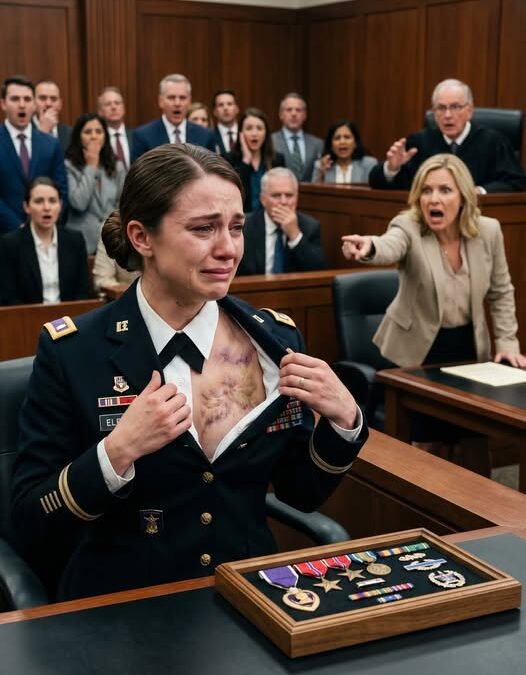
I watched my own mother raise her right hand, swear to tell the truth, and then calmly erase twelve years of my life.
“She was never in the Army.”
Her voice did not shake.
That was the part I remember most.
Not the reporters packed shoulder to shoulder behind me. Not the jurors staring as if I had crawled into the courtroom wearing somebody else’s skin. Not even the heavy wooden shadow box sitting on the prosecution table with my Silver Star, my Purple Heart, and the burned unit patch I had carried home from the worst night of my life.
It was my mother’s voice.
Steady.
Controlled.
Certain.
Like she had practiced destroying me until she could do it without feeling anything.
The attorney standing in front of her paused.
“Mrs. Bennett, I want to make sure the jury understands your testimony. Are you saying your daughter never served in the United States Army?”
My mother looked directly at me.
“Never.”
A whisper moved through the courtroom.
I felt Samuel Price, my attorney, shift beside me.
“Don’t react,” he whispered.
I kept my eyes on my mother.
“I’m not.”
“That worries me more.”
Across the aisle, my younger brother Caleb lowered his head.
He was trying to hide a smile.
He failed.
My mother continued.
“She has always had a talent for creating stories. The military service, the deployments, the injuries, the medals. None of it is real.”
The attorney gestured toward the shadow box.
“And those?”
“She bought them.”
A juror near the end of the front row frowned at me.
My mother noticed.
She leaned into it.
“Online, probably. You can buy almost anything online now.”
Someone in the gallery made a disgusted sound.
A reporter scribbled furiously.
Another raised her phone just enough to check whatever headline her editor was already preparing.
DECORATED VETERAN ACCUSED OF STOLEN VALOR.
DAUGHTER FAKED MILITARY CAREER TO CONTROL FATHER’S DEFENSE COMPANY.
HEIRESS BUILT LIFE ON LIES.
I could see the stories forming before anyone had written them.
My mother was giving them exactly what they wanted.
A villain.
Me.
The attorney walked closer to the witness stand.
“What about your daughter’s scars?”
For the first time, something flashed across my mother’s face.
Not guilt.
Not hesitation.
Annoyance.
“She had procedures.”
The scar beneath my ribs seemed to burn.
I could almost feel the jagged line of it under my blouse, stretching from my side toward my back.
The attorney raised an eyebrow.
“Procedures?”
“She has always been dramatic.”
My fingers tightened together under the table.
The courtroom disappeared for half a second.
Heat.
Smoke.
Metal screaming against rock.
Rotor blades chopping through black air.
Someone yelling coordinates over a radio that kept cutting out.
Blood soaking through my uniform.
Daniel Hayes screaming my name.
Not Mara.
The other name.
The one I had been ordered to forget.
“Vale! Stay awake!”
I remembered trying to breathe and getting nothing but dust and copper.
I remembered Daniel grabbing the back of my vest.
I remembered telling him I couldn’t feel my left hand.
I remembered him dragging me while rounds tore chunks from the ground around us.
Then I was back in Virginia.
Back in a courtroom where my mother was telling twelve strangers that my wounds were cosmetic.
Samuel’s hand shifted toward mine, stopping just short of touching it.
“Mara.”
“I’m fine.”
“No, you’re not.”
“I can be fine for another twelve minutes.”
He glanced at me.
“What does that mean?”
I looked up at the clock above the judge.
11:48 a.m.
I had been watching it all morning.
Caleb had not.
Neither had my mother.
They thought this trial was about credibility.
They thought if they could convince the jury that my military career was fake, everything else would collapse with it.
My father’s will.
My controlling shares in Bennett Meridian Systems.
My position as executor of his estate.
My accusations that Caleb had been moving money through shell companies.
My claim that the new will he produced three days after our father’s funeral was fraudulent.
Everything depended on whether the jury believed I was Mara Bennett, former United States Army captain.
And for the past two weeks, every official database the court had been allowed to see appeared to say I was lying.
No deployment history.
No accessible service record.
No public award citation.
No unit listing.
No record connecting Mara Bennett to the mission that had nearly killed me.
Caleb knew exactly why.
That was what made his plan so vicious.
He wasn’t proving my service had never happened.
He was exploiting the fact that I had spent years under orders not to prove that it had.
The attorney turned back toward my mother.
“Mrs. Bennett, did your daughter ever leave the country for military service?”
“No.”
“Did she ever tell you she was serving?”
“She told us many things.”
“So your answer is no?”
“My answer is that my daughter was not a soldier.”
She turned to the jury.
“She was a liar.”
Caleb finally stopped hiding his smile.
I looked at him.
He met my eyes.
There had been a time when I would have done anything for my little brother.
When we were kids, Caleb used to follow me everywhere.
If I climbed a tree, he climbed after me.
If I rode my bike down the steep hill behind our house, he would wait until my mother wasn’t looking and try it too.
When he broke his wrist at eleven, I sat beside him in the emergency room for four hours while he pretended not to cry.
When I left for training years later, he hugged me so hard I had to laugh.
“Come back,” he had said.
“I will.”
“Promise?”
“I promise.”
I did come back.
I just never came back as the same person.
And neither, apparently, did he.
The case had begun with our father’s death.
Everything changed the morning Dad stopped breathing.
Charles Bennett had spent thirty years building Bennett Meridian Systems from a tiny engineering firm into a defense technology company with federal contracts, aerospace research divisions, secure communications projects, and enough classified work that half the employees could not tell their spouses what they did all day.
To the outside world, my father was brilliant, disciplined, difficult, and rich.
To me, he was the man who burned pancakes every Sunday because he refused to admit he was terrible at cooking.
He was the man who attended every school play even when he had to sit in the back row with a laptop open on his knees.
He was the one person in my family who knew where I had really been.
Not every detail.
He never asked for details I could not give.
But he knew I had served.
He knew I had deployed.
He knew the medals were real.
And he knew that one night overseas had followed me home.
Cancer reduced him faster than any enemy ever could.
During his final months, his body shrank while his mind remained painfully sharp.
Three weeks before he died, I found him awake at two in the morning in his study, surrounded by financial records.
“You should be in bed,” I told him.
“So should you.”
“I’m not seventy years old with stage four cancer.”
He looked up.
“Always subtle.”
I smiled.
He did not.
That was when I knew something was wrong.
There were printouts spread across his desk.
Wire transfers.
Subsidiary records.
Contracts.
Companies I had never heard of.
Meridian Strategic Holdings.
North Lantern Consulting.
Greybridge Procurement.
Two foreign entities registered through jurisdictions famous for hiding ownership.
“Dad?”
He removed his glasses.
“They’re moving money.”
“Who?”
He looked toward the hallway before answering.
“People inside the company.”
“How much?”
“Enough.”
“That’s not a number.”
“It’s the only answer I have tonight.”
I pulled a chair beside him.
“Does the board know?”
“No.”
“Does Caleb?”
His silence told me more than his answer would have.
My chest tightened.
“Dad.”
“I don’t know what Caleb knows.”
“That’s not what I asked.”
He rubbed a hand over his face.
“He has been signing things.”
“What things?”
“I’m still tracing them.”
“Then call federal investigators.”
“No.”
The answer came so quickly I stared at him.
“No?”
“There are names buried in these transactions that should not be touched casually.”
“You built a defense company. Half your contacts have names that shouldn’t be touched casually.”
“This is different.”
“How?”
He looked at me for a long time.
Then his eyes dropped toward my side.
Toward the scar he knew was there.
My stomach turned.
“Dad.”
He reached across the desk and gripped my hand.
“They’re moving money through shell companies,” he whispered. “Protect the company.”
“I will.”
“But don’t expose your unit.”
The room seemed to get colder.
I pulled my hand away.
“What does my unit have to do with your company?”
He looked frightened.
My father was not a frightened man.
I had seen him argue with senators, generals, executives, lawyers, and men worth ten times what he was worth.
I had seen him receive bad medical news without blinking.
But that night, he was afraid.
“Dad, what does my unit have to do with this?”
“Promise me.”
“No.”
“Mara.”
“Tell me what you know.”
“I can’t.”
“Can’t or won’t?”
His face tightened.
“Promise me you will protect the company without exposing what happened during your deployment.”
I stared at him.
“I was ordered not to expose it.”
“I know.”
“You know more than you’re telling me.”
“Yes.”
My heart began pounding.
“How much more?”
He squeezed my hand again.
“Enough to know that silence kept you alive once.”
I wanted to push.
I wanted to drag every answer out of him.
But then he coughed.
It started small and became violent.
By the time I got him water, there was blood on the handkerchief.
He looked at it.
Then at me.
For one second he was not Charles Bennett, founder and chairman of a defense technology company.
He was just my dad.
Dying.
“I promise,” I said.
His shoulders lowered.
“Thank you.”
He died nineteen days later.
At the funeral, Caleb cried harder than anyone.
He stood beside my mother, one hand on her back, accepting condolences from executives and board members.
People kept telling me how proud Dad had been of me.
I wondered which version of me they meant.
The daughter.
The executive.
The veteran they did not know enough about to ask questions.
The woman my father had quietly chosen to inherit control of everything.
The original will was read two days later.
I received controlling shares of Bennett Meridian Systems.
Caleb received substantial assets, property, and minority shares.
My mother received the family homes, trusts, and lifetime financial support.
Dad named me executor.
Caleb said almost nothing.
That should have scared me.
My brother had never been quiet when he believed he had been treated unfairly.
Three days after the funeral, he walked into the estate attorney’s office carrying a new will.
It was dated six weeks before Dad’s death.
It left nearly everything to Caleb.
My shares.
My voting control.
My authority as executor.
Everything.
I looked at the signature.
It looked like Dad’s.
Almost.
The attorney looked at me.
“Mara?”
“It’s fake.”
Caleb laughed.
“Of course you’d say that.”
I turned toward him.
“Dad’s hand shook during the last two months. This signature is smooth.”
“He had good days.”
“He couldn’t hold a coffee mug without both hands.”
“You weren’t with him every minute.”
“Neither were you.”
His expression changed.
Only slightly.
But I saw it.
“You think I forged it?”
“I know Dad didn’t sign it.”
My mother stepped between us.
“Enough.”
I looked at her.
“You saw his hands.”
She looked away.
That was the first moment I understood I might be standing alone.
The second came two weeks later when Caleb’s attorneys filed accusations that I had manipulated Dad into changing the estate plan by inventing a decorated military career.
At first I laughed.
Actually laughed.
Samuel did not.
“This isn’t funny.”
“It’s ridiculous.”
“That doesn’t make it harmless.”
“They can verify my service.”
He studied me.
“Can they?”
The laugh died in my throat.
He already knew there were complications.
I had told him enough to represent me.
Not enough to endanger anything.
“My records are restricted.”
“How restricted?”
“Very.”
“Mara.”
“I served.”
“I believe you.”
“That should be enough.”
“In my office? Yes. In court? No.”
Then came the subpoenas.
Then the database searches.
Then the requests.
Then the sealed responses.
Information unavailable.
Information restricted.
No responsive public record located.
Service details cannot be confirmed through requested channel.
Each answer looked worse than the last.
Caleb’s attorneys knew exactly how to frame them.
They did not say my records were fake.
They said there was no accessible evidence proving they were real.
Then they found the medals.
My Silver Star.
My Purple Heart.
The patch.
Dad had kept them locked in his private safe.
After he died, Caleb gained temporary access to several estate properties before the court froze anything.
A week later, photographs of my medals were attached to a filing accusing me of stolen valor.
That accusation attracted reporters.
Then federal questions.
Forgery.
Fraud.
Falsified military documentation.
Misrepresentation connected to inheritance.
The estate dispute became something much uglier.
By the time the trial began, I was not fighting for money.
I was fighting for my name.
And my mother had chosen Caleb.
Samuel waited until the attorney finished questioning her.
Then he stood.
“Mrs. Bennett, you said your daughter never served.”
“That’s correct.”
“You’re certain?”
“Yes.”
“You never saw her in uniform?”
“No.”
“You never attended a military ceremony?”
“No.”
“You never received a military notification when she was injured?”
My mother’s fingers moved against the witness stand.
“No.”
I noticed.
Samuel noticed too.
“Never?”
“No.”
He walked slowly toward the jury.
“Do you love your daughter?”
The question surprised everyone.
My mother blinked.
“What?”
“Do you love Mara?”
The judge looked at Samuel.
“Counsel?”
“Relevant to bias, Your Honor.”
The judge allowed it.
My mother looked at me.
For one terrible second, I wanted her to say yes.
Not because it would help the case.
Because some small part of me was still a daughter before I was a soldier, an executive, a defendant, or anything else.
“Yes,” she said.
The word hurt more than if she had said no.
Samuel turned.
“So you love your daughter.”
“Yes.”
“And yet you believe she invented twelve years of military service.”
“Yes.”
“Bought medals.”
“Yes.”
“Faked injuries.”
“Yes.”
“Manipulated her dying father.”
“Yes.”
“Committed fraud.”
“Yes.”
“And you never confronted her privately about any of it before this estate dispute.”
My mother’s mouth tightened.
“I was afraid of what she might do.”
That got a reaction.
A juror shifted away from me.
Samuel stopped.
“What exactly did you think she might do?”
My mother looked toward Caleb.
Only for a second.
There.
I saw it.
Samuel did too.
“Mrs. Bennett?”
“She had become unpredictable.”
“When?”
“After she came home.”
Samuel let the silence sit.
Then he stepped closer.
“Came home from where?”
My mother froze.
Caleb’s attorney stood.
“Objection.”
Samuel never looked away from her.
“From where, Mrs. Bennett?”
“Objection!”
The judge struck the gavel.
“Sustained.”
But it was too late.
The words were already in the room.
After she came home.
My mother knew.
Maybe not everything.
But she knew.
Samuel returned to our table.
“You heard that.”
“Yes.”
“She slipped.”
“Yes.”
“You expected it?”
“No.”
He watched my face.
“You’re still looking at the clock.”
11:51.
“Nine minutes.”
“Nine minutes until what?”
I kept my voice low.
“Until I’m allowed to stop losing.”
His eyes narrowed.
“Mara, I need you to explain.”
“I filed a request months ago.”
“For what?”
“Emergency review.”
“With whom?”
“I can’t say yet.”
His jaw clenched.
“You understand how difficult you are as a client?”
“I’ve been told.”
“By me.”
“Repeatedly.”
“This is not funny.”
“No.”
“Then tell me what happens at noon.”
I looked at him.
“If authorization came through, the classification status changes.”
His face went still.
“What classification?”
“The operation.”
He stared.
“The operation that caused your injuries?”
“Yes.”
“The operation connected to your sealed service record?”
“Yes.”
“And you are telling me this now?”
“I didn’t know if approval would happen.”
“When did you file?”
“Before Dad died.”
Samuel leaned back slowly.
“Why?”
“Because he told me not to expose my unit.”
“That sounds like the opposite of requesting declassification.”
“I needed to know what he was scared of.”
“And did you find out?”
“Not completely.”
The courtroom doors rattled.
Every head turned.
The handle moved once.
Then stopped.
The entire room became silent.
My pulse jumped.
11:52.
Too early.
Samuel leaned toward me.
“Who did you call?”
“I didn’t.”
“Then who are you expecting?”
“One person.”
My mother laughed quietly from the witness stand.
She had heard us.
“You always did love drama, Mara.”
I looked at her.
“Did I?”
“You think someone is going to walk through those doors and save you?”
“No.”
“Then why do you keep looking at them?”
“Because the person coming isn’t here to save me.”
Her smile faded slightly.
I continued.
“He’s here to tell the truth.”
Caleb stood.
“Your Honor, are we seriously allowing this?”
The judge looked annoyed.
“Sit down.”
He did.
But his eyes had changed.
Until that moment, Caleb had looked triumphant.
Now he looked alert.
He glanced at the doors.
Then at the clock.
Then at me.
That was when I knew something important.
He understood the timing.
Maybe not everything.
But enough.
My mother had attacked my service.
Caleb had designed the case around the silence of my records.
Both of them had acted like the classification barrier would last forever.
But Caleb knew enough about classified systems to recognize what noon might mean.
His face lost color.
I looked directly at him.
He shook his head once.
Very small.
A warning.
Do not.
I almost smiled.
For six years, silence had been my prison.
Now he was asking me to stay inside it.
The judge called a short recess.
Nobody moved quickly.
Reporters rushed into the hallway.
My mother stepped down from the witness stand.
She passed our table without looking at me.
“Mom.”
She stopped.
Samuel looked at me sharply.
She turned.
Up close, she looked exhausted.
Her makeup could not hide the shadows beneath her eyes.
“Why?” I asked.
Her lips parted.
“Why what?”
“You know I served.”
She went rigid.
“I testified.”
“That wasn’t my question.”
She glanced toward Caleb.
He was speaking with his lawyer near the other side of the room.
“Mom.”
She lowered her voice.
“You need to stop.”
My skin went cold.
“Stop what?”
“This.”
“You mean defending myself?”
“You don’t understand what you’re doing.”
“I understand that my own mother just told a jury my scars are fake.”
Her eyes filled for a moment.
Then the emotion disappeared.
“You should have let the estate go.”
There it was.
Not the military service.
Not the medals.
The company.
“Why?”
“You don’t need it.”
“It isn’t about money.”
“It always becomes about money.”
“Dad made me executor because something was wrong.”
Her face tightened.
“Your father was sick.”
“He was dying, not confused.”
“He was under medication.”
“He showed me the transfers.”
She stepped closer.
“What transfers?”
The fear was immediate.
Too immediate.
I studied her.
“You know exactly what I’m talking about.”
“I don’t.”
“The shell companies.”
She looked away.
“Mom.”
“Leave it alone.”
“Did Caleb move the money?”
Her eyes snapped back to mine.
“Stop asking questions.”
“Why?”
“Because your father asked too many.”
The words came out before she could stop them.
We both froze.
“What does that mean?”
Her breathing changed.
“I didn’t say that.”
“You did.”
“Mara.”
“What happened to Dad?”
“He had cancer.”
“I know how he died.”
“Then stop.”
“Did Caleb threaten him?”
“No.”
“Did someone threaten you?”
“No.”
“You’re lying.”
Her face twisted.
Suddenly she looked less like a witness and more like my mother.
Terrified.
“You have no idea what those people can do.”
The courtroom seemed to tilt.
“What people?”
She stepped backward.
Then Caleb was beside her.
“Mom.”
She flinched.
He looked at me.
“Leave her alone.”
I laughed once.
“You’ve spent weeks calling me a criminal and now you’re worried about her stress?”
“You’re destroying this family.”
“No, Caleb. Someone already did that.”
His jaw hardened.
“You think Dad trusted you more than me because he gave you some shares?”
“He gave me control.”
“That was a mistake.”
“You forged his will.”
His eyes turned flat.
“Prove it.”
“I will.”
“You can’t even prove you were a soldier.”
My mother closed her eyes.
I looked at the clock.
11:55.
“Five minutes,” I said.
Caleb’s face changed.
“What?”
“Nothing.”
“What happens in five minutes?”
“You tell me.”
His composure cracked for the first time.
“You think this is a game?”
“No.”
I stood.
“I think five people died because someone treated something much more serious like one.”
Every bit of color left his face.
My mother grabbed his arm.
“Caleb.”
Samuel appeared at my shoulder.
“What did you just say?”
Caleb pulled away from our mother.
“You’re insane.”
“Maybe.”
“You don’t know what happened.”
That stopped me.
I stared at him.
He realized the mistake instantly.
“What did you say?”
He looked at his lawyer.
“We’re done here.”
“No.”
I moved around the table.
Samuel caught my elbow.
“Mara.”
I ignored him.
“You just said I don’t know what happened.”
Caleb backed away.
“I meant your military fantasy.”
“No, you didn’t.”
The bailiff approached.
“Everyone needs to return to their places.”
I looked at my brother.
“How do you know there was something to know?”
He did not answer.
The judge entered.
Everyone stood.
My heartbeat was suddenly louder than anything in the room.
We sat.
11:57.
Three minutes.
The judge reviewed paperwork.
The prosecutor arranged exhibits.
Reporters returned.
My mother resumed the witness stand.
Caleb kept looking at the doors.
11:58.
Two minutes.
The handle moved.
This time the doors opened.
A woman in a navy suit entered first.
She carried a sealed government envelope.
Behind her came a gray haired colonel in dress uniform.
And then I saw the third person.
He walked with a cane.
Older.
Thinner.
His hair almost completely gray.
But I recognized the way he carried his shoulders before I recognized his face.
My breath stopped.
Daniel Hayes.
For a second, I was not in court.
I was back under harsh field hospital lights.
My ears were ringing.
My body felt like it had been ripped open.
Daniel was on a stretcher beside mine, blood running down one side of his face.
“Stay awake,” he had told me.
“You first.”
“That’s an order.”
“You’re not my commanding officer right now.”
“I absolutely am.”
Then medics pushed us in different directions.
That was the last time I saw him.
Afterward, Daniel’s records vanished behind the same wall as mine.
I heard rumors.
Transferred.
Retired.
Dead.
Working somewhere nobody could talk about.
I wrote letters I never mailed because I did not know where to send them.
And now he was standing twenty feet away.
Alive.
His eyes found mine.
For one heartbeat, nobody else existed.
He gave the smallest nod.
I felt tears burn behind my eyes.
I refused to let them fall.
The woman in the navy suit approached the bench.
“Your Honor, Dana Whitfield, counsel for the Department of Defense. We request permission to approach.”
The judge stared at the three newcomers.
“Regarding what matter?”
“The authenticity of Captain Mara Bennett’s military service and the admissibility of records whose classification status changes at twelve hundred hours today.”
The courtroom erupted in whispers.
Samuel stood so fast his chair scraped backward.
My mother’s face went white.
Caleb did not move.
That scared me more.
The judge raised her hand.
“Order.”
The gallery quieted.
Dana handed identification to the bailiff.
The colonel did the same.
Daniel remained near the aisle.
The judge looked at the clock.
11:59.
“Ms. Whitfield, are you telling this court there are federal military records directly relevant to the allegations against the defendant?”
“Yes, Your Honor.”
“And they were unavailable until today?”
“Correct.”
“Why?”
“Classification restrictions associated with an intelligence recovery operation.”
Caleb stood.
“Your Honor, this is outrageous. We cannot have federal officials walk in during trial with evidence nobody has reviewed.”
Dana looked at him.
“Your counsel received notification.”
“When?”
“Forty eight minutes ago.”
“That’s not meaningful notice.”
“It was the maximum notice legally permitted before authorization.”
Caleb looked at Daniel.
Something unspoken passed between them.
I saw Daniel notice it too.
The judge turned toward the colonel.
“Can you confirm Ms. Whitfield’s representation?”
“Yes, Your Honor.”
“And the defendant’s records?”
“Legitimate.”
My mother whispered something.
I could not hear it.
The judge leaned forward.
“Colonel, I need precision. Did Mara Bennett serve in the United States Army?”
“Yes.”
A sound moved through the courtroom.
Not quite a gasp.
Something deeper.
A collective release of disbelief.
My hands began to shake.
Not because I doubted the answer.
Because for years, the truth had existed only in locked files, buried reports, scars, nightmares, and the memories of people I thought I would never see again.
Hearing it spoken aloud felt almost violent.
The colonel continued.
“Captain Bennett served with distinction. Portions of her assignment history were segregated from standard public access due to operational security requirements.”
Samuel sat slowly.
He looked at me.
“You really were a captain.”
I almost laughed.
“You thought I was lying?”
“No.”
“You sound surprised.”
“I thought maybe lieutenant.”
Despite everything, a breath of laughter escaped me.
It was the first time I had laughed in days.
My mother stared at me.
The judge looked at Daniel.
“And you are?”
He stepped forward.
“Major Daniel Hayes, retired.”
The title hit me hard.
Retired.
He had gotten out.
He had lived.
The judge nodded.
“What is your connection to Captain Bennett?”
“I served with her.”
My mother shook her head.
“No.”
Everyone turned.
She seemed surprised by her own voice.
“No,” she said again.
Daniel looked at her.
“She served with me.”
“You don’t know my daughter.”
His expression barely changed.
“Mrs. Bennett, I knew your daughter when she was bleeding badly enough that every medic in our extraction team thought she might die.”
My mother’s lips parted.
Daniel continued.
“I watched her refuse evacuation until another wounded soldier was loaded first.”
The room became utterly still.
“I watched her cross open ground under fire.”
My throat tightened.
“Daniel.”
He glanced at me.
I shook my head.
Not yet.
Some things still did not belong in a courtroom.
He understood.
The judge noticed the exchange.
“Major Hayes, were Captain Bennett’s injuries sustained during military service?”
“Yes.”
“Were they connected to the classified operation?”
“Yes.”
“Did she receive military decorations?”
“Yes.”
“Which?”
Daniel looked toward the shadow box.
“The Purple Heart.”
A juror lowered his eyes.
“And?”
“The Silver Star.”
My mother began crying.
Not loudly.
One tear rolled down her cheek.
Then another.
Caleb looked at the clock.
Noon.
Dana Whitfield’s phone vibrated.
So did the colonel’s.
Daniel removed a phone from his jacket.
He read the screen.
Then looked at me.
“It’s done.”
The judge frowned.
“What is done?”
Dana lifted the sealed envelope.
“Declassification authorization has taken effect.”
Every muscle in my body tightened.
The judge ordered the courtroom closed to unnecessary spectators while the admissibility issues were handled.
Reporters protested.
The gallery was cleared.
The jury remained.
My mother remained.
Caleb remained.
When the doors shut, the silence became heavier.
Dana handed the envelope to Daniel.
He broke the seal.
Inside was a thin black folder.
He approached the evidence table.
“I need to clarify one thing first.”
The judge nodded.
Daniel removed a photograph.
He placed it down.
I could see it from where I sat.
Six soldiers beside a helicopter.
Young faces.
Tired faces.
People who had no idea that five of them were standing only days away from death.
My chest clenched.
There I was.
Shorter hair.
Dust on my boots.
A rifle slung across my chest.
And a name above my pocket that was not mine.
LENA VALE.
Samuel stared at the photograph.
“That’s you.”
“Yes.”
“But that isn’t your name.”
“No.”
The judge looked at Daniel.
“Explain.”
“Captain Bennett operated under an assigned identity during Operation Nightglass.”
The words settled over the courtroom.
Operation Nightglass.
I had not heard anyone say it openly in years.
My mother gripped the witness stand.
Daniel pointed to the photograph.
“For the duration of the deployment, Captain Bennett’s operational identity was Lena Vale.”
The judge looked at me.
“Why did you never disclose this?”
“Because I was ordered not to.”
“For how long?”
“Until the underlying operation was declassified or I was formally released from the restriction.”
“And until today?”
“I had not been released.”
Caleb’s attorney stood.
“So we are expected to accept that the defendant used an alias, performed some secret operation, and conveniently could not prove any of it until the exact day she was facing consequences?”
Daniel turned toward him.
“No.”
He opened the folder.
“You are expected to read.”
He removed service verification.
Deployment records.
Medical documentation.
Award citations with previously redacted operational details.
Mission authorization.
Communication logs.
Samuel stared as document after document appeared.
Months of accusations collapsed in minutes.
The judge read the first page.
Then the second.
Her expression changed.
She looked at me.
“Captain Bennett.”
“Yes, Your Honor.”
“You served twelve years?”
“Yes.”
“You deployed multiple times?”
“Yes.”
“These injuries are documented?”
“Yes.”
“The medals in that shadow box were awarded to you?”
“Yes.”
I looked at my mother.
She was crying harder now.
But I felt no satisfaction.
Vindication was not supposed to feel this empty.
I had imagined the day my record became visible.
I thought I would feel free.
Instead, all I could think about was five people in a photograph.
The judge looked at Daniel.
“What happened to the others?”
He went still.
My stomach dropped.
Daniel had always had a certain look before giving bad news.
His mouth became a straight line.
His shoulders lowered slightly.
His eyes stopped moving.
I had seen that look in a field hospital when a medic told him one of our team had not made it.
Now he looked at me the same way.
“Major?”
He inhaled.
“Five members of the six person field team died during Operation Nightglass.”
The judge looked at me.
“You were the only survivor?”
I stared at the photograph.
“No.”
Daniel looked at me sharply.
I continued.
“Daniel survived too.”
He lowered his gaze.
“He was attached to extraction and command support. He wasn’t counted as part of the six person field element.”
The judge nodded slowly.
“What was the mission?”
Daniel opened another section.
“Nightglass was an intelligence recovery operation targeting a data package connected to an international weapons network.”
Samuel shifted.
The judge read.
“Why would this be relevant to a dispute involving Bennett Meridian Systems?”
Nobody answered.
I looked at my mother.
She was not looking at me.
She was looking at Caleb.
And Caleb was staring at the photograph as if it were a bomb.
Everything inside me became cold.
“Daniel.”
He looked at me.
“What?”
“What aren’t you saying?”
The judge glanced between us.
Daniel closed the folder.
“I need you to understand that declassification does not mean every connected investigation is complete.”
“Daniel.”
He rubbed his thumb against the edge of the folder.
Then he looked at Caleb.
My brother’s face changed.
Fear.
Real fear.
Daniel spoke.
“Operation Nightglass was compromised.”
I already knew that.
Every survivor did.
We had been sent to one location.
Our coordinates were changed at the last minute.
We entered through a corridor that should have been clear.
Instead, they were waiting.
Not reacting.
Waiting.
The first explosion hit before we reached the recovery point.
The second cut off our retreat.
They knew our route.
They knew our timing.
They knew our strength.
For six years I had lived with the official explanation.
Possible intelligence breach.
Source unknown.
Investigation ongoing.
Daniel continued.
“The team received altered coordinates eleven minutes before insertion.”
My hands curled into fists.
The radio chatter returned in my head.
Change of route.
Command verified.
Proceed.
I had questioned it.
So had Sergeant Ruiz.
We were told the change came from cleared civilian intelligence support.
“Who transmitted them?” I asked.
Daniel did not answer immediately.
Instead, he removed another page.
The judge took it.
She read.
Then her eyes lifted toward Caleb.
“Mr. Bennett.”
Caleb stood.
His lawyer grabbed his arm.
“Do not say anything.”
The judge looked back at the document.
“Would you care to explain why your name appears in the authorization chain connected to Operation Nightglass?”
My heart stopped.
Caleb stared at Daniel.
“That record was sealed.”
Daniel’s voice became very quiet.
“Was.”
Caleb realized what he had just admitted.
Samuel whispered, “Oh my God.”
I stood.
“Mara,” he warned.
I barely heard him.
I looked at my brother.
“You knew.”
Caleb shook his head.
“I knew nothing about your operation.”
“You just knew the record was sealed.”
“Because everyone here keeps saying it was.”
Daniel opened another page.
“Caleb Bennett served as a civilian intelligence liaison through a contractor associated with Bennett Strategic Holdings.”
I turned toward my mother.
She closed her eyes.
“Mom.”
She did not answer.
“Look at me.”
Slowly, she did.
“You knew.”
“No.”
“You knew he was involved.”
“I knew he was doing contract work.”
“For Dad’s company?”
“Not exactly.”
“What does that mean?”
Her mouth trembled.
“Your father created several divisions years ago. Some worked through partners.”
“Shell companies.”
“I didn’t understand the structure.”
“But Dad did.”
“Yes.”
“And he found something.”
Tears filled her eyes again.
“Yes.”
I looked at Caleb.
My brother.
The boy who had once begged me to come home.
The man who had spent weeks calling me a fraud because he knew the evidence proving I was telling the truth could not defend me.
“Did you know I was on that mission?”
“No.”
Daniel’s jaw tightened.
“Careful.”
Caleb glared at him.
“You don’t get to threaten me.”
“I’m not threatening you.”
“Then shut up.”
The judge struck the gavel.
“Mr. Bennett.”
Caleb stopped.
Daniel continued.
“The mission log contains authorization credentials used by Mr. Bennett.”
“Credentials can be stolen.”
“They can.”
“They can be duplicated.”
“Yes.”
“So you have no proof I sent anything.”
Daniel nodded.
“That would be a reasonable argument.”
Caleb blinked.
He had not expected agreement.
Daniel removed another document.
“Which is why this matters more.”
Dana Whitfield handed the judge a certified communication analysis.
The judge read.
Her expression hardened.
“What is this?”
Daniel answered.
“Voice authentication.”
Caleb stopped breathing.
My skin prickled.
Daniel continued.
“A recorded authorization associated with the coordinate change.”
“No,” Caleb said.
The word came out immediately.
Too fast.
Daniel looked at him.
“You haven’t heard it yet.”
“I don’t need to.”
“Interesting.”
Caleb’s lawyer grabbed his sleeve.
“Stop talking.”
I looked at my brother.
My voice barely worked.
“You sent us there.”
“No.”
“Five people died.”
“I said no.”
“You changed the coordinates.”
“No.”
Daniel spoke.
“We can play the recording.”
Caleb slammed both hands on the table.
“I SAID NO!”
The explosion of his voice shocked everyone.
My mother cried out.
The bailiff moved forward.
I stood completely still.
For the first time that day, Caleb looked like the person I had suspected existed beneath the suits, the lawyers, and the quiet smiles.
Angry.
Cornered.
Terrified.
He pointed at Daniel.
“You have no idea what was happening.”
Daniel’s expression did not change.
“Then tell us.”
Caleb laughed once.
“You think this was some simple betrayal?”
“Tell us.”
“You think I woke up one morning and decided to kill soldiers?”
I felt the room fall away.
Samuel stepped closer to me.
“Mara.”
I raised one hand.
I needed to hear this.
Caleb looked at me.
His eyes were red.
“You weren’t supposed to be there.”
I could not breathe.
“What?”
His lawyer closed his eyes.
My mother covered her mouth.
Daniel stared at Caleb.
“Say that again.”
Caleb looked down.
“You weren’t supposed to be on that team.”
Something inside me cracked.
“You knew the team.”
“I knew a field group was being sent.”
“You knew names?”
“Not all.”
“Did you know mine?”
“No.”
“Then how do you know I wasn’t supposed to be there?”
He looked at me.
“Because the roster changed.”
The memory hit.
Lieutenant Parker had gotten sick forty eight hours before the mission.
I had been moved into his position.
My assignment came late.
Only command and mission planners knew.
Daniel looked at me.
He remembered too.
Caleb continued.
“The information I received listed another officer.”
I walked toward him before Samuel could stop me.
“So you did know about the operation.”
Caleb said nothing.
“You knew enough to know the original roster.”
Nothing.
“You knew enough to know the coordinates.”
Nothing.
“You knew enough to know the files were sealed.”
His face hardened.
“You should have stayed out of Dad’s records.”
I stared at him.
“What?”
“That’s why all of this happened.”
“The trial?”
“Everything.”
“You forged Dad’s will because I found the shell companies?”
“You didn’t find them. Dad did.”
“And he told me.”
“That was his mistake.”
My mother started crying harder.
“Caleb, stop.”
He turned on her.
“You wanted me to fix it.”
“No.”
“You told me she couldn’t take control of the company.”
“I said I was afraid.”
“You said she would uncover everything.”
“I never told you to do this.”
“You signed the affidavit.”
“Because you told me Mara would be killed if people started looking into Nightglass!”
Silence.
Absolute silence.
My mother realized what she had said.
I turned slowly toward her.
“Say that again.”
Her shoulders collapsed.
“Mara.”
“No. Say it again.”
She pressed both hands to her face.
“Caleb told me the people behind the network were still active.”
My chest tightened.
“And?”
“He said your identity was hidden for a reason.”
“It was.”
“He said if investigators started connecting Bennett Meridian to Nightglass, your operational name could surface.”
“So you told a jury I was a fraud.”
“I thought it would stop them from looking.”
I laughed.
I could not help it.
The sound was ugly.
“You thought destroying my life would protect it?”
She cried.
“I thought if everyone believed you were lying, no one would investigate the operation.”
“You accused me of federal crimes.”
“I know.”
“You stood there and said my wounds were fake.”
“I know.”
“You looked at my medals and said I bought them online.”
“I know!”
Her voice broke.
The courtroom blurred through tears I had refused to shed all day.
“You knew what those medals cost me.”
She shook her head desperately.
“I knew you came home different.”
“You knew I served.”
“Yes.”
“You knew I was injured.”
“Yes.”
“You knew Dad knew.”
“Yes.”
“And you still did this.”
She closed her eyes.
“Yes.”
The word nearly broke me.
My own mother.
Not confused.
Not mistaken.
Not manipulated into believing I was a liar.
She had known.
Every word had been deliberate.
I turned away from her.
Daniel moved toward Caleb.
“There’s more.”
Caleb laughed bitterly.
“There’s always more.”
Daniel placed the original mission communication log in front of the judge.
“The coordinate change originated from an authorization chain connected to a contractor account assigned to Mr. Bennett.”
Caleb’s attorney objected.
The judge overruled.
Daniel continued.
“The recording contains his voice.”
Caleb shook his head.
“You can fake audio.”
“The recording is accompanied by independent authentication, server records, access verification, and contemporaneous logs.”
Caleb looked toward the doors.
The bailiff noticed.
So did I.
“Don’t,” I said.
He looked at me.
“Don’t what?”
“Run.”
His expression twisted.
“You really think I’m the monster here.”
“I think five people died.”
“You don’t know what would have happened if that data package got out.”
“I know what happened because we went in.”
“You recovered it.”
The words came out before he could stop them.
Daniel stepped forward.
“How do you know?”
Caleb froze.
I felt sick.
Daniel’s voice became sharper.
“The official field report was sealed before you had access to its outcome.”
Caleb looked at the floor.
“You knew we recovered it,” I said.
Nothing.
“You knew.”
He clenched his jaw.
“Someone had to make a decision.”
I could hear Sergeant Ruiz screaming.
I could smell smoke.
I could see Specialist Kim on the ground, hands shaking as she tried to hold pressure against a wound that would not stop bleeding.
“Five people died because of your decision.”
“It wasn’t supposed to happen like that.”
“There it is.”
“Mara.”
“No. Don’t say my name like you still have the right.”
He flinched.
For the first time, I saw something almost human in him.
Regret.
Or maybe only fear of consequence.
“I was twenty seven.”
“So was I.”
“I was working with people who told me that package could destabilize entire defense programs.”
“We were told to recover it.”
“And I was told it couldn’t be recovered.”
“By whom?”
He looked toward my mother.
She stared back in horror.
“Caleb,” she whispered.
“Who?” I demanded.
He shook his head.
“You don’t want those names.”
“Dad did.”
“And look where that got him.”
Everything inside me stopped.
My mother gasped.
Daniel moved faster than I thought possible with a cane.
He grabbed the edge of Caleb’s table.
“What does that mean?”
Caleb looked around.
His face told me he wanted the words back.
I walked closer.
“What happened to Dad?”
“Nothing.”
“You just said look where investigating them got him.”
“He had cancer.”
“That isn’t what I asked.”
“Mara.”
“Did somebody hurt him?”
“No.”
“Threaten him?”
Caleb said nothing.
“Did you threaten him?”
“No.”
My mother spoke.
“He did.”
Caleb turned.
“Mom.”
“You threatened your father.”
“I warned him.”
“You told him Mara would die if he kept digging.”
My lungs emptied.
I stared at my mother.
“When?”
“Two months before he died.”
She looked at me through tears.
“I heard them arguing.”
Caleb stepped toward her.
“You misunderstood.”
“No.”
“You always misunderstand.”
“You told him, ‘If Mara opens those files, they will finish what Nightglass started.’”
Daniel’s face went cold.
The judge immediately turned to the bailiff.
“Mr. Bennett is not to leave this courtroom.”
Caleb laughed.
“This is insane.”
The bailiff moved behind him.
His attorney whispered urgently.
Caleb ignored him.
My mother continued.
“Your father told him to get out.”
She looked at me.
“The next morning, Charles changed his estate instructions.”
My heart pounded.
“That’s why he gave me control.”
“Yes.”
“He wanted me to find it.”
“He wanted you to stop it.”
“Then why did he tell me not to expose my unit?”
“Because he thought the people behind Caleb would kill you if they knew you were the Nightglass survivor.”
I looked at Daniel.
He nodded slowly.
“That is consistent with what Charles told me.”
I stared.
“You spoke to my father?”
“Three weeks before he died.”
My entire body went cold.
“What?”
“He contacted me through an intermediary.”
“You knew he was investigating this?”
“Yes.”
“And you didn’t tell me?”
“I was prohibited from doing so.”
Anger surged through me.
“I am getting very tired of that sentence.”
“I know.”
“No, Daniel, you don’t. Everyone in my life decided what I was allowed to know. The Army. My father. My mother. My brother. Everyone.”
His eyes softened.
“You’re right.”
The simple answer stopped me.
No defense.
No justification.
Just acknowledgment.
He continued.
“Your father asked for one thing.”
“What?”
“That if the estate dispute ever forced your service into open court, I help ensure the truth reached you before the people behind Nightglass could bury it again.”
I looked at Caleb.
“Again.”
Daniel nodded.
“The investigation into the compromised mission was obstructed.”
“By him?”
“Partly.”
Caleb scoffed.
“You have no idea how high that went.”
Daniel looked at him.
“That’s why I’m here.”
Caleb’s expression changed.
For the first time, he seemed to understand that this was bigger than a family lawsuit.
The documents on the evidence table were not just clearing my name.
They were reopening something he thought had died with five soldiers and one classified file.
The judge reviewed the communication logs.
Then the authentication records.
Then the declassification notice.
Finally, she looked at Caleb.
“Mr. Bennett, based on the evidence presented to this court, there are now substantial issues beyond the scope of the present proceeding.”
His lawyer stood.
“My client will invoke his rights.”
“Your client is free to do so.”
She turned toward the bailiff.
“He is to be detained pending coordination with the appropriate authorities.”
My mother cried out.
Caleb stepped backward.
For one second I saw my little brother again.
Not the man in the suit.
The boy with the broken wrist.
The kid waiting for me at the airport after basic training.
The brother who once made me promise I would come home.
Then his face hardened.
He looked at me.
“You should have stayed quiet.”
The sentence landed with surprising softness.
I held his gaze.
“I did.”
He frowned.
“For six years.”
He looked away.
The bailiff placed him in custody.
As they moved toward the doors, Caleb stopped.
“Dad wasn’t a hero either.”
I said nothing.
“He made deals.”
“He built a defense company.”
“You think he never compromised?”
“I think he realized something was wrong.”
“He realized too late.”
“Maybe.”
Caleb gave a bitter smile.
“You’re going to find things you don’t want to know.”
“Probably.”
“You’ll wish you had taken the money and walked away.”
“No.”
“You don’t know that.”
I looked at the photograph of my team.
Five faces.
Five families.
Five funerals I had never been allowed to attend publicly because Lena Vale did not officially exist.
“Yes,” I said. “I do.”
The officers took my brother away.
The doors closed behind him.
For years, I had imagined revenge as something loud.
A confession.
An arrest.
A person who hurt you finally looking afraid.
But when Caleb disappeared through those doors, I did not feel victorious.
I felt tired.
He was still my brother.
That was the ugliest part of family betrayal.
Love did not always disappear when someone hurt you.
Sometimes it stayed.
Damaged.
Humiliating.
Unwanted.
But alive enough to make justice hurt.
The judge turned toward the attorneys.
The criminal allegations against me were collapsing.
The government documentation authenticated my service.
The accusation that I had fabricated military records was unsupported.
The medals were real.
The injuries were real.
The identity discrepancy had a lawful explanation.
The court ordered the fraudulent service claims dismissed.
The estate issues would continue separately, especially now that the authenticity of Caleb’s will was under greater scrutiny.
I should have felt relief when the judge said the words.
Instead, I looked at my mother.
She remained in the witness chair.
Smaller somehow.
For most of my life, Victoria Bennett had been the strongest person in any room.
Elegant.
Controlled.
Impossible to embarrass.
She could host senators for dinner, fire employees without raising her voice, and turn family disasters into polished explanations before breakfast.
Now her hands trembled.
“Mrs. Bennett,” the judge said, “you understand that your testimony concerning your daughter’s military service was false.”
My mother closed her eyes.
“Yes.”
My chest tightened.
“You knowingly testified falsely?”
Her attorney stood.
“Your Honor, I need to advise my client.”
The judge nodded.
But my mother shook her head.
“No.”
Her attorney whispered something.
She ignored him.
“I lied.”
The words filled the room.
I almost wished she had kept denying it.
Hearing her admit it made the wound real.
She looked at me.
“I lied because I was afraid.”
I stood.
“Of Caleb?”
“Of the people behind him.”
“So you sacrificed me.”
Her face broke.
“I thought I was saving you.”
I walked closer.
Samuel did not stop me.
Maybe he understood this part was not legal anymore.
It was a daughter asking her mother why love had looked so much like cruelty.
“You could have told me.”
“I was told not to.”
“By Caleb.”
“Yes.”
“And you trusted him over me.”
“No.”
“That is exactly what you did.”
“I thought if you knew, you would investigate.”
“I would have.”
“I know.”
“So you destroyed my credibility to stop me.”
“Yes.”
I laughed softly.
“You know what they called me outside?”
She shook her head.
“Fraud.”
Her eyes filled again.
“Stolen valor liar.”
She looked down.
“People sent messages to my office saying I should be imprisoned.”
“Mara.”
“Veterans wrote that I had disgraced people who actually served.”
“I’m sorry.”
“Somebody mailed a fake Purple Heart covered in red paint to my house.”
She pressed a hand to her mouth.
“I didn’t know.”
“No. You just started the fire. You didn’t stay around to see what burned.”
She cried silently.
I wanted to hate her.
It would have been easier.
But I remembered her sitting by my hospital bed after I returned home.
She had not known where I was injured.
She had not known how.
The official explanation said training accident.
She had held my hand while I slept.
For months afterward, she would come into my room at night and check that I was breathing.
Maybe fear had been living in her longer than I understood.
That did not excuse what she did.
But it explained why the lie had sounded so controlled.
She had convinced herself cruelty was protection.
“Did Dad know you were afraid?”
“Yes.”
“Did he know Caleb threatened me?”
“Yes.”
“Did he know about Nightglass?”
“Some of it.”
“How?”
“I don’t know everything.”
“Tell me what you know.”
She wiped her face.
“After you were injured, your father received a call.”
“From whom?”
“I don’t know.”
“What did they say?”
“He never told me exactly.”
“Then what do you know?”
“After that call, he locked himself in the study for almost an entire day.”
I remembered.
I had been recovering.
Barely walking.
Dad had told me it was company trouble.
“When he came out,” she continued, “he asked me whether Caleb had ever mentioned a contractor named North Lantern.”
My stomach tightened.
One of the shell companies.
“What did you say?”
“I said no.”
“Had he?”
She looked ashamed.
“Yes.”
I closed my eyes.
“Mom.”
“I didn’t understand what it meant.”
“You still lied to Dad.”
“Caleb had told me it was confidential work.”
“You protected him.”
“He was my son.”
“So was I.”
“You were my daughter.”
“Then why was I always the one you were willing to lose?”
She flinched.
I had not planned to say it.
But once it came out, I realized how long I had carried the question.
Maybe since childhood.
Caleb was younger.
More impulsive.
Always the one who needed rescuing.
If he crashed a car, Dad lectured him and Mom blamed the rain.
If I got a B in chemistry at fifteen, she asked why it was not an A.
When I joined the Army, she called it a phase.
When Caleb joined Dad’s company, she called it his future.
I had spent years telling myself that difference made me stronger.
Maybe it had simply taught everyone that Mara would survive whatever they did to her.
My mother looked at me.
“I never wanted to lose you.”
“You were willing to let me go to prison.”
“I believed the charges would collapse before that.”
“How?”
“Caleb said they would.”
I stared at her.
“And you believed him.”
Her silence answered.
I stepped back.
Daniel approached slowly.
“There is something else you need to know.”
I almost laughed.
“Of course there is.”
He removed a small envelope from inside his jacket.
My name was written across the front.
MARA.
I knew the handwriting before he handed it to me.
Dad.
My hands started shaking.
“When did he give you this?”
“Three weeks before he died.”
The same week I found him surrounded by financial records.
I opened it.
Inside was a single folded sheet.
The message was short.
If they ever make you choose between protecting the truth and protecting yourself, choose the truth.
I read it twice.
Then a third time.
Underneath the sentence was a date.
And a location.
An industrial property owned by Bennett Meridian outside Richmond.
I looked at Daniel.
“What is this?”
“Your father said you would understand when the time came.”
“I don’t.”
“He said you would.”
“I really hate when dead people become cryptic.”
Daniel almost smiled.
It vanished quickly.
“Charles believed records connected to the shell companies were stored there.”
“Physical records?”
“Possibly.”
“Why not give them to investigators?”
“He did not trust everyone involved.”
“Because the Nightglass investigation had been compromised.”
“Yes.”
My mother whispered.
“Charles went there.”
I turned.
“When?”
“About a month before he died.”
“Alone?”
“I think so.”
“What happened?”
“He came home after midnight.”
“And?”
“He was terrified.”
“Of what?”
“He wouldn’t tell me.”
Daniel watched her.
“Did he say anything?”
She thought.
“One sentence.”
“What?”
“He said, ‘It wasn’t one betrayal. It was a chain.’”
Daniel and I looked at each other.
That fit.
Caleb had changed coordinates.
But Caleb had also said he was taking orders.
Someone had needed Nightglass to fail.
Someone had used Bennett connected contractors.
Someone had helped bury the investigation.
And Dad had discovered enough to make himself afraid.
I folded the letter.
Samuel approached.
“Mara, I know you’re thinking about whatever that location is.”
“I am.”
“You are still technically in the middle of several legal proceedings.”
“I know.”
“Please do not leave this courthouse and immediately break into a warehouse.”
“I own controlling shares of the company.”
“That is not the reassurance you think it is.”
Despite everything, I smiled.
He exhaled.
Then he looked at my mother.
“We need to deal with the perjury issue.”
Her face fell.
I felt no pleasure in that either.
Actions had consequences.
Fear did not erase them.
Love did not erase them.
Family did not erase them.
That truth had taken me far too long to understand.
The jury was released.
One of the jurors waited near the door.
She was an older woman who had spent most of the trial looking at me with visible suspicion.
Now she could barely meet my eyes.
“Captain Bennett?”
I stopped.
“Yes?”
“I owe you an apology.”
“You judged the evidence you were given.”
“I believed your mother.”
“So did I once.”
She looked at the shadow box.
“Those are yours?”
“Yes.”
Her eyes moved to the Purple Heart.
Then the Silver Star.
“You earned them?”
The question should not have hurt anymore.
It still did.
“Yes.”
She swallowed.
“Thank you for your service.”
For years I had hated that phrase.
Not because it was wrong.
Because I never knew how to answer it.
Thank you did not belong to me alone.
Five people should have been standing beside me.
Sergeant Mateo Ruiz.
Specialist Hannah Kim.
Staff Sergeant Devin Cole.
Lieutenant Aaron Mills.
Corporal Jason Webb.
Names I had repeated silently every year on the anniversary of Nightglass.
I touched the edge of the shadow box.
“They paid more than I did.”
The juror nodded.
Then she left.
Soon the courtroom emptied.
Reporters waited outside.
I could hear the noise through the doors.
Questions.
Camera shutters.
People shouting my name.
An hour earlier, many of them believed I was a fraud.
Now they wanted the first statement from the secret soldier whose family accusation had detonated into a classified military scandal.
Samuel looked toward the doors.
“You don’t have to speak to them.”
“I know.”
“We can leave through a secure exit.”
I looked at my mother.
She was sitting alone.
Her attorney had stepped into the hallway.
Daniel stood near the evidence table.
For the first time all day, there was no clock I needed to watch.
No deadline.
No countdown.
The truth had arrived.
And somehow the hardest part remained.
I walked toward my mother.
She looked up.
“I don’t expect you to forgive me.”
“I don’t know what forgiveness looks like yet.”
She nodded.
“I understand.”
“No. I don’t think you do.”
Her eyes filled again.
“I can understand that too.”
I sat across from her.
“Did you ever believe Caleb’s accusations?”
“No.”
“Not even for a second?”
“No.”
“So every time you called me a liar…”
“I knew you weren’t.”
“Every time you said the medals were fake…”
“I knew they were real.”
“Every time you said I had never served…”
“I knew you had.”
I looked away.
That truth hurt differently.
If she had been fooled, maybe I could blame Caleb alone.
But she had made a choice.
“You cannot do something like that and call it love.”
“I know.”
“Do you?”
She nodded.
“I thought protecting your life mattered more than protecting your name.”
“My name is part of my life.”
“I understand that now.”
“And you had no right to choose which part of me could be destroyed.”
She began crying again.
“I know.”
I looked at her for a long time.
Then I said the thing I had been carrying since the witness stand.
“I forgive you.”
Her breath caught.
“But I don’t trust you.”
Her face collapsed.
“And I will not pretend those are the same thing.”
She nodded through tears.
“I don’t expect you to.”
“I may never trust you again.”
“I know.”
“If we have any relationship after today, it starts with the truth. No protecting Caleb. No hiding Dad’s records. No deciding what I can handle.”
“Yes.”
“And if investigators ask what you know, you tell them everything.”
Her voice was barely audible.
“I will.”
I stood.
She reached toward my hand.
Then stopped before touching me.
I noticed.
Maybe that was the first honest thing between us all day.
She finally understood forgiveness did not mean access.
Daniel picked up the shadow box.
“You kept the patch.”
I turned.
The burned unit patch was blackened at one edge.
“I tried to throw it away once.”
“Couldn’t?”
“No.”
“Me neither.”
He pulled his wallet out.
Behind an old identification card was a tiny strip of scorched fabric.
I stared.
“You kept yours in your wallet?”
“For six years.”
“That’s incredibly unhealthy.”
“So is talking to people who aren’t there.”
I looked at him.
“You do that?”
“Every anniversary.”
My eyes burned.
“Me too.”
For a moment, we stood together in the empty courtroom and mourned without saying their names.
Then I finally asked the question I had wanted to ask since he walked in.
“Where have you been?”
“Working.”
“That’s not an answer.”
“It’s the only one I can give you today.”
I groaned.
“Daniel.”
He laughed quietly.
“I deserved that.”
“I thought you were dead.”
“I know.”
“You knew I thought that?”
“Yes.”
“And you couldn’t contact me?”
“No.”
“Couldn’t or wouldn’t?”
“Couldn’t.”
I studied him.
“I wrote you letters.”
His face changed.
“You did?”
“Never sent them.”
“Good.”
“That is a terrible response.”
“If you had sent them to the wrong place, someone would have opened them.”
I shook my head.
“You haven’t changed at all.”
He tapped his cane.
“I have empirical evidence to the contrary.”
That made me laugh again.
A real laugh this time.
It hurt my ribs.
For one second, the courtroom did not feel like the place where my family had tried to destroy me.
It felt like the place where one piece of my old life had come back.
Daniel handed me the shadow box.
“Ready?”
I looked at the doors.
The noise outside had increased.
Reporters knew something had happened.
Maybe not everything.
Enough.
“What are they allowed to know?”
“The parts that were declassified.”
“And Nightglass?”
“Certain operational facts.”
“The names of my team?”
He shook his head.
“Not all family notifications are complete.”
I nodded.
“Caleb?”
“His detention will become public.”
“The investigation?”
“Active.”
“Dad’s company?”
“That depends on what we find.”
I looked at the letter in my hand.
The date.
The location.
The last trail my father had left.
“Daniel.”
“Yes?”
“Was Dad investigating Caleb?”
“No.”
My skin went cold.
He continued.
“Caleb was only one part.”
“The people giving him orders.”
“Yes.”
“Are they still alive?”
“Some.”
“Still connected to Bennett Meridian?”
“Possibly.”
“Government?”
He did not answer.
That was answer enough.
I closed my eyes.
Six years earlier, I had thought the war ended when the helicopter lifted me away from Nightglass.
I was wrong.
It followed me home.
It hid inside my father’s company.
Inside financial records.
Inside shell corporations.
Inside a forged will.
Inside my mother’s fear.
Inside my brother’s ambition.
It sat across from me at family dinners.
It attended my father’s funeral.
It wore a suit and smiled while a jury was told I had invented the blood I had spilled.
But something had changed.
For six years, secrecy belonged to everyone except me.
Everyone else used silence as power.
Now I finally had my own voice back.
Samuel opened the courtroom door a few inches.
The hallway erupted.
“Mara!”
“Captain Bennett!”
“Did your mother knowingly lie?”
“Was your brother involved in a classified military operation?”
“Are the fraud charges being dismissed?”
“Were you really awarded the Silver Star?”
“Is Bennett Meridian under federal investigation?”
Samuel looked at me.
“Last chance for the back exit.”
I looked at my mother.
Then Daniel.
Then the shadow box in my hands.
“No.”
“You’re sure?”
“Yes.”
I walked toward the doors.
Before stepping through them, I stopped.
For most of my adult life, I had believed survival meant staying quiet.
You buried the memory.
You carried the scars under clothing.
You locked medals in a safe.
You followed orders.
You protected operations.
You protected families.
You protected institutions.
You protected people who sometimes did not deserve it.
And eventually you forgot that protecting everyone else could become another way of disappearing.
My father had understood that before I did.
If they ever make you choose between protecting the truth and protecting yourself, choose the truth.
I finally understood what he meant.
The truth would not protect me from pain.
It would not repair my relationship with my mother.
It would not bring back the five people we lost.
It would not turn Caleb back into the little brother I remembered.
It would not make my father alive again.
Truth was not magic.
It was simply the ground you stood on when every lie around you finally collapsed.
I pushed the doors open.
Camera flashes exploded.
Reporters shouted.
For a second, instinct told me to retreat.
Six years of secrecy screamed at me to hide.
Then Daniel stepped beside me.
Not in front.
Beside.
Samuel stood on my other side.
My mother remained behind us.
That mattered.
Some roads had to be walked without the people you once expected to walk them with you.
A reporter shouted the question everyone wanted answered.
“Captain Bennett, did your family know your military service was real?”
I stopped.
Samuel whispered, “You don’t have to answer.”
“I know.”
I looked at the cameras.
Then at the people behind them.
“My father knew.”
Another question came.
“Did your mother?”
I thought about protecting her.
The instinct appeared automatically.
Family reflex.
Old habit.
I looked back through the open courtroom doors.
My mother stood exactly where I had left her.
She met my eyes.
Then she nodded.
Tell them.
So I did.
“Yes.”
The hallway erupted.
“Then why did she testify otherwise?”
“That is a question she will need to answer herself.”
“Is your brother responsible for the deaths of American soldiers?”
“The relevant authorities are reviewing newly available evidence.”
“Did he forge your father’s will?”
“That issue remains before the court.”
“Are you saying you served under a false identity?”
“I served under an authorized operational identity.”
“What was it?”
I paused.
For six years that name had belonged to a ghost.
Lena Vale.
The woman who existed on a mission roster.
The soldier who walked into Nightglass.
The name Daniel screamed through smoke.
The name attached to the worst memories of my life.
Today, for the first time, it did not feel like a secret swallowing me.
It felt like part of my history.
“Lena Vale.”
Cameras flashed again.
“Why was your identity classified?”
“Operational security.”
“What really happened during Nightglass?”
I looked at Daniel.
He gave no signal.
No warning.
The choice was mine.
“Five members of my field team were killed.”
The hallway went quiet.
Not completely.
But enough.
“We entered an area based on coordinates that were later determined to have been compromised.”
A reporter lowered her microphone slightly.
“Were you the only survivor?”
“I survived.”
That was all I could say.
All I wanted to say.
Another reporter called out.
“How do you feel about finally being vindicated?”
I almost hated the question.
Vindicated.
Such a clean word.
As if truth arriving erased everything that happened before it.
I looked down at the shadow box.
“I don’t feel vindicated.”
The reporters waited.
“I feel sad.”
Nobody interrupted.
“Five people who served beside me are still dead. My father is still gone. My family is still broken. Clearing my name matters, but it doesn’t make those things disappear.”
I looked directly into the cameras.
“The truth is not valuable because it makes everything better.”
I thought of my mother.
Caleb.
Dad.
Daniel.
The burned patch.
“It is valuable because without it, nothing can ever become better.”
For once, nobody shouted another question immediately.
Samuel touched my elbow.
We moved through the crowd.
Outside, sunlight poured across the courthouse steps.
I stopped.
The air felt different.
Of course it wasn’t.
Same September heat.
Same traffic.
Same reporters.
Same world.
But for six years, every public place had carried the possibility that someone might ask a question I could not answer.
Where did you serve?
What unit?
What happened to your side?
Why can’t I find your records?
I had learned to redirect.
Smile.
Say less.
Disappear in plain sight.
Now my name belonged to me again.
Mara Bennett.
Not fraud.
Not imposter.
Not the daughter who manipulated a dying father.
Not merely Lena Vale.
Mara.
Daniel came down the steps beside me.
“You okay?”
“No.”
“Good answer.”
“I thought you’d tell me I was.”
“I learned not to lie to you.”
“That took six years?”
“I’ve had a busy schedule.”
I smiled.
He nodded toward the letter.
“What are you going to do?”
I looked at the location Dad had written.
“Find out what he left there.”
“Federal investigators will want to be involved.”
“They can be.”
“You’re not going alone.”
“I wasn’t planning to.”
He raised an eyebrow.
“Really?”
“No.”
“That sounds more like you.”
I looked back at the courthouse.
My mother had appeared at the top of the steps.
She did not come toward me.
She simply stood there.
For a moment, I remembered another doorway.
Our house.
Years ago.
The day I first left for training.
Mom had stood in the doorway with her arms folded.
She refused to cry until I got into the car.
Dad cried immediately.
Caleb ran after me carrying the jacket I had forgotten.
We had been a family.
Imperfect.
Complicated.
But still connected by something I once believed could not break.
I knew better now.
Families could break.
Love could fracture.
Trust could die.
And sometimes the people who knew exactly where you were vulnerable were the ones willing to strike there.
But breaking was not the same as ending.
I had survived Nightglass.
I had survived silence.
I had survived my father’s death.
I had survived watching my mother call me a liar while my brother smiled.
I could survive knowing the truth about them too.
My phone buzzed.
A message from an unknown number.
Samuel saw my expression.
“What?”
I opened it.
One sentence.
YOUR FATHER SHOULD HAVE LEFT NIGHTGLASS BURIED.
Every trace of warmth left my body.
Daniel saw the screen.
His face changed instantly.
“Don’t touch anything else.”
“I already opened it.”
“I mean don’t respond.”
“I wasn’t going to.”
He took out his phone.
Samuel looked from him to me.
“What does it mean?”
I stared at the message.
For six years, I had imagined the enemy behind Nightglass as something distant.
Foreign.
Faceless.
A network on a mission briefing.
But Dad had found a chain.
Caleb had been inside it.
Someone else was still watching.
My mother had been terrified for a reason.
Daniel finished making a call.
“Investigators are coming.”
I nodded.
Samuel groaned.
“I was hoping for one normal afternoon.”
“You chose the wrong client.”
“Obviously.”
The message remained on my screen.
A threat.
A warning.
Maybe an attempt to push me back into silence.
Old Mara might have listened.
Old Mara believed survival required obedience.
Old Mara believed protecting the truth meant protecting it from daylight.
But my father had left me a different order.
Choose the truth.
I deleted nothing.
Hid nothing.
I handed the phone to Daniel.
“Send it wherever it needs to go.”
He nodded.
My mother finally came down the steps.
She saw our faces.
“What happened?”
I hesitated.
Every instinct told me not to tell her.
She had already betrayed me.
Then I remembered what I had demanded inside.
No more secrets disguised as protection.
I showed her the message.
Her face drained of color.
“I know that wording.”
Daniel stepped closer.
“What do you mean?”
She stared at the phone.
“Charles received one.”
My heart stopped.
“When?”
“About five weeks before he died.”
“What did it say?”
She closed her eyes.
“Almost the same thing.”
“Almost?”
She opened them.
“CHARLES SHOULD HAVE LEFT NIGHTGLASS BURIED.”
Daniel and I looked at each other.
“Do you still have it?” he asked.
“I don’t know.”
“Was it on his phone?”
“No. Printed.”
“Where?”
“In his study.”
My thoughts raced.
Dad had saved everything.
If he kept that threat, he had probably kept others.
The investigation had not started today.
Dad had been building it before he died.
Maybe he knew he would not live long enough to finish.
Maybe that was why he gave me control.
Not because he wanted me to inherit his company.
Because he wanted me to inherit his evidence.
I looked at my mother.
“Why didn’t you tell anyone?”
“I was afraid.”
The same answer.
For once, I understood it without accepting it.
I looked at the message again.
Then at the courthouse.
Then at the shadow box in my arms.
Six years earlier, Operation Nightglass had taken five people from me.
Today, the truth about it nearly took the rest of my family.
But it had also given me something back.
My name.
My voice.
My right to decide what happened next.
I looked at Daniel.
“You said the war followed me home.”
“I didn’t say that.”
“No.”
I looked at my father’s letter.
“I did.”
He waited.
I folded the paper and placed it carefully inside the shadow box beside the medals.
The Silver Star caught the sunlight.
For years I had hidden it because the story behind it was classified.
Now it meant something different.
Not heroism.
I had never felt like a hero.
I was a soldier who survived when better people did not.
A daughter who trusted the wrong people.
A sister who loved someone capable of betraying her.
A woman who spent six years believing silence was strength.
Maybe strength was something else.
Maybe it was standing in public with the scars visible.
Maybe it was allowing people to know what happened without letting what happened become your entire identity.
Maybe it was forgiving your mother without handing her back your trust.
Maybe it was watching your brother face consequences and refusing to celebrate his destruction.
Maybe it was following your father’s last trail even when part of you wanted nothing more than to go home, lock every door, and forget the world.
I looked at my mother.
“I meant what I said.”
“About forgiving me?”
“Yes.”
She started crying again.
“But forgiveness doesn’t erase consequences.”
“I know.”
“You’ll have to testify.”
“I will.”
“You’ll have to tell investigators everything.”
“I will.”
“If you protect Caleb again…”
“I won’t.”
I studied her.
For the first time, I believed she understood the cost of another lie.
Daniel held out my phone.
“Evidence team will contact you.”
I took it.
“What now?”
“Now?”
He looked toward the street.
“You go home.”
I laughed.
“That’s it?”
“For today.”
“And tomorrow?”
“Tomorrow gets complicated.”
Samuel groaned behind us.
“Please stop saying things like that.”
Daniel smiled.
I looked at the sky.
Blue.
Unremarkable.
Beautiful.
The kind of sky I had ignored for years because ordinary things had felt almost insulting after surviving something extraordinary and terrible.
For six years, I lived backward.
Every decision measured against Nightglass.
Every relationship filtered through what I could not say.
Every scar covered.
Every medal hidden.
Every nightmare handled alone.
I had believed secrecy was the price of service.
Maybe sometimes it was.
But secrecy had also given other people space to rewrite me.
My brother turned my classified record into evidence that I was a fraud.
My mother turned my silence into a weapon.
Strangers turned missing information into certainty.
And I had almost let them.
Not anymore.
I stepped off the courthouse stairs.
Reporters continued calling my name.
I did not stop this time.
There would be more hearings.
More investigations.
Questions about Bennett Meridian.
Questions about my father.
Questions about Caleb’s role in Nightglass.
Questions about who ordered him to alter those coordinates and why.
The forged will would be examined.
The shell companies would be traced.
The people who threatened my father would learn that the daughter they expected to stay silent had finally been released from the order that kept her quiet.
Maybe that was why the anonymous message came so quickly.
They were afraid.
Not of my medals.
Not of my military record.
Not even of what I remembered.
They were afraid that I could finally speak.
I understood something then.
My mother’s lie had almost destroyed me.
But it also forced the truth into a courtroom where it could no longer be quietly buried.
Caleb had tried to use my classified life against me.
Instead, he created the exact legal crisis that caused the classification wall to open.
He believed silence was his strongest weapon.
He never considered what would happen when the clock reached noon.
I looked at my watch.
12:43 p.m.
Less than an hour earlier, a jury had looked at me with disgust.
My mother had called me a liar.
My brother had been smiling.
My military service officially did not exist anywhere they were allowed to see.
Now Caleb was in custody.
My mother had admitted she lied.
My medals had been authenticated.
Operation Nightglass had a name outside a secure room.
And my father had left me a path toward something much larger.
I should have been terrified.
Maybe I was.
But fear felt different when it no longer had to hide.
Daniel walked beside me toward the waiting federal vehicles.
Samuel followed, already talking about motions, hearings, estate orders, and a long list of things I was apparently not allowed to do without calling him first.
My mother remained behind.
I turned once.
She raised a hand.
I did not wave.
Not yet.
But I looked at her.
That was enough for today.
Then I faced forward.
The burned patch inside the shadow box shifted softly against the glass.
I thought about the five soldiers in the photograph.
About the night we entered the valley.
About Sergeant Ruiz swearing when the coordinates changed.
About Kim making a joke over the radio thirty seconds before the first explosion.
About Cole pulling Mills behind cover.
About Webb bleeding against my shoulder.
About carrying weight that should have been impossible because stopping would have meant leaving someone behind.
About Daniel dragging me when my body finally gave out.
For years, those memories had ended at the helicopter.
Now they continued.
A courtroom.
A photograph.
A voice recording.
My brother.
My father.
The truth.
Maybe survival was not the end of the story.
Maybe it was simply the point where you became responsible for what you did with the life that remained.
I tightened my grip on the shadow box.
My name is Mara Bennett.
I served twelve years.
I was Captain Mara Bennett.
For one classified operation, I was Lena Vale.
I was wounded.
I was decorated.
I survived.
My mother lied about me.
My brother used those lies to try to take my father’s company and bury the questions Dad had left behind.
Five soldiers died because Operation Nightglass was compromised.
My brother helped transmit the coordinates that led us into a kill zone.
And my father spent the final months of his life trying to discover who had been standing behind him.
Those were facts now.
Not whispers.
Not sealed memories.
Not accusations.
Facts.
For six years, other people controlled which parts of my life were allowed to exist.
That ended at noon.
The courtroom doors opened.
Daniel Hayes walked through them.
The file was unsealed.
And the lie my family had built around me collapsed in less than an hour.
But the most important thing that happened that day was not that everyone finally believed me.
It was that I stopped needing their permission to know who I was.
I was not the fraud my mother described.
I was not the obstacle Caleb needed removed.
I was not the frightened daughter my father tried to protect.
I was not only the wounded soldier Daniel dragged through fire.
I was all of those histories and none of their lies.
I was a soldier.
A daughter.
A sister.
A survivor.
And when I stepped into the car with my father’s letter resting beside my medals, I finally understood why he had trusted me with the company.
He had not chosen me because he thought I was the strongest.
He had chosen me because he knew what I had already survived.
He knew that when the lies became unbearable, I would keep moving.
He knew I would follow the evidence.
He knew I would protect what mattered.
And somewhere, hidden behind shell companies, classified contracts, false coordinates, threats, and six years of silence, the people who had destroyed Operation Nightglass were about to learn the same thing my family had learned that morning.
You can bury a record.
You can seal a file.
You can threaten a witness.
You can manipulate a mother.
You can convince a jury.
You can even turn a brother against his own sister.
But eventually, someone opens the door.
And when the truth finally walks into the room, every person who built their life around the lie has to decide whether to keep pretending.
My mother stopped pretending.
Caleb ran out of places to hide.
My father was no longer alive to finish what he started.
So I would finish it.
Not for revenge.
Not for the company.
Not for the inheritance.
For Ruiz.
For Kim.
For Cole.
For Mills.
For Webb.
For my father.
And finally, for myself.
The war had followed me home.
This time, I was done running from it.
This time, I knew exactly who I was.
And this time, when they asked my name, I would not give them Lena Vale.
I would look them directly in the eye.
And I would say it myself.
Mara Bennett.








