I RACED to a hospital in my Army dress uniform to comfort my injured daughter. I found her bruised and trembling. The family smiled. “Your rank doesn’t scare us.” They never knew silence was coming.
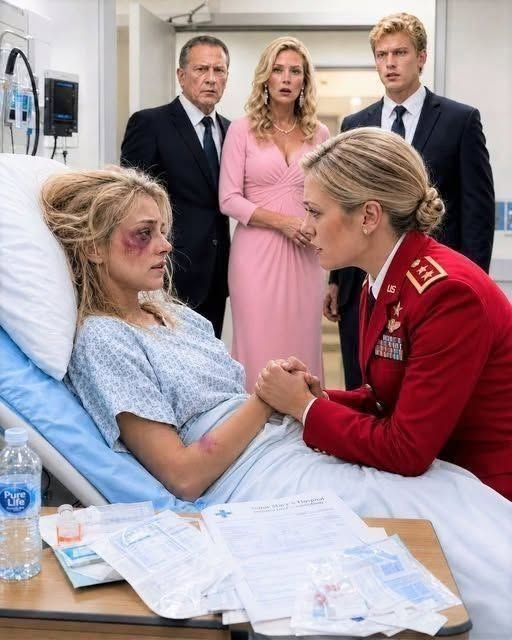
I RACED to a hospital in my Army dress uniform to comfort my injured daughter. I found her bruised and trembling. The family smiled. “Your rank doesn’t scare us.” They never knew silence was coming.
“Mom… please come get me.”
There are certain sounds a mother never forgets.
The first cry of her child.
The laughter that used to fill the back seat during long drives.
The tiny voice calling for her in the middle of the night after a nightmare.
And then there is the sound of your grown daughter trying not to cry because she is afraid someone might hear her.
That was the sound I heard that evening.
I had just left Fort Liberty.
Every ribbon on my chest caught the fading North Carolina sunlight as I moved toward my car, but I barely noticed them.
My entire career had been built on discipline.
Thirty years in uniform had trained me to hear what people were not saying.
I had learned to recognize hesitation in a briefing room.
Fear in the voice of a young officer pretending everything was under control.
The kind of silence that meant something had already gone terribly wrong.
Maya’s voice carried all of it.
“Where are you?” I asked.
There was a pause.
Then a shaky breath.
“St. Bernard Hospital.”
My hand tightened around the phone.
“What happened?”
Another pause.
Longer this time.
“I can’t talk.”
Then I heard a door open on her end.
Her breathing changed immediately.
“Mom…”
I was already moving.
“Stay where you are.”
“Please hurry.”
The call ended.
I stood beside my car for half a second, staring at the black screen of my phone.
That was all the time I allowed myself.
Then I got in.
I drove toward Charlotte with both hands locked around the steering wheel.
Traffic blurred around me.
Red lights.
Brake lights.
Exit signs.
The ordinary movements of hundreds of people who had no idea my world had just narrowed to a single hospital room.
My mind tried to create explanations.
Maybe Maya had been in a car accident.
Maybe she had fallen.
Maybe she had become sick.
Maybe Julian had called an ambulance.
Maybe there was a perfectly reasonable explanation for why my daughter had sounded terrified.
But one sentence kept returning.
Please come get me.
Not come see me.
Not I’m hurt.
Not I need you.
Come get me.
Those words meant she did not feel safe where she was.
And if Maya did not feel safe, I was going to find out why.
I thought about calling ahead.
I considered contacting local law enforcement.
I considered calling people at the base.
Then I stopped myself.
I had information, but not enough.
Thirty years in command had taught me something else.
Anger is useful only if you control it.
If you let anger control you, it makes decisions before facts arrive.
So I drove.
Fast.
Focused.
Silent.
My knuckles turned white against the wheel.
By the time I pulled into the hospital parking area, I had already made one promise to myself.
I would listen before I acted.
That promise lasted until I saw my daughter.
The automatic doors opened, and I moved through the lobby faster than I had moved in years.
A nurse stepped in front of me.
“Ma’am, you can’t go back there.”
“My daughter.”
The woman blinked.
I kept my voice level.
“Where is Maya Vance?”
She looked at my face.
Then at the eagle insignia on my shoulders.
I knew what she saw.
Not authority.
Not exactly.
She saw a woman who was one sentence away from breaking every rule in the building if necessary.
She checked the screen at the desk.
“Observation room twelve.”
“Thank you.”
“Ma’am, wait.”
I was already moving.
She hurried after me.
“You need to sign in.”
“I will.”
“You can’t just enter the clinical area.”
“My daughter called me from this hospital and asked me to come get her.”
The nurse stopped.
Something in my voice changed her expression.
“Come with me.”
She led me through another set of doors.
Every second stretched.
Room nine.
Ten.
Eleven.
Then twelve.
The door was partly open.
I saw the edge of the bed.
A thin hospital blanket.
Brown hair.
Then I stepped inside.
For the first time in thirty years of military service, my body forgot how to move.
Maya was curled on her side beneath the blanket.
One eye was swollen nearly shut.
Her lower lip was split.
Dark bruises circled both upper arms.
Not random bruises.
Finger shaped bruises.
Someone had held her hard enough to leave a map of their hands behind.
Her white dress was torn near the shoulder and stained along one side.
Her hair was tangled.
There was dried blood near her mouth.
I had seen wounded soldiers.
I had walked through emergency rooms after training accidents.
I had stood beside families receiving news no family should ever receive.
None of that prepared me for seeing my own child in that bed.
For one second, she was not thirty years old.
She was five.
Running toward me at the airport after a deployment.
She was eight, sitting at the kitchen table making handmade cards for soldiers she had never met because she had decided nobody should feel lonely overseas.
She was twelve, waiting at the front window whenever I was late coming home.
She was sixteen, insisting she did not need help with anything while asking for help with everything.
Then she lifted her head.
“Mom.”
My body started working again.
I crossed the room.
She reached for me.
I put both arms around her.
The moment I touched her, she began trembling.
Not crying.
Trembling.
Her entire body shook against mine as if she had been holding herself together until I arrived.
“I’m here.”
She buried her face against my shoulder.
“I’m here, sweetheart.”
Her fingers gripped the front of my uniform.
“I’m sorry.”
That word cut deeper than anything I had seen on her face.
“Do not apologize.”
“I should’ve called you.”
“You called me.”
“Earlier.”
I pulled back enough to look at her.
“Maya.”
She would not meet my eyes.
“I should’ve told you.”
“Told me what?”
Before she could answer, I heard laughter in the hallway.
Low.
Relaxed.
Completely out of place.
I turned.
Three people stood near the doorway.
Julian.
His mother, Evelyn.
His brother, Marcus.
All three looked as if they had stepped out of a private club instead of a hospital.
Tailored suits.
Polished shoes.
Expensive watches.
Julian’s tie had been loosened slightly, but otherwise he looked untouched.
Evelyn carried an expensive handbag on one arm.
Marcus had one hand in his pocket.
None of them looked worried about Maya.
They looked annoyed.
That frightened me more than panic would have.
Evelyn smiled first.
“Colonel.”
I stood.
Maya’s hand immediately closed around my sleeve.
I felt it.
I did not move away from her.
Evelyn took one step into the room.
“Your daughter has always been dramatic.”
I stared at her.
“She became emotional,” Evelyn continued. “There was an argument. She lost her balance and fell.”
Maya’s fingers tightened.
Evelyn’s voice remained smooth.
“No one laid a hand on her.”
I looked at the bruises on Maya’s arms.
Then at Julian.
He avoided my eyes for half a second.
That half second mattered.
“Maya,” I said.
Her breathing changed.
I kept my voice gentle.
“Tell me what happened.”
Julian sighed.
“Colonel, she’s not in a state to give you a reliable version of anything.”
I turned toward him.
“I asked my daughter.”
His mouth closed.
Maya swallowed.
“They locked me in the guest house.”
The room changed.
I did not react outwardly.
“Who?”
She looked at Julian.
Then Evelyn.
Then Marcus.
“All of them knew.”
Julian shook his head.
“That is not true.”
Maya ignored him.
“They took my phone.”
Her voice shook.
“They said if I tried to leave Julian, they would destroy my name.”
I felt a pressure building behind my ribs.
“They said nobody would believe me.”
Julian stepped forward.
“She is twisting everything.”
Maya flinched.
I moved between them before I even thought about it.
Julian stopped.
His expression hardened.
“She has been unstable for months.”
“Do not use that word again.”
He stared at me.
“What?”
“You heard me.”
Evelyn moved closer.
“Colonel, threatening my son will not help your daughter.”
“I have not threatened anyone.”
Marcus laughed quietly.
That sound became the first thing I truly hated about him.
He folded his arms.
“Some women marry into families they are not capable of handling.”
I turned toward him.
He smiled.
Not nervously.
Confidently.
The smile of a man who believed consequences were things that happened to other families.
Evelyn touched his arm.
“Marcus.”
Then she looked at me.
“Let us be adults.”
I said nothing.
She interpreted that as permission.
“Our family has connections throughout this state. Judges. Politicians. Business owners. Reporters.”
Maya lowered her eyes.
Evelyn continued.
“I do not say that to frighten you.”
“Then why say it?”
Her smile became smaller.
“To help you understand reality.”
I watched her carefully.
“What reality?”
“That ugly family disputes become uglier when people insist on making them public.”
I looked at Maya’s face.
“You’re calling this a family dispute?”
Evelyn’s eyes flicked toward Maya.
“Your daughter married into a very visible family.”
“And?”
“She needs to understand the responsibilities that come with that.”
Maya spoke from behind me.
“You mean staying quiet.”
Julian groaned.
“There. That. She does this constantly.”
I turned toward him.
“Does what?”
“Reframes everything.”
Maya looked at me.
“He said I embarrassed him at dinner.”
Julian rolled his eyes.
“Maya.”
“He grabbed me when we got home.”
“That is not what happened.”
“He took my phone.”
“You were hysterical.”
Marcus stepped in.
“You were trying to post private family business online.”
“I was trying to call a friend.”
“You were trying to cause a scandal.”
Evelyn lifted a hand.
“Enough.”
Everyone stopped.
That told me something.
Julian was the husband.
Marcus was the brother.
But Evelyn controlled the temperature of the room.
She looked at me again.
“I understand you have spent your career in environments where rank matters.”
There it was.
The first direct shot.
“But this is civilian life.”
I remained silent.
She stepped closer.
“Your military career does not intimidate us.”
Marcus smiled again.
“Your rank doesn’t scare us.”
I looked at each of them.
Julian.
Marcus.
Evelyn.
Then back at Maya.
They expected anger.
That was obvious.
They expected me to shout.
Threaten.
Use my position.
Maybe call someone important in front of them so they could later claim I had abused my authority.
I had spent too long in command to hand my opponent exactly what they wanted.
So I said nothing.
Marcus smirked.
Evelyn relaxed slightly.
Julian looked relieved.
They thought my silence meant I had understood their warning.
What they did not understand was that silence had been part of my job for thirty years.
Silence before giving an order.
Silence while reading intelligence.
Silence while letting someone talk long enough to expose what they were hiding.
I was not surrendering.
I was observing.
Maya’s fingers remained wrapped around my sleeve.
I looked down at her.
“Do you want to leave with me?”
“Yes.”
Julian stepped forward.
“She can’t just leave.”
I looked at him.
“She can.”
“She is my wife.”
“She is not your property.”
“She needs treatment.”
The nurse appeared behind him.
“We can arrange discharge when the physician clears her.”
Julian glanced at the nurse.
“That is not what I meant.”
I turned back to Maya.
“Do you want him in this room?”
“No.”
The answer came immediately.
The nurse heard it.
So did everyone else.
She stepped forward.
“Sir, I’m going to need you and your family to wait outside.”
Julian stared at her.
“This is ridiculous.”
“Outside.”
Evelyn smiled without warmth.
“Of course.”
She turned toward me.
“Colonel, I suggest you think carefully before deciding what kind of story you want this to become.”
I met her eyes.
“It already became a story when my daughter ended up in a hospital bed.”
Her smile disappeared.
Then she turned and walked away.
Marcus followed.
Julian remained for a second.
He looked at Maya.
Not lovingly.
Not apologetically.
Possessively.
“We’ll talk when you calm down.”
Maya’s hand tightened on mine.
I stepped forward.
“No.”
He looked at me.
“You will not speak to her unless she chooses to speak to you.”
His jaw tightened.
Then he left.
The nurse closed the door.
For several seconds, Maya and I said nothing.
Then she started crying.
“I tried to leave.”
I sat beside her again.
She covered her face.
“I tried, Mom.”
“You do not have to convince me.”
“You don’t understand.”
“Then help me understand.”
Her hands lowered slowly.
“This wasn’t the first time.”
I had suspected that.
Hearing it still hurt.
“How long?”
She stared at the blanket.
“The first time Julian grabbed me was maybe eight months after the wedding.”
Eight months.
I calculated immediately.
That was almost two years ago.
“And you didn’t tell me.”
“No.”
“Why?”
She laughed once.
A broken little sound.
“Because you liked him.”
The answer stopped me.
“What?”
“You liked him.”
I felt something twist in my stomach.
“He was respectful around you.”
“He knew how to be.”
“Why would that stop you from telling me?”
She looked at my uniform.
Not accusingly.
Almost sadly.
“You thought I was finally settled.”
“Maya.”
“You were proud of me.”
“I am proud of you.”
“You were happy I had this perfect marriage.”
“I was happy because I thought you were happy.”
“I didn’t want to become another problem you had to solve.”
I felt the words land one at a time.
“Maya, you are my daughter.”
“I know.”
“No. Listen to me. You are not an operational problem. You are not something on a list that interferes with my career.”
Her eyes filled again.
“I know that now.”
That phrase hurt worse.
Now.
“Why now?”
She looked toward the door.
“Because tonight I thought they were going to kill me.”
The room became completely still.
I reached for her hand.
“Tell me everything.”
She did.
Not quickly.
Not cleanly.
Trauma does not arrive in chronological order.
It comes in flashes.
Half sentences.
Corrections.
Moments when the speaker stops because remembering suddenly becomes physical.
Julian had controlled money.
Then friends.
Then who she spoke to.
Then what she wore to public events.
He monitored her phone.
He told her she embarrassed him when she disagreed with his family.
Evelyn constantly reminded Maya how much the family had “done for her.”
Marcus made jokes about women who left wealthy husbands and found themselves “destroyed in court.”
At first the comments sounded like arrogance.
Then they became warnings.
When Maya threatened to leave, Julian took her keys.
When she tried to call someone, he took her phone.
The family moved her to the guest house on one of their properties.
“They said I needed time to calm down.”
“Were you free to leave?”
She shook her head.
“Doors were locked.”
“From the outside?”
“Yes.”
“Who had the keys?”
“I don’t know.”
“Did anyone bring you food?”
“A housekeeper.”
“What’s her name?”
“Rosa.”
“Full name?”
“I don’t know.”
“Do you think she would talk?”
Maya hesitated.
“She looked scared.”
That mattered.
I stored it.
“What happened tonight?”
Maya swallowed.
“I told Julian I was done.”
“And?”
“He hit me.”
My jaw locked.
“Once?”
She looked at me.
That answered the question.
“Who else was there?”
“Marcus came in after.”
“What did he do?”
“He grabbed my arms.”
I looked at the bruises.
“Those?”
She nodded.
“Evelyn stood in the doorway.”
“What did she say?”
Maya stared at nothing.
“She said if I walked out, they would make everyone think I had a breakdown.”
I remembered Julian calling her unstable.
Not random.
Prepared.
“She said they had people who could help.”
“What people?”
“Judges. Reporters. Doctors. Lawyers.”
My mind sharpened.
“Doctors?”
Maya nodded.
“She said they knew about my anxiety diagnosis.”
I looked at her.
Maya had been treated years earlier after a traumatic car accident.
Briefly.
Privately.
Military affiliated clinic.
Very limited records.
“Who knows about that?”
She shrugged weakly.
“You.”
“Anyone else?”
“My old doctor.”
“Julian?”
“I told him I’d had anxiety after the accident. I never gave him records.”
I felt the first real alarm bell beyond the immediate violence.
“What exactly did Evelyn say?”
Maya closed her eyes.
“She said, ‘We already know what doctors wrote about you years ago. Do not make us use it.’”
I sat completely still.
“Maya.”
She opened her eyes.
“Did she show you anything?”
“No.”
“Did she mention details?”
“Yes.”
“What?”
“The medication.”
“What medication?”
She named it.
My stomach went cold.
That information should not have been available to the Vance family.
Maya saw my face.
“What?”
“Nothing yet.”
“Mom.”
I stood.
“I said not yet.”
She knew that tone from childhood.
The tone meant I had noticed something I was not ready to explain.
The nurse entered a few minutes later with a physician.
We spent another hour dealing with immediate medical care.
X rays.
Documentation.
Photographs of injuries.
Questions.
I made sure Maya answered for herself.
That mattered.
I wanted every professional in that room to hear her voice directly.
No mother speaking for her.
No husband redefining her.
No wealthy family explaining her injuries.
Maya.
Her words.
Her choices.
Near midnight, a detective arrived.
Her last name was also Vance, though she immediately clarified there was no relation.
Detective Lena Vance.
She sat near the foot of the bed.
“Your daughter has made some serious allegations.”
“I know.”
“I’m speaking to her.”
I nodded.
That answer earned me a small look of approval.
She turned to Maya.
“Do you want your mother here?”
“Yes.”
“Do you want anyone else here?”
“No.”
The detective began.
Again Maya told the story.
Again details emerged.
Again I heard things my daughter had hidden from me.
Then Detective Vance asked about the guest house.
“Were there cameras?”
Maya hesitated.
“I think so.”
“Inside?”
“Hallway. Maybe living room.”
“Any idea who had access?”
“No.”
“Who is Rosa?”
“The housekeeper.”
“Can she be contacted?”
“I don’t know.”
The detective wrote something.
Then Maya looked at me.
“Mom.”
“Yes?”
“There’s something else.”
Her voice changed.
“Rosa gave me something.”
“What?”
“She slipped it into my bag when they took me to the hospital.”
Maya slowly pointed toward a chair.
Her purse was there.
The detective retrieved it.
Maya opened a side pocket.
Inside was a small memory card taped beneath a folded tissue.
I stared at it.
“What is that?”
“Rosa whispered that I should watch it where Julian couldn’t see.”
Detective Vance looked at the card.
“Do you have any idea what’s on it?”
“No.”
The hospital provided a tablet with an adapter.
We loaded the card.
There were several video files.
Security footage.
The first showed the exterior of the guest house.
Julian entering.
Marcus following.
Later, Evelyn.
Another file showed Maya trying to leave through a side door.
Marcus blocking her.
Another showed Julian taking her phone.
Then a final file.
Rosa sat in front of a camera.
She looked frightened.
Her English was heavily accented but clear.
“My name is Rosa Alvarez. I work for the Vance family.”
Maya reached for my hand.
Rosa continued.
“If you are watching this, Mrs. Maya, then I hope you got away.”
The room was silent.
Rosa described what she had seen.
Julian’s temper.
Marcus guarding the property.
Evelyn instructing staff not to let Maya leave.
Then she said something that shifted the entire case.
“I heard them talking about Colonel Mercer.”
My name.
I leaned closer to the screen.
“They have papers about her Army job. Her schedule. Places she goes.”
My skin went cold.
Rosa looked over her shoulder in the recording before continuing.
“I saw your medical papers too, Mrs. Maya. They keep them in office downstairs.”
Detective Vance paused the video.
“Colonel.”
“Yes.”
“Would the Vance family normally have access to your duty schedule?”
“No.”
“Your deployment rotation?”
“No.”
“Your daughter’s military health information?”
“Absolutely not.”
She pressed play again.
Rosa continued.
“One man from Army comes sometimes. Older. Tall. Gray hair near sides. They call him Tom.”
My pulse changed.
Rosa said, “I hear Mrs. Evelyn say he gives them what they need.”
Maya’s hand slipped from mine.
Rosa looked directly into the camera.
“Someone inside your own command gave them access to her background, her medical history, and your deployment schedule.”
The file ended.
Nobody spoke.
The tablet remained in my hands.
Its dark screen reflected my face.
For several seconds, I barely recognized myself.
Maya pulled her knees toward her chest.
“Mom.”
I looked at her.
“They knew you.”
I nodded.
“They knew everything.”
“I know.”
“Someone you trusted helped them choose me.”
That word stayed in the room.
Choose.
Not meet.
Not fall in love with.
Choose.
I thought back to the beginning.
A charity gala in Raleigh.
Two years before Maya married Julian.
I had attended because the Army was participating in a regional veterans housing initiative.
My executive officer at the time had introduced us.
Major Daniel Thomas.
I remembered his smile.
“Colonel, you need to meet the Vances. Old North Carolina money. Strong supporters of the military.”
Evelyn had been charming.
Marcus entertaining.
Julian attentive.
Too attentive, I realized now.
He had asked about Maya.
Thomas had answered questions before I could.
“Yes, Colonel Mercer’s daughter is in Raleigh.”
“Yes, she works in nonprofit communications.”
“Yes, she’s single, if I remember correctly.”
At the time, I had laughed.
I had even teased Maya later.
“You made an impression.”
Six months later, Julian and Maya were dating.
At the wedding, Major Thomas had raised a glass.
“To good families finding each other.”
My stomach turned.
Detective Vance studied me.
“Colonel, did anyone in your unit ever ask about Maya’s personal life?”
The question brought back dozens of details.
Coffee conversations.
Casual remarks.
Thomas asking whether Maya still lived alone.
Thomas asking whether I planned to deploy again.
Thomas asking whether Maya had recovered from “that old accident.”
At the time, nothing had seemed suspicious.
That was the genius of ordinary betrayal.
It rarely announces itself.
It wears familiarity.
“I think I know who it is.”
The detective picked up her notepad.
“Who?”
“Major Thomas.”
“You have proof?”
“Not yet.”
She looked at me sharply.
I corrected myself.
“I have a pattern.”
“That’s different.”
“I know.”
“You cannot investigate him yourself.”
“I know.”
“You cannot use military authority to interfere with a civilian domestic investigation.”
“I know.”
She studied me.
“Do you?”
“Yes, Detective.”
I leaned forward.
“That is why I am going to do this correctly.”
At 0600 the next morning, I was no longer wearing my dress uniform.
I wore fatigues.
Not because I wanted to intimidate anyone.
Because I was going to work.
Maya remained under protection.
Detective Vance began the civilian side of the case.
I contacted the appropriate military investigative authorities.
Not local media.
Not politicians.
Not friends.
Investigators.
The moment the possibility existed that an Army officer had leaked protected information and accepted money from civilians with business interests near federal property, the situation changed completely.
It was no longer only about what Julian had done to Maya.
It was about corruption.
Potential bribery.
Unauthorized access to medical information.
Misuse of military data.
Federal contracting interests.
And possibly something much larger than my family.
I requested an emergency review through proper channels.
I did not tell anyone what conclusion to reach.
I did not need to.
I gave them the facts.
Major Thomas had introduced the Vances to my family.
The Vances had information they should not possess.
A witness had identified a military man named “Tom.”
Thomas had asked repeated questions about Maya and my schedule.
The family had business holdings near military boundaries.
That was enough to start looking.
Once investigators started looking, the pattern stopped being subtle.
Payments.
Not direct.
Of course not.
A consulting company.
Then another company.
Then a holding structure connected to the Vance real estate network.
Money routed through organizations that appeared legitimate until someone lined up dates.
A payment after Thomas accessed scheduling information.
Another after a land planning meeting.
Another after I had raised concerns about a logistics route near a proposed Vance development.
By midday, I was sitting in a secure office reading summaries that made my stomach hurt.
Thomas had not merely talked too much.
He had sold information.
My rotation schedules.
Internal planning windows.
Details concerning federal land use.
And pieces of Maya’s history.
He had reached into systems he had no personal reason to access.
Not once.
Repeatedly.
Investigators found messages.
Evelyn: Is she leaving again this fall?
Thomas: Likely. I’ll confirm.
Julian: Need background on daughter.
Thomas: What kind?
Julian: Anything useful.
Useful.
I stared at that word.
My daughter’s life had been categorized as useful intelligence.
There were references to her anxiety treatment.
Her address.
Her employer.
Her routines.
Not every detail had come from military systems.
Some had been obtained through private investigators.
Some through public information.
But enough came through Thomas that there could be no innocent explanation.
Then came the real reason.
The Vance family had been acquiring land near areas affected by federal transportation and military logistics restrictions.
My command had oversight responsibilities that could delay or complicate certain access arrangements.
I had objected to one proposal.
Not because I knew the Vances were involved.
Because the proposal was bad.
Security risk.
Logistics conflict.
The Vances had millions at stake.
Thomas had warned them I was unlikely to approve anything questionable.
So they looked for leverage.
My daughter became leverage.
I sat staring at the report.
One investigator said quietly, “Colonel?”
I looked up.
“Are you all right?”
“No.”
It was the only honest answer.
“But continue.”
He did.
Thomas had apparently reassured the family that I was deeply protective of my public reputation.
He believed that if Maya became part of an ugly marital scandal involving a politically connected family, I might avoid conflict.
They assumed I would prioritize the institution.
My career.
My rank.
My reputation.
Thirty years of service had taught them the exact wrong lesson about me.
I respected the Army enough not to use it to hide wrongdoing.
I loved my daughter enough not to sacrifice her to protect a uniform.
By afternoon, Thomas was being questioned.
He denied everything.
Then investigators showed him the payments.
He called them consulting fees.
They showed him access logs.
He called the searches work related.
They showed him messages.
He asked for counsel.
That was when I knew the wall was beginning to crack.
I returned to the hospital.
Maya was sitting upright.
Her eye looked worse.
Bruises often do before they improve.
She looked at me.
“You found something.”
“Yes.”
“How bad?”
I pulled a chair closer.
“Major Thomas was giving them information.”
Her face went blank.
“So Rosa was right.”
“Yes.”
“Why?”
“Money.”
“Just money?”
“Not just.”
I explained the land interests.
The pressure on my command.
The reason they had targeted her.
Maya listened without interrupting.
When I finished, she stared out the window.
“So Julian never loved me.”
The question caught me off guard.
“I can’t know what he felt.”
“They chose me.”
“They targeted you.”
“Same thing.”
“No.”
She turned.
“How is it different?”
“Because I will not let their motives rewrite every moment of your life for you.”
Her eyes filled.
“What does that mean?”
“It means maybe Julian never loved you. Maybe he convinced himself he did. Maybe he loved control. Maybe he loved what you represented.”
I leaned closer.
“But I am not going to sit here and tell you what was inside his heart because I do not know.”
She looked down.
“What I do know is what he did.”
She nodded.
“That is enough.”
That evening, Detective Vance arrived with more news.
Rosa had been located.
Alive.
Terrified.
Willing to cooperate.
She had copied security files because she knew the family erased footage.
She had also photographed documents from Evelyn’s private office.
Some photographs showed spreadsheets with payment references matching Thomas.
Others showed notes about me.
One line was circled.
Mercer will not risk command scandal.
I stared at it.
Maya read over my shoulder.
“She thought she knew you.”
“No.”
I folded the page.
“She knew what Thomas told her about me.”
The next morning, the case accelerated.
Federal agents became involved.
Financial warrants.
Digital seizures.
Search authorizations.
Coordination across military and civilian investigators.
What had begun as a hospital call was becoming a corruption case.
The Vance family noticed.
Their lawyers started calling.
First they tried polite.
Then aggressive.
Then political.
A state legislator contacted someone.
A business leader made inquiries.
A retired judge asked whether the matter could be “resolved quietly.”
None of it changed the evidence.
That was the Vances’ second major mistake.
They had lived too long in a world where influence could change the temperature of a room.
They thought changing the temperature changed facts.
It did not.
Three days after Maya’s hospital admission, I received notice that investigators were moving against the larger network.
I did not attend the search of the Vance properties.
I did not need to.
This was no longer personal action.
That distinction mattered to me.
I had spent my entire adult life inside systems of authority.
I knew what happened when people confused legitimate power with personal revenge.
I wanted justice for Maya.
I also wanted every charge to survive scrutiny.
Every warrant valid.
Every piece of evidence documented.
Every investigator able to say the same thing.
We followed the process.
Julian apparently did not understand that difference.
He sent Maya a message through an attorney.
Tell your mother to stop.
Maya showed it to me.
I read it twice.
“He still thinks this is you,” she said.
“Yes.”
“He thinks I’m just standing behind you.”
“Yes.”
“What do I say?”
“Whatever you want.”
She looked surprised.
“You’re not going to tell me?”
“No.”
“What would you say?”
“It isn’t my message.”
A tiny smile appeared on the uninjured side of her mouth.
Then she typed.
My mother did not put you in that guest house. You did.
She pressed send.
I watched my daughter reclaim one sentence of her life.
The major break came when Thomas decided the Vances would sacrifice him.
He was correct.
Investigators showed him messages from Evelyn describing him as “replaceable.”
Another referred to him as “our man inside until he becomes inconvenient.”
Thomas stopped protecting them.
His attorney negotiated.
He began talking.
Accounts.
Meetings.
Documents.
Names.
He admitted accessing information.
He admitted accepting payments.
He admitted introducing Julian to Maya intentionally.
That confession nearly broke me in a way the earlier evidence had not.
Because facts can remain abstract until someone gives them a voice.
Thomas had stood in my office.
Shared meals with my staff.
Sat beside me during briefings.
He had once helped organize a ceremony honoring my late husband.
He knew Maya’s father had died in service.
He knew exactly what family meant to me.
And he still participated.
According to his statement, Evelyn had first approached him through a mutual business contact.
She wanted information about federal resistance to a land deal.
Thomas provided it.
Then more.
When my objections became the main obstacle, Evelyn asked about me personally.
Thomas described my career.
My habits.
My family.
My daughter.
Evelyn had asked whether Maya was vulnerable.
Thomas had mentioned her old anxiety treatment.
That was the moment Maya stopped being a person to them.
She became an access point.
Julian met her soon afterward.
Thomas claimed he never expected Julian to marry her.
He said that part “went further than planned.”
I read that sentence until the words blurred.
Further than planned.
As if my daughter’s marriage had been an operation that exceeded scope.
By then, agents had enough.
Financial logs.
Messages.
Security footage.
Rosa’s testimony.
Maya’s medical records.
Thomas’s confession.
Evidence related to the land scheme.
Evidence related to Maya’s confinement.
Evidence related to the assault.
The Vances still behaved as though they could negotiate reality.
Their attorneys requested a meeting.
Not with me.
With investigators and prosecutors.
I should not have needed to be there.
But because part of the matter involved military information, coordination required several representatives.
I attended within my official role.
That was how I entered the Vance corporate headquarters in downtown Charlotte at 1400 hours.
Not as an angry mother looking for revenge.
As a colonel participating in a lawful joint investigation.
The building was exactly what I expected.
Glass.
Stone.
Quiet money.
A lobby designed to make visitors feel smaller than the people who owned it.
I walked past framed photographs of Vance developments.
Office towers.
Luxury communities.
Political fundraisers.
Charity galas.
One photograph showed Evelyn smiling beside a governor.
Another showed Marcus shaking hands with a senator.
Another showed Julian at the gala where he first met Maya.
I stopped for half a second.
There I was in the background.
Major Thomas beside me.
Maya near Julian.
A photograph of the beginning.
At the time, I had thought it was simply a family memory.
Now it looked like evidence.
An agent opened the conference room door.
Julian sat at the long mahogany table.
Evelyn beside him.
Marcus across from her.
Four attorneys.
And at the far end, Major Thomas.
Thomas looked twenty years older than he had a week earlier.
Two military police personnel stood nearby.
Evelyn saw me.
Her eyes narrowed.
“Colonel.”
I walked in.
Nobody smiled.
That alone told me how much the world had changed since the hospital.
She stood.
“What is the meaning of this intrusion?”
One of the attorneys touched her arm.
“Evelyn.”
She ignored him.
“I told you your military authority ends at the gate.”
I placed a binder on the table.
Not dramatically.
I did not need drama.
The weight of the evidence made enough noise.
“You were correct.”
She blinked.
“My military authority does have limits.”
Marcus leaned back.
A hint of his old smirk returned.
Then I continued.
“Federal criminal jurisdiction does not share the limits you were relying on.”
His smile disappeared.
Detective Vance entered behind me.
Federal agents remained in the corridor.
Evelyn looked toward them.
“What exactly are you alleging?”
One of the federal investigators answered.
Not me.
That mattered.
Potential bribery of a military official.
Unauthorized acquisition and use of protected information.
Conspiracy.
Extortion related offenses.
Possible federal corruption violations.
False imprisonment allegations.
Assault charges under state law.
Additional counts connected to the land transactions.
Julian stared at his lawyers.
Marcus reached for his phone.
An agent said, “Leave the phone on the table.”
Marcus froze.
“This is absurd.”
The agent repeated himself.
Marcus slowly lowered the phone.
Evelyn turned toward me.
“This is because your daughter had a marital argument?”
Detective Vance placed a packet in front of her attorney.
“This is not a marital argument.”
Julian looked at Maya’s detective namesake.
“You have one unstable woman’s accusation.”
I felt anger move through me.
I let it pass.
Detective Vance did not.
She opened a second folder.
“We have hospital documentation.”
Another page.
“Photographs.”
Another.
“Security video.”
Julian’s face changed.
Evelyn looked at him.
He looked at Marcus.
Marcus looked at the table.
Detective Vance continued.
“We have witness testimony from household staff.”
Evelyn’s head snapped up.
“Who?”
Nobody answered.
That silence affected her more than any accusation.
Then the federal investigator opened the financial section.
“We also have payment records linking Vance controlled entities to Major Thomas.”
Thomas stared at the floor.
Evelyn’s attorney whispered something to her.
She shook her head.
“Consulting.”
Thomas looked up.
That was the first time our eyes met.
I saw shame.
Fear.
Maybe regret.
I did not know.
I no longer cared what emotion he wanted me to see.
The investigator continued.
“Major Thomas has provided a statement.”
Julian turned toward Thomas.
“What?”
Thomas did not answer.
Evelyn went white.
“What statement?”
Her lawyer said, “Evelyn, stop talking.”
Too late.
Julian looked at his mother.
“You said he was protected.”
Every attorney in the room seemed to stop breathing.
Evelyn turned toward him.
“Be quiet.”
“You said none of this could come back to us.”
“Julian.”
“You said the accounts were clean.”
One of his attorneys grabbed his arm.
“Do not say another word.”
But fear had opened him.
People like Julian often appeared disciplined only when they controlled the room.
Now he did not.
He turned toward Thomas.
“What did you tell them?”
Thomas looked at him.
“The truth.”
Julian laughed.
“The truth?”
He looked around wildly.
“You took money.”
Thomas’s expression hardened.
“So did you.”
Evelyn slammed her palm against the table.
“Enough.”
The sound echoed.
For years, that voice had apparently ended arguments.
Not anymore.
A federal agent stepped closer.
“Ma’am.”
Evelyn looked at me.
“You planned this.”
“No.”
“You used your position.”
“No.”
“You brought the federal government down on a private family.”
I shook my head.
“Your family bribed a military officer.”
She stared at me.
“You targeted my daughter.”
Her face remained still.
“You confined her.”
“She was not confined.”
Detective Vance spoke.
“The external locks disagree.”
Evelyn’s mouth tightened.
“She was emotionally unstable.”
“The security footage shows her asking to leave.”
“She was a danger to herself.”
“Then why didn’t you call medical professionals?”
No answer.
“Why did Marcus block the door?”
Silence.
“Why did Julian take her phone?”
Evelyn looked at her attorney.
He whispered, “Do not respond.”
Marcus suddenly spoke.
“This whole thing was Julian’s marriage.”
Julian stared at him.
“What?”
Marcus lifted both hands.
“I’m not taking ten years because you can’t control your wife.”
The room detonated.
Julian pushed back his chair.
“You were there.”
“To stop her from making a scene.”
“You held her.”
“You hit her.”
“After you grabbed her.”
Their attorneys tried to silence them.
Evelyn stood.
“Both of you stop.”
Julian turned on her.
“This was your idea.”
She froze.
“You wanted Mercer compromised.”
Her attorney closed his eyes.
Marcus stared at Julian.
“Are you insane?”
Julian pointed toward Thomas.
“You told us he could get what we needed.”
Evelyn’s voice became dangerously quiet.
“Julian.”
But her son was no longer listening.
“She said we needed leverage.”
I felt nothing triumphant.
No satisfaction.
Watching a family tear itself apart did not heal Maya.
It only revealed how shallow their loyalty had always been.
Evelyn looked at me.
Hatred had replaced composure.
“You think you won?”
I said nothing.
She laughed.
“Your daughter’s name will be dragged through every paper in this state.”
There it was.
The final weapon.
Shame.
The same weapon she had used in the guest house.
The same one she had used at the hospital.
The belief that a woman would rather protect her reputation than expose what had been done to her.
I stepped closer.
Not enough to threaten.
Enough that she could hear me clearly.
“My daughter’s name is Maya.”
Evelyn said nothing.
“She is not ‘the unstable wife.’”
I kept my voice low.
“She is not your family embarrassment.”
Julian stared at the table.
“She is not leverage.”
Marcus looked away.
“She is a woman you hurt because you believed influence made you untouchable.”
Evelyn’s eyes burned.
“And now?”
“Now other people decide what the evidence means.”
That answer angered her more than a threat would have.
Because I was not claiming power over her.
I was telling her the power had moved somewhere she could not control.
The meeting ended quickly after that.
Warrants were served.
Phones collected.
Records secured.
Assets connected to the investigation were frozen or restricted pending legal review.
The land transactions came under scrutiny.
Julian was taken into custody on the relevant charges.
Marcus followed.
Evelyn kept demanding names.
Who approved this?
Who signed that?
Which judge?
Which office?
She still believed every system had a person she could call.
Maybe once it had.
Not that day.
Major Thomas was removed separately.
As he passed me, he stopped.
“Colonel.”
I looked at him.
“I’m sorry.”
I had imagined that moment.
The traitor apologizing.
The officer who had sold access to my family finally looking ashamed.
I thought I would have something devastating to say.
I did not.
“You will answer for what you did through the proper process.”
His face fell.
That was all I gave him.
No absolution.
No rage.
No promise of revenge.
Just accountability.
When I returned to Maya, she was no longer in the hospital.
She had been discharged into a secure place while legal arrangements were made.
She sat near a window wearing sweatpants and one of my old Army hoodies.
Her bruises had begun changing color.
Yellow at the edges.
Purple fading.
Physical evidence of time moving.
She looked up when I entered.
“What happened?”
“They’re in custody.”
All the tension left her shoulders at once.
Then she began crying.
Not loudly.
She covered her face.
I sat beside her.
“It’s over?”
I considered the question carefully.
“That part is.”
She lowered her hands.
“There’s going to be court.”
“Yes.”
“Lawyers.”
“Yes.”
“News.”
“Probably.”
She nodded.
“So it’s not over.”
“No.”
She looked disappointed.
I took her hand.
“But you are out.”
She looked at me.
“You are not locked in that house.”
Her breathing slowed.
“You have your phone.”
She almost smiled.
“You decide who comes through the door.”
A tear rolled down her cheek.
“You decide who speaks to you.”
Another.
“You decide what happens next.”
She leaned against me.
For a long time, we sat there.
The weeks that followed were harder than the dramatic moments.
That surprised Maya.
It did not surprise me.
Crises create adrenaline.
Afterward comes exhaustion.
There were interviews.
Statements.
Evidence review.
Medical appointments.
Counseling.
Divorce filings.
Protective orders.
Calls from lawyers.
Calls from reporters.
Calls from people Maya had not spoken to in years suddenly asking whether she was “okay.”
Some meant well.
Some wanted gossip.
We learned to distinguish them.
Evelyn’s warning about media attention was not entirely empty.
Stories began appearing.
VANCE REAL ESTATE FAMILY LINKED TO FEDERAL CORRUPTION INVESTIGATION.
ARMY OFFICER INVESTIGATED IN INFORMATION LEAK.
PROMINENT CHARLOTTE FAMILY FACES ASSAULT AND CONFINEMENT ALLEGATIONS.
Maya’s name appeared.
For two days she barely left her room.
Then one morning she brought me a newspaper.
“They called me troubled.”
I read the article.
A source close to the Vance family described Maya as “emotionally troubled.”
The source was unnamed.
“Do you want me to call the attorney?”
“Yes.”
I did.
Not because the word troubled destroyed her.
Because we documented everything.
That became our approach.
No shouting.
No public feud.
No dramatic social media war.
Document.
Correct.
Respond legally when necessary.
Ignore when appropriate.
The Vances had spent years using noise.
We used records.
That is what they never understood about silence.
Silence is not always fear.
Sometimes silence is the sound of someone building a case.
Maya started therapy.
At first she hated it.
“Everyone keeps asking how I feel.”
“That is generally the purpose.”
She glared at me.
I smiled.
For the first time in weeks, she laughed.
A real laugh.
Short.
Surprised.
It made me want to cry.
I did not.
Not then.
Her healing came in tiny returns.
The first night she slept six hours.
The first time she went to a store alone.
The first time her phone rang unexpectedly and she did not freeze.
The first time she wore white again.
The first time she said Julian’s name without lowering her voice.
The first time she said, “He abused me,” instead of, “We had problems.”
Language mattered.
I understood that more every day.
Three months after the hospital call, we were living outside Savannah, Georgia.
Not permanently, perhaps.
But safely.
The house was smaller than the Vance estate.
Maya loved it.
No gates.
No cameras except one simple doorbell camera she controlled herself.
No staff.
No guest house.
The air smelled like pine and salt.
The mornings were quiet.
One morning, I carried coffee outside.
Maya stood on the back porch.
The swelling was gone.
Her lip had healed.
The bruises had disappeared.
Only a faint mark remained near one corner of her mouth.
Her eyes were different.
Not the same as before Julian.
I had stopped hoping for that.
People do not always return to who they were before trauma.
Sometimes they become someone new.
Not worse.
Not broken.
Different.
She held a mug with both hands.
I set down a plate of fruit.
“The attorneys called.”
She looked at me.
“What now?”
“The divorce is final.”
She closed her eyes.
For a moment, she said nothing.
Then she exhaled slowly.
“Final?”
“Signed.”
She opened her eyes.
“That’s strange.”
“What?”
“I thought I would feel something bigger.”
“You might later.”
“I feel tired.”
“That counts.”
She took another sip.
“What about the criminal cases?”
I told her what we knew.
The plea negotiations had not gone the way the Vances initially expected.
Julian and Marcus were serving substantial federal sentences under the resolution of the federal case and related charges.
Evelyn had received a shorter but significant sentence connected to conspiracy and extortion related conduct.
The exact legal process had involved multiple jurisdictions and agreements, but the result was simple enough for that morning.
They no longer controlled Maya.
“And Thomas?”
“Court martialed.”
She looked down at the coffee.
“Rank?”
“Gone.”
“Discharge?”
“Dishonorable.”
“Prison?”
“Yes.”
She nodded.
I expected satisfaction.
She only looked toward the trees.
After a while, she said, “I used to think if they were punished enough, I’d feel like none of it happened.”
I leaned against the porch rail.
“It does not work that way.”
“No.”
She looked at me.
“Are you disappointed?”
“In what?”
“That I’m not happier.”
“No.”
“Why?”
“Because court is for accountability.”
I touched her shoulder.
“Healing is yours.”
She stared at me for a long time.
Then she put down her mug and hugged me.
The motion was so sudden I almost dropped mine.
“Thank you.”
I wrapped both arms around her.
“You never have to thank me for protecting you.”
She laughed quietly against my shoulder.
“You’re still giving orders.”
“I’ve been doing it for thirty years.”
She pulled back.
“Colonel Mom.”
“Do not call me that.”
She smiled.
I smiled too.
The first time Julian’s family met me, they saw the uniform.
They saw ribbons.
Rank.
A career.
They assumed those things told them everything they needed to know.
At the hospital, Marcus told me my rank did not scare them.
He was right about one thing.
My rank was never supposed to scare them.
That was not what rank was for.
A uniform is not a weapon to use against civilians who anger you.
Authority is not permission to punish people personally.
Thirty years in the Army had taught me the opposite.
Power without discipline destroys the person holding it.
The Vances believed power meant connections.
Judges who answered calls.
Politicians who attended dinners.
Reporters who printed favorable stories.
Business partners who looked away.
Employees too frightened to speak.
A military officer willing to sell information.
That was their idea of strength.
They mistook access for immunity.
They mistook money for truth.
They mistook Maya’s silence for weakness.
And they mistook mine for surrender.
They never understood the difference between a threat and a process.
A threat says, I can hurt you.
A process says, the evidence will be preserved, reviewed, challenged, and judged.
Threats had protected them for years.
Evidence did not care about their last name.
That was what finally broke them.
Not my uniform.
Not my rank.
Not one furious speech in a hospital hallway.
A housekeeper who saved footage.
A daughter who finally spoke.
A detective who listened.
Investigators who followed money.
Digital records that remembered what powerful people assumed could be forgotten.
And one corrupt officer discovering too late that the family paying him considered him disposable.
Sometimes people ask what I said to Evelyn when she told me my military career did not intimidate her.
They expect a line.
Something sharp.
Something cinematic.
The truth is I barely said anything.
That was the point.
I looked at her.
Then Julian.
Then Marcus.
And I listened.
They gave me more information in five arrogant minutes than they would have given me in an hour if I had started yelling.
They told me they had judges.
Politicians.
Reporters.
They threatened Maya with slander claims.
They called her unstable.
They insisted the injuries were an accident.
Every statement became a thread.
Pull one.
Then another.
Eventually the entire structure came apart.
Silence gave them room to expose themselves.
That is what I meant when I later told Maya that silence was coming.
Not violence.
Not revenge.
The silence after their phones stopped working because agents had seized them.
The silence after their friends stopped returning calls.
The silence after their lawyers told them to stop talking.
The silence of a conference room when evidence was placed on the table.
The silence of people realizing their names could no longer command reality.
The silence after the cell door closed.
But there was another kind of silence too.
A better one.
The silence of Maya sleeping safely.
The silence of a porch without anyone monitoring her.
The silence of a phone she could turn off whenever she wanted.
The silence of a morning where nobody demanded an explanation for where she was going.
That was the silence I cared about.
Not theirs.
Hers.
Months later, Maya asked me something while we were cooking dinner.
“Did you ever blame yourself?”
I stopped chopping vegetables.
“For what?”
“For introducing me to them.”
“I didn’t introduce you.”
“You were at the gala.”
“So was Thomas.”
“You liked Julian.”
“I did.”
She looked at me.
“So?”
“Yes.”
I put down the knife.
“I blamed myself.”
She was quiet.
“For how long?”
“Long enough.”
“Do you still?”
I considered lying.
Then decided against it.
“Sometimes.”
She nodded.
“Me too.”
“For marrying him?”
“Yes.”
I wiped my hands.
“Then we both need to stop taking credit for choices other people made.”
She gave me a tired smile.
“That sounds like therapy.”
“Your therapist is very expensive. I’ve been listening.”
She laughed.
Then became serious.
“I really thought I could fix him.”
“I know.”
“I thought his family was just intense.”
“I know.”
“I saw things.”
“So did I.”
“What if I had left earlier?”
“What if I had asked better questions?”
She looked at me.
I continued.
“We can build an entire second life out of questions that cannot change the first one.”
She stared at the cutting board.
“That sounds like therapy too.”
“It might be.”
We went back to making dinner.
That was another thing I learned.
Recovery is not always dramatic.
Sometimes it is a mother and daughter chopping vegetables while discussing guilt.
Sometimes it is arguing over what movie to watch.
Sometimes it is opening mail.
Sometimes it is throwing away a dress because seeing it hurts.
Sometimes it is keeping the dress because throwing it away feels like letting someone else decide what memories you are allowed to own.
Maya kept the white dress.
Not the torn one from the hospital.
That was evidence for a long time.
She kept another white dress from a happier year.
The first time she wore it again, she stood in front of the mirror for twenty minutes.
“You okay?”
“I don’t know.”
“We can stay home.”
“No.”
She looked at herself.
“I want to go.”
We went to dinner near the water.
Nobody recognized us.
Nobody whispered.
Nobody cared who the Vances were.
Maya ordered dessert.
She laughed with the waiter.
On the drive home, she rolled down the window and let the night air blow through her hair.
I watched her from the passenger seat.
She caught me.
“What?”
“Nothing.”
“You’re staring.”
“I’m allowed.”
“No, you’re being weird.”
I looked out the window.
“Yes, ma’am.”
She laughed again.
There are medals in my house.
Commendations.
Photographs.
Ceremonial items.
Pieces of thirty years.
For a long time, I believed those objects represented the hardest things I had done.
Deployments.
Commands.
Losses.
Decisions.
They still matter.
But none of them prepared me for sitting beside my daughter in a hospital while she told me she thought her husband might kill her.
No leadership manual explains what to do when professional betrayal enters your family.
No award makes you immune to guilt.
No rank protects your child from marrying someone dangerous.
That truth humbled me.
It also freed me.
I stopped thinking that being strong meant preventing every disaster.
Sometimes strength is arriving after the disaster and refusing to look away.
Sometimes it is believing someone immediately.
Sometimes it is saying, “Tell me everything,” and being prepared to hear an answer that hurts.
Sometimes it is not demanding why they stayed.
Not asking why they waited.
Not saying, “I would have left.”
Maya once asked why I never said those things.
I told her the truth.
“Because I wasn’t there.”
She looked confused.
“I visited.”
“I mean inside the marriage.”
I sat across from her.
“I do not know what it felt like to be you inside that house.”
She nodded slowly.
“I know what I wish you had done.”
I paused.
“But wishing is easy from the outside.”
That became one of the most important things between us.
I did not turn her survival into a test she had failed.
The Vances had already spent enough time telling her she was defective.
She did not need her mother doing the same thing in kinder words.
The divorce decree eventually sat inside a folder on Maya’s desk.
For weeks, she could not throw away the envelope.
One afternoon she brought it to me.
“This thing cost me two years.”
“No.”
She looked at me.
“The marriage did.”
“That too.”
I shook my head.
“What cost you two years was what Julian chose to do inside it.”
She frowned.
“You always correct me.”
“Occupational hazard.”
She smiled.
Then she tore the envelope in half.
Not the decree.
Just the envelope.
That was enough.
Major Thomas became harder for me to process.
Maya had lost a husband she once loved.
I had lost trust in a man I had once depended on professionally.
Those injuries were not equal.
I never pretended they were.
But betrayal has its own architecture.
After Thomas, I reviewed everything.
Old conversations.
Briefings.
Decisions.
Moments when he had been unusually interested in matters outside his duties.
I wondered whether I had missed signs.
Investigators told me sophisticated corruption often hides inside legitimate access.
That explanation did not erase my responsibility to learn from it.
So I did.
Procedures changed.
Access reviews tightened.
Questions were asked beyond my own case.
Other transactions were examined.
One person’s betrayal forced systems to improve.
That did not redeem him.
But it meant the damage did not get the final word.
One afternoon, I received a letter from Thomas.
I almost threw it away.
Then I read it.
He apologized.
He explained financial pressure.
Bad investments.
Debt.
The first payment.
Then the next.
Then the moment he realized Evelyn wanted information about me personally.
He wrote that he told himself nobody would be hurt.
Then that Maya was an adult.
Then that her relationship with Julian was separate from the business arrangement.
Each paragraph described a new lie he had told himself.
The final line said:
I became the kind of officer I once believed I would never tolerate.
I folded the letter.
Maya asked what I would do with it.
“Keep it.”
“Why?”
“Because someday I may need to remember that corruption rarely begins with someone announcing they are corrupt.”
She nodded.
“One compromise?”
“Usually.”
She looked at the letter.
“Do you forgive him?”
“No.”
“Never?”
“I don’t know.”
She accepted that.
I was grateful.
People are uncomfortable with unfinished emotions.
They want forgiveness or hatred.
Closure or revenge.
Life offers more complicated combinations.
I could understand Thomas’s path without excusing it.
I could believe Julian had once felt affection for Maya while still holding him responsible for abuse.
I could recognize Evelyn’s intelligence while condemning what she used it for.
Understanding is not absolution.
That mattered.
The last time I saw Evelyn was not in the conference room.
It was during a court proceeding months later.
She looked older.
No expensive armor could hide it.
She saw me across the room.
For a moment, I thought she might look away.
She did not.
Neither did I.
No words passed between us.
There was nothing left to say.
She had once stood in a hospital and told me my rank did not frighten her.
She had been right.
This was never about frightening her.
Fear changes behavior temporarily.
Accountability changes what people are allowed to keep doing.
The distinction was everything.
After court, Maya and I walked outside.
Reporters stood behind barriers.
Someone shouted her name.
“Maya, do you have a statement?”
She stopped.
I looked at her.
She looked at me.
I did not speak.
Her choice.
She turned toward the cameras.
“My name has been used by other people for a long time.”
The reporters quieted.
“I’m not going to discuss every detail of what happened.”
She took a breath.
“But I will say this.”
I watched my daughter straighten her shoulders.
“Being afraid does not make someone unstable.”
A camera shutter clicked.
“Being abused does not make someone responsible for the abuse.”
Another.
“And silence should never be mistaken for consent.”
She turned away.
We kept walking.
I did not tell her I was proud until we reached the car.
Then I could not help myself.
“That was good.”
She rolled her eyes.
“I know.”
I laughed.
My daughter was coming back.
Not to the person she had been before.
To herself.
A stronger version in some ways.
More cautious in others.
There were still nights when she checked locks twice.
Still moments when an aggressive male voice in public made her shoulders tense.
Still questions about whether she would ever trust someone romantically again.
I never pushed.
Her life did not need to follow anyone else’s timetable.
Especially mine.
One morning on the Savannah porch, months after everything began, Maya stood beside me watching sunlight move across the yard.
“Do you miss commanding?”
I had recently stepped back from some duties during the legal aftermath.
“Sometimes.”
“You miss people saluting you?”
“No.”
She smiled.
“Liar.”
“I miss solving problems that have clear procedures.”
She nodded.
“Families don’t.”
“No.”
“Marriage doesn’t.”
“No.”
“Healing definitely doesn’t.”
“Absolutely not.”
She leaned against the rail.
“You know what’s weird?”
“What?”
“The hospital was the worst night of my life.”
I waited.
“And also the first night I knew I might actually get out.”
I looked at her.
She continued.
“When I saw you walk through that door in your uniform, I thought you were going to destroy them.”
I raised an eyebrow.
“That would have been illegal.”
“You know what I mean.”
“I do.”
“But then you didn’t yell.”
“No.”
“You barely said anything.”
“I remember.”
“I thought maybe you believed them.”
That hurt.
She saw it.
“I’m sorry.”
“No. Tell me.”
“For maybe thirty seconds, I thought you were embarrassed.”
I looked down.
“Because I was quiet.”
“Yes.”
I nodded.
“I was deciding what mattered.”
“What did?”
“You.”
She looked at me.
“Not my anger.”
I turned toward her.
“Not proving I was tougher than Julian.”
Her eyes stayed on mine.
“Not humiliating Evelyn.”
I paused.
“Getting you safe. Preserving evidence. Understanding what happened. Then letting the right people do their jobs.”
She smiled faintly.
“So the silence really was dangerous.”
I thought about it.
“No.”
She looked surprised.
“The truth was dangerous to them.”
I pointed toward the house.
“Silence just gave it room to arrive.”
She laughed softly.
“That’s annoyingly wise.”
“Thirty years of government employment.”
“Terrifying.”
The coffee had gone cold.
Neither of us cared.
I often think back to the exact second I entered that hospital room.
Maya beneath the blanket.
The torn dress.
Her swollen eye.
My uniform still perfectly pressed.
The contrast haunts me.
I looked powerful.
She looked powerless.
But appearances were lying.
The Vances believed I held power because of what was on my shoulders.
They believed Maya had none because of what had been done to her.
In the end, Maya was the person who changed everything.
She called.
She spoke.
She identified what happened.
She cooperated.
She faced lawyers.
She faced court.
She faced cameras.
I helped.
Investigators helped.
Rosa helped.
But Maya was never simply a victim waiting for powerful people to rescue her.
That is not how I tell the story anymore.
She survived long enough to make one phone call.
“Mom… please come get me.”
Those five words began the collapse of an entire system built to keep her silent.
That is power too.
A quieter kind.
The kind arrogant people rarely recognize until it is too late.
Julian had money.
Evelyn had connections.
Marcus had confidence.
Thomas had access.
Maya had truth.
Truth took longer.
But it lasted.
I still have the dress uniform I wore that night.
It hangs in the back of my closet.
Sometimes I see it and remember the hospital lights reflecting from the ribbons.
I remember Marcus saying my rank did not scare him.
I remember Evelyn smiling.
I remember Julian calling my daughter unstable.
I remember saying almost nothing.
Then I remember what came next.
The memory card.
Rosa’s face on the screen.
Major Thomas.
The financial trail.
The conference room.
The lawyers.
Julian turning against his mother.
Marcus turning against Julian.
Evelyn realizing the people she had controlled could not protect her.
And finally, Maya on a quiet porch in Georgia, holding coffee with steady hands.
That is the image I keep.
Not the bruises.
Not the hospital blanket.
Not Julian.
Maya in morning light.
Safe.
Free.
Able to decide what happens next.
People once thought my uniform was the most dangerous thing about me.
They were wrong.
A uniform is cloth.
Rank is temporary.
One day I will no longer be Colonel Mercer.
The ribbons will sit in a box.
Someone else will occupy my office.
Someone else will stand at ceremonies.
That is how institutions work.
But I will still be Maya’s mother.
And being her mother did not make me dangerous because I was willing to destroy the world for her.
Despite what dramatic stories like to say, love is not proved by destruction.
Love was staying controlled when fury would have been easier.
Love was listening when every instinct wanted to act.
Love was respecting Maya’s choices after years of other people taking them away.
Love was refusing to turn my authority into another force controlling her life.
Love was helping build a path and allowing her to walk it herself.
That is what the Vances never understood.
They understood possession.
Influence.
Control.
Leverage.
They did not understand love without ownership.
Julian believed marriage gave him control.
Evelyn believed family reputation gave her authority.
Marcus believed money gave him protection.
Thomas believed access gave him value.
They all confused proximity to power with moral right.
And eventually, reality collected the debt.
Maya once asked me whether I hated them.
I told her hate was too expensive.
She laughed.
“That sounds like something you practiced.”
“I did not.”
“You definitely did.”
“Fine. Maybe.”
The truth was simpler.
I had spent enough of my life carrying them in my head.
I did not want Evelyn living rent free in my anger.
I did not want Julian occupying every future relationship Maya might have.
I did not want Thomas to corrupt my memories of thirty years of honorable people because he had failed his oath.
There are too many good people in the world to let a handful of bad ones define every room.
Detective Vance was good.
Rosa was brave.
The nurse who quietly stepped aside and then protected Maya was good.
The investigators who refused political pressure were good.
The attorneys who treated Maya as a person instead of a headline were good.
Even inside systems the Vances believed they could control, there were people unwilling to be bought.
That mattered.
It kept me from becoming cynical.
Power can corrupt.
It can also be constrained.
Institutions can fail.
They can also correct.
Families can harm.
They can also heal.
None of those truths cancel the others.
The ending of this story was never the prison sentences.
I understand why people focus on them.
Numbers feel final.
Ten years.
Seven years.
Discharge.
Conviction.
Divorce.
They create the illusion that damage can be measured against punishment and balanced.
But the ending I care about happened one ordinary morning.
Maya was in the kitchen.
She had music playing.
Too loudly.
She was barefoot.
A cup of coffee sat on the counter.
Her phone rang.
She glanced at the screen.
I watched her.
Months earlier, every unexpected call had changed her face.
This time, she simply pressed decline.
“Spam.”
Then she kept singing.
Badly.
Very badly.
I stood in the doorway listening.
She noticed me.
“What?”
“You sing terribly.”
She threw a dish towel at me.
I caught it.
She laughed.
That sound filled the kitchen.
No fear.
No permission.
No monitoring.
No locked door.
I thought about St. Bernard Hospital.
Please come get me.
Then I looked at her standing in sunlight.
And I understood.
This was the ending.
Not destruction.
Not revenge.
Not seeing powerful people afraid.
A woman who could answer or ignore her own phone.
A daughter who could sing badly in her own kitchen.
A morning where nobody controlled the door.
That was victory enough.
And if anyone asks what happened to the family who once smiled beside my injured daughter and told me my rank did not scare them, I tell them this:
They were right.
My rank was never what they needed to fear.
They should have feared evidence.
They should have feared the employee they underestimated.
They should have feared the records they thought money could bury.
They should have feared the daughter they believed they had broken.
They should have feared the truth they assumed would stay trapped behind a locked guest house door.
And above all, they should have understood the woman standing silently in that hospital room.
I was not silent because I was scared.
I was silent because I was listening.
And once I had heard enough, I knew exactly where the truth needed to go.
They had spent years surrounding themselves with noise.
Money.
Threats.
Names.
Connections.
Status.
But when the investigation began, the noise disappeared one piece at a time.
Phones seized.
Accounts frozen.
Allies silent.
Lawyers whispering.
Doors closing.
And eventually, the same family that once laughed outside my daughter’s hospital room had nothing left to say that could change what the evidence showed.
That was the silence they never saw coming.
Not mine.
Theirs.
And on a quiet porch outside Savannah, with Maya standing beside me and the morning air moving through the trees, I finally stopped listening for it.
Because they no longer mattered.
My daughter was safe.
She had her life back.
And for the first time since that phone call, that was enough.








