I Bought My 18 Year Old Son a $400,000 Beach House, but When I Arrived My Sister in Law Said He Had Not Lived There in Weeks
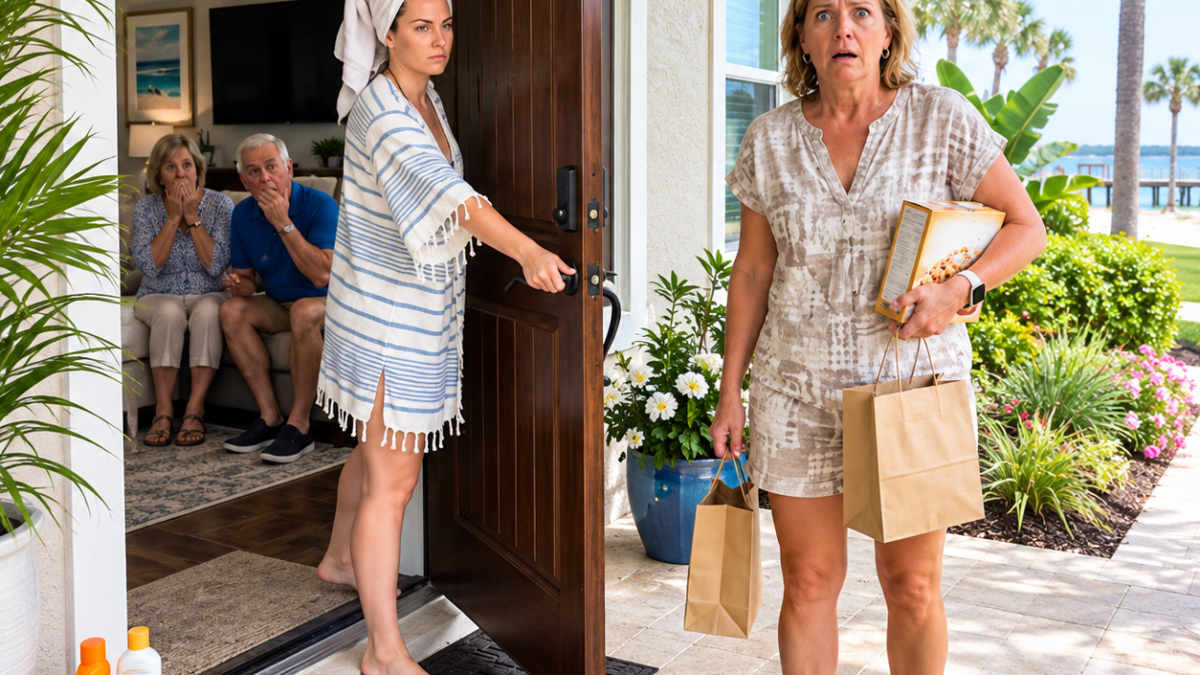
PART2
“When did you last see him?”
“Weeks ago.”
“How many?”
“I don’t know.”
“Two?”
“Maybe.”
“Three?”
She became irritated.
“I said I don’t know.”
I looked toward Susan.
“You didn’t notice your grandson was gone?”
She set down her drink.
“Andrea, please.”
“What?”
“You hover.”
My mouth fell open.
“I hover.”
“Yes.”
“He is in college.”
“Yes.”
“He needs independence.”
“I call him every other day.”
“Exactly.”
I stared at her.
She shook her head as if I had proven her point.
Frank stood.
“Let’s not turn this into some crisis.”
“Do you know where he lives?”
“No.”
“Does anybody in this house know where Oliver is?”
Silence.
Behind Lindsay, one of her sons shouted from upstairs.
“Mom, where’s my blue towel?”
“Closet!”
She turned her head and answered him.
Casually.
Then looked back at me.
That ordinary little interruption almost made me lose control.
My son had apparently been gone for weeks.
His room had been taken over.
His house had become their vacation home.
And Lindsay was worried about towels.
I stepped closer.
“I bought this house for Oliver.”
Her face hardened.
“You bought it.”
“For him.”
“But your name is still on the paperwork.”
“That does not mean your family gets to move in.”
Susan stood.
“We are family.”
“You are also the people who apparently let my son disappear without telling me.”
Frank grabbed a beach bag.
“We have plans.”
I stared.
“You’re leaving?”
“We’re taking the boys out.”
“While I’m standing here asking where Oliver is?”
Susan picked up several towels.
“Andrea, you are making this dramatic.”
Something inside me snapped into a very strange kind of calm.
“Tell me one thing.”
Nobody answered.
“Did Oliver leave voluntarily?”
Lindsay’s eyes flickered.
There.
Tiny.
But I saw it.
“What does that mean?”
“You know exactly what it means.”
“He packed his things.”
“After what?”
“Nothing.”
“What happened before he moved?”
Susan stepped in.
“Enough.”
“No.”
“Oliver and Lindsay had a disagreement.”
I turned toward her.
“What disagreement?”
Lindsay’s face tightened.
“It wasn’t important.”
“Important enough for my son to abandon a four bedroom beach house and not tell me where he went.”
Lindsay moved toward the door.
“I’m done with this.”
“So am I.”
I stepped forward.
She put one hand against the door.
“You need to leave.”
I almost laughed.
“You’re telling me to leave a house I bought?”
“You don’t live here.”
“Neither do you.”
Her jaw tightened.
Then she slowly closed the door.
Not slammed.
That would have felt emotional.
She closed it gently.
Almost politely.
Until the latch clicked between us.
I stood on the porch.
Gift bag in one hand.
Cookies under my other arm.
For several seconds, I could hear nothing except children yelling inside.
Then one thought became perfectly clear.
I had spoken to Oliver two days earlier.
He complained about how cold one of his lecture halls was.
He told me the campus coffee was terrible.
He sent me a photograph of a half eaten sandwich.
I had reminded him to buy new socks.
He said:
Stop mailing me socks.
He had not sounded homeless.
He had not sounded afraid.
Most importantly, he had never said he moved.
As far as I knew, he had slept in this house the night before.
I walked toward my rental car.
Set the cookies on the roof.
Pulled out my phone.
Called.
Voicemail.
Again.
Voicemail.
I texted:
CALL ME NOW.
Then:
ARE YOU SAFE?
No response.
I called again.
Nothing.
That was when I called Matt.
My ex husband.
Oliver’s father.
Matt lived less than twenty minutes from the beach house.
He had been one of the reasons Oliver chose that college.
When we divorced, Oliver was fourteen.
The divorce was not friendly.
But we eventually reached something close to functional co parenting.
Matt wanted Oliver near his family.
I wanted him to attend the strongest program.
When those happened to be in the same place, everybody won.
Or I thought we had.
Matt answered on the fourth ring.
“Hey.”
“Where is Oliver?”
Silence.
“What do you mean?”
“I’m standing outside the beach house.”
Another silence.
“Lindsay says he hasn’t lived here in weeks.”
“Oh.”
The single syllable made my blood boil.
“Oh?”
“I think he moved out.”
“You think?”
“Yeah.”
“When?”
“I don’t know.”
“How do you not know where your eighteen year old son lives?”
Matt sighed.
“Andrea.”
“No.”
“He’s an adult.”
“I’m getting very tired of hearing that sentence.”
“You coddle him.”
“Where is he?”
“He’s fine.”
“Where?”
“I don’t have the address.”
I gripped the car door.
“You knew he left.”
“Yeah.”
“Why?”
“Family stuff.”
“What family stuff?”
“It wasn’t dramatic.”
I looked back at the house.
Lindsay’s children ran past an upstairs window.
“You’re right.”
“What?”
“My son moving out of a house I paid for while your sister moves her family into it sounds completely normal.”
“Andrea.”
“Why did he leave?”
“I don’t know all the details.”
“Did you ask?”
“He needed space.”
“From whom?”
Silence.
“Matt.”
“He and Lindsay had words.”
“What words?”
“I wasn’t there.”
“Did Lindsay kick him out?”
“No.”
“Did your parents?”
“No.”
“Did you?”
“Jesus, Andrea.”
“Then tell me what happened.”
“He chose to go.”
“Why?”
“I don’t know.”
The boredom in his voice disappeared slightly.
Not enough.
But enough for me to hear it.
He knew more.
“Did he call you?”
“Yes.”
“When?”
“A few weeks ago.”
“What did he say?”
“That things were uncomfortable.”
“Uncomfortable how?”
Matt exhaled.
“He was angry about people staying there.”
“People?”
“My parents. Lindsay. The boys.”
I stared at the house again.
“They all moved in while Oliver was living there?”
“It was supposed to be temporary.”
“Who decided that?”
“It’s family property.”
“No.”
My voice became very quiet.
“It is not.”
“You know what I mean.”
“I know exactly what you mean.”
The house was mine on paper because I had purchased it.
But I bought it for Oliver.
Not Matt.
Not Lindsay.
Not Susan.
Not Frank.
Oliver.
A safe place close to campus.
No rent.
No unreliable roommates.
No hour long commute.
A place where my son could focus on school.
That was the agreement.
“How long were they supposed to stay?”
“A week or two.”
“And Oliver left instead.”
“He overreacted.”
That word.
I hated that word.
People often use overreacted when they want to discuss someone’s response instead of their own behavior.
“Give me his address.”
“I told you, I don’t know it.”
“You are his father.”
“Yes.”
“And you let him move somewhere you never bothered to visit.”
“He’s eighteen.”
I disconnected.
Then called Oliver again.
Voicemail.
Again.
Nothing.
Again.
Nothing.
By the sixth call, the line clicked.
“Mom.”
I closed my eyes.
His voice.
Tired.
But alive.
Relief hit so violently my knees weakened.
I leaned against the car.
“Oliver.”
“Yeah.”
“Are you okay?”
“I’m fine.”
“Where are you?”
Silence.
“Oliver.”
“I’m at home.”
I looked at the bright white beach house behind me.
At the palm trees.
At the balcony.
At the driveway where I had imagined his first college year unfolding.
“At home where?”
Another silence.
Then:
“Yeah.”
His voice became smaller.
“I moved.”
“I know.”
He said nothing.
“I’m at the house.”
“Oh.”
“You didn’t tell me.”
“I didn’t want to load you with it.”
I shut my eyes.
“You are not a load.”
“I know.”
“No.”
I held the phone tighter.
“You clearly do not know, because you decided disappearing into some apartment without telling me was easier than calling.”
“I’m okay.”
“Give me the address.”
“Mom.”
“Oliver.”
“You don’t need to come.”
“I know.”
That stopped him.
I softened.
“I am still coming.”
He hesitated.
Then gave me the address.
I entered it into navigation.
My stomach tightened.
Forty three minutes away.
Not near campus.
Not near the beach.
Not near anything I would have chosen.
“I’m coming now.”
“Mom, seriously.”
“I brought cookies.”
That got a tiny laugh.
“Of course you did.”
“I’m coming.”
I put the phone down.
The box of cookies sat on the passenger seat.
The gift bag beside it suddenly felt ridiculous.
I had brought Oliver a sweatshirt.
Some books.
A coffee gift card.
Socks, because mothers ignore reasonable boundaries.
I pulled away from the beach house.
For the first twenty minutes, I expected Oliver to call back.
He didn’t.
The farther I drove, the more everything changed.
The expensive homes disappeared.
Then the palm lined streets.
Then the cafés.
Then the clean sidewalks.
The road narrowed.
Buildings became older.
A laundromat.
Tire shop.
Small grocery.
A motel with a flickering blue sign missing two letters.
I checked the navigation.
Five minutes.
Three.
One.
Turn right.
I slowed.
“No.”
The building in front of me was a converted two story house divided into small apartments.
Peeling paint.
Rusted balcony rails.
An old bicycle leaning against the porch.
I checked again.
Apartment 3B.
Correct.
I had bought my son a four hundred thousand dollar beach house with four bedrooms, a pool, an ocean view, and a kitchen he barely knew how to use.
My eighteen year old son was living here.
I parked.
Grabbed the cookies.
Left the gift bag.
My heart hammered as I climbed the stairs.
Outside 3B, I raised my hand.
Could not knock.
What if he wasn’t here?
What if somebody had hurt him?
What if he was hiding something worse?
I knocked.
Nothing.
Again.
“Oliver?”
Footsteps.
Slow.
The lock turned.
The door opened three inches.
Oliver looked through the gap.
For one second, I did not recognize him.
Not literally.
He was my son.
Same brown eyes.
Same slightly crooked nose.
But he looked older.
Dark circles.
Longer hair.
His T shirt hung loosely around his shoulders.
He had lost weight.
“Mom.”
I pushed the cookies against my chest.
Reached for him.
He opened the door.
I wrapped both arms around him.
At first, he did not move.
Then he held me.
Hard.
The way he had when he was little and woke from nightmares.
“You’re okay.”
“I’m okay.”
“You’re sure?”
“Yes.”
I pulled back.
Touched his face.
“You look terrible.”
He laughed once.
“Thanks.”
“You scared me.”
“I’m sorry.”
“No.”
I shook my head.
“Do not apologize yet.”
His eyes dropped.
There.
Something.
I stepped inside.
The apartment was tiny.
One bed against the wall.
A folding table.
Two chairs.
A hot plate.
Secondhand refrigerator.
A narrow sofa.
One backpack.
No television.
No pictures.
No books except school texts stacked beside the bed.
No evidence he had intended this to be home.
“How long?”
“Three weeks.”
“Three weeks.”
He nodded.
“And you were going to tell me when?”
“I was.”
“When?”
No answer.
I put the cookies on the table.
“Oliver, Lindsay is living in your house.”
“I know.”
“Her sons are living there.”
“I know.”
“Your grandparents are there.”
“I know.”
“Your father knew you moved.”
His jaw tightened.
“I know.”
I stared.
“And nobody thought I needed to know?”
“I didn’t want you involved.”
“Involved in what?”
He sat on the bed.
“Everything.”
I sat beside him.
“Did someone hurt you?”
His head snapped up.
“No.”
“Threaten you?”
“No.”
“Are you in trouble?”
“No.”
“Then why did you leave?”
He rubbed his palms together.
A nervous habit from childhood.
“I found something.”
My stomach tightened.
“What?”
“I don’t know if I should show you.”
“Oliver.”
“I’m serious.”
“I just spent hours thinking my son might be missing while your aunt drank iced tea in his house.”
His mouth tightened.
“You’re showing me.”
He stood.
Walked toward the backpack.
Unzipped it.
Pulled out a small black notebook.
Old.
Scratched.
Bent at the corners.
He handed it to me.
“What is this?”
“Look.”
First page blank.
Second page had a date.
Four years earlier.
Another date.
Another.
Then names.
Susan.
Frank.
Matt.
Lindsay.
Amounts of money.
Property addresses.
Initials.
My initials.
A.H.
Andrea Hayes.
I stopped.
“Why is my name in this?”
“I found it in Grandpa’s office.”
“Frank’s?”
“Yes.”
“When?”
“Three weeks ago.”
The timing hit immediately.
“When you moved.”
He nodded.
I turned another page.
A photograph was taped inside.
Me.
Years younger.
Outside a courthouse.
I stared.
“Oliver.”
He swallowed.
“I think they lied to you.”
“About what?”
“The house.”
I looked at him.
“What about it?”
“It wasn’t bought for me.”
“Of course it was.”
“No.”
His voice cracked.
“That’s what they wanted you to think.”
I looked back at the notebook.
There.
The beach house address.
A large amount.
Then:
Transfer completed. Ownership to remain outside family trust.
My fingers went cold.
“What family trust?”
“That’s what I was trying to figure out.”
“Why would Frank have records about a house I bought?”
“Because the house wasn’t really the point.”
“Then what was?”
Oliver stared at the window.
“I think Dad has been hiding money.”
I felt the room tilt.
“From whom?”
He looked at me.
“You.”
Silence.
He reached into the backpack again.
Pulled out an old envelope.
My name on the front.
Handwritten.
I recognized the handwriting.
Or thought I did.
It looked like mine.
Exactly like mine.
But I had never seen that envelope.
“What is this?”
“Found it behind a loose panel in Grandpa’s office.”
I took it.
My hands shook.
“Mom.”
“What?”
“Before you open it, promise me something.”
“What?”
“Don’t call Dad.”
I stared.
“Why?”
“Because if I’m right…”
He stopped.
“What?”
“He already knows I found it.”
Cold spread through me.
“Oliver.”
He looked toward the door.
“Someone has been following me.”
Three knocks sounded.
Slow.
Neither of us moved.
Three more.
Oliver went white.
Then a voice:
“Oliver.”
I knew it.
Matt.
But he sounded nothing like the bored man from the phone.
He sounded afraid.
“Open the door.”
Silence.
“We need to talk before your mother finds out what happened to the money.”
Oliver looked at me.
I looked at him.
Something in my chest became still.
I stood.
“What happened to the money, Matt?”
Silence outside.
Then:
“Andrea?”
“Yes.”
Long exhale.
“This isn’t what you think.”
“Then tell me what it is.”
Oliver moved beside me.
Matt finally answered.
“The house.”
“What about it?”
“It wasn’t bought for Oliver.”
I looked at my son.
He already knew.
“Explain.”
“Your sister and I convinced you to buy it because we needed the property moved into your name.”
My mouth went dry.
“Why?”
“Because there was a debt.”
“What debt?”
Silence.
I opened the envelope.
Inside was a settlement agreement dated six years earlier.
My name appeared again.
Andrea Hayes.
A debt.
Bank records.
Transfers.
Signature.
My signature.
Except it wasn’t.
The shape was right.
The rhythm was wrong.
I knew my own hand.
“This is forged.”
Nothing from the hallway.
“Matt.”
Silence.
“This signature is forged.”
Oliver whispered:
“I told you.”
I turned.
“You knew?”
“Suspected.”
“How?”
He reached into the backpack again.
Another document.
Older.
A company name.
One I recognized.
My father’s.
My father died eight years earlier.
He had owned several small commercial properties and a logistics business.
I inherited some assets.
Sold others.
I knew nothing about this debt.
But according to the document, after my father’s death, a liability connected to one of his old companies had somehow been transferred into my name.
Without my knowledge.
Without my consent.
My forged signature appeared on the transfer.
Then I saw the name attached to the benefit.
Frank.
My former father in law.
I stared.
“No.”
Oliver’s eyes filled.
“That’s why I left.”
I opened the door.
Matt stood there.
Tie loosened.
Face pale.
He looked at Oliver first.
Then me.
“I’m sorry.”
I almost laughed.
“For which part?”
He looked away.
“You knew.”
“Yes.”
“How much?”
“I knew about the debt.”
“You knew someone forged my signature?”
“Not at first.”
“When did you know?”
His eyes lowered.
“Years ago.”
The answer physically hurt.
“You were married to me.”
“I know.”
“You watched me buy that house.”
“Yes.”
“You let me believe I was helping our son.”
“I thought I could fix it.”
“Explain how.”
He rubbed his face.
“My father had gotten into trouble years ago.”
“What kind?”
“Business debt.”
“That somehow became mine.”
“He moved it.”
“You mean forged a transfer.”
Matt said nothing.
“And the beach house?”
“He needed an asset outside the family trust.”
“Why?”
“Because there were old claims.”
I stared.
“So Lindsay and you pushed me to buy a property…”
“In your name.”
“…because Frank needed property beyond whatever creditors could reach through your family structures.”
“It was more complicated.”
“No.”
I shook my head.
“It was fraud.”
Oliver stood behind me.
Matt looked at him.
“You shouldn’t have gone through Grandpa’s office.”
I turned so fast he flinched.
“That is what you have to say?”
“I’m not blaming him.”
“You literally just blamed him.”
“I’m saying none of this was supposed to involve Oliver.”
“He was living in the house.”
“I know.”
“Then Lindsay moved in.”
Matt looked away.
“Why?”
No answer.
“Matt.”
“Because Dad needed access to the safe.”
I froze.
“What safe?”
Oliver walked to the backpack.
Pulled out a small flash drive.
“The one Grandpa thought I didn’t know about.”
Matt’s face changed.
“You opened it?”
“Yes.”
“How?”
“Grandpa uses birthdays for everything.”
For one absurd second, I nearly laughed.
Matt did not.
“What did you copy?”
“Everything.”
“Oliver.”
“Bank records.”
His voice shook.
“Emails. Property documents. Transfers.”
Matt went pale.
“Where is the original?”
“In the safe.”
“You took nothing?”
“Just copies.”
Matt exhaled.
Then looked at me.
“We have a problem.”
“We have several.”
“My father knows.”
“How?”
“He discovered files had been accessed.”
“Does he know Oliver copied them?”
“Yes.”
Oliver’s shoulders tightened.
“That’s why somebody was following me.”
Matt looked ashamed.
“I think so.”
“Who?”
“I don’t know.”
I stared.
“You expect me to believe that?”
“I don’t know everything.”
“That sentence has done remarkable work for you today.”
He winced.
“Frank is coming.”
“What?”
“I came first because I thought I could convince Oliver to give me the drive.”
My blood turned cold.
“You came here to take evidence from your son?”
“To protect him.”
Oliver laughed bitterly.
“Great job.”
Matt looked at him.
“I’m trying.”
“No.”
Oliver’s voice hardened.
“You’re trying now because Mom knows.”
Matt looked devastated.
Before he could answer, headlights swept across the curtains.
Oliver froze.
Another set.
Cars stopped outside.
He whispered:
“That’s them.”
I moved to the window.
Pulled the curtain slightly.
Lindsay stepped out of the first car.
Susan followed.
Frank got out of another.
My former father in law looked up.
Directly toward our window.
Then smiled.
Not warmly.
Like a man who believed he still owned the room before entering it.
I turned.
“Call the police.”
Matt nodded immediately.
Oliver grabbed my hand.
“Mom.”
“What?”
“I’m sorry.”
“For what?”
“For not telling you.”
I pulled him into me.
“You are eighteen.”
He started crying.
“You were trying to protect me from adults who should have been protecting you.”
“I thought if I gave them the house they’d leave me alone.”
“What happened?”
His body stiffened.
I pulled back.
“Tell me.”
“When Aunt Lindsay first came, she said Grandma and Grandpa needed somewhere to stay for a few days.”
“Okay.”
“Then the boys came.”
He wiped his face.
“Then they started using my room.”
“Your bedroom?”
“Sometimes.”
“Why?”
“Aunt Lindsay said her boys liked the balcony.”
My jaw tightened.
“I told her no.”
“Good.”
“She told Dad I was being selfish.”
“Of course.”
“Dad called.”
“What did he say?”
“Family helps family.”
I closed my eyes.
Of course he did.
Oliver continued.
“Then Grandpa showed up.”
“When?”
“About four weeks ago.”
“The notebook?”
“Later.”
“What happened first?”
“He asked where you kept the property paperwork.”
My stomach tightened.
“He asked you?”
“Yes.”
“What did you say?”
“I didn’t know.”
“Then?”
“He got angry.”
“How angry?”
“Not like yelling.”
That sounded like Frank.
“Just… cold.”
Oliver stared at the floor.
“He said I needed to remember who made it possible for me to have a house like that.”
I felt sick.
“You.”
Oliver looked up.
“What?”
“I made it possible.”
He smiled sadly.
“I know.”
“What else?”
“He said everything in the family was connected.”
“What does that mean?”
“That’s what I wanted to know.”
So Oliver investigated.
He waited until Frank went to dinner.
Entered the small office room.
Found the notebook.
The envelope.
Then the safe.
“How did you know about the loose panel?”
“I saw Grandpa put something behind it.”
“And the safe?”
“Behind the wall.”
“Jesus.”
“I only opened it because they were talking about you.”
“What did you hear?”
Oliver swallowed.
“Grandma said if you ever figured out the house wasn’t clean, everyone was finished.”
The room became very quiet.
“Clean?”
“That word.”
Matt closed his eyes.
I looked at him.
“You heard this before.”
“Yes.”
“What does it mean?”
“The property chain.”
“English, Matt.”
“The beach house purchase separated certain money from the family trust.”
“Whose money?”
“Dad’s.”
“And why use me?”
“Because after the divorce, you were outside the family.”
I felt a chill.
“They used the ex wife.”
“Yes.”
“And Oliver.”
Matt’s eyes closed.
“Yes.”
The knocks came.
Not polite.
Hard.
“Andrea.”
Frank.
I did not answer.
“Open the door.”
Matt stepped toward it.
I grabbed his arm.
“No.”
He looked at me.
“Don’t let him in.”
Matt stared for a moment.
Then nodded.
Outside, Frank spoke again.
“You don’t understand what you’re holding.”
I stepped closer to the door.
“I understand enough.”
“Those papers could destroy this family.”
“No.”
My voice was steady.
“They could tell the truth about this family.”
The handle moved.
Locked.
Matt stepped between us and the door.
“Dad, stop.”
Silence.
Then:
“Matthew.”
That voice.
The voice of a father who expected obedience.
Matt’s shoulders changed.
Not much.
But I saw it.
He became younger.
“You need to leave.”
Frank laughed softly.
“You’re letting her turn you against us.”
“No.”
“You have no idea what she’ll do when she understands how much is at stake.”
I almost laughed.
“I am standing six feet away.”
Frank ignored me.
“Oliver stole private family records.”
Oliver flinched.
I stepped toward the door.
“He copied evidence concerning fraudulent use of my identity.”
“Fraud?”
Frank sounded almost amused.
“You have no idea how business works.”
“There it is.”
“What?”
“The sentence men say when they need women to believe theft is too complicated to question.”
Silence.
Then Lindsay’s voice:
“Andrea, stop making this theatrical.”
I could picture her.
Arms crossed.
Annoyed.
The same expression from the beach house.
“What did you tell Oliver when he confronted you?”
No response.
“Lindsay.”
“He was acting unstable.”
Oliver’s face went pale.
I looked at him.
“What?”
He whispered:
“She told Dad I was having some kind of breakdown.”
My blood boiled.
“Did you?”
“No.”
Matt looked ashamed.
“I believed her.”
I stared at him.
“Of course you did.”
“Not for long.”
“How long?”
No answer.
“Exactly.”
Outside, Susan spoke.
“Andrea, we are still Oliver’s family.”
I closed my eyes.
“So why was he living in this apartment?”
Silence.
“Why did nobody call me?”
Nothing.
“Why did all of you move into a house he was supposed to live in?”
Frank interrupted.
“He left.”
“After you took it over.”
“He’s eighteen.”
There it was again.
The phrase adults use when they want the privileges of family without the responsibility.
Sirens sounded faintly.
Frank stopped talking.
Matt exhaled.
“They’re coming.”
Oliver squeezed my hand.
Police arrived minutes later.
The hallway became crowded.
Voices.
Questions.
Frank insisting this was a private family dispute.
Lindsay arguing she had every right to be in the beach house.
Susan crying.
Matt standing beside us.
For once.
Beside us.
An officer asked:
“Who lives here?”
Oliver raised his hand.
“I do.”
Then corrected himself.
“For now.”
Another officer asked whether anyone outside had threatened us.
“No direct threat.”
I held up the envelope.
“But I have documents that appear to contain my forged signature, and my son says members of that group were trying to recover records he copied.”
That changed everything.
Not instantly.
Police do not arrest entire families because somebody says the word forged.
But they listened.
Took names.
Separated people.
Documented the confrontation.
Told Frank, Susan, and Lindsay to leave the property.
Frank looked at me before walking away.
“This will ruin Oliver.”
I stepped forward.
“No.”
He smiled coldly.
“You think universities like scandal?”
The threat was subtle.
Still a threat.
One officer heard it.
So did Matt.
His face changed.
“Dad.”
Frank turned.
Matt’s voice shook.
“You’re done.”
Frank laughed.
“You don’t have the spine.”
Matt looked at Oliver.
Then me.
Something settled inside him.
“We’ll see.”
The hallway emptied.
I locked the door.
Then checked it twice.
Oliver sat on the bed.
Matt stayed standing.
Nobody spoke.
Finally I said:
“We need a lawyer.”
Matt nodded.
“A financial crimes attorney.”
“And a forensic accountant.”
I looked at him.
“You’re not choosing them.”
He flinched.
“Fair.”
“Oliver and I will choose counsel.”
“I understand.”
“And the flash drive leaves this apartment tonight.”
Oliver looked at me.
“Where?”
“Somewhere nobody in this family controls.”
Matt nodded.
“Good.”
I stared at him.
“Do not agree with me like that makes us a team again.”
His face fell.
“I know.”
“Matt.”
“Sorry.”
We duplicated the drive three times.
One copy to an attorney.
One to a secure deposit location.
One encrypted cloud copy.
I kept none physically with me.
Frank was not getting a single point of failure.
The next morning, I sat with a lawyer named Elena Ruiz.
She specialized in complex civil fraud and property disputes.
She was fifty something.
Sharp eyes.
No patience for family euphemisms.
She read the settlement agreement.
Then the debt transfer.
Then the beach house documents.
Her expression barely changed.
Finally:
“Did you sign this?”
“No.”
“This?”
“No.”
“This authorization?”
“No.”
“Did you ever agree to assume liabilities from your father’s company?”
“No.”
“Did you know Frank had any financial connection to your father?”
“No.”
She looked at me.
“That answer concerns me.”
“Why?”
“Because someone did significant planning.”
I looked at Oliver.
He sat beside me wearing the same worn T shirt from the apartment.
“Elena, what exactly are we looking at?”
“Possibly forgery.”
“Possibly?”
“Signatures need authentication.”
“What else?”
“Potential fraudulent transfer issues.”
“Meaning?”
“Someone may have used your identity to move liabilities and shield assets.”
My stomach tightened.
“The house.”
“Could be part of that.”
“I paid for it.”
“Yes.”
“With my own money.”
“That helps.”
“But?”
She tapped the notebook.
“This suggests other people may have been coordinating around the purchase.”
Oliver spoke.
“Can they take the house?”
Elena looked at him.
“Not based on what I’ve seen yet.”
“Yet?”
“I don’t lie to clients.”
I liked her immediately.
She continued.
“We need title records, bank records, trust records, the original debt instruments, and forensic review of the signatures.”
“What about Grandpa?”
Oliver asked.
Elena paused.
“If these documents are authentic, your grandfather has questions to answer.”
“What about Dad?”
Silence.
Matt was not in the room.
I had insisted.
Elena looked at me.
“What did your ex husband know?”
“Enough to lie.”
“That is not legally precise.”
“It is emotionally precise.”
She almost smiled.
“Fair.”
The investigation began.
Not like television.
No dramatic raids the first morning.
No handcuffs by lunch.
Paper.
Weeks of paper.
Banks.
Titles.
Old company files.
Emails.
Trust documents.
Account statements.
Signatures.
Dates.
The tedious machinery of truth.
And every few days, something got worse.
The forged signature was confirmed.
Then another.
Then a third.
An examiner determined several signatures attributed to me had likely been traced from legitimate documents.
The debt originally belonged to a business connected to my late father.
But years after his death, it had been shifted into paperwork bearing my name.
Frank had benefited from settlements associated with it.
The family trust appeared repeatedly.
So did Matt.
So did Lindsay.
Not always as direct recipients.
Sometimes as contacts.
Sometimes witnesses.
Sometimes signatures acknowledging transfers.
One evening Elena called.
“We found the beach house connection.”
I sat up.
Oliver was doing homework at my rental condo.
“What?”
“The funds used to close were yours.”
“I know.”
“But the purchase also satisfied a condition in an old settlement agreement.”
“What condition?”
“Property had to be maintained outside the family trust under a qualifying owner.”
I closed my eyes.
“Me.”
“Yes.”
“Why?”
“Because certain creditors were pursuing family held assets.”
“So I became the shield.”
“That is one interpretation.”
“Accurate?”
“Yes.”
I put my head in my hands.
“I bought my son a house.”
“I know.”
“They let me believe it was my idea.”
“It may have been your idea.”
I looked up.
“What?”
“They may not have invented the idea.”
“Then how?”
“They may simply have encouraged a decision that solved their problem.”
That was worse.
Because I remembered.
Lindsay saying:
Oliver would be safer than in student housing.
Susan saying:
Think of it as an investment.
Matt saying:
You can afford it.
Frank saying:
Property near the beach always appreciates.
Nobody forced me.
They just arranged the room.
I made the choice they needed.
“How long had they been planning it?”
“We’re trying to determine that.”
I looked at Oliver.
He had stopped pretending to study.
“Mom?”
I covered the phone.
“They used the house to satisfy something tied to the debt.”
His face tightened.
“So it was never mine.”
I ended the call.
Sat beside him.
“It was yours in the way that mattered to me.”
“That’s not what I mean.”
“I know.”
He looked toward the window.
“I feel stupid.”
“No.”
“I lived there while they were doing all this.”
“You were eighteen.”
“I should have noticed.”
“You noticed enough to leave.”
He looked at me.
“You found the notebook.”
“You copied the files.”
“You got yourself out.”
I touched his shoulder.
“You did more at eighteen than most adults around you.”
His eyes filled.
“I thought you’d be mad.”
“At you?”
“For leaving the house.”
“Oliver.”
“You spent four hundred thousand dollars.”
“I spent it because I wanted you safe.”
I looked around the rental condo.
“If leaving made you safer, then leaving was the right thing.”
He started crying.
Quietly.
“I didn’t know if you’d believe me.”
That sentence broke my heart.
“Why?”
“Dad didn’t.”
There it was.
He told Matt.
Matt called it family drama.
Oliver told Susan he felt pushed out.
She said he was ungrateful.
He confronted Lindsay about using his bedroom.
She accused him of making her children feel unwelcome.
He told Frank he had seen the notebook.
That was when everything changed.
“What did Frank do?”
Oliver looked at his hands.
“He smiled.”
My stomach tightened.
“What did he say?”
“You’re smarter than your father.”
I stared.
“Then?”
“He asked what I had read.”
“And you?”
“I lied.”
“What did you say?”
“Nothing important.”
“Good.”
“He didn’t believe me.”
“Obviously.”
“That night somebody went through my room.”
“What?”
“Nothing was stolen.”
“Why didn’t you call me?”
“I thought I could handle it.”
I closed my eyes.
The phrase moved through generations.
Matt thought he could fix it.
Oliver thought he could handle it.
Everybody trying to protect people through secrecy.
“What happened next?”
“I packed.”
“And Lindsay?”
“She watched.”
“Did she stop you?”
“No.”
“Say anything?”
Oliver hesitated.
“Yeah.”
“What?”
“She said maybe it was better if I learned how the real world worked without you buying everything for me.”
I stared.
Four hundred thousand dollars.
My son living in a room with a hot plate.
Lindsay swimming in his pool.
“Did she know about the records?”
“I think so.”
The more we learned, the clearer Lindsay’s role became.
Not mastermind.
Not innocent.
She knew the house mattered financially.
She knew Frank wanted access to the safe.
She knew Oliver had become suspicious.
And after he left, she moved in immediately.
Her explanation later was that she was “keeping an eye on the property.”
With swimsuits.
Coolers.
And her children occupying Oliver’s bedroom.
Susan was harder to understand.
She insisted she knew only fragments.
Maybe.
But the notebook included her name too often.
She had signed correspondence.
Approved meetings.
Moved money between accounts.
At minimum, she had spent years refusing to ask questions.
Matt cooperated.
At first because his lawyer advised it.
Later because, I think, something in him finally broke.
He gave investigators emails.
Old messages from Frank.
Trust documents.
He admitted he knew about the debt transfer.
Admitted he knew signatures existed that I had not personally signed.
That admission ended whatever remained of my trust in him.
One afternoon, he asked to speak privately.
We sat at a coffee shop.
Public.
Deliberately.
“You hate me.”
“I don’t know.”
“That’s worse.”
“Yes.”
He stared at his coffee.
“I thought Dad would fix it.”
“When?”
“Years ago.”
“You keep saying that.”
“I know.”
“Matt, when you discovered my name had been used without permission, why didn’t you tell me?”
He swallowed.
“Because Dad said if we reopened everything, Oliver would lose his college fund.”
I stared.
“What?”
“He said family assets were tangled together.”
“And you believed him.”
“Yes.”
“So you traded my right to know about financial fraud for money you thought would benefit Oliver.”
His eyes closed.
“When you say it like that…”
“How else should I say it?”
“I was scared.”
“So was Oliver.”
“I know.”
“He still did more than you.”
That hurt.
Good.
Not because I wanted revenge.
Because some truths should hurt.
“Did you ever plan to tell me?”
“Yes.”
“When?”
He looked away.
There was my answer.
“No date.”
“No.”
I laughed bitterly.
“After Frank died?”
“Maybe.”
“After Susan?”
“I don’t know.”
“After Oliver found it himself?”
His eyes filled.
“I failed him.”
“Yes.”
“I failed you too.”
“Yes.”
He looked at me.
“I’m sorry.”
I believed he meant it.
That did not create forgiveness.
Apologies are not erasers.
They are information.
Useful information.
Nothing more until behavior follows.
Matt’s behavior did change.
He gave the investigators everything.
He stopped defending Frank.
When Susan called crying that he was “destroying the family,” Matt told her:
“The family was already damaged. We were just hiding it.”
Oliver heard about that.
Did not react.
At least not immediately.
Then:
“Good.”
One word.
Progress.
Frank fought everything.
He claimed signatures had been authorized.
Said business customs were informal.
Said I had forgotten.
Said Oliver had stolen records.
Said Matt was lying to protect me.
Every explanation required somebody else to be confused.
Not Frank.
Never Frank.
Then forensic evidence became harder to explain.
Email chains.
Draft documents.
Instructions.
One message from Frank to Matt years earlier read:
Andrea does not need to see the underlying debt papers. Keep this framed as estate cleanup.
I read it three times.
Not because I needed confirmation.
Because seeing your manipulation summarized in one sentence does something strange to memory.
Suddenly old conversations rearrange themselves.
Frank offering advice after my father died.
Susan helping with estate paperwork.
Matt telling me not to worry about confusing forms.
Lindsay joking that I was “the financial one” in the family.
They had known.
Not necessarily every detail.
But enough.
They had known.
The beach house became part of the legal dispute.
I stopped going there.
Oliver refused to return.
Lindsay was required to move out once the ownership dispute and occupancy issues became formal.
She called me once.
I answered.
“You happy?”
“No.”
“You kicked my children out.”
“No.”
“You had lawyers do it.”
“You moved your children into a property intended for Oliver after he left under pressure from your family.”
“That house was sitting there.”
“He was living there.”
“He’s one person.”
I nearly laughed.
“So?”
“It has four bedrooms.”
“There is no occupancy rule that says empty bedrooms become yours.”
“You always thought you were better than us.”
There it was.
“What does that have to do with anything?”
“You bought a teenager a beach house.”
“I bought my son housing near college.”
“Exactly.”
“No, Lindsay.”
I stopped.
“You hated that he had something you didn’t.”
Silence.
I continued.
“And instead of dealing with that feeling, you told yourself taking it was fair.”
“You don’t know me.”
“I know you closed the door in my face while living in a house I paid for.”
She hung up.
That was the last direct conversation we had for a long time.
Oliver stayed with me temporarily.
Not because he needed supervision.
Because the little apartment lease was month to month, and after everything happened, neither of us felt comfortable with him alone there.
I rented a two bedroom condo near campus.
Smaller than the beach house.
No ocean view.
No pool.
Oliver loved it.
One night I asked why.
“No ghosts.”
“What?”
He shrugged.
“The beach house started feeling like everybody was watching.”
That sentence made me sad.
I had wanted the house to feel like freedom.
It became surveillance.
Entitlement.
An argument about who had rights to what.
“I’m sorry.”
He looked at me.
“For buying it?”
“For assuming money solved something.”
He frowned.
“What do you mean?”
“I thought if I gave you a safe place, I was doing my job.”
“You were.”
“Maybe.”
“Mom.”
“I didn’t ask enough questions after you moved in.”
“You called every other day.”
“But did I ask if you were happy?”
Oliver thought.
“Sometimes.”
“Did I ask if anybody was making you uncomfortable?”
“No.”
“Did I assume because the house was nice, everything inside it was fine?”
He smiled slightly.
“Now you’re doing the thing.”
“What thing?”
“Blaming yourself for other people being weird.”
“I do not do that.”
He stared.
I sighed.
“Fine.”
He opened the cookies.
Not the old beach house box.
Fresh ones.
I bought them every week now.
He ate one.
“You know what you did do?”
“What?”
“You came.”
I stopped.
“What?”
“When I finally told you where I was.”
He looked at me.
“You came.”
Simple.
No judgment.
No lecture.
No why didn’t you call sooner before I reached him.
Just address.
Drive.
Knock.
Hug.
I realized that was what he remembered.
Not the four hundred thousand dollar house.
The forty three minute drive.
Money builds property.
Showing up builds trust.
The investigation lasted months.
Frank and Susan ultimately faced charges connected to the forged documents and hidden transfers.
I learned to stop asking for daily updates.
Legal processes are slow because truth requires more than outrage.
Signatures had to be authenticated.
Funds traced.
Property chains reconstructed.
Witnesses interviewed.
Matt cooperated.
That mattered legally.
Emotionally, Oliver was slower.
His first conversation with his father after everything happened lasted eleven minutes.
I was not there.
Oliver told me afterward.
“What did he say?”
“He apologized.”
“How did that feel?”
“Annoying.”
I laughed.
“Why?”
“Because he meant it.”
“Would it be easier if he didn’t?”
“Yes.”
That made sense.
Anger is simpler when the person remains terrible.
Change creates work.
“What did you say?”
“That I don’t trust him.”
“And?”
“He said I shouldn’t yet.”
I raised my eyebrows.
“That is better than I expected.”
“Me too.”
Matt started coming to campus.
Not constantly.
Never unannounced.
He took Oliver to lunch.
Sometimes Oliver refused.
Matt accepted it.
That was progress.
Susan wrote letters.
Oliver did not answer.
Frank did not.
The beach house sat empty for a while.
Windows dark.
Pool covered.
I drove past once.
Couldn’t stop.
Then the title and property issues were finally resolved.
The forged transfers were confirmed.
The house remained legally protected.
Eventually it was returned entirely for Oliver’s use under a structure that could not be interfered with by Matt’s family.
Elena suggested a trust independent of them.
I agreed.
Oliver hated the word trust.
Understandably.
So we explained every page.
He read everything.
Asked questions.
Signed only after understanding.
That mattered.
When I handed him the key, he did not take it immediately.
“What?”
He looked at the metal.
“I don’t know if I want to go back.”
“You don’t have to.”
“But you bought it.”
“For you.”
“I know.”
“That means your decision.”
He took the key.
Held it.
“I want to see it.”
We drove together.
The house looked smaller.
Strange how betrayal changes architecture.
Same porch.
Same windows.
Same ocean.
But the emotional scale had changed.
I unlocked the door.
Empty.
No children’s sandals.
No sunscreen.
No coolers.
No Susan.
No Frank.
No Lindsay.
Oliver stood in the entry.
Did not move.
“You okay?”
“Yes.”
Then:
“No.”
We waited.
Finally he walked to the bowl by the door.
Empty.
He put his keys inside.
I cried.
He laughed.
“Mom.”
“Sorry.”
“You cry a lot now.”
“You nearly vanished into a crime documentary.”
“That’s dramatic.”
“Genetic.”
We walked room by room.
His bedroom had been cleaned.
Fresh sheets.
But he stood in the doorway.
“I don’t want this room.”
“Okay.”
“I want the one facing the water.”
“That was the guest room.”
“No guests.”
“Fair.”
He moved his things slowly.
Not everything.
Some clothes.
Books.
Laptop.
Running shoes.
The black notebook stayed with the attorney as evidence.
The flash drive too.
Good.
I never wanted to see them again.
For the first few months, I stayed nearby.
Not in the house.
A small rental five minutes away.
Oliver protested.
“I’m not five.”
“I know.”
“I can live alone.”
“I know.”
“Then why are you here?”
“Because I’m not ready.”
He smiled.
“At least you admit it.”
“Yes.”
My fear belonged to me.
That was another lesson.
Children should not have to perform helplessness so parents feel useful.
Oliver did not need me sleeping across the hall.
I needed reassurance.
So I owned that.
By the second month, I went home.
Back to my own city.
My own work.
My own life.
The first night away, I checked my phone until midnight.
At 12:04:
Go to sleep.
I laughed.
Texted:
Did you lock the doors?
His reply:
MOM.
I slept.
The family fallout continued.
Susan blamed me for “turning Oliver against everyone.”
That was easier for her than admitting Oliver had formed opinions based on what happened.
Lindsay moved into a rental.
She told relatives I had made her children homeless.
They were not homeless.
They lived in a perfectly nice townhouse paid for by Lindsay and her husband.
But victimhood is addictive when accountability feels worse.
Frank’s legal problems deepened.
Matt’s relationship with him collapsed.
One afternoon Matt called.
“Dad wants Oliver to visit.”
“No.”
“I know.”
“Then why are you calling?”
“Because I need to tell someone how insane it is.”
I almost laughed.
“You have friends.”
“Not ones who understand.”
“Matt.”
“I know.”
He stopped.
Then:
“Sorry.”
We were learning.
Even divorced people can accidentally recreate old emotional arrangements.
He had spent years bringing me family problems.
I had spent years solving them.
Not anymore.
“What are you going to tell Frank?”
“That Oliver decides if and when.”
“Good.”
“He says you control him.”
“Of course.”
Matt sighed.
“I used to believe that.”
That hurt.
“When?”
“When Oliver was younger.”
“Why?”
“Because he called you first.”
I closed my eyes.
“He called me because I answered.”
“I know.”
“He called me because I listened.”
“I know.”
“You could have built that relationship.”
“I know.”
This time the words sounded heavy.
Not dismissive.
I let them stand.
Oliver’s relationship with Matt eventually improved.
Not because I encouraged forgiveness.
Because Matt became consistent.
Calls when promised.
No pressure.
No information passed to Susan or Frank.
No guilt.
No surprise visits.
Trust is built in boring increments.
That is what people forget.
The dramatic apology matters less than the tenth ordinary promise kept.
One Sunday, Oliver called me.
“Dad’s here.”
I froze.
“Did you invite him?”
“Yes.”
“Okay.”
“We’re fixing the deck.”
I smiled.
“Does he know how?”
“No.”
“Excellent.”
Oliver laughed.
Then:
“Mom.”
“Yeah?”
“I’m okay.”
I knew what he meant.
You don’t need to rescue me from this.
I took a breath.
“I know.”
And for once, I did not ask for details.
Later that year, Oliver finished his first year of college.
Grades good.
Not perfect.
Thank God.
Perfection had never been the point.
He changed majors.
Twice.
I tried not to panic.
He cooked more.
Burned less.
Stopped letting chicken expire in the refrigerator.
Growth.
At Thanksgiving, he chose to spend the morning with Matt.
Then dinner with me.
Susan asked to see him.
He said no.
Frank sent a message through a lawyer.
Oliver deleted it.
His choice.
Christmas was quieter.
I gave him socks.
Obviously.
He gave me a framed photograph.
The beach house porch.
Sunset.
Two mugs on the railing.
No people.
On the back:
HOME IS WHO GETS TO COME IN.
I stared at it.
Then at him.
“That is emotionally manipulative.”
He smiled.
“Worked.”
I cried.
Of course.
The legal case resolved over time.
I will not pretend every stolen dollar magically returned.
Life is not that neat.
Some transactions were too old.
Some records incomplete.
Some losses tangled in companies that no longer existed.
But enough evidence existed.
The forged signatures were established.
The hidden transfers documented.
Frank and Susan faced consequences.
Lindsay was required to answer for her role in the property arrangements and access to records.
Matt’s cooperation reduced some of the consequences he faced, but not the personal ones.
That part mattered to me.
Legal cooperation does not rebuild family trust.
Behavior does.
Oliver understood that better than anybody.
One evening we sat on the porch.
The same porch where months earlier I had stood holding stale cookies while Lindsay closed the door.
Ocean wind.
Quiet street.
Oliver leaned against the railing.
“You know what I keep thinking?”
“What?”
“If I hadn’t found that notebook.”
I shook my head.
“No.”
“What?”
“We don’t do alternate universes.”
He smiled.
“You do that with everything.”
“Because they are useless.”
“But seriously.”
“No.”
“Mom.”
I sighed.
“Fine.”
He looked toward the water.
“If I hadn’t found it, they’d still be lying.”
“Probably.”
“You’d still think the house was simple.”
“Yes.”
“Dad would still be protecting Grandpa.”
“Maybe.”
“And Aunt Lindsay would…”
“Probably still find reasons to use the pool.”
He laughed.
Then became serious.
“Do you wish you never bought it?”
I looked at the house.
“That’s complicated.”
“That means yes.”
“No.”
I thought carefully.
“I wish they had not used the decision.”
“But the house?”
“I bought it because I wanted you to have a place where you could focus.”
“You could have rented an apartment.”
“Yes.”
“Much cheaper.”
“Do not discuss my financial judgment.”
He laughed.
Then:
“Do you regret it?”
“No.”
“Why?”
“Because you are sitting here.”
He rolled his eyes.
“That is such a mom answer.”
“It is the answer.”
The house had become evidence.
Conflict.
A financial device.
Then eventually home again.
Objects do not decide what they mean forever.
People do.
That mattered.
A year after everything happened, Lindsay contacted Oliver directly.
Not me.
He told me afterward.
“She apologized.”
I raised my eyebrows.
“For what?”
“Moving in.”
“And?”
“For telling people I was unstable.”
That stopped me.
“How did that feel?”
“Weird.”
“Did you forgive her?”
“I don’t know.”
“Good answer.”
He smiled.
“She said Grandpa made her think I might tell you something that would blow up the family.”
“So she helped push you out.”
“Yes.”
“Did she admit that?”
“Sort of.”
“Sort of apologies are exhausting.”
“Yeah.”
He looked at me.
“Do I have to forgive her?”
“No.”
“Do I have to stay angry?”
“No.”
“Then what am I supposed to do?”
“Whatever keeps you honest.”
He thought.
“That sounds useless.”
“It is excellent advice.”
He laughed.
He eventually allowed Lindsay to text occasionally.
No house access.
No keys.
No family vacations.
Boundaries.
She hated them at first.
Then stopped testing.
Maybe people learn when access is actually removed.
Susan was different.
She never fully accepted responsibility.
She wrote Oliver a long letter describing how sad she was.
How much she missed him.
How much the family had suffered.
Oliver read it.
Then said:
“She never says what they did.”
I took the letter.
He was right.
Pain everywhere.
Responsibility nowhere.
“Do you want to answer?”
“No.”
“Then don’t.”
“But she’s Grandma.”
“Yes.”
He looked at me.
“That used to mean automatic access.”
“Yes.”
“Not anymore.”
“No.”
He nodded.
Good.
Frank never apologized.
Some people reach old age without learning the difference between losing control and being mistreated.
His last message to Oliver said:
One day you’ll understand what family loyalty means.
Oliver showed it to me.
Then deleted it.
“What did you think?”
He shrugged.
“I think loyalty without honesty is just obedience.”
Eighteen year old Oliver would not have said that.
Twenty year old Oliver did.
I was proud of him.
Not because he had become cynical.
Because he learned boundaries without becoming cruel.
Matt eventually earned a key to the beach house.
Not from me.
From Oliver.
That distinction mattered.
One Saturday Oliver called.
“I gave Dad a key.”
My first instinct was panic.
I controlled it.
“Okay.”
“You sound weird.”
“I’m practicing.”
“Practicing what?”
“Not making your decisions about my anxiety.”
He laughed.
“Therapy?”
“Expensive therapy.”
“Good.”
“Do you trust him?”
“Yes.”
That was enough.
The next time I visited, Matt was repairing a broken cabinet hinge in the kitchen.
I stopped.
He looked up.
“Hey.”
“Hey.”
Awkward.
Then Oliver walked in carrying groceries.
“Can both of you be normal for six minutes?”
Matt and I looked at each other.
“No.”
Oliver groaned.
We laughed.
That was probably the first time the three of us had laughed together since the divorce.
Not reconciliation.
Not restoration.
Something new.
Different.
Maybe better because it required choice.
The beach house eventually became exactly what I had first imagined.
Not because it stayed luxurious.
Oliver filled it with mismatched furniture.
Cheap posters.
A horrible green sofa bought secondhand.
Three plants he forgot to water.
Friends.
Books.
Coffee mugs everywhere.
Shoes by the door.
His keys in the little bowl.
Sometimes Matt visited.
Sometimes I did.
Nobody moved in without asking.
Nobody used the phrase family property.
Nobody treated ownership like entitlement.
There was one rule Oliver made himself.
If you have a key, you still knock.
I liked that.
One summer, I arrived without telling him.
Not because I was testing him.
Because my flight changed.
I walked up carrying another box of cookies.
For one second, memory hit.
The porch.
Lindsay.
He doesn’t live here.
I stopped.
Then knocked.
Footsteps.
Door opened.
Oliver.
Older.
Taller somehow.
He looked at me.
Then the cookies.
“No.”
I smiled.
“Surprise.”
“Mom.”
“What?”
“You are incapable of normal travel.”
He hugged me.
Hard.
Then took the cookies.
Priorities.
Inside, his running shoes sat by the door.
Backpack on a chair.
Keys in the bowl.
His life.
His house.
His choice.
I stood there longer than necessary.
He noticed.
“What?”
“Nothing.”
“That’s never true.”
I smiled.
“I’m happy.”
“Because my shoes are messy?”
“Yes.”
“You need hobbies.”
“Probably.”
We ate stale cookies on the porch that evening because apparently I never learned to buy them close enough to arrival.
Oliver bit one.
Made a face.
“These are terrible.”
“You used to love them.”
“When I was eighteen.”
“You are twenty one.”
“Exactly.”
“Three years changed your palate?”
“Trauma.”
I threw a napkin at him.
He laughed.
Then rested his head against my shoulder.
Just like the first evening after we got the house back.
“Mom?”
“Yeah?”
“Thank you for coming.”
Those words again.
I looked at the ocean.
I thought about all the money I had spent trying to give him security.
Four hundred thousand dollars.
Insurance.
Furniture.
Tuition.
Cars.
Emergency funds.
All useful.
All real.
But the thing he remembered was forty three minutes.
A rental car.
A box of cookies.
A knock.
I came.
That became the heart of the story for me.
People who heard what happened loved the money.
Four hundred thousand dollar house.
Hidden trust.
Forged signatures.
Secret safe.
Family conspiracy.
Those details sounded dramatic.
But money was only the mechanism.
The wound was simpler.
My son told his family he was uncomfortable.
They minimized it.
He asked his father for help.
His father did not listen.
He left.
Nobody followed.
Then when I arrived, they acted like his absence was normal.
That was what I could never forget.
Not the financial fraud.
The indifference.
My son was gone.
And everybody kept going to the beach.
Years later, Susan died.
By then Oliver was twenty six.
She had never fully reconciled with him.
But he attended the funeral.
His choice.
I did not.
Matt went.
Afterward Oliver called.
“How was it?” I asked.
“Sad.”
“Did you talk to Lindsay?”
“Yes.”
“Okay?”
“Yeah.”
Pause.
“Grandma kept pictures of me.”
My heart tightened.
“Of course.”
“Even after everything.”
“People can love you badly.”
He was quiet.
“That’s depressing.”
“It can be.”
“Does loving badly count?”
I thought.
“Yes.”
Then:
“But it doesn’t automatically earn access.”
He exhaled.
“That sounds familiar.”
“I’m repetitive.”
“Extremely.”
He later told me Susan had kept a photograph of him standing outside the beach house the first week he moved in.
Eighteen.
Smiling.
Keys in hand.
He asked whether that made him angry.
“No.”
“Why?”
“Because I was happy in the picture.”
That was wise.
Pain does not require rewriting every good moment as fake.
Susan loved him.
She also failed him.
Matt loved him.
Also failed him.
I loved him.
And almost made the mistake of believing providing financially meant I had covered every form of safety.
Families are full of overlapping truths.
The goal is not to simplify them.
It is to stop using complexity as an excuse.
Frank died without ever admitting wrongdoing.
Oliver did not attend his funeral.
Also his choice.
Matt did.
Afterward he came to the beach house.
Sat on the porch.
Oliver joined him.
I only know what Oliver later told me.
Matt said:
“I spent most of my life afraid of disappointing him.”
Oliver answered:
“So you disappointed everybody else instead.”
Brutal.
Accurate.
Matt cried.
Oliver did too.
Then Matt said:
“I’m sorry.”
And Oliver finally answered:
“I forgive you.”
Not forget.
Not erase.
Forgive.
When Oliver told me, I asked:
“How do you feel?”
“Lighter.”
Good.
That was his forgiveness.
Not mine.
I forgave Matt differently.
Years after the investigation.
After consistent behavior.
After hundreds of small choices.
One afternoon he apologized again.
I said:
“You do not need to keep apologizing forever.”
He stared.
“Does that mean you forgive me?”
I thought.
“Yes.”
He looked stunned.
“Really?”
“Yes.”
“Why now?”
“Because I’m tired of using anger to prove what happened mattered.”
He said nothing.
“It mattered.”
I continued.
“Forgiving you does not change that.”
He nodded.
“Thank you.”
“We are not getting remarried.”
He laughed.
“I wasn’t asking.”
“Good.”
That was us.
Eventually Oliver graduated.
The beach house was full.
Friends.
Family he chose.
Matt.
Lindsay, surprisingly, was invited.
Not Susan or Frank by then.
I stood in the kitchen watching Oliver open champagne.
He had a job lined up.
Not near me.
Not near Matt.
Another state.
My heart hated that.
I smiled anyway.
“When do you leave?”
“August.”
“So soon?”
“Mom.”
“I know.”
“You’re doing the face.”
“What face?”
“The one where you pretend independence is beautiful while dying inside.”
“That is motherhood.”
He hugged me.
“I’m going to be okay.”
“I know.”
“I’ll call.”
“I know.”
“Not every day.”
“I know.”
“Do not buy me a house.”
I laughed.
“Absolutely not.”
“Mom.”
“Fine.”
He moved.
The beach house remained.
Oliver rented it sometimes.
Used it during summers.
Eventually considered selling.
He called me first.
“You don’t need my permission.”
“I know.”
“Then why are you asking?”
“Because you bought it.”
“For you.”
“Yes.”
“So decide.”
He sold it.
That surprised me.
The closing happened six years after the day Lindsay closed the door in my face.
I went with him.
When the papers were signed, Oliver handed over the keys.
Then we drove to the beach one last time.
Empty house.
Bare walls.
Echoing rooms.
I stood in the entry.
No ceramic key bowl anymore.
No shoes.
Nothing.
Oliver carried one thing.
That old box.
Not the original cookies.
Obviously.
A new box from the same bakery.
We sat on the floor.
“You know,” he said, “this house caused a ridiculous amount of trouble.”
“I know.”
“Still glad you bought it?”
I smiled.
“Ask me in another six years.”
He laughed.
Then:
“I am.”
“What?”
“Glad you bought it.”
“Why?”
“Because eventually it was mine.”
He looked around.
“Not legally. I mean… mine.”
I understood.
“It was the first place I learned something.”
“What?”
“That home is not a building.”
I smiled.
“That’s annoyingly sentimental.”
“You raised me.”
“Fair.”
He ate a cookie.
“These are better fresh.”
“I’ve been saying that.”
“No, you keep bringing stale ones.”
We laughed.
Then he became serious.
“Do you remember the first day?”
“Unfortunately.”
“You standing outside?”
“Yes.”
“I think about that sometimes.”
“What part?”
“That Aunt Lindsay closed the door.”
I nodded.
“I hated that.”
“Me too.”
He looked toward the empty hallway.
“But then you found me.”
My throat tightened.
“Yes.”
“You drove forty three minutes.”
“Yes.”
“You remember exactly?”
“Of course.”
He smiled.
“That’s the part I remember too.”
Not the house.
Not the documents.
Not the police.
Not Frank’s voice through the apartment door.
The drive.
Forty three minutes.
That is the strange thing about love.
We think the expensive decisions prove it.
The house.
Tuition.
Cars.
Gifts.
Big sacrifices.
Sometimes they do.
But children remember who came.
Who answered.
Who believed them.
Who did not require them to make the problem sound reasonable before helping.
The day I found Oliver, I had every reason to be furious with him too.
He had hidden where he lived.
Ignored my calls.
Let me spend weeks believing everything was fine.
But the moment I saw his face behind that apartment door, anger became secondary.
There was time for questions later.
First:
You’re alive.
You’re safe.
I’m here.
That became the way I tried to parent him afterward.
Not perfectly.
I still asked too many questions.
Still worried.
Still sent socks.
But I learned something.
A child becoming an adult does not mean they stop needing parents.
It means the form of help has to change.
You cannot control.
You cannot demand.
You cannot use money as a leash.
You cannot treat gifts like ownership.
That was what Matt’s family had done.
Everything they gave came with invisible claims.
Family helps family.
Meaning:
You owe us access.
You owe us silence.
You owe us obedience.
The beach house taught Oliver and me the opposite.
A gift is not a chain.
If I give something to my son, it has to become his enough that he can decide what to do with it.
Including leave it.
Including sell it.
Including let somebody else in.
Including keep somebody out.
That lesson cost more than four hundred thousand dollars.
But it was worth learning.
Years after the house sold, Oliver bought his own place.
Small.
Nothing near the beach.
Two bedrooms.
Tiny backyard.
Mortgage entirely his.
He called me before closing.
“Do you want pictures?”
“Yes.”
“Do you want the inspection report?”
“Yes.”
“Do you want to pay?”
I paused.
“No.”
He laughed.
“Growth.”
“Painful growth.”
On move in day, I arrived carrying a gift bag.
And cookies.
He opened the door.
Looked at them.
“Seriously?”
“Yes.”
“You never change.”
“Some things should not.”
Inside, by the front door, sat a little ceramic bowl.
For keys.
I stared at it.
Oliver noticed.
“What?”
“Nothing.”
“Mom.”
“I like the bowl.”
He smiled.
“Bought it because of the old one.”
Of course.
I put my keys inside.
Then stopped.
“Wait.”
“What?”
“This is your house.”
“Yes.”
“Can I?”
He laughed.
“Mom, you are invited.”
I put them back.
We carried boxes.
Built furniture badly.
Ordered pizza.
At sunset we sat on his tiny back patio.
No ocean.
No pool.
No luxury.
Perfect.
“Home?” I asked.
He smiled.
“Home.”
I thought about the day this story began.
The beach house door.
Lindsay standing there.
He doesn’t live here.
Four words.
My whole body had gone cold.
At the time, I thought the worst thing I could discover was that my son had disappeared.
Then I thought the worst thing was finding him in that tiny apartment.
Then the notebook.
The forged signature.
The debt.
Frank.
Susan.
Matt.
Lindsay.
Every answer revealed another betrayal.
But eventually I understood the deepest problem had nothing to do with hidden money.
Everyone in that family had made a decision about Oliver without Oliver.
Lindsay decided his home had room for her family.
Susan decided his leaving was normal.
Frank decided his name and housing could be used as part of a financial arrangement.
Matt decided Oliver could handle it alone.
Even I had decided a beach house was what my son needed without asking enough about what made him feel secure.
Oliver was the youngest person in the story.
Yet he was the one forced to notice the truth.
The one who found the notebook.
Copied the records.
Left.
Protected evidence.
Kept himself safe.
When adults fail, young people sometimes become capable too early.
We praise that.
“Look how mature.”
“Look how independent.”
Sometimes maturity is just survival wearing good posture.
I stopped praising Oliver for handling everything alone.
Instead I told him:
“You should not have had to.”
That mattered to him.
Years later he told me it was the sentence he remembered most.
Not:
You were brave.
Not:
You saved me.
You should not have had to.
Because that returned responsibility to where it belonged.
The adults.
The family.
The people who knew better.
If I could go back to that first afternoon, I would still knock.
I would still bring cookies.
I would still stand there stunned when Lindsay opened the door.
But I would not waste as much time wondering whether I was overreacting.
That question delays too many people.
Am I being dramatic?
Am I interfering?
He is eighteen.
Maybe I should trust him.
Maybe family knows more.
No.
When something feels wrong, ask.
When everybody is strangely calm about something that should concern them, pay attention.
When people answer direct questions with vague phrases like family stuff, dig deeper.
When a young person disappears from the place they were supposed to call home, find them.
Not to control them.
To make sure they know somebody will come.
That is the entire story.
I bought my son a four hundred thousand dollar beach house because I thought safety could be purchased in square footage.
His family turned it into a financial shield.
My sister in law turned it into a vacation home.
My former in laws turned it into part of a larger scheme.
My ex husband turned away when he should have asked questions.
And Oliver walked away from all of it.
He chose a tiny apartment with peeling paint because, for those three weeks, that ugly room belonged to him more than the beautiful house did.
Then I found him.
Not because I was brilliant.
Not because I uncovered the fraud first.
Because I kept calling.
And when he finally answered, I asked for his address.
Then I went.
Sometimes that is what being a parent looks like after your child becomes an adult.
You cannot carry them anymore.
You cannot make every decision.
You cannot prevent every betrayal.
But when they finally tell you where they are, you can get in the car.
You can drive forty three minutes.
You can climb the stairs.
You can knock.
And when the door opens, you can make sure the first thing they see is not judgment.
It is home coming to find them.








