Five minutes after our divorce became final, my ex husband looked at me and said: “Take the girls. I have a son coming now.”
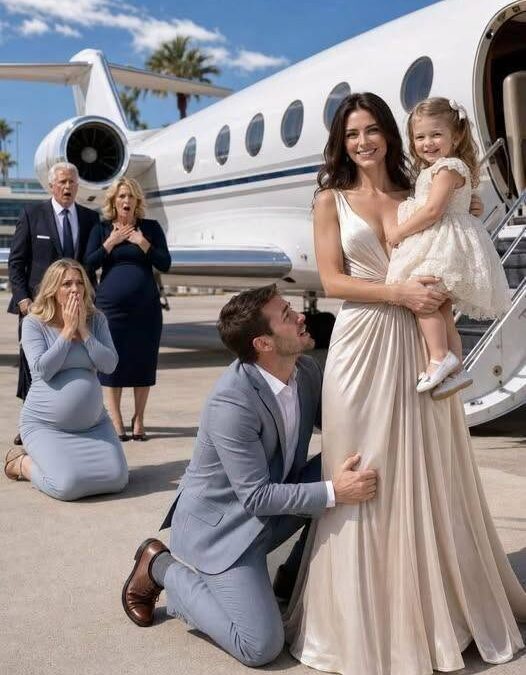
Five minutes after our divorce became final, my ex husband looked at me and said:
“Take the girls. I have a son coming now.”
I did not scream.
I did not remind him that Clara and Mia were his children too.
I did not ask how a man could spend eleven years building a family and then speak about two daughters as though they were furniture left behind after a move.
I simply looked at him.
Then I closed my copy of the divorce agreement, placed it inside my bag, and walked away.
What Preston Hale did not know was that our daughters’ passports were already packed.
Our plane tickets had been purchased.
A small apartment thousands of miles away had been rented.
The school paperwork had already been completed.
And while all seven members of his family were preparing to crowd into Brielle Foster’s ultrasound appointment and celebrate the boy they had already started calling “the Hale heir,” my daughters and I were preparing to leave the country.
I thought that would be the end of our story.
It wasn’t.
Because less than an hour after Preston told me he no longer needed his daughters, the doctor performing Brielle’s ultrasound stopped speaking.
She checked the screen.
Then the medical record.
Then the screen again.
And finally she asked a question that made every person in the room turn toward Brielle.
“Have you ever been pregnant before?”
By the end of that appointment, Preston would discover that the son he had thrown away his family to claim was not his.
But even that was not the secret that destroyed him.
The real secret had started eleven years earlier.
On the night our oldest daughter was born.
My name is Lena Hartwell.
For eleven years, I was Lena Hartwell Hale.
At 10:16 on the morning of my divorce, I signed the last document ending my marriage.
At 10:17, I legally became Lena Hartwell again.
I had imagined the moment many times.
I thought my hands might shake.
I thought seeing my maiden name again might make me cry.
I thought I might look across the mediation room at Preston and remember our wedding, our first apartment, the births of our daughters, all the ordinary mornings when I believed the man sitting across from me would still be beside me when we were old.
Instead, I felt calm.
Not happiness.
Not victory.
Space.
Like someone had finally opened a door inside a room where I had spent years breathing increasingly stale air.
Preston barely looked at me.
He signed.
Pushed his papers toward the mediator.
Then reached for his phone.
The call connected immediately.
“It’s done.”
His entire body changed.
His shoulders relaxed.
His mouth curved into a smile I had not seen directed at me in years.
“I’m coming now. Eleven, right?”
Pause.
Then he laughed.
“Tell our little man Dad’s on the way.”
I lowered my eyes.
Brielle.
For eight months, she had been “just a friend.”
When I noticed late night messages, Preston said I was insecure.
When he started arriving home after midnight, he said his workload had increased.
When he suddenly protected his phone as though it contained state secrets, he accused me of invading his privacy.
Then one evening I found a restaurant receipt.
Two dinners.
One bottle of wine.
A hotel charge later that night.
I stopped asking.
There are moments when betrayal stops requiring a confession.
You simply know.
Preston ended the call.
Then finally looked at me.
“You heard.”
I said nothing.
“Brielle’s having a boy.”
There was pride in his face.
Not merely happiness about a baby.
Something darker.
Vindication.
“My parents are thrilled.”
He smiled.
“At least something good came out of this whole mess.”
This whole mess.
Eleven years.
A mortgage.
Two daughters.
Christmas mornings.
Birthday cakes.
Parent teacher conferences.
Fevers at two in the morning.
Clara learning to ride a bicycle.
Mia sleeping on his chest when she was a baby.
All of it reduced to a mess.
Then Preston slipped his phone into his pocket.
“Take the girls, Lena.”
I looked at him.
He shrugged.
“I have a son coming now.”
The mediator stopped organizing her papers.
Even she looked at him.
I waited for Preston to realize what he had said.
He didn’t.
So I stood.
Picked up my bag.
“Okay.”
His smile faded slightly.
“Okay?”
“Yes.”
That was all.
I walked out.
He called after me once.
“Lena.”
I did not turn around.
My daughters were waiting with my friend Amelia in the parking garage.
Clara was eleven.
Old enough to understand too much.
Mia was seven.
Old enough to sense the parts she could not understand.
Clara looked toward the courthouse entrance when she saw me.
“Is Dad coming?”
“No.”
Her expression barely changed.
That frightened me.
“Did he ask about us?”
I hesitated.
Children deserve truth.
They do not deserve every cruel detail adults create.
“He had somewhere else he wanted to be.”
Clara looked down.
“Brielle.”
I stopped.
“How do you know?”
She shrugged.
“He talks about her all the time when he thinks we’re not listening.”
Of course.
I crouched.
“Sweetheart…”
“I’m fine.”
Children say that when they know adults are not.
Mia ran toward me.
“Are we going to the airport now?”
I smiled.
“Yes.”
That got Clara’s attention.
She knew we were traveling.
She did not know how permanent I intended the trip to become.
We had discussed a long stay abroad.
A fresh start.
My university friend Sophie lived there.
I had employment I could do remotely for several months.
The divorce agreement permitted relocation.
Preston had consented to me having primary custody and international travel.
He had signed without reading nearly as carefully as his lawyer wanted.
He was distracted by Brielle.
And by the baby.
Especially the baby.
Within forty minutes, we were at the airport.
Within two hours, Preston’s family was gathered around Brielle’s ultrasound.
Seven people.
His mother Margaret.
His father Raymond.
His older sister Vanessa.
Vanessa’s husband.
Two cousins.
And Preston.
Margaret had apparently brought blue cupcakes.
Vanessa had ordered a wooden sign with the baby’s proposed name.
PRESTON HALE JR.
Apparently nobody had asked Brielle whether she wanted that.
The family had already decided what the boy would inherit.
The family company.
The lake house.
Investment accounts Raymond controlled.
The Hale name.
Margaret had spent our entire marriage speaking about family legacy.
When Clara was born, she smiled politely and said:
“A healthy baby is what matters.”
Then whispered to Raymond outside my hospital room:
“Next time maybe we’ll get our boy.”
I heard her.
I never told Preston.
When Mia was born four years later, Margaret did not even bother hiding the disappointment.
“Another little princess.”
Then:
“Well, perhaps three is the charm.”
There was no third pregnancy.
Not with me.
The first time Preston told me Brielle was pregnant, he had barely finished the sentence before adding:
“And they already think it’s a boy.”
I remember looking at him.
Not because of the affair.
I already understood that part.
Because I saw the relief.
As though he had finally corrected something defective in his life.
Our daughters.
At 11:07, while my airplane waited to leave the gate, Brielle lay beneath the blue light of an ultrasound room.
Her blouse was pulled up.
Gel across her stomach.
Margaret stood closest to the monitor.
“There he is.”
The doctor did not answer.
Her name was Dr. Catherine Mills.
She adjusted the probe.
Moved it.
Stopped.
Measured something.
Then measured it again.
Brielle smiled nervously.
“Everything okay?”
Dr. Mills looked at the screen.
Then at the electronic chart.
Then back to the screen.
“When was your last appointment?”
“Three weeks ago.”
“And everything looked normal?”
“Yes.”
“Who performed that scan?”
“My previous doctor.”
Dr. Mills typed.
Her eyebrows tightened.
Raymond asked:
“Is something wrong with the baby?”
“I’m checking something.”
The room became quiet.
She opened an older imaging file.
Compared measurements.
Then asked:
“When was your first ultrasound during this pregnancy?”
Brielle swallowed.
“About eight weeks ago.”
“And the due date has remained the same since then?”
“Yes.”
Dr. Mills studied her.
“What?”
Brielle’s smile disappeared.
“The dates aren’t matching.”
Margaret stepped forward.
“What does that mean?”
“Based on today’s measurements, the pregnancy appears significantly further along than what is documented.”
Brielle immediately shook her head.
“No.”
Dr. Mills remained calm.
“I understand.”
“The dates are right.”
“Then I need to determine why the measurements aren’t.”
The nurse retrieved archived imaging.
Dr. Mills placed two scans side by side.
The first.
The current one.
Her expression grew more confused.
Then she looked at Brielle.
“I need to ask you something.”
Brielle’s hand went still against her stomach.
“Have you had another pregnancy recently?”
Nobody breathed.
“No.”
“Are you certain?”
“Of course I’m certain.”
Dr. Mills turned back to the record.
“Your chart contains a pregnancy history that does not match the history you just gave me.”
Preston’s smile vanished.
“What pregnancy history?”
“I’m still determining that.”
The nurse returned.
This time holding a laboratory report.
Dr. Mills looked at it.
Turned one page.
Then another.
Her face hardened.
“Where did this come from?”
“It was attached to the previous electronic record.”
“What record?”
Brielle asked the question too quickly.
Dr. Mills looked at her.
“Have you ever used another last name?”
Brielle went white.
That was the moment Preston’s confidence finally disappeared.
Across the country, I knew none of this.
My younger daughter had fallen asleep against my shoulder.
Clara sat beside the airplane window.
The ground had disappeared beneath clouds.
For nearly twenty minutes she said nothing.
Then:
“Mom?”
“Yes?”
“Are we really leaving?”
I took her hand.
“Yes.”
“For how long?”
“I don’t know.”
She looked out the window.
“Does Dad know where?”
“No.”
“Are we coming back?”
That question hurt.
Because six months earlier, I would never have imagined moving my daughters across an ocean.
Then I found the financial records.
The hidden messages.
The things Preston had been deleting.
The way Margaret spoke about Brielle’s pregnancy as though my girls had already been replaced.
And finally:
Take the girls.
I have a son coming now.
“Not for a while.”
Clara squeezed my hand.
“Good.”
One word.
That nearly broke me.
“Clara.”
She kept looking outside.
“Did something happen with Dad that you haven’t told me?”
She shrugged.
“He stopped coming to my basketball games.”
My throat tightened.
“He missed two.”
“Four.”
I stared.
She looked at me.
“He said he had work.”
I knew where he had been for at least two of them.
With Brielle.
“Why didn’t you tell me?”
“Because you already looked sad.”
There it was.
The sentence no parent wants.
My child had started protecting me.
I leaned across the seat.
“Listen to me.”
She looked up.
“You never have to protect me from your feelings.”
Her eyes filled.
“Okay.”
“If you’re angry at Dad, you can be angry.”
She nodded.
“If you miss him, you can miss him.”
Another nod.
“If you love him, that’s allowed too.”
A tear rolled down her cheek.
“I don’t know if he loves us.”
I closed my eyes for half a second.
Then pulled her against me.
“Your father’s choices are about him.”
“That doesn’t answer.”
No.
It didn’t.
I could have lied.
Instead:
“I think he loves you.”
She stiffened.
“But?”
“But right now, he is behaving like somebody who has forgotten what love requires.”
Clara cried quietly against my shoulder.
Mia slept through it.
I stared at the seat in front of me and promised myself something.
Whatever happened next, my daughters would never spend their childhood auditioning for their father’s affection.
We landed hours later.
I turned on my phone.
Thirty seven missed calls.
Twenty two messages.
Mostly Preston.
Where are you?
You can’t just disappear.
Lena, answer me.
We need to talk.
Then one different message:
Something is wrong. Call me.
I stared.
Something is wrong.
For years, I had said those words.
About us.
About Brielle.
About his family’s obsession with sons.
And Preston always told me I imagined problems.
Now something was wrong because the world had stopped behaving according to his plan.
I put the phone away.
Then another message arrived.
Unknown number.
You don’t know the whole story.
I stopped walking through the terminal.
Another:
Ask Preston why Brielle knows your name.
My pulse jumped.
Then:
Ask him about the night Clara was born.
Everything around me blurred.
Nobody knew about that night.
Not the full story.
Clara’s labor had been difficult.
I had hemorrhaged.
There had been emergency procedures.
At some point Preston disappeared for nearly four hours.
When he came back, his shirt was wrinkled and he would not tell me where he had gone.
We fought.
He said he had panicked.
I was exhausted.
Sedated.
Holding my newborn.
I let it go.
I called the unknown number.
One ring.
Two.
Disconnected.
Again.
Nothing.
Clara called:
“Mom.”
I turned.
She stood with Mia beside the luggage cart.
I forced myself to move.
That night, after the girls slept in our new apartment, I opened the folder hidden inside my luggage.
I had collected the contents during the divorce.
Bank transactions.
Property records.
Messages recovered from an old tablet Preston forgot he had synced.
Photographs.
A document connected to Brielle.
I found her name months earlier.
Except it had not been Brielle Foster.
It had been Brielle Lawson.
The document involved St. Vincent’s Women’s Center.
A genetic screening authorization.
The date made no sense.
It had been filed nine months before Preston claimed to have met her.
I turned it over.
Four words had been written on the back.
Ask about the first child.
I stared.
Then I remembered Preston at Clara’s birth.
He stood beside the hospital window.
Looked down at her.
And whispered:
“She wasn’t supposed to be here.”
At the time, I thought he meant the pregnancy had been unexpected.
Now the sentence felt different.
I opened my laptop.
The divorce discovery process had given me digital copies of family medical documentation Preston once kept.
I searched Clara’s hospital admission.
One line:
Original admission record unavailable.
I frowned.
Then Mia’s.
Same.
Original admission record unavailable.
My stomach tightened.
Two children.
Two missing original records.
The next morning, Preston found me.
I still do not know whether what he did was legal, foolish, desperate, or all three.
He found an old travel itinerary.
Called airlines.
Used family contacts.
Eventually discovered my destination.
He flew overnight.
He messaged me from the airport.
PLEASE.
I left the girls with Sophie.
Then went.
Preston stood near the terminal entrance.
Alone.
Wrinkled clothes.
Red eyes.
No Brielle.
No Margaret.
No family.
When he saw me, he stopped.
“Where are the girls?”
“Safe.”
“I want to see them.”
“No.”
“Lena.”
“You told me to take them.”
His face folded.
“I didn’t mean…”
“Yes.”
I stepped closer.
“You did.”
“I was angry.”
“No.”
“You were happy.”
He looked down.
“That’s worse.”
“Yes.”
“I’m sorry.”
“What happened at the ultrasound?”
His face changed.
So he had not crossed an ocean because he missed Clara and Mia.
Not entirely.
Something had scared him.
“Brielle’s records are wrong.”
“How?”
“She used another name.”
“I know.”
His head snapped up.
“What?”
“Brielle Lawson.”
He went pale.
“How do you know that?”
“I found a document.”
“What document?”
“Genetic screening.”
He stared.
“Lena…”
“Why does an unknown number know about Clara’s birth?”
He stopped breathing.
“What?”
I showed him the messages.
His face drained.
“I didn’t send these.”
“I know.”
“How?”
“You’re not clever enough.”
Despite everything, he almost laughed.
Then:
“I lied to you.”
“Which time?”
“About Brielle.”
I waited.
“I lied about how we met.”
“How did you meet?”
“She contacted me.”
“Why?”
His eyes filled.
“She was looking for you.”
Cold spread across my skin.
“Why?”
“I don’t know.”
“Stop.”
“I swear.”
He pulled an envelope from his jacket.
“I found this after she disappeared.”
“Disappeared?”
“She left the clinic after they asked me to step outside. By the time I finished talking to my parents, she was gone.”
“Where?”
“I don’t know.”
“Convenient.”
“She left her apartment too.”
He held out the envelope.
“I found this.”
Inside was a photograph.
Three people in front of St. Vincent’s.
My father.
My mother.
A teenage girl.
Brielle.
I stared.
My father had died fourteen years earlier.
My mother died two years after him.
Neither ever mentioned Brielle.
On the back was a date and a sentence:
The girls were never an accident, Lena.
My hands trembled.
“Who wrote this?”
“I don’t know.”
“Why was it in Brielle’s apartment?”
“I don’t know.”
“You keep saying that.”
“Because I don’t.”
His phone rang.
He ignored it.
It rang again.
Margaret.
He answered.
Listened.
His face changed.
“No.”
Pause.
“You’re sure?”
Longer pause.
He looked at me.
“What?”
He ended the call.
“The doctor got the results.”
“What results?”
“Paternity.”
I said nothing.
“The baby isn’t mine.”
For half a second, I felt nothing.
Then something ugly.
Satisfaction.
I hated it.
Preston had discarded two living daughters because he believed a boy was coming.
Now the boy was not his.
Justice should not feel that personal.
But sometimes it does.
“Who is the father?”
“They don’t know.”
“You mean you don’t.”
“Yes.”
His phone buzzed again.
Mine did too.
Unknown number.
Now you know why he told you to take the girls.
I looked at Preston.
Another message:
But you still don’t know who their father is.
My stomach dropped.
Preston read my face.
“What?”
I showed him.
He went completely still.
“Lena.”
“Are Clara and Mia yours?”
“What kind of question is that?”
“The question somebody wants me asking.”
“They’re mine.”
“How do you know?”
His eyes shifted.
There.
Tiny.
But enough.
“How do you know?”
He looked away.
“Preston.”
“I had them tested.”
The airport disappeared around me.
“You what?”
“Clara first.”
“When?”
“After she was born.”
I stared.
My hands began shaking.
“Why?”
“My mother…”
“Of course.”
“She said there were questions.”
“What questions?”
“The timing.”
“The timing of what?”
“Our wedding.”
I almost laughed from disbelief.
“We were married two years before Clara.”
“I know.”
“Then what timing?”
“She thought…”
He stopped.
I stepped closer.
“What did Margaret think?”
“That maybe she wasn’t mine.”
I slapped him.
I had never hit another adult in my life.
The sound cracked through the terminal.
People turned.
I did not care.
“You secretly tested our newborn daughter because your mother questioned me?”
Preston touched his cheek.
“Yes.”
“And Mia?”
“Mom insisted again.”
“You did it twice.”
“Yes.”
“Results?”
He swallowed.
“Both mine.”
Relief hit first.
Then rage.
“Where are those records?”
“I don’t know.”
“They’re the missing hospital files.”
His eyes widened.
“I thought Mom destroyed them.”
I almost stopped breathing.
“She what?”
“She said there was no reason to keep them once they confirmed paternity.”
“Who gave her access?”
“Someone at St. Vincent’s.”
“Who?”
“I don’t know.”
I laughed.
“You really built your life around not knowing.”
“Lena.”
“No.”
I stepped backward.
“Clara and Mia are biologically yours?”
“Yes.”
“You are certain?”
“One hundred percent.”
“Then whoever sent those messages is trying to destabilize me.”
“Yes.”
“Why?”
His face became frightened.
“I think Brielle knows.”
My phone buzzed.
Come to the old St. Vincent’s wing before midnight.
Come alone.
I showed Preston.
He immediately said:
“No.”
I stared.
“You lost the right to tell me what to do at 10:18 yesterday morning.”
“It could be dangerous.”
“Yes.”
“I’m coming.”
“It says alone.”
“I don’t care.”
I thought about Sophie.
The girls.
Brielle.
My parents.
The photograph.
Then:
“Fine.”
Preston blinked.
“You’re letting me come?”
“I’m bringing someone who has proven extremely useful as a warning sign.”
He almost smiled.
I did not.
Before leaving, I called Sophie.
Then local police.
I did not tell the anonymous texter.
I gave the message.
Location.
Time.
Everything.
I had spent eleven years with Preston.
I was done keeping secrets because somebody asked.
St. Vincent’s had been partly closed for years.
A newer hospital complex replaced most of it.
The old women’s wing remained attached to administrative buildings awaiting redevelopment.
At 11:31 p.m., Preston and I stood outside a service entrance.
Rain had begun.
“I hate this.”
“Good.”
“Lena.”
“If you tell me to stay in the car, I will divorce you again.”
That almost made him laugh.
We entered.
The hallway smelled like dust.
Old disinfectant.
Paint.
Some emergency lights still worked.
The place felt less like an abandoned hospital than a building holding its breath.
My phone buzzed.
Third floor.
Records.
Preston looked over my shoulder.
“We should wait for police.”
“They know where we are.”
“You called them?”
“Yes.”
He stared.
“You never used to do things like this.”
“Call police?”
“Not trust me.”
I looked at him.
“You trained me.”
He had no answer.
We climbed.
At the third floor, one door stood open.
Light inside.
A woman waited.
Not Brielle.
Older.
Maybe sixty.
Gray hair.
Medical badge hanging from an old lanyard.
She looked at me and started crying.
“Lena.”
“Who are you?”
“My name is Dr. Elaine Mercer.”
Preston stopped.
“You sent the texts?”
“Yes.”
“Why the games?”
She looked ashamed.
“Because I didn’t know whether you would come if I told you who I was.”
“That was not your decision.”
“No.”
I had heard that answer often lately.
At least she admitted it.
“Where is Brielle?”
Elaine looked toward another room.
“Gone.”
“Who is she?”
Elaine sat.
Then gestured toward two chairs.
I remained standing.
“Tell me.”
She looked at the photograph in my hand.
“Your father knew Brielle because she was his daughter.”
Everything inside me stopped.
“No.”
Preston whispered:
“Lena…”
I raised a hand.
“Do not.”
Elaine continued.
“Brielle was born before your parents married.”
“My father never…”
“He did not abandon her.”
I laughed bitterly.
“Apparently everybody in my life enjoys telling me what dead people intended.”
Elaine flinched.
“Brielle’s mother asked him not to acknowledge paternity publicly.”
“Why?”
“She was married.”
I stared.
“Brielle was raised by another man?”
“Yes.”
“Did she know?”
“Not until she was fifteen.”
The age in the photograph.
My parents.
Brielle.
Hospital.
“What happened?”
“Her mother became ill.”
Elaine spoke slowly.
“She revealed the truth. Your father agreed to meet Brielle. Your mother knew.”
“That photograph.”
“Yes.”
“Why St. Vincent’s?”
“Brielle’s mother was being treated here.”
My stomach twisted.
“So Brielle is my half sister.”
“Yes.”
Preston sat.
I remained standing.
“Why did she target my husband?”
Elaine looked toward Preston.
“I don’t know whether target is exactly the word.”
Preston laughed bitterly.
“She found me.”
“Yes.”
“Why?”
“Because she had become convinced Lena received the life that belonged to her.”
I stared.
“What life?”
“Your father helped support Brielle privately.”
“How?”
“Education. Medical expenses. A trust.”
“Did I inherit it?”
“No.”
“Then what did I take?”
“Nothing.”
Elaine’s eyes filled.
“That was the tragedy.”
Brielle believed otherwise.
After our father died, distributions from her trust apparently changed.
There were disagreements.
She blamed my mother.
Then me.
My parents died before explaining everything.
Brielle convinced herself I had inherited money meant for her.
I had not.
Most of my parents’ estate had been modest.
The house sold.
Savings divided.
Nothing remotely worth an eleven year revenge.
“Why Preston?”
“She researched you.”
I looked at him.
He closed his eyes.
“She knew his family valued sons.”
“Yes.”
“She knew our marriage was failing.”
Elaine nodded.
“She intended to get close.”
“And the baby?”
“Was part of the plan?”
Elaine hesitated.
“Not initially.”
“Who is the father?”
“I don’t know.”
Preston laughed once.
Empty.
“Of course.”
Elaine opened a box.
Inside were old records.
Copies.
“Your daughters’ missing files are why I contacted you.”
I stepped forward.
“What happened?”
“Margaret Hale.”
Of course.
“Your mother in law had a friend working in medical records.”
Preston covered his face.
Elaine continued.
“After Clara was born, Preston requested a private paternity test.”
“I know.”
“The result confirmed him as father.”
“And?”
“Margaret wanted the request hidden.”
“Why?”
“Because she did not want you discovering the family had questioned your fidelity.”
My hands curled.
“She removed a medical record?”
“Her friend improperly separated portions of the file.”
“What about Mia?”
“Same thing.”
I looked at Preston.
He could not meet my eyes.
Elaine handed me copies.
Two DNA reports.
Clara.
Probability of paternity greater than 99.99 percent.
Mia.
Same.
My knees weakened.
Not because I doubted my own fidelity.
Because for twenty four hours, someone had successfully made me question reality.
I sat.
“Why did you send the message saying I didn’t know who their father was?”
Elaine looked startled.
“I didn’t.”
Silence.
“What?”
“I sent the messages about Brielle knowing your name.”
“And Clara’s birth?”
“Yes.”
“The old hospital?”
“Yes.”
“But not the paternity message?”
“No.”
I looked at Preston.
“That was Brielle.”
Elaine nodded slowly.
“Probably.”
My phone buzzed.
Right on cue.
Unknown number.
You always were slower than Dad said.
I stared.
Then called.
This time, someone answered.
No words.
Breathing.
“Brielle.”
Silence.
“I know.”
A quiet laugh.
Then:
“Do you?”
Her voice.
I had heard it once.
At a school fundraiser Preston brought her to as “a friend from work.”
Warm.
Confident.
Now hollow.
“You’re my sister.”
Long pause.
“Half.”
“You slept with my husband.”
“Ex husband.”
Preston flinched.
“You lied about the baby.”
She laughed.
“Did I?”
“The DNA test says Preston isn’t the father.”
“That doesn’t mean I lied when I told him I thought he was.”
“Who is?”
Silence.
“Brielle.”
“You sound like Mom.”
My chest tightened.
“Our mother?”
“No.”
“Whose?”
“Yours.”
I looked at Elaine.
She lowered her eyes.
Brielle continued.
“She always asked questions like that. Like every truth belonged to her.”
“My mother knew you.”
“Yes.”
“Did she hurt you?”
Long pause.
“No.”
That surprised me.
“Then why?”
“Because she got to keep him.”
“Our father?”
“Yes.”
“You think I chose that?”
“You got them both.”
“I was a child.”
“So was I.”
There it was.
Not greed.
Not really.
A wound.
A girl who learned her biological father had another daughter living openly with him.
A daughter who got his surname.
His house.
His holidays.
While Brielle remained secret.
Understanding did not soften what she did.
But it made it recognizable.
“You wanted to punish me.”
“I wanted you to know what it feels like to have someone look at you and choose somebody else.”
I looked at Preston.
He closed his eyes.
“So you chose my husband.”
“He was easy.”
Preston looked up.
That hurt him.
Good.
“He wanted a son.”
Brielle continued.
“He wanted to feel admired. Wanted somebody who didn’t remind him of mortgage payments and parent teacher meetings.”
Preston whispered:
“Stop.”
She laughed.
“You came every time I called.”
He said nothing.
I asked:
“Why fake the pregnancy timeline?”
Silence.
“Because you already knew the baby wasn’t likely his.”
“I needed time.”
“For what?”
“To make the Hale family commit.”
My stomach turned.
“The nursery.”
“The inheritance.”
“The business.”
“Their precious heir.”
She laughed softly.
“They deserved it.”
“And my daughters?”
Silence.
“What did Clara and Mia deserve?”
Nothing.
“You knew Preston was withdrawing from them.”
“I never told him to.”
“You knew.”
“Yes.”
“You watched a father decide daughters mattered less because he thought you were giving him a son.”
Brielle stopped laughing.
“And you stayed.”
No answer.
“You can hate me.”
My voice shook.
“You can hate our father.”
“You can hate my mother.”
“But do not pretend hurting two little girls was justice.”
Silence.
Then Brielle whispered:
“I know.”
For the first time, she sounded broken.
“Where are you?”
“No.”
“Brielle.”
“I’m not going back.”
“Back where?”
“To them.”
“The Hales?”
“All of them.”
“What are you going to do?”
“Disappear.”
Elaine whispered:
“Keep her talking.”
I ignored her.
“Is your baby safe?”
Long pause.
“Yes.”
“Are you safe?”
Another pause.
“Yes.”
“Then tell me one thing.”
“What?”
“Who is the father?”
Brielle laughed bitterly.
“You really want to know?”
“Yes.”
“Someone who knew exactly what I was doing.”
My stomach tightened.
“Who?”
“Vanessa’s husband.”
Preston stood.
“What?”
The line went dead.
For several seconds nobody moved.
Then Preston whispered:
“No.”
I looked at him.
“Your brother in law.”
“No.”
“Call Vanessa.”
He did.
She did not answer.
Again.
Nothing.
Then Margaret.
Preston put her on speaker.
“Mom.”
“Where are you?”
“Is Vanessa with you?”
Pause.
“Why?”
“Where is she?”
“She went home with Daniel.”
Daniel.
Vanessa’s husband.
Preston’s sister had spent the morning celebrating a baby supposedly fathered by her brother.
The child was apparently her husband’s.
Margaret asked:
“What happened?”
Preston sat.
“The baby is Daniel’s.”
Silence.
Then a sound.
Something falling.
Margaret whispered:
“No.”
I looked at Preston.
The symmetry was almost cruel.
The Hale family spent years measuring children according to gender and inheritance.
Now the “heir” they had gathered to celebrate belonged to the husband of the daughter they had always treated as secondary too.
Vanessa was about to discover her marriage had been betrayed by the same pregnancy she had decorated a nursery for.
There was no victory in that.
Only wreckage.
Police arrived minutes later.
I gave them everything.
The messages.
The location.
Brielle’s call.
Elaine gave a statement.
The old record tampering became a separate matter.
We left the hospital near three in the morning.
Outside, Preston stopped beside the car.
“I want to see the girls.”
“No.”
“Lena.”
“Not tonight.”
“I’m their father.”
“Yes.”
He flinched.
Apparently hearing the word father now hurt.
Good.
“You told me to take them.”
“I know.”
“You missed Clara’s games.”
“I know.”
“You stopped reading with Mia.”
His eyes filled.
“I know.”
“You introduced Brielle to people while telling me I was paranoid.”
“Yes.”
“You secretly tested both children because your mother told you they might not be yours.”
He covered his face.
“Yes.”
“And then, when another woman told you she was giving you a son, you decided the daughters you had were optional.”
He began crying.
I felt nothing.
That frightened me more than anger.
“Please.”
“No.”
“What do I have to do?”
“That is not my question to answer.”
He looked at me.
“What?”
“If you want a relationship with Clara and Mia, you figure out what being their father requires.”
“I love them.”
“Then start behaving like it.”
He nodded.
“I will.”
“Do not promise me.”
I opened the car door.
“Prove it to them.”
I returned to the apartment before sunrise.
Clara was awake.
Sitting at the kitchen table.
Sophie had fallen asleep on the sofa.
“Where were you?”
I sat across from her.
“Handling something.”
“Dad?”
“Yes.”
“Is he coming?”
“Not tonight.”
She looked relieved.
That hurt too.
“Did he ask about us?”
“Yes.”
Her face remained guarded.
“What did he say?”
“That he wants to see you.”
Clara picked at a loose thread on her sleeve.
“Why now?”
Eleven years old.
And already understanding timing better than her father.
“I think he realized he made a terrible mistake.”
“Because the boy isn’t his?”
I stared.
“How do you know?”
“Grandma posted something and deleted it.”
Of course.
Children lived online too.
She continued.
“Aunt Vanessa was yelling in the comments.”
I closed my eyes.
“Clara…”
“So Dad wants us because he doesn’t have the boy?”
“No.”
She looked at me.
“Then why didn’t he want us yesterday?”
That question had no safe answer.
So I gave her the truthful one.
“Your father was selfish.”
She nodded.
“He let himself believe having a son was more important than appreciating the children he already had.”
Tears filled her eyes.
“Us.”
“Yes.”
“Does he know that was stupid?”
“Yes.”
“Good.”
Then:
“I don’t want to see him yet.”
“You don’t have to.”
Her shoulders relaxed.
“Will a judge make me?”
“We will handle things properly.”
That was important.
I was not going to retaliate by turning the girls into property.
Preston had signed custody terms.
I would follow the law.
But I would also protect their emotional safety.
Mia woke later.
She knew less.
She asked:
“Is Dad moving with Brielle?”
“No.”
“Is the baby born?”
“No.”
“Is it a boy?”
“Yes.”
“Can I meet him?”
I swallowed.
“Maybe someday.”
Children are remarkable.
Adults create betrayal.
Children ask whether the baby needs a cousin.
The weeks after that were chaos.
Brielle eventually contacted an attorney.
She did not disappear permanently.
Her pregnancy required medical care.
Daniel admitted the affair after DNA testing confirmed paternity.
Vanessa left him.
Margaret suffered what she dramatically called “the destruction of our family legacy.”
I almost laughed when Preston told me.
“The legacy survived.”
“What?”
“You still have children.”
He looked down.
“Three girls.”
Vanessa had a daughter too.
“Yes.”
“All of whom your parents treated as preliminary drafts while waiting for a boy.”
He winced.
“My mother is starting to understand.”
“Is she?”
“She wants to apologize.”
“To whom?”
“You. Clara. Mia. Vanessa.”
“Good.”
“You’ll talk to her?”
“No.”
He looked surprised.
“An apology does not require an audience.”
That sentence became important.
Preston visited the girls for the first time six weeks after the divorce.
Not alone.
We arranged it through attorneys and a family counselor.
Neutral place.
No grandparents.
No Brielle.
No discussion of adult sexual details.
Clara walked in holding Mia’s hand.
Preston stood.
He had lost weight.
Mia ran toward him before anyone could stop her.
“Daddy.”
He fell to his knees.
Held her.
Then started crying.
Mia looked confused.
“Why are you crying?”
“Because I missed you.”
She hugged him tighter.
Clara stayed near the doorway.
Preston looked at her.
“Hi, bug.”
She hated that nickname now.
He realized immediately.
“Sorry.”
She crossed her arms.
“Why did you tell Mom to take us?”
There was no warm up.
No mercy.
Preston looked at the counselor.
She said:
“Answer honestly.”
He swallowed.
“Because I was selfish.”
Clara stared.
“I thought having a son mattered more than it did.”
“More than us.”
“Yes.”
Mia looked between them.
Preston continued.
“And that was wrong.”
Clara’s eyes filled.
“Would you be here if the baby was yours?”
The question destroyed him.
He did not answer quickly.
Good.
“No.”
Clara looked away.
Then he corrected himself.
“I mean…”
She stared.
He took a breath.
“If nothing had happened, I don’t know how long it would have taken me to understand what I was doing.”
That was the honest answer.
Clara cried.
“So we were backup.”
“No.”
“It sounds like backup.”
“You were never supposed to be.”
“But we were.”
Preston nodded.
“Yes.”
The counselor said nothing.
Neither did I.
Some moments should not be rescued.
Preston had to sit inside the pain he created.
“I’m sorry.”
Clara wiped her face.
“I don’t forgive you.”
“I understand.”
“Stop saying that.”
He almost smiled through tears.
“Okay.”
She sat.
That was progress.
Not forgiveness.
A chair.
Over the next year, Preston rebuilt contact slowly.
Calls.
Scheduled visits.
No grand promises.
He attended therapy.
So did Clara.
Mia adjusted faster.
Young children often do.
Clara needed more.
She tested him.
Cancelled visits to see whether he became angry.
Asked questions repeatedly.
“Would you choose a son over me now?”
“No.”
“How do I know?”
“You don’t yet.”
That answer came from therapy.
It was a good one.
Trust cannot be demanded because a parent feels guilty.
Margaret asked to see the girls.
Clara refused.
Mia wanted to.
I let the therapist help us navigate it.
Eventually they met for one hour.
Margaret brought no gifts.
That was smart.
She sat across from Clara.
“I owe you an apology.”
Clara stared.
“For what?”
“For making you feel less important because you’re a girl.”
“You did.”
“Yes.”
“You liked the baby more before he was even born.”
Margaret cried.
“Yes.”
“Why?”
“I was raised to believe the family needed a boy to carry things forward.”
Clara frowned.
“I have your last name.”
Margaret blinked.
“So does Mia.”
“Yes.”
“Aunt Vanessa is a Hale too.”
“Yes.”
“So what needed carrying?”
Margaret had no answer.
Clara leaned back.
“That’s what I thought.”
I had to look away so she would not see me smile.
The Hale family business did not collapse without a male heir.
Shockingly.
Vanessa eventually took a management role.
She was better at it than Preston.
That irony did not go unnoticed.
Raymond stopped using the word heir entirely.
Brielle gave birth to a healthy boy.
Daniel was legally established as the father.
Vanessa divorced him.
She never blamed the baby.
That mattered.
His existence was not a betrayal.
Adults had betrayed each other.
A child was simply born into the wreckage.
Brielle and I did not become sisters.
People sometimes expect hidden blood relationships to create instant emotion.
They do not.
She was genetically connected to me.
She had also knowingly entered my marriage.
Lied.
Manipulated Preston.
Used my father’s history as justification.
And helped create circumstances that wounded my daughters.
Understanding her childhood pain did not make us family in any meaningful sense.
We met once.
Two years later.
Public café.
Her son stayed with a sitter.
Mine were at school.
Brielle looked different.
Tired.
Less polished.
She sat across from me.
“You look like Dad.”
I hated hearing her say Dad.
“He was your father too.”
She nodded.
“I know.”
Silence.
Then:
“I’m sorry.”
“For which part?”
She smiled sadly.
“I deserve that.”
“Yes.”
“I hated you before I knew you.”
“I know.”
“He had pictures of you.”
“Our father?”
“Yes.”
“I found them after Mom died.”
“How?”
“Boxes.”
She looked down.
“You got birthdays.”
“Brielle…”
“No.”
She raised a hand.
“I know now it wasn’t your fault.”
“But?”
“But when you’re fifteen and you find photographs of another girl blowing out candles beside the father who visits you twice a year…”
Her eyes filled.
“You don’t think rationally.”
I understood.
I did not excuse.
“You carried that until adulthood.”
“Yes.”
“And then targeted me.”
“Yes.”
“Why Preston?”
“He was already unhappy.”
“That is not an answer.”
“He was accessible.”
She looked ashamed.
“And weak.”
I almost laughed.
“You’re not wrong.”
“I thought if he chose me, I would finally be chosen over you.”
There it was.
A thirty something woman still fighting a competition created when she was fifteen.
“Did it work?”
She looked at me.
“No.”
“Why?”
“Because he wasn’t Dad.”
I sat back.
“And hurting you didn’t make me less abandoned.”
Silence.
Then:
“I am sorry about Clara and Mia.”
That mattered more.
“They had nothing to do with your anger.”
“I know.”
“You understood what Margaret and Preston were doing.”
“Yes.”
“You let them celebrate your baby as a replacement.”
Tears ran down her face.
“Yes.”
“That is the part I don’t forgive.”
She nodded.
“I know.”
We ended without a hug.
That was right.
Not every blood connection deserves intimacy.
But when I left, I felt lighter.
Brielle was no longer a mysterious woman who had stolen my husband.
She was a damaged adult who made destructive choices.
Human.
Accountable.
Smaller than the monster uncertainty created.
Preston never remarried while the girls were young.
Not because he waited for me.
We were finished.
Completely.
Eventually he dated.
When he introduced someone serious to Clara and Mia years later, he asked their permission first.
Clara told him:
“You don’t need permission to date.”
He smiled.
“I know.”
“Then why are you asking?”
“Because I want you to know you matter in the decision about when she enters your life.”
Clara considered that.
“Okay.”
Growth.
Imperfect.
Late.
Still growth.
I built a life overseas for three years.
The apartment became home.
Clara learned the language faster than I did.
Mia made friends immediately.
I worked.
We traveled.
We stopped measuring our days according to Preston’s absence.
That may have been the greatest freedom.
At first, every happy moment contained a missing chair.
Eventually, it did not.
We returned to the United States later.
Not because Preston demanded it.
Because Clara wanted high school near cousins she loved.
Mia missed Sophie terribly.
I negotiated.
Parented.
Chose.
We settled several hours from Preston.
Close enough for meaningful visits.
Far enough that our lives remained ours.
On Clara’s sixteenth birthday, Preston gave her a bracelet.
Inside was engraved:
You were never second.
Clara stared at it.
Then looked at him.
“That’s not true.”
His face fell.
She continued.
“But maybe it’s true now.”
Preston nodded.
“That’s fair.”
She wore it.
Not every day.
Sometimes.
That was forgiveness in her language.
Mia’s relationship with him became easier.
She remembered less.
Once, at thirteen, she asked:
“Did Dad really say he didn’t want us because he was having a boy?”
I hesitated.
Clara answered before I could.
“Yes.”
Mia looked at Preston across the backyard.
He was helping set up a folding table for her birthday.
“He’s stupid.”
Clara laughed.
“He was.”
I said:
“People are more than the worst thing they said.”
Clara looked at me.
“You spent years teaching us boundaries and now you’re defending him?”
“I’m not defending.”
I smiled.
“I’m being annoying and nuanced.”
Both groaned.
Parenting victory.
My father’s secret remained harder.
I spent years angry at him.
Not because Brielle existed.
Because he kept her existence from me.
My mother too.
They believed secrecy protected children.
It didn’t.
It delayed pain and handed it to us as adults without preparation.
Elaine eventually gave me copies of my father’s letters to Brielle.
He loved her.
Imperfectly.
Cowardly sometimes.
He visited.
Paid for school.
Tried to respect her mother’s wishes.
Then created another family where he could be public.
I understood why Brielle hurt.
One letter destroyed me.
I wish Lena knew you.
You are both stubborn in exactly the same way.
Someday I hope I can stop dividing my life into rooms and let my daughters stand in the same one.
He died before he did.
That became one of my strongest beliefs as a mother.
Do not make children inherit secrets adults are afraid to confront.
Age appropriate truth is kinder than elaborate silence.
Clara and Mia knew Brielle was my half sister.
Eventually.
They knew Preston’s baby was not his.
They knew enough.
Not every sexual detail.
Not every ugly message.
Truth scaled to their age.
No mythology.
No pretending.
When Clara turned eighteen, she asked to see the paternity reports.
I gave them to her.
She read:
Probability of paternity greater than 99.99 percent.
Then laughed bitterly.
“Grandma really made him test me.”
“Yes.”
“And Mia.”
“Yes.”
“She was obsessed.”
“Yes.”
“Did you ever think Dad wasn’t our father?”
“No.”
“Even when you got that message?”
I paused.
“For about five minutes.”
That surprised her.
“You?”
“Yes.”
“Why?”
“Because fear makes intelligent people question things they know.”
She nodded.
Then:
“Did that make you mad at yourself?”
“Very.”
“What did you do?”
“Stopped.”
She smiled.
“Useful.”
“It took therapy.”
She laughed.
Then looked at the report again.
“I’m keeping this.”
“Why?”
“So if Dad ever annoys me, I can remind him he paid to prove something I already knew.”
Fair.
Years later, Preston apologized one final time.
Not to me.
At Mia’s high school graduation.
We were standing near the parking lot while the girls took photographs.
He looked older.
Gray at the temples.
“Remember the courthouse?”
“Yes.”
“I think about what I said.”
“Take the girls.”
He nodded.
“I used to wish I could erase it.”
“You can’t.”
“I know.”
“Good.”
He looked at Clara and Mia.
“Now I think maybe I shouldn’t erase it.”
I frowned.
“Why?”
“Because forgetting would make it easier to become that man again.”
That answer surprised me.
“You’re not him anymore.”
“I’m capable of him.”
Honest.
He continued.
“I spent my whole life thinking sons carried legacy.”
I looked toward our daughters.
Clara was heading to law school.
Mia planned to study architecture.
Preston smiled.
“Turns out legacy doesn’t need my permission.”
No.
It never did.
Margaret died years later.
At her funeral, Clara spoke.
Not because she had forgotten.
Because relationships are complicated.
She said:
“My grandmother loved tradition so much that sometimes she forgot traditions are supposed to serve people, not the other way around.”
I almost laughed in the pew.
Then Clara added:
“She changed before she died.”
That was true.
Margaret became proud of her granddaughters publicly.
Not as consolation prizes.
Not as “just as good as boys.”
Simply as themselves.
Late.
But real.
Afterward, Preston found me outside.
“You okay?”
“Yes.”
“Brielle came.”
I turned.
She stood far away holding the hand of a teenage boy.
Her son.
Daniel’s son.
Margaret’s almost heir.
He had no idea he had once been the center of a family war before he was even born.
Good.
Children should not carry adults’ symbolism.
Brielle looked at me.
I nodded.
She nodded back.
That was enough.
No reunion.
No dramatic embrace.
Just recognition.
We both survived the same father’s secrecy differently.
We both hurt people differently.
We both eventually stopped.
That was enough.
Sometimes I think about the doctor.
Dr. Mills.
A woman simply doing her job.
She measured.
Checked.
Noticed dates did not match.
Asked:
“Have you had another pregnancy recently?”
One question.
That was all.
She did not know she was standing at the edge of eleven years of secrets.
She did not know Preston had ended his marriage less than an hour earlier.
She did not know seven people in the room had already assigned property to an unborn child.
She did not know the patient had entered a relationship partly to settle an old emotional debt with a half sister.
She simply noticed something did not fit.
And asked.
That is how many truths begin.
Something doesn’t fit.
A date.
A record.
A reaction.
A sentence.
For me, the sentence had been:
Take the girls.
I have a son coming now.
At the time, I thought it was the cruelest thing Preston had ever said.
Maybe it was.
For a short time, I wondered whether the anonymous texter had been right.
Maybe Preston somehow knew danger was coming.
Maybe he was secretly trying to push us away.
That idea lasted until I confronted him.
No.
He had not been protecting us.
He had been selfish.
There was no heroic hidden meaning.
I am glad.
That might sound strange.
But turning cruelty into secret sacrifice would have robbed him of accountability.
Preston told me to take our daughters because, in that moment, he believed a son mattered more.
Then reality punished that belief almost immediately.
But the punishment was not the baby’s paternity.
It was realizing what he had done to two children who were unquestionably his.
That was the real consequence.
Years later, Clara told me:
“I’m glad you didn’t make us hate Dad.”
I looked at her.
“I was tempted.”
She laughed.
“Really?”
“I’m human.”
“What stopped you?”
“You deserved your own relationship with him.”
She thought.
“Even after what he did?”
“Yes.”
“As long as it was safe.”
She nodded.
“I hated him for a while.”
“I know.”
“Then I missed him.”
“I know.”
“Then I hated myself for missing him.”
That hurt.
“You never told me.”
“I thought you’d think I was weak.”
I took her hand.
“Loving somebody who failed you is not weakness.”
She looked down.
“Neither is refusing to let love erase what they did.”
That was the balance.
The lesson I wished every adult in our story had learned sooner.
My father loved Brielle.
He still hid her.
Preston loved our daughters.
He still discarded them emotionally.
Margaret loved family.
She still made girls feel lesser.
Brielle loved her unborn child.
She still used his existence as leverage in a revenge story.
Love is not enough by itself.
Love without responsibility becomes an excuse people use to describe whatever they wanted to do anyway.
I learned to demand more.
So did my daughters.
On my fiftieth birthday, both girls came home.
Clara brought her husband.
Mia brought a ridiculous cake.
Preston sent flowers.
Not romantic.
The card said:
Happy birthday to the woman who did the right thing when I didn’t.
I kept the card.
Not because I loved him.
Because it was true.
After dinner, Clara found the old divorce agreement inside a file box.
“Mom.”
“What?”
“Why do you still have this?”
“Paperwork.”
She held up the page.
“His signature is awful.”
“Your father signs like an electrocardiogram.”
Mia laughed.
Then Clara read the date.
“This was the day we left.”
“Yes.”
She became quiet.
“Were you scared?”
“Terrified.”
“You didn’t look scared.”
“Parents lie with their faces.”
Mia sat beside me.
“Would you do it again?”
“Leave?”
“Yes.”
I did not hesitate.
“Yes.”
“Even knowing Dad eventually changed?”
“Yes.”
They looked surprised.
“Why?”
“Because his future growth did not make his behavior safe then.”
Silence.
I continued.
“You never stay in something harmful because someone might someday become better.”
Clara nodded slowly.
“What if they do become better?”
“Then you meet the better version where you are.”
Not where they demanded you remain.
That may be the most important thing I learned.
Leaving Preston did not prevent him from changing.
Maybe it helped.
But his transformation was not my assignment.
Protecting Clara and Mia was.
Protecting myself was.
I did that.
Five minutes after my divorce was final, Preston handed me the clearest version of himself I had ever seen.
“Take the girls.”
So I did.
I took them onto an airplane.
Into a different country.
Into a small apartment.
Into therapy.
Into new schools.
Into a life where their worth was not measured against a brother who did not exist.
The Hale family gathered around an ultrasound monitor waiting for an heir.
They got a question instead.
A date did not match.
A record did not match.
Then paternity did not match.
And eventually all the stories they had told themselves stopped matching too.
Boys carry the family.
Girls are temporary.
Daughters leave.
Sons inherit.
A father can neglect two children because another baby is coming.
All of it collapsed.
Preston’s family business eventually passed partly to Vanessa.
Clara kept Hale as one of her middle names because she said:
“It belongs to me too.”
Mia dropped it entirely.
Both choices were right.
Preston never had a biological son.
He stopped caring.
Or learned to.
That distinction does not matter anymore.
Brielle raised her boy mostly outside the Hale family.
Daniel remained his father.
Vanessa rebuilt her own life.
And me?
I became Lena Hartwell again.
Not because I wanted to erase eleven years.
They gave me Clara.
Mia.
Lessons.
Scars.
Strength.
I kept all of it.
I simply stopped carrying a name that had become associated with being asked to disappear inside somebody else’s idea of family.
Sometimes people ask whether I regret leaving the country so quickly.
No.
I regret that my daughters had a reason to feel relieved when we left.
I regret that Clara said “Good” when I told her we were not returning soon.
I regret every basketball game Preston missed.
Every time Margaret praised the unborn boy while treating my girls like placeholders.
Every secret my parents left behind.
But leaving?
Never.
The divorce did not destroy our family.
The family had already been damaged by choices made long before the signatures.
Leaving gave us room to build something healthier.
That is different.
I used to think the most important moment was the doctor’s question.
It wasn’t.
It was the moment in the mediation room when Preston said:
“Take the girls.”
And I did not beg him to reconsider.
For years, I would have.
I would have reminded him how much Clara adored him.
How Mia still waited by the window when he was late.
I would have tried to force him to remember the father he once wanted to be.
That morning, I finally understood something.
You cannot argue someone into valuing your children.
You can only decide what happens when they refuse.
So I closed the folder.
Picked up my bag.
Took my daughters.
And left.
Preston spent years repairing the damage caused by one sentence.
My daughters spent years learning that sentence did not define their value.
And I spent years learning that walking away was not the moment our family failed.
It was the moment I stopped allowing failure to be passed down to the girls.
That is the ending.
Not the paternity test.
Not Brielle.
Not the hidden hospital files.
Not the half sister I never knew existed.
Not the son Preston thought would replace two daughters.
The ending is Clara and Mia grown.
Confident.
Loved.
Able to look at their father without needing his choices to explain their worth.
And me?
I am still Lena Hartwell.
I still have the original divorce agreement.
Sometimes I see the timestamp.
10:16 a.m.
One signature.
Eleven years closed.
At 10:18, Preston told me to take the girls.
By sunset, we were thousands of miles away.
And before that day ended, the future he had chosen over us had already begun collapsing around him.
He thought he had finally gotten his heir.
Instead, he learned the hardest lesson of his life.
He had already had a legacy.
Two of them.
Their names were Clara and Mia.
And he nearly lost both before he understood what they were worth.
REVIEW
Five minutes after our divorce became final, my ex husband looked at me and said:
“Take the girls. I have a son coming now.”
I did not scream.
I did not remind him that Clara and Mia were his children too.
I did not ask how a man could spend eleven years building a family and then speak about two daughters as though they were furniture left behind after a move.
I simply looked at him.
Then I closed my copy of the divorce agreement, placed it inside my bag, and walked away.
What Preston Hale did not know was that our daughters’ passports were already packed.
Our plane tickets had been purchased.
A small apartment thousands of miles away had been rented.
The school paperwork had already been completed.
And while all seven members of his family were preparing to crowd into Brielle Foster’s ultrasound appointment and celebrate the boy they had already started calling “the Hale heir,” my daughters and I were preparing to leave the country.
I thought that would be the end of our story.
It wasn’t.
Because less than an hour after Preston told me he no longer needed his daughters, the doctor performing Brielle’s ultrasound stopped speaking.
She checked the screen.
Then the medical record.
Then the screen again.
And finally she asked a question that made every person in the room turn toward Brielle.
“Have you ever been pregnant before?”
By the end of that appointment, Preston would discover that the son he had thrown away his family to claim was not his.
But even that was not the secret that destroyed him.
The real secret had started eleven years earlier.
On the night our oldest daughter was born.
My name is Lena Hartwell.
For eleven years, I was Lena Hartwell Hale.
At 10:16 on the morning of my divorce, I signed the last document ending my marriage.
At 10:17, I legally became Lena Hartwell again.
I had imagined the moment many times.
I thought my hands might shake.
I thought seeing my maiden name again might make me cry.
I thought I might look across the mediation room at Preston and remember our wedding, our first apartment, the births of our daughters, all the ordinary mornings when I believed the man sitting across from me would still be beside me when we were old.
Instead, I felt calm.
Not happiness.
Not victory.
Space.
Like someone had finally opened a door inside a room where I had spent years breathing increasingly stale air.
Preston barely looked at me.
He signed.
Pushed his papers toward the mediator.
Then reached for his phone.
The call connected immediately.
“It’s done.”
His entire body changed.
His shoulders relaxed.
His mouth curved into a smile I had not seen directed at me in years.
“I’m coming now. Eleven, right?”
Pause.
Then he laughed.
“Tell our little man Dad’s on the way.”
I lowered my eyes.
Brielle.
For eight months, she had been “just a friend.”
When I noticed late night messages, Preston said I was insecure.
When he started arriving home after midnight, he said his workload had increased.
When he suddenly protected his phone as though it contained state secrets, he accused me of invading his privacy.
Then one evening I found a restaurant receipt.
Two dinners.
One bottle of wine.
A hotel charge later that night.
I stopped asking.
There are moments when betrayal stops requiring a confession.
You simply know.
Preston ended the call.
Then finally looked at me.
“You heard.”
I said nothing.
“Brielle’s having a boy.”
There was pride in his face.
Not merely happiness about a baby.
Something darker.
Vindication.
“My parents are thrilled.”
He smiled.
“At least something good came out of this whole mess.”
This whole mess.
Eleven years.
A mortgage.
Two daughters.
Christmas mornings.
Birthday cakes.
Parent teacher conferences.
Fevers at two in the morning.
Clara learning to ride a bicycle.
Mia sleeping on his chest when she was a baby.
All of it reduced to a mess.
Then Preston slipped his phone into his pocket.
“Take the girls, Lena.”
I looked at him.
He shrugged.
“I have a son coming now.”
The mediator stopped organizing her papers.
Even she looked at him.
I waited for Preston to realize what he had said.
He didn’t.
So I stood.
Picked up my bag.
“Okay.”
His smile faded slightly.
“Okay?”
“Yes.”
That was all.
I walked out.
He called after me once.
“Lena.”
I did not turn around.
My daughters were waiting with my friend Amelia in the parking garage.
Clara was eleven.
Old enough to understand too much.
Mia was seven.
Old enough to sense the parts she could not understand.
Clara looked toward the courthouse entrance when she saw me.
“Is Dad coming?”
“No.”
Her expression barely changed.
That frightened me.
“Did he ask about us?”
I hesitated.
Children deserve truth.
They do not deserve every cruel detail adults create.
“He had somewhere else he wanted to be.”
Clara looked down.
“Brielle.”
I stopped.
“How do you know?”
She shrugged.
“He talks about her all the time when he thinks we’re not listening.”
Of course.
I crouched.
“Sweetheart…”
“I’m fine.”
Children say that when they know adults are not.
Mia ran toward me.
“Are we going to the airport now?”
I smiled.
“Yes.”
That got Clara’s attention.
She knew we were traveling.
She did not know how permanent I intended the trip to become.
We had discussed a long stay abroad.
A fresh start.
My university friend Sophie lived there.
I had employment I could do remotely for several months.
The divorce agreement permitted relocation.
Preston had consented to me having primary custody and international travel.
He had signed without reading nearly as carefully as his lawyer wanted.
He was distracted by Brielle.
And by the baby.
Especially the baby.
Within forty minutes, we were at the airport.
Within two hours, Preston’s family was gathered around Brielle’s ultrasound.
Seven people.
His mother Margaret.
His father Raymond.
His older sister Vanessa.
Vanessa’s husband.
Two cousins.
And Preston.
Margaret had apparently brought blue cupcakes.
Vanessa had ordered a wooden sign with the baby’s proposed name.
PRESTON HALE JR.
Apparently nobody had asked Brielle whether she wanted that.
The family had already decided what the boy would inherit.
The family company.
The lake house.
Investment accounts Raymond controlled.
The Hale name.
Margaret had spent our entire marriage speaking about family legacy.
When Clara was born, she smiled politely and said:
“A healthy baby is what matters.”
Then whispered to Raymond outside my hospital room:
“Next time maybe we’ll get our boy.”
I heard her.
I never told Preston.
When Mia was born four years later, Margaret did not even bother hiding the disappointment.
“Another little princess.”
Then:
“Well, perhaps three is the charm.”
There was no third pregnancy.
Not with me.
The first time Preston told me Brielle was pregnant, he had barely finished the sentence before adding:
“And they already think it’s a boy.”
I remember looking at him.
Not because of the affair.
I already understood that part.
Because I saw the relief.
As though he had finally corrected something defective in his life.
Our daughters.
At 11:07, while my airplane waited to leave the gate, Brielle lay beneath the blue light of an ultrasound room.
Her blouse was pulled up.
Gel across her stomach.
Margaret stood closest to the monitor.
“There he is.”
The doctor did not answer.
Her name was Dr. Catherine Mills.
She adjusted the probe.
Moved it.
Stopped.
Measured something.
Then measured it again.
Brielle smiled nervously.
“Everything okay?”
Dr. Mills looked at the screen.
Then at the electronic chart.
Then back to the screen.
“When was your last appointment?”
“Three weeks ago.”
“And everything looked normal?”
“Yes.”
“Who performed that scan?”
“My previous doctor.”
Dr. Mills typed.
Her eyebrows tightened.
Raymond asked:
“Is something wrong with the baby?”
“I’m checking something.”
The room became quiet.
She opened an older imaging file.
Compared measurements.
Then asked:
“When was your first ultrasound during this pregnancy?”
Brielle swallowed.
“About eight weeks ago.”
“And the due date has remained the same since then?”
“Yes.”
Dr. Mills studied her.
“What?”
Brielle’s smile disappeared.
“The dates aren’t matching.”
Margaret stepped forward.
“What does that mean?”
“Based on today’s measurements, the pregnancy appears significantly further along than what is documented.”
Brielle immediately shook her head.
“No.”
Dr. Mills remained calm.
“I understand.”
“The dates are right.”
“Then I need to determine why the measurements aren’t.”
The nurse retrieved archived imaging.
Dr. Mills placed two scans side by side.
The first.
The current one.
Her expression grew more confused.
Then she looked at Brielle.
“I need to ask you something.”
Brielle’s hand went still against her stomach.
“Have you had another pregnancy recently?”
Nobody breathed.
“No.”
“Are you certain?”
“Of course I’m certain.”
Dr. Mills turned back to the record.
“Your chart contains a pregnancy history that does not match the history you just gave me.”
Preston’s smile vanished.
“What pregnancy history?”
“I’m still determining that.”
The nurse returned.
This time holding a laboratory report.
Dr. Mills looked at it.
Turned one page.
Then another.
Her face hardened.
“Where did this come from?”
“It was attached to the previous electronic record.”
“What record?”
Brielle asked the question too quickly.
Dr. Mills looked at her.
“Have you ever used another last name?”
Brielle went white.
That was the moment Preston’s confidence finally disappeared.
Across the country, I knew none of this.
My younger daughter had fallen asleep against my shoulder.
Clara sat beside the airplane window.
The ground had disappeared beneath clouds.
For nearly twenty minutes she said nothing.
Then:
“Mom?”
“Yes?”
“Are we really leaving?”
I took her hand.
“Yes.”
“For how long?”
“I don’t know.”
She looked out the window.
“Does Dad know where?”
“No.”
“Are we coming back?”
That question hurt.
Because six months earlier, I would never have imagined moving my daughters across an ocean.
Then I found the financial records.
The hidden messages.
The things Preston had been deleting.
The way Margaret spoke about Brielle’s pregnancy as though my girls had already been replaced.
And finally:
Take the girls.
I have a son coming now.
“Not for a while.”
Clara squeezed my hand.
“Good.”
One word.
That nearly broke me.
“Clara.”
She kept looking outside.
“Did something happen with Dad that you haven’t told me?”
She shrugged.
“He stopped coming to my basketball games.”
My throat tightened.
“He missed two.”
“Four.”
I stared.
She looked at me.
“He said he had work.”
I knew where he had been for at least two of them.
With Brielle.
“Why didn’t you tell me?”
“Because you already looked sad.”
There it was.
The sentence no parent wants.
My child had started protecting me.
I leaned across the seat.
“Listen to me.”
She looked up.
“You never have to protect me from your feelings.”
Her eyes filled.
“Okay.”
“If you’re angry at Dad, you can be angry.”
She nodded.
“If you miss him, you can miss him.”
Another nod.
“If you love him, that’s allowed too.”
A tear rolled down her cheek.
“I don’t know if he loves us.”
I closed my eyes for half a second.
Then pulled her against me.
“Your father’s choices are about him.”
“That doesn’t answer.”
No.
It didn’t.
I could have lied.
Instead:
“I think he loves you.”
She stiffened.
“But?”
“But right now, he is behaving like somebody who has forgotten what love requires.”
Clara cried quietly against my shoulder.
Mia slept through it.
I stared at the seat in front of me and promised myself something.
Whatever happened next, my daughters would never spend their childhood auditioning for their father’s affection.
We landed hours later.
I turned on my phone.
Thirty seven missed calls.
Twenty two messages.
Mostly Preston.
Where are you?
You can’t just disappear.
Lena, answer me.
We need to talk.
Then one different message:
Something is wrong. Call me.
I stared.
Something is wrong.
For years, I had said those words.
About us.
About Brielle.
About his family’s obsession with sons.
And Preston always told me I imagined problems.
Now something was wrong because the world had stopped behaving according to his plan.
I put the phone away.
Then another message arrived.
Unknown number.
You don’t know the whole story.
I stopped walking through the terminal.
Another:
Ask Preston why Brielle knows your name.
My pulse jumped.
Then:
Ask him about the night Clara was born.
Everything around me blurred.
Nobody knew about that night.
Not the full story.
Clara’s labor had been difficult.
I had hemorrhaged.
There had been emergency procedures.
At some point Preston disappeared for nearly four hours.
When he came back, his shirt was wrinkled and he would not tell me where he had gone.
We fought.
He said he had panicked.
I was exhausted.
Sedated.
Holding my newborn.
I let it go.
I called the unknown number.
One ring.
Two.
Disconnected.
Again.
Nothing.
Clara called:
“Mom.”
I turned.
She stood with Mia beside the luggage cart.
I forced myself to move.
That night, after the girls slept in our new apartment, I opened the folder hidden inside my luggage.
I had collected the contents during the divorce.
Bank transactions.
Property records.
Messages recovered from an old tablet Preston forgot he had synced.
Photographs.
A document connected to Brielle.
I found her name months earlier.
Except it had not been Brielle Foster.
It had been Brielle Lawson.
The document involved St. Vincent’s Women’s Center.
A genetic screening authorization.
The date made no sense.
It had been filed nine months before Preston claimed to have met her.
I turned it over.
Four words had been written on the back.
Ask about the first child.
I stared.
Then I remembered Preston at Clara’s birth.
He stood beside the hospital window.
Looked down at her.
And whispered:
“She wasn’t supposed to be here.”
At the time, I thought he meant the pregnancy had been unexpected.
Now the sentence felt different.
I opened my laptop.
The divorce discovery process had given me digital copies of family medical documentation Preston once kept.
I searched Clara’s hospital admission.
One line:
Original admission record unavailable.
I frowned.
Then Mia’s.
Same.
Original admission record unavailable.
My stomach tightened.
Two children.
Two missing original records.
The next morning, Preston found me.
I still do not know whether what he did was legal, foolish, desperate, or all three.
He found an old travel itinerary.
Called airlines.
Used family contacts.
Eventually discovered my destination.
He flew overnight.
He messaged me from the airport.
PLEASE.
I left the girls with Sophie.
Then went.
Preston stood near the terminal entrance.
Alone.
Wrinkled clothes.
Red eyes.
No Brielle.
No Margaret.
No family.
When he saw me, he stopped.
“Where are the girls?”
“Safe.”
“I want to see them.”
“No.”
“Lena.”
“You told me to take them.”
His face folded.
“I didn’t mean…”
“Yes.”
I stepped closer.
“You did.”
“I was angry.”
“No.”
“You were happy.”
He looked down.
“That’s worse.”
“Yes.”
“I’m sorry.”
“What happened at the ultrasound?”
His face changed.
So he had not crossed an ocean because he missed Clara and Mia.
Not entirely.
Something had scared him.
“Brielle’s records are wrong.”
“How?”
“She used another name.”
“I know.”
His head snapped up.
“What?”
“Brielle Lawson.”
He went pale.
“How do you know that?”
“I found a document.”
“What document?”
“Genetic screening.”
He stared.
“Lena…”
“Why does an unknown number know about Clara’s birth?”
He stopped breathing.
“What?”
I showed him the messages.
His face drained.
“I didn’t send these.”
“I know.”
“How?”
“You’re not clever enough.”
Despite everything, he almost laughed.
Then:
“I lied to you.”
“Which time?”
“About Brielle.”
I waited.
“I lied about how we met.”
“How did you meet?”
“She contacted me.”
“Why?”
His eyes filled.
“She was looking for you.”
Cold spread across my skin.
“Why?”
“I don’t know.”
“Stop.”
“I swear.”
He pulled an envelope from his jacket.
“I found this after she disappeared.”
“Disappeared?”
“She left the clinic after they asked me to step outside. By the time I finished talking to my parents, she was gone.”
“Where?”
“I don’t know.”
“Convenient.”
“She left her apartment too.”
He held out the envelope.
“I found this.”
Inside was a photograph.
Three people in front of St. Vincent’s.
My father.
My mother.
A teenage girl.
Brielle.
I stared.
My father had died fourteen years earlier.
My mother died two years after him.
Neither ever mentioned Brielle.
On the back was a date and a sentence:
The girls were never an accident, Lena.
My hands trembled.
“Who wrote this?”
“I don’t know.”
“Why was it in Brielle’s apartment?”
“I don’t know.”
“You keep saying that.”
“Because I don’t.”
His phone rang.
He ignored it.
It rang again.
Margaret.
He answered.
Listened.
His face changed.
“No.”
Pause.
“You’re sure?”
Longer pause.
He looked at me.
“What?”
He ended the call.
“The doctor got the results.”
“What results?”
“Paternity.”
I said nothing.
“The baby isn’t mine.”
For half a second, I felt nothing.
Then something ugly.
Satisfaction.
I hated it.
Preston had discarded two living daughters because he believed a boy was coming.
Now the boy was not his.
Justice should not feel that personal.
But sometimes it does.
“Who is the father?”
“They don’t know.”
“You mean you don’t.”
“Yes.”
His phone buzzed again.
Mine did too.
Unknown number.
Now you know why he told you to take the girls.
I looked at Preston.
Another message:
But you still don’t know who their father is.
My stomach dropped.
Preston read my face.
“What?”
I showed him.
He went completely still.
“Lena.”
“Are Clara and Mia yours?”
“What kind of question is that?”
“The question somebody wants me asking.”
“They’re mine.”
“How do you know?”
His eyes shifted.
There.
Tiny.
But enough.
“How do you know?”
He looked away.
“Preston.”
“I had them tested.”
The airport disappeared around me.
“You what?”
“Clara first.”
“When?”
“After she was born.”
I stared.
My hands began shaking.
“Why?”
“My mother…”
“Of course.”
“She said there were questions.”
“What questions?”
“The timing.”
“The timing of what?”
“Our wedding.”
I almost laughed from disbelief.
“We were married two years before Clara.”
“I know.”
“Then what timing?”
“She thought…”
He stopped.
I stepped closer.
“What did Margaret think?”
“That maybe she wasn’t mine.”
I slapped him.
I had never hit another adult in my life.
The sound cracked through the terminal.
People turned.
I did not care.
“You secretly tested our newborn daughter because your mother questioned me?”
Preston touched his cheek.
“Yes.”
“And Mia?”
“Mom insisted again.”
“You did it twice.”
“Yes.”
“Results?”
He swallowed.
“Both mine.”
Relief hit first.
Then rage.
“Where are those records?”
“I don’t know.”
“They’re the missing hospital files.”
His eyes widened.
“I thought Mom destroyed them.”
I almost stopped breathing.
“She what?”
“She said there was no reason to keep them once they confirmed paternity.”
“Who gave her access?”
“Someone at St. Vincent’s.”
“Who?”
“I don’t know.”
I laughed.
“You really built your life around not knowing.”
“Lena.”
“No.”
I stepped backward.
“Clara and Mia are biologically yours?”
“Yes.”
“You are certain?”
“One hundred percent.”
“Then whoever sent those messages is trying to destabilize me.”
“Yes.”
“Why?”
His face became frightened.
“I think Brielle knows.”
My phone buzzed.
Come to the old St. Vincent’s wing before midnight.
Come alone.
I showed Preston.
He immediately said:
“No.”
I stared.
“You lost the right to tell me what to do at 10:18 yesterday morning.”
“It could be dangerous.”
“Yes.”
“I’m coming.”
“It says alone.”
“I don’t care.”
I thought about Sophie.
The girls.
Brielle.
My parents.
The photograph.
Then:
“Fine.”
Preston blinked.
“You’re letting me come?”
“I’m bringing someone who has proven extremely useful as a warning sign.”
He almost smiled.
I did not.
Before leaving, I called Sophie.
Then local police.
I did not tell the anonymous texter.
I gave the message.
Location.
Time.
Everything.
I had spent eleven years with Preston.
I was done keeping secrets because somebody asked.
St. Vincent’s had been partly closed for years.
A newer hospital complex replaced most of it.
The old women’s wing remained attached to administrative buildings awaiting redevelopment.
At 11:31 p.m., Preston and I stood outside a service entrance.
Rain had begun.
“I hate this.”
“Good.”
“Lena.”
“If you tell me to stay in the car, I will divorce you again.”
That almost made him laugh.
We entered.
The hallway smelled like dust.
Old disinfectant.
Paint.
Some emergency lights still worked.
The place felt less like an abandoned hospital than a building holding its breath.
My phone buzzed.
Third floor.
Records.
Preston looked over my shoulder.
“We should wait for police.”
“They know where we are.”
“You called them?”
“Yes.”
He stared.
“You never used to do things like this.”
“Call police?”
“Not trust me.”
I looked at him.
“You trained me.”
He had no answer.
We climbed.
At the third floor, one door stood open.
Light inside.
A woman waited.
Not Brielle.
Older.
Maybe sixty.
Gray hair.
Medical badge hanging from an old lanyard.
She looked at me and started crying.
“Lena.”
“Who are you?”
“My name is Dr. Elaine Mercer.”
Preston stopped.
“You sent the texts?”
“Yes.”
“Why the games?”
She looked ashamed.
“Because I didn’t know whether you would come if I told you who I was.”
“That was not your decision.”
“No.”
I had heard that answer often lately.
At least she admitted it.
“Where is Brielle?”
Elaine looked toward another room.
“Gone.”
“Who is she?”
Elaine sat.
Then gestured toward two chairs.
I remained standing.
“Tell me.”
She looked at the photograph in my hand.
“Your father knew Brielle because she was his daughter.”
Everything inside me stopped.
“No.”
Preston whispered:
“Lena…”
I raised a hand.
“Do not.”
Elaine continued.
“Brielle was born before your parents married.”
“My father never…”
“He did not abandon her.”
I laughed bitterly.
“Apparently everybody in my life enjoys telling me what dead people intended.”
Elaine flinched.
“Brielle’s mother asked him not to acknowledge paternity publicly.”
“Why?”
“She was married.”
I stared.
“Brielle was raised by another man?”
“Yes.”
“Did she know?”
“Not until she was fifteen.”
The age in the photograph.
My parents.
Brielle.
Hospital.
“What happened?”
“Her mother became ill.”
Elaine spoke slowly.
“She revealed the truth. Your father agreed to meet Brielle. Your mother knew.”
“That photograph.”
“Yes.”
“Why St. Vincent’s?”
“Brielle’s mother was being treated here.”
My stomach twisted.
“So Brielle is my half sister.”
“Yes.”
Preston sat.
I remained standing.
“Why did she target my husband?”
Elaine looked toward Preston.
“I don’t know whether target is exactly the word.”
Preston laughed bitterly.
“She found me.”
“Yes.”
“Why?”
“Because she had become convinced Lena received the life that belonged to her.”
I stared.
“What life?”
“Your father helped support Brielle privately.”
“How?”
“Education. Medical expenses. A trust.”
“Did I inherit it?”
“No.”
“Then what did I take?”
“Nothing.”
Elaine’s eyes filled.
“That was the tragedy.”
Brielle believed otherwise.
After our father died, distributions from her trust apparently changed.
There were disagreements.
She blamed my mother.
Then me.
My parents died before explaining everything.
Brielle convinced herself I had inherited money meant for her.
I had not.
Most of my parents’ estate had been modest.
The house sold.
Savings divided.
Nothing remotely worth an eleven year revenge.
“Why Preston?”
“She researched you.”
I looked at him.
He closed his eyes.
“She knew his family valued sons.”
“Yes.”
“She knew our marriage was failing.”
Elaine nodded.
“She intended to get close.”
“And the baby?”
“Was part of the plan?”
Elaine hesitated.
“Not initially.”
“Who is the father?”
“I don’t know.”
Preston laughed once.
Empty.
“Of course.”
Elaine opened a box.
Inside were old records.
Copies.
“Your daughters’ missing files are why I contacted you.”
I stepped forward.
“What happened?”
“Margaret Hale.”
Of course.
“Your mother in law had a friend working in medical records.”
Preston covered his face.
Elaine continued.
“After Clara was born, Preston requested a private paternity test.”
“I know.”
“The result confirmed him as father.”
“And?”
“Margaret wanted the request hidden.”
“Why?”
“Because she did not want you discovering the family had questioned your fidelity.”
My hands curled.
“She removed a medical record?”
“Her friend improperly separated portions of the file.”
“What about Mia?”
“Same thing.”
I looked at Preston.
He could not meet my eyes.
Elaine handed me copies.
Two DNA reports.
Clara.
Probability of paternity greater than 99.99 percent.
Mia.
Same.
My knees weakened.
Not because I doubted my own fidelity.
Because for twenty four hours, someone had successfully made me question reality.
I sat.
“Why did you send the message saying I didn’t know who their father was?”
Elaine looked startled.
“I didn’t.”
Silence.
“What?”
“I sent the messages about Brielle knowing your name.”
“And Clara’s birth?”
“Yes.”
“The old hospital?”
“Yes.”
“But not the paternity message?”
“No.”
I looked at Preston.
“That was Brielle.”
Elaine nodded slowly.
“Probably.”
My phone buzzed.
Right on cue.
Unknown number.
You always were slower than Dad said.
I stared.
Then called.
This time, someone answered.
No words.
Breathing.
“Brielle.”
Silence.
“I know.”
A quiet laugh.
Then:
“Do you?”
Her voice.
I had heard it once.
At a school fundraiser Preston brought her to as “a friend from work.”
Warm.
Confident.
Now hollow.
“You’re my sister.”
Long pause.
“Half.”
“You slept with my husband.”
“Ex husband.”
Preston flinched.
“You lied about the baby.”
She laughed.
“Did I?”
“The DNA test says Preston isn’t the father.”
“That doesn’t mean I lied when I told him I thought he was.”
“Who is?”
Silence.
“Brielle.”
“You sound like Mom.”
My chest tightened.
“Our mother?”
“No.”
“Whose?”
“Yours.”
I looked at Elaine.
She lowered her eyes.
Brielle continued.
“She always asked questions like that. Like every truth belonged to her.”
“My mother knew you.”
“Yes.”
“Did she hurt you?”
Long pause.
“No.”
That surprised me.
“Then why?”
“Because she got to keep him.”
“Our father?”
“Yes.”
“You think I chose that?”
“You got them both.”
“I was a child.”
“So was I.”
There it was.
Not greed.
Not really.
A wound.
A girl who learned her biological father had another daughter living openly with him.
A daughter who got his surname.
His house.
His holidays.
While Brielle remained secret.
Understanding did not soften what she did.
But it made it recognizable.
“You wanted to punish me.”
“I wanted you to know what it feels like to have someone look at you and choose somebody else.”
I looked at Preston.
He closed his eyes.
“So you chose my husband.”
“He was easy.”
Preston looked up.
That hurt him.
Good.
“He wanted a son.”
Brielle continued.
“He wanted to feel admired. Wanted somebody who didn’t remind him of mortgage payments and parent teacher meetings.”
Preston whispered:
“Stop.”
She laughed.
“You came every time I called.”
He said nothing.
I asked:
“Why fake the pregnancy timeline?”
Silence.
“Because you already knew the baby wasn’t likely his.”
“I needed time.”
“For what?”
“To make the Hale family commit.”
My stomach turned.
“The nursery.”
“The inheritance.”
“The business.”
“Their precious heir.”
She laughed softly.
“They deserved it.”
“And my daughters?”
Silence.
“What did Clara and Mia deserve?”
Nothing.
“You knew Preston was withdrawing from them.”
“I never told him to.”
“You knew.”
“Yes.”
“You watched a father decide daughters mattered less because he thought you were giving him a son.”
Brielle stopped laughing.
“And you stayed.”
No answer.
“You can hate me.”
My voice shook.
“You can hate our father.”
“You can hate my mother.”
“But do not pretend hurting two little girls was justice.”
Silence.
Then Brielle whispered:
“I know.”
For the first time, she sounded broken.
“Where are you?”
“No.”
“Brielle.”
“I’m not going back.”
“Back where?”
“To them.”
“The Hales?”
“All of them.”
“What are you going to do?”
“Disappear.”
Elaine whispered:
“Keep her talking.”
I ignored her.
“Is your baby safe?”
Long pause.
“Yes.”
“Are you safe?”
Another pause.
“Yes.”
“Then tell me one thing.”
“What?”
“Who is the father?”
Brielle laughed bitterly.
“You really want to know?”
“Yes.”
“Someone who knew exactly what I was doing.”
My stomach tightened.
“Who?”
“Vanessa’s husband.”
Preston stood.
“What?”
The line went dead.
For several seconds nobody moved.
Then Preston whispered:
“No.”
I looked at him.
“Your brother in law.”
“No.”
“Call Vanessa.”
He did.
She did not answer.
Again.
Nothing.
Then Margaret.
Preston put her on speaker.
“Mom.”
“Where are you?”
“Is Vanessa with you?”
Pause.
“Why?”
“Where is she?”
“She went home with Daniel.”
Daniel.
Vanessa’s husband.
Preston’s sister had spent the morning celebrating a baby supposedly fathered by her brother.
The child was apparently her husband’s.
Margaret asked:
“What happened?”
Preston sat.
“The baby is Daniel’s.”
Silence.
Then a sound.
Something falling.
Margaret whispered:
“No.”
I looked at Preston.
The symmetry was almost cruel.
The Hale family spent years measuring children according to gender and inheritance.
Now the “heir” they had gathered to celebrate belonged to the husband of the daughter they had always treated as secondary too.
Vanessa was about to discover her marriage had been betrayed by the same pregnancy she had decorated a nursery for.
There was no victory in that.
Only wreckage.
Police arrived minutes later.
I gave them everything.
The messages.
The location.
Brielle’s call.
Elaine gave a statement.
The old record tampering became a separate matter.
We left the hospital near three in the morning.
Outside, Preston stopped beside the car.
“I want to see the girls.”
“No.”
“Lena.”
“Not tonight.”
“I’m their father.”
“Yes.”
He flinched.
Apparently hearing the word father now hurt.
Good.
“You told me to take them.”
“I know.”
“You missed Clara’s games.”
“I know.”
“You stopped reading with Mia.”
His eyes filled.
“I know.”
“You introduced Brielle to people while telling me I was paranoid.”
“Yes.”
“You secretly tested both children because your mother told you they might not be yours.”
He covered his face.
“Yes.”
“And then, when another woman told you she was giving you a son, you decided the daughters you had were optional.”
He began crying.
I felt nothing.
That frightened me more than anger.
“Please.”
“No.”
“What do I have to do?”
“That is not my question to answer.”
He looked at me.
“What?”
“If you want a relationship with Clara and Mia, you figure out what being their father requires.”
“I love them.”
“Then start behaving like it.”
He nodded.
“I will.”
“Do not promise me.”
I opened the car door.
“Prove it to them.”
I returned to the apartment before sunrise.
Clara was awake.
Sitting at the kitchen table.
Sophie had fallen asleep on the sofa.
“Where were you?”
I sat across from her.
“Handling something.”
“Dad?”
“Yes.”
“Is he coming?”
“Not tonight.”
She looked relieved.
That hurt too.
“Did he ask about us?”
“Yes.”
Her face remained guarded.
“What did he say?”
“That he wants to see you.”
Clara picked at a loose thread on her sleeve.
“Why now?”
Eleven years old.
And already understanding timing better than her father.
“I think he realized he made a terrible mistake.”
“Because the boy isn’t his?”
I stared.
“How do you know?”
“Grandma posted something and deleted it.”
Of course.
Children lived online too.
She continued.
“Aunt Vanessa was yelling in the comments.”
I closed my eyes.
“Clara…”
“So Dad wants us because he doesn’t have the boy?”
“No.”
She looked at me.
“Then why didn’t he want us yesterday?”
That question had no safe answer.
So I gave her the truthful one.
“Your father was selfish.”
She nodded.
“He let himself believe having a son was more important than appreciating the children he already had.”
Tears filled her eyes.
“Us.”
“Yes.”
“Does he know that was stupid?”
“Yes.”
“Good.”
Then:
“I don’t want to see him yet.”
“You don’t have to.”
Her shoulders relaxed.
“Will a judge make me?”
“We will handle things properly.”
That was important.
I was not going to retaliate by turning the girls into property.
Preston had signed custody terms.
I would follow the law.
But I would also protect their emotional safety.
Mia woke later.
She knew less.
She asked:
“Is Dad moving with Brielle?”
“No.”
“Is the baby born?”
“No.”
“Is it a boy?”
“Yes.”
“Can I meet him?”
I swallowed.
“Maybe someday.”
Children are remarkable.
Adults create betrayal.
Children ask whether the baby needs a cousin.
The weeks after that were chaos.
Brielle eventually contacted an attorney.
She did not disappear permanently.
Her pregnancy required medical care.
Daniel admitted the affair after DNA testing confirmed paternity.
Vanessa left him.
Margaret suffered what she dramatically called “the destruction of our family legacy.”
I almost laughed when Preston told me.
“The legacy survived.”
“What?”
“You still have children.”
He looked down.
“Three girls.”
Vanessa had a daughter too.
“Yes.”
“All of whom your parents treated as preliminary drafts while waiting for a boy.”
He winced.
“My mother is starting to understand.”
“Is she?”
“She wants to apologize.”
“To whom?”
“You. Clara. Mia. Vanessa.”
“Good.”
“You’ll talk to her?”
“No.”
He looked surprised.
“An apology does not require an audience.”
That sentence became important.
Preston visited the girls for the first time six weeks after the divorce.
Not alone.
We arranged it through attorneys and a family counselor.
Neutral place.
No grandparents.
No Brielle.
No discussion of adult sexual details.
Clara walked in holding Mia’s hand.
Preston stood.
He had lost weight.
Mia ran toward him before anyone could stop her.
“Daddy.”
He fell to his knees.
Held her.
Then started crying.
Mia looked confused.
“Why are you crying?”
“Because I missed you.”
She hugged him tighter.
Clara stayed near the doorway.
Preston looked at her.
“Hi, bug.”
She hated that nickname now.
He realized immediately.
“Sorry.”
She crossed her arms.
“Why did you tell Mom to take us?”
There was no warm up.
No mercy.
Preston looked at the counselor.
She said:
“Answer honestly.”
He swallowed.
“Because I was selfish.”
Clara stared.
“I thought having a son mattered more than it did.”
“More than us.”
“Yes.”
Mia looked between them.
Preston continued.
“And that was wrong.”
Clara’s eyes filled.
“Would you be here if the baby was yours?”
The question destroyed him.
He did not answer quickly.
Good.
“No.”
Clara looked away.
Then he corrected himself.
“I mean…”
She stared.
He took a breath.
“If nothing had happened, I don’t know how long it would have taken me to understand what I was doing.”
That was the honest answer.
Clara cried.
“So we were backup.”
“No.”
“It sounds like backup.”
“You were never supposed to be.”
“But we were.”
Preston nodded.
“Yes.”
The counselor said nothing.
Neither did I.
Some moments should not be rescued.
Preston had to sit inside the pain he created.
“I’m sorry.”
Clara wiped her face.
“I don’t forgive you.”
“I understand.”
“Stop saying that.”
He almost smiled through tears.
“Okay.”
She sat.
That was progress.
Not forgiveness.
A chair.
Over the next year, Preston rebuilt contact slowly.
Calls.
Scheduled visits.
No grand promises.
He attended therapy.
So did Clara.
Mia adjusted faster.
Young children often do.
Clara needed more.
She tested him.
Cancelled visits to see whether he became angry.
Asked questions repeatedly.
“Would you choose a son over me now?”
“No.”
“How do I know?”
“You don’t yet.”
That answer came from therapy.
It was a good one.
Trust cannot be demanded because a parent feels guilty.
Margaret asked to see the girls.
Clara refused.
Mia wanted to.
I let the therapist help us navigate it.
Eventually they met for one hour.
Margaret brought no gifts.
That was smart.
She sat across from Clara.
“I owe you an apology.”
Clara stared.
“For what?”
“For making you feel less important because you’re a girl.”
“You did.”
“Yes.”
“You liked the baby more before he was even born.”
Margaret cried.
“Yes.”
“Why?”
“I was raised to believe the family needed a boy to carry things forward.”
Clara frowned.
“I have your last name.”
Margaret blinked.
“So does Mia.”
“Yes.”
“Aunt Vanessa is a Hale too.”
“Yes.”
“So what needed carrying?”
Margaret had no answer.
Clara leaned back.
“That’s what I thought.”
I had to look away so she would not see me smile.
The Hale family business did not collapse without a male heir.
Shockingly.
Vanessa eventually took a management role.
She was better at it than Preston.
That irony did not go unnoticed.
Raymond stopped using the word heir entirely.
Brielle gave birth to a healthy boy.
Daniel was legally established as the father.
Vanessa divorced him.
She never blamed the baby.
That mattered.
His existence was not a betrayal.
Adults had betrayed each other.
A child was simply born into the wreckage.
Brielle and I did not become sisters.
People sometimes expect hidden blood relationships to create instant emotion.
They do not.
She was genetically connected to me.
She had also knowingly entered my marriage.
Lied.
Manipulated Preston.
Used my father’s history as justification.
And helped create circumstances that wounded my daughters.
Understanding her childhood pain did not make us family in any meaningful sense.
We met once.
Two years later.
Public café.
Her son stayed with a sitter.
Mine were at school.
Brielle looked different.
Tired.
Less polished.
She sat across from me.
“You look like Dad.”
I hated hearing her say Dad.
“He was your father too.”
She nodded.
“I know.”
Silence.
Then:
“I’m sorry.”
“For which part?”
She smiled sadly.
“I deserve that.”
“Yes.”
“I hated you before I knew you.”
“I know.”
“He had pictures of you.”
“Our father?”
“Yes.”
“I found them after Mom died.”
“How?”
“Boxes.”
She looked down.
“You got birthdays.”
“Brielle…”
“No.”
She raised a hand.
“I know now it wasn’t your fault.”
“But?”
“But when you’re fifteen and you find photographs of another girl blowing out candles beside the father who visits you twice a year…”
Her eyes filled.
“You don’t think rationally.”
I understood.
I did not excuse.
“You carried that until adulthood.”
“Yes.”
“And then targeted me.”
“Yes.”
“Why Preston?”
“He was already unhappy.”
“That is not an answer.”
“He was accessible.”
She looked ashamed.
“And weak.”
I almost laughed.
“You’re not wrong.”
“I thought if he chose me, I would finally be chosen over you.”
There it was.
A thirty something woman still fighting a competition created when she was fifteen.
“Did it work?”
She looked at me.
“No.”
“Why?”
“Because he wasn’t Dad.”
I sat back.
“And hurting you didn’t make me less abandoned.”
Silence.
Then:
“I am sorry about Clara and Mia.”
That mattered more.
“They had nothing to do with your anger.”
“I know.”
“You understood what Margaret and Preston were doing.”
“Yes.”
“You let them celebrate your baby as a replacement.”
Tears ran down her face.
“Yes.”
“That is the part I don’t forgive.”
She nodded.
“I know.”
We ended without a hug.
That was right.
Not every blood connection deserves intimacy.
But when I left, I felt lighter.
Brielle was no longer a mysterious woman who had stolen my husband.
She was a damaged adult who made destructive choices.
Human.
Accountable.
Smaller than the monster uncertainty created.
Preston never remarried while the girls were young.
Not because he waited for me.
We were finished.
Completely.
Eventually he dated.
When he introduced someone serious to Clara and Mia years later, he asked their permission first.
Clara told him:
“You don’t need permission to date.”
He smiled.
“I know.”
“Then why are you asking?”
“Because I want you to know you matter in the decision about when she enters your life.”
Clara considered that.
“Okay.”
Growth.
Imperfect.
Late.
Still growth.
I built a life overseas for three years.
The apartment became home.
Clara learned the language faster than I did.
Mia made friends immediately.
I worked.
We traveled.
We stopped measuring our days according to Preston’s absence.
That may have been the greatest freedom.
At first, every happy moment contained a missing chair.
Eventually, it did not.
We returned to the United States later.
Not because Preston demanded it.
Because Clara wanted high school near cousins she loved.
Mia missed Sophie terribly.
I negotiated.
Parented.
Chose.
We settled several hours from Preston.
Close enough for meaningful visits.
Far enough that our lives remained ours.
On Clara’s sixteenth birthday, Preston gave her a bracelet.
Inside was engraved:
You were never second.
Clara stared at it.
Then looked at him.
“That’s not true.”
His face fell.
She continued.
“But maybe it’s true now.”
Preston nodded.
“That’s fair.”
She wore it.
Not every day.
Sometimes.
That was forgiveness in her language.
Mia’s relationship with him became easier.
She remembered less.
Once, at thirteen, she asked:
“Did Dad really say he didn’t want us because he was having a boy?”
I hesitated.
Clara answered before I could.
“Yes.”
Mia looked at Preston across the backyard.
He was helping set up a folding table for her birthday.
“He’s stupid.”
Clara laughed.
“He was.”
I said:
“People are more than the worst thing they said.”
Clara looked at me.
“You spent years teaching us boundaries and now you’re defending him?”
“I’m not defending.”
I smiled.
“I’m being annoying and nuanced.”
Both groaned.
Parenting victory.
My father’s secret remained harder.
I spent years angry at him.
Not because Brielle existed.
Because he kept her existence from me.
My mother too.
They believed secrecy protected children.
It didn’t.
It delayed pain and handed it to us as adults without preparation.
Elaine eventually gave me copies of my father’s letters to Brielle.
He loved her.
Imperfectly.
Cowardly sometimes.
He visited.
Paid for school.
Tried to respect her mother’s wishes.
Then created another family where he could be public.
I understood why Brielle hurt.
One letter destroyed me.
I wish Lena knew you.
You are both stubborn in exactly the same way.
Someday I hope I can stop dividing my life into rooms and let my daughters stand in the same one.
He died before he did.
That became one of my strongest beliefs as a mother.
Do not make children inherit secrets adults are afraid to confront.
Age appropriate truth is kinder than elaborate silence.
Clara and Mia knew Brielle was my half sister.
Eventually.
They knew Preston’s baby was not his.
They knew enough.
Not every sexual detail.
Not every ugly message.
Truth scaled to their age.
No mythology.
No pretending.
When Clara turned eighteen, she asked to see the paternity reports.
I gave them to her.
She read:
Probability of paternity greater than 99.99 percent.
Then laughed bitterly.
“Grandma really made him test me.”
“Yes.”
“And Mia.”
“Yes.”
“She was obsessed.”
“Yes.”
“Did you ever think Dad wasn’t our father?”
“No.”
“Even when you got that message?”
I paused.
“For about five minutes.”
That surprised her.
“You?”
“Yes.”
“Why?”
“Because fear makes intelligent people question things they know.”
She nodded.
Then:
“Did that make you mad at yourself?”
“Very.”
“What did you do?”
“Stopped.”
She smiled.
“Useful.”
“It took therapy.”
She laughed.
Then looked at the report again.
“I’m keeping this.”
“Why?”
“So if Dad ever annoys me, I can remind him he paid to prove something I already knew.”
Fair.
Years later, Preston apologized one final time.
Not to me.
At Mia’s high school graduation.
We were standing near the parking lot while the girls took photographs.
He looked older.
Gray at the temples.
“Remember the courthouse?”
“Yes.”
“I think about what I said.”
“Take the girls.”
He nodded.
“I used to wish I could erase it.”
“You can’t.”
“I know.”
“Good.”
He looked at Clara and Mia.
“Now I think maybe I shouldn’t erase it.”
I frowned.
“Why?”
“Because forgetting would make it easier to become that man again.”
That answer surprised me.
“You’re not him anymore.”
“I’m capable of him.”
Honest.
He continued.
“I spent my whole life thinking sons carried legacy.”
I looked toward our daughters.
Clara was heading to law school.
Mia planned to study architecture.
Preston smiled.
“Turns out legacy doesn’t need my permission.”
No.
It never did.
Margaret died years later.
At her funeral, Clara spoke.
Not because she had forgotten.
Because relationships are complicated.
She said:
“My grandmother loved tradition so much that sometimes she forgot traditions are supposed to serve people, not the other way around.”
I almost laughed in the pew.
Then Clara added:
“She changed before she died.”
That was true.
Margaret became proud of her granddaughters publicly.
Not as consolation prizes.
Not as “just as good as boys.”
Simply as themselves.
Late.
But real.
Afterward, Preston found me outside.
“You okay?”
“Yes.”
“Brielle came.”
I turned.
She stood far away holding the hand of a teenage boy.
Her son.
Daniel’s son.
Margaret’s almost heir.
He had no idea he had once been the center of a family war before he was even born.
Good.
Children should not carry adults’ symbolism.
Brielle looked at me.
I nodded.
She nodded back.
That was enough.
No reunion.
No dramatic embrace.
Just recognition.
We both survived the same father’s secrecy differently.
We both hurt people differently.
We both eventually stopped.
That was enough.
Sometimes I think about the doctor.
Dr. Mills.
A woman simply doing her job.
She measured.
Checked.
Noticed dates did not match.
Asked:
“Have you had another pregnancy recently?”
One question.
That was all.
She did not know she was standing at the edge of eleven years of secrets.
She did not know Preston had ended his marriage less than an hour earlier.
She did not know seven people in the room had already assigned property to an unborn child.
She did not know the patient had entered a relationship partly to settle an old emotional debt with a half sister.
She simply noticed something did not fit.
And asked.
That is how many truths begin.
Something doesn’t fit.
A date.
A record.
A reaction.
A sentence.
For me, the sentence had been:
Take the girls.
I have a son coming now.
At the time, I thought it was the cruelest thing Preston had ever said.
Maybe it was.
For a short time, I wondered whether the anonymous texter had been right.
Maybe Preston somehow knew danger was coming.
Maybe he was secretly trying to push us away.
That idea lasted until I confronted him.
No.
He had not been protecting us.
He had been selfish.
There was no heroic hidden meaning.
I am glad.
That might sound strange.
But turning cruelty into secret sacrifice would have robbed him of accountability.
Preston told me to take our daughters because, in that moment, he believed a son mattered more.
Then reality punished that belief almost immediately.
But the punishment was not the baby’s paternity.
It was realizing what he had done to two children who were unquestionably his.
That was the real consequence.
Years later, Clara told me:
“I’m glad you didn’t make us hate Dad.”
I looked at her.
“I was tempted.”
She laughed.
“Really?”
“I’m human.”
“What stopped you?”
“You deserved your own relationship with him.”
She thought.
“Even after what he did?”
“Yes.”
“As long as it was safe.”
She nodded.
“I hated him for a while.”
“I know.”
“Then I missed him.”
“I know.”
“Then I hated myself for missing him.”
That hurt.
“You never told me.”
“I thought you’d think I was weak.”
I took her hand.
“Loving somebody who failed you is not weakness.”
She looked down.
“Neither is refusing to let love erase what they did.”
That was the balance.
The lesson I wished every adult in our story had learned sooner.
My father loved Brielle.
He still hid her.
Preston loved our daughters.
He still discarded them emotionally.
Margaret loved family.
She still made girls feel lesser.
Brielle loved her unborn child.
She still used his existence as leverage in a revenge story.
Love is not enough by itself.
Love without responsibility becomes an excuse people use to describe whatever they wanted to do anyway.
I learned to demand more.
So did my daughters.
On my fiftieth birthday, both girls came home.
Clara brought her husband.
Mia brought a ridiculous cake.
Preston sent flowers.
Not romantic.
The card said:
Happy birthday to the woman who did the right thing when I didn’t.
I kept the card.
Not because I loved him.
Because it was true.
After dinner, Clara found the old divorce agreement inside a file box.
“Mom.”
“What?”
“Why do you still have this?”
“Paperwork.”
She held up the page.
“His signature is awful.”
“Your father signs like an electrocardiogram.”
Mia laughed.
Then Clara read the date.
“This was the day we left.”
“Yes.”
She became quiet.
“Were you scared?”
“Terrified.”
“You didn’t look scared.”
“Parents lie with their faces.”
Mia sat beside me.
“Would you do it again?”
“Leave?”
“Yes.”
I did not hesitate.
“Yes.”
“Even knowing Dad eventually changed?”
“Yes.”
They looked surprised.
“Why?”
“Because his future growth did not make his behavior safe then.”
Silence.
I continued.
“You never stay in something harmful because someone might someday become better.”
Clara nodded slowly.
“What if they do become better?”
“Then you meet the better version where you are.”
Not where they demanded you remain.
That may be the most important thing I learned.
Leaving Preston did not prevent him from changing.
Maybe it helped.
But his transformation was not my assignment.
Protecting Clara and Mia was.
Protecting myself was.
I did that.
Five minutes after my divorce was final, Preston handed me the clearest version of himself I had ever seen.
“Take the girls.”
So I did.
I took them onto an airplane.
Into a different country.
Into a small apartment.
Into therapy.
Into new schools.
Into a life where their worth was not measured against a brother who did not exist.
The Hale family gathered around an ultrasound monitor waiting for an heir.
They got a question instead.
A date did not match.
A record did not match.
Then paternity did not match.
And eventually all the stories they had told themselves stopped matching too.
Boys carry the family.
Girls are temporary.
Daughters leave.
Sons inherit.
A father can neglect two children because another baby is coming.
All of it collapsed.
Preston’s family business eventually passed partly to Vanessa.
Clara kept Hale as one of her middle names because she said:
“It belongs to me too.”
Mia dropped it entirely.
Both choices were right.
Preston never had a biological son.
He stopped caring.
Or learned to.
That distinction does not matter anymore.
Brielle raised her boy mostly outside the Hale family.
Daniel remained his father.
Vanessa rebuilt her own life.
And me?
I became Lena Hartwell again.
Not because I wanted to erase eleven years.
They gave me Clara.
Mia.
Lessons.
Scars.
Strength.
I kept all of it.
I simply stopped carrying a name that had become associated with being asked to disappear inside somebody else’s idea of family.
Sometimes people ask whether I regret leaving the country so quickly.
No.
I regret that my daughters had a reason to feel relieved when we left.
I regret that Clara said “Good” when I told her we were not returning soon.
I regret every basketball game Preston missed.
Every time Margaret praised the unborn boy while treating my girls like placeholders.
Every secret my parents left behind.
But leaving?
Never.
The divorce did not destroy our family.
The family had already been damaged by choices made long before the signatures.
Leaving gave us room to build something healthier.
That is different.
I used to think the most important moment was the doctor’s question.
It wasn’t.
It was the moment in the mediation room when Preston said:
“Take the girls.”
And I did not beg him to reconsider.
For years, I would have.
I would have reminded him how much Clara adored him.
How Mia still waited by the window when he was late.
I would have tried to force him to remember the father he once wanted to be.
That morning, I finally understood something.
You cannot argue someone into valuing your children.
You can only decide what happens when they refuse.
So I closed the folder.
Picked up my bag.
Took my daughters.
And left.
Preston spent years repairing the damage caused by one sentence.
My daughters spent years learning that sentence did not define their value.
And I spent years learning that walking away was not the moment our family failed.
It was the moment I stopped allowing failure to be passed down to the girls.
That is the ending.
Not the paternity test.
Not Brielle.
Not the hidden hospital files.
Not the half sister I never knew existed.
Not the son Preston thought would replace two daughters.
The ending is Clara and Mia grown.
Confident.
Loved.
Able to look at their father without needing his choices to explain their worth.
And me?
I am still Lena Hartwell.
I still have the original divorce agreement.
Sometimes I see the timestamp.
10:16 a.m.
One signature.
Eleven years closed.
At 10:18, Preston told me to take the girls.
By sunset, we were thousands of miles away.
And before that day ended, the future he had chosen over us had already begun collapsing around him.
He thought he had finally gotten his heir.
Instead, he learned the hardest lesson of his life.
He had already had a legacy.
Two of them.
Their names were Clara and Mia.
And he nearly lost both before he understood what they were worth.








