EXCLUSIVE My In Laws Locked Me And My Kids Out Hours After My Husband’s Funeral But The Sealed Envelope He Left Behind Exposed The Lie They Built Their Whole Family On
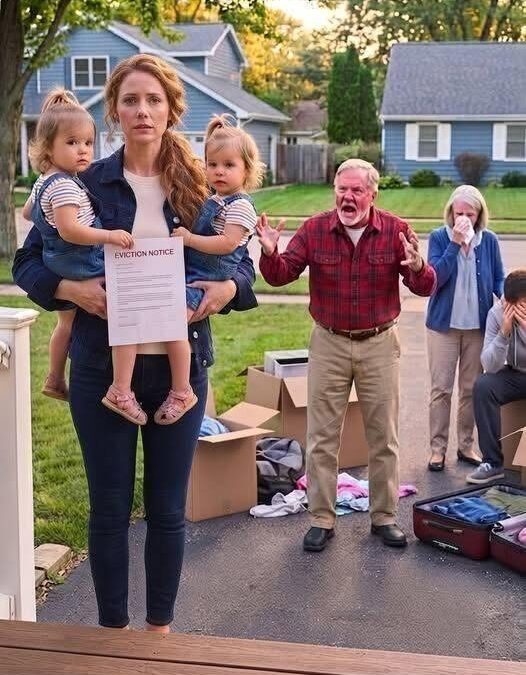
PART2
People saw it.
People pretended not to.
That was the Bennett family’s real power.
Not money.
Not influence.
The silence they could buy from people who wanted invitations, contracts, donations, promotions, favors.
They had smiled beside me at country club dinners while Mark was alive. They called me family whenever hospital donors were watching. They praised my devotion when it made their son look loved and their name look honorable.
Then Mark died.
And before his grave soil settled, they came for everything.
I did not scream.
I did not beg.
I did not give them the satisfaction of watching me fall apart.
I took Sophie’s trembling hand, guided Noah away from the porch, and walked back to my rusted old car.
Behind us, Evelyn laughed softly.
“Finally,” she said. “Some sense.”
I opened the back door and helped Sophie inside. Noah climbed in beside her, fists clenched in his lap.
“Mom,” he said, voice shaking. “We can’t just leave.”
“We’re not leaving.”
“But Grandpa said…”
“I heard what he said.”
Sophie whispered, “Are we going to foster care?”
I turned around so fast my wet hair slapped my cheek.
“No. Never. Listen to me, both of you. You are staying with me.”
Richard was still on the porch, phone in hand.
Evelyn stood beside him like a statue.
I looked at them through the rain blurred windshield, and for a moment, all I could see was Mark.
Not the thin, exhausted man in the hospital bed.
The man he had been before the disease stole weight from his face and strength from his hands.
Mark laughing while Noah tried to teach him a video game.
Mark carrying Sophie on his shoulders through the pumpkin patch.
Mark dancing barefoot with me in the kitchen at midnight because the kids were asleep and we were too tired to go anywhere but too young to surrender joy completely.
Then another memory hit me.
Mark’s voice.
Weak.
Urgent.
Two weeks before he died.
“If it ever gets bad,” he whispered, “look under the passenger seat.”
I had told him not to talk like that.
He closed his eyes.
“Laura. Promise me.”
I promised.
Then I buried the memory because I could not survive one more reminder that he was preparing for a world without him.
Now I reached under the passenger seat with shaking fingers.
At first, I felt only crumbs, old receipts, and Sophie’s missing purple hair clip.
Then my hand brushed plastic.
A waterproof pouch.
Hidden deep beneath the seat, exactly where I had once dropped my lipstick during our very first date.
I pulled it out.
Noah leaned forward.
“What is that?”
“I don’t know.”
But I did.
My heart knew before my mind did.
The pouch was sealed. Mark’s handwriting was on the front.
Laura only. Open when there is no other choice.
My hands shook so badly I could barely tear it open.
Inside was a folded letter, a small key, and a business card wrapped in plastic.
I opened the letter first.
My brave Laura,
If you are reading this, then my parents did exactly what I was afraid they would do.
Do not fight Richard at the door. Do not argue with Evelyn. Do not give them a scene they can use against you.
The house, the trust, the leverage, and the truth are already yours.
I spent months preparing this because I know my father, and I know what he becomes when he thinks no one can stop him.
Turn the key to accessories.
Flash the high beams three times.
Then wait.
I covered my mouth.
For one second, I could not breathe.
Noah leaned closer.
“Mom?”
I read the lines again.
The house, the trust, the leverage, and the truth are already yours.
Mark had known.
My dying husband had known that his parents might do this.
He had been lying in a hospital bed with bruised arms and cracked lips, and while I thought he was only fighting for one more day with us, he had been fighting for our life after him.
I pushed the key into the ignition.
Click.
The dashboard lit up.
I pulled the lever.
Once.
The headlights blazed through the storm.
Twice.
Richard lifted a hand to shield his eyes.
Three times.
Evelyn leaned toward him, irritated.
For a few seconds, nothing happened.
Rain hammered the roof of the car.
Sophie grabbed my sleeve.
“What did Daddy mean?”
“I don’t know yet,” I whispered.
Then we heard it.
A deep engine roar cut through the storm.
In the rearview mirror, headlights appeared at the end of the street, bright and fast. A sleek black sedan turned sharply into the driveway and stopped behind Richard’s SUV, blocking it with perfect precision.
The driver’s door opened.
Then the rear passenger door.
A woman stepped into the rain holding a black leather briefcase in one hand and a folded document envelope in the other.
She wore a dark wool coat, no umbrella, and the kind of calm expression that made powerful men nervous.
Behind her, a county sheriff’s deputy stepped out of the passenger side.
Richard’s smug face disappeared instantly.
The woman looked at him once, then turned toward my car.
I recognized her from the plastic wrapped business card.
Vivian Hart
Estate Attorney
Hart, Monroe And Vale
She walked to my window and bent slightly.
“Laura Bennett?”
I nodded.
“I’m Vivian Hart. Mark sent me.”
At the sound of his name, Sophie began to cry.
Vivian’s face softened for one brief second.
Then she looked back at Richard, and the softness vanished.
“Stay in the car with the children,” she said. “Let me handle this.”
I rolled the window down just enough to hear.
Richard came down one porch step.
“What the hell is this?”
Vivian walked toward him without hurrying.
“This is notice, Mr. Bennett.”
“I don’t know who you think you are.”
“I am the attorney for the Bennett Family Protection Trust, the executor of Mark Bennett’s estate, and counsel for Laura Bennett in all matters concerning this property and her minor children.”
Evelyn’s mouth tightened.
Richard laughed.
It was not a confident laugh.
It was a man buying three seconds to think.
“This house is owned by Bennett Development Holdings.”
“No,” Vivian said. “It was owned by Bennett Development Holdings. Past tense.”
Richard froze.
Vivian opened the document envelope and removed a certified copy.
“Six months ago, Mark executed a purchase and transfer agreement using his vested shares, insurance assignment, and separate marital assets. The property was transferred out of Bennett Development Holdings and into the Bennett Family Protection Trust. It was recorded with the county twelve days ago.”
The rain seemed to quiet around us.
Richard looked at the paper but did not touch it.
“That’s impossible.”
“Recorded documents rarely care what you find possible.”
Evelyn stepped forward.
“Mark was ill. He was medicated. Anything he signed is invalid.”
Vivian turned to her.
“He signed in my office, Mrs. Bennett. With two witnesses, a notary, his oncologist’s capacity letter, and a video record of the entire execution. He was lucid. He was clear. And he was very specific.”
Evelyn’s eyes flicked toward me.
Specific.
That word hit her like a slap.
Richard recovered enough to sneer.
“Even if that is true, she has no authority here.”
“She is trustee.”
The porch went silent.
I sat inside the car, soaked and shaking, with my children holding onto each other in the back seat.
Trustee.
Vivian continued, “Laura Bennett is the legal trustee of the Bennett Family Protection Trust. Noah and Sophie Bennett are the primary beneficiaries. Mark’s parents have no ownership interest, no residency rights, and no authority to remove Mrs. Bennett or the children from this home.”
The deputy stepped forward.
Richard’s face darkened.
“This is a family matter.”
The deputy said, “Not anymore.”
Evelyn’s voice sharpened. “We are grieving our son.”
Vivian looked at her.
“You ripped his widow’s wedding ring off her hand at his funeral.”
For the first time all afternoon, Evelyn looked unsettled.
“That ring belongs to our family.”
“No,” Vivian said. “It was purchased by Mark Bennett with personal funds, insured in Laura Bennett’s name, and listed in his estate instructions as her separate property. Several witnesses saw you take it. The funeral home also has cameras.”
Evelyn’s face went pale beneath her makeup.
Noah whispered from the back seat, “She stole Mom’s ring?”
I closed my eyes.
He had seen it happen, but maybe grief had blurred it.
Now it was real.
Richard raised his phone again.
“I’m calling my lawyer.”
“Good,” Vivian said. “Tell him you changed the locks on property you do not own, threatened a false CPS report against the surviving parent of minor children, and locked those children out in freezing rain on the day of their father’s burial.”
The deputy added, “And I would think carefully before making that CPS call, sir. False reporting and custodial interference are not small issues.”
Richard’s hand lowered.
Evelyn looked at the deputy as if he were a servant who had forgotten his place.
“You cannot seriously believe this woman is fit. Look at her.”
The deputy’s gaze moved to me.
I was drenched, exhausted, hollow eyed, wearing a funeral dress and holding myself together with nothing but adrenaline and Mark’s last letter.
Then he looked at Sophie and Noah.
“They look cold,” he said. “Because their grandparents locked them out.”
Evelyn’s lips parted.
No sound came.
Vivian turned toward me and gestured.
“You can come out now.”
I opened the door slowly.
The rain struck me again, colder than before. Noah got out first, then helped Sophie. My daughter clung to his side.
We walked toward the porch.
Richard moved to block the door.
The deputy stepped between us.
“Sir, move aside.”
“This is my son’s house.”
Vivian’s voice cut through the rain.
“It is Laura Bennett’s legal residence and trust property. Move.”
Richard did not move.
For one ugly second, I thought he might actually put his hands on me.
Then the deputy touched his radio.
Richard stepped aside.
Vivian held out her hand.
“The key, Mr. Bennett.”
He stared at her.
“The key.”
His jaw worked.
Then he dropped the new brass key into her palm.
Vivian looked at it, then turned to me.
“Mrs. Bennett, Mark wanted you to have the first word before I unlock the door.”
My throat closed.
The first word.
I looked at Richard.
Then Evelyn.
Then at the front door Mark had painted blue because Sophie once said blue doors looked like fairy tale doors.
My voice came out rough.
“Get off my porch.”
Evelyn flinched.
Richard’s eyes filled with hatred.
But neither moved fast enough.
The deputy said, “You heard her.”
They stepped down into the rain.
Vivian unlocked the door and opened it.
Warm air rushed out.
Home.
Sophie ran inside first, then stopped in the entryway and turned like she was afraid someone would snatch it away again.
Noah followed slowly.
I crossed the threshold last.
For a moment, I could not move.
Mark’s slippers were still by the stairs.
His blue sweater was still draped over the back of the chair in the living room.
A half finished bottle of water still sat on the side table beside the recliner where he had spent his final weeks.
The house smelled like him.
Soap.
Cedar.
Medicine.
Coffee.
Loss.
I pressed one hand to my mouth.
Noah closed the door behind us.
But before it shut completely, I heard Vivian say to Richard, “We are not finished.”
She came inside a few minutes later, followed by the deputy. Richard and Evelyn remained outside beneath the porch light, humiliated and furious.
Vivian placed her briefcase on the kitchen island.
“I know this is a terrible time,” she said softly. “But Mark was very clear. If I had to come here today, I was to explain enough immediately so you would not be frightened into leaving.”
I nodded, though I felt like I was floating outside my own body.
Sophie sat at the kitchen table, wrapped in Noah’s suit jacket.
Noah stood behind her, arms crossed.
He looked older than he had that morning.
Too old.
Vivian opened her briefcase.
“Mark came to me eight months ago.”
I stared at her.
Eight months.
That was before the last relapse became obvious.
Before hospice.
Before the oxygen machine.
Before Sophie asked if heaven had visiting hours.
“He said his father had started pressuring him to transfer everything back into Bennett Development Holdings,” Vivian continued. “He was worried Richard would try to claim the home and accounts after his death.”
I swallowed hard.
“He never told me.”
“He wanted to. I advised him not to until the documents were fully protected. Mark believed his family monitored pressure points, especially when money was involved.”
Noah’s face twisted.
“That sounds insane.”
Vivian looked at him gently.
“Sometimes wealthy families call it estate planning when what they really mean is control.”
That sentence landed hard.
Because that was exactly what the Bennetts had always done.
Control disguised as care.
Insults disguised as advice.
Threats disguised as tradition.
When Mark and I first got engaged, Richard offered to “help us start life properly.” He put us in this house, told Mark it was a family property, and made it sound like generosity. I had been uncomfortable from the start.
Mark told me not to worry.
“My dad can be difficult,” he said, “but he loves big gestures.”
I learned later Richard did not love gestures.
He loved strings.
When Noah was seven, Richard threatened to stop paying for his private school after I challenged Evelyn for telling Sophie not to eat a second cupcake at her own birthday party because “Bennett women do not get pudgy.”
When Mark switched departments at the company to spend more time at home during his first remission, Richard reminded him the house was “connected to loyalty.”
When I went back to work part time, Evelyn asked why Mark had married a woman who still wanted “outside validation.”
Every gift came with a hook.
Every favor came with a leash.
Mark had spent years slowly realizing it.
Apparently, while dying, he had finally cut the leash.
Vivian placed several documents on the island.
“The trust owns the house. A separate account has been funded for taxes, maintenance, education, and living expenses. Laura, you are trustee. Your sister, Rebecca Monroe, is successor trustee if needed. Richard and Evelyn are explicitly excluded from control, guardianship nomination, property management, financial oversight, and medical decision making for the children.”
Sophie whispered, “Daddy wrote that?”
Vivian turned to her.
“Yes.”
Sophie’s chin trembled.
“Because he knew Grandma and Grandpa were mean?”
Noah looked down.
I closed my eyes.
Vivian took a careful breath.
“Because he loved you enough to make sure no one could use money to scare your mom.”
That broke me.
Not loudly.
Not dramatically.
My legs simply gave out.
Noah caught my arm, and I sank into the nearest chair.
For months, I had thought Mark’s final silence was only exhaustion. I had watched him sleep, watched him fade, watched him wince through pain, never knowing that somewhere beneath all of it he was still planning how to protect us.
I pressed his letter against my chest.
The deputy cleared his throat gently.
“Mrs. Bennett, I need to ask about the lock change. Do you want to make a report?”
Before I could answer, Richard started pounding on the front door.
“Noah!” he shouted. “Open this door!”
Sophie flinched.
Noah’s face hardened.
The deputy walked to the foyer and opened the door only a few inches.
“Step back, Mr. Bennett.”
Richard’s voice boomed through the gap.
“That boy is a Bennett. He needs to hear the truth.”
Noah moved before I could stop him.
He walked to the foyer and stood behind the deputy.
“I heard enough.”
Richard’s face changed at the sight of him.
“Noah, your mother is confused. Your father would never have cut us out.”
Noah’s hands curled into fists.
“You called us brats.”
Richard looked annoyed.
“I was angry.”
“You locked Sophie outside in the rain.”
“You don’t understand adult matters.”
Noah’s voice cracked.
“I watched Dad die. Don’t tell me what I understand.”
For one second, Richard looked almost startled.
Not sorry.
Just startled that the child he thought he could command had grown a spine in the space grief left behind.
Evelyn appeared behind him.
“Noah, sweetheart,” she said, voice suddenly soft. “Come outside and speak to us privately.”
Sophie whispered, “Don’t go.”
Noah did not look away from his grandmother.
“You took Mom’s ring.”
Evelyn’s mask stiffened.
“That was a misunderstanding.”
“You ripped it off her hand beside Dad’s casket.”
Silence.
Noah’s voice dropped.
“You did that while he was right there.”
Something in my son’s face made Evelyn step back.
Not fear.
Recognition.
She had just lost him.
Maybe not legally.
Maybe not in a dramatic courtroom scene.
But in the only way that mattered.
Noah had seen her clearly.
The deputy shut the door.
Vivian looked at me.
“This is why Mark wanted immediate boundaries.”
“What else did he leave?” I asked.
She hesitated.
That hesitation scared me.
“There is more,” she said. “But first, the children should get dry.”
For the next thirty minutes, we moved like people underwater.
Noah took Sophie upstairs to change. I went into my bedroom and found Mark everywhere.
His watch on the dresser.
His book on the nightstand.
His handwriting on the label of a medication bottle.
For a moment, I stood in the closet and gripped one of his shirts so tightly my fingers cramped.
Then I heard Sophie crying through the wall.
That sound pulled me back.
I changed into sweatpants and one of Mark’s old sweaters. It hung loose on me and smelled faintly like him. I wiped my face, went to Sophie’s room, and found both children sitting on her bed.
Noah had his arm around his sister.
Sophie held the stuffed rabbit Mark bought her after her first dentist appointment.
“Are they taking the house?” she asked.
I sat in front of them.
“No.”
“Promise?”
I looked at Noah too.
“I promise.”
Noah searched my face.
“Can you promise that?”
For the first time that day, I could.
“Yes.”
He nodded once, hard.
Then he looked away, blinking fast.
“He knew they’d do this.”
I answered honestly.
“I think he was afraid they might.”
Noah’s jaw tightened.
“Why didn’t he tell me?”
“Because you’re sixteen.”
“I’m not a baby.”
“No,” I said softly. “But you’re his child. He wanted you to be his son, not his soldier.”
That broke him.
His face crumpled, and suddenly my tall, angry boy was sobbing into his hands.
Sophie started crying too.
I pulled them both against me and held on while the rain beat against the windows and Vivian waited downstairs with whatever truth came next.
When we finally returned to the kitchen, Vivian had made tea nobody wanted.
The deputy had left after taking my initial statement and warning Richard and Evelyn not to return that night. He said patrol would drive by. Vivian stayed.
She slid another sealed envelope across the island.
“This one is for you and the children together.”
My hands trembled.
Noah sat on one side of me.
Sophie on the other.
I opened it.
Inside was another letter.
My loves,
If you are reading this, then I am gone, and my parents have already shown you why I had to do things quietly.
I am sorry.
Laura, I should have believed what you saw in them sooner. I should have protected you from the little cuts before they became knives. I thought I could manage them. I thought I could keep peace. I thought if I stayed useful to my father and pleasant to my mother, they would leave you alone.
I was wrong.
Noah, you are not the man of the house. You are my son. Be angry. Be sad. Be sixteen. Protect your mother and sister with love, not with the burden of replacing me.
Sophie, my little star, Grandma and Grandpa may say things that make you feel small. Do not believe them. You were the best thing I ever saw on this earth besides your mother and brother.
The house is yours to live in. The money is protected. The company cannot take it. My parents cannot take it. Anyone who says otherwise is lying.
There are recordings, documents, and witnesses. Vivian knows what to do.
Do not let them turn grief into obedience.
Love,
Dad
Sophie pressed both hands over her mouth.
Noah stood abruptly and walked to the sink.
His shoulders shook.
I could not read the last line again.
Do not let them turn grief into obedience.
That was exactly what Richard and Evelyn had tried to do.
They waited until we were broken.
Then they struck.
Vivian gave us time.
She did not rush us.
Only after Sophie had fallen asleep on the couch, exhausted from crying, did Vivian open the next folder.
“I need to explain the company.”
Noah sat back down immediately.
“I want to hear.”
I almost told him to go upstairs.
Then I remembered Mark’s words.
Be sixteen.
But grief had already pulled him into this room. Secrets would not make him younger.
Vivian looked at me for permission.
I nodded.
“Bennett Development Holdings was founded by Richard’s father,” she said. “Richard inherited majority control. Mark owned a minority share package from his grandfather, separate from Richard’s voting shares.”
I knew some of this.
Mark rarely talked about company structure. He hated it.
“He said it was a family business,” I said.
“It was,” Vivian replied. “But Mark discovered last year that Richard had been using company owned residential properties to secure private loans.”
My stomach tightened.
“This house?”
“It was on that list originally.”
Noah leaned forward.
“What does that mean?”
“It means Richard used homes connected to family members as leverage for personal and company debt,” Vivian said carefully. “If those debts were called, the properties could have been at risk. Mark found out when he reviewed documents after his relapse.”
I remembered that week.
Mark had been unusually quiet. I thought it was fear about the cancer returning.
Maybe it was.
But not only that.
Vivian continued, “Mark forced a buyout of this property using his shares and other assets. Richard signed because he believed Mark was restructuring for tax reasons and because he thought Mark was too ill to complete the transfer cleanly.”
I almost smiled.
Mark had always been underestimated by his father.
Quiet people often are.
“Once the deed was recorded into the trust, Richard lost control,” Vivian said. “But I do not believe he knew the recording was complete.”
“So he changed the locks thinking we couldn’t fight him,” I said.
“Yes.”
Noah’s face darkened.
“He was going to throw us out and hope we didn’t know.”
Vivian did not soften it.
“Yes.”
I looked toward the living room, where Sophie slept under a blanket with Mark’s letter tucked beside her hand.
“And CPS?”
Vivian’s jaw tightened.
“Mark anticipated that too.”
I stared at her.
“How?”
“Because Richard used similar threats before.”
My skin went cold.
“What?”
Vivian opened another folder.
“Three years ago, when Mark refused to move Sophie’s education fund into a Bennett controlled investment account, Richard drafted but did not file a complaint alleging household instability due to Mark’s medical condition.”
I could not speak.
“He what?” Noah whispered.
Vivian’s eyes were sad.
“Mark found a copy on Richard’s office printer. He confronted him. Richard claimed it was only a template.”
I remembered that fight.
Not the details.
Just Mark coming home white with rage, then telling me it was nothing, just business stress. That night, he sat on Sophie’s bedroom floor for an hour while she slept.
Now I knew why.
“He kept it from me,” I said.
“He was ashamed,” Vivian replied. “Not of you. Of them.”
The house seemed to shift around me.
All these years, I had believed Mark was avoiding conflict because he was too loyal to his parents.
Maybe sometimes he was.
But sometimes he had been standing between us and things I never knew were coming.
Vivian reached into her briefcase again.
“There is one more issue tonight.”
I almost laughed.
“How can there be more?”
She did not smile.
“Your sister called me twenty minutes ago. Richard contacted her.”
My head snapped up.
“Rebecca?”
“Yes. He told her you were unstable, homeless, and possibly suicidal. He asked whether she would take temporary custody of the children until the estate was settled.”
Noah shot to his feet.
“He did what?”
Vivian held up a hand.
“Rebecca recorded the call.”
Of course she did.
My sister Rebecca had never trusted the Bennetts. Not for one second. She once told me Richard smiled like a man deciding what a person cost.
“What did she say?” I asked.
Vivian’s mouth twitched slightly.
“She told him that if he came near her niece and nephew, she would make sure every PTA mother in the county knew he locked children out after their father’s funeral.”
Despite everything, I laughed.
It came out broken, but real.
Noah looked stunned.
“Aunt Rebecca said that?”
“She also called him a vulture in loafers,” Vivian said.
That sounded right.
For one tiny second, the kitchen felt alive again.
Then my phone rang.
Rebecca.
I answered immediately.
“Laura?”
“I’m here.”
Her voice cracked.
“I’m coming over.”
“You don’t have to.”
“Do not start lying to me on the day of your husband’s funeral.”
I closed my eyes.
“I’m sorry.”
“No. They should be sorry. I am ten minutes away, and I have soup, dry clothes for the kids, and enough rage to keep the house warm if the power goes out.”
I cried then.
Quietly.
“I don’t know what I’m doing.”
Rebecca’s voice softened.
“You don’t have to know tonight. You just have to open the door when I get there.”
The moment she arrived, she pulled me into the kind of hug that makes a person remember they still have bones.
Then she hugged Noah.
Then Sophie, who woke up and started crying again.
Rebecca did not ask for the whole story immediately. She fed the kids. She sent Noah to shower. She tucked Sophie into my bed because Sophie refused to sleep alone. Only after the house settled did she sit across from Vivian and say, “Tell me who I need to destroy legally.”
Vivian blinked.
I said, “She means that.”
“I assumed.”
By midnight, the plan was clear.
Vivian would file an emergency notice with the probate court and trust counsel. Richard and Evelyn would receive formal written notice to stay away from the property, return my ring, and cease contact with the children except through counsel. The lock change would be documented. The CPS threat would be documented. The funeral home incident would be documented.
Mark had already signed guardianship documents naming me sole guardian, with Rebecca as backup.
Richard and Evelyn were explicitly excluded.
Not just omitted.
Excluded.
Vivian showed me the clause.
Under no circumstances shall Richard Bennett or Evelyn Bennett be appointed guardian, conservator, trustee, or custodian for my minor children. This decision is intentional and based on a longstanding pattern of coercive conduct, emotional manipulation, and financial threats.
I read it three times.
Then I whispered, “He really did see it.”
Rebecca’s face softened.
“Yes.”
That was the first comfort of the day.
Not that Mark was gone.
Nothing comforted that.
But the knowledge that he had not died blind.
He had seen the danger.
He had named it.
He had left proof.
The next morning, Richard’s attorney called Vivian.
I knew because Vivian put him on speaker with my permission.
His name was Charles Whitcomb, and his voice sounded expensive.
“Vivian,” he said, “I understand emotions ran high yesterday.”
Vivian looked at me and rolled her eyes so slightly I almost missed it.
“Your client locked a widow and two minor children out of their home hours after a funeral.”
“Richard believed he was protecting company property.”
“Richard does not own the property.”
“That is disputed.”
“It is recorded.”
“There are questions about Mark’s capacity.”
“There is a physician letter, a notary, two witnesses, and video.”
A pause.
Whitcomb tried again.
“Evelyn is devastated. The ring incident has been exaggerated.”
“She committed theft in front of mourners and cameras.”
“That is inflammatory.”
“It is accurate.”
Rebecca whispered, “I like her.”
I did too.
Whitcomb’s tone cooled.
“Richard is concerned about Laura’s mental state.”
Vivian’s eyes sharpened.
“Richard threatened a false CPS report after creating the conditions he planned to cite. If he files one, we will provide the agency with video, witness statements, and his recorded call to Rebecca Monroe.”
Another pause.
“Video?” Whitcomb asked.
Vivian smiled.
“The house has exterior cameras. Laura’s car has a dash camera. The funeral home has cameras. Mark was thorough.”
I had not known about the dash camera.
Neither had Richard.
That was the beginning of his real problem.
Mark had not just protected the assets.
He had protected the truth.
By noon, Vivian had pulled the home security footage.
There was Richard at 2:37 p.m., while we were still at the cemetery reception, arriving with a locksmith.
There was Evelyn carrying two garment bags out of my house.
My closet.
There was Richard handing the locksmith cash.
There was Evelyn saying, clear as ice, “Make sure the widow’s key doesn’t work. She’s emotional enough to make a scene.”
The locksmith looked uncomfortable but kept working.
Then Richard said, “Good. Let her. CPS responds faster when children are outside.”
I had to sit down when I heard it.
Noah was not in the room.
Thank God.
Rebecca paused the video and covered her mouth.
Vivian did not speak for several seconds.
Then she said, “That is going to be very useful.”
Useful.
Such a cold word for something so evil.
But I understood.
In court, pain needed labels.
Evidence.
Exhibit.
Timestamp.
Statement.
Useful.
That afternoon, Evelyn returned my wedding ring.
Not in person.
A courier delivered a small padded envelope to Vivian’s office.
Inside was the ring and a handwritten note.
Returned as requested. No admission of wrongdoing.
I held the ring in my palm.
The skin beneath where she had torn it off was still red.
For ten years, the ring had meant Mark.
The proposal in our tiny apartment before the Bennett house.
His nervous smile.
His hands shaking as he opened the box.
“I know my family is complicated,” he said that night. “But I want us to be simple. You, me, whatever comes.”
We had not been simple.
But we had been real.
I put the ring back on.
Not because Evelyn returned it.
Because it had never stopped being mine.
The first court hearing happened four days after the funeral.
Four days.
I still had condolence flowers on the kitchen counter when I sat in probate court across from Richard and Evelyn.
Richard wore a navy suit and a wounded expression.
Evelyn wore black again, this time with my ring absent from her hand and resentment present in every line of her face.
Their attorney argued that Mark had been vulnerable and possibly manipulated.
By me.
Of course.
He said I had isolated Mark in his final months.
He said the trust transfer was suspicious.
He said Richard had only changed the locks to preserve property pending legal review.
Then Vivian played the porch audio.
This property belongs to the company.
You and those brats can stay with your sister.
You’re not getting a single cent.
Take one more step, Laura, and I’m calling Child Protective Services.
The judge’s face changed before the clip even ended.
Then Vivian played the security footage of Richard with the locksmith.
Make sure the widow’s key doesn’t work.
CPS responds faster when children are outside.
Even Richard’s attorney stopped looking comfortable.
Evelyn stared straight ahead.
I watched her carefully.
No remorse.
Only fury that private cruelty had become public sound.
Vivian presented the trust documents, recorded deed, physician capacity letter, video record affidavit, guardianship documents, and Mark’s written exclusion of his parents from control over the children.
The judge granted emergency enforcement of the trust’s possession of the property.
Richard and Evelyn were ordered to stay away from the house.
They were barred from contacting Noah or Sophie directly.
They were ordered not to interfere with the trust assets.
And Richard was warned that any false report to child services would be referred for investigation.
When the judge said that, Richard looked at me.
His expression promised war.
I looked back.
For the first time since Mark died, I did not look away.
Outside the courtroom, Evelyn approached me before Vivian could stop her.
“You think you won?” she whispered.
Rebecca stepped close, but I raised a hand.
Evelyn’s eyes were bloodshot now, though I still did not know whether from grief or rage.
“You have no idea what Mark cost this family,” she said.
I stared at her.
“He cost you money?”
“He cost us control of what was ours.”
“He was not yours.”
That landed.
Her mouth tightened.
“He was our son.”
“He was my husband. Their father. A person. Not an asset.”
Evelyn’s face twisted.
“If he had married properly, none of this would have happened.”
There it was.
The truth beneath ten years of silk and smiles.
I was not proper.
Not rich enough.
Not obedient enough.
Not grateful enough.
Not easy enough to erase.
I stepped closer.
“Mark did marry properly. That’s why you’re standing outside a courtroom with nothing but a lawyer bill and a stolen ring you had to give back.”
Rebecca made a strangled sound behind me.
Vivian touched my elbow.
“Laura.”
Evelyn’s eyes flashed.
“This is not over.”
“No,” I said. “But your part in my family is.”
We walked away.
The week after the hearing was the hardest.
Not because of Richard.
Not because of Evelyn.
Because after the emergency passed, grief came back for what it was owed.
The house was ours.
The locks were changed again, this time by a locksmith Vivian trusted.
The security system was updated.
Patrol cars drove by.
The legal documents sat in a neat folder on the kitchen counter.
And Mark was still dead.
That was the cruelty of victory.
It did not bring him back.
Sophie started sleeping in my bed every night. She curled into Mark’s side, the side that still felt like absence. Sometimes she woke up whispering, “Daddy?” and then remembered.
Noah stopped eating breakfast.
He went to school because he said Dad would want him to, but he moved through the house like a ghost with a backpack. One night, I found him in the garage holding Mark’s old baseball glove.
“I hate them,” he said.
I stood in the doorway.
“I know.”
“No, Mom. I really hate them.”
“I know.”
His voice cracked.
“What kind of grandparents do that?”
I had no good answer.
“The kind who love control more than people.”
He pressed the glove against his chest.
“Did Dad know they were like that when he was a kid?”
The question hurt.
Because I had wondered the same thing.
“I think he knew some of it,” I said. “But I think children try very hard to believe their parents love them correctly.”
Noah looked at me.
“Did they?”
I thought of Richard using company property as a leash.
Evelyn ripping a ring from a widow’s hand.
Their dry eyes on the porch.
“I think they loved him in the only way they knew how,” I said. “But that doesn’t mean it was love he could survive.”
Noah nodded, though I was not sure he understood.
Or maybe he understood too well.
Two weeks after the funeral, Sophie came home from school crying.
Her teacher called first.
Another child had told Sophie that her grandparents said her mother stole their house.
My hands went numb around the phone.
“Who said that?” I asked.
The teacher hesitated.
“The child’s mother is in Evelyn Bennett’s charity circle.”
Of course.
Evelyn could not contact my children, so she poisoned the air around them.
That night, Sophie sat at the kitchen table picking at macaroni.
“Did we steal the house?” she asked.
Noah slammed his fork down.
“No.”
Sophie flinched.
He softened immediately.
“Soph, no. Dad gave it to us. He wanted us here.”
“But Grandma said…”
“Grandma lies.”
I should have corrected the bluntness.
I did not.
Instead, I reached for Sophie’s hand.
“This is our home because your dad made sure it was. Adults sometimes say things to make themselves feel better when they did something wrong.”
She looked at me with Mark’s eyes.
“Why doesn’t Grandma love us?”
The question went through me like a blade.
I moved around the table and knelt beside her.
“She may love you in her own broken way,” I said carefully. “But love that hurts you, scares you, or tries to take you from your family is not love you have to accept.”
Sophie’s lower lip trembled.
“Can I still miss her?”
“Yes,” I whispered. “You can miss anyone you need to miss.”
Noah looked away.
I knew he missed them too.
Not the people on the porch.
The grandparents they had pretended to be when Mark was alive.
The Christmas checks.
The lake house weekends.
The expensive birthday gifts.
The version of family that vanished the moment my children stopped being useful pieces of the Bennett image.
That was another kind of death.
We mourned that too.
Vivian filed for sanctions after the school incident.
Evelyn denied everything.
Then Jenna from the funeral home sent a video.
Not a camera this time.
A phone video taken by one of Mark’s cousins, Amanda, who had apparently grown tired of pretending the Bennetts were normal.
The video showed Evelyn at a reception two days after the funeral, speaking to three women near a wine table.
“Laura is unstable,” Evelyn said. “Mark was not in his right mind when he changed documents. We’re worried about the children, but the courts are so sentimental about widows.”
One woman asked, “Do you think she forged something?”
Evelyn smiled.
“I think desperate women do desperate things.”
Amanda sent the video with a message.
I should have said something years ago. I am sorry.
I stared at that apology for a long time.
Then I forwarded it to Vivian.
Rebecca said, “At this rate, Evelyn is going to bury herself with a microphone.”
But even with evidence, it hurt.
Every lie felt like another hand ripping something away.
My husband.
My home.
My motherhood.
My sanity.
My grief.
They wanted all of it questioned.
They wanted me so busy defending myself that I had no time to mourn.
That was the point.
Then came the company bombshell.
Vivian called me on a Thursday morning while I was folding Sophie’s laundry.
“Laura,” she said, “are you sitting down?”
I gripped the phone.
“Do I need to be?”
“Yes.”
I sat.
“Mark left more than the house.”
I almost laughed from exhaustion.
“What does that mean?”
“He left evidence of financial misconduct at Bennett Development Holdings.”
My hand went cold.
“What kind of misconduct?”
“Improper collateralization of company owned residential properties, unreported debt exposure, possible misuse of trust assets, and forged internal approvals.”
I did not understand all of it.
But I understood enough.
“Richard?”
“Yes,” Vivian said. “Mark copied records before he died. He instructed me to release them if Richard attempted to dispossess you or interfere with the children.”
My breath caught.
“If Richard left us alone…”
“Then Mark intended to let the board handle it quietly after estate matters settled. But if Richard attacked you, Mark wanted the documents delivered immediately.”
I looked around the laundry room.
At Sophie’s pink socks.
At Noah’s hoodie.
At Mark’s old towel still hanging by the dryer because none of us could bear to move it.
“He made them choose,” I whispered.
“Yes,” Vivian said. “And Richard chose badly.”
That afternoon, Bennett Development’s board received a packet.
By evening, Richard called Vivian eleven times.
She did not answer.
The next morning, the business section of the local paper reported that Bennett Development Holdings had opened an internal review after “questions concerning collateral practices and executive approvals.”
They did not name Richard yet.
But everyone knew.
The Bennetts had spent decades making sure everyone knew.
Richard showed up at my house that night.
Alone.
It was almost nine.
Rain again.
Because apparently storms had become the weather of betrayal.
The security system alerted me before he reached the porch.
Noah was upstairs.
Sophie was asleep.
Rebecca was on my couch because she had practically moved in since the funeral.
I looked at the camera feed.
Richard stood under the porch light, soaked, furious, and older than he had looked in court.
Rebecca reached for her phone.
“Call Vivian.”
“I will.”
Richard knocked.
Not pounded.
Knocked.
That somehow felt more dangerous.
I answered through the doorbell speaker.
“You are not allowed here.”
His head lifted toward the camera.
“Laura. Open the door.”
“No.”
“I need to speak to you.”
“No.”
“This has gone far enough.”
I almost laughed.
“You locked children out in the rain after their father’s funeral. You do not get to decide what is far enough.”
His face twisted.
“You have no idea what your husband did.”
I went still.
“My husband protected his family.”
“He betrayed his father.”
“No. He became one.”
That silenced him for half a second.
Then Richard stepped closer to the camera.
“If those documents go public, people lose jobs. Families suffer. Is that what Mark would have wanted?”
Rebecca whispered, “Unbelievable.”
I pressed the speaker button.
“Mark gave you a choice. You chose to attack his widow and children.”
“He was sick. He was angry. You poisoned him against us.”
There it was again.
Me.
Always me.
The outsider.
The thief.
The unstable widow.
The woman they could blame because blaming Mark would mean admitting their son died seeing them clearly.
“You poisoned him yourselves,” I said.
Richard’s eyes narrowed.
“You think you’re untouchable because of some trust?”
“No,” I said. “I think I’m done being afraid of people who mistake cruelty for power.”
His hand lifted toward the door.
Rebecca called out loudly from behind me, “Touch that lock and the police get the video in thirty seconds.”
Richard froze.
He looked past me through the glass side panel and saw my sister standing there with her phone raised.
For once, he seemed to understand that he was outnumbered by women who had stopped caring about his reputation.
He stepped back.
“You will regret this family war.”
I replied, “You started it on Mark’s funeral day.”
Then I ended the speaker call.
He stood there for another minute.
Then he left.
The next week, Richard was removed as acting CEO pending investigation.
Bennett Development announced it in a statement so sanitized it could have been used to clean hospital floors.
Leadership transition.
Governance review.
Continuity planning.
But the country club knew.
The board knew.
The banks knew.
And Evelyn knew.
She called me from an unknown number the same evening.
I should not have answered, but grief makes people curious in ways dignity disapproves of.
The moment I heard her voice, I regretted it.
“Laura,” she said.
I said nothing.
“My husband is being humiliated because of you.”
I almost closed my eyes.
“Because of me?”
“You could have accepted a reasonable arrangement.”
“You mean homelessness.”
“You were never homeless. You have a sister.”
My fingers tightened around the phone.
“You locked Sophie out of her home in the rain.”
“Do not use that child as a shield.”
“She is a child. She should never have needed one.”
Evelyn inhaled sharply.
“I lost my son.”
For the first time, her voice cracked.
And because I am human, some small part of me softened.
“I know,” I said quietly. “So did I.”
“No,” she snapped. “You lost a husband. I lost my blood.”
Whatever softness I had left disappeared.
“My children lost their father.”
“They are Bennetts,” she said. “They belong with us.”
There it was.
Not love.
Ownership.
“They belong with me,” I said.
“Mark was confused.”
“Mark was clear enough to keep you away from them.”
The silence afterward was vicious.
Then Evelyn said, “He would have come back to us if he had lived.”
I thought of Mark’s letter.
Do not let them turn grief into obedience.
“No,” I said. “I think that is what scares you most.”
She hung up.
For a long time, I stood in the kitchen holding the silent phone.
Then Sophie appeared in the doorway, hair messy, stuffed rabbit under one arm.
“Was that Grandma?”
My stomach dropped.
“Yes.”
“Is she still mad?”
I knelt.
“Yes.”
Sophie thought about that.
“Is she mad because Daddy loved us?”
I pulled her into my arms.
Out of all the questions she could have asked, that one hurt the most.
“I think she is mad because Daddy chose to protect us in a way she could not control.”
Sophie nodded solemnly.
Then she whispered, “Good.”
I laughed and cried at the same time.
“Yeah, baby. Good.”
The final probate hearing came three months after Mark’s funeral.
By then, the trees outside the courthouse had started blooming.
It felt offensive that spring had arrived while grief still sat inside me wearing winter clothes.
Richard and Evelyn fought until the end.
They challenged Mark’s capacity.
They questioned my influence.
They questioned Vivian’s ethics.
They suggested the trust was rushed.
They implied I had hidden Mark from them.
Vivian dismantled every claim.
She played video from Mark’s signing.
I had never seen it before.
There he was.
My husband.
Thinner than he should have been, but sitting upright in Vivian’s office, wearing his navy sweater, voice weak but clear.
The notary asked if he understood what he was signing.
“Yes,” Mark said.
“Are you signing voluntarily?”
“Yes.”
“Has anyone pressured you?”
Mark almost smiled.
“No one in this room.”
Vivian asked him to explain his intentions in his own words.
Mark looked into the camera.
“I want my wife, Laura Bennett, to remain in our home with our children, Noah and Sophie. I do not want my parents controlling their housing, money, education, medical decisions, or custody. My father has used financial pressure against family members before. My mother has treated Laura as temporary from the day I married her. Laura is not temporary. She is my family.”
I broke.
Silently.
Completely.
Rebecca gripped my hand under the table.
On the screen, Mark continued.
“If my parents respect these documents and leave Laura and the kids alone, I do not want unnecessary conflict. But if they try to take the house, threaten custody, challenge Laura’s fitness, or use the company to pressure her, Vivian has my permission to release the records I provided.”
He paused to breathe.
My heart shattered watching it.
Then he said the line that ended everything.
“My parents will say grief made them act badly. That is not true. Grief will only remove the mask.”
The courtroom went silent.
Even the judge looked affected.
Richard stared at the screen as if Mark had risen from the grave to testify against him.
Evelyn looked away.
For the first time since the funeral, I saw tears in her eyes.
I did not know whether they were for Mark, herself, or the fact that she could no longer pretend.
The judge upheld the trust in full.
The house remained protected.
The guardianship provisions remained enforceable.
Richard and Evelyn’s challenge was denied.
Their petition for temporary oversight of the children’s inheritance was dismissed.
They were ordered to pay legal fees connected to the emergency lockout and bad faith challenge.
And the court admonished them for conduct that had placed grieving minor children under unnecessary emotional distress.
That phrase was too small.
Unnecessary emotional distress.
It did not capture Sophie’s voice asking if foster care was coming.
It did not capture Noah standing in the garage with his father’s glove.
It did not capture my raw finger where my ring had been ripped away.
But it was on the record.
Sometimes that has to be enough.
Outside court, Richard did not approach me.
He looked diminished.
Not humbled.
Diminished.
There is a difference.
Humbled people learn.
Diminished people only realize others can now see them.
Evelyn did approach.
Vivian moved immediately, but I said, “It’s okay.”
Evelyn stopped a few feet away.
Her face looked drawn.
For one strange second, I saw Mark in her eyes.
Not the cruelty.
The bone structure.
The grief.
The mother underneath the monster.
Then she spoke.
“You took him from us.”
Any pity I had almost felt turned to ash.
“No,” I said. “You lost him long before he died.”
Her mouth trembled.
“You have no right.”
“I have his letters. His trust. His children. His name on every document saying exactly what he wanted.”
I stepped closer.
“And you have the memory of locking his daughter out in the rain.”
Evelyn’s face collapsed for half a second.
Then pride rebuilt it.
“He was our son.”
“And you were his warning.”
She slapped me.
The sound cracked across the courthouse steps.
For one second, no one moved.
Then Rebecca shouted my name.
Vivian grabbed my arm.
A deputy turned.
Evelyn stood there, breathing hard, shocked by her own hand but still too proud to apologize.
I touched my cheek.
It stung.
But compared to everything else, it was almost nothing.
I looked at Vivian.
“Did the cameras get that?”
Vivian glanced toward the courthouse entrance.
“Yes.”
I looked back at Evelyn.
“Good.”
She was charged with assault.
A small charge.
A small consequence.
But public.
The Bennett mask was not just slipping now.
It was gone.
By summer, Richard resigned from Bennett Development entirely.
The official statement thanked him for decades of leadership.
The unofficial truth was uglier.
The board investigation found enough misconduct to force him out quietly, but not quietly enough to save him. Banks tightened. Partners withdrew. Old friends stopped answering calls. Country club committees suddenly discovered bylaws.
Evelyn blamed me for all of it.
Of course she did.
People like Evelyn do not blame mirrors for showing faces.
They blame the person who turns on the light.
I focused on the children.
Noah started therapy first, though he pretended it was only because “Mom was making a thing of it.” After the third session, he asked if he could keep going.
I said yes.
Sophie started art therapy. Her first drawings were all rain, locked doors, and black cars with bright headlights. Then slowly, other colors returned. Yellow suns. Purple cats. A blue house with three people in the doorway and one star above the roof.
“Is the star Daddy?” I asked.
She nodded.
“He knows where we live.”
I had to leave the room after that.
Not because it hurt.
Because it healed in a place still tender enough to bleed.
I went back to work part time in the fall.
Not because Richard had been right about money.
He had not.
The trust was solid. Mark had made sure of that.
But I needed something that belonged to the future.
The first day I left for the office, Sophie cried.
Noah pretended not to watch from the stairs.
I knelt in front of my daughter.
“I’m coming back.”
“Promise?”
“Yes.”
“People leave.”
There it was.
The sentence grief had written into her.
I kissed her forehead.
“Some people leave because they have no choice. Some people leave because they are cruel. And some people go to work and come home at five thirty with chicken nuggets.”
Her mouth twitched.
“Can I have fries?”
“Yes.”
“And a milkshake?”
“Do not push grief too far.”
She laughed.
That sound carried me through the entire day.
The house changed slowly.
For months, I kept everything exactly as Mark left it because moving a cup felt like betrayal.
Then one Saturday, Noah carried Mark’s oxygen machine to the garage without asking.
I found him standing over it.
“I hate looking at it,” he said.
“So do I.”
“Can we donate it?”
“Yes.”
He nodded.
Then he said, “I want to keep his glove.”
“Of course.”
“And his watch.”
“When you’re older.”
“I’m sixteen.”
“When you’re older than sixteen.”
He almost smiled.
That was progress.
Sophie asked to repaint the front door.
That surprised me.
“It’s already blue,” I said.
“I want brighter blue.”
So we painted it on a warm Sunday afternoon. Noah complained but helped. Rebecca brought lemonade and criticized our technique. Sophie got paint on her nose. I got paint in my hair. Mark’s old playlist came on through a speaker, and for three minutes, none of us cried.
When we finished, Sophie stepped back and nodded.
“Now it looks like our door again.”
She was right.
Winter returned almost one year after the funeral.
I dreaded it.
Cold rain still made my body remember the porch. The new key in Richard’s hand. Sophie’s trembling fingers. Noah’s voice cracking.
On the anniversary of Mark’s death, we went to the cemetery together.
Noah carried white roses.
Sophie brought a drawing.
I brought the first sealed letter, now softened at the folds from how many times I had opened it.
We stood by Mark’s grave under a gray sky.
No rain.
Thank God.
Sophie placed the drawing against the stone.
It showed the three of us standing in front of the blue door, with Mark’s star above the roof.
Noah cleared his throat.
“Hey, Dad.”
His voice broke on the second word.
I touched his back.
He kept going.
“I’m trying. I’m mad a lot. But I’m trying.”
Sophie whispered, “I sleep in my room again.”
I smiled through tears.
“That is big news.”
Then it was my turn.
I unfolded the letter.
My brave Laura.
I could barely read beyond that.
So I did not read aloud.
I looked at his name carved into stone and said, “You were right. They came for us.”
The wind moved softly through the bare trees.
“But you came for us first.”
Noah put one arm around me.
Sophie leaned against my side.
I continued.
“I wish you had told me everything. I wish you had trusted me with all of it. I wish you were here so I could yell at you and thank you and ask you how I’m supposed to raise them without you.”
My voice cracked.
“But we’re home. The kids are safe. The door is blue. Noah has your glove. Sophie thinks you’re a star with strong opinions. Rebecca still wants to fight your father in a parking lot.”
Noah laughed through his tears.
I touched the stone.
“And I put the ring back on.”
Not as a refusal to move forward.
Not as a chain to the past.
As proof.
Evelyn had tried to take it because she thought objects became hers if she grabbed hard enough.
But love does not work that way.
Neither does truth.
The final confrontation came a month later.
I had not seen Richard or Evelyn since court. Protective orders and legal fear kept them away physically, but I still felt them in shadows. At school events. In grocery store whispers. In envelopes from attorneys.
Then one afternoon, I received a letter.
Not from Evelyn.
From Richard.
Laura,
I am requesting one meeting with Noah and Sophie. Whatever happened between adults should not erase their grandparents. Mark would not have wanted permanent estrangement.
I am willing to apologize for certain misunderstandings if that is what is necessary.
Richard Bennett
I read the letter twice.
Certain misunderstandings.
A phrase so small it could barely hold a raindrop, let alone what he had done.
I showed Noah.
He read it silently.
Then he said, “No.”
I nodded.
“You don’t have to.”
“Does Sophie?”
“No.”
“Good.”
He handed it back.
“Can I write the answer?”
I hesitated.
Then remembered Mark’s words.
Be sixteen.
Protect your mother and sister with love, not with the burden of replacing me.
This was not replacing Mark.
This was Noah choosing his own boundary.
“Yes,” I said.
He sat at the kitchen table for almost an hour.
When he finished, he handed me one page.
Grandpa,
You locked me, my mom, and Sophie out of our house on the day we buried Dad.
You called us brats.
You threatened to have us taken away.
You lied about Mom.
You tried to take the house Dad wanted us to have.
That was not a misunderstanding.
I do not want to see you right now. Sophie does not owe you comfort. Mom does not owe you forgiveness. If Dad wanted anything, I think he wanted us safe.
Please leave us alone.
Noah
I cried before I reached the last line.
“Is it okay?” he asked.
“It is more than okay.”
We sent it through Vivian.
Richard did not respond.
Evelyn did.
One sentence through her attorney.
The children are being alienated.
Vivian replied with court transcripts, porch audio, funeral home video, the school incident, and Evelyn’s courthouse assault charge.
She received no further comment.
The second year was easier.
Not easy.
Easier.
That distinction mattered.
Noah got his driver’s license. Mark should have been there for that, standing in the driveway pretending not to panic. Instead, I sat in the passenger seat while Noah adjusted the mirrors and muttered, “Don’t do the mom brake thing.”
“I make no promises.”
He drove around the block twice.
Too slowly.
Perfectly.
When we parked, he rested his hands on the wheel for a moment.
“Dad taught me the basics before he got really sick.”
“I know.”
“He said parallel parking was mostly confidence and lies.”
“That sounds like him.”
Noah smiled.
A real smile.
Then he said, “I miss him every day.”
“Me too.”
“But I don’t feel like I’m drowning every day anymore.”
I reached over and squeezed his hand.
“That’s good.”
He looked at the house.
The bright blue door.
The porch where Richard and Evelyn had stood.
The driveway where the black sedan had arrived like something out of a movie Mark had written in secret.
“Sometimes I think about that day,” he said. “The headlights.”
“Me too.”
“It felt like Dad answered.”
My throat tightened.
“Yes.”
Sophie turned eleven that spring.
She asked for a backyard birthday party, cupcakes with too much frosting, and absolutely no “fancy Bennett people.”
Her words.
Not mine.
We invited school friends, Rebecca, Vivian, Amanda, and a handful of neighbors who had quietly stood by us after the truth came out.
Vivian came with a gift wrapped in silver paper.
Sophie opened it and found a small framed copy of Mark’s letter line.
You were the best thing I ever saw on this earth besides your mother and brother.
Sophie pressed it to her chest.
Then she asked Vivian, “Did my dad really tell you to come when Mom flashed the lights?”
Vivian smiled.
“He did.”
“Were you waiting all day?”
“Yes.”
“In the rain?”
“Yes.”
“Were you mad?”
Vivian looked at me.
“No. I was honored.”
I had to turn away.
Later that evening, after the last guest left and the yard was covered in popped balloons and cupcake crumbs, Sophie stood on the porch looking at the driveway.
“What are you thinking?” I asked.
She pointed.
“That’s where the black car was.”
“Yes.”
“Do you think Daddy knew Grandpa would be that mean?”
I sat beside her.
“I think Daddy hoped he was wrong.”
“But he wasn’t.”
“No.”
Sophie leaned against me.
“I’m glad he made a plan.”
“Me too.”
She looked up.
“Do you have a plan if something happens to you?”
The question stole my breath.
Children who have been threatened with loss ask practical questions. Terrible, practical questions.
“Yes,” I said.
That was true.
Vivian and I had built one.
Guardianship.
Trust succession.
Medical directives.
Insurance.
A folder Rebecca had.
A folder Vivian had.
A simplified version Noah knew existed.
Not because I planned to leave.
Because love makes plans.
Mark taught me that.
Sophie nodded.
“Good.”
Then she ran inside to eat another cupcake before I could say no.
Three years after Mark’s funeral, Bennett Development sold.
Richard had no role in the sale.
His name appeared in the announcement only as part of company history. Evelyn stopped appearing in society photos. Someone told Rebecca they had moved to a smaller house near the lake.
“Still expensive,” Rebecca said. “Don’t feel too poetic.”
I did not.
I did not need them poor.
I needed them powerless over us.
They were.
One autumn afternoon, Vivian called me to her office.
I worried immediately.
Legal calls still did that to me.
But when I arrived, she was smiling.
“There is one final item from Mark.”
I sat slowly.
“What do you mean final?”
“His instructions said this should be given to you once all disputes were resolved and the children were stable.”
She slid a small envelope across the desk.
My name was written on it.
Laura.
Just Laura this time.
I opened it carefully.
My love,
If Vivian is giving you this, then it means the storm passed.
Maybe not all the grief. I know I do not get to ask that of you. But the legal storm. The Bennett storm. The part I should have shielded you from sooner.
I need you to know something.
You did not marry into my family.
I married out of it.
You were my home before the house ever was.
If my parents made you feel like a guest, forgive me. Not them. Me. I should have corrected that harder, louder, earlier.
I am proud of you.
Not because you fought them.
Because I know you would have chosen peace if they had allowed it.
Take care of Noah. Take care of Sophie. Let them take care of you sometimes too.
And when you are ready, paint the door whatever color makes you smile.
I love you beyond every document I signed.
Mark
I folded over the desk.
Vivian came around and put a hand on my shoulder.
I cried harder than I had in months.
Not because the letter hurt.
Because it released something.
For years, a quiet question had lived beneath my grief.
Had Mark known I felt alone inside his family?
Now I had the answer.
Yes.
And he was sorry.
That did not erase the years.
But it softened them.
When I got home, Sophie was doing homework at the kitchen table. Noah was home from his first semester of college, raiding the fridge with the confidence of a boy who believed food appeared by magic when he crossed the threshold.
They both looked up when they saw my face.
“What happened?” Noah asked.
I held up the letter.
“Your dad had one more.”
We read it together.
Sophie cried.
Noah stared at the wall for a long time.
Then he said, “He married out.”
I smiled through tears.
“Apparently.”
Noah nodded.
“I like that.”
That night, after the kids went to bed, I walked to the front door.
The blue was chipped near the handle.
Life does that.
Paint chips.
Children grow.
Grief changes shape.
I touched the door and thought about the woman I had been in the rain with two children behind her and no idea whether she still had a home.
I wanted to tell her what I know now.
They did not take everything.
They only revealed what they never had.
They never had Mark’s true loyalty.
They never had ownership of my children.
They never had the right to decide whether I belonged.
They never had the power they thought they did once the truth stepped out of that black sedan.
The next spring, we painted the door again.
Not because we needed to.
Because we could.
Sophie chose a brighter blue than before, almost ridiculous in direct sunlight. Noah complained that it looked like “a cartoon ocean,” then painted the edges more carefully than anyone. Rebecca brought sandwiches. Vivian stopped by with coffee and somehow ended up holding the paint tray in heels.
When we finished, we stood on the sidewalk looking at it.
Sophie said, “Daddy would like it.”
Noah said, “Dad would say it’s loud.”
I said, “Then he would secretly like it.”
Rebecca said, “Your father would have picked beige and called it timeless.”
We all laughed.
Even me.
Especially me.
That evening, after everyone left, I sat alone on the porch.
The same porch.
But not the same.
The rain from that day was long gone. The locks had been changed. The cameras replaced. The legal war ended. The children were upstairs, safe and loud, arguing about a missing charger like ordinary siblings in an ordinary home.
I turned my wedding ring around my finger.
The raw mark Evelyn left had healed.
The memory had not.
But memories are not always chains.
Sometimes they are markers.
This is where they tried to break you.
This is where help arrived.
This is where you learned the difference between a house someone lets you live in and a home someone protects for you.
Richard thought the brass key in his hand meant power.
Evelyn thought my ring in her fist meant victory.
They thought grief would make me obedient.
They thought rain would hide what they were doing.
They thought Mark’s death had finally made us easy to erase.
But Mark had left a letter.
A key.
A signal.
A lawyer in a black sedan.
A trust they could not touch.
A record they could not rewrite.
And a truth they could not survive.
I used to think love was only what people gave while they were alive.
Now I know love can also be preparation.
A signature made with a shaking hand.
A sealed envelope under a passenger seat.
A plan whispered between painful breaths.
A final instruction from a dying father to the family he refused to leave defenseless.
Flash the high beams three times.
Then wait.
So I waited.
And through the freezing rain, after the cruelest day of my life, the truth came roaring into my driveway.
They thought they had locked us out.
They had no idea Mark had already opened every door that mattered.








