“YOU’RE A BURDEN, MOM—THAT HOUSE WILL BE OURS ANYWAY!” My Son Went to Europe Expecting to Inherit My $875,000 Home—He Came Back to a Key That No Longer Worked
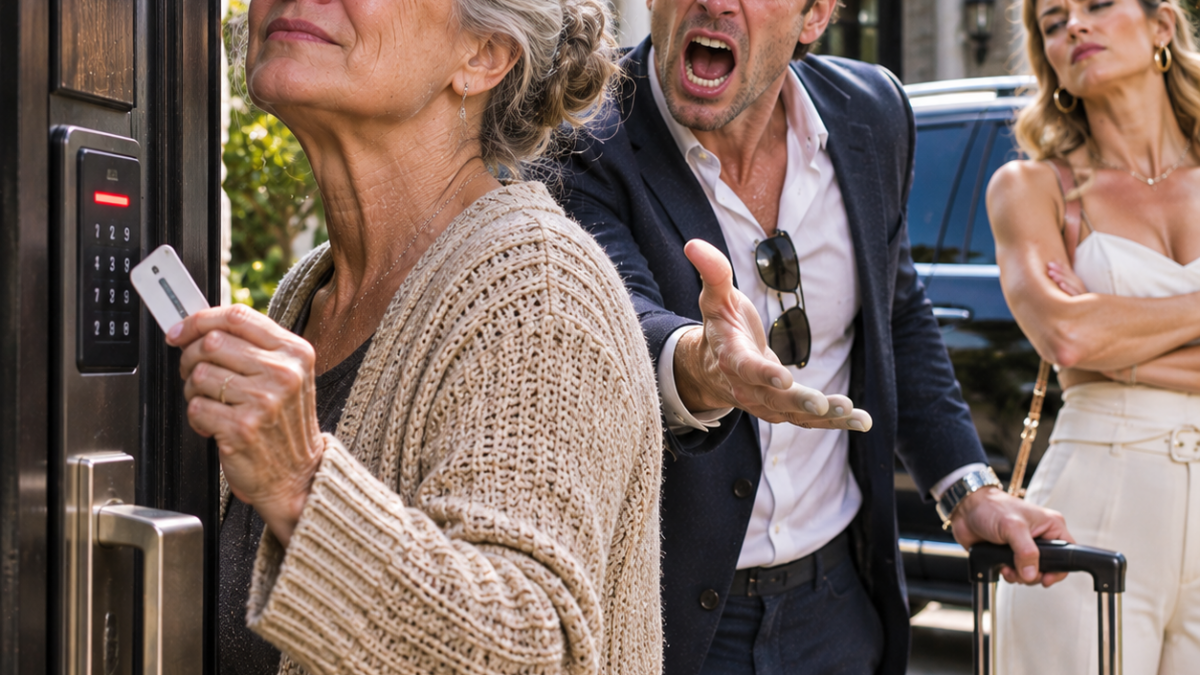
“YOU’RE A BURDEN, MOM—THAT HOUSE WILL BE OURS ANYWAY!” My Son Went to Europe Expecting to Inherit My $875,000 Home—He Came Back to a Key That No Longer Worked
“YOU’RE BECOMING A BURDEN, MOM—WE CAN’T KEEP PUTTING OUR LIVES ON HOLD JUST BECAUSE YOU REFUSE TO ADMIT YOU’RE OLD,” my only son told me three weeks before leaving for a luxury European vacation, while his wife spread retirement-community brochures across the kitchen table and casually reminded me that the $875,000 house would “come to them eventually anyway.”
I smiled, wished them a wonderful trip, and even drove them to the airport, never telling Brandon that the morning after his plane left Charlotte I met with an elder-law attorney, revoked every financial authority he had over me, signed a full-price contract for the house he had already begun calling his, and bought a smaller home with no stairs where nobody possessed a spare key unless I personally handed it to them.
So when Brandon returned from Paris and Florence, stood on my old front porch surrounded by designer luggage, and discovered that his childhood key no longer fit the lock, he thought someone had made a terrible mistake—until he looked across the street and saw me sitting peacefully inside a rented moving truck, holding the folder that proved the only mistake had been assuming his mother needed to die before she was allowed to decide what happened to her own life.
The key refused to turn.
Brandon tried once.
Then twice.
The third time, he twisted so hard that I genuinely worried the old brass key might snap inside the new owners’ lock.
I watched from across Cedar Grove Lane.
My hands rested in my lap.
The rented moving truck smelled faintly of cardboard, dust, and the vanilla air freshener the rental company had clipped to the vent.
Beside me sat my friend Ruth Delaney, who had spent the last two weeks helping me move thirty-two years of life into a two-bedroom condominium twelve minutes away.
She peered through the windshield.
“He’s going to break that key.”
“He always did think force was a substitute for patience.”
Ruth looked at me.
“You’re making jokes.”
“I’m trying.”
On the porch, Kendra pushed her designer sunglasses onto her head.
She wore a cream cashmere coat despite the mild North Carolina afternoon and carried shopping bags from stores I recognized only because she had posted them online from Florence.
Brandon’s navy travel jacket was wrinkled.
His suitcase stood upright beside him.
A bottle of expensive French wine was wrapped in bubble paper inside the side pocket.
Their seventeen-day European vacation had included Paris, Florence, Rome, and three nights near Lake Como.
I knew because Kendra had uploaded eighty-seven photographs.
I had liked exactly one.
A sunset.
No people.
“What the hell is going on?” Brandon shouted.
Ruth flinched.
Even from across the street, I heard him.
Kendra took the key from his hand.
“Are you sure that’s the right one?”
Brandon stared at her.
“Kendra, I lived here my entire childhood.”
“I’m just asking.”
“Of course it’s the right key.”
He tried again.
Nothing.
Then he stepped back and finally looked at the house.
Really looked.
The porch furniture was different.
The wreath on the door was different.
The brass numbers Walter had installed in 1998 had been replaced with modern black ones.
A child’s purple bicycle leaned beside the garage.
There was a chalk rainbow drawn across the driveway.
Brandon frowned.
Kendra whispered:
“Whose bike is that?”
Ruth looked at me.
“Showtime.”
I didn’t move.
“Not yet.”
The front door opened.
A man in his early forties stepped outside.
Michael Brennan.
New owner.
Nice man.
Civil engineer.
His wife, Jessica, taught third grade.
Two daughters.
They had bought the house eleven days earlier.
Michael looked at Brandon.
“Can I help you?”
Brandon stared.
“Who are you?”
Michael glanced at the suitcase.
“I live here.”
“No, you don’t.”
Ruth whispered:
“Oh, Lord.”
I put one hand over my mouth.
Michael remained remarkably calm.
“I’m pretty sure I do.”
“This is my mother’s house.”
Michael nodded.
“Was.”
Brandon stopped.
“What?”
“We bought it.”
Silence.
Even Kendra’s shopping bags stopped moving.
Brandon laughed once.
Not because anything was funny.
“That’s impossible.”
Michael looked toward the driveway.
“No.”
He pointed at the new lock.
“We closed last Thursday.”
Brandon turned toward Kendra.
Then back.
“From who?”
Michael’s expression shifted.
“Your mother, I assume.”
Brandon’s face went white.
That was when he pulled out his phone.
Mine began ringing inside the truck.
I looked at the screen.
BRANDON
Ruth asked:
“You answering?”
“No.”
The call stopped.
Immediately began again.
Then a third time.
A fourth.
Kendra stepped away from the porch and started scanning the street.
Her eyes passed over the moving truck.
Then returned.
She stared.
“Brandon.”
He was still dialing.
“Brandon.”
“What?”
She pointed.
He turned.
Our eyes met through the windshield.
For several seconds, my son did not move.
Then he walked down the front steps.
Fast.
Kendra followed.
Brandon crossed the street without checking for traffic.
I opened the truck door before he reached me.
“Mom!”
I stepped down carefully.
At sixty-eight, I was perfectly capable of climbing from a truck.
I simply preferred using the handle.
Brandon stopped six feet away.
His face was red.
“What did you do?”
I looked toward the house.
“Sold it.”
His mouth opened.
No words.
Kendra stared at me.
“You sold the house?”
“Yes.”
Brandon laughed again.
“You can’t.”
“I already did.”
“That’s our house.”
“No.”
I reached back into the truck.
Picked up the brown legal folder.
“It was mine.”
His expression became something I had never seen before.
Not grief.
Not exactly anger.
Panic.
“You sold my inheritance?”
I looked at my only son.
And suddenly I was back at my kitchen table three weeks earlier, listening to him explain why my life had become an inconvenience.
PART2
The brochures had been Kendra’s idea.
At least that was what Brandon later claimed.
It did not matter.
He had carried them into my house.
Six glossy brochures.
Silver Pines.
Meadow Ridge.
Carolina Haven.
Lakeview Commons.
Photographs of silver-haired couples laughing over cards, eating elegant salads, floating in heated swimming pools, and walking through gardens with suspiciously perfect posture.
Kendra spread them across the kitchen table where Walter and I had once signed our mortgage documents.
“Just look,” she said.
“I have looked.”
“Really looked?”
“Yes.”
Brandon sat opposite me.
“Mom, nobody’s saying tomorrow.”
“You said by spring.”
“That’s months away.”
“It’s six weeks.”
He sighed.
“You always do this.”
“Do what?”
“Make everything sound harsher.”
I looked down at Silver Pines.
A smiling woman in a pink sweater stood beside a caption:
LET US HANDLE THE WORRIES SO YOU CAN ENJOY LIFE.
I was enjoying my life.
That seemed to be the detail everyone kept ignoring.
I had friends.
Church.
Book club.
A garden.
A paid-off home.
A reliable car.
A doctor who said my blood pressure was better than Brandon’s.
I cooked.
Drove.
Managed my medications.
Paid bills.
Hired a lawn service for the jobs I no longer enjoyed doing.
There was no crisis.
The only emergency was that Brandon and Kendra had decided my independence had become inefficient.
“I don’t need assisted living.”
Kendra immediately smiled.
“It isn’t assisted living.”
“Then why does the brochure include medication management?”
“That’s optional.”
“I manage my own medication.”
“For now.”
There it was again.
For now.
Two words capable of turning every ordinary ability into a temporary accident.
Brandon rubbed his face.
“The stairs worry me.”
“I’ve lived with stairs for thirty-two years.”
“You’re sixty-eight.”
“Not ninety-eight.”
“People fall.”
“People also get hit by buses.”
“Mom.”
“What?”
“I’m trying to keep you safe.”
“And I’m telling you I feel safe.”
He leaned back.
“Fine.”
His tone said the opposite.
Kendra tapped another brochure.
“This one has beautiful gardens.”
“I have beautiful gardens.”
“They maintain them for you.”
“I like maintaining mine.”
She smiled patiently.
It was the smile people use with children when they believe the child will eventually tire itself out.
Brandon looked around my kitchen.
The oak cabinets Walter installed.
The long island.
The breakfast nook.
“You don’t need all this space.”
That sentence bothered me.
Not because it was entirely wrong.
I did not need four bedrooms.
But needing had never been the point.
“We bought this house because we wanted it.”
“And now Dad’s gone.”
The words landed harder than Brandon intended.
Silence.
He looked ashamed.
“Mom, I didn’t mean—”
“Yes, you did.”
“No.”
“You meant I have less reason to stay because your father died.”
His eyes dropped.
Kendra interjected.
“That isn’t what Brandon meant.”
I looked at her.
“Kendra, I was present.”
She stopped.
Brandon sighed.
“You know what I’m saying.”
“I know exactly what you’re saying.”
“We can’t keep coming over every week to manage things.”
I blinked.
“Manage what?”
“The house.”
“You changed one smoke-detector battery in January.”
His expression hardened.
“That’s not fair.”
“You carried groceries twice.”
“Mom.”
“Kendra brought soup.”
“Exactly.”
“I didn’t ask for soup.”
Kendra looked offended.
“I was trying to help.”
“And I appreciated it.”
“Then why are you making us sound controlling?”
I stared at her.
Because three months earlier, their attention had felt loving.
Brandon fixed a gate hinge.
Kendra organized my pantry.
They arrived with groceries.
Called every evening.
Then the calls changed.
“Where are you?”
“Why are you driving after dark?”
“Did you take your blood-pressure pill?”
“Who was at the house?”
“Why is your landscaper charging that much?”
Then Brandon asked for online access to my bank account.
“In case something happens.”
I gave it to him.
Read-only, supposedly.
Then he asked to be added as an authorized signer.
“Just for emergencies.”
I agreed.
That had been six weeks earlier.
At the time, it seemed responsible.
Now I wished I had asked:
Whose emergency?
Brandon pushed the brochures toward me.
“You’re making this harder than it needs to be.”
“No.”
I pushed them back.
“I’m saying no.”
His jaw tightened.
“You haven’t even toured them.”
“I don’t want to.”
“Why are you so stubborn?”
“Why is my no not enough?”
Kendra stood and began collecting coffee cups.
“We should stop.”
Brandon ignored her.
“You think you can maintain this forever?”
“No.”
“Then what?”
“When I can’t, I will decide what comes next.”
“That affects us too.”
There it was.
I became still.
“How?”
Brandon seemed surprised by the question.
“The time.”
“What time?”
“Helping.”
I waited.
“The stress.”
I waited.
“The responsibility.”
I waited.
Then he said it.
“You’re becoming a burden, Mom.”
The room became very quiet.
Kendra stopped beside the sink.
Brandon’s expression changed immediately.
He knew.
“Mom.”
I said nothing.
“I didn’t mean you.”
I almost laughed.
“You said my name in the sentence.”
“I mean the situation.”
“What situation?”
“Maintaining this huge house.”
“You don’t maintain it.”
“Worrying about you.”
“I did not ask you to.”
“That’s what family does.”
“Apparently family also sends brochures.”
He stood.
“God, you make everything impossible.”
I looked at my son.
The child I had sat beside during ear infections.
The teenager I taught to drive.
The young man Walter and I helped through college.
The thirty-seven-year-old adult now explaining that my continued ownership of my home was creating too much work for him.
Then Kendra said something quieter.
Maybe she thought I would not hear.
“Brandon, leave it. The house comes to us eventually anyway.”
I looked at her.
She froze.
Brandon did too.
I asked:
“What did you say?”
“Nothing.”
“No.”
My voice remained calm.
“Repeat it.”
Kendra looked at Brandon.
He closed his eyes.
“Mom.”
“What did she say?”
He exhaled.
“She’s talking about the future.”
“What future?”
“You know.”
“No.”
I wanted him to say it.
He stared at the table.
“Your estate.”
Estate.
Such a clean word for a life after death.
“And you believe this house is part of your estate.”
“Of course.”
“It is.”
He looked relieved.
“Then—”
“But I’m alive.”
His face tightened.
“Nobody said you weren’t.”
“You’re planning around an inheritance while I am sitting in front of you.”
“That’s unfair.”
“Is it?”
Kendra said:
“We would never pressure you because of money.”
I looked at the brochures.
She followed my eyes.
“That’s different.”
“How?”
“The property is too much for you.”
“And if I move?”
Brandon answered:
“We sell it.”
“We?”
He corrected quickly.
“You sell it.”
“And then?”
“You invest the money.”
“Where?”
He seemed irritated.
“Mom, I don’t know. Somewhere safe.”
“And when I die?”
“Why are you doing this?”
“Answer.”
He stood.
“Fine.”
He threw up his hands.
“Yes. Eventually it would pass to me.”
“You.”
“I’m your only child.”
I looked at Kendra.
She folded her arms.
Brandon continued.
“What do you expect? That isn’t greed. That’s how inheritance works.”
I thought of Walter.
Of the cheap champagne.
It’s ours now, sweetheart. Nobody can take it away from us.
He had been wrong about one thing.
People did not have to take a house.
Sometimes they simply waited around it until you felt like you were already gone.
I stood.
“Dinner’s over.”
Brandon stared.
“Seriously?”
“Yes.”
“Mom.”
“Take the brochures.”
Kendra collected them.
Brandon remained.
“We’re flying to Europe Friday.”
“I remember.”
“We’re gone almost three weeks.”
“I remember.”
“If something happens while we’re away—”
“I have Ruth.”
His face changed.
“Ruth is seventy.”
“She’ll be delighted to know you noticed.”
“This isn’t funny.”
“No.”
I looked directly at him.
“It isn’t.”
That was the last conversation we had before the airport.
For the next four days, I said almost nothing.
Not because I was punishing him.
Because I was thinking.
I went to book club.
Church.
Grocery shopping.
I pruned Walter’s rose bushes.
I walked upstairs every night.
Carefully.
I stood inside each bedroom.
Brandon’s old room still had a dent in the baseboard from when he threw a baseball indoors at twelve.
The guest room had wallpaper Walter hated and never persuaded me to replace.
Our bedroom overlooked the maple tree.
Every room contained a memory.
For years, that had been the reason I stayed.
Then I asked myself a question that changed everything.
Was I staying because I wanted the house?
Or because leaving felt like leaving Walter?
The answer was uncomfortable.
Both.
My son’s cruelty had accidentally forced me to look at something I had avoided.
The house had become too much.
Not physically.
Emotionally.
Every repair felt like protecting Walter’s fingerprints.
Every cabinet I refused to replace because he had installed it.
Every stain in the garage because he had caused it.
I was not living in a museum.
But parts of me were still curating one.
The difference between Brandon and me was simple.
He wanted me to leave because it benefited him.
I began wondering whether leaving might benefit me.
Those are not the same decision.
Thursday morning I called Rebecca Sloan.
Rebecca had handled Walter’s estate.
“Margaret?”
That is my name.
Margaret Hale.
“Yes.”
“You sound serious.”
“I need to ask you something.”
“Okay.”
“If I sell my house, can Brandon stop me?”
Silence.
Then:
“Why would Brandon try?”
I told her everything.
Not dramatically.
Brochures.
Bank access.
Retirement communities.
Burden.
Inheritance.
When I finished, Rebecca said:
“First question. Do you want to sell?”
“I don’t know.”
“Then we do not sell.”
I smiled.
“Second question.”
“Yes?”
“What financial authority does Brandon currently have?”
“He’s an authorized signer on checking.”
“Power of attorney?”
“Yes.”
She stopped.
“When did you sign that?”
“After Walter died.”
“Which type?”
“I don’t remember.”
“Bring it.”
I did.
That afternoon, Rebecca reviewed the document.
Durable financial power of attorney.
Broad.
Executed four years earlier during estate planning.
Brandon had never used it, as far as I knew.
Rebecca placed it on the desk.
“Do you still want him holding this authority?”
“No.”
That answer came too quickly to ignore.
“Then revoke it.”
“Will he know?”
“We provide formal notice to institutions. He should also receive written notice.”
I hesitated.
“Can that wait until after his vacation?”
Rebecca studied me.
“Why?”
“I don’t want three weeks of argument.”
She smiled faintly.
“Fair.”
Then:
“Margaret, before we do anything major, I want you to meet with your physician.”
“I’m not incompetent.”
“I know.”
“Then why?”
“Because if you sell an $875,000 house after family conflict, and Brandon later claims you were confused or manipulated, contemporaneous medical documentation of your decision-making capacity is useful.”
I stared.
“You think he would do that?”
“I don’t know Brandon.”
I looked away.
“Neither do I, apparently.”
Friday morning, I drove my son and daughter-in-law to Charlotte Douglas International Airport.
Brandon loaded two enormous suitcases.
Kendra carried a leather tote.
They were excited.
I was glad.
Genuinely.
Pain does not erase love.
At the curb, Brandon hugged me.
“Call if you need anything.”
“I will.”
He stepped back.
“Don’t do anything crazy while I’m gone.”
I almost laughed.
“What would count as crazy?”
“Climbing ladders.”
“I don’t climb ladders.”
“Driving to Asheville by yourself.”
“I wasn’t planning to.”
“Signing anything without telling me.”
There it was.
He said it casually.
My heart slowed.
“What would I sign?”
“I don’t know.”
He smiled.
“I’m joking.”
Kendra kissed my cheek.
“Think about Silver Pines.”
“I will.”
That was not a lie.
I thought about Silver Pines as I drove away.
Then I drove directly to Rebecca’s office.
The next three weeks became the most productive weeks of my adult life.
First, I revoked the power of attorney.
Not angrily.
Legally.
Written revocation.
Certified notices.
Bank.
Brokerage.
Insurance.
Medical providers where relevant.
I removed Brandon as authorized signer from my checking account and opened a new account at a different bank.
That process revealed something I had not expected.
Three transfers.
$1,800.
$2,400.
$2,200.
Total:
$6,400.
Each transferred from my checking to Brandon over the previous two months.
Descriptions:
HOME HELP
CARE EXPENSES
PROPERTY ASSISTANCE
I stared at the statements.
I had authorized none.
The bank manager looked uncomfortable.
“Was your son an authorized signer?”
“Yes.”
“Then legally, depending on the account agreement—”
“I understand.”
I did.
Authorized access complicated the question of theft.
But trust did not.
I called Brandon.
Then stopped before the call connected.
He was probably asleep in Paris.
I canceled.
Rebecca said:
“Document first.”
Always.
I texted instead:
When you return, we need to discuss $6,400 transferred from my account to yours. Do not move any additional funds. Your authority over my accounts has been revoked. Enjoy your trip. We will speak when you return.
He called fourteen seconds later.
I did not answer.
Then Kendra.
Then Brandon again.
Voicemail:
“Mom, what are you talking about?”
Another:
“Those were reimbursements.”
Another:
“For things we’ve done for you.”
Another:
“Why are you involving lawyers?”
Interesting.
I had not said lawyers.
By the sixth message, anger arrived.
“This is exactly why we’re worried about you. You’re making impulsive decisions.”
I saved every voicemail.
Then turned off the phone.
The next day my physician examined me.
Dr. Patel had known me nine years.
She asked questions.
Medication.
Dates.
Finances.
Plans.
Memory.
Mood.
Then she leaned back.
“Margaret, you are not cognitively impaired.”
“Thank you.”
“You are also angrier than usual.”
“That seems appropriate.”
She laughed.
“Probably.”
She documented no evidence of diminished decision-making capacity.
Rebecca referred me to a realtor named Sandra Cole.
I told Sandra:
“I have not decided to sell.”
“Good.”
She walked through the house without speaking like a scavenger.
That mattered.
At the end she said:
“Do you want the number?”
“Yes.”
“Comparable market value: somewhere around eight hundred fifty to eight hundred ninety thousand.”
I sat.
Walter and I paid $168,000.
Even knowing prices had risen, $875,000 felt unreal.
“What would you do?” I asked.
Sandra smiled.
“I don’t answer that question.”
“Why?”
“Because I want to sleep at night.”
Fair.
Then she asked:
“If you did sell, where would you go?”
I had no answer.
So we looked.
Not retirement communities.
Homes.
A condominium development called Willow Bend.
Five minutes from Ruth.
Two bedrooms.
Two bathrooms.
Elevator.
Small balcony.
Community garden plots.
Underground parking.
No staircase inside.
No lawn.
No mandatory communal dining.
Nobody reminding me that I was old.
One unit had a west-facing balcony.
Walter always loved sunsets.
I stood there for ten minutes.
Sandra asked:
“What are you thinking?”
“That he would like this.”
“Your husband?”
“Yes.”
Then I corrected myself.
“I like this.”
That was the moment.
Not Brandon calling me a burden.
Not Kendra mentioning inheritance.
The balcony.
That was when I decided.
I offered $417,000.
The seller accepted $410,000 after inspection issues.
I could buy it outright from existing savings without waiting for the Cedar Grove sale, but Rebecca advised me to structure everything carefully.
Then we listed the house.
I expected grief.
Instead, I felt terror.
People came through.
Opened cupboards.
Commented on the carpet.
Measured walls.
A young couple said the kitchen was dated.
I nearly told them Walter had built those cabinets by hand.
Then remembered buyers are allowed to dislike cabinets.
The Brennans came on the second day.
Michael.
Jessica.
Their daughters, Ellie and Sophie.
Sophie ran directly toward the maple tree.
Jessica apologized.
“She’s obsessed with climbing.”
I smiled.
“Walter would approve.”
“Walter?”
“My husband.”
I looked toward the tree.
“He planted it.”
The girls loved the upstairs bedrooms.
Jessica loved the garden.
Michael loved the garage workshop.
They offered $890,000.
Conventional financing.
Strong down payment.
No request for furniture.
Flexible closing.
Sandra brought me the offer.
“You don’t have to accept.”
I read it.
Then:
“Do they know about the gutter?”
“What gutter?”
I laughed.
“Never mind.”
I accepted.
That evening, I sat alone in Walter’s chair.
The house was quiet.
“Am I doing the right thing?”
No answer.
Of course.
Walter had been gone seven years.
Then I remembered something from the year we paid off the mortgage.
We were sitting on the back patio.
I said:
“We should leave this place to Brandon.”
Walter frowned.
“He may not want it.”
“It’s his childhood home.”
“So?”
“So it matters.”
Walter smiled.
“Margaret, the boy can keep memories without keeping drywall.”
I had forgotten that.
He had not built a monument.
He had built a home.
Homes are meant to serve the living.
I cried for almost an hour.
Then I started packing.
Ruth discovered what I had done the next morning.
“You sold it?”
“Under contract.”
Her mouth dropped.
“You?”
“Yes.”
“Margaret Hale?”
“Yes.”
“The woman who spent four years deciding whether to replace a refrigerator?”
“That refrigerator had good years left.”
She laughed.
Then cried.
Then hugged me.
“Where are you going?”
I showed her Willow Bend.
She stared at the floor plan.
“Two bathrooms.”
“Yes.”
“Guest room.”
“Yes.”
“Near me.”
“Unfortunately.”
She hugged me again.
We packed.
Church friends helped.
Book club labeled boxes.
Rebecca handled legal details.
Sandra handled inspections.
I hired movers.
No one treated me like a child.
No one said:
For someone your age.
They asked:
“What do you want?”
I had forgotten how powerful that question felt.
Brandon continued sending messages from Europe.
At first about the account.
Then silence.
Then normal vacation photographs.
A cathedral.
Pasta.
Lake Como.
Apparently he had decided the financial disagreement could wait.
He had no idea the house was listed.
Then under contract.
Then sold.
I considered telling him.
Several times.
Rebecca asked:
“Why haven’t you?”
“I don’t know.”
“Yes, you do.”
I sighed.
“Because I don’t want him trying to stop me.”
“Can he?”
“Legally?”
“No.”
“Emotionally?”
I looked at her.
“Yes.”
That was honest.
Three weeks earlier, one disappointed sentence from Brandon could still make me question myself.
I needed the decision completed before hearing his fear dressed as concern.
That may have been cowardly.
Or wise.
Sometimes the difference is timing.
The sale closed on Thursday.
Michael and Jessica signed in the morning.
I signed separately.
Title clean.
No mortgage.
No Brandon.
After fees and closing costs, the proceeds hit my new account the following day.
I stared at the number.
It did not feel like winning.
It felt like thirty-two years turned into digits.
I bought the Willow Bend condo.
Set aside funds for taxes and moving.
Met with a fiduciary financial adviser recommended by Rebecca.
No secret investment scheme.
No dramatic trust designed to punish anyone.
A conservative plan.
Enough income.
Emergency reserve.
Long-term-care planning.
Updated will.
Updated medical directive.
Updated powers of attorney.
Ruth as temporary financial backup.
My niece Emily as successor.
Brandon remained my healthcare contact after Ruth.
That surprised Rebecca.
“You’re sure?”
“Yes.”
“He is still my son.”
Boundaries do not require pretending love disappeared.
The will changed too.
Not dramatically.
Brandon remained a beneficiary.
But the house was gone.
There was no guaranteed $875,000 object waiting for him.
I added specific gifts.
Walter’s watch to Brandon.
Family photographs.
A portion of whatever estate remained.
I also created a gift for the cancer center that cared for Walter.
Not as revenge.
Because I wanted to.
That phrase became my favorite.
Because I wanted to.
The morning Brandon returned, I was scheduled to pick up the last items from the garage with the Brennans’ permission.
Garden tools.
Walter’s old toolbox.
A rocking chair Jessica did not want.
Ruth suggested we time it earlier.
I said:
“No.”
“You know when his flight lands.”
“Yes.”
“You’re waiting.”
“Maybe.”
She looked at me.
“I support this level of pettiness.”
“It isn’t pettiness.”
“It’s a little pettiness.”
“Fine.”
That was how I ended up inside the moving truck across the street when my son tried his childhood key.
Now he stood in front of me.
Red-faced.
Exhausted from travel.
“You sold my inheritance?”
I closed the truck door.
“Brandon, inheritance belongs to people after someone dies.”
“You know what I mean.”
“Yes.”
“That was Dad’s house.”
“And mine.”
“He wanted it kept in the family.”
“No.”
“You don’t know that.”
I stared.
“I was married to him forty-one years.”
Brandon’s face tightened.
“He told me it would always be home.”
“It was.”
“Then why would you sell it?”
“Because I wanted to move.”
Kendra laughed sharply.
“This is insane.”
Ruth stepped down from the passenger side.
Kendra’s expression changed.
“Oh, great.”
Ruth smiled.
“Nice scarf.”
Kendra looked at her.
“This is family business.”
Ruth nodded.
“Then behave like family.”
I almost applauded.
Brandon pointed toward the house.
“Who are those people?”
“The Brennans.”
“They have kids.”
“Yes.”
“They’re living in my room.”
“It hasn’t been your room for nineteen years.”
His mouth opened.
Closed.
“Where are you living?”
“Willow Bend.”
He stared.
“The condos?”
“Yes.”
“You bought one?”
“Yes.”
“With what?”
“My money.”
“Mom.”
“What?”
“How much did you sell the house for?”
I hesitated.
Then:
“Eight hundred ninety thousand.”
Kendra inhaled.
Brandon looked physically ill.
“That house was appraised at eight seventy-five.”
“Yes.”
“You got more?”
“Yes.”
“And you bought a condo.”
“Yes.”
“For how much?”
“Not your concern.”
His face changed.
“I’m your son.”
“Yes.”
“You can’t shut me out of your finances.”
“I can.”
“I was your power of attorney.”
“Past tense.”
His voice rose.
“You revoked that while I was overseas!”
“Yes.”
“Without talking to me.”
“Yes.”
“That is exactly the kind of impulsive behavior we were worried about.”
I opened the folder.
“Would you like the physician’s assessment confirming capacity?”
He stopped.
Kendra stared.
“You went to a doctor?”
“Yes.”
“Because you knew this looked irrational.”
“No.”
“Because Rebecca predicted you might call me incompetent.”
Brandon’s eyes flashed.
“Rebecca.”
“Yes.”
“You involved her.”
“I involved my attorney in selling an $890,000 asset.”
“That’s normal.”
“Yes.”
He realized too late.
I continued.
“Independent realtor.”
“Independent title company.”
“Independent financial adviser.”
“Full market exposure.”
“Multiple offers.”
“No gift sale.”
“No secret buyer.”
I held up the folder.
“If you want to challenge the transaction, you are welcome to hire counsel.”
He stared.
I almost felt sorry for him.
Then Kendra asked:
“What happened to the rest of the money?”
I looked at her.
“Excuse me?”
“The proceeds after your condo.”
Brandon closed his eyes.
“Kendra.”
“No.”
She looked at him.
“If she’s made some emotional decision and donated it—”
I laughed.
Could not help myself.
Kendra’s face hardened.
“What is funny?”
“You.”
“Mom,” Brandon warned.
“No.”
I looked directly at my daughter-in-law.
“You spent three months explaining that I was too old to manage a house.”
I gestured toward the shopping bags.
“You returned from Europe and within five minutes asked what happened to the cash.”
“That is not fair.”
“It is extremely fair.”
“I care about your security.”
“So do I.”
“Then where is it?”
“Secure.”
That was all she got.
Brandon put both hands on his head.
“We sold our condo.”
I stared.
“What?”
He looked at Kendra.
She looked away.
“When?”
“Closed while we were in Rome.”
My stomach dropped.
“Why?”
He gestured toward my former house.
“We were going to stay here for a while.”
I stared.
Nobody spoke.
“You were going to what?”
Kendra finally answered.
“Temporarily.”
“You did not ask me.”
“We were going to talk when we got back.”
Brandon interrupted.
“Because you were supposed to tour Silver Pines while we were away.”
“Supposed to?”
“Kendra scheduled it.”
I turned toward her.
“You scheduled a retirement-community tour for me?”
“It was only an appointment.”
“When?”
“Tuesday.”
“I never went.”
“We know.”
“How?”
She stopped.
Brandon said:
“They called us.”
I felt cold.
“You gave them permission to discuss me with you?”
“We were helping.”
“Did you pay anything?”
Silence.
My heartbeat changed.
“Brandon.”
He looked at the ground.
“A refundable assessment deposit.”
“How much?”
“Two thousand.”
“From where?”
He said nothing.
I already knew.
“My account.”
“Mom—”
“My account?”
“It was part of the six-four.”
There it was.
Ruth muttered something I will not repeat.
I opened the folder.
“Explain the rest.”
Brandon looked exhausted.
“Repairs.”
“What repairs?”
“Things.”
“Name them.”
“The gate.”
“I paid the handyman.”
“Groceries.”
“I never asked you to buy groceries.”
“Gas.”
“For what?”
“Driving over.”
I stared.
“You reimbursed yourself for visiting me?”
Kendra jumped in.
“That’s not what happened.”
I looked at her.
“You labeled transfers ‘care expenses.’”
She stopped.
Brandon said:
“You always said family helps family.”
“Yes.”
“I never said family invoices each other without permission.”
He looked ashamed.
Good.
Then he became angry again.
“We sold our condo because we were trying to reorganize everyone’s lives.”
“No.”
I shook my head.
“You sold your condo because you made plans for my property without asking me.”
“We thought we’d stay here six months.”
“Why?”
“To save money.”
“For what?”
Silence.
Kendra answered reluctantly.
“We want to buy in Myers Park.”
There it was.
Their dream neighborhood.
Expensive.
Prestigious.
A place Kendra had mentioned for years.
Brandon continued.
“If we stayed here while you moved, we could build a larger down payment.”
“And after six months?”
He hesitated.
I knew.
“You wanted to buy this house.”
“No.”
Kendra said nothing.
I stared at Brandon.
“You expected me to sell it to you.”
“Eventually.”
“For market value?”
Silence.
“Brandon.”
“We would have worked something out.”
“What kind of arrangement?”
“Family.”
That word again.
Always generous when someone wanted something from me.
“How much?”
He looked at Kendra.
She said:
“Maybe four hundred thousand.”
Ruth made a choking sound.
I stared.
The home was worth nearly nine hundred.
“You expected me to give you half the value.”
“It wouldn’t really be giving.”
Brandon rushed.
“You’d still have plenty from retirement savings.”
I felt something inside me become completely quiet.
“You calculated it.”
“No.”
“You calculated what I could afford to lose.”
“Mom.”
“You calculated my retirement accounts.”
“We know roughly what Dad left.”
I stared.
“How?”
Silence.
Then I understood.
Power of attorney.
Bank access.
Statements.
Not illegal access at the time.
But intimate.
He had looked.
Not for emergencies.
For projections.
“You reviewed my assets.”
Brandon looked ashamed.
“I was trying to make a plan.”
“For whose life?”
Silence.
“My life?”
He said nothing.
“Or yours?”
Kendra crossed her arms.
“This is getting cruel.”
I turned.
“No.”
My voice remained calm.
“Cruel was sitting at my kitchen table while two people described my house as an inheritance and my independence as a burden.”
Brandon whispered:
“I said I was sorry.”
“You never apologized.”
His face changed.
He realized that was true.
“You said you didn’t mean it.”
“That is not the same.”
Michael Brennan remained on the porch across the street, pretending not to watch.
I felt embarrassed for him.
This was his home now.
He should not have to witness our family collapse in his driveway.
I looked at Brandon.
“We should leave.”
“Where?”
“My condo.”
He stared.
“You expect us to come there?”
“If you want to continue this conversation privately.”
Kendra looked at the suitcases.
“We have nowhere to stay.”
I almost said:
That sounds like a planning problem.
I didn’t.
Walter would have enjoyed the line.
Instead:
“There are hotels.”
Brandon looked at me in disbelief.
“You’re telling your son to stay in a hotel?”
“You just spent seventeen days doing exactly that.”
Ruth turned away to hide a smile.
Kendra’s face went red.
Brandon said:
“We just spent a fortune.”
“That was your decision.”
“Mom.”
I looked at my son.
I loved him.
Even furious.
Even disappointed.
Love is inconvenient that way.
“You can stay in my guest room for three nights.”
Kendra blinked.
“Both of us?”
“Yes.”
Brandon’s shoulders dropped.
“Thank you.”
“One condition.”
“What?”
“No discussion of my money unless I start it.”
His jaw tightened.
“Fine.”
“And you repay the six thousand four hundred dollars.”
Kendra said:
“What?”
Brandon turned toward her.
“I’ll handle it.”
I continued.
“Not because I need it.”
He looked at me.
“Because you need to learn that access is not permission.”
He nodded slowly.
“Okay.”
That night Brandon entered my new home for the first time.
He stood in the foyer.
Looked around.
The condominium was smaller.
Much smaller.
But bright.
New kitchen.
Wide doorways.
No stairs.
Walter’s armchair beside the balcony doors.
His coffee mug on a shelf.
Our wedding photograph on the wall.
Brandon’s childhood photographs too.
He walked toward one.
“You kept these.”
I almost laughed.
“Why wouldn’t I?”
“I thought…”
He stopped.
“What?”
“That you were trying to erase everything.”
I looked at him.
“I sold a building.”
He stared at the photograph.
“I did not sell my family.”
That night we did not discuss money.
Kendra went to bed early.
Jet lag.
Anger.
Probably both.
Brandon stood on the balcony.
I joined him.
The sun was setting.
He looked over the parking courtyard.
“Dad would’ve hated condos.”
I smiled.
“For himself.”
“He liked space.”
“He liked not mowing more.”
Brandon laughed.
Then went quiet.
“I miss him.”
“Me too.”
“Do you think he’d be angry at me?”
I did not answer immediately.
“That’s not useful.”
“Why?”
“Because he isn’t here to say.”
Brandon nodded.
“Would he be angry that you sold the house?”
“No.”
“You sound sure.”
“He once told me memories don’t need drywall.”
Brandon’s eyes filled.
“I don’t remember that.”
“It wasn’t said to you.”
He leaned on the railing.
“I thought the house would always be there.”
“So did I.”
“It feels like Dad died again.”
That hurt.
I understood it.
“I know.”
“Did you think about me at all before selling?”
“Yes.”
His face tightened.
“Then why didn’t you call?”
I told the truth.
“Because I was afraid you could still talk me out of it.”
He looked at me.
Not angry.
Wounded.
“Really?”
“Yes.”
“I had that much control over you?”
“Yes.”
He looked horrified.
“I didn’t know.”
“I know.”
That was the saddest part.
Control is often most effective when the person using it calls it concern.
He sat on the balcony chair.
“I thought I was helping.”
“At first you were.”
“What changed?”
“You stopped asking.”
He looked toward the sunset.
“You stopped asking what I wanted.”
That landed.
“When?”
“I don’t know.”
I thought.
“Maybe when you decided worry gave you authority.”
He was quiet for a long time.
Then:
“I’m sorry I called you a burden.”
There it was.
A real apology.
No explanation.
I looked at him.
“Thank you.”
“I was angry.”
He stopped.
Then corrected himself.
“That’s not an excuse.”
“No.”
“I was scared.”
“Of what?”
He laughed bitterly.
“Everything.”
I waited.
“Money.”
Of course.
“Kendra and I are in worse shape than you think.”
I said nothing.
He continued.
“Credit cards.”
“How much?”
He hesitated.
Then:
“Forty-eight thousand.”
I closed my eyes.
“Brandon.”
“I know.”
“Europe?”
“Mostly already booked.”
“Why did you go?”
“Kendra said we needed one last big trip before we got serious about saving.”
I almost laughed.
One last big trip before responsibility.
Classic.
“Our condo sale paid some cards.”
“How much did you net?”
“About sixty-two thousand.”
“Where is it?”
“Most is still there.”
“Most?”
He looked ashamed.
“Vacation.”
I took a breath.
“Is that why you needed my house?”
He nodded.
“Partly.”
The honesty hurt less than the lie.
“We thought if we lived there free for six months, we could clear debt.”
“That part I understand.”
“Then maybe buy it from you later.”
“For four hundred thousand.”
He winced.
“That was Kendra’s number.”
“You agreed.”
“Yes.”
“Why?”
“Because I told myself you’d rather keep it in the family.”
I looked at him.
“And did you ever ask whether I wanted to give away almost half a million dollars to make that happen?”
“No.”
He covered his face.
“No.”
We sat quietly.
Finally he said:
“I sound awful.”
“You made awful assumptions.”
“That’s nicer.”
“I’m your mother.”
He smiled faintly.
Then:
“What do we do?”
I knew what he meant.
Not my house.
His life.
“I don’t know.”
His face fell.
“You’re the finance person.”
“I was a school secretary for twenty-six years.”
He laughed.
“Dad did the investments.”
“Yes.”
“So what do I do?”
“Start with your own numbers.”
“How?”
“All of them.”
“Accounts.”
“Debt.”
“Interest.”
“Spending.”
“Kendra too?”
“She’s your wife.”
He nodded.
“You need to decide together.”
“And the Myers Park house?”
I raised one eyebrow.
He laughed sadly.
“Right.”
For three days, Brandon and Kendra stayed with me.
It was uncomfortable.
Useful.
Kendra remained angry longer.
The second morning, she cornered me in the kitchen.
“I need to say something.”
I poured coffee.
“Okay.”
“I know you think I’m some gold-digging daughter-in-law.”
“I don’t.”
She blinked.
“You don’t?”
“No.”
“I think you got comfortable planning around money that didn’t belong to you.”
Her face tightened.
“That’s basically the same.”
“No.”
I looked at her.
“Character is larger than one mistake.”
She folded her arms.
“Brandon wanted the house too.”
“I know.”
“You keep looking at me like this was my plan.”
“I don’t.”
“You think the retirement brochures were me.”
“They were.”
She hesitated.
“Mostly.”
I waited.
Kendra sat.
“I was scared.”
“Everybody seems to be.”
She ignored the comment.
“My mother fell.”
I remembered.
Two years earlier.
Hip fracture.
Long recovery.
Kendra continued.
“She lived alone.”
“I know.”
“She didn’t have money.”
“She lives with your sister now.”
“Yes.”
Kendra looked down.
“It was awful.”
That changed something.
Not the facts.
The context.
“I kept looking at your stairs.”
I said nothing.
“And thinking, if Margaret falls, we’re responsible.”
“No.”
“You know what I mean.”
“Yes.”
“I started sending Brandon articles.”
“So the concern was real.”
“Yes.”
“Then why the house plan?”
Her mouth tightened.
“Because concern and money got mixed.”
That was honest.
I nodded.
“My mother has nothing.”
She looked around my condo.
“You had everything.”
“Not everything.”
“You know what I mean.”
“Yes.”
“I started thinking it was stupid for you to sit in a house worth almost nine hundred thousand dollars while Brandon and I were struggling.”
There.
The truth.
“And because you weren’t using the value…”
She stopped.
“I thought we could.”
I stared.
She looked ashamed.
“I know how it sounds.”
“It sounds like you started treating my home equity as unused family inventory.”
She winced.
“That’s accurate.”
I appreciated that.
“I’m sorry.”
“For the brochures?”
“For the assumptions.”
She swallowed.
“And for saying the house came to us anyway.”
I nodded.
“Thank you.”
She looked surprised.
“That’s it?”
“No.”
“What else?”
“Trust comes back slower than apologies.”
She nodded.
“Fair.”
Then:
“Can I ask one question?”
“Yes.”
“Did you change your will?”
I laughed.
She covered her face.
“God. Wrong question.”
“At least you recognize it.”
“I’m sorry.”
I handed her coffee.
“Drink.”
She did.
“I’m not telling you what my will says.”
“Understood.”
“And that is not punishment.”
“I know.”
“It’s privacy.”
She nodded.
That conversation changed our relationship more than I expected.
Not into friendship.
Into honesty.
Brandon and Kendra rented a furnished apartment for three months.
Then a smaller long-term rental.
They did not buy in Myers Park.
Not that year.
They met with a nonprofit credit counselor.
No miracle.
No parents paying the cards.
They created a repayment plan.
Sold Kendra’s newer SUV and bought a used one.
Brandon stopped collecting wine.
Kendra returned two designer bags she had not used.
The six thousand four hundred dollars came back to my account in four monthly payments.
The first transfer description read:
REPAYMENT 1 — NO ARGUMENT
I laughed.
I saved the screenshot.
Not because I wanted evidence.
Because it was funny.
The retirement-community deposit was refunded.
Silver Pines mailed me another brochure six months later.
I threw it away.
Two months after the move, Brandon asked whether he could have a key to my condo.
My body tightened automatically.
He noticed.
“Never mind.”
I looked at him.
“Why do you want one?”
“Emergency.”
“That word has had a bad year.”
He smiled.
“Fair.”
I thought.
Then:
“I’ll give Ruth one.”
“She already has one?”
“Yes.”
He looked hurt.
Then caught himself.
“Okay.”
That mattered.
He did not argue.
A year later, he asked again.
By then things were different.
He called before visiting.
Stopped asking about accounts.
Never mentioned inheritance.
He helped me hang shelves and accepted when I hired somebody instead.
When I traveled with Ruth to Savannah for a book festival, he did not ask me to share my location.
Progress.
I eventually gave him a key.
Not because he was my son.
Because I trusted him with it again.
He held it in his palm.
“You sure?”
“Yes.”
He smiled.
“I won’t use it without calling.”
“I know.”
That was why he got it.
The Cedar Grove house remained part of our lives in an unexpected way.
The Brennans invited me for their daughter Sophie’s birthday.
I almost declined.
Then went.
The kitchen cabinets were painted white.
I thought I would hate it.
I didn’t.
The guest room wallpaper was gone.
Good.
The maple tree had a rope swing.
Walter would have loved it.
Jessica took me into the backyard.
“We kept the roses.”
I stopped.
Walter’s roses.
Red.
Yellow.
One stubborn white bush that never bloomed properly.
My eyes filled.
“I hope that’s okay.”
“It’s your garden.”
“No.”
Jessica smiled.
“It was yours first.”
I touched one leaf.
“It had its turn.”
That was when the house finally stopped feeling like something I had lost.
It had become somebody else’s beginning.
Brandon came with me another time.
He stood in the driveway for a long time.
Michael walked out.
“Hey.”
Brandon looked embarrassed.
“I’m sorry about the key thing.”
Michael laughed.
“I’ve had worse introductions.”
They shook hands.
Sophie rode her bicycle past.
Brandon watched.
“That used to be my room.”
Michael nodded toward the upstairs window.
“My daughter’s now.”
Brandon smiled sadly.
“Good room.”
Later, in the car, he cried.
I did not tell him to stop.
He said:
“I think I was angry because selling it proved childhood was over.”
I understood.
“Childhood ended a long time ago.”
“I know.”
“But the house made it feel stored somewhere.”
That was beautifully said.
I touched his hand.
“Memories don’t need drywall.”
He laughed through tears.
“Dad?”
“Yes.”
“Of course.”
We drove home.
Walter’s death remained the line connecting everything.
My fear of moving.
Brandon’s fear of losing the house.
His need to protect me.
His greed.
My guilt.
We had all wrapped different feelings around the same absence.
It took conflict to unwrap them.
Not every consequence was emotional.
Brandon’s financial reality became difficult.
The $48,000 credit-card debt took almost three years to eliminate.
He and Kendra fought.
Once badly enough that Kendra stayed with her sister for two weeks.
I did not intervene.
That was hard.
My old instinct wanted to fix.
Offer money.
Pay a card.
Take away stress.
Instead, when Brandon called, I listened.
“Can you lend us twenty thousand?”
There it was.
Year two.
I closed my eyes.
“What for?”
“To consolidate the cards.”
“Through me?”
“Interest-free.”
“No.”
Silence.
“Mom.”
“You asked.”
“I know.”
“I’m answering.”
Another silence.
“Okay.”
That was all.
No guilt.
No:
After everything I’ve done for you.
No:
Dad would have helped.
He said:
“Okay.”
Then found another solution.
A legitimate lower-interest consolidation loan through his credit union.
They paid it.
Slowly.
The refusal was good for both of us.
I stopped being indispensable.
He stopped treating rescue as love.
Kendra later told me:
“When you said no, I was furious.”
“I assumed.”
“Then I realized we were still doing it.”
“Doing what?”
“Building our plan around your resources.”
Exactly.
She smiled.
“Turns out adulthood is expensive.”
“Terrible system.”
She laughed.
We became better.
Not close in a mother-daughter way.
Something more realistic.
Two women who loved the same difficult man differently.
At Christmas, she brought dessert.
I supplied dinner.
Nobody discussed money.
One year she handed me a brochure as a joke.
Silver Pines.
I stared.
She panicked.
Then I started laughing.
She had written across the front:
ABSOLUTELY NOT UNTIL MARGARET ASKS.
Brandon groaned.
“That is not funny.”
“It’s a little funny.”
I framed it.
He hated that.
Ruth loved it.
My condo became home.
Slowly.
At first every noise sounded wrong.
No floorboard creak.
No upstairs plumbing.
No Walter walking toward the kitchen in memory.
Then new sounds arrived.
Neighbors.
Elevator bell.
Children in the courtyard.
Rain against the balcony.
I planted herbs.
Then roses in the community garden.
The first rose bloomed in May.
I sat beside it and cried.
Grief had become less like a room I lived in and more like weather.
Sometimes sudden.
Often beautiful after.
I started traveling.
Nothing extravagant.
Savannah.
Charleston.
Maine with Ruth.
A river cruise two years later.
Brandon joked:
“Spending my inheritance?”
I froze.
He froze too.
Then his face dropped.
“Mom.”
I stared.
“I am so sorry.”
Ruth nearly kicked him under the table.
I waited.
Then laughed.
“Actually, yes.”
He stared.
“What?”
“I am spending your inheritance.”
His face went pale.
I laughed harder.
“I’m joking.”
Kendra slapped his arm.
“Don’t ever make that joke again.”
Brandon groaned.
“I deserve this.”
Maybe.
Then I became serious.
“I do want you to understand something.”
He nodded.
“I am allowed to spend my money.”
“Yes.”
“Even badly.”
He smiled.
“Yes.”
“I am allowed to sell things you love.”
His smile faded but he nodded.
“Yes.”
“And none of that means I love you less.”
He looked at me.
“I know that now.”
That was the sentence I had needed three years earlier.
Not:
The house will eventually be mine.
Your life still belongs to you.
I did not want Brandon punished forever for one ugly season.
Accountability that never permits change becomes its own kind of cruelty.
He changed.
So did I.
That became clear when I had an actual health problem at seventy-one.
Not dramatic.
Knee replacement.
Planned.
Temporary limitations.
For the first time, I really needed help.
Brandon approached differently.
“Tell me what you want me to handle.”
Not:
Here’s what we decided.
I almost cried.
“Transportation.”
“Okay.”
“Groceries the first week.”
“Okay.”
“Maybe laundry.”
His expression brightened.
“I can do that.”
“No reorganizing closets.”
“Understood.”
“Kendra can bring soup.”
He laughed.
“She’s been waiting three years for permission.”
After surgery, Brandon stayed one night on my sofa.
The next morning, he made terrible eggs.
I ate them anyway.
He helped me use the walker.
He did not grab me.
He asked:
“Ready?”
That word mattered.
When I became irritated, he did not say:
This proves you need more care.
He said:
“You’re allowed to be irritated.”
When I was independent again, he stopped coming every day.
That mattered even more.
Help that knows when to leave is a form of respect.
One afternoon during recovery, he found Walter’s old watch in my desk.
“Dad’s.”
“Yes.”
“Can I?”
I handed it to him.
He turned it over.
The back had Walter’s initials.
Brandon smiled.
“I remember him wearing this at church.”
“He hated watches.”
“Why did he wear it?”
“Your grandfather gave it to him.”
He laughed.
“Family.”
“Yes.”
I had already left that watch to Brandon in my will.
I did not tell him.
Some things are allowed to remain surprises.
My estate plan changed again over the years.
Not because Brandon behaved better.
Because my life changed.
The cancer-center gift grew.
The balance available for Brandon changed depending on what I spent.
That is what estates do.
They are not promises frozen at age sixty-eight.
I eventually told him one thing.
“Do not plan your retirement around anything from me.”
He smiled.
“I learned that lesson.”
“Good.”
“If you leave me nothing, I’ll survive.”
I looked at him.
“That sentence makes me want to leave you more.”
He laughed.
“Is that how inheritance works?”
“Apparently.”
When Walter and I were young, we thought leaving a house to our son was love.
Now I understood inheritance differently.
The best things we gave Brandon were not assets.
Education.
Stability.
A childhood where the electricity stayed on.
Parents who came to school concerts.
A father who taught him to change a tire.
A mother who sat beside him after his first breakup.
A home.
He received the home already.
For eighteen years.
He did not need the deed to prove it happened.
That was the lesson he eventually understood.
My parents left almost nothing.
A few dishes.
Photographs.
My father’s toolbox.
I never loved them less.
Walter’s parents left us $11,000 and a dining set we did not want.
We survived.
Inheritance is a gift.
Not a delayed salary.
Not compensation for being someone’s child.
Not an account receivable.
When I started saying that openly, some friends became uncomfortable.
One woman at book club said:
“But don’t you want Brandon secure?”
“Yes.”
“Then why not preserve as much as possible?”
“Because I also want Margaret secure.”
She stared.
I smiled.
“I’m still here.”
That became my rule.
Living people first.
Future estate second.
I did not become reckless.
I carried insurance.
Planned care.
Maintained reserves.
But I stopped treating every dollar spent on joy as something stolen from Brandon.
Walter and I had spent decades sacrificing for tomorrow.
Eventually tomorrow becomes today.
You are allowed to live in it.
Five years after selling Cedar Grove, Brandon and Kendra bought a house.
Not Myers Park.
A three-bedroom brick place in Matthews.
Affordable.
Good neighborhood.
Small yard.
When Brandon called, he sounded nervous.
“We made an offer.”
“That’s wonderful.”
“Can you look at the inspection report?”
“Why me?”
“You read everything.”
Fair.
I looked.
Roof had maybe seven years.
HVAC older.
Minor moisture issue.
I told him:
“Ask for credit on crawlspace remediation.”
“Anything else?”
“Yes.”
“What?”
“Make sure you can afford it without me dying.”
Silence.
Then he laughed.
Hard.
“Mom.”
“What?”
“That is awful.”
“And memorable.”
They bought it.
The first time I visited, Brandon handed me a key.
I stared.
“What is this?”
“Our house.”
“I gathered that.”
“For you.”
“Why?”
“In case of emergency.”
I raised an eyebrow.
He laughed.
“Real emergency.”
I took it.
Then handed it back.
His face fell.
“I don’t need it.”
“Mom.”
“I’ll knock.”
He stared.
Then smiled.
“Okay.”
That became another moment.
Access freely offered.
Freely refused.
Nobody offended.
Healthy boundaries are surprisingly boring once everyone stops treating them as war.
One evening, years later, Brandon and I returned to the conversation about the moving truck.
We were sitting on my balcony.
He said:
“You really sat across the street waiting.”
I smiled.
“I had things to collect.”
“You knew what time our flight landed.”
“Yes.”
“That was petty.”
“A little.”
He laughed.
“Ruth was there?”
“Of course.”
“She hates me.”
“No.”
“She looked like she wanted to hit me with a moving box.”
“That’s just her face.”
He laughed again.
Then became serious.
“I deserved some of it.”
“Some.”
“What was the worst thing I said?”
I knew immediately.
Not burden.
Not inheritance.
Something else.
“You said we couldn’t keep putting our lives on hold.”
He looked confused.
“That was worse than burden?”
“Yes.”
“Why?”
“Because your life was not on hold.”
I looked at him.
“You were living.”
“Traveling.”
“Working.”
“Eating out.”
“Planning houses.”
“Your life was moving.”
“The only person whose life you were asking to stop was mine.”
His face changed.
I continued.
“You wanted my life simplified until it took up less space in yours.”
Tears filled his eyes.
“I didn’t see that.”
“I know.”
“I’m sorry.”
“I know.”
He wiped his face.
“Do you forgive me?”
“Yes.”
He looked surprised.
“When?”
I thought.
“Gradually.”
“That’s not dramatic.”
“Most real things aren’t.”
He smiled.
Then:
“Did you ever seriously consider Silver Pines?”
I laughed.
“Yes.”
His eyebrows lifted.
“What?”
“I toured it later.”
“You did?”
“With Ruth.”
“When?”
“Two years after moving here.”
“Why?”
“Curiosity.”
“And?”
“Nice pool.”
He stared.
“That’s it?”
“Terrible coffee.”
He laughed.
“Would you ever move somewhere like that?”
“If I decide to.”
That was the answer.
Not never.
Not because Brandon said.
If I decide.
At seventy-five, I did choose a different kind of community.
Not Silver Pines.
A continuing-care community near Charlotte with independent cottages, healthcare options if needed later, gardens, a library, and apartments.
I was still healthy.
Still driving.
Still capable.
I moved because I wanted future options.
The irony was not lost on Brandon.
When I told him, he stared.
“You’re moving to a retirement community.”
“Yes.”
“I’m not saying anything.”
“Smart.”
“Can I ask why?”
“Yes.”
“Why?”
“Because I’m ready.”
He nodded.
That was all.
No victory.
No:
I told you so.
He helped me move.
Then left when I asked.
My Willow Bend condo sold for more than I paid.
Again, I used my money.
Again, Brandon did not ask the price until I mentioned it.
Progress can be measured in the questions people stop believing they are entitled to ask.
Kendra helped decorate the new cottage.
She asked before moving furniture.
Mostly.
Ruth chose a unit six doors away.
Of course.
We joined a terrible watercolor class.
Our paintings looked like weather damage.
We loved it.
I sometimes thought about the first brochures.
Smiling older people.
Pools.
Cards.
Gardens.
They had offended me because they represented somebody else deciding my future.
Years later, similar things became lovely because I chose them myself.
That was the entire story.
The same destination can feel like imprisonment or freedom depending on who controls the decision.
Brandon needed years to understand that.
So did I.
When I was seventy-seven, he gave a talk at a financial-wellness program through his employer.
He called afterward.
“You’re going to hate this.”
“Probably.”
“I talked about you.”
“Definitely hate it.”
He laughed.
“The topic was planning for aging parents without taking over.”
I stopped.
“Oh.”
“I told them what I did.”
“What exactly?”
“The brochures.”
“The power of attorney.”
“The transfers.”
“The house.”
“The moving truck.”
I groaned.
“Did you include the Europe shopping bags?”
“Kendra specifically requested I omit those.”
“Coward.”
He laughed.
Then:
“I told them something.”
“What?”
“That fear can look like control if you don’t keep asking the person what they want.”
I became quiet.
“That’s good.”
“I stole it from you.”
“Most children steal from parents eventually.”
“Too soon.”
We both laughed.
Then he said:
“I also told them an inheritance is not a financial plan.”
I smiled.
Walter would have liked that.
“You learned.”
“Expensively.”
“Yes.”
He paused.
“Mom?”
“Yes?”
“Thank you for not giving me the house.”
That surprised me more than anything he had ever said.
“Why?”
“Because I would’ve learned nothing.”
I sat quietly.
He continued.
“I thought Dad’s house would solve my problems.”
“It wouldn’t.”
“I know.”
“If you’d sold it to us for four hundred thousand…”
“You would’ve had instant equity.”
“And still had the same spending habits.”
“Yes.”
“Same credit cards.”
“Yes.”
“Same marriage fights.”
“Probably.”
He sighed.
“You forced me to become an adult late.”
“I did not force you.”
“No?”
“I changed my life.”
I smiled.
“You finally had to change yours.”
That distinction mattered.
I did not sell the house to teach Brandon a lesson.
I sold it because I wanted a new life.
The lesson was a side effect.
That is why it lasted.
Revenge makes another person the center of your decision.
Freedom puts you back in the center.
I had spent decades orbiting.
Walter.
Brandon.
Parents.
Work.
Home.
That was not entirely bad.
Love requires accommodation.
But after Walter died, I kept orbiting a family structure that no longer existed.
Selling Cedar Grove was the first major decision I had made solely because I wanted it.
That frightened everyone.
Including me.
Years later, I visited Cedar Grove one last time.
Michael and Jessica were moving to Raleigh.
Their daughters were teenagers.
The house was listed again.
Sandra had retired.
A different realtor hosted the open house.
I went.
Not secretly.
Jessica invited me.
The maple tree was huge.
The rope swing gone.
The kitchen remodeled completely.
Walter’s cabinets finally disappeared.
I stood in the doorway.
Expected grief.
Nothing.
Not nothing.
Warmth.
Memory.
But no possession.
Jessica asked:
“Do you want one of the roses?”
I looked at the garden.
The white bush Walter could never make bloom was covered in flowers.
I laughed.
“That stubborn thing.”
“You planted it?”
“Walter did.”
She cut one bloom.
Handed it to me.
I took it home.
Pressed it into a book.
Not because the house belonged to me.
Because once it had.
There is a difference.
Brandon came to see me that Sunday.
I showed him the pressed rose.
He smiled.
“From home?”
I almost corrected him.
Then stopped.
“Yes.”
From home.
Home does not stop being home because somebody else owns the deed.
That was the piece he had been trying to protect when he clung to inheritance.
He just did it badly.
We all do some loving badly until we learn better.
Kendra apologized again once, years later.
We were washing dishes after Thanksgiving.
She said:
“I need to tell you something embarrassing.”
“Go ahead.”
“When you sold Cedar Grove, I was more upset about the money than the house.”
“I knew.”
She laughed.
“You always know.”
“Not always.”
“I thought you were wasting our future.”
She shook her head.
“Listen to that.”
I dried a plate.
“Your future.”
“Yes.”
“Built from my property.”
“I know.”
She sighed.
“I grew up watching my mother struggle. I promised myself I would never be insecure.”
“So you treated inheritance like insurance.”
She looked at me.
“Exactly.”
“That doesn’t make it yours.”
“No.”
She smiled sadly.
“I know that now.”
“Good.”
“Do you like me?”
That question surprised me.
“Yes.”
She looked relieved.
“Even after everything?”
“I didn’t like some things you did.”
“That is a mother answer.”
“I am a mother.”
“Not mine.”
I smiled.
“No.”
Then:
“But family can be more than one job title.”
Her eyes filled.
We hugged.
Briefly.
Then she said:
“You’re still not telling me what’s in your will, are you?”
I pulled away.
“Kendra.”
She laughed so hard she nearly dropped a plate.
Some things became safe enough to joke about.
That mattered.
I am eighty now.
Yes.
Eighty.
Still here.
That alone makes Brandon laugh when we discuss the inheritance argument.
“Worst long-term investment strategy ever,” he once said.
I told him:
“Try harder.”
My estate is smaller than it was when I sold Cedar Grove.
Of course.
I lived.
Healthcare.
Travel.
Housing.
Gifts.
Taxes.
Food.
Books.
Too many books.
The cancer center received several donations while I was alive because I decided I preferred seeing the work happen.
Brandon and Kendra are financially stable.
Not wealthy.
Stable.
Their house is nearly paid down.
Credit cards are cleared monthly.
They travel every few years after saving first.
Europe became a family joke.
Whenever they make an expensive purchase, Brandon texts:
PAID FOR WITHOUT SELLING MOM’S HOUSE.
I usually reply:
GROWTH.
Walter’s watch still sits in my drawer.
Soon it will be Brandon’s.
Maybe in a year.
Maybe ten.
Whenever my life ends.
Not before.
That is not cruelty.
That is sequence.
Parents live.
Then children inherit whatever remains.
Not the other way around.
There is one photograph I keep near my bed.
Not Cedar Grove.
Not Walter and me by the house.
The photograph was taken two years after the sale.
Brandon.
Kendra.
Me.
Ruth.
My balcony at Willow Bend.
Sunset behind us.
We were laughing because Ruth’s self-timer had nearly dropped the phone off the railing.
Nothing glamorous.
No $875,000 asset.
No childhood bedroom.
Just people.
That photograph taught me something the house never could.
Family does not require shared property.
It requires room.
Room for disappointment.
Room for boundaries.
Room to grow.
Room to admit:
I was wrong.
Room to say:
No.
And enough love not to confuse either with abandonment.
The last time Brandon mentioned Cedar Grove seriously, he asked:
“If you could go back, would you tell me before you sold?”
I considered.
“Yes.”
He looked surprised.
“Really?”
“Yes.”
“Why?”
“Because I’m stronger now.”
I smiled.
“I needed silence then.”
“You needed to get away from me?”
“I needed enough distance to hear my own answer.”
He nodded.
“Fair.”
Then:
“Would you still sell?”
I laughed.
“Absolutely.”
He laughed too.
“Thought so.”
I looked at my son.
Gray starting at his temples now.
Older than Walter was when we first bought Cedar Grove.
Life had moved.
Exactly as it was supposed to.
“You know what bothered me most when the key didn’t work?” Brandon asked.
“The money?”
“At first.”
I raised an eyebrow.
“Honest.”
“Always eventually.”
He smiled.
“Then I saw that kid’s bike.”
“Sophie’s.”
“Yes.”
“I realized someone else had already started living there.”
He swallowed.
“And I understood the house had never been waiting for me.”
I felt tears coming.
He continued:
“It was waiting for whoever lived in it.”
I nodded.
“Exactly.”
That was all Walter and I had ever done.
Lived there.
Raised a boy.
Fought.
Laughed.
Paid bills.
Fixed gutters.
Lost sleep over mortgages.
Planted roses.
Celebrated paying it off.
Grieved.
Then left.
Ownership felt permanent while we were inside it.
Nothing is.
Not houses.
Not marriages.
Not childhood.
Not bodies.
Not parents.
Perhaps that is why possession frightens people.
We mistake holding something now for having a right to control its future.
Brandon looked toward the garden outside my cottage.
“Mom?”
“Yes?”
“I’m glad you sold it.”
I smiled.
“Me too.”
“Even though watching me with that key was probably your favorite part.”
I laughed.
“Top ten.”
“I knew it.”
He kissed my forehead.
Then went home.
His own home.
Bought with his own money.
Maintained with his own work.
No inheritance required.
I sat by the window afterward, thinking about the woman I had been inside that moving truck.
Sixty-eight.
Hands folded.
Watching her son discover the lock had changed.
At the time, I thought I was ending something.
I was not.
I was beginning.
The house sale did not cost me my son.
It forced us to build a relationship that did not depend on ownership.
It did not erase Walter.
It taught me memory could move.
It did not make me selfish.
It taught me that self-respect and motherhood were allowed to exist in the same body.
And the money?
Useful.
Nothing more.
The most valuable thing I took from Cedar Grove was something no buyer could put on a closing statement.
Permission.
Permission to live before dying.
Permission to spend what Walter and I had earned.
Permission to change my mind.
Permission to move.
Permission to say no.
Permission to love Brandon without financing every consequence of his choices.
Permission to accept his apology without pretending nothing happened.
Permission to trust again slowly.
People often ask me whether selling the house was revenge.
No.
Revenge would have been selling it to hurt Brandon.
I sold it because I finally understood his expectation was not a deed.
It was not a contract.
It was not a promise.
It was only an expectation.
And expectations built on somebody else’s property can disappear the moment the owner remembers she still has a choice.
The key did not stop working because I stopped loving my son.
It stopped working because the lock belonged to somebody else.
And for the first time in years, so did my future.
It belonged to me.








