“YOUR HUSBAND IS DE@D, KATHLEEN! SIGN THE HOUSE OVER TO MY HUSBAND!” My Daughter-in-Law Measured My Bedroom for Her New King-Size Bed Just One Day After My Husband’s Funeral — But She Had No Idea What Douglas Had Secretly Changed Before He D!ed
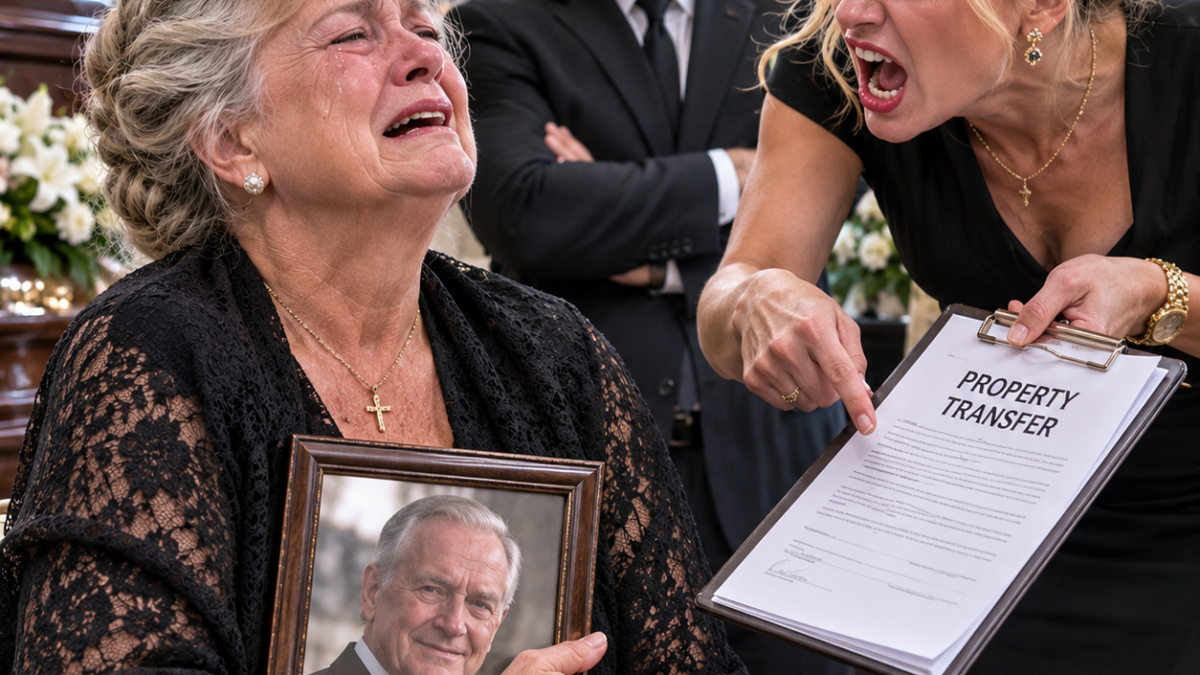
“YOUR HUSBAND IS DE@D, KATHLEEN—SIGN THE HOUSE OVER TO BRETT!” My Daughter-in-Law Tried to Take My Home Before the Funeral Flowers Had Wilted, but She Never Expected What My Husband Had Written Before He D!ed
“DOUGLAS IS GONE, KATHLEEN! BRETT IS THE MAN OF THE FAMILY NOW, AND YOU NEED TO STOP ACTING LIKE YOU CAN MANAGE EVERYTHING YOURSELF!” my daughter-in-law Shannon announced as she measured my bedroom for a king-size bed she intended to buy for herself and my son, barely a day after we’d buried my husband of thirty-four years. I had spent three decades working as a registered nurse, supervised a hospital floor for twelve years, helped pay off the home Douglas and I had built our lives around, and held his hand through the final months of his illness—but Shannon looked at my widowhood and saw an opportunity to take the house, the inheritance, and my independence. What she didn’t know was that Douglas had quietly revised his will before he D!ed, and when his solicitor opened the letter he’d left for our son, the woman who had already chosen my retirement community was about to discover that my husband had protected something far more important than his money.
The measuring tape snapped against our bedroom wall at 8:17 on the morning after we buried Douglas.
I remember the time because I’d just looked at the bedside clock.
I hadn’t slept much.
The pillow beside mine still carried a faint impression of my husband’s head, and his reading glasses lay folded on the nightstand.
I couldn’t bring myself to move them.
For thirty-four years, I’d fallen asleep knowing Douglas was beside me or would be coming home.
Now the house was silent.
Except for the sound of somebody measuring our bedroom.
I stood in the doorway.
My daughter-in-law, Shannon, was crouched beside the south wall.
She held a fabric tape measure between two fingers.
Her phone leaned against the baseboard, its screen displaying an expensive furniture website.
A large king-size bed filled the image.
Not ours.
Not anything Douglas and I had chosen.
Something Shannon wanted.
She looked up.
“Good morning, Kathleen.”
I didn’t answer.
She pulled the tape farther across the floor.
“I think the Restoration Hardware king-size would fit against this wall.”
My throat tightened.
“What?”
She nodded toward the screen.
“The bed. Brett needs more space, especially if he’s going to work from home while managing the estate.”
For several seconds, I couldn’t understand what I was hearing.
Our bedroom.
The place where I’d slept beside Douglas for more than three decades.
The place where he’d rested during his illness.
The room I’d returned to after the funeral and cried until dawn.
And Shannon was discussing where to put her new bed.
“Managing what estate?” I asked.
She looked almost amused.
“Douglas’s estate, obviously.”
I stared.
“Brett hasn’t been appointed to manage anything.”
Her smile tightened.
“Well, somebody has to take responsibility.”
I felt the familiar instinct to remain polite.
To keep the peace.
To avoid a confrontation while everyone was grieving.
That instinct had served me in hospital corridors where frightened families needed calm voices.
But Shannon wasn’t frightened.
She was making plans.
For my house.
My bedroom.
My life.
“Put the tape measure away.”
She blinked.
“Excuse me?”
“Put it away, Shannon.”
Her expression hardened.
“I’m only trying to plan ahead.”
I looked toward Douglas’s glasses.
The book he’d been reading still rested beside the lamp.
His cardigan hung over the chair.
Everything was exactly where he’d left it.
Except the man I loved.
“You’re standing in my bedroom,” I said, “planning where to put your furniture.”
She sighed.
“Kathleen, you can’t hold on to every little thing forever.”
The words struck me like a physical blow.
I had held my husband’s hand as he grew weaker.
I’d listened to him struggle through the final days.
I’d sat beside his bed for months, trying to give him comfort when nothing else seemed to help.
And now his daughter-in-law was telling me that I needed to stop holding on.
“He’s been buried one day,” I whispered.
Shannon stood.
Her eyes narrowed slightly.
“I understand you’re emotional.”
I felt my chest tighten.
“But Brett and I have to think about the future.”
I stared at her.
“And what future would that be?”
She folded the measuring tape.
“The practical thing would be for you to move somewhere smaller. A retirement community, maybe. Then Brett could manage this place.”
For a moment, the room seemed to tilt.
I was sixty-three years old.
A retired registered nurse.
A former hospital floor supervisor.
A woman who had helped pay our mortgage for twenty-two years and carried it alone for the last three while Douglas’s pension covered other expenses.
And my daughter-in-law had already assigned me a room somewhere else.
I looked at Shannon.
“No.”
She frowned.
“What?”
“No, Shannon.”
My voice was steady now.
“You will not replace my bed. You will not decide where I live. And you will not take control of this house.”
Her mouth opened.
I didn’t wait for an answer.
I turned.
Walked downstairs.
And made myself a cup of tea.
My hands shook so badly that the spoon rattled against the mug.
I sat at the kitchen table and stared through the window toward the addition Douglas had built over three summers.
The long south-facing windows caught the morning light exactly as he’d designed them to.
Beyond them stood his workshop.
His tools.
His chair.
The things he’d made.
For a moment, I wanted him so badly that I couldn’t breathe.
Then I heard Shannon upstairs, speaking into her phone.
“I don’t know why she’s being difficult. Brett needs to step up now.”
I closed my eyes.
The kettle was still warm.
The funeral flowers were still fresh.
And somewhere in my own house, my daughter-in-law was already discussing how to move me out.
I looked toward the workshop.
Then whispered:
“Douglas, please tell me you saw this coming.”
I didn’t know then that he had.
I didn’t know he had spent his final months making sure nobody could mistake my grief for weakness.
And I certainly didn’t know that the document waiting in Ms. Harrington’s office would force my son to hear something his father had never managed to tell him face-to-face.
FULL STORY CONTINUATION
I sat at the kitchen table until the tea went cold.
Upstairs, I could hear Shannon moving around.
A drawer opened.
Something scraped against the floor.
Then footsteps crossed the landing.
Every sound seemed louder without Douglas in the house.
He had always been a quiet man.
People sometimes mistook that for passivity.
But Douglas had never been passive.
He was deliberate.
He believed that when you said something, you should mean it.
When you made a promise, you should honor it.
And when you were responsible for something, you should understand exactly what it required before you began.
He’d been an electrician for thirty-one years.
He understood how a small mistake hidden behind a wall could become dangerous years later.
He used to say that a good structure depended as much on the work nobody could see as the parts everyone admired.
I hadn’t realized how often he’d applied that lesson to our marriage.
Not until I was sitting alone in our kitchen, wondering why my son and his wife had begun treating me as if I were incapable of making decisions.
Douglas and I had lived in our house in Guelph for twenty-seven years.
We hadn’t bought it because it was impressive.
We bought it because it was ours.
The kitchen was dated.
The back garden needed work.
The basement had an unpleasant smell during damp weather.
But there was enough room for Brett to grow up, and Douglas could see possibilities I couldn’t.
We’d walked through the property on a rainy afternoon.
I remember standing in the kitchen, looking at the worn cabinets.
“Douglas, this place needs a lot of work.”
He nodded.
“It does.”
I turned toward him.
“Are you sure?”
He looked through the window toward the backyard.
Then smiled.
“I think we could make something good here.”
That was how he approached almost everything.
A project.
A marriage.
Raising our son.
He didn’t promise perfection.
He promised effort.
And for thirty-four years, he’d given me more of that than I knew how to thank him for.
The back addition was his proudest project.
It took three summers.
He built it carefully, using professional help where appropriate and doing much of the work himself.
On weekends, he carried lumber through the yard.
After supper, he’d work on the rough-in wiring.
His brother Pete helped pour the concrete pad for the workshop.
I remember the two of them standing outside one evening, staring at the freshly finished surface.
Pete shook his head.
“You’re going to inspect that thing all night, aren’t you?”
Douglas smiled.
“Just making sure it’s level.”
Pete laughed.
“It’s concrete, Doug. It’s not going anywhere.”
Douglas looked toward him.
“That’s why I want it right.”
I’d stood beside the kitchen door listening to them.
Later, when Pete left, Douglas came inside smelling of sawdust and fresh earth.
I handed him a cold drink.
He kissed my cheek.
Then said, “It’s going to be good, Kath.”
I smiled.
“I know.”
And I did.
Because when Douglas said he was going to build something, he kept working until he was satisfied it would last.
He designed the addition with south-facing windows.
During winter, sunlight entered low and warm.
In summer, the room glowed through the long afternoons.
Douglas said he’d chosen that orientation so my garden plants could spend the colder months near the glass.
I believed him.
But I also knew he’d done it for me.
I worked long hours as a registered nurse.
For the final twelve years of my career, I supervised a hospital floor at Guelph General.
Some days were rewarding.
Others left me exhausted in ways sleep couldn’t fix.
There were difficult conversations.
Staff shortages.
Frightened patients.
Families waiting for answers nobody wanted to give.
Decisions that had to be made carefully because they affected real people.
After a long shift, I’d come home and find Douglas sitting beside the south-facing windows.
He’d look up from his book.
“Hard day?”
Sometimes I’d nod.
Other times I’d begin talking before I even took off my coat.
He always listened.
Then he’d make tea.
We’d sit together while the light moved across the floor.
Some evenings, he didn’t say much at all.
He didn’t have to.
The room was warm.
He was there.
And after spending the day caring for other people, I finally had somewhere to rest.
I retired the year Douglas received his diagnosis.
I wasn’t prepared for the speed with which ordinary life changed.
One season, we were discussing garden plans and whether the workshop roof needed repairs.
The next, we were arranging appointments and trying to understand medical information that seemed to become more frightening with every conversation.
I’d worked in healthcare for decades.
I knew how to speak with clinicians.
How to organize appointments.
How to ask difficult questions.
But I had never been the woman holding the hand of the person she loved most while someone explained that time might be running out.
I remember one afternoon in particular.
Douglas was sitting in the examination room.
He looked tired.
His hands rested on his knees.
The physician was speaking carefully.
I understood the words.
I could have explained them to somebody else.
But I couldn’t make myself accept what they meant for us.
When we reached the car afterward, I sat in silence.
Douglas turned toward me.
“Kath?”
I stared through the windshield.
He reached for my hand.
“We’ll take it one day at a time.”
I looked at him.
Then began crying.
He held my hand until I could breathe again.
That was Douglas.
Even when he was the one facing illness, he worried about whether I was all right.
We spent the next two years doing things we’d postponed.
Not everything.
There were days when his health wouldn’t allow much.
There were appointments.
Difficult mornings.
Fatigue.
Uncertainty.
But when he felt well enough, we went places.
We took the train toward Banff.
I remember watching the landscape change through the window while Douglas sat beside me with a small notebook on his knee.
He’d always loved railway engineering.
He couldn’t resist explaining how different structures worked.
I’d laughed.
“Douglas, we’re supposed to be enjoying the scenery.”
He smiled.
“I am.”
Then he pointed out another bridge.
And I listened.
Because I loved the way his face changed when he talked about something that interested him.
We drove to visit my cousin in the Kawarthas.
Spent quiet mornings by the water.
And began making Tuesday dinner a date.
Nothing elaborate.
Sometimes pasta.
Sometimes soup.
Sometimes whatever ingredients we had in the refrigerator.
We set the table.
Put on music.
And ate together without the television.
Douglas once raised his glass and said, “We should’ve done this years ago.”
I smiled.
“We’re doing it now.”
He nodded.
Then reached for my hand.
And for a little while, the future didn’t feel so frightening.
Brett was our only child.
Thirty-four years old when his father D!ed.
He worked in business development for a software company in Mississauga.
He earned a reasonable income.
Had good professional skills.
And could speak confidently in meetings about plans, growth, and financial strategy.
I sometimes wondered why those skills disappeared when it came to his own money.
He’d married Shannon six years earlier.
Their wedding was held at a vineyard in Niagara-on-the-Lake.
It was beautiful.
Elegant flowers.
Long tables.
A lovely ceremony.
And a bill that reached approximately thirty-two thousand dollars.
Douglas and I contributed twelve thousand without being asked.
We were happy to help.
At the time, I thought it was the sort of thing parents did when they could afford it.
A gift.
A celebration.
Something to make a meaningful day easier for our son.
But that gift became the beginning of a habit.
Over the next six years, we gave Brett and Shannon approximately thirty-eight thousand dollars in additional financial help.
The down payment assistance in 2019.
The car expenses in 2021.
A renovation loan that had never been repaid.
Other unexpected costs.
Sometimes Brett called Douglas.
Sometimes me.
There was always an explanation.
Something had gone wrong.
A payment was due.
An opportunity had appeared.
An expense couldn’t wait.
And we helped.
I didn’t think of it as a dangerous pattern at first.
We had savings.
Douglas’s pension.
Our registered accounts.
We weren’t wealthy, but we were comfortable.
We’d worked hard for that comfort.
And we wanted our son to have a good life.
But gradually, the requests became less apologetic.
Less exceptional.
More like part of the family budget.
Douglas noticed before I did.
He didn’t make a scene.
But one evening, after Brett called about another expense, my husband sat quietly at the kitchen table.
I asked:
“What’s wrong?”
He looked toward the window.
“I think we’ve made helping him too easy.”
I frowned.
“He’s our son.”
“I know.”
Douglas rubbed his hands together.
Then said:
“I’m starting to wonder whether we’re giving him the confidence to manage his life or teaching him that we will always manage the difficult parts.”
I didn’t answer.
I didn’t want to admit he might be right.
Shannon was thirty-one.
She worked in marketing and cared deeply about presentation.
Her clothes.
Her furniture.
Her social life.
The impression other people had of her.
She had precise ideas about how things should look.
Sometimes those ideas were good.
She was organized and energetic.
But she had little patience for anything that didn’t fit her vision.
Over six years, she visited our house perhaps twenty times.
She never once asked Douglas much about the addition he’d built.
Never seemed interested in the workshop.
Or the fact that he’d helped repair a neighbor’s garage wiring as a favor.
She called our house charming.
But there was always something dismissive in her voice.
“Charming” meant old-fashioned.
“Cozy” meant small.
“Interesting” meant something she’d replace if the choice were hers.
I tried not to take it personally.
People have different tastes.
I didn’t expect Shannon to love our home the way we did.
But I did expect her to respect that it belonged to us.
That expectation became a problem after Douglas D!ed.
During the first four days after the funeral, I allowed Brett and Shannon to stay in the guest room.
They lived in Mississauga, and the journey back and forth was inconvenient.
I wanted my son nearby.
He had lost his father.
Whatever concerns I had about his financial dependence, his grief was real.
And I was grateful for the company.
At first.
I cooked.
Answered calls.
Accepted casseroles from neighbors.
Thanked the people who cleared the front walk without being asked.
Handled the small practical obligations that continue after death.
The world doesn’t stop because somebody’s marriage has ended.
People still need to eat.
Bills still arrive.
Doors still need locking.
Laundry still needs washing.
I did what needed doing.
And when night came, I went upstairs and cried.
But Shannon didn’t seem to understand that my composure during the day was something I was working hard to maintain.
She saw me preparing meals.
Answering calls.
Signing papers.
And somehow concluded that what I really needed was somebody to start managing me.
The measuring tape in our bedroom was the first warning.
The fifth day brought something worse.
I was sitting at the kitchen table with coffee when Shannon entered carrying her laptop.
She placed it in front of her.
Opened a spreadsheet.
Then looked toward me.
“Kathleen, I’ve been thinking.”
I almost smiled.
Shannon was always thinking.
Usually about something she wanted.
I set down my mug.
“Yes?”
She glanced at the screen.
“Douglas’s estate is probably significant.”
My throat tightened.
She continued.
“Brett should be handling it.”
I stared.
“Why?”
She looked surprised.
“Because he’s the man of the family now.”
For a moment, I couldn’t speak.
The phrase sounded so absurd that I wondered whether I’d misunderstood.
My son was thirty-four.
A grown man.
But he had never managed our household.
Never handled our mortgage.
Never monitored our retirement accounts.
Never helped us through the years when income was uncertain.
Yet Shannon seemed to believe Douglas’s death had automatically transferred authority over everything to Brett.
I looked at her.
“Shannon, what exactly are you suggesting?”
She smiled.
“The practical thing would be for you to downsize.”
My stomach tightened.
She continued.
“A house this size is a lot to maintain alone.”
I stared.
“At your age.”
There it was.
The phrase people use when they want to make a decision sound inevitable.
At your age.
I was sixty-three.
Not a child.
Not helpless.
Not incapable of understanding a property deed.
I’d worked in nursing for three decades and supervised a hospital floor for twelve years.
I’d managed difficult situations involving patients, staff, and families.
I’d handled our accounts.
Paid our mortgage.
Maintained our household.
And now I was being told that widowhood had somehow canceled those abilities.
Shannon turned her laptop toward me.
On the screen were photographs of retirement communities.
Neat buildings.
Landscaped grounds.
Smiling older adults.
“Look.”
She pointed.
“There are some very nice independent living places east of the city.”
I felt cold.
She continued.
“Not a nursing home, obviously.”
Her smile was reassuring in a way I hadn’t asked for.
“You’d still have privacy.”
I stared at the pictures.
Then looked toward her.
“Shannon, I am not interested in moving to a retirement community.”
She nodded as though I’d said something predictable.
“Of course, it’s an adjustment.”
I felt my jaw tighten.
“No.”
She continued.
“But I think once you got used to it—”
“Shannon.”
She stopped.
I looked directly at her.
“I don’t want to move.”
For a moment, her expression hardened.
Then she smiled again.
“Well, we can discuss it.”
I stared.
“There is nothing to discuss.”
She glanced toward the living room.
Brett was watching television.
He’d been there for hours.
My son.
The person who should have understood how much this home meant to his father.
He hadn’t said a word.
Shannon turned back to me.
“Another option would be to sign the house over to Brett.”
The sentence arrived so calmly that it took me a moment to absorb.
I stared.
“What?”
She nodded.
“Just for management purposes.”
My chest tightened.
“He could handle the property going forward.”
I looked toward the windows Douglas had built.
Then back at Shannon.
“And what would I be doing?”
She smiled.
“Relaxing.”
For a moment, I almost laughed.
She continued.
“You’ve spent your life taking care of people. Let the family take care of you.”
The words sounded kind.
But beneath them was an assumption I couldn’t ignore.
That caring for me required taking control of my property.
My money.
My future.
And my choices.
I set my coffee cup down carefully.
“Shannon, if I need assistance, I’ll ask.”
Her mouth tightened.
“Kathleen—”
I stood.
“I’m going to the workshop.”
She sighed.
“Please don’t take this the wrong way.”
I looked at her.
For a moment, I wanted to explain exactly how wrong it felt.
Instead, I walked away.
The workshop smelled like Douglas.
Not exactly.
I knew that.
But there was sawdust.
Linseed oil.
The faint metallic scent of tools.
A small radio rested on a shelf.
His work jacket hung near the door.
I sat in his chair.
For a long time, I stared at the bench.
Then I remembered the final months of his illness.
The hospital room.
His hand around mine.
The way he squeezed my fingers when he was too tired to say much.
Fourteen months of mornings and nights when I tried to remain beside him as often as possible.
The appointments.
The difficult conversations.
The quiet afternoons.
I thought about the fact that Shannon had visited only occasionally.
That she hadn’t seen the private moments when Douglas was frightened.
The nights when he needed help.
The mornings when I sat beside him simply because he didn’t want to be alone.
Yet now she spoke as though she understood what I needed better than I did.
I looked around the workshop.
Then whispered:
“Douglas, I’m not leaving because somebody thinks I should.”
For a moment, I felt steadier.
Then I reached for my phone.
And called Ms. Harrington.
Ms. Harrington had handled our legal affairs since 2009.
She worked in downtown Guelph.
Douglas trusted her.
That was enough to make me comfortable calling.
She was a woman who spoke plainly and seemed almost impossible to intimidate.
When I explained that Douglas had D!ed and that I needed to review the estate arrangements, her voice softened.
“I’m very sorry, Kathleen.”
I closed my eyes.
“Thank you.”
For a moment, I couldn’t say anything else.
Then she asked whether I could come in the following Wednesday.
I agreed.
After the call, I sat in Douglas’s workshop chair for another twenty minutes.
Not because I was uncertain I needed the meeting.
Because I was frightened by how quickly things were changing.
My husband had been gone for days.
I was still learning how to wake in a bed without him.
And already I was arranging legal appointments to establish that I could continue living in my own home.
I didn’t tell Shannon about the appointment.
Not immediately.
I wanted professional information before discussing anything further.
For the next several days, I watched.
Shannon reorganized the kitchen cupboard.
She moved the mugs Douglas and I had used for years into a different cabinet.
When I asked why, she said the arrangement was more efficient.
She moved the coat hooks in the front hallway.
Douglas had installed those himself.
The spacing was deliberate.
He’d made sure the coats wouldn’t overlap the light switch or crowd the entrance.
Shannon moved them because she thought they looked better elsewhere.
A new lamp arrived at my address.
Expensive.
Oversized.
Not something I’d ordered.
Shannon placed it beside the living-room sofa.
Then left the packaging near the recycling bin without breaking it down.
I looked at the box.
Then toward the lamp.
For a moment, I felt the old instinct to tell her to remove it.
But I decided to wait until I understood exactly where I stood legally.
I wasn’t giving permission through silence.
I was gathering information.
And there is a difference.
Sunday evening, Brett came into the workshop.
I was arranging Douglas’s tools.
He’d always kept them organized by type.
I knew his system.
The levels on one shelf.
The measuring equipment nearby.
The electrical tools grouped carefully.
I was returning a small metal level to its place when I heard my son’s footsteps.
“Mom?”
I looked up.
“Brett.”
He leaned against the doorway.
Hands in his pockets.
His expression apologetic.
I’d known that look since he was nine years old and tracked mud across the good carpet.
Back then, he’d stand in exactly the same way.
Shoulders slightly hunched.
Eyes lowered.
Waiting for someone else to decide how serious the problem was.
Now he was thirty-four.
And somehow the expression hadn’t changed.
“Mom, Shannon is just trying to help.”
I rested the level on the shelf.
“Is she?”
He sighed.
“You know what I mean.”
I turned toward him.
“Tell me.”
He glanced behind him.
Then answered:
“She’s good at planning things.”
I nodded.
“She is.”
“And organizing.”
“Apparently.”
He looked uncomfortable.
I continued.
“But there is a difference between organizing something you own and reorganizing somebody else’s home without asking.”
Brett rubbed his forehead.
“She means well.”
I stared at him.
It was the phrase I had heard too many times.
She means well.
As though intention erased consequence.
As though I should surrender every objection because Shannon had decided her plans were helpful.
I took a slow breath.
“Brett, do you want this house?”
He blinked.
“What?”
I stepped closer.
“Do you want the house?”
His mouth opened.
Then closed.
For several seconds, he stared at the floor.
Finally, he whispered:
“Shannon thinks it makes financial sense.”
I felt something inside me sink.
Not because he’d admitted wanting the property.
Because he still couldn’t tell me what he wanted.
I sat on Douglas’s old stool.
“Brett, look at me.”
He raised his eyes.
I took a breath.
“Your father and I gave you and Shannon about thirty-eight thousand dollars over the past six years.”
His expression changed immediately.
“Mom.”
I continued.
“The down payment assistance.”
He looked down.
“The car situation.”
His shoulders tightened.
“The renovation loan that hasn’t been repaid.”
He rubbed his face.
I paused.
“I’m not telling you this to humiliate you.”
He stared at me.
“Then why?”
“Because I need you to understand something.”
I gestured toward the house.
“This property is not the next thing on that list.”
For a moment, he looked wounded.
I felt the familiar urge to soften my words.
To tell him I hadn’t meant it.
To offer a compromise.
But then I remembered the years of assistance we’d provided.
The way Douglas worried.
The money we’d transferred.
The opportunities we’d given our son to find stable footing.
And I knew that another concession wouldn’t help him become more independent.
I looked at Brett.
“I love you.”
His eyes filled.
“But I am not signing my home over to you.”
He nodded.
Very slightly.
Then whispered:
“I understand.”
I wanted to believe him.
But I didn’t know whether understanding would survive his next conversation with Shannon.
He left the workshop.
A few minutes later, I heard Shannon’s voice rising in the kitchen.
I couldn’t distinguish every word.
I didn’t need to.
The sharp tone.
The frustration.
The questions directed at Brett.
Then his quieter replies.
I looked toward Douglas’s radio.
For a moment, I remembered the way my husband used to turn it on while working.
Old songs.
Weather reports.
Sometimes a hockey game.
He liked having something in the background.
I switched it on.
Adjusted the volume.
Then continued returning his tools to their places.
I couldn’t control what Brett and Shannon discussed.
But I could decide that I wasn’t going to stand in my own workshop listening to them argue about the future of my house.
Wednesday arrived cold and gray.
I dressed carefully.
A dark coat.
Comfortable shoes.
The silver earrings Douglas had given me on our thirtieth anniversary.
For a long time, I stood in front of the mirror.
I looked tired.
Older than I remembered.
My hair seemed grayer.
My eyes hollow from too many sleepless nights.
Then I remembered something Douglas said during one of my difficult weeks at the hospital.
“You don’t have to look fearless, Kath.”
I’d laughed.
“That’s good, because I don’t feel fearless.”
He’d smiled.
“Then just do the next right thing.”
I touched my earrings.
Then left the bedroom.
Ms. Harrington’s office smelled of paper and freshly made coffee.
She greeted me at the reception desk.
Her expression softened when she saw me.
“Kathleen.”
I took her hand.
“Thank you for seeing us.”
She nodded.
“Of course.”
Brett arrived shortly afterward wearing a good blazer.
He looked nervous.
Shannon came beside him with her notebook.
Her pen was already uncapped.
I noticed that.
The small gesture.
As though she expected a list of assets to be dictated and wanted to make sure she missed nothing.
Ms. Harrington led us into a conference room.
A file rested on the table.
Douglas’s name appeared on the tab.
I stared at it.
For a moment, it was difficult to breathe.
The man I’d loved for thirty-four years had become a file.
A collection of documents.
A list of legal instructions.
I knew that was necessary.
But understanding didn’t make it easier.
Ms. Harrington sat down.
Opened the folder.
And said:
“Douglas was a thorough man.”
I closed my eyes.
He was.
He always had been.
She explained that Douglas had reviewed and updated his estate instructions eight months earlier and again in February, before his condition deteriorated further.
Shannon tapped her pen once.
A small, impatient sound.
Ms. Harrington turned to the first section.
Then read the main provisions.
The primary residence.
The registered accounts, including our RRSP and TFSA arrangements as applicable.
The pension benefits addressed by the estate plan.
The remaining estate assets.
Everything Douglas had authority to leave through those instructions was intended for me.
I looked down at the table.
I hadn’t come expecting a fortune.
We weren’t extravagantly wealthy.
But we’d worked hard.
Saved.
Managed our accounts carefully.
Made decisions together.
And Douglas had left me the security we’d spent decades building.
Across from me, Shannon’s pen stopped.
Her hand remained still.
For a moment, she looked as though she’d misheard.
Ms. Harrington continued.
“Douglas also left a personal letter that he asked to have read aloud.”
Brett shifted in his chair.
Shannon looked up sharply.
“A letter?”
Ms. Harrington nodded.
“Yes.”
She put on her glasses.
Then began.
“To my son, Brett…”
The words seemed to change the air in the room.
Ms. Harrington read calmly.
Douglas wrote that he had been proud of our son.
Proud of the small things.
Proud of the large ones.
He had seen Brett grow.
Work.
Build a career.
And become a man with abilities he sometimes didn’t recognize in himself.
Then the letter changed.
Douglas acknowledged that we had made life easier for Brett than we should have.
That we’d helped financially when he needed it.
And sometimes when he simply wanted something beyond what he could comfortably afford.
I felt tears gathering.
Because I remembered every time we’d said yes.
Every time we’d told ourselves this would be the last unexpected payment.
Every time we’d believed helping was automatically the loving thing to do.
Then Ms. Harrington read a sentence that made Brett lower his head.
“Love sometimes looks like silence when it should look like honesty.”
I stared at the table.
I knew Douglas had been thinking about that.
I remembered his concerns.
The way he’d questioned whether we were encouraging dependence.
But I hadn’t understood how deeply the problem troubled him.
The letter continued.
Douglas wrote about me.
Not as a fragile widow.
Not as a woman who would need her son to take over.
As his wife.
His partner.
The person who had helped build our home in every way that mattered.
He spoke about the difficult places we’d been together.
The illness.
The work.
The years of responsibility.
Then Ms. Harrington read:
“I trust her completely.”
I closed my eyes.
The words felt like his hand resting over mine.
A simple statement.
No dramatic language.
No grand declaration.
Just the trust that had held us together for thirty-four years.
I heard Shannon shift in her chair.
Then Ms. Harrington reached the part of the letter concerning Brett’s inheritance.
Douglas explained that he had chosen not to leave our son a separate share of the estate.
Not out of hatred.
Not to punish him.
But because he believed Brett needed to discover that he was capable of more than he’d been asking of himself.
The words were painful.
I could hear that.
Even before I looked up and saw my son’s face.
Brett’s eyes were wet.
His jaw trembling.
He made a small sound and swallowed it immediately.
For a moment, I wanted to reach across the table.
Take his hand.
Tell him his father loved him.
But I also understood that Douglas had written those words because he wanted our son to hear them without someone rushing to soften their meaning.
So I remained quiet.
Shannon stood so abruptly that her chair tipped backward.
The sound cracked through the room.
I flinched.
She pointed toward me.
“This was written when he was sick!”
Ms. Harrington remained seated.
Shannon’s voice rose.
“He wasn’t thinking clearly!”
I felt my heart pounding.
Then she said:
“YOU GOT TO HIM, KATHLEEN!”
The accusation hit me harder than I expected.
For fourteen months, I’d spent mornings and nights beside Douglas.
I’d helped him.
Comforted him.
Advocated for him when necessary.
Sat through difficult appointments.
Held his hand when he was frightened.
And now Shannon was suggesting that my presence during his illness had been an opportunity to manipulate him.
I looked at her.
For a moment, I couldn’t speak.
Ms. Harrington removed her glasses.
Placed them carefully on the folder.
Then addressed Shannon.
“The instructions were reviewed and properly documented, with independent witnessing and notarial review while Douglas was capable of making these decisions.”
Shannon’s face reddened.
Ms. Harrington continued.
“If you choose to obtain independent legal advice, you are entitled to do so.”
A pause.
“But you should not assume the documents are invalid simply because the provisions differ from what you expected.”
Shannon stared.
Her mouth opened.
Then closed.
I watched her.
And realized that she had never imagined anyone would tell her no in a room where she expected to negotiate.
Ms. Harrington turned toward me.
“Kathleen, shall we review the next administrative steps?”
I took a breath.
“Yes.”
My voice sounded steadier than I felt.
“Thank you.”
Shannon remained standing for another moment.
Then picked up her chair.
Sat down.
And stared at the table.
Brett hadn’t moved.
His eyes remained fixed on his father’s letter.
I could see that the words were hurting him.
But I also saw something else.
Recognition.
As though a part of him knew his father hadn’t written them impulsively.
Douglas had been disappointed.
Not because Brett had failed to become successful.
He had a career.
A marriage.
Skills.
Opportunities.
But because our son had begun asking less of himself than he was capable of doing.
And now the person who might have helped him understand that was gone.
We left Ms. Harrington’s office quietly.
The sky had darkened.
A cold wind moved through the street.
Brett walked beside Shannon.
I followed a few steps behind.
For a moment, I looked at my son.
He seemed smaller than he had earlier that morning.
His shoulders slumped.
His eyes lowered.
I wanted to comfort him.
But Shannon had already begun speaking in a low, furious voice.
Something about legal advice.
A second opinion.
How unfair everything was.
Brett nodded.
He didn’t look toward me.
I reached my car.
Opened the door.
Then stopped.
For a moment, I remembered Douglas taking my hand outside this same office years earlier after we updated our wills.
He’d smiled and said:
“That’s one thing handled.”
I’d laughed.
“Only you could make estate planning sound like fixing a leaky faucet.”
He’d smiled.
“Important things are often less complicated when you handle them before they’re urgent.”
I closed my eyes.
Then got into the car.
And drove home.
That evening, the house felt tense.
Shannon moved through the rooms without speaking to me.
Brett remained on the sofa.
He looked exhausted.
I cooked a simple meal.
Not because I wanted to pretend everything was fine.
Because I needed to eat.
And because some part of me was still unwilling to stop caring for my son.
But I also knew the situation could not continue indefinitely.
Brett and Shannon had been staying as guests.
They had no rental agreement.
They weren’t contributing to household expenses.
And they’d been there less than two weeks.
I had already spoken with an advisor through a referral service about how to end the temporary arrangement properly.
I wanted the appropriate notice.
The correct process.
No unnecessary confrontation.
No legal shortcuts.
I had spent thirty years working in healthcare.
I understood the value of documentation.
And I wasn’t going to start ignoring it because the matter involved family.
The following morning, I printed two copies of a letter.
One for Brett.
One for Shannon.
I signed them.
Dated them.
Placed each inside an envelope.
The wording was brief.
It stated that I was ending their temporary permission to stay in the house.
That I required them to make alternative arrangements.
And that I expected them to leave within fourteen days, consistent with the advice I’d obtained for our circumstances.
I read the letter twice.
Then a third time.
Not because it was complicated.
Because I was frightened.
The idea of handing my son a notice to leave his childhood home made me feel physically ill.
But then I remembered Shannon in our bedroom with the measuring tape.
The retirement community photographs.
The request to transfer the house.
The way she’d spoken about Douglas’s estate before we’d even finished grieving him.
And I knew that doing nothing would be another decision.
A decision to allow the situation to continue.
I folded the letters.
Placed them on the breakfast table.
And waited.
Shannon entered first.
She saw the envelope beside her plate.
Picked it up.
Then looked at me.
“What’s this?”
I took a sip of coffee.
“A letter.”
She pulled it open.
Read the first paragraph.
Then stared.
“What?”
Brett entered behind her.
He looked toward the second envelope.
“Mom?”
I nodded toward it.
“That’s yours.”
He opened it.
For several moments, both read silently.
Then Shannon’s face turned red.
“A notice to vacate?”
I nodded.
“Yes.”
She stared at me.
“You’re throwing us out?”
I kept my voice calm.
“I’m asking you to make other living arrangements within fourteen days.”
Brett looked pale.
“Mom, we don’t have anywhere to go.”
My throat tightened.
I looked at him.
“You have your jobs and the means to look for housing.”
He shook his head.
“We gave up our apartment in Mississauga.”
I nodded slowly.
“I understand that creates a problem.”
His eyes filled.
I continued.
“But I didn’t agree to become your permanent housing arrangement.”
Shannon stood.
Her chair scraped against the floor.
“You can’t do this.”
I looked toward her.
“The notice is clear.”
She clenched the paper.
“You’re alone!”
The word seemed to echo through the kitchen.
She continued.
“YOU NEED US HERE!”
I felt something cold settle inside me.
Then she said:
“YOU’RE GOING TO FALL APART RATTLING AROUND THIS BIG HOUSE BY YOURSELF!”
For a moment, I couldn’t speak.
Then I thought about all the people I’d cared for during my nursing career.
The frightened patients.
The families waiting for news.
The colleagues who relied on me during difficult shifts.
I thought about my mother.
My father-in-law.
My closest friend from university.
The people I’d buried.
And Douglas.
My husband.
The man I’d held through the final months of his life.
I looked directly at Shannon.
“I know what falling apart looks like.”
She stared.
I continued.
“I’ve been a nurse since before you were born.”
My voice was steady.
“I’ve stood beside people during the worst days of their lives.”
A pause.
“And I’ve buried people I loved.”
I looked toward Douglas’s chair.
“Last week, I buried my husband of thirty-four years.”
For a moment, my throat tightened.
Then I turned back.
“So please don’t mistake the fact that I’m grieving for proof that I no longer understand my own decisions.”
Shannon’s mouth opened.
I continued.
“I know what I’m doing.”
The room was silent.
Then I picked up my coffee.
And walked toward the window.
The back garden was covered with frost.
Douglas’s south-facing windows caught the morning light.
Beyond them stood his workshop.
For a moment, I could almost see him inside.
Adjusting something.
Checking a measurement.
Looking up when he heard me approach.
I held my coffee cup in both hands.
Then whispered:
“Fourteen days.”
Behind me, Shannon began speaking again.
Her voice sharp.
Angry.
But I didn’t answer.
I’d already said what needed saying.
And for the first time since Douglas D!ed, I felt that I had drawn a line he would have understood.
The next twelve days were among the hardest of my life.
Not because Brett and Shannon were constantly shouting.
Sometimes the house was painfully quiet.
That was worse.
Shannon moved through the rooms with clipped steps and a fixed expression.
She stopped offering suggestions about furniture.
Stopped discussing retirement communities.
Stopped pretending we were making plans together.
Instead, she behaved as though I’d committed some terrible betrayal by refusing to give her the future she’d imagined.
Brett tried to speak with me several times.
Usually in the evenings.
After Shannon had gone upstairs.
He’d stand in the doorway with the same apologetic look I’d known since his childhood.
“Mom?”
I’d turn.
“Yes?”
He’d hesitate.
Then ask whether we could reconsider.
The first time, I almost said yes.
He looked so tired.
So disappointed.
And he was my son.
I remembered holding him as a baby.
Watching him take his first steps.
Helping him with homework.
Waiting for him to come home safely after his first evening driving alone.
The instinct to protect him hadn’t disappeared simply because he was thirty-four.
But I also remembered what Douglas wrote.
That we had made things easier for Brett than we should have.
That loving him had sometimes meant remaining silent when honesty was needed.
I took a breath.
“Brett, have you started looking for somewhere to live?”
He looked down.
“Not really.”
I nodded.
“Then that’s where you need to begin.”
His expression tightened.
“It’s not that easy.”
“I know.”
He looked surprised.
I continued.
“Finding a place takes effort.”
A pause.
“Applications. Deposits. Decisions.”
He sighed.
“Shannon’s upset.”
I looked toward him.
“I understand.”
He waited.
Then I added:
“But that doesn’t change what needs to be done.”
The second evening, Brett sat beside me in the sunroom.
Douglas’s chair was empty across from us.
The light came through the windows in long, warm lines.
For a moment, I remembered sitting there with my husband after a difficult hospital shift.
I felt grief rise unexpectedly.
Brett noticed.
“Mom?”
I wiped my eyes.
“I’m all right.”
He looked toward the chair.
Then whispered:
“I miss him.”
My throat tightened.
“I know.”
For several moments, we sat quietly.
Then Brett looked toward me.
“Dad would’ve let us stay.”
The words hurt.
Not because I was sure they were untrue.
Douglas had been generous.
Sometimes too generous.
But I knew Brett was reaching for the version of his father who always made difficult things easier.
I turned toward him.
“Your father loved you.”
He nodded.
“I know.”
“He helped you more than either of us understood at the time.”
Brett looked down.
I continued.
“And toward the end of his life, he began thinking very seriously about whether that help had actually been good for you.”
My son’s jaw tightened.
“He didn’t have to leave me nothing.”
I swallowed.
“He didn’t stop loving you.”
Brett looked toward the window.
For a moment, I thought he might cry.
Then he whispered:
“That’s what it feels like.”
I moved closer.
“Brett.”
He looked up.
“The amount someone leaves in a will doesn’t measure how much they loved you.”
His eyes filled.
I continued.
“Your father didn’t believe you were incapable.”
A pause.
“He believed you were capable of more.”
Brett stared at me.
Then looked down again.
For a long time, he said nothing.
I wanted to tell him everything would be fine.
That I’d help with the deposit.
That he could remain another month.
That I’d cover whatever shortfall they encountered.
The words came so naturally to my mind that I almost spoke them.
Then I recognized the pattern.
For years, whenever Brett faced something uncomfortable, Douglas and I had stepped in.
We’d offered money.
A solution.
A way around the difficulty.
And each time, our son had learned a little less about what he could manage himself.
I took a breath.
“You have a good job, Brett.”
He nodded.
“You and Shannon both earn money.”
Another nod.
“You can contact your previous landlord.”
He looked at me.
“Look at rental listings. Call property managers. Make appointments.”
I paused.
“Do the next useful thing.”
For a moment, he seemed annoyed.
Then he looked toward Douglas’s chair.
His expression softened.
Finally, he whispered:
“I guess that’s what Dad would’ve said.”
I nodded.
“Yes.”
There were nights I doubted myself.
I would lie awake listening to the house settle.
Wondering whether I was being too harsh.
Whether Douglas would have wanted me to give Brett more time.
Whether I was letting my grief turn into anger.
Then I would remember Shannon measuring our bedroom.
Her voice.
Brett is the man of the family now.
And the way she spoke of a retirement community as though she’d already decided where I belonged.
I wasn’t refusing to help because I wanted my son to suffer.
I was refusing because the assistance they wanted required me to surrender control of my home.
That wasn’t an ordinary favor.
It was a permanent consequence.
And I was finally willing to recognize the difference.
On the twelfth morning after I gave them notice, I came downstairs and found the driveway empty.
Brett’s car was gone.
The guest bedroom door stood open.
I walked inside.
The room had been stripped of their belongings.
The bed was made.
Almost perfectly.
The corners tucked so tightly they looked like an accusation.
Shannon had removed the lamp she’d ordered.
Her toiletries were gone.
The clothes.
The bags.
Everything.
For a moment, I stood in the doorway.
The room looked ordinary.
Clean.
Quiet.
But I felt exhausted.
I had wanted them to leave.
I’d asked them to.
Yet seeing the empty room made something inside me ache.
My son had left without saying goodbye.
I sat on the edge of the guest bed.
And cried.
Not because I regretted the boundary.
Because enforcing it had hurt more than I’d expected.
I didn’t chase them.
I wanted to.
I considered picking up my phone.
Calling Brett.
Asking whether he’d found somewhere safe.
Whether he’d eaten breakfast.
Whether he needed anything.
But he’d left in the morning.
He was thirty-four.
He had a job.
He was married.
And he needed to begin managing the consequences of his decisions.
I could care about him without immediately stepping in.
I could worry without taking over.
That was difficult for a mother who had spent her entire adult life helping other people.
But I was learning.
Slowly.
Painfully.
That evening, I went into the kitchen to make soup.
Douglas had always loved soup on cold days.
He’d come inside from the workshop with his hands chilled.
I’d place a bowl in front of him.
And he’d say, “Perfect weather for this.”
I reached toward the cupboard for our heavy Le Creuset pot.
The one we’d received as a wedding gift in 1990.
The shelf was empty.
I stared.
Moved a smaller pot.
Checked behind the mixing bowls.
Looked in the lower cupboard.
Nothing.
Then I understood.
Shannon had taken it.
For a moment, I couldn’t believe the pettiness.
Not because the pot was irreplaceable.
But because it belonged to a history she knew nothing about.
Thirty-four years of meals.
Family dinners.
Winter evenings.
The first soup I cooked after Brett came home from the hospital as a newborn.
The final meals Douglas and I shared while he was still able to enjoy them.
It wasn’t simply cookware to me.
And Shannon had carried it out as though it belonged in her new kitchen.
I took a photograph of the empty storage space and sent Brett a brief message asking for the pot’s return.
Then I made soup in a different saucepan.
I ate alone.
And reminded myself that a missing pot did not mean my home was no longer mine.
The following weeks brought phone calls.
Brett wanted to know whether Ms. Harrington might have misunderstood the estate arrangements.
Whether there was another provision concerning the registered accounts.
Whether the pension payments had been calculated correctly.
I answered what I could.
Then referred him to the proper paperwork and professional advice.
I wasn’t going to argue about Douglas’s decisions every time my son felt disappointed.
Shannon’s mother called twice.
I didn’t recognize the number at first.
She left messages expressing anger about the way Brett and Shannon had been treated.
I listened.
Then deleted the messages.
There was no conversation I needed to have with her.
She was entitled to support her daughter.
I was entitled to manage my own home.
The most welcome call came from Pete.
Douglas’s brother.
He asked how I was doing.
Not what I intended to do with the property.
Not how much I’d inherited.
Not whether Brett was angry.
He simply asked:
“Kathleen, have you been eating properly?”
I felt tears gathering.
I laughed softly.
“Yes, Pete.”
He paused.
“Honestly?”
I smiled.
“Mostly.”
For a moment, neither of us spoke.
Then his voice became gentle.
“I miss him.”
My throat tightened.
“Me too.”
We talked about Douglas for nearly an hour.
The workshop.
The addition.
The concrete pad Pete had helped pour.
The way Douglas always checked measurements one more time than anyone thought necessary.
For the first time in weeks, I felt like I was speaking with someone who remembered my husband as a person rather than an estate.
Two weeks after Brett left, the Le Creuset pot appeared on my porch.
No note.
No knock.
I opened the door and found it beside the welcome mat.
For a moment, I stared.
Then I picked it up.
Carried it into the kitchen.
And washed it carefully.
I didn’t know whether Shannon had returned it willingly or Brett had insisted.
I didn’t ask.
The pot was home.
That was enough.
I placed it back on the shelf.
Then stood looking at it.
For a moment, I remembered Douglas lifting the lid and smiling at whatever was cooking.
My eyes filled.
I touched the handle.
And whispered:
“Still here.”
Late November arrived cold and gray.
The trees had lost most of their leaves.
The garden looked bare.
The south-facing windows collected the weak afternoon light.
I was sitting in the addition when Brett called.
I almost let the phone ring.
We hadn’t spoken much since the move.
Our conversations had become strained.
Practical.
Sometimes painful.
But something made me answer.
“Hello, Brett.”
“Hi, Mom.”
His voice sounded different.
Tired.
Not irritated.
Not demanding.
Just tired.
I sat straighter.
“Are you all right?”
He took a breath.
“Yeah.”
A pause.
“We found a place.”
I looked toward the garden.
“Where?”
“Hamilton.”
He explained that it was a two-bedroom apartment on the second floor.
Not particularly large.
Not luxurious.
But comfortable enough.
For a moment, I remembered Shannon showing me pictures of expensive furniture for my bedroom.
Now she and Brett had found a place they could afford.
I took a breath.
“That’s good news.”
Brett was quiet.
Then said:
“It’s not much.”
I felt a familiar ache.
“Is it safe?”
“Yeah.”
“Does it meet your needs?”
A pause.
“I think so.”
I smiled gently.
“Then it’s something worth being proud of.”
We spoke about the apartment for a few minutes.
Then I asked:
“How did you manage the deposit?”
I regretted the question almost immediately.
It sounded like the beginning of another conversation about money.
But Brett didn’t become defensive.
Instead, he answered:
“We saved for it.”
I stared toward the window.
He continued.
“Shannon got a new contract.”
A pause.
“I took on some extra accounts.”
His voice softened.
“We figured it out.”
For a moment, I couldn’t speak.
Those four words.
We figured it out.
After years of helping with expenses.
After months of arguments about what they expected to receive.
After the fear and anger surrounding the estate.
My son was telling me he and his wife had solved a financial problem without asking me to cover it.
I looked toward Douglas’s workshop.
The sunlight fell across the floor in the long, even lines he’d designed.
Then I whispered:
“I’m proud of you.”
Brett was silent.
I continued.
“I mean that.”
His voice broke slightly.
“Thanks, Mom.”
I swallowed.
Then said:
“Your father would have been pleased to hear you say that.”
For a long moment, neither of us spoke.
Then Brett whispered:
“I’ve been thinking about what he wrote.”
My throat tightened.
“I know.”
He took a breath.
“I don’t think I understood it before.”
I closed my eyes.
For the first time since the will reading, I felt something like hope.
Not certainty.
Not a promise that everything would suddenly become easy.
But the possibility that Douglas’s final message had begun reaching our son.
Brett didn’t call again for a while.
I didn’t chase the silence.
I was learning that not every distance needs to be crossed immediately.
Sometimes people need room to think.
To feel embarrassed.
To make their own decisions.
And to return when they have something meaningful to say.
I’d spent years trying to make Brett comfortable.
Now I wanted him to become capable.
Those were not always the same thing.
December arrived.
I began putting the house back the way I liked it.
Not in one dramatic afternoon.
Slowly.
Room by room.
I rehung the photographs Shannon had arranged into a perfectly even row that made the hallway look like a hotel corridor.
I returned the family pictures to the places Douglas and I had chosen.
Our wedding.
Brett as a baby.
A holiday photograph from Banff.
The picture of Pete and Douglas standing beside the newly poured workshop pad.
I stopped at that one.
Douglas was smiling.
Pete had one hand resting against the concrete form.
Both looked proud.
I held the picture for a long time.
Then placed it back on its familiar hook.
I returned the coat hooks to their original positions.
It took a little work.
But I knew the measurements.
Douglas had explained them when he installed the hooks years earlier.
I smiled while adjusting the final screw.
“Of course you measured it properly.”
The words escaped before I thought.
For a moment, the hallway felt unbearably quiet.
Then I laughed softly.
Because I could almost hear him answering.
“Somebody had to.”
I reorganized his study.
Douglas had a particular system for books.
Reference volumes on the top shelf.
Canadian history in the middle.
Novels along the bottom.
He always claimed it made sense.
I’d teased him that he was the only person I knew who organized novels according to whether he wanted other people to notice him reading them.
He’d smiled.
“Some things are private.”
Now I returned the books to their familiar places.
I ran my fingers along the spines.
Then stopped beside a novel he’d read during the final months of his illness.
A bookmark rested halfway through.
I opened it.
There was no secret note.
No unexpected revelation.
Just a page he’d never finished.
For a moment, I began crying.
Then I carefully closed the book.
Placed it on the shelf.
And whispered:
“I’ll finish it for you.”
I cooked what I wanted.
Sometimes soup.
Sometimes pasta.
Sometimes a simple sandwich because I didn’t feel like preparing a larger meal.
I stopped rearranging my schedule around visitors who hadn’t asked whether I wanted company.
I went to bed when I was tired.
Stayed up reading when I wasn’t.
Sat in the workshop with the radio on.
Made tea.
Looked out through the south-facing windows.
The house grew quiet again.
But slowly, it became a quiet I could live inside.
Not because Douglas’s absence stopped hurting.
It didn’t.
But because nobody was telling me what I ought to do with that absence.
I could miss him without apologizing.
Cry without being treated as incompetent.
And remember him in the rooms we’d built together.
One evening, I sat in the workshop watching the final light fade.
Douglas’s chair stood beside the bench.
His tools were arranged neatly.
The concrete pad he and Pete poured remained sound beneath my feet.
I looked toward the south-facing windows.
For a moment, I imagined Douglas standing there, checking the angle of the light.
Then I remembered something he’d said during the first year of our marriage.
We were eating crackers and canned soup because money was tight.
He’d been talking about work.
The importance of building things that lasted.
Then he’d smiled.
“The best thing I know how to do is build something that will outlast me.”
At the time, I’d laughed.
“That’s a strange thing to say over canned soup.”
He’d grinned.
“Maybe.”
Then he looked toward me.
“But I mean it.”
Now I was sitting inside an addition he’d built with his own hands.
Looking at windows he’d positioned carefully.
Surrounded by shelves, tools, and memories.
And I understood that he hadn’t been talking only about buildings.
He’d been talking about the life we created.
The values we tried to teach Brett.
The way we cared for each other.
The things that could remain meaningful after one of us was gone.
I closed my eyes.
Then whispered:
“You did, Douglas.”
My voice broke.
“You built something that lasted.”
By February, I was ready to try something new.
For eleven years, I’d been talking about taking a watercolor class.
I’d seen advertisements.
Picked up brochures.
Mentioned it to Douglas.
Then found reasons to postpone.
Work was too demanding.
The house needed something.
Brett was dealing with a problem.
There was always something more urgent than learning to paint.
Douglas used to smile whenever I brought it up.
“Then sign up, Kath.”
I’d shake my head.
“Maybe next season.”
He’d laugh.
“You’ve said that for three years.”
He was right.
Eventually, it became eleven.
Now I looked at the schedule for the Guelph Art Centre.
Found a beginner class.
And enrolled.
I was nervous on the first evening.
Ridiculously nervous.
I’d managed hospital floors.
Supervised employees.
Handled emergencies.
Spoken with families during terrible moments.
Yet walking into a room with paintbrushes and blank paper made my palms sweat.
I was afraid of being terrible at something.
It had been a long time since I’d allowed myself to begin as a complete beginner.
The instructor was twenty-six.
Bright.
Enthusiastic.
Talented.
She didn’t ask whether I was married.
Didn’t treat me like somebody who needed comforting.
Didn’t speak to me differently because I was sixty-three.
She handed me paper.
Showed me how to work with the paint.
Then encouraged me to try.
I made a mess.
My first painting was awful.
The trees looked like green clouds.
The path crooked.
The proportions entirely wrong.
I stared at it.
Then began laughing.
The instructor came over.
“Having fun?”
I looked up.
“Yes.”
And realized I meant it.
For the first time in months, I was doing something that had nothing to do with Douglas’s illness, the funeral, the estate, or my son’s financial problems.
I was learning.
Because I wanted to.
My fifth painting was better.
Not extraordinary.
But better.
I painted the south-facing windows of the addition.
The winter light.
A glimpse of the garden.
The faint outline of the workshop beyond.
I worked on it slowly.
Adjusted the colors.
Tried again when something didn’t look right.
When I finished, I sat staring at it.
Then I smiled.
I knew exactly where I wanted to hang it.
In Douglas’s workshop.
Beside the place where he’d once pinned his project sketches.
I went home.
Found a small frame.
Then placed the painting on the wall.
For a moment, I stood looking at it.
The crooked lines.
The soft light.
The imperfect garden.
I imagined Douglas studying it.
Then smiling.
“Not bad, Kath.”
I laughed softly.
“Thanks, sweetheart.”
And I left it there.
On a Tuesday in March, Brett called.
I was standing in the kitchen preparing tea.
When his name appeared on the screen, I smiled.
We’d spoken occasionally since November.
The conversations were still careful.
But less tense.
He told me about work.
The apartment in Hamilton.
Small things he’d repaired.
Bills he and Shannon were managing.
I listened.
Sometimes offered an opinion when he asked.
But I no longer rushed to solve every problem.
That afternoon, his voice sounded different.
“Mom?”
I smiled.
“Hello, sweetheart.”
He took a breath.
“Shannon’s pregnant.”
For a moment, I couldn’t speak.
Then I sat down.
“Brett.”
He gave a nervous laugh.
“Yeah.”
My eyes filled.
“A baby?”
“Yeah, Mom.”
His voice trembled.
“We’re having a baby.”
I pressed one hand against my mouth.
For a moment, I thought of Douglas.
How his face would have changed.
The quiet smile.
The way he would immediately begin thinking about a crib or a little wooden toy he could build.
I wanted him there.
More than I could express.
I swallowed.
“Oh, Brett.”
My voice broke.
“That’s wonderful news.”
He exhaled.
As though he’d been holding his breath waiting for my answer.
“Really?”
I smiled through tears.
“Of course.”
For a moment, neither of us spoke.
Then he whispered:
“I’m scared.”
I closed my eyes.
There he was.
My son.
Thirty-four years old.
About to become a father.
Finally admitting that he didn’t have all the answers.
And not asking me to solve everything for him.
I took a breath.
“That’s understandable.”
He laughed nervously.
“I don’t know anything about babies.”
I smiled.
“Neither did your father when you were born.”
Brett was quiet.
Then he laughed.
“Really?”
“Oh, sweetheart.”
I smiled through tears.
“He was terrified.”
I told Brett about the first time Douglas held him.
How carefully he’d supported his head.
How he’d stared at his tiny fingers.
How he’d looked at me with tears in his eyes and whispered that he hadn’t known he could love someone so much.
Brett listened.
For a long time, he didn’t speak.
Then he asked:
“Do you think Dad would’ve been happy?”
My throat tightened.
I looked toward the workshop.
The windows.
The light.
The room Douglas built.
“Yes.”
My voice broke.
“He would’ve been very happy.”
A pause.
“And he would’ve had a lot of advice.”
Brett laughed.
“I bet.”
I smiled.
“He would’ve told you to be patient.”
Another pause.
“To be dependable.”
My eyes filled.
“And to remember that children learn more from what you do than what you say.”
Brett grew quiet.
Then whispered:
“I’ve been thinking about that.”
I nodded slowly.
“I know.”
For a moment, I considered asking whether he and Shannon could afford the baby.
Whether they’d begun saving.
Whether their apartment was large enough.
Whether they’d planned everything carefully.
The questions came naturally.
They were the questions I’d spent years asking.
But then I remembered Douglas’s letter.
You are capable of more than you have asked of yourself.
I took a breath.
And let the questions pass.
Instead, I said:
“I hope you teach your child how to use a level.”
There was silence.
Then Brett laughed.
A surprised, genuine laugh.
“Mom.”
I smiled.
“Your father would’ve wanted that.”
He laughed again.
Then his voice softened.
“I know.”
For a moment, neither of us spoke.
Then Brett whispered:
“I think I understand what he was trying to tell me.”
My throat tightened.
I looked toward Douglas’s photograph.
And answered:
“I think you’re beginning to.”
After we hung up, I remained sitting at the kitchen table.
My tea had gone cold.
Outside, the garden was beginning to change.
The ground still looked hard.
The trees were bare.
But there were small signs of spring.
A little green at the edge of the flower bed.
New buds on the branches.
Light lingering longer in the evenings.
I thought about the child Brett and Shannon were expecting.
My grandchild.
A little life I hadn’t known existed that morning.
I was happy.
And sad.
Because Douglas wouldn’t be there to hold the baby.
He wouldn’t build a small shelf for the nursery.
Wouldn’t explain electrical safety to a toddler who couldn’t possibly understand.
Wouldn’t teach another child to measure a board twice before cutting.
I felt tears sliding down my face.
But beneath the grief was something else.
The knowledge that the lessons he’d lived by could continue without him.
Brett could teach them.
So could I.
Not perfectly.
Not without mistakes.
But one day at a time.
I don’t know exactly what kind of father Brett will become.
I hope he’ll be patient.
I hope he’ll understand that loving a child doesn’t mean protecting them from every uncomfortable experience.
I hope he’ll learn to offer support without removing every responsibility.
And I hope Shannon will discover that family isn’t a hierarchy in which the loudest person makes every decision.
I can’t guarantee any of those things.
People change slowly.
Sometimes painfully.
And sometimes not in the ways we hope.
But Brett and Shannon found a place of their own.
Saved for a deposit.
Adjusted their work.
And began managing their expenses without asking me to surrender my home.
That is real progress.
It may sound ordinary.
But after everything that happened, ordinary responsibility is something I value deeply.
I still live in the house in Guelph.
The one Douglas and I bought twenty-seven years before his death.
The back addition remains my favorite room.
The windows still gather the afternoon sun.
The workshop is clean.
His tools are where he left them.
His books are arranged according to the system I know by heart.
The garden waits for spring.
And the bed in my bedroom remains the one Douglas and I shared.
I haven’t replaced it with Shannon’s king-size Restoration Hardware bed.
I haven’t signed the deed over to Brett.
And I haven’t moved into the retirement community Shannon selected for me.
Not because I’m afraid of change.
I’ve lived through enough change to know it can be necessary.
But because those decisions belong to me.
When I need help, I’ll ask.
If I decide someday to move somewhere smaller, I’ll make that choice after considering what I want and what I need.
Not because a daughter-in-law with a tape measure believes a widow should step aside.
I sometimes think about the morning Shannon stood in our bedroom.
The tape stretched across the wall.
Her phone displaying furniture.
Her casual announcement that Brett would be managing Douglas’s estate.
At the time, I felt as though my husband had barely left the world before somebody began measuring how much space his absence created.
That was the deepest hurt.
Not the furniture.
Not the inheritance.
The assumption that losing him had made me smaller.
That the woman who’d shared his life was suddenly less capable of directing her own.
But Douglas had never treated me that way.
He knew the woman he married.
The nurse who worked difficult shifts.
The mother who raised our son beside him.
The wife who helped pay the mortgage.
The person who stood with him through illness, economic uncertainty, and ordinary setbacks.
He had never imagined that I needed somebody to replace him as my supervisor.
He trusted me.
Completely.
And in the end, he made sure his wishes reflected that trust.
Tonight, I sit in the back addition with tea.
The sun is setting.
Long bands of light fall across the floor.
Douglas designed those windows so carefully that the room almost seems to hold the afternoon a little longer than the rest of the house.
I look toward the workshop.
Then toward my watercolor painting hanging beside his old project sketches.
For a moment, I imagine him sitting across from me.
His book in his hands.
His reading glasses low on his nose.
He looks up.
Smiles.
And asks:
“How was your day, Kath?”
I close my eyes.
I can almost hear him.
Then I whisper:
“Pretty good, Douglas.”
My voice trembles.
“I painted something.”
I smile through tears.
“And Brett called.”
For a moment, the room feels full of everything we’ve shared.
The years.
The work.
The love.
The mistakes.
The forgiveness.
The ordinary evenings I wish I’d appreciated even more when we still had them.
I will never say that widowhood has been easy.
It hasn’t.
There are mornings when the quiet hurts.
Evenings when I reach for his hand and remember it isn’t there.
Days when a song or a familiar smell brings back grief so suddenly that I have to sit down.
But I am still here.
I’m still capable.
Still learning.
Still deciding what kind of life I want.
And I no longer believe I have to make myself smaller to fit the space someone else thinks a grieving woman should occupy.
Douglas spent thirty-four years giving me room to be myself.
I will not waste that gift.
My daughter-in-law believed my husband’s death meant my son should inherit control of our house, our savings, and even my future. But Douglas’s final letter left the estate to me, reminded Brett that independence couldn’t be inherited, and made it clear that the woman he’d trusted for thirty-four years did not need anyone else deciding how she should live.
I gave Brett and Shannon fourteen days to make their own arrangements, watched them leave without saying goodbye, and endured the painful silence that followed. But when my son finally called to tell me he’d saved for an apartment with his own earnings—and later told me he was going to become a father—I knew Douglas’s final lesson had begun to mean something beyond the words on a page.
I look toward the garden.
The first signs of spring are beginning to appear.
The soil is still cold.
The branches still bare.
But beneath the surface, something is changing.
Something patient.
Something determined to grow.
I think about what Douglas once told me when we were newly married, eating crackers and canned soup because it was all we could afford.
He said the best thing he knew how to do was build something that would outlast him.
At the time, I thought he meant houses.
Workshops.
Wiring.
The things an electrician could make with his hands.
Now I know better.
He built a marriage in which I was trusted.
He helped raise a son who is finally learning to trust himself.
And he left behind a home where his wife can continue living with the dignity and independence he always believed she deserved.
I place my tea on the table.
Stand beside the window.
And watch the fading light settle over the garden.
Then I touch the glass gently.
“Thank you, Douglas.”
My eyes fill.
“For making sure I still had room to live.”
Outside, the first pale green shoots are pushing through the earth.
And for the first time in a long while, I find myself looking toward the future without feeling that doing so means leaving my husband behind.
Douglas was right. The best things we build are not always the things made of lumber, concrete, or wire. Sometimes they are the love, courage, and self-respect that remain standing long after we are gone.








