“SOMEONE DID THIS TO HIM!” The Scarred Stray Came to Our Porch at 7:21 Every Night—Until My Husband Finally Saw the Face He’d Been Hiding
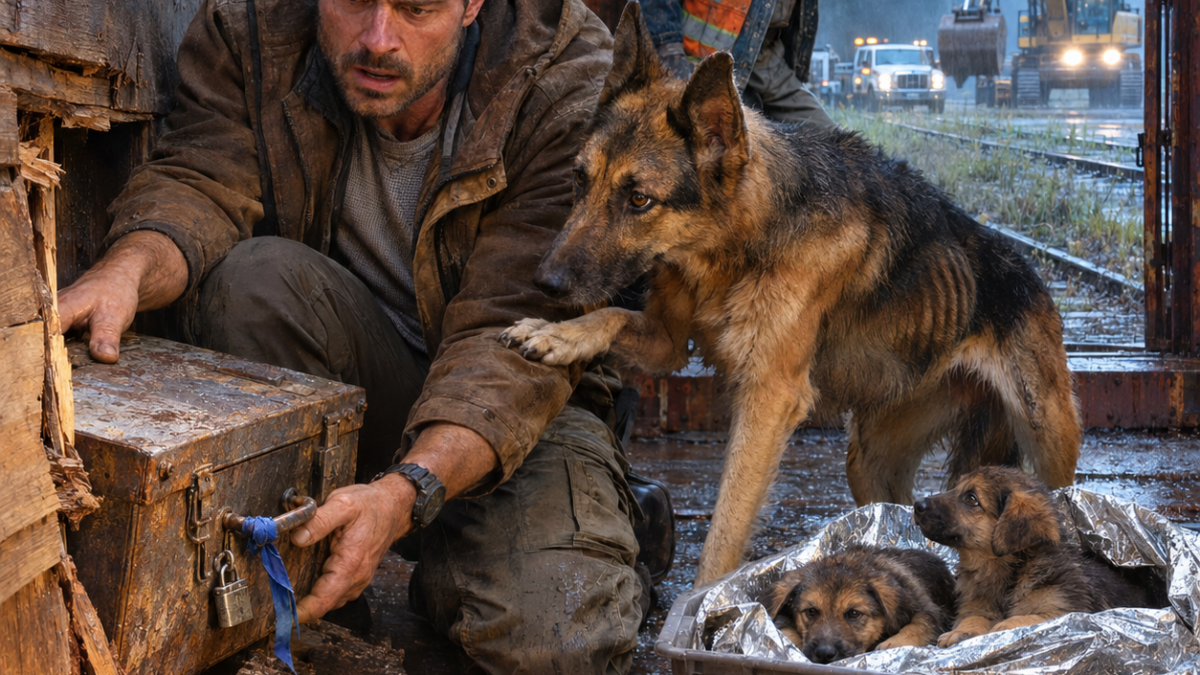
“SOMEONE DID THIS TO HIM!” The Scarred Stray Came to Our Porch at 7:21 Every Night—Until My Husband Finally Saw the Face He’d Been Hiding
“OH, GOD… SOMEBODY HURT HIM,” my husband Michael whispered after the mysterious stray who visited our farmhouse at exactly 7:21 every evening finally turned his head and revealed the right side of his face.
Deep, twisting scars stretched from the dog’s ear to his jaw, one eye was cloudy and half-closed, and the animal who had refused every attempt to touch him was somehow still returning night after night to sit quietly with two strangers who had never given him a reason to trust people again.
We didn’t know his name, where he came from, or what terrible experience had taught him to hide half his face, but when the first October snow began falling across our empty fields, that broken-looking dog would make a choice so small and brave that it would change our lives forever.
The first time I saw him, I thought he was a shadow.
It was early September in rural Vermont, and the last light of the evening was fading behind the fields surrounding our farmhouse.
My husband had just finished bringing firewood onto the porch.
I was standing at the kitchen sink, rinsing two dinner plates, when Michael called through the open window.
“Ellen, come look at this.”
I dried my hands.
“What is it?”
“There’s a dog out here.”
I walked to the porch.
At the bottom of the wooden steps sat a large, thin dog with a dark brown and gray coat, a white patch on his chest, and ears that didn’t quite stand upright.
He was looking toward the hay fields.
Not at us.
Not at the house.
Just across the long stretch of grass toward the woods.
He sat perfectly still.
Michael crouched several feet away.
“Hey, buddy.”
The dog didn’t turn.
“You lost?”
Nothing.
Michael glanced at me.
“Maybe somebody’s hunting dog.”
I studied the animal.
There was no collar.
His coat looked rough, with burrs caught near his shoulders.
He was thin enough that I could see the outline of his ribs beneath the fur.
But something else bothered me.
He had positioned himself so that we could see only the left side of his face.
When I shifted to get a better look, he adjusted his head slightly.
Always away from me.
Almost as though he was guarding something.
“Don’t get too close,” I whispered.
Michael nodded.
“I won’t.”
We brought out a bowl of fresh water and placed it near the steps.
The dog waited until we backed away.
Then he stood, approached the bowl, drank quickly, and returned to his place.
I looked at the kitchen clock through the window.
7:21 p.m.
A strangely precise time to remember.
But something about that dog made me look twice.
At 7:34, he rose.
Turned toward the trees.
And disappeared.
No bark.
No whine.
Not even a glance back.
Michael stood beside me.
“Well,” he said, “that was unusual.”
I watched the empty path.
“Do you think he’ll come back?”
Michael shrugged.
“Maybe.”
The next evening, he came at exactly 7:21.
And the evening after that.
And the evening after that.
Every time, he followed the same narrow path from the woods.
Every time, he sat at the foot of our porch steps.
Every time, he looked toward the fields while carefully keeping the right side of his face turned away.
He never begged.
Never scratched at the door.
Never barked to announce himself.
He simply arrived, sat with us for a little while, and left.
At first, Michael tried talking to him.
“Evening, pal.”
No response.
“Beautiful sunset tonight.”
Nothing.
“You know, most dogs at least wag their tails when someone speaks to them.”
The dog’s tail remained still.
Michael tried leaving small portions of food beside the water bowl.
The dog ate only after we moved away.
If Michael extended a hand, he retreated.
If I moved too suddenly, he flinched.
Yet the following evening, he returned.
I couldn’t understand it.
Why come to a house full of people if people frightened him?
One evening, Michael sat on the lowest step while the dog watched the fields.
He didn’t call him.
Didn’t offer food.
Didn’t reach out.
He simply sat there, facing the same direction.
Nearly twenty minutes passed.
Then, according to what Michael told me afterward, the dog slowly began turning his head.
Just a little at first.
Then enough for Michael to see the side he had been hiding.
My husband went completely still.
The right side of the dog’s face was covered in old, deep scars.
They curved from his ear toward his jaw.
The fur had never grown back over several of the worst marks.
His right eye was cloudy and partly closed.
Michael didn’t know what had caused the injuries.
But he could see that whatever had happened had left damage that time alone could not erase.
For a few seconds, the dog allowed him to look.
Then he turned away.
When Michael came inside, he sat beside me at the kitchen table.
His hands were trembling.
“Ellen,” he whispered, “somebody hurt that dog very badly.”
I reached for his hand.
He stared toward the porch.
“And after everything he must have been through, he still keeps coming here.”
That night, we made a decision.
We were going to help him—even if he never allowed us to touch him.
PART2
The following morning, Michael woke before sunrise.
I heard him moving around the kitchen while I was still in bed.
Cabinet doors opened.
The back door creaked.
Then came the familiar sound of the kettle.
When I walked downstairs, he was sitting at the table with a notebook.
Michael had always been a practical man.
For thirty-five years, he had worked repairing heavy equipment and school buses.
If an engine stopped running, he wanted to know why.
If a fence leaned, he checked the posts.
If a roof leaked, he found the damaged shingles.
He believed most problems could be approached patiently, one small step at a time.
But that morning, he looked helpless.
“What are you doing?” I asked.
He turned the notebook toward me.
Across the top, he’d written:
THE DOG.
Below it were three questions.
Where does he sleep?
Does somebody own him?
How can we help without frightening him?
I sat beside my husband.
“You’ve been thinking about him all night.”
Michael nodded.
“Couldn’t stop.”
I looked at the notebook.
“We don’t even know if he’s a boy.”
“He is.”
“How do you know?”
Michael smiled faintly.
“Pretty sure.”
I took his pen.
Added another question.
Is he sick or hurt now?
Michael read it.
Then nodded.
“That too.”
For several minutes, we sat silently.
Then I said:
“We should call a veterinarian.”
Michael looked at me.
“He won’t let us get near him.”
“I know. Maybe someone can tell us how to approach him safely.”
That morning, I called the veterinary clinic in the next town.
I explained that a stray had been visiting our property regularly, seemed fearful of people, and had significant facial scarring.
The receptionist connected me with Dr. Nadia Foster.
Nadia had been caring for animals in our county for more than twenty years.
She listened carefully.
“Don’t corner him,” she advised. “And don’t force contact, especially with an animal whose pain or vision you haven’t been able to assess.”
I wrote everything down.
“Should we try to put him in the truck?”
“Not if he’s avoiding you. A frightened dog can panic even when people mean well.”
I looked toward Michael.
He was listening on speakerphone.
Nadia continued:
“Fresh water and a quiet, predictable environment may help. You can offer suitable food at a comfortable distance, but keep an eye on his condition and don’t assume his behavior tells us exactly what happened to him.”
I swallowed.
“His face looks terrible.”
“I understand. Some old injuries appear dramatic but may no longer be painful. Others can cause ongoing problems. We’ll need to examine him when we can do so safely.”
Michael leaned toward the phone.
“What if he never lets us touch him?”
Nadia paused.
“Then we work on a different plan. Don’t risk frightening him into running into danger.”
After the call, Michael wrote one more sentence beneath our questions.
We do this on his time, not ours.
I looked at it for a long moment.
Then nodded.
That became our rule.
That evening, I prepared a small bowl of dog food.
I placed it a little distance from the water bowl.
Michael swept the porch.
Then stopped sweeping.
“Too much noise?”
“Maybe.”
He put the broom away.
At 7:18, we sat on the top step.
The fields were turning gold beneath the setting sun.
A few crickets chirped near the fence.
At 7:21, the dog appeared between the trees.
Exactly as he had the previous evenings.
He walked toward the house with his head slightly lowered.
Not limping.
Not running.
Just moving carefully along the narrow path.
When he reached the steps, he stopped.
His good eye moved between Michael and me.
Then to the food.
He didn’t approach immediately.
He sat.
We stayed still.
A minute passed.
Then another.
Finally, he stood and walked toward the bowl.
He ate quickly.
Raised his head.
Looked toward the woods.
Then returned to his usual place.
I wanted to reach down and touch his ears.
They looked so soft.
I wanted to tell him he didn’t have to keep checking behind him.
I wanted to promise that nothing bad would happen on our porch.
But promises mean very little to a frightened animal until experience gives them weight.
So I did nothing.
Michael sat beside me.
The dog watched the fields.
We watched the dog.
And for twenty-three minutes, that was our entire evening.
When he left, I looked at my husband.
“Do you think he knows we want to help?”
Michael stared toward the woods.
“I don’t know.”
Then he said:
“Maybe he knows we haven’t chased him away.”
I thought about that.
Some days, not being chased away is the beginning of everything.
We started looking for his owner.
Our first stop was the nearest farm.
The Whitcombs lived half a mile east, beyond a stretch of pasture and an old stone wall.
Mr. Whitcomb was seventy-four and had lived in the area since childhood.
He knew every tractor, mailbox, and dog within several miles.
When I described the animal, he shook his head.
“Never heard of him.”
“Large dog,” Michael said. “Brown and gray. Scarred face.”
Mr. Whitcomb frowned.
“Would’ve remembered that.”
We showed him a photograph we’d taken from the porch.
It showed the dog’s left side.
The only side he regularly allowed us to see.
Mr. Whitcomb studied it.
“No collar.”
“No,” I said.
“Does he look hungry?”
“A little.”
He rubbed his chin.
“Could’ve wandered in from farther away.”
“Maybe.”
Then he asked:
“Does he bother your livestock?”
“We don’t have any,” Michael answered.
“Smart people.”
Michael laughed.
We drove home without answers.
Over the next several days, we asked more neighbors.
The family with the apple orchard.
A woman who operated a small horse boarding stable.
A retired couple who lived beside the county road.
No one recognized him.
No one had seen him wandering through their yards.
That was the strangest part.
He appeared at our farmhouse every evening.
Yet nobody seemed to know where he went during the day.
It was as though he existed only during those quiet minutes at the foot of our porch.
One Saturday, Michael followed the trail after the dog left.
Not close behind him.
He waited until the animal disappeared into the woods.
Then took a flashlight and walked toward the tree line.
I stood on the porch watching.
The last sunlight was fading.
A cool wind moved through the grass.
I didn’t like the idea of Michael wandering through the woods in the dark.
He wasn’t as young as he used to be.
Neither of us was.
But he wanted to understand where the dog slept.
An hour later, he returned with muddy boots and a tired expression.
“Well?” I asked.
Michael shook his head.
“Lost the trail near the creek.”
“Did you see anything?”
“Tracks along the bank. A place under some brush where something might have rested. Nothing certain.”
I looked toward the woods.
“Maybe he’s sleeping out there.”
“Maybe.”
Michael took off his boots.
Then stood staring at the floor.
“What is it?”
He rubbed his face.
“I keep thinking about that eye.”
I swallowed.
“Me too.”
He looked at me.
“Ellen, if somebody hurt him, he may have spent years trying to stay away from people.”
I nodded.
“Then why does he come here?”
Michael’s eyes filled.
“I don’t know.”
For a long moment, neither of us spoke.
Then he whispered:
“But I’m glad he does.”
By the third week, the dog had become part of our routine.
At six thirty, I started dinner.
At seven, Michael checked the porch water bowl.
At seven fifteen, we carried out a blanket and two mugs of tea.
At seven twenty-one, we waited.
Sometimes the dog appeared immediately.
Sometimes he came a minute or two later.
But most evenings, he arrived with such regularity that Michael began joking he was more punctual than the school buses he’d repaired.
I started calling him our evening visitor.
Michael called him “buddy.”
Neither name seemed right.
Not yet.
We wanted to know him before deciding who he was.
The funny thing was that while we were waiting to learn about the dog, we began learning things about each other again.
Michael and I had been married for forty-two years.
Forty-two.
Long enough to recognize each other’s footsteps.
Long enough to know how the other liked coffee.
Long enough to finish familiar stories before they reached the ending.
We loved each other.
I had never doubted that.
But the years after retirement had become quieter than either of us expected.
For decades, our days had been full.
Jobs.
Bills.
Family gatherings.
Neighbors.
Repairs.
Appointments.
Church suppers.
Weekend chores.
Then the demands of work ended.
We moved to the farmhouse because we’d always wanted open space.
Fields.
Trees.
A place where we could see stars without streetlights hiding them.
At first, the quiet felt wonderful.
We slept late.
Took long walks.
Read books.
Worked in the garden.
Then, gradually, the days began to resemble one another.
Breakfast.
Chores.
Lunch.
A little television.
Dinner.
Bed.
We still talked.
But too often our conversations concerned practical things.
The furnace.
Groceries.
Weather.
The price of heating oil.
The dog changed that.
Because sitting beside him required us to do almost nothing.
We couldn’t approach.
Couldn’t train him.
Couldn’t fill the silence with instructions.
We simply waited.
And into that waiting, old conversations began returning.
One evening, Michael asked:
“Do you remember the first time we went dancing?”
I laughed.
“How could I forget?”
He smiled.
“You stepped on my foot.”
“I did not.”
“You absolutely did.”
I turned toward him.
“Michael, you were trying to dance while holding a paper cup of lemonade.”
“That doesn’t make it impossible.”
“It made it impossible for you.”
He laughed.
The dog lifted his head slightly.
We both went quiet.
He watched us for a moment.
Then settled again.
I looked at Michael.
“Maybe he likes your laugh.”
“Maybe he’s wondering why you married such a fool.”
I smiled.
“For the lemonade.”
Michael reached for my hand.
The dog sat below us, facing the fields.
And I realized we’d been married four decades without ever having a reason to sit so quietly together at the exact same time each evening.
It was strange.
A dog who wouldn’t let us touch him was bringing us closer.
The first rainstorm changed his routine.
It came on a Wednesday.
A hard, cold rain that started shortly before sunset.
By seven, water was running from the porch roof in steady streams.
The fields disappeared beneath a curtain of gray.
I stood at the kitchen window.
“He won’t come tonight.”
Michael looked up from his book.
“Probably not.”
I glanced at the clock.
7:19.
7:20.
7:21.
Nothing.
I felt unexpectedly disappointed.
We had no right to expect him.
He wasn’t ours.
We didn’t even know his name.
But the empty bottom step made the house feel different.
At 7:24, Michael rose.
“Wait.”
I turned.
Through the rain, a dark shape emerged from the woods.
The dog.
His coat was soaked.
His tail hung low.
He moved carefully across the grass.
When he reached the porch, he stopped under the overhang, shook water from his body, and sat.
Exactly where he always sat.
I stared.
“Michael.”
“I see him.”
“He came.”
Michael smiled faintly.
“Apparently he had an appointment.”
I laughed.
Then stopped.
The dog was shivering.
I could see it.
A slight tremor traveling along his shoulders.
My heart tightened.
I went inside.
Found an old towel.
Then hesitated.
He wouldn’t let me touch him.
I couldn’t simply throw a towel over his back.
That might frighten him.
So I placed it on the lower step, several feet from where he sat.
Then backed away.
The dog watched.
Waited.
Then lowered his nose to the towel.
He sniffed it.
For a moment, I thought he might lie on it.
Instead, he stepped around it and returned to his usual place.
I swallowed my disappointment.
Michael took my hand.
“Not tonight.”
I nodded.
“Not tonight.”
The next evening, the towel was still there.
He ignored it again.
The evening after that, he placed one paw on its edge.
I almost cheered.
Michael squeezed my hand before I could move.
“Easy.”
I smiled.
“I’m being easy.”
“You’re practically vibrating.”
“I know.”
The dog sat down.
One paw remained on the towel.
It was the smallest victory imaginable.
We celebrated it with leftover apple pie after he left.
As September turned into October, we began noticing small things.
The dog preferred sitting where he could see the trail through the woods.
He drank water only after checking that neither of us intended to move.
When a truck passed on the distant county road, his ears shifted toward the noise.
If Michael stood too quickly, the dog backed away.
But if my husband moved slowly and spoke softly, he remained seated.
The changes were almost invisible.
At first, he kept ten or twelve feet between himself and us.
Then eight.
Then six.
One evening, he rested near the bottom step while Michael sat above him.
His body still faced the fields, but his head was no longer turned quite so sharply away.
I noticed.
I didn’t say anything.
I was learning that excitement could be almost as disruptive as fear.
We kept a little notebook.
Not because we were conducting a scientific experiment.
Because we wanted to remember.
October 3: Ate while we sat on the porch.
October 5: Stayed when Michael moved his chair.
October 7: Looked toward Ellen when she spoke.
October 9: Rested one paw on the towel.
Michael added a note beneath the last entry.
Progress. No hurry.
I looked at his handwriting.
Then at the dog.
I wondered how long it had been since anyone had allowed him to move at his own pace.
There were difficult evenings.
Not every day brought improvement.
Sometimes he appeared unusually tense.
His ears moved constantly.
His body remained stiff.
If wind rattled the screen door, he stepped backward.
One evening, a delivery truck turned around in our driveway.
The engine rattled loudly.
The dog sprang to his feet.
He moved so quickly that I gasped.
Within seconds, he had disappeared into the woods.
Michael stood.
I caught his arm.
“Don’t.”
He looked at me.
“He’s scared.”
“I know.”
“He might not come back.”
I watched the trees.
There was no movement.
Michael’s face fell.
For a moment, he looked like a little boy whose favorite toy had broken.
Then he sat down.
We waited.
Twenty minutes.
Thirty.
The sky darkened.
I went inside to bring out another blanket.
When I returned, Michael was still sitting on the steps.
He looked toward the woods.
“He doesn’t owe us anything,” he said quietly.
I sat beside him.
“No.”
We stayed until the cold became uncomfortable.
Then went inside.
The next evening, at 7:21, the dog returned.
I nearly cried with relief.
He stopped near the woods.
Looked toward the porch.
Then approached slowly.
Michael didn’t move.
Neither did I.
The dog sat in his usual place.
I looked toward my husband.
His eyes were wet.
He whispered:
“Welcome back, buddy.”
The dog lowered his head.
We stayed with him until he left.
Later, Michael wrote one sentence in the notebook.
A frightened day doesn’t erase a good week.
I read it twice.
It was the kind of sentence I wished I’d understood when I was younger.
My husband had always been patient with machines.
Not necessarily with people.
If someone interrupted him while he was repairing an engine, he could become irritable.
If a neighbor promised to return a tool and forgot, Michael remembered for months.
He liked clear answers.
Straight lines.
Problems with visible causes.
The dog was teaching him a different kind of patience.
One evening, I watched Michael sit beside our visitor for nearly half an hour without moving.
His knees must have hurt.
The wooden steps were cold.
I opened the screen door.
“Michael, come inside. You’re going to get stiff.”
He smiled.
“Already am.”
“Then why are you still sitting there?”
He looked toward the dog.
“Because he hasn’t left.”
I stared.
Michael continued:
“He’s doing something difficult just by staying.”
I felt my throat tighten.
He looked up at me.
“Seems like I can manage another ten minutes.”
I brought him a cushion.
Then sat beside him.
The dog didn’t move.
For a while, we listened to the wind.
Then Michael said:
“You know what I keep thinking?”
“What?”
“Somebody might have hurt him, but somebody might also have helped him afterward.”
I looked toward the animal.
“What makes you say that?”
“He keeps coming toward people.”
I considered it.
Michael continued:
“Something in him still expects there’s a reason to try.”
I looked at the dog’s face.
The left side was handsome.
The right side remained hidden.
“I hope you’re right.”
Michael nodded.
“Me too.”
One Saturday, we visited the county animal shelter.
We showed the staff photographs.
Described the scarred face.
The nightly visits.
The path through the woods.
No one recognized him from their recent reports.
We asked about lost pets.
Checked the notices they had available.
Left our contact information.
The shelter coordinator, a woman named Denise, listened carefully.
She told us that if we were eventually able to secure the dog safely, we should arrange a veterinary examination and follow the local found-animal procedures before assuming he had no owner.
I nodded.
“We’ll do that.”
She studied the photograph.
“Does he seem aggressive?”
“No,” I answered.
“Fearful?”
“Yes.”
She looked toward Michael.
“Does he ever approach on his own?”
“Not close enough to touch.”
Denise nodded.
“Then keep your movements predictable. And don’t force it.”
I smiled faintly.
“That’s what the veterinarian said.”
She laughed.
“She’s right.”
Before we left, Denise handed us information about working with shy, frightened dogs.
The pages described body language.
Avoiding direct pressure.
Allowing animals space.
Rewarding voluntary approaches.
Watching for signs of discomfort.
I read the material in the passenger seat while Michael drove.
Then I looked toward him.
“You know what?”
“What?”
“We’ve been talking to him like he’s a person.”
Michael frowned.
“Is that bad?”
“No.”
I smiled.
“But maybe we need to listen more to what he’s telling us without words.”
Michael nodded.
“Fair enough.”
That evening, we watched him carefully.
His ears.
His posture.
The way he shifted his weight.
The slight movement of his tail when Michael spoke.
The way his shoulders relaxed after several minutes.
And I began realizing how much he had been communicating all along.
We simply hadn’t known how to understand it.
The first time his tail moved toward us, I almost missed it.
Michael had been telling an old story about a school bus that broke down during a snowstorm.
He was halfway through describing how he and another mechanic spent four hours trying to reach a frozen fuel line.
I had heard the story dozens of times.
I knew the ending.
The bus started.
The children got home.
Michael developed a lifelong dislike of one particular engine model.
But he told it with such enthusiasm that I listened anyway.
At one point, he laughed.
The dog glanced toward him.
His tail shifted.
Just once.
A small movement against the ground.
I stared.
Michael kept talking.
The dog moved it again.
I reached for my husband’s arm.
He stopped.
“What?”
I pointed.
Michael looked down.
The dog was sitting quietly.
His tail still.
For a moment, nothing happened.
Then Michael whispered:
“Hey, buddy.”
The tail moved.
One slow sweep.
Michael stared.
I covered my mouth.
Neither of us spoke.
Then my husband began crying.
I’d seen Michael cry when his father died.
At our daughter’s wedding.
And once when a friend he’d known for forty years passed away.
He wasn’t ashamed of tears.
But he rarely cried over small things.
That night, a single movement of a dog’s tail undid him completely.
He wiped his cheeks with the back of his hand.
“Sorry,” he whispered.
I took his arm.
“Don’t be.”
The dog watched us.
Then, very slowly, lowered his head onto his front paws.
He stayed that way for nearly fifteen minutes.
I had never seen him rest so comfortably near us.
I looked toward Michael.
He was still smiling through tears.
“That,” he whispered, “is the best thing that’s happened all week.”
And somehow, it was.
By mid-October, the evenings had become cold enough for jackets.
The maple trees surrounding our property turned red and gold.
Leaves gathered along the porch rail.
The fields began losing their summer brightness.
Every morning, Michael checked the weather forecast.
Every evening, he worried about the dog.
“Thirty-eight tonight.”
“I saw.”
“Colder tomorrow.”
“I know.”
Michael looked toward the woods.
“Where does he sleep?”
It had become his favorite question.
And the one we couldn’t answer.
We had followed the trail several times.
Always after the dog left.
Always carefully.
We found tracks near the creek.
A narrow path between young birch trees.
A patch of flattened grass beneath a fallen log.
But we couldn’t be sure which places he used.
The forest contained hundreds of places an animal might shelter.
And every time we thought we understood his route, we lost it near the same stream.
I began imagining him alone beneath the trees.
Curled against wet leaves.
Listening to wind move through the branches.
I knew dogs could survive outdoors under difficult conditions, but I also knew this one was thin, scarred, and possibly visually impaired.
Cold weather could become dangerous.
One evening, I asked Michael:
“What if he won’t come inside before winter?”
My husband looked toward the fields.
Then answered:
“We’ll keep working on a safe way to help him.”
I swallowed.
“That’s not a promise.”
“No.”
He looked at me.
“It’s what we can honestly say.”
I knew he was right.
But sometimes honesty feels unbearably small when someone you love is in danger.
And by then, although neither of us had said it aloud, we loved that dog.
We built a simple sheltered resting place beneath the porch overhang.
Nothing elaborate.
A weather-protected area with dry bedding positioned where the dog could approach or leave freely.
We placed it away from the main doorway so he wouldn’t feel trapped.
Michael worked on it all afternoon.
He measured twice.
Adjusted the entrance.
Checked that nothing sharp protruded.
Then carried it into place.
I stood beside him.
“Do you think he’ll use it?”
Michael smiled faintly.
“I have no idea.”
I laughed.
“That’s encouraging.”
He looked down at his handiwork.
“It’s the best I can do.”
That evening, the dog arrived at 7:21.
He stopped.
Saw the new structure.
And froze.
I held my breath.
His ears moved.
He approached slowly.
Sniffed the entrance.
Stepped backward.
Then walked around it.
I glanced toward Michael.
His expression was almost comically disappointed.
The dog returned to the foot of the steps.
Sat.
Looked toward the fields.
And ignored the shelter completely.
Michael sighed.
“Well.”
I smiled.
“What?”
“Apparently my architectural career has been rejected.”
I laughed.
The dog looked toward us.
His tail moved once.
Michael pointed.
“See? He’s laughing at me.”
For the first time in weeks, the cold didn’t feel quite so frightening.
The following weekend, our daughter called.
Grace lived in Massachusetts with her husband and their two children.
She knew about the dog because we’d been sending photographs almost every evening.
At first, she thought it was charming.
Then she saw a picture Michael managed to take showing part of the scarred side.
Her voice changed.
“Oh, Dad.”
I looked at the screen.
Grace was sitting in her kitchen.
Our youngest grandson was building something out of blocks behind her.
“Has a vet seen him?”
“Not yet,” I answered.
“He still won’t let us get close enough.”
Grace nodded.
Then asked:
“Are you two being careful?”
Michael frowned.
“Of course.”
She smiled.
“Dad, last summer you climbed onto the barn roof without telling Mom.”
“That was different.”
“How?”
“The ladder was stable.”
I rolled my eyes.
Grace laughed.
Then became serious again.
“Promise me you won’t try to grab him.”
Michael nodded.
“I promise.”
“And if he seems hurt or sick, call for professional help.”
“We will.”
She looked at us.
Then smiled softly.
“You’ve both gotten very attached.”
I glanced at Michael.
He looked away.
Grace laughed.
“Dad.”
“What?”
“You’re sitting outside every evening in forty-degree weather with a dog who won’t let you pet him.”
Michael considered that.
Then shrugged.
“Good company.”
Grace’s expression softened.
“I’m glad.”
After we ended the call, Michael sat quietly.
Then asked:
“Do we look foolish?”
I smiled.
“Probably.”
He nodded.
Then looked toward the kitchen clock.
7:12.
He stood.
“Well, we’d better get ready.”
And we went outside.
The first snow came at the end of October.
Earlier than I wanted.
Earlier than the trees seemed ready for it.
The weather forecast predicted a light accumulation, but by afternoon the fields were white.
Snow gathered along the fence posts.
The woods became a blur of dark trunks and pale branches.
Michael kept looking out the window.
“He won’t come.”
I tried to sound reassuring.
“He might.”
“Too cold.”
I looked at the clock.
6:58.
Then 7:09.
Then 7:17.
At seven twenty-one, I stood near the kitchen window.
Nothing.
My stomach tightened.
A gust of wind sent snow swirling across the yard.
Michael was already wearing his coat.
He picked up the thick wool blanket we usually brought outside.
I looked at him.
“Where are you going?”
“To wait.”
I swallowed.
“He might not come.”
Michael nodded.
“I know.”
He opened the door.
I followed.
The porch boards were dusted with snow.
The air smelled sharp and clean.
The fields were almost silent.
At 7:24, a shape moved near the tree line.
Michael straightened.
I leaned forward.
The dog emerged from the woods.
His coat was wet.
Snow clung to the fur along his back.
He moved slowly.
Not the measured, comfortable walk we’d become accustomed to.
A tired walk.
His shoulders trembled.
His tail hung low.
When he reached the porch, he stopped.
Looked toward us.
Then sat on the cold ground.
My heart tightened.
“Oh, sweetheart.”
Michael glanced at me.
I wasn’t sure when I’d started calling him that.
The dog shivered.
He still kept the right side of his face angled away.
But his discomfort was unmistakable.
I looked toward the blanket in Michael’s hands.
Then toward the dog.
For weeks, we’d avoided touching him.
We had respected every boundary.
We’d never forced him to accept us.
But now I could see snow melting into his rough coat.
I couldn’t bear it.
“Michael,” I whispered, “give me the blanket.”
He hesitated.
“Ellen—”
“I know.”
I took it.
Then slowly descended one step.
The dog watched me.
I stopped.
Waited.
He remained seated.
I descended another step.
My heart hammered.
I held the blanket loosely in front of me, careful not to block his view or make a sudden movement.
“It’s all right,” I whispered.
He looked toward the woods.
Then back at me.
I took one more step.
The blanket brushed the edge of his shoulder.
He flinched.
I stopped immediately.
For one terrible second, I thought he would run.
But he didn’t.
He stayed.
I waited until his body seemed to settle again.
Then, with movements so slow they hardly felt like movements at all, I allowed the warm wool to rest over part of his back.
The dog went still.
Not rigid with panic.
Simply still.
I loosened my hold so he could move away if he wanted.
He didn’t.
The blanket settled across his wet coat.
Snowflakes landed on the dark fabric.
I crouched a little farther away rather than reaching for him again.
Then whispered:
“There you go.”
Behind me, Michael made a small sound.
I turned.
He was crying.
I looked back at the dog.
The animal lowered his head.
And stayed beneath the blanket.
For the first time, he had accepted something directly from my hands.
Not food placed at a distance.
Not water left beside the steps.
Not a towel he’d cautiously approached.
A gesture from me.
I sat down carefully on the lower step.
My hands were shaking.
The dog remained beside me.
I could hear his breathing.
I looked toward Michael.
Neither of us spoke.
Snow fell around the porch.
The fields disappeared into white.
And for several minutes, the entire world seemed to consist of two old people, one frightened dog, and a wool blanket that had finally been accepted.
When he finally left that night, he didn’t run.
He stood slowly.
The blanket slipped toward the ground.
He glanced at it.
Then at me.
I wanted to believe he was thanking us.
Of course, I couldn’t know that.
Perhaps he simply understood that we hadn’t frightened him.
Perhaps he was deciding whether to return.
Whatever the reason, he remained beside the blanket for several seconds before turning toward the woods.
Michael started to stand.
I touched his arm.
“Let him go.”
He nodded.
We watched until the dog disappeared into the falling snow.
Then Michael picked up the blanket.
It was wet.
A little muddy.
And covered with coarse gray-brown fur.
He held it carefully.
I smiled through tears.
“You’d think it was something precious.”
Michael looked at me.
“It is.”
I didn’t argue.
We carried it inside.
I washed it the following morning.
Then dried it beside the stove.
At seven fifteen that evening, Michael carried it back to the porch.
The dog returned at 7:21.
He sat closer to the steps than before.
Not much closer.
Perhaps a foot.
But Michael noticed.
“Look,” he whispered.
I looked.
Then smiled.
The dog lowered his head.
And for the first time, he settled beside the step without positioning himself to leave immediately.
We placed the blanket nearby.
He sniffed it.
Then rested one paw on the wool.
Michael looked at me.
Neither of us spoke.
By then, we had learned that some of life’s most beautiful moments are too small to survive being announced.
The next evening, the dog climbed the first step.
It happened so quietly that I almost missed it.
Michael and I were sitting above him, talking about the old apple tree that had stood behind our first house.
The dog shifted.
Stood.
Looked toward the doorway.
Then placed one paw on the bottom step.
I stopped speaking.
He placed the second paw beside the first.
His body followed.
Then he sat.
One step higher.
Still below us.
Still free to leave.
But closer.
Michael’s eyes filled.
I took his hand.
The dog looked toward the fields.
His right side remained angled away.
I didn’t care.
He could hide that part forever if he needed to.
We weren’t waiting for him to become beautiful enough to love.
We were waiting for him to feel safe enough to stay.
The next night, he climbed another step.
Then returned to the first.
Two nights later, he approached the second step again.
Sometimes he stayed close.
Sometimes he kept his distance.
We stopped measuring progress by how near he came.
Instead, we watched whether he seemed comfortable.
If he backed away, we let him.
If he settled, we stayed quiet.
If he left early, we wished him good night.
No punishment.
No disappointment he had to understand.
The dog was teaching us how to care without demanding proof that our care was working.
One night, Michael asked me something I hadn’t considered.
“Do you think he remembers the people who hurt him?”
I looked toward the dog.
“Maybe.”
He swallowed.
“Do you think he remembers their faces?”
“I don’t know.”
Michael stared at the scarred side he could only partly see.
Then whispered:
“I hope he doesn’t think every person is going to do the same.”
I looked at my husband.
For weeks, he’d carried the image of that damaged face.
Sometimes I’d find him standing at the kitchen window long after the dog left.
Other times, he’d wake early and ask whether I’d heard anything outside.
The injuries had affected him deeply.
Not only because he loved animals.
Because Michael had always believed that strength was supposed to make other people safer.
His father taught him that.
A man who could lift heavy equipment, repair broken machinery, or work all day in the cold ought to use those abilities to help someone who couldn’t.
He had lived by that rule for most of his life.
The idea that someone might use strength to frighten or injure a defenseless animal was almost unbearable to him.
I reached for his hand.
“We don’t know exactly what happened.”
He nodded.
“I know.”
“But we know what we can do now.”
He looked at me.
“What?”
I smiled.
“Keep showing up.”
Michael glanced toward the dog.
Then nodded.
“That, I can do.”
By the second week of November, the dog’s behavior had changed in ways I scarcely dared mention.
He came when we were already sitting on the porch.
He sometimes approached the food bowl without waiting for us to disappear inside.
His tail moved when Michael spoke in that low, ridiculous voice he reserved for animals.
He had begun resting on the wool blanket instead of merely placing a paw on it.
And he no longer flinched every time I shifted my feet.
One evening, Michael bent down to pick up a fallen glove.
The dog watched.
Stayed.
Then lowered his head again.
I stared.
A month earlier, that movement would have sent him into the woods.
Now he seemed able to recognize the difference between a hand reaching for a glove and a hand reaching toward him.
It was extraordinary.
And ordinary.
The kind of learning that happens quietly, without fanfare.
I watched him breathe.
Then looked toward Michael.
“He’s beginning to believe us.”
My husband smiled faintly.
“Maybe.”
I shook my head.
“No. Look at him.”
The dog was resting with his paws stretched in front of him.
His head turned slightly toward us.
Not entirely.
But enough.
Michael studied him.
Then whispered:
“I think you’re right.”
The first time he allowed Michael to touch him happened on a cloudy Sunday.
The dog had arrived early.
Not by much.
7:19.
Michael jokingly accused him of being impatient.
I was sitting near the door with a cup of tea.
The dog approached the second step.
Then the third.
He sat beside Michael.
Closer than ever before.
My husband kept his hands resting on his knees.
He didn’t move toward the dog.
After several minutes, the animal lowered his nose toward Michael’s sleeve.
Sniffed.
Then lifted his head.
Michael looked at me.
His eyes were enormous.
I held my breath.
The dog leaned forward again.
This time, his nose touched Michael’s hand.
My husband didn’t reach.
He simply opened his fingers slightly.
The dog sniffed.
Then, slowly, rested the underside of his muzzle against Michael’s palm.
I felt tears fill my eyes.
Michael sat completely still.
His breathing became shallow.
For several seconds, neither moved.
Then the dog stepped backward.
Michael let his hand remain where it was.
The animal looked toward the fields.
Sat again.
And stayed.
When he finally left, Michael turned toward me.
His face crumpled.
“He touched me.”
I nodded.
“I saw.”
“He came to me.”
I reached for his hand.
“I know.”
Michael began crying.
I moved beside him.
We sat together on the porch steps after the dog disappeared.
My husband looked toward the woods.
Then whispered:
“I didn’t think he’d ever do that.”
I squeezed his fingers.
“Neither did I.”
For weeks, we’d been trying to give the dog a reason to trust us.
Now he had given Michael something in return.
Not obedience.
Not gratitude we could claim.
A choice.
He had decided, for one moment, that a human hand might be a place where he could rest.
A few evenings later, the dog began turning his head more openly.
At first, it happened while he was looking toward the woods.
His scarred side faced us for a second.
Then he shifted away.
I noticed the old marks near his ear.
The patches of bare skin.
The cloudy eye.
I swallowed.
But I didn’t gasp.
Didn’t move.
Didn’t look away.
I wanted him to understand that the sight of his face wouldn’t change how we treated him.
The next evening, he turned again.
Longer this time.
Michael sat beside him.
I watched from the upper step.
Snowflakes drifted through the air.
They settled on the dog’s shoulders.
Caught in the fur above his scarred eye.
And melted against the bare skin along his jaw.
He didn’t turn away.
Michael looked at him.
Then looked toward the fields.
He didn’t stare.
Didn’t make the dog’s injuries the center of the evening.
He simply continued sitting beside him.
I felt tears running down my face.
Because for the first time, the dog wasn’t arranging his body to keep that side out of sight.
Maybe he wasn’t feeling ashamed at all.
Maybe he’d been protecting a tender area.
Maybe he saw poorly from that side and preferred keeping his better eye toward us.
Maybe the habit came from something in his past we’d never understand.
I couldn’t know.
But I knew what I was seeing.
He was comfortable enough to stop guarding every movement.
And I wanted that freedom for him more than I wanted any explanation of his scars.
The night everything changed was a Wednesday in mid-November.
The snow had stopped shortly before sunset.
The sky was a pale lavender color.
A thin layer of white covered the fields.
The woods looked almost blue in the fading light.
Michael carried the blanket outside.
I followed with two mugs of tea.
The dog was already waiting.
7:21.
Of course.
He sat on the third step.
Closer to the doorway than ever.
Michael smiled.
“Evening, buddy.”
The dog’s tail moved.
I sat beside him.
For several minutes, we talked quietly.
About Grace.
The grandchildren.
The weather.
Whether we should buy more firewood.
The dog listened.
Then he did something unexpected.
He stood.
Turned toward the door.
And looked inside the house.
I felt my heart begin pounding.
Michael noticed.
He stopped speaking.
The kitchen light glowed through the open doorway.
Beyond it, the fireplace cast warm orange light across the rug.
The dog looked toward the woods.
Then back into the house.
Michael stood slowly.
“Ellen.”
I looked up.
He opened the door a little wider.
Then stepped aside.
“Come on, buddy.”
The dog remained still.
Michael waited.
No pulling.
No grabbing.
No sudden movement.
Just an open door.
The dog looked toward the woods again.
For months, he’d disappeared down that path.
Every evening.
Every night.
We didn’t know where he slept.
What he remembered.
Who he had known before us.
We only knew he had always returned.
Now the woods lay dark and cold behind him.
The kitchen was warm.
The fire was burning.
And two people were standing beside an open door.
I held my breath.
The dog raised one paw.
Placed it on the top step.
Then another.
He moved toward the threshold.
Stopped.
His whole body trembled.
For one terrible second, I thought he would turn and run.
Michael didn’t move.
I didn’t speak.
Then the dog took one more step.
His front paws crossed the threshold.
He looked around.
Sniffed the air.
His hind legs followed.
And suddenly, after months of watching him sit outside, he was standing in our kitchen.
I pressed my hands against my mouth.
Michael whispered:
“Oh, buddy.”
The dog looked toward him.
Then toward the fireplace.
He moved slowly across the wooden floor.
His paws made faint clicking sounds.
He approached the rug.
Sniffed it.
Circled once.
Then lowered himself onto it.
His body seemed to settle all at once.
A deep sigh escaped his chest.
Long.
Heavy.
Almost trembling at the end.
I had heard dogs sigh before.
Our family had owned dogs when we were younger.
But I’d never heard a sound that moved me quite like that one.
It seemed as though he had been holding his breath for years.
I began crying.
Michael stood beside me with tears running down his cheeks.
Neither of us spoke.
The dog rested his head on his paws.
The fire crackled.
Outside, snow settled over the steps he’d climbed for so many evenings.
And inside our house, for the first time, there were three of us.
We didn’t try to close him in immediately.
The doorway remained open while he explored, with Michael keeping an eye on the cold and making sure the dog had a clear path if he wanted to leave.
After a while, the animal settled again near the fireplace.
He seemed tired.
Not merely sleepy.
The kind of tired that comes from spending too long being watchful.
I placed fresh water nearby.
He rose.
Drank.
Then returned to the rug.
Michael sat on the floor several feet away.
I sat in my chair.
For nearly an hour, we didn’t turn on the television.
Didn’t discuss the news.
Didn’t do anything that might disturb him.
We listened to the fire.
Sometimes the dog lifted his head.
Looked toward the door.
Then toward us.
Each time, he settled again.
Eventually, the house became warm enough that Michael closed the door gently.
The dog noticed.
Raised his head.
I held my breath.
He looked at the door.
Then at Michael.
For a few seconds, I expected him to panic.
But he remained on the rug.
My husband quietly moved away from the doorway so the animal wouldn’t feel cornered.
The dog lowered his head again.
I looked toward Michael.
His eyes were wet.
“He’s staying,” I whispered.
Michael nodded.
“For tonight.”
I smiled through tears.
“For tonight.”
It was all we needed.
At eleven, I went upstairs.
Michael insisted on sleeping downstairs.
Not because the dog needed a human guard.
Because he couldn’t bear the idea of leaving him alone on his first night indoors.
I brought down a pillow and blanket.
Michael settled on the sofa.
The dog remained near the fireplace.
I stood in the doorway.
“Michael?”
He looked up.
“What?”
“You should come to bed if he leaves.”
He smiled.
“I will.”
I looked at the dog.
Then back at my husband.
“Do you think he’ll still be here in the morning?”
Michael’s expression softened.
“I don’t know.”
I nodded.
He continued:
“But if he is, we’ll make him breakfast.”
I laughed quietly.
Then went upstairs.
I slept in short stretches.
Every time I woke, I listened for movement downstairs.
Once, around two, I heard Michael’s voice.
Soft.
Barely audible.
“It’s all right, buddy.”
Then silence.
At six thirty, I gave up trying to sleep.
I put on my slippers.
Walked downstairs.
And stopped.
Michael was asleep on the sofa.
His blanket had slipped to the floor.
The dog lay on the rug beside the fireplace.
His head rested near the sofa.
And for the first time since I’d known him, the scarred right side of his face was turned fully toward the room.
He wasn’t hiding it.
He wasn’t watching the doorway.
He was sleeping.
I stood there crying silently.
Then whispered:
“Welcome home.”
Nadia arrived late that morning.
She brought her portable equipment, microchip scanner, and the patient calm I’d heard in her voice over the telephone.
Michael met her at the door.
“I don’t know how he’ll react.”
She nodded.
“Then we’ll take it slowly.”
The dog was resting on the rug.
When Nadia entered, he lifted his head.
His ears moved.
His body became tense.
She stopped.
Didn’t approach immediately.
Spoke quietly.
Allowed him time to observe her.
I sat nearby.
Michael remained where the dog could see him.
After a while, Nadia offered her hand at a respectful distance without pushing it toward his face.
The dog sniffed.
Then looked at Michael.
My husband smiled.
“It’s okay.”
Nadia waited.
Eventually, the dog allowed her to examine him.
Not all at once.
She paused when he became uncomfortable.
Worked carefully.
And let him settle between parts of the assessment.
I watched with my hands pressed together.
Nadia checked his general condition.
Heart.
Lungs.
Body condition.
Paws.
Coat.
Eyes.
Ears.
The old scars.
He tolerated more than I expected.
At one point, she gently examined the damaged area near his right eye.
The dog tensed.
She stopped immediately.
Waited.
Then continued only when he seemed comfortable enough.
Finally, she sat back.
“There’s no microchip detected.”
My heart tightened.
“So nobody owns him?”
Nadia shook her head.
“Not necessarily. A dog can be unchipped and still have an owner somewhere. We should continue the found-dog search through the appropriate local channels.”
I nodded.
“Of course.”
She looked toward the animal.
“The injuries are old.”
“How old?” Michael asked.
“It’s difficult to give an exact date from scars alone. They’ve healed significantly, and they may date back years.”
My husband swallowed.
“Do you think somebody did this to him?”
Nadia looked at the right side of the dog’s face.
“The pattern is consistent with significant past trauma, but I can’t tell you exactly how it happened or who might have been involved.”
Michael lowered his eyes.
“I know.”
She continued:
“The eye needs further evaluation. He may have reduced vision on that side, and we need to determine whether there’s any ongoing discomfort.”
I nodded.
“Can he be helped?”
“There are things we can assess and manage. We’ll want a more complete eye examination and appropriate follow-up.”
She glanced toward the fireplace.
Then smiled faintly.
“But he seems to be responding well to the calm environment you’ve provided.”
Michael looked at the dog.
“He came in by himself.”
Nadia nodded.
“That was a very big choice for him.”
I felt tears gather.
Then asked the question I’d been afraid to ask.
“Do you think he’ll ever be comfortable living with people?”
Nadia looked toward the animal resting beside us.
“He’s already showing you he can become comfortable with people he trusts.”
I looked at Michael.
His eyes were wet.
Nadia smiled.
“The important thing is to keep letting him tell you what he’s ready for.”
I nodded.
We could do that.
We’d been practicing for months.
After Nadia left, Michael and I sat at the kitchen table with a stack of papers.
Veterinary notes.
Recommendations for follow-up care.
Information about found animals.
Suggestions for helping a fearful dog settle into a home.
And a list of things we’d need if he stayed.
A proper bed.
Food suitable for his condition.
A collar and identification once it could be fitted comfortably.
More veterinary appointments.
A safe routine.
I stared at the list.
For months, the dog had required almost nothing from us beyond patience.
Now that he was inside, I realized how much responsibility came with wanting him to remain.
Michael looked toward the fireplace.
The dog was sleeping.
“Ellen?”
“Yes?”
“What should we call him?”
I smiled.
“I thought you liked Buddy.”
Michael shook his head.
“That’s what you call somebody when you don’t know his name.”
I looked toward the animal.
“Then what name fits him?”
My husband thought for a long moment.
Then said:
“Odysseus.”
I stared.
“Odysseus?”
He nodded.
“The traveler.”
I smiled.
Michael continued:
“The one who spent years trying to find his way home.”
I looked at the dog.
His body stretched comfortably across the rug.
His scarred face rested against his paws.
The cloudy eye remained partly closed even in sleep.
I thought about the path through the woods.
The creek.
The evenings.
The snow.
All the miles he might have traveled before reaching our porch.
And the far greater distance he had crossed in learning to trust us.
I looked at Michael.
“Odysseus.”
My husband smiled.
“What do you think?”
I turned toward the dog.
“Odysseus.”
One ear moved.
Michael laughed softly.
“See? He likes it.”
I smiled through tears.
“Then Odysseus it is.”
We continued looking for a previous owner.
We contacted the local shelter and appropriate animal services.
Checked available lost-dog reports.
Provided photographs and a description.
Asked neighboring communities whether anyone recognized him.
No matching claim emerged during the required process.
We learned nothing certain about where he’d come from.
That uncertainty bothered Michael.
One evening, he stood beside the kitchen window looking toward the woods.
“Somebody might be missing him.”
I nodded.
“Maybe.”
“What if he had a family once?”
I looked toward Odysseus.
He was asleep beside the fireplace.
“Then I hope he was loved.”
Michael swallowed.
“And if he wasn’t?”
I reached for his hand.
“Then he’s loved now.”
We waited.
Followed the necessary procedures.
Completed his veterinary care.
And when we were finally able to make the arrangement official, Odysseus became our dog.
Not because a missing microchip proved he had never belonged anywhere.
Because no owner had been identified through the search, the required process had been completed, and we were ready to give him a permanent home.
The day we received confirmation, Michael came into the kitchen holding the paperwork.
His eyes were bright.
“Ellen.”
I looked up.
“What?”
He placed the papers on the table.
“We can keep him.”
I stared.
Then looked toward Odysseus.
He was lying beside the rug with his chin resting on one paw.
Completely unaware that an enormous decision had just been made.
I began crying.
Michael laughed.
“Ellen, you’ve been calling him our dog for weeks.”
“I know.”
“Then why are you crying?”
I wiped my face.
“Because now he really is.”
Michael hugged me.
Odysseus lifted his head.
Looked at us.
Then wagged his tail.
As though he’d been waiting for us to stop making such a fuss over paperwork.
His first months inside weren’t perfect.
He sometimes startled when a door closed.
He preferred having a clear view of the room.
Loud voices made him uncomfortable.
He didn’t like unfamiliar people leaning over his head.
And if someone approached unexpectedly from his right side, he sometimes moved away before they realized he hadn’t seen them properly.
We learned.
Visitors received simple instructions.
Let him approach if he wanted.
Don’t crowd him.
Don’t reach for his scarred face.
Give him room to leave.
Some people understood immediately.
Others needed reminding.
One afternoon, a neighbor looked at Odysseus and said:
“Poor thing. He’s not much to look at, is he?”
Michael went completely still.
I glanced at him.
Then at the dog.
Odysseus stood beside the fireplace, watching the visitor with his clear left eye.
My husband took a slow breath.
Then said:
“I think he’s beautiful.”
The neighbor looked embarrassed.
“I didn’t mean—”
“I know.”
Michael’s voice softened.
“But you should see him when he runs.”
The man glanced toward the dog.
“He runs?”
Michael smiled.
“When he’s ready.”
And that was the truth.
Odysseus wasn’t defined by the side of his face that had been injured.
He had other things to show us.
A cautious sense of humor.
A stubborn preference for sleeping on the warmest rug.
An extraordinary ability to hear the sound of a food container opening from another room.
And a quiet affection that grew a little stronger each day.
The first time he played, I nearly dropped a basket of laundry.
It happened in January.
Snow covered the yard.
Michael had been carrying firewood into the house.
A single work glove fell from his pocket.
Odysseus looked at it.
Sniffed it.
Then picked it up gently.
Michael stopped.
“Hey.”
The dog looked toward him.
“That’s mine.”
Odysseus stood still.
Michael smiled.
“Can I have it?”
The dog’s tail moved.
Then he took three quick steps toward the living room.
I stared.
Michael looked at me.
“Did he just steal my glove?”
I began laughing.
Odysseus stopped near the rug.
Looked back.
Tail moving.
Michael crouched.
“Come here, you little thief.”
The dog approached.
Not all the way.
Just close enough to place the glove on the floor.
Then he backed away.
Waiting.
Michael picked it up.
Held it out.
Odysseus stepped forward.
Took it.
And moved away again.
I laughed so hard tears ran down my cheeks.
Michael looked astonished.
“He’s playing.”
I nodded.
“He is.”
For months, I’d imagined his past as a story made entirely of pain.
Now I was watching him invent a game with a dirty glove.
That moment taught me something important.
Healing wasn’t only the absence of fear.
Sometimes it was the return of mischief.
The freedom to be silly.
The confidence to do something unnecessary simply because it was enjoyable.
We bought him a soft toy the following week.
He ignored it.
Michael’s gloves remained his favorite.
Of course they did.
By spring, Odysseus had learned the shape of our days.
He ate breakfast after Michael.
Waited near the door when I put on my walking shoes.
Slept beside the fireplace in cold weather.
Moved to the porch when the afternoons grew warm.
He learned that the sound of Michael opening the shed usually meant a walk near the fields.
He learned that I dropped crumbs while baking.
He learned that Grace’s children sometimes brought treats and far too much excitement.
And he learned that no one in our home would force him to accept affection.
Some days, he wanted to be close.
Other days, he preferred sitting a few feet away.
We respected both.
His right eye remained damaged, and the old scars were still visible.
Veterinary care helped us understand and manage his needs, but it didn’t make his face look new.
I no longer wanted it to.
Not because the injuries were beautiful.
They weren’t.
I wished every day that he had been spared whatever caused them.
But the scars were part of the body he lived in.
We didn’t need them to disappear before we could see the dog clearly.
We saw him in the way he tilted his head when Michael sang badly.
In the way he nudged my hand when I stopped brushing his shoulders.
In the way his tail moved when he recognized our footsteps.
In the extraordinary peace of watching him sleep.
One Sunday afternoon, Grace brought the grandchildren to visit.
Our youngest grandson, Oliver, was six.
He had been fascinated by Odysseus from the first photograph.
Before arriving, Grace had explained that the dog needed gentle treatment and space.
Oliver took the responsibility very seriously.
He walked into the living room holding a drawing.
It showed a large dog with gray fur, a white chest, and one eye shaded darker than the other.
Above it, in enormous crooked letters, he’d written:
ODYSSEUS IS BRAVE.
I felt my throat tighten.
Odysseus was lying on the rug.
Oliver stopped several feet away.
He looked at me.
“Grandma?”
“Yes?”
“Can he see my picture?”
I smiled.
“You can put it on the floor where he can look at it.”
Oliver nodded.
He carefully placed the paper near the rug.
Then backed away.
Odysseus lifted his head.
Sniffed the edge of the paper.
Looked toward Oliver.
And wagged his tail.
My grandson’s face lit up.
“He likes it!”
I laughed.
“I think he does.”
Oliver sat cross-legged on the floor.
He didn’t reach toward the dog.
Just sat nearby.
After a few minutes, Odysseus stood.
Walked slowly toward him.
Sniffed his shoe.
Then lay down a comfortable distance away.
Oliver remained perfectly still.
I watched the two of them.
A little boy who saw a brave dog.
And an old stray who had finally learned that being near a person didn’t always mean having to protect himself.
For a long time, I couldn’t speak.
Then Grace touched my arm.
“Mom?”
I looked at her.
She smiled.
“He really found the right house.”
I looked toward Michael.
He was sitting in his favorite chair, watching Odysseus and Oliver with tears in his eyes.
I smiled.
“I think we found the right dog.”
Summer arrived slowly.
The snow disappeared.
The fields turned green.
Wildflowers grew beside the stone wall.
Odysseus discovered that the porch was an excellent place to sleep in the afternoon sun.
He also discovered that Michael tended to share small portions of suitable food whenever he believed I wasn’t watching.
I caught him one afternoon.
“Michael.”
He looked up.
“What?”
“What are you doing?”
“Nothing.”
I stared at the little piece of carrot in his hand.
He looked down.
Then at the dog.
Then back at me.
“Odysseus was asking.”
I folded my arms.
“Was he?”
Michael nodded solemnly.
“Very politely.”
The dog’s tail moved.
I laughed.
For forty-two years, I’d watched my husband find reasons to ignore rules he considered unnecessary.
But when it came to the dog’s safety, he had become almost comically careful.
He checked every new treat.
Read labels.
Asked Nadia questions.
Kept track of medications and follow-up appointments.
Sometimes I teased him.
“You were never this organized about your own doctor’s visits.”
Michael shrugged.
“I know what my own problems are.”
I looked toward Odysseus.
“And his?”
My husband smiled.
“Still learning.”
That was what we were all doing.
Learning.
There were evenings when Odysseus still stopped at the edge of the woods.
We would walk along the field path, and suddenly he would become still.
He’d look south.
Toward the direction from which he’d first appeared.
His ears would rise.
His body would become quiet.
I wondered what he remembered.
A person?
A place?
A sound?
The path he’d once followed alone?
We would never know.
Sometimes I wanted to imagine a dramatic story.
An escape.
A long journey.
A single moment when he’d decided to trust us.
But the truth was that his past belonged to him.
He couldn’t explain it.
We couldn’t reconstruct it from the scars.
And perhaps loving him meant accepting that some questions would remain unanswered.
One evening, Michael stood beside me while Odysseus looked toward the distant trees.
“Do you think he wants to go back?”
I watched the dog.
“I don’t know.”
Michael looked worried.
Then Odysseus turned.
His tail moved.
He walked toward us.
Stopped beside Michael.
And gently pressed his head against my husband’s leg.
Michael’s face softened.
I smiled.
“Whatever he remembers,” I whispered, “he knows where we are.”
My husband rested a hand lightly against the dog’s shoulder.
“Come on, buddy.”
We walked home together.
The following September marked one year since his first visit.
I remembered the date because Michael had written it in the notebook.
We found the old pages while cleaning a drawer.
September 4. Large stray dog appeared at 7:21 p.m. No collar. Wouldn’t approach.
I stared at the entry.
Then turned the pages.
October 9. One paw on towel.
October 28. Accepted blanket during snow.
November 12. Rested muzzle against Michael’s hand.
November 18. Entered house.
November 19. Examined by Nadia.
At the bottom of one page, my husband had written:
He stayed.
Only two words.
I looked at them for a long time.
Then I turned toward the living room.
Odysseus was asleep beside the fireplace.
His paws stretched forward.
His scarred face turned toward us.
The right eye remained cloudy.
The marks along his jaw were as visible as ever.
But he no longer arranged himself to keep that side hidden from us.
I walked toward him.
Sat on the rug.
He opened his good eye.
Looked at me.
Then rested his head gently against my knee.
I began crying.
Michael looked over from his chair.
“Ellen?”
I smiled through tears.
“I’m fine.”
He set down his book.
Then joined us on the floor.
Odysseus shifted.
Made room between us.
And let out one of those long, deep sighs we’d come to love.
Michael laughed quietly.
“Comfortable, are you?”
The dog’s tail moved.
I looked at my husband.
Then at the old notebook.
For so many evenings, we’d believed we were trying to give a frightened animal a home.
Now I understood he had given us something too.
He had taught us to sit together.
To listen without demanding words.
To notice small changes.
To celebrate trust without trying to rush it.
And to remember that love was often expressed not through grand gestures, but through the decision to return.
Again.
And again.
People sometimes ask why we named him Odysseus.
I tell them he was a traveler.
Not because we know how many miles he covered.
We don’t.
Not because we know who injured him.
We don’t know that either.
And not because his story ended with every wound healed.
Some wounds never disappear completely.
We named him Odysseus because he kept moving.
Through unfamiliar woods.
Across a creek.
Past places where nobody knew his name.
Until one September evening, he found a porch with two people sitting on it.
He didn’t ask to be rescued.
Didn’t demand affection.
Didn’t offer us any reason to believe he would eventually stay.
He simply appeared.
At 7:21.
Then returned the following night.
And the next.
He gave us chances to prove that his presence was welcome.
We gave him space to decide whether he believed us.
Eventually, the distance between us grew smaller.
A paw on a towel.
A tail moving against the ground.
A muzzle resting in a hand.
A blanket accepted beneath falling snow.
One step.
Then another.
Then the doorway.
I used to think courage meant doing something dramatic.
Running toward danger.
Making a grand decision.
Refusing to be afraid.
Odysseus taught me something different.
Sometimes courage looks like remaining seated when every instinct tells you to run.
Sometimes it looks like turning your head toward someone who has never seen all of you.
Sometimes it looks like placing one paw on a wooden step.
And sometimes the bravest thing in the world is walking through an open door without knowing whether you will be hurt again.
Every evening, Odysseus still comes to the porch at 7:21.
He doesn’t arrive from the woods anymore.
He doesn’t sit alone at the bottom of the steps.
Now he rises from his rug when Michael reaches for his jacket.
He walks beside us through the kitchen.
Waits while we open the screen door.
Then settles on the porch between our chairs.
Sometimes he watches the fields.
Sometimes the woods.
Sometimes he closes his eyes and falls asleep before the sun has completely disappeared.
Michael still talks to him.
About the weather.
The garden.
Old school buses.
Things nobody else would consider interesting.
Odysseus listens.
Or sleeps.
My husband insists the dog understands every word.
I tell him that’s ridiculous.
Then I catch myself asking Odysseus whether he thinks we’ll have rain tomorrow.
Perhaps we’re both ridiculous.
I don’t mind.
I think we’ve earned the right.
One evening, as the sun disappeared behind the hills, Michael looked toward the path that led into the trees.
“Ellen?”
“Yes?”
“Do you ever think about how close we came to never knowing him?”
I looked down.
Odysseus lay between us.
His head rested against my foot.
“Every day.”
Michael nodded.
“If we’d chased him away that first night…”
I swallowed.
“Or tried to grab him.”
“Or stopped waiting.”
I looked toward the fields.
For months, we’d done something that seemed almost pointless.
We sat.
We waited.
We offered water.
Food.
Warmth.
Space.
We watched a dog who might never come close enough to touch.
No grand rescue.
No heroic chase.
No dramatic moment when he suddenly understood we were good people.
Just ordinary evenings.
And a decision to keep showing him that our porch was safe.
Michael reached down.
Odysseus lifted his head.
My husband gently stroked the fur near his shoulder.
The dog leaned into his hand.
I felt tears fill my eyes.
“Michael?”
“Yes?”
“Do you think he knows he’s home?”
My husband looked at Odysseus.
Then at the open kitchen door.
The warm light spilling across the porch.
The wool blanket folded beside the chair.
The quiet fields beyond us.
He smiled.
“I think he does.”
Odysseus sighed.
Rested his head against Michael’s knee.
And closed his eyes.
That night, after the dog had gone inside to sleep near the fireplace, I remained on the porch for a few minutes.
The air was cool.
The sky clear.
Stars were appearing above the trees.
I thought about the right side of his face.
The scars.
The damaged eye.
The way he’d once turned away whenever we tried to see him.
I couldn’t change what had happened before he reached our farmhouse.
I couldn’t give him back the years he’d spent wandering.
I couldn’t make his injuries disappear.
But I could make sure he never had to hide his face from us.
And perhaps that was what home meant.
Not a place where nothing bad had ever happened.
Not a place where every scar vanished.
A place where you could rest without pretending to be untouched by the past.
A place where nobody demanded that you become different before they loved you.
A place where the door stayed open long enough for you to find the courage to enter.
Inside, Michael was speaking softly.
“Come on, Odysseus. Time for bed.”
I heard the gentle clicking of paws across the wooden floor.
Then the familiar sound of a dog settling onto his rug.
A long sigh.
Silence.
I smiled.
For months, I’d watched him disappear into the dark forest.
Every night, I wondered where he would sleep.
Whether he was cold.
Whether he was frightened.
Whether he’d return.
Now I knew where he was.
Beside our fireplace.
Safe.
Loved.
And free to show us every part of himself.
I stood.
Turned toward the warm light.
And went inside.
Because after all those evenings spent waiting at the foot of our porch, Odysseus had finally found what he’d been searching for.
Not people who could erase his scars.
People who would love him with every one of them.
And in the quietest, most unexpected way, he had helped two old people remember something they hadn’t realized they’d been missing.
A home isn’t simply where you live. It’s where you no longer have to be afraid of being yourself.








