PART2:“YOU’VE GOT TEN MINUTES TO LEAVE!” My Daughter-in-Law Threatened Me in the Apartment I Had Bought With My Late Husband — She Had No Idea What My Lawyer Had Put in That Envelope
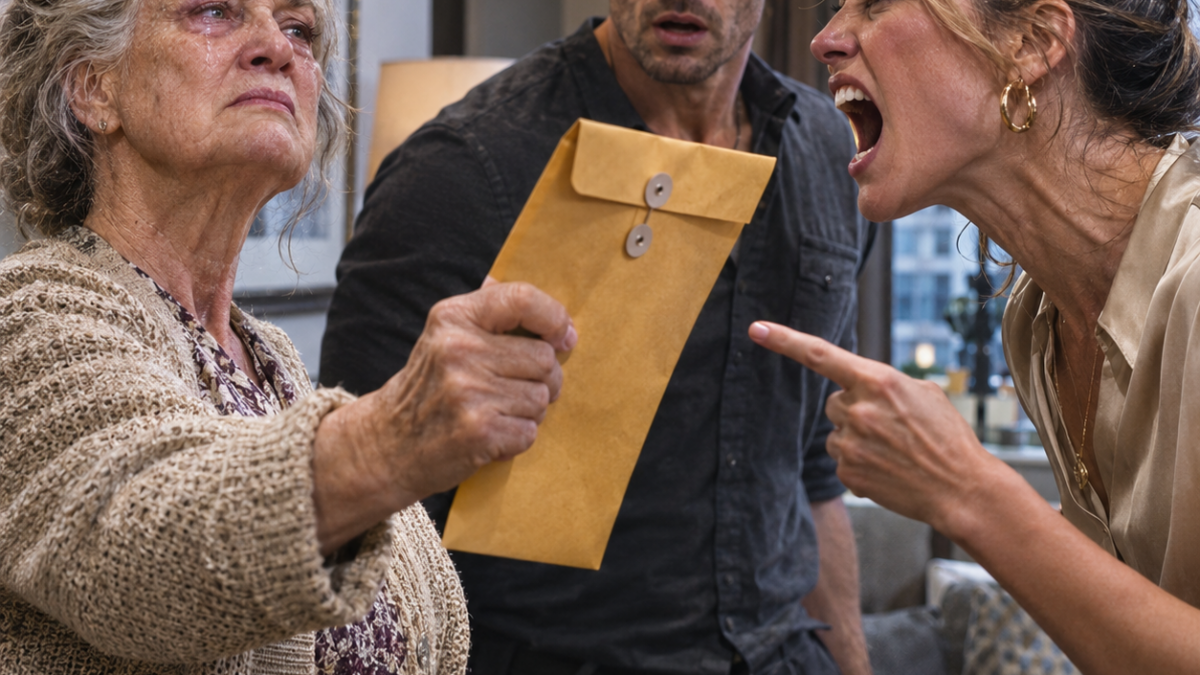
PART2
Four years earlier, I would have given almost anything to hear my son laugh in that living room again.
Not the bitter laugh he’d developed after marrying Sarah.
The old laugh.
The one that used to fill our apartment when he was a little boy and his father came home from work with some ridiculous story about a construction site.
My husband Michael could make Alex laugh until milk came out of his nose.
He’d lift our son onto his shoulders and march around the apartment pretending to be a giant.
Alex would shriek with delight.
I’d stand in the kitchen, laughing so hard I could barely finish dinner.
Those were the memories I held onto when everything else began disappearing.
Michael and I had been married for forty-five years.
Forty-five.
I still have trouble believing a lifetime can be reduced to a number.
We met when we were young enough to think love alone could solve every problem.
He worked in construction.
I was a seamstress.
Neither of us had much money.
Our first apartment was so small that the dining table barely fit between the kitchen counter and the window.
When it rained, water sometimes leaked through the ceiling.
During our first winter there, the heater broke.
Michael wrapped me in two blankets and made tea on a little electric burner.
“Someday,” he told me, “we’re going to have a home where you never have to be cold.”
I laughed.
“That sounds expensive.”
He took my hands.
“Then I’ll work.”
“Michael—”
“And you’ll tell me when I’m being stubborn.”
“Every day.”
He kissed my forehead.
“Then we’ve got ourselves a plan.”
That was my husband.
He wasn’t wealthy.
He wasn’t sophisticated.
He didn’t wear expensive clothes or know anything about the stock market.
But he understood what a promise meant.
We saved for years.
I took extra sewing work after Alex went to sleep.
Michael accepted long shifts and construction jobs that left his hands cracked and bleeding during winter.
We counted every dollar.
Sometimes we argued over money.
Sometimes we were exhausted.
Sometimes we’d sit at the kitchen table looking at bills and wonder whether we would ever get ahead.
But we were together.
And when we finally bought the apartment that would become our family home, Michael stood in the empty living room and cried.
I had never seen him cry from happiness before.
He looked around at the bare walls.
The scratched floor.
The windows facing the city.
Then turned toward me.
“Mary.”
I smiled.
“What?”
“We did it.”
I walked into his arms.
He held me so tightly that I laughed.
“There’s no furniture.”
“We’ll buy furniture.”
“The kitchen needs work.”
“I’ll fix the kitchen.”
“The mortgage is enormous.”
He kissed me.
“We’ll pay it.”
And we did.
Month after month.
Year after year.
Thirty years of payments, repairs, sacrifices, and careful budgeting.
By the time we finished paying for the apartment, our hair had turned gray and Alex had grown into a man.
Michael bought a little bottle of champagne.
Nothing expensive.
We drank it in the living room and toasted our home.
“Our son will always have somewhere safe to come back to,” Michael said.
I remember smiling.
I remember believing that sentence would always be something beautiful.
I had no idea it would become the excuse my son used to take everything from me.
Michael died after forty-five years of marriage.
Even now, writing those words hurts.
There was no way to prepare for the emptiness he left behind.
People brought flowers.
Casseroles.
Sympathy cards.
They hugged me and said he was in a better place.
I knew they meant well.
But none of those words explained what I was supposed to do with his empty chair.
Or his toothbrush beside mine.
Or the shoes he always left slightly crooked near the bedroom door.
For the first few weeks, I kept preparing coffee for two.
I’d pour my cup, reach for his favorite mug, then remember.
Some mornings, I stood holding that mug until my hands began shaking.
At night, I slept on my side of the bed.
I couldn’t bring myself to move toward the center.
The empty space beside me felt sacred.
Terrible.
Unbearable.
I had spent most of my adult life listening to Michael breathe in the dark.
Then suddenly, there was only silence.
Our apartment became the place where I missed him most.
And the place where I felt closest to him.
His armchair still stood beside the window.
His photograph rested on the bedside table.
I kept his handwritten letters in a drawer.
Old letters from years when construction work took him out of state.
Some had little coffee stains.
Others were folded so many times the paper had softened at the creases.
I knew passages by heart.
My dearest Mary…
Sometimes I read them at night.
Not because I expected the words to change.
But because seeing his handwriting made me feel, for a few minutes, that something of him was still sitting beside me.
The apartment had become more than property.
It was the place where our love remained visible.
And legally, after Michael died, it belonged to me.
My name was on the ownership documents.
The bills were in my name.
The mortgage had been paid.
I believed that at least one part of my life was secure.
Then Alex came to visit one afternoon in March.
And everything began to change.
He arrived carrying a troubled expression.
I noticed immediately.
A mother notices those things.
Even when her son is grown.
Even when he thinks he can hide his problems.
“Mom, can we talk?”
I set down the dish towel.
“Of course, sweetheart.”
He sat on the sofa.
For a moment, he looked so much like Michael that my chest ached.
Same dark eyebrows.
Same way of rubbing his hands together when he was nervous.
I sat beside him.
“What’s wrong?”
He took a breath.
“Sarah’s pregnant.”
For one wonderful second, the world became bright.
I covered my mouth.
“Alex!”
He smiled.
“Yeah.”
“Oh, honey!”
I wrapped my arms around him.
“A baby?”
He nodded.
I began crying.
I had lost my husband only months earlier.
Now my son was telling me I would become a grandmother.
The news felt like life reaching toward me again.
A new little person.
Someone to love.
Someone who might carry Michael’s smile or Alex’s brown eyes.
I pulled back.
“Oh, your father would have been so happy.”
Alex’s expression changed.
He looked down.
“Yeah.”
I touched his hand.
“What’s wrong?”
He sighed.
“We’re having money problems.”
The happiness in my chest shifted.
He explained that the rent on their apartment had risen to nine hundred dollars a month.
They were struggling.
With a baby coming, they needed to save.
His employer had promised him a raise, but it hadn’t arrived yet.
He and Sarah had been looking for a less expensive place, but nothing suitable seemed available.
I listened.
Then he said the words I should have considered more carefully.
“We were wondering if we could stay here for a little while.”
I looked at him.
“Here?”
“Just until we’re back on our feet.”
He leaned closer.
“Six months, Mom. Maybe a year at most.”
I hesitated.
The apartment wasn’t large.
And I had barely begun learning how to live alone after Michael’s death.
But this was my son.
My only child.
And he was about to become a father.
He looked at me with tears in his eyes.
“Please, Mom.”
I remembered holding him when he was a little boy.
How helpless he’d looked after falling off his bicycle.
How he’d whispered, “Can you make it better?”
For years, that had been my job.
Make it better.
Kiss the scraped knee.
Sew the torn school uniform.
Stay awake when he was sick.
Find the money when he needed something for school.
I looked at the grown man sitting beside me.
And saw that same little boy.
“Of course,” I whispered.
Alex’s face changed.
“Really?”
I nodded.
“Of course you can stay.”
He hugged me.
Hard.
“Thank you, Mom.”
His voice broke.
“I swear this is temporary.”
I closed my eyes.
And held him.
I believed him.
That was my first mistake.
Not because helping family is wrong.
But because I believed a promise without protecting myself from what would happen if it was broken.
Two weeks later, Alex and Sarah arrived with their suitcases.
I had cleaned Michael’s old office and turned it into a comfortable bedroom.
I bought fresh sheets.
Placed flowers on the dresser.
Cleared space in the closet.
I even sewed new curtains because I wanted Sarah to feel welcome.
When they arrived, I stood beside the door smiling.
“Welcome home.”
Alex hugged me.
Sarah looked around.
Her eyes moved across the furniture.
The walls.
The framed photographs.
The hallway.
For a moment, I thought she was admiring everything.
Then she frowned.
“That’s a strange place for a couch.”
I laughed gently.
“Michael liked it there.”
She looked at me.
“Well, it makes the room feel crowded.”
I smiled awkwardly.
“Maybe.”
Alex carried the suitcases inside.
Sarah moved toward the bedroom I’d prepared.
She looked at the curtains.
The bed.
The little lamp.
Then said, “I suppose it’ll do.”
I felt a small sting.
I’d spent days preparing the room.
But she was pregnant.
Tired.
Probably stressed.
I told myself not to be sensitive.
“Let me know if you need anything.”
She set down her bag.
“Oh, I will.”
I didn’t understand then how much those four words would eventually cost me.
The first changes seemed harmless.
Sarah moved a chair.
Then the sofa.
Then the dining table.
She said the apartment needed better flow.
I came home from grocery shopping one afternoon and found the living room almost unrecognizable.
Michael’s armchair had been pushed into a corner.
The lamp he’d chosen was unplugged.
Our little table had been moved away from the window.
I stopped in the doorway.
“Sarah?”
She looked up from her phone.
“What?”
“Did you move the furniture?”
She shrugged.
“The old arrangement didn’t make sense.”
I looked toward Michael’s chair.
“He liked sitting by that window.”
Sarah rolled her eyes.
“Mary, Michael isn’t sitting there anymore.”
The words struck me so hard that I couldn’t immediately answer.
She glanced toward me.
“Oh, don’t look at me like that. I’m just being practical.”
I swallowed.
“Of course.”
That became my answer.
Of course.
Whenever something hurt, I swallowed it.
Whenever she dismissed a memory, I told myself she didn’t mean it.
Whenever she spoke sharply, I reminded myself she was pregnant.
And every time I stayed silent, she took another small piece of my home.
Next came the kitchen.
I walked in one morning and found my old pots packed inside cardboard boxes.
The saucepan Michael had bought for our twentieth anniversary was wrapped in newspaper.
The large soup pot I’d used every Christmas was sitting on the floor.
I stared.
“What happened?”
Sarah barely looked up.
“I brought my own cookware.”
I touched the soup pot.
“Why did you pack mine?”
“Because they’re old.”
“They still work.”
She sighed.
“Mary, I don’t want to cook for my baby with rusty things.”
I looked at the pots.
There wasn’t rust on them.
They were clean.
Well cared for.
Some had scratches from decades of use, but they were good pots.
I opened my mouth.
Then closed it.
“All right.”
Sarah smiled.
“See? Isn’t it easier when you cooperate?”
I remember that sentence.
Because it was the first time she praised me for surrendering something that belonged to me.
And I was so desperate to avoid conflict that I almost felt relieved.
By the third month, the apartment looked different.
The curtains Michael and I had chosen were gone.
Sarah replaced them with beige panels that made the living room feel cold.
Family photographs disappeared.
Our wedding picture.
Alex’s school portraits.
A photograph of Michael standing beside our first Christmas tree.
In their places were large modern prints Sarah called tasteful.
My porcelain figurines vanished from the shelves.
I’d collected them over the years.
Some were gifts from Michael.
Some I’d bought with small amounts of money saved from sewing work.
They weren’t valuable.
But each one meant something.
One morning, I found them wrapped in newspaper.
“Sarah?”
She looked up.
“Yes?”
“Where are my figurines going?”
“Storage.”
“Why?”
“They make the apartment look dated.”
I held a little porcelain bird.
Michael had bought it during a trip we took for our anniversary.
I remembered how he’d wrapped it in a paper napkin so it wouldn’t break in his pocket.
I looked at Sarah.
“Some of these were gifts.”
She sighed.
“Mary, you can’t keep living in the past.”
I wanted to tell her that memories were not clutter.
That grief didn’t disappear because someone preferred different decorations.
That the small objects she’d packed into boxes were pieces of a life I had spent forty-five years building.
But the words wouldn’t come.
So I held the porcelain bird.
Then put it into the box myself.
Four months after Alex and Sarah moved in, I overheard them talking.
Their bedroom door was partly open.
I was walking down the hallway carrying clean towels when I heard Sarah say my name.
I stopped.
Not deliberately at first.
Then I heard something that made my blood run cold.
“This apartment should already be ours.”
I stared at the door.
Alex sighed.
“Sarah, not again.”
“You’re her only son.”
“I know.”
“Then why are we pretending we don’t have a claim to it?”
Alex was quiet.
Sarah continued.
“She’s alone. She’s old. This place is worth a fortune.”
My hands tightened around the towels.
Alex lowered his voice.
“It’s Mom’s apartment.”
“For now.”
I stopped breathing.
Sarah continued.
“You need to get her to sign something.”
“What?”
“A transfer. A will. Whatever works.”
Alex didn’t immediately object.
That silence was worse than shouting.
Sarah said, “She’s lonely. She trusts you. We just need the right moment.”
Finally, Alex answered.
“I don’t know if I can do that.”
He sounded uncertain.
Not horrified.
Not angry.
Uncertain.
Like a man considering whether a cruel act would be convenient.
I backed away.
The towels trembled in my hands.
I returned to my room and closed the door.
Then sat on the bed.
For a long time, I stared at the wall.
Sarah wanted my home.
My son knew.
And neither had told me.
I thought about calling Alex into the room and demanding an explanation.
But fear stopped me.
If I confronted them, what would happen?
Would they deny it?
Would Sarah turn Alex against me?
Would they leave and take my grandchild away before I even had a chance to hold her?
The baby was coming soon.
I told myself to wait.
Perhaps Sarah had spoken out of frustration.
Perhaps Alex would refuse.
Perhaps everything would improve after the birth.
I wanted those possibilities to be true so badly that I ignored what I’d heard.
My granddaughter was born in August.
A beautiful baby girl.
When I first held her, I cried.
She was so small.
Her fingers curled around mine.
Her cheeks were soft.
For a moment, I saw Alex as a newborn.
I remembered holding him in the hospital while Michael stood beside me, too overwhelmed to speak.
Now I was holding my son’s daughter.
A new life.
A new generation.
I whispered, “Hello, sweetheart.”
She opened her eyes for a moment.
Then closed them again.
I smiled through tears.
I wanted to love her without fear.
I wanted to be the grandmother who baked cookies, read stories, and told her about the grandfather she’d never meet.
I hoped the baby would bring our family closer.
Instead, she became the reason Sarah gave for taking my bedroom.
Two days after returning from the hospital, Sarah stood in my doorway.
“Mary, we need to talk.”
I looked up from the laundry.
“Of course.”
“The baby cries at night.”
I nodded.
“Newborns do that.”
“We’re exhausted.”
“I understand.”
“So Alex and I need your room.”
I stared.
“What?”
“Your bedroom is farther from the street and larger. It’ll be better for the baby.”
I looked past her toward the room I’d shared with Michael.
The bed where he’d held my hand during difficult nights.
The dresser where his photograph still stood.
The little nightstand containing his letters.
“Sarah, this is my room.”
She sighed.
“Don’t make this difficult.”
“I’ve slept here for thirty years.”
“And now there’s a baby to consider.”
I swallowed.
“We can rearrange the office—”
“No.”
Her voice sharpened.
“We’ve already decided.”
I looked toward the hallway.
“Alex?”
My son appeared behind her.
He avoided my eyes.
“Mom, it’s just a room.”
I stared at him.
“Your father and I—”
“Please don’t bring Dad into everything.”
The words stunned me.
Alex rubbed his forehead.
“We’re tired, Mom. The baby needs space. Can’t you just help us?”
I felt the old pressure.
Be reasonable.
Be generous.
Don’t upset the family.
Don’t make your son choose.
Finally, I whispered, “Where would I sleep?”
Sarah pointed toward the living room.
“The sofa is comfortable.”
I looked at her.
The sofa.
The place where guests occasionally slept after family celebrations.
The sofa where Alex used to watch cartoons on Saturday mornings.
I was seventy years old.
And my son was asking me to sleep there so his wife could take my bedroom.
I looked at him one last time.
“Alex?”
He sighed.
“Mom, please.”
That was all.
No apology.
No hesitation.
Just please.
I nodded.
And that night, I carried my pillow and blanket into the living room.
The first morning, my back hurt so badly I struggled to stand.
I had slept curled awkwardly on the sofa.
Every time someone walked through the room, I woke.
The baby cried.
Alex went to the kitchen.
Sarah came out looking irritated.
“Why are your blankets still here?”
I looked up.
“I just woke up.”
“Well, put them away. The living room looks messy.”
I stared at her.
Then folded my blanket.
Slowly.
My back ached.
My eyes burned from lack of sleep.
I wanted to cry.
Instead, I smiled weakly.
“Of course.”
Sarah walked away.
And I realized I had become someone who apologized for occupying space in her own home.
Months passed.
The promised six-month stay came and went.
I asked Alex when they planned to move.
He frowned.
“Mom, rents are ridiculous.”
I nodded.
“I know, but—”
“And the baby is still little.”
“I understand.”
“We can’t move right now.”
I swallowed.
“What about the raise?”
He looked away.
“It hasn’t happened yet.”
Another month.
Another excuse.
Then another.
And another.
By the end of the first year, I no longer asked often.
Every time I did, Sarah became angry.
She accused me of wanting to throw a baby into the street.
Alex accused me of not supporting his family.
And I was so frightened of losing my granddaughter that I stopped insisting.
The price of seeing that little girl became my silence.
Sarah began making rules.
No television after eight.
No cooking foods she disliked.
No inviting friends without permission.
No using the washing machine during weekends.
No opening certain doors.
No moving furniture.
No questioning purchases.
One afternoon, she arrived carrying new locks.
I stared at the boxes.
“What are those?”
She smiled.
“Bedroom locks.”
“Why?”
“We need privacy.”
I looked at her.
“This is my home.”
She laughed.
“Mary, we’ve lived here more than a year.”
“That doesn’t make it yours.”
Her expression hardened.
“Alex is your only son.”
I swallowed.
“So?”
“So eventually this will belong to him.”
She stepped closer.
“Maybe you should start acting like it.”
That afternoon, Alex installed the locks.
I watched him attach one to the door of the bedroom where I had slept beside his father for decades.
The screwdriver turned.
Metal clicked against wood.
My son worked in silence.
I stood in the hallway.
“Alex.”
He didn’t turn.
“What?”
“Do you really think this is right?”
He sighed.
“Mom, don’t start.”
I looked at his hands.
Michael had taught him how to use tools.
When Alex was little, he’d follow his father around carrying a plastic toolbox.
Michael would kneel beside him and explain what each tool did.
Now my son was using those same skills to lock me out of my own room.
I turned away before he could see me cry.
The weekends became unbearable.
Sarah invited friends.
They played loud music.
Drank.
Laughed.
Filled the living room with strangers.
I would sit quietly in a corner until someone told me I was in the way.
One evening, a man I’d never met pointed toward the kitchen.
“Hey, can you get me another beer?”
I stared at him.
“Excuse me?”
He waved his empty bottle.
“Another beer.”
I felt my cheeks burn.
“I’m not the housekeeper.”
He laughed.
“Then who are you?”
I looked toward Sarah.
She was standing with a group of friends.
Watching.
Smiling.
I straightened my shoulders.
“I own this apartment.”
The man looked around.
Then laughed again.
“Really?”
He glanced toward Sarah.
“Because she looks like the boss.”
The room erupted in laughter.
I stood there.
An old woman in the home she’d paid for.
Surrounded by people who thought her humiliation was entertaining.
Sarah raised her glass.
“Don’t mind Mary. She’s sensitive.”
I walked away.
No one followed.
No one apologized.
And that night, I hid in the utility closet until the party ended.
I didn’t know that within another year, the closet would become my bedroom.
By the second year, Sarah stopped pretending I was a member of the household.
She spoke to me the way someone might speak to an unwanted employee.
“Mary, clean the kitchen.”
“Mary, fold these clothes.”
“Mary, watch the baby.”
“Mary, don’t stand there.”
Sometimes she didn’t even look at me when she gave an order.
She’d walk past, drop a basket of laundry beside my feet, and continue talking on the phone.
I did the work.
I told myself it was for my granddaughter.
I told myself family required sacrifice.
But there is a difference between helping someone you love and being treated as though your only value is what you can do for them.
I had forgotten that difference.
Sarah hadn’t.
She knew exactly how to use it.
When I hesitated, she mentioned my granddaughter.
When I complained, she accused me of selfishness.
When I tried to rest, she reminded me that she was a mother with responsibilities.
And whenever I approached Alex, he looked tired.
“Mom, I’m working all day.”
“I know, sweetheart, but Sarah—”
“Please. I don’t want to get involved.”
I stared at him.
“You’re already involved.”
He rubbed his face.
“Can we not do this tonight?”
Then he’d walk away.
Every time.
My son’s silence became one of the cruelest sounds in that apartment.
I still paid the bills.
All of them.
Water.
Electricity.
Gas.
Maintenance.
Property expenses.
Most of the groceries.
My monthly pension was seven hundred dollars.
I stretched it until every dollar seemed to have been pulled thin.
I stopped buying little things for myself.
No new shoes.
No lunches with friends.
No fabric for sewing projects.
I postponed replacing clothes that had become worn.
Once, I stood in the grocery store calculating whether I could afford eggs and the medication for my back pain in the same week.
I chose the medication.
Then returned home and found Sarah opening a shopping bag filled with expensive cosmetics.
I looked at the boxes.
Then at her.
“Sarah?”
She didn’t look up.
“What?”
“I thought you and Alex were saving for an apartment.”
She rolled her eyes.
“We are.”
“Those look expensive.”
Her expression changed.
“Are you seriously monitoring what I buy?”
“No. I just—”
“Then mind your business.”
I swallowed.
“All right.”
She smiled coldly.
“Besides, you don’t know anything about how much things cost anymore.”
I looked at the grocery bag in my hand.
I knew exactly how much things cost.
I knew the price of bread.
Milk.
Medicine.
Electricity.
And the cost of being too frightened to say no.
The day Eleanor came to visit, I nearly didn’t open the door.
She had been my friend for years.
We had shared coffee, sewing patterns, holidays, and the kind of conversations women have when they’ve known each other long enough to stop pretending everything is perfect.
But I’d been avoiding her.
Not because I didn’t love her.
Because I was ashamed.
I didn’t want her to see what had happened to me.
I didn’t want her to know I slept on a sofa.
Or that my daughter-in-law controlled my kitchen.
Or that my own son wouldn’t defend me.
But that afternoon, when I heard Eleanor’s familiar voice outside, something in me longed for kindness.
I opened the door.
“Mary!”
She smiled.
Then stopped.
Her face changed.
“Oh, honey.”
I tried to smile.
“Hello, Eleanor.”
She looked at me.
Really looked.
At the way my clothes hung loose.
At my tired eyes.
At my shoulders, which had begun curving forward as though I were trying to make myself smaller.
“What happened to you?”
I laughed weakly.
“Nothing.”
Her eyes filled.
“Mary.”
“I’m fine.”
She stepped closer.
“No.”
Her voice softened.
“You’re not.”
I looked away.
Then she took my hands.
“Please tell me.”
And something inside me broke.
I began crying before I could speak.
I told Eleanor everything.
Not all at once.
The words came in pieces.
Sarah moving the furniture.
Packing Michael’s belongings.
Taking my bedroom.
The locks.
The demands.
The money.
The way Alex looked away.
The fear that if I complained, they’d take my granddaughter from me.
Eleanor listened.
At first, she looked shocked.
Then furious.
Then heartbroken.
When I finally stopped talking, she hugged me.
And I cried against her shoulder like a child.
“Mary.”
Her voice trembled.
“This is abuse.”
I pulled back.
“They’re my family.”
She looked directly at me.
“That doesn’t make it less abusive.”
I shook my head.
“I can’t throw them out.”
“Why not?”
“My granddaughter.”
My voice broke.
“She’s just a baby.”
Eleanor took both my hands.
“Listen to me.”
I looked at her.
“You can love that child without allowing her parents to destroy you.”
I began crying again.
“What if they never let me see her?”
Eleanor’s eyes softened.
“I know you’re afraid.”
I nodded.
“But Mary, look at what this is doing to you.”
I looked down.
She continued.
“You’re losing weight. You’re frightened in your own home. You’re paying for people who treat you like a servant.”
My lips trembled.
“Michael would be ashamed of me.”
Eleanor’s expression changed.
“No.”
She shook her head firmly.
“Michael would be heartbroken that anyone made you believe you deserved this.”
I covered my face.
Eleanor pulled me close again.
And for the first time in two years, I allowed myself to be held by someone who wasn’t asking me for anything.
Then Sarah came home.
She entered carrying bags from expensive stores.
Her face hardened when she saw Eleanor.
“What is she doing here?”
Eleanor turned.
“I’m visiting my friend.”
Sarah laughed.
“Well, this isn’t a social club.”
I felt my stomach tighten.
Eleanor remained calm.
“This is Mary’s apartment.”
Sarah set down her bags.
“This is our family’s home.”
“Mary is part of that family.”
Sarah’s eyes narrowed.
“Who asked you?”
Eleanor looked toward me.
“Mary did.”
I could feel the danger rising.
I knew that expression on Sarah’s face.
I’d seen it before every punishment.
Every new restriction.
Every cruel remark that followed an attempt to defend myself.
Sarah turned toward me.
“Mary.”
I flinched.
“Tell your friend to leave.”
Eleanor waited.
I could see hope in her eyes.
She wanted me to stand up for myself.
She wanted me to say no.
But I could also imagine what would happen after Eleanor left.
Sarah screaming.
Alex blaming me.
Threats about my granddaughter.
Days of punishment.
My courage vanished.
I looked down.
“Eleanor.”
My voice was barely audible.
“Maybe you should go.”
The pain in her face nearly destroyed me.
But she didn’t argue.
She stood.
Picked up her purse.
Then touched my hand.
“You know where I am.”
I nodded.
She looked at me for a long moment.
“This doesn’t have to be the rest of your life.”
Then she left.
Sarah waited until the door closed.
Then she stepped toward me.
“If that woman comes here again, you’re going to regret it.”
I nodded.
“Do you understand?”
“Yes.”
She smiled.
“Good.”
Then she looked around the living room.
“By the way, Alex bought some exercise equipment.”
I stared.
“What?”
“We’re putting it here.”
“But the sofa—”
“Exactly.”
She looked at me.
“You’ll need somewhere else to sleep.”
My heart began pounding.
“Sarah, there’s nowhere else.”
She smiled.
“The utility closet.”
I stared.
The closet.
The little room where we kept cleaning supplies, old boxes, and household tools.
It barely measured six feet by six feet.
There was no proper window.
No comfortable ventilation.
Just shelves and a narrow space on the floor.
I felt dizzy.
“I can’t sleep there.”
Sarah folded her arms.
“Of course you can.”
“My back—”
“Oh, please. You’re always complaining.”
I swallowed.
“Sarah, I’m seventy—”
“And I’m raising a child.”
She stepped closer.
“If you can’t cooperate, maybe we need to consider a nursing home.”
My blood ran cold.
She continued.
“We could sell the apartment and use the money for your care.”
I stared at her.
She smiled.
“Wouldn’t that be easier for everyone?”
I felt the room tilt.
The threat wasn’t subtle anymore.
She wanted me gone.
One way or another.
And she was reminding me that she controlled the grandson—or rather, the son—I had once believed would always protect me.
That night, I carried my blanket into the utility closet.
The mattress was thin.
It smelled of damp fabric and cleaning products.
I moved some boxes to make room.
My knees hurt as I lowered myself.
The door wouldn’t close properly.
Light spilled in from the hallway.
I could hear the television.
Sarah laughing.
Alex speaking.
The baby crying.
I lay down.
My back protested immediately.
I turned onto one side.
Then the other.
There was no comfortable position.
I stared at the stained ceiling.
And remembered the night Michael and I moved into our apartment.
How we’d slept on a mattress on the floor because the bed frame hadn’t arrived.
How we’d laughed beneath a blanket.
How he’d whispered that someday we’d have a proper bedroom.
Now I was sleeping on a mattress on the floor again.
But Michael wasn’t beside me.
And there was nothing funny about it.
I covered my mouth so nobody would hear me crying.
Then whispered his name.
“Michael.”
The closet remained silent.
“I don’t know what to do.”
I waited.
Of course, there was no answer.
But I could almost imagine his hand reaching for mine.
And that made the loneliness worse.
The months that followed were a kind of slow disappearance.
I stopped expecting kindness.
I stopped inviting friends.
I stopped sewing because Sarah complained about the noise.
I stopped choosing what to cook.
I stopped watching television.
I stopped entering rooms unless I had a reason.
My world became smaller.
The kitchen when I was allowed to use it.
The utility closet.
The hallway.
Occasionally the grocery store.
And the few moments when I could hold my granddaughter without Sarah watching me as though I were doing something wrong.
That little girl was growing.
She had Michael’s smile.
Sometimes she’d reach for my hand.
“Grandma.”
One word.
A tiny voice.
And my heart would break.
Because I loved her.
Because I wanted to remain part of her life.
And because the adults who controlled access to her knew exactly how to use that love against me.
One afternoon, Sarah left me alone with my granddaughter while she went shopping.
I sat on the living room floor watching the little girl build a tower of blocks.
She laughed when it fell.
I laughed too.
For a moment, I felt like a grandmother again.
Not a servant.
Not an inconvenience.
Just a woman sharing a happy afternoon with a child she adored.
My granddaughter picked up a yellow block.
“Grandma?”
“Yes, sweetheart?”
She held it out.
I took it.
“Thank you.”
Then she crawled into my lap.
I wrapped my arms around her.
She rested her head against my chest.
I closed my eyes.
And prayed that someday she would know me as something other than the old woman her mother ordered around.
I wanted her to know I could sew beautiful dresses.
That I used to dance with her grandfather in the kitchen.
That I loved flowers and old movies and the smell of bread baking.
That I had been a whole person before her parents began erasing me.
I kissed her hair.
“I love you.”
She looked up.
“Love Grandma.”
I began crying.
Then I heard Sarah’s key in the lock.
I wiped my face quickly.
Because I knew what happened when Sarah found me looking too happy.
During the third year, Sarah began speaking openly about the apartment’s value.
Three hundred thousand dollars.
That was the number she repeated.
At dinner.
On the phone.
During conversations with Alex.
Three hundred thousand dollars.
To her, it was the future.
A financial opportunity.
Something being wasted because an elderly woman still had legal ownership.
One evening, I heard her talking in the bedroom.
“If she would just sign it over, we could do whatever we want.”
Alex muttered something.
Sarah continued.
“She’s getting weaker every day.”
I stopped walking.
The hallway seemed to narrow around me.
“She’ll give in eventually.”
I pressed a hand against the wall.
Then I heard her laugh.
“Or she’ll get sick. At her age, anything can happen.”
My blood went cold.
She wasn’t saying she would hurt me.
But she was speaking about my possible death as though it were a convenient financial development.
I stood there, shaking.
And suddenly understood that I wasn’t simply being treated badly.
I was being worn down deliberately.
Sarah wanted me exhausted.
Frightened.
Isolated.
Dependent.
Willing to sign whatever she put in front of me.
I returned to the utility closet and sat on the mattress.
Three hundred thousand dollars.
That’s what my home meant to her.
Not Michael’s sacrifices.
Not our marriage.
Not the nights I’d spent sewing while he worked construction shifts.
Not the place where Alex had taken his first steps.
Three hundred thousand dollars.
And I was the obstacle standing between Sarah and the money.
The next morning, Sarah opened the closet door at six.
“Get up.”
I blinked.
I had barely slept.
“What?”
“We have company tonight. The apartment needs cleaning.”
I looked toward the clock.
“Sarah, I’m tired.”
She stared.
“What?”
“My back hurts. I need a little more sleep.”
She stepped into the cramped space.
The smell of her perfume filled the air.
“I don’t care if you’re tired.”
I lowered my eyes.
“I’ll clean later.”
She crouched.
Her face was inches from mine.
“Listen carefully, Mary.”
I began trembling.
“If you don’t do what I tell you, I’m going to tell Alex you tried to hurt the baby.”
I stared at her.
“What?”
“You heard me.”
“That’s a lie.”
Sarah smiled.
“Of course it is.”
I couldn’t breathe.
“But who do you think he’ll believe?”
I looked toward the hallway.
She continued.
“His wife? The mother of his child?”
Her smile widened.
“Or an old woman who doesn’t know when to disappear?”
She stood.
“Get up.”
Then walked away.
I remained on the mattress.
My hands shook.
My heart pounded.
I could hear her footsteps moving down the hall.
For a long moment, I couldn’t move.
Then something happened.
The fear didn’t disappear.
But beneath it, I felt anger.
Not the helpless anger that had filled my chest before dissolving into tears.
Something clearer.
Colder.
A realization.
If I continued obeying, Sarah would never stop.
There was no final sacrifice that would satisfy her.
No amount of work.
No degree of submission.
No promise to stay out of the way.
She wanted my home.
And as long as I remained inside it, she would keep trying to make my life unbearable.
I looked around the utility closet.
The cleaning supplies.
The boxes.
The thin mattress.
Then thought about Michael.
He had spent decades building a safe home for us.
I had spent four years allowing that home to become a place where I feared waking up.
I wiped my face.
And whispered, “No more.”
That afternoon, while Sarah was resting and Alex was at work, I left the apartment.
I wore an old cardigan.
Comfortable shoes.
And carried a small handbag.
Every movement frightened me.
I listened for Sarah’s bedroom door.
Waited.
Opened the front door carefully.
Then stepped into the hallway.
When the door clicked shut behind me, my knees almost gave way.
I felt like a prisoner escaping.
I walked three blocks to Eleanor’s house.
The distance seemed enormous.
My back hurt.
My legs felt weak.
I stopped twice to rest.
But I kept walking.
When I reached her porch, I stood staring at the doorbell.
What if she was angry?
What if she remembered the way I’d asked her to leave?
What if she’d finally decided I wasn’t worth the trouble?
I pressed the bell.
Footsteps approached.
The door opened.
Eleanor stared at me.
“Mary?”
I tried to speak.
Nothing came out.
Her expression changed.
“Oh, sweetheart.”
She opened her arms.
And I began crying.
Eleanor brought me inside.
Sat me on her sofa.
Placed a cup of tea in my hands.
Then waited.
For several minutes, I couldn’t speak.
I simply cried.
The room smelled of cinnamon and freshly washed curtains.
There was a soft blanket over the back of the sofa.
A little vase of flowers on the table.
Ordinary things.
Things I’d once had in my own home.
I looked around.
Then whispered, “I need help.”
Eleanor leaned closer.
“I’m here.”
My voice broke.
“I can’t do it anymore.”
She took my hand.
“Tell me.”
I told her about the utility closet.
Sarah’s threats.
The way Alex ignored everything.
The conversations about my apartment.
The three hundred thousand dollars.
The possibility of forged documents.
And the accusation Sarah threatened to make about my granddaughter.
When I finished, Eleanor’s eyes were wet.
But her voice was steady.
“Mary, this ends.”
I looked down.
“I don’t know how.”
“Then we find someone who does.”
I stared at her.
She took my hands.
“You need legal help.”
“I can’t afford it.”
“We’ll work that out.”
I shook my head.
“Eleanor—”
“No.”
She squeezed my fingers.
“You’ve helped me more times than I can count.”
My tears began falling again.
She smiled sadly.
“Remember when my husband was sick?”
I nodded.
“You brought dinner every week.”
“That was different.”
“No, it wasn’t.”
Her eyes filled.
“You sat beside me when I thought I couldn’t survive losing him.”
I looked down.
“Now let me sit beside you.”
I began sobbing.
Because after years of being told I was a burden, someone was reminding me that I was worth helping.
Eleanor knew an attorney named James.
He was experienced, practical, and careful about legal procedures.
She called him.
Explained the situation.
Then arranged a consultation.
We also discussed how I could safely document what had happened.
Eleanor offered an old phone, but James would need to advise us about recording laws and what evidence could properly be used.
I wasn’t going to jeopardize my case by making assumptions.
There were other ways to preserve information too.
Written notes.
Financial statements.
Ownership records.
Photographs of my sleeping conditions.
Messages.
Witness testimony.
Eleanor looked at me.
“Can you keep a record?”
I nodded.
“I think so.”
“Every threat?”
“Yes.”
“Every demand?”
I swallowed.
“Yes.”
She smiled.
“Good.”
Then she stood.
“Now you’re going to eat.”
I looked up.
“What?”
She walked toward the kitchen.
“You’ve lost weight, Mary.”
“I don’t want to trouble you.”
She turned.
“You’re not trouble.”
My lips trembled.
She continued.
“And from now on, you’re coming here whenever you safely can.”
I began crying again.
Eleanor returned and hugged me.
“We’re going to get you through this.”
For the first time in years, I believed someone.
When I returned home, Sarah was watching television.
She looked up.
“Where were you?”
My stomach tightened.
“The pharmacy.”
She narrowed her eyes.
“For what?”
“Something for my back.”
She rolled her eyes.
“Always complaining.”
I lowered my gaze.
Then walked toward the utility closet.
But this time, I wasn’t going there to surrender.
I had a plan.
A friend.
An attorney to meet.
And proof that the apartment belonged to me.
For the first time in years, the walls of that small room didn’t feel like the whole world.
Over the following days, I began documenting what happened.
I wrote dates.
Times.
Exact words when I could remember them.
I saved relevant messages.
Collected copies of utility bills showing I had paid the expenses.
Found the ownership documents bearing my name.
Eleanor helped photograph the utility closet.
The narrow mattress.
The cleaning supplies.
The absence of a suitable bedroom.
We worked carefully.
Quietly.
I tried not to let Sarah notice.
Sometimes I trembled while writing.
Sometimes I stopped because the memories were too painful.
But Eleanor kept reminding me that the records mattered.
They told the story I’d been too ashamed to tell aloud.
And when I finally sat in James’s office, I carried those records with me.
James was a man in his fifties with a patient expression and a habit of listening without interrupting.
I sat across from him.
Eleanor sat beside me.
James opened a notebook.
“Mrs. Hernandez, tell me what happened.”
My married name was Mary Hernandez.
Hearing it spoken respectfully made something tighten in my chest.
I hadn’t realized how long it had been since someone addressed me with that kind of courtesy.
I began speaking.
At first, my voice shook.
Then the words came more easily.
I told him about Michael.
The apartment.
The temporary promise.
The bedroom.
The locks.
The utility closet.
The threats.
And the conversations about transferring the property.
James listened.
Asked careful questions.
Reviewed the documents.
Then looked at me.
“Mary, you are not powerless here.”
I began crying.
He passed me a tissue.
“The apartment is titled in your name. That matters.”
I nodded.
He continued.
“We need to handle the occupancy issue through the proper legal process. We also need to address the threats and your safety.”
I looked toward Eleanor.
She squeezed my hand.
James explained that the exact procedures would depend on the applicable law and the orders the court issued.
He did not promise that being the owner meant I could simply throw their belongings into the street.
But he was confident there were legal options.
For the first time, someone was explaining my rights without frightening me.
I took a breath.
“Can I make them leave?”
James looked directly at me.
“We can pursue the lawful steps necessary to end their occupancy.”
I began crying.
He waited.
Then added gently, “Being family does not give someone permission to threaten or mistreat you.”
I covered my mouth.
Those words were so simple.
And I had needed someone to say them for four years.
James began preparing the necessary action.
He explained what notices might be required, what evidence would matter, and how any protective measures would have to be handled.
He also discussed safety.
I told him about Sarah’s threat to accuse me falsely of hurting the baby.
His expression became serious.
“That is something we need to document.”
I nodded.
“She said Alex would believe her.”
James looked at me.
“Do you believe your son would?”
I opened my mouth.
Then closed it.
Because the truth was unbearable.
I didn’t know.
Four years earlier, I would have laughed at the idea.
Now I had seen Alex ignore too much.
I looked down.
“I don’t know.”
James was quiet.
Then said, “We’ll proceed carefully.”
As the process moved forward, Sarah became more suspicious.
She watched me.
Asked questions.
Commented whenever I left the apartment.
One afternoon, she blocked the hallway.
“You’re acting strange.”
I stopped.
“I’m tired.”
She narrowed her eyes.
“What are you hiding?”
“Nothing.”
She stepped closer.
“Don’t do anything stupid, Mary.”
My heart raced.
I kept my voice steady.
“I need to get past.”
She stared at me.
Then laughed.
“Look at that. The old woman found a little attitude.”
I didn’t answer.
She moved aside.
I walked toward the utility closet.
My knees were shaking.
But I had not apologized.
That felt like progress.
The next frightening development came when I overheard Sarah talking about forged documents.
She was on the phone.
Her voice carried through the hallway.
I stopped when I heard my name.
“She hasn’t signed anything.”
A pause.
Then Sarah laughed.
“I’ve been thinking about getting someone to help with the paperwork.”
My heart began pounding.
She continued.
“Maybe a notary. Maybe we can make it look like she approved a transfer.”
I felt sick.
She was no longer simply waiting for me to give in.
She was discussing a possible way to take the apartment without my consent.
I did not confront her.
I documented what I could lawfully preserve.
Then told Eleanor.
She arranged for me to speak with James immediately.
He listened.
His expression hardened.
“This is serious.”
I nodded.
He explained that any suspected attempt to falsify property documents would need to be handled through appropriate legal channels.
He also wanted to ensure the ownership records were protected and that we had current documentation.
I felt frightened again.
But this time, fear led me toward help instead of silence.
The final days before the scheduled legal action were among the longest of my life.
Sarah seemed determined to punish me for something she couldn’t quite identify.
She threw away old clothes I loved.
Forbade me from using the kitchen after six.
Complained when I sat in the living room.
And broke one of the few photographs of Michael that still remained on display.
She claimed it was an accident.
But I saw the expression on her face.
I knelt beside the broken frame.
Glass glittered across the floor.
Michael’s face smiled up at me from the photograph.
I picked it up with trembling hands.
Sarah looked toward me.
“Oh, don’t start crying.”
I didn’t answer.
She sighed.
“It’s just a picture.”
I looked down at Michael.
Then whispered, “No.”
Sarah frowned.
“What?”
I held the photograph against my chest.
“It’s not just a picture.”
For a moment, she seemed surprised.
Then she laughed.
“Whatever.”
She walked away.
I remained on the floor.
And realized something important.
Sarah could destroy objects.
She could remove curtains.
Throw away clothes.
Break photographs.
But she could not erase the fact that Michael and I had loved each other.
And she could no longer make me believe I didn’t deserve a home.
The evening before James was scheduled to arrive, Eleanor visited.
We sat quietly in the living room while Sarah was out.
Eleanor brought sandwiches.
I ate one.
Then another.
I hadn’t realized how hungry I’d become.
She watched me with a sad smile.
“Tomorrow.”
I nodded.
“Tomorrow.”
My hands trembled.
“What if something goes wrong?”
Eleanor reached across the table.
“Then we call James.”
“What if Alex gets angry?”
“We follow the safety plan.”
“What if Sarah threatens me?”
“We don’t handle it alone.”
I began crying.
Eleanor squeezed my hand.
“Mary, you don’t have to become fearless overnight.”
I looked up.
“You just have to stop facing everything alone.”
I swallowed.
Then nodded.
After she left, I returned to the utility closet.
I looked at the narrow mattress.
The stained ceiling.
The shelves crowded with cleaning supplies.
And I whispered, “This is the last night.”
For a moment, I felt frightened that saying it aloud might somehow ruin everything.
Then I thought about the documents.
James.
Eleanor.
The proper procedures already underway.
And I lay down.
I didn’t sleep much.
But I didn’t cry myself to sleep either.
For the first time in years, I was waiting for morning instead of dreading it.
The morning arrived cold and gray.
I woke before six.
For a moment, I lay on the thin mattress listening to the apartment.
Sarah and Alex were still asleep.
The refrigerator hummed.
A car passed outside.
Somewhere in the building, a door closed.
Ordinary sounds.
The sounds of a place I’d once loved.
I sat up carefully.
My back protested.
I looked around the closet.
Then stood.
I folded the blanket.
Placed the pillow on top.
And said quietly, “Never again.”
I walked toward the bathroom.
Showered.
Washed my hair.
Then opened a box containing the few dresses Sarah hadn’t thrown away.
I chose a dark green one.
Michael had given it to me years earlier.
He said the color made my eyes look brighter.
I held the fabric against my face for a moment.
Then dressed.
I brushed my hair.
Put on a little lipstick.
And looked in the mirror.
The woman staring back looked older than I remembered.
Her cheeks were hollow.
Her shoulders tired.
But her eyes were awake.
I touched the mirror lightly.
“Mary.”
My voice shook.
“You can do this.”
At nine thirty, the doorbell rang.
My heart almost stopped.
I walked toward the door.
Each step felt enormous.
When I opened it, James stood outside with his briefcase.
The two officers accompanying him were there in connection with the legal and safety arrangements made for that morning.
James smiled gently.
“Good morning, Mary.”
I nodded.
“Good morning.”
“Are you ready?”
I looked down at my green dress.
Then toward the hallway.
“Yes.”
He studied me for a moment.
“Remember, you do not have to argue with them. We’ll handle the documents and the process.”
I nodded.
“All right.”
He stepped inside with the officers.
I closed the door.
And heard the sound of unfamiliar footsteps moving through my apartment.
For four years, I’d dreaded footsteps.
Sarah approaching the closet.
Alex coming home in a bad mood.
Guests arriving for another party.
Now, for the first time, footsteps meant that someone had come to help me.
Sarah emerged from the bedroom wearing a robe.
Her hair was disheveled.
She looked toward James.
Then the officers.
Her face changed.
“What is this?”
James introduced himself and explained the legal action.
Sarah stared.
Then turned toward me.
“Mary.”
I said nothing.
“What did you do?”
James offered the relevant documents.
Sarah snatched them.
Her eyes moved across the pages.
I watched the color drain from her face.
Then return in a furious flush.
“This is a joke.”
James remained calm.
“It is not.”
Sarah pointed toward me.
“She’s throwing us out?”
I stood beside the dining table.
My hands trembled.
James explained that the court process had resulted in an order requiring them to vacate within the specified period, with enforcement to follow through the proper authorities if they failed to comply.
The deadline was seventy-two hours.
Sarah stared at the notice.
Then began shouting.
“We’ve lived here for four years!”
I looked at her.
“Yes.”
Her head snapped toward me.
“What?”
“Four years.”
My voice shook.
“Four years without paying me rent.”
She laughed bitterly.
“We’re family.”
I felt something settle inside me.
“Four years of using my electricity.”
“Mary—”
“My water.”
She stepped toward me.
“My kitchen.”
Her eyes narrowed.
“My bedroom.”
I swallowed.
“And my money.”
For a moment, she looked stunned.
Perhaps because she’d never heard me speak so many sentences without apologizing.
Then she shouted, “This is our home!”
I reached for the documents James had prepared.
“No, Sarah.”
My voice grew steadier.
“This is the home Michael and I bought.”
Alex came out of the bedroom.
He looked confused.
Then saw the officers.
His face went pale.
“Mom?”
I turned toward him.
For a moment, my heart betrayed me.
I saw my boy.
The child with scraped knees.
The teenager carrying a backpack.
The young man hugging me after his father’s funeral.
Then I saw the man who’d installed locks on my bedroom.
“Alex.”
He looked toward Sarah.
“What happened?”
Sarah thrust the paperwork toward him.
“Your mother is throwing us out!”
He read.
His expression changed.
“Mom, you can’t do this.”
I felt tears gathering.
“Why not?”
He looked at me.
“We’re your family.”
There it was again.
The word they’d used to silence me.
Family.
I looked toward my son.
Then asked, “Where was my family when I was sleeping in the utility closet?”
Alex flinched.
“Mom—”
“Where were you when your wife told me to leave my bedroom?”
He looked down.
“Where were you when she threw away my belongings?”
Sarah scoffed.
“Oh, here comes the speech.”
I turned toward her.
“No.”
My voice was quiet.
“You’ve spoken enough for four years.”
Sarah’s mouth fell open.
I looked back at Alex.
“And where were you when I asked you for help?”
He didn’t answer.
I felt tears roll down my cheeks.
“You were right here.”
My voice broke.
“Watching.”
Sarah stepped forward.
“This is ridiculous. You’re acting like we tortured you.”
I looked at her.
“You put me in a closet.”
She rolled her eyes.
“We needed the living room.”
“You threatened to accuse me of hurting my granddaughter.”
Her expression changed.
Alex looked up.
“What?”
I turned toward him.
“Did she tell you that?”
He stared.
Sarah laughed too quickly.
“She’s lying.”
I looked at James.
He already knew the allegation.
The records had been preserved.
I continued carefully.
“Your wife also talked about having someone help falsify documents to transfer this apartment.”
Sarah froze.
For one second, the room became silent.
Alex turned toward her.
“Sarah?”
She looked at me.
“How do you know that?”
The question told me more than any denial could have.
James spoke calmly.
“The property records and the reported statements are being addressed through the appropriate channels. You should obtain independent legal advice.”
Sarah’s face went white.
She looked toward the officers.
Then toward Alex.
“This is insane!”
I remained still.
For the first time, I wasn’t trying to convince Sarah to be kind.
I wasn’t pleading with Alex to understand.
I had taken steps to protect myself.
And I was allowing those steps to stand.
Then Alex looked at me.
“Mom, what about your granddaughter?”
The room seemed to tilt.
There it was.
The weapon I’d feared most.
My granddaughter.
The little girl who had once fallen asleep in my arms.
Who called me Grandma.
Who sometimes smelled of baby shampoo and warm blankets.
Alex stepped closer.
“She’s going to lose her home.”
I swallowed.
He continued.
“She might not understand why she can’t see you.”
My eyes filled.
For a moment, I almost surrendered.
I could feel the old instinct.
Make it better.
Give them more time.
Swallow another insult.
Accept another month in the closet.
Anything to keep my granddaughter close.
Then I looked at my son.
And remembered how he’d used my love as a bargaining tool for years.
“Alex.”
My voice broke.
“I love that little girl.”
He nodded quickly.
“Then—”
“Don’t.”
He stopped.
I wiped my face.
“Don’t make me prove I love her by allowing her parents to mistreat me.”
He stared.
I continued.
“You have a responsibility to provide a safe home for your daughter.”
My lips trembled.
“That responsibility does not belong to the grandmother you’ve been abusing.”
Alex looked down.
And for the first time, he didn’t have an answer.
Sarah did.
She always did.
“You selfish old hag.”
Her voice rose.
“You’re going to die alone.”
I flinched.
She saw it.
And smiled.
“That’s right. Alone.”
I gripped the table.
“Sarah—”
“Nobody will come when you’re sick. Nobody will care what happens to you.”
The younger officer asked her to stop threatening me.
She ignored him.
“You’ll be sitting in some miserable nursing home wishing you’d let us stay.”
I looked toward the window.
Michael used to stand there watching the sunset.
For a moment, I imagined him beside me.
Then I turned back.
“Sarah, I’ve spent four years surrounded by family and feeling completely alone.”
She stared.
My voice steadied.
“I think I’ll survive having my apartment to myself.”
James explained the remaining obligations and the consequences of failing to follow the order.
He reminded them that property disputes, personal belongings, and any allegations of theft would be handled according to the applicable legal process.
Sarah argued about furniture.
Appliances.
Curtains.
Everything.
She wanted to take as much as possible.
I understood then that even after four years, she still saw my home as something to extract value from.
James remained patient.
The officers maintained the peace.
Eventually, the confrontation ended.
Sarah and Alex retreated toward the bedroom.
The door slammed.
And I stood in the living room shaking.
James turned toward me.
“Mary?”
I looked up.
“Are you all right?”
The question was so gentle that I almost collapsed.
I nodded.
Then shook my head.
“I don’t know.”
He pulled out a chair.
“Sit down.”
I did.
Eleanor arrived shortly afterward and held my hand.
For a long time, I couldn’t speak.
Then I whispered, “I did it.”
She squeezed my fingers.
“Yes.”
I began crying.
“I was so scared.”
“I know.”
I looked toward the hallway.
“They’re going to leave.”
Eleanor’s eyes filled.
“Yes, Mary.”
I covered my face.
“And I didn’t have to give them my home.”
She pulled me close.
“No, sweetheart.”
Her voice broke.
“You didn’t.”
The following three days were difficult.
Sarah and Alex packed angrily.
Doors slammed.
Boxes struck the floor.
Arguments filled the apartment.
I remained careful.
Eleanor visited.
James stayed available.
We documented concerns about property and followed the safety arrangements already in place.
On the second day, I found Sarah disconnecting my television.
I stopped.
“That stays.”
She turned.
Her lips curled.
“Listen to you.”
I stood in the doorway.
“The television was here before you moved in.”
She laughed.
“Prove it.”
I looked at her.
Then reached for my phone.
“I’ll ask James to address the dispute.”
Her expression hardened.
“Oh, now you need a lawyer for everything?”
I didn’t answer.
I called.
And for the first time in four years, I didn’t allow Sarah’s anger to decide what happened next.
That night, I heard Alex and Sarah arguing.
Their voices were loud enough to carry through the hallway.
“This is your fault!” Sarah screamed.
Alex answered.
“I didn’t know she’d do this.”
“Of course you didn’t! You said she was weak!”
I stopped.
My chest tightened.
Sarah continued.
“You told me she’d never stand up to us.”
There was a silence.
Then Alex said quietly, “I was wrong.”
Sarah laughed bitterly.
“Wonderful. Now we’re going to have to pay rent.”
He sighed.
“We’ll find somewhere.”
“With what money?”
“I’ll figure it out.”
She shouted something I couldn’t understand.
Then I heard Alex say words I never expected.
“We betrayed her.”
Silence.
I stood in the hallway.
My eyes filled.
For a moment, I wanted to open the door.
To ask him to say it again.
To tell him I had been waiting four years for those words.
But I didn’t move.
Because recognizing cruelty in private was not the same as stopping it when it mattered.
And my son had been silent for too long.
Thursday morning arrived.
The deadline was ten o’clock.
I woke early.
For the first time in years, I made coffee in the kitchen without worrying whether Sarah would complain.
I sat at the dining table.
The same table where Michael and I had shared thousands of meals.
I placed my hands around the warm mug.
And waited.
At eight, Sarah appeared with two suitcases.
Her eyes were swollen.
She looked exhausted.
But when she saw me, her expression hardened.
“I hope you’re happy.”
I looked up.
“I’m relieved.”
She laughed.
“You threw your family out.”
I swallowed.
“I ended an arrangement that was destroying me.”
She dropped the suitcases.
Then came closer.
“I always knew you were weak.”
I looked at her.
She smiled cruelly.
“You let us do whatever we wanted.”
I didn’t answer.
“The only thing I regret is not pushing harder sooner.”
My stomach tightened.
She leaned toward me.
“I should’ve made you sign those papers before you figured anything out.”
I stared.
Then whispered, “You were never entitled to this home.”
She straightened.
Her hand moved suddenly.
The slap came before I could step away.
My head turned.
Pain burned across my cheek.
For a moment, I couldn’t hear anything except the pounding of my heart.
I sat frozen.
Then looked back at Sarah.
She was breathing hard.
Her eyes were full of fury.
Alex entered the room.
He saw me holding my cheek.
He saw his wife standing over me.
And he did nothing.
Again.
He simply said, “Sarah, let’s go.”
Those four words hurt more than the slap.
Because he had witnessed the violence.
And still, his first instinct was to avoid a confrontation.
Sarah picked up her suitcases.
Then stopped near the door.
“Oh, Mary.”
I looked at her.
Her smile returned.
“There’s something I forgot to tell you.”
I waited.
“That photograph of Michael you kept beside your bed?”
My heart tightened.
“What about it?”
“I threw it away months ago.”
I stared.
She continued.
“And the letters.”
My breath stopped.
“What letters?”
She smiled.
“The ones in your bedside drawer.”
The room seemed to spin.
Michael’s letters.
The handwritten pages I had read when grief made sleep impossible.
The words he’d sent while working away from home.
Sarah watched my expression.
“I threw them out.”
I couldn’t speak.
She stepped closer.
“I knew you’d be upset.”
My eyes filled.
“And I liked knowing that.”
For a moment, the apartment disappeared around me.
All I could see was Michael sitting at a little table decades earlier, writing to me after a long day of work.
His handwriting.
His promises.
The little jokes he tucked between serious sentences.
Those letters were pieces of a life I could never relive.
And Sarah had destroyed them because she wanted to hurt me.
I whispered, “How could you?”
She shrugged.
“Old paper.”
I began crying.
Alex looked away.
Then Sarah opened the door.
“Enjoy your empty apartment.”
And left.
My son followed her.
Without an apology.
Without touching my shoulder.
Without even saying goodbye.
The door closed.
And the silence that followed seemed to swallow the entire room.
I sat at the dining table.
My cheek hurt.
My heart hurt worse.
I had thought the moment they left would feel like victory.
Instead, I felt hollow.
I was free.
But the price had been terrible.
Four years of my life.
My health.
My peace.
The relationship I once had with my son.
And now the letters Michael had written.
I cried for the woman I’d been before I allowed them into the apartment.
For the mother who believed love required endless surrender.
For the wife who had tried to preserve her husband’s memory while watching other people throw it away piece by piece.
I sat there until the doorbell rang.
At ten o’clock, James returned with the appropriate officials to verify compliance with the order.
He looked at me.
Then at my cheek.
His expression changed.
“Mary?”
I lowered my eyes.
“She hit me.”
He became serious.
We discussed documenting the assault and the options available.
I was exhausted.
I didn’t want another confrontation.
I wanted peace.
But I also understood that I could seek protection and preserve evidence without deciding every next step that instant.
James helped me understand what could be done.
The officials confirmed Sarah and Alex had left.
We discussed changing the locks and what to do if either returned in violation of any protective restrictions.
When they finally left, I stood in the center of my living room.
Alone.
For the first time in four years.
Truly alone.
And somehow, for the first time in those same four years, I could breathe.
I walked slowly through the apartment.
The living room.
The kitchen.
The hallway.
Each room carried signs of what had happened.
Scratches on furniture.
Empty shelves.
Marks on the walls.
Holes where Sarah’s decorations had hung.
I reached my old bedroom.
The door was open.
For a moment, I couldn’t step inside.
Michael and I had spent decades sleeping in that room.
Alex had been born into the life we built around it.
I remembered summer nights when Michael left the window open because he liked hearing the city.
Winter mornings when he pulled the blanket over my shoulders before getting up for work.
The way he’d sometimes reach for my hand in his sleep.
Now the room was almost bare.
Sarah had taken the curtains.
The lamps.
The rugs.
Her clothes.
Most of the decorations.
The mattress wasn’t ours anymore.
She’d thrown our old one away years earlier.
I sat on the edge of the unfamiliar bed.
Then opened the nightstand drawer.
Empty.
The letters were gone.
I stared.
For a moment, I couldn’t move.
I thought about Sarah’s smile.
The pleasure she’d taken in telling me.
I covered my face.
And cried for Michael all over again.
Then I remembered the shoebox.
It was such a small memory.
A flash of something from years earlier.
A box I’d hidden at the back of the closet.
Behind winter clothes and sewing supplies.
I stood.
Moved toward the closet.
My hands trembled as I searched.
One box.
Then another.
An old scarf.
A folded blanket.
Then, behind everything, a worn shoebox.
My heart began pounding.
I pulled it out.
Sat on the floor.
And lifted the lid.
Inside were photographs.
An old wedding picture.
A lock of Alex’s hair from when he was a baby.
And letters.
Michael’s letters.
Not the same ones Sarah had destroyed.
Older ones.
The first letters he’d written when we were dating.
I picked up the top envelope.
His handwriting stared back at me.
Mary.
Just my name.
Written by the man who had loved me for forty-five years.
I began sobbing.
I unfolded the paper.
Read the first few lines.
And suddenly, the years fell away.
I was young again.
Standing beside a mailbox.
Waiting for Michael’s letter.
Smiling when I recognized his handwriting.
I held the page against my chest.
“Oh, Michael.”
My voice broke.
“She didn’t get everything.”
I looked around the room.
The walls were damaged.
The furniture changed.
The mattress gone.
But the apartment was still mine.
And some of our memories had survived.
I touched the wedding photograph.
Then whispered, “I got our home back.”
Eleanor arrived that afternoon carrying a basket of food.
When I opened the door, she studied my face.
Then hugged me.
“Mary.”
I held her.
“They’re gone.”
She squeezed me.
“I know.”
I began crying.
She let me.
Then she followed me inside.
We walked through the apartment together.
She looked at the empty walls.
The missing furniture.
The damaged photograph.
And the little shoebox I’d placed carefully on the table.
I showed her Michael’s letters.
She cried with me.
Then she wiped her face.
“Well.”
I looked up.
“What?”
“We’ve got some work to do.”
I laughed through tears.
She smiled.
“First, we’re going to eat.”
I nodded.
“Then we’ll make this place yours again.”
That afternoon, Eleanor cooked chili.
I chopped vegetables.
We listened to music.
Talked.
Laughed.
At one point, I stopped in the kitchen.
Eleanor looked toward me.
“What?”
I stared at the counter.
Then at the pots.
My pots.
The ones Sarah had packed away years earlier.
I’d found them among the boxes.
They were old.
Scratched.
Familiar.
I touched the handle of the soup pot.
And began crying.
Eleanor came closer.
“Mary?”
I laughed through tears.
“It’s just a pot.”
She looked at it.
Then at me.
“No.”
Her voice softened.
“It’s not.”
I nodded.
Michael had bought that pot when Alex was little.
I’d used it for family dinners.
Holidays.
Birthdays.
Illnesses.
The ordinary work of taking care of people.
Now I was standing in my own kitchen, using my own cookware, beside a friend who treated me with kindness.
I wiped my face.
Then smiled.
“Let’s finish dinner.”
The following weeks were strange.
I kept waking up expecting Sarah’s voice.
Sometimes I flinched when someone knocked.
Sometimes I heard a noise in the hallway and felt my stomach tighten.
I had spent four years adjusting my behavior to avoid punishment.
Freedom didn’t erase those habits immediately.
But slowly, I began changing things.
I hired a locksmith.
The locks Sarah installed were removed or replaced as appropriate.
I bought curtains.
Cream-colored ones that let the sunlight through.
I moved Michael’s armchair back beside the window.
I placed our wedding photograph on the wall.
I carried the thin mattress out of the utility closet.
And when the garbage truck took it away, I stood by the window and cried with relief.
The closet became a closet again.
A place for cleaning supplies and household storage.
Not a place where a seventy-year-old woman slept because her family had decided she didn’t deserve a bed.
I bought a new mattress.
Nothing expensive.
Just something comfortable.
I chose it myself.
That alone felt extraordinary.
For years, I’d been told what I could use.
What I could keep.
Where I could sit.
Where I could sleep.
Now I stood in a store and selected something for my own comfort.
When it arrived, I made the bed with fresh sheets.
Placed the pillows carefully.
Set Michael’s photograph beside me.
Then lay down.
For a long time, I stared at the ceiling.
The room was quiet.
No television blaring.
No Sarah shouting.
No footsteps approaching to give me another order.
I pulled the blanket over myself.
And began crying.
Because I was sleeping in my bedroom.
In my home.
With a door nobody had the right to lock against me.
Such a simple thing.
And it felt like getting a piece of my life back.
A week later, Alex called.
I almost didn’t answer.
The number was unfamiliar.
I stared at the screen.
Then picked up.
“Hello?”
There was a pause.
“Mom?”
My heart tightened.
I recognized his voice immediately.
“Alex.”
He sounded tired.
“How are you?”
I looked around my living room.
At the curtains.
The armchair.
The photographs.
“I’m better.”
He was quiet.
Then said, “I’m sorry.”
I closed my eyes.
Two words.
Words I’d waited four years to hear.
But hearing them now didn’t undo the damage.
He began crying.
“I’m sorry I didn’t defend you.”
I gripped the phone.
“I’m sorry I let Sarah treat you that way.”
My eyes filled.
“I’m sorry about the apartment.”
I remained silent.
Then he whispered, “I was a coward.”
I looked toward Michael’s photograph.
For a moment, I saw Alex as a little boy.
Crying after a nightmare.
Calling for me.
My instinct was to comfort him.
Tell him it was all right.
Offer to fix whatever had gone wrong.
But I stopped.
Because it wasn’t all right.
And I couldn’t fix what he had done for him.
“Why are you calling, Alex?”
He sniffed.
“I needed to tell you.”
I waited.
“Sarah left me.”
My stomach tightened.
“She took our daughter to her mother’s.”
He began crying harder.
“Mom, I have nothing.”
I closed my eyes.
There was the old pattern.
He was hurting.
And he had come to me.
I felt love.
Grief.
Anger.
And the familiar urge to make everything better.
But this time, I didn’t surrender to it.
“I’m sorry you’re suffering, Alex.”
He was quiet.
“But I can’t rescue you from the consequences of your choices.”
He whispered, “I know.”
I swallowed.
“You watched me suffer for four years.”
His voice broke.
“I know.”
“And you never stopped it.”
“I know.”
I began crying.
“I don’t know how to forgive that.”
Alex was silent.
Then he whispered, “I don’t expect you to.”
The call ended soon afterward.
I sat holding the phone.
Tears ran down my face.
Part of me wanted to call him back.
To ask whether he’d eaten.
Whether he had somewhere to sleep.
Whether he was warm.
The mother in me still loved him.
But the woman who had survived the utility closet knew something else.
Love did not mean opening my door to abuse again.
And I could care about my son’s suffering without sacrificing my safety to relieve it.
Two weeks after Alex’s call, my apartment began looking like home again.
Eleanor helped me paint the living room a warm pale yellow.
It reminded me of sunlight through the curtains on spring mornings.
We moved the furniture.
Cleaned the windows.
Rearranged the photographs.
I placed Michael’s armchair beside the window exactly where he’d always liked it.
When everything was finished, I stood in the doorway.
The room looked familiar.
Not exactly as it had before.
Some things were gone forever.
Some memories had been damaged.
But the space felt warm again.
Eleanor put down her paintbrush.
“Well?”
I looked around.
Then smiled.
“It’s beautiful.”
She laughed.
“Of course it is.”
I turned toward her.
My eyes filled.
“Thank you.”
She came closer.
“For what?”
“For coming back.”
Eleanor looked confused.
I swallowed.
“After I asked you to leave that day.”
Her expression softened.
“Oh, Mary.”
“I was so ashamed.”
She took my hands.
“You were frightened.”
I nodded.
“I was.”
She hugged me.
“And now you’re not facing it alone.”
I cried against her shoulder.
Because sometimes the people who save us aren’t the ones who make dramatic speeches.
They’re the ones who come back after we’ve pushed them away.
The ones who bring food.
Make phone calls.
Sit beside us.
And remind us that we still deserve kindness.
One afternoon, Eleanor noticed my old sewing machine packed away in a closet.
She pointed toward the box.
“Is that what I think it is?”
I smiled sadly.
“My machine.”
Her eyes widened.
“Mary, why is it in there?”
I looked down.
“Sarah hated the noise.”
Eleanor stared.
“You stopped sewing because she complained?”
I nodded.
She took a breath.
Then said firmly, “Get it out.”
I laughed.
“Eleanor—”
“I’m serious.”
She crossed her arms.
“You have beautiful hands, Mary. You’ve spent your whole life making things.”
My eyes filled.
She continued.
“Don’t let that woman take your talent too.”
I looked toward the box.
For years, sewing had been more than work.
It was how I’d helped pay the mortgage.
How I’d made dresses for Alex’s school events.
How I’d repaired Michael’s worn shirts.
How I’d expressed love when money was scarce.
I’d stopped because Sarah told me the machine was annoying.
Now I opened the box.
Lifted the old machine carefully.
And placed it on a table beside the window.
I cleaned it.
Checked it.
Prepared it for use.
Then turned it on.
The familiar hum filled the room.
I stopped.
My eyes filled.
Eleanor smiled.
“There she is.”
I began crying.
Because for the first time in four years, the sound of my sewing machine wasn’t something I had to apologize for.
I started taking small alteration jobs.
A hem for a neighbor.
A torn seam.
A dress that needed adjusting.
Nothing complicated.
But each task brought something back to me.
Confidence.
Purpose.
The satisfaction of creating something with my own hands.
Sometimes customers stayed for coffee.
We talked while I worked.
I learned about their families.
Their worries.
Their everyday lives.
And occasionally, someone asked about what had happened to me.
At first, I was embarrassed.
Then I realized that hiding the truth only made me feel as though I’d done something shameful.
I hadn’t.
I had been mistreated.
That wasn’t a secret I needed to carry to protect the people who hurt me.
So I began speaking more openly.
Not about every private detail.
But enough.
And I was surprised by how many women understood.
Some had relatives who borrowed money and never repaid it.
Others had adult children who treated their homes as permanent accommodations.
Some had been pressured to sign documents they didn’t understand.
Others had spent years believing that saying no to family made them cruel.
I listened.
And sometimes I told them what Eleanor had told me.
“You deserve to feel safe in your own home.”
One afternoon, a neighbor named Angela came to collect a dress.
She was a woman in her sixties who always looked elegant.
I handed her the altered garment.
She tried it on.
Smiled.
Then suddenly began crying.
I stared.
“Angela?”
She wiped her eyes.
“Mary, I need to thank you.”
I looked confused.
“For the dress?”
She laughed through tears.
“No.”
She sat down.
Then told me about her sister.
For three years, her sister had lived in Angela’s house without contributing to expenses.
She had begun ordering Angela around.
Controlling visitors.
Complaining about meals.
Making her feel guilty for wanting privacy.
Angela had been frightened to ask her to leave.
“She’s my sister,” she whispered.
I felt my throat tighten.
Then Angela looked at me.
“But I heard what happened to you.”
I waited.
“And I realized I didn’t have to keep living that way.”
She smiled through tears.
“I spoke with a lawyer.”
My eyes filled.
“We arranged the proper notice.”
She nodded.
“She’s moving out next week.”
I reached for her hand.
“Angela.”
She began crying harder.
“You helped me.”
I shook my head.
“I didn’t do anything.”
She smiled.
“You showed me I could.”
After she left, I sat beside my sewing machine for a long time.
I thought about the four years I’d lost.
The humiliations.
The fear.
The utility closet.
Then I thought about Angela.
Someone else who had found the courage to protect herself.
Perhaps my suffering hadn’t been entirely without meaning.
Not because it was necessary.
It wasn’t.
But because I could use what I’d learned to help someone else.
Autumn arrived.
The leaves turned gold.
The air became cooler.
I bought a little plant for the window.
Then another.
I put fresh pillows on the sofa.
A soft blanket over Michael’s chair.
A small bowl of candy beside the door.
The apartment felt lived in again.
Sometimes Eleanor came for lunch.
Sometimes we went to the market.
Sometimes we watched movies and laughed until our sides hurt.
I hadn’t realized how long it had been since laughter felt safe.
Then, one afternoon in November, I looked out the window and saw Sarah standing across the street.
My body went cold.
Her hair was shorter.
Her clothes were different.
But I knew her immediately.
She was looking toward my building.
For a moment, the old fear returned.
My hands began trembling.
I thought about the protective restrictions.
About James’s advice.
About how carefully I’d rebuilt my peace.
I should have contacted the proper authorities rather than approach her.
But in that moment, curiosity and anger overpowered my judgment.
I went downstairs.
When Sarah saw me, her expression changed.
“Mary.”
I stopped at a distance.
“You’re not supposed to be here.”
She looked down.
“I know.”
“Then leave.”
Her eyes filled.
“Please. I need to talk.”
I stared at her.
The woman standing before me looked tired.
Defeated.
Nothing like the triumphant person who once controlled my apartment.
But I knew appearances could deceive.
“What do you want?”
She swallowed.
“Five minutes.”
I hesitated.
Then kept my distance and made it clear that she would not enter my home.
Sarah looked toward the sidewalk.
“Alex and I separated.”
I said nothing.
“I’m living with my mother.”
She laughed bitterly.
“It’s awful.”
I watched her.
She continued.
“She’s controlling. Cruel. She makes me feel like nothing.”
I felt a strange ache.
Sarah wiped her eyes.
“And now I know what I did to you.”
For a moment, I almost felt sorry for her.
Almost.
Then I remembered the utility closet.
The broken photograph.
The lost letters.
The slap.
The way she’d smiled when she told me she enjoyed making me suffer.
“Sarah,” I said quietly, “are you sorry because you hurt me, or because someone is hurting you now?”
She stared.
Her eyes filled.
“I don’t know.”
I nodded slowly.
“Then you have some thinking to do.”
She began crying.
“I was terrible to you.”
“Yes.”
“I know.”
I looked at her.
“Words don’t repair four years of cruelty.”
She lowered her eyes.
“I understand.”
I stepped back.
“You need to leave.”
She nodded.
I continued.
“And don’t come near my home again.”
Her lips trembled.
“Okay.”
She turned and walked away.
I watched her for a moment.
Then returned upstairs.
I locked my door.
And leaned against it.
My hands were shaking.
But I was safe.
And for the first time, Sarah’s sadness did not feel like something I was responsible for fixing.
That evening, Alex called.
His voice sounded strange.
Weak.
“Mom?”
I closed my eyes.
“What happened?”
“I’m at the hospital.”
My heart tightened.
He explained that he’d injured his leg and needed surgery.
He sounded frightened.
Alone.
For a moment, I heard the little boy who used to call for me after a nightmare.
I gripped the phone.
“Which hospital?”
“St. Raphael’s.”
He hesitated.
“You don’t have to come.”
I looked toward Michael’s photograph.
Then whispered, “I’ll come for a visit.”
I knew it was a difficult decision.
But I also knew something had changed.
I could offer compassion without surrendering my boundaries.
I could visit my son without allowing him to move back into my apartment.
I could care about him without becoming responsible for fixing every consequence of his choices.
So I took my purse.
And went.
Alex was lying in a hospital bed when I entered.
His leg was bandaged.
An IV line ran beside him.
He looked pale.
Smaller somehow.
When he saw me, his eyes filled.
“Mom.”
I stopped.
For a moment, neither of us spoke.
Then he whispered, “You came.”
I nodded.
“Yes.”
He began crying.
I sat beside him.
He looked toward the ceiling.
“I don’t deserve it.”
I didn’t answer.
Because I wasn’t there to debate whether he deserved kindness.
I was there because he was my son.
And I had chosen to come.
He told me about losing his job.
The separation.
The rented room he could barely afford.
The difficulty seeing his daughter.
The debt he feared from his medical care.
He looked frightened.
And ashamed.
Then he whispered, “I ruined everything.”
I looked at him.
“Alex.”
He turned.
“You made choices that hurt people.”
His eyes filled.
“Your wife did too.”
He nodded.
“But you were responsible for your own actions.”
He began crying harder.
“I know.”
I took a breath.
“I need you to understand something.”
He looked toward me.
“I will not lose my home again trying to rescue you from your mistakes.”
His face tightened.
“I know, Mom.”
“I won’t pay bills I can’t afford.”
He nodded.
“I won’t let you move back into my apartment.”
His eyes filled.
“I understand.”
“And I won’t pretend those four years didn’t happen.”
He covered his face.
“I’m sorry.”
I watched him cry.
Then said quietly, “I hear you.”
A doctor came in and explained the treatment plan for his leg.
The injury required surgery and a short hospital stay.
Alex was worried about an estimated eight thousand dollars in expenses because he didn’t have insurance.
I saw panic in his face.
The old instinct rose.
Help him.
Find the money.
Sacrifice something.
Fix it.
I thought about my sewing savings.
My pension.
The apartment I’d nearly lost.
Then I stopped.
“Alex, speak with the hospital’s financial assistance staff.”
He looked at me.
“They may be able to discuss available programs and payment arrangements.”
He nodded.
I continued.
“You’ll have to work through this.”
His eyes filled.
“I know.”
For a moment, I thought he might become angry.
Instead, he looked down.
“Thank you for being here.”
My throat tightened.
I nodded.
We talked for a while.
About his childhood.
His first bicycle.
Graduation.
Michael.
The memories that existed before our family began falling apart.
Sometimes we smiled.
Sometimes we cried.
I could see traces of the boy I’d raised.
But I also knew that a few hours of regret couldn’t repair four years of betrayal.
If Alex wanted to change, it would have to happen through his choices over time.
Not through one emotional hospital conversation.
When I stood to leave, Alex reached for my hand.
“Mom?”
I looked down.
“Yes?”
“There’s something I need to tell you.”
His voice trembled.
“Sarah threw away Dad’s letters.”
I felt my chest tighten.
“I know.”
“But I saved one.”
The room seemed to stop.
I stared at him.
“What?”
He swallowed.
“I found it before she could destroy it.”
My knees felt weak.
“Alex…”
“I put it somewhere safe.”
Tears gathered in his eyes.
“I don’t know why I didn’t give it back sooner.”
I stared at him.
He looked ashamed.
“I should have.”
For a moment, I couldn’t speak.
Then I whispered, “I would like it back.”
He nodded.
“I’ll arrange it.”
I held his hand for a moment.
Then he said, “Mom, if I ever become a better man, I want you to know it’s because you showed me what strength looks like.”
I looked at him.
He continued.
“Not shouting. Not controlling people.”
His voice broke.
“But standing up after you’ve been knocked down.”
I felt tears rolling down my cheeks.
I leaned forward.
And kissed his forehead.
The way I used to when he was little.
“Take care of yourself, Alex.”
He cried.
“And be a better father to your daughter than you were a son to me.”
He nodded.
“I’ll try.”
I looked at him for a long moment.
Then left.
I didn’t know whether he’d change.
But I knew I had finally learned how to love him without surrendering myself.
The following months were peaceful.
My sewing work grew.
Neighbors recommended me to friends.
I began enjoying my days.
The apartment was no longer a place where I listened for angry footsteps.
It was a place where I worked.
Cooked.
Rested.
Laughed.
And lived.
Eleanor and I had lunch together.
We visited the market.
Watched movies.
Shared stories.
Sometimes I still cried.
Sometimes I missed the family I thought I had.
Sometimes I looked at old photographs of Alex and wondered how the little boy I’d raised had become a man who could watch his mother suffer.
Grief didn’t disappear because I’d regained my apartment.
But it became something I could carry without allowing it to control every part of my life.
In December, a package arrived.
The return address belonged to Alex.
I carried it to the dining table.
For a moment, I simply stared.
Then I opened it.
Inside was a letter wrapped carefully in tissue paper.
Michael’s handwriting.
I recognized it before unfolding the page.
My hands began shaking.
There was a date near the top.
Thirty years earlier.
A period when Michael had been working out of state and sending me letters every week.
I unfolded the paper.
And began reading.
My dearest Mary,
The days without you feel gray, even when the sun is shining.
Tears filled my eyes.
But knowing that this separation is temporary makes the long hours worthwhile.
I pressed my hand over my mouth.
I’m building our future one brick and one dollar at a time.
My vision blurred.
I want you to have a safe place to call home.
I began sobbing.
I love you today. I’ll love you tomorrow. And I’ll love you until my last breath.
I lowered the letter.
For a moment, I couldn’t breathe.
Michael had written those words decades before anyone imagined what would happen to our apartment.
He hadn’t known how hard I would have to fight to keep it.
He hadn’t known our own son would become part of the reason I felt unsafe there.
But he’d made a promise.
A safe place to call home.
And I had finally protected it.
I held the letter against my chest.
“Oh, Michael.”
I cried for a long time.
Then I placed the letter beside our wedding photograph.
And whispered, “I did it.”
Christmas arrived quietly.
I put up a small tree.
Hung lights near the window.
Cooked with Eleanor.
Invited a few neighbors.
The apartment filled with laughter.
Someone brought pie.
Someone brought flowers.
Angela brought a beautiful scarf.
We sat around the dining table telling stories.
And for the first time in years, I didn’t worry about Sarah storming into the room and ordering everyone to leave.
I didn’t have to hide my smile.
Or apologize for taking up space.
I could simply enjoy the evening.
Alex called that night.
He wished me a Merry Christmas.
Told me he was working again.
That he’d begun counseling.
That he was trying to take responsibility for his life.
I listened.
I didn’t promise forgiveness.
I didn’t invite him home.
But I allowed myself a little hope.
Not the desperate hope that had kept me trapped for four years.
A quieter kind.
One that could exist beside boundaries.
One that didn’t require me to risk my safety to prove I loved him.
In January, I sat at my sewing machine beside the living room window.
Winter sunlight fell across the fabric beneath my hands.
The apartment was peaceful.
A cup of tea rested beside me.
Michael’s photograph stood on the shelf.
His letter was framed nearby.
I stopped sewing.
Looked around.
And thought about the woman I’d been four years earlier.
A grieving widow.
Lonely.
Frightened of losing her only son.
So desperate to keep her family together that she surrendered everything that made her feel like herself.
I remembered the sofa.
The locked doors.
The utility closet.
The thin mattress.
The way I’d apologized whenever Sarah was angry.
The way I’d begged Alex to notice what was happening.
Then I looked around my home.
The cream curtains.
The warm yellow walls.
The sewing machine.
The family photographs.
The little plant by the window.
And I felt tears gathering.
Not because everything had been restored.
It hadn’t.
Some things were gone.
Some relationships had changed.
Some wounds would take years to heal.
But I had something I once believed I’d lost forever.
Myself.
That evening, I turned off the living room lights and walked down the hallway.
I passed the utility closet.
Its door stood slightly open.
Inside were ordinary household supplies.
Nothing more.
I paused.
For a moment, I remembered lying on the mattress.
Listening to Sarah laugh.
Wondering whether I’d ever sleep in my own bedroom again.
I reached out.
Closed the closet door.
Then continued walking.
When I entered my bedroom, the soft lamp beside the bed illuminated Michael’s photograph.
I touched the frame.
“Goodnight, sweetheart.”
Then I looked at the letter he’d written decades earlier.
The promise of a safe home.
The promise of love.
I smiled through tears.
And climbed into bed.
My bed.
My room.
My apartment.
For the first time in years, I didn’t have to wonder whether someone would order me to leave in the morning.
I pulled the blanket over myself.
Closed my eyes.
And felt peace.
Not the fragile peace that comes from keeping quiet so nobody gets angry.
Real peace.
The kind that comes from knowing your life belongs to you.
Sarah lived in my apartment without paying rent for four years, took my bedroom, forced me into a utility closet, threatened me, and tried to take the home my husband and I had spent thirty years building. My son watched it happen and called his silence loyalty to his wife. But the morning I finally stood up for myself, I learned that being a mother did not mean surrendering my dignity, and being a family did not give anyone the right to destroy me.
I lost four years of peace trying to keep people who had already stopped treating me like family. Then I reclaimed my home, found the friends who still loved me, returned to the work that gave me joy, and discovered that seventy years old was not too late to begin again. Michael had promised me a safe place to grow old. I finally kept that promise to myself.








