PART2:“YOU’RE JUST THE FAMILY WALLET!” My Sister Humiliated Me at Her Son’s Birthday—Then I Learned She’d Been Borrowing Money in My Name
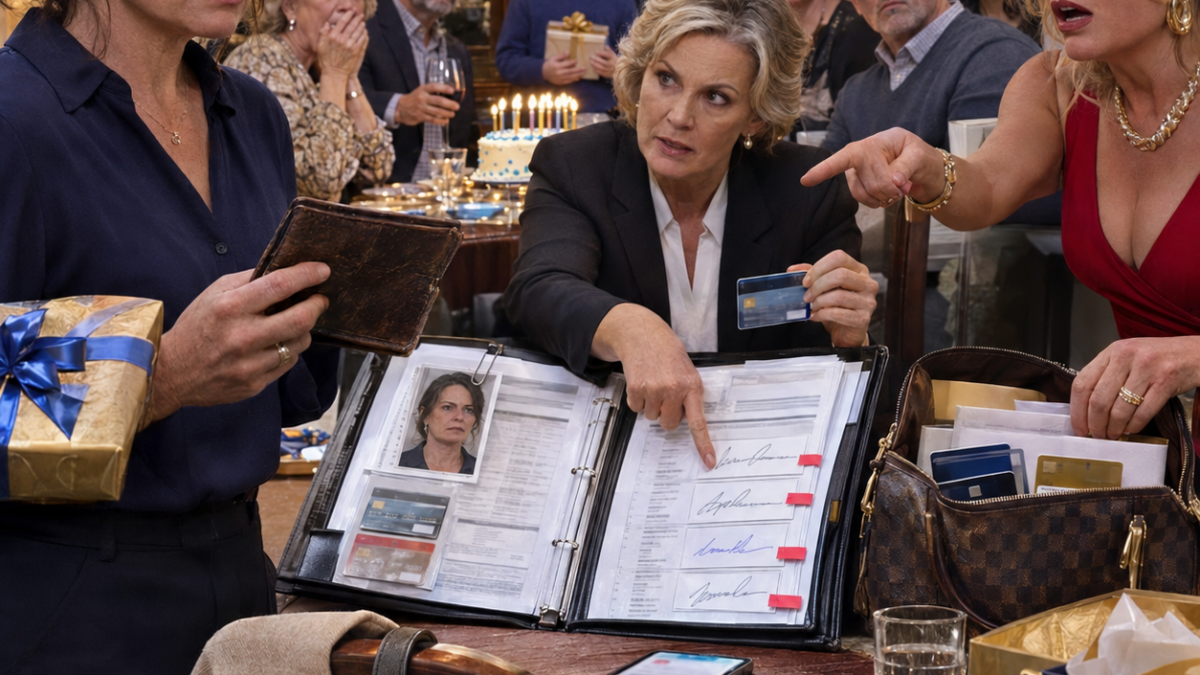
PART2
I walked away before she could answer.
Behind me, voices erupted.
Jenna yelling.
Mom calling my name.
Someone trying to calm Tyler, who had not even seen the original insult because he was with friends near the bounce house.
Good.
At least one person in that family deserved to keep his birthday.
My truck sat beyond the iron gate.
Gray Tacoma.
Government parking stickers still on the windshield from a previous assignment.
I had my hand on the driver’s door when footsteps pounded behind me.
“Erin!”
Travis.
He reached the truck breathing hard.
For one second, I thought he might apologize.
Then:
“What the hell is wrong with you?”
Of course.
“Move.”
“You humiliated my wife.”
“She handled that herself.”
“You smashed cake in her face.”
“She called me your family ATM.”
“She was joking.”
“No.”
I opened the door.
Travis slammed his palm against it.
“Give me the envelope.”
I looked at his hand.
Then him.
“Remove your hand.”
“Tyler needs that tuition.”
“Then pay it.”
“You promised.”
“I never promised.”
“You told Jenna you’d handle school.”
“I said I would help.”
“Same thing.”
“No.”
I stepped toward him.
“You mistook generosity for legal obligation.”
He scoffed.
“You’re not overseas anymore, Erin.”
“What does that have to do with anything?”
“Stop talking like everything is an operation.”
I smiled.
“You want ordinary language?”
“Yes.”
“Get your hand off my truck.”
He did.
“Good.”
His face reddened.
“You’re destroying Tyler’s future because Jenna made one stupid comment.”
I stared.
“One comment?”
“Fine.”
“A few comments.”
“Seven years.”
“Oh, give me a break.”
“You want numbers?”
I pulled out my phone.
“Venue deposit, six hundred.”
He blinked.
“Remaining venue balance, eight hundred.”
“Erin—”
“Food trucks, fourteen hundred.”
“Cake, three hundred twenty.”
“Photographer, four hundred fifty.”
“Decor, six hundred.”
“You two spent almost none of your own money on this party.”
“That’s not true.”
“What did you pay?”
Silence.
I looked at his new haircut.
His designer sunglasses.
Then toward the Audi parked beside the barn.
“Car?”
He stiffened.
“Lease.”
“How much down?”
“None of your business.”
“Interesting.”
He changed tactics.
“We’re family.”
“There it is.”
“What?”
“The phrase people use when they need access to someone else’s bank account.”
His face changed.
“Tyler shouldn’t suffer.”
“No.”
“He shouldn’t.”
I pulled out the tuition envelope.
“Which is why you and Jenna have until Friday to act like parents.”
“We don’t have seven grand.”
“Seven-five.”
“What?”
“Tuition increased.”
He stared.
I continued.
“You leased an Audi.”
“We needed a reliable vehicle.”
“You had a three-year-old Honda.”
“Jenna hated it.”
“Not the same thing as unreliable.”
“Don’t judge us because we like nice things.”
“I don’t.”
I put the envelope back into my jacket.
“I judge you because you like nice things I pay for.”
His mouth tightened.
Then I said:
“And if you think tuition is your biggest problem, you may want to ask Jenna who really holds the mortgage note on your house.”
Travis froze.
Not confusion.
Recognition.
That surprised me.
I had expected:
What are you talking about?
Instead, all the blood left his face.
His eyes moved toward the farmhouse.
Then back.
“What did she tell you?”
Now it was my turn to stop.
“What did who tell me?”
“Jenna.”
“Nothing.”
He looked sick.
I stepped closer.
“What do you know?”
“Erin…”
“What do you know?”
He stared toward the party again.
Then lowered his voice.
“You need to talk to your bank.”
My heartbeat finally changed.
“What?”
“Today.”
“Why?”
“I found papers.”
“What papers?”
“Loans.”
“What loans?”
“I thought she was using your business account with permission.”
“I don’t have a business account.”
That made him shut his eyes.
“Jesus.”
“What did Jenna do?”
“I don’t know all of it.”
“You chased me down here acting like I’m ruining your life.”
“I panicked.”
“Not good enough.”
His hands shook.
“I found a private-school loan packet.”
“For Tyler?”
“Yes.”
“Under whose name?”
He looked at me.
That was enough.
Mine.
Before I could ask more, my phone buzzed.
Three missed calls.
Jenna.
Then a text.
WHAT DID YOU JUST DO?! OAKRIDGE SAYS THE PAYMENT IS SUSPENDED. GET BACK HERE AND FIX IT OR YOU DON’T EXIST TO THIS FAMILY.
I almost laughed.
Then a banking notification appeared.
Red.
External transfer request: $7,500.00
Destination:
Oakridge Academy.
Linked profile:
Jenna Vance-Miller.
Authorization?
YES.
NO.
For several seconds, the world narrowed to that screen.
Three years earlier, I had used a secondary debit card to help set up Tyler’s enrollment portal.
I remembered giving Jenna access for one payment.
One.
Apparently she had saved credentials.
I pressed:
NO.
Then opened my banking app.
Master security freeze.
Every linked card.
Supplementary authorization.
External access.
Disabled.
A second notification appeared.
Login attempt blocked.
Travis whispered:
“Oh, God.”
I looked at him.
“You knew she had access?”
“I knew you had helped with school before.”
“That isn’t what I asked.”
“No.”
He shook his head.
“I didn’t know she could get into your bank.”
My truck audio lit up.
Jenna calling.
I answered through Bluetooth.
“Did you just reject that payment?”
“Yes.”
“Are you insane?”
“No.”
“You’re embarrassing Tyler.”
“You tried to transfer seventy-five hundred dollars from my account without permission.”
“You said you’d pay tuition!”
“I said I was considering covering it.”
“You bought the check!”
“And then you called me the family wallet.”
“You are being psychotic.”
I heard my mother in the background.
“Jenna, calm down.”
Of course.
Then Jenna said something that changed the entire shape of the afternoon.
“Do you have any idea how much private-loan debt I’ve already taken out under your name for this semester?”
Silence.
Travis shut his eyes.
I gripped the steering wheel.
“What did you just say?”
Nothing.
“Jenna.”
“I meant—”
“Whose name did you use?”
“I said it wrong.”
“No.”
My voice became quiet.
“Say it again.”
“You’re twisting everything.”
“How much debt?”
“Erin—”
“How much?”
She hung up.
I looked at Travis.
He was crying.
Not dramatic crying.
Tears simply running down his face.
“How much?” I asked.
“I saw nineteen thousand.”
My stomach dropped.
“What kind?”
“Education loan.”
“For Tyler?”
“Yes.”
“My Social Security number?”
“I don’t know.”
“How did she get it?”
He laughed bitterly.
“You really have to ask?”
No.
I did not.
Our mother.
Years earlier, Mom had handled emergency paperwork during one of my deployments.
Tax documents.
Insurance.
Copies of identification.
Family records.
Jenna could have gotten access through Mom’s files.
Or an old application.
Or paperwork I had personally handed her.
Seven years of helping people creates a large attack surface.
That is also logistics.
I called the bank’s fraud line immediately.
Not later.
Not after discussing family harmony.
Immediately.
Blocked every account.
Changed credentials.
Added verbal passwords.
Requested review of recent external access.
Then called the three credit bureaus and froze my credit.
Travis stood beside my truck the entire time.
Finally I asked:
“Anything else?”
He looked down.
“House.”
“What about it?”
“The mortgage thing.”
“Yes.”
“What did you mean?”
I studied him.
Their house had originally belonged to my grandfather.
After he died, Mom inherited half.
Jenna and I each received a quarter interest through a family trust.
Jenna wanted to buy it.
She and Travis could not qualify for conventional financing because of their debt.
So seven years earlier I bought out Mom’s share, refinanced the property under a private note, and sold equitable possession to Jenna and Travis through an installment arrangement.
They made monthly payments to a servicing company.
But the security instrument?
Held by a trust I controlled.
They had never paid it off.
Not even close.
Jenna knew.
Travis apparently did not understand.
I said:
“You don’t own that house free and clear.”
“What?”
“You have buyer equity.”
“But the mortgage…”
“Private note.”
“Through who?”
“The Vance Family Property Trust.”
He stared.
“Who controls that?”
“Me.”
His knees looked weak.
“Jenna told me your mother did.”
“No.”
“Why would she lie about that?”
I answered:
“Apparently that’s today’s theme.”
Travis leaned against the fence.
Then whispered:
“She took out another loan.”
“What?”
“Home-equity.”
“She can’t.”
“I know.”
“What did she pledge?”
“I don’t know.”
“You cannot get a normal HELOC against property you don’t fully own without the lienholder.”
“She said it was a personal line using house value.”
“Through where?”
“Some online lender.”
I stared.
“That sounds like unsecured debt marketed against estimated equity.”
“Maybe.”
“How much?”
He swallowed.
“Forty-eight thousand.”
“Where did it go?”
“Audi.”
“Anything else?”
“Credit cards.”
“How much total debt do you have?”
He started crying harder.
“I don’t know.”
That answer told me everything about their marriage.
Jenna controlled money.
Travis controlled appearances.
Neither controlled reality.
“Why didn’t you tell me?”
“I kept thinking she’d fix it.”
“With whose money?”
He looked at me.
Mine.
Of course.
I got into the truck.
“Erin.”
“What?”
“Please don’t hurt Tyler.”
That was the first useful thing he had said.
“I’m not.”
“The school—”
“I’ll talk directly to Oakridge.”
His face lifted.
“I am not paying your household’s debt.”
“I know.”
“Tuition support, if any, will go directly to the school.”
“Yes.”
“And Jenna loses access to everything.”
“Yes.”
“You too.”
He nodded.
Then:
“What happens to the house?”
“Nothing today.”
“Are you going to evict us?”
“No.”
He looked relieved.
I added:
“Unless you give me a reason.”
Relief disappeared.
Good.
Boundaries should be understood.
I drove away.
Not home.
To my bank.
I had done enough deployments to know adrenaline creates false confidence.
You think you are calm.
You are not.
You need procedure.
I sat across from a fraud specialist named Melissa Grant.
No relation to my sister.
Thank God.
I explained.
Family access.
Unauthorized attempted transfer.
Possible education loan.
Possible identity theft.
She did not blink.
Did not tell me this was a family matter.
She said:
“We treat unauthorized access as fraud regardless of relationship.”
That sentence almost made me cry.
Because my entire family had spent years teaching me the opposite.
Family meant exceptions.
Family meant informal.
Family meant let it go.
The bank locked everything.
They found Jenna’s linked profile had attempted three external transactions over the previous seven months.
One for $2,200.
One for $1,850.
One for $7,500.
The first two had gone through.
I had not noticed.
That embarrassed me.
“What were the merchants?”
Melissa checked.
Oakridge Academy.
Both.
Tuition supplements.
Jenna had already pulled more than four thousand dollars from me without asking.
Not loans.
Direct theft from my account.
I felt physically ill.
Then came the credit report.
Four accounts I did not recognize.
One private education loan.
$19,400.
One personal loan.
$12,000.
Two store credit accounts.
Combined balance around $6,300.
All opened within eighteen months.
Total unauthorized debt:
Nearly $38,000.
My clean credit history had been turned into collateral for Jenna’s lifestyle.
I sat there staring.
Melissa said:
“Do you want to file fraud disputes?”
“Yes.”
“Police report will help.”
There it was.
Police.
My sister.
For a moment, thirty-four years of family conditioning returned.
You do not call police on family.
You handle things privately.
You protect Mom.
You protect Tyler.
You protect appearances.
Then I remembered Jenna’s voice.
You’re just the family wallet.
Apparently she had meant it literally.
“Yes,” I said.
“I’ll file.”
The officer at the station asked whether I wanted to pursue charges.
I hated the question.
Not because the answer was unclear.
Because saying it out loud made everything real.
“Yes.”
I gave a statement.
Screenshots.
Bank records.
Credit report.
Texts.
The attempted transfer.
Jenna’s accidental confession on the phone.
I requested the call metadata from my truck system, though it had not recorded audio.
Still useful for timing.
That evening, Mom called.
I let it ring twice.
Then answered.
“What have you done?”
No hello.
“Filed fraud reports.”
“You called the police on your sister?”
“I reported identity theft.”
“Erin.”
“No.”
My voice stayed calm.
“Do not start with my name like I’m twelve.”
“She panicked.”
“She used my identity.”
“She was desperate.”
“For an Audi?”
“You don’t understand how difficult things have been.”
“I understand perfectly.”
“You make so much money.”
There it was.
I closed my eyes.
“And because I earn more, Jenna can take it?”
“That’s not what I said.”
“It’s exactly what you said.”
“She was going to repay you.”
“With what?”
Silence.
I continued.
“Did you give her my Social Security number?”
Mom inhaled.
Long pause.
That pause became its own confession.
“Mom.”
“She needed it for a school form.”
I stood.
“You gave my Social Security number to Jenna?”
“I had a copy from when you were deployed.”
“Did you ask me?”
“No.”
“Did she tell you it was for a loan?”
“No!”
Too fast.
“What did she tell you?”
“That Oakridge needed a financially responsible guarantor.”
My skin went cold.
“So you knew she was putting me down as guarantor.”
“I thought it was just paperwork.”
“Did I consent?”
“She said you would.”
“Did I?”
Mom started crying.
“Erin, please.”
“No.”
“I need an answer.”
“No.”
“Thank you.”
“You’re making this sound criminal.”
“It is criminal.”
“She’s your sister.”
“I know.”
“Tyler is your nephew.”
“I know.”
“And you’re willing to destroy his mother?”
I laughed.
“No.”
“Jenna made decisions.”
“Those decisions now have consequences.”
Mom whispered:
“You’ve always been so hard.”
That hurt more than I expected.
I said:
“I paid your dental surgery last year.”
“That has nothing to do with—”
“I covered Jenna’s property taxes.”
“She was struggling.”
“I paid Travis’s medical deductible.”
“Family helps.”
“I paid Tyler’s camps.”
“He loves you.”
“I paid for today’s party.”
Silence.
“And when Jenna called me your family wallet, you told me not to cause a scene.”
Mom cried harder.
“I didn’t want Tyler’s birthday ruined.”
“Neither did I.”
“So why did you—”
“Because protecting the party mattered more to you than protecting me.”
She had no answer.
I ended the call.
Then I cried.
Not because I regretted anything.
Because sometimes finally seeing your family clearly feels like grief.
The next morning, Oakridge’s finance director called.
I had requested immediate review.
Her name was Dr. Miriam Cole.
She said:
“We received conflicting payment instructions.”
“I know.”
“The certified draft is still valid unless you stop it.”
“I’m stopping it.”
Pause.
“Understood.”
“Tyler is not involved in the fraud.”
“I understand.”
“I want that documented.”
“We can.”
“I also want to discuss whether I can establish a direct tuition arrangement that Jenna cannot access.”
She hesitated.
“Yes.”
I could almost hear Travis exhale from twenty miles away even though he was not on the call.
I did not tell Jenna.
I opened a restricted education payment account through a separate institution.
No cash.
No refunds to parent.
No withdrawal privileges.
Payments only to Oakridge for Tyler’s tuition and mandatory fees.
I committed to one semester.
Not indefinite.
Not automatic.
One.
Because Tyler was a child.
Children should not have to pay immediately for adults’ fraud if there is a reasonable way to protect them without enabling those adults.
That was the line I chose.
Jenna called from a different number.
“You canceled my cards.”
“They were mine.”
“You froze everything.”
“Yes.”
“The school says payment has to come directly from you now.”
“Yes.”
“So you are still paying.”
“For Tyler.”
Her voice became smug.
“You always come back.”
“No.”
“What?”
“I’m paying one semester.”
“You can’t punish him because you’re mad at me.”
“I’m not.”
“Then keep paying.”
“No.”
She laughed.
“You’re unbelievable.”
“I filed a police report.”
Silence.
Then:
“What?”
“For identity theft.”
Her voice disappeared.
“You wouldn’t.”
“I did.”
“Mom told you?”
“Mom admitted giving you my Social Security number.”
“Erin…”
“No.”
Her tone changed.
Sweet.
“You don’t understand.”
“Then explain.”
“I was going to pay everything back.”
“With what money?”
“We have investments.”
“Name one.”
Silence.
“Jenna.”
“The house.”
“You don’t own it free and clear.”
“What?”
Now I knew something else.
She had lied to herself too.
“The Vance Family Property Trust still holds the security instrument.”
“That’s Mom’s trust.”
“No.”
Silence.
“Who told you that?”
“I administer it.”
“You’re lying.”
“Call the county recorder.”
She hung up.
Twenty minutes later, Travis called.
“She’s throwing things.”
“Move Tyler somewhere safe.”
“He’s at Mom’s.”
“Good.”
“Erin…”
“What?”
“She really thought Mom controlled the trust.”
“Why?”
“Your mother always told her the house was basically hers.”
I closed my eyes.
Generational misinformation.
Excellent.
“Travis, what did Jenna tell you about the loans?”
“That you’d co-signed.”
“I didn’t.”
“I know now.”
“Did you sign anything?”
“No.”
“Did you benefit?”
He hesitated.
“The personal loan paid credit cards.”
“Joint cards?”
“Yes.”
“The Audi?”
“Some.”
“You’re not innocent.”
“I know.”
That surprised me.
He continued.
“I laughed at you yesterday.”
“Yes.”
“I’m sorry.”
“Not enough.”
“I know.”
Better.
“I thought Jenna was right.”
“About what?”
“That you liked being needed.”
I looked at the phone.
“And?”
“I think maybe we liked needing you.”
That was the first genuinely intelligent thing Travis had ever said to me.
The investigation moved faster than I expected.
Because the fraud was not sophisticated.
Jenna had used my information with variations of an old email address.
Uploaded a scan of my driver’s license.
The scan came from a family emergency file Mom kept.
Electronic signatures were crude.
The private education loan listed my annual income accurately.
Too accurately.
Jenna had copied numbers from a tax document.
Police obtained records.
The lender froze collection against me pending investigation.
Credit bureaus removed provisional reporting.
Store cards closed.
Bank reimbursed the unauthorized tuition withdrawals after review.
The personal loan took longer.
Then things became uglier.
Jenna had also opened an insurance policy naming herself beneficiary on a small accidental-death policy linked to the private loan.
Not a murder plot.
Nothing dramatic.
Credit protection product.
But seeing my name beside a benefit I never agreed to made my stomach turn.
Everything about me had become paperwork to her.
Income.
Credit score.
Social Security number.
Military status.
Address.
Not sister.
Resource.
I stopped speaking to her directly.
Everything through my attorney, Rachel Kim.
Rachel specialized in consumer fraud and identity theft.
She reviewed the house too.
“Do not threaten foreclosure emotionally.”
“I wasn’t planning to.”
“Good.”
“Can I accelerate the note if payments stop?”
“Yes, depending on documents.”
“Are they current?”
“Barely.”
I nodded.
“I don’t want Tyler displaced.”
“That is a personal choice, not a legal requirement.”
“I know.”
Rachel studied me.
“You’re allowed to protect yourself even if it creates consequences for people you love.”
I looked away.
“I know.”
“Do you?”
Not completely.
That was the problem.
The family war began the following Sunday.
Mom invited everyone to “talk this out.”
I refused.
She invited again.
I refused.
Then she showed up at my house with Jenna.
I saw them through the camera.
Did not open the door.
Mom called.
“We’re standing outside.”
“I know.”
“Open the door.”
“No.”
“This is ridiculous.”
“Leave.”
Jenna shouted loud enough for the camera microphone.
“You’re really going to hide behind a door?”
I pressed the intercom.
“Rachel has instructed me not to discuss the fraud directly with you.”
Jenna laughed.
“Fraud.”
Mom said:
“Erin, stop making this legal.”
I actually smiled.
“You gave out my Social Security number.”
“I made a mistake.”
“Jenna opened accounts.”
“She made a mistake.”
“Thirty-eight thousand dollars worth.”
“She panicked!”
I said:
“No.”
“What?”
“A mistake is entering the wrong routing number.”
“Opening four accounts requires repeated choices.”
Jenna shouted:
“You were going to help anyway!”
That sentence removed any remaining doubt about her entitlement.
I answered:
“Consent matters.”
“You always pay.”
“Not anymore.”
“You’re doing this because of the party.”
“No.”
“The party is why I finally noticed the system.”
Mom started crying.
Jenna yelled:
“You don’t even have children!”
I went still.
There it was again.
Her deepest argument.
My life counted less because I was not a mother.
I pressed the speaker.
“And because I don’t have children, you thought my identity belonged to you?”
Silence.
I continued.
“You used Tyler as the excuse for every theft.”
“The school loan was for him!”
“The Audi?”
No answer.
“The store cards?”
No answer.
“The personal loan paying your credit cards?”
No answer.
“Go home.”
Mom said:
“You’ll regret losing your sister.”
I looked through the camera at both of them.
Then said:
“I’ve been losing her for years.”
I ended the connection.
They stayed eight more minutes.
Then left.
My military career had taught me something about emergencies.
The first stage is stabilization.
Stop the bleeding.
Freeze credit.
Secure accounts.
Document.
Legal counsel.
That part was easy.
The second stage is reconstruction.
Harder.
Because once the immediate threat disappears, you have to decide what kind of system replaces the broken one.
I made a list.
No family member gets access to financial credentials.
No shared cards.
No informal loans.
No paying bills from personal accounts without written record.
No financial guarantees without legal review.
No financial discussions through Mom.
No emergency transfers without verification.
And one rule at the top:
Love is not authorization.
I printed it.
Stuck it inside my desk drawer.
Three weeks after the party, Tyler called me.
That was the call I feared.
“Aunt Erin?”
“Hey, buddy.”
“Mom says you’re mad at us.”
“At your mom.”
“Did I do something?”
My heart broke.
“No.”
“Is it because of school?”
“No.”
“She said I might have to leave Oakridge.”
I closed my eyes.
“Your fall tuition is paid.”
Silence.
“Really?”
“Yes.”
“Mom said you canceled it.”
“I canceled the check I gave her.”
“Why?”
“Because adults had a disagreement about money.”
“Did she steal from you?”
Children hear everything.
I chose carefully.
“There are financial things being investigated.”
“So yes.”
“Tyler.”
“Dad told Grandma.”
Of course.
I said:
“None of it is your job to fix.”
He sniffed.
“Are you still coming to my baseball games?”
That destroyed me more than the fraud.
“Yes.”
“Even if Mom’s there?”
“Yes.”
“Okay.”
Then:
“I’m sorry she said the wallet thing.”
“You don’t have to apologize for her.”
“I know.”
Pause.
“But it was mean.”
“Yes.”
“I like you even when you don’t buy stuff.”
I cried after we hung up.
The first baseball game was uncomfortable.
Jenna sat on the opposite bleachers.
Mom beside her.
Travis sat halfway between.
I arrived alone.
Tyler saw me.
Grinned.
That was enough.
I did not speak to Jenna.
After the game, Tyler ran over.
Sweaty.
Dirty.
Happy.
“You saw my double?”
“I saw you nearly get thrown out at second.”
“I was safe.”
“You were lucky.”
Jenna approached.
I stiffened.
She stopped six feet away.
“I’m not here to fight.”
“Good.”
“Can Tyler go get ice cream with you?”
I looked at her.
“What?”
“He wants to.”
“Are you asking me?”
“Yes.”
First time in years.
Not:
You can take him.
Not:
He needs you to.
A request.
“I’d like that.”
Tyler climbed into my Tacoma.
On the way to ice cream he said:
“Mom cries a lot now.”
I kept my eyes on road.
“I’m sorry.”
“Dad sleeps in guest room.”
That hurt.
“Adults are working through things.”
“Are they getting divorced?”
“I don’t know.”
“Would that be your fault?”
“No.”
He considered.
“Mom says it’s because you called police.”
I pulled into the parking lot.
Turned toward him.
“Tyler.”
He looked at me.
“When adults make decisions, the consequences belong to the adults who made them.”
“So not me?”
“Never you.”
“And not you?”
I paused.
“Some of my decisions have consequences too.”
“Like cake?”
I almost laughed.
“Yes.”
“Did you really put cake in Mom’s face?”
“You didn’t see?”
“I was at the bounce house.”
“Then let’s preserve your innocence.”
He grinned.
“Dad said it was funny.”
Of course he did.
The criminal side took months.
Jenna hired a lawyer.
She initially claimed I had verbally authorized the accounts.
That collapsed quickly.
No lender had call recordings.
No written consent.
No payment history from me.
The education loan application contained a false electronic certification.
The personal loan application claimed I lived at Jenna’s address.
I had never lived there.
Her lawyer eventually stopped pushing the consent theory.
A plea arrangement became likely.
I had mixed feelings.
People wanted me to demand maximum punishment.
Online friends—those who knew pieces—said:
“Let her rot.”
Easy sentence when it is not your sister.
I wanted accountability.
I did not want Tyler’s mother imprisoned for years if restitution, probation, and a fraud conviction accomplished the purpose.
Rachel reminded me:
“The prosecutor decides charges.”
“I know.”
“You can provide a victim statement.”
“I know.”
“What do you want?”
I thought.
“My identity cleared.”
“Yes.”
“Restitution.”
“Yes.”
“No access to my accounts.”
“Yes.”
“And treatment.”
“For?”
“Whatever makes someone think this is normal.”
Rachel smiled slightly.
“That is outside my specialty.”
Eventually, Jenna pleaded to reduced felony fraud-related counts tied to the identity theft.
Probation.
Restitution.
Financial monitoring.
Community service.
Mandatory counseling.
No prison.
People may think that was too easy.
Maybe.
But I did not need a cage to feel safe.
I needed the system to recognize what happened.
It did.
The court entered restitution.
The lenders acknowledged fraud.
My credit records were corrected.
The police report existed.
The secret stopped belonging only to family interpretation.
That mattered.
Mom did not attend sentencing.
She said she could not bear seeing Jenna “treated like a criminal.”
I replied:
“She pleaded guilty to a crime.”
Mom hung up.
We did not speak for three months.
Travis filed for legal separation during the investigation.
Not divorce immediately.
He claimed the financial deception had been deeper than he understood.
Discovery in their own proceedings revealed another $31,000 in hidden credit-card debt.
No identity theft involving him.
Just lies.
He admitted his own role too.
He liked the lifestyle.
He avoided statements.
He accepted every explanation that allowed him to keep the Audi.
He returned it.
Bought a used minivan.
I saw him at Tyler’s game.
“Nice car.”
He laughed.
“Shut up.”
Progress.
Then he became serious.
“I owe you.”
“Money?”
“An apology.”
“Yes.”
He took a breath.
“I laughed when Jenna called you the family ATM.”
“Yes.”
“I thought you liked being the hero.”
“Maybe I did sometimes.”
He looked surprised.
I continued.
“That doesn’t excuse you.”
“No.”
“I know.”
“Why did you laugh?”
“Because if I admitted how much we depended on you, I had to admit I wasn’t providing what I thought a husband should.”
That was honest.
“So you made me the joke.”
“Yes.”
“Cowardly.”
“Yes.”
I nodded.
That was enough for that day.
The house became the next battle.
Jenna and Travis were current on the private note for two more months.
Then legal bills hit.
Payment missed.
Then another.
Rachel sent formal notice.
Not because I wanted their home.
Because if you fail to enforce agreements repeatedly, the agreement stops functioning.
Mom called immediately.
“You’re going to throw Tyler into the street?”
“No.”
“That’s exactly what you’re doing.”
“I sent a default notice.”
“Same thing.”
“No.”
“Why can’t you forgive the payments?”
“Because every time I absorb consequences, Jenna learns the same lesson.”
“You have the money!”
“Stop.”
Silence.
I had never spoken to Mom that way.
I continued.
“My finances are not part of this conversation.”
“You’re being selfish.”
“Yes.”
That word surprised her.
I smiled.
“Yes, Mom.”
“I am protecting myself.”
“If you call that selfish, fine.”
“You weren’t raised this way.”
“No.”
“I was raised to let it go.”
Then I ended the call.
Travis found a solution.
Sold investment equipment from a side business.
Borrowed from his retirement account.
Caught up the mortgage.
Painful.
His problem.
For the first time, nobody called me to solve it.
That was the beginning of their adulthood.
Jenna moved into Mom’s house temporarily during separation.
Mom lasted six weeks.
Then she called me.
“I understand.”
I almost laughed.
“What?”
“Your sister.”
“What happened?”
“She used my card.”
I closed my eyes.
“How much?”
“Eight hundred.”
“For?”
“Clothes.”
“Did you authorize it?”
“No.”
I waited.
Mom became angry.
“Don’t you dare say it.”
I said nothing.
She started laughing.
Then crying.
“She told me I’d always helped before.”
“Yes.”
“Is that what I sounded like?”
I could have hurt her.
I wanted to for one second.
Instead:
“Yes.”
Silence.
“I’m sorry.”
Not perfect.
Real.
Mom canceled the card.
Made Jenna repay it.
No police report.
Her choice.
But something shifted.
Mom stopped telling me to let things go.
She started therapy too.
Apparently accountability was contagious.
Jenna’s restitution payments began.
Small.
Court-ordered.
Automatic.
The first deposit hit my account.
$412.
I stared.
Funny number.
Almost exactly what I had once paid monthly for something else? No matter.
It felt strange.
For years money had flowed one direction.
Erin to family.
Now Jenna was required to repay.
I did not need all the money.
That was not the point.
I moved each restitution payment into a separate savings account.
Did not touch it.
Two years later, I used that account for something Jenna never expected.
Tyler’s college fund.
Not under Jenna’s control.
Not hers.
Not mine in spirit.
His.
When he turned twelve, I told him I had opened it.
He said:
“Did Mom pay for it?”
“In a way.”
He looked confused.
“Does that mean she’s fixing things?”
I thought.
“She’s doing part of the work.”
That was the most accurate answer.
Jenna’s counseling took longer to matter.
At first, every apology came with a reason.
“I was desperate.”
“You always said you’d help.”
“Mom made me think family money was shared.”
“Travis pressured me.”
“The school was expensive.”
Then one afternoon, nearly eighteen months after the birthday party, she asked to meet.
Public park.
No Tyler.
No Mom.
I agreed.
She looked different.
No designer bag.
No perfect hair.
Not ruined.
Just ordinary.
She handed me an envelope.
I stiffened.
“Not money.”
Inside were copies of every account she had opened using my information.
Marked:
CLOSED
FRAUD REPORTED
RESTITUTION ACTIVE
Then a letter.
She said:
“Read it later.”
“I can read it now.”
She nodded.
The letter began:
Erin, I have spent most of my life telling myself that because you had more, taking from you hurt less.
I stopped.
That sentence was the first sign she understood.
I kept reading.
I told myself you liked rescuing us because that let me avoid admitting I expected rescue.
I called you the family wallet because I had already reduced you to money in my head long before I said it out loud.
My eyes burned.
Using your identity was not borrowing. It was stealing.
There.
No euphemism.
Mom giving me your information did not give me permission.
Tyler needing tuition did not give me permission.
My debt did not give me permission.
Your income did not give me permission.
Being sisters did not give me permission.
I folded the letter.
Jenna looked terrified.
“I’m sorry.”
I said nothing.
She continued.
“I don’t expect you to trust me.”
“Good.”
“I don’t expect forgiveness.”
“Good.”
She almost smiled.
“I practiced this with my therapist and she said not to ask you to make me feel better.”
“Smart therapist.”
“Yes.”
Then:
“I’m sorry about the party.”
“That’s the smallest part.”
“I know.”
“Do you?”
“Yes.”
She looked down.
“The cake was deserved.”
I laughed before I could stop myself.
First time we had laughed together since everything happened.
Then I said:
“No.”
“What?”
“The cake was childish.”
Her eyebrows lifted.
“I still enjoyed it.”
She laughed too.
That did not mean reconciliation.
It meant we were human again for thirty seconds.
Trust returned in millimeters.
No financial access.
No lending.
No shared accounts.
No emergency credit.
But birthdays?
Eventually.
Baseball games.
School events.
Dinner with Tyler.
A coffee.
Jenna started working full-time for a property-management company.
Irony.
She turned out to be good at collections.
I told her:
“Of course you are.”
She said:
“Low blow.”
“Accurate.”
She repaid debt.
Travis eventually reconciled with her after nearly a year apart.
Not because I encouraged it.
Not my marriage.
They attended therapy.
Sold the Audi permanently.
Moved Tyler from Oakridge after the following academic year.
That was their decision.
Public magnet school.
Excellent program.
Tyler thrived.
All those years Jenna had acted like Oakridge was the only path to success.
Turns out children do not require marble hallways to learn algebra.
The first semester after the move, Tyler made honor roll.
He called.
“Guess what?”
“What?”
“I’m smart even without private school.”
I laughed.
“Shocking.”
“Mom cried.”
“Good cry?”
“Yes.”
I thought about the $7,500 check.
For months I had wondered whether taking it back had been cruel.
Maybe it was harsh.
But if I had handed it over that afternoon, Jenna would have learned:
Humiliate Erin.
Steal from Erin.
Still get paid.
Instead, I paid the school directly once, protected Tyler, and ended the entitlement structure.
That distinction mattered.
Generosity without boundaries had not helped my family.
It had delayed reality.
Jenna and Travis needed a budget.
Mom needed boundaries.
I needed an identity beyond rescuer.
That last one surprised me.
When the crisis ended, I felt empty.
No midnight calls.
No emergency transfers.
No family debt.
No one needed Captain Erin to fix anything.
For a while, I did not know what to do with myself.
My therapist asked:
“Who are you when nobody needs money?”
I hated the question.
“I’m an officer.”
“That’s work.”
“I’m an aunt.”
“Relationship.”
“Daughter.”
“Relationship.”
“Sister.”
“Relationship.”
She waited.
I said:
“I don’t know.”
That scared me more than fraud.
Jenna’s insult had been cruel.
But it contained a wound I had participated in creating.
I had allowed myself to become the family wallet.
Not because I had no other value.
Because money was a place where I knew exactly how to be useful.
Problems become invoices.
Invoices can be paid.
Emotions are messier.
Loneliness.
Being single.
No children.
Coming home from deployment to a quiet house.
Watching Jenna complain about motherhood while secretly envying the noise in her kitchen.
Maybe sometimes I had bought the biggest gift because it guaranteed I had a role.
That realization did not excuse anyone using me.
But it helped me change.
I joined a hiking group.
Terrible at first.
Military endurance did not equal enjoying recreational hills.
I took pottery.
My first bowl looked like a collapsed helmet.
I started dating again.
Slowly.
A civil engineer named Ben.
First time he offered to split dinner, I nearly proposed marriage from gratitude.
We did not get married immediately.
Relax.
But he became important.
When Jenna met him, she said:
“So someone finally convinced you to spend money on yourself?”
I looked at her.
She winced.
“Sorry.”
Then:
“Old habit.”
Progress is catching yourself.
Mom changed too.
Not dramatically.
She still avoided conflict.
Still wanted family dinners peaceful.
But one Thanksgiving, Jenna made a joke about my old “bank of Erin” days.
Not cruel.
Still.
Mom immediately said:
“Don’t.”
The table went quiet.
Jenna nodded.
“You’re right.”
That one word from Mom meant more than a speech.
She had finally stopped asking the person being hurt to preserve the peace.
Tyler turned thirteen.
No extravagant venue.
Backyard.
Pizza.
Baseball.
Store-bought cake.
Jenna paid.
All of it.
At one point she handed me a slice.
We both froze.
Then she burst out laughing.
I laughed too.
She said:
“I promise this is just cake.”
“Good.”
“No hidden financial commentary.”
“Excellent.”
“No identity theft.”
“Strong improvement.”
Mom said:
“Girls.”
We ignored her.
Tyler opened gifts.
I gave him a used telescope.
Not expensive.
Something we had picked out together.
He hugged me.
Jenna watched.
No jealousy.
No comment about buying affection.
Later, while we cleaned up, she said:
“He loves you.”
“I know.”
“Even when you don’t pay for things.”
I looked at her.
“That took me a while to believe too.”
She nodded.
“Me too.”
That may have been our closest moment.
The house note continued.
Regular payments.
No missed months for three years.
Then rates changed and Travis qualified for conventional financing.
They refinanced properly.
Paid off the trust.
For the first time, they owned the home without my financial structure underneath them.
At closing, Rachel sent confirmation.
I stared at it.
Another line severed.
Not with anger.
With relief.
Jenna texted:
We officially own our own mess now.
I replied:
Congratulations.
Then:
Seriously. I mean it.
She answered:
I know.
The money from the payoff went back into the family trust.
Mom assumed I would distribute some.
I did not.
The trust had its own terms.
For once, everybody accepted that.
Amazing what happens when expectations stop pretending to be rights.
My credit recovered completely.
Fraud alerts remained.
I keep freezes active unless needed.
Every account has multifactor authentication.
No family member knows my passwords.
Not even Mom.
Especially Mom.
The certified tuition check from that birthday?
I never destroyed it.
I stopped payment.
Then kept the physical draft in a file.
Why?
Reminder.
Not of Jenna.
Of me.
The woman who walked into that party believing love meant continuing to pay after being disrespected.
The woman who left understanding love without consent becomes exploitation.
The check expired.
Ink faded slightly.
Still there.
One afternoon Ben found it while helping reorganize my office.
“What’s this?”
“Long story.”
“Seven thousand five hundred?”
“Very long story.”
“Frame it?”
“No.”
“Burn it?”
“No.”
“Why keep it?”
I thought.
“Because that was the last check I ever wrote out of guilt.”
He nodded.
Then put it back.
That is why I like him.
He does not always need to fix the metaphor.
Years later, Tyler asked me directly about the fraud.
He was sixteen.
Old enough.
Jenna had already told him some.
He wanted my version.
We sat in a coffee shop.
He said:
“Did Mom steal your identity because of my school?”
“Partly.”
His face collapsed.
“No.”
I reached across the table.
“Stop.”
“But if I wasn’t at Oakridge—”
“No.”
“Then—”
“Your mother had many legal options.”
“Ask me.”
“Ask your dad.”
“Change schools.”
“Apply for aid.”
“Borrow under her own name.”
“Cut spending.”
“Sell the car.”
I squeezed his hand.
“You were never the cause.”
He looked down.
“Did you hate her?”
“Yes.”
Honesty.
“For a while.”
He looked surprised.
“I loved her too.”
“Both can happen.”
“Do you forgive her?”
I thought.
“I don’t know if forgiveness is one switch.”
“What does that mean?”
“It means I trust her in some ways now.”
“Not with your bank account.”
“Correct.”
He laughed.
Then:
“Do you trust me?”
“Yes.”
“Why?”
“Because you have never stolen thirty-eight thousand dollars.”
“Low bar.”
“You’d be surprised.”
He smiled.
Then became serious.
“I’m glad you still paid my semester.”
I nodded.
“I’m glad too.”
“Mom said she was furious.”
“I know.”
“She says now you were right.”
That surprised me.
“She said that?”
“Yes.”
“Write down the date.”
He laughed.
The funniest part?
When Tyler graduated high school, he chose a state university with a strong engineering program.
Scholarship covered most tuition.
He worked summers.
Refused my offer to pay everything.
“I want some skin in the game.”
“Who taught you that phrase?”
“Dad.”
Travis had changed too.
Quietly.
He worked.
Budgeted.
Stopped pretending status was stability.
At Tyler’s graduation party, he pulled me aside.
Same man who had chased me down a gravel driveway years earlier demanding a check.
He said:
“Remember the Audi?”
“Unfortunately.”
“I hate myself every time I see one.”
I laughed.
“Therapy.”
He smiled.
Then:
“Thank you for not taking the house.”
I looked at him.
“I almost did.”
“I know.”
“I would have if you stopped paying.”
“I know.”
“That matters.”
“Yes.”
He nodded.
Then:
“You were right.”
“About?”
“Tyler’s future wasn’t the collateral.”
“Our vanity was.”
I remembered saying something like that in the driveway.
He had finally heard it years later.
Families are slow learners.
Sometimes the lesson has to hurt.
Jenna never became poor.
That is another myth people tell about consequences.
She lost access to my money.
Lost the luxury car.
Lost private-school status.
Lost easy credit.
Had a felony record.
Paid restitution.
Worked.
Budgeted.
Rebuilt.
None of those things killed her.
They forced her to live inside resources that were actually hers.
That is not cruelty.
That is adulthood.
Mom also survived not having me fix everything.
Her dental bill got paid.
Her house remained.
She learned to ask:
“Can you help?”
instead of:
“I need you to send…”
Small language change.
Huge difference.
Sometimes I said yes.
Sometimes no.
The first time I said no after everything, she paused.
Then:
“Okay.”
I nearly dropped the phone.
“Okay?”
“Yes.”
“That’s it?”
“What else am I supposed to say?”
I laughed.
“Nothing.”
Maybe people can learn.
Jenna and I never returned to the childhood sisterhood people expect.
We became something different.
More honest.
Less automatic.
She knows my boundaries.
I know her weaknesses.
We can sit together.
Laugh.
Argue.
Leave.
No one sends money afterward to prove love.
That is healthier.
And yes, we eventually talked about the cake.
She brought it up at Thanksgiving.
“You know assaulting me with buttercream was technically wrong.”
I said:
“Correct.”
“You could apologize.”
“I apologize for wasting good cake.”
She stared.
Mom laughed first.
Then Jenna.
Then me.
That is probably as close to closure as cake gets.
I would handle it differently now.
I would put the plate down.
Walk away.
Take the check.
No frosting.
Growth.
The important thing was never the cake.
It was the ledger.
Seven years of payments.
Seven years of assumptions.
Seven years of me believing that if I stopped giving, I would stop mattering.
Jenna finally said the fear out loud.
You’re just the family wallet.
It hurt because some part of me had been terrified it was true.
Then she stole my identity and proved something different.
My money had become central because I had permitted access.
My value had not.
Tyler loved me when the tuition stopped.
Mom eventually called me without asking for anything.
Travis apologized with no loan request attached.
Jenna rebuilt a relationship while making restitution payments.
Ben loved me before he knew what I earned.
I learned to walk into family events carrying nothing but myself.
The world did not end.
That may sound small.
It was enormous.
My last deployment before leaving active duty involved supply-chain planning after severe storms.
Bridges washed out.
Fuel distribution interrupted.
Roads blocked.
You learn quickly that resilience is not having one giant supply line.
It is redundancy.
Independent routes.
Fallbacks.
Boundaries between critical systems.
My family had built the opposite.
Everything flowed through Erin.
Money.
Emergencies.
School.
House.
Mom.
Jenna.
Travis.
One point of failure.
Me.
Then I shut the valve.
Chaos.
For a while.
Afterward, everybody built their own route.
That is what a healthy family should have been from the beginning.
Not people who never help.
People who can survive without stealing from the helper.
Tyler is in college now.
He calls.
Sometimes because he needs advice.
Sometimes because he found a funny military meme.
Sometimes because he wants to complain about calculus.
He never asks for money first.
Last month he called.
“Aunt Erin.”
“What?”
“I got an internship.”
“Where?”
A logistics firm.
I laughed.
“Traitor.”
“It pays.”
“Good.”
“Mom says I should save half.”
“Your mother gave financial advice?”
“I know.”
We both laughed.
Then he said:
“She’s different.”
“Yes.”
“Because of you?”
“No.”
“Because of consequences.”
He thought.
“Is there a difference?”
“Yes.”
I looked out my office window.
“People change themselves.”
“Other people can just stop making it easy not to.”
He was quiet.
Then:
“That sounds like something you say because of Mom.”
“It is.”
He laughed.
I still have that old certified check.
The expired one.
$7,500.
Sometimes I think I should throw it away.
Maybe someday.
For now, it reminds me of a birthday party under a white pergola.
Artificial flowers.
Food trucks I paid for.
A sister with frosting on her face.
A mother folding napkins.
A husband chasing me through gravel.
A banking alert glowing red on my phone.
And one sentence that changed everything:
You’re just the family wallet.
Jenna meant it as an insult.
She did not realize she had finally given me useful information.
If that was the role she had assigned me, I could resign.
So I did.
The tuition check stopped.
The unauthorized cards stopped.
The family allowances stopped.
The mortgage rescue stopped.
The midnight transfers stopped.
Then something strange happened.
The family did not disappear.
The people who mattered adapted.
The people who had abused the system faced consequences.
And slowly, painfully, relationships started forming around something other than what I could pay for.
That birthday was the ugliest family gathering of my life.
It may also have been the first honest one.
Because when Jenna finally said I was nothing but a wallet, I stopped trying to prove her wrong by opening it.
I closed it.
Locked it.
Changed the passwords.
Called the bank.
Called the police.
Protected my nephew without financing his parents’ fantasy.
Protected myself without pretending the fallout would be painless.
And years later, when Jenna handed me another piece of birthday cake and waited for my reaction, I took the plate.
No expensive gift.
No tuition check.
No bailout hidden in my purse.
Just cake.
She smiled nervously.
“Still family?”
I took a bite.
Then said:
“Yeah.”
Her eyes filled.
I added:
“But the wallet stays closed.”
She laughed through tears.
“Fair.”
And for the first time in our adult lives, it was.








