PART2:“YOU’RE JUST ONE SOLDIER.” My Wife’s Powerful Family Smiled Outside Her ICU After She Was Nearly Killed—They Didn’t Know What She Had Found Inside Their Defense Company
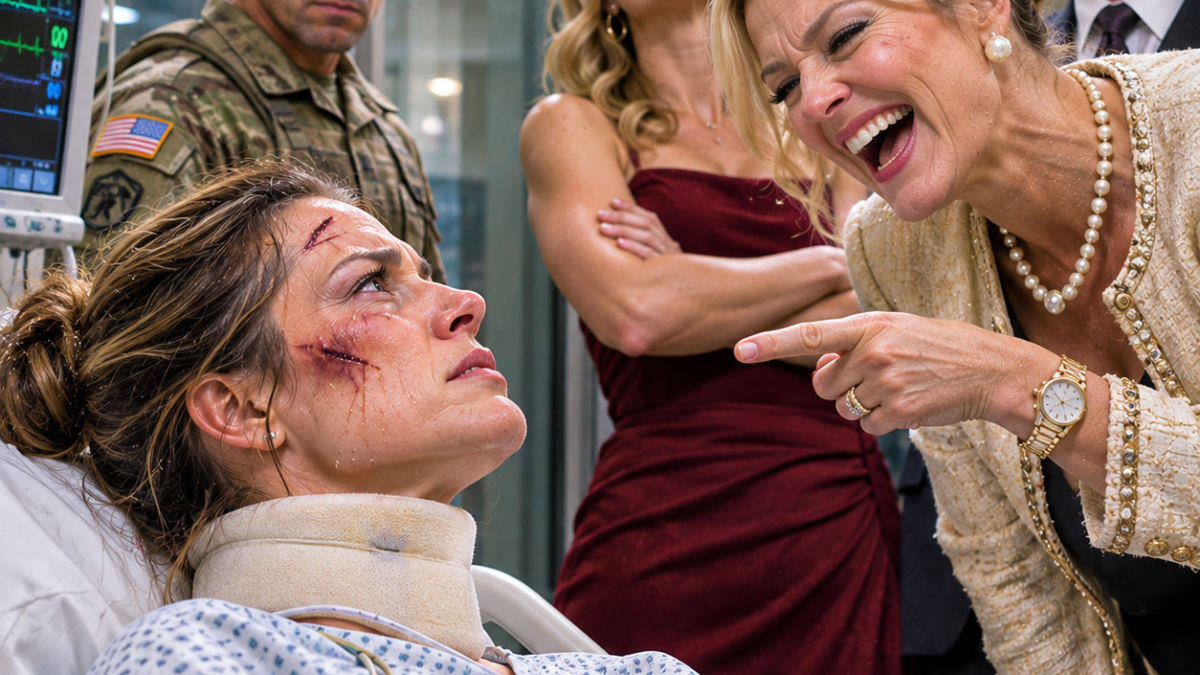
PART2
“Current working theory is burglary,” Dalton said.
“Current working theory?”
“Yes.”
“What was taken?”
“Televisions. Laptop. Jewelry. Some cash may be missing.”
“How did they enter?”
“Back kitchen door.”
“Broken?”
He paused.
“We’re still processing.”
“That means no.”
“I didn’t say that.”
“Was the lock forced?”
Another glance toward Margaret.
“No obvious damage was noted initially.”
I felt my pulse change.
“Alarm?”
“Disarmed.”
“By who?”
“We don’t know.”
“You have the access logs?”
“System was damaged.”
I stared.
“Cloud backup?”
His expression tightened.
“We’re working on it.”
“How long has the Dawson family been here?”
Dalton lowered his voice.
“They arrived before the ambulance left the property.”
I turned slowly.
Margaret was now watching me.
“How did they know?”
Dalton looked uncomfortable.
“Captain, I really can’t answer that.”
“You were first law enforcement on scene?”
“No.”
“Who?”
“Sheriff’s deputy.”
“Name?”
“Patrick Cole.”
“Who called 911?”
He hesitated.
“Anonymous.”
I stared.
“You don’t know who called?”
“Number was blocked.”
“You have dispatch recordings.”
“Yes.”
“Then you have the voice.”
“We’re analyzing it.”
I looked toward Molly.
She immediately looked down.
Dalton moved closer.
“Captain.”
“What?”
“You need to understand what you’re dealing with.”
I waited.
“The Dawsons have enormous influence in this county.”
“So I’ve heard.”
“They donate to the hospital.”
I said nothing.
“Sheriff’s campaign.”
Nothing.
“District attorney’s charity foundation.”
Nothing.
“Margaret Dawson sits on the state public-safety advisory board.”
Nothing.
“Dawson Aviation employs twenty-three hundred people in this region.”
He looked exhausted.
“Half the people who matter know that family.”
I looked through the glass at Tessa.
“Then it’s fortunate this isn’t a popularity contest.”
Dalton’s voice became quieter.
“There is very little we can do without evidence.”
That sentence mattered.
Not:
We won’t.
Without evidence.
I looked back at him.
“Then preserve the evidence.”
Margaret stood.
She walked toward me.
Controlled.
Perfect posture.
No visible grief.
“Wyatt.”
“Margaret.”
“We should discuss Tessa.”
“Not privately.”
Her expression changed slightly.
“Excuse me?”
“Anything you want to say about my wife, say it where Detective Dalton can hear.”
Dalton looked like he wanted to disappear.
Margaret smiled without warmth.
“You’ve always been dramatic.”
I almost laughed.
“Tessa has twenty-seven broken bones.”
“Which is why her family is taking over her care.”
“She has a husband.”
“A husband who has been gone seven months.”
“I was deployed.”
“And she was alone.”
“Not because I abandoned her.”
Margaret’s eyes hardened.
“Tessa needed her family.”
“Tessa spent years trying to escape her family.”
Silence.
Every sister looked up.
Even Lauren stopped touching her phone.
Margaret stepped closer.
“You have no idea what you’re talking about.”
“I know she stopped working at Dawson Aviation because you tried to make her sign procurement certifications she didn’t believe were accurate.”
Lauren’s head snapped toward me.
Margaret’s face remained still.
Interesting.
I had guessed more than I knew.
Tessa had said enough during phone calls to concern me.
Not enough to explain everything.
Margaret said:
“Those were internal company disagreements.”
“So there were disagreements.”
“Of course.”
“About federal procurement?”
“Wyatt.”
“About parts certification?”
“Stop.”
That was the first loss of control.
Tiny.
Visible.
I looked at Molly.
Her hands were trembling harder.
“Molly.”
Margaret moved immediately.
“You will not question my daughter.”
I looked at her.
“Tessa is your daughter too.”
Margaret’s face turned almost blank.
“She stopped being my daughter a long time ago.”
The hallway changed.
No one moved.
Rachel whispered:
“Mom.”
Margaret realized what she had said.
Too late.
I looked at Dalton.
He had heard it.
Then back at Margaret.
“Why?”
“That is none of your business.”
“My wife is unconscious after being beaten almost to death.”
I stepped closer.
“It became my business.”
Margaret gave a quiet laugh.
“Do not threaten me.”
“I haven’t.”
“You think a uniform intimidates me?”
“No.”
“You are one soldier, Wyatt.”
I looked through the glass at Tessa.
Then back.
“No.”
My voice stayed low.
“I’m the husband you expected to remain overseas.”
For the first time, Molly looked directly at me.
Her face was terrified.
That was the moment I knew.
Not that she had attacked Tessa.
Something worse.
She had seen enough.
I walked away from Margaret.
Not because I was finished.
Because anger is useful only until it begins making decisions.
I had spent my career learning that.
My first call was not to a general.
Not to a senator.
Not to anybody who could scare Margaret Dawson.
I called Major Elena Ruiz.
Army Criminal Investigation Division.
We had worked together on a procurement-corruption case two years earlier.
She answered:
“Mercer.”
“I need guidance.”
“That phrase usually means you already know you need more than guidance.”
“My wife was assaulted.”
Silence.
“How bad?”
“ICU.”
Her voice changed.
“Jesus.”
“She recently worked for a defense contractor.”
“Which?”
“Dawson Aviation Systems.”
Longer silence.
“I know the name.”
“She may have discovered procurement issues.”
“What kind?”
“I don’t know yet.”
“Any classified material?”
“I don’t know.”
“Controlled technical data?”
“Possible.”
“Export-controlled?”
“Possible.”
“Federal contracts?”
“Definitely.”
Ruiz exhaled.
“Do not access her company devices yourself.”
“I know.”
“Do not remove anything from a crime scene.”
“I know.”
“Do not use your command authority against civilians.”
“I know.”
“And Wyatt?”
“What?”
“You’re her husband before you’re an officer today.”
That hurt.
“I know.”
“I’ll make calls.”
That was all.
No secret military raid.
No tanks.
No fantasy authority.
Just jurisdiction.
If Tessa’s attack touched defense-contract fraud, controlled data, federal bribery, or obstruction connected to government procurement, local influence would stop being the whole story.
I went back to the ICU.
Dr. Gallagher allowed me fifteen minutes.
I sat beside Tessa.
“You always tell me I turn everything into a mission.”
No response.
“So I’m not doing that.”
I took her uninjured hand carefully.
“I’m sitting.”
Ventilator.
Monitor.
“I’m terrified.”
That was harder to say than anything I had told Margaret.
“I need you to know that.”
Her fingers did not move.
“I also need you to know I’m not going to become the thing your mother thinks I am.”
I swallowed.
“I’m not going to kick doors in.”
Nothing.
“I’m going to find out what happened.”
I leaned closer.
“And then I’m going to let evidence do what anger can’t.”
Behind me, a voice whispered:
“Wyatt.”
I turned.
Molly stood in the doorway.
Alone.
Face wet.
I rose slowly.
“What happened?”
She looked at Tessa.
Then covered her mouth.
“Molly.”
“I didn’t know they were going to hurt her that badly.”
Everything inside me stopped.
I moved between her and the door.
Not trapping.
Shielding.
“Who?”
She shook her head violently.
“I can’t.”
“Then get Detective Dalton.”
“No.”
“Why?”
“He’ll tell them.”
My stomach tightened.
“Who?”
“Mom.”
I stared.
“Dalton?”
“I don’t know.”
“What do you know?”
She looked toward the hall.
“Not here.”
We moved into a family consultation room.
I left the door open.
That mattered.
I turned on my phone recorder, then stopped.
“Can I record?”
Molly stared.
“Why?”
“Because I do not want you later saying I pressured you.”
Her eyes filled.
“You think I’d lie?”
“I think you are scared.”
She nodded.
“Record.”
I did.
“Start wherever you can.”
Molly sat.
Hands shaking.
“Tessa came to me three weeks ago.”
“About?”
“Dawson.”
“The company?”
“Yes.”
“What did she find?”
“Parts.”
“What parts?”
“Flight-control actuators.”
I knew enough about aviation to understand the seriousness.
“For what platform?”
She shook her head.
“I don’t know what I’m allowed to say.”
“Then don’t guess.”
She breathed.
“Some batches were failing inspection.”
“Manufacturing defects?”
“Yes.”
“Were they shipped?”
She started crying.
“Yes.”
My blood went cold.
“Under federal contract?”
“Yes.”
“Who knew?”
“Everybody senior.”
“Names.”
“Mom.”
She swallowed.
“Lauren.”
“Who else?”
“Rachel signed some compliance forms.”
“Brooke?”
“Supplier relations.”
“Kayla?”
“Quality documentation.”
“Jenna?”
“Finance.”
“And you?”
“I work communications.”
She laughed bitterly.
“The stupid sister.”
“No.”
She looked at me.
“That’s what they call me.”
I waited.
“What did Tessa do?”
“She found internal quality reports that didn’t match final certifications.”
“Meaning?”
“Parts failed internal testing.”
“And records changed?”
“Yes.”
“Who changed them?”
“I don’t know.”
“Did Tessa?”
“No.”
Immediate.
“She refused.”
“What happened after?”
“Mom told her she was confused.”
Of course.
“Then Lauren told her thousands of jobs depended on those contracts.”
“And?”
“Tessa said jobs didn’t make defective parts safe.”
I closed my eyes briefly.
That was my wife.
“What did she do?”
“She copied records.”
“To where?”
“I don’t know.”
“Did she contact anyone?”
Molly nodded.
“An inspector general.”
“Which?”
“I don’t know.”
“Defense Department?”
“I think.”
“Why were you involved?”
“Tessa asked me to help find archived emails.”
“Did you?”
“Yes.”
“Did they find out?”
Molly started shaking.
“Mom found my login history.”
“When?”
“Three days ago.”
“And?”
“She asked why I was searching old supplier files.”
“What did you say?”
“Nothing.”
“What happened yesterday?”
Molly covered her face.
I waited.
Finally:
“Mom called everyone to your house.”
My chest tightened.
“Why my house?”
“Tessa had refused to come to the family estate.”
“What time?”
“Around seven.”
“Who came?”
“Mom.”
“Lauren.”
“Rachel.”
“Brooke.”
“Kayla.”
“Jenna.”
She whispered:
“Me.”
“All seven?”
“Yes.”
“Tessa let you in?”
“Me.”
I stared.
“You entered first?”
“She trusted me.”
That sentence almost destroyed her.
She sobbed.
“I told her I needed to talk.”
“What happened?”
“She opened the door.”
“Then?”
“Mom and the others came from the driveway.”
“So it was planned.”
Molly nodded.
“Was violence planned?”
“I don’t know.”
“That answer matters.”
“I swear I don’t know.”
I believed her uncertainty.
“What did Margaret want?”
“The copies.”
“What copies?”
“Everything Tessa had.”
“Did Tessa give them up?”
“No.”
I almost smiled despite myself.
Of course not.
“Then what?”
“Mom told Lauren to search the office.”
“And Tessa?”
“She tried to call police.”
“What happened?”
“Rachel grabbed her phone.”
My jaw tightened.
“Then?”
“Tessa tried to get outside.”
Molly began hyperventilating.
I slowed my voice.
“Molly.”
She looked at me.
“You’re here.”
She nodded.
“You’re safe right now.”
Another nod.
“Tell me only what you can.”
She cried.
“Brooke grabbed her.”
I said nothing.
“Lauren hit her.”
“With what?”
“A fireplace poker.”
My hand closed around the edge of the table.
Once.
I forced it open.
“Once?”
Molly shook her head.
“No.”
“How many?”
“I don’t know.”
“Who held Tessa?”
“Brooke.”
“Anyone else?”
“Kayla helped.”
My vision narrowed.
“Margaret?”
“She kept telling Tessa to tell them where the files were.”
“Rachel?”
“Looking through the office.”
“Jenna?”
“Destroying electronics.”
“What were you doing?”
“Begging them to stop.”
Her voice broke.
“I tried to pull Lauren away.”
I looked at her hands.
Blood beneath one nail.
“Is that Tessa’s blood?”
She stared.
“I scratched Lauren.”
That changed something.
Not absolution.
Evidence.
“What happened when Tessa stopped responding?”
“Mom panicked.”
“Did they call 911?”
“No.”
“Who did?”
“I did.”
I sat back.
“Blocked number.”
She nodded.
“I went into the downstairs bathroom.”
“Why didn’t you identify yourself?”
“Mom was screaming that nobody could know we were there.”
“Then?”
“She made us stage the burglary.”
My stomach turned.
“Electronics?”
“Jenna took them.”
“Jewelry?”
“Lauren opened drawers.”
“Cash?”
“Rachel.”
“Back door?”
“Kayla left it open.”
“Alarm?”
“Brooke smashed the panel.”
“Cloud backup?”
Molly looked at me.
“That’s why they’re scared.”
I went still.
“What?”
“Tessa changed the security system last month.”
I leaned forward.
“Where is the backup?”
“She told me once.”
“Where?”
“Not local.”
Good.
“What company?”
“Sentinel Home.”
I knew it.
National provider.
Encrypted cloud storage.
“Did anyone know?”
“Mom thought destroying the panel erased everything.”
My first instinct was to stand up.
Call Dalton.
Demand a warrant.
Instead, I stayed seated.
“Molly.”
“What?”
“You need your own lawyer.”
She stared.
“I’m confessing.”
“You are providing information that may expose you to criminal liability.”
“I didn’t hit her.”
“You entered as part of a planned confrontation.”
She went pale.
“Get a lawyer.”
“Will you help me?”
“I will help you get somewhere safe.”
“Will you forgive me?”
I looked at her.
“My wife may die.”
She started crying.
“I cannot answer that.”
I stopped the recording.
Then called Major Ruiz.
She answered.
“I have a witness.”
“Local?”
“Family.”
“Credible?”
“She just described the assault.”
Silence.
“Do not move her without counsel.”
“I know.”
“I’m contacting federal prosecutors.”
“Why federal already?”
“Because Dawson Aviation has an active DoD Inspector General referral.”
My pulse jumped.
“Existing?”
“Yes.”
“How long?”
“Five weeks.”
Tessa.
She had done it.
Ruiz continued.
“Your wife may already be a cooperating witness.”
I looked through the glass wall toward the ICU corridor.
“Can you confirm?”
“Not over this line.”
“Understood.”
“Wyatt.”
“What?”
“Do not tell local law enforcement about the procurement side yet.”
“Dalton?”
“I don’t know his status.”
That answer was enough.
Thirty minutes later, Molly had independent counsel.
Not mine.
Not Army.
A criminal-defense attorney named Sarah Kellerman who arrived in jeans and a winter coat.
She met Molly privately.
Then approached me.
“My client is willing to speak to federal investigators.”
“Good.”
“She is not speaking to Detective Dalton yet.”
“Why?”
“She believes he has previously warned Margaret Dawson about law-enforcement inquiries.”
That made my stomach drop.
“Proof?”
“Not yet.”
“Then we treat it as allegation.”
Sarah studied me.
“You really are military.”
“What does that mean?”
“You keep separating what you know from what you want to believe.”
I looked toward Tessa’s room.
“Today I have to.”
By noon, two agents from the Defense Criminal Investigative Service arrived.
Then an FBI public-corruption agent.
Then Army CID, because controlled military technical data might have been involved and my own classified work created additional security concerns.
Nobody stormed the hospital.
No badges waved in Margaret’s face.
They went to a conference room.
Molly spoke for four hours.
I was not present.
That mattered.
Her account had to be hers.
Meanwhile, Sentinel Home confirmed the existence of cloud video.
Law enforcement obtained preservation orders.
Not footage directly handed to me.
Chain of custody.
Timestamps.
Authentication.
The boring parts.
The parts that survive court.
At 3:12 p.m., Detective Dalton approached me.
“You called federal agents.”
It was not a question.
“I contacted appropriate authorities.”
His jaw tightened.
“You went around me.”
“I called someone about a defense contractor.”
“This is my assault case.”
“Then investigate the assault.”
He stared.
“You don’t trust me.”
“I don’t know you.”
“Your sister-in-law is making allegations.”
“My sister-in-law has counsel.”
His face changed.
“You recorded her.”
“With consent.”
He looked surprised.
“Yes.”
I continued.
“And I turned the recording over through counsel.”
He rubbed his forehead.
“Captain, you’re making this harder.”
“No.”
I looked at him.
“Someone made it hard before I arrived.”
He lowered his voice.
“You have no idea how this county works.”
“That sentence is becoming popular.”
“I’m trying to protect the case.”
“Then explain why Margaret Dawson’s family arrived before the ambulance.”
“I don’t know.”
“Explain why the first deputy logged the scene as burglary before the house was processed.”
Dalton froze.
I had not known that.
I was guessing.
His face confirmed it.
“Who told the deputy burglary?”
Silence.
“Dalton.”
He looked away.
Finally:
“Sheriff Mason.”
“Was he at the scene?”
“No.”
“Then how did he know?”
Dalton whispered:
“Margaret called him.”
There it was.
“Before 911?”
“I don’t know.”
“Phone records will.”
He looked at me.
“You think I’m dirty?”
“I think you are scared.”
His face hardened.
“You don’t get to—”
“Yes, I do.”
I kept my voice low.
“Because scared people still make choices.”
He said nothing.
“Which choice are you making?”
For a long time, Dalton stood there.
Then:
“I photographed the scene before the sheriff arrived.”
My pulse changed.
“Why?”
“Something looked wrong.”
“What?”
“No forced entry.”
He swallowed.
“Blood in two rooms.”
“Not one?”
“Hallway and office.”
“Meaning Tessa moved?”
“Or was moved.”
He continued.
“The electronics they said were stolen were stacked in the garage.”
I stared.
“What?”
“Not removed.”
“Why?”
“I don’t know.”
“Anything else?”
“The supposed cash drawer had no fingerprints except family.”
“Which family?”
“I can’t discuss evidence.”
Fair.
He looked toward Margaret.
“Sheriff Mason ordered the initial report amended.”
“To burglary?”
“Yes.”
“Do you have the original?”
He looked at me.
“Yes.”
“Where?”
“Somewhere he cannot reach.”
I exhaled.
“Then stop telling me there is nothing you can do.”
Dalton looked ashamed.
“I have two kids.”
I almost lost my temper.
Instead:
“So did Tessa’s father.”
He flinched.
“That’s not fair.”
“No.”
I looked through the glass.
“None of this is.”
Dalton eventually contacted federal investigators himself.
By evening, the case had changed.
Not publicly.
Quietly.
Preservation orders.
Subpoenas.
Search-warrant applications.
Hospital visitor logs.
Phone records.
Security-camera requests from nearby homes.
Vehicle GPS.
Company access logs.
The kind of things wealth cannot yell at.
Data does not care who funded the sheriff’s reelection dinner.
That night, Margaret approached me again.
Her daughters were no longer all present.
Molly was gone.
Margaret noticed.
“Where is Molly?”
“I don’t know.”
Lie.
Necessary? Maybe.
She stared.
“You spoke to her.”
“Yes.”
“What did she say?”
“That sounds like a question for Molly.”
Margaret stepped closer.
“You are tearing this family apart.”
I almost laughed.
“My wife is on a ventilator.”
“You think that gives you permission to attack us?”
“No.”
“I know what you’re doing.”
“What?”
“Calling federal people.”
Interesting.
“How do you know?”
She froze.
Half a second.
Enough.
I smiled without warmth.
“Who called you?”
“No one.”
“Then how do you know?”
Her face hardened.
“I have friends.”
“That may become a problem.”
“Careful.”
“There it is again.”
“What?”
“The belief that warning someone is the same thing as controlling them.”
Her eyes went cold.
“You think you can destroy Dawson Aviation?”
“I don’t want to destroy anything.”
“You already are.”
“No.”
I stepped closer.
“If your company is honest, documents will protect it.”
She stared.
“And if it isn’t?”
“That question belongs to you.”
She left.
At 2:07 a.m., Tessa moved.
Just one finger.
I thought I imagined it.
Then again.
I called the nurse.
Dr. Gallagher came.
Pupil response.
Commands.
Small reactions.
Not consciousness.
But improvement.
I stood beside her.
“Tessa.”
Her eyelids fluttered.
“I’m here.”
Her heart rate changed.
The nurse smiled.
“She may recognize your voice.”
I leaned closer.
“You do not have to tell me anything.”
That mattered.
“No questions.”
Her fingers moved again.
“You just stay.”
I spent the night beside her.
By morning, the federal investigation hit Dawson Aviation.
Not a raid with armored vehicles.
Search warrants executed by agents in jackets.
Servers imaged.
Quality-control offices secured.
Procurement records seized.
Several executives escorted to conference rooms.
Margaret found out at 7:11 a.m.
I knew because she arrived at the hospital at 7:19 without makeup.
First time I had ever seen her look human.
“What did you do?”
I was drinking bad coffee.
“Good morning.”
“Agents are inside my company.”
“Then I assume a judge approved warrants.”
“You caused this.”
“I did not know an investigation existed until yesterday.”
“You expect me to believe that?”
“Yes.”
She stared.
“Tessa.”
There it was.
Not Wyatt.
Tessa.
“What did she do?”
I stood.
“You should ask your lawyer.”
Margaret’s face twisted.
“You little bastard.”
Lauren stepped from the elevator behind her.
“Mom.”
Margaret ignored her.
“You married into our family and poisoned her against us.”
I laughed once.
“You’ve spent years assuming Tessa had no mind when she disagreed with you.”
“She was weak.”
“No.”
I looked through the ICU window.
“She was terrified of you.”
That hit.
Margaret’s face changed.
Then recovered.
“She stole company documents.”
“If they were evidence of fraud, that issue is larger than family loyalty.”
“You don’t know anything.”
“Then you have nothing to worry about.”
She hated that sentence.
Lauren grabbed her arm.
“Come on.”
I looked at Lauren.
For the first time, she did not look arrogant.
She looked scared.
Her sleeve had shifted.
A scratch ran from her wrist upward.
Fresh.
Molly.
I noticed.
So did Dalton, standing twenty feet away.
Lauren saw him looking.
She pulled the sleeve down.
Evidence.
Small.
Corroborative.
Not proof alone.
Everything became pieces.
Security footage arrived that afternoon.
Federal agents did not show it to me.
Dalton gave me only enough to understand.
“There is video.”
“How much?”
“Front entrance. Driveway. Interior hallway.”
“Audio?”
“Some.”
“What does it show?”
He hesitated.
“Six Dawson vehicles arriving within eleven minutes.”
“And?”
“Molly entering first.”
My stomach tightened.
“Then?”
“The others.”
“Any strangers?”
“No.”
The burglary theory died in one sentence.
“What about the assault?”
“Hallway camera captures some movement.”
“Some?”
“The camera was knocked down.”
“By who?”
He looked at me.
“Jenna.”
My hands went cold.
“Does it show Tessa being hit?”
“Yes.”
I stared at the wall.
“By Lauren?”
“I can’t walk you through evidence.”
I nodded.
Fair.
Then Dalton said:
“There’s audio.”
I looked back.
“What?”
“Not clear enough for everything.”
“And?”
“One phrase is clear.”
I waited.
He swallowed.
“Margaret saying, ‘Tell us where you sent it.’”
I sat down.
For the first time, the case no longer depended on Molly.
That mattered.
Molly could tell the truth without carrying the entire family against herself.
The next forty-eight hours were chaos outside my control.
News vans appeared.
Dawson Aviation stock was private, but major industry publications reported federal searches.
The governor’s office distanced itself.
The sheriff released a statement claiming full cooperation.
Nobody believed him after federal agents subpoenaed his communications with Margaret.
The district attorney recused her office from the assault case because of prior donations and personal relationships.
State prosecutors entered.
Then a federal grand jury expanded its work.
Still no arrests.
People online demanded them.
Real investigations are not written for audience satisfaction.
Agents build cases.
Lawyers fight warrants.
Records take time.
Tessa improved slowly.
Ventilator removed on Day Four.
She could not speak clearly.
Could not remember everything.
Dr. Gallagher warned me:
“Do not interrogate her.”
“I won’t.”
“Memory may return in fragments.”
“I know.”
“Emotion can contaminate recall.”
“I know.”
He studied me.
“You’ve been coached.”
“Occupational hazard.”
I sat beside Tessa.
Her eyes opened.
She looked at me.
Actually looked.
“Wy…”
I almost broke.
“Hey.”
Her lips moved.
“Home?”
“I’m home.”
A tear ran sideways into her hair.
I wiped it carefully.
“You’re safe.”
Her eyes moved toward the door.
Fear.
I understood.
“No Dawsons inside without your permission.”
She stared.
“Molly?”
“She’s safe.”
Relief.
That mattered.
I leaned closer.
“You do not have to tell me what happened.”
Her mouth trembled.
“Mom.”
One word.
I swallowed.
“I know enough.”
Her eyes widened.
“Files.”
“Federal investigators have them.”
She closed her eyes.
Tears.
“You did it.”
Her fingers moved weakly.
“Sent.”
“I know.”
Then she whispered something I almost missed.
“Mailbox.”
“What?”
Her eyes opened.
“Blue mailbox.”
I froze.
“Do you want me to tell investigators?”
Tiny nod.
I called the nurse.
Then investigators.
Not because I knew what it meant.
Because Tessa had given information voluntarily while medically capable of limited communication.
Agent Ruiz came personally.
Tessa said three words.
“Blue mailbox. Route seventeen.”
Ruiz did not ask me to interpret.
Good.
Agents found a rural blue postal drop box along Route 17.
But nothing inside.
At first.
Then investigators obtained postal collection logs.
The day before Tessa was attacked, an insured envelope had been collected.
Destination:
Department of Defense Office of Inspector General.
Already delivered.
Inside were copies of internal reports and a handwritten statement.
Tessa had mailed physical evidence before the attack.
Margaret had been searching for copies that no longer mattered.
That became devastating.
Because it proved timing.
Tessa sent evidence.
Then, within twenty-four hours, family members confronted her.
Then she was nearly killed.
Prosecutors did not need me to call it retaliation.
The timeline spoke.
The procurement case grew.
Dawson Aviation had supplied flight-control actuator components through a chain of prime contractors.
Internal testing showed a batch with unacceptable failure rates.
Instead of scrapping and remanufacturing all affected components, senior employees reclassified some failures as test-equipment anomalies.
Quality documentation was altered.
Certain units shipped.
No aircraft had crashed because of them.
Thank God.
Several parts had been caught during downstream inspection.
Others were recalled once federal investigators moved.
That fact kept the story from becoming something worse.
But the fraud remained.
False certifications.
Improper billing.
Obstruction.
Possible conspiracy.
The company itself became eligible for negotiated remedies depending on cooperation, leadership changes, restitution, and safety remediation.
I cared about that.
Two thousand employees should not lose jobs because Margaret Dawson believed accountability was optional.
Tessa cared too.
When she could finally speak full sentences, she said:
“Don’t let them kill the company.”
I stared.
“After what they did?”
“The machinists didn’t hit me.”
That was my wife.
Even from a hospital bed.
“Engineers didn’t.”
She swallowed.
“People need those jobs.”
I squeezed her hand.
“That is not your responsibility.”
“It matters.”
“Yes.”
“It still matters.”
So it mattered to me.
The assault arrests came on Day Nine.
Lauren first.
Aggravated assault.
Attempted murder-related allegations would be evaluated later based on intent and evidence.
Brooke and Kayla for participation in restraint and assault-related conduct.
Jenna for evidence destruction and obstruction.
Rachel for burglary staging, evidence tampering, and conspiracy allegations.
Margaret for conspiracy, obstruction, solicitation/encouragement related to the attack, and other charges prosecutors believed evidence supported.
Not every sister was charged identically.
That mattered.
Molly was not treated as innocent automatically.
She had entered under false pretenses and participated in the planned confrontation.
Her attorney negotiated her cooperation.
Prosecutors considered her 911 call, attempt to intervene, immediate truthfulness once separated, and evidence she had not participated in the beating itself.
She still faced consequences.
But different ones.
That was justice.
Specific.
Not collective.
The arrests happened at different locations.
No dramatic hospital hallway.
Margaret was arrested at her house.
Lauren at an attorney’s office.
Brooke surrendered.
Kayla surrendered.
Jenna was arrested leaving Dawson Aviation.
Rachel surrendered the next morning.
Sheriff Mason was not arrested immediately.
His investigation took longer.
Phone records showed Margaret called him seventeen minutes before Molly’s 911 call.
That mattered.
He then called Deputy Cole.
Cole later admitted Mason instructed him to expect a “burglary situation” before he arrived.
The initial scene was shaped before police saw it.
Mason claimed Margaret said Tessa had reported suspicious persons earlier.
No record supported that.
Then came the text.
Deleted.
Recovered from a cloud backup.
Margaret to Mason:
Family problem at Mercer residence. Keep it quiet. We’ll handle the rest.
Sent at 8:31 p.m.
The 911 call happened at 8:48.
That message ended his career.
Eventually, Mason faced obstruction and official-misconduct charges under applicable state and federal theories.
Detective Dalton testified.
His preserved original scene photographs became crucial.
He apologized to me one evening.
We were in the hospital cafeteria.
“Took me too long.”
“Yes.”
He nodded.
“I deserved that.”
I sipped coffee.
“Why did you save the originals?”
He looked down.
“Because my father was a cop.”
I waited.
“He used to tell me if somebody above you asks you to change a fact, save the first version.”
I smiled slightly.
“Smart man.”
“Died ten years ago.”
“Sorry.”
Dalton shrugged.
“I almost ignored him.”
“But you didn’t.”
“No.”
That difference mattered.
Cowardice and corruption are not identical.
Fear delayed him.
It did not finally own him.
Tessa came home after forty-three days.
Not walking normally.
Not independent.
Wheelchair at first.
Then walker.
Physical therapy.
Occupational therapy.
Speech therapy.
Headaches.
Memory gaps.
Night terrors.
She hated mirrors for months.
One night I found her crying in the bathroom.
She covered the scar near her temple.
“I look wrong.”
I sat on the floor.
“No.”
“Wyatt.”
“I’m not saying you look the same.”
She looked at me.
“You look like you survived something.”
“That’s not beautiful.”
I thought.
“No.”
She stared.
“Not automatically.”
That surprised her.
I continued.
“But you are still beautiful.”
She cried harder.
“I don’t feel like me.”
“That I believe.”
I sat beside her.
“So we find you again.”
“What if she’s gone?”
“Then we meet whoever is here now.”
She leaned against me.
Healing was not dramatic.
It was ugly sometimes.
Tessa screaming because a dropped spoon sounded like metal striking wood.
Tessa refusing to sleep unless hallway lights were on.
Tessa vomiting before court hearings.
Tessa unable to hold a coffee cup because both wrists still hurt.
Tessa furious when I tried to help too quickly.
“I can do it.”
“I know.”
“Then stop.”
I did.
Marriage after trauma is learning when love should step forward and when it should get out of the way.
The federal contractor case resolved over years.
Not months.
Dawson Aviation entered a cooperation agreement after new independent leadership took over.
Several senior executives pleaded guilty to fraud-related and false-statement offenses.
Quality-control systems were rebuilt.
Affected contracts reviewed.
Restitution and penalties followed.
The company survived.
Smaller.
Monitored.
Without the Dawson family controlling it.
Margaret lost the empire she had believed made her untouchable.
Not because I took it.
Because lenders, directors, federal contracting authorities, insurers, and prosecutors reacted to documented misconduct.
That distinction mattered to Tessa.
One evening she said:
“I don’t want people telling the story like you destroyed my family.”
I looked at her.
“I didn’t.”
“I know.”
She took my hand.
“But people like that story.”
“Then tell them the boring version.”
“What?”
“Your mother destroyed her own position.”
Tessa smiled.
“Very romantic.”
“I try.”
The criminal assault case was worse emotionally.
Tessa had to testify.
Not immediately.
When medically stable.
She sat across from women who had braided her hair as a child.
Lauren had taught her to ride a bicycle.
Rachel had driven her to prom.
Brooke had helped her move into college.
Kayla had been there when our dog died.
Jenna used to sleep in Tessa’s room during thunderstorms.
Family history does not evaporate when people become dangerous.
That makes testimony harder.
Tessa described the confrontation.
Margaret demanding the files.
Lauren calling her selfish.
Rachel searching drawers.
Brooke taking her phone.
Kayla grabbing her arm.
Jenna ripping wires from our office equipment.
Molly crying.
Then Tessa running.
Then the first blow.
She remembered Lauren.
The poker.
Then Brooke holding her.
Then fragments.
She did not remember all twenty-seven fractures happening.
Nobody should have to.
Video.
Forensics.
Medical testimony.
Blood pattern.
Fingerprints.
Recovered communications.
Molly.
All filled gaps.
Margaret’s defense argued she never ordered anyone to beat Tessa.
That mattered legally.
Prosecutors had to prove intent and participation, not simply rely on moral outrage.
Evidence showed Margaret repeatedly demanded information during the assault.
Audio captured:
Tell us where you sent it.
Another phrase:
She does not leave until we have it.
Then later:
Stop. Stop. That’s enough.
Defense argued that line proved Margaret tried to end violence.
Prosecutors argued it showed awareness and control after violence had already been used to obtain information.
Jurors had to decide.
That is how justice works when it works properly.
Not slogans.
Elements.
Evidence.
Burden.
The verdicts were mixed.
Lauren was convicted on serious assault charges and obstruction-related counts.
Brooke and Kayla were convicted for their roles restraining and assisting.
Jenna was convicted on evidence-destruction and conspiracy-related counts.
Rachel was convicted on obstruction and staging evidence, with other allegations resolved according to what prosecutors proved.
Margaret was convicted on conspiracy and obstruction counts and serious charges tied to facilitating the unlawful confrontation, though not every count prosecutors originally considered survived to verdict.
Molly’s case resolved through cooperation and a lesser plea with probationary and service-related conditions after the court considered her conduct, intervention, and assistance.
Some online commenters wanted everyone sentenced identically.
Tessa did not.
“They didn’t do identical things,” she said.
Exactly.
Justice is not a family package deal.
At sentencing, Tessa spoke.
I sat behind her.
She used a cane.
Her left leg would probably always ache in cold weather.
She looked at Margaret.
Her own mother.
Then read.
“I spent most of my childhood believing family meant the people you protected from outsiders.”
Her voice shook.
“Then I became the outsider.”
Margaret stared ahead.
“When I found the quality reports, I believed the hardest decision would be whether to report my family’s company.”
Tessa swallowed.
“I was wrong.”
“The hardest decision was accepting that they believed protecting a company justified destroying me.”
Lauren cried.
Tessa continued.
“My mother has repeatedly said I betrayed the family.”
She looked directly at Margaret.
“I reported defective aircraft components.”
Silence.
“If that is betrayal, then I hope I betray every family, employer, institution, and person who asks me to value loyalty above human life.”
I felt my throat close.
She continued.
“I do not ask for maximum punishment.”
Margaret finally looked at her.
“I ask for consequences that make it impossible for any of them to tell themselves this was a misunderstanding.”
That was Tessa.
Clear.
Precise.
Then:
“I also ask this court to remember Molly.”
Molly began crying.
“She made terrible choices that night.”
Tessa looked at her youngest sister.
“But she also called 911.”
Margaret’s face hardened.
“She tried to stop Lauren.”
“Then she told the truth when telling the truth cost her the only family structure she had ever known.”
Tessa’s voice broke.
“I would be dead without her.”
Molly covered her face.
That was the first time since the attack I saw Tessa look at one of her sisters without fear.
Not forgiveness.
Something beginning.
Sentences followed.
Prison for some.
Probationary consequences for others.
Financial penalties.
Professional bans.
No single dramatic number mattered as much as the fact that nobody could erase the record.
Dawson Aviation removed Margaret’s name from its executive headquarters.
Not from history.
From authority.
The new board created an independent quality and ethics office.
Tessa refused a position there.
They offered.
She laughed when she told me.
“Absolutely not.”
“What are you going to do?”
“I don’t know.”
That was a beautiful answer.
For the first time in her life, she did not have to know.
She spent another year recovering.
Then started graduate school in public policy and compliance.
Not because she wanted to fight defense contractors forever.
Because she discovered she was good at systems.
At seeing where loyalty becomes risk.
At recognizing how institutions teach people to look away.
Molly moved three states away.
Started over.
Tessa did not speak to her for six months after trial.
Then one afternoon she said:
“I want to call.”
“Okay.”
“Do you think I should?”
“That is your decision.”
She frowned.
“You are annoyingly healthy now.”
“Therapy.”
She called.
I left the room.
Two hours later, Tessa found me outside.
“She asked if I forgive her.”
“What did you say?”
“Not yet.”
I nodded.
“Then I said I still love her.”
That was harder.
“And?”
“She cried.”
Tessa looked toward the trees.
“I hate that both can be true.”
“What?”
“I love her.”
She swallowed.
“And I don’t trust her.”
I put an arm around her.
“Those are allowed to coexist.”
Years later, Molly became the only Dawson sister Tessa maintained regular contact with.
Not because Molly had been innocent.
Because she kept doing the work.
Therapy.
Cooperation.
No excuses.
No attempts to force closeness.
She never said:
I saved your life.
She said:
I helped put you in danger before I tried to save you.
That distinction allowed something honest to grow.
The others wrote letters.
Tessa read some.
Returned others.
Lauren’s first letter was terrible.
Mostly explanation.
Pressure.
Fear.
Mother.
Company.
Jobs.
She said:
I never meant for it to go that far.
Tessa threw the letter across the room.
“What?”
She stared at me.
“That far.”
I waited.
“She means twenty-seven fractures was too far.”
I said nothing.
“But what amount was acceptable?”
Exactly.
A year later, Lauren wrote again.
Different.
I hit you because I was angry that you would not submit. I have spent months saying I was protecting employees. That was a lie I told myself. I was protecting my position and our mother’s approval.
Tessa kept that letter.
She did not answer.
Brooke apologized.
Kayla apologized.
Rachel did not for years.
Jenna’s apology was concise.
I destroyed equipment because I knew evidence existed. I am sorry. I was afraid of Mom, but fear did not move my hands. I did.
Tessa cried after reading that.
“Why this one?”
“Because she didn’t hide.”
That became our measure.
Not eloquence.
Ownership.
Sheriff Mason eventually lost his pension benefits partially under applicable findings, was convicted on obstruction-related conduct, and never worked in law enforcement again.
Detective Dalton testified against him.
The county changed evidence-preservation rules.
External review of politically sensitive cases became policy.
Again, boring.
Important.
People who expect justice to look like a military helicopter miss how much of it is paperwork.
Policies.
Logs.
Copies.
Independent custody.
Someone saving the first version before a powerful person edits it.
Dr. Gallagher became our friend accidentally.
Every year on the anniversary of Tessa coming home, he sent one text:
Still walking?
Tessa answered:
Still annoying Wyatt.
He replied:
Excellent neurological outcome.
The twenty-seven fractures became less central as years passed.
People would ask Tessa:
“Do you remember all of it?”
“No.”
“Do you wish you did?”
“No.”
That answer surprised them.
Trauma culture often treats recovered memory like treasure.
Tessa did not need more horror.
She had enough truth.
Our marriage changed too.
Seven months of deployment had once been the hardest separation we experienced.
After the attack, I stopped volunteering for certain assignments.
Not because Tessa asked.
She never did.
Because I had to decide what I wanted.
My career mattered.
So did home.
I remained in the Army.
Promoted eventually.
But the mythology Margaret had built around me—one soldier with limitless authority—was never real.
My power did not come from rank.
My rank could not convict her.
Could not heal Tessa.
Could not make a county honest.
The most useful thing I did was follow rules when rage told me rules were too slow.
I did not threaten witnesses.
Did not steal files.
Did not confront suspects at home.
Did not use classified access to search civilian systems.
Did not ask commanders for favors.
I became boring.
And because I became boring, their attorneys had almost nothing to use against me.
One defense lawyer tried anyway.
On cross-examination during a related proceeding, he asked:
“Captain Mercer, did you tell Margaret Dawson there would be no courthouse or checkpoint capable of shielding whoever hurt your wife?”
I answered:
“Yes.”
“Was that a threat?”
“No.”
“You mentioned your authority.”
“I was angry.”
“Did you intend to use military power against the Dawson family?”
“No.”
“Then what did you mean?”
I thought.
“That money and local influence would not prevent lawful investigators outside the county from doing their jobs.”
The lawyer frowned.
“So you knew federal investigators were coming.”
“No.”
“When did you learn?”
“After I contacted appropriate channels regarding a defense contractor.”
“You wanted the Dawsons destroyed.”
I looked at Margaret.
Then at the attorney.
“I wanted my wife alive.”
Nothing more.
That answer ended the line better than anger could.
Tessa and I sold the house.
Not immediately.
Two years later.
We had repaired walls.
Replaced flooring.
Removed the fireplace poker from evidence only after the case concluded.
I never wanted it back.
The prosecutor asked whether we wanted personal property returned.
“No.”
Tessa agreed.
The house had beautiful light in the kitchen.
Big backyard.
A porch where I had imagined coming home from deployment.
We still sold it.
People said:
“Don’t let them take your home too.”
Tessa answered:
“They didn’t.”
“What?”
“We are choosing another one.”
That was the difference.
We moved near Charlottesville.
Smaller property.
Trees.
No connection to Dawson Aviation.
No county machine.
Molly visited once.
She stood at the door holding flowers.
Tessa stared.
Then laughed nervously.
“What?”
Molly said:
“I’m waiting to be invited in.”
That sentence mattered.
Tessa opened the door.
“Come in.”
Boundaries can turn ordinary actions into miracles.
Margaret never entered our new home.
Not once.
Tessa did not speak to her for six years.
Then Margaret developed cancer.
People assumed reconciliation.
Life is not that simple.
Tessa asked me:
“Do I owe her a visit?”
“No.”
“You answered fast.”
“You asked whether you owe it.”
She looked at me.
“What if I want to?”
“Different question.”
She visited.
Once.
I drove.
Waited outside the room.
Tessa stayed forty minutes.
When she returned, she was crying.
“What happened?”
“She apologized.”
“Good?”
“I don’t know.”
We walked toward the elevator.
“What did she say?”
Tessa shook her head.
“Not now.”
Months later, she told me.
Margaret had said:
I spent my life believing I was protecting the family your father built. I did not understand that by the end I loved the structure more than the people inside it.
Tessa asked:
“Did you love me?”
Margaret cried.
“Yes.”
Then Tessa asked:
“Did you know Lauren was going to hit me?”
Margaret said:
“No.”
“Did you know someone might?”
Long silence.
Then:
I knew we were going there to frighten you.
That was the closest thing to final truth.
Not:
I ordered it.
Not:
I knew twenty-seven bones.
She knew fear was part of the plan.
She went anyway.
She kept demanding files after violence began.
That was enough for Tessa.
She told Margaret:
“I don’t forgive you today.”
Margaret nodded.
“Okay.”
“I may never.”
“I know.”
Then Tessa held her hand for five minutes.
Not absolution.
Humanity.
Margaret died eleven months later.
Tessa attended the funeral.
Sat in the back.
Did not speak.
Lauren approached after.
Years older.
Gray beginning near her temples.
She stopped six feet away.
“I’m sorry.”
Tessa nodded.
Lauren asked:
“Do you hate me?”
Tessa thought.
“No.”
Lauren started crying.
“That’s not forgiveness.”
“No.”
“Will there ever be?”
Tessa looked at her.
“I don’t know.”
Lauren nodded.
Then walked away.
I asked afterward:
“You okay?”
“No.”
“Want to leave?”
“Yes.”
We left.
No dramatic family reunion.
No photograph.
Healing does not owe spectators a satisfying pose.
Dawson Aviation ultimately survived more than a decade beyond the scandal.
Different leadership.
Different board.
Strong compliance controls.
The company built parts correctly.
That made Tessa proud.
Strangely.
One day a trade magazine profiled its turnaround.
Headline:
FROM SCANDAL TO SAFETY CULTURE
Tessa read it.
Then handed me the magazine.
“They finally did what I asked.”
I looked at her.
“What?”
“Scrap bad parts.”
She laughed.
“That was literally it.”
The simplicity was devastating.
Thousands of hours of litigation.
Prison sentences.
A near murder.
A family destroyed.
All because people at the top could not tolerate losing money on defective components.
Corporate disasters often sound sophisticated afterward.
They rarely begin that way.
Someone chooses:
Hide it.
Ship it.
Fix the paperwork.
Protect the quarter.
Then every lie requires a larger lie.
Tessa had interrupted the chain.
The chain tried to kill her.
It failed.
On the tenth anniversary of the attack, we did nothing special.
No vigil.
No speeches.
Tessa went to work.
I made dinner.
Molly sent:
Thinking of you. No need to answer.
Tessa answered anyway.
Still here.
Then we watched a terrible movie.
Halfway through, Tessa said:
“Do you remember the hospital hallway?”
“Every second.”
“Mom saying you were one soldier?”
“Yes.”
She smiled.
“You looked terrifying.”
“I felt terrified.”
She turned toward me.
“Really?”
“Yes.”
“Of her?”
“No.”
“What?”
“Losing you.”
She went quiet.
I continued.
“Everyone thought the story was about power.”
“What was it about?”
“You.”
She smiled.
“Good answer.”
“Ten years of marriage training.”
She threw a pillow at me.
Her right wrist still hurt when the weather changed.
The pillow missed.
I laughed.
She did too.
That sound mattered more than every conviction.
Years later, when I finally retired from the Army, Tessa came to the ceremony.
No classified transport.
No ICU.
No blood.
Just dress uniform.
Family.
Friends.
Major Ruiz had become Colonel Ruiz and attended.
Detective Dalton came.
Dr. Gallagher.
Molly.
Tessa stood in the front row.
At the reception, someone asked how she and I survived everything.
Tessa looked at me.
Then said:
“He stopped trying to save me.”
The person looked confused.
She smiled.
“I mean that as a compliment.”
She continued.
“After the attack, everybody wanted to decide things for me because I was injured.”
“Doctors.”
“Lawyers.”
“Family.”
“People online.”
She squeezed my hand.
“Wyatt learned to ask.”
I had never thought of it that way.
She said:
“Do you want help standing?”
“Do you want me in the room?”
“Do you want to read the letter?”
“Do you want to testify?”
“Do you want to visit your mother?”
She looked at the guest.
“That’s how he helped me get my life back.”
Choice.
Again.
Always choice.
That was the thing Margaret had taken long before the beating.
Tessa’s choice.
Career.
Family.
Silence.
Loyalty.
Margaret believed love meant obedience.
So did the company.
Obey the family.
Protect the contract.
Do not question.
Do not expose.
Do not embarrass.
Tessa said no.
One word.
It almost cost her life.
It also saved people she would never meet.
Years after the case, a young engineer from Dawson Aviation wrote her.
He said:
I joined after everything happened. We stop lines now when data looks wrong. Nobody gets punished for raising a quality concern. I know that sounds basic. I also know why those rules exist. Thank you.
Tessa printed the email.
Framed it.
Not newspaper articles.
Not court verdicts.
That.
I asked why.
“Because this is what I wanted.”
“What?”
“Not revenge.”
She touched the frame.
“A system where the next person does not have to be brave enough to nearly die.”
That was the ending.
Not Margaret’s conviction.
Not Lauren’s sentence.
Not the sheriff losing his badge.
Not federal agents walking through Dawson Aviation.
Those things were consequences.
The ending was a young engineer stopping a production line because a number looked wrong and knowing the company would listen.
That is what Tessa fought for.
And if you ask me what I learned, it was not that military authority beats county influence.
It doesn’t work like that.
Authority has limits.
Jurisdiction matters.
Evidence matters.
Process matters.
The lesson was simpler.
Power becomes dangerous when everyone around it begins assuming rules are optional.
Margaret Dawson believed money could make rules flexible.
Sheriff Mason believed political loyalty could make facts flexible.
Lauren believed family loyalty could make violence forgivable.
Brooke and Kayla believed obedience could make participation disappear.
Jenna believed fear could make destroyed evidence acceptable.
Molly believed silence could keep everyone safe.
Even I once believed anger gave me clarity.
We were all wrong in different ways.
Rules mattered most when the people breaking them were powerful.
That was why Tessa mailed the envelope.
Why Dalton saved the original photographs.
Why Molly called 911.
Why Ruiz told me not to touch evidence.
Why prosecutors built timelines instead of headlines.
Why medical records documented every fracture.
Why the footage mattered.
Why chain of custody mattered.
Why truth survived.
One night, many years after the attack, Tessa and I sat on the porch of our new home.
She leaned against me.
Cold weather.
Her leg aching.
I asked:
“Pain bad?”
“Four.”
“Want medication?”
“Later.”
Silence.
Then she said:
“Twenty-seven.”
I knew what she meant.
“You still count?”
“Sometimes.”
I looked at her.
“Does it bother you?”
“No.”
She thought.
“It used to feel like a number describing what they did to me.”
“And now?”
She smiled.
“It’s just a number.”
That might have been the greatest victory.
Not that the bones healed perfectly.
Some did not.
Not that fear disappeared.
It didn’t.
Not that family became simple.
Never.
The victory was that the attack stopped being the organizing fact of her identity.
She became more than the woman in the ICU.
More than the whistleblower.
More than Margaret Dawson’s daughter.
More than my wife.
Tessa.
Just Tessa.
The woman who still overwatered plants.
Hated folding laundry.
Put too much cinnamon in coffee.
Corrected movies about military procedure until I threatened to leave the room.
The woman who survived because Molly called.
The woman who testified because truth mattered.
The woman who walked away from an empire and later smiled when it became safer without her family controlling it.
I once stood outside her ICU room and told Margaret Dawson I was the husband she never expected to come back.
That sounded powerful.
Years later, I understood the more important truth.
Coming back was easy.
Staying was the hard part.
Staying through surgery.
Rehab.
Court.
Nightmares.
Anger.
Silence.
Grief.
Her mother’s death.
Her sister’s apology.
My deployments ending.
Our marriage changing.
Staying without turning her recovery into my mission.
That took more discipline than anything I did overseas.
And if Margaret were alive now, maybe I would tell her something different from what I said in that hallway.
She was right about one thing.
I was only one soldier.
One soldier could not destroy her empire.
One soldier could not repair Tessa.
One soldier could not make a county honest.
But one husband could stand beside his wife while she told the truth.
One detective could preserve an original photograph.
One frightened sister could call 911.
One doctor could document injuries correctly.
One investigator could follow a money trail.
One engineer could refuse to sign a false certification.
One juror could listen.
One judge could apply the law.
One person, then another.
That was how the power shifted.
Not all at once.
Not because anybody became more powerful than the Dawsons.
Because enough people finally stopped being afraid of them.
And the family that once controlled an entire county learned the only lesson power never expects to learn until it is too late:
Truth does not need to be richer than you.
It only needs enough people willing to preserve it.








