PART2:“YOU’RE DIVORCING ROMAN SULLIVAN?” I Left Chicago’s Most Feared Man While Pregnant—Then His Sister Revealed the One Secret He Was Never Supposed to Know
PART2
The day I went to the hospital, I wore a long camel coat even though it was too warm.
I told myself it was because March wind along the lake had teeth.
Really, I was hiding.
At nineteen weeks, my body had changed.
Not dramatically.
Loose sweaters still concealed it.
Roman had not noticed.
That sentence alone should explain why I was sitting in a hospital.
Nineteen weeks.
My husband slept beside me.
Touched me occasionally.
Saw me every morning.
And did not know.
Or perhaps had not looked closely enough to know.
I checked in under my legal name.
Harper Quinn Sullivan.
The receptionist did not react.
That was a relief.
Northwestern’s women’s health center had private consultation rooms.
I was not there with a final decision.
That matters.
I was there because I needed information.
Options.
Medical realities.
Legal realities.
What was still possible.
What was not.
What risks existed.
What I was actually considering.
I sat on the exam table staring at a poster about prenatal nutrition while my hands shook.
Then the doctor entered.
Mask.
Hair tucked beneath a surgical cap.
Tablet in hand.
“Mrs. Sullivan?”
“Yes.”
She looked at the chart.
Then at me.
Something changed in her eyes.
She lowered her mask.
I stopped breathing.
“Imogen.”
Roman’s younger sister.
Dr. Imogen Sullivan.
Thirty-four.
Maternal-fetal medicine fellowship.
The one Sullivan who had escaped the family businesses completely.
She stared at me.
Then at the chart again.
“Harper.”
Neither of us moved.
Finally she shut the door.
Locked it.
Not dramatically.
Privacy.
Then:
“Does Roman know?”
My voice came out flat.
“No.”
Her face lost color.
“And he doesn’t know why you’re here?”
“No.”
“Harper…”
I looked at her.
She stopped.
Doctor replaced sister.
I watched it happen.
Professional posture.
Measured tone.
She set the tablet down.
“All right.”
She sat.
“I’m going to talk to you first as your physician.”
“Good.”
“We need to review gestational age, medical history, current symptoms, and what you mean when you say you’re here to discuss termination.”
I nodded.
She continued carefully.
“At this stage, there are medical and legal considerations that are more complicated than earlier pregnancy care.”
“I understand.”
“Do you?”
“No.”
That surprised her.
I swallowed.
“That’s why I came.”
Imogen’s expression softened.
For the next forty minutes, she was excellent.
No judgment.
No manipulation.
No family.
She asked whether I was being coerced.
“No.”
Whether I was physically safe at home.
“Yes.”
Whether Roman had threatened me.
“No.”
Whether I wanted the pregnancy.
That question broke me.
I started crying.
Not quietly.
All the control I had brought into the room disappeared.
Imogen handed me tissues.
I said:
“I don’t know.”
Then immediately corrected myself.
“That’s a lie.”
She waited.
“I want the baby.”
Her face changed.
“Then why are you here?”
I covered my face.
“Because I don’t want the life attached to it.”
Silence.
I continued.
“I don’t want to raise a child in that house.”
“With his mother walking in whenever she wants.”
“With men outside the door.”
“With people calling Roman at two in the morning.”
“With everybody deciding the baby belongs to the Sullivan family before it belongs to me.”
Imogen’s eyes filled.
I kept going.
“And I don’t want to be trapped.”
“You’re not trapped.”
I laughed bitterly.
“You’re his sister.”
“Yes.”
“So you know.”
Her jaw tightened.
“Know what?”
“Roman doesn’t lose people.”
Imogen stared.
I immediately clarified.
“I don’t mean he would hurt me.”
“I know.”
“He just…”
I struggled.
“He solves things.”
“Yes.”
“If I say I want space, he buys a second apartment.”
“If I say I’m tired, he hires more staff.”
“If I say I’m unhappy, he thinks unhappiness is another operational problem.”
Imogen looked down.
That was the Sullivan family language.
Problems are solved.
People are managed.
She said:
“Have you told him you’re unhappy?”
“Not enough.”
“That matters.”
“I know.”
“Have you told him you’re pregnant?”
“No.”
“That matters more.”
“I know.”
Her doctor face cracked again.
“Harper.”
I lifted a hand.
“Dr. Sullivan.”
She stopped.
“Right now, you’re my physician.”
Long silence.
“I need you to treat me like any other patient.”
“Yes.”
“And I need my medical information kept private.”
Her eyes closed briefly.
When they opened, she nodded.
“Yes.”
“Even from Roman.”
“Yes.”
“Even if he asks.”
“Yes.”
“Even if your mother asks.”
A sad smile.
“Especially if my mother asks.”
I almost laughed.
Then cried again.
Imogen did not tell me what to do.
She arranged follow-up counseling.
Additional imaging.
A consultation.
She told me there was no need to make a decision while I was panicked.
She also said something I remembered later.
“Harper, deciding whether to continue a pregnancy and deciding whether to continue a marriage are not the same decision.”
I stared.
She continued.
“You may be combining them because they feel inseparable right now.”
That sentence followed me out of the hospital.
Outside, my phone rang.
Roman.
I froze.
For one irrational second, I thought Imogen had called him already.
Then answered.
“Hello.”
“There’s a dinner tonight.”
No hello.
Typical.
“Where?”
“Capri Club.”
“What time?”
“Seven.”
“Formal?”
“Yes.”
A pause.
“Come with me.”
I almost laughed.
Not:
Are you free?
Not:
How’s your day?
Command disguised as invitation.
I said:
“I’ll be there.”
Then:
“Roman?”
“Yes?”
I wanted to tell him.
Pregnancy.
Hospital.
Everything.
Instead:
“Nothing.”
He hung up.
That evening, I dressed in black.
Not mourning.
Convenience.
The Capri Club occupied the top floor of a private building near the river.
Dark wood.
White linen.
Old Chicago money pretending not to notice new Chicago money.
Roman arrived twenty minutes after me.
He kissed my cheek.
“You look tired.”
That was almost concern.
“Long day.”
“Studio?”
“Yes.”
Lie.
He touched my lower back as we entered the dining room.
For one moment, I almost leaned into him.
Muscle memory.
Marriage memory.
Then Delia Whitmore walked in.
I had seen photographs.
Never met her properly.
She was thirty-nine.
Tall.
Blonde.
Elegant.
Born into one of those Chicago families whose names appeared on museums, hospital wings, and lawsuits involving lakefront zoning.
Roman’s childhood friend.
Teenage girlfriend.
First serious love.
Everyone knew the story except me.
Or rather, everyone assumed I knew.
Delia and Roman had grown up in overlapping circles.
Same private schools.
Same summer houses.
Same winter galas.
Their families expected marriage.
Then Delia moved to London.
Roman met me four years later.
That was the simplified version.
When she entered the room, Roman stood.
Immediately.
He had not stood when I arrived.
Tiny gesture.
Stupid.
Painful.
Delia smiled.
“Roman.”
He kissed her cheek.
“Del.”
Del.
Not Delia.
My chest tightened.
Then she looked at me.
“Harper.”
“Nice to finally meet you.”
She smiled warmly.
Almost too warmly.
“I feel like I already know you.”
I wanted to say:
Apparently everyone does.
Instead:
“Likewise.”
Dinner lasted two hours.
I learned more about Roman’s childhood in those two hours than I had in three years of marriage.
Delia told stories about summers on Lake Geneva.
Roman stealing his father’s boat.
A disastrous ski trip.
A restaurant Roman’s family used to own.
An elderly chef who taught him to make cacio e pepe at fourteen.
Roman laughed.
Real laughter.
Unprotected.
I watched him.
Not jealous of Delia exactly.
Jealous of the ease.
She knew him before power.
Before people feared him.
Before the tailored suits.
Before the city learned his name.
She reached for bread.
Roman moved the basket closer before she asked.
She mentioned being cold.
He signaled the waiter to adjust the vent.
A drunk man from another table approached too aggressively.
Roman looked at him once.
The man apologized and disappeared.
Small gestures.
Meaningless.
Except Roman had stopped noticing when I was cold.
Halfway through dinner, I realized my hand was resting protectively over my abdomen.
I moved it.
No one noticed.
Later, in the restroom, two women stood near the mirrors.
I was inside a stall.
One said:
“That’s Roman Sullivan’s wife?”
The other:
“Yes.”
“She’s pretty.”
Pause.
“Delia’s back.”
A small laugh.
Then:
“Harper doesn’t stand a chance.”
Another laugh.
“She was always temporary.”
I waited for pain.
Instead, something strange happened.
Relief.
Not because I believed them.
Because suddenly I saw my marriage from outside.
A woman sitting beside a husband who barely knew she was pregnant.
His first love across the table.
His mother waiting for Harper to disappear.
Chicago gossip already assigning replacements.
And me?
Still trying to decide whether silence counted as loyalty.
I walked out.
The women went pale.
I washed my hands.
Said nothing.
When I returned, Roman looked at me.
“You okay?”
“Yes.”
Lie number three.
That night, he fell asleep quickly.
I lay beside him until 3:00 a.m.
Then went downstairs.
Opened my laptop.
Emailed Renata Cole.
I need an appointment tomorrow morning. Divorce. Private.
She replied eight minutes later.
9:00. Come alone.
Of course she was awake.
Divorce lawyers probably sleep in quarterly installments.
Renata had been my roommate sophomore year.
Now partner at Cole, Brandt & Weiss.
Family law.
High-net-worth divorce.
Brutal when necessary.
Funny when safe.
She read my email and did not ask whether I was sure.
At nine, I sat across from her.
No makeup.
Hair in a knot.
She stared.
Then:
“Do you want coffee?”
“No.”
“Water?”
“No.”
“Are you in danger?”
“No.”
“Are you being threatened?”
“No.”
“Are there weapons in the house?”
“Roman owns legal firearms, locked.”
She nodded.
“Children?”
I looked away.
That was the first lie I almost told.
Then remembered Imogen.
Pregnancy and marriage separate decisions.
I said:
“I’m pregnant.”
Renata’s pen stopped.
“How far?”
“Nineteen weeks.”
“Does Roman know?”
“No.”
She stared for several seconds.
Then put the pen down.
“Harper.”
“I know.”
“No.”
She leaned forward.
“I’m not scolding you.”
“You look like you are.”
“I’m trying not to scream.”
Fair.
She inhaled.
“First question.”
“Do you want the pregnancy?”
I started crying again.
Apparently that was my new hobby.
“Yes.”
Renata softened.
“Okay.”
“I went to discuss termination yesterday.”
Her face changed.
“Okay.”
“I haven’t decided anything.”
“Okay.”
“His sister was the doctor.”
Renata leaned back.
“What?”
I almost laughed.
“Welcome to my week.”
She rubbed her forehead.
“Does Roman know any of this?”
“No.”
She was silent.
Then:
“Marriage.”
“Yes.”
“Why are you leaving?”
I told her.
Not every tiny hurt.
Enough.
Distance.
Control disguised as protection.
Giselle.
Delia.
Roman’s emotional absence.
My fear of raising a child inside the Sullivan machinery.
Renata listened.
Then asked:
“Infidelity?”
“I don’t know.”
“Violence?”
“No.”
“Financial control?”
“No.”
“Your company?”
“Mine.”
“Documents?”
“Prenup.”
She smiled slightly.
“Roman made you sign one?”
“I insisted.”
That surprised her.
“Good.”
Quinn Atelier remained separate property.
Business appreciation provisions were clear.
No commingling beyond ordinary marital expenses.
Roman’s empire remained his.
We had jointly owned property and investments.
But I did not want his empire.
Renata asked:
“What do you want?”
“My company.”
“My personal savings.”
“My share of joint assets.”
“And out.”
“No support?”
“No.”
“Maintenance?”
“No.”
“His business interests?”
“No.”
She stared.
“Do you understand what you may be leaving on the table?”
“Yes.”
“Do not make decisions from disgust.”
“I’m not.”
She studied me.
Then nodded.
“Fine.”
“Pregnancy changes strategy.”
I looked at her.
“It may affect timing and future parental issues, depending on what happens.”
“I know.”
“You cannot keep Roman from learning forever if you continue the pregnancy.”
“I know.”
“Does he have a reputation for intimidation?”
“Yes.”
“Has he intimidated you?”
“No.”
“Important distinction.”
“Yes.”
We prepared the filing.
Petition.
Temporary financial protections.
Communication through counsel.
No theatrical accusations.
No adultery claim.
I did not know if Delia was anything more than history.
That afternoon, I went home.
Giselle Sullivan was in my living room.
Of course.
Roman’s mother had never understood doors as boundaries.
She had a key.
More accurately, staff let her in.
Delia sat beside her.
Tea.
My tea set.
They looked natural.
Painfully natural.
Like a photograph from the life Roman might have lived if I had never entered.
Giselle looked up.
“Harper.”
Delia smiled.
“Hi.”
I set down my bag.
“What are you doing here?”
Giselle frowned.
“This is my son’s house.”
There it was.
Not:
Your house.
My son’s.
I said:
“I know.”
“Delia is helping with the foundation gala.”
Of course.
Roman’s family charitable foundation.
I had chaired its design committee for two years.
No one had mentioned Delia joining.
Giselle gestured.
“We’re reviewing arrangements.”
I looked at Delia.
She had the grace to appear uncomfortable.
“Roman asked me to consult.”
“Did he?”
“Yes.”
Interesting.
I smiled.
“Enjoy.”
Then went upstairs.
I packed one suitcase.
Jeans.
Sweaters.
Laptop.
Sketchbooks.
Medication.
Toiletries.
My mother’s photograph.
Books.
A pair of boots.
Nothing expensive.
The wardrobe remained full of Roman-bought dresses.
Jewelry.
Bags.
Coats.
I did not leave them as some dramatic statement.
I simply did not care.
Objects were negotiable later.
I wanted essentials.
Three years of marriage reduced to thirty-eight pounds.
That made me sit on the bed and cry.
Again.
Giselle found me.
She stood in the doorway.
“What are you doing?”
“Packing.”
“For where?”
“I’m leaving.”
Her expression hardened.
“Leaving where?”
“Roman.”
Silence.
Then she laughed.
Actually laughed.
“Don’t be ridiculous.”
I zipped a sweater bag.
“I filed this morning.”
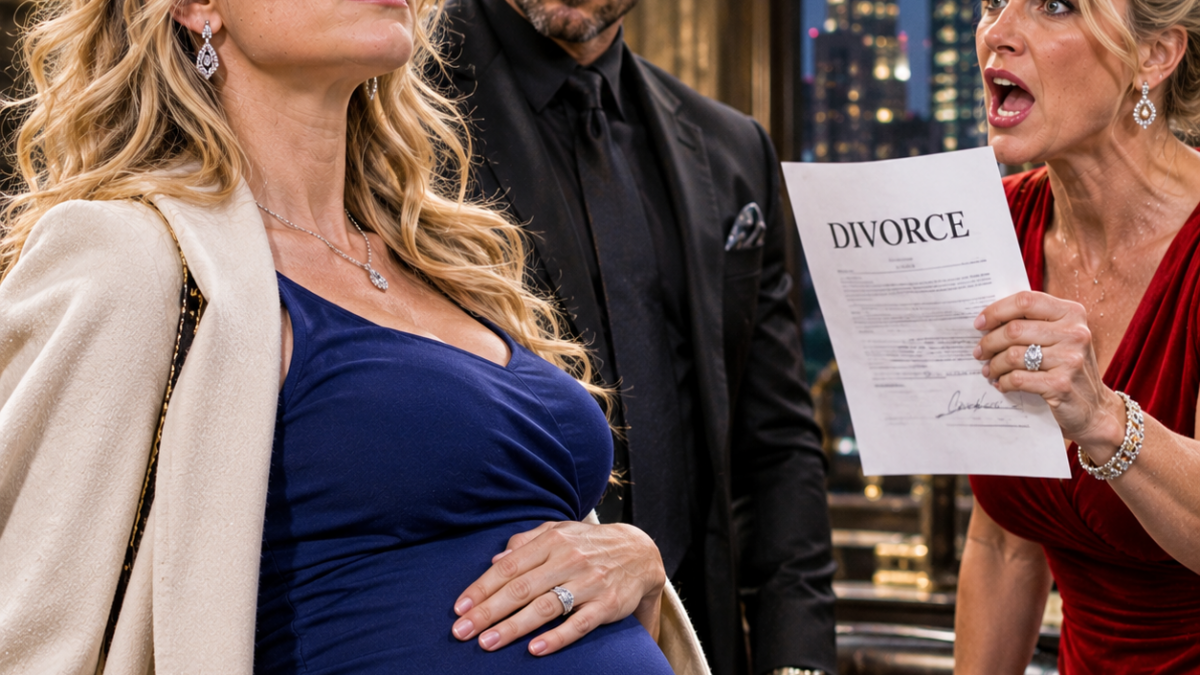
Her face changed.
“What?”
“For divorce.”
She stared.
“Does Roman know?”
“Not yet.”
“Harper.”
Something in her voice made me look up.
Not anger.
Fear.
“You filed for divorce from Roman?”
“Yes.”
She entered.
Closed the bedroom door.
“You need to think.”
“I have.”
“No.”
“You are emotional.”
“Probably.”
“Roman does not handle betrayal well.”
I stared.
“I’m not betraying him.”
“You married him.”
“And?”
“You leave without warning?”
“I am allowed to leave my marriage.”
She recoiled as though the sentence itself were obscene.
“You have no idea what this will do.”
“To Roman?”
“To everyone.”
Of course.
The Sullivan system.
One marriage affects reputation.
Business.
Family.
Social alliances.
Giselle lowered her voice.
“Is this because Delia is back?”
“No.”
Lie, partly.
She was catalyst.
Not cause.
“Because if it is, you’re being childish.”
“I’m not competing with Delia.”
Giselle’s eyes flickered.
That told me something.
She had expected competition.
Maybe wanted it.
I said:
“You always thought he should marry her.”
She looked away.
“I thought Delia understood him.”
“Better than I do?”
“I didn’t say that.”
“You didn’t need to.”
Giselle sat.
For once, she looked tired.
“Harper, Roman is not easy.”
“I know.”
“You knew when you married him.”
“I knew he was complicated.”
“That is the same thing.”
“No.”
I shook my head.
“I thought complicated meant there were rooms I hadn’t entered yet.”
“I didn’t realize he would eventually lock me out of all of them.”
She stared.
I continued packing.
Then placed the signed legal envelope on Roman’s nightstand.
Giselle whispered:
“You’re really leaving.”
“Yes.”
“Without telling him face-to-face?”
“My attorney will serve him.”
Her eyes widened.
I picked up the suitcase.
“For the first time since I married into this family, I’m choosing a process Roman doesn’t control.”
Giselle looked genuinely frightened.
I walked downstairs.
Delia stood when she saw the suitcase.
Her expression shifted.
“What happened?”
“Nothing you need to worry about.”
Giselle said:
“She filed for divorce.”
“Giselle.”
Too late.
Delia stared.
“Harper…”
I kept walking.
Then heard Giselle whisper:
“Don’t tell Roman before counsel does.”
That almost made me laugh.
At least she understood legal service.
I stayed that night in a furnished apartment owned by Quinn Atelier.
We used it for out-of-town clients and designers.
One bedroom.
West Loop.
No staff.
No security.
No Sullivan art.
I slept four hours.
At 9:17 the next morning, process server delivered the petition to Roman at Sullivan Holdings headquarters.
At 10:02, Renata’s receptionist called.
“He’s here.”
My stomach dropped.
“Roman?”
“Yes.”
“With two security guys.”
“Are they threatening anyone?”
“No.”
“Renata?”
“She says stay in the conference room.”
I was already there.
We had a prenatal-care planning meeting scheduled with separate counsel because I had decided something overnight.
I wanted the baby.
That clarity arrived at 4:10 a.m.
Not calmly.
I woke with my hand over my abdomen.
Felt a small movement.
Maybe movement.
Maybe imagination.
And started sobbing.
I whispered:
“I’m sorry.”
To the baby.
To myself.
To no one.
I knew.
I wanted this child.
I did not want the marriage.
Different decisions.
Imogen had been right.
The front doors of Renata’s office opened hard enough that I heard them from the conference room.
Voices.
Then silence.
Roman had that effect.
Two security men entered first.
Renata’s building security stopped them.
Polite.
Firm.
Roman walked past alone.
No tie.
Jacket open.
Sleeves rolled.
Hair slightly disordered.
He saw me through the glass.
His entire body stopped.
Then he opened the conference-room door.
Renata stepped between us.
“Mr. Sullivan.”
“Move.”
“No.”
His eyes never left me.
“Harper.”
I sat.
“Hello, Roman.”
He stared.
“Are you out of your mind?”
Renata said:
“Careful.”
Roman looked at her.
Then back at me.
“You served me at work.”
“Yes.”
“In front of my board.”
“The process server followed legal protocol.”
“You disappeared from the house.”
“Yes.”
“You won’t answer your phone.”
“My attorney advised—”
“I am not talking to your attorney.”
His voice dropped.
“I am talking to my wife.”
I looked at him.
“No.”
Something changed in his face.
“What?”
“You are talking to a woman who filed for divorce yesterday.”
Silence.
Renata quietly closed the glass door behind him.
Roman stared.
“Why?”
One word.
Not angry now.
Confused.
That almost hurt more.
“You really don’t know?”
“If I knew, I wouldn’t be here.”
I laughed softly.
“No.”
“You’d still be here.”
He flinched.
“Harper.”
“Sit down.”
He stared as if no one had told Roman Sullivan to sit since adolescence.
Then he sat.
Across from me.
Renata remained.
He looked at her.
“Leave.”
She smiled.
“No.”
“Renata.”
“Roman.”
I almost laughed.
College Renata had once threatened a fraternity president with a curling iron.
Roman did not scare her.
I said:
“She stays.”
He accepted it.
Barely.
Then:
“Tell me.”
I looked at the man I had loved.
Still loved.
That was the ugly truth.
His face.
His hands.
His wedding ring.
He had no idea there was a child between us.
I started with the marriage.
“I’m lonely.”
His eyebrows pulled together.
“You’re what?”
“Lonely.”
“You live with me.”
“That isn’t the opposite of lonely.”
He stared.
I continued.
“You don’t ask about my work.”
“That’s not true.”
“What project am I finishing in Nashville?”
Silence.
“What hotel did we just win in Scottsdale?”
Nothing.
“Who is Elena?”
He frowned.
“Designer?”
“My managing director.”
His face changed.
I almost smiled.
“You don’t know my life anymore.”
He leaned forward.
“You could have said something.”
“I did.”
“When?”
“Last October.”
“I told you I felt invisible.”
“You said you were tired.”
“No.”
“I said invisible.”
He looked away.
“Christmas.”
“I told you I hated your mother walking into our bedroom wing without calling.”
“I changed the house security.”
I laughed.
“Yes.”
“You solved the lock.”
“Not the boundary.”
His jaw tightened.
“You should have been clearer.”
“Maybe.”
I nodded.
“That part is mine.”
He seemed surprised.
“I should have said:
Roman, I’m disappearing.”
“I didn’t.”
“I kept waiting for you to notice.”
He rubbed his face.
“What does Delia have to do with this?”
I stopped.
He noticed.
Of course.
“Why would you ask that?”
“Mom called.”
My anger rose.
“Of course she did.”
“She said Delia was there when you left.”
“Yes.”
“So?”
I looked at him.
“Do you love her?”
His eyes narrowed.
“No.”
“Did you?”
“Yes.”
“Still?”
“No.”
“Why is she back?”
“Foundation work.”
“Why her?”
“She has connections we need.”
“Do you want her?”
“No.”
Immediate.
I believed him.
That almost made things worse.
Because there was no easy affair to blame.
He continued:
“Is that what this is?”
“No.”
I shook my head.
“It’s that you stand when she enters a room.”
His face changed.
“What?”
“You move her plate.”
“You notice she’s cold.”
“Harper.”
“You listen when she tells a story you’ve heard fifteen times.”
“Stop.”
“No.”
My voice broke.
“You still know how to be gentle.”
“That’s what broke me.”
Silence.
Roman stared.
I cried.
Couldn’t stop.
“You still know how.”
“I just stopped being the person you do it for.”
His face went white.
Renata looked away.
Roman whispered:
“That isn’t true.”
“When was the last time you asked me if I was happy?”
He said nothing.
“When?”
Silence.
I wiped my face.
“Exactly.”
Roman stood.
Paced once.
Then:
“We can fix this.”
Of course.
Sullivan answer.
Problem.
Solution.
I laughed through tears.
“You don’t even know what it is.”
“Therapy.”
“Fine.”
“We move.”
“No.”
“I reduce work.”
“No.”
“Mom loses access to the house.”
“That should have happened years ago.”
“Yes.”
He turned.
“Fine.”
“I’ll do all of it.”
There was desperation now.
“Withdraw the filing.”
“No.”
He froze.
“Harper.”
“No.”
His eyes hardened.
That frightened Renata slightly.
Not me.
I knew that look.
Control trying to return.
He said:
“You don’t make a decision like this in forty-eight hours.”
“I didn’t.”
“How long?”
I looked down.
“Months.”
His face collapsed.
That was the first moment he understood he had been living inside a marriage already failing.
Then my stomach moved.
A definite flutter.
I froze.
Hand instinctively went to my abdomen.
Roman saw.
His eyes followed.
I removed my hand too late.
Something changed.
“Harper.”
I looked up.
He stared at my coat.
Then at my face.
“How long?”
I said nothing.
Renata went completely still.
Roman whispered:
“No.”
My eyes filled.
“Harper.”
He took one step.
Renata moved.
He stopped.
“How long?”
I knew what he meant now.
Not divorce.
Pregnancy.
I whispered:
“Nineteen weeks.”
The room became silent.
Roman looked as though someone had punched through his chest.
“Nineteen…”
He sat.
Not gracefully.
Just dropped into the chair.
“You’re pregnant.”
“Yes.”
“My child?”
The question offended me so deeply I almost stood.
Roman immediately shook his head.
“No.”
“No, I didn’t mean—”
He covered his face.
“Jesus Christ.”
Then:
“You’re pregnant.”
“Yes.”
“And you didn’t tell me.”
“No.”
His eyes filled.
I had seen Roman cry twice.
His father’s funeral.
The night our first dog died.
Now.
“Why?”
I answered honestly.
“Because I was afraid once you knew, I’d never leave.”
He stared.
“I would never stop you.”
“Not physically.”
“That’s not what I mean.”
“You’d build a solution around me until I couldn’t tell whether I chose it.”
His face hardened.
“That’s unfair.”
“Maybe.”
Renata shifted.
I continued.
“I went to the hospital yesterday to discuss ending the pregnancy.”
Roman stopped breathing.
For one terrifying second, I thought he might faint.
“What?”
“I went for information.”
“What?”
His voice cracked.
“You were going to…”
He could not say it.
I said:
“I didn’t know.”
He stood again.
“Without telling me?”
“This is exactly why I didn’t tell you.”
His face transformed.
Pain into anger.
“You don’t get to say that like I’m irrational for caring whether my child lives.”
Renata said:
“Roman.”
He slammed his palm onto the table.
Not near me.
Still loud.
Security opened the door.
Renata lifted one hand.
“Stay outside.”
Roman stared at me.
I did not flinch.
His anger broke immediately when he saw that I had gone still.
He stepped backward.
“I’m sorry.”
I looked at him.
He whispered:
“I’m sorry.”
Then sat again.
Hands shaking.
“Did you?”
“No.”
“What?”
“I didn’t end the pregnancy.”
His eyes closed.
Relief moved across his face so visibly it almost made me angry.
“I decided last night.”
He opened his eyes.
“I want the baby.”
He started crying.
I continued before he could speak.
“I still want the divorce.”
Relief disappeared.
“Harper.”
“I need these to be separate.”
“They’re not separate.”
“They have to be.”
“I’m his father.”
“Or hers.”
His face changed.
A tiny involuntary smile appeared through tears.
That almost destroyed me.
I continued:
“You will have rights.”
“Responsibilities.”
“A relationship with our child.”
“I am not trying to erase you.”
“Then don’t divorce me.”
“No.”
His voice rose.
“Why?”
“Because a baby cannot be the reason I stay inside a marriage that was already killing me.”
He stared.
“Killing you?”
“Not literally.”
I touched my chest.
“Here.”
Something in Roman broke.
He bent forward.
Elbows on knees.
Hands covering his face.
For a long time, no one spoke.
Finally he whispered:
“Who knows?”
“Renata.”
“Doctor.”
“Who?”
I hesitated.
He noticed.
“Who?”
“Imogen.”
His head snapped up.
“My sister?”
“Yes.”
His face changed.
“She knew?”
“She was my physician.”
“She knew yesterday?”
“Yes.”
“And didn’t tell me?”
My voice sharpened.
“She protected my medical privacy.”
“I’m her brother.”
“She’s my doctor.”
His jaw clenched.
I saw the Sullivan machinery starting.
Calls.
Pressure.
Family.
I said:
“Do not punish her.”
He stared.
“Harper.”
“If you do anything to Imogen because she followed her professional duty, I will never forgive you.”
Silence.
Renata watched him.
Roman eventually nodded.
Once.
“I won’t.”
I believed him.
Then:
“I need to see her.”
“Who?”
“Imogen.”
“No.”
He stared.
“You cannot tell me I can’t speak to my sister.”
“No.”
“I’m telling you not to demand medical information.”
He nodded.
Slowly.
“Fine.”
Then:
“I want to come to your appointments.”
“No.”
His face hardened again.
“Why?”
“Because I need time.”
“I’m the father.”
“Yes.”
“And I need time.”
Both true.
He looked at Renata.
She said:
“That’s something counsel can address if necessary.”
Roman’s eyes flashed.
I said:
“Don’t.”
He looked back at me.
I continued.
“Don’t turn this into one of your business disputes.”
“I’m not.”
“You walked into my lawyer’s office with security.”
His face changed.
He looked toward the door.
Then back.
“I didn’t think.”
“Yes.”
“That is the problem.”
He dismissed the security men himself.
Then left alone.
Not before turning at the door.
“Harper.”
I looked up.
“Are you safe where you’re staying?”
The question surprised me.
“Yes.”
“Do you need anything?”
“No.”
He swallowed.
Then left.
That night, Roman went to Imogen.
I know because she called me afterward.
“Are you okay?”
“Yes.”
“He knows.”
“Yes.”
“Did you tell him?”
“Yes.”
She exhaled.
“I thought so.”
“How was he?”
There was a long pause.
“Roman.”
That almost made me smile.
“What does that mean?”
“He stood in my kitchen for ten minutes without speaking.”
“Then asked whether you were medically safe.”
That surprised me.
“Not what I expected first.”
“What did you tell him?”
“Nothing specific.”
“I said I could not discuss your care.”
“And?”
“He said he understood.”
I closed my eyes.
Then Imogen continued:
“He cried.”
My chest tightened.
“I’ve never seen him cry like that.”
“Imogen.”
“I know.”
“I’m not telling you to make you feel guilty.”
“Then why?”
“Because he asked me something.”
“What?”
“He asked whether he had become like Dad.”
I knew almost nothing about Roman’s father beyond the polished family version.
Patrick Sullivan.
Dead eight years.
Businessman.
Hard.
Respected.
Roman rarely spoke about him.
I said:
“What did you say?”
“The truth.”
“Which was?”
“Yes.”
That surprised me.
Imogen continued.
“Our father solved people.”
“Mom.”
“Roman.”
“Me.”
“If we had feelings, he gave us instructions.”
“If we had problems, he gave us money.”
“If we resisted, he called us ungrateful.”
My stomach tightened.
“Roman hated that.”
“Yes.”
“And then learned it.”
“Yes.”
I sat quietly.
Imogen said:
“That doesn’t mean you should stay.”
“Thank you.”
“It means patterns repeat even when people swear they won’t.”
That night, I slept better than I had in months.
Not because things were fixed.
Because the truth had finally entered the room.
The next weeks were brutal.
Roman did not contest the divorce filing aggressively.
That shocked Renata.
He hired excellent counsel.
Of course.
But instructions were restrained.
Preserve assets.
No retaliation.
No interference with Quinn Atelier.
No attempt to force me back into the house.
Temporary agreement on expenses.
Then pregnancy.
That was harder.
Roman wanted appointments.
I refused the first two.
Allowed the third.
Not because a judge forced me.
Because our child kicked hard during an ultrasound and I suddenly understood that one day I would have to explain to this person why I kept their father away.
I did not want the answer to be:
Because I was angry.
So Roman came.
He arrived ten minutes early.
No security.
No mother.
No flowers.
No demands.
Sat in the waiting room beside me.
We did not speak.
The technician called:
“Mrs. Sullivan?”
I stood.
Roman followed.
Inside, the room darkened.
Gel.
Screen.
Heartbeat.
Roman stopped breathing.
There.
Our child.
Spine.
Hands.
Profile.
The technician said:
“Baby looks good.”
Roman’s eyes filled.
I looked away.
She asked:
“Do you want to know sex?”
I looked at Roman.
For once, he did not answer for us.
He waited.
That mattered.
“Yes.”
She smiled.
“Girl.”
Roman made a sound.
Half laugh.
Half sob.
I remembered his old sentence.
If we have a daughter, I’m finished.
He whispered:
“A girl.”
I cried.
He cried.
The technician looked politely at the screen.
Afterward, in the parking garage, Roman said:
“Can I ask something?”
“Yes.”
“Do you have a name?”
“No.”
Lie.
I did.
I had been thinking Evelyn.
My grandmother.
But I was not ready to share.
He nodded.
“Okay.”
Then:
“Can I send names?”
“One list.”
He almost smiled.
“One?”
“Yes.”
“No daily campaign.”
“Fine.”
He sent seventeen names that night.
Men like Roman apparently interpret one list generously.
Evelyn was number four.
I stared.
Then texted:
Why Evelyn?
He answered:
Your grandmother. You once told me she was the first person who made you feel like your ideas mattered.
I cried.
He remembered.
That was the terrible thing.
Roman had not stopped knowing me completely.
He had stopped practicing what he knew.
I replied:
That’s the name I was considering.
Three dots.
Then:
Then Evelyn.
I did not answer.
But she became Evelyn in my head.
The divorce continued.
So did pregnancy.
Giselle became a problem.
Not maliciously.
Almost worse.
She became obsessed with the baby.
Nursery.
Christening.
Family name.
Security.
Private pediatrician.
She called Roman.
Roman told her:
“No.”
She called me.
I blocked her for two weeks.
Then she appeared at Quinn Atelier.
My receptionist looked terrified.
“Mrs. Sullivan is here.”
I almost said:
Which one?
Then remembered I still was technically one.
Giselle entered my office.
Pearls.
Cream coat.
Controlled fury.
“You blocked me.”
“Yes.”
“I’m the grandmother.”
“You’re not my doctor.”
Her face tightened.
“This child is a Sullivan.”
“She’s also mine.”
“Of course.”
“No.”
I stood.
“That sentence is the problem.”
“What?”
“Of course.”
“You all treat my motherhood like the doorway through which another Sullivan enters the world.”
“I am carrying her.”
“I will deliver her.”
“I will feed her.”
“I will wake up with her.”
“I will build my life around her.”
“She is not a family asset.”
Giselle went pale.
“I never said that.”
“You don’t have to.”
She sat.
For the first time, quiet.
Then:
“Roman has stopped taking my calls.”
I stared.
“Why?”
“He says I’m making everything worse.”
That surprised me.
Giselle looked wounded.
“I am trying to help.”
“Yes.”
I sat.
“So was Roman.”
Her face changed.
She understood.
Maybe.
I continued:
“Help is not help when the other person didn’t ask.”
She stared at her gloves.
Then said:
“I don’t know how to do this.”
“Do what?”
“Wait.”
That was the most honest thing she had ever said.
Sullivan family did not wait.
They acted.
Solved.
Arranged.
Controlled.
I almost smiled.
“Practice.”
She looked at me.
Then, incredibly:
“All right.”
She stood.
At the door, she paused.
“May I ask one thing?”
“Yes.”
“What’s her name?”
I hesitated.
Then:
“Evelyn.”
Giselle’s face softened.
“Your grandmother.”
“Yes.”
She nodded.
“Beautiful.”
Then left.
No demand that Sullivan be middle name.
Growth.
Delia disappeared from my life for several months.
Roman had ended her foundation involvement almost immediately after the filing.
I learned later not because he blamed her.
Because he realized the arrangement hurt me.
Too late.
Still.
Delia herself sent a note.
Handwritten.
I’m sorry my return became part of something painful. For what it’s worth, Roman and I are not having an affair. We haven’t been romantic since our twenties. I should have realized how our familiarity looked, and I should not have allowed Giselle to use me as a symbol of what she thought Roman’s life should have been.
I stared.
That last sentence mattered.
Giselle had been using Delia.
Perhaps without realizing.
Showing me the alternate wife.
The one from the correct family.
The one who understood old stories.
The one who fit naturally into the house.
Delia continued:
I also need to tell you something less flattering. I enjoyed being the person who still knew how to make Roman laugh. I knew it made me feel important. I’m sorry.
I appreciated that honesty.
I did not reply.
Not yet.
My studio became my refuge.
At twenty-seven weeks, I was standing in a client meeting in Scottsdale when Evelyn kicked hard enough to make me stop talking.
Elena, my managing director, looked alarmed.
“You okay?”
“Yes.”
“Baby?”
“Yes.”
She smiled.
“You want five minutes?”
I almost said no.
Strong.
Independent.
Then remembered.
“Yes.”
I sat.
Someone brought water.
No one thought I became less competent because I needed a chair.
That mattered.
My mother came from Milwaukee to stay with me for a week.
Unlike Giselle, she asked before booking.
Good.
She painted a small dresser for Evelyn.
Badly.
I loved it.
Roman visited twice.
Always by arrangement.
My mother watched him carefully.
After he left one afternoon, she said:
“He loves you.”
I closed my eyes.
“Mom.”
“I didn’t say go back.”
“Good.”
She continued.
“Love doesn’t automatically mean a relationship is healthy.”
I stared.
“When did you become enlightened?”
“Cable television.”
I laughed.
Then cried.
Pregnancy.
Ridiculous.
Roman began therapy.
He told me himself.
Not as leverage.
At a co-parenting session, he said:
“My therapist says I treat uncertainty like an attack.”
I almost smiled.
“Smart therapist.”
“He also says I confuse providing with intimacy.”
I looked at him.
That one hurt.
Roman continued.
“I thought if you had the house you wanted, driver when you needed, staff, freedom with your company, travel, whatever…”
He stopped.
“I thought that was loving you well.”
I said:
“You loved me like an infrastructure project.”
He laughed unexpectedly.
“Apparently.”
Then became serious.
“My father did that.”
“I know now.”
“I hated him for it.”
“And still became him.”
His face tightened.
“Yes.”
That was new.
Old Roman would have defended.
New Roman sat in the discomfort.
I did not know whether new Roman was permanent.
That was not my responsibility to test through marriage.
At thirty-one weeks, I had a complication.
Bleeding.
Not severe.
Enough to terrify me.
I was at home alone.
I called Imogen.
She told me to go to the hospital.
“Do not drive.”
I called a car.
Then stopped.
Roman.
He was fifteen minutes away.
I stared at his name.
For months, I had trained myself not to rely on him.
But this was his child too.
I called.
He answered on first ring.
“Harper?”
“I’m bleeding.”
Silence for half a second.
“Where?”
“Apartment.”
“I’m coming.”
“Don’t drive like an idiot.”
“I won’t.”
He arrived in eight minutes.
Probably drove like an idiot.
He did not burst in issuing orders.
He took my bag.
Helped me into the car.
Called Imogen only after asking:
“Can I?”
“Yes.”
At the hospital, he sat beside me.
Did not pace.
Did not demand.
Held my hand when I reached for his.
The bleeding stopped.
Evelyn was fine.
Possible cervical irritation.
Monitoring.
No emergency delivery.
At 2:00 a.m., I woke in the observation room.
Roman was asleep in a chair.
Neck bent badly.
One hand still resting near mine.
I watched him.
And for one dangerous hour, I wanted my marriage back.
Not the actual marriage.
The imagined one.
The version where we had learned sooner.
Where Evelyn fixed nothing because nothing needed fixing.
Where Roman noticed.
Where I spoke.
Where Giselle stayed home.
Where Delia was simply an old friend.
Where we did not need divorce lawyers to teach us boundaries.
I cried quietly.
Roman woke.
“What?”
“Nothing.”
“Pain?”
“No.”
“Baby?”
“She’s fine.”
He stared.
Then:
“Why are you crying?”
I answered honestly.
“I miss you.”
Roman stopped moving.
I regretted it immediately.
Then he whispered:
“I miss you too.”
No reaching.
No pressure.
Just truth.
I said:
“That doesn’t mean I want to stop the divorce.”
He closed his eyes.
“I know.”
That was perhaps the moment I knew he was changing.
Old Roman would have used my vulnerability as an opening.
New Roman let it remain grief.
Two weeks later, Delia requested to meet.
I almost refused.
Then curiosity again.
We met at a small café.
She arrived without glamour.
Jeans.
Sweater.
Hair tied back.
For some reason that made her less threatening.
She said:
“I owe you an apology in person.”
“You already wrote one.”
“I know.”
“Then why are we here?”
She looked embarrassed.
“Because Giselle told people something.”
My stomach tightened.
“What?”
“That Roman and I might reconcile after the divorce.”
I actually laughed.
Delia looked relieved.
“That’s basically my response.”
“Does Roman know?”
“Yes.”
“And?”
“He told her to stop speaking for him.”
Good.
Delia stirred coffee.
“I’m engaged.”
I stared.
“What?”
“To someone in London.”
I almost laughed harder.
“Does Giselle know?”
“Now.”
“So half Chicago thought you were waiting to reclaim Roman while you had a fiancé?”
“Yes.”
“That is almost impressive.”
She smiled.
“Adrian has been very patient.”
Then became serious.
“I should have stopped Giselle sooner.”
“Yes.”
“I liked the attention.”
“I know.”
“You know?”
“It was obvious.”
She winced.
Fair.
Then:
“Roman never crossed a line with me.”
“I believe you.”
Her eyebrows rose.
“I do.”
“I know what emotional absence feels like.”
“It doesn’t require another woman sleeping with him.”
Delia nodded.
Then:
“I think Roman thought being gentle with me was safe because there was nothing at stake.”
I stared.
That sentence landed.
“What do you mean?”
“You mattered.”
“With you, every interaction carried weight.”
“Expectations.”
“Marriage.”
“Fear of disappointing you.”
“With me, he could be the boy he was at sixteen because I wasn’t asking him for anything.”
I thought.
Maybe.
Not excuse.
Insight.
Delia continued.
“He should have brought that version home.”
“Yes.”
“He didn’t.”
“No.”
We finished coffee.
At the door, she said:
“I hope Evelyn is healthy.”
I froze.
“How do you know her name?”
Delia’s face changed.
“Roman.”
Of course.
He had shared it.
That bothered me.
Then I stopped.
It was his daughter’s name too.
Not a medical secret.
I said:
“Thank you.”
She left.
The divorce decree was scheduled for finalization six weeks after my due date.
We delayed certain final matters intentionally.
Not reconciliation.
Practicality.
I was thirty-six weeks when Roman asked:
“Can I be at the birth?”
I froze.
We were in Renata’s conference room.
Again.
Funny how many life decisions now happened there.
I said:
“I don’t know.”
His face fell.
I continued.
“I don’t want your mother.”
“She won’t come.”
“Security.”
“No.”
“Phone calls.”
“No.”
“Business.”
“No.”
He waited.
“I don’t want people outside the delivery room.”
“Agreed.”
“I don’t want you making decisions over me.”
“I won’t.”
“If I tell you to leave?”
“I leave.”
Immediate.
I stared.
“You promise?”
“Yes.”
Then:
“If you want me there, I want to be there.”
“If you don’t, I will wait wherever you tell me.”
That was all.
No father’s rights speech.
No Sullivan name.
Just request.
I said:
“You can be there.”
Roman cried.
Renata looked at the ceiling.
“Great.”
She muttered.
“Now I’m emotional.”
Evelyn decided to arrive eleven days early.
At 3:18 in the morning.
My water broke in my apartment.
I called Roman before Imogen.
That surprised both of us.
He answered:
“It’s time?”
“I think.”
“I’m coming.”
“Bring the hospital bag from your house.”
“I have it.”
I blinked.
“What?”
“I made one.”
Of course.
Then:
“Don’t be mad.”
“What’s in it?”
“Clothes.”
“Chargers.”
“Snacks.”
“Your lotion.”
“What lotion?”
“The lavender one.”
I closed my eyes.
He remembered.
He arrived.
No security.
No Giselle.
Hospital.
Labor.
Pain makes family drama very boring.
At hour eight, I hated everyone.
At hour eleven, I told Roman:
“You did this.”
He said:
“I understand.”
“You absolutely do not.”
Nurse laughed.
At hour fourteen, complications.
Evelyn’s heart rate dropped.
Room changed.
More people.
Roman went pale.
Imogen was not my delivering physician but came when called.
Because sister.
Because doctor.
Because family now with boundaries.
Decision for urgent delivery assistance.
Roman looked at me.
Not at the monitors.
Me.
“Tell me what you need.”
That question.
Not:
Here’s what we’re doing.
Not:
I’ll handle it.
Tell me.
I grabbed his hand.
“Stay.”
“I’m here.”
Evelyn Quinn Sullivan was born at 5:42 p.m.
Six pounds, eight ounces.
Dark hair.
Furious lungs.
When the nurse placed her on my chest, the world ended and began again.
I sobbed.
Roman stood beside me crying openly.
No feared man.
No businessman.
Just a father.
He touched one tiny foot.
Then whispered:
“Hi.”
Evelyn screamed.
Roman laughed.
“She hates me.”
“Good instincts.”
The nurse laughed.
Roman kissed my forehead.
Instinct.
The same gesture he had given me for years.
This time, I felt it.
Then he immediately pulled back.
“Sorry.”
That broke my heart.
“No.”
I whispered.
“It’s okay.”
He kissed my forehead again.
Not husband.
Not exactly.
Something more complicated.
Giselle waited five hours before visiting.
Five.
For her, sainthood.
She knocked.
Actually knocked.
Roman looked at me.
I nodded.
Giselle entered.
Saw Evelyn.
Stopped.
Her face collapsed.
“My God.”
She did not reach automatically.
Progress.
“May I?”
I looked at Roman.
Then back.
“Yes.”
She washed her hands.
Sat.
I placed Evelyn in her arms.
Giselle cried.
Not elegantly.
Her pearls shook.
“She looks like Roman.”
I laughed.
“Of course you’d say that.”
Giselle smiled through tears.
Then:
“She has your mouth.”
Fair.
She looked at me.
“Thank you.”
I stiffened.
“For what?”
“For letting me meet her.”
Not:
For giving us a Sullivan.
Good.
I nodded.
“You’re welcome.”
Imogen visited later.
She stood at the foot of the bed.
I said:
“You can stop being Dr. Sullivan now.”
She smiled.
“Finally.”
She held Evelyn.
Roman stood beside her.
Then quietly said:
“Thank you.”
Imogen looked at him.
“For what?”
“For keeping Harper’s confidence.”
Silence.
My chest tightened.
Imogen’s eyes filled.
“That was my job.”
“I know.”
He swallowed.
“I didn’t understand that at first.”
“But I do now.”
She hugged him with one arm.
Evelyn between them.
The divorce finalized seven weeks later.
People did not understand.
Our daughter had been born.
Roman had changed.
We were getting along.
Why divorce?
Even my mother asked carefully:
“Are you sure?”
Yes.
Because change made under crisis deserves room to become identity before it is trusted with marriage again.
I could have stayed.
Maybe we would have succeeded.
Maybe not.
But I needed to know Roman could become a different man without marriage as the prize.
He needed to know too.
At the courthouse, we signed.
No cameras.
No family.
Renata.
Roman’s attorney.
Roman.
Me.
When it was done, he looked at me.
“So that’s it.”
“Yes.”
He nodded.
Then:
“Dinner?”
I stared.
He almost smiled.
“Not romantic.”
“Co-parent dinner.”
I laughed.
“No.”
“Too soon?”
“Very.”
“Okay.”
He accepted.
Outside, he said:
“I still love you.”
I stopped.
“I know.”
“Do you?”
“Yes.”
I swallowed.
“I still love you too.”
His eyes filled.
Then:
“But I love myself enough now not to make love the only requirement.”
Roman nodded.
“That sounds like Renata.”
“Therapy.”
“Worse.”
I smiled.
We separated.
Not emotionally completely.
Legally.
Practically.
Slowly.
Co-parenting with Roman Sullivan required structure.
Of course.
Shared calendar.
Scheduled exchanges.
No surprise visits.
No Giselle without notice.
No staff deciding things.
Roman followed every rule.
At first too precisely.
If pickup was 5:00, he arrived 4:58.
If Evelyn needed medicine, he documented dosage like a federal audit.
I teased him.
“You know normal fathers can just text.”
“I am trying not to overstep.”
“You can use punctuation.”
He improved.
Evelyn split time gradually as she grew.
Infancy mostly with me.
Roman visited often.
Then longer stretches.
He became absurdly good at diapers.
Terrible at baby clothes.
Once brought Evelyn back wearing a designer wool cardigan over dinosaur pajamas.
I stared.
“What is this?”
“She was cold.”
“Roman.”
“What?”
“She looks like a hedge-fund toddler.”
He looked offended.
“She looks warm.”
Giselle tried to buy twenty dresses.
Roman returned seventeen.
I almost applauded.
At six months, Evelyn got sick.
Fever.
Nothing serious.
Roman panicked.
Called Imogen six times.
Imogen called me.
“Please tell your ex-husband fever is not organized crime.”
I laughed.
Roman improved.
I improved too.
I had to learn not to interpret every request as control.
Sometimes:
“Can I take Evelyn Saturday?”
was simply a father asking.
Not an empire advancing.
That was harder than expected.
Trauma can turn boundaries into walls if you are not careful.
I wanted doors.
Not walls.
Roman moved into a townhouse in Lincoln Park.
Not the family mansion.
Not one of Sullivan Holdings’ towers.
His own place.
Three bedrooms.
Nursery.
Kitchen he rarely used.
A tiny yard.
When I saw it first, I laughed.
“You bought a normal house.”
He looked around.
“It cost three million dollars.”
“Chicago normal.”
“Fair.”
He had sold the enormous marital house.
Giselle nearly died.
Emotionally.
She survived.
Delia married Adrian in London.
She invited me.
I did not go.
Sent a gift.
A set of hand-thrown ceramics from a Chicago artist.
She sent a note:
Thank you for choosing something breakable. Feels symbolic.
I laughed.
Roman did not attend either.
Not because of me.
He said:
“That chapter is finished.”
Good.
My studio grew.
Quinn Atelier landed our largest hospitality contract.
People finally stopped treating it as Roman’s wife’s design business.
Divorce helped that in a strange way.
Articles referred to me as Harper Quinn.
I dropped Sullivan professionally.
Legal surname changed back eventually.
When Evelyn started preschool, she was Evelyn Sullivan.
That did not bother me.
She belonged to herself.
Not a surname battle.
Roman and I became friends before either of us admitted it.
Real friends.
Not exes performing maturity.
He called when my mother had pneumonia.
I brought soup when he had surgery on his shoulder.
We attended school meetings together.
Once, at Evelyn’s third birthday, we were assembling a wooden play kitchen at midnight because neither of us had read instructions.
Roman stared at the screws.
“I run eight companies.”
“Apparently none involve Allen keys.”
He laughed.
Then looked at me.
Something shifted.
We both felt it.
I stood.
“I’m going home.”
He nodded.
No attempt to stop me.
Good.
Six months later, Roman asked me on a date.
A real one.
Evelyn was four.
Our divorce had been final nearly four years.
We were standing outside her preschool.
He said:
“Dinner.”
“What?”
“You and me.”
“We eat together all the time.”
“No.”
He looked almost nervous.
“Dinner.”
“Date.”
I stared.
Roman Sullivan nervous.
I enjoyed it longer than necessary.
“You’re asking your ex-wife on a date.”
“Yes.”
“Terrible judgment.”
“Historically established.”
I laughed.
Then:
“Why?”
“Because I still love you.”
I looked away.
He continued.
“And because I like who I am with you now more than who I was when we were married.”
That was good.
Too good.
I said:
“One dinner.”
He smiled.
“One.”
“No expectations.”
“None.”
“No Giselle.”
“Cruel but fair.”
We went.
Small Italian restaurant.
Not Sullivan-owned.
Important.
No special table.
No manager hovering.
Roman turned off his phone.
I noticed.
He said:
“What?”
“Nothing.”
“Harper.”
“You turned it off.”
“Yes.”
“Why?”
“Because I’m at dinner with you.”
Simple.
I almost cried.
He asked about my work.
Real questions.
He knew Elena’s name now.
Of course.
Knew our Scottsdale hotel had won an award.
Knew I hated a client in Nashville who changed finishes after installation.
He had been listening for years during co-parenting.
I had not noticed.
That frightened me.
Hope is dangerous after you survive without it.
We dated.
Slowly.
No secrecy.
No promises.
Evelyn did not know at first.
We did not want her building fantasies.
Giselle definitely did not know.
That part was enjoyable.
Then she caught us kissing in Roman’s kitchen.
Evelyn was asleep upstairs.
Giselle entered with a key.
Still had a key.
Roman looked at her.
Then at me.
Then said:
“Mom.”
She froze.
Her eyes widened.
I expected tears.
Joy.
Interference.
Instead she backed toward the door.
“I saw nothing.”
Roman laughed so hard he had to sit down.
I said:
“Growth.”
Giselle pointed.
“I am leaving.”
She left.
Knocked next time.
Miracles.
Roman and I did not remarry quickly.
That question came from everyone.
Especially Renata.
“You’re sleeping with your ex-husband.”
“Correct.”
“Voluntarily?”
“Renata.”
“Legal clarification.”
I laughed.
Then she became serious.
“You trust him?”
“More.”
“Enough?”
“Not yet.”
“Good answer.”
Roman never asked me to hurry.
That mattered more than all his therapy vocabulary.
Two years into dating again, he proposed.
Not diamonds.
Not restaurant.
Not grand Sullivan gesture.
We were at the lake with Evelyn.
She was six.
Building a structure from rocks.
Roman handed me a small box.
I stared.
“No.”
He laughed.
“Open it.”
Inside:
My original wedding ring.
The one I had left in his hand at Armstead?
Different story—no.
Here, the one from our marriage.
He had kept it.
I stared.
Roman said:
“I’m not asking you to wear that.”
Then handed me another box.
Simple ring.
New.
He continued:
“I kept the old one because I needed to remember that loving someone once does not mean you keep the right to them forever.”
My eyes filled.
He looked terrified.
“I’m asking whether the man I am now gets to build something new with the woman you are now.”
Evelyn looked up.
“Is this proposal?”
We both laughed.
Roman said:
“Apparently.”
Evelyn ran over.
“Mommy, say yes.”
I looked at her.
Then Roman.
“No pressure,” he said immediately.
That was the answer.
Not his proposal.
His response.
No pressure.
I cried.
“Yes.”
We married again eight months later.
Small.
Forty people.
Imogen officiated unofficially during dinner after the legal ceremony because she claimed she deserved a speaking role for surviving both of us.
Renata was maid of honor.
Again, technically first time.
Giselle sat in the second row.
Delia sent flowers from London.
My mother cried.
Evelyn carried the rings.
During vows, Roman said:
“The first time I married you, I thought protecting you meant controlling every variable around you.”
“I know now that love is not eliminating another person’s choices.”
“It is making their choices safe enough to be real.”
I cried.
Then he added:
“I also promise to knock.”
Giselle laughed loudly.
My vows were simpler.
“I do not promise never to leave.”
The room went quiet.
Roman smiled.
He knew.
I continued:
“I promise never to disappear inside the relationship again.”
“And if I am unhappy, I will tell you before I ask you to notice.”
Roman’s eyes filled.
“That’s all I need.”
It was not a fairy tale.
Those are useless.
Fairy tales usually end before people repeat childhood patterns.
Our second marriage required boring things.
Therapy.
Calendars.
Boundaries.
Separate professional identities.
Conversations when we were angry.
Roman learning that silence did not equal agreement.
Me learning that asking for help did not equal surrender.
Giselle learning to knock.
Still the hardest.
Evelyn grew.
At eight, she asked:
“Why did you and Daddy get married twice?”
Roman nearly inhaled his coffee.
I said:
“Because the first time we weren’t very good at being married.”
She stared.
“Then why did you do it again?”
Roman answered:
“We learned.”
She thought.
“Seems expensive.”
I laughed until I cried.
Smart girl.
Imogen remained one of my closest friends.
Years later, I asked:
“Were you ever tempted to tell him?”
She stared.
“About the pregnancy?”
“Yes.”
“No.”
Immediate.
“Really?”
“I wanted to.”
“Different.”
“I never seriously considered breaking confidentiality.”
I smiled.
“Why?”
“Because you needed one room where you were not Roman Sullivan’s wife.”
That sentence stayed with me.
One room.
That hospital consultation room may have been the first place in years where my identity outranked my marriage.
Patient.
Woman.
Harper.
Not wife.
Not Sullivan.
That room saved more than my privacy.
It saved my ability to make choices I could live with.
I did not end my pregnancy.
But being allowed to discuss it without family pressure mattered.
I chose Evelyn because she was what I wanted.
Not because Roman demanded.
Not because Giselle expected.
Not because society told me motherhood would fix a marriage.
That distinction shaped everything.
Years later, I told Evelyn parts of the story.
Not all.
Age appropriate.
Then fuller when she was older.
I never wanted her discovering from family gossip that her parents once divorced while I was pregnant.
Chicago remembers everything.
At fourteen, she asked:
“Did you almost not have me?”
My heart stopped.
Teenagers go directly for the exposed nerve.
I answered:
“I was scared.”
“That’s not what I asked.”
Roman’s daughter.
I sighed.
“I considered all my options.”
She looked down.
“Because of Dad?”
“Because of my life.”
She stared.
“Did you not want me?”
I reached for her hand.
“I wanted you.”
“I just wasn’t sure I wanted the world I thought you would be born into.”
She cried.
I cried.
Then:
“What changed?”
“I realized I could change the world around you without losing you.”
She absorbed that.
Then looked toward Roman, who was deliberately giving us privacy across the room.
“Does Dad know we’re talking about this?”
“He knows the truth.”
She nodded.
Later that night, Roman said:
“How did she take it?”
“Hard.”
He looked devastated.
“I hate that she ever has to know.”
“No.”
I shook my head.
“We don’t teach her shame.”
He nodded.
“You’re right.”
“She should know women can be afraid.”
“Conflicted.”
“Uncertain.”
“And still love their children completely.”
Roman held my hand.
“Yes.”
That was our family.
Truth without using it as a weapon.
When Evelyn left for college, Giselle cried harder than either of us.
Imogen said:
“Mom, she is going to Northwestern, not Mars.”
Giselle replied:
“Same emotional distance.”
Roman laughed.
I looked at him.
Gray at his temples now.
Still intimidating to half Chicago.
Still occasionally capable of turning a restaurant manager into military posture with one glance.
But different.
Not softer everywhere.
Safer at home.
There is a distinction.
One evening after Evelyn left, Roman and I sat on our back terrace.
He said:
“Do you remember the day I got served?”
“Yes.”
“I thought you had lost your mind.”
“I know.”
“I walked into Renata’s office believing I could talk you out of it in twenty minutes.”
“I know.”
He laughed.
“I had a whole plan.”
“Of course you did.”
“First, anger.”
“Then negotiation.”
“Then house changes.”
“Therapy if necessary.”
“I had solutions.”
I smiled.
“And then?”
“You said you were pregnant.”
His expression changed even after all those years.
“That destroyed every script in my head.”
I asked:
“Were you angry at me?”
“Yes.”
Honest.
“For not telling me.”
“For going to the hospital.”
“For considering something that involved my child.”
He looked at me.
“Then Imogen told me I was allowed to have those feelings and still not be entitled to your medical information.”
I laughed.
“She said that?”
“Less politely.”
“Sounds right.”
Roman continued.
“I think that was the first time I understood the difference between having a stake in something and owning the person making the decision.”
That sentence mattered.
He touched my hand.
“I’m sorry you had to become desperate before I learned it.”
I squeezed.
“I’m sorry I waited until desperation to speak.”
Both true.
That is what mature love eventually becomes.
Not searching for one guilty person.
Understanding responsibility without distributing blame equally where it does not belong.
Roman had been controlling.
Emotionally absent.
I had been avoidant.
Silent.
Giselle intrusive.
Delia careless with old intimacy.
All different.
No false equivalence.
Each person owned their part.
The first time I left Roman, I packed one suitcase because I believed three years of marriage had left me with almost nothing I wanted.
The second time we built a life together, I insisted on keeping fewer things.
Not because I expected to leave.
Because I learned possessions can disguise absence.
A mansion is not intimacy.
A driver is not care.
Jewelry is not listening.
Security is not safety if you cannot say no.
Roman eventually sold several clubs.
Reduced some holdings.
Not because I demanded it.
Because fatherhood changed his tolerance for certain businesses.
He remained wealthy.
Powerful.
Feared in some circles.
But at home, Evelyn once ordered him to wear a paper crown during a tea party and he obeyed.
I have photographic evidence.
He has threatened litigation.
I remain undeterred.
Giselle keeps the photograph framed.
Growth and revenge occasionally overlap.
My studio became national.
Quinn Atelier opened Los Angeles and New York offices.
Roman never invested.
By mutual agreement.
If he referred a client, he disclosed the relationship.
I did the same.
No hidden rescue.
No invisible hand.
My success felt different once I knew it stood independently.
At fifty, I sold a minority stake to my employees.
Roman attended the celebration.
Someone introduced him as:
“Harper Quinn’s husband.”
I watched.
He smiled.
“Proudly.”
That was the full-circle moment I never expected.
Years earlier, everyone had introduced me as Roman Sullivan’s wife.
I disappeared inside his name.
Now he stood inside mine without shrinking.
That is security.
Not domination.
The woman downstairs the night I packed my suitcase—Delia—became an occasional friend, strangely enough.
Not close.
But real.
She and Adrian moved back to Chicago eventually.
We had dinner twice a year.
Giselle finally stopped speaking as if Delia and Roman represented some tragic alternate history.
At one dinner, she started:
“You know, when you two were seventeen—”
Roman said:
“Mom.”
Delia said:
“Giselle.”
I said:
“Please continue, I need new divorce material.”
Everyone laughed.
Giselle threw a napkin at me.
Boundaries with humor.
Better than silence.
And Imogen?
She became chief of maternal-fetal medicine.
Roman bragged about her more than anyone.
Once at a fundraiser he introduced her as:
“The person in this family with an actual important job.”
She said:
“Finally.”
I watched them.
Remembered the hospital room.
The mask lowering.
The shock in her eyes.
The moment she chose her oath over family instinct.
That choice changed everything.
If Imogen had called Roman that day, perhaps he would have rushed to the hospital.
Perhaps I would have stayed.
Perhaps resentment would have hardened.
Perhaps Evelyn would still have been born.
Perhaps not.
There are alternate lives you cannot calculate.
I stopped trying.
The life I got was enough.
Painful.
Messy.
Mine.
People who hear our story sometimes say:
“So you divorced him just to marry him again?”
No.
I divorced him because the marriage needed to end.
I married him again because two different people later chose something new.
Those are not the same act.
The divorce was not a detour.
It was the boundary that made the second marriage possible.
Without it, Roman might have changed temporarily to keep me.
I might have forgiven temporarily to protect Evelyn.
Then we would have slowly returned to the same structure.
Instead, there was no prize guaranteed.
Roman had to become accountable because that was the person he wanted to be.
I had to become direct because silence had stopped feeling noble.
We met again later without debt.
That is why it worked.
And if it had not?
I would still believe leaving was right.
That matters too.
A happy later outcome does not retroactively make a painful boundary correct.
It was correct because I needed it then.
Not because it eventually brought Roman back.
The suitcase I packed that night still exists.
Black Tumi.
Scuffed corner.
I use it for work travel.
Roman hates it.
“Buy a new one.”
“No.”
“It looks terrible.”
“It has history.”
“So did the Titanic.”
I laugh every time.
Inside one pocket, I keep the original copy of my divorce attorney’s card.
Renata discovered this and said:
“That is deeply threatening.”
“Insurance.”
“You remarried the man.”
“Exactly.”
Roman once found it.
He stared.
Then put it back.
No offense.
No fear.
Just respect for what it represented.
Choice.
The thing I had almost lost.
The thing he had almost forgotten to give me.
The thing Imogen protected in a hospital room when she could have chosen family loyalty instead.
The thing that eventually saved our family.
My name is Harper Quinn.
I was once Harper Sullivan.
Then Harper Quinn again.
Then, legally, Harper Quinn Sullivan after our second marriage because I chose to keep both.
Roman asked:
“Why hyphenate emotionally without hyphenating legally?”
I said:
“Because I like confusing hotel reservations.”
Truth?
Because both names belong to me now.
Not absorption.
Addition.
I am Roman’s wife.
I am Evelyn’s mother.
I am Quinn Atelier’s founder.
I am Imogen’s friend.
Renata’s former roommate.
Giselle’s occasional headache.
I am also the woman who once walked into a hospital nearly five months pregnant because she believed the only choices available were to lose her child or lose herself.
She was wrong.
There was another choice.
Leave.
Speak.
Decide.
Rebuild.
And maybe, years later, if both people truly become different, choose again.
But the choosing has to remain yours.
That was the lesson.
Not that love conquers everything.
Love does not.
Not that powerful men can be changed by the right woman.
They cannot.
Roman changed himself.
Not that babies save marriages.
They should never have that job.
Evelyn did not save us.
Divorce did not save us either.
Truth did.
Boundaries did.
Time did.
Accountability did.
Choice did.
The day I packed that suitcase, Giselle thought I was making the greatest mistake of my life.
Delia thought the marriage had simply failed.
Roman thought I was having some temporary emotional crisis he could solve.
Even I did not fully understand what I was doing.
I only knew I could no longer stay.
Sometimes that is enough information for the first step.
Years later, Roman asked me:
“If you could go back to that day at Imogen’s office, would you change anything?”
I thought.
I would change the loneliness.
The silence.
The months of fear.
I would tell him sooner.
Maybe.
But would I erase the moment when Imogen looked at me not as her brother’s wife but as a patient with a right to her own life?
No.
That was the day I remembered I belonged to myself.
Before wife.
Before mother.
Before Sullivan.
Me.
Everything good that came afterward was built on that.








