PART2:“YOUR SCARS WILL RUIN THE PHOTOS.” My Daughter’s Billionaire Fiancé Banned Me From Their Luxury Wedding—He Forgot What Those Scars Had Already Cost Me
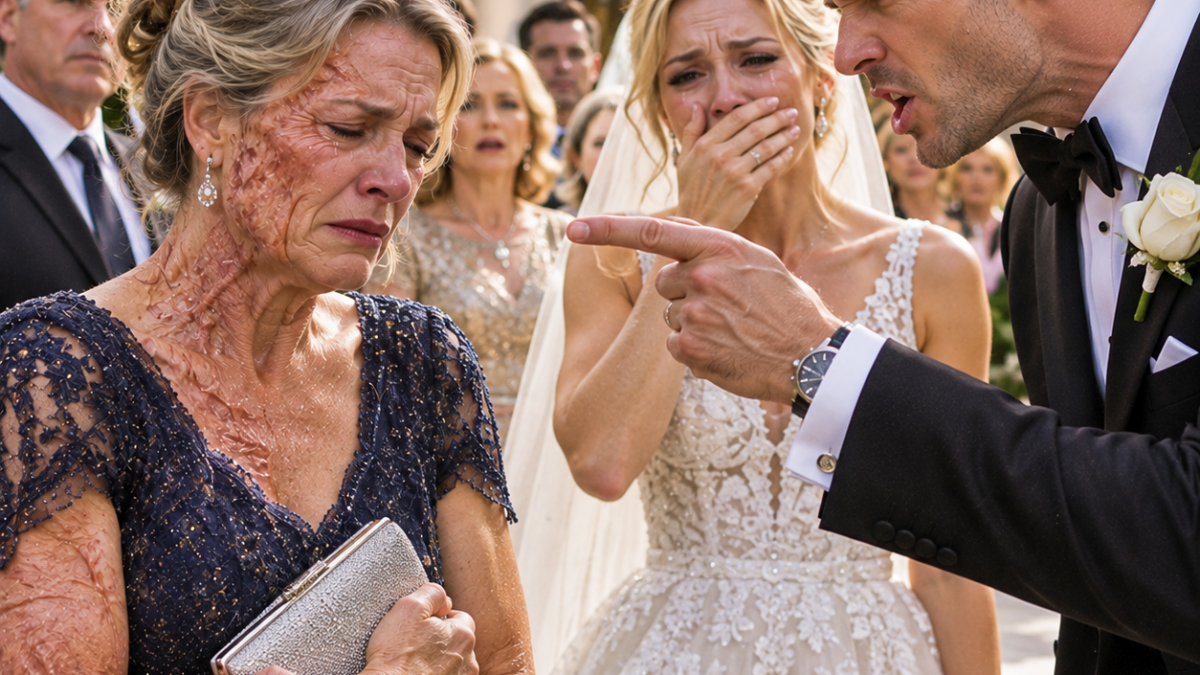
PART2
I stood and walked around the table.
My limp worsened when I was angry because anger made me forget the rhythm my physical therapist had taught me years earlier.
Heel.
Shift.
Brace.
Step.
I sat beside Taryn.
“Did you agree?”
Her head snapped toward me.
“No.”
Good.
That mattered.
“I told him you’re my father.”
“And?”
“He said I was being emotional.”
Of course.
“What does he want instead?”
She wiped her cheek.
“A private dinner after the wedding.”
I stared.
“So I’m too ugly for the vows but acceptable near dessert.”
“Dad.”
“I’m clarifying.”
Despite herself, she made a choking sound that was almost a laugh.
Then her face crumpled again.
“I don’t know what to do.”
That sentence changed my anger.
If Taryn had walked in and said, I canceled the wedding, I would have supported her and the problem would have been almost simple.
But she loved Spencer.
That was the complication people forget when they tell stories afterward.
Love does not vanish just because the person you love reveals something ugly.
Sometimes love survives for weeks or years after trust has already started dying.
I took her hands.
“You do not make any decisions tonight.”
“The wedding is six weeks away.”
“Then you have six weeks.”
“Spencer wants an answer by tomorrow.”
“Spencer can survive disappointment.”
She looked at me carefully.
“Are you angry?”
“Yes.”
“How angry?”
“Angry enough not to speak to him tonight.”
That earned a real smile.
Small.
Painful.
But real.
Then she whispered:
“I’m sorry.”
“No.”
“Dad—”
“No.”
I tightened my grip.
“You did not say those things.”
“You did not create this.”
“You do not apologize to me for somebody else making you cry.”
She stared at me.
Then:
“I should have seen it.”
“Seen what?”
“The way he acts around you.”
“You were in love.”
“That’s not an excuse.”
“It isn’t a crime either.”
I stood.
“You’re staying here.”
She began to protest.
“Guest room is made.”
“Your mother’s blankets are in the closet.”
“You can drive home tomorrow.”
That ended it.
Mentioning Eleanor usually did.
The next morning, I made eggs.
Taryn moved food around her plate.
Finally:
“Are you going to call Spencer?”
“Yes.”
“Please don’t threaten him.”
I looked offended.
“I’m sixty-three.”
“That has nothing to do with anything.”
“Fine.”
I smiled.
“I won’t threaten him.”
She narrowed her eyes.
“I know that smile.”
“That sounds like a childhood problem.”
“Dad.”
“I will talk.”
“Only talk.”
She nodded.
Then:
“I need you to understand something.”
“What?”
“If I end this…”
Her voice broke.
“It’s not because you told me to.”
“I know.”
“I have to know that.”
“You will.”
That mattered to me more than humiliating Spencer ever could.
I did not want my daughter leaving one controlling man because another man—her father—ordered her to.
She needed ownership of the decision.
I called Spencer.
He answered quickly.
“Vern.”
Not Mr. Ashford.
Not sir.
Vern.
People become informal when they believe they hold the advantage.
“I’d like to talk.”
A pause.
“I suppose Taryn told you.”
“She did.”
“I’m sorry she presented it emotionally.”
My grip tightened around the phone.
“What time can you meet?”
“I’m in Philadelphia all afternoon.”
I chose a diner halfway between us.
Public.
Neutral.
No Langley conference room.
No marble.
No employees pretending not to listen.
Spencer arrived ten minutes late.
No apology.
Dark suit.
White shirt open at the collar.
Expensive watch.
He ordered sparkling water.
I ordered coffee.
He started first.
“Vern, this has gotten out of proportion.”
“How?”
“Taryn is devastated.”
“Yes.”
“That was never my intention.”
“Then why is she devastated?”
“My parents raised a concern.”
“And you delivered it.”
“I tried to soften it.”
“You told her I’d understand.”
“I thought you would.”
“Explain.”
He leaned back.
“This wedding is not a normal wedding.”
I almost laughed.
“What is a normal wedding?”
“You know what I mean.”
“No.”
I took a sip.
“Explain your world to me.”
His jaw tightened.
“There will be national investors.”
“Fine.”
“Political figures.”
“Fine.”
“Press.”
“Fine.”
“Brand partners.”
There it was.
Brand.
My daughter’s wedding had become a capital-markets event.
He continued.
“My mother has spent months coordinating visual presentation.”
I touched the scar on my neck.
“And I break the presentation.”
“You’re deliberately making it sound cruel.”
“Then say it in a way that isn’t cruel.”
He looked away.
“You have a very distinctive appearance.”
“Thank you.”
“That wasn’t an insult.”
“You’re excluding me because of it.”
“Not excluding.”
“What word do you prefer?”
“Repositioning the family photography structure.”
I stared.
“Repositioning.”
“Yes.”
“That sounds much kinder.”
His face reddened.
“We offered alternatives.”
“A private dinner afterward.”
“Yes.”
“And separate photographs.”
“Yes.”
“Perhaps you can Photoshop me into the ceremony.”
“There’s no reason to be sarcastic.”
“I disagree.”
The waitress refilled my coffee.
Spencer waited.
Then said:
“You spent your career in an environment where appearance wasn’t the same kind of currency.”
I almost admired the stupidity of the sentence.
“You think the Army doesn’t understand appearance.”
“I mean social presentation.”
“Ah.”
He continued.
“Taryn is entering a different world.”
That sentence told me more than anything else.
Entering.
Marriage to him was not joining lives.
It was immigration into Langley society.
“And she’ll have to make certain compromises.”
“Which compromises?”
“Everyone makes them.”
“Name hers.”
“That isn’t fair.”
“Name one.”
Silence.
So I did it for him.
“Her job?”
He shifted.
“We’ve discussed whether she’ll continue full-time after children.”
“Her friends?”
“Of course not.”
“Where she lives?”
“We’ll need to be closer to Philadelphia.”
“Her clothes?”
“That’s ridiculous.”
“Is it?”
His jaw tightened.
I watched him.
Then asked:
“Whose idea was excluding me?”
“My mother first raised the concern.”
“And you?”
“I agreed it was valid.”
“Your father?”
“He supports avoiding unnecessary controversy.”
“So all three.”
He relaxed slightly, probably assuming I was absorbing defeat.
Then he said:
“We can arrange a private photographer for you and Taryn another day.”
I almost pitied him.
“Put it in writing.”
He blinked.
“What?”
“Your concern.”
“Your parents’ position.”
“The alternative photography.”
“Email me.”
His face changed.
“Why?”
“So nobody misunderstands.”
“We’re discussing it now.”
“Taryn apparently misunderstood you.”
He knew exactly what I was doing.
Not creating a lawsuit.
Creating clarity.
He smiled without warmth.
“I don’t think that’s necessary.”
“Then neither is this conversation.”
I placed money on the table.
He leaned forward.
“Vern.”
I looked at him.
“Don’t make Taryn choose between us.”
That was the moment the entire future became visible.
I shook my head.
“I would never ask her to choose.”
He relaxed.
Then I finished:
“But you already did.”
I left.
The email came two days later.
Careful language.
Corporate language.
Coward language.
The Langley family wished to “minimize visual distractions during high-profile ceremony coverage.”
They proposed that I participate in “an intimate private family celebration outside the principal photography schedule.”
My scar was never mentioned.
Neither was my limp.
People who are ashamed of what they mean often hide behind nouns.
Visual distraction.
I printed the email.
Saved the digital copy.
Did nothing.
That made Spencer nervous.
He called Taryn.
Asked what I planned.
She told him she didn’t know.
True.
Because I did not know either.
Part of me wanted revenge.
That is the truth.
I wanted Spencer embarrassed.
Wanted him sitting in a room while people looked at him the way his family had looked at my scars.
Wanted every society-page photographer to ask why the bride’s father had been erased.
But revenge is satisfying in imagination because imagination does not have to deal with collateral damage.
Taryn did.
So I went to work.
The Adams County Veterans Recovery Center occupied an old brick medical building outside town.
We helped veterans with physical rehabilitation referrals, employment transitions, trauma counseling, housing navigation, and sometimes simply coffee.
Tuesday mornings were group mornings.
Nine men that week.
One woman.
Two service dogs.
Three arguments about football.
Normal.
Around eleven, our executive director, Joanne Mercer, knocked on my office door.
“Vern?”
“Yeah.”
“You know the Langley family?”
My attention sharpened.
“Yes.”
“Personally?”
“Unfortunately.”
She stepped inside holding a glossy presentation binder.
“Langley Capital wants a partnership meeting.”
I looked at the cover.
THE LANGLEY RESILIENCE INITIATIVE
Beneath it:
Investing in the Future of America’s Wounded Warriors.
I almost laughed.
“Who’s coming?”
“Randall Langley.”
“Spencer.”
“Their foundation director.”
“When?”
“Thursday.”
I flipped through.
Veteran rehabilitation technology.
Mobility devices.
Mental-health platforms.
Adaptive housing.
Impact investing wrapped in philanthropy.
One page read:
VISIBLE SACRIFICE SHOULD NEVER BECOME INVISIBLE SUFFERING.
I read it twice.
Joanne watched my face.
“What?”
“My daughter is supposed to marry Spencer Langley.”
She smiled.
Then saw my expression.
“Supposed to?”
I explained only what she needed to know.
The wedding.
The request.
The email.
Joanne slowly placed the binder on my desk.
“You have got to be kidding me.”
“No.”
“Do you want them out?”
“No.”
That answer surprised her.
“I have a conflict.”
“You should disclose it to the board.”
“Yes.”
“And recuse yourself.”
“Yes.”
She studied me.
“You’re calmer than I would be.”
“No.”
“I’m just old.”
Thursday afternoon, I stayed home.
No Langley meeting.
No sabotage.
No whispered campaign.
If their proposal had merit, the center deserved to evaluate it without my personal anger contaminating the process.
At 4:28, Joanne called.
“Come in.”
“What happened?”
“You need to see something.”
I drove over.
She had the presentation open on the conference-room screen.
A black-and-white photograph filled the slide.
I stopped walking.
Younger me.
Hospital bed.
Burn dressings wrapped around my neck.
Eleanor sitting beside me.
Her hand on my forearm.
My eyes closed.
I had not seen that photograph in decades.
It had been taken after I returned stateside.
An Army public-affairs photographer had documented a rehabilitation program.
My identity had not been used publicly because of my assignment status.
But the image existed in an archival collection.
Below it:
SENIOR SPECIAL OPERATIONS SOLDIER RETURNS HOME AFTER RESCUING TEAMMATES FROM BURNING VEHICLE.
Then:
COURAGE DESERVES MORE THAN GRATITUDE. IT DESERVES INVESTMENT.
I sat down.
Joanne whispered:
“That’s you.”
“Yes.”
“And Eleanor.”
“Yes.”
“Did they know?”
“The foundation director says the media consultant sourced the photograph.”
“Spencer?”
“He was in the meeting.”
I looked at her.
“He saw it?”
“Yes.”
“What did he do?”
“Went pale.”
“Did he ask for the slide to be removed?”
“No.”
My anger became very still.
The family that wanted my scar hidden from wedding photographs wanted to use the moment that created it to sell investors on veteran rehabilitation.
That was not just hypocrisy.
It felt intimate.
Eleanor’s face.
Our private recovery.
My worst months.
Turned into branding.
“Has counsel seen it?”
“Not yet.”
“Send everything.”
Joanne nodded.
“And Vern?”
“Yes?”
“You stay recused.”
“I know.”
That night, Taryn came over.
I showed her the slide.
At first, she stared without understanding.
Then:
“That’s Mom.”
“Yes.”
Her fingers touched the screen.
“She looks so young.”
“She was.”
“That’s you.”
“Yes.”
“Spencer saw this?”
“Yes.”
Her face changed.
She grabbed her phone.
“Don’t call him yet.”
“Why?”
“Because you need to decide what answer would matter.”
“I want him to explain.”
“Then call when you’re ready for an explanation you may hate.”
She stared at me.
“You already decided he’s lying.”
“That’s unfair.”
She looked surprised.
I continued.
“You’re right.”
“I’m angry.”
“I’m not objective.”
She sat beside me.
For several minutes we looked at Eleanor.
Then Taryn whispered:
“Mom would burn their wedding venue down.”
I laughed so hard my hip hurt.
“She was five-foot-four.”
“She terrified insurance companies.”
“True.”
Taryn laughed too.
Then suddenly stopped.
“I don’t know who Spencer is anymore.”
That opened another door.
We talked for almost three hours.
Not about me.
About him.
She told me things she had minimized before.
Spencer hated when she wore inexpensive shoes to Langley dinners.
He had once replaced a dress she selected because Margaret thought the color “photographed cheaply.”
He corrected the way Taryn pronounced French dishes.
Asked her not to mention that she had attended public school around certain donors.
Suggested she stop volunteering at a children’s grief center because “people might assume you have personal baggage.”
He had begun discussing whether she should leave clinical work once they married.
Not because they needed childcare.
They did not even have children.
Because her profession involved “mess.”
The word stayed with me.
Mess.
Spencer wanted life without visible mess.
No scars.
No grief.
No wounded veterans except inside tasteful black-and-white photographs.
No children crying.
No jobs that reminded dinner guests suffering existed.
No working-class stories.
No imperfect clothes.
No father who limped.
Taryn covered her mouth.
“Oh my God.”
I said nothing.
She whispered:
“He isn’t ashamed of just you.”
No.
He was editing her too.
Three days later, Taryn postponed the wedding.
Not canceled.
Postponed.
Her decision.
Spencer arrived at my house that night.
Uninvited.
I met him on the porch.
“You did this.”
“No.”
“Taryn postponed because of you.”
“She postponed because of what she learned.”
“You’ve been manipulating her.”
I almost laughed.
“Come inside.”
He looked surprised.
I led him to the kitchen.
The same table.
The same chair where Taryn had cried.
I placed the Langley Resilience slide in front of him.
His face drained.
“You saw it.”
“Yes.”
“I didn’t select that photograph.”
“Did you know it was me?”
“Not until the presentation.”
“Did you remove it?”
“No.”
“Did you tell your father?”
“Yes.”
“What did he say?”
Spencer looked away.
“What did Randall say?”
“He said the campaign was already approved.”
“And your mother?”
“I didn’t tell her.”
“Why?”
“Because this is spiraling.”
I leaned forward.
“Spencer, your family asked me to disappear from my daughter’s wedding because my injuries would damage your image.”
“That’s not—”
“Then your investment campaign used the moment I received those injuries to make your family look compassionate.”
He stared.
“You understand how that appears.”
“You’re going to destroy us with this.”
That sentence surprised me.
Not because of the accusation.
Because it revealed his imagination.
He assumed I would weaponize truth because he would.
“No.”
“You already contacted the center.”
“I work there.”
“You’ll go to the press.”
“No.”
He stared.
“I’m going to answer truthfully if anyone asks.”
“That’s a threat.”
“No.”
“It’s what adults call a consequence.”
His jaw tightened.
“My parents made one bad decision.”
“Your parents made one.”
“You made another.”
“And if Taryn had agreed?”
He said nothing.
“If she had swallowed this and smiled, what would be next?”
“Her career?”
“Her friends?”
“Her clothes?”
“Her children?”
“That is ridiculous.”
“Is it?”
He stood.
“You’ve always hated me.”
“No.”
That was true.
“I wanted you to be good enough for her.”
He looked wounded.
That almost made me laugh.
Then he said:
“I love Taryn.”
“I believe you.”
His face softened.
“That should matter.”
“It does.”
I leaned back.
“But love is not enough if you spend your life making the person you love smaller.”
He left.
The veterans center’s board declined the Langley partnership two weeks later.
I had no vote.
Counsel raised concerns about the archival photograph, marketing representations, and alignment with the center’s mission.
The decision was documented.
Independent.
Professional.
I expected Randall Langley to move on.
Instead, the first real crack in the Langley empire came from somewhere I had not touched.
Langley Capital had already begun marketing the Resilience Fund to institutional investors.
Impact investment.
Rehabilitation technology.
Adaptive housing.
Veteran mental-health platforms.
Good ideas.
Potentially profitable ones.
But in several investor decks, the Adams County Veterans Recovery Center appeared as an implementation partner.
We were not.
Another veterans organization in Virginia appeared as a strategic field partner.
They had participated in one exploratory call.
A mobility-rehabilitation nonprofit was described as an active pilot site.
Its director later said they had only received a draft memorandum.
Maybe careless.
Maybe aggressive marketing.
Either way, Langley Capital’s compliance department noticed after our counsel demanded correction.
An internal review began.
Spencer was one of three executives responsible for the fund.
Taryn learned because he called her.
She was staying at her own apartment again.
He arrived there the same evening.
She told me later how the conversation went.
His first words were:
“Your father has destroyed everything.”
Not:
We have a compliance problem.
Not:
I made mistakes.
Not even:
I’m scared.
Your father.
Taryn stared at him.
“What did Dad do?”
“He poisoned the veterans center against us.”
“He recused himself.”
“Do you really believe that?”
“Yes.”
Spencer paced.
“Our investors are asking questions.”
“About your marketing.”
“Because your father made them.”
“He did not create the slides.”
“You have no idea how this works.”
There it was again.
The Langley world.
The world where ordinary people supposedly could not understand sophisticated decisions.
Taryn asked:
“Did you list organizations as partners before they agreed?”
Spencer stopped.
“It’s standard preliminary language.”
“Did they agree?”
“You’re oversimplifying.”
She went quiet.
Then:
“Did compliance tell you not to do it?”
His face changed.
That was answer enough.
An email eventually surfaced in the internal review.
A compliance officer had written:
Please avoid describing anticipated relationships as active implementation partnerships until agreements are executed.
Spencer had replied:
The investor roadshow cannot wait on every nonprofit lawyer. We can paper relationships after commitment.
The sentence became central.
Not criminal by itself.
But revealing.
Taryn looked at the engagement ring on her hand.
Then removed it.
Spencer stared.
“What are you doing?”
“I’m done.”
“You’re emotional.”
“No.”
She placed the ring on the counter.
“You keep using that word when somebody stops agreeing with you.”
“Taryn.”
“I loved you.”
“Loved?”
His voice cracked.
“Yes.”
“No.”
He reached toward her.
She stepped back.
“Don’t.”
He froze.
She continued.
“I kept thinking marrying you meant learning your world.”
“I didn’t realize your world only works if everyone agrees to be edited.”
“That’s not fair.”
“You edited my job.”
“My clothes.”
“My father.”
“My childhood.”
“The way I talk.”
“The people I mention.”
“And every time I noticed, you called it refinement.”
Spencer’s face hardened.
“So you’re choosing your father.”
“No.”
She shook her head.
“I’m choosing the version of me you keep trying to hide.”
He stared at her.
Then said:
“You’ll regret this.”
Taryn opened the door.
“Maybe.”
“But it’ll be my regret.”
That was the first line in the entire story that truly made me proud.
The wedding was canceled four weeks before the ceremony.
Financially, it was a massacre.
Deposits.
Flowers.
Venue.
Catering.
Photography.
Band.
Security.
Gifts.
Travel.
Some expenses were absorbed by the Langleys.
Some by Taryn.
I offered to help.
She refused.
“Dad.”
“You paid for college.”
“Yes.”
“You helped with Mom.”
“Yes.”
“You’ve done enough.”
“Parents do not have an enough.”
“They should.”
She smiled.
“Learn.”
The society magazine released a tiny statement noting the wedding had been canceled for “personal reasons.”
Margaret Langley sent her own carefully worded announcement:
The families have mutually agreed that Taryn Ashford and Spencer Langley will not proceed with their planned marriage due to differing long-term priorities.
Taryn read it at my kitchen table.
Then laughed.
“Even our breakup has visual continuity.”
I made tea.
She moved home for three weeks.
Her twelve-thousand-dollar wedding dress hung in my guest room.
The first time she told me the price, I nearly needed medical attention.
“Twelve thousand dollars?”
“Please don’t.”
“Your mother’s entire wedding cost—”
“I know.”
“Less than half—”
“I KNOW.”
One morning I found Taryn sitting on the carpet beside the dress.
“I feel stupid.”
“No.”
“You always say no when I criticize myself.”
“No.”
She threw a pillow.
Good.
Anger was healthy.
“I should’ve known.”
“Known what?”
“That he was like this.”
I sat carefully.
My hip hurt that morning.
“You knew what he showed you.”
“That sounds like something from therapy.”
“It probably is.”
She stared at the gown.
“I loved him.”
“I know.”
“I still miss him.”
“I know.”
“Does that make me pathetic?”
“No.”
She looked at me.
“You want to say no again.”
“I really do.”
She laughed.
Then cried.
The dress was eventually sold through a high-end bridal consignment program.
Taryn donated part of the proceeds to a pediatric trauma nonprofit.
The rest she used to pay canceled-wedding expenses.
That felt like her.
The Langley Resilience Fund became another problem entirely.
The firm’s compliance review discovered that Spencer had repeatedly pushed marketing materials ahead of executed partnership agreements.
Not fraud.
Not a criminal empire.
But enough to create serious governance concerns for a regulated financial organization.
There were also emails showing Randall pressured staff to avoid delaying the investor roadshow over “charity-side paperwork.”
The board brought in outside counsel.
Investors demanded clarification.
Several nonprofit names were removed from materials.
One institutional investor paused commitment.
Another required revised disclosures.
Spencer was removed from leadership of the fund.
Randall remained CEO but lost support from two independent directors.
Margaret’s charitable foundation faced its own embarrassment when reporters discovered that the wedding exclusion request had targeted a visibly wounded veteran while the family simultaneously promoted wounded-veteran initiatives.
I had not released the email.
Taryn had not released it.
One of the Langley wedding planners apparently knew about the conflict and talked.
Rumors became questions.
Questions reached reporters.
A journalist called me.
“Mr. Ashford, did Spencer Langley’s family ask you not to attend your daughter’s wedding because of your injuries?”
I sat on my porch.
Looked across the field.
“Yes.”
“Do you have documentation?”
“Yes.”
“Will you provide it?”
“No.”
She paused.
“Why?”
“Because my daughter’s pain is not evidence for public entertainment.”
That quote made the article.
Ironically, it damaged the Langleys more than releasing the email might have.
Because people began asking why I was protecting Taryn’s privacy while the Langley family had built an entire image around public presentation.
Randall called me.
First time ever.
“Vernon.”
“Randall.”
“I think we should speak man to man.”
People who say that usually want hierarchy.
“Go ahead.”
“This situation has gotten out of control.”
“I agree.”
“Our family has made mistakes.”
“Good start.”
“But private family matters are now threatening thousands of employees.”
“No.”
I said it immediately.
“What?”
“Your compliance issues are threatening Langley Capital.”
“Not my scar.”
Silence.
Then:
“You think this is funny?”
“No.”
“I think it is important.”
“Our investors are reacting to a public narrative.”
“They are reacting to your documents.”
He exhaled.
“You know what your daughter walking away cost us?”
That sentence told me everything I still needed to know.
Not what it cost Taryn.
What it cost us.
“Randall.”
“Yes?”
“My daughter is not a line item.”
I hung up.
Three days later, Margaret sent me a six-page letter.
It accused me of leveraging my military service to humiliate the family.
Said they had always respected veterans.
Explained that luxury-event photography required “visual planning.”
Insisted the exclusion had never been personal.
I read two pages.
Stopped.
Then mailed the letter back.
No note.
That bothered her more than any response could have.
The story might have ended there.
Canceled wedding.
Embarrassed family.
Compliance review.
Daughter saved from a controlling marriage.
But the Langleys made one last decision that turned the private collapse into something bigger.
The annual Langley Foundation Gala was scheduled three weeks after the canceled wedding.
Eight hundred guests.
Philadelphia ballroom.
Veterans Resilience Initiative launch.
Major donors.
Press.
Normally, I would never have attended.
Then Joanne received an invitation for our center despite declining the partnership.
She refused.
A week later, one of our veterans, Daniel Ruiz, came into my office.
Daniel was forty-one.
Former Army medic.
Both legs badly injured by an explosion.
Walked with bilateral braces and crutches.
Funny.
Stubborn.
Hated pity.
He dropped a glossy invitation on my desk.
“They invited me.”
I looked.
Langley Foundation Gala.
Daniel had previously appeared in one of the promotional interviews arranged before the partnership fell apart.
“They still want you?”
“Apparently.”
“You going?”
He grinned.
“Free steak.”
Then became serious.
“They want me onstage.”
“For what?”
“Veteran testimonial.”
My stomach tightened.
“Did they tell you the center withdrew?”
“Yes.”
“And?”
“They said this is independent of your organization.”
That could be true.
Daniel had every right to attend.
I said:
“Then go if you want.”
“You coming?”
“No.”
“Why?”
“Because I enjoy not wearing tuxedos.”
He stared.
“Bull.”
I ignored him.
Three days later, Daniel came back.
“They changed my speech.”
“What?”
“They gave me talking points.”
I took the page.
The Langley family understands that wounded veterans should never be hidden from society.
I closed my eyes.
Daniel watched.
“What?”
“Nothing.”
“You look like you’re about to kill a printer.”
I handed the page back.
“What are you going to do?”
“Say what I want.”
“Good.”
“Come.”
“No.”
“Vern.”
“No.”
“Coward.”
That got me.
I stared at him.
He smiled.
“You walked into burning vehicles, but rich people in tuxedos scare you.”
“I hate you.”
“Eight o’clock.”
I went.
Not as Taryn’s father.
Not as a protester.
As Daniel’s guest.
I wore a black tuxedo I had owned since Eleanor was alive.
The collar exposed my scar.
I brought the cane.
Did not hide it.
The ballroom looked like another planet.
Crystal chandeliers.
White orchids.
Gold table settings.
Photographers.
Politicians.
Executives.
Veterans placed strategically near sponsor logos.
That detail bothered me.
Daniel noticed.
“Smile.”
“I am smiling.”
“You look like you’re planning an ambush.”
“Old face.”
We found our table.
Taryn did not know I was attending.
I had not wanted her dragged into it.
Randall saw me first.
His expression changed.
Margaret followed his gaze.
Then Spencer.
Three faces.
Same realization.
I was inside the picture.
Spencer crossed the room.
“Why are you here?”
“Daniel invited me.”
“This is a private event.”
I lifted my invitation.
“Apparently not that private.”
His eyes moved to my scar.
Then my cane.
“Vernon, please.”
Interesting.
Not Vern now.
“Please what?”
“Do not turn tonight into a spectacle.”
“I came to eat steak.”
Daniel leaned toward him.
“I’m the spectacle.”
Spencer looked at his braces.
Immediately realized how bad that sounded.
“I didn’t mean—”
Daniel smiled.
“I know.”
Spencer walked away.
The program began.
Videos.
Music.
Speeches.
Randall spoke about sacrifice.
Margaret spoke about dignity.
A senator praised public-private partnerships.
Then Daniel’s name was announced.
He stood.
Slowly.
Crutches.
No one helped because he hated that.
He reached the podium.
Applause.
He waited.
Then looked down at the prepared talking points.
He folded them.
Put them in his jacket.
“My name is Daniel Ruiz.”
Silence.
“I served as an Army medic.”
“I lost the use of my legs for almost a year.”
“People like to talk about wounded veterans as if being wounded makes us morally interesting.”
Some nervous laughter.
“It doesn’t.”
“My injuries made me injured.”
More silence.
“Recovery made me angry.”
“Then boring.”
“Then angry again.”
People shifted.
Daniel continued.
“I was asked tonight to tell you that the Langley family understands wounded veterans should never be hidden.”
Randall went still.
Spencer’s face changed.
Daniel looked toward me.
“Maybe they understand that now.”
The room froze.
My stomach dropped.
Daniel had not warned me.
He continued.
“There’s a man here tonight named Vernon Ashford.”
People turned.
I wanted to disappear.
Daniel ignored me.
“He has a burn scar on his neck and a bad right leg.”
Photographers shifted.
“And years ago, when a vehicle caught fire, he went back inside.”
I looked down.
“He brought men out.”
“Then spent years helping people like me recover.”
Daniel’s voice hardened.
“A few weeks ago, the Langley family asked him not to attend his only daughter’s wedding because those scars would make the pictures less elegant.”
The ballroom became completely silent.
Margaret stood.
Randall grabbed her arm.
Daniel continued.
“I know this because I asked Vern directly before I walked up here.”
That was technically true.
Thirty seconds before his speech, he had whispered:
They really said it?
I had answered:
Yes.
I had not known why.
Daniel looked around.
“I’m not here to attack anyone.”
“I’m here because I am tired of being celebrated when my injuries make donors feel noble and hidden when they make people uncomfortable.”
No applause.
Not yet.
The room was too stunned.
Then Daniel said:
“If you want to honor veterans, don’t turn our scars into branding.”
“Treat the person carrying them like they belong in the photograph.”
He stepped away.
One person started clapping.
Then another.
Then fifty.
Then the room stood.
Not everyone.
Enough.
I remained seated.
My eyes burned.
Randall walked toward the stage.
Too late.
Reporters had already begun whispering.
Phones were out.
Spencer stared at me across the room.
I did not smile.
That mattered.
I had not wanted this.
But truth had walked into the ballroom without permission.
Afterward, chaos.
Reporters surrounded Daniel first.
He answered only one question.
“Was Mr. Ashford excluded because of his appearance?”
“Yes.”
“How do you know?”
“He told me.”
Then he stopped.
A reporter approached me.
“Mr. Ashford?”
“No comment about my daughter.”
“Did the family ask you not to attend?”
“Yes.”
“Did you threaten to expose them?”
“No.”
“Did you know Mr. Ruiz would say this tonight?”
“No.”
That was the truth.
Spencer approached.
His face was white.
“You planned this.”
“No.”
“You expect me to believe that?”
“Yes.”
Daniel appeared beside me.
“I planned it.”
Spencer turned.
Daniel smiled.
“You invited the wrong cripple.”
I nearly choked.
“Daniel.”
“What?”
Spencer walked away.
The next morning, the gala video was everywhere.
Not national television everywhere.
But enough.
Business press.
Local news.
Veteran advocacy groups.
Social media.
The phrase belong in the photograph became attached to the controversy.
Langley Capital issued a statement.
Comments attributed to the family concerning a private wedding matter do not reflect the firm’s values.
Then reporters obtained the earlier presentation using my hospital photograph.
That changed the story.
Now the contradiction was visual.
Burned veteran used in fundraising.
Same burned veteran excluded from family event.
The Langley Foundation board called an emergency meeting.
Margaret resigned as chair within a week.
Randall took a temporary leave from two nonprofit boards.
Spencer’s professional future deteriorated further.
The internal compliance review concluded that he had overridden staff warnings and allowed unexecuted nonprofit relationships to be described too aggressively in investor materials.
He was not charged with a crime.
No securities raid.
No handcuffs.
But Langley Capital’s independent directors asked for his resignation.
His father fought them.
Lost.
Spencer left.
The announcement called it a “mutually agreed leadership transition.”
Society people love euphemisms until the bitter end.
Randall kept his CEO position for another year but surrendered day-to-day control to a professional management committee.
Langley Capital survived.
Thousands of innocent employees kept their jobs.
That was good.
I never wanted collapse.
I wanted consequences attached to the people who created them.
The Langley Foundation underwent governance reforms.
Independent directors.
Conflict policies.
Marketing review.
Veteran groups demanded real consultation.
Daniel joined one advisory committee.
He accepted only after insisting the committee include veterans who were not major donors or polished public speakers.
Margaret never forgave me.
That was acceptable.
Spencer blamed me publicly only once.
During a business podcast interview, he said:
“A painful family dispute was weaponized into a campaign against my professional reputation.”
Taryn heard it.
She called me.
“Can I respond?”
“No.”
She groaned.
“Dad.”
“What would you say?”
“That he ruined his own reputation.”
“Then you don’t need to.”
She was quiet.
Then:
“You’re annoyingly healthy now.”
“Therapy.”
I hated therapy less by then.
Deborah Pike, my counselor, enjoyed reminding me that I had once said I planned to ruin Spencer’s life.
“Did you?”
“No.”
“Why not?”
“Because it would have made the story about him.”
She smiled.
“That sounds expensive.”
“What?”
“All those sessions before you understood something obvious.”
“Send the bill to the Army.”
Taryn took longer to heal.
The public controversy embarrassed her at first.
She hated seeing strangers debate a wedding that had once been hers.
Some comments called her weak for staying engaged as long as she did.
Others called her opportunistic.
A few suggested she had used my injuries to damage a wealthy family.
People are cruelest when consequences cost them nothing.
Taryn stopped reading comments.
Good.
She focused on work.
Therapy.
Friends.
She moved apartments.
Cut her hair shorter.
Bought furniture Spencer would have hated.
Bright yellow chair.
Ugly.
I told her so.
She said:
“That’s why I bought it.”
Two years passed.
Then three.
Spencer became smaller in our lives.
That was the real victory.
Not his resignation.
Irrelevance.
Taryn became director of a pediatric family-support program.
She trained clinicians on coercive family dynamics.
Not because she turned her failed engagement into a career gimmick.
She had done similar work before.
But now she understood something personally:
Control often arrives disguised as refinement.
Advice.
Concern.
Protection.
Image.
She once told me:
“The dangerous person isn’t always the one who tells you no.”
“Sometimes it’s the one who keeps saying, ‘I’m only trying to help you become better.’”
That sounded like Spencer.
Eventually, she met Noah Bennett.
At a hospital vending machine.
His daughter Grace had broken her wrist in gymnastics.
The machine ate two dollars.
Noah kicked it.
Taryn kicked it harder.
Granola bar fell.
Romance.
Noah taught history at a public high school.
Widower.
His wife had died in a car accident five years earlier.
He had no family crest.
No society photographer.
He drove an old Subaru with a dent on the rear bumper.
The first time he met me, he looked at my scar.
I noticed.
Then he said:
“My dad burned his forearm on a fryer once.”
Silence.
“That sounded smarter in my head.”
I laughed.
He laughed.
Good start.
Months later, he asked about my service.
I gave him the short version.
He listened.
Then:
“That must’ve hurt like hell.”
Best response anyone had given in years.
He did not call me a hero.
Did not romanticize the injury.
Pain was allowed to be pain.
Taryn dated him two years before discussing marriage.
He never rushed her.
When he finally proposed, Grace helped choose the ring.
Small.
Elegant.
No newspaper announcement.
Taryn called me.
“Dad.”
“Yes?”
“I’m engaged.”
My heart reacted badly before my brain caught up.
She heard the pause.
“Dad?”
“I’m here.”
“Are you okay?”
“Yes.”
“Are you happy?”
“Are you?”
“Yes.”
“Then I’m happy.”
She laughed.
“You’re not interrogating him?”
“Already did.”
“What?”
“Fishing trip.”
“You hate fishing.”
“Correct.”
“What did you ask?”
“Classified.”
She groaned.
Their wedding took place at a restored barn outside Gettysburg.
One hundred guests.
Maybe ninety.
No society magazine.
No senators.
No orchids flown from another hemisphere.
The flowers came from a local farm.
The cake leaned slightly.
Eleanor’s lace was sewn inside Taryn’s dress.
Grace carried flowers and dropped half before reaching the front.
The photographer, Camille, had one rule:
Nobody posed longer than three minutes.
The morning of the ceremony, Taryn came into the small room where I was getting dressed.
I wore my old formal uniform jacket.
Not because anyone expected it.
Because she asked.
My scar remained visible.
Cane beside me.
She stopped in the doorway.
“What?”
“You look like Dad.”
“I usually do.”
She smiled.
Then her eyes filled.
“Walk me?”
I looked down at my leg.
“I’m slow.”
“I know.”
“The aisle is long.”
“I know.”
“I’ll need the cane.”
“Dad.”
“Yes?”
“That’s the point.”
I understood.
We stepped outside.
Guests rose.
The first few steps were easy.
Then my hip tightened.
By the middle of the aisle, pain shot down my leg.
I stopped.
Every old instinct hated stopping while people watched.
Taryn stopped with me.
“You okay?”
“Yes.”
“Need a second?”
“Yes.”
So we stood.
Bride.
Scarred father.
Cane.
Everyone waiting.
Nobody embarrassed.
Nobody repositioning me.
Nobody whispering about visual continuity.
Taryn squeezed my arm.
“Ready?”
“Yes.”
We continued.
At the front, Noah looked only at her.
I handed her over.
Then corrected myself mentally.
No.
I did not hand her over.
She was not property transferring between men.
I walked beside her until she reached the life she had chosen.
Then I sat down.
The photograph Camille took halfway down the aisle became my favorite.
My limp obvious.
Jacket uneven because one shoulder never recovered correctly.
Scar illuminated by afternoon sun.
Taryn looking at me instead of the camera.
Me laughing.
Grace making a ridiculous face behind us.
Noah watching Taryn.
Not perfect.
Alive.
Taryn framed it.
So did I.
Years later, I ran into Spencer at a veterans-policy conference in Washington.
He was working for a smaller investment advisory firm.
Still expensive suit.
Less certainty.
He saw me near coffee.
Could have walked away.
Did not.
“Vernon.”
“Spencer.”
“I heard Taryn remarried.”
“She did.”
“Happy?”
“Yes.”
He nodded.
“That’s good.”
Silence.
Then:
“I owe you an apology.”
“You owe Taryn one.”
“I gave her one.”
“That’s between you.”
He looked directly at my scar.
For once, did not glance away.
“I was ashamed of things I thought made my family look imperfect.”
I said nothing.
“My father taught me reputation was an asset.”
“He wasn’t entirely wrong.”
That surprised him.
“It is.”
I continued.
“But if protecting reputation requires lying about who you love, you’re not managing reputation.”
“You’re managing fear.”
He stared at his coffee.
“I know that now.”
“Good.”
Then:
“Did you really tell Taryn you were going to ruin my life?”
I almost laughed.
“She told you?”
“Eventually.”
“Yes.”
His mouth tightened.
“Were you trying to?”
“For about twelve hours.”
“What stopped you?”
“My daughter.”
He looked toward the conference hall.
“I lost her anyway.”
“Yes.”
“Because of you?”
“No.”
I shook my head.
“That is the last lie you need to stop telling yourself.”
His eyes rose.
“You lost Taryn because your family asked you to choose between her dignity and your image.”
“You chose the image.”
Silence.
“That was your decision.”
He nodded slowly.
“I know.”
We shook hands.
Not friendship.
Not reconciliation.
Closure.
I never saw him again.
Randall Langley died several years later.
His obituary praised finance, philanthropy, civic leadership.
It did not mention me.
Good.
Margaret sold the family estate after his death and moved closer to her sister.
Langley Capital survived under professional management.
The Resilience Fund was restructured.
Veteran organizations gained actual oversight.
I considered that satisfying.
Systems should improve after failure.
Otherwise pain becomes waste.
My own scar faded slightly with age.
The limp worsened.
Eventually I stopped pretending the cane was optional.
At seventy-one, I retired from the veterans center.
They held a dinner.
I hated dinners in my honor.
Taryn knew.
Organized it anyway.
Men I had counseled attended.
Women too.
One veteran in a wheelchair.
Two using prosthetics.
Three whose injuries no stranger could see.
Daniel arrived with the same crutches and a much worse haircut.
He hugged me.
“You look terrible.”
“Good to see you.”
Joanne gave a speech.
Too long.
Then invited me up.
I stood carefully.
Cane.
Scar.
No hiding.
“Years ago,” I said, “somebody told my daughter that people might feel uncomfortable seeing me at her wedding.”
The room quieted.
“I spent a long time angry about that.”
I touched the scar.
“Not because I thought this was beautiful.”
“It isn’t.”
A few veterans laughed.
“It hurt.”
“Sometimes it still hurts.”
“I would rather not have it.”
That mattered.
I never wanted injury romanticized.
“But it is evidence.”
“Not of heroism.”
“Of consequence.”
I looked around.
“All of us carry consequences somewhere.”
“Some visible.”
“Some not.”
“The dangerous thing is when the world decides people should hide those consequences so somebody else can stay comfortable.”
I paused.
“My daughter eventually taught me something better.”
“Dignity isn’t forcing people to admire your scars.”
“It’s refusing to believe they make you less welcome in the room.”
Silence.
Then Daniel stood.
Slowly.
Started clapping.
The rest followed.
Annoying people.
After dinner, Taryn hugged me.
“You stole that line from me.”
“What?”
“The dignity part.”
“I improved it.”
She laughed.
Noah handed me cake.
Grace, now in college, tied a silver ribbon around my cane while I was distracted.
I threatened legal action.
Nobody feared me.
That was good.
That night, Taryn and I sat on my porch.
Fields turning gold.
Same porch where everything had begun.
For a while, neither of us spoke.
Then:
“Dad.”
“Yeah?”
“Do you regret telling me you were going to ruin Spencer’s life?”
I thought.
“Yes.”
She looked surprised.
“Really?”
“Yes.”
“Why?”
“Because it made his life sound more important than yours.”
Taryn stared.
“I thought justice meant making him lose something.”
“Career.”
“Reputation.”
“You.”
I shook my head.
“The real victory was that you didn’t lose yourself.”
She leaned her head against my shoulder.
“You helped.”
“I tried.”
“Mom would’ve been proud.”
That sentence still hurt.
Good hurt.
“I hope so.”
Years later, Taryn’s daughter Eleanor asked about my scar.
She was five.
Sitting beside me on the porch.
Her finger hovered near my neck.
“Grandpa?”
“Yes?”
“Did this hurt?”
“Yes.”
“A lot?”
“Yes.”
“How did you get it?”
Taryn froze inside the doorway.
I smiled.
“I got hurt helping some friends.”
“Did they get better?”
“Some did.”
“Did you?”
I looked toward my daughter.
Then back at Eleanor.
“Mostly.”
She thought.
Then touched the uninjured side of my face.
“Mom says scars are skin remembering.”
I looked at Taryn.
She shrugged.
“I improvise.”
Eleanor climbed into my lap.
To her, the scar ruined nothing.
Children often understand humanity before adults teach them aesthetics.
A few months later, Taryn called.
“Dad.”
“Yes?”
“You remember Philadelphia Society?”
I groaned.
“No.”
“Yes, you do.”
“What?”
“They’re doing a feature on unconventional wedding photography.”
I stared at the phone.
“No.”
“They want our barn photograph.”
“The one where Grace looks possessed?”
“Yes.”
“Absolutely.”
Taryn laughed.
“I already gave permission.”
“Traitor.”
The photograph appeared three months later.
Full page.
My scar visible.
Cane visible.
Taryn crying.
Me laughing.
Grace making her ridiculous face.
Noah watching his bride.
Caption beneath it:
A FAMILY, UNEDITED.
I bought three copies.
One for me.
One for Taryn.
One for Eleanor when she got older.
Not because I needed a magazine to validate my appearance.
That would have given them too much power.
I kept it because irony occasionally deserves framing.
Spencer once believed my presence would ruin a society photograph.
Years later, the photograph people wanted most was the one nobody had tried to perfect.
Whenever people hear the story now, they focus on the line I said at the kitchen table.
I’m going to ruin his entire life.
It is a good line.
Angry.
Protective.
Dramatic.
It is also not the ending.
I did not destroy Spencer Langley.
I did not need to.
I showed my daughter the door he was asking her to walk through.
She chose not to enter.
Everything after that belonged to him.
The compliance findings.
The resignation.
The embarrassment.
The lost wedding.
The apology years later.
Consequences attached themselves to choices.
That is different from revenge.
My job was smaller.
Wipe Taryn’s tears.
Listen.
Ask questions.
Refuse to disappear.
Tell the truth when asked.
And when the Langley family tried to use the story behind my scar while hiding the man who carried it, I let the contradiction speak.
The scar had already survived fire.
Spencer Langley was never going to defeat it with a seating chart.
The limp carried me home.
It carried me through Eleanor’s illness.
It carried me beside my daughter at the wedding she eventually chose for herself.
Slowly.
Painfully.
In full view of every camera.
No one cropped me.
No one moved me to a private dinner.
No one asked me to turn the damaged side of my neck away.
The pictures are still on my wall.
And when I look at them now, I finally understand the promise I should have made Taryn that rainy afternoon.
Not:
I will ruin him.
Something better.
I will never help anyone teach you to be ashamed of the people who love you.
That is the promise I kept.
And in the end, it did far more damage to the life Spencer had planned for her than revenge ever could.
Because the wedding he wanted disappeared.
The version of Taryn he had been shaping disappeared with it.
His polished narrative cracked.
His professional judgment was exposed.
His family’s hypocrisy became impossible to hide.
But my daughter did not become bitter.
She did not spend her life staring backward at the Langley name.
She built something new.
A marriage that could survive messy photographs.
A career that did not need to look elegant.
A daughter who believed scars were simply skin remembering.
That is what satisfied me in the end.
Not watching Spencer fall.
Watching Taryn stand.
And knowing that when the moment came for my little girl to choose between becoming beautiful enough for somebody else’s picture or remaining fully herself—
she finally understood she was never the thing that needed editing.








