PART2:“YOU’LL RUIN OUR WEDDING, MOM—STAY HOME!” My Daughter Banned Me From the $8 Million Vineyard Estate I Bought Her—Then Made 84 Desperate Calls When She Discovered Who Still Owned Everything
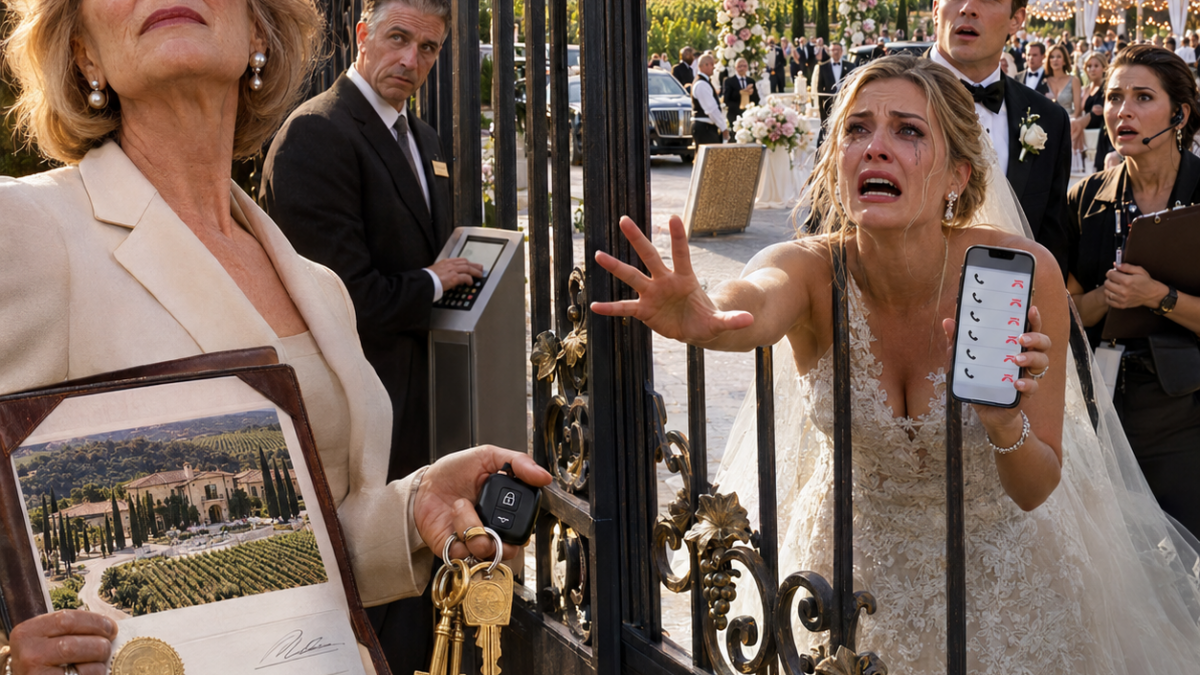
My husband and I bought the original Oak Haven property when we were twenty-six years old.
We had barely enough money for the down payment.
The farmhouse needed repairs.
The irrigation system barely worked.
And the first vineyard rows were more ambition than agriculture.
Daniel had grown up working with his uncle on a small wine-grape farm.
He understood soil.
Drainage.
Seasonal pruning.
The way a vine responds to stress.
I understood numbers.
I had studied accounting and spent several years working for a regional agricultural supplier.
Together, we believed we could create something special.
Not a luxury destination.
Not an estate designed for magazine photographs.
A working vineyard.
A home.
A place where we could raise a family.
The first winter was brutal.
A late freeze damaged much of our young planting.
We spent evenings calculating what we could afford to replace.
Daniel worked long hours repairing agricultural equipment for neighboring farms.
I kept the books for three small businesses while managing our own accounts.
There were months when we bought groceries with money we’d originally set aside for landscaping.
Years when a vacation meant driving twenty minutes to a diner and splitting dessert.
But there was also laughter.
A great deal of it.
Daniel could find humor in almost anything.
Once, after a rainstorm washed out a section of irrigation line we’d just repaired, he stood in the muddy field holding a broken pipe.
I was close to tears.
He looked at the pipe.
Then at me.
“Well, sweetheart, at least we know the water’s moving.”
I laughed so hard I had to sit on a bucket.
That was our marriage.
Not perfect.
Not easy.
But built on the understanding that when something broke, we faced it together.
Samantha was born in our sixth year at Oak Haven.
She arrived during harvest season.
Daniel used to tell her she’d been born just in time to supervise the grapes.
When she was little, she loved riding beside him on the tractor.
She wore tiny pink rubber boots.
Collected fallen leaves.
And insisted that every grape she picked deserved its own basket.
I can still picture her running between the rows, dark hair bouncing, her father following behind with both arms out because she never watched where she was going.
“Slow down, Sammy!”
She would laugh.
“Catch me, Daddy!”
And he always did.
As the vineyard grew, our circumstances improved.
We expanded the acreage.
Replaced the old irrigation system.
Built storage facilities.
Developed relationships with wineries that purchased our fruit.
Later, we began producing a small amount of wine under our own label.
Oak Haven Reserve.
Nothing enormous.
Just carefully made wine from vines we had tended for years.
Eventually, a regional travel magazine wrote about us.
Visitors began asking whether they could tour the property.
We hosted occasional private tastings.
A few charity events.
Harvest dinners.
Small celebrations for people we knew.
And as the surrounding area developed, the value of our land rose dramatically.
Daniel and I rarely discussed its market value.
It wasn’t that we were ignorant about money.
We understood the business.
We paid our taxes.
Maintained insurance.
Worked with accountants and attorneys.
But when we looked across Oak Haven, we didn’t see a number.
We saw the place where our daughter had learned to ride a bicycle.
Where Daniel’s father had planted the first oak tree near the road.
Where we’d buried our golden retriever.
Where we celebrated anniversaries beneath strings of lights hung between the trees.
The stone house came later.
After nearly twenty-five years of marriage, Daniel decided the old farmhouse was becoming too difficult to maintain.
He wanted a home with wide windows overlooking the vineyard.
A large kitchen.
A covered terrace.
A library.
And a small conservatory for the plants I loved.
He hired a local architect and worked closely with the builders.
He personally selected much of the stone.
Supervised the placement of the fireplace.
And insisted that the kitchen window face the rose garden.
When the house was finished, he brought me inside before the furniture arrived.
The rooms were empty.
Sunlight stretched across the floors.
I stood in the main living room and stared toward the hills.
“Daniel…”
He smiled.
“Do you like it?”
I turned toward him.
“Like it?”
He laughed.
“That good, huh?”
I wrapped my arms around him.
He held me.
Then whispered, “We did it, Ellie.”
He was the only person who called me Ellie.
For years, it had been the name I’d heard when I woke in the morning.
When he came home from the fields.
When we danced in the kitchen.
When he wanted me to stop worrying about something neither of us could control.
We did it, Ellie.
And we had.
We’d built a life with our own hands.
Samantha grew up surrounded by that life.
But as she became a teenager, she started wanting something different.
She wanted city clothes.
Expensive restaurants.
Friends whose parents owned vacation homes.
A school where nobody arrived smelling faintly of grape harvest.
I understood some of it.
Most teenagers want to be different from their parents.
They want independence.
They don’t want to be introduced as the daughter of a couple who grows grapes.
When Samantha turned sixteen, she announced she was embarrassed by my truck.
“Mom, please don’t pick me up in that thing.”
I looked at the old pickup.
“What’s wrong with it?”
“It looks like a farm truck.”
“It is a farm truck.”
She rolled her eyes.
“Exactly.”
Daniel laughed when I told him.
“She’ll appreciate that truck someday.”
I shook my head.
“Don’t hold your breath.”
We gave Samantha a good education.
Helped with college.
Paid for reasonable expenses.
Supported her interests.
When she wanted to study marketing, we encouraged her.
When she moved to San Francisco after graduation, we helped her get settled.
When her first job didn’t work out, we told her failure wasn’t the end of the world.
She came home crying.
Daniel made dinner.
I helped her update her résumé.
Then she tried again.
We didn’t resent helping our daughter.
We loved her.
But somewhere along the way, Samantha began treating our help as something that would always be available, no matter how she behaved.
At first, it was small.
A little extra money for rent.
Then a car payment.
Then help with a credit-card balance.
Later, a business idea that required funding.
Daniel was generous.
Perhaps too generous.
But he also knew when to say no.
Once, Samantha called asking us to invest seventy-five thousand dollars in a business she hadn’t properly researched.
Daniel listened.
Then asked for the financial projections.
She became irritated.
“Dad, don’t you trust me?”
He answered calmly.
“Of course I trust you, sweetheart. That’s why I want you to understand what you’re asking us to fund.”
She didn’t appreciate that.
But he refused to write the check without a plan.
I remember her hanging up angrily.
Daniel looked at me.
“She’ll cool down.”
I sighed.
“I hate when she’s upset.”
He smiled sadly.
“That’s the hardest part of being a parent.”
“What?”
“Knowing that loving your child doesn’t mean giving them every answer they want.”
I wish I’d remembered those words more often after he died.
Daniel was diagnosed with cancer seven years before Samantha’s wedding.
For a while, we believed treatment would give us more time.
He remained optimistic.
Even on difficult days.
Even when he was exhausted.
Even when the vineyard continued through another harvest without him walking every row.
I sat beside his hospital bed one evening.
He looked toward the window.
“How are the vines?”
I smiled through tears.
“Still growing.”
“Good.”
He reached for my hand.
“Promise me you won’t stop living when I’m gone.”
I shook my head.
“Don’t say that.”
“Ellie.”
His voice was gentle.
I looked at him.
“Promise.”
I couldn’t speak.
So I nodded.
He squeezed my fingers.
“And don’t let Oak Haven become something you no longer recognize.”
I remembered that promise.
Especially after Samantha began spending more time with the Sterling family.
Daniel died in the spring.
The vineyard was just beginning to turn green.
I buried him beneath a clear sky, surrounded by people who had known us for decades.
Our employees.
Neighbors.
Friends.
Family.
Samantha stood beside me at the funeral.
She cried so hard that I thought she might collapse.
For months afterward, I worried about her.
She’d always been close to her father.
I knew his death had left a hole in her life.
It had certainly left one in mine.
But grief changes people differently.
I grew quieter.
More reflective.
Samantha became restless.
She began traveling frequently.
Changing jobs.
Spending money.
Searching for something I couldn’t give her.
I wanted to help.
So I did.
Sometimes more than I should have.
When she needed a place to live, I helped pay for it.
When she wanted to start a marketing consultancy, I provided a loan with flexible terms.
When the business struggled, I gave her more time.
I kept telling myself that Daniel would have wanted me to support our daughter.
But I rarely asked whether I was helping Samantha become independent or simply protecting her from the consequences of her choices.
Then she met Greg Sterling.
And everything changed.
Greg was thirty-seven when Samantha brought him to Oak Haven for the first time.
He was handsome.
Polished.
Confident.
He wore a beautifully tailored jacket and spoke with the careful charm of a man accustomed to being admired.
He worked in private investment and real estate consulting.
At least, that’s how he described his work.
He knew the right restaurants.
The right hotels.
The right people.
Samantha seemed dazzled.
“Mom, he’s amazing.”
I smiled.
“He seems very nice.”
“He understands the kind of life I want.”
Something about that sentence stayed with me.
The kind of life I want.
Not the kind of man she loved.
Not the way he treated her.
Not whether they shared values.
The life.
Still, I wanted to be fair.
Greg was courteous during the visit.
Complimented the property.
Asked intelligent questions about the vineyard’s operations.
And seemed interested in Daniel’s work.
He spent nearly an hour walking the grounds with me.
At one point, he stopped near the stone house.
“This place must be worth a fortune.”
I smiled politely.
“It’s been a lot of work.”
He looked toward the vines.
“How much acreage?”
“Eighty acres in the main estate.”
He nodded.
“And you own it outright?”
I felt a slight hesitation.
“Oak Haven’s ownership is handled through our estate structure, but I control it.”
He smiled.
“Smart.”
I changed the subject.
But he kept returning to questions about the land.
Development restrictions.
Water access.
The neighboring parcels.
The possibility of expanding the event business.
At the time, I assumed he was simply interested in real estate.
That was his profession.
I didn’t yet understand how carefully he was studying what I owned.
Samantha and Greg became engaged eight months later.
He proposed during a vacation in Italy.
There were photographs.
Champagne.
A diamond ring large enough to attract attention from across a restaurant.
Samantha called me crying with happiness.
“Mom, he asked!”
I smiled.
“Congratulations, sweetheart.”
She held the ring toward the camera.
“Look!”
“It’s beautiful.”
“I can’t believe it!”
For a few moments, she sounded like the little girl who used to run through the vineyard in pink boots.
My heart softened.
I wanted her happy.
More than anything.
Then came the wedding plans.
And the Sterling family.
Greg’s mother, Victoria, entered my life like a woman conducting an inspection.
She arrived at Oak Haven wearing a cream silk blouse, expensive jewelry, and sunglasses that made her look as though she’d stepped out of a luxury hotel advertisement.
She barely looked at the vines.
Her attention went directly to the stone house.
“Oh, Eleanor.”
She spread her arms.
“What a charming little property.”
I smiled.
“Thank you.”
She looked at the terrace.
“Though of course it could be modernized.”
I frowned.
“Modernized?”
“Just a few things. The furnishings. Some of the stonework. The landscaping.”
I glanced toward the rose garden.
“Daniel and I designed it ourselves.”
She waved one hand.
“Of course, darling. Sentimental value is lovely. But sometimes we have to think about presentation.”
That was the first time she called me darling.
It wouldn’t be the last.
Greg stood beside her smiling.
Samantha looked embarrassed.
Not by Victoria’s rudeness.
By my reaction.
“Mom, Victoria is just really good at design.”
I looked at my daughter.
“I see.”
Victoria continued through the house, commenting on what she’d change.
The curtains.
The antique furniture.
The lighting.
The oak dining table Daniel had made.
At one point, she stopped in the library.
“Oh, this room is terribly dark.”
I looked around.
Afternoon sunlight streamed through the tall windows.
“It’s meant to be quiet.”
She laughed.
“Well, I’m sure we can do something with it.”
We.
I noticed that word.
She used it constantly.
What we could change.
What we could improve.
How we could create something more suitable.
It was my home.
My vineyard.
My late husband’s work.
Yet Victoria spoke as though she’d already been appointed its owner.
I told myself not to be overly sensitive.
Samantha was getting married.
The families were becoming connected.
Perhaps Victoria was simply enthusiastic.
I wanted to believe that.
Then she began discussing the wedding.
And I learned just how expensive enthusiasm could become.
Victoria had already planned most of the celebration before she asked whether I was comfortable hosting it.
The ceremony would take place beside my rose garden.
A white reception tent would stretch across the southern lawn.
There would be two hundred and fifty guests, a six-piece band, imported flowers, custom linens, and a champagne tower that Victoria described as “absolutely essential.”
When she opened the preliminary budget, I almost dropped my reading glasses.
“Victoria, this is a great deal of money.”
She smiled.
“Of course it is, Eleanor. Samantha is your only daughter.”
I glanced at Samantha.
She looked excited.
Almost breathless.
“Mom, can you imagine how beautiful it will be?”
I looked at the plans.
The flowers.
The lighting.
The rows of tables overlooking the vineyard.
The design was beautiful.
I couldn’t deny that.
But the cost was extraordinary.
“I’d like to discuss a reasonable budget.”
Victoria gave a delicate laugh.
“Oh, darling. Reasonable weddings are for people who have to worry about money.”
I felt my face grow warm.
“Everyone should worry about spending money responsibly.”
She looked toward Greg.
He smiled.
“Mom’s just excited.”
Samantha touched my arm.
“Please, Mom. Dad would have wanted this.”
The words landed exactly where she intended.
I looked toward the kitchen window.
Daniel’s roses were blooming outside.
He would have wanted Samantha to have a wonderful wedding.
Of that, I had no doubt.
But he wouldn’t have wanted her to mistake extravagance for love.
I should have said so.
Instead, I looked at my daughter.
“Let’s review the numbers.”
That was how it began.
One concession.
Then another.
The guest list expanded.
The floral budget doubled.
The caterer was changed to a more expensive company.
Victoria insisted the wine service should include selections beyond our own reserve vintages because, as she put it, “Some of our guests have sophisticated tastes.”
I remember that sentence vividly.
Oak Haven Reserve had won several regional awards.
Daniel had worked for years to establish the label.
But Victoria dismissed it without tasting a single glass.
I had never felt ashamed of our vineyard before.
Not once.
Not during the difficult early harvests.
Not when money was tight.
Not when we were repairing irrigation lines ourselves.
Yet the Sterling family seemed determined to make me feel that Oak Haven wasn’t quite good enough for them.
The strangest part was how completely Samantha adopted their attitude.
She began referring to our home as “the venue.”
The vineyard became “the backdrop.”
Daniel’s old oak dining table was “that rustic thing.”
The rose garden became “the floral installation.”
One afternoon, I found her standing in the library with a designer.
They were discussing the removal of several shelves.
I stopped in the doorway.
“What’s going on?”
Samantha looked up.
“Oh, Mom. We’re just exploring ideas.”
“For what?”
“The house.”
I glanced at the drawings spread across the table.
My library had been redesigned into a cocktail lounge.
The shelves Daniel built were gone.
The fireplace had been covered with a modern stone façade.
“What is this?”
Samantha smiled nervously.
“Greg thinks the space could be more useful.”
“Useful to whom?”
She sighed.
“Mom, don’t start.”
I walked toward the plans.
“Your father built those shelves.”
“I know.”
“He chose the wood himself.”
“I know, Mom.”
“Then why are you planning to remove them?”
She folded her arms.
“Because not everything has to stay exactly the way Dad left it.”
The words hurt.
Not because they were entirely wrong.
Houses change.
People grow.
Memories don’t require every chair to remain in the same position forever.
But I hadn’t been consulted.
Samantha was behaving as though my home already belonged to her.
And Greg was encouraging it.
I looked at the designer.
“Please don’t proceed with any alterations. I haven’t approved this work.”
The woman nodded quickly.
“Of course, Mrs. Mercer.”
Samantha’s face reddened.
“Mom!”
I turned toward her.
“We’ll discuss changes when there’s a legal transfer and after everybody understands what is being proposed.”
She stared at me.
“You promised us the house.”
“I promised to give you a home as a wedding gift, subject to the arrangements we discussed.”
“Then why are you acting like it’s still yours?”
I looked directly at her.
“Because it is still mine.”
For a moment, something hard moved behind her eyes.
Then she turned away.
“Greg was right.”
I frowned.
“About what?”
“That you can’t let go.”
She gathered the drawings.
And walked out.
I stood alone in the library.
My hand rested against one of Daniel’s oak shelves.
I remembered watching him install it.
He’d spent an entire afternoon adjusting the middle section because he insisted it was slightly crooked.
I told him nobody would notice.
He smiled.
“I would.”
That was Daniel.
Patient.
Careful.
Unwilling to call something finished simply because somebody else wanted it done.
I looked toward the doorway where Samantha had disappeared.
Then whispered, “I wish you were here.”
The house didn’t answer.
It hadn’t for seven years.
Yet I still found myself speaking to him whenever I felt uncertain.
By then, the stone house and associated vineyard property had been valued at approximately eight million dollars.
I had agreed in principle to transfer a defined residential portion of the estate to Samantha as a wedding gift, with the necessary legal protections and completion requirements.
My attorney, Margaret Ellis, had been preparing the documentation.
Margaret had represented Daniel and me for nearly twenty years.
She knew the vineyard’s ownership structure.
She knew the property descriptions.
She knew how much care we’d taken to protect the agricultural operation.
She also knew that transferring a valuable property wasn’t the same as handing someone a wrapped present.
There were title issues.
Tax questions.
Insurance arrangements.
Rights of access.
Maintenance obligations.
Restrictions affecting agricultural use.
And several conditions needed to protect the working vineyard from becoming entangled in the couple’s personal debts.
Margaret insisted that I understand every page.
I appreciated that.
Samantha found it irritating.
“Mom, why does everything have to be so complicated?”
I smiled sadly.
“Because it’s an eight-million-dollar property.”
“Greg says his attorney can handle it much faster.”
“Then his attorney can review the documents with Margaret.”
She sighed.
“You’re making this so awkward.”
I looked at her.
“Protecting a family asset isn’t awkward. It’s responsible.”
She rolled her eyes.
And once again, I let the conversation end.
I told myself wedding stress made people unreasonable.
That Samantha would calm down.
That Greg was simply enthusiastic about their future.
That Victoria didn’t understand how much of Oak Haven’s value came from preserving its agricultural character.
I made excuses for all of them.
Because accepting the alternative would have meant admitting something terrible.
The people I was trying to help might be planning to take advantage of me.
Then came the empty velvet box.
It had held an antique silver key.
Daniel found it at an estate sale years earlier.
He’d had it restored and mounted inside a small presentation case.
It was never intended as a working key to the stone house.
It was symbolic.
A gift.
A reminder of the first farmhouse we’d shared.
I’d planned to present it to Samantha at a private family dinner after the transfer was completed.
But she found the box in my study during a visit.
“Mom, what’s this?”
I smiled.
“Something for you.”
She opened it.
Her eyes widened.
“Oh, that’s beautiful.”
“It’s your father’s idea, actually.”
She looked at me.
“Really?”
“He always said that when the time came to give you a home, we should make it feel special.”
For one brief moment, Samantha looked like the daughter I remembered.
She hugged me.
“Oh, Mom.”
I held her tightly.
I wanted that moment to last.
I wanted to believe everything was going to be all right.
Then Greg arrived.
Samantha showed him the key.
He examined it.
Smiled.
And said, “So the estate is officially ours?”
I looked at him.
“Not yet. Margaret is completing the paperwork.”
His smile faded slightly.
“Still?”
“Yes.”
He handed the key back.
“Well, we should move quickly.”
I frowned.
“Why?”
“The wedding’s approaching.”
I nodded.
“But the transfer doesn’t have to close before the ceremony.”
He glanced toward Samantha.
Then back at me.
“Of course not.”
The words sounded harmless.
But his expression didn’t.
Two days later, Margaret called.
“Eleanor, I received an unusual request.”
I was in the vineyard office reviewing a harvest report.
“What kind of request?”
“An attorney representing Greg has asked whether the transfer can be restructured to include broader development and financing rights.”
I sat straighter.
“What rights?”
“He wants to explore giving the couple authority to borrow against the property and negotiate certain land-use arrangements.”
I felt a cold sensation spread through my chest.
“Borrow against the vineyard?”
“That’s among the possibilities being proposed.”
“Why?”
“That’s what I’d like to establish before anyone proceeds.”
I looked out the window.
The vines stretched toward the hillside.
“Margaret, I haven’t agreed to that.”
“I know.”
“Daniel and I spent forty years building this place.”
“I know that too.”
I swallowed.
“The gift was supposed to be a home for Samantha. Not permission to mortgage the vineyard.”
“Then we should make that position unmistakable.”
I nodded.
“Yes.”
Margaret paused.
“Eleanor, have Samantha and Greg discussed any business plans involving Oak Haven?”
I thought about Greg’s questions.
The acreage.
The title.
The neighboring parcels.
The development restrictions.
Then Victoria’s comments about converting the library.
Suddenly, those conversations felt different.
“Not directly.”
“Then I suggest we ask for a clear explanation of their intentions before moving forward.”
I agreed.
But I didn’t call Samantha immediately.
I wanted to speak with her face-to-face.
I wanted to believe there was a reasonable explanation.
And I was still afraid that asking the wrong question would turn the wedding into another argument.
That fear followed me all the way to Victoria Sterling’s conservatory.
The place where I finally heard the truth.
It happened on a Wednesday morning, three days before the scheduled wedding.
Victoria had invited me to review the final floral arrangements.
I arrived carrying a small gift for Samantha.
A bracelet Daniel had bought for her sixteenth birthday.
She’d misplaced it years earlier.
I’d found it while reorganizing a drawer.
I planned to give it back to her before the wedding.
Perhaps it would remind her of the father who would not be there to walk her down the aisle.
Perhaps it would help us find some of the closeness we’d lost.
I parked beside Victoria’s enormous white house and walked toward the entrance.
A housekeeper let me in.
“Mrs. Sterling is in the conservatory.”
“Thank you.”
The room was filled with orchids and decorative citrus trees.
Sunlight spilled through glass walls.
A silver tea service stood on a small table.
I heard voices coming from the adjoining sitting room.
Victoria.
Greg.
And another man whose voice I didn’t recognize.
The door between the rooms stood slightly open.
I didn’t intend to listen.
Not at first.
I was about to announce myself when I heard my name.
“Eleanor is still holding up the property transfer,” Greg said.
I stopped.
Victoria answered.
“Then Samantha needs to deal with her mother.”
The third man spoke.
“I’ve reviewed the documents. The transfer hasn’t been completed, and the proposed restrictions would prevent the financing structure you’ve discussed.”
My heart began pounding.
Greg sounded irritated.
“That was supposed to be the whole point.”
Victoria sighed.
“Greg, darling, you know Eleanor is sentimental. She thinks everything her husband touched should be preserved forever.”
Greg laughed.
“Well, sentiments don’t pay off investors.”
I went cold.
Investors?
What investors?
The third man spoke again.
“To be clear, you can’t borrow against land you don’t own or have authority to encumber.”
“I understand that,” Greg snapped.
“Then you need a lawful transfer and whatever lender requirements apply. You can’t simply assume Eleanor’s signature.”
Victoria answered before Greg could.
“That’s why the wedding matters. Once Samantha is married, Eleanor won’t want to embarrass her only child by changing her mind.”
I gripped the edge of a table.
The man said, “Marriage doesn’t itself transfer the property.”
Victoria gave an impatient sigh.
“Of course not. But it changes the family conversation.”
Then she laughed.
“And once Samantha is settled in the stone house, her mother can finally move into something more appropriate.”
Greg answered.
“Exactly. We can’t have Eleanor wandering around the place like she owns it.”
I felt my stomach turn.
Like she owns it.
My own home.
My late husband’s work.
The property I still legally controlled.
Victoria continued.
“After the initial transfer, we can revisit the vineyard acreage. There’s too much value tied up in grapes and memories.”
Greg laughed again.
“That’s what I’ve been saying. The land could support a luxury residential development if we can solve the planning issues.”
The third man sounded cautious.
“That would require separate approvals and negotiations. You should not assume any development is permitted.”
Victoria dismissed him.
“Those are details.”
Details.
I almost laughed.
The vines Daniel planted.
The fields we worked.
The employees who depended on the vineyard.
The land we’d protected for decades.
Details.
Then Greg said something that made my throat close.
“Samantha understands, right?”
Victoria replied.
“She understands her mother needs to stop interfering.”
“And the wedding?”
“Don’t worry. Eleanor won’t be there.”
I couldn’t breathe.
Greg sounded pleased.
“Good. My friends don’t need her giving speeches about pruning grapes and the good old days.”
Victoria laughed.
“Exactly. Imagine the photographs.”
I stood perfectly still.
The bracelet box in my hand felt suddenly enormous.
Then Greg said, “Once the house is transferred, Samantha can handle her mother. She always does.”
That was enough.
I didn’t need to hear another word.
I quietly placed the bracelet box inside my handbag.
Walked back through the conservatory.
And left.
No confrontation.
No accusation.
No dramatic entrance.
I simply walked out of the Sterling house while the three people inside continued discussing my vineyard as though I were already gone.
When I reached my truck, I sat behind the wheel and stared at the steering wheel.
I wanted to cry.
But nothing came.
I felt almost numb.
I started the engine.
Drove home.
And called Margaret.
“Stop the transfer.”
She was silent for a moment.
“Eleanor?”
“Do not finalize the gift.”
“Has something happened?”
I stared toward the road.
“Yes.”
Then I told her what I’d heard.
Not guesses.
Not assumptions.
The actual statements.
The proposed financing.
The development plans.
The desire to move me out.
The belief that I could be pressured into completing the transfer after the wedding.
Margaret listened.
When I finished, she said, “The conveyance has not closed. We can stop your proposed voluntary transfer while we review any contractual obligations already created.”
I closed my eyes.
“Thank God.”
She continued.
“I also want you to preserve any relevant communications. We’ll make sure no one is representing that they already have authority to act for you.”
I looked toward the vineyard.
“Margaret, I gave Samantha my word.”
“I understand.”
“I promised her a home.”
She paused.
“Eleanor, a promise made in love doesn’t require you to ignore material facts about what the other parties intend to do with your property. We need to review exactly what was agreed, what documents exist, and what obligations, if any, have become enforceable.”
I took a long breath.
“All right.”
“I’ll handle the legal documents. You focus on protecting the property and communicating through appropriate channels.”
I thanked her.
Then drove the rest of the way to Oak Haven.
At the main gate, Ben, my estate manager, waved.
He’d worked with Daniel and me for twenty-three years.
A broad-shouldered man with weathered hands and a face that rarely betrayed surprise.
He knew every drainage ditch on the property.
Every aging vine.
Every employee.
Every piece of equipment.
He’d been beside me when Daniel died.
And he was one of the few people who understood Oak Haven wasn’t merely a valuable parcel of real estate.
It was a living business.
I parked.
He approached.
“Everything okay, boss?”
I looked toward the stone house.
“No, Ben.”
His smile vanished.
“What’s wrong?”
I swallowed.
“I need to make some changes to the wedding arrangements.”
He studied my face.
Then nodded.
“Tell me what you need.”
I asked him to meet me in the estate office.
We reviewed the event-access plan.
The gate codes.
The vendor list.
The areas reserved for the ceremony.
The staff schedule.
And the arrangements that would allow hundreds of guests to enter the property.
Ben listened.
Then said, “You want the wedding canceled?”
“I want all event access suspended until Margaret confirms the legal position and we notify everyone properly.”
He nodded.
“I can secure the gates and restrict the event codes.”
“No confrontations. No threats. And don’t interfere with anyone’s lawful access.”
“Understood.”
“If vendors arrive, refer them to the written notice and their contracts. We’ll handle the financial obligations.”
Ben looked at me.
“You’re sure?”
I thought about Greg laughing in Victoria’s sitting room.
About Samantha calling my home an aesthetic problem.
About Daniel’s warning.
Then I nodded.
“Yes.”
Ben picked up his clipboard.
“All right, boss.”
He paused at the door.
“Eleanor?”
I looked up.
“Yes?”
“Daniel would have wanted you to protect this place.”
My eyes filled.
I managed a small smile.
“I know.”
Then he left.
And I sat alone in the office, waiting for the call from my daughter.
It came two hours later.
Samantha.
I answered.
“Hello, sweetheart.”
Her voice was strangely formal.
“Mom, we need to discuss something.”
I looked toward the vineyard.
“All right.”
She hesitated.
“Greg and I have been talking.”
I waited.
“And his family has some concerns about Saturday.”
“What concerns?”
“Well…”
She stopped.
Then started again.
“Greg feels like your presence might make things uncomfortable.”
I stared at the window.
“Uncomfortable for whom?”
“His family.”
“Why?”
She sighed.
“Mom, please don’t make this difficult.”
I closed my eyes.
That phrase.
The same one she’d used in the library.
The same one Victoria used whenever I questioned a wedding expense.
The same one Greg used whenever Margaret insisted on proper documents.
“Tell me what you’re asking, Samantha.”
She took a breath.
“I don’t think you should come to the wedding.”
For a few seconds, I couldn’t speak.
I looked toward the rose garden.
Daniel had planted the pale pink climbers beside the stone path himself.
The ceremony arch had already been delivered.
White flowers lay beneath a covered storage area, waiting for the florist.
My daughter wanted to marry there.
At the home her father and I had built.
But she didn’t want me present.
“You’re asking me not to attend my own daughter’s wedding?”
She sounded irritated.
“Mom, you’re making it sound worse than it is.”
“What is it, then?”
“Greg wants the day to have a certain atmosphere.”
I stared at the phone.
“An atmosphere?”
“His family is very particular.”
“And what about me is unsuitable?”
She hesitated.
Then answered.
“You don’t really fit the aesthetic.”
I felt the words settle into my chest.
I had expected cruelty from Victoria.
Perhaps even from Greg.
But hearing Samantha say them was something else entirely.
I swallowed.
“Did you tell him you didn’t want your mother there?”
Silence.
“Samantha?”
She sighed.
“Greg doesn’t want you there.”
I looked toward Daniel’s empty chair.
For a moment, I wanted to ask whether she remembered him.
Whether she remembered the first harvest.
The pink boots.
The evenings he carried her on his shoulders.
Whether she remembered that the rose garden she wanted in her photographs existed because he loved our family.
But I didn’t ask.
I knew the answers wouldn’t change what she’d just said.
“So,” I replied quietly, “you want me to pay for a wedding I’m not allowed to attend.”
She sounded relieved.
As though she’d expected a much bigger argument.
“Mom, we don’t want to hurt you.”
I looked down.
“Then you’ve chosen a strange way to show it.”
“Please don’t be dramatic.”
I took a slow breath.
“All right.”
There was a pause.
“All right?”
“Yes.”
Her voice brightened.
“Thank you for understanding.”
I almost laughed.
Understanding.
I understood far more than she realized.
“Enjoy the wedding you deserve, Samantha.”
Then I ended the call.
And for a long time, I sat motionless.
The woman who had just barred me from my own daughter’s wedding was the same little girl who used to fall asleep on my shoulder after running through the vineyard.
I loved her.
I would probably love her until the day I died.
But I finally understood that loving my child did not require financing a plan to take control of my home.
And I was finished pretending otherwise.
At 11:18, I called Margaret again.
“Samantha has confirmed that she doesn’t want me at the wedding.”
There was a long silence.
Then Margaret asked, “Eleanor, do you still want the event held on your property?”
I looked at the folder in front of me.
The wedding contracts.
The property documents.
The event schedule.
The payment instructions.
For six months, every plan had revolved around making Samantha happy.
I had worried about the flowers.
The cake.
The seating chart.
The weather.
The lighting.
The wine.
Everything except the simplest question.
Did I want to host a celebration for people who were actively trying to remove me from my own home?
“No,” I answered.
Margaret didn’t celebrate.
She didn’t tell me to punish Samantha.
She asked practical questions.
Which agreements had I signed personally?
Which deposits were refundable?
Which vendors had rights under their contracts?
Were any invitations or arrangements creating obligations that needed to be addressed?
Had any property ownership actually been transferred?
We reviewed the situation carefully.
The event license for Oak Haven was a private arrangement controlled by the property owner.
The contracted access was subject to its terms.
The gift conveyance remained incomplete.
And the remaining wedding payments had not yet been released.
Margaret explained that cancellation could carry significant financial consequences.
I understood.
I wasn’t looking for a way to avoid paying people who had done nothing wrong.
I wanted to stop offering my home as the setting for a celebration at which I was expressly unwelcome.
“Proceed,” I told her.
“We’ll send proper notice and handle any lawful cancellation obligations.”
I took a breath.
“Thank you.”
Afterward, I called the wedding planner.
Her name was Claire Donovan.
She was efficient, organized, and had worked on several private events at Oak Haven before Samantha hired her.
When she answered, her voice was cheerful.
“Mrs. Mercer! Everything is looking wonderful for Saturday.”
“Claire, I need to cancel Oak Haven as the venue.”
Silence.
Then, “I’m sorry?”
“I am withdrawing authorization for the wedding event on my property, subject to the required contractual process. Margaret Ellis will send the formal notice.”
Claire was quiet for several seconds.
“Is there a problem with the estate?”
“No.”
“Has something happened?”
“Yes.”
I looked toward the rose garden.
“My daughter has told me I’m not welcome at her wedding.”
Claire made a small sound.
“Oh.”
I continued.
“And I’ve learned information that makes me unwilling to proceed with the proposed property gift.”
She didn’t immediately speak.
Then she said, “I’m very sorry.”
I swallowed.
“Thank you.”
“Mrs. Mercer, some of the vendors are already preparing materials. There will be costs.”
“I understand. Please provide the current contract status and legitimate cancellation charges. I’m not asking anyone to work without being paid.”
Claire exhaled.
“All right.”
“And please don’t tell the vendors they can enter the property without confirmation.”
“Of course.”
I thanked her.
Then called the caterer.
The florist.
The lighting company.
The tent supplier.
The music coordinator.
Some conversations were uncomfortable.
Others were heartbreaking.
The florist had already ordered flowers.
The caterer had begun preparations.
The tent company had reserved equipment and crew.
I didn’t expect those businesses to absorb the consequences of a family dispute.
So I asked for the applicable cancellation terms and paid the amounts properly due.
For some vendors, that meant forfeiting deposits.
For others, additional documented expenses were owed.
I authorized the payments that Margaret and the contracts confirmed.
I did not ask anybody to lie.
Didn’t threaten bad reviews.
Didn’t demand that workers abandon paid obligations without compensation.
And I didn’t use money to punish innocent people.
The people responsible for the wedding hadn’t caused my daughter to ban me.
Greg had.
Victoria had encouraged him.
And Samantha had agreed.
By early afternoon, the event cancellations were being processed.
Claire sent written notices.
Margaret notified the parties concerning the venue withdrawal and suspended property transfer.
Ben and the estate team implemented the revised access plan.
The temporary wedding gate codes were disabled.
The regular operational access for employees and authorized agricultural vehicles remained intact.
The main gates were secured.
Signs directed event vendors to the office contact information.
Licensed private security personnel were available to help manage access and avoid confrontations, but nobody had been instructed to threaten anyone.
If somebody attempted unlawful entry or caused a disturbance, the staff would contact local law enforcement.
I wanted the estate protected.
Not turned into a battlefield.
At 12:07, Samantha called.
I watched her name appear on the screen.
I didn’t answer.
She called again.
Then Greg.
Then Claire.
I answered Claire because she was the professional responsible for communicating with vendors.
She confirmed that notices were being delivered.
I thanked her.
Then I returned to the kitchen.
At 1:15, Victoria called.
At 1:17, she called again.
Then a text arrived.
Eleanor, whatever childish tantrum you’re having needs to stop immediately.
I stared at the words.
Childish tantrum.
I looked around my kitchen.
The shelves Daniel built.
The oak table.
The curtains I’d chosen with him.
The garden beyond the window.
A home we’d spent forty years earning.
And I was apparently having a childish tantrum because I no longer wanted people who despised me to use it for free.
I didn’t respond.
At 2:04, Greg sent a message.
You’ve created a very serious contractual problem.
I forwarded it to Margaret.
She replied that all legal communications should be directed through counsel.
I felt relieved.
Greg could argue with someone trained to understand contracts.
I had spent enough years arguing with people who thought the loudest voice was automatically correct.
At 2:30, Samantha left her first voicemail.
“Mom, what are you doing? Claire says the venue has been canceled. Call me back.”
I listened once.
Then saved it.
At 3:12, another message arrived.
You can’t cancel my wedding because you’re upset.
I looked at the screen.
Then at the unsigned property documents.
She was right about one thing.
I couldn’t cancel her marriage.
Samantha and Greg were free to marry wherever the law allowed and wherever they had permission to hold their ceremony.
But they weren’t entitled to use my vineyard.
They weren’t entitled to my bank account.
And they weren’t entitled to treat an uncompleted gift as property they already owned.
At 4:20, Ben called.
“Boss, the tent company has confirmed they’re not coming.”
“Good.”
“The florist is redirecting their delivery.”
“All right.”
“Mr. Sterling called the office.”
I closed my eyes.
“What did he say?”
“He demanded that I give him the gate override code.”
I sat straighter.
“What did you tell him?”
“That I couldn’t do that and he should speak with your attorney.”
“Thank you.”
Ben hesitated.
“He wasn’t pleased.”
“I imagine not.”
“Mrs. Mercer, are you all right?”
I looked toward the vines.
For a moment, I wanted to tell him the truth.
That my daughter had broken my heart.
That I’d spent the entire day holding myself together because I was afraid if I started crying, I might never stop.
Instead, I said, “I’m safe, Ben.”
He was quiet.
Then replied, “That’s something.”
After the call, I walked to the rose garden.
The ceremony arch stood between two stone columns.
Workers had been instructed not to dismantle anything until the relevant vendors arranged authorized removal.
White ribbons hung from the structure.
They moved gently in the afternoon breeze.
I had pictured Samantha standing there in her wedding dress.
Greg beside her.
Daniel’s memory surrounding us.
I had planned to give a short speech.
Nothing elaborate.
Just a few words about love, commitment, and the importance of building a life together.
I even had the note cards in my study.
I’d spent three evenings writing them.
At the bottom of the final card, I had written:
Your father would have been so proud to see you happy.
I stood beneath the arch.
Then looked toward the stone house.
I wanted to believe Daniel would have been proud of Samantha.
But I didn’t know what he’d think of the woman she’d become over the previous months.
I thought about the conversation in Victoria’s conservatory.
The proposal to use the estate as financial security.
The plan to remove me from the property.
The casual dismissal of the vineyard as a sentimental inconvenience.
And I realized that my daughter wasn’t merely getting married.
She was preparing to enter a family that saw love as a means of acquisition.
They measured affection in leverage.
Generosity in assets.
And family relationships by how much money could be extracted from them.
I couldn’t stop Samantha from choosing Greg.
But I could stop financing the choice.
I returned to the house.
Made tea.
And sat at the kitchen table.
At 5:02, the phone rang again.
At 5:16, another call.
Then three in quick succession.
By six o’clock, there were dozens of missed calls and messages.
I knew the wedding party had learned the full extent of what I’d done.
The estate wasn’t available.
The vendors had been notified.
The remaining payments had been canceled or settled according to their terms.
The proposed gift transfer was stopped.
And the property authority Greg had expected to gain did not exist.
At 6:04, Victoria left a voicemail.
Her voice was shrill.
“Eleanor! You are humiliating two families! Do you understand how much money we have invested in this event?”
I stared at the phone.
Then deleted nothing.
I saved it.
At 6:11, Greg left a message.
“You’ll regret this. My attorney is going to make sure of it.”
I forwarded that one to Margaret too.
At 6:23, Samantha called again.
And again.
And again.
Finally, I turned the phone facedown and looked out the window.
The evening sun had begun moving across the kitchen floor.
The vineyard was quiet.
No decorators.
No sound checks.
No wedding rehearsal.
Just the ordinary sounds of a working estate settling into evening.
I made another cup of tea.
The calls continued.
At some point, I stopped counting.
When the battery finally died after the eighty-fourth attempt, I placed the phone beside my teacup.
Then I sat quietly.
I expected to feel triumphant.
Instead, I felt grief.
I had protected the vineyard.
But I had also shattered the illusion that my daughter still saw me as someone she loved for myself.
And that hurt more deeply than I could explain.
The next morning, Samantha came to Oak Haven.
Not with flowers.
Not with an apology.
With Greg.
And Victoria.
They arrived in Greg’s black SUV at 8:17.
Ben called the house.
“Mrs. Mercer, the Sterlings are at the main gate.”
I looked toward the window.
“Have they made an appointment through Margaret?”
“No.”
“Then ask them to contact her.”
There was a pause.
“Your daughter is asking to speak with you.”
I closed my eyes.
“Is she alone?”
“No, ma’am.”
I thought for a moment.
Then said, “I’ll speak with Samantha on the phone. The others can remain at the gate.”
Ben agreed.
A few minutes later, the estate telephone rang.
Samantha’s voice was furious.
“Mom, open the gate.”
“Good morning, sweetheart.”
“Don’t good-morning me!”
I looked toward the rose garden.
“All right.”
“Do you know what you’ve done?”
“Yes.”
“Two hundred and fifty people are flying in for my wedding!”
“I understand.”
“The florist canceled. The caterer canceled. Claire says we don’t have a venue.”
“I know.”
“You can’t do this!”
I took a slow breath.
“Samantha, you told me I wasn’t welcome at your wedding.”
She made an impatient sound.
“So?”
I closed my eyes.
That single word hurt almost as much as the original message.
“So?”
As though barring a mother from her daughter’s wedding were a minor scheduling detail.
As though the only important question was whether I would continue paying.
“Samantha,” I said quietly, “why should I provide my home for a celebration where I’m not wanted?”
She didn’t answer.
Then I heard Greg in the background.
“Tell her she’s breaching an agreement.”
Samantha repeated it.
“Greg says you’re breaching an agreement.”
“Margaret is reviewing every contract and handling the cancellation obligations.”
“That doesn’t change what you’ve done!”
I looked at the photograph of Daniel above the fireplace.
“No. It doesn’t.”
Samantha’s voice cracked.
“You’re ruining my life.”
I felt tears sting my eyes.
Then I asked, “Did you know Greg was planning to borrow against Oak Haven?”
Silence.
I continued.
“Did you know he and Victoria were discussing developing parts of the vineyard and moving me out of the stone house?”
For several seconds, nobody spoke.
Then Greg’s voice came through.
“Who told you that?”
I felt something inside me grow still.
“That isn’t an answer.”
He took the phone.
“Eleanor, you’ve misunderstood a private business discussion.”
I stared at the receiver.
“What did I misunderstand?”
“We were talking about long-term opportunities.”
“On land you don’t own.”
He sighed.
“You’re being emotional.”
“Greg, I heard you say I couldn’t continue living here once the transfer was completed.”
Silence.
Then Victoria’s voice.
“Give me that phone.”
There was rustling.
A moment later, she spoke.
“Eleanor, this has gone far enough.”
I looked toward the driveway.
“Has it?”
“You have embarrassed us in front of very important people.”
I almost laughed.
“That seems to be your primary concern.”
“Your daughter is getting married!”
“Yes.”
“And you’re behaving like a spiteful old woman because you weren’t invited to a party!”
I felt my hands begin to tremble.
But my voice remained steady.
“Victoria, the party was supposed to take place in my home.”
She scoffed.
“A home you promised to Samantha.”
“A proposed gift that was never legally completed.”
“You can’t just take it back.”
“There’s nothing to take back. The conveyance wasn’t completed.”
She made an angry sound.
“Greg’s attorney will deal with you.”
“He’s welcome to contact mine.”
I heard her inhale sharply.
“You really are a miserable woman.”
I looked toward Daniel’s photograph.
Then answered quietly.
“Perhaps. But I’m still the owner.”
I ended the call.
And for the first time, I didn’t feel the slightest need to explain myself further.
By ten o’clock, Margaret had received three calls from Greg’s attorney.
The first was demanding.
The second was more measured.
The third requested copies of the final ownership and proposed conveyance documents.
Margaret told me about them that afternoon.
“Greg’s attorney appears to have been given a very different understanding of what had been completed.”
I sat at my desk.
“What understanding?”
“That the gift was essentially finalized and the remaining steps were administrative.”
I closed my eyes.
“I never said that.”
“I know.”
“And the proposed financing?”
“He’s reviewing the relevant documents. I’ve made clear that neither Greg nor Samantha has authority to pledge your property.”
I let out a breath.
“Thank you.”
Margaret paused.
“Eleanor, there is something else.”
I looked up.
“What?”
“The development proposal may be connected to financial obligations Greg hasn’t discussed with Samantha.”
My stomach tightened.
“Are you certain?”
“No. And we shouldn’t assume more than the records support. But some of the questions his side has asked suggest that proposed borrowing may be important to him for reasons unrelated to establishing a home.”
I looked toward the vineyard.
“Then Samantha needs to know.”
“She does. But we need to proceed carefully.”
I nodded.
For the first time, I began to separate two feelings I had been treating as the same.
My anger at Samantha.
And my concern for her.
I was deeply hurt.
She had chosen to exclude me from her wedding.
She had spoken about me with contempt.
And she had allowed Greg and Victoria to treat my property as something already available for their plans.
But she was still my daughter.
If Greg had concealed financial problems or misrepresented his intentions, she deserved to know.
I just wasn’t going to buy her safety by surrendering Oak Haven.
Margaret helped me prepare a written statement.
It explained that the property transfer had not been completed, that I had withdrawn the proposed gift pending review, and that no one had authority to borrow against or dispose of any interest in Oak Haven without the legal owner’s consent.
It also confirmed that the venue cancellation was being handled under the applicable agreements.
There was no accusation of criminal wrongdoing.
No dramatic threat.
No declaration that Greg was a fraud.
Just verified facts.
We provided the statement to the relevant parties.
Then I turned off my phone and went back to work.
The vineyard didn’t stop growing because my daughter was angry.
The employees still needed their schedules.
The equipment still required maintenance.
The irrigation system still needed inspection.
And a supplier was waiting for approval on a routine order.
I spent the afternoon with Ben reviewing harvest projections.
It felt strangely comforting.
Numbers.
Weather.
Work.
Things that mattered regardless of who liked me.
At one point, Ben set down his clipboard.
“Mrs. Mercer?”
“Yes?”
“Can I say something?”
I looked at him.
“Of course.”
He hesitated.
“Miss Samantha has always been important to everybody here.”
I nodded.
“I know.”
“We all watched her grow up.”
My throat tightened.
“I know.”
Ben looked toward the stone house.
“But Mr. Daniel didn’t build Oak Haven just so somebody could sell it off when the price got high enough.”
I swallowed.
“No.”
“He wanted a place that lasted.”
I stared at my hands.
“I promised him I’d protect it.”
Ben nodded.
“Then you’re keeping your promise.”
I looked away before he could see the tears in my eyes.
That evening, I went into Daniel’s old office.
The room still smelled faintly of cedar.
His books lined the shelves.
A photograph of our first harvest stood beside the window.
In it, we were young.
Dirty.
Sunburned.
Smiling as though the entire world belonged to us.
We had no idea what Oak Haven would become.
No idea how much work lay ahead.
No idea how many years we’d spend worrying about weather, equipment, loans, and harvest yields.
But we’d been happy.
I sat in Daniel’s chair.
Opened the bottom drawer.
And took out a leather notebook.
He’d kept journals during the early years.
Notes about rainfall.
Soil conditions.
Expenses.
Ideas.
Occasionally, he’d written about Samantha.
One entry was dated shortly after her fifth birthday.
Sammy spent the whole morning picking grapes she wasn’t supposed to touch. Eleanor pretended to be upset, but I caught her laughing behind the shed. This place is going to be something special if we can keep it together.
I stared at the words.
Then turned the page.
Another entry.
We’ve worked too hard to forget why we started. A home first. Everything else comes after.
I closed the notebook.
For years, I’d treated Oak Haven as something I needed to preserve for Samantha.
But Daniel had never said it existed solely for her.
He’d said it was a home.
A place worth keeping together.
And suddenly I realized I’d been preparing to hand over the entire meaning of our lives to a daughter who no longer understood it.
That didn’t mean I stopped loving her.
It meant I needed to stop confusing inheritance with entitlement.
The wedding had been scheduled for Saturday.
By Friday, the Sterling family had found an alternative location.
I learned about it from Claire, who called to confirm the final status of her professional obligations.
The new venue was a hotel outside the city.
It could accommodate a smaller event on short notice.
Several vendors agreed to redirect services.
Others couldn’t.
Guest arrangements changed.
Some relatives couldn’t attend the revised reception.
The celebration would be far less elaborate than Samantha had planned.
But the marriage itself could still take place.
I was relieved.
Whatever had happened between us, I didn’t want Samantha stranded on her wedding day.
I wanted her to make a choice based on the man she was marrying—not the illusion that an eight-million-dollar property would automatically become hers afterward.
Friday evening, my granddaughter would have been playing in the rose garden if I’d had one.
That thought came unexpectedly.
Samantha was my only child.
I’d imagined grandchildren running through the vines.
Small hands reaching for grapes.
Little shoes beside the back door.
Daniel’s voice telling another generation to slow down.
I sat on the terrace and stared at the empty lawn.
Then began crying.
For the first time since hearing Greg and Victoria in the conservatory, I cried without trying to stop.
I cried for Daniel.
For the daughter I’d raised.
For the years I’d spent believing that if I gave Samantha enough, she’d never doubt how much I loved her.
And for the terrible possibility that my relationship with her might never be the same.
The next morning, the wedding day arrived.
I woke early.
Made coffee.
And walked through the rose garden.
The ceremony arch had been removed.
The tent equipment was gone.
The lawn was empty.
The vineyard workers had returned the grounds to their usual condition.
Only a few disturbed patches of grass remained where equipment had briefly stood.
I looked toward the spot where I’d imagined my daughter exchanging vows.
Then whispered, “I hope you’re happy today, Samantha.”
I meant it.
Even then.
I wanted her happy.
But I couldn’t protect her from every mistake.
And I couldn’t make myself disappear simply because Greg wanted a prettier background.
At eleven, I received a message from an unfamiliar number.
It was Samantha’s friend Olivia.
Olivia had known my daughter since college.
She had always been kind to me.
Mrs. Mercer, I’m sorry about everything. I just wanted you to know Samantha is safe. The ceremony is still going ahead.
I stared at the message.
Then typed:
Thank you, Olivia. Please tell her I love her.
A few minutes later, Olivia replied.
I will.
I set down the phone.
That was all.
No invitation.
No apology.
No request for me to attend.
I didn’t drive to the hotel.
Didn’t stand outside hoping to catch a glimpse of Samantha in her dress.
Didn’t ask Olivia to take photographs secretly.
My daughter had made her wishes clear.
I would respect her decision.
And I would require the same respect for mine.
That afternoon, Ben came to the house with a small basket of grapes from one of the early rows.
I smiled.
“Already?”
“Just a few worth tasting.”
I took one.
Sweet.
Warm from the sun.
Daniel would have been pleased.
Ben stood beside the kitchen island.
“Everything quiet?”
I nodded.
“Very.”
He looked toward the empty lawn.
“Different sort of Saturday than we expected.”
I smiled sadly.
“Yes.”
He hesitated.
“Would you like some company for dinner?”
The kindness nearly undid me.
I shook my head.
“Thank you, Ben. I think I need an evening to myself.”
He nodded.
“Call if you need anything.”
After he left, I made tea.
Sat beside the window.
And watched the sun begin to set.
Somewhere outside the city, Samantha was being married.
Perhaps she was happy.
Perhaps she was frightened.
Perhaps she had already begun questioning the decisions that brought us here.
I didn’t know.
For once, I wasn’t going to invent answers simply to soothe myself.
I picked up Daniel’s old journal.
Opened it to a page near the end.
Then read the words he’d written during one of our hardest seasons.
You can’t control the weather. You can only prepare the vineyard and trust the roots.
I closed my eyes.
It sounded like him.
Practical.
Hopeful.
A little stubborn.
I thought about Samantha.
My daughter had roots here.
Whatever she said about aesthetics.
Whatever Greg thought of old farm women.
Whatever Victoria believed about money.
Samantha had grown up at Oak Haven.
She knew the smell of harvest.
The sound of irrigation pumps.
The way Daniel whistled while he worked.
She knew where we’d buried her childhood dog.
She knew which rosebush bloomed first every spring.
Those memories belonged to her.
I couldn’t take them away.
And I didn’t want to.
But the land itself was not a bargaining chip for people who despised the woman responsible for preserving it.
That distinction mattered.
It would matter for as long as I lived.
The wedding went ahead.
I learned that the ceremony had been smaller than planned.
Less elaborate.
Still beautiful, according to Olivia.
But the trouble between Samantha and Greg didn’t disappear simply because they exchanged vows.
In the weeks afterward, the questions concerning the promised estate became more serious.
Greg’s attorneys continued discussing potential claims arising from the proposed gift and event arrangements.
Margaret responded through proper legal channels.
The documents were reviewed.
The ownership records were clear.
The transfer had never been completed.
Any contractual questions concerning the event were addressed separately.
And the proposed financing rights Greg expected did not exist.
I paid the obligations I actually owed.
I didn’t pay for things I hadn’t promised.
And I refused to authorize any new transaction involving Oak Haven.
Then, three weeks after the wedding, Samantha called.
This time, there was no anger in her voice.
“Mom?”
I was sitting in the library.
“Hello, sweetheart.”
She was quiet.
Then she asked, “Can I come see you?”
My heart began pounding.
“Of course.”
She hesitated.
“Alone?”
I swallowed.
“Yes.”
Another silence.
Then she whispered, “I think I made a terrible mistake.”
I closed my eyes.
And realized that the moment I’d been hoping for had finally arrived.
Not because Samantha had lost a luxury wedding.
Not because Greg’s plans had failed.
But because my daughter was beginning to ask questions of her own.
And I knew the answers might hurt her even more than they had hurt me.
Samantha arrived the following afternoon.
She drove the small silver car she’d owned before meeting Greg.
I noticed that immediately.
For months, she’d been arriving in his expensive SUV or a chauffeured vehicle arranged by Victoria.
Now she parked beside the garden gate, turned off the engine, and sat without moving.
I watched from the kitchen window.
Part of me wanted to run outside.
Open her door.
Pull her into my arms.
Tell her everything would be all right.
But I stayed where I was.
Not because I didn’t love her.
Because I finally understood that love couldn’t erase consequences simply by pretending they hadn’t happened.
After several minutes, Samantha stepped out.
She wore jeans and an old blue sweater.
No designer handbag.
No carefully styled hair.
No expensive jewelry except her wedding ring.
She looked younger.
And much more tired.
When I opened the door, she stared at me.
“Hi, Mom.”
“Hello, Samantha.”
Her eyes filled.
I stepped aside.
“Come in.”
She walked into the kitchen slowly.
For a moment, she stood looking around.
At the old oak table.
The shelves.
The photographs.
The blue-and-white curtains.
Everything she’d once complained was outdated.
Then she whispered, “It smells the same.”
I looked at her.
“What does?”
“Home.”
My throat tightened.
I turned toward the kettle.
“Would you like tea?”
She nodded.
“Please.”
We sat at the kitchen table.
The same table where I’d answered her call banning me from the wedding.
For several minutes, we said almost nothing.
Then Samantha began crying.
Not the controlled tears of someone trying to win an argument.
The desperate, exhausted crying of a woman who no longer knew where to begin.
“Mom, I’m sorry.”
I looked at her.
She covered her face.
“I’m so sorry.”
I wanted to reach across the table.
Instead, I waited.
I needed to hear what she was apologizing for.
Eventually, she looked up.
“I shouldn’t have told you not to come.”
I nodded.
“No. You shouldn’t have.”
Her lip trembled.
“I know.”
I took a slow breath.
“Samantha, do you understand what that did to me?”
She nodded quickly.
“I do.”
“Do you?”
She stopped.
I continued.
“You asked me to pay for a wedding at the home your father and I built, and then told me my presence would embarrass your husband’s family.”
Tears ran down her cheeks.
“I know.”
“You didn’t ask whether I’d be hurt. You didn’t ask how I felt. You simply decided that Greg’s photographs mattered more than having your mother there.”
She lowered her head.
I looked toward Daniel’s chair.
“For forty years, your father and I worked for this place.”
My voice cracked.
“We missed vacations. We worried about money. We worked weekends. We did it because we wanted a home and a future for our family.”
Samantha was crying harder now.
I continued.
“And when I offered you part of what we built, you treated that gift as though it meant I no longer had a right to be here.”
She whispered, “I’m sorry.”
I closed my eyes.
Then asked the question that mattered most.
“Did you know what Greg and Victoria were planning?”
Samantha looked up.
For a moment, she seemed confused.
Then frightened.
“About the vineyard?”
“Yes.”
She swallowed.
“I knew Greg wanted to develop some of the land.”
I stared at her.
“How much?”
“He talked about building a few luxury homes. Maybe a private resort.”
I felt my chest tighten.
“Did you agree to that?”
She shook her head.
“Not exactly.”
“Samantha.”
She covered her mouth.
“He said it would make us financially independent.”
I looked at her.
“From what?”
She stared at the table.
Then whispered, “His business hasn’t been doing well.”
I waited.
“He told me after the wedding.”
My stomach turned.
“What did he tell you?”
She took a shaking breath.
“Some investors are demanding repayment. He’s been trying to refinance several properties. He thought the house you promised us could help him secure new financing.”
I closed my eyes.
Greg’s questions.
The urgency.
Victoria’s insistence on completing the transfer before the wedding.
The conversation in the conservatory.
Suddenly, everything fit together.
But I didn’t feel triumphant.
I felt sick.
Because my daughter’s marriage had begun with financial information she hadn’t fully understood.
“And the development plans?” I asked.
She wiped her eyes.
“He said the vineyard was too valuable to keep operating the way you do.”
I looked toward the window.
The vines moved in the breeze.
“He told you that?”
She nodded.
“He said Dad would have wanted me to make smart business decisions.”
I almost laughed.
Then I felt tears rising.
“Your father would have wanted you to understand what you were doing before risking land that took decades to build.”
Samantha lowered her head.
“I know that now.”
I studied her.
“Did you agree to move me out of the stone house?”
Her face crumpled.
“Mom…”
I felt cold.
“Samantha.”
She swallowed.
“Victoria said you’d be happier in something smaller. She said the estate was too much for you.”
I stared at her.
“And you believed her?”
“I didn’t want to hurt you.”
I shook my head.
“You didn’t want to argue with Greg.”
She began crying again.
I looked down at my hands.
For a moment, the silence felt unbearable.
Then Samantha whispered, “He told me if I loved him, I needed to stop letting you control our lives.”
I looked up.
“Did I control your life?”
She shook her head.
“No.”
“Did I choose your husband?”
“No.”
“Did I tell you where to live?”
“No.”
“Did I demand that you give me money?”
She covered her face.
“No.”
I leaned forward.
“Samantha, protecting property I still own isn’t controlling your marriage.”
She nodded.
“I know.”
I looked toward the photograph of Daniel above the fireplace.
Then said something I’d been afraid to say for months.
“I think you’ve spent so long trying to become the woman Greg wants that you forgot who you were before you met him.”
Samantha looked at me.
Her eyes were red.
Then she whispered, “I think you’re right.”
I sat back.
That admission hurt.
Not because I wanted to be right.
Because I recognized what it meant.
My daughter had been so desperate for the lifestyle Greg promised that she’d begun treating the people who loved her as obstacles.
And now the promises were unraveling.
She removed a tissue from her handbag.
Then said, “Greg’s angry that you stopped the transfer.”
“I know.”
“He says you sabotaged his financing.”
I looked at her.
“Did he tell you what financing he’d already arranged?”
She shook her head.
“Not completely.”
“Then you need independent legal advice before signing anything.”
She looked frightened.
“Mom, what am I supposed to do?”
I thought carefully.
That question had once been enough to make me reach for my checkbook.
Samantha needed help.
So I paid.
She needed an opportunity.
So I provided it.
She needed a place to live.
So I offered one.
But this situation was different.
She didn’t need another blank check.
She needed information.
Time.
And the ability to make decisions without Greg, Victoria, or me telling her what she had to choose.
“You need to understand your own finances and legal obligations,” I said.
She nodded.
“Find an attorney who represents you, not Greg.”
“Okay.”
“Review everything you’ve signed.”
“Okay.”
“And decide what kind of marriage you want to be in.”
Her face crumpled again.
“Are you telling me to leave him?”
I shook my head.
“No.”
She looked confused.
“I’m telling you not to let anyone else make that decision for you.”
We sat quietly.
Then she reached across the table.
“Mom, do you still love me?”
The question nearly broke my heart.
I took her hand.
“Of course I love you.”
She started crying.
“I thought after the wedding…”
I shook my head.
“You hurt me deeply, Samantha. That doesn’t mean I stopped loving you.”
She looked at me.
“Will you forgive me?”
I swallowed.
“Forgiveness is possible. Trust will take time.”
She nodded.
“I understand.”
I looked toward the garden.
“And the house isn’t part of that negotiation.”
Her expression changed slightly.
I continued.
“I’m not transferring Oak Haven to you or Greg. Not now.”
She lowered her eyes.
“Okay.”
“Your father and I built this place. I need to know it will be protected.”
She nodded again.
“Okay.”
I waited.
For a moment, I expected an argument.
A protest.
A reminder that I’d promised her the estate.
But she simply sat there.
Then whispered, “I don’t want the house, Mom.”
I looked at her.
She continued.
“I want my family back.”
And for the first time since Victoria Sterling entered our lives, I believed my daughter was speaking from her heart.
We talked for hours.
About Greg.
About the wedding.
About her father.
About the years after Daniel died.
Samantha admitted she’d been angry at me without fully understanding why.
She’d felt lost after her father’s death.
Then embarrassed by how much she still depended on me.
Greg’s family offered a vision of wealth and certainty.
A life where she never had to feel ordinary.
Where people admired her.
Where the right clothes, houses, and friends could prove she’d succeeded.
She’d mistaken that image for security.
And in trying to become part of the Sterling family, she’d begun treating her own mother as someone she needed to outgrow.
I listened.
Some of what she said was painful.
Some was unfair.
Some made me recognize my own mistakes.
I’d often stepped in too quickly when she struggled.
Solved problems she needed to face herself.
Given money when what she needed was guidance.
Protected her from disappointment until she began believing disappointment meant someone had failed her.
I couldn’t place all the blame on Greg and Victoria.
Samantha had made choices.
So had I.
We both needed to change.
That evening, before she left, we walked through the rose garden.
The sun was setting behind the vines.
Samantha stopped beside one of the pale pink bushes.
“Dad planted this one.”
I nodded.
“For our twenty-fifth anniversary.”
She touched a leaf gently.
“I remember.”
I looked at her.
“Do you remember what he used to tell you about the vines?”
She smiled through tears.
“That the roots matter more than how pretty the leaves look.”
I laughed softly.
“Yes.”
She looked toward the stone house.
“I forgot that.”
I put my arm around her.
For a moment, she leaned against me the way she had when she was little.
Then she whispered, “I’m sorry I didn’t let you see me get married.”
Tears filled my eyes.
“Me too.”
We stood together until the light began fading.
Then Samantha drove away.
I watched her car disappear beyond the oak trees.
I didn’t know whether her marriage would survive.
Didn’t know what Greg would do.
Didn’t know how long it would take for my daughter and me to rebuild the trust she’d damaged.
But I knew something had changed.
She had come home without asking for money.
And she’d left without demanding the property.
For the first time in months, that felt like progress.
Over the following weeks, Samantha followed through on some of what we’d discussed.
She met with an independent attorney.
Reviewed her financial documents.
And began asking Greg questions she’d previously been afraid to ask.
The answers were difficult.
His business problems were more substantial than she’d understood.
Some of the financial arrangements he’d discussed required assets and authority he didn’t possess.
The promised Oak Haven gift had been treated in his planning as though it were already completed.
It wasn’t.
The attorneys addressed the resulting disagreements through proper channels.
Greg was angry.
Victoria blamed me.
Neither reaction surprised me.
But Samantha stopped treating their anger as proof that I had done something wrong.
She took time away from the Sterling household and made decisions about her marriage with independent advice.
Eventually, she and Greg separated.
The marriage ended through the appropriate legal process.
It wasn’t a dramatic courtroom spectacle.
There was no instant exposure of a secret fortune.
No judge handing Samantha everything because Greg had been dishonest about his financial position.
It was a difficult, painful ending to a relationship that had begun with beautiful photographs and promises neither side had fully understood.
Samantha grieved.
I let her.
I didn’t tell her I’d been right all along.
Didn’t say, “I told you so.”
Didn’t use her disappointment as an opportunity to punish her for hurting me.
I listened when she wanted to talk.
And remained quiet when she needed space.
But I kept my boundaries.
I didn’t pay Greg’s debts.
Didn’t revive the property gift.
Didn’t offer Samantha an unlimited account to repair every financial mistake.
I helped her understand her options.
Then encouraged her to build a life she could support herself.
She took a job with a regional marketing firm.
The salary was modest compared with the lifestyle she’d enjoyed beside Greg.
But it was hers.
Her work.
Her paycheck.
Her responsibility.
The first time she told me she’d paid all her bills without assistance, she sounded almost surprised.
“Mom, I did it.”
I smiled.
“I knew you could.”
She laughed.
“Well, I wasn’t so sure.”
A few months later, she came to Oak Haven for harvest.
Not to attend a luxury tasting.
Not for a photo shoot.
To work.
She arrived at seven in the morning wearing jeans, boots, and an old baseball cap.
Ben took one look at her and grinned.
“Well, if it isn’t Miss Samantha.”
She smiled.
“Morning, Ben.”
He pointed toward the vines.
“Ready to get dirty?”
She laughed.
“I think so.”
For the next several hours, she worked with the crew.
Carried supplies.
Helped sort fruit.
Asked questions.
Sweated.
Complained about her aching back.
And laughed when Ben reminded her that she’d once insisted every grape deserved its own basket.
I watched from the end of the row.
For a moment, I could almost see Daniel walking beside her.
He would have loved that morning.
Not because Samantha was finally doing manual labor.
Because she was no longer ashamed of where she came from.
That afternoon, she came into the kitchen with dirt on her boots and grape juice on her sleeve.
“Mom, I’m exhausted.”
I smiled.
“Welcome to harvest.”
She laughed.
Then looked around the kitchen.
“Can I help with dinner?”
I stared at her.
She raised an eyebrow.
“What?”
“Nothing.”
“Mom.”
I smiled.
“It’s just been a while since you asked.”
Her expression softened.
Then she said, “I’ve missed this.”
I nodded.
“Me too.”
We cooked together.
Nothing elaborate.
Roasted chicken.
Vegetables.
Fresh bread.
The kind of dinner Daniel loved.
We ate at the old oak table.
Talked about work.
Laughed about childhood memories.
And for the first time in years, the conversation didn’t revolve around what Samantha wanted me to buy.
She asked how I was doing.
Really asked.
How I slept.
Whether I still missed Dad.
How the vineyard was performing.
Whether I’d been spending enough time with friends.
I answered honestly.
And she listened.
It wasn’t a miracle.
It didn’t erase the wedding.
I still remembered the text that barred me from my own daughter’s celebration.
There were moments when the memory hurt without warning.
A wedding photograph in a magazine.
A mother adjusting her daughter’s veil.
A song Daniel used to love.
Sometimes Samantha and I talked about those feelings.
Sometimes we needed to stop and try again another day.
But slowly, we began rebuilding something that had been badly damaged.
A relationship based less on money.
And more on truth.
One evening, nearly a year after the canceled Oak Haven wedding, Samantha found me in Daniel’s library.
I was reviewing vineyard records.
She held a small envelope.
“Mom?”
I looked up.
“Yes?”
“I have something for you.”
I smiled.
“What is it?”
She placed the envelope on the desk.
Inside was a photograph.
Not from the luxury wedding.
Not from a professional studio.
It was an old picture of Samantha at six years old.
She stood between Daniel and me in the vineyard.
Pink rubber boots.
Messy hair.
A wide grin.
Daniel held a basket of grapes.
I had one arm around her shoulders.
All three of us were laughing.
I stared at the photograph.
“Where did you find this?”
“In an old box at my apartment.”
I smiled through tears.
“I remember that day.”
Samantha sat beside me.
“Me too.”
She looked at the picture.
“Mom, can I ask you something?”
“Of course.”
“Do you think Dad would be disappointed in me?”
My chest tightened.
I thought carefully before answering.
“Your father would have been hurt by some of your choices.”
She lowered her eyes.
“But he also would have wanted you to learn from them.”
Tears rolled down her cheeks.
I took her hand.
“He loved you, Samantha. That never depended on being perfect.”
She looked at me.
“And you?”
I smiled sadly.
“Neither does my love.”
She leaned against my shoulder.
For a while, we sat in silence.
Then she whispered, “I think I finally understand why you couldn’t give me the house.”
I looked toward the window.
“Do you?”
She nodded.
“It was never just a house.”
I closed my eyes.
For years, I’d tried to explain that.
The vines.
The stonework.
The rose garden.
The shelves.
Daniel’s old chair.
All the ordinary things that made Oak Haven our home.
Now Samantha understood.
Not because I’d given a speech.
Not because Greg’s plans had failed.
Because she’d finally spent enough time away from the fantasy of effortless wealth to recognize the value of what had been built through work.
I looked at her.
“Someday, you’ll have a home of your own.”
She smiled faintly.
“I have an apartment.”
“That’s a start.”
She laughed.
I continued.
“And when you build something you’re proud of, I hope you’ll remember that the most important part isn’t how expensive it is.”
She looked at the photograph.
“The roots?”
I smiled.
“The roots.”
Another harvest passed.
Then another.
Oak Haven remained a working vineyard.
The employees stayed.
The reserve label continued.
The rose garden bloomed each spring.
I reviewed the estate plan with Margaret and made arrangements designed to protect the vineyard’s operation while allowing for the future needs of the family.
I didn’t promise Samantha ownership in exchange for affection.
I didn’t threaten to disinherit her whenever we disagreed.
I simply made responsible plans based on the property, the business, and the people whose livelihoods depended on it.
Samantha respected that.
She continued working.
Saving.
Building her own life.
Sometimes she came to visit for dinner.
Sometimes she stayed the weekend.
Sometimes we argued, as mothers and daughters do.
But when we disagreed, we talked.
And when either of us needed space, we gave it.
No threats.
No expensive gifts offered as substitutes for affection.
No family members whispering about how to remove the woman who owned the house.
Just two imperfect people learning how to love each other without trying to control the other.
One Saturday evening, I sat at the kitchen table with a cup of tea.
The afternoon sunlight moved slowly across the wooden floor.
Outside, the vineyard stretched toward the county road.
It was the same table.
The same window.
The same view I’d had on the evening my phone finally died after eighty-four missed calls.
But the silence felt different now.
Not empty.
Not angry.
Not even lonely.
Peaceful.
My phone rested beside the teacup.
Then it vibrated.
Samantha.
I smiled and answered.
“Hello, sweetheart.”
“Hi, Mom.”
Her voice was bright.
“I was wondering if I could come over tomorrow.”
“Of course.”
“Do you need help in the garden?”
I looked toward Daniel’s roses.
“Actually, I do.”
“Great. I’ll bring my boots.”
I laughed.
“Make sure they’re the old ones.”
She laughed too.
“Mom, I know how dirt works now.”
I smiled.
“I suppose you do.”
Before hanging up, she said, “I love you.”
I closed my eyes.
“I love you too, Samantha.”
After the call, I carried my tea onto the terrace.
The air smelled of warm soil and roses.
A breeze moved through the vines.
I sat in Daniel’s old chair and watched the sun lower toward the horizon.
For a moment, I imagined him beside me.
His hand resting over mine.
His quiet smile.
The voice I’d missed for so many years.
We did it, Ellie.
I looked across the vineyard.
Forty years of work.
A marriage.
A daughter.
A life.
There had been loss.
There had been mistakes.
There had been moments when love felt like something that could break a person.
But there had also been the chance to begin again.
And I’d finally learned that protecting what matters doesn’t always mean holding on to everything.
Sometimes it means letting somebody you love face the consequences of their choices.
Sometimes it means refusing a gift that would harm the giver.
Sometimes it means closing a gate.
And sometimes it means opening a door again when the person standing outside has finally learned how to knock.
I lifted my teacup toward the fading light.
“To Oak Haven, Daniel.”
The breeze moved through the roses.
And for the first time in years, I could imagine the future without feeling afraid of what my daughter might demand next.
Samantha thought banning me from her wedding would turn me into a silent checkbook, and the Sterling family thought my eight-million-dollar vineyard was theirs for the taking—but the eighty-four calls they made that evening couldn’t change the one truth they’d forgotten: I had built Oak Haven with love, not to buy anyone’s affection, and I would never again confuse giving everything away with being loved in return.








