PART2:They Threw an Old, Sick German Shepherd Into the Storm Because He Was No Longer Worth the Vet Bills—Three Weeks After I Rescued Him, He Did Something That Broke My Heart
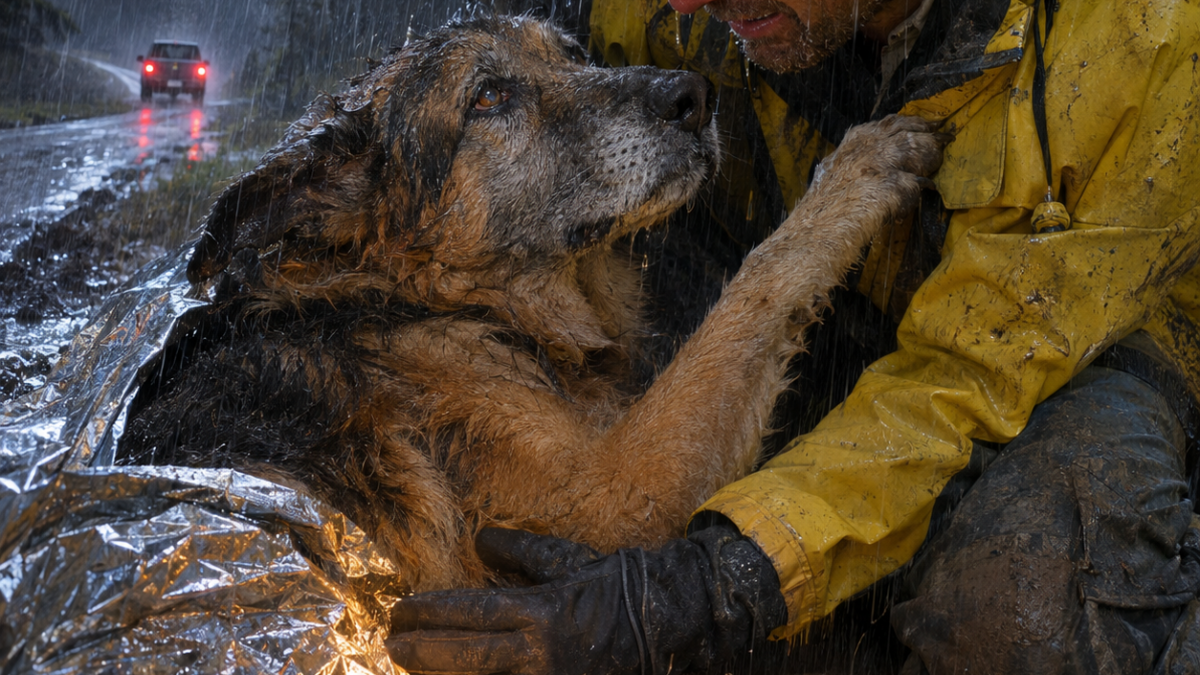
Not waves.
A roar.
The sort of sound that reminds you the Pacific is not scenery.
It is mass.
Power.
Darkness.
I woke several times.
Once around two.
Again near four.
By dawn, the wind had dropped.
The rain had weakened.
Clouds still covered everything.
But the storm had moved north.
I made coffee.
Checked marine reports.
Conditions rough but improving.
By six-thirty, I was at the harbor.
My boat, Anna Mae, was thirty-two feet, steel-gray hull, weathered enough that tourists rarely photographed her.
She had belonged to my father before me.
He named her after my mother.
I had threatened to rename her several times.
Never did.
Some things carry too much history to change just because the paint gets old.
I headed offshore alone.
That was normal.
My deckhand, Luis, was visiting family that week.
I planned a short morning.
Check two lines.
Drop gear.
Return before afternoon weather shifted.
Nothing ambitious.
At approximately 7:40, I was a little over four nautical miles offshore.
The sea still carried the storm inside it.
Long rolling swells.
Foam.
Floating debris.
Branches.
Pieces of dock.
A plastic fuel container.
I remember thinking somebody would spend the next month collecting whatever the night had torn loose.
Then I saw the board.
It appeared on the crest of a swell.
Long.
Dark.
Maybe six feet.
Broken from something larger.
Then disappeared.
Nothing unusual.
I turned slightly to avoid it.
The next swell lifted it again.
And something on the board moved.
I leaned forward.
At first I thought seal.
Then I saw ears.
One standing.
One flattened sideways by water.
I pulled throttle back.
The board vanished behind another swell.
My heart began pounding.
“No.”
I swung the boat around.
Waited.
Another wave.
The board rose.
A dog.
A German Shepherd.
Both front legs hooked over the wood.
Chest pressed against it.
Hindquarters in the sea.
Head barely above water.
For a second, he looked directly at my boat.
I have seen fear in animals before.
This was beyond panic.
The dog looked emptied out.
As though terror had lasted so long that there was no energy left to perform it.
I moved carefully.
Too much wake could knock him loose.
“Easy!”
Stupid thing to shout in the middle of the ocean.
Still.
“Easy, buddy!”
His ears moved.
That was all.
The closer I got, the more impossible the scene became.
There was no vessel nearby.
No flotation vest.
No marker.
No reasonable explanation for how a domestic dog had ended up miles offshore after a storm.
His paws were locked around the board.
Not claws simply resting.
Locked.
I saw blood.
The wood had splintered.
His pads were torn.
His forelegs trembled.
I brought the starboard side alongside slowly.
The dog watched.
“Come on.”
I reached with a boat hook first.
Not for him.
For the board.
I wanted to stabilize it.
A wave hit.
The board rolled.
The dog slipped.
One paw came free.
He scrambled.
I dropped the hook.
“Hold on!”
As if he had any other plan.
I fell to my knees at the gunwale.
Reached.
Too far.
Another swell pushed him closer.
I grabbed fur near his shoulder.
He flinched.
Then something happened.
The board rolled completely.
The dog lost it.
For one second, his body floated almost motionless.
Then his legs began paddling.
Slow.
Exhausted.
Not frantic.
As if some final part of him refused to accept sinking.
I leaned over until my ribs hurt against the rail.
Caught both front legs.
“Heavy bastard.”
Wet German Shepherd.
Dead weight.
Maybe seventy pounds normally.
Water made him feel twice that.
I pulled.
His chest hit hull.
For one awful second, I thought I would lose my grip.
Then old fishing muscles did what they had spent thirty years doing.
One more pull.
I got his shoulders over.
Then hips.
He landed on the deck.
Did not stand.
Did not shake.
Did not crawl away.
He simply lay there.
Water poured from his coat.
His body trembled so violently his teeth clicked.
I put one hand on his ribs.
Heart.
Weak.
Fast.
Alive.
“Okay.”
I stripped off my outer jacket.
Wrapped him.
“Okay.”
I had no idea whether I was talking to him or myself.
I abandoned the lines.
Turned toward harbor.
And pushed the throttle forward.
PART2
I called Thomas from the boat.
Dr. Thomas Reed had been my friend since we were sixteen.
He had become a veterinarian.
I had become a fisherman.
Our mothers had both considered this evidence that Thomas made better choices.
He answered on the third ring.
“James?”
“I found a dog.”
Pause.
“You bought another dog?”
“No.”
“Found.”
“Where?”
I looked toward the shivering body wrapped in my jacket.
“Pacific Ocean.”
Longer pause.
“What?”
“Five miles out.”
“James, what the hell are you talking about?”
“German Shepherd.”
“Hypothermic.”
“Bleeding paws.”
“Barely responsive.”
Thomas’s voice changed immediately.
Professional.
“How long ago?”
“Five minutes.”
“Breathing?”
“Yes.”
“Conscious?”
“Eyes open.”
“Do not give food.”
“Keep him wrapped.”
“Warm cabin if you can, but gradual.”
“I’ll meet you.”
“I’m still twenty minutes out.”
“I’ll be there.”
He hung up.
That was Thomas.
No further questions until the animal was safe.
The dog lifted his head once during the return.
Barely.
I was steering from inside the cabin, glancing back every few seconds.
His eyes followed me.
Then closed.
I found myself talking.
“You don’t get to do that.”
No response.
“Eyes open.”
One ear twitched.
“Good.”
I had never trained an animal.
No idea whether this mattered.
Still.
“Stay.”
He breathed.
“Stay with me.”
The word felt ridiculous considering what he had already survived.
Thomas had assembled half the clinic by the time I reached harbor.
Two technicians.
A stretcher.
Thermal blankets.
Portable oxygen.
I tied off badly because my hands were shaking.
Normally I could secure a line blindfolded.
That morning I fumbled twice.
Thomas came aboard.
Saw the dog.
His expression changed.
“Jesus.”
“Alive.”
“I can see that.”
He knelt.
Checked gums.
Pulse.
Temperature with equipment.
His face hardened.
“We go now.”
They lifted him.
The dog made one sound.
Not a bark.
A low exhausted whine.
I stepped back.
For the first time since seeing him, I had nothing to do.
I hated it.
Thomas looked at me.
“You coming?”
“Yeah.”
I followed in my truck.
Still wearing soaked clothes.
No jacket.
Did not go home.
Did not call anyone.
I sat in the clinic waiting room with salt water drying on my hands.
Two hours.
Maybe more.
The wall clock moved impossibly slowly.
I had spent decades waiting on weather.
Fish.
Tides.
Engines.
But waiting for a door to open when a life is behind it is different.
Finally Thomas came out.
He looked angry.
And amazed.
That combination frightened me.
“Well?”
“He should be dead.”
I stood.
“What?”
“His core temperature was dangerously low.”
“He’s dehydrated.”
“Electrolytes are a mess.”
“His paw pads are shredded.”
Thomas rubbed his face.
“There are splinters embedded under the claws and into the pads. He was gripping something hard for a long time.”
“The board.”
“I figured.”
“He’s got older joint changes too.”
“How old?”
“Maybe seven.”
“Eight.”
“Hard to say yet.”
I swallowed.
“He’ll live?”
Thomas looked at me.
Then nodded.
“I think he will.”
My knees weakened enough that I sat.
I did not realize until then how convinced I had become that the answer might be no.
Thomas sat beside me.
“You all right?”
“Yeah.”
He snorted.
“Terrible liar.”
I stared at floor.
“How long could he have been out there?”
“Water temperature?”
I told him.
He shook his head.
“Hours.”
“Maybe many hours.”
“Part of his body was supported by the wood, which may have saved him.”
“He still should have become too weak to hold on.”
“But he didn’t.”
No.
He didn’t.
Then anger arrived.
Delayed.
Hot.
“Who loses a German Shepherd five miles offshore?”
Thomas said nothing.
I looked at him.
“Who?”
“Could’ve been accident.”
“Boat.”
“Dock.”
“Storm surge.”
“Maybe.”
But something felt wrong.
A dog does not simply stroll into deep water.
Not five miles.
Not in that weather.
Thomas put hand on shoulder.
“Call Coast Guard.”
So I did.
At first, nobody knew.
A report was made.
Harbor masters contacted.
Lost animal notices checked.
No missing dog matching.
Then someone remembered a boat.
Small recreational vessel.
Two men.
Left from a secondary marina around seven the previous evening.
Bad weather already building.
Harbor employee had warned them.
They returned less than two hours later.
No dog.
The vessel registration led authorities to them.
Their first statement was simple.
The dog had fallen overboard.
Wave hit.
Dog slipped.
They tried to turn around.
Lost him.
Possible.
Terrible.
Possible.
I wanted to believe it.
Then a witness came forward.
A woman named Patricia Lane lived in an apartment overlooking the smaller marina.
She had gone outside during a break in the rain to secure a patio chair.
She saw the boat moving through harbor channel.
Saw a dog standing near stern.
Saw one man grab its collar.
Saw them argue.
Then, according to her statement, saw the dog lifted and pushed over the side.
Deliberately.
Still inside protected harbor water.
The storm and current had carried him outward.
Maybe the broken board came from debris near marina.
Maybe he found it later.
We will never know.
The men changed their story.
The dog belonged to one of them.
His name had been Duke.
He was older.
Had developed mobility problems.
Needed veterinary care.
They did not want to pay.
One statement used words that remained in my head for years.
“He wasn’t worth it.”
I sat in Thomas’s office when I learned.
Did not speak for a long time.
Then asked:
“What happens to them?”
“That’s law enforcement.”
“I know.”
I had never wanted to hit someone so badly in my life.
Thomas knew.
“James.”
“I’m not going anywhere.”
“Good.”
I looked through treatment-room window.
The dog lay under blankets.
IV line.
Bandaged feet.
“He wasn’t worth it?”
My voice broke.
“This animal held onto a board through a storm all night because he wanted to live, and they decided he wasn’t worth it?”
Thomas said nothing.
There was nothing useful to say.
I went every day.
That was not the plan.
The first day, I told myself I was checking because I had found him.
Second day, because Thomas wanted to explain treatment.
Third day, because I happened to be near clinic.
Lie.
By day four, nobody pretended.
The dog knew me.
Or at least recognized me.
First day, no food.
Second day, he lifted his head when I entered.
Thomas noticed.
“Interesting.”
“What?”
“He doesn’t do that for me.”
“Maybe he doesn’t like you.”
“Most people don’t.”
Third day, tail moved.
Almost nothing.
One small sweep against blanket.
I stopped walking.
“Did you see that?”
A technician smiled.
“We saw.”
I crouched beside.
“Hey.”
The dog looked.
“You remember?”
Impossible to know.
But his tail moved again.
On day four, Thomas handed me small piece of boiled chicken.
“Try.”
I held it.
The dog sniffed.
Turned away.
I waited.
“Come on.”
Nothing.
I sat on floor.
Twenty minutes.
My knees hated me.
I told him about fishing.
Ridiculous.
“Today was useless.”
“Too much swell.”
“Luis comes back Monday.”
“Engine belt needs replacing.”
His eyes stayed on me.
I held chicken again.
He took it.
Slow.
Careful.
I had caught thirty-pound salmon that gave me less satisfaction.
I laughed.
“There.”
The dog chewed.
Swallowed.
Looked at me.
“What?”
Tail.
Once.
At one week, he stood.
Barely.
Bandages on all four paws.
His rear legs shook.
Thomas supported chest.
I supported hips.
The dog lasted three seconds.
Then collapsed.
We cheered.
Three grown adults cheering a German Shepherd for standing.
No shame.
At two weeks, he walked from kennel to hallway.
Six steps.
Then ten.
He hated the polished floor.
His paws had spent too long gripping broken wood and clinic bedding.
We put down mats.
He walked.
Every day a little more.
The visible injuries improved.
The invisible ones became clearer.
The first time I put my fishing jacket on inside clinic because I was leaving, the dog began trembling.
Not cold.
He backed into corner.
Eyes wide.
I froze.
Thomas looked between us.
“Take it off.”
I did.
Trembling slowed.
“What?”
“Association.”
“With jacket?”
“Maybe with departure.”
“Maybe with boat.”
The men who threw him overboard had likely worn heavy weather gear.
Same smell.
Same movements.
I sat.
Placed jacket on floor.
Did not push.
The dog stared at it.
Then me.
I stayed another hour.
Leaving became the problem.
Every day when I stood, he watched.
When I moved toward door, his breathing changed.
If I returned for keys, he relaxed.
He had seen enough people leave.
So I changed routine.
Some days, I stood and did not leave.
Put jacket on.
Sat.
Took it off.
Walked to door.
Returned.
Again.
Again.
No big reaction from me.
Thomas said:
“You realize you’re training yourself around him.”
“Shut up.”
One afternoon, Thomas leaned against doorway.
“You’re taking him home.”
“No.”
“Sure.”
“I’m at sea all day.”
“He can stay with someone.”
“I live alone.”
“That sounds like argument for dog.”
“I don’t need dog.”
Thomas smiled.
“He apparently needs you.”
“That’s manipulative.”
“Yes.”
I looked at Shepherd.
He was asleep.
One paw hanging off bed.
Bandages gone.
New skin tender.
“What would I even call him?”
Thomas grinned.
That was trap.
I had walked directly into it.
Three weeks after rescue, I signed adoption papers.
His legal name still Duke.
I changed it.
Not because Duke was bad name.
Because that name belonged to people who had decided his life was disposable.
I wanted something else.
I thought about the broken plank.
Wood.
The thing he held when there was nothing else.
Timber.
Thomas laughed when I said it.
“That is extremely fisherman.”
“Good.”
I signed.
TIMBER CALLAHAN.
Ridiculous.
Perfect.
My house was small.
White walls.
Blue door.
Little fenced yard with grass that survived mostly because I ignored it.
Timber stopped at threshold.
Would not enter.
I walked inside.
He stayed.
I returned.
Sat on floor.
“No rush.”
Ten minutes.
He stepped forward.
One paw.
Then another.
Entered.
Sniffed living room.
Kitchen.
Chair.
Hallway.
Bedroom.
Then returned to me.
Sat.
Not touching.
Just near.
I rubbed behind ear.
“Okay.”
Home.
First night, Timber slept by front door.
I had purchased an expensive orthopedic bed.
He ignored it.
Floor.
Fine.
At two in morning, I woke.
Checked.
Still there.
At five, he had moved three feet closer to bedroom.
Progress.
By end of week, he slept outside my door.
By end of month, inside.
Never on bed.
Too dignified.
The paw began after about ten days.
I came home from harbor.
Timber was waiting.
Not frantic.
He never jumped.
He walked toward me.
Sat.
Then lifted one front paw.
Placed it across my hand as I crouched.
Not shake.
He did not lift away.
He rested.
I froze.
The pressure was gentle.
But deliberate.
The same paw that had locked around broken wood.
I let him keep it there.
A minute.
Two.
His breathing slowed.
Eyes softened.
Then he removed paw.
Walked away.
Next evening, same.
Then next.
It became ritual.
I came home.
Crouched.
Paw on hand.
Wait.
At first, sometimes twenty minutes.
Later five.
Eventually one.
But we always did it.
Thomas observed once.
“He’s grounding.”
“What?”
“Could be.”
“Contact reassurance.”
“Or he trained you to become furniture.”
Likely both.
I called it the timber test.
As long as his paw touched me and his breathing slowed, the world was okay.
I never rushed.
He had spent one night holding on because letting go meant death.
If a few minutes holding my hand made home make sense, I had minutes.
The harbor remained difficult.
First time I tried walking him near it, Timber stopped two blocks away.
Wind shifted.
Salt.
Diesel.
Gulls.
His body went rigid.
We turned around.
No argument.
Second attempt weeks later.
One block closer.
Stopped.
Home.
Third.
He saw boats.
Trembled.
We sat on sidewalk.
People passed.
Nobody touched.
I fed tiny chicken pieces.
Ten minutes.
Home.
Months.
That was healing.
Not dramatic confrontation.
Choice.
Return.
Choice.
Again.
I never took him onto my boat that first year.
People asked why.
Because he did not owe me that.
He could live perfectly good life without ever setting paw on a deck.
Some wounds do not require ceremonial defeat.
But Timber surprised me.
One morning, nearly eleven months after rescue, I was preparing Anna Mae at dock.
Timber was with Luis on pier.
He had become comfortable at harbor.
He liked fishermen.
Probably because everyone carried food.
I opened cabin.
Timber approached ramp.
Stopped.
I saw.
Said nothing.
Luis looked at me.
I shook head.
No encouragement.
Timber sniffed.
One paw on ramp.
Back.
Wait.
Another.
Then both.
He climbed aboard.
Alone.
No command.
I stopped breathing.
Timber walked deck.
Sniffed.
Reached starboard side.
Looked at water.
His body tensed.
I stood ten feet away.
No touching.
No reassurance.
He needed choice.
After perhaps thirty seconds, he turned.
Walked toward me.
Placed paw on my boot.
Not hand.
Close enough.
I crouched.
“Want to go?”
Tail moved.
Once.
We did not leave harbor.
That day was enough.
A week later, he boarded again.
We motored inside bay.
Ten minutes.
Timber stood near cabin.
No trembling.
Back.
Another week.
Twenty minutes.
Then calm coastal day.
I asked Thomas if I was insane.
“Yes.”
“Medically?”
“Dog seems healthy.”
“Emotionally?”
“Both of you questionable.”
Fair.
We went one mile offshore.
Timber sat behind my chair.
I watched him constantly.
When swell lifted boat, his ears changed.
But he stayed.
Then something remarkable.
He stood.
Walked toward bow.
Not far.
Wind hit his fur.
He raised his nose.
Looked at horizon.
No trembling.
I cried.
Quietly.
There was nobody but Luis to see.
He pretended not to.
Good man.
I did not interpret it as Timber defeating ocean.
The ocean had done nothing morally wrong.
Men had.
Water was water.
But Timber had separated sea from terror.
That mattered.
The place connected to abandonment became also a place where he returned home with me.
Experience can overwrite association slowly.
Not erase.
Add.
That is what we did.
The investigation eventually resulted in charges.
Animal cruelty.
Other related violations.
I attended one hearing.
Then stopped.
Not because it did not matter.
It did.
Accountability matters.
But I realized those men were taking up too much space in Timber’s second life.
I did not want every morning to be about what they had done.
Timber certainly did not.
He cared about breakfast.
Walks.
My return.
Boat smells.
A rubber ball he carried everywhere but almost never gave back.
So I let law handle them.
I handled Timber.
His health improved.
The “sickness” they had claimed made him not worth veterinary care turned out mostly manageable.
Arthritis.
Skin condition.
Dental issues.
Nothing remotely justifying abandonment.
Medication.
Better nutrition.
Routine.
His coat returned thick.
Gray-black and tan.
Scar tissue remained around paws.
One pad never became completely smooth.
That was fine.
Bodies record history.
They do not have to hide it.
I learned dog ownership at fifty.
Poorly at first.
I bought wrong food.
Too many toys.
Forgot poop bags exactly once and had to use harbor receipt.
Luis laughed for week.
Timber chewed one shoe.
Only one.
My best boot.
Fair.
I once left fish scraps where he could reach.
Catastrophic gastrointestinal consequences.
Thomas refused sympathy.
“You feed marine waste to recovering Shepherd?”
“I forgot.”
“Idiot.”
Correct.
We learned.
Timber learned me too.
He knew my alarm.
Truck keys.
Coffee.
Which boots meant sea.
Which meant grocery store.
If I put fishing jacket on, early months he trembled.
Later, he simply followed.
Eventually, jacket meant:
Maybe boat.
Maybe pier.
Maybe wait at Thomas’s clinic if weather bad.
No abandonment.
Repetition did that.
Not promises.
Dogs do not care if you say “I’ll come back” once.
You come back a hundred times.
Then sentence becomes body knowledge.
Timber came to Thomas’s house on days I could not safely bring him fishing.
Thomas complained.
Then bought a dog bed.
Hypocrite.
His wife Elena loved Timber.
Within two months, Timber learned Thomas’s clinic back entrance and tried walking in whenever we passed.
Veterinary trauma apparently forgiven due treat quality.
Children at harbor adored him.
At first, I kept distance.
Too much attention.
Then Timber began approaching calmly.
One girl, maybe six, asked:
“Is this the ocean dog?”
I hated phrase.
But said yes.
She stroked his ear.
“Was he scared?”
“Very.”
“Is he scared now?”
I looked at Timber.
He was trying to steal cracker from her brother.
“Not currently.”
She giggled.
Then asked:
“Why did he hold the wood?”
“Because he wanted to stay alive.”
She nodded.
Simple.
Children do not need metaphor.
Adults do.
People began turning Timber into inspirational slogan.
“Never let go.”
“Fight until someone comes.”
“Survival is choice.”
I resisted.
Sometimes people do let go.
Sometimes bodies cannot continue.
That is not moral failure.
Timber did not survive because he was better than animals who don’t.
He got lucky enough to find floating wood.
Strong enough.
Weather shifted.
I happened to pass.
Many pieces.
Resilience matters.
Luck matters too.
That humility is important.
What impressed me was not that Timber “refused death.”
It was how he learned safety after betrayal.
Survival was instinct.
Trust was choice repeated.
He let me touch.
Eat from hand.
Enter house.
Stay alone briefly.
Return harbor.
Board boat.
Sleep.
That work was quieter than ocean rescue.
Harder maybe.
The paw ritual changed.
At six months, paw on hand lasted seconds.
At one year, sometimes he skipped if distracted.
I pretended offended.
One evening, I came home late because engine problem.
Timber waited by door.
I entered.
He approached.
Placed paw.
Held longer than usual.
I sat on floor.
“Sorry.”
He leaned.
We stayed ten minutes.
Then dinner.
That was apology accepted.
I was not lonely before Timber.
Or at least I told myself that.
Never married.
Had relationships.
Nothing lasted.
Fishing fills time.
Harbor family.
Thomas.
Luis.
Still, house had been silent.
Timber changed sound.
Water drinking at midnight.
Nails on floor.
Dreaming.
Collar tags.
Sighing dramatically when I took too long.
Presence.
Maybe that is why his fear of abandonment affected me so deeply.
I had built life around independence.
Timber taught dependency is not always weakness.
Some things are supposed to matter when they leave.
One winter, I got pneumonia.
Bad enough that Thomas threatened hospital.
Timber remained beside couch.
Would not go with Luis for walk until I stood and told him.
He returned immediately.
Paw on hand.
This time I was the one breathing too fast.
He stayed.
Thomas observed.
“Look.”
“What?”
“He’s your plank now.”
I almost threw pillow.
Too sentimental.
Also true.
I had once thought the paw meant:
Don’t leave me.
Over time I realized it also meant:
I’m here.
Same gesture.
Fear became affection.
That is healing.
Not eliminating behavior.
Changing meaning.
Year two, Timber was fully comfortable on boat in calm water.
Not storms.
I would never take him out in conditions anything like that night.
He wore canine flotation vest.
Non-negotiable.
First time I put it on him, he looked betrayed.
Good.
Safety is humiliating.
We all survive.
He sat at bow.
Wind in fur.
Sometimes barked at gulls.
Rare.
He developed love for sea lions from safe distance.
Hated foghorn.
Reasonable.
One afternoon we passed near approximate area where I had found him.
No marker.
Ocean has no addresses.
GPS coordinate saved in my plotter.
I did not stop.
Did not make ceremony.
Timber stood at bow.
I glanced at numbers.
Then him.
Kept going.
Sometimes moving past is better than reenactment.
The broken board was never recovered.
It drifted away after I grabbed Timber.
For months, that bothered me.
I wanted it.
Evidence.
Relic.
Then realized absurdity.
Wood did its job.
No need museum.
Timber had let go.
So should I.
The witness Patricia eventually met Timber.
She asked.
I agreed.
She arrived at harbor.
Older woman.
Maybe late sixties.
When she saw him, she covered mouth.
“I thought he died.”
Timber approached cautiously.
She cried.
“I saw them.”
Her voice shook.
“I should’ve called sooner.”
“You did call.”
“Next morning.”
“You came forward.”
“I froze.”
I said something Thomas had taught me.
“You did what mattered next.”
Patricia crouched.
Timber sniffed hand.
Then leaned.
She sobbed.
He stayed.
Dogs forgive differently than courts.
Or maybe he had no idea who she was.
Either way, she left lighter.
I never contacted men who abandoned him.
No interest.
If they were sorry, law could hear.
Timber did not need reunion.
Closure is often something humans impose on animals because we like narrative symmetry.
No.
His closure was dinner at six and me coming home.
At three years, arthritis worsened.
Not severe.
Medication.
Supplements.
We adjusted boat ramp.
Shorter dock walks.
He remained strong.
Thomas estimated nine or ten then.
Nobody knew exact age.
I stopped caring.
Birthdays arbitrary.
We celebrated rescue day.
Not as trauma anniversary.
As Found Day.
May twenty-fourth.
Chicken.
Boat ride if weather good.
New toy.
No speeches.
First Found Day, Thomas brought cake for humans.
Second, Luis bought Timber absurd captain hat.
He wore three seconds.
Photo.
Then ate brim.
Good.
At harbor, people knew him.
“Captain Timber.”
Kids.
Fishermen.
Tourists occasionally.
One man asked if he was “the dog they threw in ocean.”
I answered:
“He’s Timber.”
Small correction.
Important.
Trauma should not become name.
He developed quirks.
Would not sleep facing wall.
Always toward door.
Fine.
Would not stay on dock during heavy wind.
We left.
Fine.
Shook during thunderstorms for first two years.
I sat.
Fine.
Eventually storms became less.
Not gone.
Healing not straight line.
Sometimes one bad wind brought him backward.
Then next day better.
No failure.
Nervous systems remember.
We wait.
I became good at waiting.
Fishermen should be.
But this was different.
Waiting without trying to force outcome.
Sit near dog.
Paw on hand.
Breath slows.
That patience spread into rest of life.
I shouted less at broken equipment.
Luis noticed.
“Timber made you soft.”
“He made me smart.”
“No.”
“Definitely soft.”
Maybe.
Thomas said once:
“You know what’s interesting?”
“Usually not.”
“You used to think every problem had mechanical solution.”
“I’m fisherman.”
“Exactly.”
“Tighten.”
“Replace.”
“Pull harder.”
“You can’t pull trauma out.”
I looked at Timber sleeping.
“No.”
“You sit beside it until it learns you’re not leaving.”
That was Thomas at his best.
Annoying.
Correct.
At four years, Timber saved nothing dramatic.
Good.
No child.
No fisherman.
No headlines.
He did alert me once that stove burner remained low.
By barking.
Maybe smoke smell.
Maybe coincidence.
I turned off.
Gave treat.
Enough heroism.
People kept asking whether I rescued another ocean dog.
No.
Ocean is not full of abandoned Shepherds.
Thank God.
This was one case.
One terrible choice by two men.
One lucky sighting.
Not legend.
I prefer truth.
Truth already extraordinary.
Found Day fifth year, Timber moved slower.
White muzzle.
Boat rides shorter.
Still paw ritual.
Now when he placed paw, sometimes mine trembled from age.
Fifty became fifty-five.
Fishing wears body.
Shoulder pain.
Hands stiff.
Timber and I aged together.
That pleased me.
One evening I noticed he did not put paw.
He walked straight to bed.
My chest tightened irrationally.
I followed.
“Hey.”
He looked.
Tired.
Next morning, still tired.
Thomas examined.
Bloodwork.
Kidney values changed.
Manageable.
Diet.
Medication.
Monitoring.
Not crisis.
Still, fear entered me.
The sort Timber had lived with.
Someone may leave.
I became clingy.
Checked breathing.
Followed him room to room.
Thomas noticed.
“James.”
“What?”
“You’re becoming him.”
I laughed.
Then stopped.
He was right.
“I don’t know how to do this.”
“You’ve known since first day.”
“What?”
“Stay.”
Simple.
Timber improved.
Months.
Good.
Then gradually age.
No miracle.
I stopped commercial fishing full-time.
Not because Timber.
Mostly shoulders and market.
Sold half permits.
Took charter work.
More mornings home.
Timber liked.
So did I.
Maybe I had been hiding in work too.
Different kind abandonment.
Not severe.
But absence.
I learned from him to return sooner.
One winter, storm hit like first.
Windows shook.
Timber woke.
Panted.
I sat on floor.
He placed paw.
Long.
Wind screamed.
Ocean roared.
I did not tell him “you’re safe” repeatedly.
Words sometimes become noise.
I stayed.
Hand under paw.
Hours.
At dawn storm passed.
Timber slept.
That felt like completing something.
Not erasing first night.
Adding another.
This storm ended with home.
At seven years after rescue, Timber could no longer safely ride boat.
Balance.
Hips.
I expected him upset.
He was not.
He waited at Thomas’s or home.
I returned.
Paw.
Life adapted.
Humans often grieve phases before animals do.
They live current capacity.
I learned.
Luis became captain of Anna Mae eventually.
I still owned share.
First day he took her without me, I stood dock like idiot.
Timber beside.
Boat disappeared.
I felt useless.
Timber leaned.
We went home.
Retirement, partial then full, can feel like ocean abandonment.
Another lesson.
Identity not job.
I had told Timber he was more than what was done to him.
Needed same for myself.
We walked instead.
Pier.
Neighborhood.
Short trail.
Timber sniffed everything with professional seriousness.
I learned town I had lived in thirty years.
Funny.
Work routes hide details.
Dog routes reveal.
A little boy once stopped us.
“Captain Timber!”
Timber sat.
Boy said:
“My mom says he survived ocean.”
“Yes.”
“How long?”
“Long enough.”
He thought.
Then hugged him.
Timber tolerated.
Boy whispered something.
Later mother told me child had been struggling with leukemia treatment.
He had read Timber story.
I did not know what to say.
People use survival stories as scaffolding.
I worry about false promises.
So I told boy:
“Timber didn’t know what happened next.”
“He just did next thing.”
“Held on.”
Boy nodded.
That seemed safer.
No guarantee.
Just next.
Timber died at approximately thirteen or fourteen.
We never knew exact.
It came slowly.
Kidneys.
Arthritis.
Then cancer found in abdomen.
Thomas sat across exam room.
Friend.
Vet.
His face told me.
“How long?”
“Maybe weeks.”
“Pain?”
“Manageable for now.”
I nodded.
No bargaining.
I had watched Timber survive impossible.
That did not mean he owed me another impossibility.
Important.
Survival stories can become cruelty if we demand survivors keep proving strength forever.
He had done enough.
Last weeks were home.
Chicken despite diet rules.
Sun.
Short harbor visits by car.
No boat.
Luis came.
Thomas.
Elena.
Patricia once.
Kids from dock.
Not all at once.
Quiet.
Timber tolerated celebrity with patience.
Mostly slept.
The paw ritual remained.
Even weak.
I came home from grocery store.
He lifted paw.
Could barely.
Placed on hand.
I sat floor.
“Still?”
Tail.
I laughed.
“Okay.”
We stayed.
His final night, storm forecast.
Of course.
Not violent as first.
Rain.
Wind.
Ocean audible.
Timber could not stand.
Thomas came to house with supplies.
We had decided home euthanasia next morning if he remained uncomfortable.
At two, Timber’s breathing changed.
I called Thomas.
He came early.
We sat.
Timber on his bed.
I held paw.
Not he holding me.
Maybe both.
I talked.
“Remember board?”
Stupid.
“Probably not.”
Rain hit windows.
“You don’t have to hold on tonight.”
There.
The words broke me.
For years his story was holding on.
Now love required opposite.
“You can let go.”
Thomas looked away.
I put forehead near his.
“I’m here.”
Paw still on hand.
“Nothing’s going to take you anywhere alone.”
His breathing slowed.
Thomas gave sedation.
Timber relaxed.
For first time maybe entire body without tension.
Then final medicine.
His paw slipped slightly.
I held.
Heart stopped.
Rain continued.
Ocean continued.
I cried until there was nothing dignified left.
Good.
Dignity overrated.
I had his ashes scattered partly at home.
Partly sea.
This may sound cruel given history.
It was not.
By then, ocean was not his enemy.
We had built hundreds of safe hours on boat.
Wind.
Bow.
Sun.
He had reclaimed that space.
I took Anna Mae out with Luis.
Calm morning.
No ceremony crowd.
We released ashes near shore, not five miles out.
I said:
“You don’t have to swim.”
Luis cried.
Pretended wind.
I let him.
I kept Timber’s collar.
Flotation vest.
One paw print Thomas’s staff made in clay.
No board.
No relic from trauma.
Enough.
The house became quiet.
I expected collapse.
Instead, grief came in waves.
Appropriate.
First days huge.
Then smaller.
Then surprise.
A scratch at door that was branch.
A shadow.
No paw on hand.
That one hurt most.
I kept putting hand beside chair unconsciously.
Nothing.
Months.
Then one evening, I rested own hand on knee.
Realized breathing calm anyway.
Timber had taught my nervous system too.
We had practiced safety together so long some remained after.
That felt like his final gift.
I did not adopt immediately.
A year later, Thomas called.
“No.”
“You don’t know why.”
“Dog?”
“Yes.”
“No.”
“Fine.”
He hung up.
I went to clinic next day.
Obviously.
Dog was old Labrador mix.
Female.
Ten.
Owner died.
Name Rosie.
She ignored me.
Excellent.
No dramatic connection.
I sat.
Eventually she leaned.
I fostered.
Then adopted.
Thomas unbearable.
Rosie hated boats.
Completely.
Fine.
We never took her.
She loved car rides.
Different.
I never asked her to be Timber.
She never put paw on hand.
Instead she rested chin on knee.
New language.
Good.
People at harbor asked if she was “new Timber.”
I corrected gently.
“No.”
“This is Rosie.”
Names matter.
Living animals do not exist to fill roles dead ones left.
Timber taught enough.
The two men who abandoned Timber eventually faded from my thoughts.
I hope consequences mattered.
I do not know what their lives became.
I no longer needed.
Timber’s story grew beyond them.
Their cruelty was beginning.
Not definition.
Important distinction.
I tell children at harbor still.
Not every detail.
I show old photograph.
Timber at bow wearing life vest.
Gray-black coat.
Ears up.
Wind.
“Here’s dog who learned ocean could mean something else.”
That is better than:
Dog thrown away.
His life became more than worst night.
We should offer survivors that courtesy.
Sometimes adults ask:
“Do you think he forgave?”
I say:
“I don’t know.”
Dogs do not write moral philosophy.
He trusted me.
That was enough.
Forgiveness not required.
Healing does not owe offender peace.
Sometimes they ask:
“Did he know you saved him?”
Maybe.
He knew I was there.
Then there again.
Again.
That is what mattered.
Rescue is not one dramatic lift over gunwale.
It is returning.
Meals.
Medicine.
Patience.
Door opens.
Person comes home.
Again.
The actual rescue took maybe fifteen minutes from sighting to deck.
Rehabilitation took months.
Trust took years.
Love grew somewhere inside repetition.
That is full story.
I think often about moment Timber lost board.
His body floated.
He paddled.
No panic left.
Just movement.
If I had arrived two minutes later?
Do not.
I learned from other survivors: alternate timelines are poison.
I arrived when I arrived.
He was holding.
Enough.
The board saved him.
But only temporarily.
Then my boat.
Then clinic.
Then home.
Safety can be relay.
One thing holds until next.
We rarely survive by one permanent anchor.
Maybe that is why paw ritual changed from fear to love.
At first, I was board.
Then I became person.
Eventually he did not need to grip.
He chose touch.
That distinction mattered.
There is a photo Thomas took year three.
Timber asleep.
My hand beside him.
His paw resting loosely over it.
Not gripping.
No tension.
That is my favorite.
Because it shows healing better than bow photo.
He could release anytime.
He simply did not want to.
Choice.
I used to call him “the dog who wouldn’t let go.”
Later I changed.
“The dog who learned he could.”
Both necessary.
Survival required grip.
Healing required knowing release would not equal abandonment.
That is deeper.
When Timber first slept through my putting on jacket, I cried.
Small milestone.
He did not get up.
No trembling.
I stood there wearing coat, staring at sleeping dog.
Anyone else would think nothing happened.
Everything happened.
Trust became boring.
Perfect.
When he first stayed home alone forty minutes and did not panic, same.
When I returned, he greeted.
No frantic paw.
Just wag.
Then paw later.
Boring safety.
Best.
The first year we went to sea together, I watched him more than water.
Dangerous.
Luis complained.
“Captain, perhaps navigate.”
Fair.
Eventually I trusted he would stay.
He trusted boat.
We both relaxed.
Relationships require mutual competence.
Timber taught me compassion without turning me sentimental about ocean.
I still respected weather.
More.
Never left in questionable conditions.
Maybe finding him sharpened caution.
A storm had been weaponized by humans against him.
I would never treat it casually.
I retired Anna Mae eventually.
Sold to Luis for absurdly low price.
He protested.
I said:
“She should stay with someone who knows where she rattles.”
He accepted.
Name unchanged.
Good.
On first day after sale, Luis sent photo.
Rosie not aboard.
Obviously.
At bow, he had attached small metal plate:
TIMBER’S WATCH
I called.
“You sentimental idiot.”
“You taught me.”
Fair.
Plate remains.
No tourists know.
Fine.
Patricia Lane, witness, died a few years later.
Her daughter contacted me.
Said mother kept newspaper clipping of Timber.
Underlined line that he survived.
I was glad.
Witnesses carry trauma too.
She had seen cruelty and spent years wondering if inaction for hours had killed him.
Knowing survival mattered.
Thomas retired.
Finally.
He still answers calls.
Veterinarians apparently incapable of retirement.
We fish sometimes now from shore.
No boat needed.
We talk.
Mostly insult each other.
Good friendship.
One evening, Thomas said:
“You realize if you hadn’t seen him, you would’ve kept going.”
“Obviously.”
“No.”
“Think.”
“He looked like driftwood.”
“Yeah.”
“Why did you look twice?”
I did not know.
Movement.
Light.
Chance.
Maybe experience teaches noticing anomalies.
Maybe luck.
I refuse destiny answer.
Attention plus chance.
That is enough.
I have spent life scanning water.
Birds indicate fish.
Foam.
Current lines.
Debris.
A fisherman survives by noticing small difference in enormous surface.
That morning difference was ears.
Maybe skill.
Maybe coincidence.
Either way, I looked.
Sometimes salvation begins with second glance.
That phrase I do use with children.
Look twice.
If something seems wrong.
Animal alone.
Person struggling.
Smoke.
Danger.
Look again.
Not because every shadow needs intervention.
Because attention creates possibility.
Timber needed one person to notice he was not wood.
I did.
Rosie died years later peacefully.
Different grief.
No comparison.
By then I was older.
No more dogs after.
Maybe.
Never say never.
House quieter.
Still okay.
I learned solitude not abandonment.
Timber helped.
Every May twenty-fourth, I walk harbor.
Not ceremony.
Coffee.
I stand where I first brought him ashore.
Clinic no longer same building.
Thomas moved practice.
Harbor renovated.
Time changes.
I remember soaked jacket.
Stretcher.
Heart pounding.
Then continue day.
Memory should not consume whole anniversary.
Sometimes children recognize me from old article.
Rare now.
Good.
I prefer Timber memory to celebrity.
One kid recently said:
“My grandpa told me about ocean dog.”
I smiled.
“Your grandpa?”
Time.
He asked:
“Was he really five miles out?”
“About.”
“Did he really hold board all night?”
“We think many hours.”
“Was he superhero?”
“No.”
Kid disappointed.
“He was a dog.”
Then I added:
“A very stubborn one.”
Kid smiled.
Better.
I hope story does not teach that if you simply hold on someone will always come.
That would be cruel lie.
Sometimes help is late.
Sometimes circumstances win.
What Timber teaches me is different.
While you can, do the next thing that keeps possibility open.
Grip.
Float.
Paddle.
Look twice.
Call.
Reach.
Wait.
Return.
No guarantee.
But possibility.
Life often survives through possibility.
Timber’s paw scars remained until end.
I used to trace gently.
He did not mind.
Those paws held wood.
Then my hand.
Same anatomy.
Different meaning.
Maybe that is entire story in one detail.
Body remembers survival and learns affection with same tools.
His name made people smile.
Why Timber?
I told.
Some thought morbid.
Maybe.
But I loved it.
Not naming after trauma.
After the thing that held him.
There is difference.
Wood was not villain.
Wood was bridge.
Temporary.
Enough.
We all need temporary things sometimes.
Board.
Friend.
Clinic.
Routine.
Dog.
Person.
Nothing lasts forever.
That does not make support meaningless.
Timber held board until I came.
I held Timber until he could hold himself.
Then he held me sometimes.
Relay again.
The last winter of his life, before diagnosis, we sat porch during storm.
No tremble.
Timber slept.
I listened ocean.
Thought:
We made it.
Not forever.
At that moment.
Enough.
Maybe happiness is often that.
Not permanent safety.
Current safety recognized.
I wish the men who abandoned him could have seen him on bow years later.
Not for revenge.
For contradiction.
They said not worth it.
There he stood.
Healthy.
Loved.
Expensive medications maybe.
Absolutely worth every dollar.
But worth is wrong word anyway.
Life not investment return.
You care because life is in your care.
Simple.
That principle changed how I treated people too.
Luis went through divorce.
I used to tell men “keep busy.”
Instead, I listened.
Thomas lost brother.
I sat.
No solutions.
Timber had trained me.
Stay.
Not fix.
Different from fishing.
Good.
One day Luis said:
“You’re better friend since dog.”
I said:
“Insulting.”
“True.”
Maybe.
Timber never knew any of this.
No idea he changed me.
Dogs do not need credit.
We assign.
He just lived.
Maybe that is purest.
If I could tell him one thing now, not “thank you.”
I said that enough.
I would say:
“You were worth it before I saw you.”
Important.
Before rescue.
Before survival impressed anyone.
Before tail wag.
Before boat.
Before trust.
His value did not begin when somebody recognized it.
We should remember that about every abandoned creature.
People often celebrate survival because it proves strength.
But vulnerable lives deserve rescue even if they are not strong.
Even if Timber had let go.
Even if he could not recover.
He would still have been worth pulling aboard.
Worth warmth.
Worth dignity.
Worth care.
The men who discarded him were wrong before they knew whether he could survive.
That is heart of it.
He happened to survive.
Then thrive.
Wonderful.
But worth came first.
That is what I tell harbor kids now.
Not “never give up.”
I say:
“If something is depending on you, don’t decide its life matters only when convenient.”
Harder lesson.
More important.
Timber’s story became famous locally because dramatic.
Storm.
Sea.
Board.
But millions of animals are abandoned without waves.
Backyards.
Roads.
Apartments.
Shelters.
No fisherman hero.
They deserve same attention.
I donate now.
Quietly.
Thomas knows.
No plaques.
The rescue group created emergency vet fund partly inspired by case.
For owners who might surrender due cost.
I like that.
Punishment after cruelty matters.
Preventing desperation before cruelty matters too.
Not excuse men.
But systems can reduce future harm.
Timber’s life contributing to that feels useful.
I still keep first jacket.
The one I wrapped him in.
Salt stains never fully left.
Torn cuff.
I almost threw away.
Couldn’t.
It hangs in garage.
Not shrine.
Work coat.
Occasionally wear.
That feels right.
Objects should live too.
First time Timber saw jacket years later, no tremble.
He sniffed.
Ignored.
That was moment I knew memory changed.
Not erased.
Integrated.
I sometimes think of his first look on deck.
Eyes that had seen something no animal should.
Years later, those same eyes watched gulls.
Begged chicken.
Closed in sleep.
Same eyes.
Different world.
That is recovery.
World changes enough that senses stop expecting worst.
On his final night, those eyes tired.
I told him he could let go.
I meant not only life.
The board.
Fear.
Need to monitor.
Me.
All.
He had held enough.
When his paw loosened, I did not panic.
I held it.
For him.
Role reversal.
That felt right.
The ocean outside roared that night.
I did not hate it.
Water had been backdrop.
Humans caused first cruelty.
Time caused last ending.
No need enemy.
I learned nuance from dog.
After Timber died, I went to sea alone one last time before selling boat.
Calm.
I sat engine idle.
Looked at horizon.
No ashes then—already done.
No speech planned.
I placed hand on rail where I had pulled him aboard.
Metal cold.
Said:
“Good boy.”
Then started engine.
Came home.
That was goodbye.
Home.
That word.
Timber spent first years perhaps never knowing reliably.
Then my blue door.
By second year he knew.
Truck turns corner.
House.
Yard.
Bed.
Me.
Home is repetition.
Not architecture.
Maybe that is why he waited at door.
Not fear after while.
Ritual.
Confirming cycle.
Leave.
Return.
Leave.
Return.
Trust is predictable return.
I still believe.
My life before Timber had plenty people.
Yet I thought independence means requiring none.
He corrected.
Need is natural.
Attachment creates risk.
Also meaning.
You cannot have one without other.
Holding on creates possibility of loss.
Still worth.
Would I do it again?
Dive over rail for seventy-pound wet Shepherd?
At my age now, probably injure myself.
But yes.
Call help.
Use sling.
Whatever.
Second glance.
Always.
The morning I found him, I abandoned entire fishing day.
Lost money.
Did not care.
Years later, I realized that might have been first time in adulthood I chose life over productivity without calculation.
Timber rearranged priorities instantly.
Stayed.
Thomas says that is why I kept him.
“Because you needed excuse to stop working.”
Maybe.
I say he wanted free veterinary business.
We argue.
Friendship.
At harbor wall, there is no Timber statue.
Thank God.
One small photo inside bait shop.
Owner put.
Timber at bow.
Underneath handwritten:
HE CAME BACK TO THE SEA ON HIS OWN TERMS.
I like.
On his terms.
Choice.
Central.
Thrown without choice.
Rescued.
Then allowed choices.
That is what healing required.
Not proving fear irrational.
Letting him decide distance.
Boat.
Touch.
Time.
The first time I tried to pull him toward dock when he froze, Thomas stopped me.
“Don’t recreate it.”
That hit.
He had been forced into water.
Do not force toward water.
Obvious after said.
I loosened leash.
We backed away.
Trust preserved.
Sometimes help means resisting urge to make progress visible.
Progress invisible often.
One less tremble.
Faster recovery.
Choosing food.
Sleeping deeper.
Paw lighter.
Experts know.
I learned.
Timber taught me to notice subtle things.
Like I noticed him from boat.
Full circle again.
I do not know whether he remembered board.
Dogs memory different.
Maybe scent fragments.
Body.
No narrative.
But ritual of paw may have been unrelated.
Humans love symbols.
Even if invented, symbol helped me be patient.
As long as we do not burden animal with our story.
He was just Timber.
Good.
If he could speak, maybe he would say:
“Chicken.”
Probably.
At end, Thomas asked what I wanted written in medical file.
Nothing.
Records normal.
No “miracle dog.”
No “hero.”
Cause.
Treatment.
Death.
Professional.
Stories elsewhere.
That distinction matters.
Medicine facts.
Memory meaning.
Both valid.
The factual version:
Adult male German Shepherd mix found offshore after storm.
Severe hypothermia.
Dehydration.
Paw trauma.
Recovered.
Adopted.
Lived years.
Died old.
That is enough.
The human version:
Someone threw him away.
He held.
I saw.
Reached.
He trusted.
We stayed.
That is also true.
And every evening for years, he placed paw on my hand.
At first because maybe afraid.
Later because habit.
Later because love, I choose to believe.
He no longer needed plank.
Neither did I.
If you want lesson, here:
Do not confuse holding on with strength forever.
Sometimes strength is holding.
Sometimes strength is letting go.
Sometimes strength is allowing somebody else to hold you.
Timber learned all three.
So did I.
The night before I found him, ocean was violent enough to tear things apart.
By morning, it was still rough.
But light existed.
That is how survival often looks.
Not instant calm.
Just enough light to be seen.
Enough visibility for one fisherman to notice ears where he expected wood.
Enough.
I still wake before dawn.
Habit.
Make coffee.
No dog now.
Sometimes harbor.
Sometimes porch.
Ocean distant.
I think of Timber less often than years ago.
That used to make me guilty.
Now it doesn’t.
Love need not occupy every thought to remain real.
He became part of structure.
Like sea.
Not always consciously noticed.
Still there.
When storms hit, I check reports.
Think briefly.
Hope no animals outside.
No people foolish.
Then move on.
Trauma no longer controls weather.
That feels healthy.
Thomas and I are old.
He says I always was.
We laugh.
Sometimes he asks:
“Remember when you called me saying dog in Pacific?”
“Yes.”
“I thought you were drunk.”
“At seven forty?”
“You’re fisherman.”
Fair.
He says Timber was most impossible case he ever saw recover.
I say doctors use “impossible” too freely.
He tells me shut up.
Good.
Luis sends photos of Anna Mae.
Still running.
Timber’s Watch plate tarnished.
He refuses replace.
Fine.
Salt can have it.
Everything ages.
Sometimes tourist asks plate story.
Luis tells.
Probably exaggerates.
Fishermen.
I do not correct.
As long as key remains:
Dog lived.
Home.
Enough.
I want to end story somewhere simple.
Not ocean.
Not court.
Not clinic.
Living room.
Year three.
Rain outside.
I came home after long day.
Timber met at door.
No trembling.
I took jacket off.
Sat.
He approached.
Placed paw on hand.
Not gripping.
Light.
His breathing already calm.
I scratched his head.
We listened to rain.
No fear.
No waves.
No desperate survival.
Just routine.
That is the moment I would choose if someone asked what rescue looks like.
Not pulling him over rail.
That was emergency.
Rescue was years later, when nothing was wrong.
When he touched me because he wanted to.
When I stayed because I wanted to.
When neither of us was afraid the other would disappear.
That was home.
My name is James Callahan.
For one morning, I was the fisherman who found a German Shepherd nearly five miles offshore.
For years afterward, I was simply Timber’s person.
That was better.
He was never the dog who “wasn’t worth it.”
He was Timber.
A terrible beggar.
A nervous sailor who became a proud one.
A dog who hated foghorns.
Loved chicken.
Trusted slowly.
Aged badly but stubbornly.
Put one paw on my hand every night.
And taught a man who had spent his whole life believing strength meant standing alone that sometimes the bravest thing a living creature can do is hold on long enough to be found—
then, once it is finally safe,
learn that it does not have to hold on so hard anymore.








