PART2:“THAT FIREWOOD IS COMMUNITY PROPERTY—AND I DECIDE WHO BELONGS HERE!” HOA Karen Stole From My Yard at 4 A.M.—Then Tried to Fine Me for Catching Her on Camera
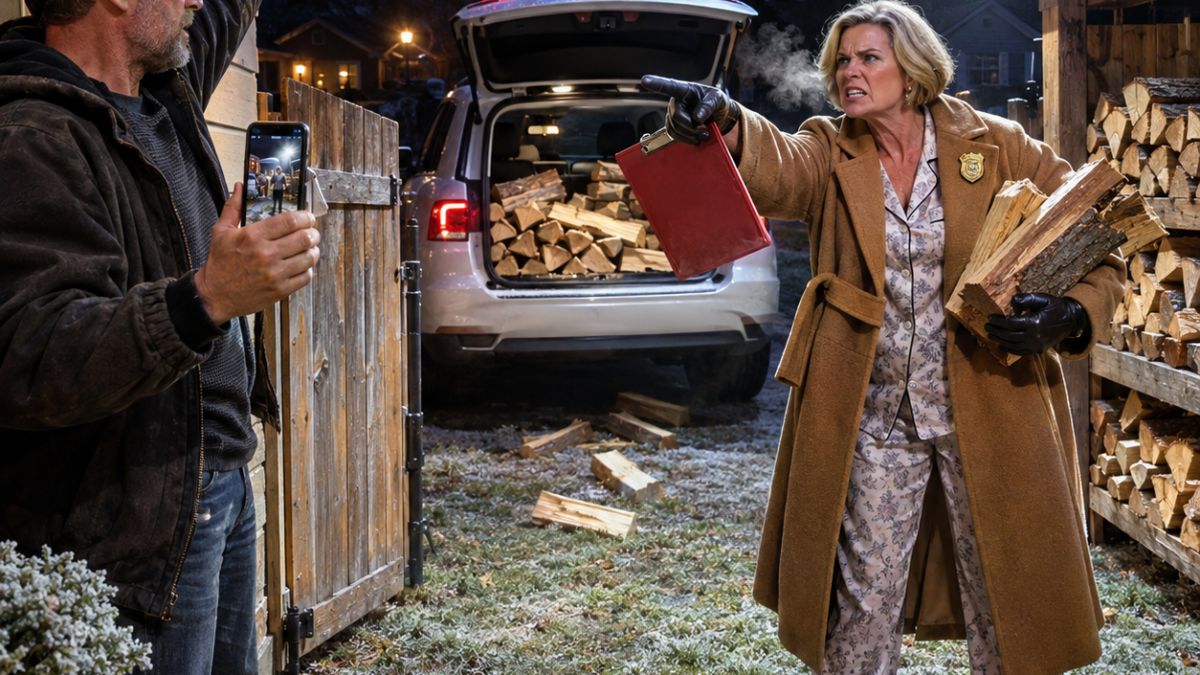
PART2
I did not pay the fine.
I disputed it.
In writing.
Certified mail.
Email.
Copy to all four other board members.
I attached the video.
My property survey.
Photographs showing the camera angle.
The actual surveillance rule.
Section Five-B.
The enforcement procedure.
And one simple question:
Please identify the provision authorizing the HOA president to enter an owner’s private lot and remove personal property without notice, hearing, board approval, or an immediate safety emergency.
Karen called seven minutes after the email reached the board.
I let it ring.
She called again.
Then texted:
You are turning a minor issue into a public spectacle.
Saved.
Another:
I was acting in my official capacity.
Saved.
Another:
You should think carefully about whether humiliating me is worth living here under increased scrutiny.
That one I read twice.
Then saved in three separate places.
I did not reply.
At 6:41 p.m., she texted again.
You have no idea how difficult I can make enforcement when someone decides to become hostile.
I forwarded that one to HOA counsel.
Karen apparently forgot the board’s attorney did not work for her personally.
The formal hearing was scheduled for Thursday.
Maple Hollow had five board members.
Karen.
Vice president Alan Pierce.
Treasurer Susan Blake.
Secretary Denise Porter.
At-large director Raymond Cole.
Alan was a retired airline pilot.
Soft-spoken.
Susan ran a dental practice.
Denise taught eighth-grade English.
Raymond owned a landscaping company and had once told me he joined the board because “somebody has to prevent people from debating mulch for three hours.”
Reasonable people.
Which made me wonder how Karen had accumulated so much power.
The answer became obvious five minutes into the meeting.
Karen arrived with printed binders.
Not folders.
Binders.
My name across the front.
MERCER — COMPLIANCE HISTORY
I almost admired the theatrical commitment.
Karen opened.
“This hearing is not about firewood.”
I leaned back.
“Interesting, considering you took firewood.”
She glared.
Alan cleared his throat.
“Let her finish.”
Karen looked satisfied.
“This hearing concerns a homeowner who has demonstrated repeated hostility toward community enforcement, architectural review, and board authority.”
She began listing violations.
Trash bin visible after collection.
A holiday wreath exceeding a design recommendation.
One mulch-delivery truck parked longer than suggested.
A side camera.
My woodpile.
I waited.
When she finished, Alan looked at me.
“John?”
I slid one thin packet forward.
“This hearing is about firewood.”
Karen scoffed.
“Of course you would say that.”
I turned my laptop.
Played the footage.
Nobody spoke.
Karen in blue robe.
Red wagon.
My yard.
My wood.
At the end, Susan looked directly at her.
“Karen, is that you?”
Karen exhaled dramatically.
“I have already explained—”
Susan interrupted.
“That wasn’t the question.”
Karen’s head snapped toward her.
“Yes.”
“Did John invite you onto his property?”
“No.”
“Did the board vote to remove anything from his lot?”
“There was no need.”
“Did you issue written notice before taking it?”
“No.”
“Was there an immediate safety hazard?”
“Visual violations affect all homeowners.”
Raymond leaned forward.
“Firewood behind a fence was an immediate safety hazard?”
Karen shot him a look.
“I said visual.”
“That isn’t safety.”
“It affects property values.”
I finally spoke.
“Then show the appraisal.”
Karen stared.
“What?”
“You said my wood affected property values.”
I spread my hands.
“Show me evidence.”
“John, this is exactly the kind of combative behavior—”
“No.”
My voice hardened.
“This is exactly the kind of sentence you use when somebody asks you to prove something.”
Silence.
“You called the pile a violation.”
“I measured it.”
“No, you didn’t.”
Her eyes narrowed.
“You don’t know that.”
“I do.”
I slid over timestamped photographs.
“Thirty-two inches maximum height.”
Section Five-B allowed thirty-six.
Raymond measured the scale reference in the photo.
“He’s right.”
Karen’s face reddened.
“Measurements are not the only consideration.”
I opened the regulation.
“They are the only consideration listed.”
“You’re interpreting it too narrowly.”
“I’m reading it.”
The room went quiet.
Karen leaned across the table.
“You have always been difficult.”
I stared back.
“Difficult is what people call someone who stops being easy to intimidate.”
Alan whispered:
“John.”
“No.”
I looked at all of them.
“For eleven years I watched this board send letters to people over mailboxes, wreaths, basketball hoops, garbage cans, and flowerpots.”
Karen snapped:
“Because standards matter.”
“And apparently standards disappear when the president wants free firewood.”
Her face changed.
Alan put both palms down.
“Okay.”
Susan asked:
“What happened to the wood?”
Karen stiffened.
“What do you mean?”
“Did you return it?”
“No.”
“Where is it?”
“I used it.”
Silence.
Denise stared.
“You burned it?”
“It’s firewood.”
That sentence landed harder than Karen expected.
Susan slowly leaned back.
“So your position is that because the property was inexpensive enough, taking it was acceptable.”
“That is not what I said.”
“It is exactly what you said.”
Karen looked around.
“You people cannot seriously be siding with him.”
Raymond answered:
“We’re siding with the documents.”
Karen’s eyes flashed.
“I have spent four years protecting this community.”
Denise said quietly:
“From what?”
Karen turned.
“Excuse me?”
“From what?”
Denise repeated.
“Blue Christmas lights?”
Karen’s face hardened.
“Do not start.”
That phrase was important.
Do not start.
Not:
You’re wrong.
Not:
Here is the rule.
Do not start.
As though disagreement itself were misconduct.
Alan finally made the motion.
Dismiss my camera fine.
Unanimous except Karen.
Then require reimbursement for the wood.
Four to one.
Then require at least two board members to approve any future physical removal of owner property absent a documented emergency.
Four to one.
Karen voted no to every limitation on herself.
Afterward, she followed me into the hallway.
Her heels struck the tile sharply.
“You think this is funny?”
“No.”
“You enjoyed that.”
“I enjoyed watching four adults finally read the rules.”
She stepped closer.
“You embarrassed me.”
I looked at her.
“You entered my yard at four in the morning wearing bedroom slippers and stole wood in a red wagon.”
Her face tightened.
“I didn’t embarrass you.”
I leaned closer.
“You just finally had witnesses.”
Her eyes went flat.
“You’re going to regret this.”
“There it is again.”
“What?”
“The threat.”
“It isn’t a threat.”
“Then say it louder.”
Two board members were still behind us.
Karen looked past me.
Saw them.
She lowered her voice.
“You have no idea what you started.”
I smiled.
“No.”
“You started it.”
That night, I slept well.
Karen did not.
Two days later, my mailbox leaned toward the street.
Could have been weather.
I fixed it.
Then both recycling bins disappeared.
One reappeared near the storm drain with THIEF spray-painted across the side.
I photographed it.
Called waste services.
Bought replacements.
No accusation.
Three nights later, my side fence was spray-painted.
FIREBUG
My camera caught Karen clearly.
Black coat.
Hat.
Can in hand.
She sprayed the word.
Stepped back.
Then took a photograph of her work.
That last part told me everything.
This was no impulsive act.
Karen needed a record of her own power.
The next morning, I sent still images to the four board members.
No commentary beyond:
For your records.
Alan called within twenty minutes.
“John.”
“Morning.”
“This is last night?”
“Yes.”
“Police?”
“Not yet.”
Long pause.
“Why not?”
“Because I want the board records first.”
“What records?”
“Enforcement complaints.”
“Vendor files.”
“Fine approvals.”
“Executive-authority documentation.”
“Everything Karen has been using to run this place.”
Alan went quiet.
“You think there’s more.”
“I think people don’t go from measuring wreaths to spray-painting houses overnight.”
That afternoon, Mr. Alvarez knocked on my door carrying a folder thick enough to stop a bullet.
“I heard.”
“About what?”
“Karen.”
He handed me the folder.
Eight violation notices.
Mailbox.
Bird feeder.
Lawn edge.
Flag placement.
A contractor vehicle.
One notice because his adult daughter parked overnight while he recovered from cataract surgery.
“This one was dismissed.”
“Why?”
“I sent her my surgical papers.”
I stared.
“You sent the HOA your medical records?”
“She said otherwise there was no proof.”
Something inside me shifted.
“This was three years ago?”
“Yes.”
“Why didn’t you challenge her?”
Mr. Alvarez looked embarrassed.
“I was tired.”
That became the phrase I heard most.
I was tired.
The Robinsons were tired.
Fifteen notices.
Their son’s basketball hoop.
A bicycle.
A portable goal.
Music at 7:40 p.m.
One time their youngest daughter had drawn sidewalk chalk flowers on their own driveway.
Karen called it “temporary visual clutter.”
Mrs. Robinson said:
“My daughter cried when I washed it off.”
I looked at her.
“How old was she?”
“Six.”
The Hills brought emails about Christmas lights.
Beth Connelly brought something worse.
Her husband, Mark, died after a massive heart attack on a Tuesday.
Family arrived from three states.
Cars filled the driveway.
Two parked curbside overnight.
Thursday morning, while Beth’s sister was helping choose funeral photographs, a violation notice arrived.
UNAUTHORIZED OVERNIGHT STREET PARKING.
Beth emailed Karen:
My husband died Tuesday. These are relatives here for his funeral. Please give us a few days.
Karen replied:
I am sorry for your loss, but grief does not suspend community standards.
I read that sentence three times.
Beth sat across from me.
“I had forgotten the exact wording.”
She started crying.
“I remembered how it felt.”
I did not know what to say.
So I said nothing.
Sometimes silence is respect.
Then George Mallory came.
Eighty-one.
Soft-spoken.
He carried no folder.
Only one faded photograph.
His wife, Eleanor.
She had dementia.
In the photograph she sat on their porch beside a small silver wind chime.
“She loved that thing.”
George smiled.
“Couldn’t remember my name some days.”
“But she remembered the sound.”
He looked down.
“Karen said it violated the noise rule.”
“Did anyone complain?”
“Karen.”
He rubbed the photograph with his thumb.
“I took it down.”
“Eleanor cried.”
George looked at me.
“She kept asking what she had done wrong.”
My throat tightened.
“When did she die?”
“Eight months later.”
I stared at the photograph.
George said:
“I don’t want revenge.”
“I just want somebody to say it mattered.”
That sentence followed me for days.
The records request uncovered more.
Karen had often issued “routine” fines without full board votes.
She told Susan they fell within presidential discretion.
The bylaws did not say that.
She told Denise she could override architectural decisions when “community character” was threatened.
No such power existed.
She told Alan legal counsel had confirmed several enforcement interpretations.
Counsel had never been asked.
Then the financial records.
Whitfield Community Services.
Repeated small invoices.
Printing.
Holiday décor.
Administrative support.
Consulting.
Vendor owned by Karen’s brother-in-law.
Undisclosed.
Just under $18,000 over two years.
No proof of theft.
Some work clearly performed.
But the relationship should have been disclosed and competitively reviewed.
Susan stared at the ledger.
“I signed these.”
“You relied on Karen.”
“I should have asked.”
“Yes.”
She looked annoyed.
“You’re supposed to comfort me.”
“I’m an engineer.”
“Right.”
The petition for a special meeting reached twenty-eight signatures in two days.
Forty-seven by the end of the week.
Karen responded with a community-wide email.
A SMALL GROUP OF DISGRUNTLED RESIDENTS IS ATTEMPTING TO DESTABILIZE MAPLE HOLLOW.
Then another.
OUTSIDERS AND AGITATORS ARE ATTACKING VOLUNTEER LEADERSHIP.
We all lived there.
Then she named me.
Mr. John Mercer has repeatedly demonstrated hostility toward neighborhood standards, installed invasive surveillance, and encouraged residents to disregard lawful authority.
I forwarded it to HOA counsel.
Counsel advised the board to stop unilateral communications.
Karen sent another message anyway.
I WILL NOT BE SILENCED BY LAWYERS OR BULLIES.
Raymond called me.
“Do you think she realizes she’s the president criticizing the HOA’s own lawyer?”
“No.”
“Good.”
“Why good?”
“Because this is getting easier.”
The special meeting was moved from the clubhouse to Cedar Grove Elementary School cafeteria.
Ninety-three households attended.
People stood along the walls.
Karen entered wearing a red wool coat and pearls.
Perfect posture.
Perfect hair.
She looked like she expected to win.
That was the difference between Karen and everyone else.
We came carrying things that hurt.
She came carrying talking points.
Alan called the meeting to order.
Karen immediately interrupted.
“As president, I will chair.”
Alan looked at the bylaws.
“No.”
Her face changed.
“Excuse me?”
“This special meeting was called by member petition regarding presidential conduct.”
“I am still president.”
“And the vice president chairs where the president has a conflict.”
“I do not recognize a conflict.”
Susan said:
“That is part of the conflict.”
A murmur moved through the room.
Karen turned.
“Susan, think carefully.”
Susan looked at her.
“I have.”
That was the first crack.
Karen demanded opening remarks.
Granted.
She stood behind the folding cafeteria podium.
“Maple Hollow did not become one of the most desirable communities in this county by accident.”
A few heads nodded.
“We have standards because standards protect value.”
True.
“We enforce them because selective enforcement destroys communities.”
Also true.
Then she changed.
“Unfortunately, there are always people who believe rules should not apply to them.”
She looked directly at me.
“People who store unsightly materials.”
“People who place surveillance equipment around their homes.”
“People who resent being told no.”
I stood.
Alan raised a hand.
“John.”
I sat.
Karen smiled.
She continued.
“Mr. Mercer’s hostility began because I corrected a firewood violation.”
Beth Connelly laughed.
Not kindly.
Karen looked toward her.
“Something amusing?”
Beth shook her head.
“No.”
“Please share.”
Beth stood.
“My husband died.”
The room went still.
Karen’s face tightened.
“That is not relevant.”
Beth’s voice changed.
“It is relevant to me.”
Alan looked at Karen.
“Sit down.”
Karen stared.
“What?”
“You’ve had your opening.”
She returned to her chair.
Beth walked to the microphone.
Her hands shook.
“My husband Mark died three years ago.”
She swallowed.
“Our children came home.”
“His brothers came.”
“My sister came.”
“We had cars everywhere because people were trying to keep me standing.”
Her voice broke.
“Two days after he died, I got a violation notice.”
Karen looked away.
Beth held up a printed email.
“I wrote Karen.”
She read:
My husband died Tuesday. These are relatives here for his funeral. Please give us a few days.
Beth’s eyes filled.
“Karen answered…”
She stopped.
Could not continue.
Her daughter stood from the audience.
Took the paper.
Finished for her.
I am sorry for your loss, but grief does not suspend community standards.
Nobody moved.
Karen whispered:
“That email is being taken out of context.”
Beth turned.
“What context would fix it?”
Karen’s mouth opened.
Nothing came.
Beth continued.
“You made me move my brother’s car the night before I buried my husband.”
Her voice rose.
“I stood outside in January at eleven o’clock because I was afraid you’d put another notice on my door.”
She started crying.
“And do you know what I hate most?”
Karen stared.
“I hate that I remember your letter from that week almost as clearly as I remember choosing his casket.”
Silence.
Beth returned to her seat.
No applause.
Too painful.
Mr. Alvarez went next.
He carried his folder.
One notice after another.
Then held up his medical discharge instructions.
“I sent this woman proof of my eye surgery because my daughter’s car stayed overnight.”
Karen said:
“You could have requested an exemption beforehand.”
Mr. Alvarez turned.
“I was in surgery.”
A few people muttered.
He continued.
“I spent forty years teaching children that rules need purpose.”
He looked at the board.
“I was seventy-three years old when I started being afraid to open my mailbox because I wondered what she had found wrong next.”
That sentence landed.
The Robinsons followed.
Mrs. Robinson brought a photograph.
Sidewalk chalk flowers.
Pink.
Blue.
Yellow.
“My daughter drew these when she was six.”
She looked toward Karen.
“You called it visual clutter.”
Karen said:
“The rule concerned temporary markings.”
“My daughter asked me why her flowers made you angry.”
Karen’s face tightened.
“I never said they made me angry.”
Mrs. Robinson’s voice sharpened.
“You fined us seventy-five dollars.”
Her husband took the microphone.
“Our son stopped playing basketball in our own driveway because he thought every bounce would make you come outside.”
Karen snapped:
“That is ridiculous.”
The boy was seventeen now.
He stood from the back.
“No, it isn’t.”
The room turned.
He walked forward.
“I used to watch your curtains.”
Karen stared.
“What?”
“When I played.”
He swallowed.
“Because if they moved, I knew you were checking.”
The room became very quiet.
“I stopped inviting friends over.”
His mother cried.
“I thought my parents were always getting in trouble because of me.”
Karen whispered:
“I never intended—”
He cut her off.
“I know.”
That almost sounded worse.
George Mallory came next.
Slowly.
Cane.
Photograph in one hand.
Alan offered help.
George shook his head.
He reached the microphone.
“My wife Eleanor had dementia.”
Karen immediately closed her eyes.
George noticed.
“You remember.”
She said nothing.
“She liked a wind chime.”
He held up the photograph.
“Silver.”
“Small.”
“She could sit for an hour listening to it.”
His voice weakened.
“When she could not remember our granddaughter’s name, sometimes she still smiled when that wind chime moved.”
People cried openly now.
George continued.
“Karen complained about the sound.”
Karen finally spoke.
“The covenant prohibited persistent nuisance noise.”
George turned.
“Did anyone else complain?”
Silence.
“Anyone?”
No one.
George looked at her.
“You did.”
Karen’s mouth tightened.
“I was enforcing the rule.”
George nodded.
“I took it down.”
His hand shook.
“My wife cried.”
He looked at the photograph.
“She kept asking what she had done wrong.”
Karen whispered:
“I didn’t know she would react that way.”
George looked at her.
“No.”
His voice hardened.
“You did not care enough to know.”
That was the cruelest sentence of the night.
Because it was quiet.
Karen looked wounded.
George continued.
“She died eight months later.”
No sound except the cafeteria ventilation system.
“I don’t want money.”
“I don’t want revenge.”
“I don’t even want an apology if you only give one because ninety people are watching.”
He looked around.
“I just want everyone here to understand what happens when rules stop serving people and start serving the person enforcing them.”
He looked at Karen.
“You made my dying wife feel like she was bad for liking a sound.”
Karen began to cry.
George did not stop.
“That mattered.”
Then he walked away.
I had imagined this meeting differently.
I thought I would feel triumphant.
Instead I felt sick.
Because Karen’s abuse had not been spectacular.
That was the point.
No one dramatic event.
Just dozens of small cuts.
A grieving widow moving a car.
A child washing chalk flowers away.
An old man removing a wind chime.
A daughter sending medical records.
A boy watching curtains.
Small enough individually that everyone felt foolish complaining.
Together they formed a system.
Susan Blake spoke next.
Not as homeowner.
Treasurer.
She admitted signing checks she should have questioned.
Approving fines because Karen called them routine.
Allowing Karen’s certainty to substitute for procedure.
“I am sorry.”
She looked at the room.
“I told myself I was volunteering.”
“I told myself confrontation wasn’t worth it.”
“I told myself Karen understood the bylaws better.”
Susan’s voice broke.
“The truth is I was relieved when she handled everything.”
She looked toward Beth.
“And other people paid for my relief.”
Denise followed.
“I objected privately.”
She looked ashamed.
“I should have objected publicly.”
Alan stood.
“I let her interrupt me for four years.”
A few people smiled sadly.
“I called that keeping the peace.”
He looked at George.
“It wasn’t peace.”
“It was avoidance.”
Raymond took the microphone.
“I joined this board because I thought the worst thing I’d deal with was mulch.”
Laughter.
Needed.
Then he became serious.
“I watched Karen treat disagreement like disobedience.”
“And I laughed about it.”
“Until she started taking things from people.”
He looked at me.
“John’s firewood was absurd.”
A few chuckles.
“But it forced us to ask why we were afraid to tell one volunteer she was wrong.”
That was the real question.
Then HOA counsel presented preliminary findings.
Karen had exceeded her authority in physically removing property.
The camera fine lacked support.
Multiple fines lacked documented board authorization.
Several interpretations Karen claimed came from counsel did not.
Vendor disclosure had been inadequate.
The Whitfield Community Services relationship required review.
No accusation of embezzlement.
No criminal finding.
Just governance failure.
Karen stood before counsel finished.
“This is a character assassination.”
Alan said:
“Sit down.”
She ignored him.
“You people are cowards.”
The room went silent.
“You begged me to fix this neighborhood.”
Nobody answered.
“You complained about lawns.”
“Cars.”
“Noise.”
“Trash.”
“Then when I enforce standards, suddenly I’m a monster?”
Mrs. Robinson said:
“We asked for rules.”
Karen spun toward her.
“Rules require consequences.”
“Yes.”
Mrs. Robinson stood.
“Not humiliation.”
Karen pointed.
“You let your son turn your driveway into a playground.”
“It is a driveway.”
Karen laughed bitterly.
“There.”
She looked around.
“That attitude.”
“Exactly why property values—”
I stood.
“Stop.”
Karen turned.
“Sit down, John.”
“No.”
Alan started to speak.
I raised one hand.
“I’ll be brief.”
Then looked at Karen.
“You keep saying property values like those two words excuse everything.”
“They matter.”
“Yes.”
I nodded.
“So do people.”
“Don’t lecture me.”
“I’m not.”
I stepped closer to the microphone.
“I’m asking you one question.”
Karen crossed her arms.
“What?”
“If Maple Hollow’s property values depend on a widow moving funeral guests’ cars, a little girl washing flowers off concrete, and a dying woman losing a wind chime—what exactly are we protecting?”
Nobody moved.
Karen’s eyes filled with anger.
“You are manipulating emotions.”
“No.”
“You all are.”
She pointed around.
“This is mob behavior.”
George called from his seat:
“No.”
Everyone turned.
“This is what happens when people finally compare notes.”
Karen went white.
That sentence ended her.
Not legally.
Socially.
Because for four years, Karen had survived by isolating every complaint.
Your problem.
Your fine.
Your violation.
Your shame.
Once everyone compared notes, her authority looked different.
Alan made the motion.
“Remove Karen Whitfield as president effective immediately.”
Susan seconded.
Karen stared.
“You cannot be serious.”
Vote.
Alan: yes.
Susan: yes.
Denise: yes.
Raymond: yes.
Karen: no.
Four to one.
Alan said:
“Motion passes.”
Karen laughed.
High.
Disbelieving.
“You think you can run this place without me?”
Raymond answered:
“We’re hoping to discover that.”
A few people laughed.
Karen looked at me.
“You did this.”
“No.”
“You started the petition.”
“No.”
“You circulated complaints.”
“People brought them.”
“You installed cameras to trap me.”
“I installed a camera because my wood disappeared.”
“You marked the logs.”
“That happened later.”
Her eyes narrowed.
“What logs?”
I paused.
At that point, I had not yet marked them.
Interesting.
I said nothing.
Karen realized she had reacted to something she should not know.
Her face changed.
I filed that moment away.
After the meeting, she cornered me outside.
Snow falling lightly.
Her mascara had smudged.
“I hope you’re happy.”
“I’m not.”
“Liar.”
“I heard a man describe his wife crying over a wind chime.”
I shook my head.
“Nothing about tonight felt good.”
“You wanted me humiliated.”
“No.”
“What did you want?”
“For you to stop.”
Her face tightened.
“And if I don’t?”
“That’s your choice.”
She stepped closer.
“You think the board protects you now?”
“No.”
“I think evidence does.”
She laughed bitterly.
“You and your evidence.”
“Yes.”
I looked at her.
“That’s what people use when they don’t have your talent for intimidation.”
She walked away.
Six days later, an anonymous note appeared on my door.
SOME PEOPLE DON’T BELONG IN MAPLE HOLLOW.
Then THIEF was painted on my bin.
Then Grace received a fake-account message:
YOUR FATHER DESTROYED A GOOD WOMAN’S LIFE. ASK HIM WHAT REALLY HAPPENED WITH THE FIRE.
There had been no fire.
I called Grace.
“Block it.”
“Already did.”
“You okay?”
“I’m angry.”
“Me too.”
“Dad?”
“Yes?”
“Do not get arrested over an HOA lady.”
“I appreciate your confidence in me.”
“I know you.”
Fair.
That was when I marked the remaining firewood.
Harmlessly.
Numbered property tags.
UV identification solution.
Photographs.
Inventory log.
Nothing that could injure anyone.
Nothing that changed how the wood burned.
Nothing except proof.
I told Deputy Aaron Fields exactly what I had done.
He checked.
“Non-hazardous?”
“Yes.”
“Good.”
Karen returned three nights later.
4:11 a.m.
Red wagon.
Again.
She took eight logs.
Three marked.
I watched.
Did not confront.
The next morning, Fields visited her.
She denied taking them.
He showed video.
She said she was acting under HOA authority.
He reminded her she was no longer president.
She said the wood had been abandoned.
He reminded her it was stacked behind my fence.
Eventually, three tagged pieces were located beside her fireplace.
The incident was documented and referred through the normal local process.
No arrest spectacle.
No dramatic handcuffs.
The evidence was enough.
Karen called that evening.
“You marked the wood.”
“Yes.”
“You set me up.”
“No.”
“You knew I’d take it.”
“I hoped you wouldn’t.”
“Bull.”
“Karen.”
“What?”
“If I leave my wallet on my kitchen table and you enter my house to take it, the wallet is not a trap.”
Silence.
“You’re twisting this.”
“No.”
“Then why mark it?”
“Because you lied the first time.”
Her breathing sharpened.
“You think you’re clever.”
“I think serial numbers are useful.”
“You are obsessed with destroying me.”
“No.”
I looked through the window at the snow.
“I want you to stop entering my property.”
“You ruined my reputation.”
“You did.”
She shouted:
“You arrogant bastard!”
I stayed calm.
“Anything else?”
“You think those people care about you?”
“No.”
“They’ll turn on you too.”
“Maybe.”
“You’re not special.”
“I know.”
She stopped.
That answer seemed to confuse her.
I continued.
“That’s the point.”
“What?”
“No one should have to be special to deserve fair treatment.”
Silence.
I ended the call.
The winter bonfire happened the following Saturday.
Karen volunteered firewood.
Apparently irony was dead.
At the park, children ran through snow.
Food trucks served chili.
Blue Christmas lights glowed from the Hills’ house across the street.
Nobody died.
Around 7:12, the event fire marshal inspected the wood stack.
Then stopped.
He picked up a log.
Tiny metal tag.
Number 14.
Mine.
My stomach tightened.
Karen saw my face.
Immediately said:
“That is not his.”
Nobody had accused her yet.
Deputy Fields, present for event security because of recent vandalism complaints, walked over.
“Whose is it?”
I opened my inventory photographs.
Tag 14.
Same split.
Same bark.
Another piece.
Another.
Fields looked at Karen.
“Ms. Whitfield.”
She crossed her arms.
“I found them near the common path.”
I opened the video.
Karen at 4:11 a.m.
My yard.
Her wagon.
The whole crowd watched.
When it ended, silence.
Karen looked around.
Her face trembled.
Then something snapped.
“You all think he’s innocent?”
Nobody answered.
She pointed at me.
“He has been plotting against me since the first hearing!”
Alan said:
“Karen.”
“No.”
She turned on him.
“You were nobody before I put you on that board.”
Alan stared.
Then nodded.
“Maybe.”
Karen blinked.
He continued.
“But I’m still allowed to tell you no.”
She looked toward Susan.
“You signed those fines.”
Susan stepped forward.
“I did.”
“So don’t stand there pretending you’re better than me.”
“I’m not.”
Susan’s voice shook.
“I’m saying I was wrong.”
That disarmed Karen more than denial would have.
Denise joined her.
“So was I.”
Raymond nodded.
“Me too.”
Karen looked around.
The crowd.
People she had cited.
Warned.
Corrected.
Measured.
Her shoulders dropped.
“You all wanted me to be the bad guy.”
Beth Connelly answered:
“No.”
Karen turned.
Beth’s eyes were red.
“We wanted you to be a neighbor.”
Karen’s face broke.
For one second, I saw something beyond arrogance.
Fear.
Real fear.
Then she covered it with anger.
“You’re all ungrateful.”
George Mallory stepped forward.
“Maybe.”
Karen stared at him.
George continued.
“But Eleanor still cried.”
Karen’s mouth closed.
No comeback.
She left.
The bonfire began thirty minutes later with clean, documented wood from Raymond’s landscaping company.
No tricks.
No explosion.
No injury.
Just fire.
Children toasted marshmallows.
Mrs. Hill handed me hot chocolate.
“You okay?”
“Yes.”
“Liar.”
I smiled.
“Learning.”
Karen resigned completely from the board Monday morning.
Her letter blamed hostility.
Misinformation.
Vindictive residents.
Declining civility.
She never mentioned George.
Or Beth.
Or the firewood.
The related-party vendor review found services had mostly been delivered but disclosure was inadequate and several charges lacked sufficient documentation or competitive comparison.
The HOA ended the vendor relationship.
Financial controls tightened.
No criminal conspiracy.
No secret fortune.
Just the kind of sloppy governance that flourishes when one person becomes too comfortable being unquestioned.
Then the neighborhood faced a harder question.
Did we need an HOA at all?
People wanted immediate dissolution.
I understood the impulse.
But governing documents are not bonfire invitations.
Maple Hollow owned common landscaping.
Entrance signs.
Stormwater areas.
Insurance obligations.
Recorded covenants existed.
So we formed a committee.
Grace laughed when I told her.
“You became HOA.”
“No.”
“You are literally on the committee.”
“To reduce HOA.”
“That is how government begins.”
“Go study.”
We hired counsel.
Reviewed covenants.
Mapped responsibilities.
Held meetings.
Painfully boring meetings.
Turns out democracy contains fewer dramatic speeches and more reserve spreadsheets than television suggests.
We changed what we could.
No aesthetic fine without written notice and a cure period.
No presidential unilateral fines.
No removal of private property without documented authority.
No anonymous complaint as sole evidence.
Clear appeal procedure.
Required disclosure of vendor relationships.
Term limits.
Recorded board votes.
No “community character” catch-all used as a weapon.
The attempt to dissolve the association entirely failed narrowly because common infrastructure could not be transferred affordably.
Karen later claimed that proved she had been right.
She missed the point.
Maple Hollow kept an HOA.
It stopped keeping a monarchy.
Raymond became president for one year.
His campaign speech lasted nine seconds.
“I promise to care as little as legally possible about your personal choices.”
He won almost unanimously.
My woodpile became a neighborhood joke.
Grace made a sign.
MERCER FIREWOOD — NOT COMMUNITY PROPERTY
I called it tacky.
She put it up anyway.
One evening, Alan walked past.
Read it.
Laughed so hard he took a photograph.
By morning it was in the neighborhood group.
People commented:
Section Five-B Approved.
Do we need board permission to laugh?
Even I joined in.
Karen did not.
For months, she kept to herself.
Her house remained immaculate.
Hedges perfect.
Driveway spotless.
No clipboard.
No authority.
Sometimes I saw her walking alone.
At first, I felt satisfied.
Then something more complicated.
Pity.
Not forgiveness.
Not yet.
Pity is not absolution.
It is simply recognizing that a person can be both responsible for harm and miserable inside the life that produced it.
In April, Karen knocked on my door.
Daylight.
No wagon.
No clipboard.
I opened it but stayed in the doorway.
“John.”
“Karen.”
She looked exhausted.
“Can I ask something?”
“Sure.”
“Did you ever want me hurt?”
The question surprised me.
“No.”
“Not once?”
“I wanted you stopped.”
“That isn’t the same.”
“No.”
She looked at the woodpile.
“You marked it.”
“Yes.”
“I hated you for that.”
“I know.”
“I told everyone you trapped me.”
“I know.”
She looked down.
“I could have not taken it.”
“Yes.”
She winced.
I did not soften the answer.
Some truths should remain plain.
Karen sat on the porch step.
“My father built houses.”
I waited.
“He grew up poor.”
“His mother’s house was falling apart.”
“Kids made fun of his clothes.”
“People laughed at their yard.”
She twisted her ring.
“When he finally made money, everything had to be perfect.”
“Perfect grass.”
“Perfect cars.”
“Perfect house.”
“He used to say disorder tells people you’ve lost control.”
I sat in the porch chair.
Karen continued.
“My first apartment was awful.”
“Then my husband and I worked for years.”
“When we moved to Maple Hollow, I thought…”
She searched.
“I thought I had finally become someone nobody could look down on.”
That sounded painfully familiar to things Beth had said about grief.
George about dignity.
Different wound.
Same human need.
Karen looked at me.
“When the HOA asked me to help, I was good at it.”
“I fixed the entrance landscaping.”
“I got contractors to lower prices.”
“I made people respond.”
“Then every complaint started feeling like disrespect.”
“A mailbox dent felt like disorder.”
“A basketball hoop felt like disorder.”
“Your wood felt like disorder.”
She laughed bitterly.
“I told myself if everything looked right, I was doing my job.”
I asked:
“And if somebody disagreed?”
Her eyes filled.
“I thought they were saying I didn’t matter.”
There it was.
I understood.
Did not excuse.
“You could have told us that.”
She laughed.
“What?”
“That I was terrified of blue Christmas lights?”
“It sounds ridiculous.”
“Yes.”
“Fear often does after you name it.”
She looked at me.
“Did you learn that in engineering school?”
“No.”
“Life.”
Silence.
Then:
“I’m sorry.”
She began listing.
Firewood.
Mailbox.
Bins.
Paint.
Anonymous note.
Grace.
I stopped her there.
“My daughter.”
“I know.”
“No.”
My voice hardened.
“You do not bring my child into conflict with me.”
Karen nodded quickly.
“I know.”
“That was the line.”
“I know.”
“I need you to understand that.”
“I do.”
Her eyes filled.
“I was angry that she laughed about me online.”
“She was twenty.”
“I know.”
“And not involved.”
“I know.”
I stared.
Eventually nodded.
“Okay.”
Not forgiveness.
Acknowledgment.
Karen said:
“I reimbursed the HOA for the unsupported vendor charges counsel identified.”
“I heard.”
“I sent payment for your bins.”
“Also heard.”
“I want to pay for the mailbox.”
“I fixed it.”
“Then let me reimburse you.”
I considered.
Then nodded.
“Okay.”
She looked surprised.
“Why?”
“Because repayment is part of accountability.”
Her mouth trembled.
“Do you forgive me?”
I looked at her.
“No.”
That hurt.
I continued.
“Not yet.”
She nodded.
“Fair.”
“Forgiveness and accountability are different.”
“I know.”
“Do you?”
She looked toward the yard.
“I’m learning.”
She moved away six months later.
Before leaving, Karen attended one final HOA meeting.
Nobody expected her.
She sat in the last row.
No red coat.
No clipboard.
At public comment, she stood.
Held one sheet of paper.
“I owe people apologies.”
The room became silent.
Karen named them.
Beth.
Mr. Alvarez.
The Robinsons.
George.
Susan.
Denise.
Alan.
Raymond.
Me.
She did not say:
If I offended you.
She said:
“I was wrong.”
To Beth:
“I used rules to make you manage parking while you were grieving.”
To Mrs. Robinson:
“I made your children feel watched in their own driveway.”
To George:
“I took something comforting from Eleanor because I cared more about being obeyed than understanding why it mattered.”
George closed his eyes.
Karen continued.
“To the board, I treated your disagreement like betrayal.”
“To John, I took property that was not mine, retaliated when challenged, vandalized his property, and contacted his daughter because I wanted him to feel powerless.”
She swallowed.
“I told myself I was protecting Maple Hollow.”
Her voice broke.
“What I was protecting most was my need to be obeyed.”
No applause.
Good.
An apology is not a performance requiring applause.
Karen sat.
After the meeting, George walked toward her.
Everyone watched without pretending not to.
He stopped.
Karen stood.
“I’m sorry about Eleanor.”
George’s face trembled.
“I know.”
Karen waited.
George said:
“I don’t forgive you yet.”
She nodded.
“I understand.”
“But I hope your next neighborhood is kinder.”
Karen began crying.
George continued:
“And I hope you are too.”
Then walked away.
That was more grace than Karen had earned.
Maybe grace is supposed to be.
The following winter, Maple Hollow looked different.
Not physically.
Emotionally.
Kids left sleds on lawns overnight.
Nobody issued citations.
The Hills installed blue lights so bright the street looked like an airport runway.
Raymond walked by.
Stopped.
Mrs. Hill froze.
He said:
“Those are hideous.”
She waited.
Raymond smiled.
“Enjoy.”
She laughed.
Mr. Alvarez replaced his mailbox with a red barn.
Technically questionable.
Nobody cared.
Mrs. Robinson’s son played basketball after sunset.
A neighbor with a sleeping baby walked over.
“Can you stop by eight-thirty?”
The boy said:
“Sure.”
No violation notice.
No fine.
No surveillance from windows.
Conversation.
That was the neighborhood Karen never understood.
Rules can protect peace.
But rules are not peace.
Peace requires trust.
One afternoon, I saw Raymond walking through the common park.
Two children had dropped bicycles near the path.
One lay sideways where someone could trip.
He stopped.
I waited.
Old Maple Hollow would have produced a notice.
Raymond simply picked up the bicycle.
Moved it two feet.
Kept walking.
Problem solved.
No authority performed.
No person humiliated.
That moment made me happier than Karen’s resignation.
Three years later, I received a Christmas card.
Return address thirty minutes away.
Karen.
Photograph of a small townhouse.
Purple front door visible next door.
On the back:
My neighbors painted their door purple. I survived.
I laughed.
Grace was home.
“What?”
I handed it over.
She read.
“Okay.”
“What?”
“That’s funny.”
Then she turned the card.
More writing.
I volunteer at a county housing nonprofit now. Mostly paperwork. Apparently rules can help people when they are written clearly and used for what they were intended to do.
Grace looked at me.
“Karen found bureaucracy for good.”
“Terrifying.”
I kept the card.
Years passed.
I served one year on the architectural committee and resigned after a forty-five-minute discussion about fence stain convinced me I was losing my will to live.
Susan instituted annual financial reviews.
Denise rewrote enforcement procedures in plain English.
Alan moved to Florida and sent me palm-tree photographs every January.
I responded with snow.
Hostile friendship.
George Mallory died at eighty-six.
At his memorial, his daughter hung Eleanor’s silver wind chime outside the reception hall.
The sound stopped me.
Soft.
Ordinary.
I remembered him standing in that cafeteria.
Rules should help neighbors live together.
That line became Maple Hollow’s unofficial constitution.
Beth Connelly eventually remarried.
The Robinson boy played college basketball.
Mr. Alvarez’s barn mailbox survived until a delivery truck destroyed it.
The HOA sent condolences.
Not a fine.
Progress.
Grace married.
Bought a house twenty minutes away.
She called me after closing.
“Dad.”
“What?”
“It has an HOA.”
I stared at the phone.
“You bought voluntarily?”
“Yes.”
“Have you read the bylaws?”
“Yes.”
“All of them?”
“Yes.”
“Reserve study?”
“Yes.”
“Financial statements?”
“Yes.”
“Enforcement policy?”
She laughed.
“I was raised by you.”
Good.
Two months later she called.
“I got a notice.”
My pulse rose.
“What?”
“My planter is too close to the sidewalk.”
“What does the rule say?”
She sent it.
I read.
The HOA was right.
“Move the planter.”
Grace burst out laughing.
“That’s it?”
“Yes.”
“No uprising?”
“No.”
“No certified mail?”
“No.”
“No forensic marking?”
“Stop.”
She laughed harder.
That moment mattered too.
Not every rule is abuse.
Not every HOA president is Karen.
Not every notice is oppression.
The mature lesson was not:
Never accept authority.
It was:
Make authority prove its limits.
One December evening, my granddaughter Emma sat by the wood stove.
Six years old.
She stared through the glass.
“Grandpa?”
“Yeah?”
“Mom says a lady stole your wood.”
I looked toward Grace in the kitchen.
She pretended not to listen.
“Your mother talks too much.”
Emma giggled.
“Did you catch her?”
“Yes.”
“With a trap?”
“No.”
“Camera.”
“Did she go to jail?”
“No.”
Emma looked disappointed.
“What happened?”
“She had to stop being HOA president.”
“What’s HOA?”
I smiled.
“A group of adults who argue about mailboxes.”
Grace called:
“Accurate.”
Emma stared at the fire.
“Was the lady bad?”
I thought.
“She did bad things.”
“Is she good now?”
“I don’t know.”
“She said sorry?”
“Yes.”
“So good?”
Children like categories.
I leaned closer.
“People aren’t only one thing.”
Emma frowned.
“That’s confusing.”
“It stays confusing.”
She pointed outside.
“Can I have a log?”
“For the fire?”
“Yes.”
I smiled.
“Take one.”
She ran to the pile.
Picked the smallest.
Carried it carefully.
No Section Five-B.
No wagon at four in the morning.
Just a child asking.
That was the thing Karen had never understood.
If she had knocked and said:
“John, can I borrow some firewood?”
I probably would have given her more than she ever stole.
Ownership was never about refusing generosity.
It was about choice.
The right to say yes.
The right to say no.
The right to expect someone to ask.
Authority is similar.
Healthy authority leaves room for consent, review, correction, and limits.
Karen believed authority meant she should never hear no.
Maple Hollow taught her otherwise.
The firewood itself cost less than two hundred dollars.
The consequences cost much more.
Her position.
Her reputation.
Some relationships she never regained.
But the biggest loss was probably the identity she had built around being the person everybody obeyed.
Maybe that was why her apology eventually became real.
She had nothing left to protect with denial.
Years later, she emailed me once.
Subject:
SECTION FIVE-B
I laughed before opening it.
She wrote:
I found an old copy of the Maple Hollow declaration while cleaning files. I reread Section Five-B. You were right. It never gave me authority to remove your wood. I cannot believe I argued otherwise with a straight face.
Then:
Do not enjoy this too much.
I replied:
Too late.
Three minutes later:
Engineer.
I answered:
Former HOA president.
She wrote:
Fair.
That was our final conversation.
No hug.
No friendship.
No need.
Closure does not always require closeness.
Sometimes it is simply the moment an old argument stops having power.
People still retell the firewood story.
Badly.
One version says Karen stole half a cord.
False.
One says I followed her home with a shotgun.
Absolutely false.
One says I installed GPS transmitters in logs.
No.
The worst version claims I rigged the firewood with explosives.
Grace called me furious when she heard that.
“Dad.”
“What?”
“Someone thinks you made the wood blow up.”
I nearly spilled coffee.
“What?”
“Apparently you’re an HOA terrorist.”
“No.”
“I know.”
I posted a clarification in the neighborhood group:
For the avoidance of doubt: no explosive, incendiary, chemical, or otherwise hazardous material was ever placed in any firewood. Property was identified only with harmless numbered tags and non-hazardous UV marking for documentation.
Raymond replied:
THANK YOU, COUNSELOR.
I answered:
ENGINEER. WORSE.
The rumor died.
I was glad.
Because the distinction is important.
Karen needed to be stopped.
She did not need to be injured.
There is a dangerous temptation in stories like ours to make justice look like physical revenge.
A trap.
An explosion.
A spectacular punishment.
But if I had deliberately created danger, I would have made myself part of the problem.
Worse, I would have given Karen exactly what she wanted:
Evidence that I was the dangerous man she kept telling everyone I was.
Instead, every time she escalated, I reduced the conflict to evidence.
Video.
Emails.
Minutes.
Invoices.
Rules.
Votes.
Police reports.
Serial numbers.
No mythology required.
The truth looked bad enough.
That is what arrogant people often misunderstand about evidence.
They think evidence is weak because it is quiet.
It does not shout.
It does not threaten.
It waits.
Then one day, ninety-three homeowners sit in a cafeteria and compare notes.
That was what ended Karen’s power.
Not me.
Not a clever trap.
Not the board.
Her own choices, finally placed beside each other where everyone could see the pattern.
Beth’s parking notice.
Mr. Alvarez’s medical records.
The Robinson girl’s chalk flowers.
George’s wind chime.
My firewood.
Each individual story had seemed too small.
Together they became impossible to dismiss.
That may be the most important thing Maple Hollow taught me.
Power survives when people believe their pain is isolated.
Maybe I’m overreacting.
Maybe it’s only seventy-five dollars.
Maybe the rule really does say that.
Maybe everyone else is fine with her.
Then people compare notes.
And the lonely complaint becomes a pattern.
The pattern becomes evidence.
Evidence becomes accountability.
And accountability becomes change.
The first night I saw Karen on that trail camera, I thought the story was about a ridiculous woman stealing logs.
It wasn’t.
The firewood was only the door.
Behind it were years of people being taught that resistance was more exhausting than surrender.
Karen counted on that.
What she never expected was for one homeowner to say:
Show me the rule.
Then another.
Then another.
Until the entire neighborhood remembered something basic.
An HOA is not a kingdom.
A president is not an owner.
A rule is not automatically just because someone powerful says it confidently.
And a community does not become stronger when everyone is afraid of the person supposedly protecting it.
Maple Hollow eventually became less perfect.
I mean that literally.
Mailboxes differed.
Lights got brighter.
Children left bikes out.
A few lawns grew shaggy before people cut them.
The entrance flowerbeds were not always perfectly symmetrical.
Property values did not collapse.
People stayed longer.
Neighbors spoke more.
When someone had a problem, sometimes they knocked.
That was all.
Knock.
Ask.
Talk.
Such revolutionary concepts.
On the first snow each winter, I still light the stove.
Real oak.
Warm room.
Quiet house.
Sometimes Emma sits beside me now.
Sometimes Grace.
Sometimes nobody.
I look through the window at the woodpile.
No camera alerts.
No red wagon.
No blue robe.
No Karen creeping across my yard pretending my property belonged to her because she had convinced herself that authority transformed preference into law.
And every once in a while, I remember the exact words she said at her door:
Rules are rules, John.
She was right.
Rules matter.
She simply forgot the most important one.
You do not get to hurt people, take what is theirs, or rewrite the limits of your authority simply because you are used to nobody telling you no.
And when someone finally does tell you no, the answer is not to threaten them harder.
It is to check whether you were wrong.
Karen learned that too late to save her presidency.
But not too late to become different.
That is why I do not remember her as the woman who “lost.”
I remember her as the woman who finally had to sit in a room full of people she had made feel small and hear, one by one, that their pain had counted even when she had decided it did not.
Beth’s grief counted.
Eleanor’s wind chime counted.
The Robinson children counted.
Mr. Alvarez’s dignity counted.
Grace’s privacy counted.
My firewood counted.
Small things count.
Because people count before their pain becomes large enough to impress anyone.
And justice, when it finally came to Maple Hollow, was not an explosion.
It was ninety-three neighbors comparing notes.
Four board members finding their courage.
One president losing a vote.
A community rewriting its rules.
A woman eventually admitting what she had done.
And a quiet winter evening years later when a six-year-old girl pointed toward my woodpile and asked:
“Grandpa, can I have one?”
I said yes.
Because she asked.
That was the whole difference.