PART2:“SIGN IT AND GET OUT—MY SON NEEDS A REAL HOME!” My Husband Threw Divorce Papers at Me Before Racing to His Pregnant Mistress—He Never Asked What I Was Taking to Geneva
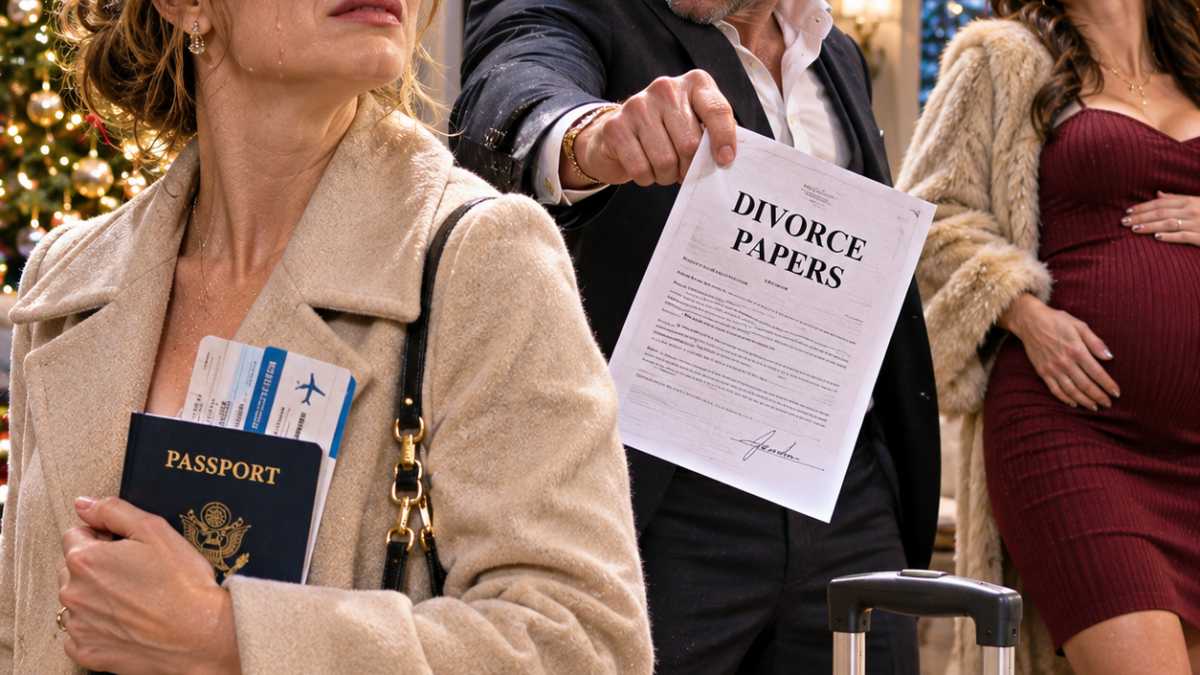
PART2
Prestige Grace Medical Center did not look like a hospital.
It looked like a luxury hotel that happened to employ surgeons.
Private elevators.
Marble floors.
A concierge desk.
Views over Central Park.
Jessica Palmer arrived leaning against Jerry’s shoulder with one hand pressed beneath her swollen abdomen.
She was twenty-four.
Former executive assistant.
Current mistress.
Soon, Jerry believed, mother of the son who would carry his name.
Ruth followed carrying three designer baby bags and a monogrammed blanket embroidered:
GB III
Gerald Bates III.
Jerry’s full name was Gerald William Bates Jr.
He had already ordered personalized silverware.
A nursery designer had finished the room in the penthouse.
Ruth had apparently commissioned a framed family tree.
I learned all of that later.
At the reception desk, Jerry produced his black metal credit card.
“One Presidential Maternity Package.”
The clerk smiled professionally.
“The deposit is fifty thousand dollars.”
Jerry flicked the card onto the marble counter.
“Put it on there.”
Then:
“And I want the park view.”
Jessica squeezed his hand.
“My baby deserves the best.”
“Our baby.”
Jerry kissed her forehead.
Ruth practically glowed.
“My grandson.”
The card declined.
Jerry frowned.
“Run it again.”
The clerk did.
Declined.
“That’s impossible.”
Jessica looked up.
“Jerry?”
“Bank security.”
He pulled out another card.
That one went through.
He laughed too loudly.
“See?”
But that first decline was the beginning.
At 12:18 p.m., his CFO called.
Jerry ignored it.
Jessica was being taken upstairs.
At 12:24, the CFO called again.
At 12:31, Jerry answered.
“What?”
The man on the other end was Leonard Price, a fifty-six-year-old accountant who had been with Jerry since the company was still operating out of two rented offices in Queens.
“Jerry, we have a problem.”
“Not today.”
“It can’t wait.”
“I’m at the hospital.”
“I know.”
“Then handle it.”
Leonard’s voice tightened.
“The Gao Family Office terminated its discretionary credit support this morning.”
Jerry stopped walking.
“What?”
“The acquisition guarantee.”
“That’s impossible.”
“We received formal notice.”
“Call Daisy.”
Leonard paused.
“I think Daisy authorized it.”
Jerry’s eyes narrowed.
“What are you talking about?”
“There are three facilities involved.”
“Three?”
“One is only discretionary. One expires in thirty days. The development revolver has a replacement-security requirement.”
Jessica called from the hospital bed:
“Jerry!”
He turned away.
“How long?”
“Ten business days.”
Jerry lowered his voice.
“This is some divorce stunt.”
“Maybe.”
Leonard hesitated.
“But the documents are real.”
“Fix it.”
“We need replacement guarantees.”
“So get them.”
“Jerry.”
“What?”
“Those guarantees came from assets the banks treated as institutional-quality support.”
Jerry looked through the glass toward Jessica.
“Bates Meridian is worth hundreds of millions.”
“On paper.”
Jerry’s face hardened.
“Watch yourself.”
Leonard went quiet.
Jerry ended the call.
Ruth approached.
“Problem?”
“Nothing.”
She smiled.
“Good.”
Then glanced toward Jessica’s room.
“Today is family.”
Jerry looked at his mother.
“Yes.”
Family.
That was the word he had used to justify throwing me away.
At JFK, I boarded my flight.
I was asleep before we reached the Atlantic.
I did not know that Jessica’s labor slowed during the afternoon.
Or that Jerry spent most of those hours moving between her suite and a private consultation room, taking calls about lenders while Ruth complained that business was ruining the happiest day of her life.
I did not know that his first credit card had been flagged because one of the banks had received notice that morning of an upcoming review of his personal guarantee structure.
I did not know Brooke—no, Jess—had become increasingly irritated each time Jerry stepped away.
And I certainly did not know that at 5:47 p.m., a nurse would ask a routine question that turned the entire hospital suite cold.
Jessica’s labor had progressed.
The medical team reviewed her chart.
One nurse asked:
“Mrs. Palmer, we need to confirm some information for the neonatal team.”
“Okay.”
“The baby’s biological father is listed as Marcus Hale.”
Silence.
Jerry was standing beside the bed.
Ruth was arranging flowers.
Jessica’s face changed.
“What?”
The nurse looked down.
“Marcus Hale.”
Jerry laughed once.
“That’s wrong.”
The nurse immediately became uncomfortable.
“I’m sorry. I may have opened an outdated entry.”
“Obviously.”
Jessica said too quickly:
“Yes. It’s old.”
Jerry looked at her.
“Old from what?”
“Jerry, please.”
The nurse left.
Ruth stared.
“Who is Marcus?”
Jessica closed her eyes.
“Nobody.”
Jerry’s phone rang again.
Leonard.
He ignored it.
“Who is Marcus Hale?”
Jessica looked toward the door.
“Jerry, I’m in labor.”
“I know where you are.”
“Then stop.”
“Who is Marcus?”
Ruth stepped closer.
“Jessica?”
“He’s an ex.”
Jerry’s mouth went dry.
“You told the hospital your ex was the father of my son?”
“I didn’t.”
“The nurse just read it.”
“She made a mistake.”
Jerry stared at her.
“Look at me.”
Jessica refused.
That was the first crack.
The second came thirty minutes later.
A pediatric resident arrived to discuss newborn monitoring because Jessica’s prenatal records showed a genetic screening concern.
Jerry sat beside her.
The doctor asked:
“Has the biological father’s family history changed since the prenatal consultation?”
Jerry answered:
“No genetic problems in my family.”
The doctor looked at the chart.
Then at Jessica.
Then back at Jerry.
“I’m sorry. Are you Mr. Hale?”
Jerry stood.
“No.”
Jessica began crying.
The doctor immediately closed the chart.
“I think I need to give you two some privacy.”
Jerry blocked neither door nor doctor.
He simply said:
“Why does your chart keep saying Hale?”
Jessica sobbed:
“Jerry.”
“Why?”
“I was going to tell you.”
The words destroyed more than any medical test could have.
Ruth dropped into a chair.
Jerry stared.
“Tell me what?”
Jessica covered her face.
Jerry’s voice became quieter.
“Tell me what?”
She whispered:
“I wasn’t sure.”
“About?”
“The dates.”
He understood.
Not completely.
Enough.
Jessica had been seeing Marcus Hale, a former boyfriend, during the early weeks of their affair.
She claimed it ended before she realized she was pregnant.
When prenatal screening raised a possible hereditary concern, she privately underwent expanded genetic testing.
That led to a noninvasive prenatal paternity test.
Jerry’s samples had been collected under the explanation that they were part of routine carrier screening.
Marcus supplied his separately.
The result excluded Jerry.
Marcus Hale was almost certainly the biological father.
Jessica had known for months.
Jerry backed away from the bed.
“No.”
“Jerry—”
“No.”
“Please.”
“You told me he was mine.”
“I wanted him to be.”
“You told my mother.”
Ruth stood abruptly.
“You let me buy things with my grandson’s initials?”
Jessica screamed:
“I’m having contractions!”
The medical team entered.
The argument stopped because medicine does not care whether a family is emotionally ready.
The baby was coming.
Jerry stood in the corridor.
His phone vibrated.
Again.
This time he answered without looking.
Leonard.
“What?”
“The Harbor National line has been frozen pending review.”
Jerry closed his eyes.
“Not now.”
“I need authorization to move twelve million from reserve.”
“You don’t have twelve million.”
“I know.”
Jerry leaned against the wall.
“What about our operating cash?”
“Payroll is covered.”
“And projects?”
“Two closings will miss funding unless we replace the Gao backing.”
Jerry laughed.
A strange, hollow sound.
“Of course.”
“What?”
“Nothing.”
Leonard continued.
“There is something else.”
Jerry pressed his fingers to his eyes.
“Say it.”
“Rick Montgomery sent a notice regarding the founder-support agreements.”
Jerry froze.
“What founder-support agreements?”
“The early advances.”
“What advances?”
“Daisy’s holding company.”
“My company repaid those years ago.”
“Some.”
Jerry straightened.
“What do you mean some?”
Leonard was quiet.
“Jerry, when you were restructuring in 2016, Daisy’s family vehicle converted part of the emergency debt into preferred financing.”
“That was Henry’s money.”
“The entity is hers.”
“No.”
“Jerry.”
“No.”
“The documents list Gao Heritage Trust.”
“That’s her father.”
“No.”
The next sentence arrived slowly.
“Daisy is the primary beneficiary.”
Jerry stared at the maternity-room door.
His mistress was delivering another man’s child.
His company was losing financing.
And his accountant was telling him the wife he called a freeloader controlled the capital that had once kept his business alive.
“How much?”
Leonard hesitated.
“How much what?”
“How much is she worth?”
“I don’t know.”
“Find out.”
“Jerry, that’s not—”
“Find out!”
He hung up.
At 7:16 p.m., Jessica delivered a healthy baby boy.
Six pounds, eleven ounces.
For several minutes, none of the financial world mattered.
The child cried.
Jessica cried.
Jerry stood near the wall.
He had imagined holding his son.
Instead, he felt as if someone had removed the floor.
The doctor approached him afterward.
“Mr. Bates?”
Jerry looked up.
“I need to clarify something.”
Jerry almost laughed.
“Apparently everybody does.”
The doctor remained careful.
“The newborn’s initial blood typing is inconsistent with the parent information you provided.”
Jerry stared.
The doctor quickly added:
“This is not a paternity test. Blood typing alone is not the appropriate basis for a definitive conclusion, and we will repeat the lab.”
Jessica began crying again.
Jerry looked at her.
“Tell him.”
The doctor glanced between them.
“Tell him what?”
Jessica whispered:
“There was already a DNA test.”
The doctor’s expression changed.
Jerry said nothing.
Jessica looked at him.
“I’m sorry.”
That was the moment the smile disappeared completely.
No dramatic collapse.
No screaming.
Jerry simply sat down.
Ruth began sobbing.
Not for me.
Not for the marriage.
For the grandson she had already constructed an identity around.
Jerry stared through the glass at the infant.
A baby had done nothing wrong.
That fact made the situation somehow more painful.
The child was innocent.
The adults had built lies around him before he had taken a breath.
Ruth eventually turned on Jessica.
“You used us.”
Jessica looked exhausted.
“You don’t get to say that.”
Ruth recoiled.
“What?”
“You spent months calling Daisy barren behind her back.”
Ruth’s face went white.
Jessica continued through tears.
“You told Jerry he finally had a woman capable of giving your family what Daisy couldn’t.”
“Don’t you dare.”
“I heard you.”
Jerry looked at his mother.
Ruth opened her mouth.
Nothing came.
Jessica laughed weakly.
“Everyone in this family used someone.”
That sentence followed Jerry for the rest of the night.
At 1:20 a.m. Geneva time, my plane landed.
A driver from the family office was waiting.
I turned on my new phone.
Forty-three messages had been forwarded to Rick’s office number.
Jerry.
Ruth.
Leonard.
Unknown numbers.
I ignored them.
Rick met me at the hotel.
“You should sleep.”
“Tell me first.”
He looked tired.
“The guarantees are being unwound according to schedule.”
“And Bates Meridian?”
“Still operating.”
“Good.”
“No payroll disruption.”
“Good.”
“Jerry’s attorney has requested a meeting.”
“No.”
“His CFO has requested clarification.”
“Give him whatever he is legally entitled to.”
Rick watched me.
“You really don’t want to punish the employees.”
“Why would I?”
“Because angry people often stop distinguishing.”
I took off my coat.
“I’m angry at Jerry.”
I looked at him.
“Not at the receptionist who answers his phone.”
Rick smiled slightly.
“There’s something else.”
“What?”
He hesitated.
“You may want to sit.”
My stomach tightened.
“Is it business?”
“No.”
He held up his phone.
“Ruth called the office.”
“Why?”
“She asked whether she could reach you.”
“Why?”
“She said there is a problem with the baby.”
I stared at him.
“What problem?”
“She would not explain.”
I thought about the sentence I had said outside court.
I hope Jess and the baby have an unforgettable day.
For one irrational second, I feared something had happened to the child.
“Is the baby okay?”
“As far as I know, yes.”
Relief hit first.
Then confusion.
Rick said:
“I told her I would not provide your private contact information.”
“Good.”
I went upstairs.
Showered.
Changed.
Then sat alone near the hotel window overlooking Lake Geneva.
My marriage was over.
My money was safe.
Jerry’s business was no longer my responsibility.
I should have felt victorious.
Instead, I felt hollow.
That surprised me.
For months, I had imagined this day as freedom.
Nobody tells you that freedom sometimes feels like grief before it feels like air.
I slept for four hours.
At nine, I met the trustees.
Everything was ordinary.
Almost offensively ordinary.
Portfolio reports.
Tax planning.
Governance.
Private-credit exposure.
My fifty-million-dollar fortune was not a suitcase of cash being smuggled into Switzerland.
It was a lawful family trust.
Disclosed.
Documented.
Managed across institutions.
Some assets happened to be administered through Geneva.
Some remained in the United States.
Jerry had never owned any of them.
I had never hidden them illegally.
He had simply spent years assuming my quietness meant dependence.
After the meeting, Rick handed me a summary.
Net trust value.
$50.8 million.
I stared at the number.
Twelve years earlier, before Jerry’s company became successful, the trust had been smaller.
Investments had grown.
Real estate appreciated.
Some of the money I initially advanced to Bates Meridian had eventually produced strong returns.
I had helped build wealth on both sides of the marriage.
Jerry only remembered one.
“Do you want to call him?” Rick asked.
“No.”
“He’s going to learn the trust value eventually.”
“That’s fine.”
“You don’t want to hear his reaction?”
“No.”
Rick smiled.
“You’re disappointing me.”
“Get better hobbies.”
My new phone rang.
Unknown U.S. number.
I nearly ignored it.
Then answered.
“Daisy?”
Ruth.
I closed my eyes.
“How did you get this number?”
“Rick’s office forwarded me.”
“No, they didn’t.”
She paused.
“I called the hotel.”
Of course she had.
“What do you want?”
Ruth began crying.
Real crying.
Not the theatrical sniff she used when she wanted sympathy.
“Jerry needs you.”
I almost hung up.
Then:
“Is the baby safe?”
“Yes.”
“Jessica?”
“Fine.”
“Then Jerry does not need me.”
“You don’t understand.”
“I understand we are divorced.”
“The baby isn’t his.”
Silence.
Snow fell outside the window.
I sat slowly.
“What?”
“The doctor—there was a test—Jessica lied.”
Ruth’s words tumbled over one another.
“She knew.”
I said nothing.
“Daisy, she knew for months.”
Still nothing.
“She made us believe—”
“Ruth.”
She stopped.
“The baby is healthy?”
“Yes.”
“Good.”
“How can you say good?”
“Because the baby didn’t do anything.”
Ruth began sobbing harder.
“You were right.”
“I didn’t know.”
“You knew something.”
“No.”
“You said they would get what they deserved.”
“That was anger.”
I looked at the lake.
“I did not know Jessica was lying about paternity.”
Ruth went quiet.
Then:
“Jerry is destroyed.”
A part of me hurt hearing that.
I hated that part.
“He needs someone.”
“He has you.”
“He won’t speak to me.”
“I’m sorry.”
“Come home.”
“No.”
“Daisy.”
“No.”
“You were his wife for twelve years.”
“Yesterday.”
The word stopped her.
“You told me leaving empty-handed was what I deserved.”
“I was angry.”
“You called me good-for-nothing.”
“I shouldn’t have.”
“You mocked me for losing pregnancies.”
Silence.
Then Ruth whispered:
“I shouldn’t have.”
My eyes burned.
There are apologies that heal.
There are apologies that merely confirm the wound was real.
Ruth’s was the second kind.
“I hope you never say anything like that to another woman.”
“I won’t.”
“I hope the baby grows up surrounded by people who don’t punish him for what his mother did.”
Ruth said nothing.
“And I hope Jerry learns something from this.”
Then I ended the call.
I cried afterward.
Not for Jessica.
Not for Ruth.
For myself.
For the younger Daisy who had spent years believing if she worked hard enough, loved patiently enough, paid enough bills, supported enough dreams, eventually the people she helped would understand her value.
That woman deserved better.
I wish I could tell you I felt nothing when Jerry finally called me himself.
Three days later.
Rick asked whether I wanted the call blocked.
I said no.
Jerry’s voice was barely recognizable.
“Daisy.”
“Jerry.”
Silence.
“I know about Geneva.”
“I assumed you would eventually.”
“Fifty million.”
Approximately.
He laughed once.
“You sat there while my mother called you a freeloader.”
“Yes.”
“Why didn’t you say anything?”
“What would it have changed?”
“Everything.”
“No.”
“It would have shut her up.”
“Maybe.”
He breathed heavily.
“You let me believe you needed me.”
That angered me.
“I did need you.”
Silence.
“I needed my husband.”
I stood from the desk.
“I needed loyalty.”
Nothing.
“I needed the man who promised me that losing two pregnancies didn’t make me less of a woman.”
Jerry’s breathing changed.
“I needed the person who held me while I cried and told me we were enough.”
“Daisy—”
“You were the one thing I needed that money couldn’t buy.”
He began crying.
Quietly.
I had never heard Jerry cry like that.
Not since the second miscarriage.
“I’m sorry.”
I closed my eyes.
“For which part?”
“All of it.”
“Be specific.”
He was silent.
I almost ended the call.
Then:
“For Jessica.”
Pause.
“For letting my mother speak to you the way she did.”
Another.
“For taking credit for things you did.”
His voice broke.
“For telling people I saved you when the truth is you saved me first.”
That one went deep.
He continued.
“I found the old documents.”
“What documents?”
“The Queens project.”
I remembered.
The first major development.
“I found your transfer.”
My grandmother’s necklace.
Sold.
$110,000.
I had used it to pay subcontractors when Jerry could not make payroll.
“You told me your father helped.”
“He didn’t.”
“I know now.”
Silence.
Jerry whispered:
“I don’t know who I became.”
I sat down again.
“I do.”
“What?”
“Someone who started confusing being supported with being superior.”
He breathed slowly.
“And the business?”
“What about it?”
“You’re pulling everything.”
“My trust is ending guarantees according to the contracts.”
“That will force me to sell assets.”
“Maybe.”
“You knew.”
“Yes.”
“Is this revenge?”
There it was.
I answered carefully.
“No.”
He laughed bitterly.
“You expect me to believe that?”
“I was angry enough to want revenge.”
“Then—”
“But I don’t want your company.”
Silence.
“I don’t want your cars.”
Nothing.
“I don’t want the penthouse.”
I looked toward Geneva.
“And I don’t want you destroyed.”
“Then stop.”
“No.”
His voice hardened slightly.
“Why?”
“Because twelve years of marriage taught you that somebody would always step in when you overextended.”
I paused.
“I’m done stepping in.”
“Employees could suffer.”
“Rick is working with Leonard to unwind the guarantees without cutting operating payroll.”
That surprised him.
“You’re talking to Leonard?”
“Our lawyers are.”
“Why?”
“Because your employees did not cheat on me.”
Long silence.
Jerry finally said:
“You always did that.”
“What?”
“Thought about everybody else.”
I almost laughed.
“You used to like that about me.”
“I know.”
We were silent.
Then I asked the question I had avoided.
“How are you handling the baby?”
Jerry made a sound somewhere between a laugh and a sob.
“I don’t know.”
“Don’t punish him.”
“He isn’t mine.”
“I know.”
“Do you?”
His voice rose.
“Do you know what it feels like to spend months talking to your son through someone’s stomach and then discover—”
He stopped.
I let the silence remain.
Then quietly:
“Yes.”
Jerry said nothing.
“I know what it feels like to love a child you don’t get to keep.”
His breath caught.
That stopped him completely.
I had not intended to bring our pregnancies into the conversation.
But truth arrived before strategy.
“Don’t compare—”
“I’m not.”
I wiped my face.
“I’m telling you grief does not give you permission to become cruel.”
Jerry was quiet for a long time.
Then:
“Marcus wants to be involved.”
“Good.”
“You think that’s good?”
“If he is the father and he is safe and responsible, yes.”
“What am I supposed to do?”
“I don’t know.”
That was the truth.
“You decide what relationship you can have without lying to yourself or hurting that child.”
Jerry whispered:
“I hate him.”
“The baby?”
“No.”
A pause.
“No. God, no.”
“Good.”
He sounded ashamed.
“I held him.”
My chest tightened.
“After everything.”
“He grabbed my finger.”
I could hear him crying again.
“I know he isn’t mine, and I still—”
He could not finish.
I understood.
Love does not wait for laboratory confirmation.
That was the cruelest part.
“I’m sorry, Jerry.”
For the first time since the divorce, I meant those words without reservation.
“Thank you.”
We ended the call.
For the next month, our lives separated in ways they should have years earlier.
I remained in Geneva temporarily.
Not hiding.
Working.
Meeting with trustees.
Reviewing investments I had neglected while spending too much energy on Jerry’s business.
I discovered that my own financial life had become something I knew only in summary.
That embarrassed me.
So I changed it.
I attended every meeting.
Reviewed every major holding.
Asked questions.
Rick joked that the trustees had never been interrogated so politely.
Back in New York, Bates Meridian entered restructuring.
Not bankruptcy.
Jerry was still wealthy.
His company still owned valuable assets.
But his success had been built on aggressive borrowing supported by guarantees from my family trust.
Without them, he had to become more conservative.
Sell speculative property.
Bring in outside equity.
Reduce expansion.
The empire did not vanish.
It became real.
Smaller.
Less glamorous.
Sustainable if Jerry allowed it.
At first, he fought every recommendation.
Then Leonard sent him projections showing what happened if he refused.
Within six months, Jerry sold the Hamptons estate.
Then the Ferrari.
Ruth apparently considered that humiliation.
Jerry surprised everyone.
He did not.
Leonard told Rick:
“He said he’s tired of owning things just so people know he owns them.”
I heard that secondhand.
I said nothing.
The divorce waiver meant I had no claim to those sales.
Exactly as intended.
Jessica’s situation became uglier before it improved.
Marcus Hale turned out to be a former boyfriend she had continued seeing during the early months of her affair with Jerry.
He was not wealthy.
Not an executive.
He taught high-school history in New Jersey.
When he learned about the baby, he requested a formal paternity test.
Confirmed.
He was the father.
Jessica had apparently hidden the prenatal result because she believed Jerry could provide the life she wanted.
Presidential maternity suite.
Penthouse.
Private schools.
Security.
Social status.
She had chosen a father for the lifestyle, not biology.
The realization devastated Jerry.
But what he did next surprised me.
He paid the hospital bill.
All of it.
Then ended his relationship with Jessica.
Quietly.
No lawsuit.
No public accusations.
His lawyer negotiated repayment of several personal gifts purchased with company money.
The ring was returned.
Not to me.
To the jeweler.
Jessica moved out of the penthouse.
Marcus began the slow legal process of establishing parental rights.
Ruth wanted Jerry to fight for custody somehow.
Jerry refused.
“He isn’t property,” he told her.
When Rick repeated that to me, I sat quietly for a while.
Maybe Jerry was learning.
Not fast enough to save us.
But perhaps fast enough to save part of himself.
Three months after the divorce, I returned to New York.
Not for Jerry.
My father’s foundation held its annual meeting.
I stayed in the Queens condo Jerry had mockingly “left” me.
The old place had two bedrooms, creaking floors, a kitchen barely wide enough for two people, and a fire escape where Jerry and I once drank cheap wine because we could not afford a rooftop bar.
I had always liked it.
On my first night back, someone knocked.
Ruth.
I almost did not open the door.
She stood in the hallway without the Hermès bag.
No makeup.
No jewelry except her wedding ring.
“May I come in?”
“No.”
She nodded as if she expected that.
“I brought something.”
She held out a small velvet box.
I recognized it.
My grandmother’s jade bracelet.
My stomach dropped.
“Where did you get that?”
“Jerry gave it to me years ago.”
I stared.
I thought I had lost the bracelet during our move from Queens.
It had belonged to my mother’s mother.
I had searched for months.
“Why would Jerry give you this?”
Ruth’s face collapsed.
“He said you didn’t wear it.”
My hand tightened around the door.
“That wasn’t his to give.”
“I know.”
“Did you know it was mine?”
She looked down.
“Yes.”
That hurt worse than ignorance would have.
She held it toward me.
“I’m sorry.”
I took the box.
Opened it.
The bracelet lay inside.
Green jade.
Small gold clasp.
My grandmother’s initials.
For a second, I could not speak.
Ruth whispered:
“I spent years resenting you.”
“Why?”
“You had money.”
I looked up.
“So did your son.”
“Because of you.”
She nodded slowly.
“And that made it worse.”
I stared.
She continued.
“Every time Jerry succeeded, I wanted to believe it proved he never needed your family.”
Her eyes filled.
“I told myself you were controlling.”
I almost laughed.
“While I paid your bills?”
She flinched.
“Yes.”
“Bought your bag?”
“Yes.”
“Paid for your surgery?”
Her face crumpled.
“Yes.”
I had paid the portion insurance refused when Ruth needed hip surgery.
Jerry had been between projects.
I never asked for repayment.
“I called you a freeloader.”
“Yes.”
“I mocked you for not having children.”
My throat tightened.
“Yes.”
Ruth began crying.
“I knew about the miscarriages.”
“I know.”
That sentence was all I had.
She covered her mouth.
“I was cruel.”
“Yes.”
“Can you forgive me?”
I looked at the bracelet.
“No.”
Her shoulders sank.
Then I continued.
“Not today.”
Ruth looked at me.
“Maybe someday I will feel differently.”
I closed the box.
“But forgiveness isn’t something you get because you finally understand you were wrong.”
She nodded through tears.
“I know.”
“I hope you mean that.”
“I do.”
She stepped away.
Then stopped.
“Jerry misses you.”
I almost closed the door.
Ruth raised one hand.
“I’m not asking you to go back.”
“Good.”
“I think losing you is the first consequence he cannot buy his way out of.”
That was perhaps the wisest thing Ruth Bates ever said to me.
She left.
I closed the door.
Sat at the tiny kitchen table.
Then put my grandmother’s bracelet back on for the first time in twelve years.
That night, I cried harder than I had on the day of the divorce.
Grief is strange.
Sometimes it waits until you are safe.
My fifty million dollars did not cure that.
Geneva did not cure it.
Jerry’s financial problems did not cure it.
Justice does not erase history.
It simply stops history from controlling the future.
The next morning, Leonard Price called me.
Not through Jerry.
Directly.
“Daisy, I hope this is okay.”
“What happened?”
“Nothing bad.”
He sounded almost cheerful.
“We closed the restructuring.”
“That’s good.”
“Jerry asked me to tell you something.”
“I’d rather he tell me himself.”
“He said you’d say that.”
I smiled despite myself.
“What did he want?”
Leonard hesitated.
“He found your old compensation files.”
My smile disappeared.
“What files?”
“The early company records.”
I remembered.
For the first five years of Bates Meridian, I had officially served as strategy consultant and contract administrator.
I had never taken most of my salary.
We needed cash in the company.
My unpaid compensation had been accrued, then later cleared during a restructuring when I signed a release.
Jerry had apparently forgotten.
“He saw the hours,” Leonard said.
I said nothing.
“Daisy, I knew you did work here.”
“Yes.”
“I didn’t know how much.”
Neither did most people.
“Jerry wants the company history corrected.”
I frowned.
“What does that mean?”
“Bates Meridian has an internal timeline on its website and in investor materials.”
I knew.
Jerry founder.
First project.
Expansion.
Awards.
There was one photograph of me at a ribbon cutting.
Caption:
Gerald Bates with wife Daisy.
Nothing else.
“He wants your role included.”
I sat back.
“Why?”
“Because it happened.”
That answer mattered.
“Not because I asked.”
“No.”
“Not because Rick threatened anything.”
“No.”
“Then tell him to do whatever is factually accurate.”
The revised company history appeared two weeks later.
2009: Gerald Bates and Daisy Gao Bates restructure the company’s first major project. Gao leads early contract negotiations and financing coordination through Gao family investment entities.
Then additional references.
No sainthood.
No claim I built everything.
Just accuracy.
I stared at the page for a long time.
That acknowledgment healed something money never could.
Not enough to restore the marriage.
Enough to restore part of the record.
Jerry and I met face-to-face six months after the divorce.
Neutral place.
A quiet restaurant in Midtown.
He looked different.
Weight lost.
Cheaper watch.
No arrogance.
At least not the old kind.
“Thank you for coming.”
“You said there was something you wanted to return.”
He reached into his coat.
Placed a small envelope on the table.
Inside were photographs.
Our wedding.
The Queens apartment.
Our first Bates Meridian construction site.
Then one from the hospital after my first miscarriage.
I stopped.
In the photograph, Jerry sat beside me.
My face pale.
His hand around mine.
I had forgotten the picture existed.
“Why are you giving these to me?”
“I made copies.”
He looked down.
“You should have them.”
I turned the photograph over.
Nothing written.
Jerry said:
“I’m sorry about what my mother said in court.”
“She apologized.”
“I know.”
“You knew she had my bracelet?”
His face tightened.
“Yes.”
“When did you give it to her?”
“Years ago.”
“Why?”
“I was angry at you.”
I stared.
“For what?”
“You had told me not to buy the Tribeca property.”
I almost laughed from disbelief.
“That was why?”
“You were right.”
“I know.”
“I hated that.”
He looked ashamed.
“I saw the bracelet in your jewelry drawer and Mom had always admired it.”
“So you gave away something from my grandmother because I disagreed with an acquisition.”
“Yes.”
For a second, the old anger returned so strongly I could taste it.
Jerry did not defend himself.
“That was theft.”
“I know.”
“You could have bought her another bracelet.”
“I know.”
“You wanted to hurt me.”
“Yes.”
The honesty made it almost worse.
I slid the photographs aside.
“Why are we here, Jerry?”
He looked toward the window.
“Because I spent twelve years believing I loved you while punishing you every time you reminded me I wasn’t self-made.”
I sat completely still.
“I didn’t understand that until the business restructuring.”
He folded his hands.
“Every meeting, people kept showing me things I thought I had done alone.”
He laughed bitterly.
“Your guarantee.”
“Your contracts.”
“Your money.”
“Leonard covering mistakes.”
“Rick cleaning up legal problems.”
“Employees working nights because I promised impossible deadlines.”
He looked at me.
“I was surrounded by people carrying me, and I called it leadership.”
I said nothing.
“You were the easiest person to erase because you loved me.”
That sentence broke my heart all over again.
Jerry continued.
“I knew you wouldn’t embarrass me.”
He swallowed.
“So I kept taking.”
I finally spoke.
“Why Jessica?”
He looked down.
“She made me feel like the version of myself I wanted to believe.”
“The billionaire genius?”
A sad smile.
“Yes.”
“She didn’t know the early years.”
“No.”
“She saw the penthouse.”
“Yes.”
“The magazine covers.”
“Yes.”
“And when she admired me…”
He looked at me.
“I didn’t have to remember who paid the first contractor.”
Silence settled between us.
“What about the baby?”
Jerry’s expression changed.
Softened.
“His name is Ethan.”
“Marcus involved?”
“Yes.”
“Jessica?”
“Trying.”
“Ruth?”
He almost smiled.
“My mother sends too many presents.”
“That sounds like Ruth.”
“She still thinks of him as…”
Jerry stopped.
“Not her grandson.”
“No.”
“But she got attached.”
I understood that too.
“Do you see him?”
Jerry looked embarrassed.
“Sometimes.”
I raised an eyebrow.
“Marcus allows it.”
“Why?”
“He says Ethan shouldn’t lose people who loved him before he was born just because adults lied.”
That was surprisingly generous.
“And Jessica?”
“She’s okay with it.”
Jerry looked down.
“I don’t call myself his father.”
“What do you call yourself?”
“Jerry.”
I smiled.
“That might be the healthiest title you’ve ever had.”
He laughed.
Real laughter.
For one second, the old Jerry returned.
Then the moment passed.
Before leaving, he said:
“I don’t expect you to forgive me.”
“Good.”
“I don’t expect another chance.”
“Good.”
He nodded.
“But I need you to know that what happened with the company…”
He looked at me.
“You didn’t destroy me.”
I waited.
“You stopped protecting me from myself.”
My eyes filled.
I hated how much I needed to hear that.
“Goodbye, Jerry.”
“Goodbye, Daisy.”
We walked in opposite directions.
That was the last time I saw him for more than a few minutes.
Life did not turn into a fairy tale afterward.
I did not marry a prince in Geneva.
I did not buy a yacht.
I did not become a social-media billionaire teaching women how to destroy cheating husbands.
I went to work.
For myself.
The Gao family office had several investments I had neglected.
One was a community-health fund my mother started.
Another financed women-owned small businesses that traditional lenders considered too risky.
I became involved.
Really involved.
Not because I needed more money.
Because I finally had time to ask what I wanted my money to do.
One investment was a bakery expansion in Brooklyn.
$250,000.
The owner, a forty-nine-year-old widow named Maria, cried when we approved it.
I thought about Jerry’s first desperate loan.
The difference was not that Maria deserved help more.
The difference was that I now understood help needed boundaries.
Clear documents.
Clear expectations.
No emotional fog.
No assumption that love or gratitude would substitute for governance.
I became much better at saying:
“No.”
That word changed my life more than fifty million dollars ever did.
No, I will not guarantee that.
No, I will not fix that for you.
No, I will not make myself invisible so you can feel important.
No, I will not confuse compassion with surrender.
A year after the divorce, Rick sent me an annual trust report.
Net assets had increased.
$53.2 million.
I laughed when I saw it.
Not because I was richer.
Because I remembered Jerry’s courthouse warning.
Don’t come crawling back when you run out of money.
I had never needed his money.
The heartbreaking truth was that I had wanted something far more expensive.
Respect.
And no fortune could purchase it from someone unwilling to give it.
Ruth sent me a Christmas card that year.
No guilt.
No request.
Just:
I hope you are well. I am still sorry.
I put it in a drawer.
The next year, she sent another.
Eventually, I sent one back.
Not forgiveness.
A beginning.
Years later, our relationship became polite.
She never again called me useless.
She volunteered at a grief-support organization for women who had lost pregnancies.
When I heard that, I cried.
Maybe guilt can become something useful if a person refuses to waste it.
Jerry’s company survived.
Smaller.
Private.
Profitable.
He eventually sold a minority stake to employees.
Leonard retired.
Jerry remained CEO for several more years, then stepped back.
He never became the billionaire he once imagined.
I think that helped him.
He became something rarer.
A man capable of saying:
“I had help.”
The first time I heard him say it publicly was in an interview someone sent me.
The reporter asked:
“You’re often described as self-made. Is that fair?”
Jerry paused.
Then said:
“No.”
The reporter laughed.
Jerry did not.
“I started with debt.”
He continued.
“My former wife provided the first serious capital. Her family backed us when nobody else would. My CFO saved me from mistakes. My staff built the projects.”
Then:
“If I called myself self-made now, I’d just be lying more politely than I used to.”
I closed the article after that.
No triumph.
Only peace.
Jessica eventually married Marcus.
That surprised everyone.
Apparently, once the lies were stripped away, they rebuilt something cautiously.
Ethan grew up knowing Jerry as a family friend.
Ruth remained absurdly attached to him.
Life is messy that way.
People do not always fit the titles we assign.
Husband.
Mistress.
Father.
Grandmother.
Freeloader.
Millionaire.
Winner.
Loser.
Twelve years after my divorce, I stood again at JFK.
This time, I was flying to Geneva for a routine trustees’ meeting.
No broken SIM card.
No dramatic wine.
Just luggage.
Laptop.
Coffee.
A young woman sitting across from me recognized my name from the family office.
She hesitated.
Then asked:
“Can I tell you something?”
“Sure.”
“My husband wants me to quit my job.”
I waited.
“He says his business is doing well enough.”
“What do you want?”
She looked surprised.
“I don’t know.”
“Then don’t decide until you do.”
She smiled nervously.
“He says keeping separate money means I don’t trust him.”
I thought about Jerry.
About myself.
About love.
Then:
“Trust and financial independence are not opposites.”
She listened.
“Love someone because you choose them.”
I picked up my coffee.
“Not because leaving would make you homeless.”
She nodded slowly.
Flight announcements began.
As I walked toward the gate, I thought about the woman I had been twelve years earlier.
Sitting in this same airport.
Red wine.
Broken SIM card.
Fifty million dollars I was almost embarrassed to possess because Jerry had spent years convincing me his visible success mattered more than my quiet security.
I wanted to reach backward through time and tell her something.
You are not running away.
You are returning to yourself.
Because that was the truth.
The most satisfying part of my story was never that Jerry lost the son he thought was his.
A child should never be somebody’s punishment.
It was never that his empire shrank.
Hundreds of innocent people depended on that company.
It was never even that I kept fifty million dollars while he sold the Ferrari.
Money makes a poor ending.
The satisfying part came later.
Jerry learned that success built with other people’s sacrifices does not become solely yours because your name is on the building.
Ruth learned that cruelty can return as shame.
Jessica learned that security obtained through deception never feels secure for long.
And I learned that generosity without boundaries can become permission for others to erase you.
The day I signed the divorce waiver, Jerry believed I had surrendered.
In reality, I had simply stopped trying to own anything connected to him.
Not his company.
Not his houses.
Not his cars.
Not his future.
I took the one thing he could never successfully claim.
My own life.
At the gate, my phone vibrated.
A message from Rick.
Trust meeting moved to 2 p.m. Tuesday. Enjoy Geneva.
I smiled.
Then another message appeared.
Jerry.
We rarely spoke now.
Ethan turns twelve today. He asked why Grandma Ruth keeps telling him you make the best dumplings in New York. I told him she exaggerates.
I laughed.
Then typed:
She does.
Three dots appeared.
Then:
For what it’s worth, Daisy, I hope you’re happy.
I looked through the terminal window at the plane waiting beneath the winter sky.
For a moment, I remembered Manhattan Family Court.
Jerry throwing papers onto my lap.
Ruth’s handbag.
The words:
Good-for-nothing woman.
Freeloader.
Sign it.
Get out.
I remembered my own smile.
The one that frightened them because they could not understand it.
Back then, I thought I was smiling because I knew something they didn’t.
Fifty million dollars.
Guarantees.
Documents.
Geneva.
But years later, I finally understood the real reason.
Some part of me already knew that walking away empty-handed from the wrong life could leave you richer than staying to fight for every object inside it.
I typed one final reply.
I am. I hope you are too.
Then I switched my phone to airplane mode.
No broken SIM.
No anger.
No need.
I boarded.
Settled beside the window.
And when the plane lifted over New York, the city shrinking beneath clouds and winter light, I felt no satisfaction at leaving Jerry below.
That chapter had ended years ago.
What I felt was gratitude for the woman who had once walked out of a courthouse with one small leather bag while everyone behind her believed she had lost everything.
She had not known what came next.
Neither had I.
But she signed anyway.
She walked anyway.
And somewhere between Manhattan and Geneva, she finally discovered that the fortune worth protecting had never been the fifty million dollars.
It was the part of herself she had stopped giving away.








