PART2:“SHUT YOUR MOUTH OR YOU’LL END UP BACK IN A COMA!” My Mother Threatened Me After My Father Put Me There—They Forgot What I’d Already Saved
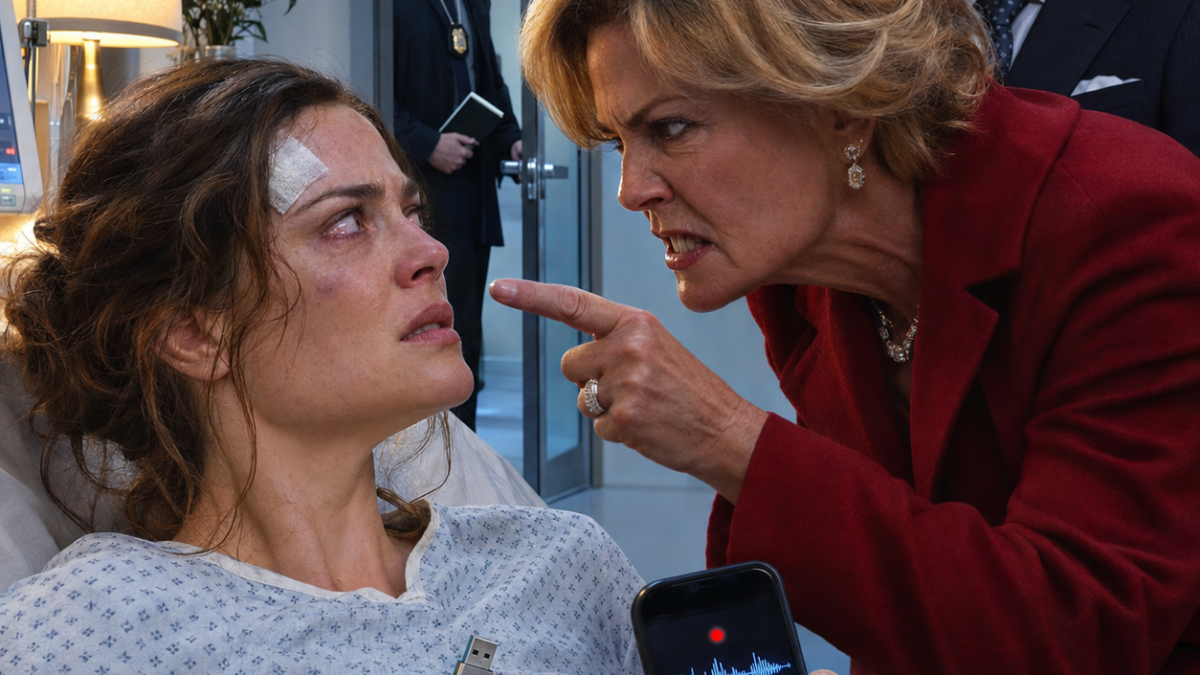
PART2
Vivian recovered fast.
My family had always been good at recovery.
Not healing.
Recovery.
Meaning:
Hide the crack.
Smile at dinner.
Explain the bruise.
Change the subject.
My father built his business that way.
My mother built our family that way.
“You’re confused,” she said.
“No.”
“You suffered a traumatic brain injury.”
“I know who Celeste is.”
Marcus whispered:
“Elena…”
I kept my eyes on Vivian.
“I know the St. Jude Hotel.”
Her face drained.
“I know March fourteenth.”
“Stop.”
“I know Edmund Holloway.”
That did it.
She grabbed the bed rail.
“You spoke to him?”
“Yes.”
“You had no right.”
I almost laughed.
“No right?”
“That marriage is none of your business.”
“Dad made it my business when he told me to lie for him.”
She lowered her voice again.
“You have no idea what you’ve done.”
“I know exactly what I did.”
“You humiliated your father.”
“He cheated.”
“You contacted Celeste’s husband.”
“He contacted me.”
“Same difference.”
“No.”
Marcus stepped between us.
“You need to leave.”
Vivian looked around him.
“This family will never recover from what you’ve done.”
The sentence was so perfect that for a moment I forgot my pain.
Not:
Your father almost killed you.
Not:
My granddaughter is in intensive care.
Not:
Are you afraid?
The family.
Reputation.
Damage.
I said:
“Security.”
Vivian stared.
“What?”
I pressed the call button.
“Get out.”
“Elena.”
“Now.”
A nurse entered.
Then hospital security.
Vivian lifted her handbag.
Before leaving, she looked back.
“You think those recordings protect you?”
That sentence would later matter almost as much as the threat.
I did not answer.
She left.
Marcus closed the door.
Then locked it.
I stared at him.
“You heard her.”
“Yes.”
“You recorded?”
His mouth opened.
I shook my head.
“Don’t tell me.”
He understood.
Good.
Some habits survive marriage.
Marcus sat beside me.
For a long time, neither of us spoke.
Finally:
“How much do you remember?”
“Enough.”
“Start before the attack.”
So I did.
Three months earlier, I had been thirty-three weeks pregnant and still technically on active duty, though my workload had shifted toward administrative intelligence support because I was too pregnant to pretend body armor fit comfortably.
I had a meeting at the St. Jude Hotel with two contractors.
They canceled.
I stayed because I needed coffee and fifteen minutes away from people asking me whether the baby had “dropped yet.”
At 2:17 p.m., the elevator opened.
My father stepped out.
Douglas Mercer.
Sixty-one.
Chairman of Mercer Strategic Holdings.
Boardrooms.
Charity dinners.
Church fundraisers.
The kind of man whose handshake always lasted exactly the right amount of time.
Beside him:
Celeste Holloway.
Silver-streaked bob.
Charcoal suit.
Blue eyes.
I knew her vaguely.
Senior partner at Holloway-West Capital.
Married.
My father’s hand rested at the small of her back.
Not business.
Not accidental.
Familiar.
He saw me.
The hand disappeared.
“Elena.”
“Dad.”
Celeste looked at my pregnancy.
Then at him.
My father walked toward me.
“Your meeting here?”
“Was.”
He lowered his voice.
“This is not what you think.”
That sentence should be banned from human speech.
“It looks like you were touching a married woman like she was your wife.”
“Elena.”
“Is she?”
Celeste stepped forward.
“Douglas, perhaps we should stop insulting her intelligence.”
My father’s jaw tightened.
“Celeste.”
She looked at me.
“Your father and I have been involved for some time.”
No soft language.
No ambiguity.
My heart sank.
“My mother knows?”
Douglas answered first.
“No.”
Celeste’s expression suggested she disliked that answer.
My father grabbed my elbow.
Not violently.
Firm.
“Listen to me.”
I pulled away.
“Don’t touch me.”
“The financial future of this family depends on relationships you do not understand.”
“Is that what we’re calling her?”
His face hardened.
“You will not tell your mother.”
I stared.
“You’re ordering me?”
“I’m asking you to think.”
“About what?”
“Your mother’s health.”
“My mother runs six miles every morning.”
“You know what I mean.”
“No.”
“Elena.”
“Does Edmund Holloway know?”
Celeste said nothing.
That answered it.
My father looked at her.
Then me.
“You are going to walk away from this.”
I did.
Not because he told me.
Because I needed to think.
Three months.
I said nothing at first.
I hated myself for it.
Every Sunday dinner became theater.
My mother passing potatoes.
My father carving meat.
His phone face down.
Buzzing.
Once Vivian touched his shoulder and said:
“You work too hard.”
I nearly stood up and told her everything.
Then Grace kicked beneath my ribs.
I stayed seated.
Part of me wanted proof.
Part wanted certainty.
Part wanted to delay the moment my family changed permanently.
That delay became something my father later used against me.
But I was not idle.
I kept notes.
Dates.
Hotel.
What I saw.
What was said.
I saved the text he sent me two hours after the hotel encounter.
You misunderstood a private business matter. Do not create unnecessary pain for your mother.
Then another.
Family loyalty matters more than appearances.
I did not reply.
Three weeks later, I received a direct call at work.
“Captain Mercer?”
“Yes.”
“My name is Edmund Holloway.”
My body went cold.
He sounded older than I expected.
Formal.
Controlled.
Barely.
“I believe our families may have a problem.”
I said nothing.
He continued.
“My wife has recurring reservations at St. Jude.”
Pause.
“Douglas Mercer’s name appears on several related dining receipts.”
I looked at Grace’s ultrasound beside my monitor.
“What are you asking me?”
“I found your name through a company registry and public profile.”
His voice cracked.
“I need to know whether I’m imagining things.”
That sentence did something to me.
People can survive terrible truths.
It is the uncertainty that dismantles them.
“You’re not imagining it.”
Silence.
Then:
“When?”
“March fourteenth.”
“Where?”
“St. Jude lobby.”
“You saw them?”
“Yes.”
“How?”
I answered carefully.
“What I personally witnessed was my father with his hand on your wife’s back in an intimate way. When confronted, Celeste told me directly they had been involved for some time.”
Edmund inhaled.
Long.
Shaking.
“Thank you.”
“I’m sorry.”
“So am I.”
Then:
“Captain?”
“Yes?”
“You gave me my sanity back.”
He ended the call.
Seventy-two hours later, my father came to my house.
Marcus was at work.
Rain.
Late afternoon.
I saw the sedan through the window.
I immediately knew something was wrong.
Douglas did not walk.
He marched.
I opened my phone before he reached the porch.
Not because I expected violence.
Because his previous messages had become aggressive after Edmund apparently confronted Celeste.
My doorbell camera was already recording.
I enabled a separate audio recording on my phone as permitted by counsel I had previously consulted for documenting threats in my jurisdiction and under the circumstances.
I did not hide illegal interception equipment.
No “wiretap operation.”
Just preservation of a conversation in my own home.
That distinction mattered later.
I opened the door but did not invite him inside.
He pushed past me.
“Who did you tell?”
“Hello to you too.”
“Edmund Holloway.”
“I spoke to him.”
“You destroyed everything.”
“No.”
“You called him.”
“He called me.”
“Do not play semantics.”
“It isn’t semantics.”
He threw a printed email onto my counter.
I recognized Edmund’s name.
Settlement counsel.
Divorce.
Financial disclosures.
My father’s breathing was heavy.
“You have no idea what this could cost.”
“Your affair?”
“The company.”
“How?”
“You wouldn’t understand.”
“Try.”
Celeste’s firm had apparently been connected to financing negotiations involving Mercer Strategic Holdings.
My father had mixed personal behavior with corporate dependence.
That was his problem.
He wanted it to become mine.
“You could have kept your mouth shut.”
“I’m not lying for you.”
“I didn’t ask you to lie.”
“You told me not to tell Mom.”
“That was protection.”
“For who?”
“Elena.”
His voice changed.
Warning.
I knew that tone from childhood.
The one that meant conversation was over.
But I was no longer twelve.
“What did you tell Mom?”
“Nothing.”
“I will.”
He stepped closer.
“You will do no such thing.”
“She deserves to know.”
“You think truth makes you righteous?”
“No.”
“What do you want?”
“Nothing.”
“Money?”
I actually laughed.
He slapped the counter.
Grace moved hard beneath my ribs.
I put one hand over my stomach.
“Leave.”
His eyes dropped to my belly.
Then back to me.
“You’re going to destroy this family over a private mistake.”
“A three-month affair is not a private mistake when you’re asking me to cover it.”
“You self-righteous little—”
I took a step toward the phone.
“Get out.”
His hand closed around my wrist.
“Dad.”
“You are going to call Edmund.”
“Let go.”
“You will tell him you were confused.”
“No.”
“You will tell him Celeste said nothing.”
“No.”
His grip tightened.
I pulled.
Then he shoved me.
My shoulder struck the wall.
Pain.
Shock.
“Stop!”
I remember reaching for the phone.
He grabbed it.
I remember saying:
“You’re hurting me.”
Then:
The edge of the kitchen table.
The floor.
Grace kicking.
My father above me.
His face distorted.
Not my father anymore.
Something else.
“You will not ruin me.”
Then impact.
After that:
Nothing.
Marcus found me.
He had come home early because I stopped responding to messages.
My phone was gone.
My front door open.
I lay on the kitchen floor.
Blood near my temple.
Unconscious.
He called 911.
At the hospital, fetal distress worsened.
Emergency C-section.
Grace delivered at thirty-four weeks.
I developed brain swelling and other complications.
Doctors induced sedation.
Fourteen days.
My father told police I had fallen.
Not immediately.
He first denied being at my house.
Then claimed he stopped by but left after an argument.
My mother supported him.
Marcus told investigators about the affair.
They requested the doorbell footage.
The local storage device had been removed.
My father apparently noticed it.
He took the phone too.
That was why my mother thought the evidence was gone.
But my doorbell system uploaded motion clips automatically.
My phone synced recordings.
My laptop backed up messages.
Edmund had saved communications.
Celeste had her own records.
And Marcus had discovered something else.
Our neighbor across the street had a driveway camera.
It captured my father arriving.
And leaving.
Thirty-seven minutes later.
Alone.
I listened while Marcus explained.
“The police have that?”
“Some.”
“Some?”
“Your lawyer told me not to discuss everything with family.”
“Which lawyer?”
“Mara Singh.”
I almost smiled.
Mara.
Former JAG prosecutor.
Civilian criminal-defense and victims’ rights attorney now.
We had served together years earlier.
“You called Mara?”
“The day after you were admitted.”
“Smart.”
“She told me to preserve everything and let investigators work.”
“Dad arrested?”
Marcus’s expression changed.
“No.”
My anger returned instantly.
“Why?”
“He was questioned.”
“And?”
“His attorney provided a statement.”
“Why is he free?”
“Because they were building the case and you were unconscious. They had conflicting family statements. Your mother said you had become emotional over the affair.”
I stared.
“She lied.”
“Yes.”
“Did she say he hit me?”
“No.”
“What did she say?”
Marcus hesitated.
“Tell me.”
“She said you had been unstable during pregnancy.”
My chest tightened.
“She said you threatened your father?”
“Yes.”
“What else?”
“That you might have fallen during the argument.”
I looked at the closed hospital door.
Then at Marcus.
“She knew.”
“I think so.”
“No.”
I remembered Vivian’s reaction to Celeste’s name.
“She knew before today.”
Mara arrived that evening.
She entered wearing a dark blazer and carrying no dramatic briefcase.
Just a tablet.
“Elena.”
“Mara.”
“You look terrible.”
“Thank you.”
“Wanted to establish normalcy.”
I laughed and immediately regretted it because my ribs hurt.
Then I said:
“Tell me what they have.”
She shook her head.
“First, you’re a patient.”
“I’m also the victim.”
“Exactly.”
“So?”
“So I’m not turning your recovery room into an intelligence briefing.”
“Mara.”
She stared.
Then sighed.
“I forgot how annoying you are.”
“Tell me.”
She sat.
“Doorbell cloud clip.”
“Audio?”
“Partial.”
“How partial?”
“Your father enters. Raised voices. Camera loses interior audio after the door closes.”
“Phone?”
“Gone.”
“Cloud?”
She raised one eyebrow.
“Very interesting.”
My pulse increased.
“How much uploaded?”
“Enough that investigators have a warrant request underway for relevant account records and devices.”
“Did my recording survive?”
“Fragments.”
“Fragments?”
“The file was interrupted.”
“Why?”
“Likely when the phone was damaged or powered off.”
“But?”
“But an earlier section uploaded.”
“What section?”
Mara looked at me.
“Your father telling you to call Edmund and retract what you said.”
I closed my eyes.
“Violence?”
“Not fully.”
“Then we don’t have it.”
“We do not need one perfect video.”
That irritated me.
She continued.
“Medical evidence matters.”
“Circumstantial.”
“Circumstantial evidence is evidence.”
“I know.”
“Then stop talking like a television detective.”
I glared.
She smiled slightly.
“Neighbor video places him there.”
“Okay.”
“His initial denial conflicts with that.”
“Good.”
“Your doorbell cloud clip places him entering.”
“Yes.”
“Marcus places you unconscious when he arrived.”
“Yes.”
“Your medical injuries are documented.”
“Yes.”
“Your father left during the relevant window.”
“Yes.”
“Your mother has already made statements inconsistent with your known medical and military history.”
“That’s character stuff.”
“Not the point.”
“What is?”
“She may have tried to create an alternative narrative before you woke.”
I thought about the threat.
“She threatened me today.”
Mara’s face changed.
“Exact words.”
I told her.
Every word.
Marcus confirmed.
Then I told her about Celeste.
And Vivian’s reaction.
Mara stopped typing.
“She already knew Celeste’s name?”
“She reacted like she did.”
“That’s inference.”
“I know.”
“Good.”
She looked toward Marcus.
“Was anyone else present for Vivian’s statement?”
“Nurse entered after.”
“Security?”
“After.”
“Any recording?”
Marcus said nothing.
Mara looked at him.
I almost laughed.
“You recorded.”
Marcus finally nodded.
“Voice memo started when she walked in.”
Mara’s expression did not change.
“Do not send it to anyone except investigators and counsel.”
I said:
“Cloud?”
Marcus nodded.
“Two places.”
Mara looked at me.
“You two are exhausting.”
But the recording changed things.
Not because Vivian confessed to assault.
She didn’t.
She threatened me.
Referenced Douglas “finishing what he started.”
Then challenged whether recordings protected me.
That gave investigators a reason to examine her role more closely.
I was transferred to a step-down unit three days later.
My first visit to Grace happened in a wheelchair.
Nobody prepares you for NICU.
Machines too large.
Babies too small.
Every sound important.
Every silence frightening.
Marcus pushed me toward the incubator.
I saw her.
My daughter.
Tiny hat.
Tube.
Tape on her cheek.
One hand no bigger than two of my fingers.
I stopped breathing.
“That’s Grace.”
Marcus whispered:
“Yes.”
I pressed my palm against the incubator.
“Hi.”
My voice broke.
Her fingers moved.
I cried so hard the nurse came over.
“You can touch her.”
“How?”
“Here.”
She showed me how to place one hand gently around Grace’s head and another near her feet.
Containment.
Not stroking.
Not overstimulating.
I whispered:
“I’m sorry.”
The nurse said:
“Mom.”
I looked up.
“You didn’t leave her.”
That sentence almost destroyed me.
“You were here.”
“No.”
“You were in this hospital fighting to survive.”
I stared at Grace.
“I missed everything.”
“You’re here now.”
Grace’s foot pressed weakly against my palm.
That tiny movement became the most important fact in my world.
For the next week, I divided myself between recovery and the NICU.
Mara controlled access to the legal case.
Marcus controlled visitors.
Vivian was barred.
Douglas did not attempt to come.
Police interviewed me once doctors cleared it.
Detective Owen Reyes.
Soft voice.
No theatrics.
He said:
“I’m going to ask things you’ve already told counsel.”
“Okay.”
“Tell me what you remember.”
I did.
He did not interrupt.
When I finished:
“Did your father strike you?”
“Yes.”
“How many times?”
“I don’t know.”
“Did you lose consciousness during the confrontation?”
“I remember at least one impact, then nothing.”
“Any weapons?”
“No.”
“Did you threaten him?”
“No.”
“Touch him?”
“Only trying to get my wrist free.”
“Did he know you were pregnant?”
“Yes.”
“How visibly?”
I looked at my empty abdomen.
“Thirty-four weeks.”
He nodded.
Then:
“Your mother says you had been emotionally unstable.”
Marcus’s jaw tightened.
I raised one hand.
“Let him ask.”
Reyes continued.
“Any history of psychiatric hospitalization?”
“No.”
“Self-harm?”
“No.”
“Falls during pregnancy?”
“No.”
“Domestic violence with Marcus?”
“No.”
“Alcohol that day?”
“No.”
“Any reason you might have suffered these injuries after your father left?”
“No.”
He nodded.
“We’re verifying everything.”
“Good.”
Then I asked:
“Why isn’t he arrested?”
Reyes looked at Mara.
She let him answer.
“Because arrest is not the finish line.”
That annoyed me.
He continued.
“We have a serious case. I want it to survive charging review.”
“Meaning?”
“Your father has resources.”
“Yes.”
“Counsel.”
“Yes.”
“Your mother is supporting his account.”
“Yes.”
“You were unconscious.”
“Not anymore.”
“No.”
He met my eyes.
“And now your statement changes the case.”
I understood.
I still hated it.
He asked about Edmund.
I gave permission to contact him.
Edmund cooperated.
He had kept:
Hotel receipts.
Messages Celeste had forgotten to delete from a shared tablet.
Calendar entries.
One message from Douglas to Celeste sent the night before the attack:
Elena spoke to Edmund. This has to be contained before Vivian hears.
Another:
I’ll deal with my daughter. You deal with your husband.
Mara warned me:
“Do not read intent beyond the words.”
I nodded.
But I stared at:
I’ll deal with my daughter.
The attack happened the next day.
Then investigators recovered my phone.
Not from Douglas’s house.
From a storm drain two miles from mine.
A utility crew found it.
Water damaged.
Screen shattered.
Device forensic specialists extracted some local data.
More importantly, they matched the device to cloud records.
The recording had captured part of the confrontation.
Not the assault.
But this:
Douglas:
You are going to call him.
Me:
No.
Douglas:
You will tell him you lied.
Me:
I didn’t lie.
Douglas:
You have no idea what this will cost me.
Me:
Leave my house.
Then the sound of movement.
My voice:
Let go of me.
The file ended.
That was enough to destroy his initial claim that he came for a calm conversation and left peacefully.
Neighbor video showed him leaving with something in his hand consistent with the size of my phone.
Not perfect.
Useful.
Then Celeste broke.
She requested counsel.
Gave investigators a statement.
She confirmed the affair.
Confirmed Douglas knew Edmund had contacted me.
Confirmed Douglas was furious.
Then disclosed something I had not known.
Vivian had learned about the affair six weeks before the attack.
My mother already knew.
Celeste had texted Douglas:
Your wife called me. She knows.
That meant Vivian’s hospital reaction was not shock.
She had been helping preserve a lie she already understood.
Why?
Mara warned me again.
“Do not guess.”
I stopped guessing when financial records answered part of it.
Douglas and Vivian had substantial marital assets tied to Mercer Strategic Holdings.
A divorce during an active financing transaction could trigger disclosures, valuation issues, debt-covenant review, and internal board scrutiny.
Not automatic ruin.
But complication.
Vivian had reasons to avoid public collapse.
My father had reasons.
Celeste had reasons.
Everybody had reasons.
None justified violence.
The investigation uncovered no secret criminal empire.
No giant federal conspiracy.
Just something uglier because it was ordinary:
Affair.
Financial concealment.
Coordinated lies.
Intimidation.
Then assault.
Douglas’s attorney began negotiating.
I found out and became furious.
“They’re offering what?”
Mara sat beside my hospital window.
“Do not assume plea negotiations mean no accountability.”
“He nearly killed me.”
“Yes.”
“He nearly killed Grace.”
“Yes.”
“My mother threatened me.”
“Yes.”
“So why are people negotiating?”
“Because criminal cases are not emotional revenge systems.”
“I know that.”
“No, you know it intellectually.”
I looked away.
She continued softly.
“Elena, you want a moment where someone says exactly how much pain equals what he did.”
I said nothing.
“There is no number.”
That made me cry.
Not because she was harsh.
Because she was right.
No sentence gave me back Grace’s first breath.
No charge gave me fourteen days.
No conviction erased the fear that my mother would choose my father over me.
I asked:
“What happens to Mom?”
“Investigation continues.”
“For the threat?”
“And for whether she obstructed anything.”
“Did she?”
“Evidence first.”
I laughed through tears.
“You really are annoying.”
“I learned from you.”
Grace improved.
Slowly.
Oxygen support decreased.
Feeding improved.
Weight increased.
The first time I held her skin-to-skin, I shook.
A nurse helped place her against my chest.
Warm.
Tiny.
Real.
Grace’s head rested beneath my collarbone.
Her breathing was fast.
I put one hand around her back.
“Hi, baby.”
She moved her face.
Marcus stood beside us crying openly.
I looked at him.
“You okay?”
“No.”
“Same.”
He laughed.
Then the nurse took a picture.
Not of evidence.
Not of injury.
Just us.
That photograph became the one I kept.
The criminal case advanced while I learned how to feed a premature infant.
Strange contrast.
One morning:
Lactation consultation.
Afternoon:
Prosecutor meeting.
One day:
Neurology scan.
Next:
Evidence review.
I hated that Douglas occupied mental space that belonged to Grace.
So I made a rule.
No case discussion inside the NICU.
Marcus agreed.
Mara respected it.
Detective Reyes learned quickly.
If he needed me, hallway.
Conference room.
Never beside the incubator.
That boundary helped.
Grace did not become evidence in her grandfather’s case.
She was my daughter.
Separate.
At three weeks after I woke, Douglas was arrested.
Not dramatically.
No SWAT team.
No cameras.
He reported with counsel after a warrant issued.
Charges included serious assault-related offenses and conduct connected to the attack.
Exact legal labels depended on jurisdiction and prosecutorial decisions.
I cared less about the title than the fact that the state finally said:
This was not a fall.
Not instability.
Not a family disagreement.
An assault.
Vivian called Marcus that evening.
He put it on speaker at Mara’s request only after confirming recording rules with counsel.
“Marcus.”
“What?”
“You need to get Elena to stop.”
“She’s not controlling the prosecutor.”
“She can tell them this is a misunderstanding.”
“No.”
“Douglas made a terrible mistake.”
“A mistake?”
“He lost control.”
“He put her in a coma.”
Silence.
“He didn’t mean—”
Marcus hung up.
He looked at me.
“I’m sorry.”
“For what?”
“That she’s your mother.”
That was the first time somebody apologized for the right thing.
Vivian was later charged separately with witness intimidation-related conduct after investigators reviewed the hospital threat and additional messages.
She had sent my father:
She’s awake. She remembers more than we hoped.
Then:
I told her to stop before she makes this worse.
Douglas replied:
Do not write anything else.
That message did not make her the attacker.
It made her involvement harder to deny.
I requested a protective order.
Granted.
No contact.
No hospital visits.
No indirect messages.
For the first time in my life, a legal document created the boundary my family had never respected.
Grace came home forty-one days after birth.
We dressed her in a pale blue sleeper because the yellow one I had packed before the attack no longer fit.
Marcus carried the car seat.
I stood beside him.
Weak.
Healing.
Terrified.
The nurse checked the straps.
Then again because I asked.
Then a third time because apparently trauma had turned me into a car-seat auditor.
At home, the kitchen had been repainted.
Marcus did it before my discharge.
I walked in.
Stopped.
He said:
“I didn’t know if you wanted it changed.”
The wall where my shoulder hit was now pale gray.
The floorboards replaced.
The table still there.
I touched the back of a chair.
My breathing changed.
Marcus took Grace.
“El.”
“I’m okay.”
“You don’t have to be.”
I looked toward the spot where I remembered falling.
“No.”
That became our second family rule.
Nobody had to be okay just because the emergency was over.
The case continued for months.
My father denied intending serious injury.
His attorney emphasized rage.
Loss of control.
Family conflict.
No weapon.
No premeditated attempt to kill.
The prosecution emphasized:
He drove to my home after angry communications.
Demanded I retract a truthful statement.
Physically restrained me.
Assaulted a visibly pregnant woman.
Removed my phone.
Initially denied being there.
Then changed his account.
Medical injuries were severe.
My mother’s statements supported an attempt to minimize the event.
No single piece proved everything.
Together, they formed a sequence.
My old intelligence brain understood sequences.
Motive is not proof.
Opportunity is not proof.
A lie is not automatically proof of the underlying act.
But when independent facts converge, the story becomes difficult to replace.
Doorbell.
Neighbor camera.
Phone audio.
Medical injuries.
Timeline.
Text messages.
Edmund.
Celeste.
Douglas’s changed statements.
Vivian’s threat.
Cloud records.
No magic smoking gun.
Better.
A system of corroboration.
The defense could attack one piece.
Then another remained.
That was the whole point of redundancy.
At one pretrial hearing, I saw Douglas for the first time since my kitchen.
He looked smaller.
Not physically.
Psychologically.
My entire childhood, he filled rooms.
People waited for his approval.
Employees straightened when he entered.
At family dinners, conversations bent around him.
In court, he was one defendant at a table.
Nothing more.
He looked at me.
I felt fear.
That surprised me.
My body remembered him before my mind could tell it we were safe.
Mara noticed.
“You can leave.”
“No.”
“You don’t prove anything by staying.”
“I know.”
“Then why?”
“Because I want my nervous system to learn the difference.”
She stared.
“That’s annoyingly healthy.”
“I’m growing.”
Douglas’s attorney approached during a break.
“Captain Mercer?”
Mara stepped between us.
“You speak through me.”
He nodded.
Then:
“My client would like to express remorse.”
I said:
“No.”
Mara looked at me.
“Are you sure?”
“Yes.”
I was not ready to receive remorse that might be strategic.
Maybe someday.
Not then.
Vivian’s case was different.
She insisted she never intended literal harm.
The hospital statement was “emotional language.”
She said “back in a coma” because she was frightened I would provoke Douglas.
That explanation did not help her much.
She also claimed she had been protecting me from family stress.
The recording spoke for itself.
If you ever want to see that baby grow up, shut your mouth. Don’t push your father into finishing what he started.
No mother should say that to a daughter recovering from a traumatic brain injury.
Intent could be litigated.
Words remained.
The family split.
Aunts.
Cousins.
Business associates.
Church friends.
Everyone had an opinion.
Some said:
Douglas was wrong, but I should have handled the affair privately.
Some said:
Vivian was traumatized too.
Some said:
I had betrayed my father first.
That one fascinated me.
I answered only once.
A cousin texted:
You didn’t have to tell Edmund.
I responded:
Edmund asked whether he was losing his mind. I told him what I personally witnessed.
Then blocked the thread.
I did not defend myself again.
Family systems survive by making the truth-teller debate every person individually.
I refused.
Mercer Strategic Holdings placed Douglas on leave.
Then the board commissioned outside review.
Not because of the affair.
Because his behavior, undisclosed relationship, and financial connections with Celeste’s firm raised governance questions.
Some deals were legitimate.
Some disclosures incomplete.
There was no massive fraud revelation.
But the board did not need criminality to decide leadership was compromised.
Douglas resigned months later.
He blamed me in a letter he was legally prohibited from sending directly, so it came through counsel.
Mara showed me because she thought I should decide whether to read it.
I did.
He wrote:
You destroyed everything I spent thirty years building.
I stared.
Then handed it back.
“Do you want to respond?” Mara asked.
“No.”
“What would you say?”
I thought.
Then:
“I didn’t make him come to my house.”
Exactly.
People confuse exposure with destruction.
If telling the truth destroys something, often the thing was already standing on a fracture.
Edmund divorced Celeste.
I learned that through Mara.
I did not contact him.
Months later, he sent one letter.
No details.
Just:
Thank you for answering me honestly when dishonesty would have been easier. I’m sorry for what it cost you.
I kept that one.
Not because he owed me gratitude.
Because it reminded me the original act that enraged my father had been simple.
A man asked me whether he was imagining betrayal.
I told him no.
That should not have cost me blood.
Grace reached her due date after she was already home.
We celebrated quietly.
Marcus bought a cupcake.
One candle.
Ridiculous because Grace could not eat cupcake.
He said:
“For surviving pregnancy twice.”
I laughed.
Grace slept through the whole thing.
Her follow-up scans were encouraging.
Doctors warned us development should be monitored carefully.
Premature birth and trauma could have delayed effects.
So we watched.
Not obsessively.
Okay.
Obsessively at first.
Then therapy taught me to stop turning every missed milestone into a prediction.
At four months adjusted age, Grace rolled over.
I cried.
At seven months, she sat.
At ten months, she pulled herself up.
Marcus filmed everything.
Our phone storage became absurd.
Good.
I wanted ordinary evidence now.
First laugh.
First purée disaster.
First tooth.
Not threats.
The plea negotiations finally became real almost a year after the attack.
Douglas faced substantial sentencing exposure if convicted on every count.
His attorneys proposed a plea admitting the assault and responsibility for the injuries while avoiding a contested trial.
I hated the idea.
Then I imagined testifying for days.
Cross-examination.
Family members.
Medical photographs.
Grace’s birth records.
The defense suggesting I provoked him.
Not because I was afraid of truth.
Because trials consume victims too.
Mara asked:
“What outcome do you need?”
I said:
“I need the record to say he did it.”
“Anything else?”
“He cannot call it an accident.”
“Anything else?”
“He cannot blame my pregnancy.”
“Anything else?”
“He cannot pretend he never touched me.”
She nodded.
“Those can be addressed.”
“What about sentence?”
“That’s the judge.”
“I know.”
Douglas eventually entered a guilty plea to serious felony assault-related charges and obstruction-related conduct connected to taking and disposing of my phone.
He admitted under oath that he went to my home angry about my conversation with Edmund.
He admitted physically assaulting me.
He admitted knowing I was visibly pregnant.
He admitted leaving without calling for medical assistance.
That last one hurt almost as much as the attack.
Because until then, part of me had imagined he panicked.
Maybe looked back.
Maybe almost called.
He didn’t.
He left.
Vivian resolved her case separately after admitting to unlawful intimidation related to her hospital threat and subsequent attempts to influence my cooperation.
Her sentence was not the same as Douglas’s.
It should not have been.
She did not put me in the coma.
But she chose to protect the person who did.
And she threatened me when I woke.
Different conduct.
Different responsibility.
Justice worked better when it stayed precise.
At sentencing, I gave a victim statement.
I did not want to.
Mara said:
“You don’t have to.”
“I know.”
“You’re not required to give a speech.”
“I know.”
“Then why?”
“Because there’s something I need entered into the record.”
I stood.
Douglas sat at the defense table.
Vivian was not there.
Separate proceeding.
I brought no military medals.
No photographs.
No dramatic props.
Just paper.
I said:
“My father did not only injure me.”
Pause.
“He changed the circumstances of my daughter’s birth.”
My voice shook.
I let it.
“I woke from a coma and learned that the child I had carried for thirty-four weeks had been born without me.”
Douglas looked down.
“Grace spent fourteen days of her life in an incubator before I knew what her face looked like outside an ultrasound.”
I stopped.
Breathed.
“I have been told repeatedly that my father lost control.”
I looked at him.
“I reject the idea that losing control means losing responsibility.”
Silence.
“He drove to my home.”
“He demanded I retract the truth.”
“He restrained me.”
“He assaulted me.”
“He left.”
I folded the first page.
“I also want the court to understand what this case is not about.”
Pause.
“It is not about an affair.”
Douglas looked up.
“Adultery did not put me in a coma.”
“Violence did.”
“It is not about family embarrassment.”
“Violence did not become private because the person who committed it was my father.”
“It is not about whether I should have protected his reputation.”
I looked toward the judge.
“My father’s reputation was never more valuable than my right to be safe inside my own home.”
That was the sentence I needed recorded.
Then:
“I do not ask the court to hate him.”
My voice cracked.
“I ask the court to hold him responsible.”
I sat down.
No applause.
Good.
Courtrooms are not theaters.
The judge imposed a significant custodial sentence, followed by supervision and protective conditions.
Not enough to repay fourteen days.
Nothing could.
Enough to mark the act as serious.
Enough to remove Douglas’s ability to call it a misunderstanding.
Vivian’s sentencing came weeks later.
I did not speak.
I did not need to.
The hospital recording played.
She cried.
I felt nothing for several minutes.
Then grief.
Not forgiveness.
Grief.
She was my mother.
Somewhere inside me lived the child who still remembered her brushing my hair before school.
Sewing my uniform name tapes before my first field exercise.
Holding my hand at Sarah—not Sarah, sorry, at my grandmother’s funeral.
People can have loved you once and still betray you later.
Acknowledging the first does not erase the second.
Marcus asked:
“Do you want contact someday?”
“I don’t know.”
That became my honest answer for years.
No contact while Grace was small.
No photographs.
No indirect messages.
No “grandmother rights” pressure.
Mara ensured every boundary was properly documented.
Eventually Douglas’s business life unraveled.
Not everything.
He had retirement assets.
Property.
Relationships.
He was not left penniless on a street corner.
Reality is rarely that cinematic.
But he lost executive control.
Board position.
Public trust.
Marriage.
Vivian filed for divorce after his incarceration.
That surprised me.
At first I felt angry.
Now?
After threatening me?
After lying?
Now she left him?
Therapy helped me understand something unpleasant.
People leave when they are ready.
Not when the outside world thinks they should.
Her delay hurt me.
It did not require me to understand her timetable.
She sent a letter through attorneys two years later.
I almost threw it away.
Then read.
She wrote:
I believed preserving the family meant preventing the truth from becoming public. I understand now that what I preserved was your father’s control.
Good sentence.
Then:
I was afraid of losing everything we had built, and I made you pay for that fear.
Better.
Then:
I threatened my own daughter while her baby was in intensive care. I do not ask you to forgive me.
I stopped there.
For days.
Eventually finished.
No excuses at the end.
That mattered.
I did not respond for six months.
Then one sentence:
I received your letter. I am not ready for contact.
She respected it.
That was the first boundary she had ever respected without punishment.
Years passed.
Grace developed normally.
Not perfectly.
No child does.
She had mild physical therapy early.
A slight delay in gross motor milestones.
Then caught up.
At two, she ran everywhere.
Terrible balance.
Zero fear.
Marcus said:
“Your genes.”
I objected.
At three, she asked why I had a scar near my hairline.
“An accident?”
I almost said yes.
Then stopped.
I had spent years insisting language mattered.
“A person hurt me.”
“Who?”
“When you’re older.”
She accepted that because three-year-olds have urgent questions about crackers.
At six, she asked again.
We told her age-appropriately.
“My grandpa hurt you?”
“Yes.”
“When I was in your tummy?”
“Yes.”
“Did he hurt me?”
I looked at Marcus.
Then back at her.
“His actions caused you to be born early.”
Grace thought.
“Was I tiny?”
“Very.”
She smiled.
“I’m not tiny now.”
No.
She was not.
At eight, she wanted to see NICU photographs.
I let her.
She stared at the incubator.
“That’s me?”
“Yes.”
“You look terrible.”
Marcus nearly choked.
“Thank you.”
She laughed.
Then saw the photograph of my hand inside the incubator.
“Were you scared?”
“Yes.”
“Did you think I would die?”
Children ask directly.
“Yes.”
She leaned against me.
“I didn’t.”
“No.”
Then she got bored and asked whether we could make pancakes.
That was healing.
Not forgetting.
Putting the horror beside pancakes and homework and missing socks until it became one fact inside a much larger life.
I eventually left active military service.
Not because of the attack alone.
My body had changed.
My priorities too.
I moved into risk analysis and compliance work.
Less glamorous than people imagine intelligence.
Which was perfect.
Systems.
Evidence.
Threat modeling.
Marcus teased:
“You found a civilian job where people pay you to be suspicious.”
“Finally appreciated.”
Our marriage changed too.
For a year after the attack, I could not tolerate anyone standing behind me unexpectedly.
Marcus learned to announce himself entering rooms.
Not forever.
Just while my nervous system recalibrated.
He never complained.
I had nightmares.
Kitchen.
Rain.
Grace disappearing.
My mother whispering.
Therapy.
Time.
Repetition.
Eventually the dreams became less frequent.
The kitchen became a kitchen.
We replaced the table years later.
Not because it was damaged.
Because I wanted a round one.
That felt important.
Making a normal furniture decision in a room that once felt like a crime scene.
Mara visited after we assembled it.
She looked around.
“No evidence labels.”
“Growth.”
“Bad chain of custody.”
“Get out.”
She laughed.
We remained friends.
She occasionally used an anonymized version of my case when training young attorneys about digital evidence preservation.
Only with my permission.
Her biggest point was not cloud storage.
It was corroboration.
One piece fails.
Others remain.
She told them:
“Never build an entire case around a single dramatic recording if independent records can establish the same timeline.”
That sounded less exciting than:
the wiretap that destroyed my parents.
It was more accurate.
I had no secret federal wiretap.
No spy network.
No illegal surveillance operation.
I had ordinary technology used carefully.
Doorbell cloud storage.
Phone backup.
Receipts.
Emails.
Messages.
A neighbor’s camera.
Medical records.
Witnesses.
Financial documents.
And a husband who remembered enough of my old habits to preserve rather than perform.
That was what beat the lie.
Not combat intelligence magic.
Discipline.
The same thing I learned in uniform.
Verify.
Duplicate.
Do not contaminate.
Do not exaggerate.
The truth becomes easier to attack when you add things it cannot support.
That lesson became personal.
For years, people retelling my story exaggerated.
Dad beat pregnant soldier daughter into coma after affair exposed.
Mother part of conspiracy.
Secret federal files.
Massive corporate fraud.
Millions recovered.
No.
The real story did not need inflation.
My father assaulted me.
I suffered a traumatic brain injury.
Grace was delivered prematurely.
He removed evidence.
He lied.
My mother helped minimize the event and later threatened me.
Independent digital records contradicted them.
They faced consequences.
That was enough.
Reality was worse precisely because it could happen without some cinematic criminal mastermind.
Family pressure can become violence.
Reputation can become an excuse.
Money can become leverage.
People can call abuse “private.”
And sometimes the person who hurts you already knows exactly which childhood button to press afterward:
You are destroying the family.
That sentence controlled me until I finally understood the family was already damaged before I spoke.
I did not create my father’s affair.
I did not create his violence.
I did not create my mother’s choice.
I revealed them.
Different verb.
That distinction saved me.
The first time Grace brought home a school assignment titled:
MY FAMILY
I stared at the paper too long.
She drew:
Me.
Marcus.
Herself.
Our dog.
Mara, oddly.
I asked:
“Why is Aunt Mara in our house?”
“She brings cookies.”
Fair.
No Douglas.
No Vivian.
Grace did not experience that as absence because we gave her other people.
Family rebuilt itself around behavior instead of biology.
Marcus’s sister.
My old Army friends.
Neighbors.
Nurses we stayed in contact with.
Edmund never became family.
I never saw him again.
But once, when Grace was five, a package arrived from him.
Inside:
A children’s book.
No expensive gift.
No guilt.
Note:
For Grace. I am glad she made it.
I sent him a thank-you card.
That was all.
Celeste never contacted me.
I preferred it.
Vivian eventually earned limited written contact.
Years.
Not months.
She respected boundaries.
Therapy.
Accountability.
No excuses.
When Grace was ten, I allowed a supervised meeting.
Public place.
One hour.
Vivian cried when she saw her.
Grace looked at me first.
I nodded.
Then hugged her.
I felt nothing simple.
Love.
Anger.
Fear.
Compassion.
Memory.
All at once.
Human relationships refuse to stay in categories.
Afterward Grace asked:
“Do you forgive Grandma?”
I said:
“Some things aren’t one decision.”
“What does that mean?”
“It means I can believe she regrets what she did and still need boundaries.”
“Are boundaries punishment?”
“No.”
“Then what?”
“Safety.”
She nodded.
I wished someone had taught me that at thirty instead of ten.
Douglas never met Grace again while she was a child.
That was my decision.
He sent letters through approved channels after release.
I returned most unread.
One I read.
He wrote:
I was angry. I ruined my life.
I almost stopped there.
Then:
I ruined yours too.
Wrong.
I wrote nothing.
He had damaged my life.
He did not own the verb ruined.
I still had a husband.
A daughter.
Work.
Friends.
Scar.
Memories.
Fear.
Joy.
He did not get to declare my life destroyed.
That was one last piece of control I would not give him.
Years after the hospital, I found the old audio file while cleaning an encrypted archive.
My mother’s voice.
Shut your mouth.
My own voice.
Weak.
Do you have any idea how many places a cloud-synced file can exist?
I listened once.
Then closed it.
Marcus asked:
“You okay?”
“Yes.”
“Want to delete it?”
I thought.
“No.”
“Why?”
“Record.”
He understood.
But I stopped storing it on my personal devices.
It belonged in the legal archive.
Not my pocket.
That distinction was another kind of healing.
Evidence has a job.
When the job is over, you do not need to keep carrying it.
The most important recording in our family became something else.
Grace at eleven months.
Standing in her crib.
Marcus filming.
Me behind him.
Grace takes one step sideways.
Falls on her bottom.
Then laughs so hard she snorts.
I saved that in three places too.
Old habits.
Better evidence.
One summer when Grace was twelve, we visited the hospital where she was born.
Not for trauma.
A charity event.
NICU reunion.
She stood outside the unit looking through glass.
“Which room?”
“They remodeled.”
“So you don’t know?”
“Not exactly.”
She looked disappointed.
Then:
“Was I really that small?”
“Yes.”
“How small?”
I showed with my hands.
She laughed.
“No way.”
“Way.”
A nurse recognized my name.
Not me.
The case.
She said:
“I remember your daughter.”
Grace’s expression changed.
“You do?”
“She fought hard.”
I used to hate that phrase because babies should not have to fight.
That day I let it be kind.
The nurse looked at me.
“And you?”
“I woke up eventually.”
She smiled.
Grace asked:
“What was Mom like?”
The nurse considered.
“Terrifying.”
I objected.
The nurse laughed.
“She wanted every number.”
Grace said:
“That sounds right.”
We left.
In the parking lot, Grace slipped her hand into mine.
She had not done that in years.
“Mom?”
“Yes?”
“If Grandpa hadn’t hurt you, would I have been born later?”
“Probably.”
“Would I be different?”
Impossible question.
“Maybe.”
“Do you wish I was?”
My heart stopped.
“No.”
“That’s not what I mean.”
I knelt slightly so we were closer to eye level.
“I wish you had been born safely.”
She waited.
“I wish you had stayed inside until you were ready.”
Her face softened.
“But I do not wish for some other version of you.”
She nodded.
That mattered.
Trauma creates imaginary alternate children.
Alternate marriages.
Alternate futures.
Healing requires loving the real life without pretending the path to it was acceptable.
I do not believe everything happens for a reason.
My father did not assault me so Grace could become strong.
My mother did not threaten me so I could learn boundaries.
Grace did not need a NICU stay to become special.
Bad choices caused harm.
Then we built meaning afterward.
That is different.
When Grace turned sixteen, she asked to read the court record.
I said yes.
Not everything at once.
She wanted the facts.
I understood.
She read my victim statement.
Then sat quietly.
“What?”
“Nothing.”
“Grace.”
She looked at me.
“You said Grandpa didn’t ruin your life.”
“Yes.”
“You really meant that?”
“Yes.”
She smiled.
“Good.”
Then:
“Because I’m in it.”
I started crying.
She groaned.
“Mom.”
“You did this.”
“I said one sentence.”
“Exactly.”
She hugged me.
That was the ending no judge could order.
No prosecutor could create.
No cloud backup could preserve in advance.
A daughter alive enough to tease her mother about crying.
A life large enough that the worst thing that happened to me became part of it, not the definition.
People sometimes ask what I said to my mother that day in the hospital.
They remember the line:
Say goodbye to your freedom.
It sounds powerful.
But if I could rewrite that moment, I would say something else.
Not a threat.
Not triumph.
Something simpler.
You don’t get to decide what I say anymore.
Because that was the real fight.
My father wanted me to retract the truth.
My mother wanted me silent.
Both believed family authority survived after violence.
It didn’t.
Their freedom was never mine to take.
Courts handled legal consequences.
Their jobs.
Their money.
Their marriages.
Their reputations.
Those consequences belonged to choices they made.
What I took back was smaller.
My voice.
My home.
My daughter.
My definition of family.
My right to tell the truth without asking whether it embarrassed the person who caused it.
The last time I saw Douglas in person, years after his release, was accidental.
Airport.
He was older.
Gray.
No entourage.
No board members.
No expensive confidence.
He saw me.
Stopped.
Grace stood beside me.
Sixteen.
Tall.
Strong.
He looked at her.
Then at me.
I stepped slightly between them.
Not dramatic.
Instinctive.
Douglas nodded.
“Captain.”
Nobody had called me that in years.
“Elena is fine.”
He swallowed.
“I’m sorry.”
I had imagined that moment.
A hundred versions.
In some I ignored him.
In some I destroyed him with one sentence.
In some I forgave him beautifully and walked away healed.
Reality was smaller.
I said:
“I know you are.”
His eyes filled.
Then:
“Can I meet her?”
“No.”
He closed his eyes.
Nodded.
“All right.”
He walked away.
Grace waited until he disappeared into the crowd.
“That was him?”
“Yes.”
“You okay?”
I breathed.
Checked.
“Yes.”
She took my hand.
“Good.”
Then:
“Our flight boards in twenty minutes.”
Life.
Always insisting on the next ordinary task.
We bought coffee.
Marcus complained by text that airport prices were criminal.
Grace sent him a picture of a seven-dollar muffin.
I laughed.
And just like that, Douglas became background again.
That was victory.
Not him broken.
Me no longer organizing my life around whether he was.
My father once believed one violent afternoon could force me to carry his secret.
Instead, the violence exposed everything he was trying to protect.
My mother believed threatening me beside a hospital bed could restore the old family hierarchy.
Instead, her own words became evidence of why that hierarchy needed to end.
They thought a coma had made me weak.
It taught me something different.
When I woke and touched the empty place where Grace had been, I understood immediately that time is not promised.
Fourteen days gone.
Fourteen days I never got back.
That made the rest of my life expensive.
Too expensive for silence.
Too expensive for protecting appearances.
Too expensive for people who demanded loyalty while offering danger.
Douglas lost years to consequences.
Vivian lost access she once assumed was permanent.
Mercer Strategic Holdings survived without him.
Edmund rebuilt his life.
Celeste disappeared from mine.
Marcus and I raised a daughter.
Grace grew.
I healed enough.
Not perfectly.
Enough.
And the evidence?
Still archived.
Not because I am waiting to destroy anyone.
Because truth should not depend on memory alone.
But I no longer wake thinking about receipts.
I wake to Marcus making coffee badly.
Grace stealing my charger.
The dog scratching at the back door.
Ordinary sounds.
Once, the first thing I felt on waking was the terrifying emptiness of an abdomen that no longer held my baby.
Now, years later, when Grace comes home from school and drops her backpack in the hallway loud enough to shake the walls, I sometimes stop whatever I’m doing.
Listen.
And smile.
Because silence was once the thing I feared most.
Now my daughter fills the house with noise.
My father tried to make truth cost me my life.
My mother tried to make silence the price of keeping my family.
They were both wrong.
I told the truth.
I survived.
Grace survived.
And in the end, the family I kept was the one that never asked me to disappear in order to belong.








