PART2:“SHUT DOWN THIS ILLEGAL CHRISTMAS PARTY OR I’LL HAVE EVERYONE ARRESTED!” HOA Karen Threatened 47 Families—She Had No Idea the Mayor Lived on Her Street
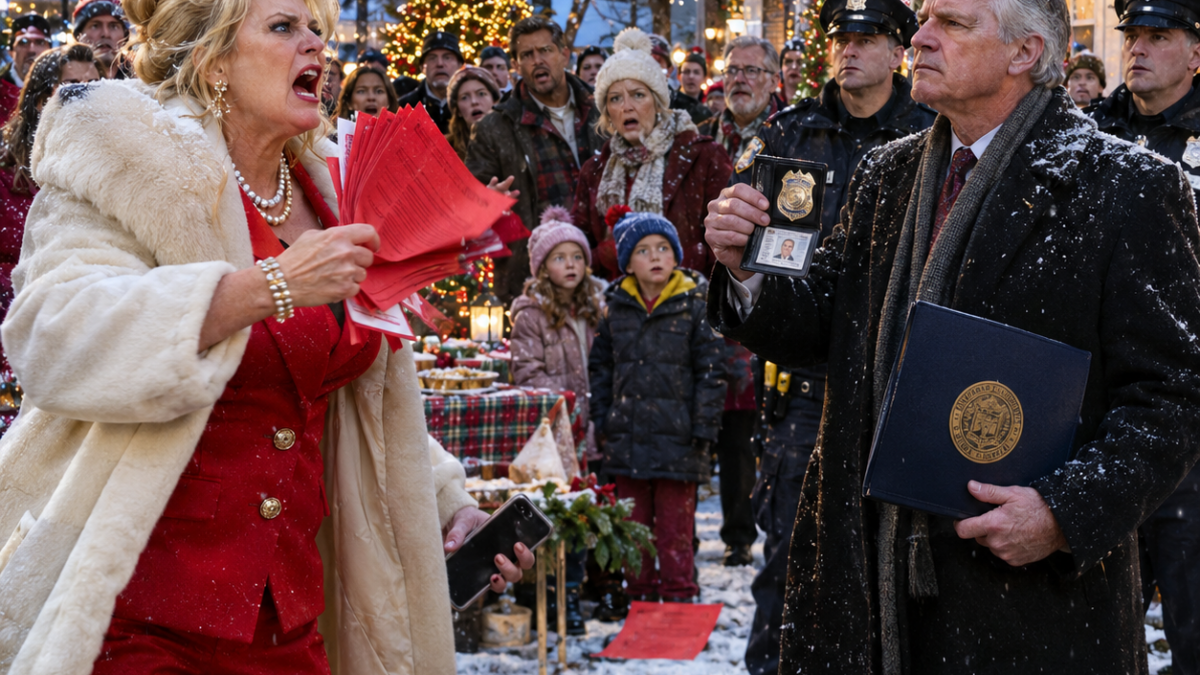
Most people paid.
That was how Delilah stayed powerful.
Not because she was always right.
Because she was exhausting.
Working families didn’t want to spend weeks fighting over a $200 citation.
Older homeowners didn’t want threatening letters mentioning liens.
Parents didn’t want a woman with a clipboard photographing their kids’ toys.
So people gave in.
One family at a time.
Until the Christmas party.
That was the mistake Delilah never understood.
She hadn’t attacked one homeowner’s basketball hoop.
She had attacked something all forty-seven families cared about.
And for the first time in six years, they were angry at the same time.
I lowered the letter.
Sarah folded her arms.
“What are you going to do?”
I looked toward the front window.
Across the street, our neighbor Tom Rodriguez was standing beside his mailbox holding the same red notice.
Two houses farther down, Mrs. Patterson was reading hers with one hand pressed against her mouth.
Another door opened.
Then another.
Forty-seven identical letters.
Delivered on the same morning.
I took a slow drink of coffee.
“As Ethan the neighbor?”
Sarah narrowed her eyes.
“Yes.”
“I’m going to the meeting tonight.”
“And as Ethan the mayor?”
I looked back at the red notice.
For six months, Delilah had been filing complaints with my office accusing Oakridge residents of illegal activities.
Complaints demanding municipal investigations.
Complaints requesting code enforcement.
Complaints accusing unnamed “agitators” of undermining lawful governance.
Complaints targeting my own street.
My own neighbors.
Sometimes my own house.
She had no idea who she was sending them to.
I folded the notice carefully.
“As mayor?”
I smiled without humor.
“I’m going to keep every piece of paper she gives me.”
PART2
That evening, forty-seven families crowded into Joe Kowalski’s garage.
The place smelled like sawdust, motor oil, coffee, and cold air every time the garage door opened.
People stood shoulder to shoulder between tool cabinets, lawn equipment, and stacked Christmas decorations.
Mrs. Patterson sat in a folding chair near the front.
Seventy-three years old.
Retired elementary school teacher.
Widowed three years.
Normally one of the gentlest people in the neighborhood.
That night, her hands were shaking.
She held up a violation notice.
“Five hundred dollars.”
Someone near the back muttered, “For what?”
“My wreath.”
Silence.
Mrs. Patterson looked down at the paper.
“It says my front-door wreath exceeds the approved decorative diameter and disrupts neighborhood aesthetic harmony.”
Tom Rodriguez laughed bitterly.
“Mine says my flag is improperly displayed because one corner touched a tree branch.”
Tom was sixty-eight, a Vietnam veteran who treated his flag with more care than Delilah treated most human beings.
A young mother named Jenna raised her hand.
“She threatened to report us to child protective services.”
That changed the room.
Every conversation stopped.
Joe leaned forward.
“What?”
Jenna’s eyes were red.
“She said the toys in our backyard create an unsafe environment and that our refusal to remove them shows parental negligence.”
A man beside her put his arm around her shoulders.
I felt anger rise in my chest.
That wasn’t property management.
That was intimidation.
Delilah had discovered that if a $200 fine didn’t frighten someone, maybe a threat involving their children would.
Joe looked around.
“So what do we do?”
People began talking at once.
Pay the fines.
Cancel the party.
Move it somewhere else.
Call a lawyer.
Call the police.
Ignore her.
Sue the HOA.
For nearly ten minutes, the garage filled with fear disguised as strategy.
I stayed quiet.
Then Mrs. Patterson looked at me.
“Ethan, you work for the city.”
Every face turned.
Technically true.
“What happens if she calls the police?”
“That depends on whether anyone is actually breaking the law.”
“Are we?”
“No.”
The room became quieter.
Tom crossed his arms.
“She says the HOA can prohibit the party.”
“She can enforce valid restrictions that actually apply,” I said carefully. “But she doesn’t get to invent criminal law.”
“What about her fines?” somebody asked.
“Before anyone pays another dollar, you should ask for the governing provision authorizing the fine, proof of proper board approval, and the current association records supporting its enforcement authority.”
Mrs. Patterson straightened.
“Can we ask for those?”
“You should.”
I wasn’t acting as mayor.
Not yet.
I was giving neighbors the same kind of advice I would have given anyone when I practiced land-use law.
Ask for documents.
Ask who voted.
Ask where the authority comes from.
Bullies hate documentation because documentation creates boundaries.
Delilah had spent years making everything sound automatic.
Violation. Fine. Lien. Enforcement.
Big words.
Few questions.
That changed that night.
Mrs. Patterson volunteered to start reviewing the association’s founding documents.
Tom and several other residents agreed to document every interaction.
Joe would collect copies of every recent violation notice.
Linda would organize communications so nobody responded alone.
And I would keep watching.
Not as the mayor swooping in to rescue everyone.
As a resident making sure Delilah kept creating evidence.
Because she was very good at that.
Three days earlier, she had sent another complaint to my office.
The subject line was:
URGENT MUNICIPAL INVESTIGATION REQUEST — OAKRIDGE ESTATES.
She accused residents of coordinating “anti-HOA activity designed to destabilize property values.”
She demanded the mayor’s personal intervention.
I had read it at my desk in City Hall.
Then I had forwarded it to our city attorney with one sentence.
Please preserve this. Do not respond substantively yet.
Delilah thought silence meant nobody was paying attention.
She was wrong.
We were paying very close attention.
The next morning, she escalated.
At 8:03 a.m., I opened my front door and found another certified envelope.
This one threatened a $500 daily penalty against any household participating in the December 23 party.
It also claimed the HOA had “direct relationships with municipal officials who have agreed to support enforcement.”
I read that sentence twice.
Then I started laughing.
Sarah came downstairs.
“What?”
I handed her the letter.
She read the paragraph.
Then looked at me.
“She’s claiming you support her?”
“Apparently I’m very persuasive.”
“Does she actually think she knows the mayor?”
“I think she tells people she knows whoever she needs to know.”
That afternoon, I pulled the HOA’s publicly available corporate records.
What I found made the situation more interesting.
The association’s state filings had fallen badly out of date.
Its corporate status had unresolved deficiencies.
Certain required renewals had not been properly maintained.
That didn’t magically erase every private covenant in Oakridge overnight.
But it created serious questions about Delilah’s authority to represent the organization, impose certain charges, and threaten people with collection actions while the association’s legal housekeeping was a mess.
I printed the relevant public records.
Then I sent them to our city attorney.
She called me ten minutes later.
“Ethan.”
“Rebecca.”
“How long have you known about this?”
“About twenty minutes.”
Rebecca Martinez had worked municipal law almost as long as I had.
She hated sloppy governance.
“Do the homeowners know?”
“Not yet.”
“Good. Don’t overstate it. Lapsed filings don’t necessarily invalidate every covenant.”
“I know.”
“But Delilah’s collection threats while the corporate records are in this condition?”
“Exactly.”
Rebecca sighed.
“What does she think she’s doing?”
“Running a kingdom.”
“That’s not a recognized business structure.”
I smiled.
“Unfortunately.”
We agreed that residents should receive accurate public information about requesting association records and verifying corporate status.
No secret mayoral intervention.
No abusing my office.
Just lawful access to public records.
Mrs. Patterson handled the rest.
By Tuesday morning, printed copies of the corporate information were circulating among residents.
Delilah panicked.
I knew because she filed another complaint.
Then another.
Then called an emergency board meeting.
By Wednesday, Mrs. Patterson had transformed her living room into what she jokingly called the Oakridge Legal Library.
Coffee on one table.
Three-ring binders on another.
Bylaws spread across the couch.
She had highlighted sections requiring board votes before certain enforcement actions.
Tom Rodriguez had created a spreadsheet logging each citation.
Date.
Violation.
Fine.
Witnesses.
Supporting photographs.
A retired accountant named Frank had begun comparing assessment increases against budgets.
Something had shifted.
People were no longer whispering about Delilah.
They were reading.
The difference terrified her.
Her next move confirmed it.
She hired an attorney using HOA funds without first clearly documenting the authorization to the membership.
Then she threatened accelerated collection against three homeowners who had challenged their fines.
Then cameras appeared.
One pointed toward the Kowalski house.
Another toward the street where residents often gathered.
When Joe asked why, Delilah called them “security enhancements.”
Tom called them intimidation.
I called them evidence.
Thursday evening, instead of attending Delilah’s emergency board meeting, nearly the entire neighborhood gathered in Joe’s backyard to plan the Christmas party.
Kids sang quietly near the patio.
Parents worked out parking.
Linda organized food tables.
Mrs. Patterson discussed documentation.
Nobody screamed.
Nobody blocked roads.
Nobody threatened anyone.
Delilah stood at her front window with binoculars.
I saw her.
So did half the neighborhood.
The next morning, a complaint arrived in my mayoral inbox.
REQUEST FOR IMMEDIATE INVESTIGATION OF ORGANIZED RESIDENT CONSPIRACY.
She described the planning meeting as an unlawful gathering designed to overthrow legitimate HOA authority.
I leaned back in my office chair and stared at the screen.
My chief of staff, Daniel, walked in carrying budget documents.
“You okay?”
I pointed at the monitor.
“The HOA president from my neighborhood wants the city to investigate a criminal conspiracy.”
“What conspiracy?”
“Christmas.”
He stared at me.
“Christmas?”
“Cookies appear to be involved.”
Daniel slowly placed the folder on my desk.
“I’m going to pretend I didn’t hear that.”
“Good choice.”
Then Delilah sent another certified letter.
This one demanded an emergency $300 assessment from every household to create an HOA legal defense fund.
Thirty days to pay.
Failure would allegedly result in collection proceedings.
Residents were furious.
“She’s making us pay for her lawyer to fight us,” Joe said.
That night, more homeowners joined the documentation effort.
Delilah was losing social control.
So she tried physical control.
One morning, several communal mailbox compartments were inaccessible because new hardware had been installed without warning.
Street lighting in part of the subdivision also went dark after an HOA contractor interfered with privately controlled equipment.
Elderly residents were confused.
One woman had medication arriving by mail.
Another resident nearly tripped walking home after sunset.
Delilah claimed the changes were temporary security measures.
Then I found something far more serious.
While reviewing municipal service agreements at City Hall, I saw Oakridge Estates listed under standard city-provided street maintenance and snow-removal coverage.
That caught my attention because Delilah’s latest assessment letter listed both services as major justifications for HOA charges.
I dug deeper.
City records showed residents were already receiving several services through municipal funding.
Yet HOA budgets contained charges suggesting residents were separately paying for overlapping work.
That didn’t automatically prove theft.
There could have been supplemental private services.
But the invoices needed examination.
I asked Rebecca to review the records.
She called me into her office later that afternoon.
“You need to see this.”
She had municipal contracts on one side of her desk.
HOA invoices supplied by residents on the other.
The descriptions overlapped.
Snow clearing.
Street maintenance.
Lighting-related services.
I frowned.
“Could these contractors be doing additional work?”
“Maybe.”
“Do we have city records showing private crews?”
“Not enough to explain all of this.”
I sat down.
“How much?”
“We need an audit before using a number.”
That was Rebecca.
Always exact.
Always careful.
I nodded.
“Then we audit.”
As mayor, I had authority to review whether municipal systems were being misused.
As a homeowner, I had an interest in what my HOA was billing me.
I kept those roles separate.
That mattered.
Delilah didn’t.
She began filing so many complaints with city departments that our inspectors noticed a pattern.
Forty-seven addresses.
Nearly identical language.
Garden hoses described as safety hazards.
Christmas lighting described as electrical emergencies.
A garage workbench described as unlawful commercial storage.
Bushes described as visibility threats.
Our building inspector, Jake Morrison, called me.
“Boss, someone is weaponizing our complaint system.”
“I know.”
“You know?”
“I live there.”
Silence.
“You live in Oakridge?”
“Yes.”
Another silence.
“Does she know you’re mayor?”
“No.”
Jake laughed.
Then stopped.
“You’re serious?”
“Unfortunately.”
“Oh, this is going to get weird.”
He had no idea.
Delilah’s complaints triggered official site visits.
But instead of validating her claims, those inspections created a trail demonstrating that many complaints were unsupported.
The more she tried to use municipal enforcement as a weapon, the more official documentation contradicted her.
Then Channel 7 called.
Reporter Amanda Palmer had received information about residents being charged for services that appeared to overlap with city-funded work.
She asked for municipal records.
Those records were public.
We provided them.
Her first story aired Friday evening.
OAKRIDGE HOMEOWNERS QUESTION DUPLICATE SERVICE CHARGES.
She interviewed residents.
Showed invoices.
Displayed city service agreements.
Asked Delilah for comment.
Delilah accused the station of joining an anti-HOA conspiracy.
That clip spread faster than anything else.
By Saturday morning, thousands of people had watched it online.
And Delilah reacted exactly the wrong way.
She hired a private investigator.
Residents began noticing the same dark sedan near meetings.
Photographs were taken of license plates.
Someone questioned the mail carrier.
Parents saw a man taking pictures at a youth soccer game.
Then Sarah called me from home.
“Ethan.”
Her voice sounded wrong.
“What happened?”
“There’s a man across the street photographing Emma and Grace.”
I stood so fast my chair rolled backward.
“Where are they?”
“Inside now.”
“Call the police non-emergency line. Don’t confront him.”
I left City Hall.
By the time I reached home, the sedan was gone.
But Sarah had photographs.
So did Tom.
So did another neighbor.
We documented everything.
That night, Emma asked me why a stranger had been taking pictures.
I told her we were handling it.
She looked up at me.
“Is it because of the Christmas party?”
I hated that question.
Children should have been thinking about presents.
Snow.
Songs.
Cookies.
Not whether adults with cameras were monitoring them.
I sat beside her on the couch.
“You’re safe.”
“Are we still having the party?”
I looked toward Grace, who was listening from the stairs.
“Yes.”
Emma smiled.
That settled something inside me.
Until then, I had been careful.
Patient.
Methodical.
I still intended to be all three.
But I was no longer willing to let Delilah frighten children while everyone waited politely for her to stop.
The next week, Jake Morrison called again.
This time, he wasn’t laughing.
“Ethan, I need you in my office.”
I went downstairs.
Jake closed the door.
Then placed his phone on the desk.
“Delilah Thornfield contacted me directly.”
“What did she want?”
“She wanted code violations issued against the Kowalski property before the Christmas party.”
“That’s not surprising.”
“She offered me money.”
I stopped.
“How much?”
“Five hundred dollars cash.”
“Did she explicitly connect the payment to the inspection result?”
Jake nodded.
“And she said helping her would be remembered when promotions were discussed downtown.”
I stared at him.
“She used my office?”
“Not by name. She said she had strong connections with city leadership.”
Of course she did.
“Do you have documentation?”
Jake nodded.
“I preserved the messages and reported the contact through the proper department process before calling you.”
“Good.”
I immediately brought Rebecca in.
This was no longer just an HOA fight.
Any attempt to pay a city employee to fabricate official violations had to be handled formally.
So we did.
No dramatic raid.
No social-media announcement.
Just evidence preserved, statements taken, and the matter referred to the appropriate investigators.
Delilah knew none of that.
Instead, she filed another complaint demanding that the mayor remove “corrupt inspectors who refuse to enforce community safety.”
I printed it and added it to the folder.
By then, the folder was thick enough to use as a doorstop.
And still she kept going.
At the next city council meeting, Delilah appeared in person.
I knew she was coming because she had requested time to present “evidence of organized criminal activity in Oakridge Estates.”
She walked into the chamber carrying three binders.
I sat in the mayor’s chair.
She looked directly at me several times.
No recognition.
To Delilah, I was simply the mayor.
A public official she had never bothered to connect to the quiet homeowner on Maple Street.
That fact still amazed me.
When her turn came, she approached the podium.
“Mr. Mayor.”
“Ms. Thornfield.”
“I appreciate the opportunity to finally bring this crisis directly to your attention.”
I nearly smiled.
“Please proceed.”
For forty-five minutes, she presented photographs.
Garage meetings.
Neighbors talking.
Tom Rodriguez carrying folders.
Mrs. Patterson entering Joe’s house.
Cars parked during planning sessions.
Then she displayed photographs of my backyard.
My daughters were visible.
Emma riding her bicycle.
Grace drawing with chalk.
Sarah standing near the porch.
A photograph showed me talking with Gordon beside my driveway.
Something cold moved through my body.
Delilah pointed toward the screen.
“This man is one of the primary organizers.”
I looked at my own photograph.
“Is he?”
“Yes.”
“What is his name?”
“Ethan Wellington.”
Several council members looked at me.
Rebecca stared down at her notes so she wouldn’t laugh.
Delilah continued.
“He claims to work for the city.”
“Does he?”
“I believe so. But clearly at a low enough level that he feels free to participate in illegal neighborhood organizing.”
Councilwoman Harris covered her mouth.
I kept my expression neutral.
“And what specific illegal activity do you allege Mr. Wellington committed?”
“He encourages residents to question HOA authority.”
A pause.
“That is the illegal activity?”
“He is destabilizing lawful governance.”
I nodded slowly.
“Do you have evidence of an actual criminal offense?”
Delilah lifted one of her binders.
“I have reported everything to the mayor’s office.”
“I see.”
“Frankly, I’m disappointed that your staff hasn’t acted sooner.”
“I’ll make sure the mayor reviews it personally.”
“Thank you.”
Rebecca coughed.
Delilah finished her presentation.
Then she made one more demand.
“I expect immediate action against these residents.”
“Your request will be reviewed according to law.”
“Good.”
She gathered her papers.
As she walked away, Councilwoman Harris leaned toward me.
“Should we tell her?”
I whispered back.
“Not yet.”
Because now we had something Delilah had never expected.
Her sworn-looking public presentation.
Her own photographs.
Her descriptions of residents.
Her admission that she had been monitoring private neighborhood activity.
And her continued attempt to use city authority to punish people challenging her.
Everything was documented.
Everything was becoming easier to prove because she insisted on saying it publicly.
Then Mrs. Patterson found the document that changed the financial side of the case.
Her late husband, Robert, had served on an early association committee decades earlier.
He saved everything.
Boxes of minutes.
Budgets.
Letters.
Bank correspondence.
Original governing documents.
Late one Saturday night, she called me.
“Ethan, come over.”
“What happened?”
“I found the founding charter.”
I was at her house ten minutes later.
The document dated back to 1987.
We spread it across her dining room table.
The language was clear.
Major enforcement decisions required board approval.
Certain fee increases required resident approval.
Individual officers had limited unilateral authority.
Delilah had spent years issuing threats as though her signature alone carried unlimited power.
It didn’t.
Then Mrs. Patterson opened another folder.
“This was Robert’s.”
Inside were copies of correspondence involving community property and a bank.
I read the first letter.
Then the second.
Then stopped.
“What is this?”
Mrs. Patterson’s face was pale.
“I was hoping you could tell me.”
The paperwork suggested that association-controlled common property had been pledged in connection with debt.
Clubhouse interests.
Common areas.
Recreational property.
The amount shown was approximately $47,000.
I immediately called Rebecca.
She met us Sunday morning.
After reviewing the documents, she looked at me.
“We need current records before drawing conclusions.”
“Could she have done this without a vote?”
“Not if the governing documents required authorization she didn’t obtain.”
Mrs. Patterson leaned forward.
“Can we lose the playground?”
Rebecca answered carefully.
“If association assets were legitimately pledged and debt went unpaid, there could be consequences. But we don’t know the full situation yet.”
The possibility alone enraged me.
For months, Delilah had accused neighbors of damaging property values.
Meanwhile, there were questions about whether community assets had been placed at financial risk without proper approval.
We requested records.
Residents demanded explanations.
Investigators followed the financial trail.
And the picture became uglier.
Questionable vendor arrangements.
Possible duplicate billing.
Unclear authorizations.
Payments requiring deeper review.
Threatening letters mailed to residents.
Attempts to use municipal systems against homeowners.
And the offer to Jake.
Every problem connected back to one person’s belief that nobody had the right to challenge her.
Delilah.
Sarah finally learned the full scope over dinner.
I had kept certain official details compartmentalized because of the investigation.
But by then, the neighborhood situation was impossible to shield from her.
“She really doesn’t know?” Sarah asked.
“That I’m mayor?”
“Yes.”
“No.”
Sarah set down her fork.
“She has spent six months sending complaints about you…to you?”
“Correct.”
“She has taken pictures of our children while asking you to investigate their father?”
“Yes.”
“And she keeps claiming she has influence with your office?”
“Also yes.”
Sarah stared at me.
“That might be the stupidest thing I’ve ever heard.”
“I’ve attended zoning meetings for fifteen years.”
“So that’s saying something.”
I smiled.
Then her expression hardened.
“When does this end?”
I knew what she meant.
Not the investigation.
The fear.
The cameras.
The threats.
The children asking why Christmas had become frightening.
“December twenty-third,” I said.
“The party?”
“Yes.”
“You’re going to reveal yourself?”
“If she shows up and tries to use my office as a threat again, yes.”
Sarah leaned back.
“Please don’t turn this into theater.”
“I won’t.”
“You’re smiling.”
“I’m not.”
“You absolutely are.”
I stopped smiling.
Mostly.
The Christmas party preparations became almost absurdly organized.
Not because we wanted drama.
Because we wanted Delilah to have no legitimate excuse.
Parking plans were created.
Noise limits were reviewed.
Safety requirements were followed.
Food tables stayed on private property.
Neighbors agreed not to block sidewalks.
Legal observers volunteered.
Residents preserved notices.
Police were informed that a large community gathering was expected and that there had been repeated conflict.
Local media already knew about the HOA dispute and planned to cover the party as a community-interest story.
Nobody invited federal agents to create a spectacle.
But investigators were already aware of the broader situation.
Delilah, naturally, interpreted every vehicle she didn’t recognize as proof the government had finally come to help her.
On the morning of December 23, she physically blocked Maria Santos’s catering van near the Kowalski driveway.
Maria owned a small restaurant downtown.
She had donated trays of food.
Delilah planted herself in front of the van.
“This is illegal commercial activity!”
Maria lowered her window.
“I’m giving away cookies.”
“You are operating an unauthorized food business inside a residential subdivision!”
“I am literally donating cookies.”
“You need to leave.”
A neighbor recorded the exchange.
The video spread online within hours.
Someone captioned it:
CHRISTMAS KAREN TRIES TO ARREST COOKIES.
By noon, reporters were calling.
Delilah became more convinced than ever that she was the victim.
At 2:00 p.m., she set up a folding table near the subdivision entrance.
A handmade sign read:
WARNING — ILLEGAL ACTIVITY IN PROGRESS.
She stopped delivery vehicles.
Questioned guests.
Took license plate numbers.
Then Channel 7 arrived.
Amanda Palmer stepped from the news van.
Delilah practically ran toward her.
“Perfect! You can document the criminal conspiracy!”
Amanda blinked.
“We’re here for the Christmas party.”
“That’s what I mean!”
The camera started rolling.
Delilah waved her papers.
“I have been fighting these people alone for six months!”
Amanda asked, “What crime are they committing?”
“Unauthorized gathering.”
“On private property?”
“Under HOA jurisdiction.”
“Are police enforcing the ban?”
“They will.”
As if summoned by her confidence, two patrol cars turned onto the street.
They had been assigned to monitor traffic and keep things peaceful.
Delilah’s face lit up.
“See?”
She hurried toward Officer Martinez.
“Finally! Start with the Kowalski property.”
Martinez stepped out.
“Ma’am?”
“I have forty-seven violators. Some are repeat offenders.”
“We’re here to make sure the event remains safe.”
“Yes, exactly. Arrest them.”
Martinez stared at her.
“Arrest who?”
“The people attending.”
“For attending a Christmas party?”
“For conspiracy against lawful HOA authority!”
The camera captured every word.
Martinez glanced toward his partner.
“Ma’am, unless somebody commits an actual offense, nobody is being arrested for attending a neighborhood gathering.”
Delilah’s expression changed.
“You don’t understand. The mayor supports me.”
I was standing twenty yards away beside Joe.
He heard it.
So did Tom.
Joe whispered, “How are you not laughing?”
“Years of public service.”
At 3:00 p.m., the backyard began filling.
Warm white lights hung between bare trees.
Tables were covered in red cloth.
Slow cookers steamed.
Children carried paper snowflakes.
Someone started Christmas music.
The smell of pine, hot chocolate, roasted meat, cinnamon, and wood smoke drifted through the cold air.
Families who had spent months avoiding their front yards were suddenly talking openly.
Mrs. Patterson arrived carrying sugar cookies.
Delilah blocked her path.
“You are knowingly participating in prohibited activity.”
Mrs. Patterson stared at her.
“I’m carrying cookies, Delilah.”
“You have already been warned.”
“Yes.”
“You could face additional penalties.”
Mrs. Patterson smiled.
“Send them in writing.”
Delilah blinked.
That was new.
Six months earlier, Mrs. Patterson would have apologized.
Now she wanted documentation.
Delilah turned toward Tom Rodriguez.
“You’re bringing minors into an illegal gathering.”
Tom looked at his grandchildren.
“They seem dangerous.”
One was wearing a reindeer sweater.
The other had frosting on his face.
Delilah’s anger grew.
She needed fear.
People were giving her humor.
Then she saw Sarah.
Emma and Grace were walking beside her.
Delilah pointed.
“There!”
Her voice carried across the yard.
“That family!”
I turned.
She began walking toward them.
Officer Martinez noticed immediately.
Delilah pointed at Emma and Grace.
“Those children belong to one of the primary organizers!”
The entire atmosphere changed.
Sarah stopped.
Emma grabbed her hand.
Delilah continued.
“Their father has been coordinating illegal resistance for months!”
Martinez moved between them.
“Ma’am, step back.”
“I want their family investigated.”
“Step away from the children.”
“They are part of the conspiracy!”
Grace looked terrified.
Something inside me went completely still.
No rage.
No shaking.
No impulse to scream.
Just certainty.
Enough.
I walked across the yard.
Delilah saw me coming.
“You.”
“Yes.”
“You’re the one.”
“I am.”
“You organized this.”
“I helped.”
She turned toward Martinez.
“This is the man! Arrest him!”
Martinez looked at me.
I looked at him.
He knew exactly who I was.
“On what charge?” he asked.
Delilah threw up her hands.
“Conspiracy! Harassment! Interference with HOA authority!”
I stepped closer.
“Delilah.”
“Stay away from me.”
“You need to stop pointing at my daughters.”
“Then tell them to leave this illegal event.”
“This event is lawful.”
“You don’t decide that.”
“No.”
I looked toward the cameras.
Then back at her.
“You’re right.”
Her eyes narrowed.
“The mayor does.”
“Exactly!”
She raised her voice.
“Where is he?”
Nobody spoke.
Delilah spun around.
“I demand to speak to the mayor immediately!”
The yard became strangely quiet.
Dozens of neighbors turned toward me.
Amanda Palmer’s camera shifted.
Sarah stood with Emma and Grace behind Officer Martinez.
Delilah pointed toward the street.
“Call City Hall! Call whoever you need! I have filed complaints for months. The mayor knows everything about these criminals!”
I took one step forward.
“Delilah.”
“What?”
“My name is Ethan Wellington.”
“I know your name.”
“I’m sure you do.”
“You’re some city employee who thinks that makes you important.”
A few people lowered their heads to hide their smiles.
I reached into my coat.
Delilah stiffened.
I removed my city identification.
Opened it.
Held it where she could see.
“I’m Ethan Wellington.”
She stared.
“Mayor of Maplewood Heights.”
Nothing moved.
Not her face.
Not her hands.
Not the stack of papers she was holding.
Then she laughed once.
A small, disbelieving sound.
“No.”
“Yes.”
“You’re lying.”
I handed my identification to Officer Martinez.
He examined it theatrically.
“Looks real to me, Mayor.”
Someone in the crowd snorted.
Delilah looked from him to me.
Then toward the camera.
Then back.
Her face began changing.
Confusion.
Recognition.
Fear.
“No.”
“For six months,” I said quietly, “you have been sending complaints to my office demanding that I investigate my own neighbors.”
Her mouth opened.
“You repeatedly identified me in photographs as one of the organizers.”
“You—”
“You accused my family of participating in illegal gatherings.”
“I didn’t know—”
“You used supposed connections with my office to frighten residents.”
“That isn’t what I—”
“You told people the mayor supported your enforcement campaign.”
“I was told—”
“By whom?”
Silence.
The question landed harder than any accusation.
Delilah looked around.
No answer.
I continued.
“You asked city inspectors to target residents.”
Her eyes flickered.
“You filed repeated complaints against families challenging your authority.”
“I was protecting property values.”
“You demanded enforcement of violations that city inspectors repeatedly found unsupported.”
“Because your departments are incompetent!”
Jake Morrison stood near the back.
His expression hardened.
I lowered my voice.
“And you contacted a city employee about fabricating violations against the Kowalski property.”
All color disappeared from her face.
“That’s a lie.”
Jake stepped forward.
“No, ma’am.”
She turned.
He held her gaze.
“I’m Jake Morrison.”
I watched recognition arrive.
“The building inspector.”
Delilah stepped backward.
“I never—”
Jake didn’t argue.
He simply said, “The matter has been documented.”
For the first time, she looked genuinely afraid.
Not angry.
Not offended.
Afraid.
Then Rebecca Martinez approached.
She wore a dark coat and carried a folder.
Delilah stared.
Rebecca spoke calmly.
“Ms. Thornfield, I’m Rebecca Martinez, city attorney.”
“I know who you are.”
“Good. Then you understand that several matters involving misuse of municipal complaint systems and your interactions with city personnel have been referred for formal investigation.”
Delilah clutched her papers.
“This is retaliation.”
“No.”
Rebecca’s tone remained flat.
“This is procedure.”
“You’re all working together!”
“Investigators work together when evidence overlaps.”
“I have rights!”
“Yes,” Rebecca said. “You do.”
That answer seemed to confuse Delilah.
She was accustomed to treating rights as something only she could invoke.
Rebecca continued.
“And so do the residents you’ve been threatening.”
Amanda Palmer’s camera recorded everything.
I almost wished it hadn’t.
Not because Delilah deserved privacy from the consequences of her public behavior.
Because I didn’t want justice to become entertainment.
These were real neighbors.
Real financial questions.
Real fear.
Real children.
I didn’t want applause.
I wanted it over.
But Delilah wasn’t done.
She grabbed her megaphone.
“This party is still prohibited!”
A groan moved through the crowd.
She raised it.
“I AM ORDERING EVERYONE TO LEAVE!”
Nobody moved.
“YOU WILL ALL BE FINED!”
Mrs. Patterson called back.
“By which board vote?”
Laughter.
Delilah’s face twisted.
“I AM THE PRESIDENT!”
Gordon answered.
“That’s not the same thing.”
“YOU PEOPLE HAVE NO IDEA WHAT I’VE DONE FOR THIS COMMUNITY!”
Tom crossed his arms.
“We’re starting to.”
That line broke something in her.
She began screaming.
About betrayal.
Ungrateful residents.
Property values.
Criminal conspiracies.
Corrupt city officials.
Fake news.
Disrespect.
Her words tumbled over each other.
Then two investigators who had been standing near the street approached with local officers.
One identified himself.
He explained that Delilah needed to accompany them regarding matters already under investigation.
Her eyes widened.
“What?”
He repeated himself.
She looked at me.
“You did this.”
“No.”
I meant it.
“I preserved what you did.”
She pointed at me.
“You planned this!”
“I planned a Christmas party with my neighbors.”
“You destroyed my association!”
I shook my head.
“The association was never yours.”
Her breathing became shallow.
Around us, the Christmas lights flickered on automatically as the winter sky darkened.
Someone’s speaker had stopped playing.
Children were silent.
Nobody was cheering.
The investigators informed Delilah of the next steps.
When she resisted and tried to push past, officers restrained her.
That was the moment the megaphone fell.
It hit the frozen grass with a dull plastic crack.
The same object she had used to command people all afternoon lay silent at her feet.
Delilah looked at the forty-seven families surrounding her.
People she had fined.
Threatened.
Photographed.
Scolded.
Intimidated.
People who no longer looked afraid.
Her eyes settled on me.
“You think this makes you powerful?”
I shook my head.
“No.”
“Then what?”
I looked toward Emma and Grace.
Then at Mrs. Patterson.
Tom.
Joe.
Linda.
Sarah.
My neighbors.
“Power isn’t forcing everyone around you to be scared.”
She said nothing.
“It’s having authority and knowing when you’re not allowed to use it.”
The investigator guided her toward the street.
She looked back once.
Then she was gone.
For several seconds, nobody moved.
Finally, Emma tugged my sleeve.
“Daddy?”
I crouched.
“Yeah?”
“Can we sing now?”
I smiled.
“Yes.”
A few minutes later, children gathered beneath the lights.
Someone restarted the music.
Hot chocolate was poured.
Food appeared on plates.
People talked.
Some cried.
Others laughed.
Mrs. Patterson handed me a cookie.
“Mayor Wellington.”
I groaned.
“Please don’t start.”
She smiled.
“Your secret is over.”
“Apparently.”
Tom joined us.
“You realize nobody is ever letting you forget this.”
“I’m moving.”
“No, you’re not.”
Joe raised his cup.
“To the worst-kept secret in Oakridge.”
People laughed.
And that was how the Christmas party continued.
Not as a victory rally.
Not as a celebration of Delilah being taken away.
As the tradition it had always been.
Neighbors standing together on a cold December night.
Kids singing badly.
Someone burning the first batch of cider.
Tom arguing that his chili recipe was better than Joe’s.
Mrs. Patterson telling children they could take two cookies when everyone knew she meant six.
For three hours, Oakridge felt normal again.
Christmas morning arrived quiet.
No notices.
No certified envelopes.
No cameras pointed at Joe’s house.
No threatening emails.
I sat near our tree while Emma and Grace tore wrapping paper into pieces so small I knew I’d be finding them under furniture until February.
Sarah handed me coffee.
“Mayor.”
“Don’t.”
She smiled.
“I’m enjoying this.”
“Everybody is.”
“Occupational hazard of secretly governing your own neighborhood.”
“I wasn’t secretly governing the neighborhood.”
“Tell that to social media.”
I groaned.
The Channel 7 clip had spread overnight.
Fortunately, the most responsible coverage focused less on the confrontation and more on the underlying concerns:
HOA governance.
Resident rights.
Financial transparency.
Misuse of municipal complaint systems.
The investigation continued for weeks.
And contrary to the fantasies people posted online, Delilah’s legal problems were not resolved in one dramatic night.
Documents had to be reviewed.
Transactions had to be traced.
Witnesses had to be interviewed.
The association’s corporate status needed correction.
Residents needed independent legal advice.
Every allegation required proof.
Some things people suspected turned out to have ordinary explanations.
Others did not.
The duplicate service charges became one of the biggest issues.
Auditors examined whether residents had been billed for work already provided through municipal services and whether private contractors had actually performed supplemental services claimed in HOA records.
Several payments lacked adequate supporting documentation.
Vendor relationships drew scrutiny.
The attempted payment to Jake became part of a separate investigative matter.
The unauthorized use of municipal complaint systems was reviewed.
So were Delilah’s threatening letters.
No single issue explained everything.
Together, they showed a pattern of governance without accountability.
The HOA itself was placed into a restructuring process under resident control rather than simply disappearing overnight.
An interim board was selected.
Independent accounting professionals reviewed finances.
Collection actions based solely on Delilah’s disputed enforcement campaign were suspended pending examination.
Homeowners gained access to records they had spent years being told they were not entitled to see.
Mrs. Patterson attended every meeting.
She took notes.
Pages of them.
At the first community meeting after Christmas, the interim facilitator asked whether anyone had questions.
Mrs. Patterson raised her hand.
Everyone laughed.
She frowned.
“What?”
Joe whispered to me.
“We’re going to be here until midnight.”
He was wrong.
We were there until 12:37.
And it was wonderful.
Not because every question had an easy answer.
Because people were finally allowed to ask them.
Residents learned that community governance was boring when done correctly.
Budgets.
Minutes.
Voting procedures.
Insurance.
Maintenance schedules.
Contracts.
Reserves.
Conflict disclosures.
Exactly the things Delilah had hidden behind dramatic language about “authority.”
By February, children were playing outside again.
Basketball hoops returned.
Chalk appeared on sidewalks.
Flags waved without anyone measuring angles.
Garden gnomes multiplied with what I suspected was deliberate aggression.
Tom placed three in his yard.
One wore a tiny military helmet.
Delilah’s house remained dark for weeks.
Eventually, it was listed for sale.
I heard rumors about where she moved.
I never verified them.
I didn’t care.
Her legal case proceeded through the system.
Certain financial claims resulted in restitution obligations.
Other allegations were resolved through negotiated proceedings.
What mattered to me was that she no longer controlled Oakridge.
And the neighborhood had learned something more important than how to defeat one difficult HOA president.
They had learned not to surrender responsibility for their community to one person.
Six weeks after Christmas, residents voted to create a new governance structure emphasizing transparent records, clearly documented enforcement procedures, resident appeals, and limits on unilateral authority.
People disagreed.
Frequently.
Sometimes loudly.
That was healthy.
Democracy is not quiet.
It’s accountable.
Joe wanted fewer landscaping restrictions.
Frank wanted tighter reserve rules.
Mrs. Patterson wanted every notice written in plain English.
Tom wanted a rule prohibiting anyone from ever measuring his flag.
Rebecca told him that last one might not belong in the bylaws.
He remained unconvinced.
I refused every request to become president.
“You’re already mayor,” Linda said.
“Exactly. I have suffered enough.”
The annual Christmas party survived.
The following year, it was bigger.
Not because of television coverage.
Not because people wanted to recreate Delilah’s downfall.
Because neighboring communities asked to join.
We moved part of the celebration to the city park.
Local businesses donated food.
Students performed music.
Families collected winter coats for shelters.
Mrs. Palmer sold cookies again.
Legally.
Very aggressively.
She made enough for two soccer teams.
Emma and Grace told everybody their father had “saved Christmas.”
I corrected them every time.
“I didn’t save anything.”
Grace rolled her eyes.
“You’re the mayor.”
“That doesn’t make me Santa Claus.”
Emma considered this.
“Can the mayor arrest Santa?”
“No.”
“Can Santa arrest the mayor?”
Sarah walked away laughing.
The truth was simpler.
Forty-seven families had saved their own neighborhood.
I happened to have a particular job.
A useful one, certainly.
But my office could not have replaced what those residents did for themselves.
Mrs. Patterson found the records.
Tom documented the pattern.
Joe and Linda refused to cancel the party.
Parents supported one another.
Residents asked questions.
Jake refused a bribe.
Rebecca insisted on procedure.
Reporters examined public records.
Investigators followed evidence.
And Delilah?
Delilah created most of the case against herself.
Every time somebody challenged her, she escalated.
Another letter.
Another threat.
Another complaint.
Another photograph.
Another demand.
She believed paperwork was power because for years nobody had forced her to prove what the paperwork actually meant.
That was her fatal mistake.
A red notice is not automatically authority.
A title is not automatically authority.
A loud voice is not authority.
Even being mayor is not authority to do whatever I want.
Real authority has limits.
Procedures.
Oversight.
Evidence.
Accountability.
That was what Delilah never understood.
Six months after that Christmas, I walked through Oakridge on a warm June evening.
Emma and Grace rode bicycles ahead of me.
Tom was grilling in his driveway.
Joe was arguing with Linda over whether a string of Christmas lights could legally remain on the porch until July.
Mrs. Patterson sat outside drinking iced tea with three neighbors.
Children had drawn an enormous rainbow across the sidewalk.
Nobody had measured it.
Nobody had photographed it.
Nobody had issued a citation.
I stopped near the Kowalski house.
The backyard looked completely ordinary.
Hard to believe that only months earlier, Delilah had stood there with a megaphone demanding that police arrest families for singing Christmas songs.
Sarah came up beside me.
“You’re doing the dramatic staring thing.”
“I’m thinking.”
“That’s what you always say.”
I smiled.
Across the street, a little boy kicked a soccer ball onto Mrs. Patterson’s lawn.
He froze.
For a second, I saw something old in his expression.
The memory children had developed during Delilah’s reign.
That instinct to expect trouble.
Mrs. Patterson looked at the ball.
Then at him.
“You planning to leave that there?”
His face fell.
She waited.
Then kicked it back.
“Because my yard isn’t a soccer field unless I get to play too.”
The boy laughed.
So did she.
Sarah touched my arm.
“That.”
“What?”
“That’s why it mattered.”
I nodded.
Not the viral video.
Not Delilah’s shocked face when she learned who I was.
Not the investigators.
Not the headlines.
That moment.
A child no longer afraid of accidentally breaking some invisible rule.
An elderly woman no longer afraid that kindness might bring a fine.
Neighbors no longer seeing one another as potential violations.
Community restored to something human.
Delilah had spent six years believing that a perfect neighborhood was one where everyone obeyed her.
She wanted silent streets.
Identical yards.
Approved decorations.
Controlled gatherings.
Predictable behavior.
No dissent.
No questions.
But a community without disagreement isn’t necessarily peaceful.
Sometimes it’s simply afraid.
Oakridge had been afraid.
Until one Christmas party reminded forty-seven families that Delilah’s authority existed only as long as everyone agreed never to challenge it.
She tried to cancel Christmas because Christmas brought people together.
And people who talk to each other compare stories.
People who compare stories notice patterns.
People who notice patterns ask questions.
People who ask questions become difficult to control.
That was what Delilah really feared.
Not cookies.
Not carols.
Not parking.
Connection.
She had isolated families one citation at a time.
The Christmas party put them all in the same backyard.
And once they realized nearly everyone had been threatened, embarrassed, or bullied, her power began collapsing before I ever revealed who I was.
That is the part people missed when they watched the television clip.
They thought the great twist was Delilah demanding to meet the mayor while the mayor stood fifteen feet away.
It was funny.
I’ll admit that.
Watching her face when I showed my identification is something I will probably remember for the rest of my life.
But that wasn’t the moment she lost.
She had already lost in Joe Kowalski’s garage.
The night Mrs. Patterson raised her trembling hand and admitted she had been threatened with a $500 fine over a Christmas wreath.
The moment Jenna told forty-six other families that Delilah had threatened to involve child services over backyard toys.
The moment Tom realized his flag citation wasn’t an isolated insult.
The moment residents stopped saying:
“What did I do wrong?”
And started asking:
“Who gave her the right to do this?”
That question changed everything.
Months later, I found the first red cease-and-desist letter while cleaning my office at home.
I almost threw it away.
Instead, I sat down and read it again.
THE DECEMBER 23 NEIGHBORHOOD CHRISTMAS GATHERING IS HEREBY CANCELED.
I remembered standing in the kitchen while Sarah made breakfast.
Remembered the twins upstairs.
Remembered neighbors walking toward their mailboxes.
Remembered how official the paper looked.
How final.
How intimidating.
That was the trick.
Delilah wanted people to believe the fight was over before it started.
She used language designed to end questions.
HEREBY ORDERED.
FINAL WARNING.
IMMEDIATE COMPLIANCE REQUIRED.
SUBJECT TO PENALTY.
She counted on homeowners being too frightened, busy, tired, or confused to ask the simplest question.
Where does it say you can do this?
Sometimes, that question is enough to change the balance of power.
Not always.
But sometimes.
I put the letter in a folder.
Sarah saw me.
“You’re keeping that?”
“Yes.”
“Why?”
I looked toward the backyard where Emma and Grace were drawing with chalk on the patio.
“Because someday they might need to see it.”
“The girls?”
I nodded.
“What are you going to tell them?”
I thought for a moment.
“That somebody once tried to frighten an entire neighborhood with a piece of paper.”
Sarah smiled.
“And?”
“And the neighborhood learned to read the fine print.”
She laughed.
I slid the letter into the folder.
Then went outside.
Grace held up a piece of blue chalk.
“Daddy, can we draw on the driveway?”
I pretended to think.
“Do you have HOA approval?”
Her eyes widened.
Sarah slapped my shoulder.
I laughed.
“I’m kidding.”
Emma threw a piece of chalk at me.
I ducked.
Within minutes, the driveway was covered in stars, snowflakes, dogs, crooked houses, stick figures, and something Grace insisted was City Hall even though it looked suspiciously like a castle.
At the center, she drew four people holding hands.
“Who’s that?”
“Our family.”
“And this?”
She pointed to a much smaller figure far away at the edge of the drawing.
“That’s the mean HOA lady.”
Sarah covered her mouth.
“What’s she doing?”
Grace shrugged.
“Leaving.”
I looked at the chalk figure.
Then at the street.
Summer sunlight spilled across Oakridge.
A basketball bounced somewhere nearby.
Someone was mowing grass.
Tom’s flag moved in the breeze.
Mrs. Patterson’s oversized wreath was still hanging on her garage wall because she had decided it was now a “historical artifact.”
Everything felt normal.
And that was the victory.
Not destroying someone.
Not humiliating them.
Not proving that my title was bigger than Delilah’s title.
The victory was returning the neighborhood to the people who actually lived there.
Delilah had spent six years teaching Oakridge that authority meant fear.
I hoped what happened that Christmas taught something better.
Real authority does not need to terrify people to prove it exists.
It does not hide records.
It does not punish questions.
It does not photograph children because their parents disagree.
It does not turn neighbors into enemies.
It does not use bureaucracy as a weapon.
Real authority is accountable.
And when authority stops protecting people and starts protecting only itself, somebody has to ask questions.
Delilah Thornfield believed she owned Oakridge Estates because everyone had been too afraid to challenge her.
Then she tried to cancel the one event that brought all forty-seven families together.
She threatened them with $500 fines.
She threatened liens.
She threatened investigations.
She targeted children.
She tried to use city employees.
She repeatedly claimed the mayor stood behind her.
And finally, in front of the entire neighborhood, she demanded that the mayor appear and arrest the people resisting her.
I can still see her face when I stepped forward.
The megaphone slowly lowering.
Her eyes narrowing.
The disbelief.
The panic.
“You’re lying.”
I wasn’t.
For six months, Delilah had been demanding that Mayor Ethan Wellington investigate Ethan Wellington’s own neighbors for helping Ethan Wellington resist Delilah Thornfield.
She had built the case against herself one complaint at a time.
And when the truth finally caught up with her, there was nowhere left to hide behind the title “HOA President.”
That Christmas, our neighborhood learned something none of us ever forgot.
A community does not belong to the loudest person in the room.
It belongs to the people willing to stand together when that person says everyone else should be afraid.
And every December 23 after that, when the lights came on in the Kowalskis’ backyard and children started singing, I remembered the red letter that once declared Christmas canceled.
Then I looked around at forty-seven families laughing together.
And I remembered the moment Delilah Thornfield screamed:
“WHERE IS THE MAYOR?”
I had been standing fifteen feet away.
Exactly where I had been all along.








