PART2:“SHE WAS WAITING FOR GRANDMA TO BECOME TOO WEAK TO FIGHT BACK!” My Grandson Screamed as His Mother Threw Me Out After Surgery — And My Son Finally Heard the Truth
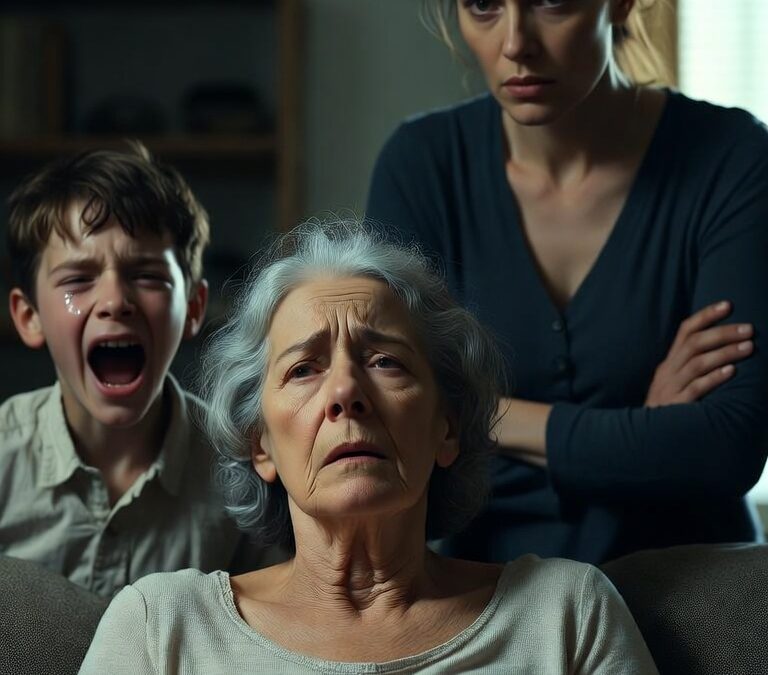
PART2
My name is Ellena Nelson.
I’m sixty-eight years old.
And until that afternoon, I believed the worst thing that could happen to a mother was losing a child.
I was wrong.
There is another kind of loss.
One that happens while your child is still alive.
You can look directly into the face you once kissed goodnight and realize that somewhere between childhood and adulthood, the boy who used to run into your arms has learned how to look away when you’re hurting.
That afternoon, standing outside my own house with stitches beneath my clothes, I discovered how terrible that kind of loss could feel.
But to understand what happened after Sebastian spoke, you need to know how I ended up becoming a stranger beneath my own roof.
And how long I allowed myself to disappear before anyone noticed.
Michael and I weren’t wealthy.
We were the kind of couple who counted every dollar, repaired things instead of replacing them, and celebrated small victories because large ones rarely came easily.
He worked at a shoe factory.
Sometimes twelve-hour shifts.
Sometimes longer when overtime was available.
I sewed clothes, altered school uniforms, embroidered table linens, and repaired curtains for neighbors.
Our kitchen table was often covered with fabric.
Robert and Lucy learned to do their homework beside my sewing machine.
I still remember Michael coming home late one winter evening with his hands so tired he could barely unlace his boots.
I brought him supper.
He looked at me and smiled.
“One more year, Ellie.”
He always called me Ellie.
“One more year, and we’ll be closer.”
Closer meant owning our home.
Not renting.
Not worrying about a landlord raising the price.
Not wondering whether we’d have to move our children to another school.
We wanted roots.
A place where our family could grow.
A place that belonged to us.
For ten years, we saved enough to purchase the land.
For another five, we worked toward completing the house.
Michael did whatever repairs and finishing work he could manage himself.
I remember him coming home with sawdust in his hair.
He’d sit at the table, exhausted, and spread out sketches of what the kitchen might look like.
“Put the sink under the window,” I’d tell him.
“Why?”
“So I can look at the garden while washing dishes.”
He’d laugh.
“That’s a lot of dishes to wash just to admire some roses.”
I’d smile.
“Then plant prettier roses.”
And he did.
He planted them beneath the kitchen window the first spring after we moved in.
When we finally completed the house, Robert was eight and Lucy was six.
I remember the day as clearly as my wedding.
Michael carried me through the front door.
He nearly dropped me because we were laughing so hard.
The children ran past us, shouting as they explored rooms they’d already seen dozens of times during construction.
Robert stopped in the living room.
He looked at the walls.
The windows.
The freshly finished floor.
Then turned toward his father.
“Dad, is this really ours?”
Michael smiled.
“Every inch of it.”
Robert looked at me.
“Can somebody make us leave?”
I crouched beside him.
“No, sweetheart. This is our home.”
He threw his arms around my neck.
I remember holding him and feeling an almost overwhelming gratitude.
We had done it.
All those years of saving.
All those nights when Michael came home exhausted.
All those sewing jobs that kept me awake until two in the morning.
All those things we’d gone without.
They had become something real.
A home.
And I believed that home would always be the place my children returned when life became difficult.
I never imagined one of them would someday stand outside it and hesitate while someone tried to throw me away.
The good years were truly good.
I’m not saying that because I want to pretend my marriage was perfect.
Michael and I argued.
About money.
About repairs.
About how much I worried.
About how stubborn he could be.
There were months when the bills frightened us.
There were nights when we sat at the kitchen table trying to figure out how to stretch a paycheck.
But we loved one another.
And our home was full of ordinary happiness.
Sunday dinners.
Christmas decorations.
School projects spread across the living-room floor.
Birthday cakes that came out slightly crooked.
Family photographs taken in the backyard.
Michael built a brick barbecue grill near the garden.
Every summer, he’d stand beside it with a pair of tongs, announcing that he was the greatest cook in three counties.
The children would laugh.
I’d pretend to disagree.
Then we’d sit outside until the sun went down.
Lucy got married in that backyard.
She wore a white dress with lace sleeves.
Michael danced with her beneath strings of lights hanging from the trees.
I remember watching them and crying because I knew the little girl who used to run barefoot through our kitchen was beginning a life of her own.
Michael came over afterward.
He took my hand.
“Don’t cry, Ellie.”
I smiled through tears.
“She’s growing up.”
He looked toward Lucy.
Then back at me.
“That’s what we raised her to do.”
He was right.
We raised our children to become independent.
To build their own families.
To live good lives.
But nobody warned me that independence could sometimes create a distance so painful it felt like being forgotten.
Michael died twelve years ago.
Even now, writing those words hurts.
He had been part of my life for so long that I didn’t know how to understand the world without him.
I remember the hospital.
The doctor speaking softly.
Robert standing beside me.
Lucy crying against my shoulder.
And the terrible moment when I realized I would never hear Michael call me Ellie again.
The funeral passed in a blur.
People brought food.
Flowers.
Cards.
They told me how sorry they were.
They said Michael had been a wonderful man.
They reminded me I was strong.
I nodded.
Thanked them.
Accepted their kindness.
Then everyone went home.
And I was left alone in the house we’d spent fifteen years building.
That first night, I sat in the blue armchair Michael loved.
The newspaper he’d been reading was still on the little table beside it.
His reading glasses rested near the lamp.
I stared at them for hours.
At some point, I reached for the glasses.
Held them in my hand.
Then began crying so hard I couldn’t breathe.
There is something unbearable about realizing the ordinary belongings of someone you love have suddenly become objects they will never use again.
His chair.
His shoes.
His coffee mug.
His jacket hanging behind the door.
The house was full of him.
And empty without him.
For months, I continued making coffee for two.
I’d put two cups on the counter before remembering.
Sometimes I set out two plates.
Sometimes I woke in the night reaching toward his side of the bed.
The worst moments weren’t always the big ones.
Sometimes it was seeing a beautiful sunset and turning to tell him.
Then remembering nobody was beside me.
Or hearing something funny and imagining how he would laugh.
Or finding a screw he’d left in a drawer and suddenly remembering the sound of his tools.
I kept the house exactly as it had been.
Not because I couldn’t accept his death.
Because the familiar things comforted me.
The blue armchair.
The wooden coffee table he’d built himself.
The old lamp we’d bought on our fifteenth anniversary.
My mother’s gold-framed mirror.
The photographs along the bookshelves.
They weren’t expensive.
But they were pieces of a life we’d shared.
When people visited, they saw furniture.
I saw memories.
And for a long time, those memories helped me survive.
A few years after Michael died, Robert asked whether he and Megan could move in.
They had two children by then.
Sebastian and Valerie.
Their apartment was small.
Money was tight.
Robert was working hard, but raising a family had become expensive.
He came to see me one Sunday.
We sat at the kitchen table.
I served him coffee with cinnamon and brown sugar, the way I’d made it for him since he was old enough to drink coffee.
He looked uncomfortable.
“Mom, can I ask you something?”
“Anything, sweetheart.”
He hesitated.
“What would you think about us moving in?”
I stared.
“All of you?”
He nodded.
“Megan, the kids, me.”
My heart lifted immediately.
“Robert, of course!”
He smiled.
“Are you sure?”
I reached across the table.
“Son, this house is too quiet.”
My voice trembled.
“I’d love having everyone here.”
He looked relieved.
“We could help with utilities. Save money. The kids would have a yard.”
I smiled.
“And I’d get to see my grandchildren every day.”
Robert laughed.
“You might get tired of them.”
I shook my head.
“Never.”
He reached for my hand.
“Thank you, Mom.”
I squeezed his fingers.
“You don’t have to thank me.”
I looked around the kitchen.
“Your father and I built this house for our family.”
At the time, I believed letting them move in would bring back some of the warmth I’d lost.
For a while, it did.
The first year was wonderful.
The children filled the house with noise.
Sebastian ran through the hallway with toy trucks.
Valerie left little drawings on the refrigerator.
There were backpacks near the front door.
Shoes scattered beneath the bench.
Breakfast dishes in the sink.
Laughter in rooms that had been quiet for years.
Megan and I cooked together.
I taught her my mother’s turkey-and-dressing recipe.
She showed me how to use my phone for video calls so I could speak with Lucy in Dallas.
We sat outside drinking iced tea.
Planned birthday parties.
Shared stories.
Sometimes Megan told me about problems at work.
Sometimes I told her about the early years of my marriage.
I began thinking of her as another daughter.
I knew she had her own mother.
I never wanted to replace that relationship.
But I loved her.
I wanted her to feel welcome.
I wanted her to know she was part of our family.
One afternoon, she sat beside me in the kitchen looking exhausted.
Sebastian had been difficult all morning.
Valerie hadn’t slept well.
Megan rubbed her temples.
“I don’t think I’m a very good mother.”
I stopped chopping vegetables.
“Megan.”
She looked up.
“You love those children?”
“Of course.”
“You feed them?”
“Yes.”
“Keep them safe?”
“I try.”
“Comfort them when they’re upset?”
She nodded.
I smiled.
“Then you’re doing more right than you think.”
Her eyes filled.
I reached over and hugged her.
I remember that hug now.
The way she leaned against me.
The way she whispered, “Thank you, Ellena.”
I had no idea that someday I’d be the one trembling in front of her, begging for a little kindness.
The changes began so slowly that I almost didn’t notice.
First, Megan stopped asking for my help in the kitchen.
That was normal enough.
She was an adult woman with her own preferences.
I understood.
Then she started correcting me whenever I offered a suggestion.
I’d say something simple.
“Your turkey might stay a little more tender if you cover it during the first part of cooking.”
She’d smile tightly.
“Ellena, we don’t have to do everything the old-fashioned way.”
I’d laugh.
“Of course not.”
And step aside.
Then she began moving things.
A vase from the mantel.
Photographs from the bookshelf.
Decorations I’d collected over the years.
My coffee maker disappeared from the counter one morning.
I found it in a lower cabinet beneath several boxes.
“Megan?”
She looked up from her phone.
“Yes?”
“Where should I keep the coffee maker?”
She sighed.
“There’s too much stuff on the counters.”
I nodded.
“I can put it somewhere else.”
She shrugged.
“That would help.”
I remember standing in the kitchen holding the old coffee maker.
Michael had bought it for me after ours stopped working.
It wasn’t special to anybody else.
But to me, the sight of it brought back a Sunday morning when he’d surprised me with breakfast.
I looked toward Megan.
Then placed the coffee maker in the cabinet.
I told myself it was only an appliance.
Nothing worth arguing about.
That became the way I handled everything.
It’s only a vase.
Only a photograph.
Only a chair.
Only a memory.
Until one day I realized that almost everything I’d loved had been described as something unimportant.
The afternoon Megan sold Michael’s blue armchair was the first time I felt truly unwelcome in my own home.
I’d gone to a routine doctor’s appointment.
When I returned, two men were loading furniture into a truck.
At first, I thought they were delivering something.
Then I saw the chair.
Michael’s chair.
The old blue upholstery.
The slightly worn armrest where he’d rested his elbow while reading.
The chair where I’d sat holding our grandchildren when they were babies.
One of the men was carrying it toward the truck.
“Wait!”
I hurried forward.
“Please, stop!”
The man paused.
I looked toward the house.
“Megan!”
She came outside smiling.
“Oh, good. You’re back.”
I pointed toward the chair.
“What’s happening?”
She glanced at the truck.
“I sold some of the old furniture.”
My stomach dropped.
“You sold Michael’s chair?”
She sighed.
“Ellena, it’s worn out.”
I stared.
“That’s your father-in-law’s chair.”
She folded her arms.
“We need more room.”
I looked toward the truck.
The men were also carrying the little coffee table Michael had built.
I recognized the uneven corner where he’d made a mistake and laughed about it for years.
“That table, too?”
Megan nodded.
“It doesn’t match the new furniture.”
I felt dizzy.
“The lamp?”
“Yes.”
“My mother’s mirror?”
She sighed again.
“Ellena, we can’t keep everything forever.”
I looked at her.
“Those are family things.”
“They’re old things.”
Her voice sharpened.
“And I can’t live in a museum.”
I stood there while pieces of my life disappeared into a truck.
Then Megan added, almost cheerfully, “Don’t worry. I bought a beautiful modern bookcase with some of the money.”
I looked toward the doorway.
A new shelf stood where Michael’s chair had been.
White.
Shiny.
Perfectly straight.
I felt my eyes fill.
And I remember thinking how strange it was that something could make a room look larger while making your world feel so much smaller.
That night, I waited for Robert.
I sat at the kitchen table with a photograph of Michael in my hands.
When my son came home, he looked tired.
He set his keys down.
“Hey, Mom.”
“Robert, can we talk?”
He sighed.
“Sure.”
I swallowed.
“Megan sold your father’s chair.”
He looked toward the living room.
“Yeah. I saw.”
I stared.
“You knew?”
“She mentioned wanting to rearrange things.”
My voice trembled.
“That chair belonged to your father.”
Robert rubbed his forehead.
“Mom, I understand.”
I shook my head.
“Do you?”
He looked annoyed.
“Please don’t make this into a big thing.”
I felt something crack inside me.
“A big thing?”
“It’s furniture.”
I stared at him.
“Your father sat in that chair every evening.”
Robert sighed.
“Dad’s been gone twelve years.”
The words struck like a physical blow.
“Robert…”
“Life goes on, Mom.”
I couldn’t speak.
He continued.
“Megan lives here, too. She deserves to feel comfortable.”
I looked toward the living room.
“And I don’t?”
He closed his eyes.
“Mom, please. I had a long day.”
I waited.
He opened them again.
“I don’t want to come home and deal with drama.”
Drama.
That was what my grief had become.
Drama.
I looked at the photograph in my hands.
Then stood.
“All right, son.”
He looked relieved.
“Thank you.”
I walked toward my bedroom.
And behind my closed door, I cried into a pillow so nobody would hear me.
The next morning, I woke before everyone else.
I made coffee.
Sat alone in the kitchen.
And stared toward the place where the blue chair used to be.
For years, I’d thought losing Michael was the worst pain that house could hold.
Now I was discovering another.
Watching his memory gradually disappear while the people he loved behaved as though I were unreasonable for wanting to keep it alive.
I thought about confronting Megan.
Demanding the furniture back.
Telling Robert how deeply he’d hurt me.
But every possible conversation ended the same way in my imagination.
Megan becoming upset.
Robert sighing.
The children hearing us argue.
And me being told I’d caused trouble.
So I stayed quiet.
It seemed easier.
I didn’t realize that every time I swallowed my pain to keep the peace, I was teaching everyone that my feelings could be ignored without consequences.
Then Megan changed the locks.
I came home from the grocery store carrying two bags.
I put my key into the front door.
It wouldn’t turn.
I tried again.
Nothing.
At first, I thought the lock was jammed.
Then I noticed the hardware was different.
New.
Shiny.
I stood on the porch staring at it.
Finally, I rang the bell.
Megan opened the door.
“Oh, Ellena.”
I held up my key.
“It doesn’t work.”
She glanced at it.
“Right. I changed the locks.”
I stared.
“Without telling me?”
She shrugged.
“There was a security concern.”
“What security concern?”
“I gave somebody a spare key and didn’t get it back.”
I looked at her.
“Who?”
She sighed.
“Does it matter?”
I swallowed.
“I live here.”
She held out a new key.
“Then here’s your new one.”
I took it.
My hand was shaking.
She stepped aside.
“Honestly, Ellena, you’re making this seem much more serious than it is.”
I walked through the doorway.
And for the first time in forty years, I felt like a visitor entering my own house.
The changes continued.
Family dinners became less frequent.
Robert and Megan often took the children out without telling me.
Sometimes I prepared food for everyone and waited.
The clock would pass six.
Then seven.
Then eight.
I’d call.
No answer.
Eventually, I’d place the food in containers and eat alone.
One evening, I made macaroni and cheese because Sebastian had asked for it.
I spent the afternoon preparing dinner.
Set six places.
Put a pitcher of iced tea on the table.
Then waited.
Nobody came.
At nine, Robert returned.
He looked surprised to see the table still set.
“Mom?”
I stood.
“Where were you?”
He opened the refrigerator.
“We went out with Megan’s parents.”
I stared.
“Tonight?”
“Yeah.”
I swallowed.
“I made dinner.”
He looked toward the table.
“Sorry. It was Megan’s mom’s birthday.”
I nodded slowly.
“You could’ve told me.”
He sighed.
“Mom, please.”
I looked at him.
“That’s all I’m asking.”
He shook his head.
“You’re always so sensitive.”
The words hurt more than I expected.
Sensitive.
As though wanting to know whether my family was coming home for dinner were an unreasonable demand.
I looked at the untouched plates.
Then began clearing them.
Robert took a drink from the refrigerator.
And went upstairs.
I stood in the kitchen alone.
One by one, I scraped the cold food into containers.
I remember the sound of the spoon against the plates.
The refrigerator humming.
The clock ticking.
And the terrible feeling that my family had learned how to live around me without ever considering whether I was lonely.
I began making myself smaller.
That is the only way I can describe it.
I woke earlier so Megan wouldn’t find me in the kitchen.
I washed my clothes late at night.
I stopped using the living room when other people were home.
I kept my groceries on one shelf in the refrigerator.
My things gradually retreated into my bedroom.
The house grew larger around me.
Yet the space I felt permitted to occupy became smaller.
I tried telling myself it was temporary.
That every family had difficulties.
That patience was a virtue.
That I should be grateful to have my grandchildren nearby.
But the truth was becoming impossible to ignore.
I was lonely in a house full of people.
And that loneliness hurt more than living alone ever had.
The day Megan threw away Sebastian’s pancakes, I nearly lost the last of my courage.
He came downstairs early.
His hair was messy.
He was wearing pajama pants with little dinosaurs on them.
I was making pancakes.
He smelled them and smiled.
“Grandma!”
I turned.
“Good morning, sweetheart.”
He hurried toward the counter.
“Can I have some?”
I laughed.
“Of course.”
“With syrup?”
“Is there any other way?”
He giggled.
I placed a pancake on his plate.
Then Megan entered.
Her expression changed.
“Sebastian.”
He looked up.
“Mom?”
“What are you eating?”
He pointed.
“Grandma made pancakes.”
Megan frowned.
“I told you we’re not eating sugary breakfasts.”
Sebastian’s smile disappeared.
“But Mom—”
“No.”
She reached for the plate.
“I’m making you a smoothie.”
He looked toward me.
His eyes filled.
“Grandma’s pancakes are really good.”
Megan’s voice hardened.
“Sebastian, I said no.”
I turned off the stove.
“It’s okay, sweetheart.”
He looked down.
Megan carried the plate toward the trash.
I watched the pancake fall into the garbage.
Something about that small movement almost destroyed me.
I wasn’t crying over a pancake.
I was crying over the way a child had been made to feel ashamed for wanting something his grandmother made with love.
And over the realization that even the simplest gestures of affection were becoming unwelcome.
Soon, Sebastian stopped asking for stories.
Valerie stopped climbing into my lap.
They still loved me.
I could see it.
Sometimes Sebastian looked toward my bedroom with an expression that made my heart ache.
Sometimes Valerie quietly left drawings outside my door.
But they were learning that spending time with Grandma might upset their mother.
And children will often do almost anything to keep the adults they love from fighting.
One afternoon, I found a folded drawing near my bedroom.
It showed a little girl standing beside a woman with gray hair.
Above them was a yellow sun.
At the bottom, Valerie had written in uneven letters:
I love you, Grandma.
I sat on the bed holding the paper.
Then began crying.
Because I realized my six-year-old granddaughter was trying to give me love in secret.
The humiliation became harder to hide.
Megan complained about me to her friends.
Sometimes I heard her from the hallway.
“She’s always here.”
“She gets emotional about everything.”
“I can’t change anything without her making it a problem.”
One afternoon, a friend asked Megan whether living in the house saved them money.
Megan laughed.
“Well, at least we don’t pay rent.”
Then she added, “But sometimes I’d rather pay rent than put up with her.”
I stood outside the room holding a basket of laundry.
For a moment, I couldn’t move.
I had opened my home to help them.
Never asked for rent.
Never demanded they repay me for raising Robert.
Never treated my grandchildren as guests.
And now my presence was being described as the price Megan paid for free housing.
I went back to my bedroom.
Placed the laundry basket on the floor.
Then sat on the bed until the room grew dark.
I thought about Michael.
How proud he’d been of the house.
How happy he’d been to imagine our children returning with families of their own.
I looked toward his photograph.
Then whispered, “I don’t know what to do anymore.”
I tried talking to Robert again.
He was sitting at the kitchen table looking at his phone.
I stood nearby.
“Son, can I ask you something?”
He looked up.
“Sure.”
I took a breath.
“Do you think Megan is unhappy living here?”
He frowned.
“What happened now?”
I swallowed.
“Nothing specific.”
He sighed.
“Mom.”
I looked down.
“It’s just that I feel like I’m always in the way.”
He set down his phone.
“Have you tried giving her more space?”
I stared.
“More space?”
“Yes.”
I looked around the kitchen.
The room I’d cooked in for forty years.
The room where I’d fed him breakfast before school.
The room where Michael and I had counted pennies when money was tight.
“Robert, I barely leave my bedroom.”
He rubbed his forehead.
“Megan says you always have an opinion.”
I felt tears rise.
“I only try to help.”
“Maybe she doesn’t need help.”
I nodded slowly.
“Then I’ll stop.”
He looked relieved.
“That would probably make things easier.”
I stared at him.
“Son, do you ever wonder whether anything would make things easier for me?”
He looked confused.
“What do you mean?”
My voice broke.
“I live here, too.”
He sighed.
“Mom, this is everybody’s house now.”
I looked at him.
“No.”
The word escaped before I could stop it.
He stared.
I swallowed.
“I mean… your father and I built this place.”
Robert looked annoyed.
“Mom, please don’t start talking about ownership.”
I felt my heart sink.
“We’re a family.”
He nodded.
“Exactly. So everybody needs to compromise.”
I wanted to ask him what, exactly, Megan had compromised.
But I didn’t.
I simply nodded.
And returned to my room.
That night, I cried harder than I had in months.
Not because Megan disliked living with me.
People can disagree.
Families can have tension.
Adults need privacy and independence.
I understood all of that.
What hurt was the way my son had stopped seeing me as a person with feelings.
He treated my sadness as an inconvenience.
My memories as clutter.
My requests as criticism.
My presence as something Megan had to endure.
I looked at the photographs on my dresser.
Robert at eight years old, grinning in the backyard.
Lucy wearing a paper crown on her sixth birthday.
Michael standing beside the barbecue grill.
Me holding baby Sebastian.
I studied the faces.
Then whispered, “When did I become so hard to love?”
There was no answer.
Only the quiet hum of the house around me.
One Sunday, Megan invited her family over.
Her parents.
Her siblings.
Nieces and nephews.
The living room filled with laughter.
Music played.
Food was served.
Children ran through the hallway.
I remained in my bedroom.
Nobody had invited me downstairs.
I told myself it was better not to interfere.
Then someone knocked.
Megan’s mother entered.
She sat on the edge of my bed.
“Ellena, why aren’t you joining us?”
I smiled weakly.
“I don’t want to be in the way.”
She studied me.
Then sighed.
“Can I be honest with you?”
My stomach tightened.
“Of course.”
She folded her hands.
“Megan has been under a lot of pressure.”
I nodded.
“She works hard.”
“Yes. And she needs to feel like this is her home.”
I stared.
I waited.
Her mother continued.
“Sometimes I think you may not realize how difficult it is for a younger woman to live under her mother-in-law’s roof.”
I swallowed.
“I try not to interfere.”
She smiled sadly.
“I’m sure you do. But sometimes your presence feels… heavy.”
Heavy.
I stared at her.
It was such an ordinary word.
But in that moment, it felt as though someone had placed a stone directly on my chest.
Heavy.
My presence was heavy.
My memories were heavy.
My grief was heavy.
My existence was something other people had to carry.
Megan’s mother leaned closer.
“Why don’t you visit Lucy in Dallas for a while?”
I looked up.
“Lucy?”
“Yes. A couple of months might give everybody some breathing room.”
I nodded slowly.
“Maybe.”
She smiled.
“There. That might be good for everyone.”
Then she went downstairs to the party.
I remained on the bed.
And cried until the laughter from the living room became too painful to hear.
That evening, I called Lucy.
It was later than usual.
She answered with concern.
“Mom?”
“Hello, sweetheart.”
“Is everything okay?”
I tried to smile.
“Of course.”
She hesitated.
“You sound upset.”
I swallowed.
“Lucy, would it be possible for me to visit for a while?”
There was a pause.
“How long?”
I stared at the wall.
“A few weeks. Maybe a month or two.”
Another silence.
Then Lucy sighed.
“Mom, I wish you could.”
I felt my stomach sink.
“But we’re having a difficult time right now.”
I nodded, though she couldn’t see me.
“Your husband?”
“He lost his job. We’re looking for a smaller place. Everything’s complicated.”
I closed my eyes.
“Of course.”
Lucy sounded worried.
“Did something happen?”
I wanted to tell her everything.
The furniture.
The locks.
The dinners.
The children.
The way Robert looked at me when I spoke.
I wanted to say, Your mother is lonely. Your mother is being pushed out of her own home. Your mother doesn’t know where she belongs anymore.
Instead, I heard myself say, “No, honey. I just miss you.”
Lucy softened.
“I miss you, too.”
We talked a little longer.
Then I hung up.
I sat holding the phone until the screen went dark.
And for the first time in years, I felt completely trapped.
Not because I had nowhere to sleep.
I owned a house.
Not because I lacked food.
The kitchen was full.
But because I’d become afraid to occupy the life I had spent decades building.
I stopped asking for anything.
That was my solution.
No more complaints.
No more suggestions.
No more family dinners unless someone requested them.
No more photographs in the living room.
No more stories about Michael when Megan was nearby.
I ate quietly.
Moved quietly.
Kept the television low.
Closed my bedroom door.
I thought that if I became small enough, nobody would have a reason to resent me.
But the smaller I made myself, the less anyone noticed me.
And that loneliness began affecting more than my heart.
It began affecting my health.
The first pain came while I was watering plants.
It was a Tuesday afternoon.
The weather was warm.
I’d been tending the flowers near the back garden, one of the few household tasks I still felt comfortable doing without asking permission.
Suddenly, a sharp pain moved through my chest.
I stopped.
My hand tightened around the watering can.
For a moment, I couldn’t draw a full breath.
I sat on the stone bench beneath the tree.
The pain gradually eased.
But fear remained.
I had never felt anything quite like it.
I considered calling Robert.
Then imagined his sigh.
Mom, what happened now?
I thought about telling Megan.
Then imagined her saying I was exaggerating.
So I waited.
When I could stand comfortably, I went inside.
And the next morning, I visited my doctor.
The tests frightened me.
The doctor ordered further examinations.
He spoke carefully.
Explained that something concerning had appeared in my chest.
A mass that required prompt attention.
A surgical procedure would be necessary to investigate and treat it.
I sat in his office holding the paperwork.
For a moment, I couldn’t understand the words.
Surgery.
Hospital.
Recovery.
Possible complications.
I stared at the pages.
Then asked the question every frightened person asks.
“Am I going to be okay?”
The doctor answered honestly.
He explained what they knew.
What remained uncertain.
What the procedure would involve.
I nodded.
Tried to listen.
But all I could think about was Michael.
The hospital where he’d spent his final days.
The sound of medical equipment.
The way I’d held his hand.
I felt suddenly very old.
Very frightened.
And terribly alone.
That evening, I told Robert.
He was standing in the kitchen.
I approached with the medical papers.
“Son, I need to talk to you.”
He looked up.
“What is it?”
I swallowed.
“The doctor found something.”
His expression changed.
“What?”
I handed him the paperwork.
“They need to operate.”
He read.
His face went pale.
“Mom…”
For the first time in months, I saw genuine concern in his eyes.
He stepped toward me.
“Why didn’t you tell me you were having chest pain?”
I looked down.
“I didn’t want to worry anybody.”
He put the papers aside.
Then hugged me.
A real hug.
The kind he used to give me when he was a boy and something frightened him.
“Mom, you should’ve told me.”
I closed my eyes.
For a moment, I let myself lean against him.
The familiar smell of his shirt.
The warmth of his arms.
The sound of his voice.
I felt as though the little boy I’d raised had come back to me.
“You’re going to be okay,” he whispered.
My tears soaked his shoulder.
“I hope so.”
He held me tighter.
“We’ll get through this.”
For a brief, beautiful moment, I believed him.
Megan’s reaction was different.
We told her at dinner.
She was looking at her phone when Robert explained.
“Mom needs surgery.”
Megan glanced up.
“When?”
“In two weeks.”
She frowned.
“That’s during my work conference.”
Robert stared.
“Megan.”
“What?”
“She’s having major surgery.”
Megan put down her fork.
“I heard you.”
I tried to speak.
“I don’t want to inconvenience anyone.”
She looked toward me.
“Then I hope you’ve arranged the help you’ll need afterward.”
Robert’s expression changed.
“What are you talking about?”
Megan sighed.
“I have responsibilities, too.”
I stared at my plate.
She continued.
“I can’t suddenly become a full-time nurse.”
Robert looked angry.
“Nobody asked you to.”
“Good.”
She picked up her fork.
“Because I’m not qualified, and I’m not available.”
I felt my throat close.
For a moment, I wanted to tell her that I’d never expected her to become a nurse.
I wanted only kindness.
A little patience.
Perhaps someone to bring me tea.
Perhaps a hand on my shoulder.
Perhaps the simple reassurance that I wouldn’t be alone when I came home.
Instead, I stood.
“Excuse me.”
I walked to my bedroom.
And shut the door.
The night before surgery, I packed a small suitcase.
Comfortable clothes.
Medication information.
Toiletries.
A sweater.
And a photograph of Michael.
I placed it carefully between two folded shirts.
Then sat on the bed.
The house was quiet.
Somewhere down the hallway, I could hear Robert talking to the children.
Megan was on the phone.
I looked toward the photograph.
Michael was smiling.
The same gentle smile he’d worn on our wedding day.
I touched his face.
“I’m scared, sweetheart.”
My voice trembled.
For a moment, I wished he could answer.
I wished I could hear him say, “You’ll be okay, Ellie.”
I wished I could feel his hand around mine.
Instead, I sat alone.
Then whispered, “If I make it through tomorrow, I just want to come home.”
I had no idea how much those words would hurt me four days later.
Robert drove me to the hospital before sunrise.
The streets were quiet.
The sky was still dark.
I sat in the passenger seat with my hands folded over my purse.
He glanced toward me several times.
“Mom, are you cold?”
I shook my head.
“Do you need anything?”
“No, sweetheart.”
He reached across and squeezed my hand.
“I’ll be there when you wake up.”
I looked toward him.
“Promise?”
His expression softened.
“Promise.”
For a moment, I wanted to ask him another question.
Will you still be there when I come home?
But I didn’t.
I didn’t know then that the question mattered.
The surgery lasted four hours.
When I woke, everything felt heavy.
My chest ached.
My mouth was dry.
The room seemed to move in and out of focus.
Then I heard Robert.
“Mom?”
I turned my head.
He was sitting beside the bed.
His eyes were red.
He held my hand.
I tried to smile.
“Hi, sweetheart.”
His face crumpled with relief.
“Hi, Mom.”
I looked around.
“Is it over?”
He nodded.
“Yes.”
I swallowed.
“How did it go?”
“The doctors said the procedure went as planned. They’re keeping you for observation.”
I closed my eyes.
For a moment, I felt immense gratitude.
I had made it through surgery.
I was alive.
My son was beside me.
And when he gently kissed my forehead, I felt something I hadn’t felt in months.
Protected.
The next four days passed slowly.
Pain medication made me sleepy.
Every movement reminded me that my body needed time to heal.
The nurses helped me.
The doctors monitored me.
Robert visited after work.
Sebastian and Valerie came once.
Valerie brought a drawing.
It showed me standing beneath a bright yellow sun.
At the bottom, she’d written:
Get better, Grandma.
I held it against my chest and cried.
Sebastian stood beside the bed.
He looked frightened.
“Grandma?”
“Yes, darling?”
“Does it hurt?”
I smiled carefully.
“A little.”
He looked toward the bandages.
“Are you going to be okay?”
I took his hand.
“I’m getting better.”
He nodded.
Then leaned closer.
“Can I hug you?”
My eyes filled.
“Very gently.”
He wrapped his little arms around my shoulders, careful to avoid my chest.
I kissed his hair.
For a moment, all the humiliation and loneliness I’d endured seemed less important than the warmth of that little boy’s love.
Megan never visited.
Not once.
I told myself she was busy.
That the children needed her.
That she had work responsibilities.
But each evening, when the hospital room became quiet, I watched the door a little longer than I wanted to admit.
Some part of me still hoped she’d appear.
Even briefly.
Just to say she was glad I was alive.
She didn’t.
On the fourth day, the doctors approved my discharge with instructions for rest, medication, follow-up care, and warning signs that would require urgent attention.
I was relieved.
The hospital had cared for me well.
But I wanted my own bed.
My own pillow.
The familiar sound of the kitchen clock.
I wanted to look through the window and see the roses Michael had planted.
Robert arrived to take me home.
He helped with my belongings.
Then guided me carefully toward the car.
“Ready, Mom?”
I smiled.
“More than you know.”
He opened the door.
I settled into the seat, moving slowly because of the pain.
Then asked, “Did Megan prepare my room?”
Robert hesitated.
Only a second.
But I noticed.
“Mom, we’re going to get you settled.”
I looked toward him.
“Is something wrong?”
He shook his head.
“Don’t worry.”
I leaned back.
I wanted to believe him.
But as we drove, he barely spoke.
His hands remained tight around the steering wheel.
He didn’t turn on the radio.
When I mentioned the flowers in the garden, he nodded without responding.
I watched his face.
Something was troubling him.
I wondered whether he was frightened about my recovery.
Or exhausted from work.
Or worried about medical bills.
It never occurred to me that the woman waiting at home had already made plans for my arrival.
When we turned onto my street, I saw a taxi parked near the house.
I frowned.
“Is somebody visiting?”
Robert glanced toward it.
“I don’t know.”
Then I saw my suitcase.
It was lying on the sidewalk.
Open.
Clothes spilling out.
At first, my mind refused to understand.
I stared.
A nightgown.
My slippers.
A sweater.
The little photograph of Michael.
Then I saw Megan standing in the doorway.
Her arms were folded.
Her face was hard.
Robert stopped the car.
“What the hell?”
I looked toward him.
My heart began racing.
He got out first.
Then hurried around to help me.
I gripped the door frame.
The pain in my chest intensified.
And the moment my feet touched the pavement, Megan shouted.
“She’s not staying here.”
I stared.
I couldn’t believe what I’d heard.
Then she pointed toward the suitcase.
“I’ve arranged transportation. She needs to go somewhere else.”
Robert looked at her.
“Megan, have you lost your mind?”
She didn’t flinch.
“No. I’ve finally made a decision.”
And I realized that the four days I’d spent in the hospital had given her time to prepare something terrible.
Now I was standing there, barely able to support my own weight, while Megan demanded that Robert choose between his wife and his mother.
The taxi driver watched from his car.
Charlotte stood across the street.
Neighbors looked through their windows.
And my son stood frozen.
Then Sebastian ran outside.
The moment he revealed what he’d heard on the telephone, everything changed.
Robert turned toward him.
“What did you hear?”
The little boy was sobbing.
Megan stepped forward.
“Sebastian, stop this.”
He shook his head.
“No!”
Robert crouched.
“Son, look at me.”
Sebastian tried to breathe.
“Mommy was talking to Aunt Rachel.”
Megan went pale.
“That’s enough.”
Robert raised one hand.
“Let him finish.”
Sebastian wiped his face.
“She said Grandma wouldn’t be able to fight because she’d just had surgery.”
I felt the ground tilt beneath me.
My son stared at his wife.
“Megan?”
She shook her head.
“He’s confused.”
Sebastian cried harder.
“I’m not!”
He looked toward me.
“Grandma, I wanted to tell you.”
My eyes filled.
He continued.
“She said you were going away and we were finally going to have the house to ourselves.”
Robert stood slowly.
His face had changed.
The confusion was gone.
In its place was something I hadn’t seen in him for years.
Anger.
Real anger.
Not the irritated sigh he’d used when I complained about furniture.
Not the impatience he showed when I tried to explain how lonely I felt.
This was something deeper.
He looked directly at Megan.
“You planned this?”
She stared.
Then folded her arms.
“Somebody had to make a decision.”
I felt sick.
Robert’s voice became low.
“My mother had surgery four days ago.”
“I know.”
“And you waited until she came home to throw her belongings into the street?”
Megan’s expression hardened.
“She’s not my responsibility.”
Robert stared at her.
Then looked toward me.
I was still gripping the car door.
My body shook.
He saw the pain on my face.
The way I was struggling to stand.
The bandages visible beneath the neckline of my blouse.
And something in him seemed to break.
“Mom.”
He hurried toward me.
“I’m sorry.”
I tried to speak.
He reached for my arm.
“Come sit down.”
He helped me toward the garden bench.
Every step hurt.
Sebastian stayed close.
Valerie had appeared near the doorway.
She was crying, too.
“Daddy, please don’t make Grandma leave.”
Robert looked at his daughter.
Then at his son.
He swallowed.
“Grandma isn’t leaving.”
The words were quiet.
But I heard them.
And after months of being made to feel invisible, those four words nearly brought me to my knees.
Sebastian sat beside me on the bench.
He was careful not to touch my chest.
His little hands trembled.
“I’m sorry, Grandma.”
I looked down at him.
“For what, sweetheart?”
His eyes filled.
“I heard Mommy talking before you went to the hospital.”
My throat tightened.
“I was scared.”
I reached toward his hair.
“Oh, Sebastian.”
He began crying again.
“I thought if I told Daddy, Mommy would get mad.”
I pulled him gently closer.
“You should never have been put in that position.”
He looked up.
I wiped a tear from his cheek.
“Adults are responsible for what adults do.”
He swallowed.
“Are you mad at me?”
The question shattered me.
I stared at my grandson.
This little boy had been carrying a secret that frightened him.
He’d watched the adults around him make decisions about his grandmother.
He’d been afraid to speak.
And now he thought I might be angry because he hadn’t known how to stop it.
I stroked his hair.
“No, my love.”
My voice broke.
“Never.”
He leaned against my shoulder.
I kissed his forehead.
“You were very brave to tell the truth.”
Across the yard, Valerie clung to Robert’s leg.
She was six years old.
Far too young to understand the full cruelty of what had happened.
But old enough to know her grandmother was hurting.
And the sight of both children crying on the day I came home from surgery was something I knew I would never forget.
Charlotte crossed the street carrying a bottle of water.
“Ellena!”
I looked up.
Her face was pale.
“Good Lord, honey.”
She hurried toward me.
“Are you all right?”
I tried to smile.
“I’m fine.”
She glanced toward my bandages.
“Don’t tell me that.”
I laughed weakly.
Then winced because laughing hurt.
Charlotte immediately crouched beside me.
“Do you need medical help?”
I shook my head.
“Just… give me a minute.”
She looked toward the suitcase.
Then toward Megan.
Her expression changed.
“Who did this?”
I couldn’t answer.
Charlotte saw my photograph of Michael lying near the curb.
She walked over.
Picked it up.
Brushed the dirt from the glass.
Then brought it back to me.
I stared at the familiar face.
For a moment, the world seemed to disappear.
Michael.
My Michael.
The man who had carried me through the front door of that house.
The man who had promised we’d grow old there.
The man whose hands had built the table Megan sold.
The man who would have been horrified to see me sitting on a bench after surgery while someone tried to throw me into the street.
I held the photograph against my lap.
Then whispered, “I wish you were here.”
Charlotte sat beside me.
She didn’t say anything.
She simply put one arm around my shoulders.
And let me cry.
Robert turned toward Megan.
“We need to talk.”
She lifted her chin.
“We’re talking now.”
“Inside.”
“No.”
His jaw tightened.
“Megan.”
She folded her arms.
“I’m not going to be treated like a child in front of the neighbors.”
Robert stared at her.
Then said, “You had no problem humiliating my mother in front of them.”
For a moment, Megan looked startled.
He continued.
“You threw her belongings outside while she was coming home from surgery.”
She opened her mouth.
Robert raised his hand.
“No.”
His voice trembled.
“Not one more excuse.”
He looked toward me.
Then toward the children.
“Mom, stay here with Charlotte. I’ll be back.”
I nodded.
He turned and walked toward the house.
Megan followed him, furious.
The front door closed.
For a few moments, the garden was silent.
Then voices began rising inside.
I couldn’t make out every word.
But I heard Robert shouting.
He almost never shouted.
Then Megan’s voice.
Louder.
Angrier.
At one point, something struck the floor.
Sebastian flinched.
I reached toward him.
“It’s okay.”
But I wasn’t sure it was.
I looked toward the house.
The place that had once held so much laughter.
Now full of anger.
I closed my eyes.
And prayed that whatever happened next, the children would not be hurt any further.
Time became strange.
I don’t know whether we sat there fifteen minutes or forty.
Charlotte stayed beside me.
Valerie moved onto my other side.
Sebastian held my hand.
The taxi driver eventually came over to ask whether he should remain.
Robert had arranged for no such transfer, and I could see the driver was uncomfortable with the situation.
I told him I didn’t need the taxi.
He nodded.
Then left quietly.
I looked toward the empty street.
For a moment, the humiliation returned.
Neighbors had watched everything.
They had heard Megan’s words.
They had seen me sitting outside after surgery.
I wondered how long people would talk about it.
Then Charlotte squeezed my hand.
“Ellena.”
I looked at her.
“Listen to me.”
Her eyes were wet.
“You have nothing to be ashamed of.”
I swallowed.
“Charlotte…”
“No.”
She shook her head.
“The shame belongs to whoever thought this was acceptable.”
I looked down.
My hands were shaking.
She continued.
“You built this home with Michael. You raised your family here. You have spent your life caring for people.”
Her voice cracked.
“And you deserve better than this.”
I stared at her.
For so long, I’d told myself I was asking too much.
That wanting a place at the table was selfish.
That wanting my memories respected was unreasonable.
That wanting kindness made me burdensome.
Now my neighbor was saying the opposite.
And I didn’t know how to accept it.
I simply began crying again.
When Robert finally came outside, his face was red.
His eyes were wet.
Megan followed him.
She looked furious.
But something about her confidence had changed.
Robert approached the bench.
Then knelt in front of me.
“Mom.”
I looked at him.
He took my hands.
For a moment, he couldn’t speak.
Then he began crying.
“Forgive me.”
I stared.
“Robert…”
He shook his head.
“Please. Let me say it.”
His voice cracked.
“I’ve been blind.”
I felt my throat tighten.
He looked toward the house.
“I knew things were tense.”
His eyes filled.
“I knew you were unhappy.”
He looked back at me.
“But every time you tried to talk to me, I acted like you were creating a problem.”
A tear slid down his cheek.
“I let you believe you were a burden.”
I couldn’t speak.
He continued.
“I watched you stop cooking. Stop sitting in the living room. Stop spending time with the kids.”
His voice broke.
“And I did nothing.”
I looked at his face.
He looked older than I’d ever seen him.
Not because of age.
Because he was finally recognizing the damage he’d allowed.
He squeezed my hands.
“Mom, I’m so sorry.”
I closed my eyes.
For a moment, I saw him as a little boy.
Standing in the living room of our new house.
Asking whether anyone could make us leave.
I remembered kneeling and telling him no.
Now that little boy was kneeling before me.
And I wondered how we’d reached a place where he had to apologize for allowing someone to try.
Robert stood.
Then turned toward Megan.
His voice became steady.
“Do you know what the saddest part is?”
She stared.
“What?”
He took a breath.
“I believed you.”
Megan looked away.
He continued.
“For years, you told me Mom was difficult.”
I stared at him.
“You told me she was controlling. That she interfered. That she made you uncomfortable.”
Megan opened her mouth.
Robert shook his head.
“And I accepted it.”
His voice cracked.
“Because it was easier than asking whether you were telling me the whole truth.”
Megan folded her arms.
“You weren’t living in my shoes.”
Robert looked toward me.
“No. I wasn’t.”
He paused.
“But I was living in my mother’s house.”
The words hung in the air.
He continued.
“The house she and Dad built.”
Megan stared.
“The house she opened to us when we were struggling.”
Her expression changed.
Robert looked toward the children.
“Sebastian was two when we couldn’t afford our apartment.”
I remembered that time.
Megan had lost her job.
Robert was working overtime.
They were frightened.
I had told them to come home.
No conditions.
No demands.
Just come.
Robert continued.
“Mom didn’t ask for rent.”
Megan looked down.
“She didn’t tell us we were burdens.”
His voice broke.
“She made room.”
He looked directly at his wife.
“And we thanked her by making her feel like she didn’t belong.”
Megan’s face reddened.
“We paid utilities.”
Robert stared.
“Yes.”
She stepped forward.
“We bought groceries. We contributed.”
Robert nodded.
“You did.”
She lifted her chin.
“So don’t act like we were freeloaders.”
He shook his head.
“That isn’t what I’m saying.”
“Then what are you saying?”
He looked toward the house.
“I’m saying paying the electric bill doesn’t give us the right to take over somebody else’s home.”
Megan froze.
Robert continued.
“You sold Dad’s chair.”
I felt tears fill my eyes.
“You sold the table he made.”
Megan looked away.
“You changed the locks without telling Mom.”
I swallowed.
“You made her feel unwelcome around her own grandchildren.”
Megan’s expression hardened again.
“I was trying to make a home for my family.”
Robert’s voice rose.
“This was already a home!”
The sudden force of his words made everyone go still.
He took a breath.
Then said more quietly, “It was my mother’s home.”
Megan stared.
Robert looked toward me.
“Mom.”
I raised my eyes.
He swallowed.
“Did you ever give me ownership of this house?”
I shook my head.
“No, son.”
He turned toward Megan.
“There.”
She frowned.
“What?”
He spoke slowly.
“This house belongs to my mother.”
Megan stared.
He continued.
“It’s paid for. The deed is in her name.”
I watched her face change.
Confusion.
Then disbelief.
Then fear.
Robert looked directly at her.
“We have lived here because she let us.”
Megan’s mouth opened.
“But you always said it was the family home.”
“It is.”
He paused.
“But that doesn’t mean we own it.”
For a moment, there was no sound.
Then Megan whispered, “You never told me.”
Robert’s expression hardened.
“I never imagined I’d need to explain that my mother owns the house she and my father built.”
I watched Megan look toward the front door.
Then toward the garden.
Then at me.
For years, she’d spoken as though every room belonged to her.
As though the photographs and furniture were hers to replace.
As though my presence required her permission.
Now she seemed to be seeing the property differently.
Not because the house itself had changed.
Because she had discovered that the woman she’d tried to remove was its legal owner.
Robert continued.
“This isn’t about getting caught.”
His voice was low.
“It’s about what you did.”
Megan’s eyes filled.
“I just wanted us to have our own space.”
Robert shook his head.
“Then we should have moved out.”
She stared.
He continued.
“We could have saved money. Found another apartment. Made a plan.”
He looked toward me.
“Instead, we took over Mom’s home and made her feel guilty for wanting to live in it.”
Tears began rolling down his face.
“And when she became sick, you decided that was your chance to get rid of her.”
Megan tried to speak.
But no words came.
Robert looked at her.
“That isn’t frustration.”
His voice broke.
“That’s cruelty.”
Then Robert said something that finally made me understand how serious the moment had become.
“Mom is staying.”
Megan looked up.
“What?”
He pointed toward the house.
“She’s going inside. She’s going to rest. She’s going to recover.”
His voice strengthened.
“And she’s going to live in her own home without being frightened of upsetting you.”
Megan stared.
“Robert—”
“No.”
He shook his head.
“We need separate living arrangements if we can’t treat her with respect.”
She took a step backward.
“Are you throwing me out?”
Robert inhaled slowly.
“I’m telling you that we cannot continue living like this.”
He looked toward the children.
“We’ll make responsible arrangements for the kids. We’ll figure out what happens next.”
Then he turned back toward Megan.
“But my mother isn’t being forced out of her home.”
For a long moment, Megan said nothing.
Then she covered her face.
And began crying.
I watched her.
Part of me wanted to feel triumphant.
After months of humiliation, I had finally heard someone defend me.
The woman who’d tried to make me homeless was being confronted with the consequences of her actions.
But I didn’t feel victorious.
I felt exhausted.
Sick.
Heartbroken.
And terribly sad that my family had reached this point.
Robert approached me.
“Mom, let’s get you inside.”
He offered his arm.
I looked toward the front door.
For a moment, I was afraid to move.
It sounds ridiculous.
I owned the house.
I’d lived there forty years.
But after spending so long feeling unwelcome, walking through that doorway required more courage than I expected.
Robert waited.
I took his arm.
Sebastian stood.
Valerie reached for my free hand.
We moved slowly.
One step at a time.
Charlotte gathered my belongings.
When we passed Megan, she looked up.
Her face was wet with tears.
“Ellena…”
I stopped.
For a moment, the only sound was the breeze moving through the garden.
She swallowed.
“I’m sorry.”
I looked at her.
The woman I’d treated like a daughter.
The woman who had eaten at my table.
Raised her children beneath my roof.
Cried in my arms.
Then tried to throw me into the street when I could barely stand.
I felt tears gather.
“Megan.”
She looked hopeful.
I took a breath.
“I can’t accept those words today.”
Her face fell.
I continued.
“Maybe one day I’ll believe them.”
My voice trembled.
“But not because you discovered I own this house.”
She looked down.
I swallowed.
“If you truly regret what you’ve done, you’ll have to show it through the way you live.”
She began crying again.
I turned toward Robert.
And let him help me inside.
The house smelled familiar.
Coffee.
Wood polish.
The faint scent of the garden coming through the open window.
Everything looked the same.
The modern bookcase.
The changed curtains.
The empty place where Michael’s blue chair used to stand.
But something inside me had changed.
For the first time in months, I didn’t feel that I needed permission to cross the living room.
Robert guided me toward my bedroom.
Sebastian and Valerie followed.
He helped me lie down.
Adjusted the pillows.
Made sure my medication and water were nearby.
Then sat on the edge of the bed.
“Mom.”
I looked toward him.
“I’m going to take care of this.”
I smiled sadly.
“Robert, you have a family.”
He nodded.
“I know.”
His eyes filled.
“And you’re part of it.”
I swallowed.
He continued.
“I should never have let you forget that.”
For a moment, I couldn’t speak.
Then I reached for his hand.
“Just don’t let your children grow up thinking love means choosing somebody to hurt.”
Robert closed his eyes.
A tear slipped down his cheek.
“I won’t.”
He kissed my forehead.
Then left me to rest.
I looked toward Michael’s photograph.
For the first time in months, I felt safe enough to close my eyes without worrying whether someone would decide I had outstayed my welcome.
But peace did not arrive all at once.
And Megan’s cruelty had left consequences none of us yet understood.
The days after the confrontation were tense.
Megan didn’t leave immediately.
She remained upstairs.
For the first night, I barely heard her.
Robert took care of the children.
He brought me food.
Checked my medication.
Helped me follow the doctor’s instructions.
And, for the first time since moving into the house, he asked what I wanted instead of assuming I would adjust to everyone else’s preferences.
The question caught me off guard.
“Mom, would you like to eat in your room or at the kitchen table?”
I stared at him.
“Where?”
He looked concerned.
“Wherever you’re comfortable.”
I felt tears gather.
It was such a small thing.
Being asked where I wanted to eat.
But for months, I had been treated as though my wishes were inconvenient.
I looked toward the doorway.
“The kitchen.”
Robert smiled.
“Then we’ll eat in the kitchen.”
He helped me downstairs.
I sat at the table where Michael and I had shared forty years of meals.
Robert placed a bowl of soup in front of me.
Sebastian sat beside me.
Valerie told me about a drawing she’d made at school.
And for a few minutes, we were simply a family eating together.
Then Megan entered.
The room went quiet.
She stood in the doorway.
Her eyes were swollen.
Her hair disheveled.
For the first time, she looked uncertain about entering the kitchen.
I studied her.
Then said quietly, “Good morning.”
She looked startled.
“Good morning.”
Robert pulled out a chair.
“There’s soup.”
She shook her head.
“I’m not hungry.”
Then she turned away.
I watched her leave.
And realized that even after everything she’d done, I didn’t want to see her humiliated the way she’d humiliated me.
I wanted accountability.
I wanted safety.
I wanted my home back.
But I didn’t want another person to become invisible inside it.
The next morning, Megan approached me while I was drinking coffee.
She stood beside the kitchen table holding her cup.
“Ellena?”
I looked up.
“Yes?”
“Can we talk?”
My stomach tightened.
For a moment, I considered refusing.
I was still recovering from surgery.
My body needed rest.
My emotions were exhausted.
But I could see that she wasn’t preparing another accusation.
She looked frightened.
I nodded.
“Sit down.”
She took the chair opposite me.
Three empty chairs separated us.
It felt like miles.
For a while, she stared into her coffee.
Then said, “I’m not a terrible person.”
I remained quiet.
Her eyes filled.
“I know what I did was terrible.”
I looked toward her.
“But I’m not…”
Her voice broke.
She covered her face.
“I don’t know what I am anymore.”
I took a slow breath.
“Megan, what happened yesterday wasn’t an accident.”
She lowered her hands.
I continued.
“You prepared my belongings.”
She nodded.
“You arranged a taxi.”
Another nod.
“You waited until I was coming home from surgery.”
Tears slipped down her cheeks.
I swallowed.
“That wasn’t an angry sentence you said without thinking.”
She looked down.
“It was a plan.”
For a long time, neither of us spoke.
Then Megan whispered, “I know.”
She told me she’d been unhappy living in our house.
At first, she’d believed the arrangement would last only a few months.
Then a year.
Then another.
She’d wanted a home where she could make decisions without feeling she was living inside someone else’s memories.
I listened.
Some of what she said was understandable.
It can be difficult for two adult women to share a home when they have different expectations.
A young family needs privacy.
A mother needs independence.
Those things require honest conversations.
But what Megan had done went far beyond disagreement.
I looked at her.
“Why didn’t you tell me?”
She stared at her hands.
“I thought you’d say no.”
“To moving out?”
She shook her head.
“To changing things. To making the house feel like mine.”
I swallowed.
“Megan, I never asked you to stop having opinions.”
She looked up.
“I know.”
I leaned forward carefully.
“I asked you not to erase my life.”
Her expression crumpled.
I continued.
“That blue chair was where your father-in-law sat every evening.”
Tears filled my eyes.
“The table you sold was the last piece of furniture he made with his own hands.”
Megan began crying quietly.
I looked down.
“When you called those things junk, you weren’t simply criticizing furniture.”
My voice broke.
“You were telling me that the years I spent loving my husband didn’t matter.”
She covered her mouth.
I swallowed.
“And when Robert agreed with you, I felt as though I’d lost him again.”
Megan couldn’t speak.
Neither could I.
Eventually, she whispered, “I was afraid I would never have a place in this family.”
I looked toward her.
She continued.
“Every room had your history.”
Her voice trembled.
“Every holiday had stories about Michael. Every recipe had a memory. The children loved being with you.”
I stared.
“And I felt like I was always standing outside something that existed before I came.”
I considered her words.
Then said, “Megan, loving people who came before you doesn’t mean we have less love left for you.”
She cried harder.
I continued.
“You could have made new memories here without destroying the old ones.”
She nodded.
“I know that now.”
I looked at her.
“But you chose to hurt me because you were afraid of feeling small.”
Her face collapsed.
“Yes.”
For the first time, she didn’t deny it.
Didn’t blame me.
Didn’t claim I was too sensitive.
She simply admitted it.
And that honesty, painful as it was, became the beginning of a different conversation.
I told her I couldn’t forgive everything immediately.
She nodded.
I told her kindness performed out of fear wasn’t the same as change.
She agreed.
I told her I wasn’t willing to return to a life where I spent my days hiding in a bedroom.
She wiped her eyes.
“I understand.”
I looked at her.
“Do you?”
She nodded slowly.
“I think I’m beginning to.”
I took a breath.
“Then show me.”
She swallowed.
“I’ll try.”
I didn’t smile.
I didn’t hug her.
I simply said, “All right.”
Because sometimes the first honest conversation between two people doesn’t end with an embrace.
Sometimes it ends with an agreement to stop pretending the harm never happened.
For the next two weeks, Megan tried to change.
She brought me meals.
Asked whether I needed help.
Spoke more gently.
Allowed the children to spend time with me without interrupting.
At first, I appreciated the effort.
But there was something strained about it.
Her kindness seemed to require enormous effort.
Sometimes she’d offer to help and then sigh when I accepted.
Sometimes she’d smile at dinner but become tense whenever Robert complimented something I’d done.
I noticed.
The children noticed, too.
One afternoon, Sebastian sat beside my bed.
“Grandma?”
I looked up from my book.
“Yes, sweetheart?”
“Do you think Mommy is different now?”
I considered the question.
“I think she’s trying.”
He nodded.
Then looked down.
“She still seems angry.”
I reached for his hand.
“Sometimes changing takes time.”
He stared at the floor.
“Do you think she’ll be nice forever?”
My heart tightened.
I looked at my grandson.
Eight years old.
Trying to understand whether he could trust the adults around him.
I didn’t want to lie.
So I answered carefully.
“I can’t promise what anyone else will do.”
His eyes filled.
“But I can promise that grown-ups are responsible for how they treat people.”
He nodded.
I squeezed his hand.
“And you don’t have to fix their problems.”
He leaned against me.
I kissed his hair.
Then wondered how many children carry worries that should never have been placed on their shoulders.
When my health improved enough for me to prepare a full meal again, I decided to cook for the family.
Turkey and dressing.
Mashed potatoes.
Green bean casserole.
Homemade sweet tea.
The recipes Michael loved.
The meal Robert always requested when he was young.
I wasn’t trying to make a statement.
I simply wanted to feel like myself.
For years, cooking had been one of the ways I expressed love.
I missed it.
I missed the sound of pots moving on the stove.
The smell of herbs.
The children asking when dinner would be ready.
I missed standing in my own kitchen without feeling someone was measuring whether I had the right to be there.
So I cooked.
I spread my mother’s tablecloth across the dining table.
Set the plates.
Placed the food in serving dishes.
When Robert came home, he stopped in the doorway.
“Mom!”
I smiled.
“Surprise.”
He looked toward the table.
“Turkey and dressing?”
I nodded.
His face lit up.
“You haven’t made this in forever.”
“I know.”
He kissed my cheek.
“Thank you.”
Sebastian came running.
“Grandma made the good dressing!”
Valerie followed him.
“With the crunchy top?”
I laughed.
“Of course.”
For a little while, the house felt like it had years earlier.
Warm.
Busy.
Full of familiar happiness.
Then Megan came downstairs.
She looked at the table.
And her expression changed.
She ate quietly.
When Robert asked whether she liked the food, she nodded without looking up.
When the children laughed about an old family story, she didn’t join them.
I watched her.
The familiar tension returned.
After dinner, I began clearing the plates.
From the living room, I heard her speaking to Robert.
“See?”
My hands stopped.
Robert sounded confused.
“See what?”
“This.”
She spoke sharply.
“Exactly what I told you would happen.”
I stood still.
Robert replied, “Mom cooked dinner.”
“It’s not about dinner.”
“Then what is it?”
Megan’s voice trembled with anger.
“The moment she feels better, everything becomes about her again.”
I closed my eyes.
Robert sounded incredulous.
“She made a meal for us.”
Megan continued.
“Her recipe. Her tablecloth. Her family traditions.”
I felt tears gather.
“Everything in this house reminds me that I don’t belong.”
Robert was quiet.
Then he said, “Megan, nobody asked you to compete with Mom.”
Her voice broke.
“You don’t understand.”
I put down the plate.
And walked quietly to my room.
I didn’t want to hear any more.
Because in that moment, I understood something I had been resisting.
Megan might genuinely want to change.
But perhaps she couldn’t become the person she wanted to be while living inside a house she had come to associate with resentment.
And perhaps I couldn’t recover fully while wondering whether every ordinary thing I did would make her angry.
We needed space.
Not because one of us deserved to be punished.
Because the arrangement was hurting everyone.
The following morning, Megan knocked on my bedroom door.
It was barely seven.
I was sitting up with a book.
“Come in.”
She entered carrying coffee.
Cinnamon.
Brown sugar.
Made exactly the way I liked it.
I stared.
“Thank you.”
She sat on the edge of the bed.
Her hands trembled.
“Ellena, I need to tell you something.”
My stomach tightened.
I waited.
She looked toward the window.
“I can’t do this.”
For a moment, I felt the old fear return.
“What do you mean?”
She swallowed.
“I’ve tried.”
Her voice cracked.
“I really have.”
I nodded.
“But every time I come downstairs, I feel like I’m entering somebody else’s life.”
I looked down.
She continued.
“I see the children run toward you. I hear Robert talking about his dad. I look at the furniture and remember everything I ruined.”
Tears began falling.
“And I feel ashamed.”
I waited.
“Then the shame becomes anger.”
She covered her face.
“And I hate myself because I know I’m doing it again.”
For a long moment, neither of us spoke.
Then Megan looked at me.
“I think we need to move out.”
I felt my chest tighten.
She continued.
“Robert and I need our own home.”
She looked around my bedroom.
“Somewhere I can create memories without feeling like I’m trying to replace someone else’s.”
I nodded slowly.
“I think you’re right.”
Her eyes widened.
“You do?”
“Yes.”
I swallowed.
“Living separately doesn’t mean we stop being family.”
She began crying.
I continued.
“But staying together when we’re hurting each other isn’t helping anybody.”
Megan nodded.
Then she reached for my hand.
I hesitated.
After a moment, I let her take it.
“I’m sorry, Ellena.”
Her voice broke.
“Not because I want to stay.”
She looked directly at me.
“I’m sorry because what I did was cruel.”
I felt tears gather.
She continued.
“I made you feel invisible.”
I nodded.
“I made you afraid inside your own house.”
Another nod.
“And I waited until you were sick to do something I knew you couldn’t defend yourself against.”
Her face crumpled.
“I don’t know how to make that right.”
I looked at her for a long time.
Then whispered, “You can’t undo it.”
She began crying harder.
“But you can decide who you’re going to become afterward.”
I thought that conversation would be the hardest part.
I was wrong.
Megan stood to leave.
Then stopped at the doorway.
She looked back.
“Ellena?”
I raised my eyes.
“Yes?”
“There’s something else.”
A chill moved through me.
“What?”
She stared at the floor.
“Two months ago, I convinced Robert to take out a loan.”
I frowned.
“A loan?”
She nodded.
“He thought we were going to renovate the kitchen.”
I stared.
She swallowed.
“But I wanted to use the money to arrange a place for you in a retirement facility.”
For a moment, I couldn’t understand what she’d said.
I looked toward her.
“A retirement facility?”
Tears rolled down her cheeks.
“I thought if the doctors said you needed help after surgery, Robert would agree.”
My hands went cold.
I sat completely still.
She continued.
“I made a down payment.”
I stared.
“Without asking me?”
She nodded.
I could barely breathe.
“Without telling Robert the truth?”
Another nod.
My voice cracked.
“Megan…”
She covered her face.
“I know.”
I looked toward Michael’s photograph.
For months, I’d feared she was planning to send me away.
Now I learned she’d gone far beyond imagining it.
She had begun making financial arrangements.
Planning the move.
Waiting for a medical crisis to make it easier.
I felt sick.
“How much money?”
She swallowed.
“The loan was two hundred thousand dollars.”
I stared.
The number seemed unreal.
“Two hundred thousand?”
She nodded.
“Robert doesn’t know the real reason.”
My chest tightened.
She began sobbing.
“I’ve destroyed everything.”
I couldn’t speak.
She continued.
“Our trust. Our family. Our finances.”
She looked toward me.
“And I did it because I wanted control.”
I stared at the woman standing in my doorway.
For a moment, I didn’t recognize her.
Not because she looked different.
Because the full scale of what she’d done was finally becoming visible.
The changed locks.
The sold furniture.
The isolation.
The insults.
The plan to remove me during surgery.
And now a financial decision that had put my son’s family into serious debt.
I turned away.
“Megan.”
She looked up.
“I need you to leave my room.”
Her face crumpled.
“Ellena—”
“Please.”
My voice trembled.
“I need time.”
She nodded.
Then left.
I sat alone for a long time.
And cried.
Robert and Megan found a small apartment across the city.
The decision to move became necessary not only because of our emotional conflicts but because they needed to rebuild their own household.
There were difficult conversations.
About the loan.
About finances.
About trust.
About how the children had been affected.
I stayed out of the arguments as much as possible.
I was still recovering.
And I had learned something important.
I could love my son without becoming responsible for solving every problem in his marriage.
They were adults.
Their decisions had consequences.
They needed to face them.
Two weeks later, they began packing.
Boxes filled the hallway.
Furniture was carried to the car.
The children moved between rooms looking sad and confused.
Sebastian came into my bedroom.
“Grandma?”
I looked up.
He stood holding a small stuffed dinosaur.
“Are we really leaving?”
I nodded gently.
“Yes, sweetheart.”
His eyes filled.
“Did we do something bad?”
I opened my arms.
He came toward me.
I hugged him carefully.
“No, my love.”
He looked up.
“Then why can’t we stay?”
I swallowed.
“Because sometimes grown-ups need separate homes so they can learn how to get along better.”
He thought about that.
Then whispered, “Will I still see you?”
My eyes filled.
“Of course.”
He wrapped his arms around me.
“Every week?”
I smiled through tears.
“As often as we can arrange.”
He held me tighter.
“I’m going to miss you.”
I kissed his hair.
“I’m going to miss you, too.”
Valerie was harder to comfort.
She stood near the kitchen holding a small plate.
“Grandma?”
“Yes, darling?”
“Will you still make turkey and dressing?”
I laughed through tears.
“Of course.”
She looked worried.
“But we won’t live here.”
I crouched as much as my recovery allowed.
“Sweetheart, my recipes don’t disappear because you live somewhere else.”
She thought about that.
Then nodded.
“Can we still have Christmas here?”
I looked at her.
My throat tightened.
“I hope so.”
She smiled.
Then hugged me.
And I realized how deeply I wanted these children to remember their grandmother’s home as a place where they were loved.
Not as the place where their parents fought.
Not as the house where their mother humiliated me.
A place where they could return.
Eat pancakes.
Tell stories.
Laugh.
And feel safe.
On moving day, Robert came to me carrying the last box.
His eyes were red.
“Mom.”
I looked up.
He set down the box.
Then hugged me.
For a moment, he held on like a little boy.
“I’m sorry.”
His voice broke.
“For all of it.”
I closed my eyes.
I had already heard him apologize.
But something about this moment felt different.
He was leaving.
Taking responsibility for his own family.
No longer expecting me to surrender my home in order to make his marriage easier.
I held him.
“I love you, Robert.”
He began crying.
“I love you, too.”
I pulled back.
“Then learn from this.”
He nodded.
“Don’t ignore pain because acknowledging it is inconvenient.”
His eyes filled.
“And don’t make your children choose between the people they love.”
He swallowed.
“I won’t.”
I stroked his cheek.
“You’ll always be my son.”
His face crumpled.
“And I’ll always be your mother.”
We hugged again.
Then he went outside.
I watched the car pull away.
Sebastian waved from the back seat.
Valerie pressed both hands against the window.
I raised my arm.
Smiled.
Waved.
And only after the car disappeared did I allow myself to cry.
The house became quiet again.
But it was a different kind of quiet.
At first, I walked through the rooms feeling strange.
The children’s toys were gone.
Their backpacks no longer hung near the door.
The hallway was empty.
I could hear the clock ticking.
For a moment, I feared the loneliness I’d experienced after Michael’s death would return.
Then I walked into the kitchen.
Made coffee.
Placed the cup on the table.
And sat wherever I wanted.
Nobody sighed.
Nobody asked why I was there.
Nobody complained that the coffee maker occupied too much counter space.
I looked toward the window.
The roses were blooming.
Sunlight touched the garden.
And for the first time in years, I felt that the silence belonged to me.
It wasn’t the silence of being excluded.
It was the silence of peace.
I began reclaiming my home slowly.
Not through dramatic renovations.
Through small things.
I moved the photographs back onto the shelves.
Placed my coffee maker where it had always been.
Opened the curtains in the living room.
Brought my sewing basket out of the closet.
I found the tablecloth my mother had given me on my wedding day and folded it carefully into a drawer near the dining table.
I sat in the living room with the television at a comfortable volume.
I cooked when I wanted.
Ate when I was hungry.
Invited friends.
Sometimes I simply sat by the window watching birds in the garden.
And I felt something returning.
My own voice.
My own preferences.
The sense that I was allowed to exist without apologizing for taking up space.
Robert kept his promise.
He brought Sebastian and Valerie every weekend.
Sometimes they stayed for lunch.
Sometimes the whole afternoon.
Sometimes overnight.
The house filled with laughter again.
But now the children knew something important.
Grandma’s home was Grandma’s home.
They were welcome.
Loved.
Always.
But no one had the right to make its owner feel invisible.
Sebastian helped me in the garden.
Valerie sat beside me while I baked.
We made pancakes.
And this time, when Sebastian asked for syrup, I gave him some without glancing nervously toward the doorway.
He smiled.
“Grandma?”
“Yes?”
“These are the best.”
I laughed.
“Even better than last time?”
He nodded seriously.
“Because we get to eat them.”
My eyes filled.
I turned toward the stove so he wouldn’t see me cry.
Then smiled.
“Yes, sweetheart.”
I swallowed.
“That’s exactly why.”
Robert worked extra hours to address the financial trouble Megan had created.
One afternoon, he sat beside me looking exhausted.
“Mom, I don’t know how I’m going to get through this.”
I looked toward him.
He rubbed his face.
“The debt is enormous.”
I nodded.
“I know.”
“We’ve made arrangements with the bank, but it’s going to take years.”
I reached for his hand.
He looked at me.
“I was so blind.”
My throat tightened.
“Robert…”
He shook his head.
“I trusted Megan. I didn’t ask enough questions.”
He looked down.
“And I treated you like you were causing problems when you were the one getting hurt.”
I squeezed his fingers.
“Son, you can’t change what happened.”
He nodded.
“But you can become more careful with the people who trust you.”
His eyes filled.
He leaned toward me.
I held him.
And for the first time, I noticed that my son wasn’t looking for somebody to blame.
He was finally beginning to accept responsibility for his own choices.
That mattered.
Then came the bank.
A few weeks after Robert and his family moved out, I received information about an old financial obligation connected to repairs Michael had arranged years earlier.
It reminded me how carefully we’d managed money throughout our marriage.
I reviewed the paperwork.
Visited the bank.
And began examining my savings.
For years, I’d set aside money for emergencies.
A little at a time.
Money from sewing.
Money saved on groceries.
Money I never spent because I wanted to be prepared if illness or old age created unexpected expenses.
It was my security.
My independence.
The knowledge that if something happened, I wouldn’t have to beg anybody for help.
Now I stared at the numbers.
And thought about Robert’s debt.
Two hundred thousand dollars.
The amount Megan had created through deception.
An amount that threatened to burden their family for years.
I could help.
But helping would cost almost everything I’d saved.
I sat at my kitchen table for hours.
Michael’s photograph stood nearby.
I looked at it.
Then down at the figures.
For a moment, I wished he were there.
He’d always been better at difficult financial decisions.
He would have looked at the numbers.
Asked practical questions.
Made sure I wasn’t sacrificing my own future care out of guilt.
I could almost hear him.
Ellie, don’t give away the roof over your head trying to keep somebody else dry.
I smiled sadly.
Then cried.
Because I knew helping Robert was not an obligation.
It was a choice.
And I needed to make it carefully.
In the end, I chose to help.
Not because Megan deserved a reward for what she’d done.
Not because I believed money could repair our family.
Not because I wanted my son to love me more.
I helped because Robert and the children were carrying consequences that threatened to shape their future.
I consulted the bank about how the payment could be made and what obligations it would settle.
Then I transferred the money necessary to clear the debt.
Two hundred thousand dollars.
Almost all the savings I’d spent years putting aside.
I sat in the bank office looking at the confirmation.
For a long moment, I felt frightened.
I had given away a great deal of financial security.
I knew that.
But I also felt something else.
The relief of knowing the children would not grow up under the constant weight of that particular debt.
I asked that my role in the payment be kept private where possible.
I didn’t want Robert to see it as a debt of gratitude.
I didn’t want Megan to believe kindness erased accountability.
I wanted them to have a chance to rebuild.
Then I left the bank.
Sat on a bench across the street.
And cried quietly into my hands.
That evening, Robert came to see me.
His eyes were bright.
He looked almost unable to speak.
“Mom!”
I stood.
“Robert?”
He hugged me.
“The debt’s been cleared.”
I closed my eyes.
He pulled back.
“The bank says it’s settled.”
His voice shook.
“I don’t understand how everything happened so quickly.”
I looked at him.
For a moment, I considered telling him.
But I saw the exhaustion in his face.
The relief.
The hope.
And I kept my decision private.
“I’m glad, sweetheart.”
He began crying.
“I can finally breathe.”
I held him.
For a long time, he remained against my shoulder.
Then whispered, “Maybe we can start saving for our own house.”
My throat tightened.
I thought about the years Michael and I had spent saving for ours.
The late nights.
The sewing.
The double shifts.
The sacrifices.
Then I looked toward my son.
“That’s a good goal.”
He smiled through tears.
I held him a little tighter.
And silently hoped that one day he’d understand how precious a home could be when it was built on mutual respect rather than somebody else’s surrender.
My life became fuller.
Charlotte began visiting for coffee.
Then Mrs. Lopez from the corner.
Then Mrs. Miller from two houses down.
Sometimes we sat in the living room for hours.
Talking.
Laughing.
Sharing recipes.
Remembering old times.
I hadn’t realized how isolated I’d become.
I’d spent so long worrying about bothering Megan that I’d stopped inviting people into my own home.
Now the door opened regularly.
Friends arrived with cookies.
Flowers.
Stories.
Sometimes we played cards.
Sometimes we simply talked.
One afternoon, Charlotte looked around the living room.
Then smiled.
“Ellena, you look different.”
I laughed.
“Different how?”
She studied me.
“Like you’ve come back.”
My throat tightened.
I looked toward the photographs.
The sewing basket.
The familiar coffee maker.
Then I smiled through tears.
“I think I have.”
Three months after the move, Megan came to see me.
I wasn’t expecting her.
When I opened the door, she stood on the porch holding a grocery bag.
She looked tired.
There were dark circles beneath her eyes.
Her hair was pulled back without much care.
She seemed nervous.
“Ellena?”
I stared.
For a moment, the old fear returned.
Then I noticed her hands trembling.
“Hello, Megan.”
She swallowed.
“Could I come in?”
I hesitated.
I didn’t owe her access to my home simply because she asked.
But I was willing to hear what she had to say.
I stepped aside.
“All right.”
We went into the kitchen.
I offered water.
She sat at the table with the grocery bag in her lap.
“I brought fruit.”
I glanced toward it.
“And some donuts.”
I smiled faintly.
“You didn’t have to.”
“I know.”
For a while, neither of us spoke.
Then Megan looked toward me.
Her eyes filled.
“Ellena, I came because I need to apologize properly.”
I waited.
She swallowed.
“I’ve been seeing a therapist.”
I nodded.
“That’s good.”
She looked down.
“It’s hard.”
Her voice cracked.
“I’ve had to look at things about myself I never wanted to admit.”
I listened.
Then she began telling me about her childhood.
Megan grew up in a home where her mother was often treated as though her opinions didn’t matter.
Her father made most of the decisions.
Her mother gave in.
Apologized.
Avoided arguments.
Megan watched that throughout childhood.
She told herself she would never live that way.
Never become a woman who allowed someone else to control her.
Never become invisible.
I listened carefully.
There was sadness in her voice.
Real sadness.
She continued.
“When I married Robert, I promised myself I’d be strong.”
Her eyes filled.
“I’d make the decisions. I’d protect my place.”
I looked toward her.
She swallowed.
“But somewhere along the way, I started believing being strong meant making everybody else give in.”
Tears rolled down her face.
“I became the person I hated watching my father be.”
I sat quietly.
She continued.
“And the person I hurt was you.”
Her voice broke.
“A woman who had opened her home to us.”
I felt tears gathering.
Megan lowered her head.
“I don’t expect you to forget.”
I nodded.
“Good.”
She looked up.
I took a breath.
“Because I won’t.”
Her eyes filled again.
I continued.
“But I hope you can become someone who never treats another person that way.”
She nodded.
“I’m trying.”
For the first time, I believed her.
Not because she was crying.
Because she wasn’t asking me to erase what she’d done.
She was accepting that her actions had consequences.
And she was taking steps to change.
Before leaving, Megan stopped at the doorway.
“Ellena?”
I turned.
“Yes?”
She looked at me.
“I know you helped with the debt.”
My stomach tightened.
I stared.
She continued.
“Robert doesn’t know everything.”
I swallowed.
“But I do.”
Her eyes filled.
“Why?”
I looked at her.
For a moment, I thought about all the things I could say.
Because you made a terrible mistake.
Because my son suffered.
Because my grandchildren needed stability.
Because I had enough money to help, even though it cost me dearly.
But the answer was simpler.
“I did it for Robert and the children.”
Megan covered her mouth.
I continued.
“It doesn’t mean what happened was acceptable.”
She nodded through tears.
“And it doesn’t mean I expect you to owe me anything.”
Her voice cracked.
“I don’t know how to repay you.”
I shook my head.
“You don’t repay kindness by surrendering yourself to another person.”
I looked directly at her.
“You repay it by becoming someone who doesn’t hurt people just because you’re afraid.”
She began sobbing.
I waited.
Then said gently, “Go home, Megan.”
She looked up.
“Take care of your family.”
She nodded.
And left.
I watched her walk down the path.
Then closed the door.
For a long time, I stood in the hallway.
I didn’t feel triumphant.
I didn’t feel completely healed.
But I felt that something honest had finally happened between us.
And that was a beginning.
Six months later, Charlotte came to my house with worrying news.
It was a cool afternoon.
I had just made coffee.
She sat across from me, looking unusually serious.
“Ellena, I don’t know whether I should tell you this.”
I put down my cup.
“What happened?”
She hesitated.
“I saw Megan at the grocery store.”
My stomach tightened.
“Is she all right?”
Charlotte shook her head.
“She looked terrible.”
I waited.
“Exhausted. Like she hadn’t slept in weeks.”
Her voice softened.
“She was crying in the checkout line.”
I looked down.
Charlotte continued.
“I asked whether she needed help.”
I swallowed.
“What did she say?”
Charlotte’s eyes filled.
“She said nothing was okay.”
For a long moment, I couldn’t speak.
I remembered Megan standing in my doorway months earlier.
Holding a grocery bag.
Apologizing.
Telling me she’d begun therapy.
I had believed she was trying.
I still believed it.
But trying didn’t mean everything would become easy.
I looked toward Charlotte.
“Did she say anything else?”
She shook her head.
“No. She just looked… lost.”
I stared at my hands.
Then thought about the woman who had once stood on my porch with perfectly styled hair, demanding that I leave my own home.
It was difficult to imagine that same woman crying alone in a supermarket.
But I knew what loneliness could do to a person.
I knew how someone could become so ashamed of needing help that they stopped asking.
And despite everything Megan had done, the thought of her suffering frightened me.
The next time Robert visited, I asked directly.
“Son, what’s happening with Megan?”
He looked away.
“Mom…”
“Please don’t tell me everything’s fine.”
He closed his eyes.
Then sat on the sofa.
For a long time, he stared at his hands.
Finally, he whispered, “She’s not doing well.”
My chest tightened.
“How bad?”
He rubbed his face.
“She stopped working.”
I stared.
“Why?”
“She says she can’t concentrate.”
He swallowed.
“She’s been having panic attacks.”
I leaned forward.
Robert continued.
“Sometimes she locks herself in the bathroom and cries.”
His eyes filled.
“The kids hear her.”
I felt sick.
He looked toward me.
“Sebastian asked whether his mom was seriously ill.”
I swallowed.
“What did you tell him?”
Robert shook his head.
“I didn’t know what to say.”
He covered his face.
“Mom, I’m trying.”
I moved beside him.
He began crying.
“I don’t know how to help her anymore.”
For a moment, I saw the little boy I’d raised.
The boy who came home frightened after breaking a window.
The boy who cried when his father became ill.
The boy who once believed I could fix anything.
Now he was a grown man watching his wife struggle with a condition he couldn’t solve by working harder or paying a bill.
I put my arm around his shoulders.
“Has she spoken to her therapist?”
He nodded.
“But she’s stopped keeping appointments.”
I swallowed.
“Does she have medical support?”
“She’s afraid.”
His voice broke.
“She thinks everybody is judging her.”
I closed my eyes.
Then said quietly, “She needs help, Robert.”
He nodded.
“I know.”
“Professional help.”
“I know.”
I held him.
And understood that our family’s suffering had not ended when Megan moved out.
It had simply changed shape.
Two weeks later, my phone rang on a Friday evening.
Sebastian.
I smiled when I saw his name.
“Hello, sweetheart.”
His answer made my blood run cold.
“Grandma?”
He was crying.
“What’s wrong?”
“Can you come?”
I stood.
“Sebastian, what happened?”
He tried to catch his breath.
“Mommy’s sick.”
My heart pounded.
“Where’s Daddy?”
“At work.”
“Have you called him?”
“He isn’t answering.”
I gripped the phone.
“Where is Mommy?”
“In her room.”
His voice cracked.
“She hasn’t come out properly for two days.”
I felt dizzy.
Then I forced myself to speak calmly.
“Listen to me, sweetheart.”
He sniffed.
“Yes?”
“I’m going to get help and come to you.”
He began crying harder.
“Please hurry.”
I reassured him, contacted the appropriate help for the situation, and arranged to get there.
I didn’t know exactly what was happening behind Megan’s locked door.
But I knew two frightened children were waiting.
And I wasn’t going to leave them alone with that fear.
Sebastian opened the apartment door when I arrived.
His eyes were red.
His face was pale.
He looked smaller than I remembered.
“Grandma!”
He threw his arms around me.
I held him.
“I’m here.”
Valerie was curled on the sofa hugging a cushion.
I went to her.
“Hello, darling.”
She reached for me.
“Is Mommy going to die?”
The question nearly broke my heart.
I crouched beside her.
“We’re going to make sure she gets help.”
Her little mouth trembled.
“She’s been crying.”
I stroked her hair.
“I know.”
Sebastian stood beside us.
“She won’t open the door.”
I took a breath.
“Stay here with Valerie.”
Then I walked toward the bedroom.
The hallway was dim.
A closed door stood at the far end.
I stopped in front of it.
For a moment, I remembered Megan’s voice outside my house.
I’m not your nurse.
You’re not staying here.
I closed my eyes.
Those words still hurt.
But behind this door was a woman who needed help.
And beyond the hallway were two children who needed their mother.
I knocked gently.
“Megan?”
Silence.
I tried again.
“It’s Ellena.”
For several seconds, nothing happened.
Then I heard movement.
A faint rustling.
I moved closer to the door.
“Megan, the children are frightened.”
A pause.
“Can you open the door?”
I waited.
Then the lock turned.
Slowly.
The door opened a few inches.
And I saw her.
Megan looked nothing like the woman who’d once stood outside my house in a perfectly pressed red blouse.
Her hair was tangled.
Her clothes were wrinkled.
Her face was pale.
Her eyes looked exhausted.
She moved away from the doorway and sank against the wall.
I entered carefully.
The room was dark.
Curtains closed.
Clothes scattered near the bed.
Megan sat on the floor hugging her knees.
For a moment, I simply stared.
Then I lowered myself beside her.
“Megan.”
She turned her face away.
“Don’t.”
My throat tightened.
“Don’t what?”
“Don’t be kind to me.”
I felt tears gather.
She continued.
“I don’t deserve it.”
I looked at her.
The woman who’d once been so determined to control everyone around her now seemed unable to manage the weight of her own thoughts.
She whispered, “I’m a terrible person.”
I swallowed.
“Megan, you’re struggling.”
She shook her head.
“No.”
Tears rolled down her cheeks.
“I’m the woman who threw you into the street after surgery.”
I remained quiet.
She continued.
“I made you feel worthless.”
Her voice broke.
“And now I can’t even look at myself.”
I felt my chest tighten.
She covered her face.
“My mother won’t talk to me.”
I waited.
“My sisters don’t want anything to do with me.”
Her breathing trembled.
“I quit my job because I couldn’t stand being around people.”
I looked toward her.
“Robert tries to help, but I can see how tired he is.”
She began crying harder.
“And the children…”
Her voice disappeared.
I sat quietly beside her.
Then she whispered, “Sebastian asked whether I was mean.”
My eyes filled.
She looked at me.
“How do you answer your own son when he asks whether you’re a bad person?”
I swallowed.
There was no easy answer.
Not one that would erase what she’d done.
But I knew she needed more than condemnation.
She needed support and proper care.
We sat together on the bedroom floor.
Two women who had once shared a kitchen.
Two women who had hurt each other in different ways.
Though the harm was not equal.
Megan had mistreated me.
I had not deserved it.
And compassion now did not change that.
For a long time, neither of us spoke.
Then she looked toward me.
“Why are you here?”
I took a breath.
“Sebastian called.”
She closed her eyes.
“Of course.”
Her voice broke.
“I’ve frightened my own children.”
I nodded gently.
“They’re worried about you.”
She wiped her face.
“I can’t do this anymore.”
I looked at her carefully.
“Are you feeling unsafe? Are you thinking about hurting yourself?”
She shook her head, crying.
“I don’t want to hurt myself. I just don’t know how to make the sadness stop.”
I stayed with her and made sure the appropriate medical support was arranged.
Then I spoke softly.
“Megan, you need help with what you’re experiencing.”
She looked down.
“I’ve tried therapy.”
“I know.”
“It didn’t fix everything.”
I nodded.
“Recovery can take time, and your treatment may need to be reassessed.”
Her eyes filled.
“What if I never get better?”
I took her hand.
“I can’t promise that tomorrow will be easy.”
She looked toward me.
“But I know you don’t have to face this without support.”
For a moment, she stared at our joined hands.
Then whispered, “After everything I did to you?”
I swallowed.
“Yes.”
She began crying again.
I looked toward the door.
“Your children love you, Megan.”
Her face crumpled.
“Robert is trying to help.”
I paused.
“And there are professionals who can help you find a way forward.”
She stared at me.
Then whispered, “Will you stay until someone comes?”
I squeezed her hand.
“Yes.”
When Megan was ready, I helped her prepare to speak with the medical professionals who would assess her condition.
I brought her water.
Encouraged her to take things one step at a time.
And made sure the children were cared for.
Sebastian sat beside Valerie in the living room.
When I returned, he stood immediately.
“Grandma?”
I opened my arms.
He came toward me.
“Is Mommy okay?”
I knelt carefully.
“She’s having a very difficult time, sweetheart.”
His eyes filled.
“But she’s getting help.”
He looked toward the hallway.
“Is she mad at us?”
I shook my head.
“No.”
He swallowed.
“Did we do something wrong?”
My heart broke.
I took his hands.
“No, Sebastian.”
I looked directly into his eyes.
“Your mother’s difficulties are not your responsibility.”
He began crying.
I held him.
Valerie approached.
She leaned against my shoulder.
And there we stayed.
An old woman and two frightened children, waiting for the adults responsible for their mother’s care to help her.
When Robert arrived, he looked terrified.
He hurried into the apartment.
“Mom!”
I stood.
He looked toward the children.
Then toward the hallway.
“Where’s Megan?”
I explained.
His face crumpled.
He covered his mouth.
For a moment, he looked as though he might collapse.
Then he embraced me.
“Thank you for coming.”
His voice broke.
I held him.
“Your children needed someone.”
He nodded.
I continued.
“And Megan needs proper care.”
He swallowed.
“I know.”
For a moment, he couldn’t speak.
Then he whispered, “After everything she did, you still came.”
I looked at my son.
I remembered standing outside my house with my suitcase on the sidewalk.
The pain.
The humiliation.
The fear.
I remembered looking toward him and watching him hesitate.
I would never forget those moments.
But I also knew that leaving Megan without support would not heal them.
I touched Robert’s face.
“Helping somebody who is suffering doesn’t mean pretending they never hurt you.”
He looked toward me.
I continued.
“And it doesn’t mean I have to surrender my boundaries again.”
He nodded.
“It means your family needs help right now.”
Tears rolled down his cheeks.
I pulled him close.
“And we’re going to make sure you get it.”
Megan began receiving more consistent treatment.
There were difficult weeks.
Professional appointments.
Medication for anxiety when prescribed.
Therapy.
A support group.
Days when she felt stronger.
Days when she struggled.
Sometimes she needed encouragement to continue.
Sometimes she needed rest.
Sometimes she needed to talk.
And sometimes she needed people to stop trying to solve every feeling for her and simply listen.
Robert worked on rebuilding trust with her.
The children received reassurance and support appropriate for their ages.
I remained involved where I could.
But I didn’t become responsible for managing Megan’s recovery.
That was important.
I’d spent too many years making myself smaller so other people could feel comfortable.
Helping Megan couldn’t mean returning to that pattern.
I learned to offer kindness without surrendering my home.
To answer the phone without feeling obligated to solve every crisis alone.
To love my grandchildren while respecting their parents’ responsibilities.
And to recognize that forgiveness and boundaries can exist together.
Eight months passed.
Then came a Saturday morning I will remember for the rest of my life.
I was standing in my kitchen making coffee.
Cinnamon.
Brown sugar.
The same familiar aroma that had filled the house when Michael was alive.
Outside, the garden was bright.
Purple bougainvillea bloomed near the fence.
The children were laughing in the yard.
Sebastian was chasing Valerie around the flower beds.
Robert was carrying a bag of glazed donuts from the car.
And Megan was sitting on the garden bench.
She looked different.
Not like the woman who’d tried to throw me from my home.
Not like the woman I’d found exhausted on the bedroom floor.
She looked more at ease.
Still tired sometimes.
Still carrying the consequences of what had happened.
But there was a gentleness in her expression I hadn’t seen before.
I poured two cups of coffee.
Then walked outside.
“May I sit with you?”
Megan looked up.
She smiled.
“Of course.”
I sat beside her.
For a while, we watched the children.
Sebastian picked up a flower that had fallen onto the grass.
Valerie tried to chase a butterfly.
Robert called from the porch.
“Anybody want donuts?”
The children shouted.
We laughed.
Then the garden became quiet again.
Megan looked toward me.
“Ellena?”
“Yes?”
Her eyes filled.
“Thank you.”
I took a slow breath.
“For what?”
She looked down at her hands.
“For helping me when I couldn’t help myself.”
I remained quiet.
She continued.
“After everything I did to you, you still came.”
Her voice cracked.
“You still sat beside me.”
I looked toward the children.
“You needed help.”
She nodded.
“I know.”
For a moment, she couldn’t speak.
Then she whispered, “I don’t think I’ll ever forget what you did.”
I looked toward her.
“Megan, I hope you remember something more important.”
She raised her eyes.
“That you can be better than the worst thing you’ve ever done.”
Tears rolled down her cheeks.
I continued.
“But being better requires doing the work.”
She nodded.
“I know.”
I smiled gently.
“And you have been doing it.”
We sat watching the garden.
Then Megan looked toward the house.
“Sometimes I still think about that day.”
My chest tightened.
“The day you came home from the hospital.”
I nodded.
She swallowed.
“I can still see your suitcase.”
For a moment, I saw it, too.
The sidewalk.
The scattered clothes.
Michael’s photograph facedown in the dirt.
I closed my eyes.
Megan continued.
“I don’t know how I became somebody capable of doing that.”
I took a breath.
“I don’t know either.”
She looked at me.
I continued.
“But I know you don’t have to keep making the same choices.”
Her eyes filled.
“I never want to hurt anybody like that again.”
I nodded.
“Then remember the harm without allowing shame to become your whole identity.”
For a long moment, she stared toward the flowers.
Then whispered, “I’m trying.”
I looked at her.
“I can see that.”
I told Megan something I hadn’t told anyone in years.
About the night after Michael died when I sat in our bedroom feeling as though the world had stopped.
About the loneliness.
About the way I’d begun believing that needing help made me burdensome.
About how I’d gradually stopped asking people for anything.
I looked toward the garden.
“When Robert and you moved in, I was so grateful not to be alone that I ignored things I should have addressed.”
Megan’s eyes filled.
I continued.
“I kept telling myself that loving my family meant keeping everybody happy.”
My voice broke.
“Even if I had to disappear to do it.”
She covered her mouth.
I looked toward her.
“What you did was wrong, Megan.”
She nodded.
“Terribly wrong.”
More tears came.
“But I also learned that I have to speak when something hurts me.”
I touched my chest gently.
“I can’t spend the years I have left being afraid to take up space.”
Megan looked down.
Then whispered, “You shouldn’t have had to learn that from something so cruel.”
I nodded.
“You’re right.”
For a moment, neither of us spoke.
Then she reached toward my hand.
I let her take it.
It was the first time in a long while that her touch didn’t make me think immediately of the suitcase on the sidewalk.
Instead, I thought about the work still ahead of us.
The trust that would take time to rebuild.
The boundaries we needed to respect.
And the possibility that our family could become healthier without pretending it had never been broken.
Robert came over carrying donuts.
He handed one to each of us.
Then sat on the other side of me.
“How’s everybody doing?”
I smiled.
“Fine, sweetheart.”
He looked toward Megan.
She smiled back.
Not the perfect smile she once wore when she wanted the world to believe everything was under control.
A small, genuine smile.
Robert looked relieved.
I watched them.
For a moment, I remembered the day he stood between us outside the house.
The hesitation.
The fear.
The way he’d finally come toward me.
Then apologized.
I reached for his hand.
He looked at me.
“Mom?”
I smiled.
“I’m proud of the work you’re doing.”
His eyes filled.
He squeezed my fingers.
“We’re trying.”
I nodded.
“That’s what matters.”
Then Sebastian came running toward us.
“Grandma!”
I looked up.
“Yes, darling?”
“Can we make pancakes?”
I laughed.
“Again?”
He grinned.
“Please?”
Valerie appeared behind him.
“With syrup!”
I looked toward Megan.
For one brief moment, the old memory returned.
The pancakes in the trash.
The disappointed little boy.
My own silence.
Then Megan smiled.
“Why don’t we all make breakfast together?”
Sebastian’s face lit up.
“Really?”
She nodded.
“Really.”
I felt tears gather.
It was such a small thing.
Pancakes.
A family in a kitchen.
Children laughing.
But after everything we’d been through, it felt enormous.
Later that afternoon, after Robert and the children had gone home, I sat alone in the living room.
But I wasn’t sitting on the sofa.
I was sitting in Michael’s blue armchair.
We had found it.
Months earlier, Charlotte discovered that the person who’d bought it was selling it again.
When she told me, I didn’t dare believe her.
Then Megan offered to help arrange its return.
Charlotte, Megan, and I worked together to bring it home.
The upholstery was still worn.
The armrest still bore the faded patch where Michael had rested his elbow.
The chair wasn’t fashionable.
It didn’t match the modern bookcase.
But it belonged in that room.
When the deliverymen carried it through the doorway, I began crying.
Not because it was valuable.
Because I could almost see Michael sitting there.
Reading the newspaper.
Looking up when I entered.
Smiling.
“Morning, Ellie.”
I touched the armrest.
Then whispered, “Welcome home.”
Now I sat in that chair watching sunlight move across the living-room floor.
Photographs stood on the shelves.
My coffee maker rested in its familiar place.
The house was quiet.
But it felt whole again.
Not because every wound had healed.
It hadn’t.
There were memories that still hurt.
Trust that had required rebuilding.
Financial sacrifices I’d made and could never completely recover.
And difficult truths that would remain part of our family’s history.
But I no longer felt invisible.
I no longer hid in my bedroom.
I no longer wondered whether I was allowed to cook in my own kitchen.
I had friends who came to visit.
Grandchildren who loved me.
A son who had begun learning how to defend the people he cared about.
And a daughter-in-law who was working to become kinder than she’d once been.
It wasn’t the perfect family I’d imagined.
It was something more honest.
A family that had been damaged and was slowly learning how to live differently.
That evening, I opened my diary.
I hadn’t written in it for years.
The pages smelled faintly of old paper.
I found an entry from shortly after Michael died.
I’d written about how lonely the house felt.
How frightened I was of growing old.
How I worried that one day I’d become a burden to the people I loved.
I read those words for a long time.
Then turned to a fresh page.
And began writing.
Dear Diary,
Today I sat in Michael’s blue armchair and watched the sunlight move across the living room.
For a long time, I believed that growing old meant learning to ask for less.
Less attention. Less help. Less space. Less love.
I thought being a good mother meant never complaining, never making anyone uncomfortable, and never admitting when I was hurting.
But I was wrong.
I spent years making myself smaller because I was afraid that if I asked for what I needed, the people I loved would leave me.
And eventually, I became so quiet that they stopped hearing me.
I survived an operation that frightened me more than I admitted. Then I came home and discovered that the hardest part of my recovery would not be the pain in my chest, but the heartbreak of realizing how little respect I had allowed myself to receive.
I will never forget my suitcase lying on the sidewalk.
I will never forget looking toward Robert and watching him hesitate.
I will never forget Sebastian crying because he was afraid his grandmother would be sent away.
But I will also remember the moment Robert knelt before me and asked forgiveness.
I will remember the day my grandchildren returned to my kitchen and asked for pancakes.
I will remember my friends sitting around the table, laughing.
I will remember the kindness I was able to offer without surrendering my dignity.
And I will remember that forgiveness does not require me to forget what happened or allow it to happen again.
Michael, I wish you were here.
I wish I could tell you everything.
But I think you’d be proud to know that the home we built is still standing.
And so am I.
I’m sixty-eight years old.
I have scars. I have memories. I have regrets.
But I also have a voice.
I have a home.
And I have a life that still belongs to me.
Tomorrow, I’ll get up and make coffee with cinnamon and brown sugar.
I’ll water the roses.
I’ll call Lucy.
I’ll laugh with my friends.
And when my grandchildren visit, I’ll make them pancakes.
Not because anyone has given me permission.
Because this is my home, and I am allowed to be happy in it.
With love,
Ellena
I closed the diary.
Then looked toward Michael’s photograph.
For a moment, I could almost hear his voice.
That’s my Ellie.
I smiled through tears.
“Yes, sweetheart.”
I touched the frame.
“I’m still here.”
Before going to bed, I walked through the house one last time.
Past the kitchen where I’d taught Robert to bake biscuits.
Past the living room where Lucy had opened birthday presents.
Past the blue chair where Michael had read the newspaper.
Past the photographs that held four decades of love.
I stopped near the front door.
The same door Megan had once stood in while telling me to leave.
I remembered the unbearable heat.
The suitcase.
The pain.
The taxi waiting at the curb.
And my son’s silence.
For a moment, my eyes filled.
Then I opened the door.
The evening air was cool.
The garden smelled of flowers.
The street was peaceful.
Charlotte’s porch light glowed across the road.
I looked down toward the place where my suitcase had fallen.
The sidewalk was empty.
The garden stones were clean.
Nothing remained to show what had happened that terrible afternoon.
But I remembered.
And I realized something important.
I didn’t have to erase the memory to move forward.
I only had to stop letting it determine how I valued myself.
I stood in the doorway for a moment.
Then whispered, “Never again.”
Not a threat.
Not a promise to punish anyone.
A promise to myself.
Never again would I make my suffering invisible because I was afraid of being inconvenient.
Never again would I believe that needing kindness made me weak.
Never again would I confuse silence with peace.
I closed the door gently.
Turned off the lights.
And walked toward my bedroom.
The next morning, sunlight came through the kitchen curtains at six.
I woke without an alarm.
Put on my slippers.
Walked downstairs.
And started the coffee.
Cinnamon.
Brown sugar.
Freshly brewed coffee.
The familiar scent filled the house.
Outside, the roses Michael planted were blooming.
I stood beside the window holding my cup.
Then my phone rang.
Sebastian.
I smiled.
“Good morning, sweetheart.”
“Grandma!”
His voice was excited.
“Can we come over today?”
I laughed.
“Of course.”
“Mommy says she’s bringing the ingredients for pancakes.”
My eyes filled.
“Does she?”
“Yep!”
He paused.
“Grandma?”
“Yes?”
“I’m glad you didn’t go away.”
For a moment, I couldn’t speak.
The kitchen blurred through my tears.
I gripped the edge of the counter.
Then whispered, “Oh, my love.”
He continued.
“I like knowing you’re here.”
I closed my eyes.
And I remembered the eight-year-old boy standing inside that very house years earlier.
Robert.
Asking whether anybody could ever make us leave.
Now his own son was telling me how glad he was that I had stayed.
I swallowed.
“Sebastian, sweetheart.”
“Yes, Grandma?”
“I’m glad I’m here, too.”
We said goodbye.
I put down the phone.
Then sat in Michael’s chair with my coffee.
For a long time, I cried.
Not because I was lonely.
Not because I was frightened.
Because after everything, I finally understood that the life I’d almost allowed other people to erase was still full of reasons to stay.
I am Ellena Nelson.
I’m sixty-eight years old.
I survived a frightening operation.
I survived months of humiliation in the house my husband and I built.
I survived watching my son hesitate when I needed him most.
And I survived discovering that the woman I’d treated like a daughter had planned to remove me while I was too weak to resist.
But the greatest thing I survived wasn’t the surgery.
It was the belief that I had become a burden simply because I was older, grieving, and occasionally needed help.
I no longer believe that.
I deserve kindness.
I deserve respect.
I deserve to occupy the home I worked so hard to build.
And I deserve to love my family without disappearing inside their lives.
Megan made terrible choices.
Robert failed me when he should have listened.
I stayed silent for too long.
None of those things can be undone.
But they don’t have to be the only things that define us.
Robert can become a more attentive son.
Megan can continue the difficult work of changing.
The children can grow up knowing that adults make mistakes, but that cruelty must never become normal.
And I can continue living.
Fully.
Without apology.
Sometimes, when people hear my story, they ask whether I regret helping Megan after everything she did.
I understand the question.
I had every reason to turn away.
Every reason to refuse.
Every reason to protect myself from further harm.
And I did need to protect myself.
But when Sebastian called me that night, frightened because his mother needed help, I made a decision.
I would not let my grandchildren face another moment of abandonment if I could safely help.
I would not pretend Megan’s suffering erased her responsibility.
But I would not treat her distress as something she deserved simply because she’d once treated me cruelly.
I would help her reach the people qualified to care for her.
And I would keep my boundaries.
Those choices were not opposites.
They were both necessary.
I learned that love doesn’t require becoming a doormat.
Forgiveness doesn’t require surrendering your dignity.
And compassion doesn’t mean forgetting who was hurt.
Sometimes compassion is simply offering a hand while making it clear that the past cannot be repeated.
I still have Michael’s photograph beside my bed.
Sometimes, before sleeping, I pick it up.
I look at his smile.
The familiar eyes.
The face that belonged to the man who helped me build this home.
Then I think about the long road we’ve traveled.
The years of saving.
The children growing up.
The laughter.
The illness.
The loss.
The loneliness.
The day my suitcase was thrown onto the sidewalk.
The moment Robert came toward me.
The painful conversations.
The rebuilding.
And the quiet peace that eventually returned.
I wish Michael could see our grandchildren now.
Sebastian growing taller.
Valerie learning new songs.
I wish he could sit in his blue chair while they told him stories about school.
I wish he could taste the turkey and dressing I still make from my mother’s recipe.
I wish he could hold my hand when the evening becomes quiet.
But even though he isn’t here, the love we built still lives in the house.
Not in the walls alone.
Not in the furniture.
In the memories.
The choices.
The people who return.
And the courage to make this place a home where love doesn’t have to mean silence.
Tonight, I’ll turn off the kitchen light.
I’ll check the front door.
I’ll place Michael’s photograph back on the dresser.
And I’ll sleep in the room where we spent so many years dreaming about the future.
Tomorrow, I’ll get up.
I’ll make coffee.
I’ll water the flowers.
I’ll answer the phone when my grandchildren call.
And if someone asks whether I need help, I won’t automatically say no.
Because I finally understand something that took me almost a lifetime to learn.
Being loved should never require you to disappear.
The day Megan threw my suitcase into the street, I stood outside my own home believing I had lost everything.
My strength.
My dignity.
My son’s protection.
My place in the family.
But I hadn’t lost my worth.
I had simply forgotten it after years of being treated as though I mattered less than everybody else.
And when my grandson finally spoke the truth, when my son knelt in front of me, and when I walked back through the doorway Michael had once carried me across, I began remembering.
I remembered the young woman who worked beside her husband to build a home.
The mother who raised two children with tired hands and a full heart.
The widow who survived losing the person she loved most.
The grandmother whose pancakes could make two children run laughing into the kitchen.
And the sixty-eight-year-old woman who deserved to live the rest of her life without begging for permission to belong.
I’m still that woman.
I always was.
And if Michael were standing beside me now, I think he’d smile, squeeze my hand, and say the words I’ve waited so long to hear again.
“Welcome home, Ellie.”
Because the cruelest thing my daughter-in-law ever did wasn’t throwing my suitcase onto the sidewalk four days after surgery. It was convincing me, little by little, that I had no right to take up space in the home I’d spent my life building. And the greatest victory wasn’t watching her lose control—it was finally opening my own front door, walking inside with my head held high, and realizing I never needed anyone’s permission to belong there.








