PART2:“SHE SCRATCHED MY NEW SUV!” My Sister-in-Law Shoved My 4-Month-Old’s Pram Down a Steep Driveway—Then the ER Doctor Looked at Her Scan and Called the Police
PART2
Grant dropped the bottle.
It shattered.
Someone called.
I did not wait for the family to become useful.
I checked Hattie’s airway.
Breathing.
Shallow, but present.
I remembered every first-aid course my job had required and hated every second of knowing enough to understand how little I could actually do.
Do not move the neck unnecessarily.
Do not shake.
Monitor breathing.
Watch skin color.
I pressed two fingers lightly against her tiny wrist.
Pulse.
Fast.
Weak.
“Hattie, Mommy’s here.”
Nothing.
Kendra stood six feet away photographing her bumper.
I am not exaggerating.
Photographing it.
That image became burned into me almost as deeply as the crash itself.
My infant daughter motionless on asphalt.
Her aunt documenting paint damage.
Grant finally reached me.
“Is she breathing?”
“Yes.”
“Should I pick her up?”
“No.”
“Delaney—”
“Do not touch her.”
His face went white.
Camille and Hollis walked down more slowly.
Camille still held her wineglass.
Hollis looked at the stroller.
Then Kendra’s SUV.
“What happened?”
I looked directly at Kendra.
“She released the brake.”
Kendra’s head snapped around.
“I did not.”
“I watched you.”
“You were walking away.”
“I turned.”
“The stroller rolled.”
“You pushed it.”
Camille raised one hand.
“Enough.”
I stared at her.
“My daughter is unconscious.”
“And screaming at each other will not help.”
“Your daughter pushed my baby down this driveway.”
Kendra laughed.
It was one short sound.
Disbelieving.
“Are you actually accusing me of trying to hurt a baby?”
“Yes.”
Grant whispered:
“Delaney.”
I looked at him.
His face changed when he saw mine.
“Do not.”
He swallowed.
Sirens approached below.
Kendra crossed her arms.
“This is insane.”
I pointed toward the stroller.
“You told me twenty minutes ago to move it.”
“So?”
“You said, ‘We’ll see.’”
“That is not proof of anything.”
There it was.
The first phrase that switched me from terrified mother to claims adjuster.
Proof.
I looked around.
Twenty relatives.
Three phones still pointed toward the driveway.
Security cameras beneath the garage eaves.
A doorbell camera facing the upper drive.
A decorative camera above the veranda.
I memorized them.
Ambulance.
Engine.
Deputies.
Paramedics took over.
One asked:
“What happened?”
Before I could answer, Camille said:
“The stroller rolled.”
I turned.
“No.”
The paramedic looked at me.
“My sister-in-law disengaged the brake and pushed it.”
Kendra said:
“That is a lie.”
The paramedic did not argue.
He wrote.
That mattered.
Hattie was stabilized on a pediatric board.
Oxygen.
Monitor.
Tiny cervical collar.
I rode in the ambulance.
Grant tried to climb in.
I blocked him.
“Drive separately.”
“Delaney—”
“Drive.”
The doors closed.
For the first time, I let myself look at my daughter properly.
She was so small beneath the straps.
Her fingers were curled.
I touched one.
“Hattie.”
Nothing.
The paramedic watched the monitor.
I asked:
“Her pupils?”
“Let us handle that.”
“What’s her oxygen?”
“Good right now.”
“Blood pressure?”
“Mom.”
I stopped.
Claims adjusters gather data when afraid.
It gives fear a job.
But I was not adjusting a claim.
I was sitting beside my child.
So I took her hand.
And whispered:
“Stay.”
At the hospital, they took her from me.
CT first.
Then MRI.
Bloodwork.
Neurologic checks.
A nurse asked me the same questions three different times.
I answered identically.
Four-month-old infant.
Secured in pram.
Brake engaged.
Adult intentionally disengaged brake.
Pram accelerated down steep paved incline.
Collision with stationary SUV.
Loss of consciousness.
No pre-existing neurologic condition.
No prior trauma.
The repetition steadied me.
Facts.
Facts.
Facts.
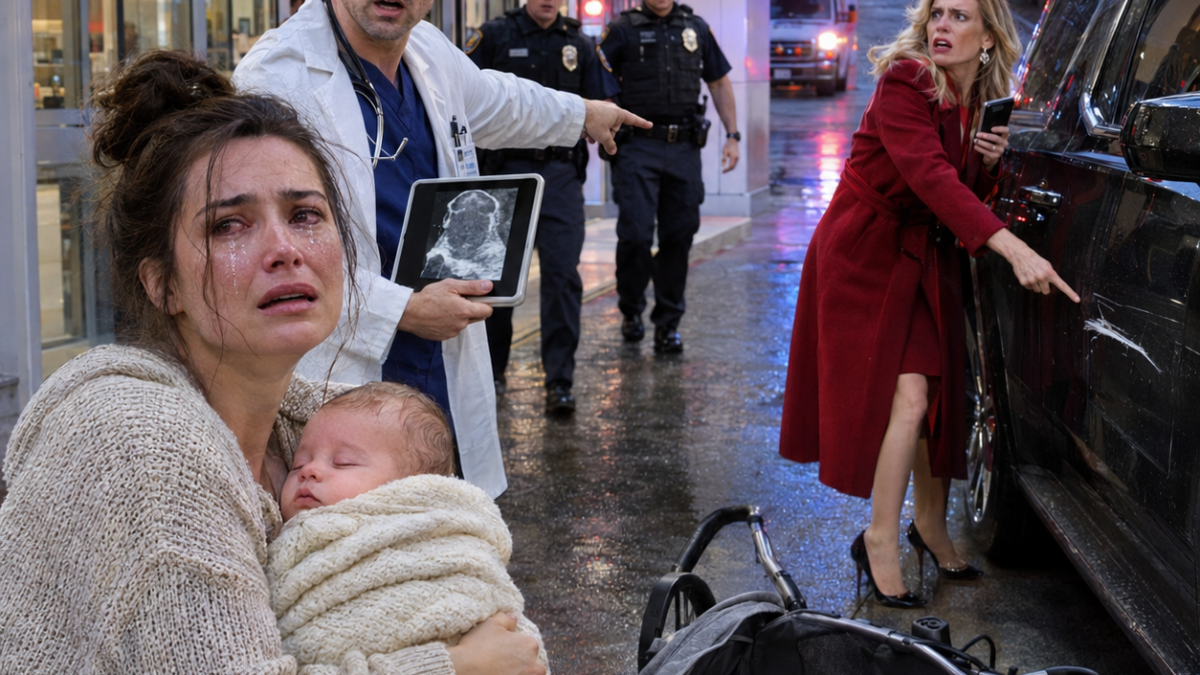
At 6:12 p.m., Dr. Raymond O’Keeffe entered the pediatric waiting area.
Silver hair.
Calm eyes.
He sat down directly across from me.
I knew before he spoke that the news was bad.
“Mrs. Whitcombe.”
“Delaney.”
“Delaney.”
He turned the tablet.
Gray scan.
Tiny skull.
White lines and dark shadows I did not understand.
“Your daughter has an acute subdural hematoma.”
My lungs stopped working.
He continued carefully.
“There is active bleeding along the surface of the brain and a small fracture of the left parietal bone.”
I dug my nails into my palm.
“Will she survive?”
He did not insult me with certainty.
“We identified it early.”
“That is not what I asked.”
“I know.”
His voice softened.
“The next twelve hours are critical.”
I looked at the scan.
“What happens?”
“PICU. Continuous neurologic monitoring. Neurosurgery is reviewing her now. If pressure increases, intervention may be necessary.”
I swallowed.
Then he asked:
“How exactly did this happen?”
“My sister-in-law pushed her stroller down a steep driveway.”
Dr. O’Keeffe stopped.
“Pushed?”
“Yes.”
“Deliberately?”
“Yes.”
He looked at the tablet again.
“This injury pattern is consistent with a high-energy impact. I need to document exactly what you’re telling me.”
“Do it.”
“Hospital security will need to be involved.”
“Good.”
“And law enforcement.”
“Already responding.”
“Do you have evidence?”
That question changed everything.
I opened my phone.
Photographs.
I had taken them almost automatically while paramedics worked.
Stroller wheel.
Brake lever.
Skid path.
Bumper.
Driveway seam.
Blood spot.
Positions.
Time stamps.
Dr. O’Keeffe looked from the screen to me.
“You took these when?”
“Before the ambulance left.”
“You work insurance?”
“Catastrophe claims.”
He nodded slowly.
Then:
“Do not delete anything.”
“I won’t.”
He stood.
“I’ll update you as soon as neurosurgery decides the next step.”
“Doctor.”
He turned.
“Please save her.”
His face softened.
“We are going to do everything we can.”
At 7:40, Camille, Hollis, and Kendra arrived.
Not rushing.
Not frantic.
Walking.
Camille wore pearls.
Kendra had changed clothes.
That detail enraged me.
My daughter was in intensive care and Kendra had found time to put on a fresh designer dress.
Hollis stared at his phone.
Camille dropped her handbag onto a waiting-room chair.
“Well.”
I said nothing.
“I hope everyone has calmed down.”
I stared at her.
Kendra opened the front camera on her phone and touched up lipstick.
Then she said:
“The repair estimate is already four thousand dollars.”
I thought I misheard.
“What?”
“My bumper.”
I stood.
She kept looking at herself in the phone.
“The stroller hit my vehicle.”
“My daughter is in intensive care.”
“And I’m sorry about that, obviously.”
“Obviously?”
“But the stroller caused the damage.”
I felt something inside me go completely still.
Hollis finally lowered his phone.
“Let’s not turn this into something ugly.”
“Something ugly?”
“We are family.”
Behind him, through the glass, Hattie lay beneath machines.
“Hattie carries Whitcombe blood,” Hollis said. “She’s resilient.”
I looked at him.
“What did you just say?”
“Babies recover.”
Camille nodded.
“This entire family has survived worse than a little tumble.”
“A little tumble?”
Kendra sighed.
“Delaney, nobody wants Hattie hurt.”
“You pushed her.”
“I moved my foot near the stroller.”
“You released the brake.”
“No.”
“I saw you.”
“You were facing away.”
“You said ‘we’ll see.’”
Camille stepped between us.
“Stop.”
“No.”
“We will not do this here.”
“Then where would you like to discuss your daughter pushing an infant down a hill?”
Kendra laughed again.
Grant entered behind them.
He had heard enough.
“Delaney.”
I turned.
He looked exhausted.
Terrified.
But then he said the worst possible thing.
“Maybe we should wait until we know more.”
The room narrowed.
“What?”
“I’m not saying Kendra didn’t touch it.”
Kendra snapped:
“I didn’t.”
Grant ignored her.
“I’m saying everyone is emotional.”
I stared at my husband.
“You watched.”
His eyes shifted.
That was all I needed.
“You watched her.”
“I saw Kendra near the stroller.”
“Did you see her foot?”
Silence.
“Grant.”
Camille said:
“Do not interrogate your husband.”
I never took my eyes off him.
“Did you see her touch the brake?”
His face crumpled slightly.
“I don’t know.”
That was when I understood.
Grant knew enough to be afraid of the answer.
And he was still choosing family peace.
I turned toward the stairwell.
Camille’s voice followed.
“You see? She’s overreacting again.”
The door closed behind me.
I descended four flights.
Parking garage.
Concrete.
Fluorescent lights.
I reached my sedan.
Put both hands on the hood.
Then my knees gave out.
I sat on the ground and cried.
Not elegantly.
Not quietly.
For exactly as long as I could allow myself.
Then I looked at the clock.
Ninety seconds.
I wiped my face.
Unlocked my phone.
And called Mara Vance.
Mara and I had spent six years on opposite sides of major claims.
She was a plaintiff’s attorney.
Former insurance-defense counsel.
Brilliant.
Aggressive without being theatrical.
The kind of lawyer who could make a corporate witness destroy his own case by asking one quiet question and waiting.
She answered on the fourth ring.
“Vance.”
“Mara.”
Pause.
“Delaney?”
“Yes.”
“You sound wrong.”
“My sister-in-law pushed Hattie’s stroller down a driveway.”
Silence.
“My four-month-old.”
“I remember who Hattie is.”
“She has a brain bleed.”
Mara’s voice changed immediately.
“Where are you?”
“St. Vincent Pediatric.”
“Police?”
“Yes.”
“Do they have the stroller?”
“I don’t know.”
“Then listen carefully.”
My breathing slowed.
“Do not let anybody dispose of, repair, move, or alter that stroller beyond what emergency responders already did.”
“Okay.”
“The vehicle?”
“Kendra’s SUV.”
“Same rule.”
“Okay.”
“Security cameras?”
“Four that I saw.”
“Good.”
“Family witnesses.”
“Better.”
“They’re lying already.”
“That’s expected.”
I closed my eyes.
“Mara.”
“Yes?”
“My husband may be lying too.”
She was silent for a beat.
Then:
“I represent you and Hattie. Not your marriage.”
That sentence was exactly why I called her.
“What do you need?”
“Photographs.”
“I have them.”
“Names.”
“I’ll make a list.”
“Hospital records.”
“I can request.”
“Do not request them yourself yet. Be Mom tonight.”
I almost laughed.
“I don’t know how.”
“You will.”
“Anything else?”
“Yes.”
Her voice hardened.
“Do not threaten Kendra.”
“I won’t.”
“Do not tell them what evidence you have.”
“I won’t.”
“And do not let anyone convince you that keeping the peace is more important than preserving the truth.”
I looked toward the elevator.
“That one may be difficult.”
“I’ll handle difficult.”
An hour later, Mara arrived.
Dark suit.
Hair pulled back.
No entourage.
She hugged me.
That surprised both of us.
Then she went to work.
First:
Hospital security.
She asked them to preserve security footage of every Whitcombe family member entering and leaving.
Second:
Police.
She asked which officer had scene control.
Third:
Stroller.
A deputy confirmed it had been secured in the garage at the Whitcombe property pending documentation.
Mara immediately requested preservation.
Fourth:
Kendra’s SUV.
Still at the estate.
Mara sent a written preservation notice to Kendra, Hollis, Camille, their homeowner’s insurer, and the vehicle insurer.
No repairs.
No washing.
No moving unless necessary.
Then:
Estate cameras.
That was where things became interesting.
Hollis answered Mara’s call personally.
“This is ridiculous.”
Mara put him on speaker.
“I’m notifying you that all video, photographs, access logs, smart-home records, and security-camera footage from today must be preserved.”
“This is our private home.”
“Correct.”
“You cannot order me around.”
“I am not ordering you.”
“Sounds like it.”
“I am advising you that destruction after notice may have legal consequences.”
Hollis laughed.
“You ambulance chasers are all the same.”
Mara smiled.
I knew that smile.
“Mr. Whitcombe, I have never chased an ambulance in my life.”
She looked at me.
“They tend to bring their cases to me.”
Hollis hung up.
Mara wrote down the time.
“Why?”
“Because people tell you who they are when you ask them not to destroy evidence.”
Back upstairs, Grant waited alone.
His parents and Kendra had left.
He looked at Mara.
Then at me.
“You hired a lawyer?”
“Yes.”
“Already?”
“Yes.”
“Delaney.”
“What?”
“Our daughter is in PICU and you’re building a lawsuit?”
Mara started to speak.
I stopped her.
“No.”
Grant looked at me.
“I am preserving evidence because your sister already lied.”
“You don’t know—”
“Stop.”
He went silent.
“I watched Kendra touch the brake.”
His face tightened.
“She had complained about the stroller twenty minutes earlier.”
“I know.”
“She said ‘we’ll see.’”
“I heard that.”
I stared at him.
“Then why are you acting confused?”
His eyes filled.
“Because I don’t want to believe my sister did this.”
That was finally honest.
I lowered my voice.
“You do not have to believe it.”
He looked up.
“You have to tell the truth about what you saw.”
He sat down.
“I saw her standing behind the stroller.”
“And?”
“I saw her foot move.”
“And?”
“I looked away for maybe one second.”
“And?”
“When I looked back, it was rolling.”
My throat tightened.
“Did you see her hand?”
He whispered:
“Yes.”
“Where?”
“On the handle.”
The world became very quiet.
“You knew.”
“No.”
“You knew enough.”
“I froze.”
“You froze while Hattie rolled down the driveway.”
His face broke.
“Yes.”
I looked away because if I kept looking at him I would say something permanent.
Mara spoke gently.
“Grant, have you told police exactly that?”
“No.”
“Then you need to.”
His head snapped toward her.
“My family—”
“Your daughter is your family.”
That sentence hit him harder than anything I could have said.
Grant stood.
Walked toward the PICU glass.
Looked at Hattie.
Then whispered:
“I’ll tell them.”
He did.
At 10:26 p.m., Detective Lucas Avery interviewed him in a private consultation room.
Mara sat with me outside.
An hour later Grant emerged.
Eyes red.
He walked straight to me.
“I told them everything.”
I nodded.
He tried to touch my shoulder.
I stepped away.
His hand fell.
“I understand.”
“No.”
I looked at him.
“You understand that I’m angry.”
“Yes.”
“You do not understand what happens to us yet.”
He went pale.
“Delaney.”
“I don’t either.”
The PICU doors opened.
Dr. O’Keeffe approached.
I stood so fast the chair moved backward.
“Hattie?”
“The bleed has enlarged slightly.”
My knees weakened.
“Neurosurgery recommends intervention.”
“What kind?”
“A small procedure to relieve pressure and control the hematoma.”
“Is she dying?”
“No.”
That word saved me for about three seconds.
Then:
“But this is serious.”
“When?”
“Now.”
I signed forms.
So many forms.
Risk of bleeding.
Infection.
Seizure.
Neurologic injury.
Anesthesia complications.
I initialed boxes while my hands shook.
Claims documents had always felt cold to me.
Medical consent felt cruel.
Every signature was an admission that terrible things could happen.
They took Hattie.
I kissed her forehead.
“Mommy’s here.”
The doors closed.
Grant stood beside me.
I felt him crying before I looked.
“I should’ve moved.”
“What?”
“When Kendra touched the brake.”
I closed my eyes.
“I should have crossed the patio.”
“Yes.”
“I saw her angry.”
“Yes.”
“I thought she was just being Kendra.”
I looked at him.
“That sentence is going to bother me for a very long time.”
“It should.”
“Yes.”
We sat.
Three hours later, Dr. O’Keeffe came out.
“The procedure went well.”
My entire body collapsed into the chair.
“The bleeding is controlled.”
“Brain damage?”
“Too early.”
“Will she wake up?”
“We expect her to.”
“Expect?”
He knelt in front of me.
“Delaney. Tonight, the most important news is that Hattie is alive and the pressure is down.”
I started crying.
For the first time that day, they were relief tears.
Not certainty.
But enough.
Hattie opened her eyes the following afternoon.
Only briefly.
I was beside her.
Her eyelids moved.
Then those dark little eyes appeared.
Unfocused.
I leaned close.
“Hattie.”
Her fingers twitched.
I gave her mine.
She wrapped one tiny hand around my finger.
Weakly.
But she did it.
I sobbed.
A nurse cried too.
Grant stood near the wall with both hands over his mouth.
That little grip saved all three of us.
Then my phone rang.
Mara.
I stepped outside.
“What?”
“The driveway footage is gone.”
I stopped.
“What?”
“All primary estate camera files between noon and six yesterday show as deleted.”
“Deleted by who?”
“Too early.”
My blood went cold.
“Hollis.”
“Maybe.”
“Camille.”
“Maybe.”
“Kendra.”
“Maybe.”
Mara sounded almost pleased.
That frightened me.
“Why do you sound like that?”
“Because deleting a file is not the same as deleting its existence.”
I waited.
“The security system logs remote deletion events.”
“Can we recover the footage?”
“Possibly.”
“And if not?”
“We prove somebody destroyed it after receiving preservation notice.”
“When was it deleted?”
She paused.
“Eleven twenty-three last night.”
I remembered Hollis’s call.
Mara had warned him at 8:14.
Three hours later, the footage disappeared.
My claims brain switched on completely.
“Cloud mirror?”
“Working on it.”
“Router logs?”
“Yes.”
“Vendor?”
“Subpoena incoming.”
“Garage DVR?”
“Separate unit. Police are seeking a warrant.”
Mara smiled through the phone.
“There’s my adjuster.”
I leaned against the wall.
“They think they can erase this.”
“They think family influence works like insurance settlement authority.”
“What does that mean?”
“They think whoever has the biggest house controls the narrative.”
She paused.
“They are about to learn otherwise.”
The first formal statement from Kendra came through her auto insurer.
That was the irony.
She was so furious about the scratched SUV that she filed a collision claim before Hattie’s first full neurologic exam.
Her insurer took a recorded statement.
Kendra said:
“I was standing at least fifteen feet from the stroller when it began moving on its own.”
I read the transcript twice.
Fifteen feet.
That was useful.
Because three photographs from the reunion showed Kendra within arm’s reach of the stroller less than ninety seconds before the crash.
One was taken by her own cousin.
Another by Camille.
The third was Kendra’s selfie.
In the reflection of her SUV window, the pram was visible directly behind her.
Claims people learn to love reflections.
Her second mistake came when the adjuster asked whether the stroller brake had been engaged.
Kendra answered:
“I never touched it, so I wouldn’t know.”
Then:
“But Delaney is careless about that kind of thing.”
The adjuster asked:
“Have you previously observed her fail to set the brake?”
“No.”
“Then what do you mean?”
Silence.
“I just know her.”
That transcript went to investigators.
The stroller manufacturer inspected the brake under controlled conditions.
No defect.
No spontaneous release.
The brake required downward foot pressure to disengage.
The collision damaged the front wheel, not the brake assembly.
The defense theory that the pram simply rolled became weaker.
Then came the homeowner’s insurer.
Hollis reported the event as:
Guest stroller accidentally rolled on sloped drive, causing vehicle damage and possible infant injury.
Possible.
My daughter had undergone emergency brain surgery.
Hollis wrote possible infant injury.
I sent the report to Mara.
She stared at it.
“This family is doing our work for us.”
“Why?”
“Because every document becomes a timestamped version of their story.”
Insurance claims are strange that way.
People think insurers are interested only in money.
Adjusters are interested in sequence.
Who said what first?
Before lawyers.
Before public relations.
Before witnesses compared memories.
Kendra’s first concern was her bumper.
Hollis’s first written report called the event accidental.
Camille’s first statement to police said:
“Nobody saw Kendra touch the stroller.”
That sentence was false before anyone even argued intent.
Grant had already told Detective Avery he saw Kendra’s foot and hand at the pram immediately before it moved.
Then cousin Paige called me.
Twenty-three.
Quiet.
Kendra’s second cousin.
“Delaney?”
“Yes.”
“I need to tell you something.”
My stomach tightened.
“What?”
“I saw it.”
“Where are you?”
“At home.”
“Do not tell me details yet.”
She went silent.
“Why?”
“Because I want your memory preserved properly.”
I called Mara.
Mara arranged for Paige to give a recorded statement to Detective Avery before discussing it with us.
Paige said she had been sitting at the edge of the veranda.
She heard Kendra say:
“If Delaney won’t move that ugly thing, I will.”
Minutes later, Paige saw Kendra walk behind the pram.
She looked down at her phone.
Then heard the brake click.
When she looked back, Kendra’s hand was on the handle.
The stroller moved.
Paige froze.
Why had she not told police immediately?
That answer became part of the family story.
“Camille told everyone not to exaggerate.”
Detective Avery asked:
“When?”
“Right after the ambulance left.”
“What exactly did she say?”
Paige cried.
“She said Kendra had enough problems and nobody needed to destroy her life over an accident.”
“Did she call it an accident before anyone investigated?”
“Yes.”
“Did she tell you what to say?”
“She said if police asked, we should say the stroller rolled.”
That was witness pressure.
Not yet necessarily a crime.
But it was not good.
Another cousin came forward.
Then another.
One remembered Hollis saying:
“No one needs to mention Kendra touching anything because none of us saw it clearly.”
He said that while Grant was standing three feet away.
Grant had seen it.
The family circle began cracking.
Then the security company called Mara.
Their system maintained a thirty-day cloud diagnostic buffer separate from the homeowner’s accessible video library.
The homeowner could delete clips.
Not the diagnostic cache.
A technician recovered twelve seconds from the driveway camera.
Twelve seconds.
I watched it with Mara and Detective Avery.
No sound.
Wide angle.
The stroller sat beneath the tree.
I entered frame carrying the casserole.
Walked toward the veranda.
Kendra crossed behind the stroller.
She looked toward me.
Her foot moved beneath the brake bar.
The pram shifted slightly.
Then stopped.
Kendra placed one hand on the handle.
She pushed.
The stroller moved.
Kendra stepped back.
Not reaching.
Not reacting.
Not trying to stop it.
Watching.
I stopped the video.
My hands became numb.
“Again,” Avery said.
Mara looked at me.
“You don’t have to.”
“I do.”
We watched again.
Foot.
Brake.
Hand.
Push.
I whispered:
“She waited.”
Avery looked at me.
“What?”
“She waited until I turned.”
He nodded.
“Yes.”
There was another detail.
Immediately after the stroller left her hand, Kendra reached for her phone.
Not the pram.
Not Hattie.
Her phone.
Detective Avery froze the frame.
“Why?”
Mara said:
“Could be anything.”
That was why Mara was good.
No dramatic assumption.
Only supportable facts.
Later, investigators recovered a deleted text Kendra had sent to a friend four minutes before the crash:
If she won’t move the stroller I’m going to move it for her. I’m sick of Delaney acting like the whole world revolves around that baby.
The friend replied:
Don’t be psycho.
Kendra:
Relax. I’m not going to hurt her.
That message mattered.
It established intent to interfere with the stroller.
Not intent to injure Hattie.
Intent matters.
So does recklessness.
Mara told me:
“Do not let people online convince you we need to prove Kendra wanted Hattie dead.”
“I never said that.”
“I know.”
“She pushed a baby down a hill.”
“Yes.”
“Isn’t that enough?”
“It may be enough for serious charges without pretending we know what was in her head beyond the evidence.”
I hated legal precision.
Then respected it.
Because I wanted a case nobody could dismantle.
Detective Avery arrested Kendra six days after the reunion.
Hattie was still in PICU.
Kendra walked out of her apartment wearing sunglasses.
Television cameras waited.
Her attorney released a statement calling the event “a tragic stroller malfunction being exploited during an emotional family dispute.”
Then the recovered video became known to prosecutors.
The public statement disappeared from the attorney’s website.
Camille called Grant.
I watched his phone ring.
Mom.
He did not answer.
She called again.
Again.
Finally he put it on speaker.
“Grant.”
“What?”
“You need to fix this.”
His face changed.
“Fix what?”
“This legal nightmare.”
“Kendra pushed my daughter.”
“You do not know that.”
“I saw her.”
Silence.
Camille lowered her voice.
“You saw something happen quickly.”
“I saw her hand on the stroller.”
“You were drinking.”
“One beer.”
“Memory changes under stress.”
Grant looked at me.
Then said:
“Mom, Hattie had brain surgery.”
Camille sighed.
“I know, darling.”
“No. You don’t.”
“What does that mean?”
“It means you keep talking about Kendra.”
“Because she is your sister.”
“My daughter almost died.”
“She didn’t.”
Grant’s face went blank.
Camille continued:
“And thank God for that. So now we need to think rationally about whether destroying Kendra’s future serves anyone.”
Grant ended the call.
His hands shook.
I said:
“Thank you.”
He looked at me.
“That doesn’t erase what I did.”
“No.”
“I know.”
Hattie left PICU after nine days.
Hospital after seventeen.
The discharge instructions filled a binder.
Neurology.
Physical therapy.
Developmental follow-up.
Seizure monitoring.
Repeat imaging.
Watch for vomiting.
Lethargy.
Abnormal movements.
Regression.
I had spent my career giving people lists after catastrophes.
Now I hated lists.
Every line was another thing that could go wrong.
At home, I put Hattie’s bassinet beside our bed.
For three weeks, I barely slept.
Every time she became quiet I touched her chest.
Every time she startled I wondered if it was a seizure.
Every time she cried I felt relief and terror simultaneously.
Grant offered to take nights.
Sometimes I let him.
Sometimes I could not.
Our marriage became careful.
Polite.
Tender in small places and shattered in others.
He started therapy.
Without me asking.
He told his therapist exactly what happened.
That mattered.
One evening he said:
“I know why I froze.”
I looked up.
“Why?”
“My whole childhood was built around not upsetting them.”
I said nothing.
“Kendra could do anything and Mom would explain it.”
“Grant—”
“I’m not excusing myself.”
“Good.”
“I’m telling you I realized I was waiting for my parents to tell me what reality was.”
I looked at him.
“And meanwhile our daughter was at the bottom of the driveway.”
His eyes filled.
“Yes.”
I hated that he finally understood.
I loved that he did.
Both things existed.
Mara filed the civil case after Hattie’s neurologic prognosis became clearer.
Kendra.
Hollis.
Camille.
The property-holding entity that owned the estate.
Claims varied according to conduct.
Intentional conduct against Kendra.
Premises and evidence issues involving the estate.
Allegations concerning deletion of security footage and witness pressure.
Mara was careful.
She did not sue every relative with a wineglass.
I appreciated that.
“You said dismantle the empire,” I reminded her.
She smiled.
“You were grieving.”
“I’m still grieving.”
“Then let me translate what you meant.”
“What?”
“Make them answer for what they actually did.”
“That sounds less satisfying.”
“It wins more often.”
The Whitcombes had money.
More than I realized.
Hollis owned commercial properties.
A logistics company.
Several family trusts.
For years, Camille used wealth as social gravity.
People gathered around because being invited meant something.
The lawsuit did not instantly make them poor.
That would have been fantasy.
What it did was remove their ability to keep everything private.
Discovery began.
Emails.
Texts.
Security records.
Insurance statements.
Family group chats.
One thread was called:
RIDGE REUNION 2026.
Twenty-seven members.
Three hours before the crash, Kendra posted:
Please tell Delaney that giant stroller cannot stay behind my car in pictures.
Camille:
I already tried. She is in one of her moods.
Kendra:
Everything has been about that baby for four months.
Hollis:
Ignore it and enjoy the day.
After the crash:
Camille:
Nobody speculate. It rolled. That is all anyone actually knows.
Paige:
I saw Kendra by it.
Camille:
You saw people standing everywhere. Do not start drama.
Hollis:
DELETE THIS THREAD. We will discuss in person.
He wrote that twenty-three minutes after the ambulance left.
Then deleted his message.
The platform retained it in production.
Mara printed the page.
Placed it in front of Hollis during deposition.
“Did you write this?”
He adjusted his glasses.
“I don’t recall.”
“Your account?”
“Yes.”
“Your device?”
“Probably.”
“Do you often instruct relaives to delete communications after a four-month-old child is hospitalized?”
His attorney objected.
Hollis stared at the table.
Mara waited.
Finally:
“No.”
“Why that day?”
“I was trying to stop gossip.”
“By deleting evidence?”
“No.”
“What did you think ‘DELETE THIS THREAD’ would accomplish?”
He looked angry.
“Privacy.”
Mara nodded.
“Privacy after a child’s traumatic brain injury.”
Objection.
“Move on.”
Mara did.
She did not need to humiliate him.
The transcript did it itself.
Camille’s deposition went worse.
She insisted:
“Babies are resilient.”
Mara asked:
“Is that why you did not go down the driveway immediately?”
“I knew Delaney would handle it.”
“You knew Hattie was unconscious?”
“I did not know the medical severity.”
“Did you see the stroller impact the vehicle?”
“Yes.”
“Did you see your granddaughter move afterward?”
“I don’t remember.”
“Did you call 911?”
“No.”
“Did you check her breathing?”
“No.”
“Did you touch her?”
“No.”
“Did you ask whether she was alive?”
Camille stopped.
“No.”
“Did you tell Delaney to stop being dramatic?”
Long silence.
“I may have said something like that.”
Mara displayed a reunion video recorded by another relative.
Camille’s voice was clear:
Stop being so dramatic, Delaney. Babies bounce.
Camille closed her eyes.
Mara said:
“I’ll ask again. Did you say that?”
“Yes.”
Mara moved on.
Kendra’s criminal case progressed separately.
She rejected the first plea offer.
Her defense argued she intended merely to move the pram a few feet and did not appreciate the slope.
That claim collided with photographs showing she had parked on the same driveway dozens of times.
Family video showed her joking earlier:
“You need mountain-climbing gear to walk up this ridiculous hill.”
She understood the slope.
Her attorney then argued the push was accidental.
The recovered camera footage contradicted that.
Then they argued the brake might not have been fully engaged.
The manufacturer’s testing contradicted spontaneous release.
Then they suggested I had positioned the pram negligently.
That did not explain Kendra touching it.
The case narrowed.
She could not escape what she did.
Only argue what she intended.
The prosecutor never claimed she planned to kill Hattie.
That restraint made the case stronger.
The state’s position was simpler:
Kendra knowingly disengaged a safety brake on an occupied infant stroller at the crest of a steep paved driveway and intentionally pushed it away from a stable position.
The foreseeable risk was catastrophic.
That was enough.
Hattie turned six months old before we received the first truly encouraging neurologic update.
Dr. O’Keeffe compared imaging.
“The hematoma has resolved.”
I stared.
“Resolved?”
“Yes.”
“The fracture?”
“Healing appropriately.”
“Brain damage?”
He paused.
That word remained complicated.
“Her development looks encouraging.”
I gripped Grant’s hand without thinking.
He squeezed mine.
Dr. O’Keeffe continued.
“She will need continued monitoring. Early childhood development can reveal subtle issues later.”
“So she’s okay?”
He smiled gently.
“She is doing well.”
I started crying.
He handed me tissues.
“I hate when doctors say ‘doing well.’”
“Why?”
“Because it isn’t ‘fine.’”
“Medicine rarely gives people the word ‘fine’ when they want it.”
“That’s cruel.”
“It’s honest.”
I nodded.
I had learned to value honest people.
At eight months, Hattie sat unsupported.
I cried.
At nine, she crawled.
I filmed seven minutes.
At eleven, she pulled herself upright using Grant’s pant leg.
He looked at me like somebody had handed him his life back.
“Delaney.”
“I see.”
“Hattie.”
“I see her.”
Our daughter stood.
Wobbled.
Fell onto her padded play mat.
Then laughed.
Grant dropped to his knees.
Hattie crawled toward him.
I turned away and cried into a dish towel.
Healing is not cinematic.
Sometimes it wears pajamas and drops crackers under a couch.
The criminal hearing occurred when Hattie was almost one.
Kendra finally accepted a plea on serious felony child-endangerment and assault-related charges rather than force every family witness through trial.
She stood before the judge.
No designer dress.
No sunglasses.
She looked smaller.
The judge asked if she understood what she was admitting.
“Yes.”
“Did you intentionally disengage the stroller brake?”
Kendra whispered:
“Yes.”
My body went completely still.
“Did you intentionally move the occupied stroller?”
“Yes.”
“Did you understand the driveway was steep?”
Long pause.
“Yes.”
“Did you intend for the child to suffer a brain injury?”
“No.”
I believed that part.
Maybe she truly thought the stroller would roll a few feet.
Maybe she thought she would scare me.
Maybe she thought gravity would behave according to her anger.
It no longer mattered.
The judge said:
“Intent to cause the precise injury is not the same as responsibility for creating the danger.”
That sentence stayed with me.
Kendra received a prison sentence followed by supervised release and strict restrictions around unsupervised contact with children.
The sentence was not the longest possible.
Some relatives complained quietly that it was too harsh.
Others that it was not harsh enough.
I stopped caring about numbers.
Kendra had finally said yes in open court.
Yes, she released it.
Yes, she pushed.
Yes, she knew the hill.
The story could never again become:
Delaney overreacted.
The stroller malfunctioned.
Nobody saw anything.
That was justice.
The obstruction issues surrounding Camille and Hollis ended differently.
Investigators proved Hollis deleted accessible security footage after receiving preservation notice.
Because the cloud cache preserved the critical clip, the underlying evidence survived.
Camille’s witness pressure was documented in messages.
Their conduct led to separate legal consequences, sanctions, financial penalties, and severe credibility findings in the civil case.
Neither went to prison.
I know some people would prefer that ending.
I didn’t need it.
They had spent decades building a family culture where money and certainty erased discomfort.
Discovery did something prison could not.
It made the record public.
Hollis’s insurer denied parts of the claim associated with intentional destruction and intentional conduct.
The family had to fund substantial portions of their own defense.
The estate went on the market eighteen months later.
Not because one lawsuit magically destroyed a dynasty.
Because legal fees, business strain, insurance disputes, and an unrelated commercial loan problem converged at once.
Still, I will admit something.
The day I saw the real-estate listing for Ridgecrest, I stared at it longer than necessary.
Grant walked behind me.
“That the house?”
“Yes.”
“You happy?”
I thought.
“No.”
He waited.
“Relieved.”
That was closer.
The driveway looked beautiful in the listing.
Fresh asphalt.
Professional photography.
No stroller.
No blood.
No police cars.
Just sunset.
A house can hide a lot in photographs.
The civil case settled before trial.
Mara refused confidentiality regarding the basic factual events.
That cost us money.
Hollis’s attorneys offered substantially more if we agreed never to discuss the reunion.
Mara called.
“The number is higher with confidentiality.”
“How much higher?”
She told me.
I sat quietly.
It was a lot.
Enough to change lives.
Grant watched me.
“What do you want?”
I pictured Camille saying:
Babies bounce.
Kendra photographing her bumper.
Paige being told not to start drama.
The deleted thread.
The erased cameras.
“Can they prohibit us from talking about what happened?”
“Yes, depending on terms.”
“No.”
“Delaney, think.”
“I am.”
“This money belongs to Hattie too.”
I knew.
That hurt.
Then Grant spoke.
“No confidentiality.”
I looked at him.
He continued:
“We spent our whole lives protecting this family from embarrassment.”
His voice shook.
“I’m not teaching Hattie that silence is valuable if the check is large enough.”
Mara said nothing for several seconds.
Then:
“I’ll reject it.”
The final settlement was lower.
Still substantial.
Enough to cover Hattie’s care.
Future monitoring.
Education trust.
Therapy.
Legal costs.
We also created something I never imagined at the beginning.
A pediatric injury support fund through St. Vincent.
For parents suddenly sitting in waiting rooms hearing words like hematoma and fracture and critical.
Mara asked why.
I said:
“Because that waiting room is where I stopped being able to pretend money was the point.”
She smiled.
“I knew you’d eventually become irritatingly noble.”
“I’m still billing you for that insult.”
“You’re the client.”
“Then subtract it.”
Grant’s relationship with his parents ended.
Not dramatically.
No final screaming match.
He simply stopped answering.
Camille sent birthday cards.
Returned unopened.
Hollis emailed about “family healing.”
Grant deleted them.
One evening, Camille appeared at our front door.
I opened it.
She looked older.
No pearls.
No makeup.
“Can I see Hattie?”
“No.”
Her face crumpled.
“She is my granddaughter.”
“Yes.”
“I made mistakes.”
“Yes.”
“I did not push the stroller.”
“No.”
“I’m being punished for what Kendra did.”
I stared at her.
“Do you want to know the moment I stopped trusting you?”
She looked at me.
“When you told me babies bounce?”
“No.”
Surprise.
“When?”
“When Hattie was motionless on asphalt and you chose not to move.”
Camille’s eyes filled.
“You don’t know what shock does.”
“I work catastrophe claims.”
I opened the door wider, but not invitingly.
“I know exactly what shock does.”
She looked down.
“I froze.”
“No.”
My voice stayed calm.
“Grant froze.”
I had learned the difference.
“You kept drinking.”
She flinched.
“You told twenty people I was dramatic.”
Silence.
“You went to the hospital and discussed Kendra’s emotional distress before asking whether Hattie would live.”
Camille began crying.
I did not feel satisfaction.
Only exhaustion.
“I love her.”
“Maybe.”
“I do.”
“Love is not access.”
She looked at me.
That sentence landed.
“Please.”
“No.”
“Will you ever let me—”
“I don’t know.”
That was truthful.
Maybe someday Hattie would make her own choices.
Until then, my answer was no.
Camille left.
Grant stood in the hallway.
“You okay?”
“Yes.”
“Do you mean it?”
“No.”
He hugged me.
This time I let him.
Our marriage survived.
I do not say that as some romantic triumph.
It almost didn’t.
For the first year, I kept returning to one fact:
Grant saw Kendra touch the stroller.
He saw enough to move.
He didn’t.
Every time I imagined that second, anger returned.
Therapy helped.
Not because a therapist convinced me to forgive.
Because Grant stopped asking forgiveness to function like an eraser.
He would say:
“I froze.”
And I would say:
“Yes.”
Then:
“I’m sorry.”
And I would say:
“I know.”
Eventually there was less to add.
He became a different father.
Hypervigilant at first.
Too much.
He checked every car seat buckle twice.
Installed gates before Hattie could crawl.
Read product recalls recreationally.
I finally said:
“You’re becoming me.”
He looked horrified.
We laughed.
That was progress.
When Hattie turned one, we held a tiny party in our backyard.
No extended Whitcombe family.
Mara came.
Dr. O’Keeffe came for twenty minutes, which surprised me.
Paige came too.
So did Detective Avery.
Hattie wore a yellow dress.
The same shade as the romper from the reunion.
Grant thought that would upset me.
It did.
I let her wear it anyway.
She smashed cake into her hair.
Mara whispered:
“Catastrophic loss.”
I laughed so hard I cried.
At fourteen months, Hattie took her first independent steps.
Three.
Then five.
Then she sat down.
Grant had his phone recording.
I was across the room.
For a fraction of a second, I saw another image.
Wheels.
Driveway.
Impact.
Then Hattie stood again.
Walked toward me.
I dropped to my knees.
She reached me.
Put both hands against my cheeks.
And said something that sounded vaguely like:
“Mama.”
I sobbed.
Grant cried.
Hattie laughed because apparently our emotional instability was hilarious.
That night, after she slept, I opened my old claim notebook.
The one I had begun at the hospital.
Page one:
Date.
Location.
Weather.
Driveway grade.
Pram brake engaged.
Kendra complaint regarding photographs.
Then evidence.
Witness names.
Cameras.
Medical records.
It was clinical.
Cold.
Exactly what I needed then.
Near the bottom, I had written:
They are going to pay.
I stared at that sentence.
Then crossed it out.
Underneath, I wrote:
They answered for it.
Different.
Important.
Payment was never the real ending.
Accountability was.
Kendra could no longer claim the stroller rolled on its own.
Camille could no longer erase the words she said.
Hollis could no longer pretend deleted video had never existed.
Grant could no longer hide behind uncertainty.
And I could no longer pretend that being skilled at evidence meant I could control every outcome.
Hattie survived.
We were lucky.
That word was difficult for me.
Lucky?
My infant had undergone brain surgery because an adult was angry about photographs.
Still.
She survived.
Some parents in that PICU waiting room did not get the news I got.
I learned never to weaponize gratitude against grief.
I can be grateful Hattie lived and still furious that she was hurt.
Both are true.
Years later, the story people remembered became shorter.
Jealous sister-in-law pushes stroller.
Baby survives.
Security footage exposes her.
Family loses estate.
Justice.
But real life was messier.
The worst day was followed by hundreds of ordinary days.
Neurology appointments.
Therapy.
Insurance calls.
Depositions.
Marital counseling.
Nightmares.
A baby refusing peas.
A first tooth.
A fever that sent me spiraling into panic.
Grant learning that every silence from Hattie did not mean she had stopped breathing.
Me learning to stop checking the crib monitor every four minutes.
Justice did not heal us.
Justice gave healing room to happen without lies.
That distinction matters.
When Hattie was three, she discovered gravity.
Unfortunately.
She loved sending toy cars down the little plastic slide in our living room.
The first time I saw her place a doll stroller at the top, my entire body locked.
She pushed it.
The toy rolled down.
Hattie laughed.
I walked into the bathroom and cried.
Grant followed.
“What happened?”
I pointed toward the living room.
He understood immediately.
“Do you want me to take it away?”
I almost said yes.
Then stopped.
“No.”
“You sure?”
“No.”
We stood there.
Then I went back.
Hattie pushed the toy again.
Nothing terrible happened.
Again.
Nothing.
Her childhood could not become a shrine to what Kendra had done.
That took work.
At five, Hattie asked why we did not see Aunt Kendra.
Grant and I had prepared for the question.
Then completely failed.
I said:
“She made a very unsafe choice when you were a baby.”
Hattie looked interested.
“What choice?”
Grant looked at me.
I continued:
“She moved your stroller when she should not have.”
“Did I cry?”
My heart tightened.
“No.”
“Why?”
“You were hurt.”
Hattie frowned.
“Did she say sorry?”
Children always find the center.
“Yes.”
Eventually Kendra had.
In court.
In a letter.
Whether apology and remorse were the same thing, I did not know.
“Did you forgive her?”
I looked at Hattie.
“That is something adults can take a long time to decide.”
She accepted that.
Then asked for crackers.
Children are merciful in their attention span.
I never told Hattie she had to forgive anyone.
I never told her she had to hate them either.
The story belonged to her body.
One day, when she was old enough, she would decide what relationship—if any—she wanted with that history.
My job was not to hand her my anger as an inheritance.
That was harder than any lawsuit.
The Ridgecrest estate sold to a family we did not know.
I drove past it once years later.
Not intentionally.
A road closure redirected traffic.
When I saw the stone pillars, my chest tightened.
The driveway remained steep.
The tree where I had parked Hattie’s stroller was bigger.
A basketball hoop stood near the garage.
Two children rode bicycles at the top.
Their father stood beside them.
Watching.
I pulled over farther down the road.
Grant looked at me.
“You okay?”
“I think so.”
“Want to go back another way?”
“No.”
I looked in the mirror.
The house disappeared behind us.
It belonged to strangers now.
That helped.
Places do not owe us loyalty.
They simply hold what happens.
Then somebody else arrives.
The most important evidence from that day is still stored in Mara’s case archive.
Twelve seconds of recovered security footage.
I have not watched it in years.
I no longer need to.
I know every movement.
Kendra’s foot.
The brake.
Her hand.
The push.
What I remember more now is a different video.
Hattie at fourteen months.
Five steps across our living room.
Yellow pajamas.
Arms held out.
Grant whispering:
“Come on.”
Then Hattie falling into me.
Laughing.
If Kendra’s twelve seconds once defined our family, those five steps took the definition back.
That is the ending I choose.
Not the sentencing.
Not the settlement.
Not the estate listing.
My daughter walking toward me.
Safe.
Alive.
Unaware that an entire group of adults once treated her life as less important than comfort, reputation, and a scratched bumper.
Kendra believed the worst thing that happened that afternoon was damage to her SUV.
Camille believed family peace mattered more than truth.
Hollis believed money could keep private things private.
Grant believed freezing for one second meant he could stay neutral.
They were all wrong in different ways.
There is no neutrality when a child is in danger.
There is no family loyalty that requires silence about harm.
There is no amount of money that turns evidence into inconvenience.
And there is no luxury car expensive enough to matter beside a baby who stops making sound.
I spent eleven years walking into disasters and telling people:
Photograph everything.
Preserve everything.
Tell the truth in the first statement.
Do not repair the damaged object before inspection.
Do not let fear change the sequence.
Those rules saved Hattie’s case.
But motherhood taught me the rule I had never written in any training manual.
When the person you love is hurt, evidence matters because truth matters.
But once truth is secure, put down the file.
Hold the person.
For months, I lived like an adjuster because facts were easier than fear.
Eventually I had to become Hattie’s mother again.
That meant allowing joy without asking what could go wrong.
Birthday candles.
Playgrounds.
Strollers.
Steep hills.
First steps.
Life.
On Hattie’s seventh birthday, Mara came to the party.
She watched Hattie race across the yard after another child.
Then looked at me.
“Remember the hospital garage?”
“Yes.”
“You told me you wanted me to dismantle the Whitcombe empire brick by brick.”
“I was dramatic.”
“You were terrifying.”
“Did you?”
“What?”
“Dismantle it?”
Mara looked toward Hattie.
“No.”
She shook her head.
“They dismantled themselves.”
I understood.
Kendra pushed.
Camille minimized.
Hollis deleted.
Grant froze.
Then every choice created another consequence.
Mara did not manufacture destruction.
She prevented them from hiding it.
That distinction satisfied me more than revenge ever could.
Hattie ran past us.
“Mom!”
“What?”
“Watch!”
She climbed onto the low stone wall bordering the garden.
My heart stopped.
“Careful.”
She spread her arms.
Then jumped.
Maybe eighteen inches.
Landed.
Laughed.
“Did you see?”
I breathed again.
“Yes.”
Mara watched my face.
“You okay?”
“No.”
She laughed.
“Fair.”
Hattie ran away.
I stood in sunlight watching her.
Seven years earlier, a doctor had sat across from me and told me the next twelve hours would determine whether my daughter survived.
Now she was jumping from garden walls because children are apparently designed to destroy their parents’ nervous systems.
I smiled.
That was the miracle.
Not that nothing bad ever happened again.
That ordinary danger became ordinary again.
Later that evening, after the guests left, Hattie fell asleep on the sofa.
Grant carried her upstairs.
I cleaned wrapping paper from the floor.
Under a chair, I found a photograph someone had printed from the party.
Hattie running.
Hair flying.
Mouth open in laughter.
Both feet off the ground.
I stared at it.
Then placed it on our refrigerator.
Years earlier, Kendra wanted the stroller moved because it ruined the aesthetic of her photograph.
That detail once made me furious.
Now it felt almost pathetic.
A perfect photograph.
A perfect SUV.
A perfect family reputation.
All the things the Whitcombes protected.
None of them survived truth.
Hattie did.
That was enough.
I still work catastrophe claims.
People sometimes ask how I stay calm.
I tell them:
“Calm is not the absence of fear.”
It is giving fear a task.
Take the picture.
Write the time.
Preserve the evidence.
Call the right person.
Then, when there is nothing left to document—
hold your child.
Because lawsuits end.
Cars get repainted.
Estates get sold.
Families change.
Scars fade.
But every once in a while, late at night, Hattie still crawls into our bed after a bad dream.
She curls against my side.
Puts one hand over my heart.
And falls asleep.
I stay awake for a few minutes listening to her breathe.
Not because I think she is going to stop.
Not anymore.
I listen because there was once a day when I would have given everything I owned just to hear that sound.
Kendra took one second to release that brake.
Gravity did the rest.
But the consequences did not stop at the bottom of the driveway.
They traveled through every lie.
Every deleted file.
Every cold remark.
Every person who chose comfort over truth.
Until finally they reached a courtroom where Kendra had to stand and say aloud what my family had spent months trying to deny:
“Yes.
I released the brake.
Yes.
I pushed the stroller.
Yes.
I knew the hill was steep.”
That was the justice I wanted.
Not blood.
Not ruin for the pleasure of ruin.
The truth—
spoken where nobody could interrupt it, minimize it, delete it, or call me dramatic ever again.








