PART2:“I’M PREGNANT WITH YOUR HUSBAND’S BABY—AND I’M NOT LEAVING.” I Gave My Best Friend a Room in My Home—Then She Demanded My Marriage Too
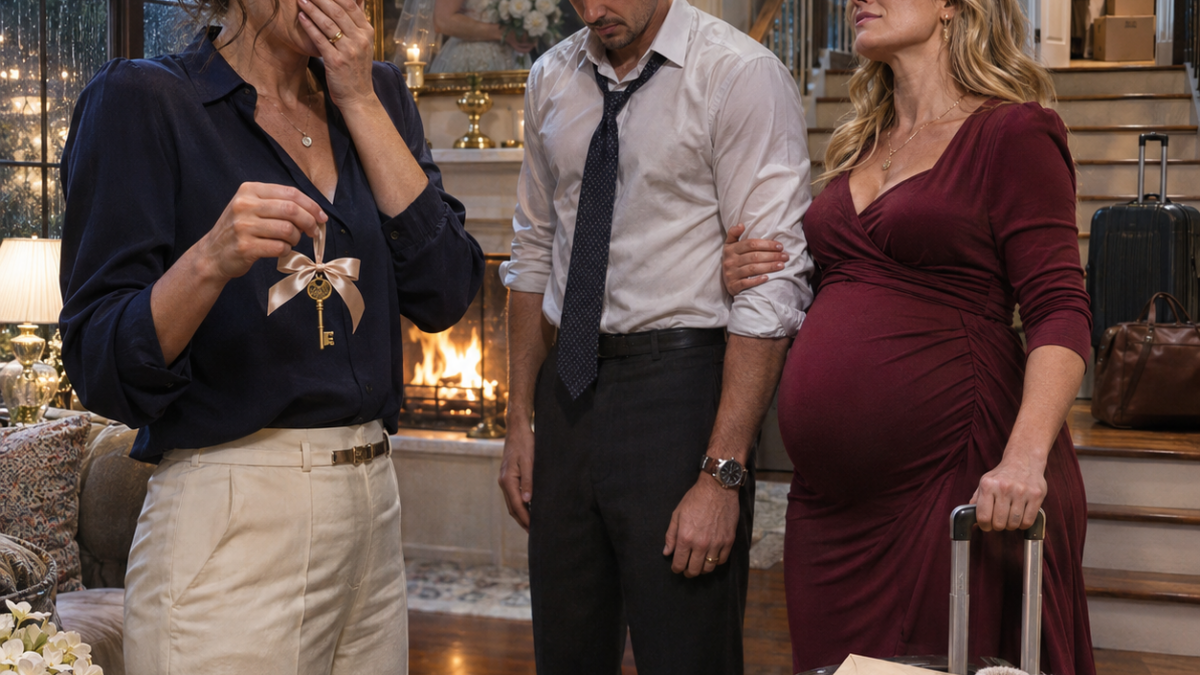
PART2
Two weeks later, I found out I was pregnant.
Ryan and I had been trying for almost eight months.
Not obsessively.
But enough that every late period became a tiny hope.
That Friday morning I took a test before work.
Then a second.
Then a third because apparently I believed plastic sticks could form a conspiracy.
All positive.
I did not tell Ryan by text.
I bought a tiny white baby onesie and placed it inside an anniversary gift box even though our actual anniversary had passed weeks earlier.
That evening I told him:
“I got you something.”
He laughed.
“Another anniversary present?”
“Open it.”
He lifted the tissue paper.
Saw the onesie.
Then looked at me.
His face changed completely.
“Emily.”
I nodded.
“We’re having a baby.”
He covered his mouth.
Then laughed.
Then cried.
He lifted me.
I screamed:
“Put me down!”
He did.
Immediately.
Then knelt and pressed both hands against my stomach.
“There’s really a baby in there?”
“About the size of a poppy seed.”
He laughed again.
Madison entered from the hallway.
“What happened?”
I held up the onesie.
She froze.
For half a second.
Then smiled.
“Oh my God.”
She hugged me.
“You’re going to be an aunt,” I said.
Her arms tightened around me.
“Congratulations.”
Then she looked at Ryan.
“Congratulations.”
He looked away.
I noticed.
But happiness is loud.
It drowns quieter warnings.
Two weeks after my positive test, Madison asked Ryan to meet her at a coffee shop near his office.
I learned about that later.
She sat across from him.
Hands shaking.
Ryan asked:
“Why couldn’t you tell me at home?”
“Because Emily is there.”
“What is this about?”
Madison took a breath.
“I’m pregnant.”
Ryan apparently stared at her for several seconds.
Then said:
“No.”
“Yes.”
“Are you sure?”
“Yes.”
“Is it mine?”
She nearly slapped him.
Instead:
“You cannot be serious.”
Ryan leaned back.
“What have we done?”
That sentence became one of the ugliest things I ever heard him repeat.
Not:
What have I done to Emily?
Not:
I betrayed my wife.
What have we done?
As though disaster had appeared independently of choices.
Madison told him:
“You need to decide what happens now.”
He said:
“Emily can never know.”
Madison looked at him.
“And what happens to me?”
“I don’t know.”
“You better start knowing.”
He did not.
For three weeks, they hid it.
Three weeks while both Madison and I carried Ryan Lawson’s children under the same roof.
I would go downstairs in the morning nauseated.
Madison would already be drinking ginger tea.
I joked:
“You’re tired too? Maybe pregnancy is contagious.”
She snapped:
“Not everything is a joke, Emily.”
I stared.
“Okay.”
Then she apologized.
I accepted.
Ryan became nervous around his phone.
He took it into the shower.
Turned notifications off.
One night he fell asleep on the sofa.
His phone was beside him.
I picked it up because Madison’s name appeared.
We need to talk about the baby.
I stared.
Then unlocked the phone.
Ryan and I knew each other’s passcodes.
Or I thought that meant something.
The message thread was partially deleted.
But that line remained.
Baby.
I woke him.
“Ryan.”
He blinked.
“What?”
“Why is Madison texting you about a baby?”
His face changed.
Not much.
Enough.
“What?”
I held up the phone.
We need to talk about the baby.
He sat upright.
“Oh.”
“Oh?”
“It’s her sister’s baby.”
I stared.
“Madison doesn’t have a sister with a baby.”
Silence.
“Ryan.”
“It’s complicated.”
“Then uncomplicate it.”
His eyes moved toward the hallway.
That was when I heard a floorboard.
Madison stood near the stairs.
Her face was pale.
I looked from her to my husband.
Then back.
“What is going on?”
Madison whispered:
“I can’t hide my stomach forever.”
Ryan stood.
“Lower your voice.”
Her eyes flashed.
“You keep saying that.”
“Madison.”
“No.”
She looked at me.
“His wife is pregnant.”
Then placed one hand on her own abdomen.
“And so am I.”
I could hear my heartbeat.
“Madison.”
She was crying now.
“Emily—”
“What did you just say?”
Ryan stepped toward me.
“Baby.”
I backed away.
“Don’t touch me.”
His hands froze.
I looked at Madison.
“You’re pregnant?”
“Yes.”
“By who?”
Silence.
“WHO?”
She looked at Ryan.
Then back at me.
“Your husband.”
I do not remember breathing.
There are moments when the body understands betrayal before the mind catches up.
My hands turned cold.
My ears rang.
The room seemed farther away.
I heard myself say:
“No.”
Madison started crying.
“I’m sorry.”
“No.”
Ryan said:
“Emily.”
I looked at him.
“Tell me she’s lying.”
He said nothing.
My voice broke.
“Tell me she is lying.”
He looked at the floor.
That was the answer.
I pressed one hand against my stomach.
My baby.
His baby.
Her baby.
All at once.
Madison said:
“It happened when you went to the hospital.”
I turned toward her.
“The night my uncle was admitted?”
She nodded.
“Once?”
Silence.
Ryan said:
“Emily—”
I looked at him.
“How many times?”
He swallowed.
“It doesn’t matter.”
I laughed.
A strange sound.
“Then why are you afraid to answer?”
Madison looked at him.
“More than once.”
I stared.
Ryan snapped:
“Madison.”
“No.”
She was crying harder.
“She deserves to know.”
I looked at her.
“How many?”
“Four.”
The number landed differently.
Four is not an accident.
Four requires planning.
Four requires remembering the first betrayal and choosing a second.
Then third.
Fourth.
I looked at Ryan.
“You told me it was a mistake.”
“I know.”
“One mistake?”
“I didn’t mean—”
“How many mistakes does it take before it becomes a decision?”
He said nothing.
I turned toward Madison.
“I gave you my spare room.”
“I know.”
“You cried to me.”
“I know.”
“I told Ryan you were basically my sister.”
Her face crumpled.
“I know.”
“You slept with him here?”
She looked down.
That answer destroyed something even deeper.
“Here?”
Ryan whispered:
“Emily.”
“In my house?”
“Yes.”
I sat down because suddenly standing felt impossible.
My hand moved over my stomach.
I was eleven weeks pregnant.
Madison maybe nine.
Our children conceived weeks apart.
I started laughing again.
Then crying.
Then both.
Ryan knelt.
“Please.”
I pushed him away.
“Do not touch me.”
He froze.
Madison stepped toward me.
“I never planned this.”
I looked up.
“Which part?”
“What?”
“Moving into my house?”
“No.”
“Sleeping with my husband?”
“No.”
“Doing it four times?”
Her face hardened slightly.
That shift mattered.
People apologize differently when they begin resenting the consequences.
She crossed her arms protectively over her stomach.
“I’m carrying his child too.”
I stared.
“What did you say?”
“I said I’m pregnant too.”
“Congratulations.”
“Emily.”
“No.”
I stood.
“This baby does not make you my equal in this marriage.”
Her face changed.
“I didn’t say that.”
“You’re standing in my living room talking to me as if we have equal claims to my husband.”
Ryan said:
“Stop.”
I looked at him.
“You don’t get to tell either of us to stop.”
He looked away.
Madison lifted her chin.
“I am not leaving tonight.”
I stared.
“Excuse me?”
“I’m pregnant.”
“And?”
“I have nowhere else to go.”
“You had somewhere to go.”
I gestured around us.
“Here.”
Her face tightened.
“You don’t understand.”
“I understand perfectly.”
I walked toward the stairs.
“Pack your things.”
Madison followed.
“Emily.”
“Tonight.”
“I’m carrying Ryan’s child.”
“That does not make this your house.”
She stared.
“And your pregnancy does not make your child more important than mine.”
“Who said that?”
“You are behaving like pregnancy turns betrayal into tenancy rights.”
Ryan stepped forward.
“Emily, maybe tonight isn’t—”
I turned so fast he stopped.
“You are not negotiating her stay.”
He looked stunned.
“This house is ours.”
“No.”
The word left me before I thought.
Ryan stared.
I continued.
“This house is legally mine.”
We had moved into it after my grandmother died.
I bought out my sister’s inheritance share before Ryan and I married.
Ryan paid household expenses.
He did not own it.
“I have never once used that against you.”
His face went pale.
“Until tonight.”
Madison whispered:
“Wow.”
I looked at her.
“Yes.”
“Pack.”
She did not move.
Then said the sentence that changed everything.
“Maybe we need to stop pretending there is only one woman in this marriage.”
Silence.
Ryan looked at her.
“What are you talking about?”
Madison’s eyes filled.
“I’m carrying your child.”
“Yes.”
“So is she.”
“Yes.”
“You have a responsibility to both families.”
Ryan frowned.
“There are not two families.”
“There will be.”
I felt almost detached now.
“What exactly do you want?”
Madison looked at him.
“Divorce her.”
Ryan stared.
“Madison.”
“Marry me.”
I laughed.
Not because it was funny.
Because the audacity was so enormous that my nervous system had nowhere else to go.
Madison looked at me.
“I’m not asking your permission.”
“No.”
I nodded.
“You are asking my husband to divorce me in the house I gave you when you were homeless.”
Her face reddened.
“You always do that.”
“Do what?”
“Make everything sound like charity.”
I stared.
“Because you helped me, I’m supposed to spend the rest of my life beneath you?”
“Beneath me?”
“At college, everything came easily for you.”
“What?”
“Friends.”
She pointed toward Ryan.
“Men.”
“Opportunities.”
My stomach turned.
“Is that what this is?”
She looked away.
“Madison.”
She began crying again.
“You always had something I wanted.”
I stared at the woman I had called my sister.
“So you wanted my husband because you thought I had too much?”
“I don’t know.”
“You do know.”
She covered her face.
“I was jealous.”
“For how long?”
“Years.”
I felt something inside me break cleanly.
Not the marriage.
That was already damaged.
Friendship.
“And I thought you loved me.”
“I did.”
I shook my head.
“Maybe.”
She looked up.
“But whatever you called love was not safe for me.”
Ryan whispered:
“Emily.”
I turned toward him.
“You.”
He looked terrified.
“I made a terrible mistake.”
“No.”
“What?”
“Stop calling it that.”
“I know I betrayed you.”
“You chose her four times.”
His face crumpled.
“I know.”
“You lied every day afterward.”
“I know.”
“You watched me celebrate our baby while knowing she was carrying yours.”
His eyes filled.
“I know.”
I had never hated the words I know so much.
I picked up my phone.
Called my mother.
“Mom?”
My voice broke immediately.
“Emily?”
“Can I come stay with you?”
“What happened?”
I looked at Ryan.
Then Madison.
“I’ll tell you when I get there.”
Mom said:
“Come.”
No questions.
No lecture.
Just:
Come.
That is what safety sounds like sometimes.
I turned toward Madison.
“You have until midnight.”
She stared.
“To do what?”
“Leave.”
Ryan said:
“Emily.”
I looked at him.
“If you want to help her move, help her.”
His face fell.
“And you?”
“I’m leaving too.”
“What?”
“I need space.”
“Please don’t.”
“I’m pregnant.”
“I know.”
“I need somewhere I can sleep without wondering whether you slept with my best friend in the room down the hall.”
His face collapsed.
“I’ll do anything.”
“Then respect this.”
“I love you.”
I looked at the man who had promised to protect my heart.
“I loved you without fear.”
My voice shook.
“You took that from me.”
I packed one suitcase.
Not because the house was his.
Because staying inside it that night felt impossible.
As I came downstairs, Madison was crying beside her boxes.
She asked:
“Can you ever forgive me?”
I stopped.
“Maybe one day I won’t hate you.”
Her face fell.
“But you will never be my friend again.”
“Emily.”
“No.”
“Please.”
“When your mother died, who stayed with you?”
She cried.
“When you lost your job three years ago, who covered your rent?”
“You.”
“When your engagement ended, who let you sleep in her apartment for two months?”
“You.”
“When you had nowhere to live this time, whose door did you knock on?”
Her voice was barely audible.
“Yours.”
I nodded.
“You did not just sleep with my husband.”
I picked up my suitcase.
“You turned every act of trust I gave you into access.”
Then I left.
My mother lived forty minutes away.
I cried the entire drive.
Not dramatic sobbing.
Silent tears.
Hands tight on the steering wheel.
I kept one hand over my stomach at every red light.
The first thing Mom did when I arrived was take my suitcase.
The second was ask:
“Is the baby okay?”
“I think so.”
“Then we call your doctor tomorrow.”
“Mom.”
“I’m not asking about Ryan tonight.”
I started crying again.
She put her arms around me.
For the first time since discovering the affair, I allowed somebody to hold me.
The next morning my doctor confirmed the pregnancy looked normal.
That should have made me happy.
Instead I cried in the examination room.
My doctor, Dr. Karen Holt, handed me tissues.
“You’re allowed to be relieved and devastated at the same time.”
That sentence became my life.
Ryan called eighteen times the first day.
I answered once.
“Please come home.”
“No.”
“Madison left.”
“Good.”
“She’s at a hotel.”
“Okay.”
“I told her there is no relationship.”
I closed my eyes.
“There was one.”
“I mean going forward.”
“Okay.”
“Emily, please talk to me.”
“I am talking.”
“I want to fix this.”
“You want me to stop hurting.”
“Yes.”
“That is not the same thing.”
Silence.
“I don’t know how to fix what I did.”
“Neither do I.”
“Should I come over?”
“No.”
“Can I see you?”
“No.”
“Can I come to the next prenatal appointment?”
That question hurt.
Because he was my baby’s father.
Not only my cheating husband.
I took a breath.
“I’ll tell you.”
That was the beginning of boundaries.
Not punishment.
Structure.
I retained a family-law attorney before I decided whether to divorce.
That surprised people.
Even Mom.
“You’re filing?”
“I don’t know.”
“Then why the lawyer?”
“Because I need to understand my choices before emotions make them for me.”
Her name was Rachel Monroe.
She explained custody.
Property.
The house.
Medical decision-making.
Temporary separation.
Paternity.
The reality that Madison’s baby, if Ryan’s, would be another legal responsibility but would not somehow reduce the legitimacy of mine.
Then Rachel said:
“You do not have to decide the marriage today.”
I nodded.
“Everyone keeps asking.”
“Stop answering.”
“What if I forgive him?”
“Forgiveness is emotional.”
“And staying?”
“Operational.”
I almost laughed.
“That sounds cold.”
“It’s useful.”
She leaned back.
“You can forgive somebody and still divorce him.”
That sentence stayed.
I did not file immediately.
I separated.
Ryan moved into a furnished apartment.
I returned to my house two weeks later after changing the guest-room furniture because I could not walk past the bed.
Some people called that dramatic.
They were not sleeping there.
I donated everything.
Bed frame.
Mattress.
Sheets.
Desk.
Curtains.
Then painted the room pale blue.
It became the nursery.
That felt right.
Ryan attended prenatal appointments when I allowed it.
He did not pressure.
At least not after the first month.
He started therapy.
Individual.
Then offered couples counseling.
I agreed to three sessions.
Not to reconcile.
To understand.
Our therapist asked Ryan:
“Why did you cheat?”
He answered:
“I was lonely.”
I stared at him.
He stopped.
Then:
“That sounds like I’m blaming Emily.”
“It does,” the therapist said.
Ryan swallowed.
“I liked being wanted.”
Better.
“By Madison?”
“Yes.”
“Why?”
“She admired me.”
I laughed bitterly.
“So did I.”
He looked at me.
“I know.”
The therapist asked:
“What did Madison’s attention give you that Emily’s didn’t?”
Ryan thought.
“No history.”
I frowned.
He continued.
“Emily knew all my failures.”
“Of course I did. I was your wife.”
“I know.”
“Madison only saw the version of me I wanted her to see.”
That was honest.
Ugly.
Useful.
He had not cheated because our marriage lacked love.
He cheated because admiration without accountability felt intoxicating.
Madison knew enough about me to know where to flatter him.
And Ryan was weak enough to accept.
The therapist asked:
“When did you decide to sleep with her?”
“That night Emily left for the hospital.”
“What happened?”
“We were talking.”
“About?”
“Emily.”
Of course.
Ryan said Madison told him she had always envied our marriage.
She told him I was lucky.
He told her he was lucky too.
Then she said:
“You probably don’t even realize how many women would want what Emily has.”
Ryan enjoyed hearing it.
They drank wine.
One glass.
Then another.
Madison kissed him.
Ryan kissed back.
He could have stopped there.
Did not.
The therapist asked:
“And the second time?”
Ryan looked down.
“A week later.”
“No alcohol?”
“No.”
“So why?”
He started crying.
“Because by then I had already become someone capable of doing it.”
That was the first thing he said that sounded like accountability rather than explanation.
After the session, I sat in my car for twenty minutes.
Not because I wanted him back.
Because betrayal is easier to hate when it looks mysterious.
Understanding makes it more human.
That is sometimes worse.
Madison’s pregnancy progressed too.
Ryan requested a prenatal paternity test.
She resisted.
Called him cruel.
He insisted.
The test showed a very high probability that he was the father, later confirmed after birth.
A boy.
I found out through Ryan.
He called.
“The results came back.”
I already knew from his voice.
“He’s yours.”
“Yes.”
I sat quietly.
My daughter kicked.
Hard.
I pressed my hand against my stomach.
Ryan said:
“I’m going to support him.”
“You should.”
“I want you to know that does not change how much I’ll support our daughter.”
“It changes your finances.”
“I know.”
“It changes your time.”
“I know.”
“Then don’t tell me nothing changes.”
He went silent.
“Fair.”
That became another boundary.
Do not comfort me with false promises.
Reality was complicated enough.
Madison called me once during her seventh month.
I almost did not answer.
Then did.
“Emily?”
“What?”
“I wanted you to hear from me before the babies come.”
“Hear what?”
“I’m sorry.”
I closed my eyes.
“We did this conversation.”
“I know.”
“Then why are you calling?”
“Because I don’t want our children growing up hating each other.”
That caught me.
“They are not responsible.”
“I know.”
“Your son is innocent.”
“I know.”
“My daughter is innocent.”
“Yes.”
“But that does not make you and me family.”
Silence.
“I thought maybe because they’re siblings…”
“No.”
My voice stayed gentle.
“Our children may have a relationship someday.”
I swallowed.
“That does not restore ours.”
She cried.
“Do you hate me?”
“Less than I did.”
That was true.
“Is that forgiveness?”
“No.”
“What would forgiveness look like?”
“I don’t know.”
I thought.
“Probably not needing you to suffer.”
She went quiet.
“That sounds like progress.”
“Don’t mistake progress for access.”
She cried harder.
“I miss you.”
That hurt.
Because I missed who I thought she was.
“I know.”
“You don’t miss me?”
I looked out the window.
“I miss my friend.”
Silence.
“But I don’t know if that person ever existed the way I believed.”
She did not answer.
We ended the call.
My daughter was born on a rainy Tuesday morning.
No dramatic emergency.
No betrayal.
Just labor.
Pain.
Sweat.
My mother.
My sister.
And Ryan.
I allowed him in the delivery room.
People judged me for that too.
Some thought he did not deserve it.
Maybe he didn’t.
But my decision was not a prize for him.
It was about what I wanted.
I wanted my daughter’s father there.
When she arrived, Ryan cried harder than anyone.
He held her.
Whispered:
“Hi, sweetheart.”
I watched.
My heart broke in a different way.
Because the man who betrayed me could still love his child.
Life does not organize people neatly into good and bad.
We named her Lily.
Lily Grace Lawson.
For the first six weeks after birth, I barely thought about divorce.
Sleep became the only legal system I cared about.
Feed.
Change.
Sleep.
Repeat.
Ryan came daily.
Not into my bedroom.
Not as husband.
As father.
He changed diapers.
Brought groceries.
Held Lily while I showered.
Left when I asked.
No pressure.
No speeches.
Meanwhile Madison gave birth five weeks later.
A boy.
Noah Blake Lawson on the birth certificate after paternity was established.
I hated seeing Ryan leave my house to visit another newborn.
Not because Noah had done anything wrong.
Because every trip made the affair physically real.
Two babies.
Two mothers.
One father.
Consequences breathing.
I called my therapist one afternoon after Ryan left.
“I hate a baby.”
“No.”
“I do.”
“No, you hate what he represents.”
“I don’t know the difference right now.”
“That’s okay.”
She did not shame me.
Then:
“What do you do with that feeling?”
“Nothing.”
“Good.”
Because feelings are not actions.
Noah deserved safety even if seeing his existence hurt me.
I never asked Ryan to choose between the children.
That would have turned me into another adult making a child pay for adult decisions.
When Lily was three months old, Ryan asked:
“Can we talk?”
We met at a coffee shop.
Public.
Neutral.
He looked tired.
He had lost weight.
“How is Noah?”
“Good.”
“And Madison?”
“Fine.”
I nodded.
He stared at his coffee.
“I still want my family back.”
I felt something inside me settle.
Not anger.
Clarity.
“Which family?”
He looked up.
“You and Lily.”
“Noah is also your family.”
“I know.”
“Then say what you mean.”
He swallowed.
“I want our marriage back.”
There it was.
I stared at him.
“For months everybody has asked me what I’m going to do.”
He said nothing.
“Will I forgive you?”
“Will I divorce you?”
“Will I fight for the marriage?”
“Will I accept that Madison is part of our lives because of Noah?”
“Everyone keeps asking what decision I’m making about you.”
I leaned forward.
“Nobody asked what I need.”
Ryan’s eyes filled.
“What do you need?”
“Peace.”
He looked down.
“I’ve been going to counseling.”
“I know.”
“I’ve been trying to understand why I became that man.”
“That’s good.”
“Is there still a chance?”
I thought about the answer I had been afraid to say for months.
“Yes.”
His face lifted.
Then I continued.
“There is a chance that one day I can think about you without feeling betrayed.”
Hope disappeared.
“There is a chance we can become good co-parents.”
He stared.
“There is a chance I can forgive you.”
“Emily.”
“But I am not coming back.”
He started crying immediately.
“Please.”
“No.”
“You said you forgive me.”
“I said I think I can.”
“What is the difference?”
“Forgiveness does not mean returning.”
He looked devastated.
“I changed.”
“I believe you’re changing.”
“Then why isn’t that enough?”
“Because change is not a transaction.”
His face tightened.
“What?”
“You do not become better so that I owe you the marriage back.”
He went still.
“Change because you understand.”
I pointed gently toward him.
“Not because you’re waiting for me to reward you with forgiveness.”
Tears ran down his face.
“I love you.”
“I believe you.”
“Then why?”
I closed my eyes for a moment.
“When I loved you before, I loved you without fear.”
He looked at me.
“I never wondered whether you were lying when you worked late.”
“I never wondered whether my best friend was sleeping with you.”
“I never wondered what happened in my own guest room when I left.”
I shook my head.
“I cannot unknow those things.”
“We could rebuild.”
“Maybe some couples can.”
I swallowed.
“I don’t want to.”
There.
The truth.
Not:
I can’t.
I don’t want to.
Women are often expected to defend leaving as though pain must meet some legal threshold.
I no longer wanted the marriage.
That was enough.
Ryan looked destroyed.
I felt compassion.
Still did not change the answer.
“I forgive you.”
I finally said it clearly.
His eyes lifted.
“But forgiveness means I don’t want to carry hatred forever.”
I put my hands around my coffee.
“It does not mean I return to the place where my heart broke.”
He cried quietly.
I did too.
Neither of us raised our voices.
No villain walked in.
No one applauded.
Some marriages end in silence.
Those endings still count.
I filed for divorce the following week.
Ryan did not fight me.
That was one of the ways I knew his therapy had done something.
We mediated custody.
Lily primarily lived with me while she was very young.
Ryan received regular parenting time that expanded as she grew.
He also had parenting responsibilities for Noah.
His calendar became complicated.
So did his finances.
That was his responsibility.
Not mine.
Property was straightforward because I had owned the house before marriage.
We had shared some equity through improvements, so the attorneys calculated reimbursements and marital contributions instead of pretending history did not exist.
I kept the house.
Ryan kept his retirement and his share of our joint accounts.
No one “won everything.”
We ended a life fairly.
That mattered.
Madison did not get the romantic ending she once imagined either.
Ryan never married her.
He did not move in.
He did not become her boyfriend.
He co-parented Noah.
That distinction was difficult for her.
Several months after Noah was born, she asked Ryan:
“Was I just good enough when nobody was watching?”
Ryan told me about the conversation during a parenting schedule discussion.
I said:
“What did you tell her?”
“The truth.”
“What truth?”
“That what we did was wrong.”
I waited.
“And?”
“That I never promised her a relationship.”
I felt no satisfaction.
Madison had betrayed me.
Ryan had also used her weakness.
Both things could be true.
When Ryan ended the affair after discovery, Madison lost the fantasy she had used to justify her choices.
She had believed pregnancy would force legitimacy.
It did not.
A child creates responsibility.
Not romance.
Not marriage.
Not ownership.
That lesson cost everyone too much.
Madison eventually moved into a small apartment near her new job.
Her father helped with childcare.
Ryan had scheduled time with Noah.
Noah grew.
Lily grew.
At first, I did not allow sibling visits without structure.
Not because I wanted them separated.
Because everything was raw.
When Lily was eighteen months old and Noah almost seventeen months, Ryan asked:
“Can I take them to the park together?”
I froze.
He waited.
“No pressure.”
That sentence mattered.
I spoke with my therapist.
Then said yes.
Ryan sent one photograph.
Only because I had asked.
Lily and Noah sat side by side in a wagon.
Same dark blond hair.
Different eyes.
Both eating crackers.
I stared at the picture for ten minutes.
Then cried.
Not rage.
Grief.
They were innocent.
Completely.
I saved the photograph.
That surprised me.
Years passed.
Not dramatically.
Real life rarely respects narrative pacing.
Lily learned to walk.
Noah broke his arm at three after jumping from a playground structure.
Lily loved animals.
Noah loved trucks.
Ryan became a better father than husband.
That hurt at first.
Then comforted me.
He rarely missed scheduled time.
Paid support.
Attended school events when appropriate.
He never introduced girlfriends quickly.
Therapy apparently taught him something about impulsivity.
Madison and I did not speak for almost three years.
Then we saw each other at a preschool event.
Both children attended the same early-learning program on different days.
I was leaving.
She was entering.
We froze.
She looked older.
So did I, probably.
“Emily.”
“Madison.”
She glanced toward Lily.
“She’s beautiful.”
“Thank you.”
“How’s she doing?”
“Good.”
Silence.
Then I asked:
“How’s Noah?”
Her face softened.
“Good.”
Another silence.
She said:
“I won’t keep you.”
I nodded.
Then:
“Madison.”
She stopped.
“I don’t hate you anymore.”
Her eyes filled instantly.
“Thank you.”
“That isn’t an invitation.”
“I know.”
I believed her.
“I just thought you should know.”
She cried.
“I’m sorry.”
“I know.”
Then we walked in opposite directions.
That was forgiveness beginning.
Not reconciliation.
I never became her friend again.
People sometimes found that harsh.
They would say:
“But she apologized.”
Yes.
Apologies matter.
So do consequences.
Friendship is voluntary.
Trust is not a debt somebody can repay until you are obligated to restore access.
I could forgive Madison and still decide she would never again sit in my kitchen drinking wine at midnight.
Both things could be true.
I eventually dated.
Not quickly.
The first man who asked me out after the divorce was named Scott.
Nice.
Divorced.
Accountant.
I canceled two hours before dinner.
Panic.
He responded:
No problem. Hope you’re okay.
No guilt.
That alone almost made me cry.
We tried again.
Three dates.
No chemistry.
Still useful.
I learned I could sit across from a man without comparing him to Ryan every thirty seconds.
Then came another.
And another.
Nothing serious.
I discovered I liked my life.
That surprised me.
For years I had thought marriage was the center structure.
After divorce, I learned life could organize itself differently.
Work.
Motherhood.
Friends.
Family.
Quiet Saturday mornings.
My house stopped feeling haunted by the affair.
The guest room became Lily’s playroom before eventually becoming my office.
One day she asked:
“Mommy, did this used to be my room?”
“No.”
“Whose?”
I froze.
Then smiled.
“A friend stayed here once.”
“What friend?”
“Someone I don’t see anymore.”
“Why?”
Children ask questions like tiny prosecutors.
“Because sometimes grown-ups hurt each other and decide not to be friends.”
Lily thought.
“Did she say sorry?”
“Yes.”
“So why aren’t you friends?”
There it was.
A five-year-old asking a question adults often misunderstand.
I knelt beside her.
“Because saying sorry can make something better without making it the same.”
She nodded like that made perfect sense.
Maybe children understand boundaries better before adults train them out of it.
Ryan dated too.
Eventually he met a woman named Sarah.
A pediatric physical therapist.
The first time he told me, he looked terrified.
“I’ve been seeing someone.”
“Okay.”
“For four months.”
“Okay.”
“I want to introduce her to Lily eventually.”
That was harder.
Not because I wanted Ryan back.
Because another woman near my daughter activated an old wound.
He saw my face.
“No rush.”
I appreciated that.
We agreed on introductions slowly.
Sarah turned out to be kind.
Not perfect.
Not trying to replace me.
The first time she and I met, she said:
“I know this is probably awkward.”
“Yes.”
She smiled.
“Good. I hate fake comfortable.”
I liked her immediately against my will.
She eventually became part of Lily’s life.
And Noah’s.
Ryan married Sarah four years after our divorce.
I received the news from him before anyone else.
Not because he needed permission.
Because good co-parenting requires respect.
“I’m going to propose.”
I paused.
“Congratulations.”
“Are you okay?”
I laughed.
“That is not your responsibility.”
He smiled.
“Therapy worked on you too.”
“Unfortunately.”
Then he became serious.
“Thank you.”
“For what?”
“For not making Lily choose between us.”
That sentence mattered.
“I promised myself I wouldn’t.”
Ryan looked down.
“You would have had reasons.”
“No.”
I shook my head.
“I had pain.”
“That is different from a reason.”
He nodded.
Madison did not marry Ryan.
She did marry eventually.
A man named Greg who knew the entire history before proposing.
That surprised me.
Then I realized it should not.
People are not permanently disqualified from becoming better because they once did something terrible.
Madison betrayed me.
She did not have to remain frozen as the worst version of herself forever.
Neither did Ryan.
Neither did I.
When Lily was eight, she began asking more serious questions about Noah.
“Why does Noah have a different mom?”
“Because you have the same dad and different moms.”
“I know.”
She rolled her eyes.
“But how?”
There it was.
I had consulted a child therapist years earlier for this moment.
I gave an age-appropriate answer.
“Before you were born, Dad made a choice that hurt me. He had a relationship with Noah’s mom while we were married.”
Lily frowned.
“Like dating?”
“Yes.”
“But he was married to you.”
“Yes.”
“That’s not allowed.”
I almost laughed.
“That’s one way to put it.”
“Did you divorce because of that?”
“Partly.”
She looked worried.
“Did Noah make you divorce?”
My chest tightened.
“No.”
“Absolutely not.”
I took her hands.
“Noah did nothing wrong.”
“Was he in her tummy?”
“Yes.”
“Like I was in yours?”
“Yes.”
She thought.
“Was Dad sad?”
“Yes.”
“Were you?”
“Very.”
“Was Madison?”
“I think so.”
“Do you hate her?”
“No.”
“Did you?”
I smiled sadly.
“For a while.”
“Does Noah know?”
“That is something his parents will talk to him about when they think he’s ready.”
Lily nodded.
Then:
“I still like him.”
“I hope so.”
“He’s my brother.”
“Yes.”
That was the end of the conversation.
She asked for ice cream.
Again, children refuse to live inside adult shame.
Noah and Lily became close.
Not inseparable.
Siblings with different homes have their own rhythm.
Birthday parties.
Weekend soccer.
Holidays sometimes overlapping.
Ryan did something I respected deeply.
He never tried to create a fake blended family where Madison and I were expected to become friends for the children.
He did not force joint holidays.
No performative photographs.
No:
Do it for the kids.
We coordinated.
That was enough.
At twelve, Lily invited Noah to her school talent show.
At thirteen, he defended her when another kid made fun of her braces.
At fourteen, they fought because Noah borrowed her headphones and broke them.
Normal.
That normality was beautiful.
Years earlier, I had looked at Madison’s pregnancy and seen only betrayal.
Now I could look at Noah and see a child.
That took time.
Forgiveness often does.
Not one decision.
Hundreds.
Choosing not to feed the old anger today.
Then tomorrow.
Then next week.
Until eventually you realize the anger no longer needs feeding.
When Lily was ten, Ryan asked if I remembered our first anniversary.
I laughed.
“Which part?”
“The gift.”
“The necklace?”
“Yes.”
“I still have it.”
He looked surprised.
“You do?”
“Why wouldn’t I?”
“I thought you would’ve thrown everything away.”
“No.”
I looked at him.
“Our entire marriage was not fake because you betrayed it.”
That silenced him.
I continued.
“You loved me.”
“Yes.”
“I loved you.”
“Yes.”
“We built something real.”
“Yes.”
“You also destroyed my trust.”
His eyes filled.
“Yes.”
“Both are true.”
That was one of the hardest things I learned.
People want betrayal to simplify history.
He never loved me.
She was never my friend.
Everything was fake.
Sometimes those statements protect us.
But they were not true in my case.
Ryan loved me and betrayed me.
Madison loved me and envied me.
Their love was real.
It was simply not safe enough.
Recognizing that no longer threatened me.
It helped.
My mother once asked whether I regretted not reconciling with Ryan after he changed.
“No.”
“Never?”
“No.”
“You think you couldn’t have been happy again?”
I considered.
“Maybe.”
Mom looked surprised.
“Then why no regret?”
“Because being able to rebuild something does not mean you are required to.”
She nodded slowly.
“I wanted a different life.”
“And you got one.”
“Yes.”
That was enough.
The woman I had been before the affair would have fought endlessly to save the marriage.
I know that because when I discovered the betrayal, my first instinct was:
How do I fix this?
Not:
Do I still want this?
Those are different questions.
Marriage culture teaches women, especially, to measure loyalty by endurance.
Fight for your family.
Stand by your husband.
Forgive.
Rebuild.
Sometimes that is right.
Sometimes leaving is right.
The moral value is not in staying or leaving.
It is in choosing freely after seeing reality.
I forgave Ryan.
And left.
Both decisions were acts of peace.
When people heard the story, the part they always reacted to most was Madison saying:
“Marry me.”
They loved the audacity.
The drama.
The woman I rescued moving into my home, sleeping with my husband, getting pregnant, then demanding he choose her.
Yes.
It was outrageous.
But years later, that was not the line that stayed with me.
The line I remembered was something quieter.
Ryan saying:
“I was caught in the middle.”
Men use that phrase often when they create the middle themselves.
There was no middle.
There were choices.
Ryan chose secrecy.
Madison chose betrayal.
I chose to open my home.
Later I chose to close the door.
That was the choice that saved me.
Not revenge.
I never destroyed Madison’s life.
Never exposed her online.
Never contacted her employers.
Never tried to take Noah from Ryan’s life.
I did not make Ryan suffer beyond the natural consequences of losing a marriage he had violated.
I could have made everything uglier.
Pain sometimes begs for witnesses.
But I had a baby coming.
Then a newborn.
Then a life.
I did not want Lily’s childhood built around punishing adults.
That turned out to be the best decision I made.
Years later, Madison and I were both at Lily and Noah’s joint high-school graduation party.
Not because they attended the same school.
They didn’t.
Their graduations happened the same week, and Ryan and Sarah hosted a backyard barbecue for both families.
I almost skipped it.
Then Lily said:
“Mom, I want you there.”
So I went.
Madison arrived later with Greg.
We had not spoken beyond polite greetings in years.
At one point, we found ourselves alone near the drink table.
She smiled nervously.
“Strange.”
“What?”
“Seeing them.”
I looked toward Lily and Noah.
They were laughing with friends.
“Yeah.”
Madison’s eyes filled.
“I’m glad you never punished him for me.”
I knew she meant Noah.
“He wasn’t responsible.”
“I know.”
She wiped her eyes.
“But you would have been human if you resented him.”
“I did.”
Her face changed.
“At first.”
I looked at her.
“I never acted on it.”
She nodded.
“Thank you.”
I did not say:
You’re welcome.
Because motherhood did not make her entitled to gratitude from me.
Instead:
“He’s a good kid.”
She smiled.
“Lily too.”
Silence.
Then Madison said:
“I used to think if Ryan chose me, it would prove something.”
“What?”
“That I could finally have something you had.”
I stared.
She continued.
“The stupid thing is, once everything happened, I realized the thing I actually wanted was to feel chosen.”
She laughed sadly.
“Stealing your husband didn’t fix that.”
“No.”
“No.”
She looked toward Greg.
“Therapy did more.”
“That sounds healthier.”
“It was more expensive than stealing your husband.”
I looked at her.
Then, to my own surprise, laughed.
She laughed too.
For perhaps ten seconds, we sounded like the women we used to be.
Then it passed.
That was okay.
Some relationships do not need resurrection.
They can have one warm moment without becoming permanent again.
Madison said:
“I will always be sorry.”
I nodded.
“I know.”
Then I walked toward Lily.
No cinematic hug.
No renewed friendship.
Just peace.
Ryan and I became grandparents many years later.
That sentence still feels impossible.
Lily married first.
Noah later.
At Lily’s wedding, Ryan and I stood on opposite sides of the aisle.
Sarah beside him.
My partner beside me.
Yes.
Eventually I met someone who stayed.
His name was Matthew Cole.
Widower.
Architect.
Kind.
Patient.
I told him the story before our relationship became serious.
All of it.
He listened.
Then asked:
“What do you need from me because of that?”
Not:
Do you trust me?
Not:
Are you over it?
What do you need?
I said:
“Transparency.”
“Okay.”
“And if I ask a question, don’t make the question the problem.”
He nodded.
“Okay.”
Simple.
We married quietly when Lily was sixteen.
No drama.
Ryan attended because Lily wanted him there.
Madison did not.
No reason she should.
At our reception, Matthew danced with me.
I remember thinking:
I am not afraid.
That was how I knew.
Not fireworks.
Absence of fear.
Years earlier, I told Ryan:
I loved you without fear. You took that from me.
Matthew did not return the version of me Ryan destroyed.
Nobody could.
He gave the woman I had become somewhere safe to stand.
That was better.
At Lily’s wedding years later, Ryan stood beside me before she walked down the aisle.
He whispered:
“You did a good job.”
I looked at him.
“We did.”
He smiled.
Then corrected himself.
“She did.”
We laughed.
Lily walked toward us.
Beautiful.
Strong.
Unburdened.
At the reception, she danced with Noah.
Her brother.
No scandal attached.
Just family.
I watched and thought about the night I discovered both pregnancies.
I had believed the betrayal would contaminate everything forever.
It didn’t.
Adults created a mess.
Children grew beyond it.
That may have been the most satisfying justice of all.
Not that Madison failed to steal my marriage.
Not that Ryan lost me.
Not that I moved on.
The greatest victory was that Lily never carried the shame of how her family began changing.
Neither did Noah.
They were loved.
Fully.
Without being asked to repair what adults broke.
I became proud of that.
When I look back now, I remember the first night Madison came into our house.
Two suitcases.
Six boxes.
Dead houseplant.
She hugged me and said:
“I owe you.”
I laughed.
“You don’t owe me anything.”
Maybe that was true.
Maybe friendship is not debt.
But friendship does carry responsibility.
Not repayment.
Care.
Trust.
Boundaries.
She failed those.
So did Ryan.
I used to think the lesson was:
Never help someone too much.
Wrong.
I still help people.
I still open my home.
Still trust.
The lesson is not to become harder because someone exploited your softness.
The lesson is to make softness intelligent.
Compassion with boundaries.
Trust with attention.
Forgiveness without compulsory access.
Love without self-abandonment.
Madison did not ruin my generosity.
Ryan did not ruin my ability to love.
That matters.
Because if betrayal turns you into someone incapable of closeness, the betrayal keeps collecting interest long after the relationship ends.
I refused to pay forever.
One Christmas, decades after everything, Lily asked me:
“Mom, do you think Dad would have cheated if Madison never moved in?”
I thought.
Then said:
“I don’t know.”
“Does that bother you?”
“No.”
“Why?”
“Because the important question is not whether opportunity caused the choice.”
“What is?”
“What kind of person he was when opportunity appeared.”
She nodded.
“Dad says he was weak.”
“He was.”
“He also says he doesn’t blame Madison anymore.”
“That’s good.”
“Do you?”
I thought about Madison.
“No.”
Lily looked surprised.
“Really?”
“She was responsible for what she did.”
I looked at my daughter.
“Your father was responsible for what he did.”
“But you don’t blame her?”
“I don’t need blame anymore.”
That was true.
Responsibility remained.
Blame had become unnecessary.
Lily smiled.
“You’re annoyingly healthy.”
“Very expensive therapy.”
She laughed.
I heard my younger self in her laugh.
Not damaged.
Just inherited.
Time does strange things.
The most devastating night of your life becomes a story told across a kitchen table decades later.
The pain does not disappear.
It changes scale.
That night, Madison stood in my home carrying my husband’s child and said:
“I’m not leaving.”
She believed pregnancy had created a permanent claim.
On Ryan.
On my house.
On my marriage.
It had not.
It created responsibility.
Nothing more.
I told her to leave.
Then I left too.
That seemed like losing at the time.
I lost my best friend.
My husband.
My idea of marriage.
My certainty.
What I gained took longer to recognize.
A stronger understanding of consent.
Of boundaries.
Of forgiveness.
Of motherhood.
Of myself.
Six months after Lily was born, when Ryan asked whether there was still a chance for us, the old Emily might have gone back.
She would have called returning strength.
Called endurance loyalty.
Called fear love.
But that woman had changed.
Motherhood strengthened me.
Healing clarified me.
I looked at Ryan and said:
“I forgive you.”
Then:
“I am not coming back.”
People often treat those sentences as contradictions.
They are not.
Sometimes forgiveness means staying.
Sometimes forgiveness means rebuilding.
Sometimes forgiveness means releasing hatred and closing the door anyway.
I closed mine.
Not because I hated Ryan.
Because peace was waiting on the other side.
And after everything I had survived inside that house, I finally understood something I should have known from the beginning.
My life belonged to me too.








