PART2:HOA Karen Bulldozed My Family’s 100-Year-Old Barn While My Son Was Fighting for His Life—She Had No Idea We Controlled the Lake Beneath Her Luxury Resort
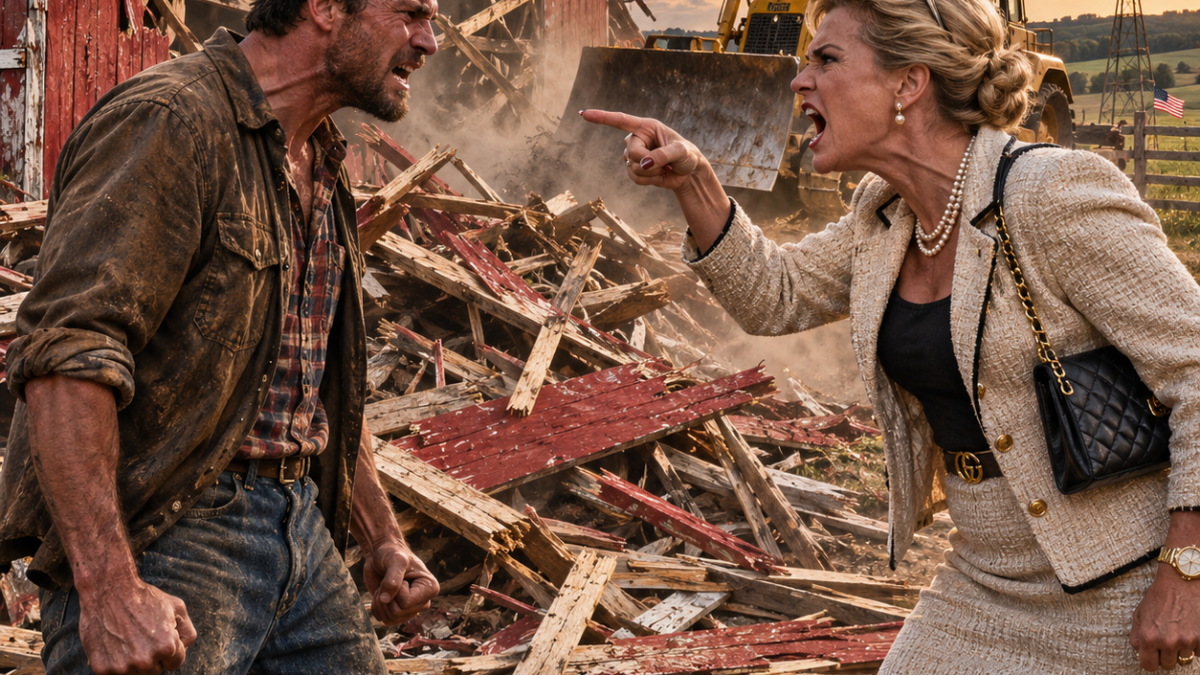
PART2
I didn’t sleep that night.
Every time I closed my eyes, I saw the barn falling.
Not because I’d witnessed the demolition.
Because my imagination kept reconstructing it.
The excavator approaching the doors my grandfather had repaired.
Its steel bucket tearing through the beams my great-grandfather had placed by hand.
The roof collapsing.
The workbench splintering.
Decades of family history becoming a pile of debris in the space of an afternoon.
At two in the morning, I went downstairs.
The house was quiet except for the soft hum of Oliver’s medical equipment from his bedroom.
I stood in the kitchen, staring through the dark window toward the empty patch of land.
My father had taught me that anger was like water behind a dam.
Pressure wasn’t always dangerous.
But pressure without direction could destroy everything around it.
I thought about that as I watched the moonlight touching the lake.
I wanted to drive to Melinda’s house.
Pound on her door.
Demand to know what kind of person sent an excavator onto another family’s property without permission.
But Oliver was sleeping upstairs.
And I knew exactly what Melinda wanted.
She wanted me furious.
Reckless.
Uncontrolled.
She wanted a grieving father making threats so she could tell the entire neighborhood that I was unstable.
I wasn’t going to give her that.
Instead, I took out my phone and photographed the demolition notice.
Then I placed it on the kitchen table beside the property records I kept in a drawer.
I started making a list.
The demolition company.
The equipment.
The timing.
The lack of advance notice.
The alleged safety finding.
And Melinda’s signature.
Every fact mattered.
Because someone had destroyed a building on my land.
And this time, I wasn’t going to let the person responsible hide behind the letters HOA.
The next morning, Walter Briggs arrived before breakfast.
I recognized his knock immediately.
Three steady taps against the screen door.
Walter had been our neighbor for nearly forty years.
He was in his seventies now, with one replaced knee and another that he claimed had been planning a rebellion since 1998.
He’d worked with my father maintaining portions of the county’s water infrastructure before many of those responsibilities were outsourced.
Walter had a stubborn streak that made him difficult company for arrogant people.
Which was probably why we’d always gotten along.
When I opened the door, his face tightened.
“Garrett.”
“Morning, Walter.”
He glanced toward the barn ruins.
“There’s nothing good about it.”
I stepped aside.
He entered carrying a manila envelope.
“I saw what they did.”
I nodded.
“Hard to miss.”
He set the envelope on the kitchen table.
“But I saw something before they did it, too.”
I looked at him.
“What?”
He pulled out four photographs.
Walter still carried an expensive DSLR camera everywhere.
He claimed phones were useful for weather reports and grocery lists, but not for photographs you might someday need to present in court.
I used to laugh at him.
That morning, I was grateful.
The first picture showed Melinda Paxton standing on my property.
She wore white slacks, a cream-colored windbreaker, and sunglasses pushed onto her head.
Even in the photograph, she looked as though she expected the world to arrange itself around her.
Two men stood beside her.
One carried a laser rangefinder.
The other held rolled blueprints.
I stared.
“When was this?”
“Monday.”
My stomach tightened.
The demolition happened Thursday.
Walter slid the second photograph toward me.
The three people were standing near the barn, pointing toward the tree line overlooking the lake.
In the third picture, one of the men held a tablet displaying a survey map.
The fourth showed a proposed development outline.
A large swimming pool.
A landscaped recreation area.
And a section of the plan extending directly over the ground where our barn had stood.
I felt my pulse hammering.
“She wasn’t inspecting a hazardous building.”
Walter shook his head.
“No.”
“She was surveying the land for her resort.”
He nodded.
“That’s what it looks like.”
I studied the final picture.
The planned pool stretched across the old barn’s footprint.
Nearby, the design showed a paved path leading toward the water.
Melinda hadn’t simply decided that our building was unattractive.
She had apparently decided that our property was part of her future development.
And she’d begun planning before she had any legal right to build on it.
I looked at Walter.
“Did she see you?”
He shook his head.
“I was near the boat launch. She didn’t bother looking.”
He paused.
“People like Melinda don’t notice anyone unless they think that person can do something for them.”
I stared at the photographs again.
Then I whispered, “She waited until Oliver and I were at the hospital.”
Walter’s face changed.
“You’re certain?”
“The crew came in while we were gone.”
He rubbed his jaw.
“That woman knows your son’s sick.”
“Everybody knows.”
Walter looked toward the stairs.
“How’s the boy?”
I swallowed.
“Stable enough to come home. That’s all the doctor would promise.”
He nodded slowly.
“And the transplant?”
“We’re waiting for final approval.”
Walter’s expression softened.
“He’s a good kid, Garrett.”
I looked down.
“I know.”
We sat quietly for a moment.
Then Walter touched the photograph of Melinda standing beside the surveyor.
“She thinks she can break you.”
I looked up.
He continued.
“That’s why she did this now. She knows you’ve got more important things to worry about.”
I stared at the ruined barn through the window.
Walter leaned closer.
“But she made a mistake.”
“What mistake?”
“She forgot what your family built before hers ever showed up.”
I looked at him.
He gestured toward the lake.
“Your great-grandfather didn’t only own land around Stone Hollow.”
I felt the memory stir.
The steel cabinet.
The brass key.
The drawings my father had kept.
Walter watched my face.
“You remember the old water authority papers?”
I nodded slowly.
“I think they’re in Dad’s basement workshop.”
Walter smiled grimly.
“Then you might want to find them.”
My father’s workshop was in the basement.
I hadn’t entered it in nearly two years.
Not properly.
Sometimes I opened the door to retrieve a tool.
Sometimes I glanced inside while looking for something.
But I never stayed.
The room still smelled like him.
Pine oil.
Old solder.
Machine grease.
And the faint trace of pipe tobacco that seemed to have settled permanently into the wooden shelves.
My father had been the kind of man who kept everything.
Loose screws in labeled jars.
Old tools he refused to replace.
Boxes of newspaper clippings.
Maintenance records.
Blueprints.
Letters.
Things other people would have thrown away years earlier.
He believed history wasn’t simply something that happened in books.
It lived in ordinary objects.
An old wrench.
A property deed.
A handwritten measurement.
A key.
Especially a key.
I remembered being eleven years old and watching him open a steel cabinet behind the water heater.
He’d taken out a set of rolled drawings and spread them across his workbench.
“One day, Garrett, you’ll need to understand what your great-grandfather did here.”
At eleven, I’d been more interested in riding my bicycle.
I barely listened.
Now I wished I had remembered every word.
The cabinet was still behind the water heater.
Steel.
Dented.
Paint chipped along the edges.
A rusting hasp held it closed.
I knelt and reached beneath the bottom.
My fingers found a small object wrapped in old electrical tape.
The key.
Just where Dad always kept it.
For a moment, I couldn’t move.
It was such a familiar little trick.
My father hiding a key in a place he believed nobody else would think to search.
I remembered him smiling when he showed me.
“People make locks too complicated. The trick is remembering where you put the key.”
I swallowed hard.
Then unlocked the cabinet.
Inside were rolled blueprints, old envelopes, newspaper clippings, and a leather notebook.
I lifted the largest roll.
The paper was thick and yellowed.
I carried it to the workbench and carefully opened it.
Across the top, in formal drafting letters, were the words:
STONE HOLLOW DAM AND AGRICULTURAL IRRIGATION SYSTEM — 1926
At the bottom was a signature.
Robert Wayne Doyle, Chief Civil Engineer.
My great-grandfather.
I stared at the drawing.
It showed the lakebed.
The dam.
Trenches.
Pipes.
Pressure-control mechanisms.
Drainage routes.
Agricultural irrigation branches.
And a small marked structure near the edge of our property.
Beside it, in careful handwriting, were the words:
Emergency pressure valve — Doyle parcel.
My chest tightened.
I remembered the old pump shed near the tree line.
The heavy metal door.
The enormous valve wheel I’d played beside as a boy.
It had always seemed like a relic.
Something from a time before modern water management.
But according to the blueprint, it was part of the original system.
I opened the next document.
A letter from the Stone County Water Commission dated 1927.
Then another from the Colorado Department of Agriculture.
Terms jumped out at me.
Perpetual easement.
Water authority.
Control access.
Landholder responsibilities.
Inherited rights.
I sat down on my father’s stool.
My mind was racing.
The documents appeared to establish that my family had retained specific operational rights and responsibilities tied to the lake’s original infrastructure.
Rights that predated the HOA.
Rights Melinda had never mentioned during her attempts to pressure me into selling.
I looked toward the staircase.
Upstairs, Oliver was drawing at the kitchen table.
I could hear him coughing softly.
Then the sound of his pencil moving across paper.
I stared at the blueprints.
For the first time since seeing the destroyed barn, I felt something other than rage.
I felt the beginning of a plan.
Oliver came downstairs a few minutes later.
“Dad?”
I turned.
He stood near the bottom step wearing his favorite blue hoodie.
His portable oxygen tank was beside him.
He looked pale, but his eyes were curious.
“What are you doing?”
I smiled faintly.
“Learning something about your great-great-grandfather.”
He approached the workbench.
“Robert Wayne Doyle?”
“That’s him.”
Oliver studied the blueprints.
His face brightened.
“Is that the dam?”
I nodded.
“And the irrigation system.”
He leaned closer.
His fingertip followed a line across the paper.
“These are the original pressure lines?”
“Looks like it.”
He studied the drawing with the same concentration he brought to his turbine designs.
Oliver had always loved engineering.
Even when he was little, he’d take apart broken toys and ask me why the pieces fit together.
He never seemed satisfied with simply knowing that something worked.
He wanted to understand how.
When his illness made physical activities difficult, he turned more of his energy toward drawing and building things.
Small windmills.
Solar-powered gadgets.
Simple turbines.
Devices that used airflow to create movement.
He loved the idea that invisible forces could make something useful happen.
Now he was looking at the blueprints of a system built almost a century earlier by someone in his own family.
“Dad, this is amazing.”
I watched him.
“Yeah.”
He looked toward the marked valve.
“That’s behind the pump shed.”
I nodded.
“I think so.”
He grinned.
“I always wondered what it did.”
“So did I.”
Oliver laughed softly.
Then coughed.
The sound immediately made my stomach tighten.
I waited until it passed.
He steadied himself, then looked up.
“Does this mean Grandpa’s family controlled the water?”
I considered my answer.
“The documents suggest our family was given important legal authority over parts of the system.”
His eyes widened.
“Even now?”
“That’s what we need to find out.”
He looked toward the ruined barn outside.
For a moment, his face became sad again.
Then he looked back at the drawing.
“Melinda probably doesn’t know.”
I shook my head.
“Maybe not.”
He considered that.
Then smiled faintly.
“She should’ve asked before tearing down our barn.”
I put my hand on his shoulder.
“She should have.”
Oliver looked at the drawing again.
“Could we put these in the new workshop someday?”
The question nearly broke me.
He wasn’t asking whether we’d win a lawsuit.
He wasn’t asking how much money the land was worth.
He was already imagining the barn rebuilt.
A workshop.
A place to make things.
I swallowed.
“Maybe we can.”
He smiled.
And for the first time since the demolition, I heard a little hope in his voice.
That night, after Oliver went to bed, I returned to the basement.
I spread the documents across my father’s workbench.
I wanted to understand what we had.
And what we didn’t.
The blueprints were compelling.
The old correspondence appeared important.
But old documents didn’t automatically mean I could do anything I pleased with a modern water system.
There would be legal questions.
Changes in county governance.
Later agreements.
Environmental regulations.
Public responsibilities.
I knew enough about infrastructure to understand that controlling a valve wasn’t the same as having unlimited authority to disrupt water service.
Still, the papers showed that the Doyle property had a history Melinda couldn’t simply erase with an HOA notice.
I continued searching.
Then I remembered something Dad had once said.
“The real power’s in that rusty box by the lathe.”
I’d been a teenager at the time.
I thought he’d meant a collection of rare tools or old coins.
Now I looked toward the heavy canvas tarp behind the drill press.
I pulled it aside.
There was the box.
Iron.
Blackened with age.
A thick, rusted lock secured the lid.
It took me nearly twenty minutes to open it without damaging the contents.
When the lid finally lifted, I found three objects.
A stack of legal documents tied with a red ribbon.
A small leather notebook with R. W. Doyle embossed on the cover.
And a heavy brass key wrapped in cloth.
I carefully untied the ribbon.
The first document was dated October 3, 1926.
It was an agreement between Robert Wayne Doyle and Stone County concerning the design and construction of the Stone Hollow Dam and irrigation system.
The language was old-fashioned but precise.
The Doyle family had been granted enduring easement rights and defined responsibilities over the water infrastructure.
The second document, dated a year later, affirmed that the primary emergency control mechanism would remain accessible from the Doyle parcel, with certain rights extending through the family line.
I read it twice.
Then a third time.
My hands began trembling.
If the documents remained legally effective, they could have enormous implications for Melinda’s resort.
And for the future of our land.
I opened the notebook.
My great-grandfather’s handwriting filled the pages.
Rainfall measurements.
Valve inspections.
Maintenance records.
Water levels.
Notes about farmers who depended on the system.
A paragraph near the beginning caught my attention.
He wrote that water was not merely a private advantage.
It was a public responsibility.
The family had been entrusted with the system because the land and the surrounding community depended on its safe operation.
I read those words slowly.
Then turned to the final entry.
Dated 1959, shortly before his death.
The handwriting was faint.
He warned that future developers might forget who had built and maintained the lake.
He instructed the family to preserve the records, protect the valve key, and teach the next generation to understand its responsibility toward the water.
I looked at the brass key lying beside the notebook.
It was heavy.
Solid.
Worn smooth in places.
I held it in both hands.
For a moment, I imagined my great-grandfather standing near the dam in 1926, looking across newly formed water with the satisfaction of a man who had built something meant to last.
Then I thought about Melinda Paxton standing on our property with blueprints for a luxury swimming pool.
She saw undeveloped land.
A business opportunity.
A problem to remove.
My great-grandfather had seen a community.
And a system that needed protection.
I set the key down.
Whatever happened next, I knew one thing.
I wasn’t going to use the lake recklessly.
But I was going to make sure everyone understood the history—and the rights—Melinda had tried to bury.
The following Thursday, a thick envelope arrived.
I recognized the insurance company’s logo before opening it.
Blue Cross and Horizon.
My stomach tightened.
We’d been expecting news about Oliver’s transplant approval.
His doctors had been preparing us for the next stage.
There were still medical requirements, donor availability, and the enormous uncertainty inherent in transplantation.
But we’d been hopeful.
The transplant was no longer some distant possibility.
It was becoming urgent.
The letter began politely.
Then I reached a paragraph that made the room seem to tilt.
Oliver’s case had been placed under extended administrative review.
The reasons included concerns about financial viability and community stability.
I read the words again.
Community stability.
What did that have to do with my son’s lungs?
I sat down.
For a moment, I couldn’t breathe.
Oliver needed a transplant.
Not because I wanted a better house or an expensive vacation.
Because his lungs were failing.
Because cystic fibrosis had taken more and more of his strength.
Because the doctors had warned that time mattered.
And now an insurance letter was delaying the process using language that sounded as though it belonged in an HOA dispute.
I called the insurance company.
I was transferred.
Placed on hold.
Transferred again.
A representative explained that the case was under review.
I asked what “community stability” meant.
She couldn’t give me a clear answer.
I asked whether a medical professional had raised a concern.
She said the details were under review.
I asked whether we could appeal.
She explained the procedure.
I wrote everything down.
But when the call ended, my hands were shaking.
I looked toward the yard.
Oliver was outside feeding the chickens.
He wore a scarf and carried his portable oxygen tank beside him.
He looked like a tiny astronaut on a mission through our backyard.
I watched him carefully.
Every movement cost him energy.
Every breath mattered.
And I was holding a letter that might interfere with his chance to receive the surgery he needed.
I thought about Melinda.
Her influence.
Her resort.
The pressure she’d been applying.
Then I remembered Walter’s photographs.
The surveyors.
The demolition.
The timing.
I didn’t have evidence yet that Melinda was involved in the insurance delay.
But the language was strange enough to frighten me.
And I was done ignoring coincidences that seemed to benefit the same woman.
I grabbed my keys.
Then drove straight to Walter’s house.
Walter opened his door holding a mug of coffee.
One look at my face and his usual joking expression disappeared.
“Garrett?”
I handed him the letter.
He put the mug down.
Read the first page.
Then looked up.
“Community stability?”
I nodded.
“That’s what I said.”
He read it again.
“What kind of medical insurance decision depends on whether the neighborhood likes somebody?”
“I don’t know.”
He turned the page.
“Have you called them?”
“Three times.”
“And?”
“Nobody can explain it.”
Walter put the letter on the table.
For several seconds, he stared at it.
Then he said, “This smells wrong.”
I sat heavily in a kitchen chair.
“Oliver needs this surgery.”
“I know.”
“The doctors have been talking about a window of roughly sixty days. His condition isn’t something we can put on hold because somebody doesn’t like my barn.”
Walter’s face hardened.
“Have you spoken to the transplant team?”
“I’ve left messages. I’m going to speak with them again today.”
“Good. Let the doctors handle the medical urgency. We’ll work on understanding the administrative side.”
He opened his laptop.
Walter wasn’t what most people would call technically sophisticated.
He typed slowly and occasionally argued with the computer as though it were an unreasonable employee.
But he was patient.
And he knew how to follow records.
We began with publicly available information about the insurance company’s leadership and special-case review process.
That was when a name appeared.
Linda Perryman.
Director of Special Cases.
Walter frowned.
“That name sounds familiar.”
He searched again.
A photograph appeared from a college alumni event.
Linda Perryman stood beside another woman.
Melinda Paxton.
I stared.
“No.”
Walter scrolled.
Another photograph showed them at a fundraiser.
Then another.
A biography mentioned that they had attended the same college.
Further records suggested a long personal connection.
I leaned closer.
“She’s handling Oliver’s case?”
The review correspondence identified Linda’s department.
We couldn’t yet prove she had personally made the decision.
But the connection was concerning.
Walter continued searching.
Then he stopped.
“Garrett.”
I looked up.
He turned the screen toward me.
Three weeks earlier, an organization associated with Melinda’s development interests—Silver Pines Community Development Initiative—had reported a forty-five-thousand-dollar donation connected to Blue Cross and Horizon.
The stated purpose involved infrastructure and neighborhood risk review.
I read the description twice.
“Forty-five thousand dollars?”
Walter nodded.
“And look who has been associated with those fundraising efforts.”
Linda Perryman.
I felt something cold settle in my chest.
A donation was not, by itself, proof of bribery.
A friendship was not proof of misconduct.
But together with the unusual language in Oliver’s review letter, the connections raised questions that demanded answers.
I took photographs of the screen.
Saved copies of the public records.
Wrote down dates.
Then I looked at Walter.
“We need a lawyer.”
He nodded.
“And somebody who understands insurance appeals.”
“I don’t care how many people we have to call.”
Walter reached across the table.
“Then call them.”
I looked down at Oliver’s letter.
The words seemed to burn through the paper.
My son didn’t have the luxury of waiting for powerful people to decide whether his father had become inconvenient.
That afternoon, I spoke with Oliver’s medical team.
I explained the letter.
The administrative review.
The unusual reasons given.
The timing.
I tried to remain calm.
But when the transplant coordinator asked me to repeat the exact wording, my voice broke.
“Community stability.”
There was a pause.
Then she asked whether I could send a copy.
I did.
She explained that clinical transplant decisions involved medical assessments, donor availability, and multiple teams, and that insurance authorization was a separate process requiring urgent attention.
I listened carefully.
She told me they would pursue the matter through the appropriate channels.
I thanked her.
Then I asked the question I’d been avoiding.
“How much time does Oliver have?”
She didn’t pretend to know exactly.
His condition was serious.
His doctors were continuing treatment and monitoring.
They were concerned about delay.
But no one could promise a precise timeline or donor match.
I closed my eyes.
“He’s thirteen.”
“I know, Mr. Doyle.”
“He still wants to build wind turbines.”
Her voice softened.
“We know how much he wants to get back to doing the things he loves.”
I pressed a hand over my mouth.
“I can’t lose him.”
There was a silence.
Then she said, “We’re going to continue doing everything medically appropriate for Oliver. Please let us handle the clinical side while you work with the insurer and your legal support.”
I nodded.
For the first time that day, I felt something resembling direction.
The doctors would continue caring for Oliver.
I would challenge the administrative delay.
And I would not allow my anger at Melinda to interfere with the medical team’s decisions.
That was the line I drew for myself.
Oliver needed a father who could act clearly.
Not one who let revenge consume every thought.
That evening, I sat beside Oliver’s bed.
He was reading an engineering book.
A little lamp cast warm light across the pages.
His oxygen tubing curved over his cheeks.
I stood in the doorway for a moment before speaking.
“How’s the reading?”
He smiled.
“Pretty good.”
“What are you learning?”
“Microturbines.”
He turned the book toward me.
“Look at this design. You can generate electricity from really small amounts of water movement.”
I sat beside him.
“That’s impressive.”
He shrugged.
“It’s not enough to power a house or anything.”
“Every big idea starts somewhere.”
He looked toward the window.
From his bedroom, he could see the empty place where the barn had stood.
His expression changed.
“Dad?”
“Yeah?”
“Are we still going to build the workshop?”
I swallowed.
“I want to.”
He looked at me.
“Even without the old barn?”
I nodded.
“We’ll have to figure out what makes sense. But I’m not giving up on the idea.”
He smiled faintly.
Then studied my face.
“Something’s wrong.”
I looked down.
“Why do you say that?”
“Because you’re doing that thing.”
“What thing?”
“Where you smile with your mouth but not your eyes.”
I laughed softly.
He’d inherited his mother’s ability to notice things other people missed.
I took a breath.
“There’s been an issue with the insurance approval.”
His smile faded.
“With the transplant?”
“Yes.”
He stared at me.
“Does that mean I can’t have it?”
I felt the question like a knife.
“It means we’re dealing with a delay. We’re working with your doctors and the insurance company.”
He looked toward the book.
For a moment, he was silent.
Then he whispered, “I’m tired, Dad.”
My throat closed.
“I know, buddy.”
“No, I mean really tired.”
He looked at me.
“Sometimes I feel like everybody’s talking about what I might get to do later, and I can’t even breathe properly right now.”
I reached for his hand.
He let me hold it.
“I know.”
His eyes filled.
“What if later never comes?”
I couldn’t answer immediately.
I wanted to promise him that everything would be fine.
That he’d receive a transplant.
That the surgery would succeed.
That we’d build the workshop.
That he’d grow up.
Go to college.
Fall in love.
Live the long life his mother and I once imagined.
But I couldn’t honestly promise those things.
So I leaned closer.
“I’m going to do everything I can to help you get the care you need.”
He nodded.
“And whatever happens, we’re going to keep making plans. Not because I want to pretend things aren’t hard. Because your ideas matter right now.”
His eyes filled.
“You really think so?”
“Absolutely.”
He squeezed my hand.
Then he whispered something I’ll never forget.
“I just want enough time to make something good.”
I lowered my head.
Because my son, who had already endured more than most adults could imagine, wasn’t asking for wealth or attention.
He wanted time.
Time to build.
Time to create.
Time to be thirteen.
And I wasn’t going to let Melinda Paxton turn his illness into another bargaining chip.
By Saturday, the pamphlets started appearing.
Walter brought the first one to my house.
He didn’t say anything when he handed it over.
He simply watched my face.
The paper was glossy.
Expensive-looking.
A badly timed photograph of me from a previous town hall meeting filled the top half.
My mouth was open mid-sentence.
My eyes were narrowed.
I looked furious.
The headline read:
WATER SABOTEUR OR CONCERNED CITIZEN?
I stared.
Beneath the headline were accusations.
That I had engaged in unauthorized water manipulation.
That I’d refused legitimate HOA inspections.
That my emotional condition made me dangerous.
That the community should be concerned about allowing me access to important water infrastructure.
Then came anonymous claims from supposed neighbors.
People who allegedly feared for their property.
Their pets.
Their water supply.
The pamphlet ended by asking whether families were safe with Garrett Doyle controlling Stone Hollow’s water.
I looked at Walter.
“She did this.”
He nodded grimly.
“It certainly benefits her.”
I stared at the paper.
They were portraying me as unstable.
Dangerous.
A threat.
And they were doing it while my son was fighting for his life.
My hands began shaking.
“Who authorized this?”
Walter pointed to the small print.
A community advocacy group associated with the development initiative.
Another connection to Melinda’s network.
I looked toward the lake.
For a moment, I wanted to tear the pamphlet apart.
Instead, I placed it on the table beside the demolition notice.
Evidence.
Dates.
Statements.
Another part of the pattern.
Walter watched me.
“You’re handling this better than I expected.”
I laughed bitterly.
“Don’t mistake quiet for calm.”
He nodded.
“Fair enough.”
Then the back door opened.
Oliver stepped inside.
He was holding another pamphlet.
My stomach dropped.
“Dad?”
I turned.
“Where did you get that?”
“It was in the mailbox.”
He looked down at the paper.
“People at school saw it.”
I felt my chest tighten.
“What happened?”
He shrugged too quickly.
“Nothing.”
“Oliver.”
He avoided my eyes.
I waited.
Then he whispered, “Zach’s mom says I shouldn’t come over this weekend.”
I stared.
“Why?”
He looked down.
“She said there’s too much controversy.”
I felt something inside me break.
Oliver continued.
“And Zoe didn’t talk to me yesterday.”
His voice trembled.
“She usually helps me with science stuff.”
I closed my eyes.
Melinda’s campaign had reached my son.
Not just his medical care.
Not just our property.
His friendships.
His school.
His ordinary thirteen-year-old life.
I stepped toward him.
“Oliver, look at me.”
He raised his eyes.
“None of this is your fault.”
He gave a sad little smile.
“I know.”
But I could see he didn’t entirely believe it.
I knelt in front of him.
“People are making decisions based on things they haven’t checked. That doesn’t mean you’ve done anything wrong.”
He nodded.
I put my hands on his shoulders.
“I’m going to deal with this.”
He looked toward the pamphlet.
Then toward the empty barn site.
For a moment, he seemed older than thirteen.
“We still have the valve, right?”
I nodded.
“We have the key and the records.”
He swallowed.
“Then maybe we should remind her who built the lake.”
I looked at my son.
And for the first time in days, I felt something steady beneath the anger.
He wasn’t asking me to hurt anyone.
He wanted the truth to matter.
So did I.
That night, after Oliver fell asleep, I carried the brass key outside.
The sky was clear.
Cold stars shone over the lake.
I walked toward the demolished barn.
There were still pieces of timber scattered across the foundation.
We’d left the debris largely undisturbed while documenting the damage.
The excavator had been removed.
But its tracks remained in the mud.
I stood where the barn doors once opened.
In my right hand was the brass valve key.
In my left, one of the pamphlets calling me dangerous.
I looked toward the dark outline of the water.
My great-grandfather had helped create that lake.
My grandfather had maintained its systems.
My father had taught me that infrastructure was a responsibility, not a toy.
And now Melinda was trying to convince the community that I was an enemy.
I felt the urge to act.
To march down to the valve.
Turn it.
Prove to her that she couldn’t build a resort while pretending the Doyle family didn’t exist.
But the lake supplied more than Melinda’s luxury development.
Its infrastructure supported surrounding properties.
Irrigation.
Community facilities.
Water-dependent businesses.
My family’s documents gave us potential authority.
They did not give me the moral right to endanger innocent people.
I turned the brass key in my hand.
Then I thought of my father’s words.
A Doyle never takes from the land without giving something back.
I wasn’t going to become the very thing Melinda accused me of being.
If the valve was our leverage, we would use it carefully.
And if there was a legal way to isolate her resort’s unauthorized use without harming the community, I would find it.
But first, I needed the world to understand what had happened.
I looked toward the demolished foundation.
Then made my decision.
We were going to tell our story.
Publicly.
With documents.
Photographs.
Names.
Dates.
And the truth about my son.
We recorded the video on Sunday afternoon.
Oliver insisted on helping.
He was too tired to do much physical work, but he could manage the tripod and the camera controls.
He arranged the shot so the demolished barn foundation appeared behind me.
He adjusted the exposure to avoid the glare from the lake.
Then positioned a small board beside the camera.
On it, he’d written:
TALK TO PEOPLE WHO DON’T KNOW THE STORY BUT WANT TO UNDERSTAND.
I looked at the words.
“Where did you learn that?”
Oliver smiled.
“Internet.”
I laughed.
“Of course.”
He adjusted the camera again.
“Ready, Dad?”
I looked at the wreckage.
Then at the blueprints and documents arranged on the small table beside me.
“Yeah.”
He pressed record.
For a moment, I couldn’t speak.
Then I looked directly into the lens.
“My name is Garrett Doyle.”
The wind moved softly across the lake.
I continued.
“I’m a father. I’m a property owner. And I’m the fourth generation of my family to live beside Stone Hollow Lake.”
I gestured toward the ruins.
“Until Thursday afternoon, this was our barn.”
I explained that Robert Wayne Doyle had built it in 1926.
That my father and grandfather maintained it.
That Oliver and I planned to turn it into a workshop.
Then I held up the demolition notice.
“The Silver Hollow HOA ordered this building destroyed while I was at Denver Children’s Hospital with my thirteen-year-old son.”
I paused.
“Oliver has cystic fibrosis. His lungs are failing. He’s been preparing for a double-lung transplant.”
My throat tightened.
I looked toward the camera.
“And while I was trying to help him survive, someone decided our family history was in the way of a luxury resort.”
Behind the camera, Oliver remained quiet.
I continued.
“These photographs were taken before the demolition.”
I showed Walter’s images.
Melinda.
The surveyors.
The proposed pool.
The resort layout.
Then I held up the original water-system documents.
“My great-grandfather designed the dam and irrigation system that created Stone Hollow Lake.”
I pointed to the old blueprint.
“Our family retained certain rights and responsibilities connected to the infrastructure.”
I showed the county records.
The state correspondence.
The marked valve location.
“Those rights are now being reviewed by counsel. But this much is clear: the history of this lake did not begin when the HOA decided the view would look better with an infinity pool.”
I paused.
Then took out the insurance letter.
“In the days after the demolition, my son’s transplant-related insurance authorization was delayed under an administrative review that cited community stability.”
I held the letter steady.
“We have requested an urgent explanation and review. We have also found public records showing financial and personal connections that deserve independent investigation.”
I showed the publicly available donation information.
I named Linda Perryman.
I identified the reported forty-five-thousand-dollar donation.
I explained the connection to Melinda.
But I was careful.
I didn’t claim that the documents alone proved bribery.
I said that the evidence raised serious questions.
Questions nobody had yet answered.
Then I held up the brass key.
“This key belongs to the original pressure-control system.”
I looked toward the lake.
“It represents almost a century of responsibility.”
I turned back to the camera.
“Melinda Paxton may believe money and HOA titles give her the right to erase anyone standing in her way.”
My voice became quiet.
“But this isn’t simply about a barn.”
I thought of Oliver.
His oxygen tank.
His sketchbooks.
His fear that he might never have enough time to build something good.
“This is about whether powerful people can destroy a family’s history, interfere with their livelihood, intimidate a sick child, and expect everyone else to remain silent.”
I lowered the key.
“We are not going to remain silent.”
Then I looked directly into the lens.
“And if Melinda thinks our family has forgotten how to protect Stone Hollow, she’s about to discover exactly how wrong she is.”
Oliver stopped recording.
For a moment, neither of us spoke.
Then he smiled.
“Dad.”
“Yeah?”
“That was pretty good.”
I laughed softly.
“High praise.”
He looked toward the wreckage.
“Do you think people will care?”
I put my hand on his shoulder.
“I hope so, buddy.”
Then we went inside.
And uploaded the video.
By Monday morning, it had more than eighteen thousand views.
I stared at the number on my phone.
Then refreshed the page.
More views.
More comments.
More shares.
Walter had posted it in local Facebook groups.
A teacher from Oliver’s school shared it with a message about supporting a student facing serious illness.
Someone posted it on Reddit.
A neighbor created a short response video on TikTok.
The story began spreading beyond Silver Hollow.
People asked questions.
Who authorized the demolition?
Did the HOA have jurisdiction over the Doyle parcel?
Why had there been no advance hearing?
What did the original water documents establish?
Why did a child’s insurance review mention community stability?
Had anyone investigated the donation?
I didn’t have every answer.
But for the first time, people were asking the right questions.
The comments were emotional.
Some were angry.
Others offered support.
A few questioned my interpretation of the documents.
I appreciated those comments, too.
Because I wasn’t asking anyone to believe me blindly.
I was asking for independent scrutiny.
I wanted the records examined.
The demolition investigated.
The insurance decision reviewed.
And Oliver’s treatment protected from anyone’s business interests.
Walter arrived at my house carrying coffee and a stack of printed articles.
“Well,” he said, “you’ve become famous.”
I gave him a tired smile.
“Not exactly something I wanted.”
He handed me a local news report.
The headline described the dispute over the historic barn and alleged HOA overreach.
I read it carefully.
The reporter had contacted Melinda.
Her statement claimed the barn was unsafe and that all action had been taken under emergency authority.
She denied any improper involvement in Oliver’s insurance review.
I looked at Walter.
“She’s sticking to the same story.”
“Of course she is.”
He sat down.
“But now she has to explain it to more than her own board.”
I looked through the window toward the lake.
For the first time since the demolition, I could imagine Melinda being forced to answer questions she hadn’t written herself.
And that mattered.
The video also brought unexpected support.
Neighbors began calling.
Some offered photographs of the barn taken before the demolition.
Others remembered my father maintaining the old water equipment.
A retired county employee said he had seen references to the Doyle easement in historical records.
A local historian offered to help organize the documents.
And a structural contractor who had previously worked near the barn said he wanted to review the HOA’s claim that immediate demolition had been necessary.
Every piece of information mattered.
Not all of it would become evidence.
Not every memory would be reliable.
But together, the responses showed that our family’s history wasn’t something Melinda could dismiss as sentimental nonsense.
People remembered.
They remembered my father.
My grandfather.
The dam.
The old agricultural water lines.
The barn.
They remembered that Stone Hollow had been a working community long before the arrival of luxury vacation developments.
One afternoon, an elderly woman called me.
Her name was Mrs. Bennett.
She’d lived near the lake since the 1950s.
“Garrett,” she said, “your grandfather helped restore water to our property after the big freeze.”
I smiled sadly.
“I remember Dad telling me about that.”
She continued.
“People used to know who they depended on. Your family never charged us for every little favor.”
I didn’t know what to say.
She paused.
“Don’t let that woman convince you that history is worthless.”
My eyes filled.
“Thank you, Mrs. Bennett.”
After the call, I sat quietly.
For weeks, I’d felt alone.
Now I was beginning to understand that the barn belonged to more than our memories.
It was part of the community’s story.
And the community was beginning to defend that story with us.
That afternoon, Oliver and I walked toward the old pump shed.
The path wound behind our house, through the trees, and down toward the lake.
I carried the brass key.
Oliver walked slowly beside me, his oxygen equipment moving with him.
We stopped several times so he could rest.
He never complained.
He was more interested in reaching the old building.
“Dad, do you think the valve still works?”
“I don’t know.”
“Can we test it?”
“Not without making sure it’s safe.”
He looked disappointed.
I smiled.
“Engineers don’t get to skip that part.”
He laughed softly.
“Safety first?”
“Always.”
The old pump shed stood partly hidden by vines.
Most people assumed it was abandoned county property.
The metal door was rusted, but solid.
I opened it carefully.
Inside, the air was cool and smelled of old machinery.
Dust covered gauges and equipment.
A flashlight beam revealed pipes extending into the concrete floor.
And there, against the far wall, was the enormous control assembly marked on the blueprint.
Oliver stopped.
“Whoa.”
I smiled.
“Yeah.”
He stared at the valve.
“It’s huge.”
The brass fittings had darkened with age.
The surrounding metal showed decades of wear.
But the original design was recognizable.
I compared it with the blueprint.
The same layout.
The same control position.
The same connection to the main water infrastructure.
Oliver leaned closer.
“That’s what Grandpa maintained?”
I nodded.
“And his father before him.”
He looked at the key in my hand.
“Does it fit?”
I approached the control carefully.
The key appeared designed for the mechanism.
For a moment, I imagined what would happen if I engaged it.
The pressure shift.
The pipes responding.
The resort’s water system losing part of its supply.
I knew the source story my father had told about the valve.
I knew the authority described in the documents.
But I also knew the responsibilities attached to operating public water infrastructure.
So I didn’t turn it blindly.
Instead, I documented the mechanism.
Its condition.
The surrounding lines.
The original markings.
Then I contacted the appropriate water specialists and legal advisers to confirm how the system could be inspected and operated lawfully.
Oliver watched me.
“You’re not turning it?”
“Not until we know exactly what it affects.”
He considered that.
Then nodded.
“That’s what Great-Great-Grandpa would’ve wanted, right?”
I looked toward the old valve.
I thought of the notebook.
The rainfall records.
The warnings about protecting the water.
“Yeah, buddy.”
I put my hand on his shoulder.
“I think that’s exactly what he would’ve wanted.”
The subsequent inspection gave us something we hadn’t expected.
Not simply confirmation that the original valve remained operational.
Evidence that the modern resort’s water infrastructure included connections not reflected in the publicly available permissions.
The specialists documented unusual bypass lines associated with Silver Pines Retreat.
Further investigation would be required to determine exactly when they were installed and whether they were authorized.
But the findings raised serious concerns.
The resort appeared to be drawing water through parts of the system whose legal status was disputed.
I looked at the engineering report.
The same woman who accused me of manipulating the community’s water supply might have been benefiting from unapproved modifications to it.
Walter studied the report beside me.
“Now that’s interesting.”
I nodded.
“The county needs to see this.”
He smiled grimly.
“Melinda won’t like that.”
“No.”
I looked toward the lake.
“But it’s not about what she likes anymore.”
The water system required proper governance.
The resort’s connections needed review.
The historic Doyle rights needed legal clarification.
And the rest of the community needed assurance that its water would remain safe.
I submitted the evidence through the appropriate channels.
When officials determined that specific resort connections required temporary restriction pending review, the necessary valve adjustments were carried out under supervised conditions.
The objective was to isolate the disputed use while protecting essential community services.
Oliver and I watched from a safe distance.
The old control mechanism responded.
Pipes vibrated.
Pressure readings shifted.
The system that my great-grandfather had designed nearly a century earlier was still capable of affecting the lake’s modern infrastructure.
I looked at the brass key.
It was no longer just an old family keepsake.
It was a reminder that history could still have legal and practical consequences.
And Melinda was about to discover that firsthand.
By sunset, the news had reached Silver Pines Retreat.
Its infinity pool had lost a substantial amount of water.
The elaborate fountain near the entrance had stopped operating.
The golf-course sprinklers connected to the disputed system weren’t functioning.
And guests who had paid for a luxury lakeside experience were asking why some of the resort’s signature features had suddenly gone quiet.
My phone rang six times.
Every call came from Melinda.
I didn’t answer immediately.
Not because I wanted to prolong her discomfort.
Because I wanted every conversation documented properly.
I forwarded the information to our attorney and asked that future communications concerning the water system go through the appropriate representatives.
By evening, Melinda had called an emergency HOA meeting.
She wanted answers.
I found that almost funny.
For months, I’d wanted answers from her.
About the barn.
The surveyors.
The resort plans.
The demolition notice.
And my son’s medical situation.
Now, finally, she was the one facing consequences she couldn’t control through a single threatening letter.
I walked into Oliver’s room.
He was reading.
“Hey, buddy.”
He looked up.
“Did the inspection work?”
I nodded.
“They found some serious questions about the resort’s water connections.”
His eyes brightened.
“So the valve really matters.”
“It does.”
He smiled.
“Great-Great-Grandpa was pretty smart.”
I laughed.
“Yeah. He was.”
Oliver looked toward the window.
“Do you think Melinda’s mad?”
I considered the question.
“Probably.”
He gave a small grin.
“Good.”
I sat beside him.
“Oliver, there’s something I want you to understand.”
He looked at me.
“What’s that?”
“Winning isn’t always about making the other person suffer.”
He frowned slightly.
“Then what’s it about?”
I looked toward the lake.
“Making sure the truth matters. Making sure people are held responsible. And protecting what should never have been taken.”
He thought about that.
Then nodded.
“Like the barn.”
“Exactly.”
He looked down at his book.
“And my transplant.”
My throat tightened.
I reached for his hand.
“Especially that.”
The county hearing was held in the meeting room above the fire station.
The Stone County Board of Supervisors usually met before a small audience.
People attended to discuss roads, zoning questions, property taxes, or local infrastructure.
That evening, the room was packed.
Neighbors lined the walls.
Reporters stood near the back.
Small business owners occupied folding chairs.
Teachers from Oliver’s school sat together.
And near the front, several teenagers held a hand-painted banner.
LET THE WATER FLOW. LET OLIVER BREATHE.
I stopped in the doorway.
For a moment, I couldn’t move.
Oliver stood beside me.
His oxygen equipment hummed softly.
He read the banner.
Then looked at me.
“Dad.”
His voice cracked.
I put a hand on his shoulder.
“I see it.”
He stared at the students.
Some had been his friends for years.
Others were classmates who’d barely spoken to him before.
Now they were standing together because they believed he deserved support.
A girl near the front raised her hand.
“Hey, Oliver!”
He smiled.
“Hey, Zoe.”
She hurried over.
“I saw your dad’s video.”
Oliver nodded.
“Yeah.”
“I’m sorry I didn’t talk to you at school.”
He looked down.
She continued.
“My mom was worried about all the stuff people were saying. But then we saw the documents.”
Oliver shrugged.
“It’s okay.”
She shook her head.
“No. It wasn’t.”
I watched my son’s expression change.
For weeks, he’d been dealing with the loneliness created by rumors that had nothing to do with him.
Now someone was acknowledging that hurt.
Zoe smiled.
“I brought my notes from science class. You missed part of the turbine unit.”
Oliver’s eyes brightened.
“Seriously?”
She handed him a folder.
He began looking through it immediately.
And I had to turn away for a moment.
Because the room was full of people preparing to argue about water rights and property law, but all I could see was my son being treated like an ordinary thirteen-year-old boy again.
A boy who loved science.
A boy who had friends.
A boy whose life was worth more than the controversy surrounding his father.
Melinda entered ten minutes late.
Of course she did.
She walked through the doors wearing an expensive cream-colored suit.
Two attorneys followed.
A woman carrying a tablet stayed close beside her.
Melinda’s smile was tight.
Her chin was raised.
She looked at the crowded room as though she were offended by the number of people who had come without asking her permission.
Then she saw me.
Her eyes narrowed.
For a moment, I remembered her standing beside the old barn in Walter’s photograph.
The surveyor.
The proposed pool.
The confidence of someone who believed my property was already hers to reshape.
Now the entire county was watching.
Melinda approached.
“Garrett.”
“Melinda.”
She looked toward Oliver.
Her expression barely changed.
Then she lowered her voice.
“You’ve made a terrible mistake.”
I stared at her.
“Which one?”
“Turning a private development dispute into a public spectacle.”
I looked toward the banner.
The reporters.
The neighbors.
The teachers.
Then back at her.
“You demolished my barn.”
She smiled coldly.
“It was unsafe.”
“Then you’ll have no trouble producing the inspection records.”
Her smile faded.
I continued.
“And you’ll have no trouble explaining why your surveyors were mapping a resort swimming pool over the foundation three days before the demolition.”
Her eyes flashed.
“Those documents are being taken out of context.”
“Then explain the context.”
She leaned closer.
“You don’t understand how much influence I have in this county.”
I looked at her.
“Maybe.”
Her expression softened with satisfaction.
Then I continued.
“But you’re about to discover how much influence documents have when people actually read them.”
A commissioner called for everyone to take their seats.
Melinda straightened her jacket.
Then walked away.
I watched her go.
For the first time, she hadn’t managed to make me afraid.
Commissioner Halvorson opened the hearing.
He explained that the board would address the demolition, the questions concerning historic water rights, the resort infrastructure findings, and related allegations requiring further investigation.
The disputed insurance decision was also receiving scrutiny through separate channels.
He reminded everyone that the hearing wasn’t a criminal trial.
The board would review the evidence within its authority and refer appropriate matters to agencies with jurisdiction.
I appreciated that.
Because I wanted a real process.
Not a theatrical victory followed by nothing.
Then Halvorson called my name.
“Mr. Doyle.”
I stood.
Oliver squeezed my hand.
I looked down.
He smiled faintly.
“You’ve got this, Dad.”
I swallowed.
“Thanks, buddy.”
I walked to the microphone carrying the thick folder Walter and I had assembled.
At the table sat copies of the original 1926 agreement.
The 1927 authorization.
Later maintenance records.
The water-system blueprints.
Photographs of the barn before and after demolition.
Walter’s photographs of Melinda and the surveyors.
The HOA notice.
And the engineering report concerning the resort connections.
I introduced myself.
Then looked toward Oliver.
“My name is Garrett Doyle. My son, Oliver, is thirteen years old.”
I paused.
“He has cystic fibrosis, and he’s waiting for a double-lung transplant.”
The room became quiet.
I continued.
“Three weeks ago, I brought him home from the hospital and discovered that the Silver Hollow HOA had demolished our family’s barn.”
I showed the photographs.
Before.
After.
The building that had stood nearly a century.
Then the ruins.
I heard someone gasp.
I placed Walter’s survey photographs beside them.
“These images were taken before the demolition.”
I identified Melinda.
The surveyors.
The pool design.
Then I displayed the HOA notice.
“The demolition was authorized as an emergency response to an allegedly hazardous structure.”
I looked toward Melinda.
“We have requested the evidence supporting that determination.”
Her attorney shifted in his chair.
I returned my attention to the commissioners.
“Those records have not adequately explained why immediate demolition was necessary while I was absent.”
I turned the next page.
“And the development drawings raise the possibility that the real reason for removing the barn had nothing to do with safety.”
The room murmured.
Commissioner Halvorson asked everyone to remain quiet.
I continued.
“Then we discovered something else.”
I lifted the original water-system blueprint.
“In 1926, my great-grandfather, Robert Wayne Doyle, designed and helped build the Stone Hollow Dam and the irrigation system connected to this lake.”
I showed the agreement.
“The county granted our family specific enduring easement and operational rights.”
I pointed toward the marked valve.
“Those rights concerned infrastructure on the Doyle parcel, including the original emergency pressure-control mechanism.”
I paused.
“The legal scope of those rights requires careful interpretation. But they cannot simply be ignored because a modern HOA decides the land would be more attractive with a swimming pool.”
A few people applauded.
Halvorson called for quiet.
I waited.
Then continued.
“An engineering inspection has also identified disputed water connections associated with Silver Pines Retreat.”
I laid out the report.
“Those connections require investigation for possible unauthorized diversion and environmental violations.”
Melinda’s lawyer stood.
“Commissioner, we object to the suggestion that my client has engaged in wrongdoing before any final determination.”
Halvorson nodded.
“The record will distinguish allegations from established findings.”
I looked at the attorney.
“That’s exactly what I’m asking for.”
He sat.
I took a breath.
Then opened the final section of the folder.
“And now I need to discuss my son.”
I held up the insurance letter.
The room became still.
“Oliver’s doctors have been working toward a lung transplant.”
I looked at the front row.
My son was sitting beside Walter.
His portable oxygen tank stood near his chair.
He was watching me intently.
I swallowed.
“After the barn demolition, we received a letter placing part of his authorization process under extended administrative review.”
I read the relevant language.
Financial viability.
Community stability.
A murmur moved through the room.
I continued.
“We asked for an explanation. The medical team was also concerned about the administrative delay.”
I showed the public records concerning Linda Perryman and Melinda.
Then the reported donation.
“I want to be precise. A personal connection and a donation do not, by themselves, establish criminal misconduct.”
I looked toward the commissioners.
“But the timing, the language used in the review, and the financial relationships require independent investigation.”
Melinda shifted in her chair.
I continued.
“These issues are being referred through the appropriate medical, insurance, and legal channels.”
Then I paused.
“However, additional evidence has come to light.”
I looked toward our attorney.
He nodded.
I placed a recording device on the table.
The conversation had been obtained and reviewed for lawful use.
Its source and authenticity would be examined through the proper process.
But the words were unmistakable.
A woman’s voice.
Cold.
Impatient.
Speaking about pressure.
About leverage.
About what might happen if my son’s surgery were delayed.
The most devastating sentence was brief.
“If his son’s surgery gets delayed, he’ll fold.”
The room went silent.
Then the recording continued.
“It’s not about water. It’s about leverage.”
Someone gasped.
I looked toward Melinda.
Her face had gone pale.
She stood abruptly.
“This is absurd!”
Her voice rang across the room.
“He’s manipulating everyone with emotion and fabricated evidence!”
Commissioner Halvorson raised his hand.
“Ms. Paxton, sit down.”
She ignored him.
“This man has been threatening the entire community’s water supply!”
I looked at her.
I could feel my anger rising.
For a moment, I wanted to shout.
To tell her exactly what I thought of a woman who could discuss a sick child’s treatment as leverage.
But I remembered Oliver.
And my father’s warning about pressure.
I stepped closer to the microphone.
“Melinda, my son’s illness isn’t a negotiation tactic.”
She stared.
“It’s his life.”
The room was silent.
I continued.
“You destroyed our barn while I was at the hospital. You tried to make the community believe I was dangerous. And evidence now raises serious questions about whether you attempted to influence the process determining how quickly my child could receive life-saving care.”
She shook her head.
“Your family history doesn’t give you the right to stand in the way of progress.”
I looked at the commissioners.
Then back at her.
“My great-grandfather built the system that made your development possible.”
I held up the old brass key.
“He understood that water was a responsibility.”
Melinda laughed bitterly.
“Nobody cares about a pile of rotten wood from the 1920s!”
The words seemed to hang in the air.
I looked toward Oliver.
His face was pale.
But he was sitting straight.
I turned back.
“That barn was where my father taught me to build things.”
My voice shook.
“It was where my grandfather repaired equipment for neighbors who couldn’t afford help.”
I took a breath.
“And it was where my son hoped to build a workshop if he survived his transplant.”
Someone in the back began crying.
I lowered the key.
“You’re right about one thing, Melinda. This town doesn’t run on sentimentality alone.”
I pointed toward the lake visible through the meeting-room windows.
“It runs on infrastructure. On agreements. On people who maintain what others depend on.”
Then I looked directly at her.
“And that water was never yours to treat as a private reward for being powerful.”
The commissioners recessed.
The room erupted into conversations.
Reporters moved toward the exit to make calls.
Neighbors gathered in small groups.
Melinda disappeared into a side room with her attorneys.
I returned to my seat.
Oliver reached for my hand.
I sat beside him.
For a moment, I couldn’t speak.
He looked up.
“Dad?”
“Yeah?”
“Did you mean what you said?”
I swallowed.
“Every word.”
He looked toward the old brass key resting in my lap.
“Great-Great-Grandpa would be proud.”
My eyes filled.
I laughed softly.
“How do you know?”
Oliver smiled.
“Because you didn’t just turn off everybody’s water when you got mad.”
I looked at him.
He continued.
“You figured out what was actually happening.”
I stared.
Then pulled him gently against me.
He laughed and coughed.
I loosened my embrace immediately.
“Sorry, buddy.”
“It’s okay.”
He rested against my shoulder.
And I thought about the strange way children sometimes understand the most important part of a story before adults do.
Melinda believed power meant controlling what other people needed.
My great-grandfather believed it meant accepting responsibility for what other people depended on.
I wanted Oliver to inherit the second understanding.
Not the first.
When the commissioners returned, Halvorson addressed the room.
The board had reviewed the evidence presented that evening and the relevant preliminary findings.
It voted unanimously to suspend the HOA board’s authority in matters subject to county oversight while a formal investigation proceeded, and to refer specific allegations for further action.
The demolition would receive a full review.
The water-system documents would be examined by qualified legal and engineering specialists.
The disputed resort connections would remain subject to appropriate restrictions pending determination of their status.
The insurance-related allegations would be referred to the relevant authorities and regulators.
It wasn’t the end of the case.
Nobody had been convicted that evening.
The full extent of Melinda’s conduct still needed investigation.
But the process had finally moved beyond her control.
She could no longer dismiss our concerns through another HOA letter.
When Halvorson finished, people began applauding.
I remained seated.
Oliver squeezed my hand.
“Did we win?”
I considered the question.
“We got people to listen.”
He smiled.
“That’s a start.”
I looked at him.
“Yeah, buddy.”
I squeezed his hand back.
“That’s a very good start.”
Outside, the air was cold.
Reporters called my name.
Neighbors approached.
People shook my hand.
Offered encouragement.
Asked about the documents.
Asked whether we planned to rebuild the barn.
But I was tired.
Oliver was exhausted.
And the only thing I wanted was to get him home.
We walked slowly toward the truck.
Walter carried our folders.
Zoe waved from the steps.
“See you at school, Oliver!”
Oliver waved back.
Then looked toward me.
“Dad?”
“Yeah?”
“Do you think they’ll remember what happened tonight?”
I glanced toward the meeting hall.
Through the windows, I could see people still talking.
Some were examining copies of the old maps.
Others were discussing the investigation.
I thought about the demolished barn.
The original water records.
The medical letter.
The recording.
And the way the room had gone silent when Melinda’s voice discussed delaying my son’s surgery.
“Oh, yeah,” I said quietly.
“They’ll remember.”
Oliver smiled.
Then leaned against me for a moment.
I wrapped my arm around his shoulders.
And we went home.
Two weeks later, Oliver received the news we’d been praying for.
A suitable donor match had become available.
I remember the telephone ringing.
I remember seeing the hospital’s number.
I remember answering so quickly that I nearly dropped the phone.
Then I heard the transplant coordinator’s voice.
And for a moment, the world stopped.
There was a donor.
The team was preparing.
Oliver needed to come to the hospital.
I stood in the kitchen holding the phone.
My knees felt weak.
“Are you certain?”
She explained what the team knew and what still had to happen.
There were medical checks.
Timing requirements.
Risks.
No guarantee that every stage would proceed as hoped.
But the possibility we’d been waiting for was suddenly real.
I thanked her.
Then I went upstairs.
Oliver was sitting on his bed with his sketchbook.
He looked up.
“Dad?”
I tried to speak.
Couldn’t.
His smile faded.
“What’s wrong?”
I sat beside him.
Took his hands.
And said, “They found a match.”
He stared at me.
For a moment, he didn’t seem to understand.
Then his eyes widened.
“For me?”
I nodded.
Tears filled my eyes.
“For you, buddy.”
His mouth trembled.
“Does that mean—”
“It means the doctors want us there. They’re going to check everything and prepare.”
He looked down at his oxygen tubing.
Then back at me.
“Am I really getting new lungs?”
My throat tightened.
“I hope so, Oliver.”
He began crying.
I pulled him gently against me.
He held on.
For several seconds, neither of us spoke.
Then he whispered, “Mom would’ve been so happy.”
I closed my eyes.
Our family had lost his mother three years earlier.
There were days when the grief seemed manageable.
Other days, it returned so sharply that I felt as though she’d died only yesterday.
But in that moment, I missed her more than I had in months.
She should have been there.
Holding him.
Crying with us.
Telling him how brave he was.
I kissed the top of his head.
“Yeah, buddy.”
My voice broke.
“She would’ve been.”
The insurance authorization issues had been escalated and resolved through urgent review.
As scrutiny intensified, Blue Cross and Horizon issued an apology concerning the improper administrative handling of Oliver’s case.
Investigations into the relationships and financial dealings continued separately.
I was grateful that the obstacle had been removed.
But I didn’t spend much time thinking about Melinda.
Not then.
My son was about to undergo major surgery.
And every part of me was focused on him.
At the hospital, the medical team explained the risks.
I listened.
Asked questions.
Signed the necessary forms.
Tried to absorb every detail.
Then came the moment I had dreaded.
They needed to take Oliver into surgery.
He lay on the hospital bed, looking impossibly young.
His red curls were visible against the pillow.
His face was pale.
He reached for my hand.
“Dad?”
“I’m right here.”
He swallowed.
“What if I don’t wake up?”
The words nearly destroyed me.
I wanted to say he would.
I wanted to promise nothing could happen to him.
But I had spent too many months listening to doctors to pretend the risks weren’t real.
So I leaned close.
“I know you’re scared.”
He nodded.
“I’m scared, too.”
His eyes filled.
I squeezed his hand.
“But you have an incredible team taking care of you.”
He swallowed.
“And I’m going to be right here when they bring you back.”
He looked at me.
“Promise?”
I nodded.
“I promise I’ll be here.”
For a moment, he studied my face.
Then whispered, “If I get better, can we really rebuild the workshop?”
I felt tears gathering.
“Yes, buddy.”
He smiled faintly.
“With solar panels?”
“Absolutely.”
“And the wind tunnel?”
“The best one we can build.”
He closed his eyes for a second.
Then looked at me again.
“Okay.”
The medical team began moving the bed.
Oliver held my hand until we reached the point where I couldn’t go farther.
Then his fingers slipped from mine.
I stood watching.
The doors closed.
And I felt as though someone had taken my entire world into that operating room.
The waiting was unbearable.
There is no way to describe it that feels adequate.
Every clock seemed too slow.
Every sound from the hallway made me look up.
Every time someone entered the waiting area, my heart stopped.
Walter sat beside me.
He brought coffee I couldn’t drink.
Food I couldn’t eat.
He told stories about my father.
About the old dam.
About the winter when the irrigation lines froze and the entire neighborhood spent three days helping repair them.
He was trying to distract me.
I appreciated it.
But my thoughts remained with Oliver.
My boy.
My thirteen-year-old son.
The child who had inherited his mother’s eyes and my father’s stubbornness.
The kid who could explain the difference between turbine designs but still occasionally asked me to check whether a spider had disappeared from his bedroom.
The boy who had watched his mother die.
Who had endured hospitalizations, treatments, and the exhausting demands of cystic fibrosis.
Who had stood beside the destroyed barn and cried over a workshop he feared he might never build.
I thought about all the ordinary moments I wanted to give him.
A birthday without a hospital.
A school year without missing weeks of classes.
A walk beside the lake without having to stop every few minutes.
A chance to build something with his hands.
To grow older.
To become whoever he wanted to become.
I bowed my head.
And for the first time in a long while, I prayed without trying to make a bargain.
I simply asked for my son to have a chance.
The operation proceeded.
Oliver was transferred into postoperative intensive care.
The medical team warned us that the next stage would be critical.
There would be monitoring.
Medication.
Risk of infection.
Possible complications.
Rehabilitation.
A new set of challenges that a transplant could not simply erase.
I listened.
I asked questions.
And when I was finally allowed to see him, I stood beside his bed with tears streaming down my face.
He looked so small.
Medical equipment surrounded him.
The room was full of sounds I’d come to recognize but would never become comfortable hearing.
I touched his hand.
“Hey, buddy.”
He couldn’t answer.
Not yet.
I stayed beside him.
And I remembered the first time I’d held him as a newborn.
His mother had been exhausted.
She smiled and said, “He’s got your hands.”
I’d looked down at those tiny fingers and wondered how someone so small could change my entire life.
Now those hands lay against the hospital blanket.
Longer.
Thinner.
But still unmistakably my son’s.
I held one gently.
And waited.
Oliver spent twelve days in postoperative intensive care.
Then another five in a recovery unit.
Those days were not easy.
There were frightening moments.
Long conversations with doctors.
Painful periods of treatment and monitoring.
Times when Oliver was exhausted and frustrated.
Times when I was terrified but tried not to let him see it.
Recovery after a lung transplant isn’t simple.
The new lungs require careful monitoring.
Medication must be managed.
Infection prevention matters enormously.
The long-term medical responsibilities are serious.
But Oliver kept working.
He listened to the medical team.
Followed instructions.
Rested when he needed to.
And began learning what life after transplantation would require.
One afternoon, I found him looking out the hospital window.
“What’s on your mind?”
He smiled.
“The lake.”
I sat beside him.
“What about it?”
“I want to go home.”
I nodded.
“I know.”
He looked toward me.
“And I want to see the barn site.”
My chest tightened.
“Why?”
He shrugged.
“Because I have an idea.”
I smiled faintly.
“Of course you do.”
He reached for his sketchbook.
On the page was a drawing.
A building.
Wide doors.
Solar panels.
Workstations.
A large central area.
And above the entrance, carefully printed letters.
OLIVER’S FORGE
I stared.
“What’s this?”
He smiled.
“The new workshop.”
I looked closer.
There were more workstations than we’d originally planned.
An accessible entrance.
A small classroom.
Storage for tools.
A display area for the original water-system blueprints.
I looked up.
“Oliver, this is bigger than the old barn.”
He nodded.
“I know.”
“Why?”
He looked down at the drawing.
“Because I was thinking about what you said.”
“What did I say?”
“That winning isn’t just about making the other person suffer.”
I smiled softly.
He continued.
“What if we built something that other people could use?”
I stared.
“Like what?”
“Kids who like engineering.”
He pointed to the tables.
“Veterans who want to work on projects.”
Then he looked up.
“People who need a place to make things.”
My throat tightened.
“Oliver…”
He smiled.
“Great-Great-Grandpa built the lake for the community, right?”
I nodded.
“So maybe we should build the workshop for the community, too.”
I looked at the drawing.
Then at my son.
And I realized that while I’d spent months fighting to protect the past, Oliver had been imagining a future.
A future that could honor the past without being trapped inside it.
The investigations continued after Oliver came home.
The evidence gathered concerning Silver Pines Retreat led to broader scrutiny.
State environmental investigators examined the resort’s water use.
The state attorney general’s office reviewed allegations involving Melinda’s business dealings and the administrative handling of Oliver’s insurance case.
Records revealed a pattern of unauthorized water connections and financial relationships that warranted enforcement action.
The original documents and the newer engineering findings helped establish the history of the system and the nature of the disputed diversions.
The inquiry expanded beyond the demolition of our barn.
Questions arose about how Melinda had used her position.
Whether resort interests had improperly influenced HOA actions.
Whether the demolition authority had been misrepresented.
And whether financial pressure had been applied through relationships that should have remained separate from medical decisions.
As the evidence developed, the consequences became serious.
Environmental violations were pursued.
Bribery and insurance-interference allegations resulted in criminal proceedings.
Melinda’s business empire began collapsing.
Assets were seized through legal processes.
Silver Pines Retreat eventually entered foreclosure.
The Silver Hollow HOA was dissolved following the investigations and resulting actions.
I heard the news in stages.
A reporter called about a court hearing.
Walter brought me an article.
A neighbor stopped by to tell me about the resort’s financial collapse.
But I didn’t celebrate every new setback in Melinda’s life.
There was satisfaction in seeing accountability.
Of course there was.
She had destroyed our barn.
Tried to pressure our family.
And, according to the evidence developed in the investigation, had been involved in conduct that put far more than property at risk.
But I had no desire to spend the rest of my life thinking about her.
I’d already given her too much of my attention.
Oliver needed me.
The land needed care.
And we had something important to build.
A month after the investigations reached their decisive stage, the county board contacted me.
Stone Hollow’s water governance needed to be reorganized.
The old infrastructure required modern oversight.
The historical Doyle rights had to be incorporated into a structure that protected the public.
The county proposed restoring the system to formal public stewardship with a trustee role recognizing the family’s historical responsibility and the continuing legal arrangements.
They asked whether I’d serve.
I sat with the proposal for a long time.
The responsibility was enormous.
I thought about my great-grandfather.
The notebooks.
The rainfall records.
The old engineering drawings.
The brass key.
I thought about my father teaching me to repair pressure valves.
Then I thought about Oliver.
The boy who understood, even during the worst days of his illness, that controlling water meant protecting the people who depended on it.
I accepted.
Not because I wanted to become the most powerful man in Stone Hollow.
Because I wanted the system managed properly.
Transparently.
Safely.
For everyone.
The old valve wouldn’t become a private weapon.
The lake wouldn’t become a prize awarded to whichever developer had the most money.
The community would have oversight.
The records would be preserved.
And the responsibilities established by my great-grandfather’s work would continue under a framework suited to the present.
When I signed the acceptance documents, I thought about what Robert Wayne Doyle had written.
Teach the next generation to protect the water.
I looked toward Oliver’s drawings spread across the kitchen table.
And smiled.
We were finally beginning to do that.
The rebuilding began in the spring.
At first, it was difficult to stand on the old barn site.
Even after the debris had been removed, I could still picture the building.
The doors.
The rafters.
The workbench.
The carved beam.
I remembered every hammer blow my father had taught me to make.
Every Saturday morning spent repairing something with my grandfather.
Every childhood afternoon when the barn smelled of fresh sawdust and warm timber.
For a while, I had considered rebuilding it exactly as it had been.
The same dimensions.
The same doors.
The same roofline.
As if recreating the structure could erase the demolition.
But Oliver’s idea changed my mind.
History deserved preservation.
It also deserved continuation.
So we designed Oliver’s Forge.
The new building stood on the original foundation area, with appropriate structural engineering and accessibility.
Solar panels covered part of the roof.
Large windows brought in natural light.
Workstations filled the interior.
There were spaces for woodworking, small engineering projects, electronics, and educational workshops.
One wall displayed a mural of Stone Hollow Lake’s original water system.
Another held photographs of the old barn.
My great-grandfather.
My grandfather.
My father.
And Oliver standing beside the carved beam we’d recovered from the demolition site.
I had that beam preserved.
The initials were still visible.
RWD — 1926
We mounted it near the entrance.
Not because I wanted people to remember only what had been destroyed.
Because I wanted them to remember where the story began.
Oliver helped with the design whenever he was medically able.
His recovery required ongoing care.
Regular appointments.
Medication.
Precautions.
And limits that we respected.
A transplant had given him a new opportunity.
It hadn’t made him invulnerable.
But he had more energy.
More strength.
And a kind of excitement I hadn’t seen in years.
He loved reviewing the workstations.
Choosing where the solar equipment would go.
Helping organize the displays.
One afternoon, he stood beside the nearly completed building, studying the roof.
“Dad?”
“Yeah?”
“The solar array’s a little different from my original drawing.”
I laughed.
“That’s because the engineer had opinions.”
Oliver frowned.
“Engineers always have opinions.”
I raised an eyebrow.
“You would know.”
He grinned.
Then looked toward the lake.
For a moment, he was quiet.
I followed his gaze.
The water was calm.
The old pump shed stood among the trees.
Farther away, the resort property was visible across the shoreline.
Once, I’d looked toward that development and felt anger so intense I could barely think.
Now I felt something different.
Relief.
The lake was still there.
The community had stood up.
The old records had been preserved.
And my son was standing beside me, arguing cheerfully about solar-panel placement.
I had once feared we’d never experience another ordinary afternoon together.
Now ordinary afternoons felt precious.
The grand opening of Oliver’s Forge took place on a clear October morning.
The sky was bright.
A cool breeze moved across Stone Hollow Lake.
Neighbors gathered near the building.
Teachers arrived with students.
Veterans came to see the workstations.
Walter wore a dark jacket and complained that the microphone system was too complicated.
I laughed.
He’d been one of the people who helped bring the truth to light.
Without his photographs, the investigation might have taken a very different path.
Without his knowledge of the old water infrastructure, I might never have understood the significance of the documents in my father’s cabinet.
He stood beside me, looking at the building.
“Not bad, Garrett.”
I smiled.
“High praise from you.”
He shrugged.
“Don’t get used to it.”
Then his expression softened.
“Your dad would’ve loved this.”
My throat tightened.
“Yeah.”
Walter looked toward the carved beam mounted beside the entrance.
“And your great-grandfather, too.”
I swallowed.
“I hope so.”
He put a hand on my shoulder.
“Trust me.”
Oliver stood near the ribbon wearing a clean flannel shirt.
His red curls had begun growing back.
He looked stronger.
Still thin.
Still a boy who required careful medical follow-up.
But stronger.
And when he smiled at the crowd, I felt tears gathering.
I remembered seeing him beside the ruins.
The oxygen tank.
The carved beam in his hands.
His voice cracking as he asked why somebody had destroyed the workshop we were going to build.
Now he stood before a building larger and more welcoming than the one we’d imagined.
A place where other children could make things.
Where veterans could work on projects.
Where the community could learn about engineering and the history of the lake.
Where the story of our family could continue rather than ending in a pile of broken boards.
The crowd became quiet.
Oliver stepped toward the microphone.
I stood beside him.
He looked at me.
Then smiled.
“Hi, everybody.”
A few people laughed warmly.
He took a breath.
“Last year, when the old barn was destroyed, I thought we’d lost something we could never get back.”
I felt my eyes fill.
He continued.
“My great-great-grandfather built that barn. My grandpa worked there. My dad learned to build things there.”
He looked toward the carved beam.
“And I wanted to make inventions there.”
The crowd was silent.
Oliver took another breath.
“But then people helped us.”
He looked toward Walter.
The teachers.
The neighbors.
The students.
“And I started thinking that maybe we could build something even better.”
My heart pounded.
He continued.
“A place where anybody who wants to learn can come.”
His voice grew steadier.
“Where kids can build things, veterans can work on projects, and people can help each other.”
Then he looked toward me.
For a moment, I saw his mother in his smile.
The same warmth.
The same determination.
The same belief that people could make something good from terrible circumstances.
Oliver turned back to the crowd.
“This place isn’t just about what we lost.”
He paused.
“It’s about what we build next.”
The applause began.
Then grew louder.
I stood beside my son, unable to speak.
He looked up at me.
“Dad?”
I wiped my eyes.
“Yeah, buddy?”
“You’re crying.”
I laughed through tears.
“Yeah.”
He grinned.
“Again?”
I pulled him gently into an embrace.
“Get used to it.”
When we cut the ribbon, the crowd cheered.
People entered the building.
Children hurried toward the workstations.
Veterans studied the tools.
Neighbors stopped beside the historical display.
And near the entrance, I stood looking at the old carved beam.
RWD — 1926
I rested my hand against the wood.
My great-grandfather built the original barn nearly a century earlier.
He couldn’t have imagined what would happen to it.
He couldn’t have known about Melinda Paxton.
The luxury resort.
The demolition.
The fight over water rights.
Or the sick little boy who would one day dream of building wind turbines beneath its roof.
But he’d left something behind that mattered.
Not merely legal documents.
Not merely a brass key.
An understanding of responsibility.
He believed that building something meant caring for what depended on it.
My father had tried to teach me the same lesson.
And now Oliver was carrying it forward.
I looked across the room.
My son was showing a group of children a small turbine model.
He was explaining how it worked.
His hands moved as he spoke.
His face was bright with enthusiasm.
For a moment, I forgot the court hearings.
The HOA dispute.
The insurance letters.
The terrible days in the hospital.
All I saw was a boy doing something he loved.
A boy who had once whispered that he hoped he had enough time to make something good.
Now he was helping other people make things.
I closed my eyes.
And silently thanked everyone who had helped him reach that moment.
The doctors.
The transplant team.
Walter.
The neighbors.
The teachers.
The investigators.
The people who refused to let a powerful woman bury the truth.
And the family members whose work had made the lake possible long before any of us were born.
That evening, after everyone left, Oliver and I walked outside.
The sun was lowering behind the mountains.
The lake reflected soft orange light.
A breeze moved through the trees.
We stood near the original barn foundation, now incorporated into the new center.
For a while, neither of us spoke.
Then Oliver looked up.
“Dad?”
“Yeah?”
“Do you ever miss the old barn?”
I smiled sadly.
“Every day.”
He nodded.
“Me, too.”
We looked toward Oliver’s Forge.
The solar panels caught the last light.
Through the windows, I could see the workstations.
The mural.
The preserved beam.
The place where children would come to learn how to build things.
Oliver leaned against me.
“But I like this one.”
I put an arm around his shoulders.
“Yeah.”
I looked toward the lake.
“So do I.”
He was quiet for a moment.
Then asked, “Do you think Mom would’ve liked it?”
My throat tightened.
I pictured my wife standing beside us.
Her hand resting on Oliver’s shoulder.
Her face glowing with pride.
She had loved his curiosity.
Loved the way he asked questions.
Loved the little machines he built from discarded pieces of metal and plastic.
I imagined her stepping into the workshop and laughing at the sight of all those tools.
I looked at my son.
“She would’ve loved it.”
His eyes filled.
“Really?”
“Absolutely.”
He smiled.
Then turned toward the lake.
I watched him breathing.
Something I’d once done with terror.
Counting.
Listening.
Waiting for a cough.
Wondering whether his lungs could carry him through another day.
Now I watched with gratitude.
His future still required care.
There would be medical challenges.
There would be appointments.
There would be uncertainty.
But he was here.
Standing beside me.
Looking at a place we’d built together.
And that was more than I had dared to imagine when I first saw the barn destroyed.
Melinda Paxton had believed she could take everything by destroying one old building.
She thought the barn was merely an obstacle.
She thought I was a grieving father too exhausted to fight.
She thought Oliver’s illness made us weak.
She thought an HOA title, money, and connections gave her the right to decide what happened to our land.
But she’d misunderstood something fundamental.
The Doyle family had never been powerful because of a brass key.
The key mattered.
The deeds mattered.
The water rights mattered.
But our real strength came from the people who stood together when it would have been easier to look away.
Walter taking photographs.
Neighbors preserving memories.
Teachers supporting a sick student.
Doctors refusing to abandon a transplant case because of administrative pressure.
Investigators following evidence.
And a thirteen-year-old boy who never stopped believing he could build something useful.
I looked toward the water.
For nearly a hundred years, Stone Hollow Lake had carried our family’s history.
My great-grandfather designed the system.
My grandfather maintained it.
My father taught me to respect it.
And now I had the responsibility of helping protect it for the future.
I thought about that rusty valve deep inside the old pump shed.
Once, I’d imagined that turning it would be the ultimate act of revenge.
But the real victory had been ensuring that the system was operated responsibly and that nobody could secretly exploit it for private gain.
Power wasn’t simply having the ability to stop the water.
It was knowing when not to.
It was using authority to protect rather than intimidate.
And it was remembering that the people downstream mattered just as much as the person holding the key.
Oliver tugged gently at my sleeve.
“Dad?”
I looked down.
“What is it?”
He smiled.
“Can we go inside one more time?”
I laughed.
“We’ve been in there all day.”
“I know.”
“You’re not tired?”
“A little.”
I raised an eyebrow.
“Then why?”
He looked toward the glowing windows of Oliver’s Forge.
“I just want to see it again.”
My throat tightened.
I nodded.
“Okay, buddy.”
We walked toward the entrance together.
The old carved beam stood beside the door.
The letters were visible beneath the light.
RWD — 1926
Oliver paused.
Ran his fingers across the initials.
Then looked at me.
“Great-Great-Grandpa built something that lasted almost a hundred years.”
I smiled.
“He did.”
Oliver looked into the workshop.
“Maybe we can build something that lasts even longer.”
I put my hand on his shoulder.
“That’s the plan.”
We opened the doors.
Inside, the room smelled of fresh wood.
Clean metal.
Paint.
The beginnings of a thousand projects that hadn’t been imagined yet.
Oliver walked toward his favorite workstation.
He placed his hand on the table.
Then turned.
“Dad?”
“Yeah?”
“Thanks for not giving up.”
For a moment, I couldn’t speak.
I thought about the hospital.
The ruined barn.
The insurance letter.
The nights I’d sat awake wondering whether I could save my son.
The anger.
The fear.
The feeling that everything was slipping away.
I crossed the room.
Then knelt carefully beside him.
“Oliver.”
He looked at me.
“You’re the reason I kept going.”
His eyes filled.
He wrapped his arms around my neck.
And I held him.
Not as tightly as I wanted to.
I was still careful with him.
But long enough to feel his warmth.
Long enough to remember that he was here.
Long enough to understand that the most important thing Melinda had tried to take from us had never been the barn.
It had been our future.
And that future was standing right in front of me.
Later, we stepped outside and locked the doors.
The stars were beginning to appear.
Stone Hollow Lake lay quiet beneath the evening sky.
Behind us stood Oliver’s Forge.
Ahead of us waited more appointments, more projects, more ordinary days, and all the uncertainties that come with loving someone whose life has already been so fragile.
I couldn’t promise Oliver that nothing bad would ever happen again.
I couldn’t promise that he’d never face another medical complication.
I couldn’t promise that the world would always be fair.
But I could promise him something real.
That I would keep showing up.
That I would keep protecting our home.
That I would keep helping him build whatever he dreamed of building.
And that I would never again confuse someone else’s arrogance with rightful authority.
I looked across the lake.
The water was moving through the system my great-grandfather had helped create.
The community had reclaimed oversight.
The truth about Melinda’s conduct had been investigated.
And our family had reclaimed the future she thought she could destroy.
Oliver reached for my hand.
I took it.
We stood together for a moment, watching the last light disappear.
Then he smiled.
“Come on, Dad.”
I looked at him.
“Where are we going?”
“Home.”
One word.
So simple.
So precious.
I squeezed his hand.
“Yeah, buddy.”
We turned toward the house.
Behind us, the workshop lights glowed softly against the darkening lake.
And I realized that the most powerful legacy my great-grandfather had left us wasn’t the dam, the documents, or even the key.
It was the belief that whatever someone tries to tear down, the things worth protecting are also the things worth building again.








