PART2:“GRANDMA, DON’T DRINK THAT! MOM PUT SOMETHING IN YOUR WINE!” My 7-Year-Old Granddaughter Whispered — Then Another Woman Collapsed and the Dinner Took a Terrifying Turn
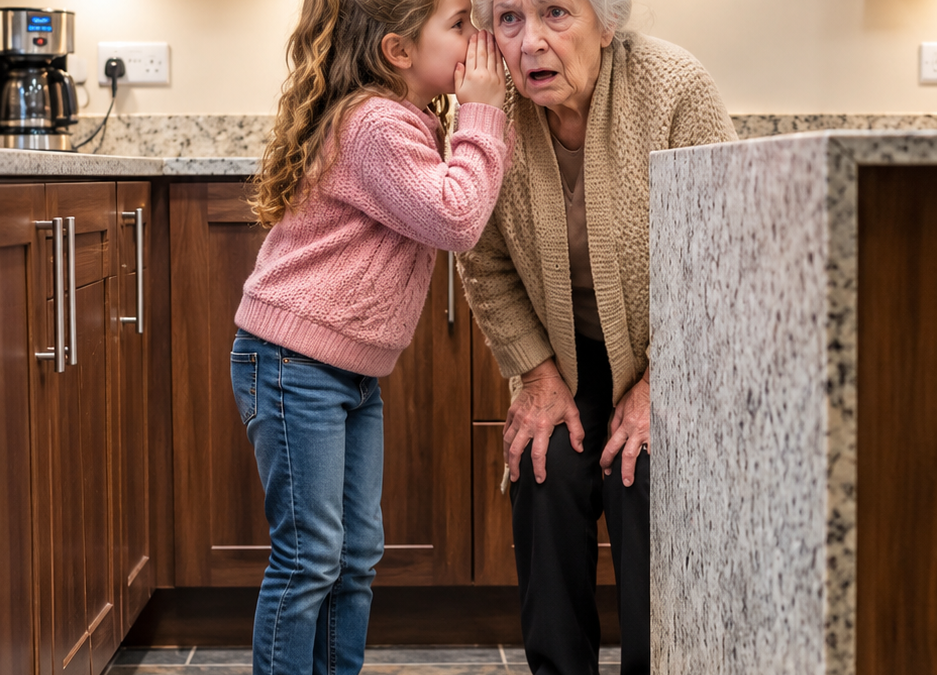
To understand how I ended up watching my daughter-in-law’s mother collapse at a dinner table, you need to understand what happened to me after my husband died.
Because Catherine didn’t begin by putting something in my drink.
She began with kindness.
Or something that looked enough like kindness to fool a grieving widow.
Three years earlier, I was still living in the house my husband and I had shared for forty years.
His name was Thomas.
He was the kind of man who remembered how I took my coffee but forgot where he put his glasses almost every morning.
He laughed too loudly at old television shows.
He always left his slippers beside the bed, one pointing toward the door and the other toward the window.
And every evening, no matter how difficult the day had been, he would find some reason to reach for my hand.
Forty years.
That’s how long we were married.
Four decades of ordinary, beautiful things.
Grocery shopping on Saturdays.
Arguments about the thermostat.
Birthdays.
Holidays.
Our son’s first steps.
The day Robert graduated.
The afternoon he told us he was getting married.
The first time we held our granddaughter.
I didn’t know how much of my life had become connected to Thomas until he was gone.
He died on a cold February morning.
His heart stopped, and suddenly I was standing in a hospital corridor trying to understand how the world could continue moving when mine had ended.
There are moments from that day I remember perfectly.
The sound of a nurse’s shoes.
The smell of coffee from a vending machine.
The way Robert put his arms around me when the doctor finished speaking.
But there are other things I can’t remember at all.
Who drove me home.
Whether I ate dinner.
How I managed to get into bed.
I only remember waking in the darkness and reaching across the mattress.
My hand touched cold sheets.
And for a terrible moment, I forgot.
Then I remembered.
And the grief came back so violently that I thought it might stop my own heart.
After the funeral, people visited.
They brought casseroles, flowers, sympathy cards, and well-meaning advice.
“Stay busy, Audrey.”
“Get out of the house.”
“Spend time with family.”
“Thomas wouldn’t want you to be sad forever.”
I smiled.
Thanked them.
Closed the door.
And returned to a house where everything reminded me of the man I had lost.
His newspaper remained beside his favorite chair.
His gardening gloves hung near the back door.
His coffee mug sat in the cupboard.
Some mornings, I couldn’t bring myself to move it.
Other mornings, I made two cups of coffee out of habit.
Then stood at the counter staring at the second cup until tears blurred my vision.
I talked to him sometimes.
Not because I believed he could answer.
But because forty years of conversation doesn’t disappear the moment someone dies.
“Thomas, the roses are blooming.”
“Robert called today.”
“Mary has a loose tooth.”
And once, on an especially lonely evening:
“I don’t know how to do this without you.”
The house remained silent.
Six months after his death, my son arrived with an offer.
And I mistook it for love.
It was raining when Robert knocked.
I remember the sound clearly because the rain was striking the windows so hard that I almost didn’t hear the doorbell.
When I opened the door, my son stood on the porch with water dripping from his jacket.
Behind him was Catherine.
She looked immaculate.
Her hair was smooth.
Her makeup perfect.
Even her umbrella seemed untouched by the storm.
“Mom,” Robert said, kissing my cheek. “Can we come in?”
“Of course.”
I brought towels.
Made coffee.
And sat opposite them in the living room.
Catherine looked around.
“Audrey, this house must be such a lot to manage alone.”
I glanced toward the staircase.
“It’s not so bad.”
Robert leaned forward.
“Mom, we’ve been talking.”
My stomach tightened.
“About what?”
He reached for my hand.
“We don’t think you should be living here all by yourself.”
I stared at him.
“I’m managing.”
“I know, but the house is big.”
Catherine nodded.
“And you’re so isolated.”
I looked toward Thomas’s chair.
The truth was, I was lonely.
Terribly lonely.
But I hadn’t asked anyone to take away my home.
Robert continued.
“We built that small guesthouse behind our place.”
I looked up.
“The one near the garden?”
“Yeah.”
He smiled.
“It has a little kitchen, a bathroom, everything you need.”
Catherine leaned toward me.
“And you’d be close to us.”
She paused.
Then added the words that changed everything.
“Close to Mary.”
My granddaughter.
My beautiful little Mary.
She was four years old then.
A little girl with pigtails and a laugh that could turn the darkest afternoon into something bearable.
Whenever she visited, she brought drawings and stories.
She’d crawl into my lap and ask questions until I ran out of answers.
“Grandma, why does the moon follow our car?”
“Grandma, can butterflies get tired?”
“Grandma, do flowers dream?”
I adored her.
After Thomas died, Mary had been the one person who could make me laugh without feeling guilty afterward.
Robert watched my expression.
“She asks about you all the time, Mom.”
Catherine nodded.
“She misses you.”
My throat tightened.
“She does?”
“Of course,” Catherine said. “And you’d be able to see her every day.”
I looked toward the window.
Rain ran down the glass.
For months, I’d been waking up in an empty house.
Now my son was offering me a place close to my granddaughter.
A family.
A reason to get up in the morning.
It seemed like a lifeline.
I didn’t ask enough questions.
I didn’t ask what would happen if the arrangement stopped working.
I didn’t ask whether I would still be treated as an adult with the right to make my own decisions.
I didn’t ask what would happen to my independence.
I simply looked at Robert.
Then at Catherine.
And whispered, “That sounds lovely.”
The guesthouse was smaller than I expected.
Much smaller.
It stood behind the main house, near Catherine’s carefully maintained garden.
She grew white roses.
Rows of them.
Immaculate flowers with no stray leaves or untidy branches.
She trimmed them obsessively.
Sometimes I’d see her standing among the bushes with pruning shears, removing a flower simply because it wasn’t growing where she wanted.
I remember thinking the garden was beautiful.
I didn’t understand then how much Catherine valued the appearance of perfection.
The guesthouse itself had one bedroom.
A tiny bathroom.
A kitchenette with a two-burner stove.
A miniature refrigerator.
A narrow closet.
The windows faced the backyard.
There was just enough room for my bed, a small table, and a few pieces of furniture.
I’d spent forty years in a home filled with memories.
Now almost everything I owned was packed into boxes or left behind.
But I tried to be grateful.
I sewed curtains.
Arranged my books.
Placed Thomas’s photograph beside the bed.
I brought one of his old sweaters and folded it carefully in the closet.
Sometimes, when the nights felt particularly empty, I held that sweater against my chest.
It no longer smelled like him.
That was one of the cruelest parts of grief.
The familiar scent had faded.
But I still held it.
Because it was his.
And because the guesthouse didn’t feel like home yet.
During the first few months, Mary came almost every afternoon.
I could hear her before I saw her.
Tiny shoes running along the stone path.
Then a knock.
“Grandma!”
I’d open the door.
And there she’d be.
Pigtails bouncing.
Cheeks flushed.
A crayon drawing held proudly in one hand.
“Look what I made!”
I’d crouch.
“Oh, sweetheart!”
Sometimes she drew flowers.
Sometimes houses.
Sometimes enormous purple animals that she insisted were horses.
Once, she drew Thomas standing beside a rainbow.
I stared at the paper.
“Who’s this, Mary?”
She looked surprised.
“Grandpa.”
My throat closed.
“And why is he standing on a rainbow?”
She thought for a moment.
“Because heaven is very high, and he needs somewhere to stand when he looks at us.”
I began crying.
Mary’s face changed.
“Grandma?”
I pulled her into my arms.
“Those are happy tears, sweetheart.”
She hugged me.
Then whispered, “I miss Grandpa too.”
I held her tighter.
“So do I.”
Those afternoons kept me going.
We read stories.
Baked cookies when the little oven cooperated.
Played games.
Watched birds through the window.
Sometimes she climbed into my lap and fell asleep.
I’d sit there for an hour without moving because I didn’t want to disturb her.
The guesthouse was small.
But when Mary was inside it, the room felt enormous.
Full of love.
Full of possibility.
For a while, I believed moving had been the right decision.
Then Catherine began changing the rules.
At first, her remarks were subtle.
So subtle that I almost felt foolish for being hurt.
We were having dinner one evening when she looked at my blouse.
“Audrey, that color doesn’t do you any favors.”
I glanced down.
It was a soft blue blouse Thomas had always liked.
“Oh.”
She smiled.
“Darker colors are more flattering at your age.”
Robert continued eating.
I tried to smile.
“Maybe.”
Another evening, I offered to help clean the kitchen.
Catherine waved me away.
“Oh, don’t worry. You already contribute enough by living here rent-free.”
I stopped.
The words were wrapped in a pleasant tone.
But they landed hard.
“Well, I could certainly help with—”
“No, no,” she interrupted. “We’re happy to take care of you.”
She smiled.
The kind of smile that left me feeling foolish for being offended.
At first, I told myself she was simply blunt.
Some people are.
Not everyone expresses kindness gently.
But the remarks continued.
My clothes.
My age.
My cooking.
My memory.
My hearing.
My usefulness.
Every dinner brought another little humiliation.
And Robert never intervened.
Sometimes he looked at his phone.
Sometimes he changed the subject.
Sometimes he left the room.
I began watching him during meals.
Waiting for a moment when he would say, “Catherine, that’s enough.”
He never did.
One evening, after Catherine made another remark about my age, I asked Robert privately whether I’d done something to offend her.
He sighed.
“Mom, you know how Catherine is.”
I looked at him.
“She seems angry with me.”
“She’s not angry.”
“Then why does she keep saying things like that?”
He rubbed his forehead.
“She’s stressed.”
I nodded.
“About what?”
“Work. Mary. The house. Everything.”
I looked toward the kitchen.
“So I should just ignore it?”
Robert sighed again.
“Please don’t make this into a problem.”
I stared at my son.
I hadn’t asked him to choose between his wife and me.
I’d simply asked him to notice that I was hurting.
But his expression had already changed.
He looked irritated.
Tired.
As though my feelings were another demand in a day full of demands.
I swallowed.
“All right.”
He looked relieved.
“Thanks, Mom.”
I returned to the guesthouse that night feeling smaller than I had when I left it.
The second year was worse.
Catherine began limiting Mary’s visits.
At first, she said Mary had homework.
Then extracurricular activities.
Then playdates.
Then bedtime routines that apparently required her to remain inside the main house for hours.
I tried to be understanding.
Mary was growing.
School mattered.
Friends mattered.
But the visits became shorter and less frequent.
And when Mary did come, she often looked worried.
One afternoon, she slipped through my door holding a book beneath her sweater.
“Grandma?”
I smiled.
“Hello, sweetheart.”
She stood in the doorway.
“Mom says I bother you.”
My heart tightened.
“What?”
“She says I come here too much.”
I knelt.
“Oh, Mary.”
Her eyes filled.
“Do I bother you?”
I pulled her gently into my arms.
“Never.”
She pressed her face against my shoulder.
“Really?”
“Not for one second.”
I stroked her hair.
“I love spending time with you.”
She sniffed.
“Then why does Mom say you need a break from me?”
I closed my eyes.
How could I explain that some adults use lies to control relationships?
How could I tell a little girl that her mother seemed determined to separate us?
I couldn’t.
So I held her.
And whispered, “You are always welcome with me.”
I began noticing changes in Mary.
Her laughter became less frequent.
She apologized constantly.
If she dropped a crayon, she whispered, “Sorry.”
If she asked for a second cookie, she looked frightened.
If she didn’t understand a word in a book, she became upset with herself.
One afternoon, she was drawing at my table when she suddenly crumpled the paper.
I looked up.
“What’s wrong, sweetheart?”
She began crying.
“It’s ugly.”
I stared.
“Your drawing?”
She nodded.
I unfolded the paper.
It showed a garden with flowers and a little house.
It was beautiful in the way children’s drawings are beautiful.
Full of imagination.
Full of color.
“Why do you think it’s ugly?”
Mary wiped her face.
“Mom says I don’t draw as well as the other girls.”
My stomach tightened.
I pulled out the chair beside her.
“Come here.”
She climbed into my lap.
I held up the drawing.
“Mary, do you see these flowers?”
She nodded.
“Nobody else in the whole world could draw exactly these flowers.”
She looked confused.
“Really?”
“Really.”
I touched the paper.
“They came from your imagination.”
Her eyes filled.
“And that makes them special.”
She leaned against me.
“Mom says I need to try harder.”
I swallowed.
“It’s good to practice things you enjoy.”
I kissed her hair.
“But you don’t have to be perfect to be loved.”
She remained quiet for a moment.
Then whispered, “You really think so?”
My heart broke.
“Sweetheart, I know so.”
I began listening more carefully when Catherine spoke to her daughter.
It wasn’t always shouting.
Often, it was worse.
A sigh.
A comparison.
A dismissive remark.
“Look how nicely your friend reads.”
“Why can’t you sit still?”
“That dress makes you look bigger.”
“Stop crying. You’re being dramatic.”
“You’re embarrassing me.”
Each sentence seemed small.
But I watched Mary’s shoulders draw inward.
I watched her lower her eyes.
I watched the brightness fade from her face.
I wanted to confront Catherine.
Many times.
But I was afraid.
Afraid Robert would tell me I was interfering.
Afraid Catherine would forbid Mary from visiting entirely.
Afraid of losing the only connection that made my life feel meaningful.
So I became Mary’s refuge.
I kept cookies in a little tin.
Books on the shelf.
Colored pencils beside the table.
And whenever she arrived, I greeted her the same way.
“There’s my girl.”
Sometimes those three words were enough to make her smile.
I had no idea how much she would eventually do to protect me.
Six months before that terrible dinner, I overheard Catherine and Robert discussing a retirement home.
It was evening.
I had stepped outside for a walk around the garden.
Their kitchen window was partly open.
I heard Catherine’s voice.
“Robert, we need to make a decision about your mother.”
I stopped near the white rose bushes.
Robert sighed.
“What now?”
“The guesthouse.”
“What about it?”
“It’s ridiculous to keep it occupied.”
I felt a chill.
Catherine continued.
“That space could be your office.”
Robert said nothing.
“Or somewhere for Mary to play.”
I pressed a hand against the fence.
Then Catherine added, “Audrey needs professional care.”
My chest tightened.
Robert sounded uncertain.
“She’s doing okay.”
“She’s sixty-eight.”
“So?”
“So she’s getting older.”
Catherine’s voice became sharper.
“We can’t keep rearranging our lives around her.”
My hands began shaking.
Robert sighed.
“She’s my mother.”
“And I’m your wife.”
Silence.
Then Catherine said something I’ll never forget.
“She’s taking up space, Robert.”
Not a person.
Not a widow.
Not the mother who raised him.
Space.
An inconvenience occupying square footage that Catherine wanted for herself.
I stood among the roses, unable to move.
Then Robert asked quietly, “What are you suggesting?”
“A retirement home.”
My knees weakened.
Catherine continued.
“I found one that costs about eight hundred dollars a month.”
I could hear papers moving.
“It has activities and nurses and everything.”
Robert said nothing.
“Think of the peace we’d have.”
I backed away.
The roses brushed against my sleeve.
I returned to the guesthouse.
Closed the door.
Sat on my bed.
And cried.
Because I’d moved there hoping to become part of a family again.
And now I was being discussed as though I were old furniture someone needed to remove.
Catherine began leaving brochures where I could see them.
Colorful pictures of retirement communities.
Smiling elderly residents.
Bright dining rooms.
Gardens.
Activity schedules.
She presented each one with cheerful enthusiasm.
“Look, Audrey. This one has bingo on Fridays.”
I nodded.
“This one has a beautiful courtyard.”
I looked down.
“And the staff is available all day.”
I tried to speak.
“Catherine, I’m not sure I need—”
She interrupted.
“Oh, everyone thinks that at first.”
I looked at Robert.
He stared at his plate.
Catherine continued.
“You’ll be much happier somewhere appropriate for your age.”
I wanted to ask what was inappropriate about living near my granddaughter.
Or cooking for myself.
Or reading books.
Or deciding when to sleep.
But I had become so accustomed to surrendering that even defending my own independence felt dangerous.
So I nodded.
And returned to the guesthouse.
Mary heard the conversations too.
One afternoon, I was sitting near the window when I heard her ask Robert why Grandma had to leave.
He gave her the same explanation Catherine used.
“Grandma needs more help.”
Mary protested.
“But I help her.”
I pressed a hand against my chest.
Robert sighed.
“It’s complicated.”
“She helps me too.”
My eyes filled.
“Mary, these are grown-up decisions.”
There was a pause.
Then my granddaughter said, “But nobody asked Grandma.”
I closed my eyes.
Seven years old.
And she had noticed the one thing everyone else ignored.
Nobody had asked me.
Three months before the dinner, Catherine received an inheritance.
Fifty thousand dollars from a distant uncle.
She was delighted.
For days, she talked about remodeling the kitchen.
Replacing furniture.
Changing the flooring.
Then she began talking about the guesthouse again.
I overheard her on the phone with a friend named Julia.
“Once Audrey’s gone, I can finally do something with that awful little building.”
I stood just outside the kitchen.
Catherine laughed.
“Maybe a yoga studio.”
I stared at the door.
A yoga studio.
My books.
My bed.
Thomas’s photograph.
The small curtains I’d sewn.
All of it would disappear so Catherine could have another room for herself.
I felt something inside me begin to break.
But I still didn’t know how far she was prepared to go.
The sickness began two months before the dinner.
At first, it seemed ordinary.
A stomachache after a family meal.
A little nausea.
Some dizziness.
I assumed I’d eaten something that didn’t agree with me.
But it happened again.
And again.
Almost always after dinner in the main house.
I’d return to the guesthouse feeling weak.
Sometimes I’d sit on the edge of my bed until the room stopped spinning.
Other times, I’d lie awake with terrible stomach discomfort.
One night, I became so dizzy that I had to sit on the floor.
I remember holding the leg of my little table and whispering, “Please stop.”
The next morning, I felt somewhat better.
I made tea.
Ate toast.
Went for a short walk.
And felt almost normal.
Then I ate at Robert and Catherine’s again.
And the symptoms returned.
I began noticing the pattern.
When I prepared my own meals, I was usually fine.
After family dinners, I became ill.
I mentioned it to Robert.
He looked concerned for a moment.
Then Catherine entered the room.
“What’s wrong?”
Robert explained.
“Mom says she’s been getting sick after dinner.”
Catherine’s expression softened immediately.
“Oh, Audrey.”
She touched my shoulder.
“Your digestion is probably getting more sensitive.”
I looked at her.
“I’ve never had this trouble before.”
She smiled.
“That’s what happens as we get older.”
Robert nodded.
“Maybe the spices are too much for you.”
I stared at him.
I’d been cooking longer than either of them had been alive.
I knew what ordinary indigestion felt like.
This was different.
But Robert had already accepted Catherine’s explanation.
And I watched my concerns disappear beneath another conversation about why I needed a retirement home.
I began eating less at family dinners.
At first, it was simply because I was frightened of becoming sick again.
I’d move food around my plate.
Take small bites.
Pretend I wasn’t hungry.
Sometimes I ate before going over so I wouldn’t be tempted.
The symptoms seemed less severe when I avoided the meals.
That frightened me more.
I knew it didn’t prove anything by itself.
There could have been another explanation.
But the pattern was difficult to ignore.
And Catherine became increasingly interested in whether I was eating.
“Aren’t you hungry, Audrey?”
I smiled weakly.
“Not very.”
“You need to keep your strength up.”
I looked toward her.
She continued.
“You’re looking frail.”
There was something almost eager in the way she said it.
I couldn’t explain it.
I only knew that when she watched me eat, I felt afraid.
Mary noticed.
Of course she did.
She had begun watching adults with an intensity that broke my heart.
Sometimes she arrived at my guesthouse carrying cookies in her pockets.
“Grandma, I saved these for you.”
I smiled.
“Sweetheart, you don’t have to save your food for me.”
She looked serious.
“But you don’t eat much at dinner.”
I swallowed.
“I’m all right.”
Her eyes filled.
“Are you sick?”
I pulled her into my arms.
“I’ve been feeling a little unwell.”
She looked frightened.
“Are you going to die?”
The question struck me so hard that I couldn’t immediately answer.
I held her close.
“Sweetheart, I’m here.”
She began crying.
“I don’t want you to go away.”
I stroked her hair.
“I don’t want to go away either.”
That was the truth.
More than anything.
I wanted to live.
To spend time with Mary.
To watch her grow.
To tell her about Thomas.
To teach her how to bake cookies and sew buttons.
To be there when life disappointed her and remind her that she was loved.
And the thought of being separated from her made me feel physically sick.
A month before the dinner, Catherine announced that she’d chosen a retirement home.
She said it during a family meal.
Casually.
As though she were announcing a new grocery store.
“I visited the facility last week, Audrey.”
I looked up.
“What facility?”
“The retirement community.”
My stomach tightened.
Robert stared at his plate.
Catherine smiled.
“It’s lovely.”
I said nothing.
“They have immediate availability.”
I felt cold.
“Immediate?”
She nodded.
“You could move next week.”
Mary dropped her fork.
The sound startled everyone.
She stared at Catherine.
“No.”
Catherine frowned.
“Mary.”
My granddaughter’s eyes filled.
“Grandma can’t leave.”
“Sweetheart, this is an adult conversation.”
Mary shook her head.
“She lives here.”
Catherine’s expression hardened.
“That’s enough.”
Mary looked toward Robert.
“Daddy?”
He sighed.
“Your mother is trying to do what’s best.”
My granddaughter began crying.
I reached for her hand.
Catherine looked irritated.
“Mary, go to your room.”
“But—”
“Now.”
Mary slid from her chair.
Her face was wet.
She looked at me as she left.
And the fear in her eyes made something inside me ache.
That night, there was a soft knock on my guesthouse door.
I opened it.
Mary stood on the step in her pajamas.
She was wearing little bunny slippers.
Her cheeks were red.
She’d been crying.
“Grandma.”
I crouched.
“What is it, sweetheart?”
She threw herself into my arms.
“Don’t go.”
My throat closed.
“Mary—”
“Please don’t leave me alone with her.”
I froze.
Her words were small.
Desperate.
And terrifying.
I held her.
“Come inside.”
We sat on my bed.
Mary clung to my blouse.
I stroked her hair.
“Sweetheart, why are you frightened?”
She began crying harder.
“Mom gets mad.”
I swallowed.
“When?”
“When Daddy isn’t home.”
I felt a chill.
“What does she do?”
Mary stared at the blanket.
“She says I’m stupid.”
My heart tightened.
“She says I ruin everything.”
I closed my eyes.
“And when I cry, she yells more.”
I pulled her closer.
“Oh, my love.”
She looked up.
“Grandma, am I bad?”
I felt tears spill down my face.
“No.”
She stared at me.
“Really?”
“Really.”
I held her little face in my hands.
“You are not bad.”
My voice broke.
“You are a wonderful little girl.”
She began sobbing.
I wrapped my arms around her.
And for a long time, we sat together on that narrow bed.
I had been terrified of losing my granddaughter if Catherine sent me away.
Now I understood that Mary was terrified too.
Not only because she loved me.
Because my little guesthouse was the place where she felt safe.
And Catherine wanted to take it away.
That night, I didn’t sleep.
I thought about the retirement home.
My mysterious illnesses.
Catherine’s impatience.
Mary’s fear.
The white roses outside my window.
For months, I’d been telling myself I was imagining things.
That Catherine was simply difficult.
That Robert was busy.
That my body was changing with age.
But I could no longer ignore the possibility that something was terribly wrong.
I began paying closer attention.
I noticed Catherine’s black purse.
How she carried it everywhere.
How she sometimes took it into the kitchen while preparing meals.
How she seemed particularly concerned when I didn’t finish my food.
I didn’t know what it meant.
Not yet.
But I began observing.
And two weeks later, Mary came to me with the information that changed everything.
She arrived after school.
Her expression was different.
Serious.
Frightened.
She closed the guesthouse door and looked over her shoulder.
“Grandma?”
I set down my book.
“Yes, sweetheart?”
“Can I tell you something?”
“Of course.”
She walked closer.
“But Mom can’t know.”
My stomach tightened.
“What happened?”
Mary twisted her fingers together.
“I saw her doing something.”
I waited.
She looked toward the window.
Then whispered, “She puts things in your food.”
For a moment, I couldn’t breathe.
“What things?”
Mary shook her head.
“I don’t know.”
I knelt.
“Tell me exactly what you saw.”
Her lips trembled.
“She has a little white bottle.”
My heart began pounding.
“Where?”
“In her purse.”
Mary swallowed.
“When nobody’s looking, she takes it out.”
I stared at her.
“And?”
“She puts drops in your food.”
The room seemed to tilt.
I gripped the edge of the table.
Mary continued.
“Sometimes your drink.”
My hands began shaking.
“Are you sure?”
She nodded.
“I saw her more than once.”
I felt suddenly cold.
Mary looked frightened by my expression.
“Grandma?”
I pulled her into my arms.
She was trembling.
“I thought they were vitamins,” she whispered.
I closed my eyes.
“But she doesn’t put them in anybody else’s food.”
For a moment, I couldn’t speak.
All those nights of nausea.
The dizziness.
The weakness.
Catherine telling Robert I was getting too old.
The retirement brochures.
The inheritance.
The plans for my guesthouse.
I didn’t yet know what the bottle contained.
I didn’t have medical confirmation.
But my granddaughter’s account made the pattern far more frightening.
I held her.
“Thank you for telling me.”
She looked up.
“Are you mad?”
My heart broke.
“No, sweetheart.”
I kissed her forehead.
“I’m not mad at you.”
“Mom will be.”
I swallowed.
“You did the right thing by telling me something that worried you.”
I should have taken the full burden away from her immediately.
I should have sought medical help and reported my concerns to appropriate adults and authorities rather than letting a frightened child become part of an unfolding confrontation.
But I was afraid.
Afraid of Catherine.
Afraid nobody would believe me.
Afraid Robert would decide I’d become confused.
Afraid they’d send me away before anyone investigated.
So I made mistakes.
I told Mary to keep the conversation private.
I asked her to tell me if she noticed anything else.
And only much later did I understand how unfair it was to place that responsibility on a seven-year-old.
At the time, I believed I was protecting both of us.
In reality, she was carrying a fear no child should have to carry.
Friday’s dinner was supposed to be my final farewell.
Catherine had arranged everything.
Her mother Alice was visiting from another city.
Neighbors were invited.
Robert’s employer and his partner would attend.
The menu was elaborate.
The table beautifully decorated.
Catherine wanted witnesses.
People who would see a loving family sending an elderly woman to a retirement community for her own good.
She wanted everyone to admire her generosity.
And I was terrified she would use that dinner to prove how sick I had become.
Thursday afternoon, Alice arrived.
She was a polished woman with expensive luggage and the same carefully controlled expression Catherine wore.
She greeted me with a kiss that barely touched my cheek.
“Audrey.”
I forced a smile.
“Hello, Alice.”
She looked me over.
“My goodness, you do look tired.”
I swallowed.
“I haven’t been sleeping well.”
She nodded sympathetically.
“Then it’s fortunate Catherine found somewhere suitable.”
I stared at her.
Alice continued.
“We all reach an age when we become a burden to our families.”
I looked down.
She smiled.
“It’s simply part of life.”
Then she walked into the main house.
I remained in the hallway, feeling as though someone had pressed a hand against my throat.
A burden.
That’s what they thought I was.
A woman who had raised a son, loved a husband, kept a home, and lived almost seven decades.
Reduced to a burden.
Friday morning, I went into the main house to help prepare dinner.
Catherine was arranging food in the kitchen.
Her black purse sat on the counter.
It was partly open.
I glanced toward it.
And saw something small and white among her belongings.
A bottle.
Exactly as Mary had described.
My stomach turned.
I forced myself to keep moving.
Catherine returned from the pantry.
She looked toward me.
“What are you doing?”
I lifted the knife I’d been using to cut vegetables.
“Helping.”
She glanced at the counter.
Then closed her purse.
“You can go now.”
I swallowed.
“I thought you needed—”
“No.”
Her smile returned.
“Get some rest. I don’t want you looking exhausted tonight.”
I stared at her.
Such a strange thing to say.
She had spent months insisting I was sick.
Now she wanted me to look well enough to attend a formal dinner.
But perhaps not well enough to remain independent.
I placed the knife down.
“All right.”
Then returned to the guesthouse.
My hands trembled so badly that I could barely unlock the door.
An hour before dinner, Mary ran to my guesthouse.
She was breathless.
Her face pale.
“Grandma!”
I stood.
“What happened?”
She closed the door.
Then whispered, “Mom did it again.”
My heart stopped.
“What?”
“The bottle.”
I gripped the back of a chair.
Mary swallowed.
“She put drops in a glass.”
I stared at her.
“A wineglass?”
She nodded.
“Then she wrote your name on a piece of paper.”
My blood went cold.
“Where did she put it?”
“Under the glass.”
Mary began crying.
“Grandma, I’m scared.”
I knelt.
Pulled her close.
And held her.
“Sweetheart.”
My voice trembled.
“Thank you for telling me.”
She clung to me.
“Please don’t drink it.”
I closed my eyes.
“I won’t.”
That was the one promise I could make with certainty.
I would not drink from the glass Catherine had prepared.
But I still wanted proof.
I wanted Robert to see.
I wanted the people at that dinner to understand.
And in my fear, I made a choice I would regret for the rest of my life.
Guests began arriving at six thirty.
Charles and Julia, the neighbors.
Robert’s boss and his partner.
Alice.
Everyone wore their polite smiles.
The dining room looked beautiful.
Fresh flowers.
Candles.
Crystal glasses.
A roast on a silver platter.
Homemade bread.
The kind of dinner people remember as elegant.
I arrived at seven.
I wore my best blouse.
A skirt I’d carefully ironed.
And the small necklace Thomas had given me on our twenty-fifth wedding anniversary.
I wanted to feel like myself.
Not a frightened old woman being escorted out of her own life.
Catherine greeted me.
“Audrey.”
Her smile was perfect.
“You look lovely.”
I looked into her eyes.
“Thank you.”
She pointed toward my usual chair.
“Sit here.”
It was the seat near the corner.
The place where I could easily be forgotten during conversation.
Mary slipped into the chair beside me.
Catherine frowned.
“Mary, sit next to your father.”
My granddaughter shook her head.
“I want Grandma.”
For a moment, Catherine looked angry.
Then she noticed the guests watching.
Her smile returned.
“Of course, sweetheart.”
Mary sat beside me.
Under the table, she reached for my hand.
I squeezed her fingers gently.
Then looked down.
The wineglass was waiting.
Red wine.
Crystal.
A little piece of paper beneath the base.
I didn’t need to lift it to know what was written there.
My name.
Dinner began.
Charles talked about his new car.
Julia admired the roses.
Robert’s boss told a story about work.
People laughed.
I barely heard them.
I watched Catherine.
She moved gracefully around the table.
Smiling.
Serving.
Refilling glasses.
Offering bread.
Every movement seemed carefully rehearsed.
And every few minutes, she looked toward my wine.
I kept my hands in my lap.
Mary sat very still beside me.
Then Robert stood.
He raised his glass.
“I’d like to make a toast.”
Everyone looked up.
He smiled toward me.
“To my mother.”
My throat tightened.
“She’s been close to us for three years, and now she’s beginning a new chapter.”
I stared at my son.
He continued.
“We want her to know she’ll always be part of this family.”
Those were beautiful words.
Words that would have meant everything if they had been true.
But nobody had asked whether I wanted this new chapter.
Nobody had asked why I was becoming sick.
Nobody had asked whether I was frightened.
I looked at Robert.
Then at Catherine.
Her eyes were on my glass.
Everyone raised their wine.
So did I.
Mary’s hand closed around my wrist beneath the table.
I felt her trembling.
I brought the glass near my mouth.
Then stopped.
I didn’t drink.
Catherine’s expression changed.
Only for an instant.
But I saw it.
Disappointment.
Frustration.
Then the smile returned.
“Aren’t you going to toast, Audrey?”
I lowered the glass.
“Of course.”
I forced a smile.
“I’m just taking my time.”
Alice laughed.
“Oh, Audrey. It’s your farewell dinner.”
I stared at her.
“Yes.”
Her voice became sweet.
“Don’t be difficult.”
I looked toward Mary.
Her eyes were full of tears.
And I decided I would not give Catherine what she wanted.
As dinner continued, I avoided the wine.
I moved it.
Touched the stem.
Raised it occasionally.
But didn’t swallow a drop.
Catherine grew increasingly tense.
She watched me.
She asked whether I liked the wine.
Whether I wanted a refill.
Whether something was wrong.
I answered politely.
“No, thank you.”
“I’m fine.”
“It’s lovely.”
But I could feel her irritation.
Then Mary leaned toward me.
“Grandma, are you sick?”
Her voice was barely audible.
I looked down.
She was trembling.
I touched her cheek.
“I’m all right, sweetheart.”
Then I stood.
“Excuse me.”
I picked up the glass.
Catherine watched.
“Where are you going?”
“To freshen up.”
I walked away.
I should have placed the glass somewhere untouched and sought immediate help.
Instead, I made a terrible decision.
I returned to the dining room and exchanged it with Alice’s glass while the older woman was distracted.
I told myself that I was revealing a secret Catherine could no longer deny.
I told myself I was protecting Mary and myself.
But Alice hadn’t agreed to become part of my confrontation.
And I had no idea what was in the drink.
That moment would haunt me long after the truth came out.
When I sat down, Mary looked at me.
She had seen what happened.
Her eyes widened.
I gave a small shake of my head, trying to reassure her.
But she looked more frightened than before.
The meal continued.
People talked.
Laughed.
Ate dessert.
Alice drank from the glass that had originally been placed before me.
Catherine kept watching my face.
She seemed puzzled.
I was supposed to become ill.
I knew that’s what she expected.
But I felt fine.
I ate my dessert.
Answered questions.
Smiled when appropriate.
Then Alice dropped her fork.
The sound startled everyone.
She raised a hand to her forehead.
“I’m feeling…”
Her voice faded.
Catherine turned.
“Mom?”
Alice blinked.
Her face had become pale.
“I feel dizzy.”
Robert stood.
“Should I open a window?”
Alice tried to answer.
Then her body tilted sideways.
Charles moved quickly, trying to keep her from falling.
A chair scraped.
Someone screamed.
The wineglass shattered.
And Alice collapsed.
For one terrible moment, nobody moved.
Then the room erupted.
“Call an ambulance!”
“She’s not responding!”
“Get help!”
Catherine rushed toward her mother.
“Mom!”
Her voice was high and frightened.
I sat frozen.
Alice lay on the floor.
The same woman who had smiled at me condescendingly only hours earlier.
The woman who had called me a burden.
Now she was helpless.
And I knew I had played a part in what had happened.
My stomach turned.
Mary grabbed my arm.
She began crying.
Then she stood.
And screamed.
“IT WAS SUPPOSED TO BE GRANDMA!”
Silence crashed over the dining room.
Every face turned toward her.
Mary pointed at Catherine.
“I SAW MOM PUT SOMETHING IN GRANDMA’S DRINK!”
Robert stared.
“What?”
My granddaughter was sobbing.
“She put drops in it!”
Catherine went pale.
“Mary, stop.”
But my little granddaughter kept speaking.
“She did it before, too!”
Catherine stood.
“You’re confused.”
Mary shook her head violently.
“No!”
She pointed toward Alice.
“Grandma changed the glasses!”
Robert looked toward the table.
Then at Catherine.
For the first time in three years, my son looked truly frightened.
And the truth began to come apart in front of everyone.
Robert moved toward the dining table.
His face had gone white.
“Mary.”
His voice shook.
“What did you say?”
My granddaughter stood beside her chair, crying so hard that she could barely breathe.
“I saw Mommy.”
Catherine stepped forward.
“Robert, she’s confused. She’s only seven.”
Mary flinched.
I saw it.
The small, instinctive movement of a child who had learned that contradicting her mother brought punishment.
And something inside me broke.
“Mary,” I said gently, “look at me.”
She turned.
Her eyes were full of terror.
“Sweetheart, you told the truth.”
Catherine spun toward me.
“Audrey, stop encouraging this!”
I looked at her.
For the first time in three years, I didn’t lower my eyes.
“Don’t you dare frighten her into silence.”
Robert stared at us.
Then Mary pointed toward the fallen glass.
“Mommy put Grandma’s name under it.”
Robert crouched beside the table.
He looked beneath the glass Alice had been using.
Then picked up a small folded piece of paper.
I watched his hands begin to tremble.
He unfolded it.
His lips parted.
Then he read the name aloud.
“Audrey.”
The room went silent.
Robert looked toward Catherine.
“Why is my mother’s name under the glass your mother drank from?”
Catherine opened her mouth.
Nothing came out.
Then she laughed weakly.
“There must be some mistake.”
Robert held up the paper.
“Catherine.”
She stepped backward.
“Robert, you’re making this into something ridiculous.”
Mary began crying harder.
“I saw her do it!”
Catherine’s face twisted.
“Mary, go to your room!”
My granddaughter recoiled.
I stood.
“No.”
Catherine stared at me.
I reached for Mary’s hand.
“She isn’t going anywhere alone.”
Julia was already helping to make room for the emergency responders.
Robert’s boss was on the phone reporting the suspected tampering.
Charles remained beside Alice, following the emergency dispatcher’s instructions.
The sound of hurried voices filled the room.
I looked down at Alice.
She hadn’t regained consciousness.
Her breathing was frightening.
Her face looked gray.
I suddenly remembered her arriving the day before.
Her expensive perfume.
Her perfect clothes.
Her condescending smile.
And the terrible realization that none of those things mattered now.
She was an unconscious woman lying on a dining room floor.
A mother.
A grandmother.
A person whose life mattered.
I felt sick.
I had wanted the truth exposed.
But I hadn’t wanted this.
No matter what Alice had said to me over the years, she hadn’t deserved to be harmed.
I looked at Robert.
“Tell them everything.”
He stared at me.
“Mom?”
“The glass.”
My voice broke.
“I switched it.”
His face changed.
“Why?”
Tears began falling.
“Because I believed Catherine had put something in mine.”
Robert stepped backward.
He looked from me to his wife.
Then to Alice.
“Mom…”
I swallowed.
“I was frightened.”
My voice cracked.
“I thought it would prove what she’d been doing.”
Robert stared at me.
I forced myself to continue.
“I was wrong to put Alice in danger. I should have called for help.”
It was the first time I’d admitted the full weight of my decision aloud.
The truth about Catherine still mattered.
But so did the fact that another person had been injured.
And I couldn’t erase my part in that simply because I had been afraid.
Catherine stood near the table.
Her hands were shaking.
Robert turned toward her.
“What’s in the bottle?”
She stared.
“What bottle?”
Mary pointed toward her mother’s black purse.
“The little white one!”
Catherine’s face became rigid.
“Mary!”
Robert spoke sharply.
“Enough.”
It was the first time I’d heard him use that tone with his wife.
He looked toward the purse.
“Catherine, what did you put in Mom’s drink?”
She tried to laugh.
“Nothing.”
Robert stepped closer.
“Answer me.”
Her eyes filled.
“I was only trying to help her.”
For a moment, nobody moved.
Then Robert whispered, “Help her how?”
Catherine covered her mouth.
“I didn’t mean…”
She stopped.
Robert’s voice rose.
“Didn’t mean what?”
She began crying.
“It was supposed to calm her down.”
I felt cold.
Robert stared.
“What?”
“She’s been so difficult.”
Catherine pointed toward me.
“Always complaining. Always interfering. Always making Mary cling to her.”
I couldn’t believe what I was hearing.
Catherine was standing beside her unconscious mother.
And she was still blaming me.
Robert looked horrified.
“You put medication in my mother’s drink without telling her?”
Catherine began shaking her head.
“I wasn’t trying to kill anybody.”
The room seemed to become very still.
Because until that moment, she had avoided saying what she’d done.
Now she’d said enough.
Enough for Robert to understand.
Enough for the people around us to recognize that this was not simply a medical emergency.
Enough for me to realize that the mysterious sickness I’d endured for months might have been deliberately caused.
Robert took a step backward.
His face crumpled.
“Oh, my God.”
Then he looked toward Alice.
And whispered, “What have you done?”
The ambulance arrived before the police.
Paramedics entered quickly.
They assessed Alice and prepared to transport her.
Robert told them about the suspected substance.
Catherine reluctantly identified the medication she claimed to have used.
The medical team treated the situation as an emergency, taking the information available and bringing the suspected container for proper assessment.
I watched them place Alice on the stretcher.
Her head rested to one side.
Her skin was pale.
One of her hands hung near the edge until a paramedic gently repositioned it.
For some reason, that little movement broke me.
I began crying.
I thought about how easily a life could become fragile.
One moment, Alice had been drinking wine and talking about her vacation.
The next, she was unconscious.
I looked toward Catherine.
She stood frozen near the wall.
The ambulance crew moved toward the door.
Catherine started after them.
“Mom!”
Robert stopped beside her.
“You need to explain everything to the police.”
Catherine stared at him.
“That’s my mother!”
His voice broke.
“And Audrey is mine.”
For a moment, his expression looked almost unrecognizable.
He wasn’t angry in the careless way people become angry during arguments.
He looked devastated.
As though the life he’d trusted had suddenly become something he could no longer understand.
Then he looked toward Mary.
His daughter stood beside me, clutching my skirt.
He knelt.
“Sweetheart.”
Mary began crying.
“Daddy, am I in trouble?”
I felt my heart crack.
Robert’s face crumpled.
“No.”
He reached toward her.
“No, baby.”
She stepped closer.
He held her carefully.
“You are not in trouble for telling the truth.”
Mary began sobbing against his shoulder.
And I realized that despite everything happening around us, the most important thing Robert could do in that moment was make sure his daughter understood she had done nothing wrong.
When the police arrived, the house no longer looked like the setting for a beautiful farewell dinner.
The candles had burned low.
A chair lay overturned.
A broken glass glittered near the table.
The roast was cold.
Dessert plates remained half full.
And the white roses stood untouched in their vase.
Everything Catherine had arranged so carefully was still there.
But the image of a perfect family was gone.
The officers spoke with Robert.
Then Catherine.
Then the guests.
They documented the scene, secured relevant evidence, and arranged for the suspected substance and drinkware to be examined.
I told them what had happened.
All of it.
The sickness.
The retirement home.
Mary’s observations.
The white bottle.
The marked glass.
And my decision to switch the drinks.
The officer interviewing me was a woman with a calm voice.
She listened carefully.
Then asked why I hadn’t sought help earlier.
I looked down.
“I was afraid nobody would believe me.”
She waited.
I continued.
“My son thought I was becoming too old to understand what was happening.”
My voice broke.
“Catherine kept saying I needed a home.”
I swallowed.
“I thought if I accused her, she’d use it as proof that I was confused.”
The officer nodded.
I looked at my hands.
“But I should have asked for help before tonight.”
She didn’t tell me everything I’d done was justified.
And I wouldn’t have believed her if she had.
Instead, she carefully recorded what I said.
That mattered.
The investigation needed the truth.
Not just the parts that made me look brave.
When the officers began speaking with Mary, I felt frightened all over again.
She was only seven.
She had already witnessed her mother being confronted.
Her grandmother collapsing.
Adults shouting.
An ambulance.
Police officers.
She looked exhausted.
I wanted to wrap her in a blanket and carry her away from everything.
Instead, the officers spoke with her gently, taking care not to pressure her.
Mary described what she had observed.
The black purse.
The white bottle.
The drops.
How she had seen similar behavior at earlier dinners.
She told them she’d thought the drops might be vitamins.
Then she’d noticed how sick I became.
And finally, how frightened she’d felt when she saw her mother marking a glass with my name.
Her little voice trembled.
But she spoke.
I watched from nearby.
And felt pride mixed with terrible sadness.
No child should have to protect a grandparent from a parent.
No child should be placed in the position of carrying secrets about possible abuse.
Mary had shown extraordinary courage.
But she should never have needed that courage.
When she finished, she looked toward me.
“Grandma?”
I opened my arms.
She ran to me.
And I held her so tightly that she whispered, “I can’t breathe.”
I loosened my arms immediately.
“I’m sorry, sweetheart.”
She pressed her face against my chest.
“Are you going away?”
Tears filled my eyes.
“No, my love.”
She looked up.
“Promise?”
I swallowed.
I wanted to promise her that nothing bad would ever happen again.
That our family would be repaired by morning.
That everyone would be safe forever.
But life doesn’t allow promises like that.
So I gave her one I could keep.
“I’m going to do everything I can to make sure you are safe.”
She began crying again.
I kissed her forehead.
“And I am not going to stop loving you.”
Catherine was taken away after the officers had gathered the information required for the next steps.
She protested.
Cried.
Insisted it was a misunderstanding.
She said she’d only wanted to make things easier.
She said she hadn’t intended serious harm.
But the substance, the witnesses, and her own statements had made the situation too serious to dismiss.
When she was led toward the door, Mary watched.
Her face was very pale.
For a moment, I thought she might run after her mother.
But she remained beside Robert.
I could see the conflict in her little eyes.
Fear.
Love.
Confusion.
Grief.
Catherine was the woman who had frightened and belittled her.
But she was also her mother.
Those truths existed together.
And I knew Mary’s heartbreak would not disappear simply because adults had finally recognized the danger.
When everyone left, the house became unbearably quiet.
Robert sat on the sofa.
Mary curled beside him.
I remained in a chair near the window.
For a long time, nobody spoke.
Then Robert covered his face.
And began crying.
I’ve seen my son cry before.
When he was a child.
When he lost a favorite pet.
When Thomas died.
But I’d never heard him cry like that.
The sound came from somewhere deep inside him.
Not a single loss.
An entire belief collapsing.
Finally, he looked up.
“Mom.”
I turned.
His eyes were red.
“I didn’t know.”
I swallowed.
Part of me wanted to comfort him.
Another part wanted to scream.
Because there had been signs.
So many signs.
Catherine’s remarks.
The way she treated Mary.
The retirement home discussions.
My mysterious illnesses.
Robert’s refusal to listen.
He hadn’t known the truth.
But he had repeatedly chosen not to examine what was happening.
I took a breath.
“Robert, I tried to tell you I was sick.”
He lowered his eyes.
“I know.”
“You told me I was old.”
His face crumpled.
“I know.”
“I told you Catherine was making decisions for me.”
He began crying again.
“And you didn’t listen.”
He nodded.
“I’m sorry.”
I looked at my son.
Then at Mary.
She was watching us.
I didn’t want our first conversation after the disaster to become another scene of anger she had to endure.
But I couldn’t pretend everything was fine.
“Robert,” I said quietly, “we’re going to have to talk about that.”
He nodded.
“All of it.”
I swallowed.
“Yes.”
Robert moved toward Mary and knelt before her.
She looked frightened.
He took her hands.
“Sweetheart, I need to tell you something.”
She stared.
“What?”
“You did the right thing by telling Grandma what you saw.”
Her lips trembled.
“But Mommy is gone.”
Robert closed his eyes.
For a moment, he looked as though he couldn’t bear to continue.
Then he opened them.
“I know.”
Mary began crying.
“Is she coming back?”
He looked toward me.
Then returned his gaze to his daughter.
“I don’t know what’s going to happen yet.”
Mary’s face crumpled.
“Is Grandma Alice going to die?”
My heart stopped.
Robert swallowed.
“The doctors are taking care of her.”
He touched Mary’s cheek.
“We’re hoping she’ll get better.”
Mary began sobbing.
“I didn’t want anybody to get hurt.”
I leaned forward.
“Oh, sweetheart.”
She looked at me.
I reached for her hand.
“None of this is your fault.”
She stared.
“But I told.”
“You told the truth.”
My voice broke.
“The adults were responsible for keeping everyone safe. That was never supposed to be your job.”
She looked down.
Then whispered, “I was scared.”
I pulled her close.
“I know.”
For a long time, we held each other.
That night, Robert asked whether I wanted to remain in the main house.
I looked toward the back door.
Beyond it stood the little guesthouse.
My tiny bedroom.
Thomas’s photograph.
The curtains I’d sewn.
For three years, I’d lived there believing it was the price of staying close to family.
Now the sight of it filled me with grief.
Robert looked at me.
“Mom, you don’t have to go back out there.”
I swallowed.
“I don’t know what I want.”
He nodded.
“That’s okay.”
I looked toward Mary.
She was exhausted.
Her eyelids drooping.
But every time I moved, she reached for my hand.
Robert spoke softly.
“There’s a guest room upstairs.”
I looked at him.
“You can stay there tonight.”
I hesitated.
Then nodded.
“Just tonight.”
He understood.
I wasn’t ready to decide my future.
Not after everything.
Not while Alice’s condition remained uncertain.
Not while Mary was still trembling whenever someone raised their voice.
We all needed time.
Mary wanted to sleep beside me.
Robert agreed to let her stay nearby that night, and we settled in the guest room.
The bedding smelled faintly of lavender.
The lamp cast a warm circle of light on the wall.
Mary lay beside me, curled under the blanket.
For a while, we remained quiet.
Then she whispered, “Grandma?”
“Yes, sweetheart?”
“Are you scared?”
I thought about lying.
Telling her grown-ups weren’t afraid.
Telling her everything was fine.
But Mary had spent too much of her life surrounded by adults pretending.
“A little,” I admitted.
She turned toward me.
“Me too.”
I stroked her hair.
“I know.”
She was quiet for a moment.
Then whispered, “I thought Mommy was going to hurt you again.”
My throat closed.
I held her gently.
“Thank you for telling me what you saw.”
Mary began crying.
“I thought she’d be mad.”
I swallowed.
“She was responsible for what she did, sweetheart. Not you.”
She pressed closer.
“Will you stay with me?”
I kissed her forehead.
“Tonight, I’m right here.”
Her little hand found mine beneath the blanket.
Eventually, her breathing became slow and even.
She fell asleep.
I remained awake.
Listening.
Thinking.
And wondering how a family could be so completely broken in a single evening when the damage had actually been happening for years.
Alice remained in the hospital.
Her condition was serious enough to require intensive monitoring.
For three days, we waited for updates.
Every time the phone rang, my stomach tightened.
I wanted her to survive.
That might seem strange to someone who remembered how dismissively she’d treated me.
But after the dinner, I couldn’t stop seeing her lying on the floor.
I remembered her hand near the stretcher.
The helplessness of that moment.
I knew Catherine had created the danger.
But I also knew I’d made the decision to switch the glasses.
No amount of fear or desperation could make me feel good about that.
I told the investigators everything.
I cooperated.
And I hoped Alice would live.
When Robert finally called to say she’d regained consciousness, I sat on the edge of the bed and cried.
“She’s awake?”
“Yes, Mom.”
I covered my face.
“Thank God.”
He was quiet.
Then said, “She’s asking questions.”
I swallowed.
“She doesn’t know what happened?”
“Not all of it.”
I looked toward the window.
Beyond the glass, Catherine’s white roses moved in the breeze.
“Tell her the truth.”
Robert was silent.
Then answered, “I will.”
The investigation continued.
The medical evidence confirmed that the substance involved was dangerous and that the contents of the bottle required serious scrutiny.
What Catherine had called harmless sleeping drops had not been harmless.
The findings supported an investigation into the earlier episodes of illness I’d described.
I received medical evaluations myself.
The physicians reviewed my symptoms and what the investigators had learned.
For the first time in months, someone treated my concerns as medical information worth examining rather than dismissing them as an unavoidable consequence of age.
I cried after one appointment.
Not because the results answered every question.
But because I was finally being listened to.
I had spent months hearing, “Audrey, you’re getting older.”
Now someone was asking what had actually been happening to my body.
The difference was enormous.
Alice recovered enough for Robert to explain the dinner to her.
He returned home looking exhausted.
I was sitting in the kitchen when he entered.
He lowered himself into a chair.
For a long time, he said nothing.
Then I asked, “How is she?”
He looked up.
“She’s alive.”
I nodded.
“Thank goodness.”
He stared at his hands.
“She knows.”
My throat tightened.
“Everything?”
He nodded.
I waited.
Then he said, “She cried.”
I closed my eyes.
Robert continued.
“She kept saying Catherine was her daughter.”
His voice broke.
“That she couldn’t understand how she’d done something like this.”
I looked toward the window.
Robert swallowed.
“She asked about you.”
I turned.
“What?”
“She wanted to know whether you’re okay.”
My eyes filled.
“And she said she was sorry.”
I lowered my gaze.
Robert continued.
“For the way she treated you.”
I thought about Alice’s condescending remarks.
The way she’d called me a burden.
The way she’d supported Catherine’s plan to send me away.
Then I thought about the woman who had almost died.
I whispered, “I hope she gets well.”
Robert nodded.
“Me too.”
The legal process was painful.
I had to give statements.
Review evidence.
Speak about months of humiliation and illness.
I had to describe the dinner repeatedly.
Every time, I felt sick.
Mary’s observations were handled with appropriate care because she was a child.
Robert participated in the investigation.
The guests provided their accounts.
And Catherine faced the consequences of what the evidence established.
Eventually, the case was resolved through a guilty plea.
The charges included the attempted poisoning, abuse of an older adult, and endangering a child.
Catherine received an eight-year prison sentence.
I attended the hearing.
I didn’t want to.
Part of me wanted to remain at home and let other people handle it.
But I needed to hear the outcome.
I needed to know that what had happened to me wasn’t going to be treated as a private family disagreement.
It had been serious.
Dangerous.
Wrong.
And it had affected more people than Catherine had ever seemed willing to acknowledge.
The courtroom was quiet when Catherine stood.
She looked different.
Smaller.
Older.
Her hair wasn’t perfectly styled.
There was no expensive perfume drifting from her clothes.
No beautifully arranged table.
No white roses.
Just a woman standing beside her attorney, facing the consequences of her actions.
When she looked at me, I felt the familiar tightening in my stomach.
Then she spoke.
“Audrey.”
Her voice trembled.
“I’m sorry.”
I remained still.
She swallowed.
“I never meant for things to go this far.”
My throat tightened.
She continued.
“At first, I just wanted you to be less difficult.”
I stared at her.
Even now.
Even here.
She was speaking as though my refusal to disappear had been the problem.
She said she’d wanted to ease the transition to the retirement home.
That she’d lost control.
That she hadn’t intended such serious consequences.
I listened.
And felt a terrible sadness.
Because she still seemed more concerned with explaining herself than acknowledging what she’d done.
When I was given the opportunity to speak, I stood.
My hands trembled.
I looked at Catherine.
Then toward the court.
“I spent months believing I was becoming too sick to care for myself.”
My voice cracked.
“I thought my body was failing.”
I swallowed.
“I was frightened of losing my independence.”
I looked toward my son.
“And frightened that I would lose my granddaughter.”
Tears filled my eyes.
Then I returned my gaze to Catherine.
“But the person who suffered most wasn’t only me.”
She lowered her eyes.
“It was Mary.”
My voice broke.
“A little girl who was frightened in her own home.”
I paused.
“Who believed she had to protect her grandmother because the adults around her weren’t listening.”
For a moment, I couldn’t continue.
Then I said, “Your daughter deserves an apology that doesn’t blame anyone else for your choices.”
Catherine began crying.
I looked away.
Because I had said what I needed to say.
When the sentence was announced, I didn’t feel triumphant.
Eight years.
Such an enormous number.
Eight birthdays.
Eight Christmases.
Eight years of Mary’s childhood that Catherine would not experience in an ordinary family setting.
And I knew the absence would hurt my granddaughter.
Catherine’s imprisonment didn’t erase Mary’s love for her mother.
It didn’t erase the memories.
It didn’t automatically make Robert a better father.
It didn’t restore my health or return the years I’d lost.
But it did establish consequences.
And it meant the danger we’d lived under could no longer continue in the same way.
I walked out of the courtroom holding Robert’s arm.
For a moment, the sunlight made me squint.
I stopped.
Took a breath.
And realized that for the first time in years, I wasn’t wondering what Catherine would decide to do with my life the following week.
That decision belonged to me.
Robert and I had many difficult conversations afterward.
Not one.
Not two.
Months of them.
Sometimes we spoke calmly.
Sometimes I cried.
Sometimes he cried.
Sometimes I became angry and had to leave the room.
I told him how frightened I’d been.
How lonely.
How humiliating it felt to hear my age used against me.
How much it hurt when he dismissed my symptoms.
He listened.
At first, he tried to explain.
That Catherine had been convincing.
That he’d been working too much.
That he’d believed he was doing the right thing.
I stopped him.
“Robert, I know you didn’t understand everything.”
He nodded.
“But you didn’t have to understand everything to listen to me.”
His eyes filled.
“You were my son.”
My voice broke.
“And I needed you.”
He covered his face.
“I’m sorry, Mom.”
I looked toward the kitchen.
For a long moment, I couldn’t speak.
Then I whispered, “I needed you to believe I was still a person who could make decisions.”
He cried harder.
“I know.”
I reached for a tissue.
I had spent years protecting him from uncomfortable truths.
Now I was finally allowing him to hear one.
“You can’t change what happened.”
He nodded.
“But you can change what you do next.”
Mary began seeing a child psychologist.
I was relieved when Robert arranged it.
My granddaughter had witnessed frightening events.
She had lived under constant criticism.
She’d feared her mother’s anger.
Then she’d watched her family collapse in a single evening.
She needed more than reassurance that she was loved.
She needed skilled support and a safe environment in which to make sense of what had happened.
Some sessions were difficult.
Mary didn’t always want to talk.
Sometimes she was quiet afterward.
Sometimes she wanted to sit beside me without speaking.
I learned not to press.
Not to demand that she explain everything.
Not to treat her silence as a problem.
I simply made sure she knew I was there.
And I listened when she wanted to speak.
The nightmares were the hardest.
Sometimes Mary woke crying.
Sometimes she called my name.
Sometimes she dreamed her mother had returned and that someone was sick again.
I would go to her room.
Sit beside her.
Help her settle.
Once, she looked at me with terrified eyes.
“Grandma, why did Mommy do it?”
I swallowed.
I wished I had an answer that would make sense to a child.
I wished I could tell her that Catherine had made one mistake and everything would soon be repaired.
But that wasn’t true.
“Sweetheart,” I said gently, “sometimes adults make terribly harmful choices.”
Mary stared at me.
“Even mothers?”
My throat tightened.
“Even mothers.”
Her eyes filled.
“Did she hate me?”
I moved closer.
“Oh, Mary.”
She began crying.
“I tried so hard to be good.”
Those words broke something inside me.
I held her face gently.
“You didn’t have to earn kindness by being perfect.”
She stared.
“You never deserved to be frightened or insulted.”
Her lips trembled.
“Never?”
“Never.”
She began sobbing.
I pulled her close.
And held her until the shaking eased.
Robert began therapy too.
He had spent so long avoiding conflict that he barely understood how much damage his passivity had caused.
He needed to confront his choices.
Not simply blame Catherine.
He had dismissed my symptoms.
Ignored my fear.
Failed to protect Mary from repeated criticism.
He had allowed a comfortable version of reality to replace the uncomfortable truth in front of him.
Now he needed to become a different kind of father.
A more attentive son.
A person who could recognize harm without waiting for a crisis.
I watched him struggle.
There were days when he seemed overwhelmed.
But he continued.
And slowly, I saw changes.
He began coming home earlier.
Spending more time with Mary.
Asking how she felt.
Listening when she answered.
He made breakfast.
Helped with homework.
Took her to the park.
And began learning how to apologize without making his daughter responsible for comforting him afterward.
It wasn’t dramatic.
But it mattered.
Because healing was going to require more than saying we were a family.
We had to learn how to behave like one.
Three months after the trial, Robert decided we needed to move.
I understood.
The old house had become a place filled with painful associations.
The dining table.
The kitchen counter.
The white roses.
The guesthouse.
Every corner reminded us of something we were trying to recover from.
Robert wanted a home where Mary could walk through the rooms without remembering the night the ambulance came.
A place where I wouldn’t have to look out at the guesthouse and remember how unwanted Catherine had made me feel.
We found a smaller house in another neighborhood.
Three bedrooms.
A bright kitchen.
A comfortable living room.
A backyard with enough space for flowers.
Robert showed me the floor plan.
Then pointed toward a room near Mary’s.
“Mom, this one could be yours.”
I looked at him.
“A bedroom?”
He nodded.
“Of course.”
I stared.
Not a guesthouse.
Not a separate building.
Not somewhere hidden behind the main home.
A bedroom inside the house.
I looked toward Mary.
She was standing beside Robert.
Her face lit up.
“Grandma, we’ll be neighbors!”
I began crying.
Mary ran toward me.
I held her.
And for a moment, I imagined Thomas standing beside us.
Watching his family try to rebuild.
I hoped he would have been proud.
We moved during spring.
The new house had no history for us.
No painful memories.
No white roses.
Mary and I planted sunflowers.
Daisies.
Tulips.
Flowers in every color we could find.
One afternoon, I asked whether she wanted white roses too.
She shook her head.
“No.”
I looked at her.
“Why not?”
Mary stared toward the garden.
“Mom always cared more about her roses than playing with me.”
My throat tightened.
She continued.
“If I went near them, she’d get mad.”
I nodded slowly.
“Then we’ll plant something else.”
Mary smiled.
“Yellow flowers.”
I laughed.
“How many?”
“Lots.”
I took her hand.
“Then lots it is.”
We spent the afternoon working in the soil.
Robert brought lemonade.
Mary got dirt on her cheeks.
I laughed when she accidentally planted a flower crooked.
She looked up.
“Grandma, it’s wrong.”
I knelt beside her.
“Flowers don’t have to grow in perfect rows, sweetheart.”
She considered that.
Then smiled.
“Good.”
I kissed her forehead.
“Good.”
Alice recovered physically, though the doctors warned that some consequences of the poisoning would require long-term monitoring and treatment.
When she visited us for the first time afterward, I felt nervous.
I didn’t know how to speak to her.
She had spent years treating me with polite contempt.
Now we were connected by a frightening experience neither of us could forget.
She arrived carrying a cake.
Not her usual cold expression.
Not the air of superiority I’d come to expect.
She looked tired.
And uncertain.
“Audrey.”
I opened the door.
“Hello, Alice.”
For a moment, neither of us moved.
Then she whispered, “May I come in?”
I stepped aside.
“Of course.”
We sat at the kitchen table.
I made tea.
Alice looked toward the garden.
Mary was outside with Robert.
For a long time, we were quiet.
Then Alice began crying.
“I’m sorry.”
I looked at her.
She wiped her eyes.
“For everything.”
I swallowed.
She continued.
“I treated you as though you were an inconvenience.”
My throat tightened.
“I believed Catherine when she said you were becoming difficult.”
She looked down.
“And I never asked what you wanted.”
I felt tears gathering.
Alice reached for a tissue.
“I don’t know what kind of mother raises a daughter capable of doing what Catherine did.”
I looked at her.
“Alice.”
She began crying harder.
“I must have failed her.”
I thought about Catherine.
Her cruelty.
Her need for control.
The way she treated Mary.
Then I looked at Alice.
“Whatever happened between you and Catherine, she was responsible for her own choices.”
Alice covered her face.
I continued gently.
“And Mary deserves something better from the adults who love her.”
Alice looked up.
I held her gaze.
“We can begin there.”
Alice started visiting more often.
At first, Mary remained cautious around her.
That was understandable.
She had known her other grandmother as a critical, distant woman.
Someone who rarely played with her.
Someone who seemed more interested in appearances than feelings.
But Alice began trying.
She brought books.
Asked Mary about school.
Played games.
Sometimes she sat on the floor, despite her aching knees, and let Mary teach her card games with complicated rules.
One afternoon, I watched Alice deliberately lose a game.
Mary laughed.
“Grandma Alice, you’re terrible at this!”
Alice smiled.
“I seem to be.”
I stood in the kitchen doorway.
And felt something warm settle inside me.
Not every relationship can be repaired.
Not every person changes.
But Alice was trying.
And Mary was being given a chance to know another side of her grandmother.
That mattered.
School was difficult for Mary for a while.
Some children had heard about the case.
Adults talked.
Rumors spread.
And soon, a little girl who had already suffered far too much was answering questions no child should be expected to answer.
“Is your mom in jail?”
“Did she really poison somebody?”
“Why doesn’t she live with you?”
Sometimes Mary came home quiet.
Sometimes angry.
Sometimes crying.
One afternoon, she dropped her backpack near the door and ran straight to her room.
I followed after giving her a little space.
She sat on the bed with her face buried in a pillow.
“Sweetheart?”
She didn’t answer.
I sat nearby.
After a while, she whispered, “Everybody thinks I’m weird.”
My heart tightened.
“Why?”
She began crying.
“Because of Mom.”
I swallowed.
Mary looked up.
“I didn’t do anything.”
I moved closer.
“I know.”
“Then why are they mean to me?”
I didn’t have a perfect answer.
Children can be unkind when they don’t understand something.
Adults can make that worse by sharing private stories carelessly.
I couldn’t control what everyone said.
But I could help Mary understand that other people’s cruelty didn’t define her.
I took her hand.
“You are not responsible for your mother’s actions.”
Her lips trembled.
“And you are not responsible for what other children decide to say.”
She leaned against me.
I held her.
“We’ll talk to your teacher. We’ll make sure you have help.”
She nodded.
Then whispered, “Can I stay with you awhile?”
I kissed her hair.
“As long as you want.”
Little by little, Mary began becoming a happy child again.
Not the exact child she’d been before.
Experiences change us.
But the laughter returned.
The curiosity.
The endless questions.
She began drawing again.
At first, her pictures were quiet.
Small houses.
Single flowers.
People standing far apart.
Then the colors grew brighter.
She drew the garden.
Our kitchen.
Robert holding a plate of burned pancakes.
Alice playing cards.
Me standing beside sunflowers taller than my head.
One day, she showed me a picture of three people holding hands.
“Who’s this?”
I asked.
She pointed.
“Daddy.”
Then a smaller figure.
“Me.”
Then the one in the middle.
“You.”
I smiled.
“What’s happening?”
Mary looked surprised.
“We’re home.”
My throat tightened.
Such a small sentence.
And yet it was everything I’d wanted.
We were home.
Not in a perfect family.
Not in a life untouched by pain.
But in a place where Mary could begin feeling safe.
I started cooking again.
At first, being in the kitchen was difficult.
I remembered Catherine preparing the drinks.
The white bottle.
The marked glass.
Alice collapsing.
Sometimes the memory came so suddenly that I had to sit down.
But I refused to let the kitchen remain a place of fear forever.
I began with simple things.
Soup.
Bread.
Cookies.
Recipes Thomas had loved.
Meals Robert remembered from childhood.
Then one Saturday, Mary appeared in the doorway.
“Grandma?”
I looked up.
“Yes, sweetheart?”
“Can I help?”
I smiled.
“Of course.”
She climbed onto a little stool.
I handed her an apron.
It was too large.
She looked down at it and laughed.
“Grandma, I look silly.”
I tied it behind her.
“You look like a professional baker.”
She grinned.
We made cookies.
Mary measured flour.
Spilled some.
Laughed.
Got a little sugar on her nose.
When the first batch came out slightly burned, she stared at them.
“Oh, no.”
I picked one up.
Broke off a piece.
Tasted it.
Then smiled.
“Perfectly imperfect.”
Mary began giggling.
Robert entered.
“What’s that smell?”
I turned.
“Cookies.”
He reached for one.
“Careful, they’re hot.”
Too late.
He bit into it.
Jumped.
And began fanning his mouth.
Mary burst into laughter.
I laughed too.
Robert looked toward us.
Then began laughing.
For a moment, I stood in that kitchen watching my son and granddaughter smile.
And I thought about Thomas.
How he’d always stolen cookies before they cooled.
How he’d pretended not to understand why I complained.
How much he would have loved hearing Mary laugh.
Tears filled my eyes.
But they were gentle tears.
The kind that arrive when grief and gratitude meet.
The months passed.
Then a year.
Mary’s nightmares became less frequent.
Robert grew more confident as a father.
I stopped feeling frightened every time someone offered me a drink.
Alice became a familiar presence at Sunday dinner.
We learned routines.
Breakfast together.
Homework.
Family movie nights.
Trips to the park.
Visits to the library.
Ordinary things.
And those ordinary things began repairing parts of us that the dramatic moments never could.
There was no single morning when everything became better.
No magical moment when Mary forgot.
No apology that made Robert’s guilt disappear.
No conversation that erased my fear.
Healing came slowly.
Through hundreds of safe evenings.
Through meals nobody had tampered with.
Through questions that were answered respectfully.
Through doors that weren’t locked against anyone.
Through laughter that didn’t end in punishment.
And through the quiet certainty that the people around us were finally paying attention.
Catherine wrote letters from prison.
At first, Robert didn’t open them.
He wasn’t ready.
Later, with professional support, he decided to read some.
The letters were complicated.
Some sounded remorseful.
Others tried to explain away what she’d done.
She talked about pressure.
Her difficult childhood.
Her fear of losing control.
Her resentment toward me.
One evening, Robert showed me a page.
“Mom, look at this.”
I read the sentence he’d underlined.
Catherine had written that my presence in her home made her feel powerless.
I stared at the paper.
Then handed it back.
Robert looked angry.
“She’s still blaming you.”
I sighed.
“She may always have explanations.”
He lowered his eyes.
“But explanations aren’t excuses.”
I looked at my son.
“Exactly.”
Robert folded the letter.
Then said quietly, “I don’t want Mary growing up believing love means accepting cruelty.”
My throat tightened.
“Then show her something different.”
He nodded.
“I will.”
A year and a half after the trial, Robert began seeing a woman named Alexandra.
He told me carefully.
As though afraid I’d be upset.
“Mom, there’s someone I’d like you to know about.”
I looked up from my sewing.
“A woman?”
He smiled nervously.
“Yes.”
I set down the fabric.
“Tell me about her.”
Alexandra worked in his office.
She was patient.
Thoughtful.
And she understood that Robert had a daughter recovering from a painful family history.
She wasn’t in a hurry.
She didn’t demand to meet Mary immediately.
She didn’t expect affection.
She was willing to let trust develop naturally.
I appreciated that.
The first time she visited, Mary watched her closely.
I recognized the expression.
The careful observation.
The way my granddaughter studied every smile and every movement.
She’d learned to look for danger beneath pleasant words.
After Alexandra left, Mary sat beside me.
“Grandma?”
“Yes?”
“What do you think?”
I smiled gently.
“Of Alexandra?”
She nodded.
I thought for a moment.
“She seems kind.”
Mary looked down.
Then said, “I don’t know yet.”
I stroked her hair.
“That’s okay.”
She was quiet.
Then whispered, “But she doesn’t scare me.”
My eyes filled.
Such a small thing.
Not love.
Not immediate trust.
Just the absence of fear.
For Mary, that was an important beginning.
Alexandra became part of our lives slowly.
She didn’t try to replace Catherine.
She never asked Mary to call her Mom.
She didn’t insist on hugs.
Didn’t force conversations.
Didn’t demand gratitude.
She simply showed up.
For birthdays.
For school events when invited.
For dinner.
For ordinary afternoons.
She listened.
And kept her promises.
I watched Mary gradually become more comfortable around her.
One day, they sat together at the kitchen table working on a puzzle.
Alexandra was trying to fit a piece into the wrong place.
Mary laughed.
“That doesn’t go there.”
Alexandra looked confused.
“Are you sure?”
Mary nodded.
“Very sure.”
Alexandra smiled.
“Then I trust the expert.”
Mary laughed again.
I stood in the doorway.
And felt hope.
Not because Alexandra was going to repair everything.
No one person could.
But because Mary was learning that another adult could enter her life without bringing fear.
Two years after the dinner, Catherine applied for an early parole hearing.
Robert brought the notice to me.
His hands were trembling.
He placed it on the kitchen table.
“Mom.”
I looked up.
“What is it?”
He handed me the paper.
I read.
Then sat very still.
For a moment, I could almost smell the wine.
See the white roses.
Hear Mary’s frightened whisper.
I placed the notice down.
Robert sat opposite me.
“What do we do?”
I looked at him.
“What do you want to do?”
He stared at the paper.
“I don’t know.”
His voice broke.
“I don’t know if I can see her.”
I thought about Mary.
The nightmares.
The therapy sessions.
The school difficulties.
The way she’d once asked whether being imperfect meant she was bad.
Then I looked toward my son.
“I can speak.”
He stared.
“Mom?”
I took a breath.
“I can explain what happened to us.”
He looked frightened.
“Are you sure?”
I nodded.
“Yes.”
Not because I wanted revenge.
Not because I enjoyed seeing Catherine suffer.
But because the consequences of her actions had not vanished.
And the people responsible for deciding her release needed to understand that.
The hearing took place in a small, cold room.
Catherine entered wearing prison clothing.
She looked older.
Thinner.
There were gray strands in her hair.
When she saw me, something moved across her face.
I couldn’t tell whether it was fear.
Regret.
Resentment.
Perhaps all three.
I didn’t try to interpret it.
I had spent too much of my life wondering what Catherine wanted.
That day, I was there to speak about what she’d done.
When my turn came, I stood.
My knees trembled.
I looked toward the parole board.
Then began.
“Two years ago, my granddaughter was seven years old.”
My voice cracked.
“She should have been worrying about spelling tests, birthday parties, and what to draw with her crayons.”
I swallowed.
“Instead, she was watching her mother secretly put something into her grandmother’s food.”
The room was silent.
I continued.
“She was frightened to tell anyone.”
Tears filled my eyes.
“And when she finally spoke, she was forced to witness the collapse of her family.”
I looked toward Catherine.
Then returned my gaze to the board.
“I survived.”
My voice grew steadier.
“Alice survived.”
I took a breath.
“But survival doesn’t mean the harm disappeared.”
I explained that Mary still needed support.
That Robert was rebuilding his life.
That I continued carrying the memory of being deliberately made ill.
And that the damage to our family had been profound.
I didn’t ask the board to hate Catherine.
I asked them to consider the seriousness of her actions and the ongoing effects on the people she’d harmed.
When I finished, I sat.
My hands were shaking.
But I felt relief.
I’d spoken.
And nobody had silenced me.
The request was denied.
Catherine remained imprisoned under the existing sentence.
When I left, Robert was waiting for me.
He embraced me.
“Mom.”
I held him.
For a long moment, neither of us spoke.
Then he whispered, “Thank you.”
I pulled back.
“For what?”
“For speaking when I couldn’t.”
My eyes filled.
I touched his cheek.
“Robert, we’re learning.”
He nodded.
“All of us.”
I smiled sadly.
“Yes.”
By Mary’s tenth birthday, the house had become a place filled with laughter.
She invited ten friends.
We decorated the backyard with bright colors.
Yellow.
Pink.
Purple.
Blue.
No perfect white roses.
Just balloons, flowers, and streamers that moved in the breeze.
Robert made food.
Alexandra helped decorate.
Alice brought a cake.
I watched Mary run across the yard with her friends.
Her hair flew behind her.
She laughed so loudly that I could hear her from the kitchen.
I stood beside the window.
And cried.
Because there had been a time when my granddaughter moved quietly through her own home, afraid of making mistakes.
Now she was running.
Laughing.
Calling to her friends.
Being a child.
I placed my hand against the glass.
And whispered, “Thank you.”
Not to anyone in particular.
Perhaps to Thomas.
Perhaps to the life we’d been given another chance to live.
Robert and Alexandra married in a small ceremony.
Mary wore a lavender dress.
She stood beside them, smiling.
I sat in the front row.
When Robert looked toward me, his eyes filled.
I remembered holding him as a baby.
I remembered Thomas teaching him to ride a bicycle.
I remembered the years when he ignored my pain.
And the long months we’d spent trying to rebuild trust.
The man standing before me wasn’t perfect.
He never would be.
But he was trying to become someone who listened.
Someone who protected his daughter.
Someone who understood that silence could be its own kind of harm.
Before the wedding, Alexandra had asked to speak with me.
We sat at the kitchen table.
She looked nervous.
“Audrey, I know your family has been through a lot.”
I nodded.
She continued.
“I can’t undo any of it.”
I smiled gently.
“I know.”
She reached for my hand.
“But I want you to know that I respect you.”
My eyes filled.
“And I care about Mary.”
She swallowed.
“I won’t force her to accept me.”
I looked toward her.
“I’ll keep showing up. I’ll keep listening. And I’ll do my best to make sure she feels safe.”
For a moment, I couldn’t speak.
Then I squeezed her hand.
“That’s all I’ve ever wanted.”
Three years after the dinner, Mary came into the kitchen carrying a folded piece of paper.
She was growing taller.
Her face was changing.
She was eleven now, becoming the thoughtful young person I had always known she could be.
I was preparing tea.
She stood in the doorway.
“Grandma?”
I turned.
“Yes, sweetheart?”
“I made something for you.”
I smiled.
“What is it?”
She held out the paper.
I took it.
Unfolded it.
And stopped.
It was a drawing.
Two people holding hands.
One tall.
One small.
They were walking through a garden filled with flowers.
Sunflowers.
Daisies.
Tulips.
Flowers in bright colors.
At the top, in Mary’s careful handwriting, were four words.
MY GRANDMA SAVED ME.
For a moment, I couldn’t breathe.
I looked at the drawing.
Then at my granddaughter.
She smiled shyly.
“Do you like it?”
The tears came before I could answer.
“Oh, Mary.”
I reached for her.
She stepped into my arms.
I held her.
Not the frightened little girl who’d once begged me not to leave her alone.
A growing child who had worked through pain and fear and was beginning to discover her own strength.
I kissed her hair.
“Sweetheart, I love it.”
She hugged me tighter.
I looked at the words again.
My grandma saved me.
My voice broke.
“You saved me too.”
She pulled back.
Her eyes filled.
“Really?”
I nodded.
“Really.”
I touched her cheek.
“You told me something frightening when you knew the adults around you weren’t listening.”
Mary swallowed.
“You spoke when it mattered.”
I felt tears running down my face.
“But I wish you’d never had to.”
She looked confused.
I held her hands.
“Protecting people was supposed to be our responsibility, sweetheart. Not yours.”
Her eyes filled.
“I know.”
I smiled.
“And now I want you to remember something.”
“What?”
“You don’t have to be brave every minute.”
She stared.
“You can be scared.”
I continued.
“You can ask for help.”
A tear slipped down her cheek.
“You can make mistakes.”
She smiled faintly.
“And you never have to be perfect to deserve love.”
Mary began crying.
Then threw her arms around me.
I held her.
For a long time.
That evening, I framed the drawing.
I hung it on my bedroom wall beside the other pictures Mary had made over the years.
A garden.
A house.
A family.
A little girl holding her grandmother’s hand.
When I stepped back, I could see how much her drawings had changed.
The early pictures were small.
The later ones bright and confident.
A whole childhood recorded in crayons and markers.
I looked at the newest one.
Then sat on the bed.
Thomas’s photograph rested beside me.
I picked it up.
For a moment, I imagined telling him everything.
How frightened I’d been.
How lonely.
How close I’d come to losing the life we’d built.
How our son had failed to listen.
How our granddaughter had found the courage to speak.
And how, slowly, we’d become a family again.
I touched the photograph.
“Oh, Thomas.”
My voice trembled.
“You would love the girl she’s becoming.”
Robert knocked gently.
“Mom?”
I looked up.
“Come in.”
He stepped inside.
Then noticed the drawing.
His eyes softened.
“Mary made that?”
I nodded.
He read the words.
Then looked away.
I could see tears gathering.
He sat beside me.
For a while, neither of us spoke.
Then he whispered, “Sometimes I still wonder what would’ve happened.”
I looked toward him.
“If Mary hadn’t seen the bottle.”
He swallowed.
“If you hadn’t figured out something was wrong.”
I thought about the dinner.
The marked glass.
The white bottle.
Alice collapsing.
Mary screaming.
The police.
The hospital.
The trial.
For a moment, I felt the old fear.
Then I took my son’s hand.
“Robert.”
He looked at me.
“We can’t change what almost happened.”
His eyes filled.
I continued.
“But we can decide what happens next.”
He nodded slowly.
I looked toward the drawing.
“Mary needs us to be present.”
He swallowed.
“To listen.”
I nodded.
“And to believe her when something frightens her.”
He began crying.
“I’m sorry I didn’t protect either of you.”
I looked at him.
For a long moment, I thought about the years I’d spent making excuses for him.
How much easier it would have been to say everything was forgiven and never discuss it again.
But I had learned that real healing required honesty.
“I know you’re sorry.”
He nodded.
“And I can see how hard you’re working to change.”
His eyes filled.
I squeezed his hand.
“Keep doing that.”
He leaned toward me.
I embraced him.
And for the first time in a long time, the hug didn’t feel like an attempt to avoid something painful.
It felt like two people acknowledging it together.
After Robert left, I walked toward the window.
The garden glowed beneath the moonlight.
The sunflowers stood tall.
The daisies moved gently in the evening breeze.
Mary’s tulips had begun blooming.
There were no white roses.
I smiled.
I thought about the little guesthouse behind Catherine’s old home.
The place where I’d spent three years trying to make myself small enough to be accepted.
I remembered lying awake at night with nausea and dizziness.
Wondering whether my body was failing.
I remembered Mary arriving in her bunny slippers, crying because she was afraid of being left alone.
And I remembered the dinner.
The candles.
The wine.
The little paper marked with my name.
I closed my eyes.
For years, I’d believed the worst thing that could happen to me was losing my family.
So I’d accepted humiliation.
Control.
Silence.
And fear.
But what I hadn’t understood was that a family doesn’t become safe simply because everyone remains under the same roof.
A family becomes safe when people listen.
When they respect one another.
When children can make mistakes without being frightened.
When older people are allowed to make their own decisions.
When love doesn’t have to be purchased with obedience.
Catherine had tried to take away my independence.
She’d tried to make me believe I was no longer capable of living my own life.
And for a while, I’d believed her.
But I wasn’t finished living.
Not at sixty-eight.
Not at seventy.
Not now.
I still had mornings to enjoy.
Flowers to plant.
Cookies to bake.
Stories to tell.
And a granddaughter whose future I wanted to witness.
The next morning, I woke to the smell of coffee.
For a moment, I remained in bed.
Listening.
I heard footsteps in the kitchen.
Robert saying something.
Alexandra laughing.
Then Mary’s voice.
“Dad, that’s too much sugar!”
Robert laughed.
“I know what I’m doing.”
“No, you don’t!”
I smiled.
Then I heard the sound that always made my heart feel full.
Mary laughing.
Not the quiet, cautious laugh she’d once given when she was afraid to draw attention.
A real laugh.
Loud.
Unrestrained.
Happy.
I sat up.
Looked toward her drawing.
And felt tears gathering.
Then I went downstairs.
Mary saw me first.
“Grandma!”
She ran toward me.
I opened my arms.
She hugged me.
“Good morning!”
I kissed her forehead.
“Good morning, sweetheart.”
Robert turned from the stove.
“Coffee, Mom?”
I smiled.
“Please.”
Alexandra brought me a cup.
Alice was expected for Sunday dinner.
The garden needed watering.
Mary had a school project she wanted to show me.
And Robert was making breakfast while insisting he hadn’t burned anything.
It was an ordinary morning.
Nothing dramatic.
No emergency.
No hidden bottle.
No police.
No ambulance.
Just a family trying to live with more kindness than it had known before.
I looked around the kitchen.
And felt something I had once believed was gone forever.
Peace.
Not because the past had disappeared.
Not because every wound had healed.
But because I was no longer living inside Catherine’s fear.
I was living my own life.
And the people I loved were learning how to live theirs without hurting one another.
Mary took my hand.
“Grandma?”
“Yes?”
“Can we work in the garden after breakfast?”
I smiled.
“Of course.”
She grinned.
“Can we plant more sunflowers?”
I looked toward the window.
The morning sun was rising over the flowers we’d planted together.
My throat tightened.
“As many as you want, sweetheart.”
Mary laughed.
Then ran back toward the table.
I watched her go.
And I thought about the frightened little girl who had once whispered a warning into my ear because she was terrified of losing me.
She had saved my life by speaking up.
But she had also reminded me that there was still a life worth protecting.
One filled with love.
With ordinary mornings.
With second chances.
And with the quiet, beautiful certainty that we no longer had to face the darkness alone.
My daughter-in-law tried to convince everyone that I was too old and sick to remain independent, while secretly putting something dangerous into the food and drinks I trusted her to prepare. My seven-year-old granddaughter saw what the adults refused to see, and her frightened warning exposed the truth that tore our family apart.
But the greatest victory wasn’t Catherine’s conviction, the prison sentence, or the moment her lies collapsed in front of everyone. It was the day I watched Mary run laughing through our new garden, knowing she could make mistakes, ask questions, and simply be a child without fear.
Because three years earlier, I had been a lonely widow who thought her best days were behind her.
And on the morning Mary turned to me with flour on her nose and asked whether we could bake cookies after planting sunflowers, I finally understood something Thomas had always known.
A home isn’t defined by how beautiful it looks from the outside.
It’s defined by whether the people inside it feel safe enough to be themselves.
I had almost lost my life trying to hold onto a family that was hurting me. But thanks to a little girl who refused to stay silent, I lived long enough to discover what a loving family could become.








