PART2:“GIVE ME THE MONEY, OR I’LL MAKE SURE YOU LOSE EVERYTHING!” My Daughter Tried to Take My Brother’s $2 Million Fortune by Threatening Me — Then I Read the Six Words My Brother Had Written at the Bottom of His
PART2
My name is Laura Chavez.
For most of my life, I believed being a good mother meant making sure my child never felt alone.
I didn’t understand that I could become completely alone while trying to fulfill that promise.
The Sunday Selena screamed at me began like a hundred Sundays before it.
I woke shortly after six.
The house was quiet.
Morning light slipped between the living room curtains, touching the photographs along the mantelpiece and the little wooden table my husband had made when we first moved in.
I walked into the kitchen and filled the kettle.
Then I reached into the cupboard for my favorite mug.
White ceramic.
Tiny blue flowers painted around the rim.
A small chip near the handle.
My husband had given it to me twenty years earlier.
He’d brought it home one afternoon wrapped in a grocery bag, looking absurdly pleased with himself.
“Close your eyes, Laura.”
I’d laughed.
“Why?”
“Because your husband has excellent taste.”
When I opened my eyes, he held out the mug.
I stared.
“A coffee cup?”
He grinned.
“A very sophisticated coffee cup.”
I laughed until he pulled me into his arms.
It cost almost nothing.
But after he died, that mug became one of my most precious possessions.
I still used it every morning.
Not because it was valuable.
Because it reminded me that I’d once been loved without anyone expecting money in return.
That Sunday, I made coffee, opened the blinds, and looked out at my little backyard.
Three bedrooms.
A comfortable living room.
A kitchen that smelled of rosemary and sage when I cooked.
A small garden where my husband had planted flowers years before his death.
Nothing extravagant.
Nothing impressive enough to make strangers stop and stare.
But it was home.
And after losing my husband, I’d learned to find comfort in its familiar sounds.
The old refrigerator humming.
The hallway floor creaking.
The birds gathering near the fence.
I liked knowing where everything belonged.
I liked the peace.
Then the doorbell rang at eleven.
And everything changed.
Selena usually didn’t visit that early.
Sometimes she didn’t visit for two or three weeks.
When she did come, she’d often remain for only ten minutes.
“Hi, Mom. Just stopping by.”
She’d check her phone.
Ask whether I’d heard any family news.
Then glance toward the clock.
“I have to go.”
I never complained.
I told myself she was busy.
A grown daughter had her own life.
Work.
Responsibilities.
Friends.
Problems.
I didn’t expect her to spend every Sunday beside me.
But I missed her.
More than I admitted.
Sometimes I’d prepare her favorite chicken pot pie even when she hadn’t promised to come.
I’d leave it cooling on the counter while I checked my phone.
Then put it in the refrigerator when evening arrived.
The next morning, I’d tell myself I hadn’t really been expecting her.
That Sunday, when the bell rang, I hurried to the door.
Selena stood on the porch wearing dark jeans and a white blouse.
Her hair was pulled into a ponytail.
She looked beautiful.
Tired, perhaps.
But beautiful.
“Hi, Mommy!”
She leaned forward and kissed my cheek.
I smiled.
“Selena! Come in.”
She stepped past me.
“I need to talk to you.”
I closed the door.
“I made chicken pot pie.”
“I’m not hungry.”
“Would you like coffee?”
“No, Mom.”
She turned.
“Sit down.”
Something in her tone made my stomach tighten.
It wasn’t a request.
It sounded like an instruction.
Still, I followed her into the living room.
She sat on the sofa and patted the cushion beside her.
“Come on.”
I lowered myself next to her.
“What’s wrong, sweetheart?”
She took a breath.
Then reached for my hand.
“Mom, I know about Uncle Robert’s money.”
And just like that, I understood why she’d come.
My brother Robert had died three weeks earlier in Dallas, Texas.
He was seventy-two.
A quiet man who had spent forty years working in construction.
He didn’t care about fancy clothes.
He drove old vehicles until repairing them became more expensive than replacing them.
He rarely traveled.
He cooked his own meals.
And he never understood why people spent money trying to impress strangers.
When we were children, Robert was my protector.
He was four years older than me and seemed to believe that made him responsible for everything that happened in my life.
If someone teased me at school, he intervened.
If I fell off my bicycle, he helped me up.
If our parents argued, he’d sit beside me until the shouting stopped.
He was stubborn.
Sometimes impossible.
But he loved me.
When my husband died, Robert called almost every evening.
Sometimes we talked for an hour.
Sometimes only five minutes.
He never demanded that I stop grieving.
Never told me to find a new husband.
Never insisted I should be grateful for the years we’d had.
He simply asked, “How are you holding up, little sister?”
And when I told him the truth, he listened.
He had no children.
Never married.
He said he was happy living simply.
I sometimes worried he’d become lonely, but he insisted he was content.
“I’ve got my work, my books, and the occasional baseball game,” he told me.
Then he’d laugh.
“And I’ve got you.”
When his attorney called to tell me Robert had died, I sat at my kitchen table and cried until the room grew dark.
I hadn’t expected to lose him so soon.
I certainly hadn’t expected what he left behind.
Two million dollars.
Every dollar legally bequeathed to me.
The lawyer explained the estate documents carefully.
I could barely process the number.
Two million.
It seemed impossible that the brother who wore the same old jacket every winter had accumulated so much.
But he had saved.
Invested carefully.
Lived modestly.
And left everything to his little sister.
I didn’t feel wealthy.
I felt heartbroken.
I would have given every cent to hear Robert laugh on the telephone one more time.
Selena didn’t seem to understand that.
“Mom, I’m really happy for you,” she said that Sunday.
Her hand rested over mine.
I looked at her.
“Thank you.”
“Two million dollars is incredible.”
I nodded.
“It was a shock.”
She smiled.
“Uncle Robert must have loved you very much.”
My eyes filled.
“He did.”
For a moment, I hoped we might talk about him.
About his kindness.
His quiet humor.
The way he’d always been there for me.
But Selena moved closer.
“Mom, I need to ask you something.”
My stomach tightened.
“All right.”
She looked down.
“I’ve been having financial problems.”
I waited.
“Serious problems.”
“What kind?”
She exhaled.
“Credit cards. Bank payments. My house.”
I stared.
“Your house?”
Her eyes filled.
“I might lose it.”
My chest tightened.
“Selena, why didn’t you tell me?”
She squeezed my hand.
“I didn’t want to worry you.”
I believed that for a moment.
Then she continued.
“But now you have the inheritance.”
I looked at her.
“And I thought…”
Her voice softened.
“Maybe you could help me.”
I took a breath.
“Of course I want to understand what’s happening.”
She nodded quickly.
“I knew you’d understand.”
“But I need to know how much you owe.”
Her expression changed.
“Does the amount matter?”
“Yes.”
“Mom—”
“And I need to understand how the debt happened.”
She let go of my hand.
“Why?”
“Because if you’re in serious financial trouble, we need to figure out what will actually help.”
Selena leaned back.
“You sound like a bank manager.”
I felt hurt.
“I’m trying to understand.”
She stared at me.
Then said, “Just give me part of the inheritance.”
I swallowed.
“How much?”
She hesitated.
“Enough.”
“Enough for what?”
She looked irritated.
“To fix everything.”
I shook my head gently.
“Selena, I can’t make a decision like that without knowing the details.”
Her face hardened.
And the pleasant conversation ended.
“What exactly do you need two million dollars for, Mom?”
I looked at her.
“Security.”
She laughed.
“Security?”
“I’m sixty-seven. I have medical expenses to think about. My house. My future.”
She folded her arms.
“You’ve got a pension.”
“A modest one.”
“You’ve got savings.”
“Not enough to spend carelessly.”
Selena stood.
“You live in a tiny house and barely go anywhere!”
I felt my throat tighten.
“This is my home.”
She waved toward the furniture.
“Fine. Your little house. Your little garden. Your little life.”
I stared.
“Selena—”
“And now you’re sitting on two million dollars while your own daughter is drowning.”
I tried to remain calm.
“I’m asking you to give me time to understand.”
She turned sharply.
“No.”
I flinched.
“No more excuses.”
Then came the scream I’d remember for months.
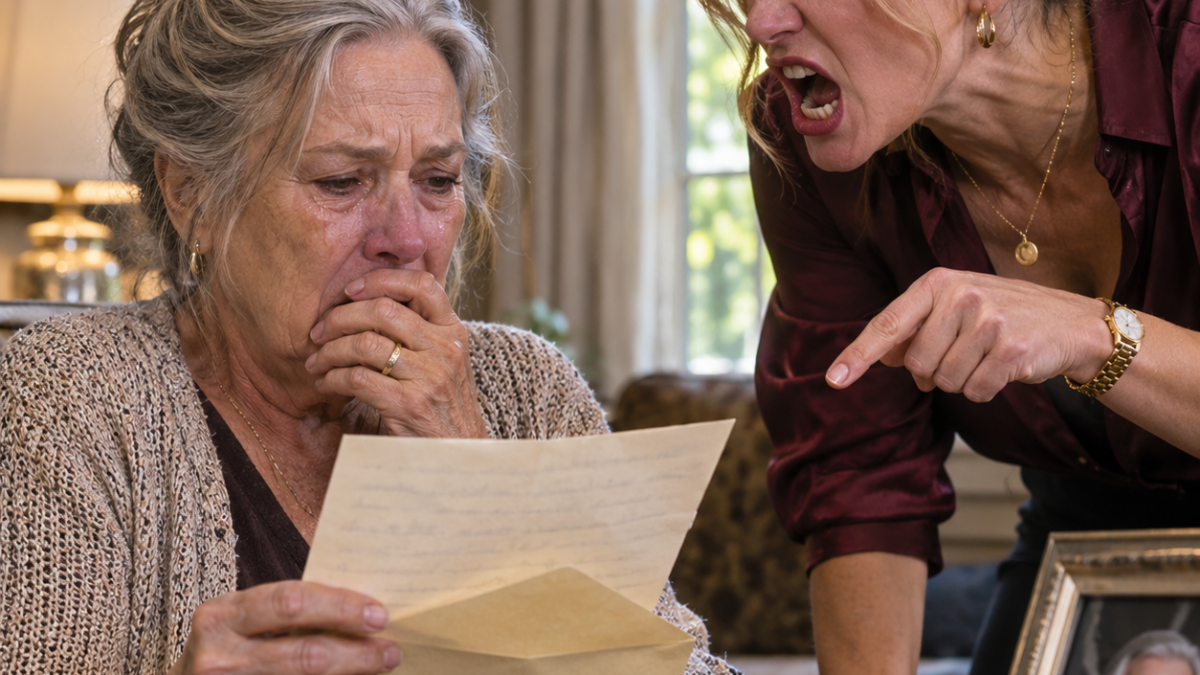
“SHUT YOUR MOUTH AND GIVE ME THAT MONEY NOW!”
She slammed her hand against the coffee table.
I jumped.
The photograph of her father trembled.
I reached toward it automatically.
Selena saw.
Then laughed bitterly.
“Of course. Worry about your stupid picture.”
I looked up.
“That’s your father.”
Her expression didn’t soften.
“He’s dead, Mom.”
The words struck me.
She continued.
“Uncle Robert is dead too. They’re gone. You can’t take your precious money with you when you join them.”
My eyes filled.
“Please stop.”
“Then give me what I need.”
I stared at her.
And saw something I had never allowed myself to recognize.
She wasn’t asking me to help her make a plan.
She wanted obedience.
When Selena finally left, I remained on the sofa.
The house seemed strangely hollow.
The clock ticked.
A car drove past outside.
Somewhere in the backyard, a bird began singing.
Ordinary life continued.
But inside me, something had changed.
I looked toward the photograph she’d nearly knocked down.
My husband was smiling.
Selena sat on his shoulders.
I remembered how proud I’d been of her.
How completely I’d believed that loving a child enough would guarantee she grew into a loving adult.
I knew that wasn’t logical.
Children become their own people.
They make choices.
They develop beliefs and habits their parents cannot control.
But I had never imagined my daughter would look at me with such contempt.
I picked up the photograph.
Touched the glass.
And whispered, “What happened to our little girl?”
Of course, there was no answer.
That night, I couldn’t sleep.
Selena’s words kept echoing.
You don’t need that money.
You’re sixty-seven.
What future do you have left?
You’ll die alone.
I lay in bed staring at the ceiling.
Eventually, I got up.
Walked into the kitchen.
And made coffee.
It was barely five in the morning.
The sky was still dark.
I carried my blue-flowered mug to the table and opened the drawer containing my important papers.
Inside was Robert’s envelope.
I took it out.
The attorney had given it to me along with the estate documents.
I’d already read the letter several times.
But that morning, I needed to see my brother’s handwriting.
I unfolded the paper.
Laura, my dear sister,
If you’re reading this, I’m gone.
My eyes filled.
I want you to know that everything I’ve left belongs to you. You are my closest family, and I want you to use this money to live peacefully and happily.
I covered my mouth.
The letter continued.
Don’t give it away to someone who doesn’t value you.
Don’t let anyone take what is yours.
You’ve spent enough of your life taking care of everyone else.
Now take care of yourself.
Love, Robert.
I pressed the letter against my chest.
For a moment, I could almost hear him.
His deep voice.
His gentle teasing.
The way he called me little sister even after my hair turned gray.
I began crying.
“Robert.”
My voice trembled.
“I don’t know what to do.”
The kitchen remained quiet.
I looked down at his letter again.
And slowly, something became clear.
Robert hadn’t left me money so I could become a target.
He’d left it so I could feel secure.
He trusted me.
He believed I deserved peace.
And my daughter didn’t have the right to take that away simply because she wanted it.
Selena called at eleven the following morning.
When I saw her name on the screen, my heart leaped.
For one foolish moment, I thought she’d come to her senses.
I imagined hearing the little girl I’d raised beneath the grown woman’s voice.
Mom, I’m sorry.
I was frightened.
I shouldn’t have spoken to you that way.
I answered.
“Hello?”
“Mom.”
Her voice sounded soft.
Almost broken.
“Hi, sweetheart.”
She sighed.
“I know yesterday got out of hand.”
I closed my eyes.
“Yes.”
“And I’m sorry I yelled.”
My heart softened.
“Thank you.”
She continued.
“I was just so desperate.”
I waited.
“You know how difficult things are.”
“I know you’re struggling.”
“And when you said you wouldn’t help, I felt like everything was collapsing.”
I gripped the phone.
“Selena, I didn’t say I would never help.”
She went quiet.
“I said I needed to understand the situation before making a decision.”
She sighed.
“Mom, what is there to understand?”
My heart sank.
“Your debts.”
“Seriously?”
“Your income. Your payments. Whether there are other options.”
She gave a bitter laugh.
“I can’t believe this.”
I stared at the wall.
“Selena—”
“You’re really going to make your own daughter submit financial paperwork before you’ll share Uncle Robert’s money?”
I closed my eyes.
“It’s my inheritance.”
Her voice sharpened.
“And I’m your daughter!”
I felt tears gathering.
“That doesn’t give you permission to insult me.”
Silence.
Then she said, “You know what? Now I understand who you really are.”
The call ended.
I sat holding the phone.
Once again, the apology had become another demand.
For days, Selena didn’t call.
I told myself the silence was a relief.
And part of it was.
No shouting.
No insults.
No pressure.
But every morning, I looked at my phone.
Every evening, I wondered whether she was safe.
Had she eaten?
Was the bank really threatening foreclosure?
Had she found another job?
I missed her.
Not the woman who screamed at me.
The daughter I remembered.
The little girl who asked me to braid her hair.
The teenager who cried when she didn’t make the school team.
The young woman who hugged me on her wedding day and whispered, “I couldn’t have done this without you, Mom.”
I missed that person so much that sometimes I wondered whether refusing the money was worth it.
Then I opened Robert’s letter.
And reminded myself that love should not require surrendering my right to make decisions.
Pamela Turner arrived the following week.
We’d been neighbors for more than thirty years.
She was sixty-three, with short gray hair and the kind of smile that made even terrible days feel slightly less frightening.
She’d been there when my husband died.
Brought food when I couldn’t bring myself to cook.
Sat beside me after the funeral.
And never treated my grief as something I needed to hurry through.
When she knocked, I was watering the plants.
I opened the door.
“Pamela.”
She studied me.
Then frowned.
“Laura, what’s wrong?”
I tried to smile.
“Nothing.”
She raised an eyebrow.
“Don’t insult me.”
I almost laughed.
She stepped closer.
“You look exhausted.”
I swallowed.
“Come in.”
We sat at the kitchen table.
I made coffee.
Then stared at my cup.
Pamela waited.
Finally, I whispered, “Selena wants Robert’s money.”
She was quiet.
“How much?”
I looked up.
“I don’t even know. She won’t give me a clear answer.”
Pamela leaned forward.
“Start at the beginning.”
So I did.
I told her about the inheritance.
The Sunday visit.
The debts.
The shouting.
The cruel remark about my age.
The threat that Selena wouldn’t visit when I was dying.
By the time I finished, tears were running down my face.
Pamela reached across the table.
“Oh, Laura.”
I shook my head.
“Maybe I should just give her something.”
She looked at me.
“Why?”
“Because she’s my daughter.”
Pamela was quiet.
Then asked, “Is that the only reason?”
I stared.
She squeezed my hand.
“Do you believe giving her money will solve the problem?”
I thought about Selena’s anger.
How she refused to explain the debt.
How she treated a request for information as an insult.
I looked down.
“I don’t know.”
Pamela nodded.
“Then don’t make a major financial decision until you do.”
Pamela asked whether Selena had always handled money responsibly.
I wanted to say yes.
But the memories came quickly.
Five thousand dollars she’d borrowed for a supposed medical emergency.
She never repaid it.
A credit card she’d asked to use because hers had been blocked.
More than two thousand dollars in purchases.
Months of excuses.
Designer clothes.
Expensive dinners.
Vacations she couldn’t seem to afford.
Whenever I asked questions, she became offended.
“Mom, don’t you trust me?”
I’d apologize.
Then tell myself she was having a difficult year.
But the difficult years never ended.
The requests kept coming.
And now she wanted access to two million dollars.
Pamela listened.
Then said gently, “Laura, you need professional advice.”
I looked up.
“About Selena?”
“About protecting your inheritance.”
My stomach tightened.
“You think she’d try to take it?”
Pamela hesitated.
“I don’t know what she’ll do.”
She looked directly at me.
“But I don’t think you should wait until something happens to start protecting yourself.”
I stared at her.
Then nodded.
For the first time, I understood that financial security wasn’t only about having money.
It was about ensuring I could make decisions without being bullied.
I made an appointment with an attorney named Gregory Wells.
His office was downtown, inside an older building with polished wooden floors and tall windows.
I arrived carrying Robert’s estate documents.
My hands trembled as I sat in the waiting room.
Part of me felt embarrassed.
What kind of mother needed a lawyer to protect herself from her own daughter?
Then I remembered the way Selena screamed.
And my embarrassment became determination.
Gregory was in his fifties.
Calm.
Careful.
He greeted me politely.
“Mrs. Chavez.”
I sat opposite him.
And told him everything.
He listened without interrupting.
When I finished, he examined the documents.
Then looked up.
“Your brother left the inheritance to you.”
I nodded.
“Yes.”
“And the estate paperwork identifies you as the beneficiary.”
“Yes.”
He folded his hands.
“Then we should make sure your accounts and legal documents reflect your intentions clearly.”
I swallowed.
“Can Selena take it?”
He explained that simply being my daughter did not give her an automatic right to seize assets bequeathed to me.
The exact legal protections would depend on the documents and applicable law, but I had the right to control property that was legally mine.
I felt my shoulders loosen.
He discussed keeping the inheritance in accounts under my control.
Protecting access credentials.
Reviewing estate planning.
Preserving documents.
And ensuring no one could make decisions on my behalf without appropriate legal authority.
He didn’t promise that Selena could never cause trouble.
But he gave me something I hadn’t had since Robert died.
A plan.
Over the next several days, I took practical steps.
I opened an account under my sole control.
Reviewed the inheritance transfer.
Changed passwords.
Secured important documents.
And began discussing my will.
I hated that it felt necessary.
Every security measure reminded me that I no longer trusted my daughter with information about my finances.
But each step also gave me back a little peace.
When I left the bank after confirming the arrangements, I sat in my car for several minutes.
Then whispered, “All right, Robert.”
I looked toward the sky.
“I’m doing what you told me.”
The call from Selena’s attorney came one evening.
I was sitting in the living room, pretending to watch television.
The phone rang.
An unfamiliar number.
I almost ignored it.
Then answered.
“Hello?”
“Mrs. Laura Chavez?”
“Yes.”
“My name is Felicia Thomas. I’m an attorney representing your daughter, Selena Chavez.”
I froze.
For a moment, I thought I’d misheard.
“My daughter?”
“Yes.”
Felicia spoke in a calm, professional tone.
She explained that Selena wished to resolve a dispute concerning Robert’s inheritance.
I sat forward.
“There is no dispute.”
She continued.
“Miss Chavez believes she has a claim to a portion of the estate.”
I felt cold.
“My brother left his money to me.”
Felicia paused.
“She is proposing a settlement.”
I swallowed.
“What settlement?”
“Fifty percent of the inheritance.”
I couldn’t breathe.
Fifty percent.
One million dollars.
My daughter was demanding half of my brother’s life’s savings.
And she had hired an attorney to make that demand sound reasonable.
I gripped the phone.
“No.”
There was silence.
Then Felicia said, “Mrs. Chavez, perhaps you should consider—”
“I have considered it.”
My voice shook.
“My answer is no.”
She explained that legal action might follow if the matter could not be resolved.
I stared at the wall.
Then whispered, “Please direct anything further to my attorney.”
The call ended.
I remained motionless.
One million dollars.
Selena hadn’t even asked whether I was sleeping.
Whether I was eating.
Whether I was coping with Robert’s death.
She’d sent a lawyer.
And suddenly I understood something that frightened me more than her shouting.
She was prepared to treat me as an opponent in order to obtain money she believed should be hers.
I called Pamela.
She answered immediately.
“Laura?”
My voice broke.
“She hired a lawyer.”
Pamela went quiet.
“What?”
“Selena.”
I began crying.
“She wants half.”
Pamela exhaled.
“Half of what?”
“Robert’s money.”
I covered my face.
“A million dollars.”
There was a long silence.
Then Pamela spoke.
“Call Gregory.”
I nodded even though she couldn’t see me.
“I will.”
“Tonight, if you can reach him.”
I swallowed.
“Pamela, what if I lose my daughter?”
Her voice softened.
“Laura, you can love your daughter and still protect yourself.”
I began crying harder.
“I don’t know how.”
“Then we’ll learn.”
Gregory advised me to preserve the communication and have any further legal demands directed through his office.
He reviewed the situation.
Explained the difference between a threat of litigation and a valid legal claim.
And reminded me that I did not have to negotiate under pressure.
I listened.
Took notes.
Asked questions.
When the call ended, I felt slightly steadier.
But the pain remained.
Because legal advice could protect my inheritance.
It couldn’t give me back the daughter who once ran into my arms after school.
Selena began calling constantly.
Morning.
Afternoon.
Late at night.
Sometimes she cried.
“Mom, please. I don’t want this to become ugly.”
Other times she shouted.
“Just give me what’s mine!”
Her messages became crueler.
She called me selfish.
Ungrateful.
A bad mother.
She accused me of loving money more than family.
She threatened to tell relatives that I’d abandoned her.
Then one evening, a message appeared that made me sit down.
I hope you die soon so I can finally get what belongs to me.
I stared at the screen.
Read it again.
Then again.
My daughter had written those words.
Not during a heated conversation where she could later claim she’d spoken without thinking.
She’d typed them.
Read them.
Pressed send.
I placed the phone on the table.
Then walked into the kitchen.
I looked at Robert’s envelope.
And began crying so hard that I had to sit on the floor.
A few days later, Selena came to my house.
I saw her through the peephole.
Her hair was loose.
Her face looked tired.
She stood on the porch with her hands clasped.
“Mom?”
I remained still.
“I know you’re there.”
I closed my eyes.
“Please open the door.”
My heart began pounding.
I didn’t want to.
But I remembered her at five years old, crying outside my bedroom after a nightmare.
Mommy, please open.
Before I could stop myself, I unlocked the door.
Selena looked relieved.
“Thank you.”
I stepped aside.
“Five minutes.”
She entered.
Sat on the sofa.
And immediately began crying.
“I’m sorry.”
I remained near the doorway.
“I know I’ve been awful.”
I waited.
“I’m desperate, Mom.”
She looked up.
“I have almost a hundred thousand dollars in debt.”
I felt my stomach tighten.
“One hundred thousand?”
She nodded.
“The bank. Credit cards. Everything.”
I swallowed.
“How?”
She looked away.
“Life.”
“What happened, Selena?”
She became irritated.
“Why does it matter?”
“Because it’s a serious amount of money.”
She looked at me.
“I know that!”
I took a breath.
“Then help me understand.”
For a moment, she looked ashamed.
She mentioned expensive purchases.
Travel.
Restaurants.
Bills she hadn’t managed.
Then she returned to the inheritance.
“Mom, you have two million dollars.”
I felt cold.
“You could fix my entire life.”
I looked at her.
“Money could pay the debt.”
She nodded eagerly.
“Exactly.”
“But it wouldn’t necessarily change the decisions that created it.”
Her expression hardened.
And suddenly, the apology vanished.
“You’re unbelievable.”
I stared.
“Selena—”
“No.”
She stood.
“I came here trying to be nice.”
I felt my heart sinking.
“I listened to you.”
“And now you’re lecturing me again.”
I shook my head.
“I’m trying to protect both of us.”
She laughed.
“No, you’re protecting yourself.”
I looked at her.
“Yes.”
The word came out before I could stop it.
Selena froze.
“What?”
I stood straighter.
“Yes. I am protecting myself.”
Her eyes narrowed.
“Wow.”
I swallowed.
“I’m allowed to do that.”
For a moment, she stared at me as though I had spoken in a foreign language.
Then her expression turned cold.
“Fine.”
She grabbed her purse.
“If you want to do this the hard way, we will.”
I felt a chill.
“What does that mean?”
She moved toward the door.
“It means I’m going to take what I’m owed.”
I shook my head.
“You’re not owed my inheritance.”
She turned.
“And I’m going to make sure everyone knows what kind of mother you really are.”
My throat tightened.
She stepped outside.
Then looked back.
“When this is over, you’ll have your precious money.”
Her lips curled.
“But nobody who loves you.”
The door closed.
I stood in the hallway.
And for the first time, I realized that Selena wasn’t only threatening my finances.
She was threatening my place in the world.
Selena kept her promise.
Within weeks, people began treating me differently.
At first, it was small.
A cousin who had always sent birthday cards suddenly sounded cold on the telephone.
A neighbor who used to wave from her porch looked away when she saw me outside.
A family acquaintance stopped inviting me to coffee.
I tried to tell myself I was imagining things.
Then my cousin Irene called from Orlando.
“Laura, we need to talk.”
My stomach tightened.
“Hello, Irene.”
She didn’t bother with pleasantries.
“Selena told me what’s happening.”
I closed my eyes.
“What did she tell you?”
“That she’s about to lose her house.”
I waited.
“That you’re sitting on millions while your own daughter is desperate.”
My throat tightened.
“The situation is more complicated.”
Irene sighed.
“Laura, she’s your only child.”
“I know.”
“Sometimes parents have to sacrifice.”
I gripped the phone.
That word.
Sacrifice.
As though motherhood were a contract requiring me to surrender everything until I died.
“Irene, have you asked Selena why she’s in debt?”
Silence.
Then she replied, “That’s not the point.”
I stared at the wall.
“It matters to me.”
“You’re being difficult.”
I closed my eyes.
“Then we don’t have anything else to discuss.”
I ended the call.
And sat at the kitchen table trembling.
I hated being judged.
I hated imagining relatives whispering about me.
But I hated something else even more.
My daughter had begun telling people a story in which she was the victim and I was the villain.
And she knew exactly how much that would hurt.
Soon I couldn’t even go grocery shopping without feeling watched.
One afternoon, I stood in the produce aisle choosing tomatoes.
Two women were talking nearby.
I heard my name.
Then one whispered, “That’s the mother.”
The other woman looked at me.
“Really?”
I froze.
“Her daughter is going to lose everything, and she won’t help.”
The words struck me like a slap.
I placed the tomatoes into my basket.
Then heard the second woman say, “Some people care more about money than family.”
I wanted to turn around.
Tell them about the threatening messages.
About Selena’s debt.
About the lawyer demanding a million dollars.
About Robert’s letter.
But I couldn’t bring myself to argue with strangers in the grocery store.
So I walked away.
Paid for my vegetables.
And hurried home.
By the time I unlocked my front door, tears were running down my face.
I sat on the kitchen floor with the grocery bags beside me.
And cried.
Not because strangers disliked me.
Because my own daughter was making me feel ashamed to walk through my neighborhood.
Pamela found me there.
She’d noticed that I hadn’t been outside much.
When I finally opened the door, she stared.
“Laura, honey.”
I tried to smile.
“I’m fine.”
She looked at my face.
Then at the untouched groceries.
“No, you’re not.”
She stepped inside.
Put her arms around me.
And I broke.
I told her about the grocery store.
Irene.
The messages.
The way people looked at me.
Pamela listened.
Then took my hands.
“This cannot continue.”
I shook my head.
“What am I supposed to do?”
“Protect yourself.”
“I have a lawyer.”
“I know.”
She leaned closer.
“But you also need support.”
I looked down.
She continued.
“Selena is isolating you.”
My eyes filled.
“She’s telling people lies because she knows it makes you feel alone.”
I swallowed.
“And it’s working.”
Pamela’s expression softened.
I whispered, “Sometimes I think about giving her something just to make it stop.”
She squeezed my hands.
“Then she would know that frightening you works.”
I stared at her.
For a long moment, neither of us spoke.
Then Pamela said, “You need people around you who aren’t afraid to hear the truth.”
The lawsuit arrived officially soon afterward.
I remember holding the papers.
The crisp edges.
The formal language.
The feeling that my daughter’s name looked strange printed in a legal document against mine.
Selena Chavez.
Plaintiff.
Laura Chavez.
Defendant.
I stared at those words.
Mother and daughter.
Opposing parties.
I had held Selena during her first fever.
Helped her with homework.
Paid for school supplies.
Watched her graduate.
Comforted her after her divorce.
And now we were on opposite sides of a legal dispute over money my brother had left to me.
Gregory reviewed the papers.
He remained calm.
He explained that the claims would have to be supported by applicable law and evidence, and that the inheritance documents were important.
He didn’t encourage me to panic.
He encouraged me to prepare.
Then he told me something worse.
Selena was attempting to challenge my ability to manage my own finances.
I stared at him.
“What?”
He looked serious.
“Her filings raise questions about your decision-making capacity.”
For a moment, I couldn’t understand the words.
Then their meaning became clear.
My daughter was trying to portray me as mentally incapable of controlling my assets.
My hands began shaking.
“Because I said no?”
Gregory leaned forward.
“That doesn’t establish incapacity.”
“But she’s saying it.”
“Yes.”
I felt dizzy.
“She wants someone else to control my money?”
“She’s seeking a legal route that could affect decision-making authority if she were able to meet the required standards.”
I covered my mouth.
The person who had mocked my age in my living room was now trying to turn that age into a legal weapon.
I began crying.
“She wants to take my life away.”
Gregory waited until I could breathe steadily.
Then said, “We’re going to respond with evidence.”
He recommended an independent professional evaluation relevant to the issues Selena had raised.
I agreed.
But the thought terrified me.
I had never been afraid of being sixty-seven.
Not before this.
I knew I was older than I had once been.
My knees sometimes hurt.
My reading glasses were almost always missing.
And I occasionally walked into a room and forgot what I’d intended to do there.
But those ordinary experiences had never made me question my right to make decisions.
Now I sat in a specialist’s office wondering whether the way I answered a question could determine my future.
The evaluation was thorough.
Questions.
Memory exercises.
Conversation.
Discussion of my daily activities and finances.
I did my best.
I answered honestly.
When the specialist finished, I felt exhausted.
But the findings did not support the claim that I lacked capacity to manage my affairs.
I cried when I learned that.
Not because I had expected a different result.
Because I’d spent days frightened that my daughter might convince the world that disagreeing with her meant something was wrong with my mind.
I called Pamela afterward.
She answered immediately.
“Laura?”
I began crying.
“The evaluation went well.”
Pamela exhaled.
“Oh, thank goodness.”
I laughed through tears.
“I know I’m capable of making my own decisions.”
“I know.”
“But I needed someone else to say it.”
Pamela’s voice softened.
“Then I’m glad they did.”
Selena didn’t stop.
She called.
Sent messages.
Contacted relatives.
And tried to make me look increasingly unstable.
One afternoon, she arrived at my house with her attorney.
I saw them through the window.
Selena stood on the porch looking tired and angry.
Felicia Thomas stood beside her holding a folder.
The doorbell rang.
I remained still.
Then came pounding.
“Mom!”
I felt my heart race.
“Open the door!”
I walked into the hallway.
But didn’t unlock it.
“Selena, please leave.”
There was silence.
Then Felicia spoke.
“Mrs. Chavez, we’d like to discuss a possible settlement.”
I took a breath.
“Please communicate through Gregory Wells.”
Selena shouted.
“Mom, stop hiding!”
I closed my eyes.
“I’m not discussing this at my front door.”
She pounded again.
“You can’t ignore me forever!”
I stood with one hand against the wall.
My knees trembled.
For a moment, I wanted to open the door.
Just to stop the noise.
Just to make her leave.
But then I remembered Robert’s letter.
I remembered Gregory explaining that I had the right to make my own decisions.
I remembered Pamela telling me to protect myself.
So I kept the door locked.
And waited.
Finally, Selena’s voice changed.
It became low.
Cold.
“When this is over, Mom, you’re going to be completely alone.”
Footsteps moved away.
A car door slammed.
An engine started.
Then silence.
I slid slowly onto the hallway bench.
My hands were shaking.
But the door remained closed.
For the first time, I understood that courage wasn’t necessarily feeling strong.
Sometimes courage was refusing to open a door while your entire body trembled.
Pamela said I looked different after that day.
She came over for coffee.
Studied my face.
Then smiled faintly.
“Something’s changed.”
I raised an eyebrow.
“Have I gotten another wrinkle?”
She laughed.
“No.”
I looked down at my mug.
“Then what?”
“You don’t look quite as frightened.”
I thought about that.
I still felt afraid.
Every legal notice made my stomach tighten.
Every unfamiliar phone number raised my pulse.
But something had changed.
I was angry.
Not the helpless anger that left me crying on the kitchen floor.
A clearer anger.
Anger that my daughter believed she could force me to surrender.
Anger that she had turned relatives against me.
Anger that she wanted to make an independent woman appear incompetent because I wouldn’t give her a million dollars.
I looked at Pamela.
“I’m tired of being frightened in my own house.”
She nodded.
“Good.”
I smiled weakly.
“I just don’t know how to stop.”
Pamela reached for my hand.
“Start by remembering your life belongs to you.”
Not long afterward, a woman named Tanya Davis arrived at my door.
She was a social worker from a senior support center.
Pamela had contacted the organization because she was worried about me.
At first, I felt embarrassed.
I didn’t want to be treated as someone who couldn’t manage her own life.
But Tanya explained that the center supported older adults facing financial pressure, harassment, and difficult family situations.
She listened carefully.
She didn’t treat me as foolish.
Didn’t ask why I hadn’t simply given Selena the money.
Didn’t tell me to forgive her because she was my daughter.
Instead, she asked what I needed.
I looked down at my hands.
“I want to feel safe again.”
Tanya nodded.
“That’s a good place to begin.”
She explained the center’s services.
Support groups.
Emotional support.
Practical guidance.
Resources for people experiencing financial abuse.
Then she invited me to attend a weekly meeting.
I hesitated.
“I don’t know anybody.”
She smiled.
“Most people don’t when they first come.”
I looked toward the window.
For weeks, I’d barely wanted to leave the house.
Maybe it was time.
I nodded.
“I’ll try.”
The first meeting changed something in me.
There were six women seated in a circle.
All older.
All carrying stories they hadn’t expected to live.
A woman named Grace spoke first.
Her son had gained access to her financial records and taken savings without her permission.
She cried while telling us.
Another woman, Meredith, described how her family had tried to control her housing and decisions.
Others spoke about threats, guilt, manipulation, and the shame of being mistreated by someone they loved.
I sat listening.
And felt my loneliness begin to loosen.
For months, I’d believed I was the only mother whose adult child could become so cruel.
Now I was surrounded by women who understood.
When my turn came, I struggled to speak.
“My daughter…”
My voice broke.
I looked toward the floor.
“She wants my inheritance.”
Nobody interrupted.
I continued.
“Two million dollars.”
I swallowed.
“She says I don’t need it because I’m old.”
Tears began falling.
“She’s suing me.”
The room remained quiet.
Not the uncomfortable silence I’d come to expect when people wanted me to stop talking.
A different silence.
One that made space for the truth.
I told them about Selena.
Robert.
The threats.
The way I’d begun feeling ashamed of my own life.
When I finished, Grace reached for my hand.
“Laura.”
I looked up.
“You’re allowed to protect yourself.”
My face crumpled.
She continued.
“Being a mother doesn’t mean your life stops belonging to you.”
I began sobbing.
And for the first time in months, I didn’t try to hide it.
The support group became part of my week.
I looked forward to it.
Not because the stories were easy.
They weren’t.
But because I could speak without being judged.
Sometimes we cried.
Sometimes we laughed.
Sometimes we drank coffee after the meeting and talked about ordinary things.
Gardening.
Books.
Cooking.
Travel.
Our grandchildren.
The weather.
I began remembering that I was more than Selena’s mother.
I was Laura.
A widow.
A sister.
A friend.
A woman who enjoyed baking and growing flowers.
Someone who still had things she wanted to experience.
For months, the lawsuit had become the center of my life.
Now I began making room for something else.
The legal proceedings continued.
Gregory kept me informed.
Selena’s initial lawsuit was dismissed, though she pursued further legal steps and challenged the outcome.
I learned that even a weak legal claim could cause enormous stress.
There were documents to review.
Deadlines.
Expenses.
Uncertainty.
I sometimes felt exhausted before breakfast.
But I wasn’t facing it alone.
Gregory handled the legal process.
Pamela helped me through difficult evenings.
Tanya checked on my progress.
And the women in the support group reminded me that I had a life outside the dispute.
Then came another disturbing phone call.
A man introduced himself as Paul Miller.
He said he was a private investigator Selena had hired.
I sat down immediately.
“A private investigator?”
“Yes, ma’am.”
My heart began pounding.
He explained that he’d been asked to look into my finances and background.
I stared at the wall.
“Why are you telling me?”
He was quiet for a moment.
Then said he didn’t agree with the way the situation was unfolding.
He said he’d found nothing that supported the accusations Selena was making.
I didn’t know whether to trust him.
I didn’t know what information he could properly disclose.
But I documented the conversation and contacted Gregory.
My attorney reviewed what had been reported and advised me on the appropriate response.
I felt frightened all over again.
Selena wasn’t merely angry.
She was willing to involve strangers in an effort to find something she could use against me.
When I hung up, I looked around my living room.
The photographs.
The familiar furniture.
The little blue-flowered mug on the table.
And whispered, “What have we become?”
Gregory prepared a formal response addressing the unwanted communications and behavior.
Afterward, the calls stopped.
The messages stopped.
The pounding on the door stopped.
At first, I couldn’t believe it.
For days, I kept checking my phone.
I waited for the next accusation.
The next cruel message.
The next threat.
But nothing came.
The silence felt strange.
Almost frightening.
Then, slowly, it began feeling peaceful.
I woke one morning and realized I’d slept through the night.
No nightmares.
No sudden panic.
No reaching for my phone to see whether Selena had written something terrible while I was asleep.
I lay beneath the blanket listening to the birds outside.
And smiled.
It was such a small thing.
Sleeping peacefully.
But I’d forgotten how precious it could be.
I began taking care of myself again.
I went for walks.
Cooked proper meals.
Read novels.
Returned to my garden.
The plants had suffered while I was overwhelmed.
Weeds had grown.
A few flowers had withered.
The soil needed attention.
I spent a Saturday working outside.
Pulling weeds.
Watering.
Trimming.
Sweeping the stone path.
By afternoon, my back ached.
My hands were dirty.
But the garden looked alive again.
I sat on the wooden bench my husband had placed beneath the tree years earlier.
Closed my eyes.
And felt the sun on my face.
For the first time, I understood what Robert had wanted for me.
Not wealth for its own sake.
Peace.
Freedom.
The ability to enjoy another morning without wondering whether I would have enough money to care for myself.
I looked toward the house.
Then whispered, “Thank you, Robert.”
Three weeks after Selena stopped contacting me, the phone rang.
Her name appeared.
I stared at it.
My heart began pounding.
I almost ignored the call.
But then I answered.
“Hello?”
“Mom.”
Her voice sounded quiet.
Tired.
Almost unfamiliar.
“Selena.”
She took a breath.
“I need to see you.”
I closed my eyes.
“Why?”
“Please.”
I waited.
“I need to talk to you. Just once.”
For a moment, I heard something that sounded genuine.
Regret.
Exhaustion.
Perhaps fear.
I wanted to believe her.
God help me, I wanted to believe her.
So I agreed to a short visit the following afternoon.
But I gave her a condition.
“No shouting.”
She was quiet.
“No demands.”
“Okay, Mom.”
“And if you threaten me, the conversation ends.”
She swallowed.
“I understand.”
When I hung up, my hands were trembling.
I called Pamela.
She listened.
Then said, “Be careful.”
I nodded.
“I will.”
“And remember, Laura, you don’t have to believe every apology just because you want it to be true.”
I closed my eyes.
“I know.”
But knowing and feeling were still very different things.
Selena arrived at three.
She wore a simple white blouse and jeans.
Almost no makeup.
Her hair fell loosely around her shoulders.
She looked older than she had a few months earlier.
Tired.
Her face was drawn.
For a moment, my maternal instinct overwhelmed everything else.
I wanted to reach for her.
Ask whether she’d eaten.
Tell her to sit down.
Make her favorite meal.
Pretend that all the terrible things between us had never happened.
Instead, I stepped aside.
“Come in.”
She sat on the sofa.
I sat opposite her.
For a long time, she stared at her hands.
Then she began crying.
“Mom, I’m sorry.”
I waited.
“I’ve been thinking about everything.”
She wiped her face.
“The way I spoke to you.”
Her voice broke.
“The lawsuit.”
She looked up.
“The things I said.”
My eyes filled.
Selena continued.
“I know I hurt you.”
I swallowed.
“Yes.”
She stared at me.
I didn’t soften the word.
I didn’t tell her everything was fine.
Because it wasn’t.
She nodded slowly.
“I don’t expect you to forget.”
I waited.
Then I asked the question that mattered most.
“Why now?”
Selena looked down.
For a long moment, she said nothing.
Then whispered, “My lawyer says I can’t win.”
My stomach tightened.
She continued.
“I’ve spent so much money.”
I stared.
“And I lost my job.”
I closed my eyes.
There it was.
Her circumstances had changed.
The legal pressure hadn’t worked.
She’d exhausted resources.
And now she wanted to return.
Selena looked up.
“But I also realized what I’ve been doing.”
I wanted to believe that part.
Maybe it was true.
Maybe losing the lawsuit had forced her to examine herself.
But I couldn’t simply accept her words without time and evidence.
I leaned forward.
“Selena, I need you to understand something.”
She nodded.
“You told me you hoped I’d die.”
Her face crumpled.
I continued.
“You tried to convince people I was incompetent.”
Tears ran down her cheeks.
“You threatened to leave me alone.”
My voice broke.
“And you made me afraid in the house where I raised you.”
She covered her face.
“I’m sorry.”
I swallowed.
“An apology doesn’t erase those things.”
She nodded.
“I know.”
For the first time, she didn’t argue.
That mattered.
But it wasn’t enough.
Before leaving, Selena told me she’d withdrawn her appeal.
She said she no longer wanted to pursue the inheritance.
I listened.
Then told her I needed time.
She began crying.
“Mom, please don’t close the door forever.”
I looked at her.
For a moment, I saw her at six years old.
Standing beside me with a scraped knee.
Begging for a hug.
My throat closed.
“I don’t know what our relationship will look like.”
She stared.
“But if we’re going to have one, things have to change.”
She nodded.
“I understand.”
I swallowed.
“No more financial demands.”
“Okay.”
“No more threats.”
“Okay.”
“And no more treating me as though I’m worthless because I’m older.”
Selena began crying harder.
“I know.”
I walked her toward the door.
She paused.
Then whispered, “I love you, Mom.”
My eyes filled.
“I love you too.”
She stepped outside.
I closed the door.
Then leaned against it.
I was crying.
But this time, I didn’t feel obligated to chase after her.
For several weeks, Selena seemed different.
She called politely.
Asked how I was.
Sometimes offered to bring groceries.
She didn’t shout.
Didn’t mention the inheritance.
Didn’t demand money.
Once, she brought sunflowers.
My favorites.
She stood on the porch holding the bouquet.
“I remembered.”
I looked at the flowers.
My eyes filled.
“Thank you.”
I placed them in a vase.
Made tea.
And sat with her in the living room.
We talked about the weather.
The neighborhood.
A television program.
The changes I’d made in the garden.
Ordinary things.
But something was missing.
I couldn’t relax.
Every time she complimented my home, I wondered whether she was thinking about money.
Every time she asked how I was, I wondered whether another request would follow.
I hated feeling that way.
I wanted to trust her.
But trust doesn’t return simply because the shouting stops.
It has to grow through consistent behavior.
And I needed more time.
Pamela noticed how tense I became before every visit.
One afternoon, she watched me rearranging the kitchen table for the third time.
“Laura.”
I looked up.
“What?”
“You’re nervous.”
I forced a laugh.
“No, I’m not.”
She raised an eyebrow.
“Then why have you moved those cups six times?”
I stared at the cups.
Then began crying.
Pamela approached.
“Oh, honey.”
I covered my face.
“I don’t know how to act around my own daughter.”
She hugged me.
I whispered, “I keep waiting for her to ask for money again.”
Pamela was quiet.
Then said, “You don’t have to force a relationship before you’re ready.”
I wiped my eyes.
“But what if she’s truly changed?”
“Then she’ll respect your pace.”
I looked toward her.
Pamela continued.
“Real change doesn’t demand immediate trust as a reward.”
Those words stayed with me.
I returned to Gregory’s office.
Not because Selena had filed another lawsuit.
But because I wanted my affairs arranged according to my own wishes.
We reviewed my accounts.
My will.
The deed to my house.
The documents connected to Robert’s inheritance.
I asked about estate planning options.
About leaving money to organizations I cared about.
About making sure no one could pressure me into decisions I didn’t want.
Gregory explained my choices.
I listened carefully.
Then asked a question that made my throat tighten.
“What if I decide not to leave anything to Selena?”
He looked at me.
Then answered thoughtfully, explaining that testamentary freedom and any legal limitations would depend on the applicable law and estate arrangements.
I nodded.
I wasn’t ready to make every decision that day.
But something important had changed.
I was considering what I wanted.
Not what Selena demanded.
Not what relatives expected.
Not what guilt told me I should do.
My own wishes.
For the first time in years, that felt like enough.
That evening, I took out a notebook.
I opened it to a blank page.
Then wrote:
Things I still want to do.
For several minutes, I stared at the words.
It had been so long since I’d allowed myself to think about my own dreams.
Then I began writing.
See the ocean again.
Learn watercolor painting.
Travel somewhere beautiful.
Donate to causes that matter.
Spend more time with friends.
Make my house feel cheerful.
Sleep peacefully.
Laugh without feeling guilty.
I looked at the page.
Then began crying.
Not because the list was sad.
Because it was mine.
And none of those wishes required Selena’s permission.
The first thing I did was enroll in a watercolor class.
I had always wanted to paint.
When I was younger, I used to stop in front of art galleries and imagine what it would feel like to create something beautiful.
But there was never enough time.
When Selena was small, there were school expenses.
When my husband was alive, we were saving for retirement.
After he died, I spent years trying to recover from grief.
Then Selena’s problems became the center of my life.
I had spent so long taking care of other people that I’d forgotten how to choose something simply because it made me happy.
The class met twice a week at the community center.
On my first morning, I stood outside the classroom holding a little bag of paints.
I felt ridiculous.
A sixty-seven-year-old woman nervous about attending an art class.
Then the instructor smiled.
“Come on in.”
There were people of different ages sitting around tables.
Paintbrushes.
Paper.
Little dishes of water.
I found an empty chair.
And began.
My first painting was terrible.
The flowers looked like melted umbrellas.
The leaves were too dark.
The sky was an unnatural shade of purple.
I stared at it.
Then began laughing.
The woman beside me smiled.
“First time?”
I nodded.
“Is it that obvious?”
She laughed.
“Only because you’re trying so hard to make it perfect.”
I looked down at the paper.
For a moment, I thought about Selena.
How she’d measured my worth by money.
How I’d measured my own worth by whether I could keep her happy.
Then I picked up my paintbrush.
And added a little yellow to the sky.
I didn’t care whether it was perfect.
For once, I was doing something that didn’t have to please anybody else.
I also made a donation.
Ten thousand dollars to an organization supporting older women experiencing abuse.
I thought about Grace and Meredith.
The women from my support group.
The people who had lost savings.
Homes.
Trust.
Dignity.
I knew money couldn’t solve everything.
But I wanted some of Robert’s gift to help people who were trying to rebuild their lives.
When the thank-you letter arrived, I cried.
It wasn’t the amount that mattered most.
It was the feeling of choosing.
No one had threatened me.
No one had demanded the money.
No one had told me I was selfish if I didn’t give it.
I had made a decision because it reflected my values.
And it felt wonderful.
Next, I changed the house.
I painted the kitchen a soft yellow.
Replaced the heavy living room curtains with lighter ones.
Bought plants.
Cleaned out drawers.
Moved furniture.
Opened windows.
Let sunlight into corners that had felt dark for years.
Pamela helped.
One afternoon, we stood in the living room looking at the new curtains.
She smiled.
“Laura, this looks like a different house.”
I laughed.
“Does it?”
She nodded.
“It’s brighter.”
I looked around.
The photographs remained.
Selena as a baby.
Selena at graduation.
My husband beside her at the beach.
Robert smiling awkwardly during one of his rare visits.
I hadn’t removed them.
Those memories belonged to me too.
But the room no longer felt like a museum of everything I’d lost.
It felt like a place where new things could happen.
I turned toward Pamela.
“I think I’m beginning to like my life again.”
Her eyes filled.
“Good.”
She hugged me.
“That’s exactly what your brother wanted.”
Selena noticed the changes during one of her visits.
She stood in the doorway.
Looked around.
Then smiled.
“The house looks nice, Mom.”
I nodded.
“Thank you.”
“New curtains?”
“Yes.”
“And you painted?”
“Yes.”
She glanced toward the little watercolor I’d framed beside the window.
“What’s that?”
“Something I made.”
She looked surprised.
“You’re painting?”
I smiled.
“I am.”
For a moment, I hoped she’d ask about the class.
Maybe show interest.
Maybe ask what I enjoyed painting.
Instead, she glanced around the room again.
“You’ve been spending money.”
I felt a familiar tightening in my stomach.
I looked toward her.
“Yes.”
She folded her arms.
“I guess that’s one benefit of having two million dollars.”
The remark wasn’t as cruel as the things she’d said before.
But I recognized the resentment beneath it.
I took a breath.
“I decided to make my home more comfortable.”
She nodded.
Then changed the subject.
I watched her.
And realized that even though she was behaving more politely, she still seemed to measure my choices against the inheritance.
It frightened me.
But I didn’t argue.
I simply remembered.
Trust requires time.
And time reveals things.
The next test came while I was painting.
It was a Thursday afternoon.
I was working on a watercolor of the ocean.
Blue waves.
A pale sky.
A strip of sand.
Nothing complicated.
But I loved the way the colors blended.
My phone vibrated.
Selena.
I glanced at the screen.
Then returned to my painting.
For once, I didn’t feel compelled to stop everything because my daughter wanted me.
When class ended, I checked the voicemail.
“Mom, I need to talk to you. It’s important. Please call me.”
Her voice sounded tense.
I felt the familiar panic rise.
Then stopped.
I reminded myself that an unanswered telephone call wasn’t an emergency simply because Selena said it was.
If there were immediate danger, she could contact the appropriate services.
I could call her when I was ready.
So I put the phone away.
Went home.
Made dinner.
And called her the next morning.
She answered immediately.
“Mom!”
“Hello, Selena.”
“Thank God. I’ve been trying to reach you.”
“I was at my painting class.”
There was a pause.
“Oh.”
Then she said, “I need a favor.”
My heart sank.
“What kind?”
She hesitated.
“Five thousand dollars.”
I closed my eyes.
I stood motionless in my kitchen.
The yellow walls seemed suddenly too bright.
“Selena.”
“Just for one month.”
I swallowed.
“I’ll pay it back.”
I stared at the telephone.
The same promises.
The same urgency.
The same assumption that my money was available whenever she needed it.
“Selena, we agreed not to discuss the inheritance.”
“I know, Mom.”
Her voice became pleading.
“But this is different.”
I felt tears gathering.
“How?”
“It’s an emergency.”
“What kind of emergency?”
She hesitated.
“Something I need to pay.”
I closed my eyes.
“Selena, what exactly?”
She sighed.
“Mom, it’s five thousand dollars.”
I remained silent.
“That’s nothing compared to what you have.”
And there it was.
The sentence that told me everything.
Not I know I hurt you.
Not I understand why you’re cautious.
Not I’ve made a plan to manage my finances.
Just five thousand dollars was nothing to a woman with two million.
I took a breath.
“No.”
Silence.
Then Selena whispered, “What?”
“I won’t lend you the money.”
Her voice sharpened.
“Mom, I’ve been trying so hard.”
I felt my stomach tighten.
“I know you’ve been visiting.”
“I’ve called you.”
“Yes.”
“I brought you flowers!”
I closed my eyes.
She continued.
“And this is how you repay me?”
That word.
Repay.
As though kindness were a deposit she expected to withdraw with interest.
My voice trembled.
“Selena, if you were being kind because you expected money, then we weren’t rebuilding our relationship.”
She was silent.
Then her anger returned.
“You’re impossible.”
I swallowed.
“You never appreciate anything.”
I felt tears rising.
“Selena, I’m going to end this conversation.”
She laughed bitterly.
“Of course you are.”
I closed my eyes.
“Goodbye, sweetheart.”
Then I hung up.
I stood in the kitchen for a long time.
The house was quiet.
Outside, the flowers moved in the morning breeze.
I expected to feel devastated.
I expected to collapse.
To call her back.
To apologize.
To wonder whether I was a terrible mother.
But something surprising happened.
I felt relief.
It was painful relief.
The kind that arrives when a truth you’ve been avoiding finally becomes impossible to deny.
Selena had spent weeks trying to regain my trust.
Perhaps part of her wanted reconciliation.
I couldn’t know for certain.
But when I refused the money, the contempt returned.
The apologies hadn’t yet become lasting change.
And I no longer had to pretend otherwise.
I called Pamela.
She listened quietly.
Then asked, “How do you feel?”
I thought for a moment.
“Sad.”
She waited.
“Very sad.”
My voice broke.
“But also…”
I looked around the kitchen.
“Free.”
Pamela was quiet.
Then said, “You can miss your daughter without handing over your peace.”
I began crying.
“I know.”
And for the first time, I believed it.
Selena stopped calling.
This time, I didn’t chase her.
I didn’t send messages asking whether she was angry.
Didn’t write long explanations.
Didn’t apologize for protecting my finances.
I simply continued living.
Some days were easier than others.
There were mornings when I woke missing her so badly that I could hardly swallow breakfast.
I remembered her childhood.
The bedtime stories.
The first day of school.
The way she’d cried when her father died.
I loved her.
That hadn’t disappeared.
But I was learning that loving someone and trusting them were not the same thing.
And that refusing to be mistreated didn’t mean I had stopped caring.
I began planning a trip to the ocean.
It had been years since I’d seen the sea.
My husband and I used to go whenever we could afford it.
We’d walk along the beach early in the morning.
Collect shells.
Eat breakfast at little diners.
Sit beside the water and talk about nothing important.
After he died, I stopped going.
The idea of standing on the beach without him felt unbearable.
But one afternoon, I opened my notebook and saw what I’d written months earlier.
See the ocean again.
I stared at the words.
Then picked up the phone.
I found a small hotel overlooking the water.
Booked a room.
And decided to stay two weeks.
Pamela was delighted.
“Laura!”
I laughed.
“What?”
“You’re actually doing it!”
I smiled.
“I am.”
She hugged me.
“Good for you.”
I felt nervous.
Traveling alone seemed strange.
But I was also excited.
And that feeling reminded me of something I’d nearly forgotten.
I still had a future.
The morning I arrived at the coast, I stood on the hotel balcony and cried.
The ocean stretched toward the horizon.
Blue.
Endless.
Sunlight glittered across the water.
I could hear waves breaking against the shore.
For a moment, I closed my eyes.
And remembered my husband.
How he’d taken my hand.
How we’d walked barefoot through the sand.
How he’d once told me that the ocean made him feel small in the best possible way.
I whispered his name.
Then smiled through tears.
“I came back.”
That afternoon, I walked along the beach.
I carried my shoes.
Felt the sand beneath my feet.
Let the wind move through my hair.
And watched the water roll toward me.
For the first time in months, I wasn’t thinking about Selena’s lawyer.
Or the lawsuit.
Or the bank.
Or the cruel messages.
I was thinking about the ocean.
The sky.
The warmth of the sun.
And how extraordinary it felt to be alive.
During those two weeks, I met other women my age.
Some were widowed.
Some divorced.
Some had complicated relationships with their children.
Others were simply traveling because they wanted to.
We drank coffee on the hotel terrace.
Shared stories.
Laughed.
Sometimes talked until sunset.
I discovered that loneliness didn’t disappear only when family returned.
Sometimes it eased when we opened ourselves to new friendships.
These women didn’t care whether I had an inheritance.
They didn’t ask how much money was in my account.
They cared about the books I’d read.
The places I’d visited.
The paintings I’d made.
The little blue-flowered mug I described when we talked about treasured possessions.
They cared about me.
And that was something I’d almost forgotten I deserved.
When I returned home, my watercolor teacher encouraged me to enter a small exhibition.
I laughed when she suggested it.
“Me?”
She smiled.
“Yes, you.”
I shook my head.
“I’m still learning.”
“Everyone is.”
I looked at my paintings.
The ocean.
Flowers.
My backyard.
A little cottage beneath a blue sky.
They weren’t perfect.
But they were mine.
Eventually, I agreed.
On the night of the exhibition, I stood in the cultural center staring at my work hanging on the walls.
People were looking at it.
Talking about it.
Smiling.
Pamela arrived carrying flowers.
The women from my support group came.
Tanya was there.
Even Carol, the neighbor who had once avoided me because of Selena’s rumors, came to offer congratulations.
I looked around the room.
And felt tears gathering.
For months, I’d believed my daughter had destroyed my reputation and left me with nobody.
Now I was surrounded by people who knew me.
Not as a bank account.
Not as a difficult mother.
As a woman who had learned to paint.
Who was rebuilding her life.
Who had survived something painful and found her way forward.
Pamela stood beside me.
“Well?”
I laughed through tears.
“I don’t know what to say.”
She smiled.
“Then don’t say anything.”
I looked at the paintings.
Then at my friends.
And for the first time in years, I felt proud of myself without needing anyone else’s permission.
Almost eight months after my last argument with Selena, I saw her in the grocery store.
I was standing in an aisle choosing rice when I looked up.
There she was.
My daughter.
She had shorter hair.
She wore simple clothes.
Her shopping cart was almost empty.
She looked tired.
Thinner.
Older.
For a moment, we stared at each other.
I felt my heart stop.
Then Selena began walking toward me.
My first instinct was to leave.
But something held me there.
Perhaps curiosity.
Perhaps the desire to understand whether anything had changed.
She stopped a few feet away.
“Hello, Mom.”
My throat tightened.
“Hello, Selena.”
For a moment, neither of us spoke.
Other shoppers moved around us.
A child laughed somewhere nearby.
A cart rattled over the floor.
Ordinary life continued while I stood facing the woman who had once been the center of mine.
Selena looked at me.
“You look well.”
I nodded.
“Thank you.”
She swallowed.
“I’ve been wanting to call.”
I waited.
“But I didn’t know whether you’d answer.”
I looked down at my basket.
Then back at her.
“What did you want to say?”
Her eyes filled.
“That I was wrong.”
I felt something tighten inside me.
She continued.
“About the money.”
Her voice trembled.
“About the way I treated you.”
I remained silent.
“I was cruel, Mom.”
Tears slipped down her cheeks.
“And selfish.”
I swallowed.
She continued.
“You didn’t deserve any of it.”
For a moment, I wanted to reach for her.
To hold her.
To tell her everything would be fine.
But I remembered the lawsuit.
The threats.
The messages wishing for my death.
The repeated apologies that ended in new demands.
I could appreciate her words without surrendering my boundaries.
“Thank you for saying that.”
Selena nodded.
Then asked quietly, “Do you forgive me?”
I stared at her.
Such a small question.
And such an enormous one.
I took a breath.
“Selena, forgiveness isn’t something I can give simply because you ask for it.”
Her face crumpled.
“I know.”
I continued.
“I need time.”
She nodded.
“And for now, I need distance.”
Tears ran down her cheeks.
“Does that mean you don’t want to see me anymore?”
I looked at her.
“I want you to be well.”
My voice broke.
“I want you to find stability.”
I swallowed.
“And I hope you learn how to build a life you don’t need to take from someone else.”
She closed her eyes.
I continued gently.
“But I also need to protect the peace I’ve worked so hard to find.”
She nodded slowly.
“I understand.”
Then whispered, “I love you, Mom.”
My eyes filled.
“I love you too.”
She looked up.
I continued.
“But loving you doesn’t mean allowing you to hurt me.”
For a long moment, neither of us moved.
Then Selena wiped her tears.
“Take care of yourself.”
I nodded.
“You too, sweetheart.”
She turned.
Walked away.
And disappeared around the end of the aisle.
I stood there holding my shopping basket.
My heart hurt.
But I didn’t follow her.
When I returned home, Pamela was waiting on the porch.
She held a homemade cake.
And wore a smile so bright that I almost laughed.
“Surprise!”
I stared.
“Pamela?”
She raised the cake.
“Do you know what day it is?”
I looked confused.
Then remembered.
My birthday.
Sixty-eight.
For weeks, I’d been so busy living that I’d nearly forgotten.
I began laughing.
“Oh, my goodness.”
Pamela stepped closer.
“Happy birthday, Laura.”
I hugged her.
Then started crying.
She pulled back.
“What’s wrong?”
I shook my head.
“Nothing.”
I laughed through tears.
“Everything.”
We went inside.
She placed the cake on the kitchen table.
Lit the candles.
Then smiled.
“Make a wish.”
I closed my eyes.
I thought about my husband.
Robert.
Selena.
The lawsuit.
The lonely nights.
The support group.
The ocean.
My paintings.
The friends who had remained beside me.
Then I made a wish.
Not for Selena to become the daughter I remembered.
Not for the past to disappear.
Not for anyone to apologize.
I wished for the strength to keep living with dignity.
To protect my peace.
To enjoy the years I had left.
I opened my eyes.
Blew out the candles.
And Pamela clapped.
I laughed.
For a moment, I felt as happy as a child.
The months that followed were peaceful.
I continued painting.
Traveling.
Volunteering.
Spending time with friends.
I donated more money to the women’s shelter.
I began visiting a local nursing home through a volunteer program, offering companionship to residents who had few visitors.
Sometimes we played cards.
Sometimes I read aloud.
Sometimes we simply sat together.
I discovered that being present could mean more than offering advice.
One afternoon, an elderly woman named Helen took my hand.
“You’re coming back next week?”
I smiled.
“If you’re willing to have me.”
She laughed softly.
“Oh, honey.”
Her eyes filled.
“I’d love that.”
I walked home afterward thinking about how desperately I’d once wanted Selena to visit me.
How much I’d feared growing older alone.
Now I was using my time to make sure other people felt less forgotten.
And in doing so, I was building a life richer than I’d imagined.
Not because I had two million dollars.
Because I had purpose.
About a year after the grocery store encounter, a letter arrived.
The handwriting on the envelope made my heart stop.
Selena.
I carried it into the kitchen.
Sat down.
And stared at it for several minutes.
Part of me wanted to throw it away.
Another part wanted to open it immediately.
Eventually, I reached for a letter opener.
My hands trembled.
I unfolded the paper.
Mom,
I don’t know whether you’ll read this.
I’ve been in therapy for the past few months.
I stopped.
Then continued.
Selena wrote that she’d begun examining her own behavior.
That she had blamed me for problems she created.
That she’d treated my inheritance as an escape from responsibilities she didn’t want to face.
She acknowledged the cruelty of what she’d said.
The threats.
The legal fight.
The way she’d tried to turn other people against me.
And then came the words that made me cry.
I’m not writing to ask you for money.
I’m not even writing to demand that you forgive me.
I’m writing because I finally understand that you had the right to say no.
I covered my mouth.
The letter continued.
I treated your love as though it were something I could use whenever I wanted.
You spent your life being my mother, and I acted as though that meant you stopped being a person.
I’m working on changing that.
I don’t know whether we’ll ever be close again.
But if you ever want to try, I want it to be different.
No lies.
No pressure.
No money.
Just two people trying to understand each other.
I love you.
Selena.
I sat in silence.
Then read the letter again.
And again.
For the first time, her apology didn’t seem to contain a demand.
She hadn’t asked for five thousand dollars.
Or one million.
She hadn’t asked me to call immediately.
She hadn’t told me how lonely I would be if I refused.
She’d simply acknowledged what she’d done.
I didn’t know whether her change would last.
I couldn’t know.
But I felt something inside me soften.
Not complete forgiveness.
Not restored trust.
A possibility.
Something small.
Fragile.
A door that might someday open.
I took Selena’s letter into my bedroom.
Opened the drawer where I kept my most important papers.
And found Robert’s envelope.
I placed both letters beside each other.
One from my brother.
One from my daughter.
Robert’s letter had told me to protect myself.
Selena’s suggested she might finally be learning why I needed to.
I looked at them for a long time.
Then closed the drawer.
I didn’t call her that day.
I wasn’t ready.
And for the first time, I didn’t feel guilty about needing more time.
If she had truly changed, she would understand.
If she hadn’t, my life would continue.
Either way, I would be all right.
That afternoon, I carried a cup of tea into the backyard.
The sun was beginning to set.
Warm orange light stretched across the flowers.
The plants I’d neglected during the lawsuit had grown strong again.
Yellow blossoms.
Purple flowers.
Green leaves.
A little rosebush near the fence.
I sat on the wooden bench my husband had built.
For a while, I simply watched the garden.
Then I thought about Selena.
I wondered whether she had found work.
Whether she’d begun managing her debts.
Whether therapy was helping.
Whether she was eating properly.
I still cared.
Of course I did.
She was my daughter.
There would always be a part of me that remembered her as a little girl with scraped knees and bright eyes.
But I no longer believed I had to destroy myself to protect her from every consequence of adulthood.
I looked toward the house.
The curtains I’d chosen.
The yellow kitchen.
The watercolor hanging beside the window.
The home where friends came for coffee.
Where I laughed.
Read.
Rested.
Painted.
And made decisions without fear.
Then I smiled.
Because I finally understood what Robert had given me.
He’d left two million dollars.
Yes.
But he’d also given me the chance to stop living as though every penny I possessed belonged to someone who might need it more.
He’d given me the opportunity to choose.
And I had.
I thought about the afternoon Selena screamed at me.
The way she’d leaned over the coffee table.
The contempt in her eyes.
Her cruel question about how many years I had left.
For months, those words had haunted me.
But now they felt different.
Because I had an answer.
How many years did I have left?
I didn’t know.
Nobody does.
Maybe twenty.
Maybe ten.
Maybe fewer.
But whatever time remained belonged to me.
I could spend it traveling.
Painting.
Helping women who needed support.
Laughing with Pamela.
Walking beside the ocean.
Drinking coffee from my blue-flowered mug.
Or simply sitting in my garden watching the sunset.
I didn’t need Selena’s approval to enjoy those things.
And I didn’t need to prove my love by sacrificing my future.
That evening, Pamela came over.
She brought homemade bread.
We sat in the kitchen drinking tea.
I told her about Selena’s letter.
Pamela listened.
Then asked, “How do you feel?”
I thought for a moment.
“Hopeful.”
She nodded.
“That’s okay.”
I smiled.
“But careful.”
She reached for my hand.
“That’s okay too.”
I looked toward the window.
“I don’t know whether we’ll ever have the relationship I wanted.”
Pamela was quiet.
Then said, “Maybe you won’t.”
My throat tightened.
“But you can still have a good life.”
I nodded.
“Yes.”
And for the first time, the possibility of living without a close relationship with Selena didn’t feel like the end of the world.
It felt painful.
But survivable.
Because I had learned that one relationship, no matter how important, could not be allowed to determine the entire value of my life.
Later that night, after Pamela went home, I stood in front of the mantelpiece.
There was the old photograph.
Selena at eight years old.
Her father holding her on his shoulders.
Both smiling.
I picked it up.
For a moment, I remembered that little girl.
The way she laughed.
How tightly she hugged me.
How she once said she would live next door forever so we could have breakfast together every morning.
I smiled through tears.
I would always love that memory.
And I would always love the daughter who grew from it.
But I had stopped believing that love required me to accept every hurtful thing she did.
I placed the photograph back on the mantelpiece.
Then looked toward the framed watercolor beside it.
A painting of the ocean.
Blue water.
Golden sunlight.
A wide horizon.
It wasn’t a perfect painting.
The perspective was slightly wrong.
The waves were uneven.
But I loved it.
Because I’d made it.
Because it reminded me of the first morning I stood barefoot on the sand after years of feeling trapped.
Because it represented a life I was finally allowing myself to live.
I walked into the kitchen.
Washed my cup.
Turned off the lights.
Then paused beside the drawer containing Robert’s letter.
I opened it one final time.
Read the words.
Live peacefully.
Live happily.
Don’t let anyone take what is yours.
I smiled.
For so long, I’d thought he was talking only about money.
Now I understood.
He’d been talking about something greater.
My dignity.
My independence.
My right to decide what kind of life I wanted.
My right to grow older without being treated as disposable.
And my right to love my daughter without surrendering myself.
I folded the letter carefully.
Placed it beside Selena’s.
Then closed the drawer.
My name is Laura Chavez.
I’m sixty-eight years old now.
I live in the same little house where I raised my daughter.
The kitchen still smells of sage and rosemary when I cook.
My husband’s photograph still stands on the mantelpiece.
And every morning, I drink coffee from the white mug with blue flowers he gave me twenty years ago.
I still miss him.
I still miss Robert.
And sometimes, I miss Selena so much that I have to sit quietly until the ache passes.
But my life is no longer defined only by who is absent.
I have Pamela.
The women from my support group.
My painting friends.
People who welcome me without asking what I can give them.
I have the ocean waiting whenever I want to return.
The garden my husband planted.
The home I’ve made beautiful again.
And the quiet satisfaction of knowing I protected the inheritance Robert worked so hard to leave me.
The money remains under my control.
My daughter’s attempt to claim it did not succeed.
And the door to a possible future relationship with her remains neither fully open nor permanently closed.
It is simply a door I am allowed to open when I feel safe enough.
Sometimes I think about one sentence Selena shouted that first Sunday.
“What are you going to do with two million dollars at your age?”
I used to hear it as an accusation.
Now I hear it as a question I’ve finally answered.
I’m going to live.
I’m going to take care of myself.
I’m going to help people I choose to help.
I’m going to paint flowers badly until I learn to paint them better.
I’m going to walk along beaches.
Make new friends.
Try new recipes.
Laugh without apologizing.
And spend whatever years remain knowing that my age does not make my life less valuable.
I don’t need to become someone else’s bank account to prove I’m a good mother.
I don’t need to allow cruelty into my home to prove I love my daughter.
And I don’t need to wait for Selena to change before I begin enjoying the life I still have.
The sun has nearly disappeared now.
The sky is turning purple.
A warm breeze moves through the flowers.
I sit on the bench with my tea cooling between my hands.
For a moment, I imagine Robert sitting beside me.
He’d probably laugh at my paintings.
Tell me the ocean looked more like a swimming pool.
Then he’d smile that gentle smile of his and say, “You look happy, little sister.”
And I’d tell him the truth.
“I am.”
Not happy because everything turned out exactly as I wanted.
It didn’t.
I wanted a daughter who visited because she loved spending time with me.
I wanted family dinners without resentment.
I wanted to grow old knowing Selena would care about me even if I had nothing.
I didn’t get those things.
At least not yet.
But I got something I hadn’t known I was allowed to want.
A life that belonged to me.
My daughter screamed at me to hand over the $2 million my brother left behind, threatened to abandon me when I was dying, sued me, and tried to convince a court that I was too old to manage my own money. For months, I believed protecting my inheritance might cost me my only child.
But when I finally stopped giving in to fear, I discovered that I hadn’t lost my reason to live. I’d found it again—in friendships, painting, travel, compassion, and the simple freedom to make my own choices.
And when Selena eventually wrote to tell me she was learning to take responsibility for her own life, I found something I hadn’t expected to feel again.
Hope.
Not the kind that demanded I forget.
Not the kind that required me to surrender my boundaries.
Just enough hope to believe that one day, perhaps, my daughter and I could meet again as two people who respected each other.
Until then, I would keep living.
Because my brother hadn’t spent forty years saving that money so I could spend the rest of my life frightened of losing it.
He had given it to me so I could finally know peace.
And the greatest gift Robert left me wasn’t the $2 million. It was the courage to look my own daughter in the eyes, say no, and still believe I deserved to be loved.








