PART2:“GET THOSE BABIES AWAY FROM ME, RACHEL—THERE IS NO WAY Three BLACK CHILDREN CAME FROM ME!” my husband Vincent shouted in the hospital room while I lay exhausted after delivering quintuplets, and before I could even ask him to lower his voice, he removed his wedding ring and told me he would rather lose his marriage than let the world believe those children were his.
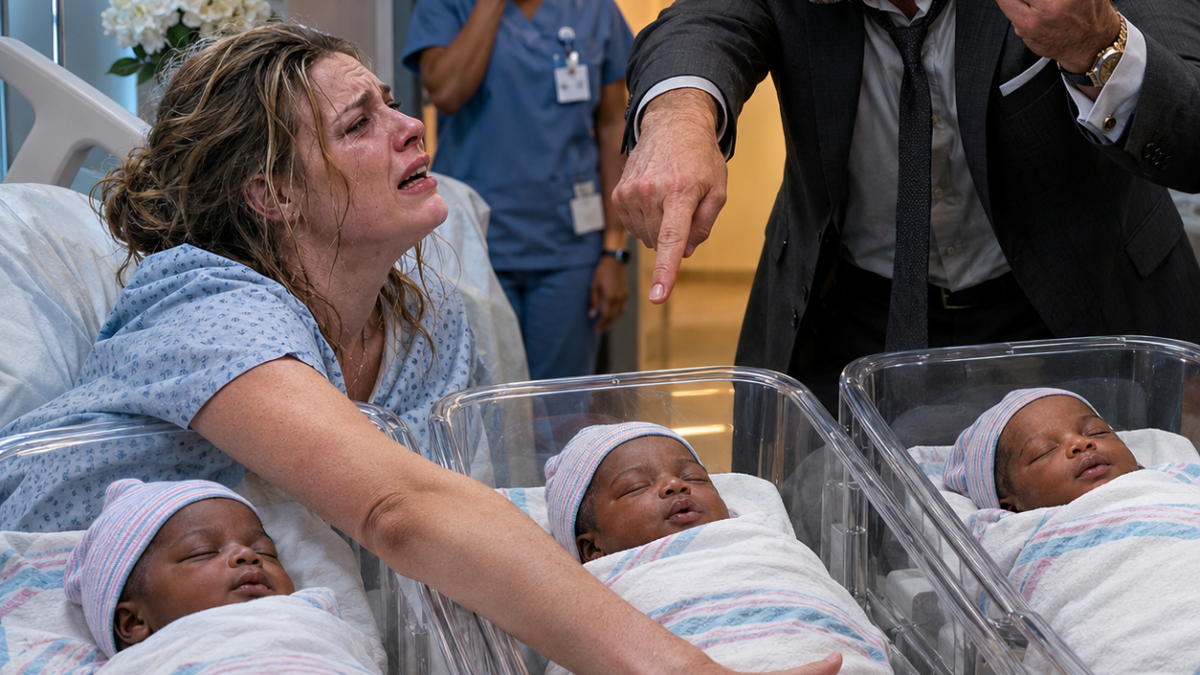
PART2
The first time I was allowed to hold Faith, she was smaller than a bag of sugar.
I remember that comparison because my mother had stopped at a grocery store on her way to the hospital and brought me a few things I needed.
She had placed the bag on the chair beside my bed.
When the nurse carefully settled Faith against me, I looked at the tiny baby.
Then at the groceries.
And began crying.
“She’s so small.”
The nurse smiled gently.
“Yes, she is.”
I touched Faith’s little hand.
Her fingers curled around mine.
Something inside me changed.
Vincent had walked away.
Our marriage was collapsing.
The babies faced weeks of uncertainty in the neonatal intensive care unit.
But there, beneath a soft blanket, was a person who needed me.
I leaned close.
“Hello, Faith.”
Her eyes remained closed.
I kissed her forehead.
“I’m your mommy.”
My voice broke.
“And I’m going to be right here.”
I made that promise to all Three of them.
Not all at once.
Not in some perfect photograph with Three healthy babies resting across my arms.
Our beginning was far more complicated.
Gabriel needed additional respiratory support.
Xavier struggled with feeding.
Elijah was so small that I was afraid to touch him.
Naomi seemed to get irritated whenever the nurses adjusted her blanket.
And Faith had a habit of opening one eye as though she wanted to know who was disturbing her.
They were my children.
Each one different.
Each one fighting to grow stronger.
And each one utterly innocent of the ugly words their father had spoken.
The staff taught me how to participate in their care when it was medically appropriate.
How to recognize signs of discomfort.
How to hold them safely.
How to feed them as their conditions improved.
How to manage the fear that came with every alarm and unfamiliar number on a monitor.
My mother came every day.
She brought food.
Fresh clothes.
Little updates about home.
And whenever she found me staring at the nursery window with tears in my eyes, she’d place a hand against my shoulder.
“One day,” she’d whisper, “they’re going to fill your house with noise.”
I would laugh.
Then cry.
Because in those early weeks, all I wanted was for them to survive long enough to come home.
Vincent didn’t return.
Not the following morning.
Not the next week.
Not when the hospital social worker asked whether another parent would be involved in the babies’ discharge arrangements.
I called him.
At first, he didn’t answer.
Then his phone went straight to voicemail.
I left one message.
“Vincent, please. This isn’t about us anymore. Gabriel needs care. All Three babies do. Whatever you think happened between us, they’re innocent.”
He never responded.
I tried again two days later.
Nothing.
On the fourth attempt, a woman answered.
“Mr. Bennett’s office.”
I recognized the voice of his assistant.
“This is Rachel.”
There was a pause.
Then:
“Mrs. Bennett, Mr. Bennett has asked that all communication go through his attorney.”
I stared at the wall.
“His attorney?”
“Yes, ma’am.”
I swallowed.
“Our children are in the hospital.”
Another pause.
“I’m sorry.”
Then the call ended.
For several seconds, I held the receiver to my ear.
I could hear the empty line.
I thought about the man who had promised to stand beside me during every appointment.
The man who’d ordered expensive flowers when we learned I was carrying Three babies.
The man who’d laughed while assembling Three tiny cribs because he couldn’t believe how many screws the boxes contained.
Now he was communicating with me through a lawyer.
I put down the phone.
Then went back to the neonatal unit.
I had Three children waiting for me.
I couldn’t spend every hour begging their father to act like one.
My mother, Evelyn Carter, was sixty-one.
She had worked as a school cafeteria manager for more than thirty years.
Her knees hurt.
Her hands were rough from decades of preparing meals.
She had a small pension, modest savings, and a talent for making ordinary ingredients feed more people than seemed possible.
She was not wealthy.
But she was the richest person I knew in the ways that mattered.
When I told her Vincent wanted a divorce, she sat at my kitchen table and listened.
I had recently been discharged, though the babies still needed hospital care.
The house felt painfully empty.
Three cribs waited upstairs.
Three little blankets hung over their rails.
Three names were written on the boxes of supplies stacked beside the wall.
Vincent’s shoes were gone from the closet.
His expensive briefcase had disappeared from the hallway.
He’d already moved some of his belongings.
My mother looked toward the staircase.
Then back at me.
“What does his lawyer say?”
I showed her the papers.
She read carefully.
Then placed them on the table.
“Rachel, you need legal advice of your own.”
I nodded.
“I know.”
She took my hand.
“Not from somebody Vincent chooses.”
“I know, Mama.”
Her eyes filled.
I began crying.
“I thought he loved me.”
She squeezed my fingers.
“I know you did.”
My voice broke.
“He said he wanted these children.”
She nodded.
“He did.”
I looked toward the staircase.
“What did I do wrong?”
My mother sat straighter.
“Nothing.”
I shook my head.
“Maybe if I hadn’t argued with him—”
“Rachel.”
I looked up.
Her voice became firm.
“You carried Three babies through a dangerous pregnancy. You did not cause his cruelty.”
I covered my face.
She moved beside me.
Then held me the way she’d held me when I was little.
“Listen to me,” she whispered.
“You are allowed to be devastated.”
I cried harder.
“But you are not allowed to turn his choice into proof that you are unworthy.”
I clung to her.
For years afterward, whenever life became unbearable, I remembered those words.
They became the foundation of the home I built.
The practical problems arrived almost immediately.
Vincent controlled most of the money in our household.
His businesses, accounts, and property holdings were far more complicated than I had understood during our marriage.
I had been working part-time before the pregnancy.
Then the medical risks forced me to stop.
Now I had no reliable income and Three premature babies whose ongoing care would require extraordinary organization.
I applied for assistance wherever I was eligible.
Worked with the hospital’s social workers.
Asked about insurance coverage and financial support.
Met with a legal-aid attorney.
And learned the difference between having rights on paper and having the money, time, and energy to enforce them against somebody determined to resist.
Vincent’s lawyer sent letters.
Lots of them.
Some questioned financial obligations.
Others insisted the issue of parentage needed to be established.
One letter described the babies as children whose paternity is disputed.
I stared at those words for a long time.
Gabriel.
Xavier.
Elijah.
Naomi.
Faith.
My babies had names.
But in Vincent’s correspondence, they were a dispute.
An allegation.
A problem to be managed.
I put the letter in a folder.
Then labeled the folder:
THE CHILDREN.
I wouldn’t let his language become mine.
By the time all Three babies came home, the weather had turned cold.
My mother moved into the spare bedroom to help.
I had imagined bringing them home one by one would make the adjustment easier.
It didn’t.
There were bottles.
Laundry.
Medical appointments.
Interrupted sleep.
Three different needs occurring at precisely the same time.
Gabriel might finally settle just as Naomi began crying.
Xavier would need feeding while Elijah wanted to be held.
Faith somehow managed to wake whenever the house became quiet.
Sometimes I stood in the nursery and laughed because the situation was so overwhelming that laughter was the only response left.
Other nights, I cried.
My mother and I took turns sleeping.
We developed charts.
Feeding schedules.
Medication reminders where needed.
Appointment calendars.
We learned which baby liked being held against a shoulder and which preferred being rocked gently.
And we discovered that an infant who weighs only a few pounds can somehow create an enormous amount of laundry.
My mother once stood in the kitchen at three in the morning, holding two clean bottles and staring at the sink.
“Rachel.”
I looked up.
“What?”
“Did we wash these already?”
I stared at the bottles.
“I don’t know.”
She looked at me.
I looked at her.
Then both of us burst out laughing.
We laughed until we cried.
Then we washed them again.
It was easier than trying to remember.
Some nights, when the babies were finally asleep, I’d sit in the kitchen and stare at Vincent’s photograph.
He looked handsome.
Confident.
Happy.
The picture had been taken before the pregnancy, during a weekend at a lakeside resort.
His arm rested around my shoulders.
I was laughing.
He was kissing my cheek.
Anyone looking at that photograph would have believed we were deeply in love.
And I had been.
I kept asking myself whether the man in the picture had ever existed.
Had I missed something?
The way he treated waiters?
The jokes he made when we were around wealthy friends?
The awkward silences when he introduced me to certain relatives?
I remembered one dinner with his father.
His father had looked at me across an expensive table and said:
“Your children will be interesting-looking, I suppose.”
Vincent had laughed.
I hadn’t.
Later, when I told him the remark bothered me, he said:
“Rachel, don’t be so sensitive. My father’s from another generation.”
I had accepted that explanation.
Now I wondered how many times I’d been asked to mistake prejudice for a harmless personality trait.
I didn’t know how to explain any of it to Three children who had barely begun breathing on their own.
I only knew I had to make sure they never grew up believing their skin color was something that required an apology.
The first birthday was small.
We lived in a rented two-bedroom apartment by then.
The house Vincent and I had shared was tied up in a painful financial dispute, and I couldn’t maintain it.
My mother had helped us move.
A woman from church donated a secondhand dining table.
A neighbor gave us a box of children’s books.
Three little cakes would have been too much work, so I made one large vanilla cake and placed Three candles on it.
Gabriel tried to grab the frosting.
Naomi pushed one hand into the cake before I could stop her.
Faith laughed.
Xavier looked offended by the entire celebration.
Elijah fell asleep in his high chair.
My mother took photographs.
I looked around the cramped room.
The furniture didn’t match.
The kitchen ceiling had a water stain.
One window didn’t close properly.
I was wearing a sweater with a small hole near the cuff.
But all Three babies were there.
Alive.
Growing.
Surrounded by people who loved them.
My mother leaned close.
“You did it.”
I laughed.
“Did what?”
“Got them to one.”
I looked at the candles.
Then at my children.
My eyes filled.
“Yes.”
I whispered it again.
“Yes, we did.”
For the first time, I allowed myself to feel proud instead of merely relieved.
Then, four months later, Vincent came back.
Not to apologize.
Not to see the children.
Not because he’d suddenly remembered that Three little people shared his blood.
He came because the paternity testing his attorney had demanded had finally produced results.
I had agreed to legally appropriate testing because I was tired of his accusations being treated as though they were evidence.
The process was stressful and deeply humiliating.
Not because there was any uncertainty in my mind.
There wasn’t.
But because the man who’d married me was forcing me to prove something he’d once celebrated.
The results established Vincent’s biological paternity of all Three children.
I remember sitting with the report in my hands.
Three names.
Three sets of findings.
One conclusion repeated.
Vincent was their father.
I thought about the hospital.
His disgust.
The wedding ring left beside my bed.
The accusation that I’d cheated.
I wanted to take the papers to his office and place them in front of everybody who had heard his version of our marriage.
Instead, I called the attorney helping me.
We discussed the next legal steps.
The testing resolved one question.
It did not automatically resolve the financial disputes or make Vincent willing to act responsibly.
I was about to learn that being proved wrong and admitting you were wrong were two very different things.
Vincent asked to meet me at a restaurant downtown.
I refused.
He suggested his attorney’s office.
I refused that too.
Finally, we agreed on a meeting in a public room at a community legal center, with the arrangements documented and appropriate representatives available.
I couldn’t afford to be careless.
Not anymore.
When he entered, he looked exactly as he had before.
Expensive suit.
Polished shoes.
Perfectly combed hair.
He was carrying a leather briefcase that probably cost more than my monthly rent.
I had spent the morning cleaning a doctor’s office before coming to the meeting.
My hands were dry from cleaning products.
I wore a plain blouse I’d ironed carefully the night before.
Vincent looked at me.
Then at the folder on the table.
Neither of us spoke.
Finally, he said:
“You look tired.”
I almost laughed.
“I have Three toddlers.”
He looked away.
“Rachel.”
I waited.
He cleared his throat.
“I’ve reviewed the test results.”
My heart began pounding.
“And?”
He shifted in his chair.
“I know what they say.”
I stared.
“What they say?”
He looked toward the window.
“The probabilities are conclusive.”
“Vincent.”
He turned back.
“Those are your children.”
His expression tightened.
For one moment, I thought he would deny it again.
Then he looked down.
“Yes.”
The word was barely audible.
I stared at him.
After all the accusations.
The humiliation.
The court documents.
The sleepless nights.
He was finally acknowledging the truth.
I felt tears gather.
“Then come meet them.”
He raised his head.
“What?”
I swallowed.
“They’re beautiful, Vincent.”
He didn’t answer.
“Gabriel has your smile.”
His jaw tightened.
“Xavier watches everything like he’s trying to understand how the world works.”
I tried to smile.
“Elijah loves music. Naomi is already bossing everybody around. And Faith—”
“Rachel.”
I stopped.
His voice had gone cold.
“Don’t.”
I stared.
“Don’t what?”
“Don’t make this emotional.”
My throat tightened.
“It’s our children.”
He rubbed his forehead.
“I know what the tests say.”
I waited.
Then he continued:
“But acknowledging them publicly would destroy my position in the family business.”
I felt something inside me go still.
“Your position?”
“My father has made his expectations clear.”
I stared.
“About what?”
Vincent looked at me.
He didn’t say the words immediately.
He didn’t need to.
I understood.
His family would not accept Three visibly Black grandchildren attached to the carefully maintained image of their wealthy son.
I leaned back.
“Your father is more important than your children?”
Vincent’s face hardened.
“Don’t simplify it.”
I stared.
“What’s complicated about it?”
He opened his briefcase.
Removed a folder.
And pushed it toward me.
Inside was a proposed financial agreement.
A one-time payment.
Confidentiality conditions.
Language designed to prevent public discussion of the test results and Vincent’s relationship to the children.
The arrangement could not simply erase his legal obligations as a father, but the documents made his intentions painfully clear.
He wanted the dispute contained.
He wanted me quiet.
And he wanted the children kept outside his public life.
I stared at the proposed payment.
It was more money than I’d held at one time in my entire life.
For a moment, the room seemed very small.
I thought about the rent.
The groceries.
The children’s medical bills.
My mother’s aching knees.
The nights I’d eaten crackers while the babies drank their formula.
Vincent watched my face.
“You could make your life easier.”
I looked up.
“Our lives.”
He hesitated.
“What?”
“Three children, Vincent. Your children.”
He didn’t answer.
I pushed the folder back.
“I’m not signing away the truth about them.”
His expression darkened.
“You need to be realistic.”
I looked at him.
“So do you.”
He leaned forward.
“You can’t give Three children the life I could.”
My throat tightened.
“Then help provide for them without demanding that they disappear.”
He looked away.
I waited.
He said nothing.
I slowly stood.
“Rachel.”
I picked up my bag.
He looked toward me.
“Don’t make this difficult.”
I stared.
“Vincent, you made this difficult the day you looked at Three newborn babies and decided your reputation mattered more than their lives.”
His jaw clenched.
I took a breath.
“I’ll continue through the proper legal process.”
Then I walked out.
I made it halfway down the sidewalk before I began crying.
Not because I’d turned down the money.
Because for one terrible second, I’d thought the test results might bring their father home.
And they hadn’t.
Two weeks later, an envelope arrived.
There was no return address.
But I recognized Vincent’s handwriting.
I sat at the kitchen table while the children napped.
My mother was at work.
The apartment was quiet.
I opened it.
Inside was a single handwritten page.
The words were carefully formed, as though Vincent had written them several times before deciding what to say.
Rachel,
You were right about the children. The test results leave no doubt that all Three are mine.
I stopped reading.
My hands began trembling.
I took a breath.
Then continued.
I know you think that should change everything. It doesn’t change the position I’m in.
My father has made it clear that public acknowledgment will have consequences for my future in the company. I cannot throw away everything my family has built.
I offered you a way to make sure the children are provided for without bringing this into the public eye. You refused.
Please understand that I am not denying the test results. I am asking you not to force me to choose between my family and my future.
Do not show this letter to the children.
Vincent.
I read it once.
Then twice.
Then a third time.
The phrase that destroyed me wasn’t I cannot throw away everything my family has built.
It wasn’t even Do not show this letter to the children.
It was:
I am not denying the test results.
He knew.
He knew all Three were his.
And even after learning that, he was choosing not to be their father.
I held the page against my chest.
Then began sobbing.
For months, I’d told myself Vincent would return once the misunderstanding was resolved.
That he would apologize.
That he would take one look at the children and realize how much he’d lost.
The letter ended that hope.
He wasn’t confused.
He wasn’t waiting for proof.
He wasn’t struggling to understand the genetics of our family.
He was choosing status over love.
My mother came home and found me at the table.
The letter lay open beside my hand.
She read it.
Then sat down.
For a long time, she said nothing.
Finally, she looked at me.
“Keep this.”
I wiped my cheeks.
“Why?”
“Because one day he may pretend none of this happened.”
I stared.
She took the letter carefully.
Smoothed the folded corners.
Then handed it back.
“And one day, Rachel, your children may deserve to know exactly what choices were made.”
I looked toward the nursery.
Three little voices stirred behind the door.
My heart broke again.
“I can’t tell them.”
My mother took my hand.
“Not today.”
I began crying harder.
She squeezed my fingers.
“Today, they need lunch.”
I laughed weakly through tears.
She stood.
“And you need to eat something too.”
For the next thirty years, I kept Vincent’s letter in a sealed envelope with the paternity results and legal records.
It followed us through three apartments.
Two jobs.
Countless birthdays.
College graduations.
And every ordinary day when one of my children asked why their father had never come back.
I told them the truth I believed they needed at the time.
That their father had left.
That the decision was his.
That they were not responsible.
I did not tell them he’d received conclusive proof of his parentage and still chosen not to meet them.
I wasn’t ready to place that particular cruelty inside their childhood.
Whether keeping it quiet was the right choice was something I’d question for years.
The legal process continued.
There were court filings, support orders, and repeated attempts to obtain accurate information about Vincent’s income and assets.
He had resources.
Lawyers.
Companies.
People willing to speak on his behalf.
I had a legal-aid advocate, a filing cabinet, and Three children who needed dinner whether I won or lost an argument.
Some support was ordered and some money was collected over the years, but payments were inconsistent, enforcement was difficult, and what reached our household never came close to covering the actual cost of raising Three children.
I learned not to build our monthly budget around money that might not arrive.
I worked.
At first, cleaning offices at night.
Then washing clothes for families who needed help.
Then sewing alterations for a dry cleaner.
When the children became older, I found steadier employment in a hospital’s housekeeping department.
Later, I became a supervisor.
Those jobs were not shameful.
I never believed they were.
But they were exhausting.
My hands cracked in winter.
My back hurt.
My feet swelled after long shifts.
Sometimes I fell asleep on the bus and woke in a panic because I thought I’d missed my stop.
There were nights when the children ate macaroni and cheese while I told them I’d already had dinner at work.
They believed me at first.
Then Gabriel became old enough to notice that I rarely seemed hungry when food was scarce.
One evening, he came into the kitchen carrying half his sandwich.
He was seven.
“Mommy?”
I looked up.
“Yes, sweetheart?”
He placed the sandwich on my plate.
“I don’t want this.”
I smiled.
“Then wrap it up for tomorrow.”
He shook his head.
“You eat it.”
I stared.
“Gabriel, I’m fine.”
He looked at me seriously.
“You always say that.”
My throat tightened.
He pushed the plate closer.
“Please.”
I looked at my little boy.
Then at the sandwich.
I had spent years trying to hide our difficulties from the children.
But Gabriel had noticed.
Of course he had.
Children see more than adults think.
I sat beside him.
“Come here.”
He climbed into my lap.
I kissed his forehead.
Then broke the sandwich in half.
“One for you.”
He smiled.
“And one for me.”
He looked satisfied.
We ate together.
And I made myself another promise.
My children would know that I loved them.
But I didn’t want them believing my suffering was something they had to repay.
Xavier became the child who argued with unfairness.
At eight, he confronted a teacher who mispronounced Naomi’s name repeatedly after she’d corrected him.
At twelve, he wrote a letter to the school principal about a disciplinary incident he believed had been handled differently because of race.
At fourteen, he began reading law books from the public library.
He asked difficult questions.
About contracts.
About courts.
About why people with money seemed to have more opportunities to defend themselves.
One evening, I found him sitting at the table with a stack of papers.
“What are you doing?”
He looked up.
“Research.”
I smiled.
“For school?”
He hesitated.
Then said:
“Child support.”
My stomach tightened.
“Xavier.”
He looked at me.
“Why doesn’t Dad just pay what he’s supposed to?”
I sat down.
“It’s complicated.”
He shook his head.
“It shouldn’t be.”
My eyes filled.
“No,” I whispered. “It shouldn’t.”
He stared at me.
Then asked:
“If he’s so rich, why are you working two jobs?”
I looked down.
I wanted to say something that would protect him from the ugliness of the answer.
But he was growing older.
He deserved honesty appropriate to his age.
So I told him that legal rights sometimes require time and resources to enforce, and that Vincent had repeatedly failed to provide the reliable support his children needed.
Xavier sat quietly.
Then said:
“When I grow up, I’m going to be a lawyer.”
I smiled.
“Why?”
He looked at me.
“Because I don’t want people to get away with things just because they have more money.”
I reached for his hand.
And although I didn’t tell him about the letter, I wondered whether the truth was already shaping his life even from inside a sealed envelope.
Elijah was the quiet one.
He loved taking things apart.
Radios.
Flashlights.
Old clocks.
Anything with screws.
My mother once found him sitting on the living-room floor surrounded by the pieces of a broken fan.
“Elijah!”
He looked up.
“What?”
“Did you do this?”
He nodded.
“Why?”
“Because it didn’t work.”
My mother stared.
“And now?”
He looked down at the pieces.
“It still doesn’t.”
She began laughing.
Elijah didn’t.
He was already trying to understand how to put it back together.
By twelve, he could repair small appliances better than most adults I knew.
At sixteen, he built a model bridge for a school competition.
He spent weeks working on it.
When he won first prize, he brought the certificate home and placed it on my pillow.
I found it after an evening shift.
He was sitting at the kitchen table.
I stared at the paper.
“Sweetheart, you won?”
He nodded.
I began crying.
He looked embarrassed.
“Mom.”
I hugged him.
“I’m so proud of you.”
He patted my back awkwardly.
Then whispered:
“I wanted you to see it before anybody else.”
I held him tighter.
Because for years, I had wondered whether I was giving my children enough.
Not enough money.
Not enough space.
Not enough time.
And here was Elijah, showing me that he’d still found room to build something extraordinary.
Naomi was born with the loudest cry of the Three.
That’s what the nurse told me years later when I found the old birth records.
I wasn’t surprised.
Naomi had been announcing her opinions since the day she learned to speak.
At three, she insisted that every stuffed animal needed a name.
At Three, she organized her brothers into a pretend classroom.
At nine, she discovered that she could get Xavier to do almost anything if she called it a group project.
By thirteen, she wanted to become a teacher.
“Why?” I asked one afternoon.
She looked up from her homework.
“Because kids spend a lot of time at school.”
I smiled.
“That’s true.”
“And sometimes it’s the only place anybody tells them they’re smart.”
I stared.
She looked down.
Then continued:
“Mrs. Adams says I’m good at explaining things.”
I nodded.
“You are.”
Naomi smiled.
“I want to do that for other kids.”
Years later, when she accepted a teaching position at a public elementary school, I thought about that conversation.
She hadn’t chosen the profession because it promised wealth.
She’d chosen it because she remembered how much a kind adult could change a child’s day.
I loved her for that.
Not more than the others.
Differently.
The way a mother loves the unique things each child brings into the world.
Faith was the last baby delivered.
She was also the smallest.
For years, she hated being called the baby of the family.
“We’re the same age!” she’d protest whenever one of her siblings teased her.
Gabriel would grin.
“Technically, you’re younger.”
“By minutes!”
“Still younger.”
Faith would cross her arms.
Then argue until everybody gave up.
She became a child who wanted answers.
Why was the sky blue?
Why did some neighborhoods have better parks?
Why did people call certain families respectable when they didn’t treat others kindly?
Why did the news describe some people by their mistakes and others by their achievements?
When she was fourteen, she asked about Vincent.
Not where he lived.
Not whether he had money.
She wanted to know what he had said when he left.
We were sitting at the kitchen table.
The others were outside.
My mother had gone to bed.
Faith had a notebook open in front of her.
“Mom?”
“Yes?”
“What did he say about us?”
I went still.
She watched my face.
“Did he say he didn’t want us because we were Black?”
I felt my throat tighten.
Children grow up hearing things.
They overhear relatives.
Neighbors.
Fragments of conversations their parents believed were private.
I could have denied it.
I wanted to.
But my children deserved better than lies designed to make me feel more comfortable.
I took a breath.
“Your father’s reaction to your birth included prejudice and accusations that were wrong.”
Faith stared.
“So yes.”
I looked down.
“Yes.”
For several seconds, she didn’t move.
Then she asked:
“Did he know we were his?”
The question struck so precisely that I almost looked toward the drawer where the envelope was hidden.
I swallowed.
“He was your father, Faith. The testing established that.”
She studied me.
“But did he know?”
I looked at her.
My fourteen-year-old daughter.
Smart.
Curious.
Already learning that adults sometimes answer a different question from the one they’re asked.
I took her hand.
“He had evidence of that when you were very young.”
Her face changed.
I had said more than I intended.
Faith stared.
Then whispered:
“And he still didn’t come back?”
I closed my eyes.
“No.”
She pulled her hand away.
Not angrily.
Slowly.
As though she needed to sit with the answer.
For a while, neither of us spoke.
Then she asked:
“Why?”
I looked toward the window.
“That’s a question only he can answer fully.”
Faith’s eyes filled.
Then she said something I would remember forever.
“I’m going to be a journalist.”
I turned toward her.
She wiped her cheeks.
“People should have to answer questions when the truth matters.”
I reached for her.
She let me hug her.
And I wondered whether one day she’d ask the question I had spent so many years avoiding.
What did he know, and when did he know it?
The children were sixteen when my mother became seriously ill.
She had spent their entire lives helping me.
Babysitting when I worked late.
Attending school events I couldn’t get to in time.
Teaching them how to cook.
Reminding them to take umbrellas.
Telling Gabriel to stop worrying so much.
Arguing with Xavier when he believed he was always right.
Listening to Elijah explain things about electrical circuits that neither of us understood.
Letting Naomi organize her kitchen cupboards.
And encouraging Faith to keep writing.
My mother was the second parent in our house.
There was no pretending otherwise.
When her health began to fail, the children responded in the different ways they always had.
Gabriel researched every medical term he heard.
Xavier asked questions about treatment decisions and insurance.
Elijah repaired the loose railing near her bedroom.
Naomi sat beside her and read aloud.
Faith interviewed her with a little tape recorder.
At first, Mama laughed.
“Child, what are you doing?”
Faith held up the recorder.
“Preserving history.”
My mother smiled.
“Am I history now?”
Faith grinned.
“You’re important history.”
My mother began laughing.
Then she answered every question.
Where had she grown up?
What was her first job?
What had she been afraid of when she was young?
What was the best decision she’d ever made?
My mother thought for a long moment.
Then looked across the room at all Three children.
“The best decision?”
Faith nodded.
Mama smiled.
“Coming to help your mother when you were born.”
I looked away.
Tears filled my eyes.
My mother continued:
“People told me I was too old to help raise Three babies.”
She laughed softly.
“They weren’t entirely wrong.”
The children smiled.
Then Mama looked at me.
“But I got to watch Three wonderful people grow up.”
Her eyes filled.
“That was worth every tired morning.”
I covered my mouth.
And for the first time, I understood that my mother had never regarded those difficult years simply as a sacrifice.
They were part of the life she’d chosen to share with us.
Mama died the following spring.
The house had never felt so empty.
Even with Three teenagers.
Even with homework spread across the table.
Music coming from bedrooms.
Shoes in the hallway.
Arguments about whose turn it was to wash dishes.
There was an absence at the center of everything.
No familiar voice reminding us to turn off lights.
No Sunday soup.
No laughter from the kitchen when somebody told a bad joke.
The first night after her funeral, I sat alone in the dining room.
A photograph of Mama stood on the table.
Beside it was the old envelope containing Vincent’s letter.
I’d taken it out while searching for insurance documents.
I stared at the two things.
One belonged to a woman who had stayed.
The other to a man who had left.
I opened the envelope.
Read the letter again.
I cannot throw away everything my family has built.
I looked toward Mama’s photograph.
Then began crying.
Vincent had inherited money, connections, and opportunities.
He’d been afraid acknowledging his children would cost him some of those things.
My mother had possessed almost nothing.
Yet she had given us the years she had left.
Not because someone forced her.
Because she loved us.
I folded the letter.
Placed it back in the envelope.
Then wrote a new sentence on the outside.
They were always worth staying for.
I didn’t realize it then, but those words would become the heart of my sixtieth birthday.
The years passed.
Not easily.
Not without mistakes.
There were college applications.
Financial-aid forms.
Scholarship essays.
Part-time jobs.
Arguments.
Failed exams.
Heartbreak.
First apartments.
Medical worries.
And more unexpected expenses than I could count.
All Three children worked hard.
But they did not succeed by determination alone.
They had teachers who believed in them.
Neighbors who helped.
Scholarships.
Mentors.
Public programs.
Friends.
And each other.
Gabriel went to medical school.
He called me one night during his first year and said:
“Mom, I’m not sure I can do this.”
I was sitting in the laundry room after a long shift.
“What happened?”
He sighed.
“Everybody seems smarter than me.”
I smiled faintly.
“Everybody?”
“Practically.”
I listened.
He continued:
“I study all night, and I still feel behind.”
I thought about the tiny baby who’d needed respiratory support after birth.
Then the little boy who gave me half his sandwich.
Then the teenager who volunteered at a community clinic because he wanted to understand how doctors helped people.
“Gabriel.”
“Yes?”
“You don’t have to be the smartest person in every room.”
He was quiet.
“You have to keep learning, ask for help when you need it, and remember why you’re there.”
He sighed.
“That’s harder than it sounds.”
I laughed.
“I know.”
Then I added:
“And you are allowed to rest.”
He laughed too.
“Coming from you?”
I looked down at my worn work shoes.
He had a point.
I began learning to take my own advice.
Xavier passed the bar examination after years of study and began working as an attorney.
His first job involved helping families navigate housing disputes and complicated financial situations.
He told me that every time a client sat across from him looking frightened by a document, he remembered the folder I’d kept on our kitchen table.
“The children,” he’d say softly.
I knew exactly which one he meant.
One evening, after he’d been practicing law for several years, he asked to see the old child-support records.
I gave him the copies I had.
He reviewed what was available.
Some documents were incomplete.
Others referred to proceedings that had occurred years earlier.
He explained that any remaining legal remedies would depend on the orders, records, and applicable deadlines, and that we shouldn’t assume the passage of thirty years could simply be reversed by a demand for payment.
I nodded.
I wasn’t looking for a fantasy in which Vincent would suddenly write a check and erase our past.
I wanted my children to understand that their father had responsibilities he hadn’t fulfilled.
Xavier looked toward me.
Then said:
“Mom, you should’ve had more help.”
I swallowed.
“Yes.”
He closed the folder.
“And we should’ve received more from him.”
I nodded again.
For a moment, he looked furious.
Then his expression softened.
“But we had you.”
My eyes filled.
I reached for his hand.
“And I had all of you.”
Elijah became an engineer.
He worked on transportation projects and later helped design infrastructure improvements for communities that had been neglected for years.
At his graduation, he wore a dark blue suit.
After the ceremony, he handed me his diploma to hold.
I laughed.
“Why are you giving this to me?”
He looked surprised.
“Because you helped me get it.”
I shook my head.
“Elijah, you did the work.”
He smiled.
“I know.”
Then he leaned closer.
“But who bought me my first set of tools when we couldn’t afford a proper science kit?”
My eyes filled.
I remembered.
A small box of secondhand screwdrivers.
A measuring tape.
A notebook.
I’d saved for three weeks to buy them.
Elijah continued:
“Who let me take apart the broken radio?”
I laughed.
“You mean the one you never put back together?”
He smiled.
“Exactly.”
Then he hugged me.
For a long time.
And whispered:
“Thank you for never telling me my dreams were too expensive.”
I began crying.
Because sometimes the most extraordinary reward for years of work is hearing one sentence from the person you did it for.
Naomi became a teacher.
She sent me photographs of her classroom.
Bright posters.
Books.
Children’s drawings.
A reading corner with cushions she’d bought using money from her own paycheck.
I scolded her about that.
She laughed.
“Mom, you used to do the same thing.”
I stared.
“What?”
“Spend money you didn’t have making sure somebody else had what they needed.”
I opened my mouth.
Then closed it.
She smiled.
“See?”
I shook my head.
“Your students are lucky.”
Naomi’s expression softened.
“I’m lucky too.”
And I believed her.
Not because teaching was easy.
It wasn’t.
She came home exhausted.
Worried about students.
Frustrated by limited resources.
But when she talked about a child learning to read for the first time, her entire face changed.
It was the same expression I’d seen when she was nine, arranging her stuffed animals into a classroom.
She’d become the person she’d imagined.
That mattered to me more than any salary.
Faith became a journalist.
The first time I saw her byline on the front page of a major regional newspaper, I bought six copies.
One for each of the children.
And one for myself.
Then I laughed because that made only six, and Mama would have wanted one too.
So I bought a seventh.
I placed it beside her photograph.
“Look, Mama.”
My eyes filled.
“Your little interviewer made it.”
Faith’s work often focused on families, public accountability, and institutions that failed to protect vulnerable people.
She wasn’t interested in writing flattering profiles simply because someone had an important title.
She asked questions.
Checked documents.
Interviewed people who disagreed.
And sometimes made powerful individuals uncomfortable.
I was proud of her.
I was also afraid.
Because Vincent Bennett had become more visible over the years.
His real-estate and investment businesses had expanded.
His name appeared on hospital donor walls.
University programs.
Community fundraising events.
Occasionally, he gave interviews about responsibility and the importance of family.
Whenever I saw his face, I felt sick.
But I never asked Faith to investigate him.
I didn’t want to turn my daughter into a weapon against her father.
And I didn’t want the Three of them believing their achievements existed only to prove that Vincent had been wrong.
They were more than his rejection.
They had built lives.
Loved people.
Failed.
Recovered.
Worked.
Grown.
They were not a collection of accomplishments arranged to punish a man who had walked away.
They were my children.
And they were enough before any of them earned a degree.
By the time I approached sixty, our family had changed in ways I’d once thought impossible.
Gabriel was a physician.
Xavier had built a respected legal career.
Elijah was a senior engineer.
Naomi taught elementary school.
Faith was an investigative journalist.
Some had partners.
Some had children of their own.
There were grandbabies who called me Grandma.
There were holidays crowded with shoes, strollers, casseroles, and people trying to speak over one another.
My house was never quiet anymore.
Sometimes I stood in the kitchen listening to the noise and remembered Mama’s prediction in the hospital.
One day, they’re going to fill your house with noise.
She’d been right.
More right than she’d ever known.
But there was still one thing my children didn’t know.
One letter.
One admission.
One truth I had carried for nearly three decades.
And as my sixtieth birthday approached, I began wondering whether keeping that secret had protected them—or simply postponed another kind of pain.
My children refused to let me celebrate my sixtieth birthday quietly.
I told them I wanted dinner.
A cake.
Maybe a few flowers.
Nothing extravagant.
Gabriel smiled.
“That sounds nice.”
I should have known he was lying.
Xavier asked whether I had plans for the entire weekend.
Elijah suddenly became interested in the capacity of our community center.
Naomi kept calling to ask which relatives I still had addresses for.
And Faith borrowed an old photograph album under the excuse that she needed pictures for a family project.
I looked at all Three of them one Sunday afternoon.
“What are you planning?”
They exchanged glances.
Naomi smiled.
“Nothing.”
I stared.
“Naomi Bennett, I raised you.”
She laughed.
“I know.”
“Then you know I can tell when you’re lying.”
Faith grinned.
“Technically, she’s withholding information.”
Xavier pointed at her.
“That’s not helping.”
Everyone burst out laughing.
I looked around the table.
Three grown adults.
Thirty years old.
Still behaving like children whenever they conspired to surprise their mother.
I shook my head.
Then smiled.
“Whatever it is, I don’t want anybody spending money they can’t afford.”
Gabriel leaned over and kissed my cheek.
“Mom, this time you get to let somebody else take care of the details.”
My throat tightened.
I thought about all the years I’d counted pennies at the grocery store.
All the nights I’d sewn clothes beneath a weak kitchen lamp.
All the mornings I’d gone to work with aching feet.
Then I looked at my son.
And for once, I decided not to argue.
Two weeks before my birthday, Faith called.
Her voice was unusually serious.
“Mom, have you seen the announcement about Vincent Bennett?”
My hands went still.
I was folding towels.
The name struck me with the same force it always had.
“What announcement?”
“He’s being recognized at a major charity event.”
I said nothing.
Faith continued:
“Family leadership. Educational opportunity. Supporting children in underserved communities.”
A bitter laugh escaped me.
“Of course.”
Faith was quiet.
Then asked:
“Mom, is there anything about Dad’s public statements we should know?”
My stomach tightened.
“What do you mean?”
“He keeps talking about family responsibility.”
I stared at the wall.
She continued:
“And I’ve been looking at some of the public information about his businesses and charitable work.”
“Faith.”
She stopped.
I took a breath.
“Your father is not your assignment.”
Her voice softened.
“I know.”
I swallowed.
“Please don’t turn your life into a search for his hypocrisy.”
There was a long silence.
Then Faith whispered:
“Mom, sometimes I think you spent thirty years protecting us from how bad it really was.”
My eyes filled.
I looked toward the drawer containing the envelope.
She continued:
“I don’t need you to protect me from the truth anymore.”
I closed my eyes.
I wanted to tell her everything.
Instead, I said:
“There’s something I need to share with all of you.”
Faith went quiet.
“What?”
“Not over the phone.”
“Mom.”
“Please.”
She took a breath.
Then answered:
“Okay.”
After we hung up, I walked to my bedroom.
Opened the old wooden drawer.
Removed the envelope.
And read Vincent’s letter again.
The paper had yellowed.
The folds were weak.
But his handwriting remained clear.
I am not denying the test results.
I sat on the edge of the bed.
For thirty years, I’d carried those words alone.
Now my children were adults.
They had their own families.
Their own lives.
Their own right to decide what to do with the truth.
I realized I couldn’t keep making that decision for them.
Not forever.
Vincent contacted me four days before the birthday.
He didn’t call.
He sent a formal-looking envelope through a private courier.
Inside was a brief letter on expensive stationery.
Rachel,
I understand your family is arranging a public celebration and that Faith has shown interest in the history of our marriage.
I believe it is time we resolved any remaining misunderstandings privately.
I am prepared to make a substantial financial contribution to your family in exchange for assurances that old personal matters will not be used to damage my reputation.
There is no benefit in reopening events from thirty years ago.
Vincent Bennett.
I stared at the page.
Then began laughing.
Not because it was funny.
Because after thirty years, he still thought the same thing.
That money could purchase silence.
That the truth existed only as a threat to his reputation.
That his children were a financial problem to be settled.
I placed the letter beside the old one.
One written when the children were toddlers.
The other written when they were thirty.
The language was more polished now.
But the intention was identical.
I picked up my phone.
For a moment, I considered calling him.
Then I remembered the last time we’d sat across from one another.
He’d asked me not to make things emotional.
As though Three children could be reduced to a business arrangement.
I didn’t call.
I wrote a short response.
Vincent, I will not exchange silence for money.
The children are adults now. They have the right to know the history that concerns them.
Do not contact them with financial proposals.
Rachel.
Then I placed both letters in the envelope with the test records.
And began preparing to tell my children.
The birthday celebration took place in the community center where my mother had once volunteered to serve meals.
I recognized the building immediately.
The front steps.
The brick walls.
The old double doors.
But inside, everything had been transformed.
White tablecloths covered the tables.
Gold and cream flowers stood in simple arrangements.
Photographs of our family lined the walls.
There were pictures of the babies.
Their first birthdays.
School graduations.
Family holidays.
My mother’s smiling face.
Three teenagers in mismatched graduation gowns.
Three young adults holding diplomas.
A photograph of me at forty, standing in the kitchen with flour on my cheek and Naomi laughing beside me.
I stopped in the doorway.
My eyes filled.
Gabriel appeared.
“Happy birthday, Mom.”
I covered my mouth.
“Oh, sweetheart.”
He hugged me.
Then Xavier approached.
Then Elijah.
Naomi.
Faith.
All Three together.
For a moment, I couldn’t see them clearly through my tears.
“You did all this?”
Naomi smiled.
“Mostly.”
Faith laughed.
“Elijah got very serious about the lighting.”
Elijah shrugged.
“Poor lighting ruins photographs.”
Xavier grinned.
“And he threatened to write a technical report about it.”
I began laughing.
Then crying.
I looked around the room.
Friends.
Old neighbors.
Former coworkers.
Teachers who had helped my children.
People who’d known us when we had almost nothing.
I recognized Mrs. Watkins, who used to watch the children when I worked double shifts.
Mr. Lewis, who’d repaired our heating system one winter and refused to charge me until I could afford it.
A school counselor who had helped Gabriel apply for scholarships.
And several of my children’s colleagues.
I couldn’t believe they’d all come.
Then I saw a small table near the front.
On it stood my mother’s photograph.
Beside it was a yellow flower.
Her favorite.
I began crying again.
Faith took my hand.
“We wanted Grandma here too.”
I nodded.
“She is.”
Dinner was wonderful.
Not because it was expensive.
Because it was filled with stories.
People remembered things I’d forgotten.
Mrs. Watkins told everyone about the morning Three toddlers had somehow managed to empty an entire box of cereal across my kitchen floor.
Xavier claimed Elijah started it.
Elijah denied everything.
Naomi insisted Gabriel had been in charge.
Faith announced that she’d kept notes.
Everyone laughed.
I looked around the room.
For years, I’d believed our struggles were mine to carry.
Now people were reminding me that they’d seen parts of our journey too.
The bus rides.
The school mornings.
The cold winters.
The birthdays.
The victories.
It hadn’t been easy.
But it hadn’t been entirely invisible.
After dinner, Gabriel stood near the front of the room.
He tapped his glass.
“Can I have everyone’s attention?”
The conversations quieted.
He looked toward me.
Then smiled.
“Thirty years ago, our mother brought Three babies into the world.”
Laughter moved through the room.
Gabriel continued:
“I don’t remember much about our first year.”
He glanced toward Xavier.
“Except that apparently he was already arguing with people.”
Everyone laughed.
Xavier raised both hands.
“I object.”
Gabriel smiled.
“Noted.”
Then his expression softened.
“Our mother worked more hours than any child should have to watch a parent work.”
My eyes filled.
“She made difficult choices.”
He paused.
“And she gave us a home where nobody ever questioned whether we belonged.”
I looked down.
Gabriel continued:
“When I became a doctor, people congratulated me on my determination.”
His voice shook.
“But before I could become anything, somebody had to make sure I survived.”
He looked toward me.
“That was Mom.”
I covered my face.
Then Xavier stood.
He spoke about fairness.
Elijah spoke about opportunity.
Naomi spoke about the power of being believed in.
Faith spoke last.
She held a small folder in her hands.
“Mom taught us that truth matters.”
My heart tightened.
Faith continued:
“She taught us that being treated unfairly doesn’t make you less valuable.”
Her voice broke.
“And she taught us that love is not something you should have to beg for.”
I began crying.
Faith looked toward me.
Then smiled.
“We wanted to give her something that honors what she gave us.”
Gabriel stepped forward with a framed document.
The Three of them had established a scholarship fund in my mother’s name.
THE EVELYN CARTER SECOND-CHANCE SCHOLARSHIP
It would help students from families facing financial hardship, including young parents pursuing education.
I stared.
Then began sobbing.
Not my name.
Mama’s.
The woman who had spent years feeding Three babies.
The woman who told me not to think about the next thirty years on the night Vincent left.
The woman who taught me that love could be practical, ordinary, exhausting, and still beautiful.
I looked toward her photograph.
Then whispered:
“Oh, Mama.”
Naomi hugged me.
And the room applauded.
That should have been the end of the evening.
A joyful birthday.
A family celebrating thirty years of survival and love.
But as the guests began moving toward the dessert table, a sudden hush spread near the entrance.
I looked up.
A man stood just inside the doors.
Tall.
Silver-haired.
Wearing a dark suit and an expensive watch.
Two people in formal business attire remained a little behind him.
For a second, I didn’t recognize his face.
Then I saw the expression.
That same self-assured look.
The slight impatience.
The assumption that any room he entered would rearrange itself around him.
Vincent Bennett.
My former husband.
The man who had walked out of a hospital thirty years earlier.
He looked toward the photographs.
Then toward the Three adults standing near me.
His gaze moved from one face to another.
Gabriel.
Xavier.
Elijah.
Naomi.
Faith.
For the first time, I saw uncertainty cross his face.
Not because he didn’t know who they were.
Because the children he’d chosen not to meet were no longer tiny figures in a hospital room.
They were grown.
Confident.
Surrounded by people who loved them.
And none of them had needed his permission to become somebody.
Vincent approached.
“Rachel.”
The sound of his voice made my stomach tighten.
I straightened.
“Vincent.”
He glanced around.
“This is quite a gathering.”
I didn’t answer.
He looked toward the scholarship display.
“Impressive.”
Then he gave a practiced smile.
“I thought it might be appropriate to offer my congratulations in person.”
Faith stepped closer.
Her eyes narrowed.
“Who is that?”
I looked at my daughter.
Then at the man standing in front of us.
My voice was steady when I answered.
“That’s Vincent Bennett.”
The air seemed to leave the room.
Faith stared.
Gabriel turned.
Xavier went completely still.
Naomi pressed one hand against her chest.
Elijah looked from Vincent to me.
For the first time in thirty years, all Three of my children were standing in the same room as their father.
And Vincent was smiling as though he’d simply arrived late to a business luncheon.
Xavier spoke first.
“Vincent Bennett?”
His voice was so quiet that I barely heard it.
Vincent looked toward him.
“Yes.”
Xavier stared.
“Our father?”
Vincent hesitated.
Then gave a stiff nod.
The expression on Xavier’s face changed.
For thirty years, he’d imagined meeting the man who had abandoned us.
Sometimes he pictured confronting him in an office.
Sometimes in a courtroom.
Sometimes he told me he’d rather never see him.
Now Vincent stood in front of him, and the first thing my son did was step closer to me.
Not toward his father.
Toward his mother.
“You weren’t invited,” Xavier said.
Vincent’s smile tightened.
“I was hoping we could speak as adults.”
Gabriel looked at him.
“We are adults.”
Vincent glanced toward the other guests.
“Perhaps somewhere more private.”
Faith folded her arms.
“Why?”
He looked at her.
She continued:
“You had thirty years to contact us privately.”
The words landed harder than a shout.
Vincent’s face reddened.
“This is a complicated family matter.”
Elijah spoke for the first time.
“What’s complicated?”
Vincent looked toward him.
Elijah’s expression was calm.
Painfully calm.
“You have Three children. You chose not to raise us. That’s the situation.”
Vincent swallowed.
“I believe there’s been a great deal of misunderstanding.”
I felt something inside me harden.
Misunderstanding.
Thirty years.
Three childhoods.
My mother’s aching body.
A thousand missed birthdays.
And he was calling it a misunderstanding.
I took one step forward.
“Vincent.”
He turned toward me.
“Yes, Rachel?”
“Why are you here?”
He glanced toward the scholarship display.
“I heard about the celebration.”
I waited.
“And I wanted to offer support.”
Xavier laughed bitterly.
“Financial support?”
Vincent looked at him.
“If that’s appropriate.”
Faith stared.
“Now?”
He cleared his throat.
“I’m trying to handle this constructively.”
I looked at the guests around us.
Some had moved away to give us privacy.
Others were watching with obvious concern.
I didn’t want my birthday to become entertainment.
But I also wasn’t going to let Vincent walk into the room, speak in carefully rehearsed phrases, and leave my children wondering whether I’d exaggerated what happened.
I turned toward Faith.
“Sweetheart, could you ask everyone to give us a few minutes?”
She nodded.
The Three children, Vincent, and I moved into a smaller meeting room adjoining the hall.
The two people who’d accompanied Vincent remained outside.
I closed the door.
For several seconds, nobody spoke.
Then Vincent looked around the room and said:
“I understand there may be hard feelings.”
Naomi let out a disbelieving laugh.
“Hard feelings?”
Vincent turned toward her.
She looked him straight in the eyes.
“You missed thirty years of our lives.”
He lowered his gaze.
Naomi continued:
“Mom worked nights.”
“She came to school conferences half-asleep.”
“She sewed clothes because buying Three new outfits wasn’t always possible.”
Her voice broke.
“And Grandma helped raise us until she was too sick to keep going.”
Vincent looked uncomfortable.
“I understand things were difficult.”
Naomi shook her head.
“No.”
She wiped her cheeks.
“You don’t understand.”
Gabriel stepped forward.
His hands were shaking.
I noticed because Gabriel had always been the calm one.
The child who tried to fix things.
The son who brought me water when I looked tired.
The doctor who learned to speak steadily to frightened patients.
Now he stood before his father unable to keep his fingers still.
“When I was seven,” he said, “I gave Mom half my dinner because I noticed she wasn’t eating.”
Vincent looked at him.
Gabriel swallowed.
“I didn’t understand why she kept saying she wasn’t hungry.”
His eyes filled.
“Later I understood.”
Vincent looked away.
Gabriel continued:
“I don’t need your money.”
The room became quiet.
“I have a career. A home. A family.”
He took a breath.
“But I needed a father when I was seven.”
Vincent’s jaw tightened.
Gabriel looked toward me.
Then back at him.
“And you weren’t there.”
For several seconds, Vincent said nothing.
Then he whispered:
“I can’t change the past.”
Xavier answered immediately.
“No.”
His voice was sharp.
“You can’t.”
He stepped closer.
“But you can stop pretending the past was a misunderstanding.”
Vincent looked at him.
Xavier continued:
“You disputed paternity. The testing established you were our father. Legal support issues followed for years. And you stayed away.”
Vincent swallowed.
“There were circumstances.”
Xavier stared.
“Then explain them.”
Silence.
Vincent looked toward me.
And I knew he was hoping I would intervene.
That I would soften the question.
That I would tell the children it was enough for him to be present now.
But I’d spent thirty years helping them survive the consequences of his decisions.
I wasn’t going to protect him from hearing what those decisions had cost.
Vincent took a breath.
“Rachel and I came from very different backgrounds.”
Faith’s face changed.
“What does that mean?”
He looked down.
“Our families had certain expectations.”
Elijah stared.
“Your family didn’t want Black grandchildren?”
Vincent didn’t answer.
Naomi stepped backward as though she’d been struck.
Faith looked directly at him.
“Say it.”
Vincent’s expression tightened.
“That’s not a productive way to discuss this.”
Faith’s voice remained steady.
“Then say clearly what you mean.”
He looked at me.
“Rachel, please.”
I held his gaze.
“Answer your daughter.”
For a moment, Vincent seemed unable to speak.
Then he whispered:
“My father was deeply prejudiced.”
I felt Naomi inhale sharply.
Vincent continued:
“He controlled the family business. He threatened to cut me off.”
Xavier stared.
“So you abandoned us.”
Vincent looked down.
“I was under enormous pressure.”
Gabriel’s face crumpled.
Naomi began crying.
Elijah turned away.
Faith remained perfectly still.
Then she asked:
“Did you believe the accusation you made at the hospital?”
Vincent lifted his head.
“What?”
“That Mom had cheated.”
He hesitated.
I watched him.
There it was.
The question I’d carried for thirty years.
The question he’d avoided in every letter.
Every legal document.
Every financial proposal.
Finally, he answered:
“At the time, I was angry.”
Faith stared.
“That’s not what I asked.”
His jaw tightened.
“I had doubts.”
She stepped closer.
“And after the tests?”
Vincent looked down.
Nobody spoke.
Then he whispered:
“The tests confirmed paternity.”
Faith nodded slowly.
“You knew.”
He closed his eyes.
“Yes.”
Naomi made a small, broken sound.
Gabriel turned away.
Xavier stood motionless.
Elijah pressed his hand against the back of a chair.
For a moment, I could hear only the distant music from the celebration outside.
Then Faith asked:
“When?”
Vincent looked toward me.
I understood what he was about to do.
He was going to speak vaguely.
Say years ago.
Say afterward.
Make it seem as though the truth had emerged only recently.
I opened my handbag.
Removed the old envelope.
And placed it on the table.
“Within the first two years of your lives,” I said.
All Three children turned toward me.
My hands began trembling.
I looked at their faces.
Then whispered:
“There’s something I should have shown you a long time ago.”
I took out the test records.
Then Vincent’s handwritten letter.
The paper had yellowed.
The folds were delicate.
But the words were still readable.
I placed them on the table.
Xavier reached for the documents.
He began reading.
His expression changed.
He read the first page.
Then the second.
Then the letter.
His jaw tightened.
He looked at Vincent.
“Is this your handwriting?”
Vincent didn’t answer.
Xavier asked again.
“Is it?”
Vincent swallowed.
“Yes.”
Faith moved beside her brother.
She read the letter over his shoulder.
Naomi came closer.
Then Elijah.
Gabriel stood behind them.
For thirty years, I’d been afraid of this moment.
Not because I believed the children would stop loving me.
Because I knew what they were about to read.
I am not denying the test results.
I cannot throw away everything my family has built.
Do not show this letter to the children.
Faith’s hand flew to her mouth.
Naomi began crying.
Elijah stared at the page.
Gabriel looked toward Vincent.
Then whispered:
“You knew we were yours.”
Vincent’s face turned pale.
“Yes.”
Gabriel shook his head.
“And you still left Mom alone.”
Vincent said nothing.
Xavier placed the letter on the table.
His hands were shaking.
For a moment, I thought he would shout.
Instead, he asked:
“How much?”
Vincent frowned.
“What?”
“How much money did you think Three children were worth keeping secret?”
Vincent looked toward the door.
Xavier continued:
“That’s what the proposal was about, wasn’t it?”
I took out the old financial agreement.
Placed it beside the letter.
Then added the new offer Vincent had sent four days before the birthday.
Faith stared at the documents.
Her eyes widened.
“Mom.”
I looked at her.
She held up the recent letter.
“He tried to pay you again?”
I nodded.
Vincent stepped forward.
“Rachel, that correspondence was intended to resolve matters privately.”
Xavier looked at him.
“Then perhaps you should’ve written something you weren’t ashamed to explain.”
Vincent stopped.
For the first time, he looked genuinely frightened.
Not of the police.
Not of financial ruin.
Of Three grown children reading the truth in his own words.
Naomi sat down.
She was crying so hard that her shoulders shook.
I moved toward her.
“Sweetheart.”
She looked up.
“Mom, why didn’t you tell us?”
The question hurt more than anything Vincent had said.
I sat beside her.
My own eyes filled.
“I thought I was protecting you.”
Faith looked toward me.
“From what?”
I swallowed.
“From knowing that your father had proof you were his and still chose not to be involved.”
The room became quiet.
I looked at all Three of them.
“I knew what he’d done at the hospital.”
My voice broke.
“I knew you were already going to grow up hearing questions about why he wasn’t there.”
I took a breath.
“I didn’t want you thinking there was something about you that made him choose his wealth over being your father.”
Gabriel stepped closer.
“Mom.”
Tears rolled down my cheeks.
“I should have told you once you were old enough to decide what that information meant to you.”
I looked at Xavier.
“And I’m sorry I waited so long.”
Xavier sat beside me.
He took one of my hands.
For a moment, he couldn’t speak.
Then he whispered:
“You shouldn’t have had to carry this alone.”
I began crying harder.
Faith wiped her cheeks.
She looked at the papers.
Then at me.
“I’m upset you kept it from us.”
I nodded.
“You have every right to be.”
She swallowed.
“But I’m not upset because you loved us.”
I looked up.
Her eyes filled.
“I’m upset because you spent thirty years protecting us from a truth he should have been ashamed to create.”
I covered my mouth.
Then Elijah approached.
He knelt beside my chair.
The quiet little boy who used to take apart broken radios was now a grown man with tears running down his face.
“Mom.”
I looked at him.
He swallowed.
“You gave us everything you could.”
My voice broke.
“Not everything.”
He shook his head.
“You gave us love.”
Then he rested his forehead against mine.
“And he can’t buy that now.”
Vincent was standing near the table.
For once, nobody was looking at him.
All Three children were gathered around me.
Gabriel had one hand on my shoulder.
Xavier held my fingers.
Elijah knelt beside my chair.
Naomi leaned against me.
Faith stood close enough that her sleeve touched mine.
We weren’t arranged for a photograph.
Nobody had planned that moment.
It was simply how my children responded when they saw me crying.
They came closer.
They always had.
Vincent cleared his throat.
“Rachel.”
I looked up.
His eyes were wet.
“I didn’t know things were that difficult.”
Xavier turned.
“You didn’t ask.”
Vincent swallowed.
Naomi looked toward him.
“You had thirty years.”
He nodded slowly.
“I know.”
Gabriel spoke quietly.
“Do you?”
Vincent looked at him.
Gabriel continued:
“Because for us, thirty years wasn’t an abstract amount of time.”
His voice trembled.
“It was every birthday.”
“Every school event.”
“Every time Mom needed another shift.”
Faith stepped forward.
“And every time you gave a public speech about helping children while ignoring your own.”
Vincent lowered his head.
For the first time since he’d entered the building, he stopped trying to explain.
He looked toward the papers.
Then at the Three adults standing before him.
Finally, he whispered:
“I was a coward.”
Nobody answered.
He took a breath.
“My father threatened my inheritance.”
His voice broke.
“I was afraid.”
Elijah looked at him.
“You were afraid of losing money.”
Vincent nodded.
Elijah’s eyes filled.
“We were children.”
Silence.
A terrible, complete silence.
Then Vincent covered his face.
And began crying.
I watched him.
For thirty years, I’d imagined that moment.
The day he’d finally understand what he’d done.
I thought seeing him cry would make me feel victorious.
It didn’t.
I felt sad.
For the young woman I’d been.
For the Three babies he’d refused to hold.
For the father he might have become.
And for every ordinary day he’d chosen never to know.
But I no longer wanted to comfort him at the expense of my children.
He had spent decades making decisions about us without us.
Now they would decide what, if anything, they wanted from him.
Vincent looked toward the scholarship certificate.
Then he reached into his jacket.
For a moment, I thought he was searching for a handkerchief.
Instead, he removed a checkbook.
I stared.
Even now.
Even after reading the letter.
Even after hearing his children describe the years he’d missed.
He was reaching for money.
“I could make a significant contribution,” he said quietly.
Xavier closed his eyes.
Faith looked almost astonished.
Naomi shook her head.
Gabriel’s expression hardened.
Vincent continued:
“The scholarship. Your mother would have wanted—”
“Don’t.”
My voice was so sharp that everyone stopped.
Vincent looked at me.
I stood slowly.
“Don’t bring my mother into this.”
His face changed.
“Rachel, I was only—”
“My mother fed your children.”
My voice trembled.
“She changed their diapers.”
“She stayed awake when they were sick.”
“She went to school plays and graduation ceremonies.”
Tears rolled down my cheeks.
“She spent the years she had left helping me raise the family you refused to acknowledge.”
Vincent stared.
I took a breath.
“You don’t get to use her name to make yourself look generous.”
He lowered his eyes.
I looked at the checkbook.
“Put that away.”
His hands trembled.
Then he did.
For a long moment, none of us spoke.
Finally, I said:
“The children may decide someday whether they want a relationship with you.”
Vincent looked up.
I continued:
“That decision belongs to them.”
He nodded.
“And any outstanding legal or financial questions will be handled properly, not through private offers designed to purchase silence.”
His eyes filled.
I stepped closer.
“But you will not turn my sixtieth birthday into another negotiation.”
Vincent lowered his head.
Then whispered:
“I’m sorry.”
I looked at him.
I had wanted those words for thirty years.
Now that he’d finally spoken them, they felt painfully small.
I answered quietly:
“I hope one day you understand what you’re apologizing for.”
He looked toward the children.
Nobody moved toward him.
Nobody embraced him.
Nobody offered forgiveness simply because he had begun crying.
And that was their right.
After a moment, Vincent walked toward the door.
He stopped.
Turned back.
Then said:
“I never knew any of you.”
Faith looked at him.
Her eyes were wet.
“No,” she whispered.
“You didn’t.”
Vincent left.
And the Three children he’d abandoned remained together.
For several minutes afterward, nobody spoke.
The meeting room seemed too quiet.
I could hear laughter from the birthday celebration outside.
People were still eating cake.
Somebody had turned on music.
A child was calling for his grandmother.
Ordinary life continued only a few feet away.
Inside the room, my children were trying to absorb thirty years of truth.
Naomi was the first to speak.
“Mom, I don’t know how to feel.”
I took her hand.
“You don’t have to know today.”
She looked down.
“Part of me wants to hate him.”
I nodded.
“And part of me wants to ask why he didn’t come to my school plays.”
My eyes filled.
Both feelings were allowed.
All Three of them had their own histories with his absence.
Gabriel had spent childhood trying to protect me.
Xavier had turned anger into a desire for justice.
Elijah had learned to solve problems with his hands because there were so many things around our house that needed fixing.
Naomi had searched for ways to make children feel valued.
Faith had built a career asking powerful people difficult questions.
Vincent hadn’t shaped their lives by being present.
But his absence had left its mark.
I looked at them.
“You’re allowed to want answers.”
Xavier nodded.
“And you’re allowed not to want a relationship.”
Faith wiped her cheeks.
“Are you okay, Mom?”
I looked at the old letter.
Then at my children.
For thirty years, I’d imagined this day.
The day they might learn just how deliberately their father had stayed away.
I expected to feel exposed.
Ashamed.
Afraid they’d judge me for waiting.
Instead, I felt a strange sense of relief.
I took a breath.
“I’m sad.”
They listened.
“And I’m angry.”
I looked toward the door Vincent had used.
“But I don’t feel afraid anymore.”
Gabriel’s eyes filled.
I smiled through tears.
“Because I don’t have to carry it by myself.”
Naomi hugged me.
Then Faith.
Then the boys.
For a moment, all six of us stood together.
Not because the truth had fixed everything.
It hadn’t.
But because the truth no longer belonged to Vincent alone.
We returned to the celebration.
I didn’t make a public announcement.
My family deserved the opportunity to discuss what had happened without turning our pain into entertainment.
The guests who had noticed Vincent’s arrival respected our privacy.
Faith, despite being a journalist, didn’t rush to publish our family story.
She understood that truth and public exposure were not the same thing.
There were documents to preserve.
Questions requiring legal advice.
Private lives to consider.
And Three adult children who deserved to decide how much of their history they wanted shared.
During the following weeks, some of Vincent’s public claims about his family came under closer scrutiny.
When appropriate inquiries were made, he could no longer rely on the fiction that he had never had children.
Any formal correction or financial dispute would require evidence and proper procedures.
We didn’t pretend one birthday confrontation could undo thirty years of history or automatically resolve old legal obligations.
But we also didn’t have to protect his carefully constructed image by repeating his lies.
That mattered.
Later that evening, after most of the guests had gone home, Faith found me sitting beside Mama’s photograph.
The scholarship certificate rested nearby.
My shoes were off.
My feet hurt.
I was exhausted in a way that reminded me of the years when the children were little.
Faith sat beside me.
For a while, she said nothing.
Then she asked:
“Mom, were you ever tempted to take his money?”
I looked at her.
“Yes.”
She nodded slowly.
“Really?”
I smiled sadly.
“Faith, there were nights when I didn’t know how I’d pay for groceries.”
Her eyes filled.
“I was tempted by anything that might make life easier for you.”
She looked down.
“Then why didn’t you?”
I thought about the old proposal.
The money.
The silence he wanted in return.
The demand that I hide the children’s parentage.
I took a breath.
“Because he wasn’t offering to help you openly as your father.”
Faith listened.
“He was offering money in exchange for making the truth disappear.”
I looked toward Mama’s photograph.
“I wanted financial support for my children. You were entitled to that.”
My voice trembled.
“But I couldn’t agree to pretend you weren’t his.”
Faith reached for my hand.
I squeezed her fingers.
Then whispered:
“Sometimes I wonder whether I made every decision correctly.”
She looked up.
I continued:
“I know I didn’t.”
Tears filled my eyes.
“I worked too much. I missed things. I kept that letter from you longer than I should have.”
Faith shook her head.
“Mom—”
“Listen.”
She stopped.
I smiled gently.
“You don’t have to believe I was perfect to know I loved you.”
Her face crumpled.
I continued:
“Someday, if you have children, you’ll make mistakes too.”
She laughed through tears.
“I probably will.”
I nodded.
“And you’ll try to do better when you understand them.”
Faith rested her head on my shoulder.
For a long time, we sat quietly.
Then she whispered:
“I wish Grandma were here.”
I looked at the photograph.
“Me too.”
Faith smiled sadly.
“She would have told Vincent exactly what she thought.”
I burst out laughing.
“Oh, sweetheart.”
I wiped my eyes.
“She certainly would have.”
Over the following months, the Three children made their own decisions about Vincent.
Gabriel wrote him one letter.
He described the childhood moments Vincent had missed and explained that any future contact would require respect, honesty, and consistency.
Xavier consulted independently about the old financial records and helped ensure the family preserved the relevant documentation.
Elijah decided he wasn’t ready to communicate.
Naomi had questions but wanted time before asking them.
Faith chose not to make her personal grief the subject of her professional reporting.
None of them forgave Vincent simply because he offered an apology.
None was required to.
And none allowed the possibility of a relationship with him to interfere with the relationships they already had with one another.
That was important to me.
I didn’t want my children spending their adult lives proving they had been worth raising.
They had already been worth raising the day they were born.
Before the degrees.
Before the careers.
Before the grandchildren.
Before the birthday celebration.
Before Vincent admitted he had known the truth.
They were worth loving when they were Three tiny babies lying in a hospital nursery.
Nothing that happened afterward could change that.
The Evelyn Carter Second-Chance Scholarship awarded its first grants the following year.
One recipient was a young mother studying nursing.
Another was a father completing his education while raising two small children.
A third was a student whose family had experienced financial hardship after a medical emergency.
I attended the small ceremony.
Naomi stood beside me.
Faith took photographs.
Gabriel and Xavier helped explain the program.
Elijah made sure everything had been arranged properly.
When the first recipient stepped forward, she began crying.
She thanked our family.
Then said:
“I almost quit school because I didn’t think I could do both.”
I felt my throat tighten.
I remembered myself at thirty.
Three newborn babies.
A husband who had walked away.
An uncertain future.
I stepped toward the young woman.
Took her hand.
Then said:
“Getting help doesn’t mean you weren’t strong enough.”
Her eyes filled.
“It means you don’t have to do everything alone.”
She began crying harder.
I hugged her.
And for a brief moment, I could almost hear Mama beside me.
You don’t have to know how to do the next thirty years tonight.
I smiled through tears.
The woman stepped back.
Naomi reached for my hand.
I looked toward Mama’s name on the scholarship certificate.
Then whispered:
“We did it.”
Not perfectly.
Not without hardship.
But we’d taken something painful from our past and used it to make another family’s future a little easier.
I knew Mama would have loved that.
On my sixty-first birthday, the children came to my house for dinner.
No large celebration this time.
Just family.
The table was crowded.
Gabriel argued with Xavier about where to put the serving dishes.
Elijah repaired a loose chair leg before anyone could sit down.
Naomi arrived with dessert.
Faith brought flowers.
The grandchildren ran through the hallway laughing.
I stood at the kitchen sink listening to the noise.
Then stopped.
Thirty-one years earlier, I had been alone in a hospital room, frightened about raising Three babies.
Now those Three babies were adults filling my home with their own families.
My eyes filled.
Gabriel noticed.
“Mom?”
I turned.
He looked concerned.
“Are you crying?”
I laughed.
“A little.”
He smiled.
“Why?”
I looked around the room.
Xavier was helping one of the little children wash his hands.
Elijah was adjusting the repaired chair.
Naomi was arranging plates.
Faith was laughing at something a niece had said.
I swallowed.
“Because I’m happy.”
Gabriel’s face softened.
He walked toward me.
Wrapped his arms around me.
And held on.
For a moment, I rested my forehead against his shoulder.
Then I whispered:
“Thank you.”
He pulled back.
“For what?”
I looked at my eldest son.
The tiny baby who’d once needed help breathing.
The seven-year-old who gave me half his sandwich.
The man who’d grown into a physician with a kind heart.
“For being here.”
Gabriel smiled.
“Mom.”
He kissed my forehead.
“Where else would we be?”
That night, after dinner, we sat together in the living room.
Someone asked about the day they were born.
The children loved hearing that story.
Not the part about Vincent.
The other parts.
How Gabriel had looked so serious.
How Xavier’s little fists were always moving.
How Elijah seemed calm when everything around him was noisy.
How Naomi had a cry that could command an entire hospital room.
How Faith, the smallest, opened one eye as though she wanted to know who was bothering her.
They laughed.
Argued about which details were exaggerated.
Demanded evidence.
Faith joked about interviewing the nurses.
Xavier objected to my descriptions on procedural grounds.
Naomi declared she had always been a natural leader.
Elijah quietly reminded everyone that she had once glued her own hand to a school project.
The room erupted in laughter.
I looked at all Three of them.
And suddenly I understood something that had taken thirty years to learn.
Vincent had spent decades trying to preserve the image of the family he wanted people to believe he had.
I had spent those same decades building the family that actually existed.
He had money.
Power.
A public reputation.
I had Three children.
A mother who stayed when everything became difficult.
Friends who helped when they could.
And a home filled with people who knew what it meant to show up for one another.
I didn’t believe poverty was noble.
I would never romanticize the years when I worried about rent or skipped meals.
My children deserved reliable financial support from both parents.
I deserved far more help than I received.
And the hardship we endured was not made fair simply because they grew into wonderful adults.
But Vincent’s abandonment had not made us worthless.
His prejudice had not made my children less beautiful.
And his eventual admission hadn’t created the truth.
It had only forced him to acknowledge what had been true from the beginning.
After everyone left, I opened the drawer where I’d kept the letter.
The old envelope was still there.
Its edges worn.
The paper yellowed.
I unfolded it one final time.
You were right about the children.
The test results leave no doubt.
I read those words.
Then looked toward the family photograph above my fireplace.
All Three children stood beside me.
Their partners and children gathered around us.
Everybody smiling.
Mama’s photograph rested on the mantel beneath it.
I thought about the young woman I’d been in 1995.
Thirty years old.
Frightened.
Holding a tiny baby while her husband walked out.
I wished I could speak to her.
I wished I could tell her the truth.
Not that everything would be easy.
It wouldn’t.
Not that the children would always succeed.
They’d face disappointment, mistakes, heartbreak, and difficult choices like everybody else.
Not even that Vincent would eventually admit what he’d done.
Because his admission was never the thing that gave our family its value.
I wanted to tell that young mother something much simpler.
Your children are going to need you.
You are going to need help.
Accept it when people offer it sincerely.
Rest when you can.
Forgive yourself when you make mistakes.
And never mistake another person’s rejection for proof that your love is not enough to matter.
I folded Vincent’s letter.
Placed it beside the original medical and legal records, where it could remain part of our documented family history.
Then I closed the drawer.
I no longer needed to take it out to remind myself what had happened.
My children knew.
The truth was no longer trapped inside a piece of paper.
I turned off the living-room lamp.
Then stopped beside Mama’s photograph.
“Thirty years,” I whispered.
My eyes filled.
“You told me I didn’t have to figure it all out that first night.”
I smiled through tears.
“And you were right.”
I kissed my fingers.
Touched the edge of her frame.
Then looked toward the family photograph above it.
Three children.
Three lives.
Three reasons I’d kept going when I didn’t know whether I could.
For thirty years, Vincent had believed that walking away meant leaving us with nothing.
He hadn’t understood what remained after he left.
A mother’s love.
A grandmother’s devotion.
A family that refused to measure its worth by the person who abandoned it.
And when he finally stood before the Three children he’d denied, the greatest shock wasn’t that they had become successful.
It was that they had become a family he could no longer buy his way into.
I turned toward the hallway.
The house was quiet now.
But I knew that tomorrow it would fill with noise again.
Telephone calls.
Visits.
Grandchildren laughing.
Someone asking for my recipe.
Someone needing advice.
Someone reminding me to sit down and rest.
And I smiled.
Because Vincent had been wrong about one thing from the very beginning.
He thought he was leaving Three unwanted children behind.
What he actually left behind was a family that would spend the next thirty years proving, through ordinary acts of love, that those children had always been wanted.








