PART2:“GET THAT GROUNDSKEEPER OUT OF THE CEREMONY!” A Retired K9 Broke Formation for the Janitor Everyone Ignored—Then One Old File Exposed the Captain Who Stole His Career
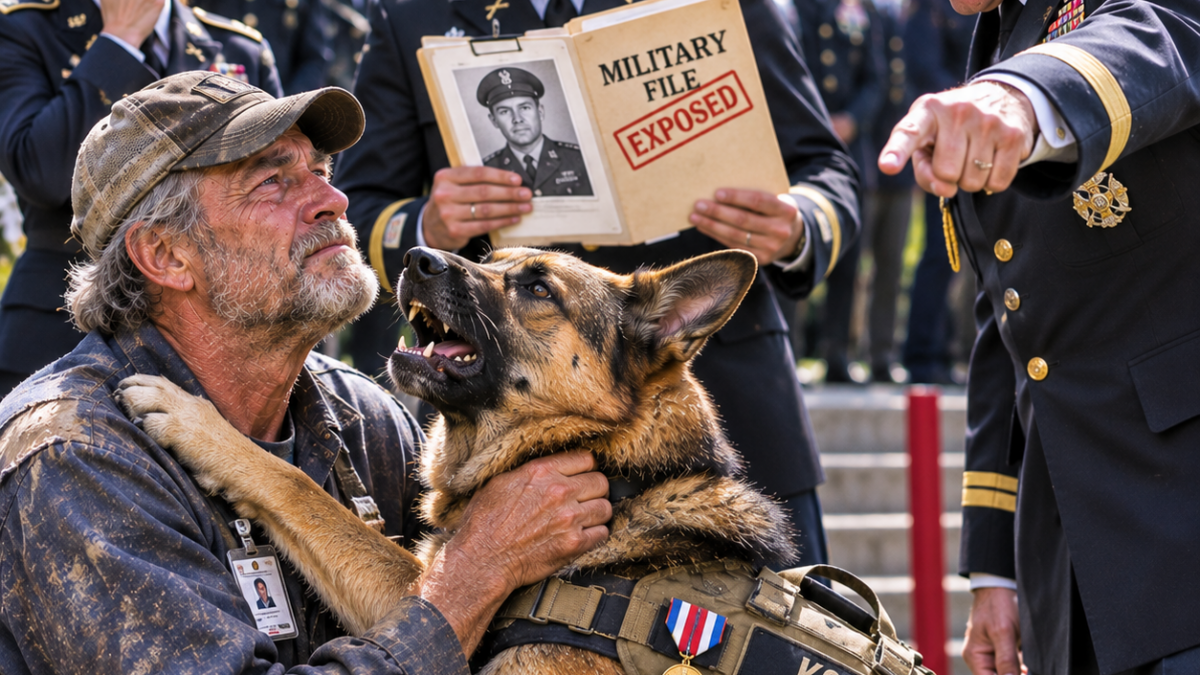
PART2
At first nobody understood what Duke was doing.
Dio assumed the dog had caught a scent.
Maybe food.
Another animal.
Something from the crowd.
“Duke.”
A subtle hand signal.
Nothing.
The Malinois remained seated.
But his body had changed.
Walter saw it.
He had trained enough dogs to recognize that tension immediately.
Not prey drive.
Not aggression.
Recognition.
Duke’s tail began moving.
Short, hard sweeps against the pavement.
Dio looked down.
“Buddy?”
Voss continued speaking.
“Our K9 division has become one of the most respected programs in the state…”
Duke stood.
Dio’s eyebrows rose.
“Sit.”
The dog took one step.
“Duke.”
Another.
The leash went taut.
People in the front row noticed.
A few children laughed.
Dio shortened his grip.
“Duke, heel.”
Nothing.
The dog moved again.
Direct line.
No hesitation.
Toward Walter.
Voss finally saw.
His voice faltered.
Then recovered.
“Deputy Dio.”
Dio glanced toward him.
“Hold your dog.”
“I’m trying, sir.”
“Then try harder.”
Dio planted his feet.
Duke did not lunge.
That would have been easier.
Instead, he pulled with the slow certainty of an animal that had already decided where he belonged.
Dio looked toward Walter.
Then back at Duke.
Something about fighting the dog suddenly felt wrong.
His fingers loosened.
The leash slid three inches.
Duke took advantage.
One twist.
One forward pull.
The lead slipped free.
“Duke!”
The dog crossed twenty feet of pavement.
The mayor stepped backward.
A television camera swung around.
Officers turned.
Walter stood frozen.
Rake in both hands.
He had not touched Duke directly in almost seven years.
Not since the pup had left the foundational kennel and officially entered training.
But Walter knew that gait.
Knew the slight leftward angle to the head.
Knew the tiny scar beneath the chin from the night an eight-week-old Malinois had panicked and caught himself on a kennel latch.
The department called him Duke.
Walter had known him first as Samson.
Named after Zeus.
The first dog Walter had ever trained for Ridgeline County.
Duke reached him.
Stopped.
Looked up.
Walter’s chest collapsed inward.
The dog whined.
High.
Trembling.
Then lowered himself completely onto the pavement.
Across Walter’s boots.
Pressing against him.
Walter dropped the rake.
Metal struck asphalt.
The sound cracked through the silence.
“Oh my God.”
Someone said it.
Dio stood twenty feet away holding an empty leash.
“He’s never done that.”
Nobody answered.
“Not once.”
Duke pushed his head against Walter’s shin.
Walter’s weathered hand hovered over the dog.
For a second he was afraid.
Not of Duke.
Of touching him in front of Voss.
Ridiculous.
Nineteen years and the fear still lived there.
Then Walter looked at the animal.
Samson.
Not Duke.
Samson.
He placed his hand on the dog’s head.
The Malinois closed his eyes.
A long breath left Walter.
Like he had been holding it since he was fifty-two.
Then Voss arrived.
Fast.
His smile gone.
“Get up.”
Walter looked at him.
“Excuse me?”
“Get up and get out of the ceremony area.”
Voss kept his voice low.
News camera close.
Too many witnesses.
“You’re disrupting an official event.”
Walter looked down.
Duke had wrapped himself more tightly across his boots.
“He remembers me.”
Voss’s jaw tightened.
“He’s a dog.”
“Yes.”
“He’s never met you.”
Walter lifted his eyes.
For nineteen years, he had avoided looking directly at Russell Voss unless necessary.
Now he did.
“He’s met me.”
Voss’s face changed.
Walter continued:
“Every dog in this unit has met me.”
Confusion moved through nearby officers.
Dio stepped closer.
“Sir?”
He looked between them.
“What does he mean?”
Voss forced a laugh.
“Nothing.”
“The groundskeeper is confused.”
Walter almost smiled.
Groundskeeper.
Confused.
Old.
Small words used to make a man smaller.
“Ask him his name.”
Dio frowned.
“What?”
Walter lowered himself carefully.
His knees cracked.
Duke lifted his head instantly.
Walter scratched the dog behind the ear in a place Dio had never seen him tolerate from strangers.
“Ask him his real name.”
Dio said:
“His name is Duke.”
“That’s his roster name.”
Walter looked at the Malinois.
Then said softly:
“Samson.”
The dog exploded to life.
Tail hammering the pavement.
Whine.
Head pressing against Walter’s chest.
Walter’s eyes closed.
Dio stared.
“How…”
Walter whispered:
“That’s what I named him.”
Voss snapped:
“Enough.”
Walter did not look away from the dog.
“He was eight weeks old.”
“He weighed fifteen pounds.”
“He caught kennel cough so badly we thought we’d lose him.”
“I slept on the concrete floor beside him three nights.”
Dio’s face went pale.
Walter continued:
“His father was Zeus.”
Dio whispered:
“Zeus?”
“The first working dog this county ever fielded.”
“I trained him twenty-two years ago.”
Now the camera operator was close enough to hear everything.
Voss saw.
Panic moved behind his eyes.
“Dio.”
“Take the dog.”
Dio did not move.
“Deputy.”
“That is an order.”
Still nothing.
Dio looked at Walter.
Then Voss.
“Sir…”
“What?”
“If he raised Duke, why is he the groundskeeper?”
Silence.
Walter almost pitied Voss.
Almost.
Because some lies survive only while nobody asks the simplest question.
Why?
Voss said:
“This is not the time.”
Walter stood.
“For nineteen years, it has never been the time.”
Voss moved closer.
“You need to stop.”
“No.”
Walter’s voice did not shake.
Not anymore.
“You got nineteen years.”
“I think I get five minutes.”
The crowd began whispering.
Emily Briggs stood near the news van holding a reporter’s notebook.
Walter saw her.
His granddaughter.
Twenty-eight years old.
Ridgeline Gazette.
She had come to cover a dog’s retirement.
Now she looked at her grandfather like she had never seen him before.
That frightened Walter more than Voss.
He had spent her entire life protecting her from this story.
Not because he was ashamed of the truth.
Because he was afraid anger could be inherited.
His wife, Margaret, had carried enough of it before she died.
Walter did not want Emily growing up hating police officers she had never met.
He did not want his granddaughter believing institutions were always corrupt because one ambitious man had betrayed him.
So whenever Emily asked why Grandpa stopped training dogs, Walter smiled.
“That was a long time ago.”
Then changed the subject.
Now Duke had destroyed twenty years of silence in under sixty seconds.
Voss ended the ceremony.
“Unexpected K9 handling issue.”
That was his phrase.
The mayor looked confused.
The news crew refused to leave.
People surrounded Dio.
Questions.
Walter escaped behind the equipment shed.
Duke followed.
Nobody stopped him.
Maybe nobody knew who had authority anymore.
Walter sat on his overturned lunch bucket.
Duke lay across his feet.
Just like before.
Emily arrived.
“Grandpa.”
Walter looked at her.
Notebook in hand.
Phone recording in the other.
He smiled sadly.
“Reporter.”
She put both down.
“Granddaughter first.”
That almost broke him.
She crouched.
“What just happened?”
Walter stroked Duke.
“You’ve always asked me why I stopped working with dogs.”
“Yes.”
“I never told you because I didn’t want you carrying my anger.”
Emily’s eyes filled.
“Grandpa…”
Walter inhaled.
Then looked toward the building where Russell Voss had disappeared.
“I think it’s time somebody finally carried the truth instead.”
Emily sat on the pavement.
“All of it.”
Walter began twenty-two years earlier.
Back when Ridgeline County had no K9 division.
No kennels.
No training field.
No budget.
Just an idea county leadership considered unnecessary.
Walter had come from the Marine Corps working-dog program.
Explosive detection.
Patrol training.
Search.
Ten years.
A back injury eventually forced him out of military dog work.
Ridgeline hired him as a deputy.
He saw immediately what the department lacked.
A rural county.
Large search areas.
Drug corridors.
Missing children.
Suspects hiding in wooded terrain.
He wrote a proposal.
Rejected.
Rewrote.
Rejected.
Presented again.
Finally one commissioner said:
“You get one dog.”
Walter found Zeus.
Young German Shepherd.
Too much energy.
Too smart.
Perfect.
The county gave him almost no infrastructure.
Walter converted an old storage shed into a kennel.
Built obstacles himself.
Used scrap lumber.
Borrowed training equipment.
Some nights Zeus panicked in the unfamiliar kennel.
Walter slept on a cot beside him.
Margaret would drive dinner to the training center.
She would stand in the doorway and say:
“You know we own a house?”
Walter would answer:
“Zeus disagrees.”
Zeus became exceptional.
First successful narcotics seizure.
Then lost-child track.
Then suspect apprehension.
Funding appeared quickly after success.
One dog became three.
Three became seven.
Walter trained handlers.
Built policy.
Created records.
Made mistakes.
Corrected them.
He became known around neighboring counties.
Departments asked him to help test dogs.
Train handlers.
Design programs.
Then Russell Voss arrived.
Young.
Ambitious.
Twenty-eight.
New baby coming.
Hungry to move upward.
Walter liked him.
That part still embarrassed him.
Not because trusting someone is shameful.
Because hindsight always makes trust look stupid.
Walter taught Voss scent theory.
Reading a dog’s breathing.
Handler posture.
When to command.
When to wait.
How fear travels down a leash.
How ego destroys working dogs.
He wrote Voss recommendation letters for advanced courses.
Margaret invited Voss and his wife to Thanksgiving once when their family was out of state.
Emily had been little.
She probably did not remember.
Then came Rex.
German Shepherd.
Strong.
Reliable.
Cleared for patrol.
October afternoon.
Burglary call.
Commercial building.
Confusion around the perimeter.
Voss handling Rex.
Scene security failed.
A twelve-year-old boy slipped into the search zone.
Nobody understood why until afterward.
Looking for his older brother.
Rex encountered movement.
Bit.
Eleven stitches.
Not catastrophic.
Still unacceptable.
The boy’s family demanded answers.
Rightly.
Internal review began.
Walter reviewed deployment records.
His conclusion was clear.
Rex had performed according to training.
The deployment area had not been secured.
Handler responsibility.
Voss.
Two nights before the hearing, Voss came to Walter’s house.
Margaret made coffee.
Voss would not drink.
He looked terrified.
“Walter.”
“If this goes on my record, I’m done.”
Walter sat across from him.
“You’re not done.”
“I’ll be removed from K9.”
“Maybe temporarily.”
“You’ll retrain.”
“My wife is pregnant.”
“I have a mortgage.”
“I know.”
“Please.”
Walter frowned.
“Please what?”
“Say it was training.”
Walter went cold.
“No.”
“Walter.”
“No.”
“You built the program.”
“They trust you.”
“If you say Rex had an instability issue, they’ll believe it.”
“You want me to lie.”
“I want you to protect me.”
“No.”
Voss started crying.
That memory remained painful because Walter had nearly hugged him.
“Russell.”
“Listen to me.”
“You made a serious mistake.”
“You secure the search area before sending a dog.”
“You know that.”
“I know.”
“Then tell the truth.”
“You may lose the assignment.”
“You won’t lose your entire life.”
Voss whispered:
“You don’t know that.”
Walter answered:
“Lying will cost more.”
Two days later Voss lied anyway.
Review board.
Walter sitting beside departmental counsel he barely knew.
Voss testified that Rex had known behavioral problems.
That Walter had cleared deployment despite documented concerns.
Then he produced a training note.
Backdated.
Supposedly Walter’s.
Warning about Rex.
Walter remembered staring at the paper.
He knew instantly.
Fake.
But Voss had copied Walter’s phrasing.
Used an old report template.
Signature resembled his.
Walter said:
“I did not write this.”
Voss said he had received it from him.
One man’s word.
Against documentation.
Walter had no attorney of his own.
No handwriting expert.
No idea he was about to become the accused person.
The board believed Voss.
Walter was fired within a month.
Pending pension review.
The appeal lasted six years.
Attorney fees consumed savings.
Then Margaret became ill.
Walter had to choose.
Continue legal fight.
Or pay medical bills.
He chose Margaret.
Always.
The pension remained frozen.
Their house went two years later.
They moved into a rental.
Walter applied to departments across the region.
Nobody wanted the trainer tied to a child-bite cover-up.
The irony almost destroyed him.
He had refused the cover-up.
Then carried its label.
Voss stayed.
Promoted.
Sergeant.
Lieutenant.
Captain.
Eventually head of the K9 division.
The division Walter built.
Emily was crying now.
Not quietly.
“You knew he did this.”
“Yes.”
“And you worked here anyway?”
Walter looked toward Duke.
“Eleven years ago, after your grandma got sick, I needed work.”
“The county offered maintenance.”
“You came back to the same department?”
“I needed the insurance.”
That hurt more than the rest.
Emily looked away.
Walter continued:
“And…”
He rubbed Duke’s neck.
“I missed the dogs.”
He explained the foundational kennel.
Every new K9 spent the first eight weeks in a rear training section before assignment.
Feeding.
Handling.
Socialization.
Basic obedience.
Temperament.
Walter volunteered because nobody wanted the extra early-morning responsibility.
Then it became his.
No title.
No additional pay.
No acknowledgment.
The official trainers took over afterward.
Walter went back to mowing grass.
Duke had been one of those pups.
Eight weeks old.
Too confident for his own body.
Walter named him Samson.
Zeus’s bloodline.
Not directly in every paperwork detail, but descended from the foundation stock Walter had helped select.
He trained the pup with several verbal cues no official handler later used.
Then Samson became Duke on the roster.
The department issued new commands.
New name.
New handler.
Walter stayed in the background.
Emily whispered:
“Did Voss know?”
Walter laughed once.
No humor.
“Every day.”
“He knew I was raising their dogs.”
“Why allow it?”
“Because I was free.”
Walter’s voice hardened.
“And because I was good.”
“As long as nobody knew why I was good, it didn’t threaten him.”
Emily looked toward the sheriff’s office.
“That ends today.”
Walter immediately shook his head.
“No.”
“Grandpa.”
“I told you because you asked.”
“Not because I want revenge.”
“This is not revenge.”
“You’re a reporter.”
“Yes.”
“And my granddaughter.”
“Yes.”
“Conflict.”
She stared.
“Truth.”
He did not answer.
Emily picked up her notebook.
“I can disclose the relationship.”
“My editor decides handling.”
“I can request records.”
“Interview independent witnesses.”
“If the evidence doesn’t support you, I don’t publish an accusation.”
Walter looked at her.
“You would do that?”
“I love you.”
She wiped her face.
“But I’m not putting something in print just because I love you.”
Walter smiled.
Margaret would have liked that answer.
“Good.”
Emily filed records requests that afternoon.
Original 2003 review transcripts.
Training documentation.
Personnel actions.
Historical K9 records.
Then she called every retired officer she could locate.
Most refused.
One didn’t.
Alvin Reyes.
Retired sergeant.
Former review-board member.
Seventy-three.
He went silent when Emily explained.
Then said:
“I always wondered.”
“About what?”
“Russell Voss.”
Reyes had remembered inconsistencies.
Written statement said one thing.
Hearing testimony shifted.
Training note appeared late.
Walter had looked stunned.
Reyes had voted with the majority anyway.
“Why?”
Emily asked.
He answered:
“Because the paper was there.”
“And Walter was angry.”
“We treated anger like evidence of guilt.”
That sentence went into the article.
The piece ran next morning.
Front page.
Not community section.
Headline:
THE MAN BEHIND RIDGELINE’S K9 LEGACY HAS BEEN PUSHING A BROOM FOR 11 YEARS—AND THE DEPARTMENT’S TOP DOG JUST TOLD EVERYONE WHY
Walter hated the headline.
Emily loved it.
The story included the ceremony photographs.
Duke at Walter’s feet.
Voss in background.
Historical records proving Walter had run the original K9 unit.
Reyes’s concerns about the hearing.
Walter’s allegations clearly identified as allegations pending review.
No claim the forgery was proven yet.
Important.
By noon, television picked it up.
By two, Sheriff Diane Castellano announced a formal internal review.
She had taken office only two years earlier.
No personal connection to 2003.
She called Walter.
Not through Voss.
Directly.
“Mr. Briggs.”
“Sheriff.”
“I want you to know this investigation will be independent of Captain Voss’s chain of command.”
Walter said:
“Thank you.”
“And I’m sorry.”
“For what?”
“For working here two years without knowing who you were.”
Walter looked at Duke asleep beside his chair.
“You’re not the only one.”
Voss locked himself in his office.
Refused reporters.
Sent an email to staff:
Do not speculate publicly about historical personnel matters.
That made everyone speculate privately.
Deputy Marcus Dio could not stop thinking about Samson.
The name.
Duke’s response.
Walter knowing the scar beneath his chin.
Knowing the kennel cough.
Knowing the way Duke liked pressure behind his right ear.
Dio had trusted the dog with his life for seven years.
Duke had found drugs behind false walls.
Tracked a missing child through four miles of rain.
Detected a suspect hiding beneath a crawl space when everyone else had walked past twice.
Duke did not lie.
Humans did.
That evening Dio went to the county records annex.
Converted warehouse.
Old paper files not fully digitized.
Dust.
Water-damaged boxes.
He searched for K9 archives.
Two hours.
Nothing.
Then a box marked:
K9 ARCHIVE — 2003
Inside:
Daily logs.
Training sheets.
Deployment forms.
Walter’s handwriting.
Neat block print.
Precise.
Dio found the warning note from the review hearing.
Different.
Close.
But not Walter.
He compared.
Then found something tucked farther back.
Original weekly training page.
Same dates.
Walter’s handwriting.
REX — FULLY READY FOR DEPLOYMENT. NO BEHAVIORAL CONCERNS.
Dio sat on the concrete floor.
Two records.
Same week.
One warning.
One clearance.
The warning had supposedly come from Walter.
The original log contradicted it.
He photographed everything.
Then called Sheriff Castellano.
“Ma’am.”
“I think I found it.”
“What?”
“The lie.”
Forensic document review followed.
Not overnight.
Not TV magic.
Ink.
Paper.
Handwriting.
Document sequence.
Archived copies.
The warning note showed irregularities inconsistent with Walter’s standard records.
The original log had intact chronology.
Board transcripts revealed the warning had entered evidence late through Voss.
Reyes gave a new sworn statement.
Two other surviving board members did too.
Then investigators examined eleven years of K9 foundational care.
Walter had been performing ongoing training work well beyond ordinary groundskeeping.
Emails existed.
Voss assigning pups to “Walter in the rear kennel.”
No formal compensation.
No trainer designation.
No credit.
The same man Voss publicly dismissed as confused had been quietly developing every foundational dog in his program.
Captain Russell Voss was placed on administrative leave three weeks after Duke’s retirement ceremony.
He issued no public statement.
Emily waited outside headquarters.
He left through another exit.
Two days later, through counsel, Voss denied intentionally falsifying evidence and claimed records from nineteen years earlier were incomplete.
The investigation continued.
Then he resigned.
Two-line letter.
No apology.
No explanation.
Effective immediately.
He left the county within weeks.
Walter heard while eating lunch behind the equipment shed.
Same bucket.
Same gray jumpsuit.
Duke’s head in his lap.
Emily came running.
“He resigned.”
Walter closed his eyes.
She waited for celebration.
None came.
“You okay?”
“No.”
Honest.
She sat beside him.
“You won.”
Walter looked at her.
“No.”
“What?”
“Winning would have been Margaret alive to see my name cleared.”
“Winning would have been keeping the house.”
“Watching you grow up without your grandma worrying about money.”
“This is not winning.”
Emily’s eyes filled.
“Then what is it?”
Walter rubbed Duke’s ears.
“Being able to put something down.”
That was enough.
Six weeks later, Ridgeline County held another ceremony.
Same front lot.
Nothing else the same.
Hundreds of chairs.
News vans.
County commissioner.
Retired officers.
Families.
K9 handlers from neighboring jurisdictions.
Alvin Reyes in his old formal jacket.
Emily near the front.
Walter wore a navy suit she had helped choose.
He hated the tie.
Duke sat beside him.
No leash.
Did not need one.
Sheriff Castellano took the podium.
“Nineteen years ago, this department failed Walter Briggs.”
No softening.
No passive voice.
Walter appreciated that.
“We failed him through negligence.”
“Misplaced trust.”
“And a willingness to accept convenient evidence over difficult truth.”
She paused.
“The review has established that Mr. Briggs’s 2003 termination relied materially on falsified documentation and testimony that cannot be sustained.”
The crowd remained silent.
“Effective immediately, his personnel record is amended.”
“His termination finding is rescinded.”
Then:
“His pension, with the full back adjustment authorized through county review and settlement, is restored.”
Walter stopped breathing.
He knew discussions were happening.
Not final numbers.
Not public announcement.
Emily grabbed his hand.
Applause started.
Walter stared at the ground.
Nineteen years.
Pension.
Back adjustment.
Money could not return time.
Still.
Margaret had deserved that security.
He whispered:
“You should’ve been here.”
Emily knew who.
She squeezed harder.
Castellano continued.
“There is more.”
Walter looked up.
“The foundational K9 training process Mr. Briggs quietly maintained for the past eleven years will now become a formal department program.”
She turned.
“Beginning today, every working dog entering this department will start in the Walter Briggs Foundational K9 Program.”
Walter’s face crumpled.
The standing ovation began before she finished.
He hated it.
Loved it.
Wanted Margaret.
Wanted twenty years back.
Wanted to disappear.
Duke leaned into his leg.
Walter stayed.
Then Castellano smiled.
“One final piece of business.”
Deputy Dio came forward.
Duke lifted his head.
Walter’s stomach tightened.
Retirement.
Of course.
Castellano said:
“Duke’s retirement is now official.”
“Normally, a retiring K9 is placed with his most recent handler where practical.”
She looked at Dio.
“Deputy Dio has first consideration.”
Dio stepped toward the microphone.
“I love this dog.”
His voice broke slightly.
“He has slept beside my bed for seven years.”
“Protected me.”
“Made me look smarter than I am.”
Laughter.
Dio looked at Walter.
“But I spent seven years thinking I knew everything about him.”
“I didn’t even know his first name.”
Walter shook his head.
Dio continued:
“I will never forget what happened six weeks ago.”
“When I dropped his leash, Duke made the first retirement decision himself.”
He turned toward the dog.
“Samson.”
Duke’s tail moved.
The crowd gasped softly.
Dio smiled.
Then handed the leash—not to Walter.
There was no leash.
He simply stepped away.
Sheriff Castellano looked at Walter.
“Mr. Briggs.”
Walter’s eyes filled.
“Would you like to take your dog home?”
For nineteen years, Walter had imagined many versions of justice.
Voss apologizing.
The board admitting error.
His badge returned.
Money.
His name restored.
None had included this.
A gray-muzzled Malinois looking up at him.
Waiting.
Walter knelt.
Slow.
Knees cracking.
He wrapped his arms around Duke.
The dog shoved his head over Walter’s shoulder and released the same trembling whine from the first ceremony.
Walter buried his face against the dog’s neck.
“Yeah.”
His voice failed.
He tried again.
“Yeah, buddy.”
Duke licked his ear.
The crowd laughed through tears.
Walter whispered:
“Let’s go home.”
And for the first time in almost twenty years, he left the Ridgeline K9 center without wondering whether he had any right to belong there.
Duke slept on Walter’s bedroom floor the first night.
Not the expensive orthopedic dog bed Emily had bought.
The floor.
Walter woke at 2:17 a.m.
Saw the shape near the door.
For a second he was fifty again.
Kennel.
Zeus breathing nearby.
Margaret waiting at home.
Then Duke lifted his head.
Walter whispered:
“Samson.”
Tail thump.
Walter smiled.
“Duke.”
Another thump.
“Guess you get both.”
The next morning Emily arrived with groceries.
She stopped on the porch.
Walter had already put out a water bowl.
Duke slept in sunlight.
“You look different.”
Walter frowned.
“I’m wearing the same shirt.”
“Not your clothes.”
He knew.
Slept better.
Shoulders less tight.
The world had not repaired itself.
But Voss’s version of him no longer lived uncontested.
That mattered.
Emily’s follow-up reporting continued.
Not because Walter wanted more attention.
Because questions remained.
How did an off-the-books training arrangement last eleven years?
Why did nobody review Walter’s original termination during later program audits?
How many supervisors knew?
Sheriff Castellano commissioned an external policy review.
The conclusions were uncomfortable.
No grand conspiracy.
Something more ordinary.
Institutional laziness.
Staff turnover.
Assumptions.
Walter did excellent work cheaply.
Nobody asked why a groundskeeper possessed trainer-level skill.
Nobody wanted to disrupt a system producing good dogs.
Voss benefited from silence.
Others benefited from convenience.
Convenience became culture.
That finding bothered Walter more than one villain.
Because if everything were Voss, firing Voss fixed it.
It wasn’t.
Systems can exploit people without everyone consciously deciding to exploit them.
So the department made changes.
Foundational training formally documented.
Staff compensated.
Historical records preserved.
Independent incident review procedures.
No single supervisor controlling both evidence submission and training evaluation in serious K9 incidents.
Walter helped draft the new standards.
He insisted on one line:
Scene security failures must be evaluated independently of canine behavior.
Rex.
Nineteen years later.
Still teaching.
Emily asked:
“Do you think about him?”
“Rex?”
“Yes.”
“Every day for a long time.”
“What happened?”
“Retired with another handler.”
“Good life.”
“Not his fault.”
Walter always said that.
Dogs do not understand departmental politics.
Rex had responded within the environment humans created.
The failure belonged to people.
Months after the scandal, the boy Rex had bitten—now a thirty-one-year-old electrician named Thomas—contacted Emily.
Walter almost refused to meet.
Thomas insisted.
They met at a diner.
Walter arrived early.
Thomas came with a faint scar on his forearm.
Walter stared.
Thomas noticed.
“It’s not bad.”
“I’m sorry.”
“You didn’t bite me.”
Walter smiled weakly.
Thomas sat.
“My parents hated the department.”
“They thought you were responsible.”
“For years.”
Walter nodded.
“They had every reason to believe what they were told.”
Thomas continued.
“I was twelve.”
“I went into the building because my brother had dared me.”
“I shouldn’t have been there.”
Walter immediately shook his head.
“You were twelve.”
“You do not carry adult responsibility for scene security.”
Thomas stared.
Then:
“That’s what I needed to hear.”
Walter swallowed.
Thomas said:
“I saw the news.”
“I wanted you to know I don’t blame the dog.”
“Or you.”
Walter looked out the window.
Nineteen years.
Another weight.
Smaller.
Still real.
“Thank you.”
Thomas smiled.
“Also…”
“What?”
“My daughter wants a dog.”
Walter laughed for the first time.
“What kind?”
“Not a Belgian Malinois.”
“Good.”
They talked for an hour.
Duke’s retirement transformed Deputy Dio too.
He transferred fully into K9 training.
Not because Walter asked.
Because Dio realized how much he did not know.
At thirty-four, experienced handler, decorated.
Still student.
Twice a week he sat beside Walter during foundational sessions.
Puppies.
Young dogs.
Temperament.
Walter said:
“Stop staring at the dog’s mouth.”
“What?”
“Watch shoulders.”
Dio adjusted.
“Why?”
“Body tells you before teeth.”
Another day:
“You’re giving too many commands.”
“He’s not listening.”
“He’s listening to all six things you said.”
“Pick one.”
Dio laughed.
Walter did not.
“Handler ego is noise.”
That line became famous around the unit.
Dio wrote it on the training-room whiteboard.
Walter erased it.
“Why?”
“Because you’ll turn everything I say into a quote and stop thinking.”
Dio admired him more every week.
That worried Walter.
Hero worship was another form of not seeing the full person.
So he told Dio about mistakes.
Dogs he misread.
Handlers he pushed too hard.
The time Zeus slipped a training collar because Walter fastened it incorrectly.
Dio looked shocked.
“You?”
“Especially me.”
“Experience is surviving your own stupidity long enough to become useful.”
Dio wrote that down.
Walter threatened him with the eraser.
Emily visited Sundays.
She had become briefly famous too.
The reporter granddaughter who exposed the scandal.
She hated the phrase.
“I didn’t expose it alone.”
Walter agreed.
“Duke did.”
Duke looked up from the porch.
Emily rolled her eyes.
“His ego is already unbearable.”
She wrote a one-year anniversary piece.
Took weeks.
Not because facts were difficult.
Because the ending mattered.
She considered:
Walter Briggs finally got justice.
Too simple.
Justice did not restore Margaret.
Did not restore his career years.
Did not return the house.
She wrote instead:
Duke spent seven years finding things other people could not see—drugs hidden behind walls, children lost in the woods, danger buried beneath ordinary places. But the most important thing he ever found was a man everyone else had stopped looking at.
Walter read the article on his porch.
Duke beside him.
Then:
Sometimes the truth does not need a courtroom or a headline to begin moving. Sometimes it just needs one loyal dog to remember the person everyone else learned to ignore.
Walter folded the newspaper.
“Dramatic.”
Emily smiled.
“You cried.”
“Allergies.”
“In January?”
“Strong winter pollen.”
She framed the article anyway.
Hung it inside his house.
Next to an old photograph.
Walter.
Forty-nine.
Kneeling in dirt.
Zeus beside him.
The original dog.
The beginning.
Emily had found the photo among Margaret’s things.
On the back, in her grandmother’s handwriting:
Walter and Zeus. Two stubborn men.
Duke eventually developed a habit.
Every afternoon at four, he walked the property fence with Walter.
Not because there was anything to patrol.
Because working dogs retire slower than paperwork suggests.
Walter allowed it.
He would grab his cane on bad days.
Duke beside him.
At first the dog scanned constantly.
Cars.
Birds.
Neighbors.
Then months passed.
His gait softened.
He stopped checking behind every shed.
Began sniffing grass for pleasure.
The first time Walter saw Duke roll onto his back in the sun, he laughed so loudly Emily came outside.
“What?”
Walter pointed.
“This county’s most decorated K9.”
Duke wriggled.
Tongue hanging sideways.
Emily took a photograph.
“Blackmail.”
“Absolutely.”
The program thrived.
The first official Briggs Program litter included three dogs eventually assigned to patrol and detection.
Walter refused to name them.
“Why?”
Dio asked.
“I did enough of that.”
Then one undersized shepherd caught Walter’s attention.
Nervous.
Slow to trust.
Other evaluators questioned suitability.
Walter sat in the kennel every morning without touching him.
Reading newspaper.
Ignoring him.
Day four, dog moved closer.
Day seven, head on Walter’s boot.
Dio smiled.
“Looks familiar.”
Walter stared at him.
“Don’t start.”
They named the dog Briggs.
Walter objected violently.
Sheriff Castellano approved it anyway.
“Abuse of authority.”
She laughed.
“File a grievance.”
He threatened.
Never did.
Briggs became a search-and-rescue dog.
His first major find was an elderly dementia patient missing overnight.
Walter watched the body-camera footage later.
Dog tracking.
Handler following.
Old man found alive near a creek.
Walter sat quietly.
Emily asked:
“You okay?”
“Yes.”
“Proud?”
Walter thought.
“Useful.”
For Walter, that word meant more.
Useful without being exploited.
Seen without being worshiped.
Paid.
Credited.
That balance was new.
Voss disappeared from public life.
There were rumors.
Other county.
Private security.
Walter refused to chase them.
Emily once asked:
“Do you want an apology?”
Walter was silent.
Then:
“I used to.”
“Now?”
“I want him to understand.”
“Difference?”
“An apology can be performed.”
“Understanding changes what a man does next.”
No evidence Voss ever reached that understanding.
Walter had to accept he might not.
Healing cannot require cooperation from the person who hurt you.
That lesson took him sixty-nine years.
The county eventually settled Walter’s employment claims associated with the reopened review and unpaid training arrangement.
Lawyers handled details.
Walter did not become wealthy.
He became secure.
Pension restored.
Back compensation.
Medical coverage.
Enough to buy a small house instead of rent.
Emily helped him choose.
Two bedrooms.
Covered porch.
Fenced yard.
When they signed the papers, Walter sat in the car afterward.
Did not start engine.
Emily looked at him.
“What?”
He held the keys.
“Your grandma wanted a porch.”
Emily’s eyes filled.
“She would’ve liked this one.”
“I know.”
He cried.
Not because house was enormous.
It wasn’t.
Because nineteen years earlier, a lie had taken their home.
Now truth could not return that house.
But it could give Walter a door nobody else controlled.
Duke walked inside first.
Inspected every room.
Chose the space beside Walter’s bed.
Emily said:
“Approved.”
The first Christmas in the new house, Walter invited Dio.
Castellano.
Emily.
Alvin Reyes.
Thomas—the bite victim.
Strange table.
People connected by one terrible incident and everything afterward.
Thomas brought his daughter.
She brought a Labrador puppy.
Walter spent half dinner on the floor teaching the girl how not to reward jumping.
Emily shouted:
“Grandpa.”
“What?”
“Food.”
“I’m working.”
Dio laughed.
“You retired.”
Walter pointed at Duke.
“Tell him.”
Duke slept beneath the table.
No interest.
At some point Alvin Reyes approached Walter privately.
“I’m sorry.”
Walter knew immediately.
“For the vote?”
“Yes.”
Walter looked at the old man.
Reyes’s hands trembled.
“I should’ve challenged it.”
“I saw inconsistencies.”
“I said nothing.”
“Why?”
“Cowardice.”
Walter shook his head.
“Convenience.”
Reyes looked confused.
Walter continued:
“Cowardice sounds dramatic.”
“You believed paperwork.”
“You trusted the structure.”
“So did I before it failed me.”
Reyes’s eyes filled.
“That doesn’t excuse me.”
“No.”
Walter touched his shoulder.
“But I’m tired of needing everyone to suffer forever.”
Reyes cried.
Walter did too.
Duke came over.
As usual.
Dogs dislike unresolved emotion.
Two years after his retirement, Duke slowed considerably.
Arthritis.
Old working injuries.
Walter adapted.
Shorter walks.
Ramps.
Medication.
Dio helped.
Veterinary appointments.
Duke still insisted on the four o’clock fence patrol.
Twenty minutes became fifteen.
Then ten.
One winter evening, Duke stopped halfway.
Walter waited.
Dog looked at him.
Walter crouched.
“You done?”
Duke sat.
Walter sat too.
Snow beginning.
They stayed.
Emily arrived and found both on the ground.
“Are you insane?”
Walter said:
“Probably.”
She brought blankets.
The three sat in snow until Duke decided to walk back.
That spring, Duke’s health declined rapidly.
Cancer.
Walter knew before the veterinarian finished explaining.
He had seen the look too many times.
“How long?”
“Weeks.”
Maybe months with treatment.
Walter chose comfort.
Some people online later criticized.
Did not matter.
Duke had worked seven years.
He had earned peace more than extension.
Dio visited almost every day.
Sheriff Castellano came once.
Even Paul from local news—the cameraman who had recorded the original ceremony—stopped by.
Duke accepted attention like royalty.
Walter slept beside him on the living-room floor the final night.
Same way he had slept beside Samson as a sick eight-week-old pup.
Full circle.
At dawn, Duke lifted his head.
Walter whispered:
“Hey, buddy.”
Tail moved once.
Walter cried.
“I know.”
No idea what he meant.
Maybe:
I know you’re tired.
I know.
I’m here.
Dio arrived.
Emily.
Veterinarian.
Duke rested his head on Walter’s boot.
Exactly where he had dropped during the ceremony years earlier.
Walter stroked his ears.
“You found me.”
His voice broke.
“I don’t know why.”
Dio said:
“He knew.”
Walter looked at him.
Dio continued:
“Before any of us did.”
Duke died peacefully.
Walter kept one collar.
No giant memorial.
The department wanted a bronze statue.
Walter refused.
“Don’t turn him into furniture.”
They compromised.
A small plaque beside the Briggs Program kennel:
DUKE / “SAMSON”
K9 214
LOYALTY REMEMBERS
Walter approved.
Barely.
After Duke died, Walter stopped going to the training center for almost a month.
Dio did not pressure him.
Good student.
Then one morning Walter appeared at 5:45.
Gray jacket.
Thermos.
Not jumpsuit.
Dio looked up.
“You’re early.”
Walter said:
“You’re late.”
It was 5:44.
Training resumed.
Years passed.
Walter aged.
Hands stiffer.
Cane more frequent.
Mind sharp.
The Briggs Program became known across the state.
Departments sent young trainers.
Walter refused speaking fees.
Sheriff Castellano finally said:
“You are not allowed to do free labor here anymore.”
Walter grumbled.
Accepted payment.
Growth.
Emily became editor of the Ridgeline Gazette.
Her first major newsroom policy?
Conflict disclosures.
Source verification.
Historical archive digitization.
She funded part of the K9 records digitization project through a journalism grant.
When Walter learned:
“You’re making sure nobody can hide a page in a warehouse again.”
Emily smiled.
“Exactly.”
One digitized document mattered especially.
The original Rex training log.
Walter’s handwriting.
FULLY READY. NO CONCERNS.
Beside it, investigators archived the forged version with contextual annotation.
Not destroyed.
Preserved.
Emily asked:
“Why keep the lie?”
Walter said:
“So people can study how convincing one looks.”
Truth is not protected by pretending false evidence never existed.
It is protected by context.
Walter understood that better than most.
When he turned eighty, the department planned a dinner.
He said no.
They planned anyway.
He threatened absence.
Emily lied about destination.
Brought him.
He walked into the hall.
Handlers from twenty years.
Photographs.
Zeus.
Rex.
Duke.
Briggs.
Dogs he had trained.
People he had taught.
Walter froze.
Emily whispered:
“You can leave.”
He looked at her.
“You mean that?”
“Yes.”
Choice mattered.
He stayed.
At the dinner, Dio spoke.
Now lieutenant.
Head of K9 operations.
He said:
“When I was young, I thought a great trainer made dogs obey.”
Walter rolled his eyes.
Dio continued:
“Walter taught me a great trainer teaches people to listen.”
Then he told the story of Duke breaking formation.
Everyone knew it.
Still silent.
“When Duke ignored my command, I thought I had failed.”
Dio looked at Walter.
“Turns out the dog was the only professional in the parking lot doing exactly the right thing.”
Laughter.
Walter smiled.
Dio continued:
“He walked toward a man forty people had walked past.”
“That is what I remember.”
“Not that he recognized Walter.”
“That every human being there needed the dog to show us where to look.”
Walter’s eyes filled.
Afterward, Emily drove him home.
He stared out window.
“Too much?”
“A little.”
“Want me to yell at them?”
“No.”
Then:
“Your grandma would have liked the cake.”
Emily smiled.
“She’d complain the frosting was too sweet.”
“Correct.”
At eighty-three, Walter stopped regular training.
Not because he wanted to.
Balance went.
Hands.
Fatigue.
He became adviser.
One day a new deputy asked:
“Sir, is it true Captain Voss stole your career?”
Walter hated the phrasing.
“No.”
The deputy looked confused.
“But…”
“He took years.”
“Credit.”
“Money.”
“He did not take what I knew.”
“He did not take the dogs I trained.”
“He did not take my family.”
“He tried to define my story.”
“That part worked for a long time.”
Walter looked toward the kennel.
“Then a dog disagreed.”
The deputy smiled.
Walter said:
“Don’t romanticize it.”
“What?”
“If Dio hadn’t searched records, if Emily hadn’t verified, if Castellano hadn’t reopened the case, Duke lying on my feet would’ve been a touching story and nothing more.”
He tapped the young deputy’s notebook.
“Memory opens the door.”
“Evidence keeps it open.”
The deputy wrote that.
Walter sighed.
“Another quote.”
Dio’s disease.
Emily eventually wrote a book.
Not about Walter alone.
About institutional memory.
K9 programs.
Handlers.
Uncredited trainers.
Families affected by internal failures.
Walter read the manuscript.
Cut half the chapters about himself.
Emily restored some.
Argument lasted weeks.
The book’s title was:
WHAT THE DOG REMEMBERED
Walter hated it.
Public loved it.
Of course.
The opening scene was Duke crossing the parking lot.
The closing scene was smaller.
Walter on his porch.
Hand resting where Duke’s head used to be.
Emily wrote:
The dog did not give Walter Briggs a legacy. Walter had one before Duke ever broke formation. The dog merely forced everyone else to notice.
Walter underlined that.
Once.
No comment.
Emily knew that meant approval.
When Walter was eighty-six, his health failed.
Not dramatic.
Heart.
Lungs.
Time.
He spent his final weeks at home.
Emily arranged hospice.
Dio visited.
Castellano.
Reyes had already passed.
Thomas came.
Even the daughter of the boy once bitten by Rex brought her now-grown Labrador.
The dog climbed carefully beside Walter’s chair.
Walter smiled.
“Good dog.”
His last coherent conversation with Emily happened on a rainy evening.
She sat on the floor near his chair.
“Grandpa.”
“Hmm?”
“Do you regret staying at the department?”
Long pause.
“Yes.”
She was surprised.
Then he continued:
“And no.”
“Helpful.”
“I regret giving Voss eleven years of free labor.”
“I regret thinking being near the dogs was enough when I deserved to be paid and named.”
Emily nodded.
“And no?”
“I met Duke again.”
“You would’ve met another way?”
“Maybe.”
“Maybe not.”
He looked out window.
“You can regret what something cost and still love what came from it.”
Emily cried.
Walter sighed.
“You cry too much.”
“Genetics.”
He smiled.
Then:
“One thing.”
“What?”
“Don’t write me as a hero.”
“Too late.”
“Emily.”
“I’m serious.”
“So am I.”
He squeezed her hand weakly.
“I was stubborn.”
“Angry.”
“Sometimes cowardly.”
“I stayed silent too long.”
“I hurt your grandma by disappearing into the case.”
“I let Voss scare me years after he stopped having real power.”
“Write that.”
Emily nodded.
“Why?”
“Because men like Voss survive when everyone thinks good people are automatically brave every day.”
He breathed slowly.
“Good people get scared.”
“They stay quiet.”
“They make mistakes.”
“Then sometimes they get another chance to speak.”
Emily kissed his forehead.
“I’ll write it.”
Walter died two days later.
Quietly.
No dog at his feet.
That part of the story had already been lived.
At his funeral, the Ridgeline K9 unit formed outside.
Not for spectacle.
Emily had resisted.
Then learned every handler had requested it.
Briggs—the search-and-rescue dog named after him—was old now.
He sat near the front.
When Walter’s casket passed, handlers saluted.
Dogs remained seated.
No break in formation.
Emily was glad.
Walter’s life did not need another miracle.
The program continued.
The Briggs Foundational Program trained dogs long after his death.
Nobody slept unpaid beside sick puppies anymore.
There were schedules.
Compensation.
Veterinary protocols.
Records.
Accountability.
Walter would have complained bureaucracy had taken over.
Then secretly approved.
Captain Russell Voss never returned to Ridgeline publicly.
Years after Walter’s death, Emily received a letter.
No return address.
Inside:
I was wrong.
Three words.
Then:
I was afraid of losing everything, so I let Walter lose it instead. I have no excuse.
Signed:
Russell Voss.
Emily stared.
For almost an hour.
She considered publishing it.
Then imagined Walter.
He had said:
Understanding changes what a man does next.
Emily filed the letter with family papers.
Not newsroom archive.
No revenge headline.
No triumph.
Walter had not needed Voss’s apology to become whole.
The apology belonged to Voss’s conscience.
Emily did not owe him absolution.
At the twentieth anniversary of Walter’s exoneration, the department invited her to speak.
Same front lot.
New sheriff.
New handlers.
New dogs.
Most people who had been there that original Friday were retired.
Some dead.
Emily stood near the flower bed where Walter had been raking.
She looked toward the podium.
Then at the officers.
“I could tell you the famous part.”
“Duke breaking formation.”
“Samson.”
“The forged record.”
“Captain Voss.”
“Pension.”
“Program.”
“Everyone knows that.”
She paused.
“But the part my grandfather cared about most happened before anybody noticed.”
“Every morning, he showed up.”
“He fed dogs.”
“Walked them.”
“Cleaned kennels.”
“Sat beside sick puppies.”
“Fixed fences.”
“Did good work when he believed nobody would ever thank him.”
She looked toward young trainees.
“That does not mean exploitation was noble.”
“My grandfather would yell at me if I said that.”
Laughter.
“People deserve credit.”
“Pay.”
“Fair treatment.”
“Truth.”
“But character existed before recognition.”
Then:
“Duke did not turn my grandfather into the man who built this program.”
“He only refused to participate in everyone else pretending Walter Briggs was nobody.”
Silence.
Emily pointed toward the maintenance shed.
“My grandfather wore a gray jumpsuit.”
“A captain wore silver bars.”
“One had status.”
“One had truth.”
“For too long, this department confused the two.”
She closed her notes.
“So if there is one lesson left from Walter and Duke, let it be this.”
“Do not wait for a miracle before you ask who the quiet person beside you really is.”
The audience stood.
Emily smiled.
Somewhere in her head Walter complained.
Too dramatic.
She let him.
Later she walked to the small memorial garden.
Zeus.
Duke.
Several retired K9s.
Walter’s plaque nearby.
Not giant.
He would have hated giant.
The words:
WALTER BRIGGS
FOUNDER, TRAINER, MENTOR
TRUTH MAY BE BURIED. LOYALTY DIGS.
Emily laughed when she read the last line.
Dio had chosen it.
Walter absolutely would have objected.
She sat on a bench.
An elderly man nearby held a young shepherd pup.
The pup pulled toward the plaque.
Sniffed.
Then turned toward Emily.
She smiled.
“Hey.”
The man asked:
“Did you know Walter?”
Emily looked at the program building.
At the field.
At the dogs.
At the place where her grandfather once pushed mulch while another man claimed his life’s work.
“Yes.”
She said.
“He was my grandfather.”
The man’s face brightened.
“Oh.”
“You must be proud.”
Emily thought about Walter.
The house lost.
Margaret.
Years of silence.
Duke.
The bucket.
The suit.
The restored record.
The porch.
“Yes.”
Then:
“But not because everybody finally knew his name.”
The man waited.
Emily smiled.
“I’m proud because he kept caring for the dogs even when he thought nobody ever would.”
The shepherd pup pulled closer.
Emily held out her hand.
The dog sniffed her fingers.
No sudden recognition.
No dramatic whine.
No buried secret.
Just a puppy.
That felt right.
Because Walter Briggs’s life had already taught the county everything one dog could reasonably be expected to teach.
Duke spent seven years searching for things humans could not see.
Narcotics.
Missing children.
Danger.
Then, on the final day of his career, he found something much harder.
A forgotten man standing twenty feet away in a faded gray jumpsuit.
He walked past the uniforms.
Past the mayor.
Past the captain.
Past the cameras.
And lay down at Walter Briggs’s feet.
Not because Walter had been given his pension back.
Not because his name was on a program.
Not because anyone had apologized.
Duke remembered him before the world corrected the record.
That was the part Walter eventually understood.
For nineteen years he had believed Russell Voss had erased him.
Voss had erased paperwork.
Credit.
Salary.
Status.
He had convinced people to stop asking questions.
But he had not erased what Walter had taught.
Zeus carried it.
Samson carried it.
Every dog Walter quietly raised carried some piece of it.
Dio carried it.
Emily carried it.
Even the department that failed him eventually carried it forward.
The truth had survived inside work nobody thought to credit.
And loyalty?
Walter had once believed loyalty was something people promised before they betrayed you.
Duke taught him something better.
Real loyalty did not make speeches.
It did not need a podium.
It did not care which man wore captain’s bars and which man carried a rake.
It simply remembered.
And sometimes, after twenty years of silence, it crossed a parking lot in front of forty officers, lay down on the pavement, and refused to move until everybody else finally looked where they should have been looking all along.








