PART2:“GET OUT, YOU PENNILESS BEGGAR!” My Future MIL Slapped Me at Her Black-Tie Gala—Then My Father Landed on Her Lawn and Took Back Everything Her Family Had Built on His Money
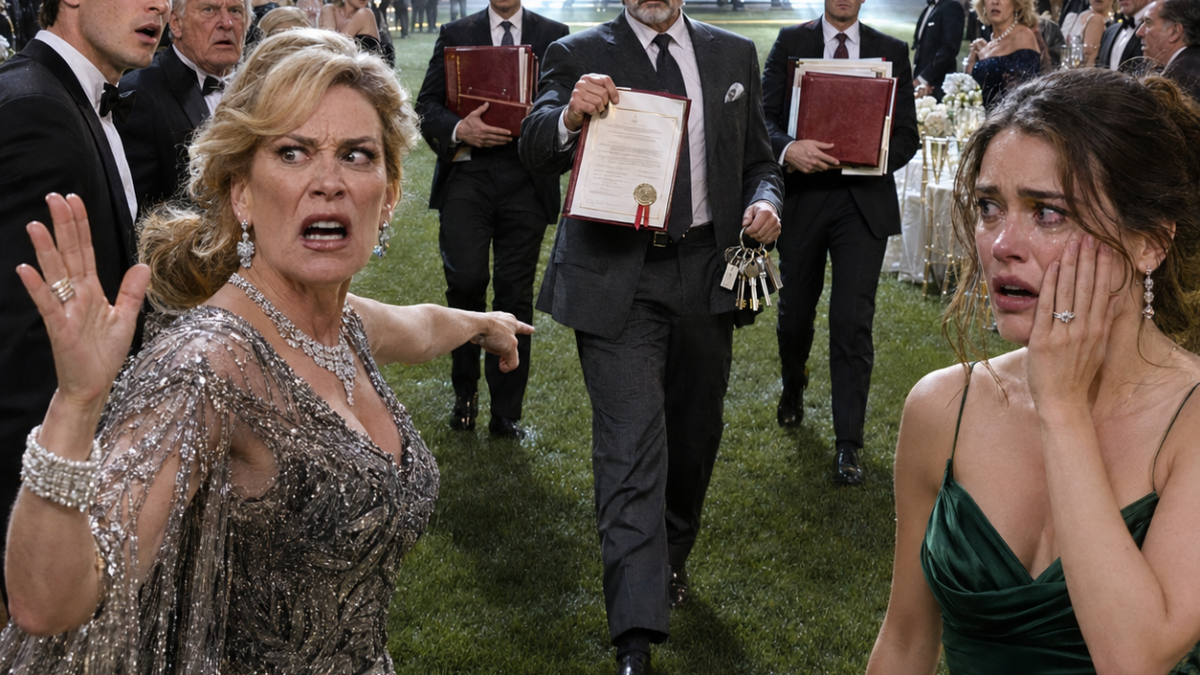
PART2
Everyone heard it.
The valet looked up first.
Then two security guards.
Then the club manager came running through the doors, coat half-buttoned.
Rotor noise swallowed the music inside.
A black Sikorsky descended beyond the circular drive, its landing lights cutting through the snow.
The club manager stared.
“You cannot land there.”
Nobody answered.
The helicopter settled onto the pristine lawn Vivian had once fined a caterer five thousand dollars for driving across.
The door opened.
My father stepped down.
Richard Vale was sixty-two, broad-shouldered, silver-haired, and dressed in the same charcoal overcoat he had worn to my graduate-school ceremony eleven years earlier.
Behind him came four people.
Helen Park, his chief legal officer.
Marcus Dell, Vale Holdings’ CFO.
Two members of his executive protection team.
My father avoided publicity so aggressively that most photographs of him online were ten years old.
Vivian knew the Vale name.
She had no idea I belonged to it.
That had been deliberate.
Not because I was ashamed.
Because my father had built a fortune in a world where last names opened doors before character had a chance.
I hated that.
When I took my first job after graduate school, I used my mother’s maiden name professionally.
Lena Hart.
Public-school counselor.
Used Honda.
Rented apartment.
Normal life.
When Dad asked whether I wanted a trust distribution at twenty-five, I refused.
At thirty, I refused again.
I had access to money if I needed it.
I simply wanted to know whether the people around me liked me without it.
Ethan had passed that test for nearly two years.
Or so I thought.
My father crossed the lawn.
His eyes went directly to my face.
He stopped.
The expression he wore terrified me more than Vivian’s anger had.
“Let me see.”
“I’m okay.”
“Lena.”
I turned my face toward the light.
His jaw tightened.
“Who?”
“Vivian.”
“And Ethan?”
“He grabbed me.”
His eyes shifted to my wrist.
A red mark was already forming.
Helen Park stepped closer.
“Do you want medical evaluation?”
“I don’t think—”
My father interrupted.
“Yes.”
I looked at him.
“Dad.”
“That part is not punishment. That is documentation.”
Helen nodded.
“Smart.”
I exhaled.
“Fine.”
Then Dad looked through the glass doors.
Inside, several guests had approached the windows.
Vivian stood among them.
Still holding my ring.
My father saw it.
Something in his face became almost peaceful.
That worried me more.
“What did you mean on the phone?” I asked.
“About what?”
“Something you should have told me.”
Marcus Dell glanced toward Helen.
My father looked at me.
“Not here.”
“Dad.”
He took a breath.
“The Blackwoods have been negotiating with one of our distressed-assets funds for six months.”
I stared.
“What?”
“They don’t know the beneficial capital source.”
“What does that mean?”
Helen answered.
“The lender of record is Harbor Crest Credit Partners.”
I knew the name vaguely.
“What does that have to do with Vale?”
Marcus said:
“Vale controls Harbor Crest.”
My stomach dropped.
“Ethan’s family owes you money?”
“Technically,” Dad said, “multiple Blackwood entities owe a credit vehicle we control approximately one hundred eighty-seven million dollars.”
I forgot the cold.
“Their family is worth billions.”
Marcus almost smiled.
“On paper.”
My father looked at the club.
“They are leveraged.”
“How leveraged?”
“Enough that tonight matters.”
I stared at him.
“You knew I was engaged to Ethan.”
“Yes.”
“And didn’t tell me?”
“No.”
“Why?”
His expression changed.
“Because the first time I met him, you told me you loved him.”
That answer did not help.
“You let me almost marry into a family that owes your company one hundred eighty-seven million dollars?”
“I was not going to interfere in your relationship because of business.”
“You could have warned me.”
“I should have.”
“Yes.”
“I know.”
That mattered.
My father could apologize without defending himself.
Rare skill.
Helen said:
“We need to decide whether you want law enforcement involved in what happened inside.”
I looked at the ballroom.
“I want my ring back.”
Dad said:
“That’s all?”
“No.”
I thought about Ethan telling me to apologize.
“I want to go inside.”
My father studied me.
“Why?”
“Because I’m done leaving rooms as if they belong to people who hurt me.”
His mouth tightened.
Not quite a smile.
“Then I’m beside you.”
“No.”
He raised an eyebrow.
“I walk first.”
That smile appeared.
“Okay.”
We entered together.
The quartet had stopped again.
Conversations dissolved.
The club manager hurried ahead.
“Mr. Vale, if we had known—”
My father ignored him.
The first person to recognize Richard was not Vivian.
It was Harrison Blackwood.
Ethan’s father.
He had been standing beside the bar.
Harrison was sixty-four, trim, elegant, and far quieter than his wife.
He saw Dad.
The champagne glass slipped in his hand.
Not dropped.
Almost.
“Richard?”
Vivian turned.
Her face changed.
She knew the name.
Of course she did.
Everyone in private equity knew it.
She simply did not understand why Richard Vale was walking toward her daughter-in-law-to-be.
Then my father stepped beside me.
Everything connected.
Vivian looked from him to me.
Back again.
“No.”
Dad stopped six feet away.
“What did you say?”
Vivian’s voice had changed.
“She never told us.”
My father looked at me.
“Apparently.”
Harrison took one slow step forward.
“Richard, I think there’s been some misunderstanding.”
Dad looked at the red mark across my face.
“Which part?”
Vivian straightened.
“This is a private family matter.”
I answered before Dad could.
“No.”
Everyone turned toward me.
I walked closer.
“It stopped being private when you slapped me in front of three hundred guests.”
Vivian’s eyes sharpened.
“You insulted me.”
“I asked Ethan why his sister had been telling people I was marrying him for money.”
“You confronted me at my gala.”
“You slapped me.”
“Because you were hysterical.”
I almost laughed.
The room had watched the entire thing.
This was the strange thing about people accustomed to power.
Eventually they begin assuming witnesses do not matter.
I held out my hand.
“My ring.”
Vivian looked at it.
Then closed her fingers around the diamond.
“No.”
Ethan finally spoke.
“Mom.”
Vivian snapped:
“Stay out of this.”
The irony almost made me smile.
The man who had told me to obey his mother was now being told to do the same.
My father said:
“Give my daughter her property.”
Vivian stared at him.
“This ring belongs to my son.”
I looked at Ethan.
“Is that true?”
His face was pale.
“Lena—”
“Did you give it to me?”
“Yes.”
“Then tell your mother.”
He swallowed.
“Mom, give it back.”
Vivian turned toward him.
“Do you understand what she has done?”
“What have I done?”
She looked at me.
“Deceived us.”
I laughed.
“About being rich?”
“About who you are.”
“I told Ethan who I am.”
That was true.
Not the financial details.
But the important things.
My father’s name.
Our estrangement from society life.
The fact that he ran investments.
Ethan had never asked how large.
He had met Dad once at a quiet restaurant.
Afterward Ethan said:
“Your dad seems like a retired accountant.”
Dad had thought that was hilarious.
I looked at Ethan.
“You knew my father was Richard Vale.”
Ethan stared.
“I didn’t know he was that Richard Vale.”
The sentence landed badly.
Very badly.
Dad’s eyebrow lifted.
I said:
“There aren’t two.”
A few guests laughed despite themselves.
Vivian shot them a look.
Then Harrison stepped in.
“Everyone needs to calm down.”
Helen Park moved beside Dad.
Harrison recognized her too.
His face tightened.
“Helen.”
“Mr. Blackwood.”
That was when I realized this was bigger than the debt.
Harrison knew our attorney personally.
Dad asked:
“When were you planning to disclose the covenant breach?”
The color drained from Harrison’s face.
Vivian looked at him.
“What is he talking about?”
Harrison said nothing.
My father continued.
“Or the collateral transfer?”
“Richard.”
“Or the liquidity shortfall?”
“Not here.”
Dad looked around.
“You’re right.”
Then he looked at me.
“This is Lena’s decision.”
Every eye returned to me.
I had no idea what half those words meant.
“Explain.”
Harrison closed his eyes.
Vivian snapped:
“Absolutely not.”
I looked at Dad.
“Explain.”
Marcus Dell opened a leather folder.
“Blackwood Hospitality and Blackwood Development have debt facilities with Harbor Crest.”
“How much?”
“One hundred eighty-seven million outstanding.”
Several nearby guests reacted.
Vivian’s face hardened.
“That is normal corporate leverage.”
Marcus nodded.
“Debt itself is normal.”
He turned a page.
“The issue is that three pledged assets were transferred to a related Blackwood entity without lender consent.”
Harrison said:
“We are correcting that.”
Marcus continued.
“And two quarterly liquidity certifications appear inconsistent with bank statements received this afternoon.”
Vivian stared at her husband.
“What certifications?”
There it was.
She did not know.
My father had not come to destroy Vivian.
He had already been coming because something financial was happening.
The slap simply changed what I was willing to hide from.
I asked:
“Why were you in Bedford tonight?”
Dad answered.
“We were meeting with Harbor Crest’s restructuring team.”
“About them?”
“Yes.”
“Were you planning to come here?”
“No.”
“Were you going to call me?”
“Tomorrow.”
My stomach tightened.
“What happened?”
Harrison interrupted.
“This is confidential business information.”
Helen looked at him.
“Then perhaps you should stop discussing it in a ballroom.”
Fair.
I turned toward Vivian.
“My ring.”
For the first time all evening, she obeyed.
She dropped it into my palm.
I closed my fingers around it.
Then handed it to Ethan.
His eyes widened.
“No.”
“Yes.”
“Lena, please.”
“You told me to apologize after your mother hit me.”
“I panicked.”
“You grabbed my wrist.”
“I was trying to get you out of there.”
“You said she decides who belongs.”
His face crumpled.
“I didn’t mean it.”
“That’s worse.”
“What?”
“You have said versions of it for two years.”
I had not realized until I heard myself say it.
Every dinner.
Every holiday.
Every insult.
That’s just Mom.
Let it go.
Don’t challenge her.
It’s easier if you smile.
Ethan had not defended Vivian because of one shocking moment.
He had been training me to surrender slowly for years.
“I love you,” he whispered.
The room disappeared for a second.
Because I loved him too.
That was the painful truth.
Love does not switch off when dignity turns on.
I said:
“I know.”
His face changed with hope.
Then I finished.
“That doesn’t make you safe to marry.”
I put the ring in his hand.
Closed his fingers around it.
“Goodbye.”
Vivian said:
“You will regret this.”
My father turned toward her.
“Vivian.”
The room went still again.
He had not raised his voice once.
“You should be very careful about threatening my daughter tonight.”
She stared.
“Is that a threat?”
“No.”
He looked toward Harrison.
“It is advice from your largest creditor.”
That was the line everyone remembered afterward.
But it was not the line that destroyed the Blackwoods.
Money rarely collapses because of one dramatic sentence.
Empires usually fail through arithmetic.
The medical examination happened that night in a private hospital suite.
My face was bruised.
No fracture.
My wrist showed a grip mark.
The physician documented both.
A police officer took my statement.
I told the truth.
No additions.
No grand accusation.
Vivian slapped me twice.
Ethan grabbed my wrist.
The ring was removed.
There were hundreds of witnesses and video.
The officer asked if I wanted charges pursued.
I said:
“Yes.”
That shocked me.
Even Dad.
Not because he disagreed.
Because I had spent most of my life avoiding public conflict.
I was a school counselor.
I taught teenagers boundaries all day.
Yet I had spent two years excusing an adult family that treated boundaries like insults.
Enough.
By morning, videos from the gala had escaped.
Of course they had.
One clip showed Vivian’s second slap.
Another showed Ethan holding my wrist.
Another showed Dad entering.
Social media transformed everything into theater.
BILLIONAIRE DAD CRASHES GALA AFTER DAUGHTER ASSAULTED.
I hated the headlines.
They made me look like a princess who had summoned an army.
The truth was messier.
Dad came because I called him.
The Blackwoods’ financial problems existed before the slap.
And I had spent most of my adult life trying not to be defined by Richard Vale.
Now millions of strangers knew exactly whose daughter I was.
I turned off my phone.
Then learned the next part from Helen.
At eight-thirty the next morning, Harbor Crest sent Blackwood Hospitality a formal notice requesting information regarding covenant compliance.
Not default.
Not foreclosure.
Information.
At ten, Blackwood Development’s revolving facility was temporarily frozen pending review of borrowing-base calculations.
At eleven, two vendors demanded accelerated payments after reading the news.
By noon, rumors reached lenders unrelated to Vale.
That was when the real danger began.
Not Dad.
Confidence.
Debt-heavy companies survive because people believe obligations will be paid.
Once lenders, vendors, and investors begin asking questions simultaneously, liquidity becomes oxygen.
Harrison called my father seventeen times.
Dad answered once.
On speaker.
I was sitting in his Bedford house wearing sweatpants with an ice pack against my cheek.
“Richard,” Harrison said, “we need to separate last night from business.”
Dad looked at me.
“I agree.”
Harrison exhaled.
“Thank God.”
Dad continued.
“Which is why Lena will have no role in any credit decision.”
Harrison hesitated.
“Of course.”
“And neither will I.”
Silence.
“I’m recusing myself from the restructuring committee because of the family conflict.”
Harrison sounded stunned.
“You’re stepping out?”
“Yes.”
“Then who decides?”
“Independent credit committee.”
That scared Harrison more.
He had spent years cultivating relationships with powerful people.
Relationships are useless when the person removes himself.
Harrison asked:
“Can you at least tell them we’ve always dealt honorably?”
Dad’s face changed.
“Have you?”
Silence.
“Richard.”
“I asked a question.”
“The asset transfer was technical.”
“And the liquidity certificates?”
“We were working through timing.”
Dad looked at Marcus across the room.
Marcus showed no expression.
Harrison said:
“You know how quarter-end reporting works.”
Dad answered:
“I know exactly how it works.”
The call ended shortly afterward.
I looked at Dad.
“Did you know they were lying?”
“I knew there were inconsistencies.”
“Why invest at all?”
“We didn’t originally. Harbor Crest bought portions of their debt at a discount when two lenders wanted out.”
“What does that mean?”
“It means the Blackwoods were already distressed before you met Ethan.”
I stared.
“How distressed?”
“Not broke.”
“That sounds like lawyer language.”
Dad smiled faintly.
“Financially stretched.”
“Why did they act so rich?”
“Because visible wealth and liquidity are different things.”
That sentence became important later.
The Blackwoods owned impressive assets.
Hotels.
Real estate.
Club memberships.
Artwork.
Cars.
But much of it was financed.
Revenue from profitable properties supported weaker ones.
Debt refinanced debt.
New development proceeds covered old obligations.
Not automatically illegal.
Common, even.
Until information given to lenders stops matching reality.
Then the entire structure becomes fragile.
I asked:
“Did Ethan know?”
Dad hesitated.
“I don’t know.”
That uncertainty hurt.
I wanted him innocent of at least that.
Three days after the gala, Ethan came to my school.
Security would not let him inside.
Good.
He waited across the street.
I saw him through my office window.
No suit.
Jeans.
Dark coat.
Hands in pockets.
I called him.
“Leave.”
“Please come outside.”
“No.”
“Lena.”
“I’m at work.”
“I need ten minutes.”
“You had two years.”
Silence.
Then:
“I left my mother’s house.”
That caught me.
“Okay.”
“I’m staying at a hotel.”
“Okay.”
“I told her what she did was unforgivable.”
I closed my eyes.
“You told her after my father arrived.”
“I know.”
There it was.
At least he did not pretend otherwise.
“I was afraid of her.”
His voice cracked.
“I’ve been afraid of her my whole life.”
I leaned against my desk.
“That’s sad, Ethan.”
“I know.”
“But I can’t marry your fear.”
Silence.
“I started therapy.”
“Good.”
“Can we postpone instead of cancel?”
“No.”
“Why?”
“Because postponement assumes I’m still waiting.”
He began crying.
I had never heard Ethan cry like that.
It hurt.
I still said no.
That was the first time I understood that compassion and access are different things.
I could feel sorry for him.
I could love parts of him.
I could hope he changed.
I did not have to remain engaged while he learned how to become an adult.
“Take care of yourself,” I said.
“Is there someone else?”
I almost laughed.
“No.”
“Then why can’t—”
“Because I am enough reason.”
He went quiet.
I ended the call.
The Blackwood financial review deepened.
Not because Dad instructed anyone to retaliate.
In fact, his recusal created stricter scrutiny.
Independent committee.
Outside forensic accountants.
Collateral review.
Borrowing-base analysis.
The conclusions arrived in pieces.
Blackwood Hospitality was not an empty shell.
Several hotels were profitable.
The country club made money.
But Blackwood Development had three stalled projects consuming cash.
One luxury condominium project in Seaport had cost overruns approaching forty million dollars.
A hotel renovation in Nantucket was eighteen months behind.
Harrison had shifted cash among entities to keep everything moving.
Again, not inherently criminal.
Then accountants found the certification problem.
Two quarterly reports to Harbor Crest overstated unrestricted cash and omitted certain side obligations.
That triggered default provisions.
The asset transfer was worse.
One hotel property pledged as collateral had been moved into a family trust entity without required consent.
Harrison called it estate planning.
The lender called it a covenant breach.
Vivian apparently had signed trust paperwork without understanding its financing consequences.
That detail surprised me.
She had spent her life acting omniscient.
She did not actually understand the empire she bragged about.
She understood status.
Not structure.
Then came the worst finding.
Ethan knew about one piece.
Helen told me only after he authorized disclosure.
The summer before our engagement, Ethan had signed a board consent approving intercompany transfers from Blackwood Hospitality to Blackwood Development.
Legal on its face.
But the board packet included warnings that the transfer could create liquidity pressure.
I met him at Helen’s office because I wanted to hear it directly.
“Did you know your family was in trouble?”
He stared at the table.
“Yes.”
“How much?”
“Not everything.”
“Enough.”
“Yes.”
“Why didn’t you tell me?”
His eyes filled.
“Because Mom said if you knew, you’d think I wanted your father’s money.”
I almost laughed from the cruelty of it.
“So instead you hid it.”
“Yes.”
“Did you want Dad’s money?”
“No.”
“Did your mother?”
His silence answered.
I sat back.
The room felt smaller.
“Was that why she suddenly became nicer after we got engaged?”
Ethan’s face crumpled.
There it was.
For the first year Vivian barely tolerated me.
Then, after our engagement, something changed.
Private dinners.
Trips.
Invitations.
Not warmth exactly.
Strategic acceptance.
I had assumed Ethan had finally convinced her.
Instead, she had discovered who my father might be.
“How much did she know about Dad?”
“She knew his name.”
“Did she know Vale controlled Harbor Crest?”
“No.”
“Then what did she want?”
“She thought you had access to family capital.”
I stared.
“She thought if we married, you might help recapitalize Blackwood Development.”
My stomach turned.
“Did you?”
“No.”
“Did you ever plan to ask me?”
He looked away.
“Ethan.”
“Mom wanted me to.”
“And?”
“I kept putting it off.”
That was not good enough.
“Did you tell her no?”
“No.”
“Why?”
“Because saying no to her is…”
He stopped.
I waited.
“Hard.”
I stood.
“So was getting slapped.”
He flinched.
“I know.”
“No.”
I picked up my coat.
“You know now.”
I left.
That conversation ended whatever microscopic piece of hope remained.
Vivian’s assault had been personal.
The hidden financial expectation made the relationship transactional in a way I could no longer unsee.
The Blackwoods did not lose everything overnight.
They fought.
Lawyers.
Consultants.
Asset sales.
Refinancing proposals.
Harrison hired restructuring advisers.
The family tried to raise outside equity.
Several potential investors withdrew after reviewing the books.
Not because of the slap video.
Because the numbers were unattractive.
The slap damaged reputation.
The finances damaged the empire.
That distinction mattered to me.
I did not want to become the woman who believed one phone call from her father could erase hundreds of employees’ livelihoods.
Thousands of people worked for Blackwood companies.
Hotel housekeepers.
Engineers.
Restaurant staff.
Maintenance workers.
Construction crews.
They had not touched me.
Dad knew I worried about them.
One evening I asked:
“If Harbor Crest forecloses, what happens to employees?”
“Depends.”
“That answer again.”
“Some assets would likely continue operating under new ownership.”
“Would people lose jobs?”
“Some.”
I looked down.
“Can you save the companies?”
Dad leaned back.
“Which ones?”
I stared.
He smiled slightly.
“Lena, there is no single Blackwood empire.”
He explained.
Different entities.
Different creditors.
Different cash flows.
Some healthy.
Some failing.
“The goal in restructuring is not revenge.”
“What is?”
“Preserve viable businesses. Stop losses. Allocate capital honestly.”
I looked at him.
“You like this stuff.”
“I do.”
“Terrifying.”
He laughed.
Then became serious.
“If you want me to soften treatment because they hurt you, I won’t.”
“I don’t.”
“If you want me to punish them because they hurt you, I won’t.”
“I don’t.”
“What do you want?”
I thought.
“The truth to catch up.”
He nodded.
“It usually does.”
Three months after the gala, Blackwood Development entered a negotiated restructuring.
Two projects were sold.
One at a substantial loss.
Blackwood Hospitality sold the Nantucket property.
The country club was refinanced under new terms.
Harrison stepped down as CEO but remained a minority owner.
An independent executive team took over operations.
Vivian lost her board position in the family holding company after other relatives and lenders pushed for governance changes.
She blamed me publicly.
Not by name at first.
She told friends:
“Certain people used private family conflict to manipulate our creditors.”
The rumor reached me.
I ignored it.
Then she gave an interview at a charity luncheon.
A reporter asked about the viral gala video.
Vivian said:
“I regret that a young woman exploited a difficult moment to create financial pressure against a respected Boston family.”
That crossed a line.
Not because she insulted me.
Because it was false.
Helen sent a cease-and-desist letter.
Nothing dramatic.
Three pages.
Correct the claim.
Do not repeat accusations that I directed Vale or Harbor Crest credit decisions.
Vivian refused.
Then Dad’s lawyers did something she did not expect.
They released a short factual statement.
No threats.
No emotional language.
Richard Vale and Lena Vale Hart were recused from all Blackwood credit decisions following the January gala. Blackwood restructuring actions were undertaken by independent investment and credit professionals pursuant to preexisting contractual rights and financial findings.
Attached:
Dates.
Recusal records.
Committee minutes.
Vivian went silent.
Facts are difficult enemies.
The assault case was quieter.
Vivian’s attorney tried to frame the incident as mutual confrontation.
Video showed otherwise.
I had not touched her.
She slapped me.
Twice.
The ring removal complicated things further.
The eventual resolution did not send Vivian to prison.
She pleaded to an assault-related misdemeanor and accepted probation, mandatory anger-management counseling, a charitable-service requirement unrelated to her own foundation, and a no-contact condition.
Some people online were furious.
“That’s it?”
I was not.
I did not need Vivian in a cell.
I needed the world to stop pretending she had done nothing.
The court record existed.
That mattered.
Ethan was not criminally charged for the wrist grab after the matter was reviewed and resolved without a separate prosecution.
I had documented it.
He admitted it in a written statement during the broader proceedings.
That mattered more to me than inventing punishment.
He moved out of his family home permanently.
Started therapy.
Took a job outside Blackwood businesses.
Much less prestigious.
A regional nonprofit housing organization.
I heard that through mutual friends.
I told them to stop updating me.
His growth was no longer my responsibility.
Six months after the gala, Ethan mailed me a letter.
No flowers.
No ring.
Just paper.
I almost returned it.
Instead, I read.
Lena, I keep replaying the second slap. Not because Mom hit you. Because I remember what I did next. You looked at me expecting me to choose you, and I chose the person I was afraid of.
I stopped.
Then continued.
I used the word “peace” to describe your silence. I asked you to keep peace because peace meant I never had to confront my mother. Every time she insulted you and I told you to let it go, I was spending your dignity to purchase my comfort.
That sentence hurt because it was exactly true.
I also need to admit that I knew she hoped your relationship with your father could help Blackwood Development. I never approached you because I was ashamed, but I also never shut the idea down because I was a coward. That allowed you to stay in a relationship under assumptions I knew were incomplete.
I cried.
Not because I wanted him back.
Because accountability from someone you loved can arrive after the relationship is no longer salvageable.
You were right when you said you cannot marry my fear. I am trying to understand who I am when fear is not deciding everything. I do not expect you to wait. Please don’t.
At the bottom:
I am sorry. No response required.
I did not respond.
But I kept the letter.
Not all apologies earn reconciliation.
Some simply make the past easier to name.
My relationship with Dad changed too.
He had protected me without telling me things I deserved to know.
For years, I thought his secrecy was harmless because he respected my independence.
After the gala, I realized silence can also be a form of control when information affects another person’s choices.
I confronted him.
We were in his kitchen.
He was making coffee.
“You knew the Blackwoods were distressed.”
“Yes.”
“You knew Harrison.”
“Yes.”
“You knew Vivian was asking around about my trust.”
His hands stopped.
“What?”
I stared.
“You didn’t know?”
“No.”
That surprised both of us.
Helen later confirmed Vivian had contacted a Boston estate attorney months earlier asking general questions about whether spouses could access family trusts after marriage.
No client privilege attached because she had not formally retained the attorney, but the inquiry was remembered after the scandal.
My father became furious.
I stopped him.
“No.”
He looked at me.
“You don’t get to become angry instead of accountable.”
That sentence shocked him.
“Lena—”
“You knew enough to warn me that they were financially stressed.”
“I thought warning you would interfere with your relationship.”
“It would have given me information.”
“I wanted you to choose Ethan for yourself.”
“I was choosing without all the facts.”
Dad sat down.
For a long time, he said nothing.
Then:
“You’re right.”
No defense.
No lecture.
Just that.
“I should have told you.”
“Yes.”
“I’m sorry.”
That was why my relationship with Dad survived hard conversations.
He could lose them.
Vivian never could.
He asked:
“What would you have done if I told you?”
“I don’t know.”
“Would you have left him?”
“Maybe not.”
“Then—”
I raised an eyebrow.
He smiled sadly.
“Right. Not the point.”
“No.”
The point was choice.
Again.
It kept appearing everywhere.
My career as a school counselor changed after the gala too.
For months students knew.
Teenagers are internet detectives.
One sixteen-year-old sat across from me and said:
“Miss Hart, your dad is, like, insanely rich.”
“Yes.”
“Why do you work here?”
I looked at him.
“Why not?”
He genuinely did not know how to answer.
Another girl asked:
“Did your ex really let his mom slap you?”
I said:
“We don’t discuss my private life during your appointment.”
She nodded.
Then:
“But he sucked, right?”
I tried not to laugh.
“Tell me about your attendance problem, Jasmine.”
The students treated the entire thing as mythology for about three weeks.
Then someone else went viral and my life returned to normal.
That was comforting.
I remained at the school.
Several colleagues assumed I would quit now that my wealth was public.
I didn’t.
Money had never been why I worked there.
I liked teenagers.
They were difficult.
Honest.
Unfinished.
My father once asked whether I wanted to lead his family foundation.
“No.”
“Why?”
“I like my job.”
“You could impact more children.”
“That is not automatically true.”
He nodded.
“Fair.”
I did eventually use part of my trust.
Not to rescue Blackwoods.
To create a school-based emergency fund.
Students experiencing housing instability.
Transportation.
Winter clothing.
College application fees.
Counseling referrals.
The fund was administered independently.
My name was not on it.
That was important.
Vivian had spent her life attaching Blackwood to every donated building.
I had no interest in buying gratitude.
A year after the gala, the Blackwood Country Club changed ownership.
That made headlines.
Not because Dad seized it.
Harbor Crest did not own the club outright.
The club’s parent entity had separate debt.
But restructuring forced a sale to satisfy obligations and raise liquidity.
A hospitality group bought it.
Kept staff.
Renovated parts of the property.
Removed the giant Blackwood crest from the entrance.
I drove past once.
Stopped at a red light.
The lawn where Dad’s helicopter had landed was covered in ordinary snow.
No symbolism.
Just winter.
I smiled anyway.
Vivian sold the family’s Beacon Hill townhouse six months later.
She moved into a smaller condominium in Back Bay.
Smaller still meant larger than most people’s houses.
The internet called it downfall.
I did not.
Downfall was losing control.
She still had money.
Comfort.
Friends.
Her true consequence was different.
She was no longer the center of a system that obeyed her.
The board did not take her calls.
Ethan stopped asking permission.
Harrison stopped letting her attend business meetings.
Several society friends distanced themselves after the assault conviction.
Her title disappeared.
No:
Chairwoman.
No:
Blackwood matriarch.
Just Vivian.
People who build identity entirely from hierarchy suffer strangely when hierarchy goes away.
I saw her again eighteen months after the gala.
At a hospital fundraiser.
I almost left.
Then decided I would not surrender another room.
Vivian approached me.
She looked older.
Not dramatically.
More human.
“Lena.”
“Vivian.”
Her eyes moved to my cheek.
The bruise had been gone for more than a year.
Maybe she still saw it.
“I’ve wanted to speak to you.”
“I haven’t.”
She flinched.
Good.
Truth does not have to be polite.
“I understand.”
I waited.
She took a breath.
“I was wrong.”
“That’s broad.”
Her mouth tightened automatically.
For a second, old Vivian returned.
Then she relaxed.
“I hit you.”
“Yes.”
“Twice.”
“Yes.”
“I took your ring.”
“Yes.”
“I humiliated you.”
“Yes.”
“And I spent two years treating you like an intruder because I believed my son marrying someone outside our circle meant I was losing control of him.”
That was new.
I said nothing.
She continued.
“Then I found out who your father was and…”
She looked away.
“And what?”
“I became more willing to tolerate you.”
There it was.
Ugly.
Honest.
“I told myself I was being practical.”
“You were being transactional.”
“Yes.”
The word seemed to hurt her.
Good.
She asked:
“Did you destroy our companies?”
I almost laughed.
“No.”
“I know that officially.”
“No, Vivian.”
I looked straight at her.
“I did not make Harrison submit false liquidity certifications. I did not transfer collateral. I did not approve losing developments. I did not create your debt.”
She swallowed.
“My father didn’t either.”
“I know.”
“Your family borrowed money.”
“Yes.”
“Your family made decisions.”
“Yes.”
“The slap didn’t cost you an empire.”
Her eyes lifted.
“It cost you the illusion that nobody would ever make you answer for anything.”
She looked at me for a long time.
“That sounds like something your father would say.”
“No.”
I smiled faintly.
“It sounds like something a school counselor would say.”
To my surprise, Vivian almost smiled.
Then:
“I’m sorry.”
I nodded.
“I believe you.”
Her eyes filled.
She seemed to expect more.
Maybe forgiveness.
Maybe absolution.
I gave neither.
“Thank you for saying it.”
That was all.
We walked away from each other.
I never became part of the Blackwood family.
That ended up being one of the best things that happened to me.
Ethan did not disappear entirely.
Boston is smaller than people think.
Two years after the gala, I saw him in a bookstore.
He was holding a stack of urban-housing policy books.
No suit.
Glasses I had never seen.
He looked different.
Lighter.
We both stopped.
“Hi.”
“Hi.”
Silence.
Then he said:
“You look good.”
“So do you.”
He smiled.
“I finally learned to buy my own clothes.”
I laughed.
Vivian had chosen half his wardrobe.
He knew exactly why it was funny.
We got coffee.
That surprised me.
Public place.
One hour.
No romantic tension strong enough to confuse the facts.
He told me about therapy.
About his nonprofit job.
About moving into a one-bedroom apartment in Somerville.
About cooking badly.
“Mom hates the apartment.”
“That sounds promising.”
He laughed.
Then became serious.
“I’m sorry.”
“I know.”
“I mean it differently now.”
“I know that too.”
He looked at me.
“Are you seeing anyone?”
I considered whether to answer.
“Yes.”
His face changed.
Not dramatically.
Pain.
Then acceptance.
“Good.”
That mattered.
The old Ethan might have asked who.
Compared.
Tried to win.
This Ethan simply nodded.
I asked:
“You?”
“No.”
He smiled.
“I’m learning not to recruit someone into a life I haven’t built yet.”
Therapy language.
But useful.
Before leaving, he said:
“Do you ever think we could have worked if I stood up to her that night?”
I answered honestly.
“If that night had been the first problem, maybe.”
He nodded.
“But it wasn’t.”
“No.”
“It was the first problem you couldn’t explain away.”
Exactly.
We hugged once.
Then left in opposite directions.
That was closure.
Not marriage.
Not reunion.
Understanding.
The man I eventually married was not a billionaire.
That fact amused my father.
His name was Owen Brooks.
He taught American history at another public school.
We met at a district training on student mental-health referrals.
He spilled coffee on his own notes during our first conversation.
I laughed so hard he thought I was cruel.
Later I explained why.
On our fourth date, I told him who my father was.
Not because he asked.
Because I had learned secrecy can distort choice even when intentions are good.
Owen stared at me.
“Richard Vale?”
“Yes.”
“The Richard Vale?”
I sighed.
“Apparently there is only one.”
He laughed.
Then asked:
“Does this mean you secretly own the restaurant?”
“No.”
“Shame.”
That was it.
No change in tone.
No sudden curiosity about trusts.
No questions about private jets.
Months later, Dad invited him to dinner.
Owen argued with him about the Gilded Age for forty minutes.
Dad loved him.
I knew I was in trouble.
When Owen proposed, he did it in my apartment kitchen.
No photographer.
No country club.
Simple ring.
Before I answered, he said:
“One thing.”
“What?”
“If you want a prenup, I want one too.”
I stared.
“Why?”
“Because clarity is romantic.”
I laughed.
Then cried.
We signed one.
Fair.
Transparent.
Our lawyers talked to each other.
My trust remained mine.
His pension remained his.
Shared assets would be shared.
No one was offended.
That may have been the sexiest paperwork I had ever seen.
Our wedding had eighty-four guests.
Dad offered the helicopter.
I threatened to disinvite him.
He arrived in a car.
Vivian was not there.
Ethan was not there.
That chapter did not need to attend the next one.
At the reception, my father gave a speech.
I had warned him:
“Five minutes.”
He used four.
He told Owen:
“My daughter spent most of her life proving she didn’t need anything from me.”
I groaned.
Dad continued.
“I used to think that hurt.”
The room quieted.
“Then I understood independence was not rejection. It was evidence I had raised someone capable of choosing.”
I looked down.
He said:
“Owen, the greatest privilege you will ever have is not taking care of Lena.”
Owen glanced at me.
Dad smiled.
“It is being chosen by her.”
I cried.
So did he.
After dinner, Owen asked:
“Was your father always emotionally literate?”
“No.”
“Good. Makes me feel better.”
We laughed.
Years passed.
The Blackwood empire became smaller and healthier.
That was something nobody online expected.
Harrison’s restructuring worked.
He remained wealthy.
Less spectacularly.
Blackwood Hospitality retained four profitable hotels under professional management.
Blackwood Development dissolved after completing asset sales and creditor settlements.
The country club remained under new ownership.
Employees continued working.
The world did not burn.
That pleased me.
People often confuse satisfying justice with maximum destruction.
I learned otherwise.
If Dad had intentionally driven every Blackwood company into the ground, innocent people would have suffered so I could feel avenged.
That would have made him another Vivian.
Power without proportion.
Instead, the viable pieces survived.
The reckless pieces did not.
Harrison retired.
Vivian lost control.
Ethan built a life outside the family.
Creditors recovered much of what they were owed.
That was a better ending.
Three years after my wedding to Owen, I received a package.
No return name.
Inside was the ring Ethan had once given me.
The same ring Vivian ripped from my finger.
A note from Ethan.
This never felt right to sell. It belongs to the person it was given to, whether or not the promise survived. Do whatever you want with it.
I sat with it for an hour.
Then called a nonprofit that helped survivors of domestic and family violence with emergency housing.
I donated the ring.
They sold it through an auction partner.
The proceeds funded temporary housing grants.
I never asked the final amount.
That ring began as a symbol of belonging.
Then control.
Then humiliation.
I preferred its last function.
A door someone could lock behind them.
My father thought that was poetic.
Owen said:
“Your family has too many metaphors.”
Also true.
The viral gala video resurfaced every January for years.
Internet anniversaries are strange.
Someone would repost:
Remember when billionaire Richard Vale landed a helicopter after his daughter got slapped?
I stopped reading comments.
They always missed the point.
Some people praised Dad as though he personally destroyed the Blackwoods before dessert.
Others called me spoiled because I had a billionaire father.
Others claimed the story proved rich families were all monsters.
Reality was less convenient.
Vivian assaulted me because she believed hierarchy gave her permission.
Ethan failed me because fear mattered more to him than courage.
Harrison hid financial weakness because reputation mattered more than transparency.
My father loved me but withheld information because he thought protecting my independence meant silence.
I tolerated more than I should because I confused patience with kindness.
Every person in that story had choices.
Consequences came from those choices.
The helicopter was only loud.
The evidence was quiet.
Debt agreements.
Board minutes.
Covenants.
Medical photographs.
Video.
Emails.
Recusal documents.
Statements.
Years of decisions.
That is what changed lives.
Not rotor blades.
One evening, Dad and I were sitting on the porch of his Bedford house.
Snow had started.
Same kind of snow as gala night.
He asked:
“Do you remember what you said on the phone?”
“Yes.”
“Exact words?”
I smiled.
“Come get me.”
“No.”
I looked at him.
“You said, ‘Dad, come get me. We’re taking everything they have.’”
I stared.
“I said that?”
“You were angry.”
“That sounds terrible.”
“It was.”
“Why did you listen?”
“I listened to the first sentence.”
I laughed.
He continued:
“The second was pain.”
I looked toward the snow.
“I did want everything taken from them.”
“I know.”
“For maybe twenty minutes.”
“I know.”
“Would you have done it?”
Dad leaned back.
“No.”
I smiled.
“Good.”
He looked at me.
“I would’ve wanted to.”
“Also good.”
We sat quietly.
Then he said:
“People think power means being able to destroy somebody.”
“What is it?”
“Being able to and choosing the proportionate thing instead.”
I looked at him.
“You stole that from Helen.”
“Probably.”
That was the lesson I carried.
Vivian’s problem was not that she had power.
My father had more.
The problem was how she understood it.
Power, to Vivian, meant:
I can humiliate you.
I can decide whether you belong.
I can take your ring.
I can make my son obey.
I can control the room.
Then a larger force arrived and she discovered her version of power depended entirely on other people continuing to submit.
When they stopped, she had very little left.
Real authority survived scrutiny.
False authority required fear.
At school, I began using a simpler version with students.
Not the gala story.
Just the principle.
If someone says:
If you love me, you will…
Pause.
If someone says:
You owe me because we are family…
Pause.
If someone says:
Don’t embarrass me by telling the truth…
Pause.
Love does not require self-erasure.
Family does not cancel consent.
Silence is not always peace.
A seventeen-year-old girl once stayed after a session.
Her boyfriend controlled her phone.
She said:
“He doesn’t hit me.”
I looked at her.
“Is that the standard you want?”
She started crying.
I thought of Ethan.
He did not slap me.
He still failed me.
Harm is not measured only by who swings the hand.
Sometimes it is measured by who watches and asks you to apologize.
That realization hurt longer than Vivian’s slap.
My cheek healed in days.
Trust took years.
Owen understood that.
The first time his mother criticized my work at dinner, he said immediately:
“Mom, don’t talk about Lena’s job that way.”
Simple.
No drama.
His mother blinked.
Then said:
“You’re right. Sorry.”
Conversation moved on.
I sat there stunned.
Later Owen asked:
“What?”
“That was it?”
“What?”
“You disagreed with your mother.”
“Yes.”
“And civilization continued.”
He laughed.
“Usually does.”
I almost cried.
Boundaries can be boring in healthy families.
I had never known.
That became one of my favorite discoveries.
No helicopters.
No lawyers.
No collapsing empires.
Just:
Don’t speak to her that way.
Okay.
Sorry.
Dinner.
Sometimes the peaceful version of justice is learning how ordinary respect should have been all along.
Eight years after the gala, I attended another event at the same country club.
Different owners.
Different name.
The ballroom had been renovated.
The silver chandeliers remained.
I stood near the place where Vivian had slapped me.
Owen beside me.
Dad across the room pretending not to dominate a conversation about municipal bonds.
I touched my cheek without thinking.
Owen noticed.
“Want to leave?”
I looked around.
“No.”
“Sure?”
“Yes.”
A waiter passed carrying Bordeaux.
I laughed.
Owen looked concerned.
“What?”
“Nothing.”
I took one glass.
Held it up.
“Absolutely nothing.”
We stayed.
That mattered.
For years, the ballroom had belonged to the memory.
That night it became a room again.
At some point, I saw Vivian.
I had not known she was invited.
She stood near the far wall speaking with another woman.
Older.
Quieter.
No silver gown.
Our eyes met.
She nodded once.
I nodded back.
Nothing else.
No confrontation.
No apology.
No need.
She had already said what mattered years earlier.
And I no longer needed her pain to validate mine.
That is when I knew the story was truly over.
Not when the companies restructured.
Not when the court entered its order.
Not when Ethan returned the ring.
Not when I married Owen.
When Vivian could stand in the same room and my body did not prepare for war.
Freedom is physical sometimes.
Your shoulders stop rising.
Your jaw unclenches.
You realize the person who once controlled the emotional weather is now just another human being near a wall.
Later, Dad walked over.
He followed my gaze.
“Want me to have her removed?”
I looked at him.
He was joking.
Mostly.
“No.”
“Sure?”
“Yes.”
“Growth.”
“Dad.”
He smiled.
Owen joined us.
“What are we growing?”
“Your wife’s patience with me.”
“Slow crop.”
I elbowed him.
We laughed.
Vivian heard.
Maybe.
Didn’t matter.
The Blackwoods did not disappear.
Neither did I.
That is important.
Justice does not require one family to vanish so another can win.
The old hierarchy simply stopped being unquestionable.
Harrison’s name remained on buildings.
Dad’s name remained on funds.
Vivian still attended galas.
I still went to public schools on Monday mornings and sat with teenagers who did not care about any of it.
Life became larger than the conflict.
That was the ending I never knew I wanted.
If you asked strangers online, they would say the best moment happened when the Sikorsky descended.
Or when Dad told Vivian he was her largest creditor.
Or when the Blackwood restructuring became public.
Those moments were dramatic.
But my favorite came before all of them.
Outside.
Snow.
No audience except a valet.
My cheek burning.
Engagement ring gone.
The man I thought I would marry still inside beside his mother.
I held my phone.
Dad answered.
And I said:
“Come get me.”
That sentence changed everything because it was the first time I stopped asking Ethan to rescue me from his family.
I rescued myself by leaving.
Dad merely provided transportation.
An extremely loud form of transportation.
But still.
I had already walked out.
That is the part people forget.
Vivian did not lose power when Richard Vale entered the ballroom.
She lost power when I stopped needing her permission to belong.
Ethan did not lose me when his mother slapped me.
He lost me when I asked him to choose and he chose fear.
The Blackwood empire did not crack because my father got angry.
It cracked because leverage, hidden risks, covenant breaches, and bad decisions had been accumulating beneath polished surfaces for years.
And I did not become valuable because everyone discovered my father was rich.
I had been valuable in my old Honda.
At my public school.
At Table Twenty-Seven.
Standing alone in snow.
Before the helicopter.
Before the headlines.
Before anyone in that ballroom bothered to understand my name.
The storm passed before dawn.
By morning the country club lawn was covered in new white snow.
The helicopter tracks had disappeared.
I always liked that detail.
For all the noise it made, even the helicopter left no permanent mark.
The choices did.
And in the end, those were what everyone had to live with.








