PART2:“COME PICK UP YOUR USELESS DAUGHTER!” My MIL Laughed After My Husband Knocked Out My Tooth—Two Hours Later, My Father Was at Their Door
PART2
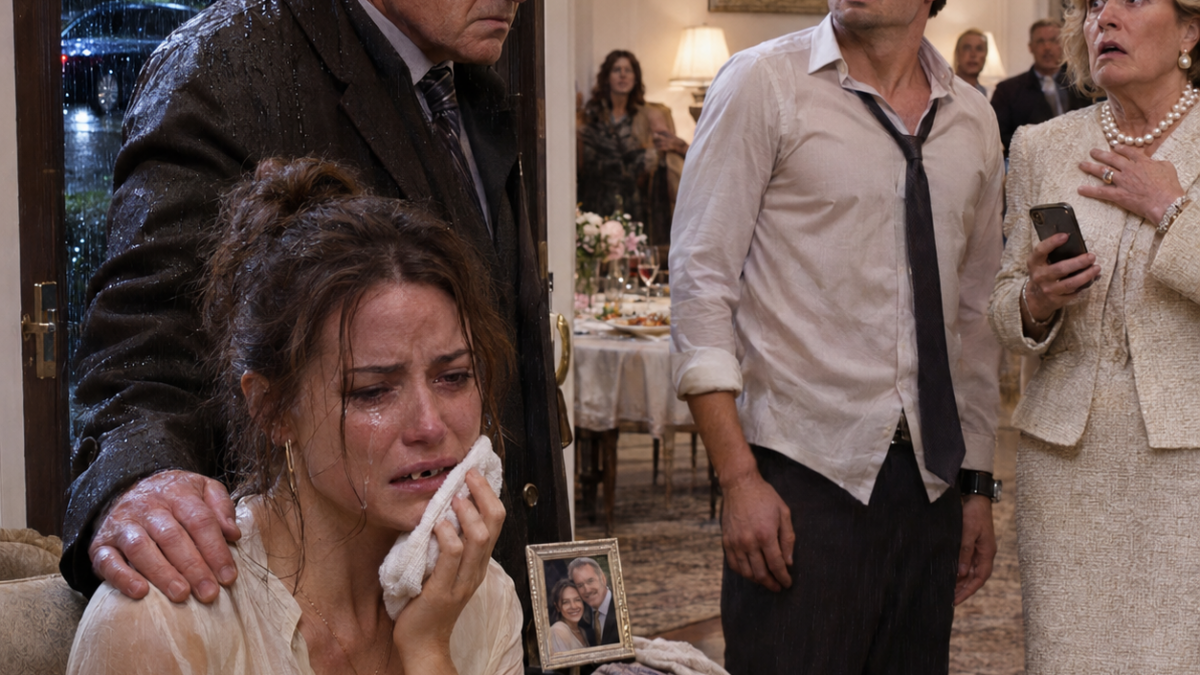
Exactly two hours later, someone knocked on the Harlans’ front door.
Not politely.
Three firm strikes.
Pause.
Three more.
Loretta looked up from her dinner plate.
By then she had made everyone sit down and eat as though nothing significant had happened.
My mouth throbbed.
My cheek had swollen.
I had wrapped ice in a kitchen towel.
Nobody had offered to take me to a dentist.
Brett had apologized once.
Technically.
He came into the guest bathroom while I was washing blood from my lip and said:
“I shouldn’t have done that.”
Then:
“But you know how you get.”
That second sentence erased the first.
I had tried to leave fifteen minutes after speaking to Dad.
Brett took my car keys.
Not violently.
He simply picked them up from the counter and said:
“You’re too upset to drive.”
I asked for them twice.
He refused.
Loretta told me:
“Stop behaving dramatically. Your father is coming anyway.”
That was when something inside me went cold.
I did not fight Brett for the keys.
I went to the dining room.
Sat where the front windows were visible.
Remembered Dad’s instruction.
Stay somewhere visible.
I realized later that he had known exactly what he was doing.
The third series of knocks came.
Loretta sighed.
“Well, there’s Grandpa.”
Brett laughed.
Thomas did not.
My father-in-law had barely looked at me since the slap.
But something about those knocks made him straighten.
Loretta walked toward the foyer.
“Let me handle this.”
She opened the door.
My father stood outside.
Same old silver pickup in the driveway.
Same faded navy sweatshirt under a brown canvas jacket.
Gray hair.
Work boots.
Seventy years old.
Nothing impressive if power, to you, required a tailored suit.
Beside him stood a uniformed Henrico County sheriff’s deputy.
Behind them, an ambulance was parked along the curb without its emergency lights.
Loretta’s smile vanished.
The deputy spoke first.
“Mrs. Harlan?”
Loretta stared.
“Yes?”
“We received a welfare call regarding an alleged domestic assault at this address.”
Brett appeared behind her.
“What?”
Dad looked past both of them.
His eyes found me immediately.
The moment he saw my face, he stopped moving.
That frightened me more than if he had shouted.
The deputy turned.
“Mr. Donnelly, you need to let us handle the contact.”
Dad nodded once.
“Understood.”
The deputy glanced at him again.
Then frowned.
“Joseph Donnelly?”
Dad looked at him.
“Yes.”
The deputy’s expression changed.
“Marshal Donnelly?”
“Retired.”
The deputy straightened.
“My training officer was Alan Pierce.”
Dad’s face softened slightly.
“Alan’s a good man.”
“He talks about you.”
Loretta looked from one to the other.
Brett’s expression changed.
“What does he mean, Marshal?”
Nobody answered him.
The deputy stepped inside.
“Mrs. Harlan—Marnie?”
“Yes.”
“I need to speak with you privately.”
Loretta immediately said:
“This has been blown completely out of proportion.”
The deputy turned toward her.
“I’m not asking you.”
That was probably the first time in twenty years somebody had interrupted Loretta Harlan without regretting it.
She went silent.
I stood carefully.
Dad noticed my keys on the sideboard.
Then Brett.
Then me.
He did not say anything.
The deputy walked me onto the porch.
A female paramedic approached.
“What happened?”
“My husband hit me.”
“Once?”
“Yes.”
“Did you lose consciousness?”
“No.”
“Any dizziness?”
“A little ringing at first.”
She examined my mouth.
“Broken tooth.”
“Yes.”
She asked about pain.
Neck.
Jaw.
Vision.
Then the deputy asked:
“Where are your car keys?”
I looked toward the house.
“Brett has them.”
The deputy’s expression hardened.
“Did you ask for them?”
“Yes.”
“Did he give them back?”
“No.”
Dad remained five feet away.
Silent.
The deputy went inside.
He returned with Brett.
And my keys.
Brett was already angry.
“This is ridiculous.”
The deputy said:
“Sir, I’m going to ask you some questions.”
Brett looked at Dad.
“You called the cops?”
Dad answered for the first time.
“I called for a welfare check after hearing my daughter say she had been assaulted.”
“Family business.”
“No.”
Dad’s voice remained quiet.
“Once somebody is bleeding and prevented from leaving, it stopped being family business.”
Brett looked toward the deputy.
“She wasn’t prevented.”
“You took her keys.”
“She was upset.”
“She asked for them.”
“She could have called an Uber.”
I stared.
That was Brett.
Even then.
Always searching for the technical escape hatch.
The deputy separated us.
Statements.
Photographs.
Names.
Times.
The paramedic photographed my facial injury for her medical notes after obtaining permission.
The deputy documented the missing tooth fragment, which I had placed in a paper towel.
Loretta objected constantly.
“She provoked him.”
“They were arguing.”
“Marnie has always been dramatic.”
“She probably chipped the tooth on the counter.”
The deputy finally said:
“Mrs. Harlan, please stop.”
Loretta folded her arms.
“This is my house.”
He answered:
“And this is my investigation.”
Silence.
Dad never smiled.
That was important.
This was not victory.
His daughter was hurt.
He did not care about humiliating Loretta.
He cared about getting me out.
The deputy asked whether I wanted medical treatment.
“Yes.”
That surprised Brett.
“Marnie.”
I looked at him.
“What?”
“Come on.”
For eight years those two words had controlled me.
Come on.
Don’t embarrass me.
Don’t overreact.
Don’t make Mom angry.
Don’t turn this into something.
Come on.
I answered:
“No.”
That was the beginning of my marriage ending.
Not the slap.
The no.
I rode to the emergency department with Dad following in his pickup.
The deputy remained to finish interviews.
Brett was not arrested that evening.
The case required review, statements, medical documentation, and follow-up.
That frustrated people later when they heard the story.
They wanted instant handcuffs.
Real life is slower.
That night, slow was fine.
I needed a doctor.
My jaw was bruised.
No fracture.
The tooth had broken high enough that I needed emergency dental follow-up but not surgery that evening.
My lip required two small stitches.
The physician asked:
“Is this the first time your husband has hit you?”
I started to say yes.
Then stopped.
Dad was sitting in the corner.
He looked at the floor.
Giving me privacy without leaving.
The doctor waited.
“He’s never hit my face before.”
Dad’s head lifted.
The doctor’s voice stayed gentle.
“What has happened before?”
I looked at my hands.
“Grabbed me.”
“How?”
“Wrist.”
“More than once?”
“Yes.”
“Anything else?”
“Pushed me into a door once.”
Dad closed his eyes.
The doctor continued.
“Threats?”
I thought.
“Not like killing me.”
“That isn’t what I asked.”
That sentence changed my understanding of violence.
Threats did not have to involve death.
Brett threatened to cut off cards.
Threatened to embarrass me at work.
Threatened to tell his family I was unstable.
Threatened to leave.
Threatened to cancel vacations.
Threatened silence.
Threatened humiliation.
I had spent years ranking harm so I could keep calling my marriage normal.
“Yes,” I whispered.
The doctor nodded.
A social worker came.
Her name was Angela Price.
She did not tell me what to do.
That mattered.
She asked:
“Do you want to go home tonight?”
“No.”
“Do you have somewhere safe?”
I looked at Dad.
He said:
“My house.”
I nodded.
Angela gave me information about protective orders, counseling, domestic-violence services, safety planning.
I felt embarrassed holding the packet.
Why?
I still do not completely know.
Maybe because abuse felt like something that happened to women who had fewer choices.
Women who were trapped.
Women who could not recognize obvious danger.
I had a college degree.
A salary.
Health insurance.
A car.
A father who would drive two hours in the dark because he heard one sentence change in my voice.
None of that prevented me from learning to normalize cruelty.
Dad drove me home with him after midnight.
My home?
No.
His.
That distinction hurt.
My clothes still hung beside Brett’s.
My laptop remained in our bedroom.
My prescriptions were in our bathroom.
Eight years of life behind a door I was suddenly afraid to open.
Dad gave me his bedroom.
“I’ll take the couch.”
“No.”
“Marnie.”
“You’re seventy.”
“So?”
“Your back.”
“My back has survived worse.”
“I’m taking the guest room.”
He stared.
Then nodded.
“Fine.”
No argument.
At two in the morning, I found him at the kitchen table.
He had made coffee.
“Dad?”
He looked up.
“You need sleep.”
“So do you.”
I sat.
For a while neither of us spoke.
Then he asked:
“How long?”
My throat closed.
“What?”
“How long has he been putting his hands on you?”
“Dad.”
“Not tonight if you don’t want.”
I looked at him.
He was not angry.
Not at me.
That was almost worse.
“A year.”
His face changed.
“Maybe longer.”
He waited.
“The grabbing started after our seventh anniversary.”
“Why?”
“We were fighting about money.”
“Same issue?”
“Sort of.”
“What money?”
I rubbed my forehead.
“Brett thinks I’m controlling with finances.”
Dad almost laughed.
Not because it was funny.
“You?”
“I ask questions.”
“Terrible habit.”
I smiled faintly.
Then I told him.
Our marriage had never been financially simple.
Brett worked in commercial insurance.
He earned well.
I earned well.
We combined household income but maintained small personal accounts.
That had been my idea.
Loretta hated it.
“A wife with private money is planning to leave,” she once said.
I should have taken that as a warning about how she understood marriage.
Two years earlier, Brett began transferring larger amounts from our joint account without discussing them.
Five hundred.
Eight hundred.
One thousand.
Always explanations later.
Helping his parents with a roof.
Helping his younger brother Tyler.
Covering a family-business tax bill.
Buying tickets.
Paying a deposit.
Every amount individually survivable.
The pattern bothered me.
I asked for a rule.
Anything over one thousand dollars required agreement.
Brett called it controlling.
I said it applied to me too.
He agreed.
For three months.
Then ignored it.
“What about the three thousand?” Dad asked.
“I didn’t transfer it.”
“I know.”
“I don’t know who did.”
Dad leaned back.
“Tomorrow we find out.”
I nodded.
Then:
“Dad?”
“Yes?”
“Why didn’t you tell them what you did?”
“My job?”
“Yes.”
“Why would I?”
I smiled.
“That sounds familiar.”
He looked at me.
“What?”
“I never told them because they never asked.”
His expression changed.
“Marnie.”
“I know.”
“No.”
He shook his head.
“Do not turn their ignorance into something you caused.”
I looked down.
“They mocked you.”
“I survived.”
“They called you a broke old man.”
“I drive a terrible truck.”
“It is terrible.”
He smiled.
Then became serious.
“The problem was never that they underestimated me.”
“What was it?”
“That they believed somebody deserved less respect because they thought he had less power.”
That sentence stayed with me.
It became important later.
The next morning, Dad drove me to an emergency dentist.
A temporary repair.
Impressions.
Treatment plan.
Eventually an implant and restoration would be needed.
The cost made me angry.
Not because I could not afford it.
Because every bill was a receipt for Brett’s choice.
Afterward, we met attorney Rebecca Cole.
Not a family friend.
Dad deliberately chose someone he had never professionally worked with.
“Why?” I asked.
“Because I don’t want anybody later claiming this was handled through my connections.”
That was my father.
Rebecca specialized in family law.
She was fifty-two, direct, and uninterested in dramatic speeches.
She looked at the medical photographs.
Then at me.
“Do you want to stay married?”
The question felt enormous.
I stared.
“I don’t know.”
“Good.”
I blinked.
“Good?”
“You don’t have to know today.”
She closed the folder.
“What you need today is safety, access to money, documents, and time.”
She asked about accounts.
Property.
Debts.
Income.
Retirement.
Insurance.
Then:
“Do you share banking passwords?”
“Yes.”
“Change yours.”
“Can I freeze the joint account?”
“Not unilaterally without considering consequences.”
She explained what I could do lawfully.
Open an individual account for new payroll.
Preserve joint statements.
Do not drain funds.
Do not hide assets.
Change personal email and device passwords.
Secure credit reports.
Copy tax returns.
Insurance statements.
Mortgage documents.
Retirement records.
Credit cards.
I suddenly felt foolish.
“How did I not know this?”
Rebecca looked at me.
“Because healthy marriages don’t require litigation checklists.”
Fair.
At noon, I called our bank.
The three-thousand-dollar transfer had been made from Brett’s login.
Destination:
Harlan Home Services LLC.
My stomach dropped.
That was Loretta and Thomas’s small property-management company.
I called Rebecca.
“Now what?”
“Screenshot everything.”
I did.
Then checked further.
Search.
Harlan Home Services.
One transfer.
Three thousand.
Search twelve months.
Eight transfers.
Total:
$22,600.
My hands began shaking.
Some I remembered.
Roof.
Taxes.
Tyler.
Some I did not.
I called the bank.
The representative confirmed they had all been initiated using Brett’s credentials.
That did not automatically mean wrongdoing.
It did prove one thing.
He had accused me of making a transfer he made himself.
Why?
I knew the answer before admitting it.
Because there had never really been an argument about the transaction.
The argument was about whether I was allowed to question him.
Dad found me staring at the screen.
“What?”
I turned the laptop.
He read.
His jaw tightened.
“You want me to say it?”
“No.”
“Good.”
He sat beside me.
I whispered:
“He knew.”
“Yes.”
“He knew I didn’t transfer it.”
“Yes.”
“Then why accuse me?”
Dad looked at me.
“You already know.”
I started crying.
Not because of the money.
Because I finally understood how deliberate the kitchen argument had been.
Brett had not lost control because he thought I stole three thousand dollars.
He had become angry because I refused to confess to something he knew I had not done.
He wanted surrender.
Truth was secondary.
The deputy called that afternoon.
He needed a follow-up statement.
I gave it.
Medical photographs.
Dental estimate.
Information about keys being withheld.
Prior incidents.
I nearly omitted them.
Then Dad said:
“You do not have to protect him from accurate information.”
So I told the truth.
Two wrist grabs.
One shove.
A hole punched in our bedroom door six months earlier.
Brett had told everyone he dropped a suitcase.
I had agreed.
That embarrassed me more than the bruise ever did.
The deputy asked:
“Do you want charges pursued?”
I looked at Dad.
He immediately looked away.
My decision.
“Yes.”
The answer surprised me.
Then relieved me.
A magistrate issued a protective order later that weekend based on the available evidence and process.
Brett was served.
The criminal assault allegation moved separately through the court system.
No magical instant justice.
Dates.
Hearings.
Lawyers.
Waiting.
Waiting became one of the hardest parts.
Brett texted from a new number.
You’re really doing this?
Then:
My mom says your dad is pushing you.
Then:
You know I would never hurt you intentionally.
I stared at the missing piece of tooth preserved in the dentist’s evidence envelope.
I blocked the number.
Loretta called Dad.
He put it on speaker because I was beside him.
“Joseph.”
“Loretta.”
“You need to talk sense into your daughter.”
“No.”
“You haven’t even heard what I’m asking.”
“I heard enough Saturday.”
“Brett made one mistake.”
Dad remained silent.
“You’re ruining his career.”
“No.”
“Domestic allegations can follow somebody forever.”
“So can dental implants.”
She stopped.
Then:
“She provoked him.”
Dad’s face changed.
Very slightly.
“If you ever say that to my daughter again, this conversation is over.”
“She did.”
The line went dead.
Dad had hung up.
No threat.
No speech.
Just boundary.
I envied him.
Three days later, I went back to the marital house with an officer present to retrieve belongings.
Brett was not permitted there during the scheduled period.
Loretta stood across the street.
Arms folded.
Watching.
Dad came too.
Not because I needed muscle.
Because I asked.
We packed clothes.
Work equipment.
Jewelry.
Medication.
Documents.
My grandmother’s dishes.
Brett’s closet remained untouched.
In the office, I found a folder.
Not hidden.
Simply placed behind tax returns.
Harlan Family Planning
I almost laughed at the name.
Inside:
Statements from Harlan Home Services.
Invoices.
Checks.
A spreadsheet.
One column caught my attention.
Brett contribution
Another:
Marnie household income
I stared.
Why was my income on Loretta’s company spreadsheet?
Dad saw my face.
“What?”
I showed him.
He did not touch it.
“Photograph.”
I did.
Page after page.
The sheet tracked how much Brett believed our household could contribute to his parents.
Mortgage.
Medical bills.
Tyler’s debts.
A future lake-house renovation.
There were projected amounts for the next two years.
My bonuses appeared.
My annual salary.
Even an estimate of my retirement contribution.
At the bottom:
When T retires, Brett/Marnie take over property taxes + insurance.
T.
Thomas.
I sat in Brett’s desk chair.
“They planned my money.”
Dad leaned against the wall.
“Looks that way.”
“No.”
I pointed.
“My bonus.”
“He knew.”
“I didn’t even know what my bonus would be.”
“But he estimated.”
I felt sick.
Then one line made me stop.
Marnie resistance—joint account approach easier.
I read it again.
Dad said nothing.
I whispered:
“They talked about me like a problem.”
He looked at me.
“You were a boundary.”
“What?”
“To people who wanted access, that felt like a problem.”
That sentence became another one I kept.
Rebecca subpoenaed financial records through the divorce case after I filed.
Yes.
I filed for divorce twelve days after the slap.
Not because Dad told me.
He asked once.
“What do you want?”
I answered:
“To stop being afraid of my own house.”
That was enough.
Filing felt like failure for about six hours.
Then it felt like oxygen.
Brett responded aggressively.
He denied financial abuse.
Admitted the slap but characterized it as “an isolated reaction during mutual escalation.”
Rebecca read that line aloud.
I almost laughed.
“Mutual escalation?”
“You said no,” she replied.
“Apparently combustible.”
Brett requested reconciliation counseling.
I refused.
He requested mediation.
Rebecca agreed to financial mediation when appropriate.
He requested that the protective order be dissolved.
Opposed.
Loretta gave a statement saying I had a history of “emotional instability.”
That one made me furious.
I had been in therapy for grief after a miscarriage four years earlier.
Loretta knew.
Now she used it.
Rebecca asked:
“Do you want to respond publicly?”
“No.”
“Good.”
“Why good?”
“Because court filings are not Facebook.”
Brett’s family disagreed.
Tyler posted:
Some women will destroy a man’s entire life because they can’t control him.
I screenshotted it.
Then blocked him.
Loretta began telling relatives Dad had “weaponized federal contacts.”
That accusation amused him.
He had done the opposite.
He called no former colleagues.
Requested no favors.
Every interaction went through local police, lawyers, banks, doctors.
At one family gathering I did not attend, Loretta apparently said:
“Joseph threatened all of us.”
Thomas surprised everyone.
“No.”
Loretta turned.
“What?”
“He said we’d be held accountable if she got hurt again.”
“That’s a threat.”
Thomas shook his head.
“It sounded like one because we knew what happened.”
That statement eventually reached me through Brett’s cousin.
It was the first time Thomas had done anything resembling courage.
Too late.
But not meaningless.
Financial discovery took months.
The $22,600 transferred to Harlan Home Services was only part of it.
Over three years, Brett had directed approximately $46,000 from our joint funds toward his parents and brother.
Some transfers I knew about.
Some I had consented to.
Others were hidden inside general household withdrawals.
None made Brett a master criminal.
That mattered.
I did not want a cartoon.
I wanted truth.
The more serious issue was deception.
He represented several family payments as household expenses.
One $7,800 payment labeled “insurance” had actually covered Tyler’s overdue business loan.
A $4,200 withdrawal labeled “roof” partly paid Loretta’s credit cards.
The three thousand dollars that triggered the assault covered property taxes on a rental house owned by Harlan Home Services.
Why accuse me?
In deposition, Rebecca asked.
Brett sat beside his lawyer.
“Mr. Harlan, did you initiate the three-thousand-dollar transfer?”
“Yes.”
“Did your wife?”
“No.”
“Did you know she did not initiate it when you accused her?”
Long pause.
“Yes.”
My chest tightened even though I already knew.
Rebecca continued.
“Why did you accuse her?”
Brett looked miserable.
“I was angry.”
“That does not answer the question.”
“I wanted her to stop questioning the account.”
“So you accused her of doing the thing you had done?”
“Yes.”
“Why?”
He looked toward me.
Then down.
“I thought she would back off.”
There.
The entire marriage in six words.
I thought she would back off.
Rebecca asked:
“When she did not?”
His lawyer objected.
The deposition moved on.
I had heard enough.
Later, Brett asked through counsel whether he could write me a letter.
I agreed.
It arrived four days later.
Eight pages.
The first two were terrible.
He explained pressure.
Work.
His mother.
His father’s health.
Money.
My “tone.”
Then page three changed.
None of those things made my hand move.
I stopped.
Read again.
I keep wanting to explain the moment because explaining it makes me feel less like the man who did it. But I was the man who did it.
I cried.
Not because I wanted him back.
Because accountability from someone you loved still hurts.
He wrote:
You asked to see the bank transaction. I knew it was mine. I accused you because I wanted you to apologize and stop looking. When you refused, I felt humiliated in front of my mother. That is the truth.
Then:
I cared more about losing authority than about being fair.
That was honest.
Later:
I have spent years telling myself Mom is difficult and you are strong, so asking you to absorb her behavior was easier. I made the stronger person carry more because I knew you would.
That sentence sounded familiar.
Different families.
Same cowardice.
He apologized for the wrist grabbing.
The shove.
The door.
The slap.
The tooth.
The money.
He did not ask me to return.
At the bottom:
I understand if there is no version of our marriage after this.
There wasn’t.
I sent one response.
I hope you become someone who never needs another person to be afraid of him in order to feel respected.
Nothing else.
Brett entered a batterer-intervention and counseling program before the criminal case resolved.
His lawyer probably advised it.
I did not care why he started.
I cared whether he learned.
The assault case eventually resolved through a negotiated plea to a domestic-assault offense supported by the evidence.
The court imposed probationary conditions, counseling requirements, and continued no-contact restrictions for a period.
No dramatic prison sentence.
No judge screaming.
Consequences.
A public record.
Responsibility.
Enough.
The divorce took fourteen months.
The house we owned jointly was sold.
That surprised Loretta.
She assumed Brett would keep it.
He could not refinance easily under the circumstances.
I did not want it.
Too many memories had become contaminated.
We sold.
Equity divided according to the settlement after credits and documented financial adjustments.
Some of the undisclosed family transfers were considered in negotiation.
Not every dollar returned.
Marriage finances are not that clean.
But enough was accounted for that I did not leave feeling robbed.
I kept my retirement.
Brett kept his.
We divided investments.
Furniture.
Cars.
Mundane things.
The dental costs associated with the assault were addressed separately.
The final divorce hearing lasted twenty-seven minutes.
Eight years ended in less time than Loretta once spent choosing Christmas napkins.
Outside the courthouse, Brett approached me.
His lawyer remained nearby.
Mine too.
“Can I say something?”
I nodded.
“You look good.”
I almost laughed.
My front tooth had been permanently restored three months earlier.
“Expensive.”
He winced.
“I know.”
Silence.
Then:
“I’m sorry.”
“I know.”
“Do you hate me?”
I thought.
“No.”
He looked surprised.
“I hate what you did.”
His eyes filled.
“That’s worse.”
“No.”
I shook my head.
“It means you are still a person, Brett.”
He looked down.
“Are you happy?”
“Sometimes.”
That was honest.
He smiled sadly.
“Good.”
Then he walked away.
Loretta was waiting near a black SUV.
She looked at me.
For months I had imagined confronting her.
Telling her what she had done.
What she enabled.
What her laughter sounded like while I tasted blood.
Instead, she walked toward me.
Rebecca tensed.
Dad, standing twenty feet away, did not move.
Loretta stopped.
She looked older.
“I owe you an apology.”
I said nothing.
“For the call.”
I waited.
“For laughing.”
Continue.
“For taking your phone.”
Continue.
“For telling Brett you provoked him.”
My chest tightened.
She swallowed.
“And for every time I treated you like being his wife meant you had to tolerate whatever kept him comfortable.”
That surprised me.
I asked:
“Why now?”
She looked toward Brett.
“He stopped speaking to me for four months.”
Not the answer I expected.
“He said I made him worse.”
I said nothing.
“He said every time he treated you badly, I gave him somewhere to hide.”
Tears appeared in her eyes.
“I thought defending my son was loving him.”
There it was.
The mistake.
Familiar.
“I taught him that being accountable meant being betrayed.”
She wiped her face.
“I’m sorry.”
I believed she was.
That did not mean we became family again.
“Thank you for saying it.”
Her expression fell slightly.
Maybe she expected forgiveness.
Or embrace.
I gave neither.
She nodded.
“I understand.”
Before leaving, she said:
“Your father scares me.”
I almost smiled.
“Dad?”
“Yes.”
“He never raised his voice.”
“Exactly.”
I laughed.
For the first time in fourteen months, Loretta did too.
Briefly.
Then we walked away.
My relationship with Thomas changed in a quieter way.
He sent me a letter.
One page.
Marnie, I watched Brett strike you and did nothing. I have replayed that second more times than I can count. I told myself I was shocked. That is true, but incomplete. I was also trained by years of avoiding Loretta to believe silence kept things from getting worse. I used that same silence when you needed somebody to say stop.
He continued:
I am sorry.
No explanation beyond that.
I wrote back:
Thank you.
That was all.
Dad never wanted credit for any of it.
That annoyed reporters later.
Yes, there were reporters.
Not because my divorce was important.
Because someone in Brett’s extended family posted about the retired U.S. Marshal showing up with law enforcement, and local social media transformed it into nonsense.
RETIRED FEDERAL AGENT THREATENS FAMILY AFTER DAUGHTER ATTACKED.
Dad hated that.
“I did not threaten anybody.”
“You sounded threatening.”
“I said accountability.”
“Dad, with your voice that’s worse.”
He glared.
I laughed.
The story grew.
People claimed he arrived with six agents.
No.
One local deputy had responded to a welfare call.
People claimed Dad had Brett arrested personally.
Impossible.
People claimed he called the FBI.
He did not.
Someone said he had been a sniper.
Absolutely false.
Dad finally told me:
“People are disappointed by procedure.”
“What?”
“They want heroes to kick doors.”
He poured coffee.
“Most useful things are paperwork.”
That sounded exactly like him.
I returned to work two weeks after the assault.
My manager, Alicia, knew only that I had a family emergency.
Then she noticed the temporary dental repair.
“You okay?”
I almost said yes.
Instead:
“No.”
She closed her office door.
That was another change.
I stopped answering concern with automatic lies.
I told her enough.
Not everything.
She rearranged my workload.
Encouraged me to use the company assistance program.
No judgment.
No:
Why didn’t you leave sooner?
No:
I would never let a man do that.
People who say that usually do not understand how slowly boundaries can disappear.
I began therapy.
My therapist, Dr. Lena Morris, asked:
“When did you first feel worthless in that family?”
I immediately answered:
“Saturday.”
She waited.
I sighed.
“Fine.”
The first Christmas.
Loretta gave everyone personalized stockings.
Mine said:
BRETT’S WIFE
I laughed at the time.
Everyone did.
She said:
“I couldn’t remember whether you spelled Marnie with an I-E or Y.”
We had been dating four years.
Tiny.
Ridiculous.
Not abuse.
But a message.
My identity mattered less than my relationship to Brett.
Then:
The career jokes.
The food criticism.
The way Loretta entered our house without knocking.
The way Brett told me:
“Just let her.”
The family vacations where I handled bookings then got mocked for being controlling.
The loans.
The money.
The wrist grab.
The shove.
Saturday was not the beginning.
It was simply the moment denial became impossible.
Therapy also made me confront Dad.
That surprised both of us.
We were sitting on his back patio one Sunday.
His tomatoes had become a disaster.
“Dad.”
“Yes?”
“Why did you never tell me more about your work?”
He looked confused.
“You knew.”
“I knew your title.”
“You knew enough.”
“No.”
I looked at him.
“You taught me to stay calm no matter what.”
“Useful.”
“Sometimes.”
He waited.
“I think I learned that needing help meant I wasn’t calm enough.”
His face changed.
“Marnie.”
“I know you didn’t mean that.”
“I absolutely did not.”
“I know.”
Then:
“But I watched you handle everything.”
He looked toward the yard.
“I didn’t.”
“What?”
“I had teams.”
He smiled.
“Lawyers.”
“Dispatchers.”
“Partners.”
“Supervisors.”
“Paramedics.”
He looked back.
“You saw me come home.”
“You didn’t see who got me there.”
That was powerful.
“I thought strong people solved things quietly.”
“No.”
Dad shook his head.
“Strong people know when quiet stops being useful.”
I cried.
He hated when I cried.
Not because it bothered him.
Because he never knew whether to hug me without asking.
So he said:
“Can I?”
I nodded.
He hugged me.
That became the real healing.
Not the courthouse.
Not Brett’s plea.
Not Loretta’s apology.
Learning that being protected did not mean being weak.
Learning that my father’s competence did not require me to imitate his self-control every second.
A year after the divorce, I bought a townhouse.
Small.
Two bedrooms.
Brick patio.
No memories.
At first, that felt lonely.
Then liberating.
I chose every piece of furniture.
No compromise.
Blue sofa.
Brett hated blue.
I painted the kitchen cabinets green.
Loretta would have fainted.
I planted lavender.
Dad built a small raised bed.
Badly.
I inspected it.
“This is crooked.”
“I’m retired.”
“From carpentry?”
“From standards.”
I laughed.
My life became ordinary.
That was all I wanted.
Work.
Friends.
Dad.
Book club.
Therapy.
Dentist appointments.
Grocery shopping.
Nobody grabbing my wrist.
Nobody monitoring tone.
Nobody asking why I spent $47 at Target.
Nobody explaining that my money was family money while family money somehow flowed one direction.
Peace felt boring.
Beautifully boring.
Brett began dating someone two years later.
I learned through mutual friends.
My stomach tightened.
Not jealousy.
Fear for her.
Then I reminded myself:
I was no longer his monitor.
He had completed counseling.
Continued therapy voluntarily, according to someone who knew him.
I hoped he had changed.
I did not investigate.
That was freedom too.
Tyler apologized eventually.
His social-media post had stayed online almost a year.
Then disappeared.
He texted:
I was wrong.
I replied:
Yes.
He sent:
Fair.
Nothing more.
My father-in-law sold Harlan Home Services three years later.
Loretta and Thomas moved to a smaller house.
Their finances improved once Tyler stopped treating them as a bank and Brett stopped subsidizing everything from marital accounts.
That irony was not lost on me.
The family had called me controlling because I asked questions.
Questions turned out to be useful.
I never asked for the $46,000 back from Loretta personally.
Some amounts were addressed through the divorce.
Some were gifts Brett had the right to make from his share of marital resources.
Some were simply gone.
I decided not every injury required full financial reversal.
Justice and restoration are related.
Not identical.
Dad turned seventy-four.
Then seventy-five.
The old silver pickup finally died.
Transmission.
He mourned like a family member.
I offered to help buy another truck.
He glared.
“I have money.”
“I know.”
“Then why?”
“Because I’m your daughter.”
“Dangerous sentence.”
I laughed.
He bought a used Tacoma.
Gray.
Boring.
Of course.
The first time we drove past the Harlans’ old neighborhood together, Dad asked:
“Do you want to stop?”
“No.”
He nodded.
No questions.
Then I said:
“Were you scared that night?”
He looked surprised.
“When?”
“The call.”
He kept his eyes on the road.
“Yes.”
That shocked me.
“You sounded…”
“Calm?”
“Yes.”
“Occupational defect.”
I smiled.
“How scared?”
He thought.
“Enough that I almost drove straight there without calling law enforcement first.”
I stared.
“What stopped you?”
“Training.”
That mattered.
He continued:
“If I arrived angry and alone, Brett could have escalated.”
“So you waited?”
“I made the call.”
“Coordinated.”
“Then drove.”
He looked at me.
“I wasn’t trying to win.”
“I was trying to get you out safely.”
That was the difference between protection and revenge.
I had misunderstood Dad’s warning for years afterward.
Your family will pay.
He had not meant money.
Or violence.
Or some federal power.
He meant consequences.
Statements.
Medical records.
Police reports.
Court orders.
Dental bills.
Divorce discovery.
Truth.
People often imagine accountability as something dramatic inflicted from outside.
Usually it is the opposite.
Accountability is what remains after excuses are removed.
Five years after the kitchen incident, Brett wrote again.
One page this time.
Marnie, I became a father.
I froze.
His new wife had a baby girl.
I sat for ten minutes before continuing.
Holding her made me think about the night I hit you in a way I had not before. I imagined someone doing that to her. My first reaction was rage. Then shame, because I understood I had once expected your father to react calmly to seeing the same thing done to his daughter.
I began crying.
I used to tell myself Joseph hated me because he never forgave me. I understand now that he did something harder. He let the legal process handle me when he probably wanted to break my jaw.
I laughed through tears.
Dad probably had.
He never said.
Brett continued:
I will not ask you to forgive me again. I only want you to know I am trying to raise my daughter in a home where love is never confused with fear.
I folded the letter.
Then drove to Dad’s.
He was replacing a sprinkler head badly.
“Read this.”
He did.
At the end, he handed it back.
“Good.”
“That’s it?”
“What do you want me to say?”
“I don’t know.”
Dad looked toward the yard.
“People can change.”
“You believe that?”
“I arrested people for twenty-eight years.”
He smiled faintly.
“I had to.”
Then:
“Change doesn’t erase records.”
“No.”
“But records don’t have to erase change either.”
I looked at him.
“When did you become philosophical?”
“Retirement.”
I kept Brett’s letter.
Not because I wanted him back.
Because I wanted proof that consequences could produce something other than resentment.
Loretta met Brett’s daughter when she was born.
According to a mutual relative, she cried for an hour.
I wondered whether she remembered laughing at me.
Probably.
I hoped so.
Not because I wanted her tortured by guilt.
Because memory is useful when it changes behavior.
Years later, I met Loretta unexpectedly at a grocery store.
We both froze.
She looked smaller.
Older.
I probably did too.
“Marnie.”
“Loretta.”
Silence.
Then:
“How is your father?”
“Annoying.”
She laughed.
“Still scary?”
“Only around tomatoes.”
She smiled.
Then looked serious.
“I’ve thought about that phone call.”
“I imagine.”
“I was cruel.”
“Yes.”
She nodded.
No defense.
“I thought if I made you small enough, Brett would stay attached to me.”
That surprised me.
“What?”
Her eyes filled.
“When he married you, I felt replaced.”
I stared.
“You punished me for marrying your son.”
“Yes.”
“Why?”
“Because I was afraid.”
She looked ashamed.
“That is not an excuse.”
“No.”
“I know.”
Then:
“I did not understand love could survive boundaries.”
That sounded like therapy.
Good therapy.
“I do now.”
I nodded.
“That’s good.”
She looked relieved.
Then:
“I’m sorry about your tooth.”
I almost laughed.
“Very specific.”
“I paid attention to the dentist bills during mediation.”
“Of course.”
We both smiled.
Not friendship.
Not family.
Peace.
We walked away.
I never saw her again.
Dad died when I was forty-four.
Quietly.
A heart attack in his sleep.
No dramatic final speech.
No hospital machines.
One Sunday he called me to complain about squirrels.
Monday morning he was gone.
Grief nearly broke me.
Different from Walter.
Different from the marriage.
Dad had been the person who came when I called.
Losing that creates a particular silence.
Cleaning his house, I found a locked metal case.
Inside:
Service certificates.
Photographs.
Old credentials.
Commendations.
Letters from people I had never met.
Dad had saved lives.
Not movie style.
Sometimes by arresting someone dangerous.
Sometimes by finding a missing witness.
Sometimes by convincing a frightened fugitive to put down a weapon.
One letter read:
You talked my son out of that apartment alive when everyone else thought he’d die there.
Another:
Thank you for treating my husband like a person even while you arrested him.
That was Dad.
Power never impressed him much.
Control impressed him even less.
Procedure did.
Human dignity did.
In the bottom of the box was a photograph.
Me.
Age seven.
Missing two front teeth.
I laughed so hard I started crying.
On the back Dad had written:
Marnie, summer 1997. Fearless.
I sat on his floor holding that photograph for a long time.
Fearless.
I had spent years feeling ashamed that I stayed with Brett as long as I did.
Dad apparently remembered a different version of me.
So I changed the story I told myself.
I had not been fearless every day.
Nobody is.
I had been afraid.
Confused.
Conditioned.
Hopeful.
Loyal past usefulness.
Then one day I said no.
One no was enough to start.
After Dad’s funeral, Brett sent flowers.
No message beyond:
He was a good man.
I kept the card.
My tooth still looks slightly different.
Most people cannot tell.
I can.
The implant catches light differently from the original.
For years I hated that.
Then I stopped.
It is not a scar exactly.
But it is evidence.
Not just of what Brett did.
Of what happened afterward.
I spoke.
Someone believed me.
I left.
I documented.
I returned with support.
I rebuilt.
That is the sequence I choose to remember.
People who heard pieces of my story always focused on Dad’s arrival.
The retired U.S. Marshal.
The deputy recognizing him.
The old pickup.
The Harlans suddenly realizing the man they mocked had spent decades in federal law enforcement.
It makes a good dramatic moment.
It is also the least important part.
Dad’s former job did not make the slap more wrong.
My father could have been exactly what Loretta believed.
A broke retiree.
A janitor.
A mechanic.
A man with no connections.
The assault would still have been wrong.
Taking my keys would still have been wrong.
Accusing me of a transfer Brett knowingly made would still have been manipulative.
Loretta laughing would still have been cruel.
The lesson was never:
Be careful who you insult because their father might be powerful.
That is a terrible lesson.
The lesson was:
You should not require power before you decide someone deserves dignity.
Dad understood that long before I did.
Maybe that was why he never told stories about his career.
When Brett asked once, years before everything happened:
“What did you actually do with the Marshals?”
Dad answered:
“Paperwork.”
Brett laughed.
Dad let him.
The joke belonged to Brett.
The truth belonged to Dad.
I understand that now.
At forty-five, I remarried.
Not quickly.
Not because I needed a better ending.
His name is Daniel Ruiz.
He teaches history at a community college.
We met at a fundraiser for the domestic-violence resource center that helped me years earlier.
He was there because one of his students volunteered.
I was there because I had finally become brave enough to donate publicly.
Our first conversation was about terrible coffee.
Romantic.
Daniel knew my story before our third date.
Not every detail.
Enough.
When I said:
“My ex hit me.”
He did not ask:
“What happened before?”
He said:
“I’m sorry.”
That simplicity nearly made me cry.
The first time we disagreed about money, I panicked.
Not visibly.
Inside.
He wanted to replace his car.
I thought we should wait.
We argued.
Then he said:
“Okay. Let’s look at the numbers.”
I froze.
“What?”
“The numbers.”
He opened a spreadsheet.
I laughed.
“What?”
“Nothing.”
We looked.
We disagreed.
No shouting.
No grabbing.
No mother-in-law.
No broken tooth.
At the end he said:
“I still think we can afford it.”
I said:
“I still think we should wait.”
He nodded.
“Then we wait until we both feel okay.”
I cried later.
Healthy relationships can make survivors cry for absurd reasons.
Not because the moment is huge.
Because you discover how ordinary safety was supposed to feel.
Daniel never met Dad.
I wish he had.
He knows him through stories.
The real ones.
Not mythology.
I tell him Dad grew terrible tomatoes.
That he hated formal shoes.
That he thought every restaurant overcharged for iced tea.
That he could calm rooms by lowering his voice.
That he came when I called.
Years after my father died, I found myself using one of his phrases with a younger woman at the resource center.
Her husband had shoved her.
She kept saying:
“But he didn’t punch me.”
I said:
“That isn’t the question.”
She looked at me.
“What is?”
“Do you feel safe?”
She began crying.
I recognized that cry.
Not sadness.
Recognition.
The moment your internal ranking system collapses and you realize harm does not need to become worse before it counts.
I sat with her.
I did not tell her what to do.
Dad had taught me that too.
Protection does not mean taking somebody’s decisions away.
That is control wearing better clothes.
I said:
“What do you want?”
She whispered:
“I want to go home to my sister.”
So we called her sister.
No heroics.
Just transportation.
Paperwork.
A safe place.
Useful things.
Dad would have approved.
Sometimes I still dream about the Harlans’ kitchen.
Granite island.
Carrots.
Gravy.
The sound of my tooth hitting tile.
Dreams are unfair.
They preserve sound better than memory.
But the dream changed over time.
For years, it ended with Brett’s hand.
Then it ended with Loretta laughing.
Then with Dad on speakerphone.
Now?
It usually ends with me saying:
“No.”
That was the real turning point.
Not the knock two hours later.
My no happened first.
“No, Brett. I haven’t done anything wrong.”
He struck me because he believed refusal was rebellion.
He learned eventually that refusal was simply a boundary.
My father knew from the moment he heard my voice that something had changed.
Later, before he died, I asked him:
“How did you know it was bad?”
“What?”
“The phone call.”
He shrugged.
“You said ‘Dad.’”
“I always called you Dad.”
“No.”
He looked at me.
“You used the voice you had at fourteen when you called from that party and wanted to come home without telling me why.”
I remembered.
One of my friends had been drinking.
I was frightened.
Dad came.
No questions until I was in the car.
“You remembered that?”
“Of course.”
Then he said:
“Parents memorize exits.”
“What does that mean?”
“You learn which version of your child’s voice means they need a door opened.”
I cried.
He hated that.
“Stop.”
“You said something emotional.”
“I made a tactical observation.”
“Sure.”
That conversation became one of my favorite memories.
Parents memorize exits.
Dad did.
But he also taught me something else.
Eventually we have to learn to open doors for ourselves.
The night Brett hit me, Dad opened the first one.
The deputy opened another.
The doctor.
Rebecca.
Angela.
My employer.
Therapist.
Friends.
But I walked through.
Nobody could do that part for me.
That is what I tell people now when they call my father the hero of the story.
He was one of them.
But not the only one.
Iris the bank representative who patiently traced transfers.
The deputy who refused to dismiss keys being withheld.
The doctor who asked the question twice.
Rebecca who never told me whether to divorce.
Angela who gave information instead of orders.
My manager who closed the office door.
Thomas, eventually, admitting silence had a side.
Loretta, eventually, choosing accountability over denial.
Even Brett, years later, choosing to stop hiding behind explanation.
And me.
I count myself now.
That took longest.
I used to believe putting myself in the story was arrogance.
It is not.
Survival without self-recognition becomes another form of disappearance.
Today I am fifty-one.
Daniel is making coffee downstairs while I write this.
My restored tooth is still slightly brighter than the one beside it.
My father’s old photograph of seven-year-old me with two missing front teeth sits beside my desk.
Underneath, in his handwriting:
Fearless.
I know better now.
Courage is not a permanent personality.
Fearless people are mostly fictional.
Real people are afraid and make choices anyway.
Dad was afraid that night.
I was terrified.
The deputy probably worried the situation could escalate.
Rebecca worried about what we would find financially.
Thomas was afraid of Loretta.
Loretta was afraid of losing Brett.
Brett was afraid of losing control.
Fear was everywhere.
The difference was what each person did with it.
Dad used fear to prepare.
The deputy used it to slow things down.
I eventually used it to leave.
Loretta used it to control.
Thomas used it to disappear.
Brett used it to hurt.
That distinction matters.
Fear explains many things.
It excuses almost nothing.
The Harlans once believed the most frightening thing about my father was the career I had hidden from them.
They were wrong.
The frightening thing was simpler.
He knew exactly how little force real authority requires.
He never threatened to beat Brett.
Never waved credentials.
Never demanded special treatment.
Never shouted at Loretta.
He called the right people.
Recorded the right facts.
Asked me the right questions.
Then stayed beside me while I decided what came next.
That was his power.
And eventually, it became mine.
So whenever somebody retells the story as:
The night a retired U.S. Marshal came to punish the family that hurt his daughter,
I correct them.
That is not what happened.
My father came to pick me up.
The rest happened because, for the first time in eight years, I stopped protecting everybody else from the truth.








