PART2:“AT LEAST YOUR LIVER IS KEEPING OUR REAL FAMILY ALIVE!” My Mother Said After I Donated 60% to Save My Nephew—Then Page Three Proved My Husband Had Been Lied to Too
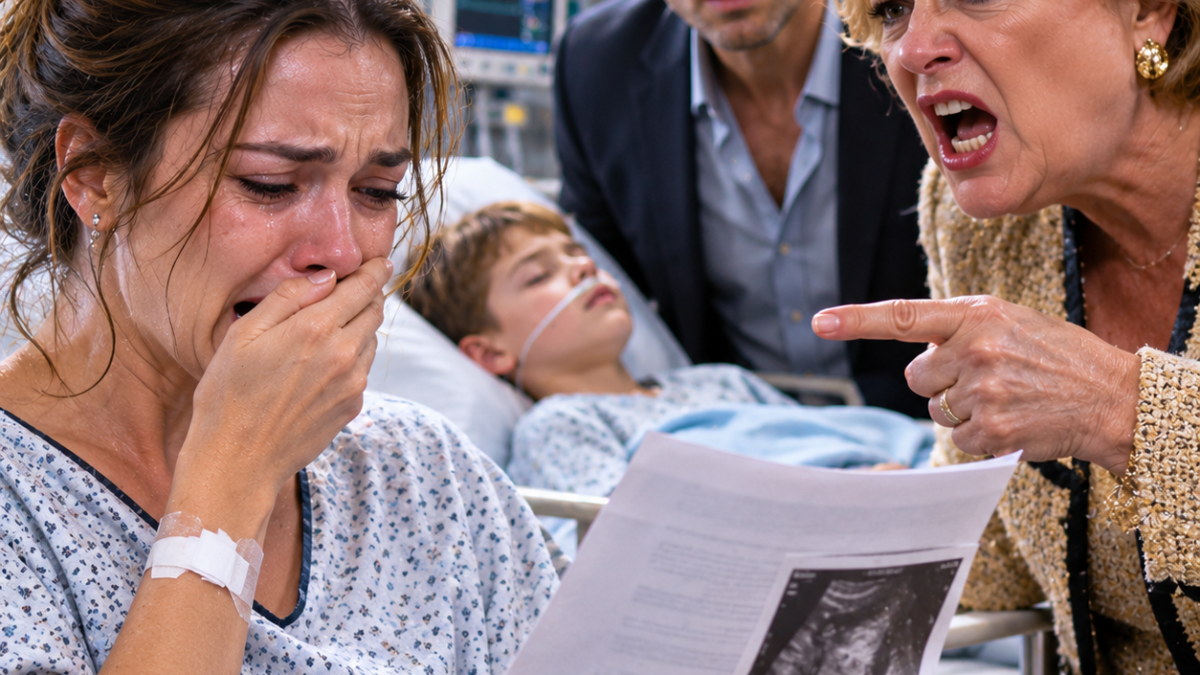
PART2
I heard the words.
I understood each one separately.
Leo.
Marcus.
Son.
Together, they became nonsense.
“No.”
Chloe laughed softly.
“You always did need things explained twice.”
My mother said:
“Claire.”
I looked at her.
“Tell her to get off my husband.”
Ruth sighed.
Not angry.
Annoyed.
“Don’t create a scene.”
I stared at her.
“I just gave away sixty percent of my liver.”
“And the surgery was successful.”
“Your sister is sitting on my husband.”
“You’re stable.”
That was her answer.
Stable.
As though survival canceled betrayal.
I looked back at Chloe.
“How?”
She raised one eyebrow.
“How do you think?”
I was too weak to insult her.
Marcus said:
“Claire.”
I turned.
“Do not say my name like you’re worried about me.”
His face tightened.
Chloe answered for him.
“It started before your wedding.”
“No.”
“Yes.”
“How long?”
“Eleven years.”
Leo was ten.
My throat closed.
“You were sleeping with him before he married me?”
Chloe smiled.
“We had history.”
“History?”
“Marcus and I were together first.”
I looked at Marcus.
He did not deny it.
I tried to remember eleven years ago.
I had met Marcus at a charity engineering gala.
I was thirty-four.
He was thirty-six.
Investment consultant.
Polished.
Attentive.
Funny without being cruel.
He asked smart questions about my work.
Most men heard structural engineer and immediately joked about bridges.
Marcus asked me about load paths.
I liked him instantly.
Chloe was twenty-eight then.
Divorced from Leo’s legal father, Daniel, when Leo was barely a toddler.
Or at least that was the family story.
Marcus said:
“Chloe and I had an affair years ago.”
“Before us?”
“Yes.”
“And during us?”
Silence.
I looked at Chloe.
She said:
“On and off.”
My abdomen hurt so badly I almost vomited.
I pressed the morphine button.
Nothing happened immediately.
My mother moved toward the bed.
I flinched.
“Don’t touch me.”
She stopped.
“Claire, you need to stay calm.”
I laughed.
It pulled the incision.
Pain exploded.
A sound came out of me.
Marcus half stood.
Chloe caught his arm.
He remained seated.
That moment mattered.
My body was bleeding.
My husband moved instinctively toward me.
My sister stopped him.
And he obeyed.
I whispered:
“Why did I donate?”
Nobody answered.
“Why me?”
Chloe’s smile disappeared.
“Because you were the best match.”
“You knew Marcus was supposedly Leo’s father?”
“Yes.”
“And you let me risk my life?”
“He’s your nephew.”
“So?”
“Would you have said no?”
I thought.
No.
Probably not.
That made it worse.
Not because they needed to trick me into donating.
Because they believed they could.
They could tell me whatever they wanted.
Withhold whatever they wanted.
And I would still give.
My mother said:
“You should be proud.”
I looked at her.
“Proud?”
“At least your organ is keeping the true bloodline of this family alive.”
Something inside me became very still.
True bloodline.
I had spent my entire life being the family resource.
The older daughter.
The successful one.
The one who earned scholarships.
The one who went to Columbia.
The one who built towers.
The one who helped Mom refinance her house.
The one who paid Chloe’s legal bills during her divorce.
The one who funded Leo’s private school when Daniel stopped paying.
The one who bought the cashmere shawl.
And now apparently:
The one who supplied organs.
I whispered:
“What am I, then?”
My mother blinked.
“What?”
“If Chloe and Leo are the true family.”
I looked at her.
“What am I?”
Ruth sighed.
“Don’t twist my words.”
“I don’t have to.”
They were already sharp.
Marcus opened his briefcase.
That was when I saw the manila folder.
He placed it on my bed.
Not gently.
It landed across my abdomen.
Directly over the dressing.
Pain tore through me.
I gasped.
The monitor screamed.
Fresh warmth spread beneath the bandage.
A thin red line appeared.
My nurse would later call it superficial wound seepage from pressure and movement.
In that moment, I did not know.
I saw blood.
Marcus said:
“Uncontested divorce.”
I stared.
He pointed at the top page.
“You sign.”
My brain felt detached.
“You’re serving me divorce papers in intensive recovery?”
“It’s a private suite.”
That was his answer.
Private suite.
I laughed once.
Pain again.
He continued.
“You waive claims to the marital assets.”
“What?”
“And the penthouse.”
I looked at him.
That finally penetrated the fog.
“The penthouse?”
“Yes.”
“You’re serious.”
“You don’t need that much space.”
Chloe placed one hand over her belly.
There it was.
Again.
Women apparently became worthy of housing only once pregnant.
Marcus took out a check.
Five thousand dollars.
Placed it on top of the papers.
“That should cover a modest studio deposit and moving expenses.”
I stared at the check.
$5,000.
Five years married.
Three million dollars I had transferred into investment vehicles he advised on.
A penthouse purchased through my LLC before I ever met him.
Corporate accounts he had access to because he called himself my financial partner.
And five thousand dollars.
“You have forty-eight hours to collect your personal belongings.”
I whispered:
“From my penthouse.”
He frowned.
“Our penthouse.”
“No.”
“Claire.”
I pressed the red nurse-call button.
Then reached for my phone.
Marcus said:
“What are you doing?”
I unlocked it.
Tapped one icon.
“Calling Arthur.”
Chloe rolled her eyes.
“Your lawyer cannot save your marriage.”
“I am not trying to save it.”
The line connected.
Arthur Bell.
Corporate counsel.
Old friend.
Executor of my father’s estate.
The one man Marcus had always called “needlessly suspicious.”
Arthur’s voice came through the speaker.
“Claire?”
“Did you hear?”
Pause.
“Yes.”
That was when Marcus stood.
“What?”
Arthur said:
“I heard everything from the moment the call connected.”
Marcus stared at my phone.
I had started the audio stream before surgery.
Not because I expected betrayal.
Because Arthur and I had been coordinating documents relating to a separate corporate fraud investigation at one of my development companies.
The hospital allowed my secure device to remain in the suite after recovery.
The call had resumed automatically when I authenticated my phone.
Pure chance.
Or the luck of someone who documents everything for a living.
I looked at Marcus.
“Execute Clause Nine.”
His face changed.
“Claire.”
Arthur said:
“Understood.”
Marcus stepped toward me.
“What are you doing?”
I continued.
“Freeze every corporate card issued through Westbridge Structures under Marcus’s name.”
“Done.”
“Revoke his advisory access to the Bellweather family investment accounts.”
“Claire.”
“Disable his access credentials to the penthouse smart system except for supervised retrieval.”
Marcus stared.
“You can’t lock me out of my own home.”
I said:
“The penthouse is owned by CWM Holdings.”
Chloe frowned.
“What?”
“My premarital LLC.”
Marcus said:
“That’s a technicality.”
“No.”
“That’s ownership.”
I looked at the five-thousand-dollar check.
“You never owned one square inch.”
Chloe stood from his lap.
Slowly.
“What did you tell me?”
Marcus said:
“Ari—”
“Don’t call me that.”
I almost laughed.
So the alliance had cracks already.
Arthur asked:
“Anything else?”
“Yes.”
I looked at Chloe.
“Terminate the lease guarantee for the West 72nd Street apartment at the earliest lawful date and preserve all records related to the payments.”
Chloe’s face went pale.
“What?”
I said:
“The apartment you told me was for Leo during treatment.”
She froze.
I had co-signed because Chloe’s credit was terrible.
Three-bedroom luxury rental.
Ten minutes from the hospital.
She said it was for Leo’s medical stability.
Apparently Marcus had been living there part-time too.
Arthur said:
“Understood.”
Then I said:
“And preserve everything connected to the family medical trust.”
My mother’s head snapped up.
“What?”
There.
Real fear.
Not the house.
Not the cards.
The trust.
For eighteen months, I had funded a medical support trust for Leo.
Expenses.
Travel.
Home nursing.
Medications.
Special education.
Counseling.
Anything insurance failed to cover.
Nearly $600,000 had moved through it.
Arthur’s tone changed.
“Claire.”
“Yes.”
“There are already irregularities.”
Marcus said:
“What irregularities?”
Arthur ignored him.
I said:
“Notify the appropriate authorities if the audit supports fraud.”
Chloe’s face hardened.
“You would report your own sister?”
I looked at her.
“I donated part of my liver to your child twelve hours ago.”
“And you’re worried I might report paperwork?”
She opened her mouth.
Nothing came.
Then the door opened.
Not gently.
Dr. Gregory Sterling entered with two nurses.
He was Chief of Surgery.
Tall.
Gray-haired.
The kind of doctor whose calm makes everyone else automatically stop talking.
His eyes went first to me.
Then to the blood on my dressing.
His expression hardened.
“What happened?”
Nurse Michelle immediately moved to the bed.
Marcus said:
“Some papers slipped.”
I looked at him.
“He dropped them on my incision.”
Dr. Sterling turned.
“Everyone except the patient leaves now.”
Chloe said:
“We’re family.”
“No.”
His voice remained calm.
“You are visitors.”
My mother bristled.
“I’m her mother.”
“And I am responsible for her postoperative care.”
He pointed toward the door.
“Outside.”
Marcus said:
“I’m her husband.”
Dr. Sterling looked at him.
Then down at the folder in his hand.
“That is exactly why I need you to remain for thirty seconds.”
The room changed.
He approached Marcus.
“Mr. Vale.”
“Yes?”
“You signed consent during Leo Parker’s transplant evaluation for genetic kinship testing.”
Marcus’s face tightened.
“I remember.”
I looked at him.
“You did what?”
Dr. Sterling continued.
“You identified yourself in the confidential family history as Leo’s alleged biological father.”
Chloe whispered:
“Marcus.”
He ignored her.
Dr. Sterling held up the report.
“Our genetics department completed the confirmatory kinship analysis this afternoon.”
He opened it.
“Page three.”
Marcus stared.
Dr. Sterling said:
“The report excludes you as Leo’s biological father.”
Silence.
Pure.
Absolute.
Chloe’s face emptied.
Marcus laughed.
Not because it was funny.
Because the mind sometimes rejects reality with sound.
“That’s impossible.”
“No.”
Dr. Sterling said.
“It is not.”
“You told us I was related.”
“I did not.”
“The compatibility—”
“Living-donor liver compatibility does not prove paternity.”
Dr. Sterling’s voice sharpened slightly.
“Ms. Whitmore was selected as a donor based on clinical compatibility, anatomy, health status, and transplant criteria.”
He pointed at the report.
“This was a separate consented kinship test because you represented yourself as the biological father and the team needed accurate family history for Leo’s inherited condition.”
Marcus stared at Chloe.
She backed away.
He whispered:
“You said…”
Chloe’s face crumpled.
“Marcus.”
“You said he was mine.”
My mother stepped forward.
“Not here.”
Marcus turned toward her.
“What did you know?”
Ruth’s face changed.
That was when I knew.
She knew something too.
Marcus saw it.
“Ruth.”
My mother said:
“We should talk privately.”
“No.”
His voice broke.
“We have been talking privately for ten years.”
Dr. Sterling interrupted.
“This conversation is over in this room.”
He handed the report to Marcus.
“Read page three.”
Then looked at me.
“We need to examine your incision.”
He turned to the others.
“Out.”
No one argued this time.
Marcus left first.
Report in hand.
Chloe followed.
My mother last.
At the doorway, she looked back at me.
Not apologetic.
Afraid.
That felt almost satisfying.
Almost.
Then the door closed.
And I started shaking.
Michelle lifted the papers from my abdomen.
“Claire.”
“I’m okay.”
“No.”
“I’m fine.”
Dr. Sterling said:
“You are twelve hours out from major surgery.”
His voice softened.
“You do not have to be fine.”
That sentence destroyed me.
I cried so hard they had to monitor my breathing.
The incision had not opened significantly.
The dressing needed replacement.
Nothing catastrophic.
Physically.
Emotionally, everything had opened.
When they finished, Dr. Sterling stayed.
I asked:
“Is Leo okay?”
He looked surprised.
“Yes.”
“Still?”
“Yes.”
“Stable.”
I nodded.
“Good.”
He sat.
“I need to clarify something.”
“Okay.”
“Nothing in Leo’s clinical care changes because of the kinship result.”
“I understand.”
“The information is confidential.”
“I understand.”
“He is still your nephew legally and socially.”
“Yes.”
“Whatever is happening in your family is separate from his treatment.”
“Yes.”
He studied me.
“You are protecting him.”
“He’s ten.”
“Good.”
I closed my eyes.
“Who is his father?”
Dr. Sterling shook his head.
“The report can exclude Marcus.”
“It does not identify another man without another reference sample.”
Of course.
I knew that.
I was an engineer.
Not stupid.
Just exhausted.
I asked:
“Did Chloe know the test was pending?”
“Yes.”
My eyes opened.
“She knew?”
“She was informed as his mother.”
“Did she receive the result?”
“Not before I came here.”
“What about my mother?”
“No.”
I nodded.
So page three was new to everyone.
Everyone except perhaps whoever already knew Marcus was not the father.
My phone buzzed.
Arthur.
I answered.
“Claire.”
“Yes.”
“Do you want me there?”
I almost said no.
Then remembered Dr. Sterling.
You do not have to be fine.
“Yes.”
“I’m coming.”
Arthur arrived forty minutes later.
By then security had removed my family from the suite floor.
Marcus remained elsewhere in the hospital arguing with Chloe.
I did not care.
Arthur sat beside me.
Sixty-two.
White hair.
Round glasses.
My father’s closest friend.
He looked at my bandaged abdomen.
Then my face.
“I should have pushed harder.”
“For what?”
“The prenup review.”
I laughed weakly.
“It exists.”
“Yes.”
“But I should have pushed harder when Marcus started asking about CWM ownership.”
That caught my attention.
“When?”
“Eight months ago.”
“What did he ask?”
Arthur hesitated.
“Whether marriage created an equitable ownership interest in the penthouse.”
My pulse increased.
“You didn’t tell me.”
“I thought it was estate planning.”
“He said you were considering restructuring.”
“I wasn’t.”
“I know.”
“What else?”
Arthur sighed.
“He asked whether Clause Nine would apply if you initiated divorce.”
Clause Nine.
Our prenuptial agreement had a misconduct and financial concealment provision.
Not an automatic punishment for infidelity.
That would be too simple.
But it required full disclosure of certain financial dealings and restricted access to assets and corporate privileges if either spouse attempted unauthorized transfers or concealed conflicts of interest involving my companies.
Marcus had advisory privileges.
Not ownership.
If he misused them, they could be revoked immediately.
Arthur said:
“I began monitoring.”
“Without telling me?”
“With your standing authorization.”
I closed my eyes.
Fair.
“What did you find?”
“Not enough until this morning.”
“What happened this morning?”
“He accessed a data room containing CWM property documents.”
Marcus.
While I was in surgery.
My husband had been reviewing my penthouse ownership documents while surgeons removed part of my liver.
Arthur continued.
“He downloaded copies of your premarital operating agreement.”
“Why?”
“I don’t know.”
I did.
He had planned the divorce papers.
The five-thousand-dollar check.
The demand that I leave.
He wanted to know whether he could bluff me.
Arthur said:
“Claire.”
“Yes?”
“The divorce agreement he gave you is absurd.”
“I assumed.”
“You waive claims you don’t need to waive.”
“You transfer property you own.”
“You acknowledge debts that are not yours.”
“And it includes an agreement to continue funding the Leo Medical Trust.”
I laughed.
Pain flashed.
I stopped.
“Of course.”
Arthur looked miserable.
“They expected you to sign while medicated.”
That sentence made my stomach turn.
“Is that enforceable?”
“Not if challenged under these circumstances.”
“Good.”
“But do not sign anything.”
“I won’t.”
“Also.”
He hesitated.
“What?”
“We need to discuss the trust.”
“How bad?”
“Potentially significant.”
I stared.
“Chloe submitted reimbursement claims for medical travel and home support that appear duplicated.”
“How much?”
“Preliminary review suggests at least $190,000 requires explanation.”
I stopped breathing.
“Leo?”
“Some expenses were legitimate.”
“Others may not have been.”
“Marcus?”
“We don’t know yet.”
“My mother?”
“Her signature appears on several certifications.”
Of course.
The “true bloodline.”
They had turned my generosity into infrastructure.
The affair.
The apartment.
The trust.
The house.
My liver.
I whispered:
“Was any of it real?”
Arthur’s face softened.
“Leo needing the transplant was real.”
That mattered.
I nodded.
“Good.”
“Claire.”
“What?”
“Do not make the child carry the adults’ fraud.”
“I won’t.”
“I know.”
My mother called at 9:40 that night.
I ignored it.
Again.
Again.
Then a text:
Marcus is hysterical. Chloe needs you.
I stared.
Chloe needs you.
Twelve hours after surgery.
Of course she did.
Another:
This is not the time to destroy the family.
I forwarded it to Arthur.
No response.
Then Chloe:
Please don’t believe Marcus is not Leo’s father. Hospitals make mistakes.
I closed my eyes.
Another:
You know how much Leo looks like him.
Leo did look like Marcus.
Dark hair.
Gray eyes.
Tall for his age.
But millions of people had dark hair and gray eyes.
We see what stories teach us to see.
Another:
Call me before Marcus does something stupid.
Again.
My responsibility.
I blocked her temporarily.
Then slept.
Or tried.
Around 2 a.m., I woke crying.
Not from pain.
From memory.
Marcus holding my hand at my mother’s funeral.
Marcus packing my suitcase before surgery.
Marcus helping Leo with math.
Marcus and Chloe at Thanksgiving standing too close in the kitchen.
A dozen moments rearranged themselves.
Betrayal does that.
It turns memory into evidence.
Every laugh becomes suspicious.
Every late meeting.
Every private joke.
But not every memory had been fake.
That was almost harder.
At 6 a.m., Marcus came to the hospital alone.
Security called first.
“Do you want him admitted?”
I almost said no.
Then:
“Five minutes.”
A nurse remained nearby.
Marcus entered.
He looked destroyed.
Not theatrical.
Destroyed.
Same navy suit.
Wrinkled.
No tie.
Genetic report in his hand.
He sat but did not approach.
“Leo isn’t mine.”
I said nothing.
“Chloe admitted it.”
My eyes lifted.
“She admitted?”
“Yes.”
“Who is?”
“She won’t say.”
That sounded like Chloe.
Marcus laughed bitterly.
“Ten years.”
I watched him.
He continued.
“She told me Daniel couldn’t be the father.”
“Why?”
“She said they had been separated.”
“They were.”
“Apparently not as much as she said.”
“So Daniel?”
“Maybe.”
He rubbed his face.
“I paid for him.”
I flinched.
“He is a child.”
“I know.”
“I mean—”
He stopped.
“I loved him.”
That I believed.
“Then love him.”
He looked at me.
“What?”
“If you loved Leo yesterday, biology does not make him worthless today.”
His face crumpled.
“That’s not what I mean.”
“I know.”
I softened slightly.
“You’re allowed to be betrayed.”
“Don’t make the betrayal his.”
Marcus cried.
Quietly.
Then he looked at my bandages.
“I’m sorry.”
“For which part?”
He winced.
Fair.
“Everything.”
“No.”
I shook my head.
“Name it.”
He inhaled.
“I’m sorry I slept with your sister.”
“One.”
“I’m sorry I lied for five years.”
“Two.”
“I’m sorry I let you donate without telling you what I believed about Leo.”
“Three.”
“I’m sorry I handed you divorce papers while you were recovering.”
“Four.”
“I’m sorry I pressed them onto your incision.”
“Five.”
“I’m sorry I tried to take your home.”
“Six.”
His voice broke.
“I’m sorry I used your money.”
I stared.
“Explain.”
Marcus looked away.
“The trust.”
My body went cold.
“You knew.”
“Not everything.”
“What did you know?”
“Chloe was submitting expenses.”
“False ones?”
“I suspected.”
“Suspected?”
“I helped with some.”
There it was.
Arthur had been right.
“What did you help with?”
“A lease.”
“The 72nd Street apartment?”
“Yes.”
“You knew it wasn’t only for Leo.”
“Yes.”
“Who lived there?”
“Chloe.”
“You?”
“Sometimes.”
I closed my eyes.
That apartment.
I had paid the deposit.
First year’s guarantee.
Furniture allowance.
Because Chloe said Leo needed to stay close to Mount Sinai.
Marcus slept there with her.
I asked:
“How much?”
He whispered:
“I don’t know.”
“Try.”
“Maybe eighty thousand in reimbursements I knew were inflated.”
My mouth went dry.
“Did my mother know?”
“Yes.”
No hesitation.
That hurt more.
“Why?”
“Because Ruth said you could afford it.”
I laughed.
A bitter sound.
There it was.
The family creed.
Claire can afford it.
Therefore morality changes.
I said:
“Why marry me?”
Marcus looked at me.
That question finally frightened him.
“Because I loved you.”
“No.”
“I did.”
“You were sleeping with Chloe.”
“On and off.”
“You married me.”
“I loved you.”
I stared.
“How can both be true?”
He cried.
“I don’t know.”
I believed that too.
People expect betrayal to arrive from people who feel nothing.
Sometimes it arrives from people who feel too much and control none of it.
Marcus wanted Chloe.
Wanted me.
Wanted Leo.
Wanted my stability.
Wanted my money.
Wanted our penthouse.
Wanted her excitement.
Wanted my respectability.
Wanted every life.
He chose none honestly.
That was his failure.
I asked:
“Did you know Chloe’s baby might be yours?”
He looked down.
“Yes.”
My heart barely reacted.
I had run out of new ways to break.
“So the baby she’s carrying now.”
“Could be mine.”
“Could?”
“She says yes.”
I laughed without humor.
“Page three suggests her certainty has a history.”
He closed his eyes.
“I’m getting a test.”
“Good.”
Then he whispered:
“Claire.”
“No.”
“Please.”
“No.”
“I was lied to too.”
That sentence almost worked.
Almost.
He was lied to.
Yes.
Chloe lied about Leo.
My mother helped.
Maybe Daniel’s role was complicated.
But Marcus’s betrayal of me did not disappear because someone betrayed him too.
I said:
“Being deceived does not erase what you knowingly did.”
He nodded.
“I know.”
“Do you?”
“Yes.”
He looked at the divorce papers still sealed in an evidence envelope on the counter.
“I was going to take your home.”
“Yes.”
“I thought…”
He stopped.
“What?”
“That after surgery you’d be too exhausted to fight.”
There.
The truth.
I stared.
“Thank you.”
His face twisted.
“For what?”
“For saying it clearly.”
A nurse entered.
“Five minutes are up.”
Marcus stood.
At the door, he turned.
“Will you ever forgive me?”
I answered honestly.
“I don’t know.”
He nodded.
Then left.
I did not see him again for three weeks.
My recovery came first.
That sounds obvious.
It was not.
My mother called constantly.
Chloe’s attorney called.
Marcus’s attorney.
Arthur.
Hospital staff.
Genetic counselor.
Trust auditor.
I wanted to solve everything from bed.
Dr. Sterling refused.
“You donated an organ.”
“I know.”
“Then act like a patient.”
“I hate being a patient.”
“I noticed.”
He had the nurses restrict visitors.
Best thing anyone did for me.
Leo remained hospitalized too.
I asked to see him.
At first, doctors said not yet.
We were both recovering.
Then, eight days after surgery, they wheeled me down.
Leo looked tiny.
Pale.
But awake.
He smiled.
“Aunt C.”
I cried instantly.
He frowned.
“Does it hurt?”
“Everything hurts.”
He looked guilty.
That terrified me.
I took his hand.
“No.”
“What?”
“Do not make that face.”
“What face?”
“The face where you think this is your fault.”
He looked away.
I knew.
Children hear adults.
Even when adults believe they do not.
“Leo.”
He looked back.
“I chose to donate.”
“You didn’t ask me.”
“You couldn’t.”
“You were sick.”
“But—”
“No.”
I squeezed his fingers.
“This body part was mine.”
“I chose.”
“You do not owe me your life.”
His eyes filled.
“Mom said you saved me.”
“She’s right.”
“So I owe you.”
“No.”
“You owe me something.”
He looked scared.
“What?”
“Grow up.”
He laughed.
Then winced.
“Eat vegetables occasionally.”
“Too much.”
“Fine.”
“Graduate middle school.”
“Deal.”
I smiled.
That moment mattered more than every legal document waiting upstairs.
Leo was not the fraud.
Leo was not the affair.
Leo was not the bloodline.
He was ten.
A child with a new chance.
Whatever happened to the adults, I would not poison that chance.
Then he asked:
“Is Uncle Marcus my dad?”
My heart stopped.
“Who told you?”
He looked down.
“I heard Mom yelling.”
I closed my eyes.
Of course.
“What do you think?”
He shrugged.
“I don’t know.”
“Does it matter today?”
He thought.
“Maybe.”
“Okay.”
I chose words carefully.
“Doctors did a test.”
“They say Marcus is not your biological father.”
Leo stared.
“Then who is?”
“We don’t know yet.”
His eyes filled immediately.
“I don’t have a dad?”
That sentence nearly killed me.
“You have adults who love you.”
“That’s not what I asked.”
Fair.
Ten years old.
He wanted nouns.
Facts.
“I don’t know who your biological father is.”
I said it.
“But that is an adult problem.”
“Not something you caused.”
He started crying.
I leaned toward him as far as my incision allowed.
“It does not change who you are.”
“What if Mom lied about everything?”
I did not defend Chloe.
Would not lie to protect her from her child forever.
But not here.
Not now.
“I think your mom made some serious mistakes.”
“Does she love me?”
“Yes.”
I believed that.
Love and harm can coexist.
That is what makes families difficult.
I returned upstairs exhausted.
Arthur was waiting.
He had more.
“Not today.”
I said it before he opened the folder.
He smiled.
“Good.”
“What?”
“You’re learning.”
“I hate you.”
“Excellent.”
He left.
Recovery took weeks.
The liver regenerates.
People love saying that as if it makes donation easy.
It does not.
Fatigue.
Pain.
No lifting.
Medication.
Follow-ups.
Food restrictions.
Emotional crashes.
I moved into my own guest room in the penthouse temporarily because climbing into the master bed hurt.
Marcus was gone.
The superintendent supervised his retrieval of clothing.
He took suits.
Shoes.
Personal files.
Golf clubs.
A watch collection.
Nothing else without documentation.
The five-thousand-dollar check remained in my desk.
I kept it because sometimes absurdity deserves preservation.
My mother showed up at the building one afternoon.
Security called.
“No.”
That was my answer.
“She says it’s urgent.”
“No.”
“Do you want us to tell her—”
“Tell her I am recovering.”
Ruth sent a letter upstairs.
I waited two days.
Then read.
Claire, I know you feel betrayed.
Bad start.
But everything Chloe and I did was because Leo needed stability.
Worse.
You have always been stronger than your sister.
There it was.
The family justification.
Claire is stronger.
Therefore Claire should absorb more.
Marcus loved both of you in different ways.
I almost tore the page.
Chloe was afraid Daniel would take Leo if the truth came out.
Truth?
Which truth?
We believed Marcus was Leo’s father.
Interesting.
Believed.
Not knew.
Once Marcus married you, there was no way to reveal everything without destroying the family.
So they protected the secret.
At my expense.
The medical trust helped your nephew.
Some of it.
I admit we stretched certain reimbursements, but every dollar ultimately supported family.
Fraud as family support.
Classic.
Then:
Please do not send your mother and sister to prison over money you can easily replace.
I sat staring at that sentence.
Money you can easily replace.
The same logic as the liver.
Claire has enough.
Enough money.
Enough strength.
Enough body.
Take from her.
She will regenerate.
I folded the letter.
Sent it to Arthur.
Then called him.
“I want an independent forensic accounting.”
“We already started.”
“Full scope.”
“Yes.”
“Every trust payment.”
“Yes.”
“Every corporate reimbursement Marcus touched.”
“Yes.”
“Every transfer to Chloe or my mother.”
“Yes.”
“Do not exaggerate.”
Arthur paused.
“What?”
“I want facts.”
“Not revenge.”
His voice softened.
“Good.”
“If they stole $1, I want $1 documented.”
“If they stole nothing, I want that documented too.”
“Understood.”
That became my rule.
Pain tempts you to make villains larger.
I did not need to.
The truth was large enough.
The forensic review took four months.
The results were ugly.
Not movie-villain ugly.
Accounting ugly.
Duplicate hotel reimbursements.
Private nanny expenses labeled post-transplant nursing.
Designer furniture classified as medical accessibility equipment.
A portion of the apartment rent charged twice.
Private car service billed for hospital transportation on days Leo was inpatient.
Cash withdrawals unsupported.
Total questionable claims:
$238,460.
After documentation and legitimate corrections, $171,900 remained unsupported or improperly represented.
Some involved Chloe alone.
Some involved my mother.
Some were certified by Marcus.
That was enough for attorneys and authorities to handle.
I did not call the district attorney personally.
I did not scream:
Arrest them.
Arthur and the trust’s outside counsel made required reports.
Appropriate investigators decided what followed.
That distinction mattered.
Justice is stronger when you do not have to manufacture it.
The divorce case began.
Marcus initially fought.
Then page three changed his position.
Because Chloe’s second pregnancy became relevant.
DNA testing after birth would eventually confirm Marcus was the father of the unborn child she had been carrying in my hospital room.
So one claim had been true.
Just not Leo.
Marcus had fathered Chloe’s second child.
That meant the affair had continued recently enough to destroy any attempt at calling it ancient history.
My attorney, Elaine Foster, handled the marital case.
Different lawyer from Arthur.
She was brutally organized.
First meeting:
“Do you want revenge?”
“No.”
“Good.”
“People who want revenge make expensive decisions.”
“I want the penthouse.”
“It’s yours.”
“I want my corporate assets protected.”
“Already are.”
“I want a fair division of anything actually marital.”
“Good.”
“I want the fraudulent withdrawals accounted for.”
“Good.”
“I do not want his future salary.”
She looked surprised.
“You may have claims depending on the agreement.”
“I don’t need him.”
She said:
“Need is not the legal standard.”
Fair.
We proceeded by law, not pride.
The prenup held.
CWM Holdings remained mine.
Penthouse remained mine.
Premarital corporate equity remained mine.
Marital assets were addressed under the agreement.
Marcus retained what he was entitled to.
I retained mine.
No fairy-tale confiscation.
No judge giving me everything because he cheated.
Reality was more satisfying.
He had tried to make me sign away a home he never owned.
The actual law required him to leave.
That was enough.
Chloe gave birth to a daughter named Ava.
I learned through lawyers.
Marcus was confirmed as the biological father.
Leo’s biological father was eventually identified too.
Daniel.
The man Chloe had divorced.
The man she had spent a decade telling everyone could not possibly be Leo’s father.
A court-ordered and consented testing process in the custody proceedings confirmed it.
When I heard, I sat in silence.
Daniel.
Leo’s legal father.
The man Chloe had pushed farther and farther away.
He had been his biological father all along.
Why lie?
That was the question.
The answer was almost disappointingly human.
Money.
Fear.
And resentment.
Chloe finally admitted the story in sworn proceedings.
Ten years earlier, during her failing marriage to Daniel, she had an affair with Marcus.
She became pregnant around the same time she and Daniel briefly reconciled.
She did not know who Leo’s father was.
Daniel wanted to repair the marriage.
Marcus did not want a child then.
Chloe told each man different things.
Daniel was told Leo was almost certainly his.
Marcus was told Leo was his.
After Leo was born, Chloe became convinced—or chose to become convinced—that Marcus was the father because Leo resembled him more.
No test.
Nothing.
My mother knew there was uncertainty.
She supported the lie because Marcus began paying quietly for Leo.
Then Marcus met me.
Everything became more profitable.
That word came from Arthur.
I hated it.
More profitable.
Marcus had access to me.
I funded family expenses.
Chloe’s life improved.
Leo’s school.
Housing.
Medical care.
My mother’s needs.
Everyone benefited from the arrangement.
Except me.
And Daniel.
And, ultimately, Leo.
When Marcus married me, Chloe almost ended the affair.
Almost.
Then resumed.
My mother knew.
She told Chloe not to tell me because:
“Claire would never forgive this.”
Correct.
So instead of risking my forgiveness, they removed my right to choose.
That is what betrayal really steals.
Not only trust.
Choice.
If they had told me before marriage?
Would I have married Marcus?
No.
Would I have supported Leo?
Probably.
Would I have donated years later?
Almost certainly.
But I would have chosen each thing with truth.
They decided my generosity was more useful when manipulated.
That was unforgivable longer than the affair itself.
Daniel came to see me once.
Not at home.
Arthur’s office.
He looked tired.
Older than I remembered.
I had not seen him in eight years.
He sat.
“Claire.”
“Daniel.”
He looked at my healing scar.
“I heard.”
“Most people did.”
He swallowed.
“Thank you for saving Leo.”
I hated that sentence by then.
Not because gratitude was wrong.
Because it made the transplant sound like the center of the story.
“It was my choice.”
“Yes.”
He nodded.
“I’m sorry.”
“For what?”
“I should have fought harder.”
“For Leo?”
“For truth.”
I studied him.
“Did you know?”
“I suspected Chloe had someone.”
“Marcus?”
“No.”
“Did you ever doubt paternity?”
“Once.”
“Why didn’t you test?”
He looked ashamed.
“Because I loved him.”
The answer surprised me.
“I thought if the test said he wasn’t mine, I would lose him.”
I understood.
Fear can make adults choose ignorance.
Daniel continued.
“Chloe told me the affair happened after she was already pregnant.”
“Another lie.”
“Yes.”
“I signed the birth certificate.”
“I raised him.”
“Then after divorce she made access harder.”
“She said Leo became anxious after visits.”
“She accused me of controlling her.”
He looked down.
“I ran out of money fighting.”
That hurt.
While I paid Chloe’s legal bills.
I had helped her fight the biological father of the child I later saved.
Ignorance does not remove consequence.
I said:
“I funded some of her legal expenses.”
“I know.”
“I’m sorry.”
Daniel looked up.
“You didn’t know.”
“I should have asked more.”
“Maybe.”
He smiled sadly.
“Family stories come prepackaged.”
“You trusted your sister.”
“That doesn’t make you responsible for her lies.”
Same generosity he offered me.
I asked:
“What happens now?”
He looked toward the window.
“I’m rebuilding with Leo.”
Slowly.
Counseling.
Supervised transitions at first because Leo barely knew him as Dad anymore.
Not because Daniel had harmed him.
Because a decade of narrative cannot be erased with one genetic report.
Leo was furious.
At Chloe.
Marcus.
My mother.
Sometimes me.
That one hurt.
He called six months after transplant.
“Aunt C.”
“Hey.”
“Did you know?”
“No.”
“Would you tell me if you did?”
“Yes.”
“You’re all liars.”
I closed my eyes.
“Some of us were.”
“You paid Mom.”
“Yes.”
“So you helped.”
I took the blow.
Emotionally.
Because from his perspective, money had built the lie.
“I helped without knowing.”
“That still helped.”
“Yes.”
Silence.
Then:
“Do you hate me?”
My heart broke.
“No.”
“Because I’m not Marcus’s?”
“Leo.”
I steadied my voice.
“I gave you part of my liver because you are you.”
“Not because of Marcus.”
“Not because of bloodline.”
“Not because of Chloe.”
“You.”
He started crying.
“So I still owe you?”
“No.”
“Stop trying to owe me.”
He laughed through tears.
“Okay.”
Then:
“I hate Mom.”
I said:
“You can be angry.”
“Do I have to forgive her?”
“No.”
“Grandma says family forgives.”
I almost laughed.
Of course Ruth did.
“Forgiveness is not an invoice.”
“What?”
“You don’t owe it because someone is related to you.”
He was quiet.
“Can I be mad at Grandma too?”
“Yes.”
“Marcus?”
“Yes.”
“Everyone?”
“Yes.”
“What about you?”
My throat closed.
“Yes.”
“Good.”
Then he hung up.
Children deserve permission to have emotions adults find inconvenient.
I learned that from the mess we made.
My mother’s legal situation ended without some melodramatic prison scene.
There were financial consequences.
Restitution.
Agreements.
A formal finding regarding misuse of trust funds.
She avoided incarceration partly because of age, health, level of involvement, cooperation, and other factors handled by lawyers and prosecutors.
Chloe faced more serious consequences.
Again, not a twenty-year movie sentence.
There was a negotiated criminal resolution.
Restitution obligations.
Probationary supervision.
Restrictions related to financial fiduciary roles.
The apartment disappeared.
The luxury lifestyle collapsed.
But I never wanted Leo to lose his mother completely.
That surprised people.
“She used you.”
Yes.
“She lied.”
Yes.
“She stole.”
Yes.
“She slept with your husband.”
Yes.
“And you still don’t want her destroyed?”
No.
Because Leo loved her.
Ava would need her too, if safe.
Accountability is not the same as annihilation.
That distinction saved me from becoming someone I did not recognize.
Marcus’s consequences were different.
The fraud issues tied to certifications and corporate access were handled.
His investment career suffered.
Licensing reviews.
Employment loss.
Reputation.
He entered therapy.
Not because I asked.
Because his attorney recommended it initially, then he continued after the legal cases ended.
He eventually built a smaller consulting practice.
Nothing glamorous.
He paid support for Ava.
He also maintained a limited emotional relationship with Leo, because biology had not erased ten years of love.
At first Daniel hated that.
Understandably.
Then therapists helped everyone understand something difficult.
Marcus was not Leo’s father.
But he had functioned as a hidden father figure in ways.
Birthday calls.
Money.
Trips.
Advice.
To erase him completely would punish Leo for adult lies.
So contact became structured.
Honest.
No false title.
No secrets.
Complicated.
Real.
I had no role in organizing it.
That was freedom.
My mother asked to see me almost a year after surgery.
I refused.
Again six months later.
Refused.
Then, two years later, I agreed.
Neutral place.
Arthur’s conference room.
Not home.
Ruth entered carrying no bag.
No gifts.
She looked older.
For the first time in my life, my mother looked uncertain around me.
That felt strange.
She sat.
I did not hug her.
She said:
“You look well.”
“I am.”
“Your liver tests?”
“Normal.”
“Good.”
Silence.
Then:
“I’m sorry.”
I waited.
“I know that’s not enough.”
Correct.
She looked at her hands.
“I spent your whole life believing you needed less.”
There it was.
I said nothing.
“You were the strong child.”
“Chloe cried.”
“You solved things.”
“Chloe failed classes.”
“You tutored.”
“Chloe got pregnant.”
“You paid.”
“She divorced.”
“You handled lawyers.”
“When Leo became sick…”
She started crying.
“I assumed you would save him.”
“You did.”
“You never asked if I was afraid.”
“No.”
“You told everyone I was brave.”
“Yes.”
“That was easier.”
She nodded.
“I think I made your strength into a reason to take from you.”
That sentence hit deeper than anything she had said in court.
I looked away.
Ruth continued.
“Chloe always needed.”
“You always had.”
“I told myself that made things fair.”
“It didn’t.”
“No.”
“I know.”
Then:
“The bloodline comment.”
My jaw tightened.
She cried harder.
“I cannot believe I said that.”
“You meant it.”
“At the time.”
“Yes.”
“That’s worse.”
“Yes.”
She nodded.
“I thought Chloe’s children were the future.”
“And you…”
She looked at me.
“I treated you like infrastructure.”
That word.
Infrastructure.
I was a structural engineer.
The irony was almost unbearable.
A thing that holds everyone else up.
Useful.
Invisible unless it fails.
I said:
“You did.”
“I’m sorry.”
I believed her.
Forgiveness did not arrive instantly.
But something shifted.
I did not invite her back into my life that day.
We met again months later.
Then again.
No money.
That was a boundary.
I never managed her finances again.
Never paid bills.
Never became emergency coordinator.
If she had a problem, she called professionals.
Or Chloe.
Or community services.
Not me automatically.
At first she struggled.
Then adapted.
People often do once the resource stops appearing.
My relationship with Chloe took longer.
Years.
She wrote letters from probation.
I did not answer.
Birthday cards.
I returned some.
Accepted others.
She sent a photograph of Leo and Ava.
I kept it.
Not for her.
For them.
Four years after the transplant, Chloe requested one meeting.
I agreed because Leo asked me to.
He said:
“You don’t have to forgive her.”
“I just want you two to stop making every birthday weird.”
Fair.
We met at a café.
Chloe looked different.
No cashmere.
No perfect manicure.
No rehearsed fragility.
She worked at a medical billing office.
Her financial access was monitored under agreements.
She sat.
Then said:
“I knew Marcus might not be Leo’s father.”
I appreciated the directness.
“How uncertain?”
“Very.”
“Why tell him?”
“Because I wanted him.”
There.
No childhood excuse.
No Mom made me.
“I was twenty-eight.”
“Angry at Daniel.”
“Marcus wanted out.”
“I thought a baby would keep him.”
“Then Leo was born.”
“And?”
“I loved him.”
“I also liked what Marcus gave me.”
“Money?”
“Yes.”
“Attention.”
“Yes.”
“Being chosen over me?”
She cried.
“Yes.”
That hurt.
“Why?”
“You were always everything.”
I almost laughed.
“What does that mean?”
“Mom compared us.”
“She still denies it.”
“You had scholarships.”
“Career.”
“Dad respected you.”
“Mom trusted you.”
“I felt like the broken one.”
“So you slept with my husband.”
She flinched.
“No.”
“Not because of that.”
“I slept with Marcus because I was selfish.”
Good.
Then:
“But competing with you made it easier to justify.”
I sat back.
That was probably true.
She continued.
“When Marcus married you, I thought I had lost.”
“Then he came back.”
“And suddenly…”
She looked ashamed.
“I felt like I had something you didn’t.”
“The real him.”
I whispered.
“Yes.”
“That’s what I told myself.”
I stared at her.
“You had the man who lied to both of us.”
“I know.”
“What did I have?”
She cried.
“The bill.”
For the first time, I laughed.
Dark.
Unexpected.
Chloe laughed too.
Then covered her face.
“That’s awful.”
“It’s accurate.”
She said:
“You paid for everything.”
“Not everything.”
“Enough.”
She looked at me.
“And then you gave Leo part of your liver.”
“I did that for him.”
“I know.”
“I used to tell myself you did it because you wanted to look heroic.”
That angered me.
“But after everything…”
She shook her head.
“You never used it against him.”
“Of course not.”
“That’s when I understood.”
“What?”
“You loved him more cleanly than I did.”
I did not accept that.
“No.”
“Do not turn me into the good woman and yourself into the bad mother.”
Chloe looked surprised.
“You lied.”
“You exploited.”
“You harmed people.”
“Yes.”
“But you love your son.”
“Yes.”
“Those can coexist.”
Tears filled her eyes.
I had learned that lesson from Marcus too.
We talked for two hours.
No reconciliation miracle.
When we stood, Chloe asked:
“Can I hug you?”
“No.”
She nodded.
“Okay.”
That mattered.
Years earlier, she had taken my money.
My husband.
My silence.
My body’s sacrifice became part of her entitlement.
Now she asked.
No.
And respected it.
That was change.
I hugged her two years later.
My choice.
Marcus and I divorced quietly compared with everything else.
The first anniversary of the surgery, he sent one email.
Leo is alive because of you.
I almost deleted it.
Then he wrote:
I know you hate when people say that as if it creates a debt. I mean only that I am grateful he is here.
Better.
Then:
I am sorry I used your recovery room as a place to hurt you. There is no excuse.
Accurate.
Then:
I was deceived about Leo, but I was not deceived about what I did to you.
That sentence mattered.
I replied once.
Thank you for distinguishing those things.
Nothing more.
Three years later, Marcus asked through attorneys whether he could retrieve a box from the penthouse storage room.
Old family photographs.
I found it.
Inside was our wedding album.
Technically his too.
I opened it.
There we were.
Smiling.
My mother.
Chloe.
Leo, age five, carrying rings.
Marcus looking at me.
Was the love fake?
No.
That was the hardest conclusion.
Not fake.
Insufficiently honest.
There is a difference.
I sent Marcus copies.
Kept the original.
People thought that strange.
Why keep a wedding album from a man who betrayed you?
Because my life happened.
I refuse to erase myself because somebody else behaved badly.
I looked beautiful that day.
My father’s cufflinks were sewn into my bouquet.
Leo danced until he fell asleep under a table.
Arthur cried during the vows.
Those memories belonged to me too.
Betrayal does not get retrospective ownership of everything.
The penthouse stayed mine.
I remodeled.
Not because Marcus contaminated it.
Because it was time.
I removed his dark wood office.
Turned it into a library.
Chloe’s favorite guest room became an art studio.
I do not paint well.
That is the point.
Structural engineering trains precision.
Painting gave me permission to be terrible at something.
The first canvas looked like a traffic accident.
I hung it anyway.
Arthur called it brave.
I told him to leave.
My career changed too.
Before surgery, I had been Chief Structural Officer at Westbridge Structures.
After recovery, I reduced travel.
Not because family told me.
Because almost dying—or believing you might—clarifies time.
I still loved buildings.
Load.
Stress.
Failure modes.
There was something darkly appropriate about returning to structural engineering after my family collapsed.
In my work, a structure rarely fails because of one thing.
There are warning signs.
Fatigue.
Hidden corrosion.
Overloading.
Bad assumptions.
Ignored inspections.
Then one event exposes the accumulated weakness.
The kiss in my hospital room was not the collapse.
It was the visible failure.
The system had been compromised for years.
My mistake was assuming something still standing was healthy.
That lesson changed how I lived.
Not cynically.
Carefully.
I began asking different questions.
Who carries load?
Who benefits?
Who gets repaired?
Who is expected to absorb stress indefinitely?
That question appeared everywhere.
Work.
Friendships.
Family.
I stopped being the automatic emergency contact for adults who had other options.
The first time my mother asked me for $8,000 to repair her roof after we resumed contact, I said:
“No.”
She went quiet.
Old Ruth might have cried.
Said:
But you can afford it.
New Ruth said:
“Okay.”
Then got three contractor quotes.
Used a home-equity line.
Handled it.
I cried afterward.
Not because I wanted to pay.
Because her respecting no felt like proof we were actually changing.
Leo grew.
That was the best part.
Eleven.
Twelve.
Thirteen.
His liver function remained good.
He played soccer.
Hated algebra.
Loved architecture suddenly because of me.
At fifteen, he spent a week at my firm.
I showed him bridge models.
He said:
“This is boring.”
I said:
“Go home.”
He laughed.
Then fell in love with 3D modeling.
At sixteen, he asked:
“Can I see your scar?”
I hesitated.
Then lifted my shirt enough to show the healed incision.
His face changed.
“Whoa.”
“Beautiful, right?”
“It’s huge.”
“Thanks.”
He looked guilty.
I tapped his shoulder.
“Don’t.”
“I know.”
“Do you?”
“Yes.”
Then:
“I’m grateful.”
“That’s allowed.”
“Indebted isn’t.”
He smiled.
“You’ve said that like a thousand times.”
“Because your family is slow.”
“Our family.”
I looked at him.
He grinned.
That mattered.
Our family.
Not true bloodline.
Not donor.
Not father.
Family.
Messy.
Chosen partly.
Biological partly.
Legal partly.
Historical.
Love plus responsibility.
That definition worked better.
Daniel became a real presence in Leo’s life.
It took years.
At first Leo called him Daniel.
Then Dad once.
Accidentally.
Daniel cried in his car afterward.
He told me.
I laughed.
Marcus remained Marcus.
Not Dad.
Not Uncle.
Something difficult.
Leo chose his own language.
That was important.
Ava grew up knowing Marcus was her father.
Chloe never lied to her about me.
At least not according to Leo.
When Ava was nine, she asked:
“Are you the aunt with the liver?”
I laughed.
“Yes.”
She looked impressed.
“Does yours grow back?”
“Mostly.”
“Cool.”
Children have a way of reducing family mythology to biology class.
She did not know enough to hate me.
I did not want her to.
She was innocent.
Just like Leo.
My mother died when I was fifty-one.
Heart failure.
Peaceful.
By then, we had rebuilt something.
Not the old relationship.
Better in some ways.
More honest.
Her final year, I visited every Sunday.
Never moved her into my home.
Never became full-time caretaker.
We hired help.
Chloe handled some days.
Professionals others.
I refused the old role.
At first I felt guilty.
Then Ruth told me:
“Claire.”
“What?”
“You don’t have to prove you love me by exhausting yourself.”
I cried.
That was the sentence I had waited my entire life to hear.
She died six weeks later.
At the funeral, Chloe stood beside me.
Not touching.
Waiting.
I reached for her hand.
She squeezed.
No speech.
Marcus sent flowers.
Daniel attended because of Leo.
Arthur sat in the front row.
Our family looked impossible.
Maybe all families do from the inside.
After the funeral, Leo found me alone.
“You okay?”
“No.”
He nodded.
“Me neither.”
Then:
“Grandma really messed things up.”
I laughed through tears.
“Yes.”
“She also loved us.”
“Yes.”
“That’s confusing.”
“Yes.”
He sighed.
“Adults suck.”
“Correct.”
We stood together.
No bloodline speech.
No heroic donor story.
Just two people grieving someone complicated.
Years later, the Mount Sinai report remained in my safe.
Page three.
I kept it.
Not because Marcus needed continued humiliation.
Not because I liked remembering the moment his face collapsed.
Because page three represented something important.
Truth does not always arrive when convenient.
Sometimes it arrives after the sacrifice.
After the lie.
After the marriage.
After the money.
You cannot use truth to prevent damage already done.
But you can use it to stop building on false foundations.
That report did not save my marriage.
It saved me from understanding my marriage incorrectly.
There is a difference.
Without it, Marcus might have spent years saying:
“I cheated because Leo was mine.”
Chloe might have said:
“We were protecting his father.”
My mother:
“Bloodline.”
Page three removed the excuse.
Leo was not Marcus’s biological son.
The affair was still an affair.
The theft was still theft.
The manipulation still manipulation.
The transplant was still my choice.
And Marcus’s later biological daughter with Chloe did not retroactively make any of it noble.
That clarity mattered.
I eventually sold the penthouse.
People were shocked.
After all that?
The property I defended?
Why?
Because defending ownership does not mean worshiping property.
It was mine.
Therefore I could keep it.
Rent it.
Sell it.
Burn it down metaphorically if zoning allowed.
I sold when I was fifty-four.
Moved to a smaller apartment overlooking the Hudson.
People joked:
“Marcus offered you $5,000 for a studio and you ended up downsizing anyway.”
I laughed.
Difference:
Choice.
I chose.
That is everything.
The new apartment had two bedrooms.
One became guest room.
Leo stayed there during graduate school interviews.
Ava visited once with Chloe.
Yes.
Chloe entered my home again.
Twenty years after the hospital.
She stood in the foyer.
Waited.
“Shoes?”
“Off.”
She removed them.
“Can I sit?”
I laughed.
“Anywhere except the windowsill.”
She looked around.
“No throne?”
“No.”
“No penthouse?”
“No.”
“You seem happier.”
“I am.”
She nodded.
“Good.”
We had tea.
No one stole anything.
No one kissed anyone’s husband.
No liver donation.
Progress.
Marcus and I saw each other once in person years later.
Leo’s college graduation.
He studied biomedical engineering.
Of course.
We sat on opposite sides of an aisle.
Afterward, Leo forced everyone into one photograph.
Daniel.
Chloe.
Ava.
Marcus.
Me.
It looked absurd.
Leo loved it.
Marcus approached later.
Gray hair.
Older.
Kind eyes I had once trusted.
Maybe kind again.
“Claire.”
“Marcus.”
“How are you?”
“Good.”
“You?”
“Good.”
Silence.
Then he said:
“I still think about the hospital.”
“So do I.”
“I wish…”
He stopped.
I waited.
“I was going to say I wish I could change it.”
“That’s obvious.”
He smiled.
“Yes.”
“What I mean is…”
He looked toward Leo.
“I wish I had known that losing control of the story was not the same thing as losing my life.”
I understood.
Marcus had spent years controlling narratives.
Chloe’s.
Mine.
His own.
He thought truth would destroy him.
Instead, lies did.
I said:
“People survive truth better than they think.”
He nodded.
“Some relationships don’t.”
“No.”
“But people do.”
“Yes.”
He looked at me.
“Thank you for not making Leo hate me.”
I shook my head.
“That was never my job.”
“I know.”
Then Ava called:
“Dad!”
He turned.
Real father.
Real daughter.
No secret.
No page three waiting.
He went.
I watched him.
Felt nothing sharp.
That was healing.
Not forgiveness as ceremony.
Absence of internal emergency.
The scar on my abdomen faded but never disappeared.
I never hid it.
Not deliberately.
Not proudly either.
A scar is tissue.
People project symbolism.
For me, it eventually became simple.
I donated.
Leo lived.
Adults betrayed me.
I survived.
All true.
None needs to cancel the others.
When people hear the story, they focus on the outrageous part.
My sister on my husband’s lap.
The kiss.
The divorce papers on the incision.
My mother’s bloodline comment.
Page three.
Those are the viral pieces.
But the hardest part came later.
Learning that survival did not mean becoming harder than everyone else.
For years I had been strong.
Too strong.
Strong daughter.
Strong sister.
Strong executive.
Strong donor.
Strong wife.
Everyone praised strength while quietly handing me more weight.
The hospital taught me another form.
Weakness.
Necessary weakness.
Let the nurse lift.
Let Arthur handle papers.
Let the surgeon say no.
Let someone bring food.
Let lawyers manage fraud.
Let Leo be angry.
Let my mother solve her own bills.
Let Chloe carry shame.
Let Marcus live with consequence.
Stop holding the structure.
That was the lesson.
A bridge does not prove strength by accepting infinite load.
It has limits.
So do people.
Good engineering respects limits.
Good relationships should too.
I wish my family had understood that before part of my liver became the metaphor they were already living by.
Claire regenerates.
Take from Claire.
She will recover.
Maybe.
But regeneration is not permission.
Ability is not consent.
Wealth is not consent.
Strength is not consent.
Love is not consent.
Family is not consent.
That became the most important sentence of my life.
Leo once asked me, when he was twenty-five:
“If you knew everything before surgery, would you still have donated?”
I answered immediately.
“Yes.”
He stared.
“Really?”
“Yes.”
“Even knowing Mom slept with Marcus?”
“Yes.”
“Grandma lied?”
“Yes.”
“The trust?”
“Yes.”
“Why?”
“Because you were dying.”
He looked away.
I continued.
“But I would have donated with truth.”
“That is what they stole from me.”
“Not the organ.”
“The choice to understand the world I was making the decision inside.”
He nodded.
“That makes sense.”
Then:
“I’m glad you did.”
“Me too.”
He smiled.
Then:
“But I’m still not eating vegetables.”
“Ungrateful.”
He laughed.
That sound made every scar worth having.
Not because suffering was necessary.
Because the outcome was precious.
There is a difference.
I do not glorify what happened.
I would erase the betrayal instantly if I could.
Keep Leo’s transplant.
Erase everything else.
But life does not offer selective editing.
So we live with whole stories.
The last time I saw page three was when Leo turned thirty.
He was getting married.
He asked for copies of medical records related to his transplant for his own files.
I opened the safe.
Found the report.
Page three.
The laboratory language had become almost mundane.
Relationship tested: alleged father.
Conclusion: excluded.
So few words.
So much destruction.
I handed Leo a copy.
He read.
Then said:
“Can I keep this?”
“Yes.”
“Why would you want it?”
He shrugged.
“It’s part of my story.”
Exactly.
He folded it.
Then looked at me.
“Aunt C.”
“Yes?”
“Thank you.”
I raised one finger.
“Careful.”
He laughed.
“Not debt.”
“Good.”
“Gratitude.”
“Allowed.”
He hugged me.
I let him.
At his wedding, Daniel walked beside him during family photographs.
Chloe cried.
Marcus attended with Ava.
My mother was gone.
Arthur, ancient and still irritating, sat beside me.
During dinner he said:
“You know, technically none of this would have happened without me preserving the call.”
I stared.
“You are making Leo’s wedding about yourself?”
“Yes.”
“Remarkable.”
He smiled.
Then became quiet.
“Your father would be proud of you.”
That hit harder than expected.
I looked toward the dance floor.
Leo laughing.
Healthy.
Alive.
Chloe dancing with him.
Daniel waiting.
Marcus talking with Ava.
A family built after truth instead of around lies.
I said:
“I think Dad would ask why I took so long to hire better lawyers.”
Arthur laughed so hard he coughed.
That was the ending I chose.
Not prison doors.
Not financial ruin.
Not Marcus begging.
Not Chloe destroyed.
A wedding.
A healthy man whose life once depended on part of mine.
Adults who finally learned blood did not make truth optional.
And me.
Still here.
For years, the sentence my mother said in the hospital echoed:
At least your organ is keeping the true bloodline of this family alive.
She was wrong in almost every possible way.
Leo was not Marcus’s bloodline.
My worth was never measured by what part of my body I could give away.
And family was never blood alone.
If blood were enough, Chloe would not have betrayed me.
My mother would not have used me.
Marcus would not have lied.
Daniel would not have been erased.
Truth, responsibility, choice, and care mattered more.
Leo eventually understood that.
So did I.
The real family was never the secret configuration Chloe and Marcus imagined.
It was the people who remained after the lies were stripped away and still chose to behave like family.
Some biological.
Some not.
Some forgiven.
Some kept at a distance.
Some relationships repaired.
Others permanently ended.
But honest.
That was better than bloodline.
And Marcus’s five-thousand-dollar check?
I kept that too.
Framed?
No.
I considered it.
Too theatrical.
It stayed in a file until it expired.
Then I wrote one word across the front:
ASSUMPTION.
Because that check represented every assumption Marcus made in my hospital room.
That I was weak.
That I was drugged enough to sign.
That the penthouse was his.
That Leo was his biological son.
That Chloe told him the truth.
That my mother would control me.
That money would silence me.
That I would accept $5,000 for a life I built myself.
That I would disappear politely.
Every one of those assumptions failed.
Not because I became crueler than them.
Because I became precise.
I documented.
I asked questions.
I let experts do their jobs.
I stopped paying for lies.
I stopped confusing strength with endless sacrifice.
And I stopped believing family loyalty required me to surrender the right to know the truth.
The day after Leo’s wedding, I returned home alone.
Made coffee.
Opened the windows.
The Hudson reflected morning light.
I lifted my shirt and looked at the scar in the mirror.
Long.
Pale.
Permanent.
For years, I had imagined that scar belonged to the worst day of my life.
It didn’t.
It belonged to a decision I still stood by.
The betrayal belonged to them.
The scar belonged to me.
That distinction was freedom.
I touched it once.
Then whispered:
“Still here.”
No monitors.
No mother telling me what purpose my body served.
No husband dropping papers on me.
No sister claiming my life as collateral.
Just me.
And somewhere across the city, a thirty-year-old man was waking beside his new wife with part of my liver still functioning inside him.
Not a debt.
Not a bloodline.
A gift.
Freely given.
That was the word they had never understood.
Freely.
A gift is not something you are entitled to take simply because the giver has more.
Love is not something you can manipulate because the person has always forgiven.
Strength is not an unlimited account.
And sacrifice without truth is not loyalty.
It is exploitation.
My family learned that lesson late.
So did I.
But I learned it.
And in the end, page three did more than tell Marcus he was not Leo’s father.
It revealed the thing none of them had planned for:
Once the lie about blood collapsed, there was nothing left to justify what they had done to me.
No noble secret.
No father protecting his son.
No mother protecting a grandchild’s lineage.
No sister preserving a family.
Just adults who had used a woman they believed would keep giving because she always had.
They were wrong.
I did keep giving.
Just differently.
I gave Leo the chance to live.
I gave my mother the opportunity to change.
I gave Chloe boundaries instead of rescue.
I gave Marcus the consequences he had spent years avoiding.
And eventually, finally, I gave myself the one thing I should have protected long before any surgeon opened my abdomen:
the right to choose what parts of me anyone was allowed to have.








