PART 2:“I’M REALLY HUNGRY… BUT I DON’T WANT TO BE TROUBLE.” An 8-Year-Old Homeless Girl Begged a Millionaire for Just One Bread Roll—He Took Her In for Dinner, Never Imagining That by Morning, He Would Discover She Was the Missing Daughter of the Man He Had Fought in Court for 18 Months.
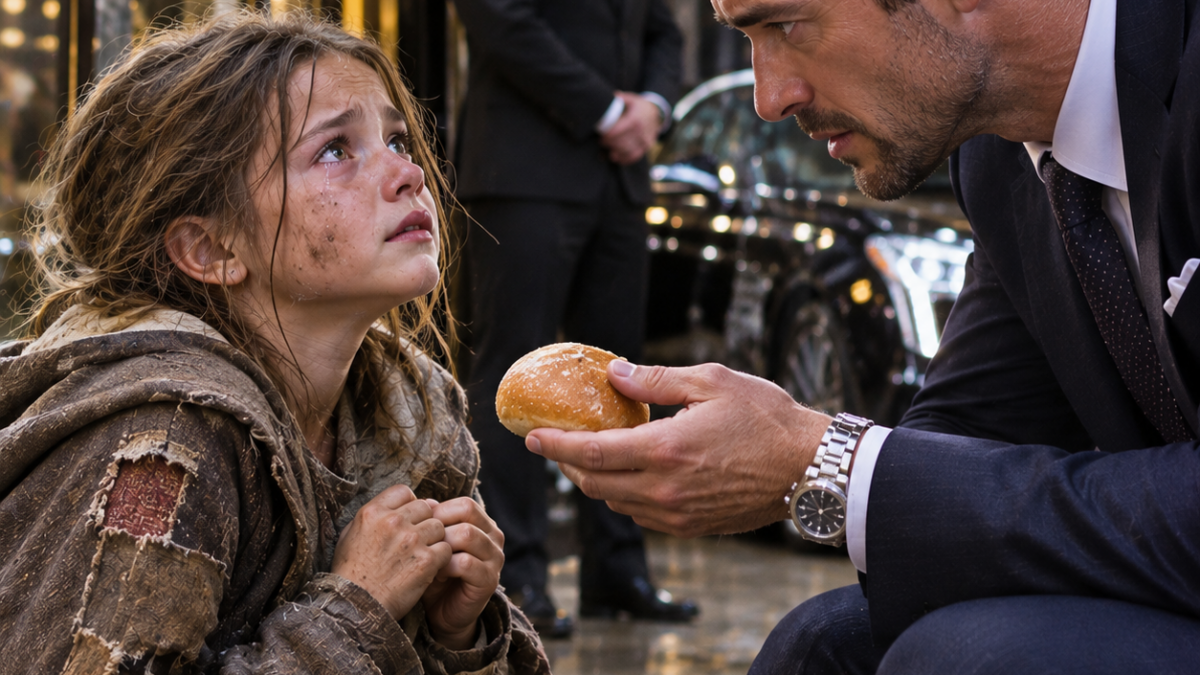
PART 2 and FULL ENDING  Thank you

For almost two months, she had moved between a bus station, a parking garage, and an abandoned apartment room.
Lucas stared at the child.
That morning, he had argued for forty minutes over eight million dollars.
Megan had spent forty-eight hours trying to find bread.
“You cannot go back outside.”
Her eyes narrowed.
“People say things like that.”
“I’m not asking you to trust me.”
“Good.”
“What I am telling you is that I’m calling the authorities so we know who’s looking for you.”
Her chair scraped backward.
Lucas raised both hands.
“And you are not going anywhere alone tonight.”
“Are they going to put me in a home?”
“I don’t know.”
“Then don’t say nice things.”
Lucas went quiet.
She had learned something at eight that many adults never do.
Promises are dangerous when the person making them controls none of the outcome.
So he changed his answer.
“I promise one thing.”
Megan watched him.
“You will not sleep on concrete tonight.”
By 10:30, police had confirmed an active missing-child report.
Child services sent an emergency caseworker.
Lucas did not simply take Megan home.
He would later correct people whenever they told the story that way.
The police interviewed her.
The caseworker verified her identity.
Because the county’s emergency placement options were strained that night and because Lucas’s longtime house manager Teresa Bennett had previously worked with a foster-family support organization, an unusual but documented temporary supervised arrangement was approved until a formal placement could be made the next morning.
Teresa stayed in the apartment.
So did the caseworker until after midnight.
Megan took a shower.
Teresa found her clean clothes.
The smallest pajamas in the building still drowned her.
So she emerged wearing one of Lucas’s old Vanderbilt T-shirts down to her knees.
Before entering the guest bedroom, Megan stopped.
“Are you going to kick me out tomorrow?”
Lucas stood in the hallway.
“No.”
She immediately frowned.
“You don’t know that.”
He corrected himself.
“No. I don’t.”
She waited.
“But if someone decides you have to go somewhere else tomorrow, I will make sure you know where and why before you leave.”
Her expression softened only slightly.
“People change their minds.”
“Then ask me again tomorrow.”
Megan went into the room.
Closed the door.
Lucas stood there for a long time.
Then he called his chief of staff.
“Daniel.”
It was after one in the morning.
Daniel Harper answered anyway.
“Please tell me the investors finally signed.”
“No.”
“Wonderful.”
“I need you to find everything you can legally find about an eight-year-old girl named Megan whose parents died in a car accident last year.”
Silence.
Then:
“Lucas…”
“She’s here.”
Another silence.
“Why is there an eight-year-old in your apartment?”
“Long story.”
“Her last name?”
“I don’t know.”
“Parents?”
“She wouldn’t say.”
“All right.”
“And Daniel?”
“Yes?”
“Find the missing-person report first.”
He heard something in Lucas’s voice.
“I will.”
At 7:04 the next morning, Daniel arrived carrying a folder.
He looked as though he had not slept.
Lucas poured coffee.
“What did you find?”
Daniel placed a photograph on the counter.
Lucas stared.
For a second, his brain rejected what he saw.
“No.”
Daniel said nothing.
Lucas picked up the photograph.
Samuel Sterling.
Founder of Crestview Enterprises.
The man Lucas had spent eighteen months fighting in court over one of the most valuable contracts of his career.
Samuel had lost.
Two weeks later, Samuel and his wife Caroline died in a highway accident.
Lucas looked toward the guest-room hallway.
“Megan is Samuel Sterling’s daughter?”
“Yes.”
Daniel opened the folder.
“And that’s not the real problem.”
“What is?”
“Samuel’s estate.”
Lucas sat.
Daniel continued.
“Once probate is finalized, Megan is the beneficial owner of properties, multiple trusts, and Samuel’s corporate stake.”
“How much of Crestview?”
Daniel slid over another page.
Lucas read the figure twice.
“She becomes the largest shareholder?”
“Economically, yes.”
“She’s eight.”
“The voting authority is held through trust structures until she reaches the applicable age. But the ownership is hers.”
Lucas felt cold.
“How much is it worth?”
“Depending on valuation?”
Daniel paused.
“Hundreds of millions.”
Behind them, a floorboard creaked.
Lucas turned.
Megan stood in the kitchen doorway.
Bare feet.
Oversized T-shirt.
Her face had gone completely still.
“So now you know who my dad was.”
Lucas lowered the paper.
“Yes.”
She swallowed.
“Are you sending me away now?”
“No.”
“Why?”
Before he could answer, his phone rang.
Board chairman Charles Whitaker.
Lucas answered.
“Charles.”
“Lucas, we’ve got a serious problem.”
“What?”
“Crestview knows Samuel Sterling’s daughter is with you.”
Lucas looked at Megan.
Charles continued.
“Their interim chairman is already telling people you picked up the missing heir to gain leverage over Crestview.”
Lucas slowly closed his eyes.
“And there’s more.”
“Of course there is.”
“They’re preparing to accuse you of trying to influence control of the company through the child.”
Lucas opened his eyes.
Megan was still watching him.
The hungry girl who had asked him for one bread roll had just placed him at the center of the most dangerous corporate conflict of his career.
And, looking at the fear on her face, Lucas understood something more important.
Whatever happened next, Megan was already convinced that once adults learned what she was worth—
they stopped seeing a little girl.
FULL STORY CONTINUATION
Lucas ended the call.
Megan immediately stepped backward.
He saw it.
Not much.
Three inches.
Maybe four.
But it was the movement of a child preparing to run.
“Megan.”
She looked toward the hallway.
“You said I didn’t have to leave.”
“I said you wouldn’t be sent somewhere without knowing what was happening.”
“Same thing.”
“No.”
Her eyes filled.
She hated that.
Lucas could see it.
She blinked hard.
Children who have cried and been ignored eventually become embarrassed by tears.
He put his phone on the counter.
“Come sit.”
“No.”
“Okay.”
He sat instead.
That surprised her.
He stayed on the opposite side of the kitchen.
No approach.
No adult reaching for her.
“You know what your father owned?”
She nodded.
“Some.”
“How much?”
She shrugged.
“People always talked about Crestview.”
Lucas waited.
“Dad hated talking about money at home.”
That was interesting.
Samuel Sterling had been ruthless in negotiations.
Cold.
Aggressive.
Lucas had once told his attorney that Samuel would try to monetize oxygen if he could secure exclusive distribution rights.
Yet apparently the man went home and refused to discuss wealth with his child.
“Do you know why people are looking for you?”
Megan stared at the floor.
“Because I ran away.”
“That’s one reason.”
“And because Dad had money.”
Lucas did not lie.
“Yes.”
Her face hardened.
“I knew it.”
“Megan.”
“Mrs. Kendall said people would care.”
“They do.”
“She said my dad’s lawyers were looking.”
“They are.”
“She said the company was looking.”
“Yes.”
Megan’s voice dropped.
“People never looked for me before Dad died.”
That sentence stayed in the room.
Lucas did not know what to say.
Teresa entered quietly.
She had heard enough.
“Megan, would you like breakfast?”
“No.”
“Toast?”
“No.”
“Eggs?”
“No.”
“Nothing?”
Megan shook her head.
Then touched the sweatshirt pocket.
Lucas remembered the bread.
The half roll she had hidden.
“Megan.”
She immediately covered the pocket.
“I’m not taking it.”
She stared.
“There’s food here.”
“So?”
“So you don’t need to save that one.”
“What if there isn’t later?”
Lucas stopped.
There it was.
A child who might legally own hundreds of millions of dollars was afraid tomorrow would not contain bread.
He looked toward Teresa.
She understood.
Without making a speech, Teresa opened the pantry.
Shelves.
Crackers.
Cereal.
Rice.
Pasta.
Soup.
Then the refrigerator.
Fruit.
Milk.
Eggs.
Cheese.
“None of this is locked,” she said.
Megan looked.
“You can have food whenever you’re hungry.”
She did not move.
Teresa added:
“You don’t need permission for bread.”
That did it.
Megan started crying.
Not loudly.
She covered her face.
Lucas stood instinctively.
Then stopped.
Teresa went to her instead.
Megan let Teresa put an arm around her.
Lucas turned toward the window.
He needed a second.
An eight-million-dollar contract suddenly felt obscene.
By nine that morning, everyone wanted something.
Lucas’s board wanted distance.
Crestview wanted Megan removed from his home immediately.
Child services wanted a neutral emergency placement.
Samuel’s estate lawyers wanted access to Megan.
The press had not yet discovered anything.
Charles Whitaker wanted to keep it that way.
Lucas’s personal attorney, Rachel Monroe, arrived with three warnings before taking off her coat.
“Do not discuss Crestview business in front of Megan.”
“I wasn’t planning to.”
“Do not ask her about her father’s corporate interests.”
“I haven’t.”
“Do not sign anything concerning custody without counsel.”
“I know.”
Rachel stared.
“You look offended.”
“I am.”
“Good. Stay offended and follow instructions.”
She sat.
“What does Crestview want?”
“Grant Sterling is demanding immediate transfer of Megan to family supervision.”
“Who is Grant?”
“Samuel’s younger brother.”
Lucas knew the name.
Forty-seven.
Crestview board member.
Acting chairman after Samuel’s death.
Polished.
Careful.
Less charismatic than Samuel, but politically adept.
“Why didn’t he take Megan after the accident?”
Rachel opened her notes.
“He petitioned.”
“And?”
“Samuel’s mother, Eleanor Sterling, had priority under the family plan.”
“Megan’s grandmother.”
“Yes.”
“She became Megan’s temporary guardian after the accident.”
“Then she got sick?”
“Major stroke three months later.”
Lucas leaned back.
“What happened to Megan?”
“Emergency temporary care.”
“Neighbor first?”
“Correct.”
“Then state placement was being arranged.”
“And she ran.”
“Yes.”
“Where was Grant?”
“Still seeking a family guardianship arrangement.”
Lucas frowned.
“Why wasn’t that completed?”
Rachel’s expression changed.
“Because Samuel’s estate planning separated custody from financial control.”
“Explain.”
“Megan’s personal guardian does not automatically control the Sterling family trust.”
“Good.”
“An independent institutional trustee holds and votes most of the Crestview interest during Megan’s minority.”
Lucas nodded.
“So becoming her guardian doesn’t give Grant thirty percent of Crestview.”
“No.”
“Then why the urgency?”
Rachel hesitated.
“That is one of the questions.”
Child-services supervisor Naomi Price arrived shortly afterward.
She was direct with Lucas.
“I appreciate what happened last night.”
“But?”
“But you are not a foster placement.”
“I know.”
“We need to move Megan today.”
Lucas looked toward the guest-room door.
“Where?”
“We have a licensed emergency home.”
“Does Megan know?”
“Not yet.”
Lucas stood.
“She asked me if I would kick her out.”
Naomi’s expression softened.
“I understand.”
“No, I don’t think you do.”
She looked at him sharply.
Lucas immediately corrected himself.
“That was unfair.”
Naomi nodded.
“Yes.”
He took a breath.
“What happens if she refuses?”
“She is eight.”
“That wasn’t my question.”
Naomi studied him.
“Mr. Dalton, this child has been missing nearly two months.”
“I know.”
“She has slept in unsafe places.”
“I know.”
“She needs stability, medical evaluation, counseling, school enrollment, and legal guardianship.”
“I know.”
“Then let us do our job.”
Lucas closed his eyes.
She was right.
That did not make it easier.
Megan heard enough of the conversation to understand.
She locked herself in the guest bathroom.
Naomi waited outside.
“Megan?”
No answer.
“Megan, nobody is angry.”
Silence.
Lucas stood farther down the hall.
Teresa beside him.
Naomi tried again.
“I want to explain where we’re going.”
Finally, Megan’s voice:
“No.”
“We have a family who takes care of children temporarily.”
“No.”
“They have two dogs.”
“No!”
The word cracked.
Naomi closed her eyes.
Lucas could hear Megan breathing hard behind the door.
Then:
“I’m not bad.”
Naomi immediately answered.
“I know.”
“I didn’t steal.”
“I know.”
“I only took food when people threw it away.”
Lucas looked down.
“I’m not bad.”
Naomi leaned closer to the door.
“You are not being moved because you did anything wrong.”
“Then why?”
“Because adults have rules about keeping children safe.”
Megan laughed bitterly.
Eight years old.
Already bitter.
“Adults have rules when they want to take you somewhere.”
Naomi looked at Lucas.
He could see the exhaustion in her face.
She probably had fifteen other children whose lives were currently collapsing.
Lucas walked closer.
“Megan?”
Silence.
“It’s Lucas.”
“I know.”
“You asked if I would change my mind.”
No answer.
“I haven’t.”
The lock clicked.
The door opened two inches.
Her face appeared.
“Then why do I have to go?”
Lucas crouched.
“Because I don’t get to decide where children live just because I have a big apartment.”
She stared.
“That’s stupid.”
“Yes.”
Naomi almost smiled.
Lucas continued.
“But some rules exist because rich strangers should not get to keep children just because they want to.”
Megan looked at him.
“That would be bad.”
“Exactly.”
She opened the door wider.
“So you don’t want me?”
Lucas felt the question hit physically.
“No.”
Her face fell.
He immediately corrected:
“No, I mean that is not what I said.”
She glared.
“Adults are terrible at words.”
“True.”
He took a breath.
“I want you to be safe.”
“And?”
“And I don’t know yet what role I’m allowed to have.”
Megan’s eyes filled.
“You’ll forget me.”
“No.”
“You don’t know that.”
He almost promised.
Stopped.
Then said:
“Ask me tomorrow.”
She stared at him.
The same answer as the night before.
Finally:
“Okay.”
Megan left with Naomi at noon.
Teresa packed clean clothes.
Lucas added nothing expensive.
Naomi warned him against overwhelming Megan with gifts.
He understood.
At the elevator, Megan turned.
“Lucas?”
“Yes?”
“Can I keep the shirt?”
He looked at the Vanderbilt T-shirt hanging to her knees.
“Yes.”
“Even if I don’t come back?”
His throat tightened.
“It’s yours.”
She nodded.
Then:
“The bread too?”
He looked at her pocket.
“Yes.”
Megan entered the elevator.
Doors closed.
Lucas stood there long after the numbers disappeared.
The apartment felt enormous.
Teresa found him in the kitchen an hour later.
He was staring at the pantry.
“Do you need something?”
“No.”
“Then stop standing like a haunted lamp.”
He looked at her.
“Haunted lamp?”
“I’m tired.”
She began cleaning.
Lucas said:
“Do you think she’ll be okay?”
Teresa stopped.
“No.”
He stared.
She continued.
“I think she has a chance to be okay.”
“That is different.”
“Yes.”
“She lost both parents.”
“Ran away.”
“Starved.”
“Learned adults disappear.”
Teresa looked at him.
“Do not turn this into a problem you can solve with money by Friday.”
That irritated him because it was accurate.
“I wasn’t.”
“Yes, you were.”
She closed the pantry.
“You solve businesses.”
“She is not one.”
“I know.”
“Learn that faster.”
At 1:30, Charles Whitaker called an emergency board meeting.
Dalton Strategic Holdings had four current matters involving Crestview.
One was the eight-million-dollar contract Lucas had been reviewing when Megan appeared.
Another involved pending litigation costs.
Charles did not soften the issue.
“You cannot be anywhere near this child.”
Lucas stared at the conference-room screen.
“Interesting opening.”
“I’m serious.”
“So am I.”
“We have a duty to shareholders.”
“Yes.”
“And you now have a personal relationship with the beneficial owner of a major adversary.”
“She asked me for bread.”
“Lucas.”
“She is eight.”
“That makes it worse.”
Lucas leaned back.
“How?”
“Because everyone will assume influence.”
“Influence over what?”
“Public perception.”
“Future corporate decisions.”
“The trustee.”
“Guardianship.”
Charles spread his hands.
“Pick one.”
Another director said:
“Crestview’s counsel is already preparing an ethics complaint against Dalton’s acquisition team.”
Lucas laughed once.
“For feeding a child?”
“For failing to disclose a potential conflict immediately.”
“I learned her last name this morning.”
“And we are disclosing it now.”
Charles exhaled.
“Lucas, step away.”
“From what?”
“All Crestview matters.”
The room went quiet.
That was the correct answer.
It still hurt.
Lucas had spent eighteen months on the dispute.
He looked at the contract file.
Then closed it.
“Fine.”
Charles blinked.
“Fine?”
“I recuse myself.”
A director frowned.
“From negotiations only?”
“All current matters involving Crestview.”
Charles stared.
“That could cost us.”
“I know.”
“How much?”
Lucas looked at him.
“Less than using an eight-year-old to win.”
Nobody argued after that.
By evening, Crestview had issued a statement.
Not naming Megan directly.
But close enough.
It described “deep concern regarding the unexplained involvement of a commercial adversary in the recovery of a vulnerable minor associated with the Sterling estate.”
Lucas read it twice.
Rachel called.
“Do not respond emotionally.”
“They’re suggesting I engineered finding her.”
“I know.”
“She walked into a restaurant.”
“I know.”
“There are cameras.”
“I know.”
“Then why are we quiet?”
“Because litigation loves people who respond before thinking.”
Lucas hated lawyers again.
Grant Sterling appeared on television that night.
Calm.
Grave.
Concerned uncle.
He said the family wanted only Megan’s safety.
He said Samuel would have wanted her surrounded by relatives who loved her.
He said corporations should not exploit children.
Lucas almost threw the remote.
Teresa took it from him.
“You’re forty-two.”
“Give it back.”
“No.”
The next morning, Lucas called Naomi.
“Can I speak to Megan?”
“No.”
His chest tightened.
“Why?”
“She is stabilizing.”
“Did something happen?”
“Nothing dangerous.”
“What does stabilizing mean?”
“She cried most of the night.”
Lucas closed his eyes.
“She asked whether you called.”
“And you said?”
“That you had.”
“Good.”
Naomi continued.
“Mr. Dalton, I need you to understand something.”
“What?”
“Megan attaches quickly and distrusts quickly.”
“That sounds contradictory.”
“It isn’t.”
“She wants someone desperately.”
“So every disappointment becomes confirmation that nobody stays.”
Lucas sat.
“What do I do?”
“Be consistent.”
“Can I visit?”
“Not yet.”
“Why?”
“Because we need to understand whether your presence helps Megan or makes placement harder.”
That hurt.
But Lucas said:
“Okay.”
Consistency.
Meanwhile, Daniel kept digging.
Not into Megan.
Into Crestview.
Public records.
Board filings.
Estate documents legally available through probate.
At noon he walked into Lucas’s office.
“You’re going to hate this.”
“Good.”
Daniel placed down a board memorandum.
Crestview had scheduled an extraordinary shareholder action three weeks later.
Capital restructuring.
New preferred shares.
Lucas read.
“What does this do?”
“Raises cash.”
“And?”
“Dilutes existing common ownership.”
“How much?”
“Potentially significant.”
Lucas leaned back.
“What happens to Samuel’s estate stake?”
“Until probate finalizes, it’s held through estate structures.”
“That didn’t answer me.”
Daniel met his eyes.
“It could be diluted.”
Lucas felt a cold pressure behind his ribs.
“Who proposed it?”
“Grant’s committee.”
“Is it illegal?”
“Not obviously.”
“Is it self-serving?”
“Possibly.”
“How does Megan being missing matter?”
Daniel pulled out another page.
“Her estate representation is in transition.”
“Grandmother incapacitated.”
“Temporary guardian unresolved.”
“Trustee acting conservatively.”
Lucas understood.
“No one is aggressively objecting.”
“Exactly.”
He stared at the memorandum.
“So Grant may not want Megan because guardianship gives him shares.”
“No.”
“He may want the family to control the narrative while this transaction goes through.”
“Possible.”
Lucas stood.
“Send this to Megan’s estate lawyer.”
Daniel shook his head.
“You cannot.”
Lucas stopped.
“Conflict.”
“Yes.”
“If Dalton sends it, Crestview says you’re interfering to protect your commercial interests.”
Lucas swore.
Daniel nodded.
“Exactly.”
“Then what?”
“We route nothing.”
Lucas stared.
“What?”
“We have no duty to rescue Crestview shareholders from Crestview governance.”
“Megan is eight.”
“Yes.”
“And that money is hers.”
“Yes.”
Lucas walked to the window.
“So I do nothing?”
Daniel’s voice softened.
“You make sure the people whose job it is to protect her know you have information without influencing their decision.”
“How?”
“Your attorney talks to her court-appointed representative.”
“Not you.”
“Not me.”
“Not Dalton.”
“Clean channel.”
Lucas exhaled.
“Do it.”
Megan’s independent attorney was Claire Bennett.
Fifty-eight.
Former family-court judge.
No patience for billionaires.
Lucas liked her immediately.
She disliked him immediately.
That helped.
Their first meeting lasted twenty-seven minutes.
Claire opened with:
“I assume you understand you are not Megan’s guardian.”
“Yes.”
“Trustee.”
“Yes.”
“Financial adviser.”
“Yes.”
“Friend of the family.”
“No.”
“Then what are you?”
Lucas paused.
“The man who bought her dinner.”
Claire stared.
“Good answer.”
She reviewed the Crestview memorandum.
Her expression sharpened.
“Where did you get this?”
“Public and lawfully obtained materials through my staff.”
“Why were you looking?”
“My company is in litigation and negotiations with Crestview.”
“Conflict.”
“I’ve recused myself.”
“When?”
He gave her the timestamped board resolution.
Claire read.
That surprised her.
“You gave up control of your pending matter?”
“Yes.”
“Worth?”
“Potentially eight figures depending on outcome.”
“And you did that voluntarily?”
“Yes.”
“Why?”
Lucas almost became defensive.
Instead:
“Because if I stay involved, every time I speak to Megan someone can say I’m buying access to Crestview.”
Claire leaned back.
“You understand that I am going to verify everything you just told me.”
“I hope you do.”
She looked at the memorandum again.
“I will handle this.”
“What will you do?”
“That is no longer your business.”
He almost smiled.
“Understood.”
As he stood to leave, Claire said:
“Mr. Dalton.”
He turned.
“Megan asks about you.”
His chest tightened.
“Every day?”
Claire nodded.
Lucas swallowed.
“Tell her…”
He stopped.
Claire waited.
No promises.
Be consistent.
“Tell her I still remember her.”
Claire’s expression softened.
“I can do that.”
Three days later, Lucas was allowed a supervised visit.
Not at his apartment.
A child-services office.
Neutral room.
Toys that had been cleaned too many times.
Megan sat on a couch wearing his Vanderbilt shirt under a zip-up hoodie.
He noticed immediately.
She noticed him noticing.
“I washed it.”
“I’m glad.”
For several seconds, neither knew what to do.
Then Megan asked:
“Did you forget?”
“No.”
“People said you were busy.”
“I was.”
Her face changed.
He added:
“And I still came.”
She looked down.
“Okay.”
He sat in the chair opposite her.
Naomi and Claire remained nearby.
No private conversation.
Megan asked:
“Are you mad my dad sued you?”
Lucas almost laughed.
“He didn’t sue me exactly.”
“You fought.”
“Yes.”
“Did you hate him?”
Hard question.
“I hated several things he did.”
She stared.
“That’s not the same.”
“No.”
“Did he hate you?”
“Probably on Tuesdays.”
She almost smiled.
Then:
“He yelled a lot.”
Lucas looked at her.
“At you?”
“No.”
“Phone.”
“Work people.”
That sounded like Samuel.
Megan rubbed the cuff of the hoodie.
“Was he bad?”
Lucas felt every adult in the room become still.
“No.”
“Then why did you fight?”
“Because good people can disagree about money.”
“Was Dad good?”
Lucas took a breath.
“I did not know him well enough outside business to answer that.”
Her face fell.
He continued.
“But he talked about you once.”
She looked up immediately.
“When?”
“During a settlement meeting.”
“What did he say?”
Lucas remembered.
Samuel had arrived late.
Apologized once.
Then said:
My daughter had a school program. Business can wait thirty minutes.
At the time, Lucas had been furious.
Now he understood differently.
“He said business could wait because you had a school program.”
Megan’s eyes filled.
“He came.”
“Yes.”
“He was late.”
“I remember.”
Lucas nodded.
“But he came.”
That mattered.
At the end of the visit, Megan reached into her backpack.
She pulled out something wrapped in a napkin.
Half a bread roll.
Lucas stared.
“You kept that?”
She nodded.
“It’s hard now.”
“I imagine.”
“Do you want it?”
“No.”
“Why?”
“Because it belongs to you.”
She considered.
Then threw it in the trash.
Everyone looked surprised.
Megan shrugged.
“There’s food at the foster house.”
Naomi smiled.
Lucas looked away because his eyes had filled.
That tiny piece of stale bread felt like the first thing Megan had let herself stop carrying.
Grant Sterling filed for emergency guardianship four days later.
His petition described himself as Megan’s closest available relative.
Technically reasonable.
Her grandmother Eleanor remained in neurological rehabilitation.
Grant had resources.
A large home.
Family connection.
Private schools.
Staff.
On paper, he looked excellent.
Megan panicked when Claire told her.
“I don’t want him.”
“Why?”
“He talks about Dad’s company all the time.”
“Has he hurt you?”
“No.”
“Threatened you?”
“No.”
“Why are you afraid?”
Megan struggled.
“He doesn’t ask what I want.”
That became important.
She remembered visiting Grant after her parents’ funeral.
Adults talking over her.
Company lawyers in the dining room.
Grant saying:
We have to protect Samuel’s legacy.
Megan asking for her mother.
Nobody answering because her mother was dead and adults sometimes become silent when the truth is too painful.
To Megan, Grant and Crestview had fused into the same thing.
A world where people talked about shares while she wanted her parents.
That did not make Grant dangerous.
It made him the wrong person to assume trust simply because they shared blood.
Lucas did not file for custody.
Everyone expected him to.
The press certainly did.
One tabloid headline read:
BILLIONAIRE RIVAL MAY SEEK CONTROL OF STERLING HEIRESS
Lucas wanted to sue.
Rachel told him to breathe.
He did.
Barely.
Charles Whitaker called.
“This is killing us.”
“Our stock is fine.”
“Our reputation isn’t.”
“What would you like me to do?”
“Say you don’t want guardianship.”
“I don’t.”
“Publicly.”
Lucas paused.
That was more complicated.
If he publicly denied ever wanting responsibility for Megan, she might hear it.
Children hear headlines differently.
“No.”
Charles swore.
Lucas continued.
“I’m not turning her into a PR statement.”
“Then what are you doing?”
“Waiting for the court.”
“Lucas.”
“Charles.”
“You are risking millions for a child you have known twelve days.”
Lucas looked at the photograph Daniel had printed from the restaurant’s security footage.
Megan standing beside his table.
Small.
Hungry.
“Maybe.”
Charles sighed.
“You’ve lost your mind.”
“Possible.”
Claire eventually asked Lucas a question he had not expected.
“Would you consider becoming a licensed foster resource?”
He stared.
“You told me I wasn’t a foster parent.”
“You aren’t.”
“Then why?”
“Megan has disrupted from two temporary placements.”
His chest tightened.
“What happened?”
“She did not behave dangerously.”
“Then?”
“She stopped eating.”
Lucas closed his eyes.
“She packs food.”
“She sleeps on the floor.”
“She wakes whenever doors open.”
Claire continued.
“And she repeatedly asks when she can see you.”
Lucas said nothing.
“This is not a custody offer.”
“I understand.”
“It would require background checks, home study, training, oversight.”
“I understand.”
“Your wealth does not move you to the front.”
“Good.”
“Teresa cannot substitute for you.”
“I know.”
Claire leaned forward.
“Do you actually want responsibility for a traumatized eight-year-old?”
Lucas opened his mouth.
Closed it.
The truthful answer frightened him.
“Yes.”
Claire stared.
“Why?”
He thought about saying because she deserves safety.
Too polished.
Because he cared.
Too simple.
Finally:
“Because when she asks whether I’ll still be there tomorrow, I want to stop having to guess.”
Claire’s expression changed.
Not approval.
Something close.
“Then start the process.”
Teresa laughed when Lucas told her.
Not mocking.
Disbelieving.
“You?”
“Yes.”
“You don’t know how to pack a school lunch.”
“I can learn.”
“You schedule calls at six in the morning.”
“I can change that.”
“You have white furniture.”
“I’ve never liked it.”
“You own exactly one cereal.”
“I can buy more.”
Teresa stared.
Then became serious.
“Do not do this because you feel guilty.”
“I’m not.”
“Do not do it because you hate Grant Sterling.”
“I don’t.”
“Do not do it because saving her makes you feel good.”
Lucas looked at her.
“Then why?”
Teresa waited.
He said:
“Because I want her here even when she is angry.”
Teresa’s face softened.
“Better.”
“Even when she hates me.”
“Likely.”
“Even when she breaks something expensive.”
“Guaranteed.”
Lucas sighed.
“She already thinks my guest room is creepy.”
“It is.”
The home study was humiliating in the healthiest possible way.
Lucas had spent his life being evaluated financially.
This time, social workers wanted to know about childhood.
Relationships.
Temper.
Work schedule.
Support network.
Whether he could say no.
Whether he understood grief.
Whether he had ever cared for a sick child.
No.
Whether he knew how to respond if Megan stole food.
“Not punish her?”
Correct.
If she lied?
“Ask why before assuming manipulation?”
Better.
If she wanted to sleep on the floor?
“Put a mattress there?”
Good.
Lucas felt like an idiot.
Which was useful.
He attended foster-parent training with couples who had no idea who he was.
One woman asked whether he worked in sales.
“Something like that.”
Meanwhile, the Crestview restructuring became a legal problem.
Claire, acting independently for Megan’s interests, notified the institutional trustee.
The trustee requested delay.
Grant’s board resisted.
Then the probate court appointed a special financial representative to review any transaction that could materially affect Megan’s inherited stake while guardianship remained unresolved.
The proposed issuance was postponed.
Grant blamed Lucas publicly.
Lucas had not filed a single objection.
That was the irony.
At a Crestview press conference, Grant said:
“It is obvious Mr. Dalton is using the child’s circumstances to interfere with our company.”
Lucas watched from his office.
Daniel said:
“You could destroy that statement in one interview.”
“No.”
“Good.”
“I wanted you to say yes.”
“No.”
Daniel smiled.
“Growth.”
Lucas threw a pen at him.
Then came the hearing.
Not a television courtroom.
No cameras inside.
Family court.
Closed proceedings because Megan was a minor.
Grant appeared with two attorneys.
Lucas had his own.
Claire represented Megan.
Naomi testified regarding placement.
Eleanor Sterling appeared by video from her rehabilitation center.
That mattered.
Megan’s grandmother looked frail.
Speech slightly affected.
But mind clear.
She cried when she saw Megan.
Megan cried too.
For ten minutes, the corporate war disappeared.
There was only an old woman and a little girl.
“My baby.”
“Grandma.”
“I’m sorry.”
“You got sick.”
“I know.”
“I thought you forgot me.”
Eleanor covered her mouth.
“No.”
Megan sobbed.
“No, sweetheart.”
The judge gave them time.
Nobody objected.
When proceedings resumed, Eleanor made the most important statement of the day.
“I love my granddaughter.”
Her voice was slow.
Effortful.
“I cannot safely care for her full-time now.”
Grant looked down.
Eleanor continued.
“My son did not want Megan raised inside Crestview.”
Grant’s head lifted.
His attorney objected.
The judge handled it.
Eleanor clarified.
“Samuel loved the company.”
“But he wanted Megan to know she was a child before she was an heir.”
Lucas felt that sentence hit.
A child before she was an heir.
Eleanor said Grant loved Megan in his way.
But she opposed immediate guardianship with him because “the company follows him into every room.”
Grant’s face tightened.
That was painful.
Not villainy.
Truth.
Grant testified later.
Lucas expected arrogance.
Instead, Grant was angry and wounded.
“My brother died.”
His voice cracked.
“I watched his company destabilize.”
“My mother had a stroke.”
“My niece disappeared.”
“And now the man who fought Samuel for eighteen months appears with her?”
He looked at Lucas.
“What would you think?”
For the first time, Lucas understood him.
Not agreed.
Understood.
Grant continued.
“I thought Lucas Dalton would use anything.”
“That was my experience with him.”
Lucas wanted to object.
Rachel touched his sleeve.
Stay quiet.
Grant said he wanted Megan in the family.
He believed he could give her stability.
He denied trying to control her shares.
When asked about the proposed dilution, he defended it as necessary capital restructuring.
The financial representative disagreed with parts of his analysis but did not accuse him of fraud.
That mattered.
Grant was not secretly plotting to steal everything.
He was a man whose interests as corporate chairman conflicted with the child’s interests as inheritor.
Conflicts do not require evil.
They require boundaries.
Then Lucas testified.
Grant’s lawyer began aggressively.
“You were in active litigation with Samuel Sterling?”
“Yes.”
“Your company stood to gain financially from that dispute?”
“Yes.”
“You discovered his missing daughter?”
“She approached me.”
“You provided food?”
“Yes.”
“Shelter?”
“Under emergency supervision that night.”
“You later sought foster certification?”
“Yes.”
“Do you expect this court to believe your business interests played no role?”
Lucas looked at the judge.
“Yes.”
The attorney smiled.
“Mr. Dalton, your firm could gain millions from favorable negotiations with Crestview.”
“Yes.”
“And Megan is the future largest beneficial shareholder.”
“Yes.”
“You see no conflict?”
“I saw one.”
“So you admit it?”
“Yes.”
The attorney paused.
Lucas continued.
“That is why I recused myself from every Dalton matter involving Crestview twelve days ago.”
Rachel placed the board resolution into evidence.
Grant’s attorney looked at it.
“When did this occur?”
“The morning after I learned Megan’s identity.”
“Before any court filing?”
“Yes.”
“Why?”
Lucas looked toward Megan.
She was not in the courtroom for this portion.
Good.
“Because she asked me whether knowing who her father was would make me send her away.”
He swallowed.
“I decided I never wanted her to wonder whether I kept her close because of a contract.”
The attorney tried another angle.
“You are willing to lose millions?”
“I am willing to let people without a conflict make decisions.”
“Very noble.”
“No.”
Lucas looked at him.
“Expensive.”
A few people almost smiled.
He continued.
“But necessary.”
Then came the question Lucas feared.
“Do you want to adopt Megan Sterling?”
The room became still.
Rachel had prepared him.
Do not make promises.
Lucas answered:
“I want Megan to have a permanent, safe family.”
“That was not my question.”
“I know.”
“Do you want to adopt her?”
Lucas took a breath.
“If, after proper evaluation, that is what Megan wants, what her independent representatives believe is best, and what the court eventually permits…”
He paused.
“Yes.”
Grant looked at him.
Something changed in his face.
Maybe surprise.
Maybe pain.
The attorney said:
“So the billionaire does want the heiress.”
Lucas felt anger rise.
Then disappear.
He answered quietly:
“I want the girl who asked me for bread.”
That ended the line of questioning more effectively than anger could have.
The court did not grant adoption.
Of course not.
It authorized a structured foster placement with Lucas after the licensing process was completed, with continued child-services oversight, therapy, independent counsel, regular contact with Eleanor, and no involvement by Lucas in managing Megan’s inherited assets.
The institutional trustee retained financial control.
Lucas signed conflict restrictions.
Grant received visitation privileges subject to Megan’s therapist and case plan.
No one “won.”
That was the correct outcome.
Megan had adults around her with different roles.
Not one powerful adult controlling everything.
The day she returned to Lucas’s apartment, she carried one backpack.
That was all.
Lucas had converted the guest room.
Not extravagantly.
Megan chose the color.
Light yellow.
She had a desk.
Books.
A bed.
No princess canopy.
She had rejected that violently.
Teresa bought three cereals.
Lucas bought twelve.
Megan stared at the pantry.
“You’re weird.”
“I’m prepared.”
“No one needs this much cereal.”
“You once hid bread.”
Her face changed.
Lucas immediately regretted it.
“Sorry.”
Megan looked at him.
Then at the pantry.
“Can I hide cereal too?”
Lucas thought.
“If you need to.”
“Teresa said bugs.”
“Teresa is smarter than both of us.”
Megan smiled.
Small.
Real.
The first week was terrible.
Megan had nightmares.
She stole crackers from the pantry and hid them under her bed despite knowing food was available.
Lucas did not confront her.
Teresa quietly bought sealed containers so insects would not become a problem.
Megan lied about brushing her teeth.
Refused school enrollment.
Became furious when Lucas took a work call during dinner.
“You said no work!”
“I said I would try.”
“You lied.”
“No.”
“You always say no!”
She threw a glass.
It shattered.
Then Megan froze.
Her face drained.
She looked toward the door.
Waiting.
Lucas understood.
She expected removal.
He stood.
Megan backed away.
“I’m sorry.”
He got a broom.
“I know.”
“I didn’t mean it.”
“I know.”
“Are you calling Naomi?”
“No.”
She stared.
“You’re not mad?”
“I’m angry.”
That surprised her.
“But I am not sending you away because a glass broke.”
She started crying.
Lucas swept carefully.
Megan whispered:
“Mrs. Kendall got mad when I broke things.”
“Adults get mad.”
“She said I was too much.”
Lucas stopped.
He put down the broom.
“Megan.”
She looked at him.
“You are allowed to be difficult and still live here.”
Her face collapsed.
He had no training for what happened next.
She ran into him.
Arms around his waist.
Sobbing.
Lucas stood completely still for one second.
Then held her.
Not too tightly.
Enough.
Therapy was harder.
Megan hated Dr. Leah Bennett.
For three sessions.
At the fourth, she decided Leah was “less annoying than expected.”
High praise.
Lucas attended family sessions.
He learned Megan’s running away had not been one impulsive act.
After her parents’ deaths, she experienced months of adults deciding everything around her.
Funeral.
Lawyers.
Grandmother.
Grandmother’s stroke.
Temporary homes.
Case plans.
She had begun equating adult meetings with disappearance.
That explained why folders terrified her.
Contracts.
Documents.
Closed doors.
Every important thing in her life happened on paper she could not read.
Lucas began explaining documents in child language.
Not details she did not need.
Just enough.
“This paper says you live here for now.”
“This one says your money is handled by people who are not me.”
“This one says I cannot use your shares.”
Megan asked:
“Do you want my money?”
“No.”
“Everyone says that.”
Lucas nodded.
“Then watch what I do.”
Grant’s visits were difficult.
The first lasted fourteen minutes.
Megan barely spoke.
Grant brought an expensive doll.
She did not open it.
He asked about school.
She shrugged.
Then he started talking about Samuel.
That helped.
He told Megan her father once fell into a lake during a board retreat because he insisted he could row better than everyone else.
Megan laughed.
Grant stared at her.
Maybe he had forgotten what her laugh sounded like.
On the third visit, he arrived without a gift.
Better.
On the fifth, Megan asked:
“Did Dad hate Lucas?”
Grant looked toward the observation-room glass.
He knew Lucas and the therapist were nearby.
“No.”
Megan frowned.
“They fought.”
“Yes.”
“Why?”
“Your father and Lucas both liked being right.”
That was accurate.
Megan smiled.
Grant continued:
“Your dad respected him.”
Lucas did not know that.
Grant admitted:
“He called Lucas an arrogant nightmare.”
Megan laughed.
“So he hated him.”
“No.”
“Samuel used much worse words for people he hated.”
Lucas laughed behind the glass.
Leah told him to be quiet.
Slowly, Grant stopped feeling like an enemy.
He remained part of Crestview.
Still disagreed with Lucas.
Still did not trust him completely.
That was fine.
Adults do not need to become friends for a child to be safe.
They need rules.
Grant eventually withdrew his request for sole guardianship.
Not dramatically.
His attorney filed a modification stating he supported the existing placement so long as independent asset protections remained.
Lucas read it twice.
Then called Grant.
First direct conversation since court.
“Thank you.”
Grant said:
“Don’t make me regret it.”
Lucas almost smiled.
“Likewise.”
A pause.
Then Grant said:
“She laughed today.”
“I heard.”
“I haven’t heard that since Samuel died.”
Lucas’s throat tightened.
“Me neither.”
Grant hung up.
That was enough.
Crestview’s capital restructuring changed too.
The independent trustee negotiated protections.
The company raised less money through a different structure that did not disproportionately dilute Megan’s inherited interest.
Grant remained acting chairman for another year.
Then the board appointed a permanent CEO from outside the Sterling family.
Grant stayed as a director.
No one went to prison.
No corporate empire collapsed.
Good governance is rarely cinematic.
It is often a room full of tired people agreeing to documents nobody will ever read.
Megan’s stake remained hers.
Managed independently.
Untouched by Lucas.
Exactly as it should have been.
Dalton’s eight-million-dollar dispute with Crestview was eventually settled by executives who were not Lucas.
His company received less than Lucas believed it deserved.
Charles Whitaker complained for three months.
Lucas did not regret recusing himself.
At one board meeting Charles finally said:
“You know you cost us money.”
Lucas nodded.
“Yes.”
“Still comfortable with that?”
Lucas thought of Megan hiding crackers.
“Yes.”
Charles shook his head.
“You’ve become sentimental.”
“No.”
Lucas looked at the settlement document.
“I’ve become expensive in different ways.”
Megan started school in January.
The first morning, she refused to leave the car.
Lucas sat beside her.
“You have to go.”
“I know.”
“You will be back at three.”
“You don’t know that.”
He hated that answer now.
Because he understood it.
“I know the plan.”
“Plans change.”
“Yes.”
She looked at him.
“Then what?”
Lucas thought.
“I will be at pickup whether the plan changes or not.”
“What if you have work?”
“I will be at pickup.”
“What if there’s an emergency?”
“Teresa will be there and you’ll know before dismissal.”
Megan stared.
“Promise?”
Lucas chose carefully.
“Yes.”
This one he controlled.
“I promise someone you know will be waiting.”
She got out.
At 2:37, Lucas was already in the car line.
Twenty-three minutes early.
Charles called.
Lucas declined.
Megan emerged at three.
Saw the car.
Stopped.
Then smiled.
That smile was worth more than the contract Lucas had once lost sleep over.
Months passed.
Megan gained weight.
Her shoes stopped falling apart.
She did not become magically cheerful.
She remained suspicious.
Smart.
Sometimes brutally direct.
She asked Lucas why his apartment had “hotel furniture.”
She informed him his scrambled eggs were “sad.”
She refused expensive clothes and preferred hoodies.
She loved science.
Hated spelling.
Read under blankets after bedtime.
Sometimes woke crying for her mother.
Those nights were the hardest.
Lucas could not fix death.
That humbled him more than any boardroom ever had.
One night, Megan came into the kitchen at 2:00 a.m.
Lucas was working.
She stood in the doorway.
“You said less work.”
He closed the laptop.
“You’re right.”
She climbed onto a stool.
“My mom used to make hot chocolate when I couldn’t sleep.”
Lucas looked helpless.
“I can make hot chocolate.”
“You’ll ruin it.”
“Likely.”
They made it together.
Too much cocoa.
Milk almost boiled over.
Megan laughed.
Then suddenly stopped.
Her eyes filled.
“Mom had a yellow cup.”
Lucas said nothing.
“She broke it once.”
“She cried.”
“Over a cup?”
“It was from Grandma.”
Megan stared into the steam.
“I don’t remember her voice right.”
That sentence broke him.
Lucas sat beside her.
“You remember things about her.”
“Not enough.”
“Tell me one.”
Megan thought.
“She sang badly.”
“Good.”
“Really badly.”
“Excellent.”
“She hated ketchup.”
“Strong woman.”
Megan laughed through tears.
They stayed there until almost four.
Grief did not leave.
But it became shared.
Sometimes that is all adults can offer.
Eleanor’s health improved enough for supervised weekend visits.
Not custody.
Not yet.
She moved from acute rehabilitation to assisted living.
Megan visited twice a month.
Lucas drove.
The first time, Eleanor held Megan’s face in both hands and said:
“You look like Caroline.”
Megan cried.
So did Eleanor.
Lucas stepped outside.
Some reunions did not need him.
Eleanor later asked him to stay for tea.
She studied him.
“You look different from television.”
“So do most people.”
“You fought my son.”
“Yes.”
“He said you were impossible.”
“I liked Samuel too.”
She smiled.
Then became serious.
“Why Megan?”
Lucas hated the question because no answer sounded clean.
Finally:
“She asked for bread.”
Eleanor waited.
“That’s all?”
“No.”
He looked through the glass door where Megan was drawing.
“She stayed.”
Eleanor’s eyes filled.
“She does that.”
“What?”
“Find one person.”
“Then hold on.”
Lucas swallowed.
“Her mother was like that.”
Eleanor reached across.
“Do not make her pay for being afraid.”
“I’m trying not to.”
“Try harder.”
He almost laughed.
Megan came by the family’s directness honestly.
One year after the restaurant, Megan’s permanent-placement hearing arrived.
Lucas had completed all requirements.
Megan had lived with him continuously.
Reports were positive.
Therapy ongoing.
School stable.
Grant supported permanency.
Eleanor, still unable to provide full-time physical care, gave written support.
The trustee confirmed Lucas had never sought access to or influence over Megan’s assets.
Claire’s recommendation was clear.
Permanent guardianship first.
Adoption only if and when the legal and emotional process supported it.
Lucas agreed.
Megan did not.
“I want adoption.”
Claire looked at her.
“You understand guardianship means you still live with Lucas?”
“Yes.”
“And adoption is a bigger legal change?”
“Yes.”
“Why does it matter?”
Megan looked at Lucas.
Then at Claire.
“Because guardians leave.”
The room became silent.
Lucas felt his throat close.
Claire asked:
“Who told you that?”
“Everyone.”
No one could argue.
Her parents died.
Grandmother became ill.
Neighbor could not keep her.
Foster homes changed.
Temporary was not an abstract concept to Megan.
Temporary was the shape of her childhood.
Claire said gently:
“Adoption does not guarantee someone never dies or becomes sick.”
Megan’s face tightened.
“I know.”
That answer hurt more.
“I know people can die.”
She looked at Lucas.
“I just don’t want him to be able to decide I’m not his anymore.”
Lucas looked away.
He could not let her see his face.
The adoption process took months longer.
Appropriately.
Counseling.
Consent.
Review.
No shortcuts because Lucas was wealthy.
He was grateful for that.
Grant initially hesitated.
Not because he wanted custody anymore.
Because adoption would legally move Megan into Lucas’s family.
Eleanor spoke to him privately.
Whatever she said changed his mind.
Later Grant told Lucas:
“My mother said Samuel would care less about the last name than whether Megan knows where breakfast is every morning.”
Lucas smiled.
“That sounds like her.”
Grant looked at him.
“Do not make me regret trusting you.”
“Still your favorite sentence?”
“Yes.”
The adoption was finalized fourteen months after Megan asked for bread.
Small courtroom.
No press.
No Crestview executives.
Teresa.
Daniel.
Rachel.
Claire.
Naomi.
Eleanor by video.
Grant in the back row.
The judge asked Megan whether she understood.
“Yes.”
“Do you want Lucas Dalton to become your legal parent?”
Megan looked at Lucas.
Then smiled.
“Yes.”
The judge asked Lucas the same.
He could barely speak.
“Yes.”
Papers were signed.
No orchestra.
No hundred-million-dollar reveal.
Just signatures with the right names written by the people who had authority to write them.
That detail mattered to Lucas.
Megan’s life had been controlled by documents for too long.
This time, she understood every page.
Outside the courtroom, photographers waited.
Someone had leaked the hearing date.
Lucas became furious.
Rachel handled security.
Grant surprised everyone by stepping directly between Megan and the cameras.
“No photographs of the child.”
A reporter shouted:
“Mr. Sterling, does Crestview support the adoption?”
Grant stopped.
Looked back at Megan.
Then answered:
“My niece is not a corporate statement.”
And walked away.
Lucas liked him slightly more after that.
Very slightly.
That night, they ate at home.
Megan requested grilled cheese.
After fourteen months of good food, chefs, restaurants, and Teresa’s cooking, she wanted grilled cheese.
Lucas burned the first sandwich.
Megan stared.
“This is why rich people need staff.”
Teresa laughed from the kitchen.
Lucas made another.
Better.
At dinner, Megan said:
“Do I have to change my last name?”
Lucas stopped.
“No.”
“Really?”
“Really.”
“Can I?”
“If you want.”
“What do you want?”
Lucas thought carefully.
“I want you to choose the name that feels like yours.”
Megan considered.
“I want both.”
“Sterling-Dalton?”
She made a face.
“Too long.”
“Agreed.”
“Maybe just Megan.”
Lucas smiled.
“That works too.”
Eventually, legally, she remained Megan Sterling.
Later she sometimes used Megan Dalton socially.
No one forced the decision.
Identity was not another inheritance adults got to distribute.
Lucas never touched Megan’s inherited money.
Not for tuition.
Not clothes.
Not vacations.
Nothing.
Her trustee paid approved estate-related expenses under court oversight.
Lucas paid for being her parent.
He insisted on it.
When Charles asked why he was paying private-school tuition when Megan’s trust could easily cover it, Lucas answered:
“Because she is my daughter.”
Charles rolled his eyes.
“You enjoy expensive principles.”
“Yes.”
The most satisfying corporate consequence arrived quietly two years later.
Crestview’s board adopted governance reforms separating family guardianship issues from corporate decision-making.
The trustee representing Megan’s interest gained stronger notice rights.
Grant supported the measures.
When Megan eventually reached adulthood, she would inherit information, not a crisis.
Lucas and Crestview stopped being enemies.
Not friends.
Something healthier.
Occasional counterparties.
The old lawsuit became history.
Samuel Sterling’s portrait remained in Crestview headquarters.
Megan visited once when she was eleven.
Grant took her.
Lucas stayed home.
That was intentional.
Crestview belonged to part of Megan’s history that did not need Lucas standing beside her every minute.
She returned carrying a framed photograph of Samuel at twenty-nine.
No suit.
Jeans.
Holding a fishing pole.
“Uncle Grant said Dad hated fishing.”
“Why was he holding a pole?”
“Grandma made him.”
Lucas laughed.
Megan placed the photograph beside her bed.
Not founder.
Not millionaire.
Dad.
That was the version she needed.
Lucas eventually created a program for homeless and runaway youth.
He refused to name it after Megan.
She threatened him if he did.
They funded existing outreach organizations instead of building a vanity foundation.
Meal cards.
Emergency beds.
Family-reunification services.
Legal help.
Trauma counseling.
Most of the money came from Lucas personally.
Not Megan’s estate.
At the first planning meeting, adults argued about branding for forty minutes.
Megan, now ten, sat in the corner doing homework.
Finally she looked up.
“Can you just make sure kids can eat without giving their whole life story first?”
Everyone stopped.
The program changed.
Partner restaurants could provide meals through simple vouchers distributed by outreach teams.
No child had to prove suffering to a waiter.
Megan approved.
“That’s better.”
Years later, the restaurant where Lucas first met Megan joined the program.
The manager installed a discreet system allowing staff to offer meals to children referred by local outreach workers.
The same security guard still worked there.
He apologized to Megan once.
“You were doing your job,” she said.
Then looked at Lucas.
“Badly.”
The guard laughed.
Fair.
At thirteen, Megan asked Lucas something difficult.
“Did Dad lose to you?”
Lucas knew what she meant.
The lawsuit.
“Yes.”
“Did that make him upset before he died?”
“Probably.”
“Did you feel bad when you found out he died?”
Lucas thought.
“Yes.”
“Even though you fought?”
“Yes.”
“Why?”
“Because winning business does not mean you want someone dead.”
Megan looked at him.
“Would Dad be mad I live with you?”
Lucas’s throat tightened.
“I don’t know.”
“Guess.”
He looked at Samuel’s fishing photograph.
“At first?”
“Yes.”
“Then?”
Lucas smiled slightly.
“He’d probably investigate me for six months.”
Megan laughed.
“Then?”
“I hope he’d decide you were safe.”
She became serious.
“I think he would.”
Lucas looked at her.
“Why?”
“Because Grandma did.”
That was enough.
Eleanor died peacefully when Megan was fourteen.
That loss reopened everything.
Parents.
Abandonment.
Fear.
For weeks, Megan barely spoke at home.
Lucas did not try to fix it.
He sat nearby.
Made food.
Drove her to therapy.
Let her be angry.
At the funeral, Grant stood on one side of Megan.
Lucas on the other.
Not competing.
Family can become strangely shaped after enough loss.
Megan held both their hands.
That was the only arrangement that mattered.
After the funeral, Grant gave Megan a box Eleanor had prepared.
Letters.
Photographs.
A silver bracelet belonging to Caroline.
And one envelope addressed:
For Megan when she is old enough to understand that adults are usually more frightened than they look.
Inside, Eleanor had written about Samuel.
His temper.
His ambition.
His love for Caroline.
His fear that Megan would grow up surrounded by people who saw the Sterling name before they saw her.
One paragraph made Megan cry so hard she had to stop reading.
Your father’s greatest fear was never losing Crestview. It was that Crestview would become the first thing people knew about you. He wanted you to have the chance to decide who Megan was before anyone told you what a Sterling was supposed to be.
Megan gave the letter to Lucas.
He read it.
Then returned it.
“You know what this means?”
She wiped her face.
“What?”
“He would have hated that headline about you being an heiress.”
Megan laughed through tears.
“Good.”
By sixteen, Megan knew exactly how much money was eventually hers.
The trustee began financial education gradually.
No secrets.
No dramatic reveal.
Lucas insisted.
She attended meetings.
Asked questions.
Learned what shares meant.
Taxes.
Voting rights.
Fiduciary duty.
Conflict.
Grant once joked:
“You ask harder questions than your father.”
Megan answered:
“Good.”
Lucas nearly applauded.
She also learned the details of the proposed dilution from years earlier.
Grant told her himself.
No hiding.
“I thought Crestview needed capital.”
“Would it have reduced my percentage?”
“Yes.”
“Did you know?”
“Yes.”
“Why do you still talk to me?”
Grant smiled sadly.
“Because you are my niece.”
“That didn’t answer the question.”
He laughed.
Definitely Samuel’s child.
Grant continued.
“I convinced myself protecting the company protected you.”
“Did it?”
“Not in that case.”
Megan nodded.
“What stopped you?”
“Independent people doing their jobs.”
She glanced at Lucas.
“Not him?”
Grant looked toward Lucas across the room.
“No.”
“Lucas stayed out.”
Megan smiled.
That mattered to her more than if he had “saved” the company.
He had kept his promise.
He did not use her.
At eighteen, Megan received expanded control rights under the trust.
She did not rush into Crestview management.
Everyone expected her to.
She chose college.
Public policy and economics.
Lucas laughed.
“You couldn’t choose something relaxing?”
“No.”
Grant said:
“Your father would approve.”
Megan replied:
“That worries me.”
On the morning she left for college, Lucas found her in the kitchen.
She was packing snacks.
Too many.
Old habit.
Less fear now.
Still habit.
He leaned against the counter.
“You know there are grocery stores near campus.”
“I know.”
“Dining hall.”
“I know.”
“You have meal money.”
“I know.”
He watched her put three bread rolls into a container.
Neither mentioned it.
Some scars become routines.
Not emergencies.
That is also healing.
Before leaving, Megan handed him an envelope.
“What is this?”
“Open it later.”
“I hate that.”
“I learned from lawyers.”
She hugged Teresa.
Then Lucas.
Longer.
“Ask me tomorrow,” she whispered.
He froze.
Fourteen years collapsed into one sentence.
Restaurant.
Guest room.
Foster office.
Courtroom.
School pickup.
Nightmares.
Homework.
Funerals.
Home.
Lucas whispered back:
“I’ll still be here.”
Megan pulled away.
“You control that one?”
“Yes.”
She smiled.
“Good.”
After she left, Lucas opened the envelope.
Inside was a single sheet of paper.
No corporate letterhead.
No legal clauses.
No trust language.
Just Megan’s handwriting.
Lucas,
The first thing I ever asked you for was bread.
You gave me dinner.
Then you gave me something harder.
You kept showing up when there was nothing you could win from me.
When people found out who Dad was, I thought I was going to become money again.
You were the first adult who proved I could be worth protecting even if you never touched a dollar that belonged to me.
I know you always say you didn’t save me because lots of people helped. Fine. They did. Naomi did. Claire did. Teresa did. Grandma did. Even Uncle Grant eventually did.
But you were the first person who looked at me before you knew my last name and decided I should eat.
That mattered.
Love,
Megan
Lucas read it three times.
Then sat at the kitchen table and cried harder than he had at the adoption.
Teresa walked in.
Saw him.
Saw the letter.
Turned around.
“Thank you.”
He laughed through tears.
“For what?”
“Not making me watch this.”
Years earlier, Lucas had believed the most dangerous part of Megan’s story was the corporate war.
It wasn’t.
Corporate wars are loud.
Lawyers arrive.
Boards meet.
Judges issue orders.
Documents protect people when systems work.
The dangerous part was quieter.
An eight-year-old child had learned that hunger did not automatically make anyone care.
That being missing did not feel the same as being wanted.
That adults often became more interested after hearing her father’s name.
Undoing that took years.
Not money.
Repetition.
Breakfast.
School pickup.
Sitting outside therapy.
Saying where he was going.
Coming back when he said he would.
Not opening her trust statements.
Not asking about Crestview votes.
Not using her story in speeches.
Not turning her into proof that he was a good man.
Ordinary restraint.
That was the work.
Megan eventually joined Crestview’s board at twenty-six.
Not because of inheritance alone.
She had worked elsewhere first.
Grant had retired by then.
The company had changed.
So had she.
At her first board meeting, someone referred to her as “Samuel Sterling’s daughter.”
Megan smiled.
“Yes.”
Then added:
“And Megan.”
The man apologized.
She laughed.
“No need.”
But the correction remained.
Megan first.
Sterling second.
Exactly what Samuel had wanted.
Lucas attended the dinner afterward.
Not the board meeting.
He still kept distance from Crestview governance.
Habit.
Megan found him near the restaurant entrance.
“You can come inside.”
“I am inside.”
“You know what I mean.”
“Your company.”
“Partly.”
“Still.”
She rolled her eyes.
“You are exhausting.”
“Parenthood.”
She hugged him.
At dinner, bread arrived.
Warm rolls in a silver basket.
Megan stared.
Lucas noticed.
Neither spoke for a second.
Then she took one.
Split it.
Placed half on her plate.
Lucas raised an eyebrow.
She smiled.
Then put the other half on his plate.
He looked at it.
“What?”
“You bought the first one.”
“I bought you an entire dinner.”
“Details.”
Lucas laughed.
Later that evening, a little boy entered the restaurant with his mother.
They were not homeless.
Just tired.
The mother looked embarrassed when her card declined.
She started apologizing.
Megan watched.
The manager quietly told her the meal had been handled.
No announcement.
No humiliation.
The woman cried.
The boy kept eating.
Lucas looked at Megan.
“Was that you?”
“No.”
“Really?”
She smiled.
“The restaurant is in the meal program.”
He understood.
A system.
Not charity dependent on one rich person happening to be at the right table.
Better.
Megan said:
“I learned something from you.”
“What?”
“Random millionaires are unreliable.”
Lucas laughed.
“Correct.”
“Systems are better.”
“Now you sound like Claire.”
“Horrifying.”
The story people told publicly remained simpler.
A homeless orphan asked a millionaire for bread.
He discovered she was a corporate heiress.
Corporate war.
Adoption.
Happy ending.
Megan disliked that version.
“It makes it sound like I mattered because Dad was rich.”
Lucas agreed.
The truth was better.
Before anyone knew Samuel Sterling’s name, Megan had already mattered enough to feed.
That was the only part Lucas considered heroic.
Not the lawsuits.
Not the guardianship hearings.
Not walking away from millions.
The moment was smaller.
A security guard said:
“I’ll escort her out.”
Lucas said:
“Don’t touch her.”
Then:
“Sit down.”
Food arrived.
That was all.
A child was hungry.
Someone fed her.
Everything else followed.
At thirty, Megan spoke at a conference about children’s rights and inherited wealth.
Lucas watched online.
She said:
“People think money protects children.”
“It can.”
“Money can buy lawyers, education, housing, healthcare, security.”
“But money also makes children interesting to adults who might otherwise ignore them.”
The room went quiet.
“I learned that at eight.”
She paused.
“The safest adult in my life was the one who helped me before he knew I had anything.”
Lucas stopped breathing for a second.
Megan continued.
“That became my test.”
“Not whether someone was impressed by my father.”
“Not whether they wanted access to Crestview.”
“Whether they could see a hungry child before they saw an heiress.”
Lucas closed the laptop when the speech ended.
He did not need to hear commentary.
That evening, Megan called.
“Did you watch?”
“No.”
“Liar.”
“Fine.”
“Was it terrible?”
“Yes.”
“Lucas.”
“You were excellent.”
Silence.
Then:
“Thanks, Dad.”
Lucas froze.
She had called him Dad before.
Many times.
But sometimes one word still reached backward through years.
The bus station.
The oversized sweatshirt.
The bread.
“Anytime.”
Megan laughed.
“Do not get emotional.”
“Too late.”
“I’m hanging up.”
“Coward.”
She hung up.
Lucas smiled at the silent phone.
Teresa had been right all those years ago.
Megan was not a problem Lucas solved.
She became a person whose life intersected with his.
She changed him.
He changed her.
Other people did too.
Naomi.
Claire.
Eleanor.
Grant.
Teachers.
Therapists.
Friends.
No single savior.
No magical millionaire rescue.
Just one decision followed by thousands more.
Lucas never forgot the first question.
Sir… would you buy me a bread roll?
At the time, he thought she was asking for food.
Years later, he understood there was another question beneath it.
If I need something and have nothing to offer you, will I still matter?
The answer could not be spoken once.
It had to be repeated.
Dinner.
Tomorrow.
Court.
School.
Home.
Years.
Again and again.
Yes.
And Megan’s inheritance?
It remained hers.
Not Lucas’s.
Not Grant’s.
Not Crestview’s.
Hers.
Managed carefully until she was old enough.
Then gradually entrusted to her.
She did not become good because she was wealthy.
She did not become safe because she was an heiress.
She became safe because adults finally stopped treating her like an asset that needed managing and started treating her like a child who needed consistency.
That distinction saved more than money.
It saved her ability to trust.
The folder Daniel brought into Lucas’s kitchen had terrified him.
Samuel Sterling.
Hundreds of millions.
Corporate control.
Conflict.
At the time, Lucas thought discovering Megan’s identity made the situation more complicated.
In one sense, it did.
But the most important truth remained exactly as simple as it had been in the restaurant.
She was eight.
She was hungry.
She was alone.
Everything else was paperwork.
Years later, Lucas still kept one photograph from that first night.
Not Samuel’s.
Not Crestview.
A security-camera still from the restaurant.
Megan standing beside his table.
Oversized sweatshirt.
Hands folded.
Lucas looking up.
He had asked the restaurant for it during the court process and later received permission to keep a copy.
It hung nowhere publicly.
He kept it in a drawer.
Next to the adoption order.
Sometimes he looked at both.
Before.
After.
Not because he wanted to remember himself as a savior.
Because he wanted to remember how close he had come to staying focused on the contract instead of looking up.
Life can change because somebody looks up.
That frightened him.
It also kept him humble.
If Lucas had been asked at forty-two what mattered most that week, he would have said the eight-million-dollar deal.
He would have believed it.
Then a child interrupted him.
Years later, he could not remember the final figure of that settlement without checking records.
He remembered exactly how Megan said:
“I only wanted the bread roll.”
That was how value worked, apparently.
Not always the way spreadsheets predicted.
And if Megan had been asked at eight what she wanted from Lucas, the answer would have been simple.
Food.
Not a company.
Not a trust.
Not adoption.
Not rescue.
Bread.
The larger things came later.
Perhaps that was why they lasted.
Lucas never began by promising her a perfect life.
He began by putting food on a table.
Then, one day at a time, he tried to become someone who would still be sitting there when she finished eating.
The last time Megan told the story publicly, someone asked:
“When did you realize Lucas loved you?”
She thought for a moment.
People expected the adoption day.
Courtroom.
Maybe school pickup.
She smiled.
“The first night I slept at his apartment, I hid bread in my sweatshirt.”
A few people laughed softly.
“I expected him to take it away because I had already eaten.”
“He saw me.”
“And?”
“He pretended he didn’t.”
She paused.
“The next morning, his housekeeper opened the pantry and told me nothing in there was locked.”
Megan’s voice softened.
“I think that was the first time I understood that being fed once and being safe are different things.”
The room became quiet.
“Lucas spent the rest of my childhood teaching me the second one.”
That was the ending.
Not the fortune.
Not Crestview.
Not the headlines.
Not the corporate fight.
A pantry that was never locked.
A school pickup someone always made.
A bedroom that remained hers after she broke a glass.
A grandmother who stayed in her life as long as she could.
An uncle who learned that protecting a company was not the same as protecting a child.
A millionaire who learned that money solves fewer important problems than he once believed.
And a girl who eventually stopped carrying emergency bread in her pocket.
Megan had once walked into a restaurant believing she had to ask permission to eat.
Years later, she walked into boardrooms carrying her father’s legacy without allowing it to carry her.
People called her Samuel Sterling’s heir.
They were correct.
But incomplete.
She was also Eleanor’s granddaughter.
Caroline’s daughter.
Grant’s niece.
Lucas’s daughter.
Teresa’s favorite critic.
And, most importantly, herself.
Her father’s money explained why everyone started looking harder.
It never explained why she deserved to be found.
She deserved that before anyone opened the folder.
Before Samuel Sterling’s photograph hit Lucas Dalton’s kitchen table.
Before the trusts.
Before the shares.
Before anyone knew what her last name could do to a stock price.
She deserved to be found because she was eight years old and alone.
She deserved food because she was hungry.
She deserved safety because she was a child.
She deserved love without having to purchase it with an inheritance.
Lucas spent years making sure she understood that.
Not with speeches.
With breakfast.
With rules.
With apologies.
With limits.
With showing up.
And every November, on Megan’s birthday, no matter how elegant the dinner eventually became, Lucas placed one warm bread roll beside her plate.
The first year, she laughed.
The fifth, she rolled her eyes.
At eighteen, she cried.
At thirty, she still expected it.
One roll.
No explanation needed.
A reminder of where their story began.
Not with Crestview Enterprises.
Not with hundreds of millions.
Not with Samuel Sterling’s name.
With a little girl standing beside a stranger’s table and whispering:
“Sir… would you buy me some bread?”
And a man who looked up before he knew she could ever give him anything in return.
That was why, after all the lawyers, headlines, courtrooms, trusts, accusations, board meetings, and millions of dollars, Megan always told the story the same way.
“My father left me a fortune.”
She would pause.
“But Lucas gave me something I needed more at eight years old.”
Then she would smile.
“He gave me dinner…”
“…and came back the next day.”








