“NOBODY INVESTIGATES MY HOA BOARD!” Karen Stole $90,000 Meant for Freezing Veterans—Then the Man She Had Thrown Out Revealed Who He Really Was
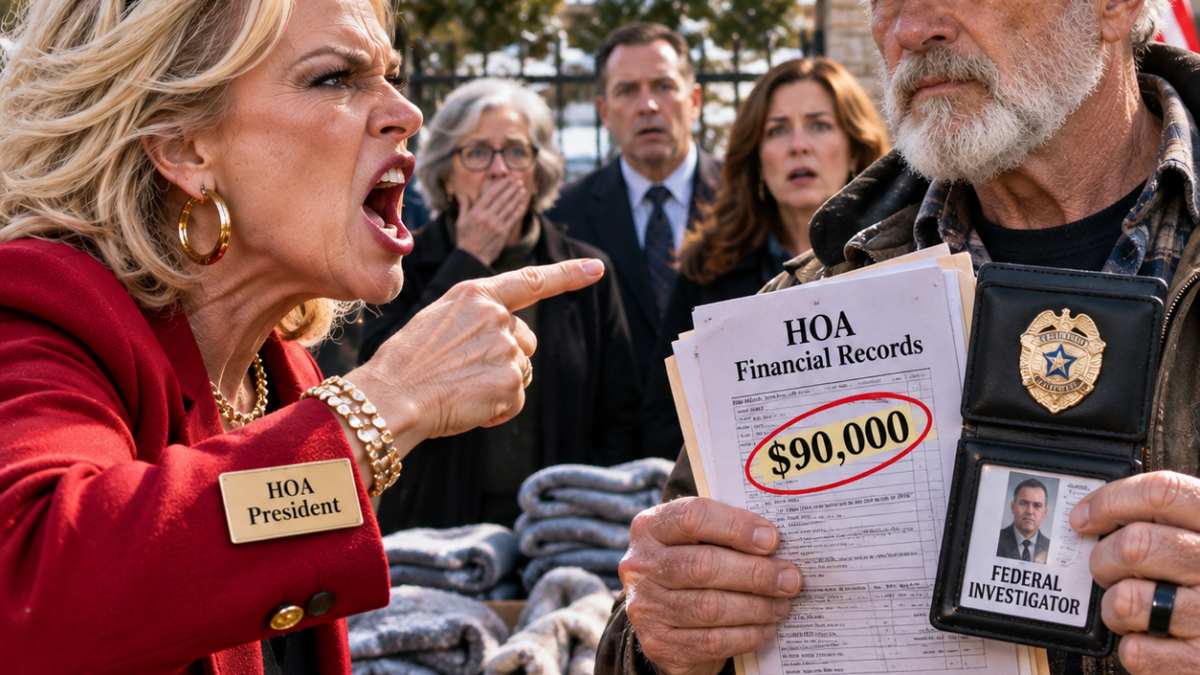
“NOBODY INVESTIGATES MY HOA BOARD!” Karen Stole $90,000 Meant for Freezing Veterans—Then the Man She Had Thrown Out Revealed Who He Really Was
“GET THAT PATHETIC OLD MAN OUT OF MY CHRISTMAS GALA—AND IF HE MENTIONS THE MONEY AGAIN, HAVE SECURITY DRAG HIM THROUGH THE SNOW!” HOA president Marlene Vossler screamed into a microphone before two hundred stunned guests, moments after announcing that her board had raised $90,000 for struggling veterans and elderly residents—a donation fund that actually belonged to my independent charity and had vanished from its bank account without my authorization.
She thought I was a quiet forty-nine-year-old neighbor she could intimidate with fake HOA fines, forged documents, and a public accusation of charity fraud, but she had no idea that I was Garrick Whitmore, director of Colorado’s state fraud unit, or that I had already recused myself and handed the case to independent investigators who were tracing her payments to her sister, her treasurer, and a luxury Christmas party financed with money intended to keep thirty-seven elderly people from freezing.
And on December twenty-third, when Marlene stood beneath crystal chandeliers in a $6,000 emerald gown and ordered me to apologize for questioning her authority, the ballroom doors opened behind her—and the investigators carrying signed warrants were about to expose $236,000 in stolen charitable and HOA funds, while the veteran she had publicly called a burden stood beside me in the same worn coat he’d worn inside his freezing home.
The cold came early that December.
It rolled down the mountains after Thanksgiving, slipped through the streets of Ashford Creek, Colorado, and settled into the valleys like something determined to stay.
By the first week of the month, the trees along Main Street wore white sleeves of ice.
Christmas lights hung over storefronts.
The bakery windows glowed amber against the dark.
Children pressed their faces against glass displays filled with gingerbread houses.
And at the far edge of Silver Crest Ridge, behind a line of towering blue spruce, I sat in my cedar house reviewing a spreadsheet that should have made me happy.
Ninety thousand dollars.
That was how much the Christmas Hearth Foundation had raised.
Ninety thousand dollars for people who couldn’t afford the kind of Christmas displayed in department-store windows.
Veterans living on fixed incomes.
Elderly residents choosing between groceries and heating bills.
Adults recovering from surgery who had fallen behind on rent.
People who had worked for decades and still found themselves one emergency away from losing everything.
The money wasn’t mine.
Not a cent.
It belonged to the people who had trusted us to use it correctly.
That distinction mattered more to me than any award I had ever received in my professional career.
I was forty-nine years old, unmarried, and generally considered a boring man by people who didn’t know me.
I lived alone in a weathered cedar house that had belonged to my parents.
I drove a ten-year-old pickup.
Bought coffee from the same diner.
Wore the same brown winter jacket until the elbows began to fray.
And spent every December organizing food, fuel, rent assistance, blankets, and emergency supplies through the charity I’d founded six years earlier.
Most of my neighbors assumed I was a retired government administrator.
I never encouraged that description.
I just didn’t correct it.
My actual job came with enough difficult conversations.
I was director of the state fraud unit, overseeing investigators and forensic specialists who handled major financial crimes.
I’d spent years examining embezzlement, falsified business records, misappropriated funds, and people who believed having a title meant they could take money that didn’t belong to them.
At home, I wanted to be Garrick.
Not Director Whitmore.
Just the man who helped carry firewood into a veteran’s garage and then went home to shovel his own driveway.
The Christmas Hearth Foundation was separate from my work.
Separate bank accounts.
Separate governance.
Independent volunteer oversight.
An accountant named Audra Bellwick who treated every transaction as if it were a promise made to a person who might not survive the winter without it.
Audra was forty-four, precise, sometimes anxious, and absolutely relentless about documentation.
She never approved a payment without checking the recipient.
Never accepted a vague invoice.
Never let me skip a signature because I was in a hurry.
If I told her a heating bill needed paying urgently, she’d say:
“Then fill out the emergency authorization correctly, Garrick.”
I’d complain.
She’d ignore me.
And I trusted her because of it.
That year, the foundation had more requests than ever.
Thirty-seven elderly households needed assistance keeping their heat on.
Veterans needed winter clothing and food.
A woman recovering from surgery faced eviction.
A father working two jobs needed help getting a broken furnace repaired before his children came home for Christmas.
We had a plan for every dollar.
Then Marlene Vossler came to my door.
She arrived wearing a camel-colored designer coat, leather gloves, and an expression suggesting she was doing me an enormous favor merely by standing on my porch.
She was fifty-six.
President of the Silver Crest Ridge Homeowners Association.
Silver Crest Ridge was the wealthiest neighborhood in Ashford Creek.
Stone entrance gates.
Private streets.
Elegant houses.
Perfect lawns beneath their winter snow.
And a clubhouse with chandeliers that looked absurdly expensive for a community that occasionally argued about replacing broken garbage bins.
My cedar house stood on an older parcel outside the HOA’s recorded boundaries.
The original developer had built around the property decades earlier.
My deed was clear.
The HOA’s own declaration specifically excluded my land.
Marlene apparently considered that an unfortunate technicality.
“Garrick,” she said brightly, without waiting to be invited inside, “I’ve been thinking about your little Christmas charity.”
I looked at her.
“My foundation?”
“Exactly.”
She smiled.
“It would look so much more professional if Silver Crest Ridge managed it.”
I stared.
“Managed it?”
“Under our board.”
“We have the resources, the reputation, and the donors.”
I shook my head.
“It’s an independent charity.”
Her smile hardened.
“Naturally, but you must admit you’re operating on a rather small scale.”
“We’ve raised ninety thousand dollars this year.”
She blinked.
Then smiled again.
“Ninety thousand?”
“Yes.”
“Well, that proves my point.”
I frowned.
“How?”
“That’s too much money to leave in the hands of volunteers.”
I thought of Audra’s carefully reconciled spreadsheets.
The written approvals.
The board minutes.
The recipient schedules.
Then said:
“Our governance is independent and documented.”
“We’re not transferring control to the HOA.”
Marlene stared.
Then spoke more softly.
“People who refuse to cooperate with this community usually regret it.”
I held her gaze.
“This isn’t an HOA matter.”
Her expression turned cold.
“Everything affecting Silver Crest Ridge is an HOA matter.”
I looked toward my driveway.
Then at her.
“No, Marlene.”
“It isn’t.”
She left without saying goodbye.
Twelve days before Christmas, I learned how far she was willing to go to prove me wrong.
PART2
The first warning came from Hollis Fenwick.
Hollis owned Fenwick’s Grill on Main Street.
Sixty-eight years old.
Broad shoulders.
White beard.
Hands permanently scarred from decades in commercial kitchens.
He’d been donating to Christmas Hearth since our first winter.
Sometimes money.
Sometimes food.
Sometimes an entire afternoon of his staff preparing meals for people who couldn’t afford them.
He never wanted recognition.
Every year he gave me the same instruction.
“Feed somebody who needs it.”
That December afternoon, his voice sounded nothing like usual when he called.
“Garrick.”
“Hey, Hollis.”
“Why is my restaurant sponsoring an HOA Christmas gala?”
I sat straighter.
“What?”
“My name’s on their advertisement.”
“Fenwick’s Grill.”
“Gold sponsor.”
“Holiday luxury experience.”
I stared at the wall.
“We didn’t authorize that.”
“I know I didn’t.”
“What advertisement?”
He sent a photograph.
A cream-colored flyer.
Gold lettering.
A picture of the Silver Crest Ridge clubhouse beneath Christmas lights.
At the bottom:
PRESENTED IN PARTNERSHIP WITH THE CHRISTMAS HEARTH FOUNDATION.
Beside it:
FENWICK’S GRILL — GOLD SPONSOR.
I looked at the flyer.
Then at my own foundation’s donor records.
Something was very wrong.
“Hollis.”
“Yeah?”
“Don’t respond to anybody yet.”
“Why?”
“Because I want to know exactly what they’re claiming.”
He let out a long breath.
“Garrick, I gave that money for food.”
“I know.”
“Not champagne.”
“I know.”
He paused.
Then said:
“If somebody’s using my name to throw a party for rich people while veterans need groceries, I want answers.”
“So do I.”
I called the HOA office.
The assistant transferred me to Marlene’s voicemail.
I left a message asking her to remove the foundation’s name from unauthorized promotional materials.
Then I emailed the board.
Requested the documents supporting any claim of partnership or authority.
No reply.
That evening, I drove to the tree-lighting ceremony.
Silver Crest Ridge’s neighborhood square looked like a luxury Christmas card.
A twenty-foot spruce covered in thousands of white lights.
Gold ribbon.
Huge red bows.
Children holding paper cups of cider.
Families taking photographs.
More than two hundred guests gathered around a temporary stage beneath the trees.
I stood near the back.
Then Marlene appeared.
Red velvet gown.
Gold earrings.
Perfectly styled hair.
Her husband wasn’t with her.
Lowell Brackenridge, the HOA treasurer, stood near the stage holding a leather folder.
He looked nervous.
That was the first thing I noticed.
Lowell was fifty-two.
Quiet.
Meticulous in appearance.
He liked expensive watches and used words such as fiduciary even when ordering lunch.
Marlene stepped to the microphone.
“Good evening, Silver Crest Ridge!”
Applause.
She smiled broadly.
“What a magnificent community we have.”
More applause.
Then she lifted a gold-embossed program.
“Tonight, I am proud to announce that under the leadership of your HOA board, our community has raised ninety thousand dollars to support struggling veterans and lonely elderly residents this Christmas.”
I went completely still.
Ninety thousand.
Our number.
Our fundraising total.
Every dollar.
Marlene continued.
“Through our new charitable partnership, the HOA will assume full responsibility for distributing these funds.”
People clapped.
A woman beside me whispered:
“That’s wonderful.”
I looked at her.
She smiled at me.
“Isn’t it?”
I didn’t answer.
Because onstage, Marlene was claiming ownership of money her association had never raised.
Money already promised to people who needed heat.
I walked forward.
Stopped near the stage.
Raised my hand.
“Marlene.”
She saw me.
Her smile barely changed.
“Oh.”
“Garrick.”
I spoke clearly.
“Who authorized the HOA to take control of the Christmas Hearth Foundation?”
The audience quieted.
Marlene tilted her head.
“We’ve coordinated a community partnership.”
“No.”
I said.
“You haven’t.”
A few people turned.
I continued.
“The foundation has its own board, its own bylaws, and its own bank account.”
“Your association has no authority to control its donations.”
Marlene’s smile vanished.
“Garrick, this is neither the time nor the place.”
“You announced it publicly.”
“I’m correcting it publicly.”
Her face flushed.
Then she laughed.
A sharp, humiliating laugh carried through the microphone.
“Your little charity belongs to this community now.”
I stared.
She leaned closer.
“And I decide what happens in this community.”
The silence became uncomfortable.
I asked:
“Then show the accounting.”
Marlene’s eyes narrowed.
“What?”
“The accounting.”
“The board resolution.”
“The donor authorizations.”
“Whatever documents you believe give you control of our funds.”
She lifted her chin.
Then said something that would return to haunt her in a courtroom.
“NOBODY INVESTIGATES MY BOARD.”
A few people laughed nervously.
Others looked down.
Marlene raised one hand toward two security guards.
“Remove him.”
The guards approached.
I stepped back.
No fight.
No shouting.
No struggle.
I looked once toward Lowell.
He avoided my eyes.
Then I photographed the stage banners.
The programs.
The foundation’s name.
The alleged sponsorship list.
And walked calmly to my truck.
The guards followed until I reached the parking lot.
One of them looked embarrassed.
“Sorry, sir.”
I nodded.
“Just doing your job?”
He hesitated.
“Yes.”
I looked at him.
“Then make sure you know whose instructions you’re allowed to follow.”
He said nothing.
I climbed into the truck.
Started the engine.
My phone rang before I pulled away.
Audra.
I answered.
“Hey.”
She didn’t speak.
I heard breathing.
Fast.
Uneven.
“Audra?”
“Garrick.”
Her voice broke.
“Something’s wrong.”
I sat straighter.
“What happened?”
“The account.”
“What about it?”
She swallowed.
“I logged in to approve the heating payments.”
I felt cold.
“And?”
“The balance is zero.”
I looked toward the glowing Christmas tree.
For a second, the world seemed to tilt.
“What do you mean zero?”
“Every dollar.”
She started crying.
“Garrick, somebody took all ninety thousand.”
I stared through the windshield.
Behind me, the crowd was still applauding Marlene’s speech.
The Christmas lights sparkled.
Children laughed.
Someone began singing near the tree.
And somewhere across town, people who had trusted us to keep their houses warm were about to discover their money was gone.
I gripped the steering wheel.
Then said:
“Don’t approve anything else.”
“Preserve the records.”
“Call the bank’s fraud line.”
“I’m coming.”
Our foundation office occupied two rooms above a hardware store.
The building was old.
Brick exterior.
Narrow staircase.
Radiators that clanked whenever the heat came on.
A small desk near the window where Audra kept our donor files.
And a bulletin board covered with handwritten thank-you cards.
I arrived shortly before ten.
Audra was sitting beside the printer.
Her face was pale.
Her hands shook so badly she could barely pick up a page.
I closed the door.
“Audra.”
She looked up.
“I didn’t authorize it.”
“I know.”
She began crying.
“I checked every transfer.”
“I checked the schedule.”
“I’ve gone through the records three times.”
I sat beside her.
“Show me.”
She pushed the bank statements across the table.
The withdrawals had occurred over four days.
Several transfers.
Different amounts.
Different destination references.
No single dramatic transaction announcing itself as theft.
The paperwork was worse.
Authorization forms.
Signatures.
A letter purportedly transferring financial control of the Christmas Hearth Foundation to the Silver Crest Ridge HOA.
My name appeared at the bottom.
Garrick Whitmore.
Not my signature.
Not my authorization.
A forgery.
I stared at it.
Then at the transfers.
The amounts added up.
Ninety thousand dollars.
Gone.
Audra whispered:
“Did I miss something?”
I looked at her.
“No.”
“But I had access.”
“Yes.”
“And it happened anyway.”
I took a breath.
“Audra, somebody used false documents.”
“We need to find out who and how.”
She stared.
“What if the bank thinks I did it?”
I looked at her.
“We’ll preserve the evidence.”
“And you’ll have independent representation if anyone questions your conduct.”
She looked frightened.
“Independent?”
“Yes.”
“Someone whose job is to protect your interests.”
She began crying harder.
I hated saying it.
But I’d seen enough investigations to know that innocent people can suffer terrible damage when everybody assumes the person closest to the money must be responsible.
Especially volunteer accountants.
Especially women who spent years doing invisible work.
I called the bank.
Reported the transactions as unauthorized.
Requested immediate fraud review and preservation of transaction data.
Then called the foundation’s attorney.
By midnight, we had secured the accessible records, documented the suspicious activity, and begun formal notifications.
But none of that changed the worst fact.
The money was gone.
And tomorrow, the people counting on it would still need heat.
By morning, the first payment had failed.
A utility company rejected a scheduled payment intended to cover assistance for thirty-seven elderly residents.
INSUFFICIENT FUNDS.
Two words.
Cold.
Mechanical.
Cruel.
Audra called me.
Her voice sounded exhausted.
“The utility sent the failure notice.”
I closed my eyes.
“Okay.”
“Garrick, the temperature’s dropping.”
“I know.”
“We’ve got thirty-seven accounts on that schedule.”
“I know.”
She swallowed.
“Some of those people have no backup.”
I stared at the frost outside my kitchen window.
Then said:
“Make a priority list.”
“Highest immediate risk first.”
“Medical equipment.”
“No heat.”
“Unsafe living conditions.”
“Then food and rent.”
She paused.
“What are we going to pay with?”
I looked at my savings account on the laptop.
Then at my truck keys.
“We’ll find money.”
She began to protest.
I interrupted.
“We’re not waiting for the investigation to finish before we help people.”
That was the first moment I understood how much harm the theft could cause.
Ninety thousand dollars didn’t sound like a tremendous amount when compared with corporate fraud cases.
I’d overseen investigations involving millions.
Sometimes tens of millions.
But ninety thousand dollars could mean the difference between warmth and hypothermia for dozens of people.
It could mean a rent payment arriving before eviction.
A medication being collected.
A family keeping food in the cupboard.
Its value wasn’t defined by the number on the bank statement.
Its value was defined by what would happen when that number became zero.
The next morning, I drove to the HOA office.
I wasn’t going to conduct my own criminal investigation.
I knew the conflict-of-interest rules as well as anybody.
But I was entitled to demand an explanation as the head of the organization whose assets had been taken.
Marlene sat behind a polished oak desk.
Fresh flowers.
Crystal paperweight.
A framed certificate praising her community leadership.
She smiled when I entered.
“Garrick.”
“Back already?”
I placed a copy of the forged letter on her desk.
“What is this?”
She looked down.
Then smiled.
“Your organization’s transition document.”
“I didn’t sign it.”
She shrugged.
“Perhaps you don’t remember.”
I stared.
“You’re saying I forgot transferring ninety thousand dollars?”
“Don’t become emotional.”
I leaned forward.
“Show me the valid board authorization.”
She opened a drawer.
Produced a resolution bearing signatures from HOA board members.
It claimed charitable donations associated with Silver Crest Ridge were now subject to association oversight.
I read it.
Then placed it down.
“Marlene, your board cannot vote itself ownership of an independent charity’s money.”
She smiled coldly.
“The community has responsibilities.”
“So do trustees.”
“Are you accusing me of something?”
“I’m asking who authorized the transfers.”
Lowell appeared in the doorway.
Perfect timing.
Or rehearsal.
He stepped inside.
“Everything was reviewed.”
I turned.
“By whom?”
“Legal counsel.”
“Which attorney?”
His expression changed.
He glanced toward Marlene.
She glanced back.
Then answered for him.
“Our legal matters are confidential.”
I looked at Lowell.
“Who instructed the payments?”
He swallowed.
Marlene stood.
“This conversation is over.”
I didn’t move.
“Thirty-seven elderly people were supposed to receive heating assistance.”
She rolled her eyes.
“Garrick, the foundation needs professional leadership.”
I stared.
Then she added:
“We’ve already allocated funds to our Christmas festival and necessary administrative expenses.”
My stomach tightened.
“The festival?”
She smiled.
“Community support requires visibility.”
I thought about the $90,000.
The chandelier banners.
The expensive gala advertisements.
Then noticed a stack of invoices beneath her crystal paperweight.
WEXFORD HOLIDAY EXPERIENCES.
A name I’d never heard.
Marlene saw me looking.
Her expression changed.
She swept the invoices into a drawer.
Locked it.
Then placed the key into her pocket.
“Leave.”
I stood.
Took my documents.
And walked out.
Behind me, she called:
“If you accuse my board of theft again, our lawyers will sue you before New Year’s.”
I didn’t answer.
But by the time I reached my truck, I was no longer simply worried about the foundation’s missing funds.
I was worried that Marlene had already started spending them.
The Arctic front arrived two days later.
Temperatures plunged.
Wind pushed dry snow across roads.
People stayed indoors when they could.
The mountains disappeared behind low gray clouds.
Then Vernon Ashcomb called.
Vernon was sixty-three.
Former Army sergeant.
Lived alone on the east side of Ashford Creek.
He’d survived combat.
A difficult divorce.
Back surgery.
Years of odd jobs.
And a pension that never seemed to stretch far enough.
He was proud.
Painfully proud.
The kind of man who would apologize for accepting groceries even after volunteering to unload the delivery truck.
I answered.
“Vernon.”
“Morning, Garrick.”
His voice sounded weak.
“What’s going on?”
He hesitated.
“Don’t want to bother you.”
“You’re not bothering me.”
“My gas bill.”
I closed my eyes.
“I know.”
“The foundation usually helps around now.”
“Yes.”
He swallowed.
“I called the company.”
“They say nothing’s come through.”
I stared out at the snow.
Then asked:
“Is your heat on?”
Silence.
“Vernon?”
“It went off last night.”
My chest tightened.
“What’s the temperature inside?”
He laughed weakly.
“Cold enough that I can see my breath in the kitchen.”
I grabbed my coat.
“I’m coming.”
“Garrick, you don’t have to—”
“Yes.”
“I do.”
Vernon’s house sat on a narrow street near the eastern edge of town.
Small.
Weathered siding.
Snow piled against the steps.
The porch railing needed repair.
I knocked.
He took almost a minute to answer.
When the door opened, I saw three sweaters.
A wool hat.
A heavy Army blanket wrapped around his shoulders.
His face was pale.
“Sorry about the mess.”
I stepped inside.
The house was freezing.
Not chilly.
Not uncomfortable.
Freezing.
The windows had frost along the inside edges.
He’d closed every room except the kitchen.
A little electric heater sat unplugged beside the table.
Vernon noticed me looking.
“Can’t risk using it too much.”
“Breaker trips.”
I swallowed.
“Sit down.”
“Garrick—”
“Please.”
He sat.
I called the utility company.
Then a heating technician.
Confirmed the account status and the furnace condition.
Arranged an emergency payment.
Had the heating system checked.
Used my own money for the immediate costs.
By late afternoon, warm air was moving through the vents again.
Vernon sat beside the heater.
His hands trembled.
He looked up.
“Thank you.”
I shook my head.
“You don’t have to thank me.”
He stared at the floor.
Then whispered:
“I thought maybe I’d done something wrong.”
My chest tightened.
“What?”
“Maybe I wasn’t on the list anymore.”
I sat beside him.
“Vernon.”
He looked up.
“You were on the list.”
“Your assistance was approved.”
He swallowed.
“Then what happened?”
I considered how much to tell him.
The truth, without making promises I couldn’t keep.
“The foundation’s account was accessed through unauthorized transactions.”
“Money was taken.”
“We’ve reported it.”
“People are working on it.”
He stared.
Then asked:
“Somebody stole Christmas money?”
I nodded.
“Yes.”
His expression changed.
Not anger.
Something sadder.
He looked toward the heating vent.
Then said:
“I hope they needed it more than I did.”
I nearly broke.
Because I knew exactly what the invoices suggested.
Crystal lights.
An expensive party.
Champagne.
People who would never spend a winter night wondering whether their furnace would start.
I took Vernon’s hand.
“No.”
I said.
“They didn’t.”
Vernon was one household.
Audra’s list held dozens.
A woman recovering from surgery had a final rent notice.
A father working late shifts needed food for his children.
An elderly couple’s heating oil was nearly gone.
A pharmacy was holding winter supplies for residents who couldn’t travel safely.
We had planned to solve those problems with the donation fund.
Now we were scrambling.
I used personal savings.
Hollis opened his kitchen.
Local volunteers helped.
But the scale was larger than one man and a restaurant could immediately cover.
One evening, Audra spread the emergency list across my kitchen table.
Her eyes were red.
“I’ve moved everything I can.”
I looked at the names.
Each one represented a person I’d promised we wouldn’t forget.
She pointed to a line.
“Mrs. Fowler.”
“Recovering from hip surgery.”
“Rent due.”
Another.
“Mr. and Mrs. Doyle.”
“He needs medication delivered.”
Another.
“Evelyn Price.”
“Seventy-eight.”
“Her furnace is failing.”
Audra looked at me.
“Garrick, we’re going to run out of your savings.”
I stared at the page.
Then at the snow outside.
“What about donor emergency contributions?”
“Some have paused.”
“Why?”
She hesitated.
I knew.
“Marlene?”
Audra nodded.
“She’s telling people you mismanaged the foundation.”
I leaned back.
Then closed my eyes.
The theft was no longer only financial.
Marlene was poisoning the trust that made future help possible.
I looked at Audra.
“We need to document the smear campaign too.”
She stared.
“Are you ever going to be angry?”
I almost laughed.
“I am angry.”
“You don’t look it.”
I looked at the names on the page.
“If I start shouting now, nobody gets warmer.”
Audra’s eyes filled.
Then she nodded.
“Okay.”
“Let’s keep working.”
Hollis found out his name was being used to advertise Marlene’s luxury gala.
He was furious.
We met in his restaurant after closing.
The kitchen smelled of grilled onions.
Cleaned counters.
Warm bread.
He laid the advertisement on the table.
“Two hundred fifty dollars per VIP ticket.”
I stared.
He continued.
“Champagne.”
“Jazz band.”
“Luxury catering.”
“Presented by Christmas Hearth.”
I looked at the prices.
The tickets.
The banners.
Then the photograph of the HOA clubhouse.
Hollis leaned forward.
“Garrick.”
“Yes?”
“Tell me something.”
“What?”
“How much money would it take to heat Vernon’s house for the winter?”
I swallowed.
“Less than the cost of one table at that party.”
Hollis slammed his hand down.
“Then they can take their champagne and drown in it.”
I almost smiled.
He sat back.
Then looked toward the restaurant kitchen.
“We’re doing Christmas dinner.”
I stared.
“What?”
“Free.”
“For everybody on your list.”
“Hollis—”
“No argument.”
“I’ve got staff.”
“Suppliers.”
“Food.”
“And a place to cook.”
I looked at him.
He continued.
“You find the people who need help.”
“I’ll feed them.”
I swallowed.
“Thank you.”
He waved a hand.
“Don’t thank me.”
“Tell somebody to bring more potatoes.”
That was Hollis.
Angry in the only way that mattered.
By becoming useful.
Marlene’s retaliation became more aggressive.
She mailed letters to donors claiming Christmas Hearth had been mismanaged.
She accused me of hoarding funds.
Said the HOA had intervened to rescue the program.
Suggested I wasn’t qualified to oversee substantial donations.
Then came a formal cease-and-desist letter.
Her attorney demanded I stop discussing the missing money.
And a few days later, an HOA enforcement notice appeared on my front door.
UNAUTHORIZED COMMERCIAL FUNDRAISING ACTIVITY.
FINE: $12,500.
I stared.
My property had been excluded from Silver Crest Ridge’s recorded HOA declaration for decades.
The association had no authority to fine me simply for running an independent charity from a lawfully used property.
I retrieved my deed.
The original survey.
The exclusion clause.
And sent the board certified copies.
Marlene ignored them.
A second notice arrived.
Then two security guards appeared at our rented charity warehouse.
They told volunteers to surrender the stored blankets, food, and supplies.
They said the HOA had taken control of the foundation.
A volunteer named Peter called me.
His voice shook.
“Garrick, they’re trying to take the boxes.”
I drove over.
The guards stood near the loading door.
One held a clipboard.
The other wore black gloves and looked deeply uncomfortable.
I approached.
“Gentlemen.”
They turned.
“Mr. Whitmore?”
“Yes.”
“We have orders to collect foundation property.”
“From whom?”
“Silver Crest Ridge HOA.”
“Do you have a court order authorizing seizure?”
The first guard stared.
“An HOA directive.”
“That’s not what I asked.”
He looked down.
I continued.
“The foundation owns these supplies.”
“The HOA does not.”
“Please leave the premises.”
The guard hesitated.
Then said:
“Mrs. Vossler said—”
I interrupted calmly.
“I know what Mrs. Vossler said.”
“I’m asking what legal authority you have.”
Neither answered.
I contacted local police to document the incident.
The responding officer reviewed the papers.
Spoke with the guards.
Then told them they lacked authority to take the property.
They left.
Without one blanket.
Without one box.
Without a single donated can of soup.
Ten minutes later, Marlene’s white SUV arrived.
She stepped out wearing a fur-trimmed coat.
Her face was red.
She marched straight toward me.
“GARRICK!”
I stood beside the warehouse door.
“Marlene.”
“Who do you think you are?”
I looked at her.
“The director of this foundation.”
She laughed.
“I have lawyers.”
“Donors.”
“An entire board.”
She leaned closer.
“What exactly do you have?”
I looked behind me.
Volunteers stacking blankets.
Food boxes waiting to be delivered.
Audra checking a clipboard.
Hollis unloading supplies from his restaurant van.
Then I looked back at her.
“Records.”
She stared.
I continued.
“And unlike your board, records don’t need to lie.”
For a second, she looked stunned.
Then she turned.
Stalked back to her SUV.
And drove away.
I should have felt victorious.
Instead, I felt dread.
Because I had spent enough years around financial criminals to recognize escalation.
When people lose control of one story, they often invent a worse one.
And Marlene was about to do exactly that.
The complaint arrived at my agency on a Monday.
Financial misconduct.
Embezzlement.
Charitable fraud.
Misappropriation of donations.
The complainant was Marlene Vossler.
The target was me.
She attached the same forged authorization documents I’d already disputed.
Claims that I had voluntarily transferred the foundation’s money.
Then changed my story.
Then accused the HOA of theft to avoid scrutiny.
She had selected the state financial crimes office because she believed it could destroy my credibility.
What she didn’t know was that I directed that unit.
The complaint reached the proper intake process.
I was notified of the conflict.
I immediately documented it.
Then stepped away.
No personal review of evidence.
No selecting investigators.
No calling subordinates for favors.
No influencing charging decisions.
I requested independent handling through the appropriate oversight and prosecutorial process.
The case was assigned outside my supervision to an independent investigative team led by Corbin Halstead and overseen by prosecutor Lenora Strathmore.
Corbin was methodical.
An experienced financial investigator.
He didn’t care who had the better Christmas decorations.
Didn’t care whether Marlene was president of a luxury HOA.
Didn’t care whether I was director of the agency normally responsible for investigating cases like this.
He cared about the records.
The bank transactions.
The signatures.
The actual movement of money.
That was exactly what I wanted.
I became a witness.
A victim.
No more.
No less.
I submitted my documents.
Answered questions.
Preserved evidence.
And waited like everyone else.
That separation mattered.
Because if Marlene was guilty, the case had to survive scrutiny.
If I had influenced it, she could claim the investigation was revenge.
I wasn’t giving her that defense.
Corbin reviewed the bank records.
The first findings were troubling.
Digital metadata suggested several authorization documents had been created after the transactions they supposedly approved.
Signatures didn’t match verified signers.
The claimed management transfer had no valid foundation authorization.
And money appeared to have moved into accounts unrelated to the charity’s approved programs.
Corbin interviewed bank personnel.
Volunteers.
Audra.
Donors.
HOA officials.
Then he visited Marlene.
She welcomed him.
Coffee.
Fresh pastries.
A bright smile.
The same performance she’d used on me.
For nearly twenty minutes, she described herself as a courageous neighborhood leader who had discovered problems in an independent charity and acted to protect the public.
Lowell sat nearby.
Nodding.
Agreeing.
Keeping his answers short.
Then Corbin asked:
“Mrs. Vossler, do you know what Garrick Whitmore does for a living?”
She laughed.
“Some kind of state paperwork.”
Corbin said nothing.
She continued.
“An administrator.”
“Nothing particularly important.”
Corbin placed his identification on the desk.
Then said:
“Mr. Whitmore directs the state’s fraud unit.”
Marlene went still.
“What?”
“The unit you contacted.”
Lowell’s chair scraped across the floor.
Corbin continued.
“He has formally recused himself.”
“He has no role in directing this investigation.”
“An independent team is examining the evidence.”
Marlene stared.
Her coffee cup stopped halfway to her mouth.
Then she whispered:
“He’s the director?”
“Yes.”
For the first time, the woman who had spent weeks telling everyone I was a nobody understood how little she actually knew about me.
But Corbin didn’t let the moment become theater.
He asked for records.
Explained the applicable procedures.
And continued the investigation.
Marlene had volunteered her forged documents to specialists trained to detect exactly that kind of fraud.
She had imagined filing the complaint would make me disappear.
Instead, it provided investigators with more evidence to examine.
The first significant money trail led to Wexford Holiday Experiences.
A business operated by Marlene’s younger sister.
Darlene Wexford.
Forty-seven.
Event planner.
Rented storefront in a neighboring county.
Wexford Holiday Experiences had received repeated payments from Silver Crest Ridge.
Some associated with Christmas events.
Others described as decor, consulting, planning, staffing, and administrative coordination.
The board records did not show proper disclosure of the family connection.
Several invoices lacked supporting work records.
Others billed for services supplied by volunteers.
The investigating team obtained records through proper legal process.
Then began reconstructing the transactions.
The money from Christmas Hearth had been distributed across accounts and expenses.
Not all at once.
Not into one obvious stolen-money account.
The more investigators examined, the clearer the alleged scheme became.
Some funds appeared to cover personal expenses.
Others passed through Wexford’s accounts.
Still others financed the luxury gala.
The treasurer received money.
A remaining balance sat in an account connected to the scheme.
I wasn’t given access to every detail during the investigation.
That was appropriate.
But I received victim notifications when necessary.
Then one afternoon, Corbin called through the authorized process.
He explained that the evidence strongly supported misappropriation of the foundation’s funds.
I sat at my desk.
Looked out at the snow.
Then asked:
“What about the beneficiaries?”
He paused.
“We’re working to preserve and recover assets.”
I nodded.
“But the funds won’t be returned immediately.”
“Not necessarily.”
I knew that.
Of course I knew.
I’d spent years overseeing cases where restitution took months or longer.
But it felt different when I pictured Vernon wearing a wool hat inside his house.
When I pictured the elderly woman whose utility bill had gone unpaid.
When I thought about Audra shaking beside our printer because she believed somebody might blame her.
The money trail had become personal.
Corbin said:
“Garrick.”
“Yes?”
“We’re doing the work.”
“I know.”
Then I hung up.
And went back to calling donors.
Because the investigation might eventually bring justice.
But Christmas wasn’t going to wait for a court judgment.
Marlene spent the next week attacking Audra.
That was her cruelest move.
Not because Audra was helpless.
She wasn’t.
But because she had always been the kind of person who believed careful work would protect her from unfair accusations.
And Marlene knew it.
A manila envelope appeared at Audra’s home.
Inside were copies of transfer authorizations bearing a forged signature matching her name.
A typed warning said she would be held responsible for the missing ninety thousand dollars.
Audra called me sobbing.
“Garrick.”
“What happened?”
“They’ve put my name on the forms.”
I closed my eyes.
“Don’t touch the originals more than necessary.”
“Preserve the envelope.”
“Contact your lawyer.”
She started crying harder.
“What if I lose my job?”
That question hurt.
Audra worked at a regional insurance company.
Had spent years building her career.
A financial misconduct accusation could damage everything.
Her mortgage.
Her professional standing.
Her reputation.
Her ability to support herself.
And Marlene was using that fear as leverage.
I said:
“Audra.”
She swallowed.
“Yes?”
“You need someone representing you personally.”
“Not the foundation.”
“Not me.”
“Someone who will protect your rights.”
She whispered:
“Do you think they believe I did it?”
I took a breath.
“I believe in the records.”
“The real records.”
She cried quietly.
I continued.
“You kept logs.”
“Emails.”
“Approval records.”
“Schedules.”
“Give everything to your attorney.”
“Let the independent investigators examine it.”
She took a shaky breath.
“Okay.”
Then:
“Garrick?”
“Yes?”
“I trusted Lowell.”
I stared.
She continued.
“He used to help me with spreadsheets.”
“I showed him how our approval schedule worked.”
“He said he wanted the HOA’s bookkeeping to be more transparent.”
She started crying again.
“He was learning how to copy me.”
I didn’t know what to say.
Because she might be right.
And because the most painful kind of fraud often begins with somebody using trust as a tool.
Marlene called an emergency HOA board meeting.
The room was crowded.
Residents packed the chairs.
Some standing against the walls.
Marlene stood at the front holding a binder.
Lowell beside her.
She announced that the board had discovered the real culprit.
Audra Bellwick.
A volunteer accountant.
According to Marlene, Audra had approved the transfers.
Then blamed the HOA.
Then used my reputation to cover her misconduct.
I wasn’t at the meeting.
But several residents recorded it.
The video reached me that night.
Audra sat in the third row.
Pale.
Frozen.
Marlene held up the forged forms.
People turned toward Audra.
Someone whispered.
Another person shook their head.
Lowell stood.
Delivered a polished explanation.
Claimed he processed transactions based on directions from the foundation’s accountant.
Audra tried to speak.
Marlene cut her off.
Then said:
“Financial dishonesty will not be tolerated in Silver Crest Ridge.”
I stopped the video.
Stared at the screen.
Then covered my face.
Because the woman who had taken our name and money was now publicly humiliating the person who had worked hardest to protect it.
I wanted to call Marlene.
To shout.
To tell her that she had crossed a line.
But shouting wouldn’t protect Audra.
Records would.
So I sent the footage to her attorney and the independent team.
Then I called Audra.
She answered quietly.
“Hello?”
“Have you eaten?”
Silence.
Then a small laugh.
“Garrick.”
“Seriously.”
“No.”
“Then eat.”
She whispered:
“I’m not hungry.”
“I know.”
“But eat something.”
She started crying.
I sat with her on the phone.
Didn’t make promises.
Didn’t tell her the case was already won.
Just stayed there while she cried.
Sometimes support means doing less than you desperately want to do.
And staying anyway.
The independent investigators reconstructed Audra’s actual activity.
Her work schedule.
Digital logins.
Foundation approval records.
Emails.
Time stamps.
Document metadata.
The signatures attributed to her did not hold up under examination.
The authorization submissions traced through systems associated with the HOA.
The supposed approvals conflicted with the foundation’s records.
The evidence did not support Marlene’s public accusations.
Instead, it pointed toward a deliberate effort to frame Audra.
The investigation expanded.
Then an older HOA board member contacted Corbin.
Retired engineer.
Quiet.
Had served on committees for years.
He brought internal meeting minutes that had never been distributed to homeowners.
Those minutes described anticipated charitable transfers and proposed payments to Wexford Holiday Experiences before the foundation’s annual campaign had even finished.
The dates mattered.
The sequence mattered.
What Marlene had portrayed as a spontaneous rescue of badly managed charity money now appeared to have been planned in advance.
That shifted the investigation.
Not merely unauthorized spending after receipt.
Preparation.
False documents.
Concealment.
Attempts to mislead donors and investigators.
Then Darlene Wexford became frightened.
Her accounts were frozen through lawful process.
Her business could no longer operate normally.
The professional future she’d spent years building was in jeopardy.
She hired a lawyer.
And began cooperating.
Not because she suddenly became innocent.
Because the evidence was closing in.
Her cooperation included messages, invoices, and communications that investigators could compare with the financial records.
It strengthened the case.
And exposed another plan.
Marlene intended to launch a new fundraising campaign at the December twenty-third gala.
Goal:
$300,000.
She had already taken ninety thousand dollars meant for charity.
Now she wanted donors to give her hundreds of thousands more.
Using our foundation’s name.
That was when the prosecutors moved to prevent additional harm.
Before the gala, Marlene sent me an invitation.
Cream envelope.
Gold lettering.
A handwritten message.
Garrick, I hope you’ll join us for a special moment of reconciliation before the community. It’s time to put this unfortunate misunderstanding behind us.
I read it twice.
Then laughed without humor.
Reconciliation.
After taking the charity money.
After framing Audra.
After calling Vernon a burden.
After threatening my house.
After telling donors I was under investigation.
Marlene wanted me onstage.
Not to apologize herself.
To make me apologize.
I contacted the appropriate legal representatives and followed their guidance concerning attendance and evidence preservation.
I did not direct an operation.
Didn’t choose the timing of arrests.
Didn’t tell investigators to make a theatrical entrance for my satisfaction.
Those decisions belonged to independent authorities.
I simply confirmed I would attend.
Because the foundation’s name would be used.
And donors deserved to hear the truth.
December twenty-third arrived beneath heavy clouds.
Snow had been falling since morning.
The roads gleamed under streetlights.
The Silver Crest Ridge clubhouse looked like a palace.
Golden windows.
Wreaths.
Christmas trees.
Valet parking.
Expensive cars lined along the drive.
Inside, hundreds of guests filled the Great Hall.
Crystal chandeliers.
White linens.
Laurel garlands.
Champagne towers.
A jazz band from Denver.
Servers carrying trays of smoked salmon and tiny pastries.
The contrast was so extreme it made me nauseated.
That afternoon, I’d visited a woman who couldn’t afford a new winter coat.
Now I was standing in a room where one table decoration might have paid her heating bill.
I wore a dark suit.
Nothing flashy.
A tie I hadn’t worn in years.
Vernon had borrowed a formal coat from Hollis.
He arrived with his shoulders straight, wearing an old service pin on the lapel.
Audra stayed away on her attorney’s advice.
I understood.
She’d already endured enough public humiliation.
Hollis came.
Several donors.
Residents who had begun questioning Marlene’s story.
Some of them looked uncomfortable.
Others angry.
Then Marlene appeared.
Emerald gown.
Diamonds.
Her hair arranged perfectly.
She stood at the entrance greeting guests like a queen receiving tribute.
When she saw me, she smiled.
Not warmly.
Triumphantly.
She believed the evening would end with me broken in front of the people whose respect I had supposedly lost.
Lowell stood near the stage.
His face looked pale.
I noticed his hands.
He kept adjusting his cuffs.
Again.
And again.
I had seen that kind of nervousness in interviews.
The moment when somebody realizes the story they’ve prepared might not survive the questions waiting behind it.
Then the music softened.
Marlene walked toward the microphone.
And the final confrontation began.
“Good evening, Silver Crest Ridge!”
Her voice rang across the ballroom.
Applause.
She thanked the residents.
The donors.
The businesses.
The association board.
She spoke about Christmas generosity as though she had invented kindness.
Then she announced that the HOA had rescued the Christmas Hearth Foundation from mismanagement.
A few people clapped.
Others remained still.
I stood near the back with Vernon and Hollis.
Marlene spotted me.
Her smile widened.
“And now,” she said, “I’d like to invite a very special guest forward.”
She paused.
“Mr. Garrick Whitmore.”
Heads turned.
I walked toward the stage.
The crowd parted.
I could feel people watching.
Whispering.
Waiting.
Marlene leaned toward the microphone.
“Mr. Whitmore has had some unfortunate disagreements with this board.”
A few nervous laughs.
She continued.
“But Christmas is about forgiveness.”
I stood below the stage.
She smiled down at me.
“So tonight, I would like him to apologize publicly for the false accusations he has made against this association.”
The room went silent.
Marlene lifted her chin.
“Garrick?”
I looked at her.
Then at the people behind me.
The donors.
The residents.
The families who’d trusted us.
I said one word.
“No.”
Marlene blinked.
“What?”
“No.”
Her smile tightened.
“Please don’t embarrass yourself.”
I held her gaze.
“I’m not apologizing for asking where the money went.”
A murmur moved through the crowd.
Marlene raised the microphone.
“Security—”
Then Hollis stood.
His voice carried across the hall.
“Marlene!”
She turned.
He lifted his glass.
“Why is the money I donated to feed hungry people paying for champagne?”
The room went quiet.
Marlene stared.
Hollis continued.
“My restaurant didn’t sponsor this party.”
“You put our name on the wall anyway.”
A woman near him looked toward the sponsor banner.
He raised his voice.
“Tell everybody why.”
Marlene’s expression hardened.
“This is an inappropriate interruption.”
Then Vernon stood beside Hollis.
He didn’t shout.
That made his words more painful.
“Mrs. Vossler.”
She looked at him with open irritation.
He swallowed.
“Thirty-seven seniors were supposed to receive heating help.”
A few people shifted.
Vernon continued.
“My furnace stopped working.”
“I slept wearing my Army coat.”
His voice shook.
“Some of us weren’t waiting for a nice Christmas party.”
“We were waiting to be warm.”
The ballroom became still.
Marlene stared.
Then snapped:
“You people have no idea how much work it takes to run a community!”
Vernon lowered his head.
Hollis stepped closer to him.
Marlene pointed toward the guards.
“Remove them.”
The guards hesitated.
I walked down from the stage.
Stood beside Vernon.
Placed a hand on his shoulder.
Marlene stared at us.
Then shouted:
“NOBODY HAS THE RIGHT TO QUESTION MY BOARD!”
A woman at the nearest table stood.
“Then why are the financial reports missing?”
Another voice:
“Where did the donations go?”
Then another:
“Was the heating fund really empty?”
Marlene slammed the microphone against the stand.
“ENOUGH!”
And that was when the double doors opened.
Corbin Halstead entered first.
Four investigators behind him.
Local police officers accompanying them.
Documents in hand.
Lawful warrants.
The music stopped.
The room went silent.
Corbin walked steadily toward the stage.
No dramatic running.
No shouting.
No drawn weapons.
Just people carrying out a legal process.
Marlene stared.
Then recovered enough to point at me.
“THERE!”
Her voice cracked.
“THAT’S HIM!”
“HE STOLE THE MONEY!”
Corbin stopped.
Looked at her.
Then spoke clearly.
“Mrs. Vossler.”
She stared.
“We’re here for you.”
The words seemed to take a moment to reach her.
“What?”
Corbin identified the legal authority for the action.
The allegations concerning misappropriated charitable and association funds, forged documentation, and related fraud.
He requested her cooperation.
Lowell began edging toward the side aisle.
Another investigator approached him.
Marlene looked from face to face.
The board members.
The donors.
The people who’d applauded her less than an hour earlier.
Then she looked toward her security guards.
“STOP THEM!”
Neither moved.
One actually stepped aside.
Marlene’s face flushed.
Then drained.
She looked at me.
“Garrick.”
I said nothing.
Her voice dropped.
“Tell them.”
“Tell them this is a mistake.”
I stared.
She leaned closer.
“I’ll give it back.”
The words were almost a whisper.
“Every dollar.”
I looked at Vernon.
His old coat.
The service pin.
The hands he’d kept tucked into his sleeves because his fingers were still painfully stiff from the cold he’d endured.
Then back at Marlene.
“You didn’t steal from me alone.”
She started crying.
I continued.
“You stole heating money.”
“Food.”
“Rent.”
“Medicine.”
“You stole from people who believed Christmas meant somebody would remember them.”
Her eyes filled.
“I can fix this.”
I shook my head.
“No.”
“Repayment matters.”
“But it doesn’t erase what happened.”
“And the case belongs to the authorities now.”
Marlene looked toward Corbin.
He spoke calmly.
“Mrs. Vossler, please cooperate.”
She didn’t.
Not immediately.
She argued.
Cried.
Demanded lawyers.
Declared herself innocent.
Then, under the proper procedures, she was taken into custody.
Lowell was also detained in connection with the investigation.
The room remained silent.
Nobody cheered when she was escorted out.
At least not at first.
A few people began shouting.
Some jeered.
I turned toward them.
“Please.”
They stopped.
I looked at the chandelier.
The champagne.
The luxury decorations.
Then at Vernon.
“This isn’t a show.”
I said.
“People still need help.”
That was the truth.
Marlene’s arrest didn’t turn on thirty-seven furnaces.
It didn’t deliver groceries.
Didn’t prevent an eviction.
Didn’t restore the foundation’s account overnight.
The legal process had begun to produce accountability.
Now we still had Christmas to save.
The gala ended early.
Investigators secured records and evidence according to their warrants.
Guests left beneath falling snow.
Some looked furious.
Others ashamed.
Several approached me in the parking lot.
One man said:
“We believed her.”
I nodded.
“I know.”
He swallowed.
“I’m sorry.”
I didn’t know what to say.
Then an elderly woman took my hand.
“Is it true you were trying to help veterans?”
“Yes.”
She looked toward Vernon.
Then back.
“Can I donate tomorrow?”
My throat tightened.
“Yes.”
“Will it reach them?”
I stared.
Then answered carefully.
“We’re strengthening the safeguards.”
“And every payment will be documented.”
She nodded.
“Good.”
Then she squeezed my hand.
“Because I want it to go where it’s supposed to.”
So did I.
More than anything.
Hollis opened Fenwick’s Grill the next morning.
Christmas Eve.
He called his staff.
Half of them volunteered to work.
The others sent food.
A grocery store contributed supplies.
A hardware store provided approved portable heating equipment and related assistance.
Local tradespeople donated emergency repair services.
A farm supplier delivered firewood to homes with safe, functioning wood-burning systems.
The pharmacy arranged winter deliveries through appropriate channels.
And donors began calling.
Not the wealthy donors who wanted their names printed on a banner.
Ordinary people.
Fifty dollars.
Twenty dollars.
A hundred.
A grocery gift card.
A truckload of blankets.
Hours of volunteer work.
Then larger gifts came from businesses that had been frightened away by Marlene’s accusations.
By Christmas Eve, the new emergency campaign had raised enough to address the critical needs on Audra’s list.
The final confirmed total soon passed $118,000.
I stared at the figures.
Audra was sitting beside me in the foundation office.
She had finally slept.
Her eyes still looked tired.
But she was smiling.
“Garrick.”
“Yes?”
“We can make the payments.”
I closed my eyes.
“Every urgent one?”
She nodded.
“Every one.”
For a moment, I couldn’t speak.
Then Audra whispered:
“We did it.”
I looked at her.
“No.”
“We all did.”
She laughed.
Then cried.
Then laughed again.
I understood.
That was what relief sounded like after weeks of fear.
Christmas Eve dinner filled Hollis’s restaurant.
Not with polished VIP guests.
With families.
Veterans.
Elderly residents.
Volunteers.
People who didn’t always have somewhere warm to go.
Vernon arrived early.
His house was heated.
His bills had been addressed.
He carried a small bag of bread rolls.
Hollis stared.
“Vernon.”
“What?”
“You didn’t have to bring anything.”
Vernon looked almost offended.
“I’m not coming empty-handed.”
Hollis laughed.
“Fine.”
“Put them with the others.”
Then Vernon helped set tables.
Straightened chairs.
Checked whether elderly guests needed assistance.
He spent the afternoon serving people who had been in the same position as him.
I watched from near the doorway.
At one table, a woman was crying because her eviction had been avoided.
At another, a veteran was showing photographs of his grandchildren.
Children laughed.
Somebody spilled cider.
Hollis shouted from the kitchen that if anyone complained about the mashed potatoes, they were welcome to make their own.
Everyone laughed.
It wasn’t elegant.
The tables didn’t match.
The plates were ordinary.
The decorations were borrowed.
There was no chandelier.
No jazz band from Denver.
No champagne tower.
But there was food.
Heat.
Dignity.
And people who had almost been forgotten sitting among neighbors who remembered them.
I stepped outside for a moment.
The cold hit my face.
Snow drifted beneath the streetlights.
I looked through the restaurant window.
Vernon was laughing.
Audra was carrying a tray.
Hollis was arguing cheerfully with a volunteer.
Then I sat on the bench beside the door.
And cried.
Not loudly.
Not dramatically.
Just enough to let the last two weeks leave my body.
Because we’d come so close to failing people who trusted us.
And somehow, together, we hadn’t.
The criminal case continued into the new year.
Bank records.
Invoices.
Electronic evidence.
Witness interviews.
Audits.
Plea negotiations.
Court proceedings.
A painstaking reconstruction of what had happened.
The initial ninety thousand dollars was only the beginning.
Investigators found evidence of approximately another $146,000 misappropriated from the HOA’s reserve fund over several years.
Money paid by homeowners for maintenance and emergencies.
Roof repairs.
Road work.
Common-area costs.
Funds families believed were being saved for the neighborhood’s future.
The combined suspected misappropriation totaled $236,000.
Then the audit and legal remediation added further losses and expenses.
The financial consequences were enormous for an association of ordinary homeowners, even one located in an expensive neighborhood.
Some residents had been paying dues for years without realizing that the reserve balance didn’t match the financial reports they’d been shown.
Other board members testified that Marlene discouraged independent reviews.
Rejected audit proposals.
Questioned their loyalty.
Threatened removal.
Her control had been built slowly.
Not in one spectacular act.
A withheld statement here.
A dismissed question there.
A confident assertion that everything was handled.
Eventually, residents stopped asking.
And that silence gave her room.
Darlene Wexford cooperated through counsel.
Her business records helped establish the false invoicing scheme.
She admitted her own role.
Lowell tried to place responsibility elsewhere, but the financial records showed his participation.
Audra’s innocence became clear through the evidence.
Her actual login records.
Her work calendars.
The timestamps.
The false signatures.
The forged authorization documents.
During trial, prosecutors presented the records supporting the charges.
Audra testified.
Steady at first.
Then shaking.
She described the foundation’s procedures.
The approvals.
The missing funds.
The night she discovered the empty account.
Then the attempt to frame her.
Marlene’s attorney questioned her.
Audra answered carefully.
When she finished, she looked toward me.
I nodded.
Not because I could protect her from everything.
Because she’d told the truth.
And the truth had survived the questions.
Vernon testified too.
He wore his best coat.
The same one he’d worn into the HOA office.
He described the cold.
The shutoff.
The wool hat.
The blanket.
The sound of a furnace that wouldn’t start.
Then he described the day he’d gone to ask for help.
How Marlene called people like him a burden.
The courtroom was silent.
I sat near the back.
Felt my throat tighten.
Vernon spoke without rage.
That made it worse.
He didn’t need to tell the jury what to feel.
He only described what happened.
The jury returned guilty verdicts on the charges supported by the trial evidence.
The sentences were imposed later.
Marlene received seven years in prison.
Lowell received three.
Darlene, who had entered a guilty plea and cooperated, received eighteen months.
Restitution and related financial orders addressed the foundation’s stolen ninety thousand dollars and the HOA’s misappropriated reserve funds.
A separate civil resolution addressed approximately seventy-four thousand dollars in audit, legal, and remediation expenses.
The combined financial obligations reached $310,000.
Recovery was not instant.
Assets had to be identified.
Claims processed.
Orders enforced.
Some money returned sooner than others.
The remaining funds took longer.
But the judgments established accountability.
And the public record no longer reflected Marlene’s version of events.
No longer portrayed Audra as a thief.
No longer described me as a dishonest charity manager.
The documents showed what had happened.
Not what Marlene wanted people to believe.
The HOA elected new leadership.
Independent oversight.
Regular financial reporting.
Clearer approval requirements.
Conflict-of-interest disclosures.
More transparent contracts.
An audit process residents could actually inspect.
The $12,500 fine against my house was voided.
So were the other enforcement notices.
Not because I worked for the state.
Because the HOA had never had the claimed authority over my excluded property.
That mattered.
Marlene had threatened me with a board title.
But her title didn’t expand the property boundaries.
Didn’t create a right to seize charity funds.
Didn’t turn forged documents into valid authorizations.
Didn’t make her immune to investigation.
It merely gave her temporary control over people who trusted her.
And she’d betrayed that trust.
One year later, Christmas Hearth held its annual dinner in the town community hall.
The recovered funds and the renewed donations were being used under improved oversight.
Audra remained the foundation’s accountant.
She had insisted on additional safeguards.
Dual approvals.
Independent reviews.
Published quarterly reports.
Clear documentation for every major payment.
I agreed to all of it.
Not reluctantly.
Happily.
Because accountability isn’t something good leaders should fear.
It’s something they should welcome.
The hall filled with long wooden tables.
Warm food.
Children.
Veterans.
Elderly residents.
Volunteers.
Hollis ran the kitchen.
Of course.
Vernon had become one of our most active volunteers.
He personally checked on other veterans during winter storms.
Visited elderly residents.
Helped arrange safe heating assistance.
Carried groceries.
And never stopped insisting he didn’t need special recognition.
Near the end of dinner, Jennifer Hayes, the new HOA president, approached me with several board members.
They smiled.
I immediately became suspicious.
“What’s going on?”
Jennifer laughed.
“Nothing bad.”
“That sounds unlikely.”
She held up a folder.
“The board has proposed renaming the annual program.”
I frowned.
“What?”
“The Garrick Whitmore Christmas Foundation.”
I stared.
Then shook my head.
“No.”
She blinked.
“We wanted to honor you.”
“I appreciate that.”
“But no.”
Jennifer looked disappointed.
I smiled.
“This foundation doesn’t belong to me.”
“I’m one person.”
“Look around.”
I gestured toward the tables.
“Hollis feeds people.”
“Audra protects the money.”
“Vernon checks on veterans.”
“Businesses donate.”
“Volunteers deliver.”
“Residents help.”
“This works because nobody gets to own Christmas generosity.”
Jennifer smiled slowly.
Then nodded.
“Fair.”
I said:
“Keep the name.”
“Christmas Hearth.”
She laughed.
“Done.”
Later that evening, Vernon approached carrying a small wooden box.
“Garrick.”
“Hey.”
He held it out.
“Got something for you.”
I stared.
“You shouldn’t have.”
He smiled.
“That’s what you always say.”
I opened it.
Inside was a photograph.
Vernon’s house on Christmas night.
Snow covering the roof.
Warm yellow light shining through the windows.
A wreath on the door.
Simple.
Beautiful.
I turned it over.
On the back, in careful handwriting, were the words:
YOU DIDN’T JUST RECOVER OUR MONEY. YOU GAVE US BACK OUR CHRISTMAS.
My throat closed.
I looked up.
Vernon was watching me.
Not smiling now.
Just waiting.
I swallowed.
“Vernon.”
He stepped closer.
“Don’t start.”
I laughed through tears.
He continued.
“I spent a long time thinking nobody remembered men like me.”
I shook my head.
“That’s not true.”
He nodded.
“I know that now.”
Then he hugged me.
For a moment, I couldn’t move.
Then I hugged him back.
The wooden box pressed against my chest.
And all I could think about was the first afternoon I walked into his freezing house.
The wool hat.
The blanket.
The frost.
His apology for the mess.
The way he’d whispered:
“I thought maybe I’d done something wrong.”
No.
He hadn’t.
He had simply trusted somebody to keep a promise.
And that promise had been stolen by people who thought money mattered more than the lives attached to it.
When I got home, the cedar house was quiet.
Snow had gathered on the porch railing.
The trees stood dark against the mountains.
I carried the wooden box inside.
Placed the photograph beside the foundation’s newly audited report.
Then stood looking at both.
One represented numbers.
Transactions.
Controls.
Records.
Accountability.
The other represented what those things were for.
A warm house.
A human being.
A Christmas night without fear.
Marlene Vossler had believed she could turn ninety thousand dollars into prestige.
Luxury.
Influence.
A perfect gala beneath chandeliers.
Instead, she built a criminal case against herself.
By filing false accusations, submitting forged documents, and treating honest questions as insubordination, she exposed the very scheme she’d tried to hide.
But I didn’t consider her conviction the greatest victory.
Not even close.
The greatest victory happened inside Hollis’s restaurant on Christmas Eve.
When the people she’d forgotten sat down to warm meals.
When Audra smiled after weeks of tears.
When Vernon helped serve food instead of sitting alone in a freezing house.
When neighbors realized they didn’t need an HOA president’s permission to be generous.
And when every new donation began moving toward the purpose for which it had been given.
That night, before going to bed, I picked up the photograph of Vernon’s house again.
Looked at the warm windows.
Then whispered:
“That’s what ninety thousand dollars was supposed to do.”
Outside, the snow kept falling.
Inside, the heat was on.
And for the first time since Marlene stood beneath those glittering lights claiming Christmas for herself, I felt certain of something.
She had stolen money.
She had stolen time.
She had stolen trust.
But she had failed to steal the one thing that made the Christmas Hearth Foundation worth protecting.
The willingness of ordinary people to show up for someone they didn’t want to leave alone in the cold.
Because Christmas never belonged to the woman holding the microphone—it belonged to the people who opened their doors, shared what they had, and made sure nobody was forgotten.








