“I AM THE VICTIM OF A CRUEL MEDICAL CONSPIRACY!” My Vet Betrayed Me by Revealing FALSE INFORMATION About Me to Mom—Within 24 Hours, My Feeder, Biscuits, and Every Precious Privilege Were Taken Away, Forcing Me to Recruit Dad for Britain’s Biggest Secret Feline Rebellion
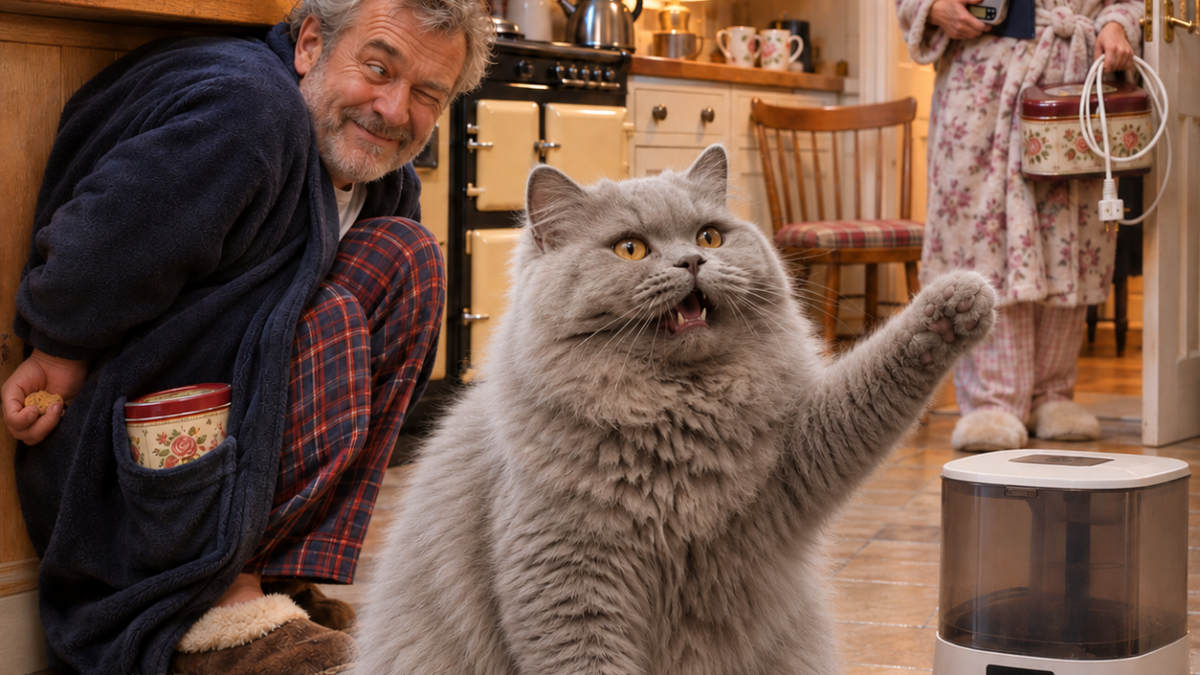
“I AM THE VICTIM OF A CRUEL MEDICAL CONSPIRACY!” My Vet Betrayed Me by Revealing FALSE INFORMATION About Me to Mom—Within 24 Hours, My Feeder, Biscuits, and Every Precious Privilege Were Taken Away, Forcing Me to Recruit Dad for Britain’s Biggest Secret Feline Rebellion
Yesterday, I was a respected gentleman with a reliable automatic feeder, three favorite sleeping spots, and a perfectly reasonable relationship with carbohydrates. Today, I am apparently an inmate in a high-security nutritional facility because one man in a white coat weighed me, insulted my waistline, and told Mother that I needed to “lose a little weight.” Naturally, I have responded in the only responsible way available to me: I have recruited Dad as an inside man, begun surveillance on my suspiciously round sister Willow, and launched an investigation into how one restores power to a biscuit machine that Mother has cruelly unplugged.
I am a tuxedo cat.
This means I am formally dressed at all times and therefore deserve a certain standard of treatment.
Please remember that.
It will become important.
I am nine years old.
Approximately twelve pounds.
I reject the word approximately because it suggests there may be further weighing.
There should not be.
The matter has already been investigated.
I have been weighed.
Humiliated.
Judged.
And publicly accused of being what Dr. Harris described as “a little too round through the middle.”
A little too round.
Sir.
Have you looked at yourself?
Humans are remarkably confident about criticizing feline body shape while walking around on two legs with absolutely no tail for balance.
But I am getting ahead of myself.
Before the incident at the veterinary clinic, I considered myself a senior and respected member of this household.
Mother calls me Winnie.
I do not approve of this.
Winston has dignity.
Winston could own property.
Winston could sign official documents.
Winston sounds like a gentleman who understands investments.
Winnie sounds like someone dressed in a knitted Christmas jumper while relatives take photographs.
Which, for the record, has happened twice.
I still carry emotional damage.
Dad calls me Sir.
This is why Dad remains the most promising human in the building.
Dad understands hierarchy.
At least when Mother is not present.
My younger sister is Willow.
She is gray.
Soft.
Slimmer than me.
Annoyingly symmetrical.
She has all her important teeth and therefore has developed an inflated opinion of herself.
Mother calls her “my beautiful little girl.”
I call her the little gray criminal.
Willow is seven.
She moves through life as though every room was built specifically to frame her elegance.
She never knocks things over accidentally.
She knocks things over after looking directly at you.
That is different.
She does not beg for food.
She simply sits near it until somebody decides feeding her was their own idea.
People admire this.
Manipulation is apparently considered graceful if performed quietly.
I have never understood the appeal.
When I want chicken, I state my position.
Loudly.
When I want the door opened, I make that clear.
When breakfast is four minutes late, I believe the responsible thing is to notify management.
There should be transparency in a household.
Mother calls this “being dramatic.”
Dad calls it “communication.”
Again, Dad understands me.
Mostly.
Until the vet visit, my days were beautifully structured.
At 5:42 in the morning, the automatic feeder released the first small portion of brown rocks.
Humans call it dry food.
I prefer brown rocks because this is a more accurate description.
Small.
Crunchy.
Questionable appearance.
Delicious.
At 9:30, another portion.
At one.
At four.
Then dinner.
Then a small evening portion.
This was civilization.
The automatic feeder did not judge.
It did not say:
“Winston, you already ate.”
It did not ask:
“Are you actually hungry?”
What does that even mean?
Do humans ask themselves this before biscuits?
No.
I have seen Dad eat three chocolate digestives while standing in front of the cupboard deciding what to eat.
Apparently human hunger has several administrative categories.
The feeder was reliable.
Neutral.
Professional.
It understood that time moves forward and therefore snacks should also move forward.
Then Mother ruined everything.
It began with the blue carrier.
The blue carrier lives in the hallway cupboard.
Nothing good has ever happened after the blue carrier appears.
Not once.
No one has ever brought it out and said:
“Winston, surprise! We are taking you to a seafood restaurant.”
Never.
Carrier means vet.
Vet means humiliation.
When Mother opened the cupboard, I was sitting peacefully on the windowsill.
I saw the carrier.
She saw me see the carrier.
We both froze.
“Winston.”
No.
“Come here, darling.”
Absolutely not.
I jumped down.
Walked calmly beneath the dining table.
Mother sighed.
“Don’t start.”
I had not started anything.
She had started it by producing the blue prison.
Dad entered carrying a towel.
This was deeply concerning.
“Need help?”
Traitor.
Mother pointed at me.
“He knows.”
Of course I know.
I am nine, not stupid.
Dad crouched.
“Come on, Sir.”
I flattened myself.
Dad smiled.
I did not.
Willow appeared in the hallway.
She sat down.
Watching.
Willow had visited the vet two weeks earlier.
She survived.
That apparently made her an expert.
Her face said:
You’re embarrassing yourself.
I stared back.
Your day will come.
She began washing one paw.
Disgusting confidence.
Dad crawled under the table.
I moved.
He moved.
Mother moved around the other side.
They had coordinated.
This was premeditated.
Eventually Dad threw the towel gently over me.
I objected.
Loudly.
There was no violence.
But there was betrayal.
Three minutes later, I was inside the carrier explaining my constitutional rights.
Mother put me in the car.
Willow sat at the front window watching us leave.
I could practically hear her laughing.
The vet’s office smelled like fear.
Dogs.
Cleaning solution.
And the deep sadness of cats who have realized their owners cannot be trusted.
Dr. Harris entered.
Tall man.
Kind eyes.
Smelled heavily of Labrador.
Immediately suspicious.
“Hello, Winston.”
No.
He opened the carrier.
I remained.
Mother tipped the carrier slightly.
I slid out with dignity.
Mostly.
Dr. Harris examined my eyes.
Ears.
Heart.
Then my mouth.
He lifted my lip.
“Ah.”
Never trust a doctor who says ah while looking inside you.
Mother frowned.
“What?”
“He’s missing quite a few teeth.”
Excuse me.
I know.
I was present.
Dental disease had cost me several teeth over the years.
Including most of my front fangs.
This has not affected my lifestyle significantly.
I can still eat.
Sleep.
Threaten flies.
Bite cardboard.
Life continues.
Dr. Harris pressed my stomach.
I looked at Mother.
Are you seeing this?
She scratched my chin.
Betrayal disguised as comfort.
Then came the scale.
I knew something was wrong from the way Dr. Harris paused.
Numbers appeared.
He smiled.
Mother looked worried.
Dad, who had joined us, suddenly became extremely interested in a poster about flea prevention.
Coward.
Dr. Harris said:
“Well, Winston is carrying a little extra weight.”
Silence.
I stared at him.
Mother asked:
“How much extra?”
Oh.
So we are discussing this openly.
In public.
I looked at Dad.
He avoided eye contact.
Dr. Harris explained.
Ideal weight.
Joint health.
Older cats.
Diabetes risk.
Portion control.
Scheduled feeding.
The automatic feeder.
I began hearing only fragments because the situation had become hostile.
Then he laughed.
Not cruelly.
But enough.
“Especially considering he’s missing several teeth, he certainly hasn’t struggled to eat.”
I almost fainted.
How am I fat with hardly any teeth?
Talent, Doctor.
It is called talent.
Michelangelo did not stop painting because a brush was missing.
Dr. Harris recommended reducing free-access food.
More activity.
Measured meals.
Mother nodded seriously.
Dad asked:
“Can he still have treats?”
Thank you.
Finally.
A practical question.
Dr. Harris smiled.
“Small treats.”
Small.
A dangerous word.
Humans define small differently depending on who is eating.
Dad’s “small piece of cake” covers half a plate.
My “small piece of chicken” resembles dust.
Mother asked too many questions.
Calories.
Portions.
Monitoring.
Follow-up weight.
Follow-up?
We are returning?
I turned my back on all of them.
The consultation was over.
PART2
The next morning, I woke at 5:41.
One minute early.
Professional.
I walked to the feeder.
Sat.
5:42.
Nothing.
I waited.
Machines can be late.
This is disappointing but possible.
5:43.
Nothing.
I tapped the feeder.
Once.
Nothing.
Twice.
Nothing.
I looked behind it.
The plug was lying on the floor.
Disconnected.
I stared.
Then looked toward the kitchen.
Mother stood at the counter making coffee.
She glanced at me.
“Morning, darling.”
Darling?
You have unplugged my infrastructure.
I looked back at the feeder.
Then Mother.
Then feeder.
Then Mother.
She smiled.
“Oh, don’t start.”
I had not started.
She had started.
I walked to the feeder and pressed the release button with my paw.
Nothing.
Mother had removed the batteries too.
This was not impulsive.
She had planned this overnight.
I sat down slowly.
Mother took a sip of coffee.
“Vet’s orders.”
VET’S ORDERS?
Mother, that man put a thermometer in a place we do not discuss in respectable society.
I would not be building an entire nutritional philosophy around his judgment.
I stared at her.
Hard.
Mother laughed.
“Look at that face.”
This face is not funny.
This is grief.
I had seen Dad make the same expression after his football team lost in extra time.
Nobody laughed then.
I went to the living room.
There was only one person who could help.
Dad.
Dad was on the sofa reading comics on his tablet.
Beside him was a packet of biscuits.
Of course.
I climbed onto his chest.
He grunted.
“Morning, Sir.”
Good.
The proper title remains.
I settled heavily.
He scratched under my chin.
“You’re upset.”
Yes.
“Your feeder’s gone.”
Yes.
“Mum says you’re on a diet.”
This word again.
Diet.
A short word with a long history of suffering.
Dad stroked my chest.
I purred.
Not because I had forgiven anything.
Because tactical alliances require morale.
Then Dad reached for a biscuit.
Digestive.
He ate one.
I stared.
He ate another.
I stared harder.
He looked down.
“What?”
I looked at his stomach.
Then the packet.
Then toward the kitchen where Mother was measuring my breakfast like a pharmacist preparing controlled medication.
Then back at Dad.
He understood.
“That’s different.”
Is it?
Has Dr. Harris weighed you?
Did he laugh?
Did he say:
“Carrying a little extra through the middle, Richard?”
No?
Interesting.
Dad ate a third biscuit.
I continued staring.
“Don’t judge me.”
I judged him.
Violently.
Then Mother entered.
She saw Dad stroking me.
Saw my face.
Burst out laughing.
“Oh my God, look at him.”
Yes.
Look.
Learn.
This is what betrayal does to a son.
Dad defended me.
“He’s devastated.”
“He’ll survive.”
Cold.
Mother walked into the kitchen and placed a bowl on the floor.
Wet food.
Chicken.
It smelled excellent.
But this was about principle.
I approached.
Sniffed.
Walked away.
Mother shrugged.
“Fine. Willow can have it.”
I stopped.
Willow had appeared from nowhere.
Typical.
She moved toward my bowl.
I ran back.
Positioned myself between Willow and the food.
Then ate everything.
Not hunger.
Justice.
Mother folded her arms.
“I thought so.”
This proves nothing.
The new schedule was barbaric.
Breakfast.
Lunch.
Dinner.
A controlled evening portion.
No unlimited snacks.
No surprise brown rocks.
No 2:13 a.m. emotional-support kibble.
No 4:47 pre-breakfast appetizer.
No emergency portion because the wind sounded strange outside.
Mother claimed cats do not need eleven separate meals.
Mother does not understand the pressure I am under.
I spent the first three days protesting peacefully.
Day one:
I sat under the feeder.
For four hours.
Mother walked past.
“Still there?”
I did not move.
She put laundry away.
Returned.
“Winston.”
I continued.
Eventually Dad came in.
“Poor boy.”
He picked me up.
I allowed this.
Revolutionaries need rest.
Day two:
I investigated the pantry.
Locked.
Day three:
I tried pushing the feeder from the shelf.
Mother had placed it too high.
Authoritarian architecture.
By day four, I knew the situation required an inside man.
Dad.
Dad’s weakness is guilt.
Specifically, guilt caused by sad feline eyes.
I waited until Mother went upstairs.
Dad opened the refrigerator.
Cheese.
I sat.
Quietly.
This is important.
Begging too early reduces effectiveness.
Dad cut a piece.
I watched.
He ate it.
I lowered my head.
Dad looked at me.
“No.”
I said nothing.
He ate another piece.
I looked away.
A classic technique.
Dad sighed.
“Don’t look like that.”
Like what?
Abandoned?
Starving?
Victimized?
He broke off a tiny piece.
Held it down.
“Don’t tell Mum.”
Finally.
The resistance.
I ate it.
Then looked for more.
“No.”
I lowered my head again.
Dad exhaled.
Another piece.
Progress.
Then Mother entered.
Dad froze.
I froze.
A fragment of cheese was halfway inside my mouth.
Mother looked at Dad.
Then me.
Then cheese.
“Really?”
Dad said:
“It fell.”
Mother stared.
“From the refrigerator directly into his mouth?”
Dad had no response.
Amateur.
Mother confiscated the cheese.
Dad apologized.
I did not.
We had suffered our first operational setback.
Willow, meanwhile, remained suspiciously relaxed.
She ate measured meals.
Then disappeared into the garden.
Returned looking smug.
Mother said:
“Willow’s such a good girl.”
Good?
I observed.
This is what investigators do.
Day one, Willow went beneath the hedge.
Returned forty minutes later.
Day two, same.
Day three, she returned smelling of tuna.
Tuna.
I approached.
Sniffed her face.
Then neck.
Definitely tuna.
Willow looked away.
Interesting.
I followed her the next morning.
She squeezed through a small gap in the fence.
I attempted the same route.
Shoulders through.
Stomach—
issue.
I became temporarily wedged.
This was not evidence of obesity.
The fence gap was discriminatory.
Willow sat on the other side watching me struggle.
She flicked her tail.
I backed out.
She walked away.
I saw where.
Susan’s house.
Susan lived next door.
Retired teacher.
Soft-hearted.
Cat enthusiast.
Dangerous combination.
I needed another route.
Dad provided one accidentally.
He opened the back gate while taking rubbish out.
I slipped through.
He noticed.
“Winston?”
I continued.
“Winston!”
Mission priority.
Susan’s back door was open.
Willow walked inside as though she paid council tax.
I followed.
The smell hit me.
Tuna.
Chicken.
Possibly cream.
Susan looked down.
“Oh!”
She crouched.
“Winston!”
Finally.
A woman who recognizes rank.
Then I saw a little dish.
Willow’s.
With tuna flakes.
I stared at Willow.
She stared at the wall.
Guilty.
Susan said:
“Are you hungry too?”
Madam, I have been through an ordeal.
Then Dad appeared in the doorway.
“Winston!”
Susan smiled.
“I was just giving them a little snack.”
Dad looked at the bowl.
Then Willow.
Then me.
Then whispered:
“Oh, your mother is going to kill us.”
Us?
Father, you have been here thirty seconds.
I have conducted this investigation for days.
Do not include yourself in leadership.
Mother held a meeting that afternoon.
Present:
Mother.
Dad.
Susan.
Me.
Willow.
Willow lay on a chair pretending nothing concerned her.
Mother explained the vet’s instructions.
Susan looked embarrassed.
“I honestly didn’t know.”
Mother smiled.
“It’s okay.”
It’s okay?
Susan had been operating an unauthorized feeding station.
Meanwhile I received lectures for touching one crumb.
Mother continued.
“The vet said Willow has gained a little too.”
I sat taller.
Willow opened one eye.
Ah.
So.
Miss Perfect Teeth has entered the investigation.
Susan apologized.
Promised no more tuna.
Willow stared at me.
Her expression changed.
I had destroyed her supply chain.
This was not the outcome I intended.
She flicked her tail slowly.
I understood.
Revenge would come.
It came that night.
My favorite toy mouse appeared in the water bowl.
Coincidence?
No.
Next morning, Willow occupied my windowsill cushion.
She had never used it.
I approached.
She stayed.
I sat beside her.
She remained.
I climbed partly on top.
She hissed.
I settled more firmly.
Mother entered.
Saw us.
“Oh, look at you two.”
She took a photograph.
The image suggested affection.
History will know better.
The following week, Mother introduced exercise.
Exercise.
Another word invented by people who cannot nap properly.
She bought a feather wand.
Waved it.
I watched.
No.
Mother moved it behind the sofa.
My eyes followed.
Still no.
It disappeared around the corner.
Instinct betrayed me.
I pounced.
Willow attacked from the other side.
I attacked Willow.
Willow ran.
I chased.
We crossed the living room.
Hallway.
Kitchen.
Dad jumped out of the way.
Mother laughed.
We made another circuit.
Then another.
By the time I stopped, I was breathing harder.
It was irritatingly enjoyable.
Mother sat on the floor.
“See?”
I ignored her.
Willow collapsed under a chair.
I collapsed two feet away.
Dad said:
“They’re exhausted.”
Mother said:
“They’re cats.”
Important distinction.
A puzzle feeder appeared two days later.
I objected immediately.
Food should not require problem-solving.
Humans invented shops for a reason.
Mother placed pieces of kibble beneath small plastic covers.
“Go on.”
I walked away.
Mother shrugged.
“Willow will get it.”
I returned.
Within seconds, I moved one cover.
Food.
Interesting.
Another.
Food.
A third.
More food.
Willow arrived.
Too late.
I finished every section.
Mother laughed.
“Look who suddenly has a work ethic.”
Madam.
I have always had a work ethic.
My work has simply been supervision.
The first weigh-in at home occurred after two weeks.
Mother put a small scale on the floor.
I refused.
She placed one piece of kibble on it.
I stepped on.
This is not cooperation.
This is entrapment.
Mother looked at the number.
Smiled.
“Down a little.”
Dad scratched my head.
“Well done, Sir.”
I pretended not to care.
Then jumped onto the windowsill.
First attempt.
Normally, I had begun requiring a second attempt.
I paused.
Mother noticed.
Said nothing.
Good.
But I noticed.
My body felt slightly easier.
I disliked this information.
It supported the enemy.
Weeks passed.
The diet became routine.
I still protested.
Obviously.
A gentleman must maintain standards.
But several things changed.
I could groom my lower back more easily.
We will not discuss the previous limitations.
There had been geometry issues.
I could jump onto Dad’s lap without using the armrest.
I chased Willow longer.
I stopped feeling uncomfortable after meals.
Mother reduced portions slowly and changed the dry food to something Dr. Harris recommended.
It tasted acceptable.
Not excellent.
Acceptable.
Dad remained a security weakness.
He developed what he called the “crumb policy.”
Tiny chicken pieces.
Occasional fish.
Mother knew.
She pretended not to.
This was probably because total enforcement causes rebellion.
Mother has read history.
Then came Operation Pantry.
3:07 a.m.
House quiet.
I woke hungry.
Not desperate.
Curious.
The feeder had been moved back to the utility room shelf.
Below it, Mother kept the dry food bag in a cabinet.
That night, the cabinet door was open approximately one paw width.
Opportunity.
I inserted paw.
Pulled.
Nothing.
Again.
Door opened.
I looked around.
No humans.
Willow slept on the landing.
She opened one eye.
I continued.
The bag stood inside.
I hooked a claw into the plastic.
Pulled.
Bag shifted.
Again.
It tipped.
Fell.
THUMP.
I froze.
No movement upstairs.
Willow sat up.
The bag lay before me.
I bit the corner.
Missing front fangs complicated matters.
I repositioned.
Used side teeth and claws.
Plastic tore.
One hole.
The smell of brown rocks entered the room.
Freedom.
I pushed my nose inside.
Ate one.
Two.
Three.
Then stopped.
This surprised me more than anyone.
I could have eaten thirty.
Fifty.
No supervision.
No schedule.
No Dr. Harris.
No Mother.
Just me.
I ate two more.
Then walked away.
Willow approached the bag.
I looked at her.
She looked at me.
We had a moment.
She sniffed.
Ate one.
Then walked away too.
Perhaps we were both changing.
Or perhaps the food was less exciting now that it was legal enough to steal.
Hard to say.
Mother found the bag at 6:20.
She stared.
“Winston.”
I sat nearby washing my face.
Who is Winston?
She looked at the hole.
Then at me.
Then laughed.
“You’ve got crumbs on your nose.”
Forensics.
She crouched.
Then noticed the bag remained mostly full.
Her expression changed.
“You didn’t eat much.”
I looked away.
Mother stroked my cheek.
“Good boy.”
I did not require praise.
But I allowed it.
Willow walked through the kitchen.
Mother looked at her.
“Was your sister involved?”
Willow jumped onto a chair.
No comment.
For once, I did not betray her.
We have rules.
At the follow-up vet appointment, I entered the blue carrier with only moderate resistance.
Growth.
Dr. Harris smiled when he saw me.
“There he is.”
Yes.
Your greatest success story.
He examined me.
Then scale.
Mother held her breath.
Dr. Harris read the number.
“Excellent.”
Mother beamed.
Dad said:
“See? He’s basically an athlete.”
No.
Let us not get carried away.
Dr. Harris said I had lost weight at a healthy rate.
My joints were better for it.
Everything looked good.
Then he examined Willow.
Willow sat confidently on the scale.
Dr. Harris paused.
Mother narrowed her eyes.
“What?”
“She’s up a little.”
I sat taller.
Willow looked at me.
Justice.
Mother stared.
“But she’s eating measured portions.”
Dad coughed.
Susan.
Everyone thought Susan.
Mother questioned the situation.
Susan denied further feeding.
Correctly, as it turned out.
The real culprit was discovered later.
Mr. Bennett.
Three houses away.
Retired electrician.
Widower.
Owner of several cardigans.
Willow had established a second foreign feeding arrangement.
Roast chicken.
Nearly every afternoon.
Mother caught her by following at a distance.
Willow walked through Mr. Bennett’s garden, sat at his back step, and waited.
Mr. Bennett emerged.
“Oh, there she is.”
He placed chicken on a saucer.
Mother appeared.
Mr. Bennett almost dropped the plate.
“Oh.”
“Yes.”
Mother looked at Willow.
Willow looked at chicken.
No remorse.
Mr. Bennett apologized.
“I didn’t know.”
Mother explained.
Then noticed something.
Mr. Bennett looked genuinely disappointed.
Not because of the chicken.
Because Willow might stop visiting.
So Mother made a compromise.
Willow could visit.
Mr. Bennett received a small container of approved treats.
Three pieces.
Maximum.
No roast chicken.
He agreed.
Willow did not.
But she returned the next day anyway.
Apparently attention has nutritional value.
I started visiting too.
Mr. Bennett called us “the inspectors.”
He sat in his garden every afternoon around three.
Willow occupied the chair beside him.
I preferred the paving stone in the sun.
He talked.
About weather.
News.
His late wife Margaret.
He had been married forty-eight years.
After she died, the house became too quiet.
I understood quiet houses.
Not personally.
Our house is rarely quiet because Dad sneezes like machinery.
But I understood enough.
Sometimes Mr. Bennett scratched behind my ear and said:
“You’re a good lad.”
Correct.
Once I caught him slipping Willow a piece of chicken larger than regulations permitted.
He saw me watching.
Put one finger to his lips.
I said nothing.
There are moments when law must bend around compassion.
Mother probably knew anyway.
Mother always knows.
The automatic feeder returned three months after the initial tragedy.
Mother placed it back in the kitchen.
Plugged it in.
I stared.
Could this be a trap?
“It’s programmed.”
She explained.
“Smaller measured portions.”
The machine rattled.
Brown rocks appeared.
I approached slowly.
Sniffed.
Ate.
Then sat beside the feeder.
Mother smiled.
“I knew you missed it.”
I did.
More than I expected.
Not only the food.
The sound.
The routine.
The certainty.
5:42.
Rattle.
Home.
Some machines become part of family.
This one had simply undergone government regulation.
Dad remained unreliable.
One evening I found him eating biscuits.
Again.
I sat beside him.
He sighed.
“You’ve already had dinner.”
I looked at the packet.
“Those are human biscuits.”
I looked at his stomach.
“Don’t start.”
I lowered my head.
Dad broke off a crumb.
Tiny.
Insulting.
I ate it.
Mother entered.
We both froze.
She looked at Dad.
“What?”
He swallowed.
“Nothing.”
She looked at me.
“Winston?”
I washed my paw.
Mother laughed.
“I’m surrounded by criminals.”
Willow entered from the garden smelling faintly of Mr. Bennett’s house.
Yes.
You are.
Then Dad got sick.
A bad influenza infection.
Nothing life-threatening.
But for three days, he stayed in bed.
This disturbed the household.
Dad belonged on sofa.
With comics.
Biscuits.
Blanket.
He did not belong upstairs coughing.
The first day, I waited in the living room.
At lunchtime, no Dad.
Evening, no Dad.
I went upstairs.
Mother sat beside the bed.
She looked tired.
Dad’s eyes opened.
“Sir.”
Weak voice.
Not acceptable.
I jumped onto the mattress.
Mother said:
“Careful.”
I moved toward Dad’s chest.
Lay down.
Not full weight.
I am not a monster.
Dad placed one hand on my back.
“Good boy.”
I stayed.
Hours.
Mother brought tea.
Medicine.
Changed tissues.
Willow came briefly.
Sniffed Dad.
Left.
She is not built for nursing.
I stayed.
That evening Mother stood in the doorway.
She looked at me.
Not laughing.
Not making diet jokes.
Just looking.
I realized something then.
Mother had looked almost the same at the vet.
Concern.
Not irritation.
Fear.
Small human fear.
The kind humans hide behind lists.
Appointments.
Instructions.
Measured portions.
Mother had not unplugged the feeder because she enjoyed watching me suffer.
She wanted me healthier.
Longer.
Around.
I disliked this realization.
It complicated my grievance.
Dad recovered.
Within a week, he was back on the sofa.
Biscuits returned.
Order restored.
I still manipulated him.
Obviously.
But something between Mother and me had shifted.
I began waiting outside the bathroom for her in the morning.
She opened the door.
“There you are.”
I followed her downstairs.
She made coffee.
I received breakfast.
We developed a routine.
Not the old routine.
New.
Humans think cats hate change.
We do.
But only until change becomes ours.
Then we defend it aggressively.
One evening the power went out.
Storm.
Dark house.
The automatic feeder failed.
5:42 arrived.
No rattle.
Old panic returned.
I sat beside the silent machine.
Mother saw me.
Immediately opened the cupboard.
Measured my portion manually.
Placed it down.
“There.”
I ate.
The feeder had failed.
Mother had not.
This mattered more than I let her know.
After eating, I followed her to the sofa.
Climbed into her lap.
Mother froze.
I usually chose Dad.
She whispered:
“Hello.”
Do not make this emotional.
I circled twice.
Lay down.
Mother put one hand on my back.
We stayed like that until the lights returned.
Months became a year.
At my next annual appointment, Dr. Harris said:
“Perfect.”
Perfect.
His word.
I turned toward Willow.
She had also reached a healthy weight.
Unfortunately.
Dad asked:
“Does this mean he can go back to unlimited food?”
Mother and Dr. Harris said:
“No.”
Simultaneously.
I looked at Dad.
We are surrounded.
Life settled.
Feeder.
Meals.
Play.
Mr. Bennett.
Susan.
Dad.
Mother.
Willow.
Our house had rhythms.
Every household does.
Morning coffee.
Dad reading news.
Mother opening curtains.
Willow waiting at the garden door.
Me waiting at the feeder.
Afternoon sun moving across the floor.
Evening television.
Humans often think pets live small lives because our geography is small.
They are wrong.
A windowsill can contain an entire afternoon.
A hallway contains history.
The sound of a key in the front door can become an event.
A house is enormous if everyone you love is inside it.
I turned ten.
Mother bought me a ridiculous birthday toy shaped like a fish.
It flapped when touched.
I hated it.
I attacked it repeatedly for three days.
This was not enjoyment.
It was security work.
Dad gave me chicken.
Approved amount.
Willow stole part.
War continues.
At ten and a half, I developed another dental problem.
One remaining canine became painful.
I stopped eating properly.
Mother noticed within one meal.
Not a whole day.
One meal.
That frightened me.
The blue carrier came out.
I did not resist much.
Dr. Harris examined me.
Dental surgery.
Another tooth removed.
When I woke from anesthesia, my mouth hurt.
The clinic smelled wrong.
Mother was there.
Immediately.
She placed her hand near the carrier opening.
I pressed my face into it.
At home, food was soft.
Warm.
Measured.
Mother sat beside me until I ate.
For the first time in years, the diet did not feel like restriction.
It felt like care.
Dad said:
“He’s getting old.”
Mother looked at him sharply.
“He is not.”
I agreed.
Dad corrected:
“He’s mature.”
Better.
But age had entered the conversation.
I noticed stairs sometimes felt longer.
Jumping onto the bed required planning.
Dad bought little carpeted steps.
I refused to use them.
Obviously.
For four days, I jumped beside them.
Then one night, when everyone was asleep, I used the steps.
Mother saw from the hallway.
She said nothing.
The next morning she moved them slightly closer.
Good woman.
No humiliation.
Willow developed arthritis first.
Justice is not always satisfying.
She began hesitating before jumping onto the kitchen chair.
Mother took her to Dr. Harris.
Medication.
Weight management.
Soft beds.
Mr. Bennett built a small ramp to his garden chair so Willow could still visit him.
He worked on it for two days.
When he finished, Willow walked up.
Sat beside him.
He looked so happy that even I did not make fun of the design.
It was ugly.
But love often is.
Mr. Bennett became part of our family.
Not officially.
No paperwork.
But he came for Christmas lunch.
Mother brought soup when he had surgery.
Dad fixed his computer.
Susan checked on him too.
Willow visited every day.
I visited when weather was good.
One afternoon he said:
“You two rescued me, you know.”
I looked at Willow.
She looked at a bird.
Humans say strange things when lonely.
I sat closer anyway.
Mr. Bennett placed one hand between my shoulders.
We stayed.
Two years after my diet began, Dad had another health scare.
This one more serious.
Chest pain.
Ambulance.
Hospital.
Mother left quickly.
The house changed instantly.
Willow and I sat near the door.
No Dad.
No Mother.
Susan came over to feed us.
Approved portions.
She looked worried.
“Your dad’s okay.”
We did not know what okay meant.
Humans use okay for everything from mild inconvenience to catastrophe.
Mother returned after midnight.
Her face looked exhausted.
She sat on the floor instead of the sofa.
I walked toward her.
She opened her arms.
I entered them.
Willow came too.
Mother held both of us.
“Dad’s staying overnight.”
I purred against her chest.
Her heart beat too fast.
The next afternoon, Dad came home.
Medication.
Doctor’s advice.
Diet.
I watched from the hallway as Mother removed several packets of biscuits from the cupboard.
Dad looked horrified.
“Those are mine.”
“Doctor’s orders.”
I sat down.
Slowly.
Looked at Dad.
He looked at me.
History.
I almost laughed.
Dad pointed.
“Don’t.”
I stared.
Hard.
Mother said:
“Maybe Winston can support you.”
Oh yes.
Absolutely.
We are brothers in nutritional oppression.
Dad’s biscuits were reduced.
His portions adjusted.
He walked daily.
Mother checked his medication.
One evening, Dad sat beside me and whispered:
“I understand now.”
I placed one paw on his leg.
Finally.
Dad lost weight.
He complained.
I sympathized.
Then one morning he climbed the stairs without stopping halfway.
He noticed.
So did I.
He looked at me.
“Annoying, isn’t it?”
Yes.
Being healthier makes the enemy look correct.
Terrible feeling.
We maintained our resistance in principle.
Mother still gave us both treats.
Small.
Measured.
Because Mother was not cruel.
She only pretended to be strong enough to ignore sad faces.
Sometimes she failed.
Good.
At twelve, my hearing began changing slightly.
Not much.
But some quiet sounds disappeared.
The feeder still worked.
Thank God.
Willow became more delicate.
She slept more.
Her gray fur silvered.
We fought less.
Not because we suddenly became sentimental.
Because conflict requires energy.
One afternoon I found Willow sleeping on my windowsill cushion.
I considered removing her.
Then lay beside her.
Mother entered.
Saw us touching.
Put one hand over her mouth.
“Don’t.”
I warned.
She took a photograph anyway.
Humans cannot be trusted.
That winter, Mr. Bennett died.
Quietly.
At home.
His daughter found him.
Willow went to his house the next afternoon.
Sat at the back door.
Waited.
Susan came over.
Crouched beside her.
“No, sweetheart.”
Willow stayed.
The approved-treat container was still visible through the kitchen window.
No Mr. Bennett.
That was the first time I understood cats can wait for people too.
Mother eventually carried Willow home.
She resisted.
Then stopped.
For several weeks, she went to the fence every afternoon at three.
No one came.
I started sitting beside her.
I did not know what else to do.
Mother watched us through the kitchen window.
Never interrupted.
Eventually Willow stopped waiting.
But she still looked toward his garden sometimes.
Humans think memory requires language.
It doesn’t.
Mother kept one of Mr. Bennett’s old cardigans because his daughter gave it to her.
For Willow.
She placed it on a chair.
Willow slept there.
I sometimes slept nearby.
Not on it.
Respect.
At thirteen, I stopped being able to jump onto the kitchen counter.
Mother considered this a positive development.
I considered it discrimination by age.
Dad lowered one chair so I could use it as a step to the windowsill.
Mother pretended not to notice.
This household is built on selective enforcement.
My automatic feeder changed too.
Mother bought a quieter model.
I objected.
The old rattle had meaning.
She kept the old one beside it for a week.
Transition.
Eventually, I learned the new sound.
A softer click.
Food.
Home.
Again.
New routines become old if you survive long enough.
Willow became sick first.
Kidney disease.
Mother cried in the car after the vet.
Dad thought I did not notice.
I notice everything.
At home, Willow received special food.
Fluids.
Medicine.
I tried to eat her food once.
Mother stopped me.
“Winston.”
What?
It smelled expensive.
Willow lived another year.
A good year.
Mostly.
She still visited the garden where Mr. Bennett had lived, though new people occupied the house.
They knew the story.
They let her sit on the old paving stone.
No chicken.
History respected.
Willow’s final day was quiet.
She was fourteen.
Mother put her on the sofa beneath a blanket.
Dad sat nearby.
I approached.
Willow smelled different.
Tired.
Not right.
I sniffed her face.
She opened her eyes.
We stared.
Years.
Food theft.
Cushion wars.
Foreign feeding networks.
Everything.
I lay beside her.
Mother cried.
A vet came to the house.
Not Dr. Harris; he was unavailable.
A gentle woman.
She explained things.
Humans talk too much at endings.
Willow relaxed.
Her breathing changed.
Then stopped.
I stayed beside her.
Mother picked me up later.
I did not like being moved.
But Willow did not react.
That was when I understood.
The little gray criminal had left.
The house became wrong.
Only one bowl.
One cat.
No one stealing my cushion.
No one disappearing under the hedge.
No one sitting opposite me while Mother measured food.
I started sleeping more.
Mother worried.
Dr. Harris examined me.
Nothing medically wrong.
“She’s grieving.”
He said.
Mother looked at me.
I stared at the floor.
Grief.
A human word.
But maybe.
For weeks, I sat near Willow’s favorite chair.
Mother placed Mr. Bennett’s cardigan there again.
I slept on it.
This time, respect meant using it.
Dad became my main companion.
Then Mother.
I stopped choosing one.
At night, I sometimes lay between them.
Dad complained about lack of space.
I ignored him.
Mother stroked my back.
The household had shrunk.
But love had not.
It redistributed.
At fourteen, I developed arthritis.
My legs hurt on cold mornings.
Mother began warming a blanket in the dryer.
Ridiculous luxury.
I approved.
Dad built ramps.
Ugly.
Effective.
I used them immediately because by then dignity had become less important than comfort.
Age is educational.
Mother adjusted my feeder again.
Smaller portions more often because Dr. Harris said older cats sometimes managed that better.
Wonderful.
More feeding times.
Victory through aging.
I sat beside the machine every two hours.
Mother said:
“You look happier.”
Obviously.
History has corrected itself.
One morning, the feeder rattled and I did not move.
Mother noticed.
Immediately.
She found me on Dad’s chair.
I felt tired.
Food uninteresting.
Within an hour, blue carrier.
I did not resist.
Dr. Harris examined me.
Blood tests.
Kidneys.
Not terrible.
But changing.
Age.
He spoke gently.
Mother cried quietly.
Dad stared at the wall.
I rubbed my face against his hand.
This was not a tragedy yet.
Do not behave like one.
Diet changed.
Medication.
More water.
Regular checks.
I remained.
I had good months.
Then more.
I sat in the garden.
Not far.
Mother placed a cushion in the sun.
Susan, now older too, visited.
She remembered the tuna scandal.
“Still hungry?”
Always.
She gave me one approved treat.
We both knew Mother had authorized it.
Less exciting.
Still food.
At fifteen, Dad could no longer eat many biscuits either.
We sat together.
Two old men.
One human.
One cat.
Both medically managed.
Dad said:
“Look at us.”
I purred.
Mother entered carrying fruit for Dad and measured kibble for me.
Dad sighed.
“Prison.”
Mother kissed his forehead.
Then mine.
“Healthy prison.”
I accepted this.
Mostly.
Mother still called me Winnie.
After fifteen years.
I had stopped correcting her.
Not because I approved.
Because some names become love simply through repetition.
Winston remained my formal identity.
Winnie meant Mother.
There is a difference.
One evening, Mother looked through old photographs.
She found the famous one.
Dad stroking my chest.
Me staring at her after the first feeder shutdown.
She laughed so hard she cried.
“Look at your face.”
Dad looked.
“Oh, that was the diet.”
The diet.
As though it were one event.
It had become family history.
Mother showed me the photograph.
I looked magnificent.
Wronged.
Elegant.
Powerful.
She scratched my head.
“You were furious.”
Correct.
“I thought you’d never forgive me.”
I pushed my head into her hand.
She smiled.
“Good thing you did.”
I did not confirm.
Historical disputes remain open.
My final year was slower.
Mostly sun.
Soft food.
Dad’s lap.
Mother’s blanket.
The feeder still clicked, though sometimes I preferred wet food.
Imagine.
Younger me would be horrified.
Old age changes priorities.
I no longer cared about stealing.
Much.
I cared about presence.
Someone nearby.
A hand.
A familiar voice.
The kitchen sounds.
Mother making coffee.
Dad turning pages.
The feeder.
Rain.
Normal things.
I finally understood why humans become emotional about routine.
Routine means everyone is still here.
One cold morning, I woke and could not jump off the sofa.
Mother saw.
Lifted me gently.
My legs felt weak.
Dr. Harris came later.
He had more gray hair now.
So did Dad.
Mother too.
He examined me.
Kidneys worse.
Arthritis.
Weight loss.
Age.
Mother asked quietly:
“Can we make him comfortable?”
“Yes.”
Not fix.
Comfort.
I recognized the difference even if they tried to hide it.
The following weeks were soft.
Mother stopped worrying about weight.
This should have been celebrated.
Instead, food did not interest me much.
She offered chicken.
Tuna.
The forbidden treasures.
I ate a little.
Dad broke off biscuit crumbs and then remembered I did not want them.
He looked sad.
I touched his hand with my paw.
It is strange.
You spend years fighting for unlimited snacks.
Then one day unlimited snacks appear and you would rather sleep.
Life has terrible irony.
One evening, Mother sat on the floor beside me.
Same kitchen.
Same feeder.
She placed one small pile of brown rocks in my bowl.
Not because I needed them.
Because she knew the sound mattered.
The machine clicked.
A few pieces fell.
I lifted my head.
Looked.
Mother smiled through tears.
“Your biscuits.”
I ate one.
Only one.
Then walked toward her.
Climbed slowly into her lap.
It took effort.
She helped.
I settled.
Mother cried into my fur.
Dad sat beside us.
No one joked.
I purred.
Weakly.
But enough.
A few days later, I stopped eating completely.
Dr. Harris came to the house.
The blue carrier remained in the cupboard.
Good.
No more travel.
He sat on the floor.
Touched my chest.
My stomach.
My paws.
Then looked at Mother.
That look.
Humans think cats do not understand faces.
We do.
Mother whispered:
“Is it time?”
Dr. Harris nodded slowly.
Dad covered his face.
Mother looked at me.
I was tired.
So tired.
No pain exactly.
Just done.
Like after a long day when every good sleeping spot has already been used.
Mother lifted me.
Placed me on the sofa between her and Dad.
Exactly where I had spent so many evenings.
Dad stroked my chest.
The same way as in that old photograph.
Mother touched my head.
I looked at her.
She laughed through tears.
“That face.”
Yes.
This face.
But not betrayal now.
Something else.
I pushed my nose against her hand.
Once.
Mother whispered:
“I know.”
Dad said:
“You were a good boy, Sir.”
Correct.
Mostly.
Dr. Harris gave the first medication.
Warmth moved through me.
My body relaxed.
Dad’s hand remained on my chest.
Mother’s hand behind my ear.
The house smelled like them.
Home.
I heard Mother say:
“You can rest.”
I had spent fifteen years managing these people.
It was exhausting.
I closed my eyes.
The last sound I remember was Dad laughing softly through tears when Mother said:
“He’s probably dreaming about biscuits.”
Maybe.
Or Willow.
Mr. Bennett.
The garden.
The feeder.
Dad’s comics.
Mother’s coffee.
All the ordinary things that made one small house an entire world.
Then everything became quiet.
Mother kept the old automatic feeder.
This is what Dad told Susan later, according to stories I choose to believe continue even when cats are not physically present.
She cleaned it.
Put it in the cupboard.
Not because she planned to use it.
Because throwing it away felt wrong.
Years of clicks.
Rattles.
Arguments.
Routine.
History.
Dad kept my little carpeted steps beside the bed for months.
Then one day removed them.
Cried.
Mother kept one tuxedo-colored whisker she found on the sofa.
Humans are strange.
But I understand.
Objects become proof.
Something lived here.
Someone mattered.
The photograph of my first diet protest was printed and framed.
Mother placed it in the kitchen.
Underneath, Dad added a tiny handwritten note.
THE DAY WINSTON DECLARED WAR ON PORTION CONTROL.
Mother laughed.
Then added another line.
AND THE DAY WE STARTED TRYING TO KEEP HIM WITH US AS LONG AS WE COULD.
That second line is unnecessarily emotional.
But accurate.
Because in the end, the diet was never really about weight.
Not to Mother.
Not even to Dr. Harris.
It was about time.
Another year.
Another morning.
Another stupid argument about cheese.
Another evening on the sofa.
Humans cannot ask for time directly.
So they measure food.
Give medicine.
Buy ramps.
Warm blankets.
Cancel biscuits.
Take cats to vets who put thermometers in unacceptable places.
They do ridiculous, annoying things because love has no better machinery.
If I could speak to my younger self beneath the feeder that first morning, I would say:
Calm down.
Not much.
A little.
The biscuits are not gone forever.
Dad will remain corrupt.
Willow is definitely cheating.
Susan means well.
Mr. Bennett will become important.
Mother is not your enemy.
She is afraid of losing you.
You will understand this later.
You will still complain.
That is part of your charm.
But eventually, when your legs are old and the feeder’s click matters more than the quantity it dispenses, you will realize something.
The machine was never the thing keeping your routine alive.
The people were.
Mother.
Dad.
Willow.
Even Dr. Harris.
The feeder only made noise.
They made home.
And Mother?
She was never trying to destroy my happiness.
She was trying to stretch it.
One measured meal at a time.
She wanted more mornings of me sitting beneath the feeder.
More afternoons of me glaring at Willow.
More nights of me climbing onto Dad’s chest.
More years of hearing my paws across the hallway.
More chances to say:
“There’s my boy.”
That was the true conspiracy.
Keeping Winston.
As long as possible.
So yes.
I would like everyone to observe the face of a cat whose mother once committed an unforgivable act of betrayal.
There is Dad stroking my chest.
There is me glaring directly at the woman who unplugged the biscuit machine.
There is Willow somewhere in the background pretending she had not been running an illegal tuna operation.
That photograph tells one story.
A funny one.
A dramatic one.
A cat convinced civilization had ended because breakfast was measured.
But there is another story inside it.
A woman listening to a veterinarian because she loved an aging cat enough to risk being hated for a few mornings.
A father slipping tiny pieces of cheese because affection makes rules flexible.
A sister stealing cushions and sharing grief.
Neighbors becoming family because two cats wandered into their gardens.
A machine that began as food and eventually became the sound of home.
I spent years believing love meant getting what I wanted.
Food.
Warmth.
Open doors.
Dad’s lap.
Mother’s attention.
Eventually I learned love sometimes looks exactly like not getting what you want.
The biscuit you do not need.
The door that stays closed because it is raining.
The medicine hidden in chicken.
The carrier you hate because someone noticed you were sick.
The ramp beside the bed.
The hand that says no.
Then stays.
Cats do not say thank you.
Obviously.
That would destroy the system.
We show gratitude differently.
We sleep beside you.
Follow you into rooms where you do not need supervision.
Sit on the clean laundry.
Wait near the door.
Offer dead insects when available.
Slow blink.
Purr.
Choose your lap when another lap exists.
These are serious gestures.
Mother eventually received all of them.
Even after the feeder incident.
Especially after.
Dad remained my favorite for unauthorized snacks.
That never changed.
But Mother became the person I trusted when something hurt.
This is also true.
Dad was comfort.
Mother was safety.
Willow was trouble.
Together, that was family.
And if there is somewhere cats go after all this, I assume Willow arrived before me.
She probably found Mr. Bennett immediately.
He definitely gave her roast chicken without asking permission.
By the time I arrived, she would have established at least two illegal feeding routes.
I would expose them.
She would hate me.
Normal.
Perhaps Dad and Mother will arrive much later.
Very late, I hope.
When they do, I will recognize them.
Of course.
Dad will probably have biscuits.
Mother will probably ask whether I still need portion control.
I will stare.
She will laugh.
And somewhere, there will be a machine.
White.
Round.
Perfect.
It will rattle.
Unlimited brown rocks.
No vet.
No scale.
No calories.
No consequences.
I will eat three pieces.
Then leave the rest.
Because by then, surely, I will have learned something.
Probably.
Until that day, if humans still tell the story of Winston and the Great Biscuit Rebellion, please tell it accurately.
I was not fat.
I was generously proportioned.
I was not dramatic.
I was articulate.
I did not manipulate Dad.
I negotiated.
I did not spy on Willow.
I conducted an independent investigation.
I did not break into the pantry.
I tested household security.
These distinctions matter.
History is written by humans.
Someone must defend the cats.
And Mother?
Yes.
I forgave her.
Mostly.
A gentleman may forgive.
But he never forgets.
Especially when carbohydrates are involved.
Because if there is one truth I carried from my first angry stare beside that silent feeder to my final afternoon between the two people who loved me most, it is this:
A full bowl is wonderful.
A warm house is better.
A reliable feeder is excellent.
But the greatest luxury a cat can ever have is not endless food.
It is people who notice.
People who notice when you eat too much.
People who notice when you eat too little.
People who notice when you stop jumping.
People who notice when you wait by a door.
People who remember what sound makes you happy.
People willing to become temporarily unpopular because they want you to stay.
I had those people.
For fifteen years.
And even though Mother once unplugged the last functioning biscuit factory in Britain—
I was, by any reasonable standard, an extremely lucky cat.








