I Almost Fired Our Housekeeper for Stealing My Dead Wife’s Belongings—Then My Daughter Pressed PLAY and Revealed Who Had Really Been Hiding the Truth
I Almost Fired Our Housekeeper for Stealing My Dead Wife’s Belongings—Then My Daughter Pressed PLAY and Revealed Who Had Really Been Hiding the Truth
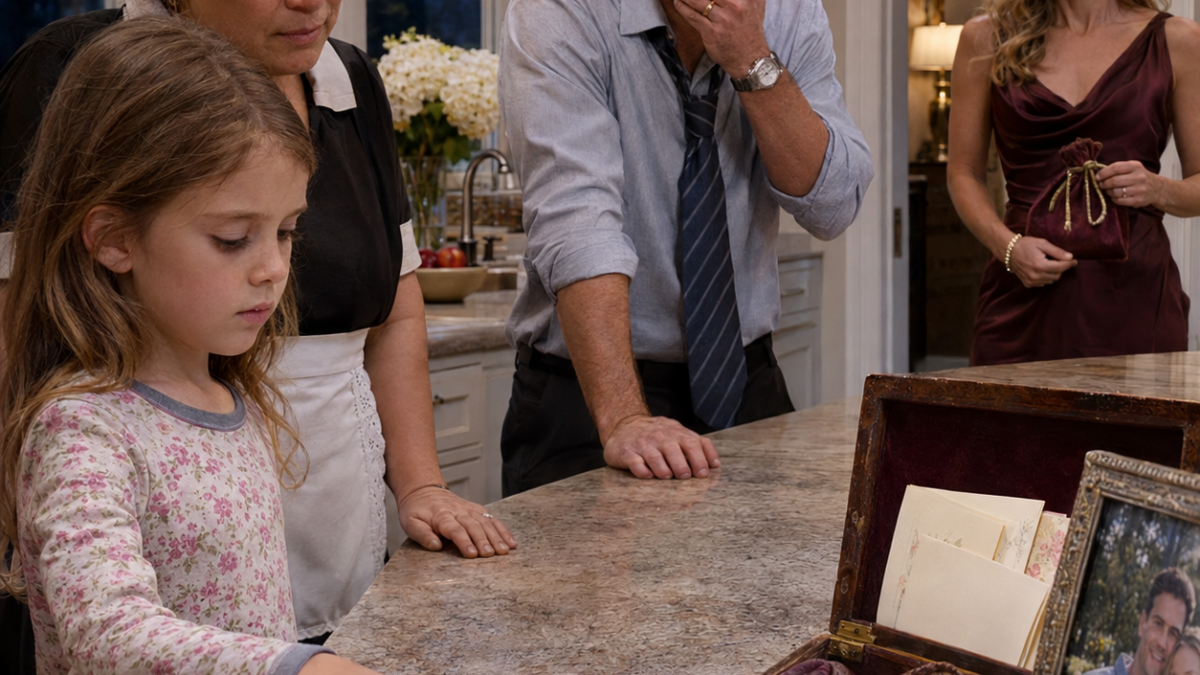
My seven-year-old daughter had barely spoken to me for six weeks when I heard her whisper to our housekeeper, “Please don’t tell Daddy I remember Mom.” Ten minutes later, my girlfriend accused that same woman of stealing my dead wife’s belongings, and for one humiliating moment I almost believed her because believing Vanessa was easier than admitting I had stopped asking why my own child was afraid of me. Then Lucy pressed PLAY on an old bedtime recorder, my wife’s voice filled the kitchen—and beneath it was a much newer voice telling my daughter exactly what she had to stop saying, stop keeping, and stop feeling if she wanted her father to stay well.
My name is Adrian Cole.
Until that afternoon, I thought silence meant healing.
That sentence still makes me ashamed.
My wife, Claire, died nineteen months earlier from pancreatic cancer.
She was thirty-seven.
I was thirty-nine.
Our daughter, Lucy, had just turned six.
People tell you grief is unpredictable.
They say it comes in waves.
They say there is no right way.
They give you books.
Phone numbers.
Therapists.
Meal trains.
Advice.
What nobody explains is how grief changes the meaning of ordinary objects.
A coffee mug becomes unbearable.
A hairbrush becomes sacred.
A scarf becomes a person for five seconds if you hold it close enough.
A voice recorded on a plastic toy can turn a grown man into someone who has to sit on the kitchen floor because his knees suddenly stop working.
Claire had been the noise in our house.
Not loud.
Alive.
Music playing while she cooked.
Questions shouted from one room to another.
Books left open face-down despite my repeated complaints that she was destroying the spine.
Half-finished tea.
Shoes beneath the table.
Notes on the refrigerator.
One said:
BUY MILK.
STOP BUYING THE TERRIBLE COFFEE.
LOVE YOU.
I left that note on the refrigerator for almost a year.
Then one morning it was gone.
Vanessa said the paper had started curling and she thought I wanted the kitchen cleaned up.
I remember standing there staring at the empty magnet.
I remember feeling something unpleasant.
Then I told myself she was right.
It was just paper.
That became the pattern.
One small thing at a time.
Claire’s photograph disappeared from beside the stove.
“Grease will ruin it.”
Her cookbooks went into a cabinet.
“We need counter space.”
Her winter coat left the hallway closet.
“You said we should donate clothes eventually.”
Her shoes vanished from beneath the bench.
“You never use them.”
Every explanation made enough sense by itself.
And I was tired.
That mattered more than I understood.
I was tired of making decisions that felt like betrayals.
Keep this?
Donate that?
Move this picture?
Wash that sweater and erase the last trace of her perfume?
For months, every object felt like a test I could fail.
Then Vanessa came into my life and offered something grief-stricken people are dangerously vulnerable to.
Certainty.
She always seemed to know what was healthy.
What was progress.
What was “too much.”
What Lucy “needed.”
What I “deserved.”
I had met Vanessa eight months after Claire died.
A charity dinner.
She worked in interior design.
She was funny.
Beautiful.
Confident.
When I told her I was a widower, she did not tilt her head and say she was sorry in that soft voice people use as though grief has made you fragile.
She simply said:
“That must have changed everything.”
I liked her immediately for understanding that much.
We started slowly.
Coffee.
Lunch.
Dinner.
I did not introduce her to Lucy for nearly three months.
When I finally did, Vanessa did everything right.
No gifts.
No forced hugs.
No fake enthusiasm.
She sat on the floor while Lucy built a puzzle.
When Lucy mentioned Claire, Vanessa did not flinch.
That was important to me.
For a while, I believed I had found a woman mature enough to understand that loving a widower meant accepting that the dead do not vanish simply because the living arrive.
Eight months later, Vanessa moved into our home.
And over the next few months, my daughter became quieter.
At first, I called it grief.
Then adjustment.
Then school.
Then age.
Then “progress.”
That word.
God, I hate that word now.
Because Lucy stopped crying at dinner.
She stopped asking me to tell stories about Claire.
She stopped bringing the yellow scarf downstairs.
She stopped asking whether Mommy would have liked her drawings.
She stopped saying, “Mom used to…”
And I told myself she was moving forward.
I told her therapist she seemed calmer.
I told my sister Natalie that maybe the worst was finally behind us.
I told Vanessa I thought her presence was helping.
All the while, my seven-year-old daughter had simply learned that silence was safer than grief.
I discovered that on a Tuesday afternoon.
I came home from work nearly two hours early because a meeting had been canceled.
The house was quiet.
I heard voices near the laundry room.
Teresa.
Then Lucy.
I was reaching for the door when my daughter whispered:
“Please don’t tell Daddy I remember her.”
My hand froze on the handle.
Teresa answered softly.
“You are allowed to remember your mother.”
Lucy’s voice became even smaller.
“But Vanessa says it makes him sick.”
My stomach turned.
Teresa said nothing for several seconds.
Then:
“Who told you that?”
“Vanessa.”
“Exactly what did she say?”
Lucy sniffed.
“That Daddy cries after I talk about Mommy.”
I could not breathe.
Because I had.
I had cried in the downstairs bathroom twice.
Once after Lucy asked whether Claire would still recognize us.
Once after she wore the yellow scarf to dinner and smelled so faintly like her mother that I had excused myself before I lost control.
I never knew Lucy had noticed.
Or that someone had used it against her.
I opened the door.
Lucy jumped.
Teresa turned.
And on top of the washing machine lay Claire’s yellow scarf.
PART2
Lucy grabbed it instantly.
Not casually.
Not because she was cold.
She pulled it against her chest like someone might take it away again.
Teresa stood beside the counter holding one of her canvas work bags.
She had worked for us almost five years.
Claire hired her.
Technically she was our housekeeper.
That description had stopped being accurate long ago.
Teresa knew which cereal Lucy would eat when she had a stomachache.
She knew where Claire used to hide Christmas presents.
She knew which plumber would actually answer his phone.
She knew I drank coffee black unless I had been awake all night, in which case I put in too much sugar and pretended not to.
After Claire died, Teresa became one of the few adult constants in Lucy’s life.
That should have made me trust her automatically.
Instead, my first words were:
“Where did that come from?”
Too sharp.
Lucy stepped behind Teresa.
That one movement did something to me.
My daughter had heard my voice and chosen another adult as protection.
Not because I had ever hit her.
Not because I had screamed at her.
Because somewhere inside the last six weeks she had stopped being sure whether her feelings were safe with me.
Teresa looked at me carefully.
“It was in a donation box.”
“Whose?”
She paused.
I already knew.
“Vanessa packed it.”
“When?”
“Last Thursday.”
I looked at Lucy.
Her face was down.
“Why didn’t anyone ask me?”
Teresa’s expression changed.
Not anger.
Disappointment.
“Perhaps we should discuss that where Lucy doesn’t have to listen.”
A correction.
Gentle.
Deserved.
I knelt.
“Lucy.”
Nothing.
“Sweetheart.”
Slowly she looked at me.
“You are not in trouble.”
Her fingers tightened around the scarf.
“Can I keep it?”
I almost said, Of course.
The words stuck.
Because she should never have needed to ask.
“Yes.”
She searched my face.
“Forever?”
“Yes.”
“Even if I cry?”
That question destroyed something in me.
I swallowed.
“Yes.”
“Even downstairs?”
“Yes.”
“At dinner?”
“Yes, baby.”
“Even if it makes you sad?”
My voice broke.
“Yes.”
She stared.
Then asked the question I think about more than any other.
“Will you get sick?”
I had to put one hand on the floor to steady myself.
“No.”
“But Vanessa said—”
“I know.”
I stopped her gently.
“We’re going to talk about that.”
Teresa asked if Lucy wanted a snack.
Lucy nodded.
They went into the kitchen.
I stayed in the laundry room.
There was a cardboard box beside the dryer.
Written in black marker:
DONATE — OLD BEDROOM ITEMS
Old.
That word made me furious.
Not because old belongings cannot be donated.
Because someone had decided that my wife had become a category.
Old bedroom items.
I went into the kitchen.
Lucy sat at the island with apple slices and crackers.
The yellow scarf lay across her lap.
Beside her was a small purple plastic device.
I knew it immediately.
Claire had bought it when Lucy was four.
A children’s story recorder.
You could record your own bedtime stories.
Claire recorded six.
Three actual children’s books.
Two ridiculous stories she invented herself.
And one message she had made during the final month of her life.
I had listened to that last recording exactly once.
The day after the funeral.
I never managed it again.
“What is that doing here?”
I asked.
Teresa answered.
“Same donation box.”
Lucy looked at me.
“I asked her to save it.”
“Of course.”
“I didn’t steal it.”
My chest tightened.
“I know.”
Teresa explained that the recorder would not charge.
She had put it in her bag because she had an older cable at home that might work.
“I was going to tell you tonight.”
“Why tonight?”
Teresa glanced at Lucy.
“Because she asked me not to tell you.”
Lucy looked frightened.
Teresa immediately added:
“And I told her that secrets that make children afraid are not secrets they should have to carry.”
The front door opened.
Vanessa called:
“Adrian?”
Shopping bags.
Keys.
Normal sounds.
Then she entered the kitchen.
She saw me.
Saw Teresa.
Saw Lucy.
Then the yellow scarf.
Her expression changed.
“I thought we agreed to put that away.”
Lucy’s shoulders curled inward.
I noticed.
For the first time, I really noticed.
I stepped between them.
“We need to talk.”
Vanessa looked at Teresa’s bag.
Then the recorder.
Something sharpened in her face.
“I was actually going to speak to you about her.”
“About Teresa?”
“Yes.”
Teresa did not move.
Vanessa placed her shopping bags down.
“I think she’s been taking things.”
I stared.
“What?”
“Your wife’s things.”
Teresa’s eyes widened.
“I have never taken anything.”
Vanessa ignored her.
“I didn’t want to accuse anyone without proof.”
“Which things?”
“Scarves.”
“Jewelry.”
“Small items.”
Teresa said:
“Mr. Cole, I—”
Vanessa cut her off.
“Look in her bag.”
That sentence is something I wish I could take back from my memory.
Because for perhaps three seconds—
three unforgivable seconds—
I looked at Teresa’s bag.
And wondered.
Teresa saw.
Of course she did.
She had known me five years.
Had held Lucy while I identified Claire’s body at the hospital.
Had cooked meals after the funeral because I forgot eating existed.
Had never once given me reason to doubt her.
But doubt only needs a crack.
Vanessa had prepared one.
Teresa slowly placed the bag on the counter.
“Look.”
I immediately felt sick.
“No.”
She held my gaze.
“Look.”
“Teresa—”
“Please.”
So I did.
Charging cable.
Cleaning gloves.
Small pouch of personal items.
Phone.
Wallet.
The recorder.
Nothing else.
Teresa said:
“You should be ashamed that you needed to see.”
No raised voice.
That made it worse.
“I am.”
Vanessa folded her arms.
“That doesn’t prove she hasn’t taken other things.”
I turned.
“Stop.”
“I’m trying to protect you.”
“From what?”
“From someone taking advantage of your grief.”
I looked toward Lucy.
Her face had gone pale.
“Lucy.”
She looked up.
“What has Vanessa been telling you?”
Vanessa immediately interrupted.
“Adrian, don’t interrogate a child.”
I turned so fast she stopped.
“Do not tell me how to speak to my daughter right now.”
“I’m saying she’s upset.”
“She’s been upset for six weeks.”
Vanessa’s mouth tightened.
I pulled a chair close to Lucy and sat.
“You do not have to answer anything right now.”
She held the scarf to her mouth.
“Did Vanessa say remembering Mom makes me sick?”
Lucy nodded.
Vanessa exhaled.
“That is not what I said.”
Lucy flinched.
I saw it.
“No one is angry with you.”
I said.
“Tell me only what you want.”
Lucy whispered:
“She said you cry in the bathroom.”
I could barely speak.
“Yes.”
“I heard you one time.”
“I’m sorry.”
“Was it because of me?”
“No.”
“But I asked about Mom.”
“Yes.”
“And then you cried.”
“Yes.”
“So it was because of me.”
“No.”
I reached toward her.
Stopped before touching.
“Lucy, I cried because I miss your mother.”
“But I made you remember.”
“You did not make me remember her.”
“I remember her every day.”
She stared.
“Every day?”
“Every single day.”
“Does it hurt?”
“Sometimes.”
“Then Vanessa was right.”
“No.”
I leaned closer.
“Pain is not the same thing as danger.”
She did not understand.
I barely did.
Vanessa stepped forward.
“This is exactly the problem.”
I looked at her.
“What?”
“This.”
She gestured toward Lucy.
“The crying.”
“The spiraling.”
“The constant returning to Claire.”
My daughter stopped crying instantly.
That was how practiced she had become.
I saw tears disappear behind her teeth.
Something in me went cold.
“Do not call my daughter’s grief spiraling.”
“Adrian—”
“She is sitting right here.”
“I know that.”
“Then speak like it.”
Vanessa’s face hardened.
“I have been the only person willing to say what everybody else is afraid to say.”
“And what is that?”
“That this house is frozen.”
She pointed toward the scarf.
“The photos.”
“The recordings.”
“The clothes.”
“You.”
“Her.”
“You are raising a child inside a mausoleum.”
Teresa inhaled sharply.
Lucy looked down.
I said:
“Enough.”
“No.”
Vanessa’s voice rose.
“You asked me to help.”
“I did.”
“You told me you couldn’t breathe in this house.”
“I did.”
“You said every room reminded you of Claire.”
“Yes.”
“So I started helping you change things.”
“I never told you to tell Lucy that remembering her mother hurts me.”
Vanessa opened her mouth.
Before she could answer, Lucy reached for the recorder.
“Mom said something.”
Her fingers shook.
She pressed PLAY.
Static.
A click.
Then Claire’s voice filled the kitchen.
Warm.
Alive.
So suddenly alive that my body forgot the nineteen months between us.
“Okay, bug, Daddy is probably pretending he isn’t crying at the ending because he claims dragons are not emotional…”
Lucy smiled.
I gripped the chair.
Teresa lowered her eyes.
Vanessa looked toward the door.
The recording ended.
Another file began automatically.
At first there was only room noise.
A drawer.
Footsteps.
Then Lucy’s present-day voice.
“Can I listen to Mommy?”
Vanessa.
Clear.
Recent.
“Not while your father is home.”
Nobody moved.
Lucy’s recorded voice:
“Why?”
Vanessa:
“Because you know what happens afterward.”
My heart began pounding.
Lucy:
“He cries?”
“Yes.”
Silence.
Then Vanessa said:
“And sometimes he gets headaches. Do you want Daddy getting sick because we keep making him sad?”
My daughter made a sound beside me.
Not quite a sob.
I reached for her.
She moved closer.
On the recording, Lucy whispered:
“No.”
Vanessa’s voice softened.
The dangerous kind of soft.
“Then we have to help him.”
Lucy:
“How?”
“By not dragging him backward.”
My hands started shaking.
“No scarf downstairs.”
“No asking him whether Mommy would like things.”
“No old stories at dinner.”
“And if you feel like crying, you can come to your room or talk to me.”
Lucy:
“Can I talk to Daddy?”
There was a pause.
Then Vanessa said:
“Only if you want to make him sad.”
The file stopped.
Nobody breathed.
Vanessa spoke first.
“That is completely out of context.”
I looked at her.
“What context?”
“Adrian—”
“What possible context makes that okay?”
“I was trying to help her understand boundaries.”
“She’s seven.”
“You were falling apart.”
“Then you should have talked to me.”
“I tried.”
“So you recruited my daughter to manage me?”
“That is not what happened.”
Lucy pressed another button.
Vanessa moved.
Too fast.
“Give me that.”
Teresa stepped between them.
“Don’t.”
Vanessa stared at her.
“Excuse me?”
“Do not take anything from Lucy.”
I stood.
“Sit down, Vanessa.”
She looked at me.
“Adrian.”
“Sit.”
She did.
Lucy pressed PLAY.
This recording began with Vanessa opening something.
A box.
Plastic wrapping.
Then:
Lucy:
“Why are you taking Mom’s things?”
Vanessa:
“Because your father said he wants the house to feel normal again.”
I closed my eyes.
I had said something like that.
Not this.
Not ever this.
Lucy:
“Is Mom not normal?”
“Your mom is gone, sweetheart.”
The words were technically true.
The tone made them cruel.
Lucy:
“I know.”
“Then you have to stop keeping everything like she’s coming back.”
A drawer closed.
Lucy sniffed.
“Good girls help their parents move forward.”
Lucy:
“Am I bad?”
Vanessa sighed.
“I didn’t say that.”
“But you said good girls—”
“Lucy.”
One warning word.
Then silence.
My daughter beside me curled into my side.
The recording continued.
Lucy:
“Can I keep the yellow scarf?”
“We’ll see.”
“Mom gave it to me.”
“Your father bought most of these things.”
I almost stood.
Teresa touched my arm.
Not to calm me.
To remind me Lucy was listening.
Vanessa continued on the recording:
“If Daddy sees you clutching your mother’s things every day, he’s never going to get better.”
Lucy whispered:
“Okay.”
The file ended.
Vanessa was crying now.
I felt nothing useful toward her.
“Adrian, please.”
I raised one hand.
“No.”
“There’s more to that conversation.”
“What more?”
“I comforted her afterward.”
“You created the fear and then comforted her for being afraid.”
“That’s not fair.”
“No.”
I looked at Lucy.
“What happened next?”
She whispered:
“She told me Teresa was making it worse.”
Teresa’s face changed.
Vanessa immediately said:
“I never said that.”
Lucy reached for the recorder again.
This time Vanessa did not move.
The third file began.
A vacuum in the background.
Lucy’s voice:
“Teresa says I can keep the scarf.”
Vanessa:
“Teresa is not your parent.”
“She knew Mom.”
“Exactly.”
A pause.
“She is too attached to the old version of this family.”
Teresa closed her eyes.
Lucy on the recording:
“She loves us.”
“She works here.”
That sentence landed hard.
Because Teresa had been family in every meaningful way that did not require a surname.
Vanessa continued:
“And sometimes people who work in houses start feeling entitled to things that don’t belong to them.”
My eyes went to Teresa.
Her face had gone completely still.
Lucy asked:
“Did she steal?”
Vanessa hesitated.
Then:
“I’m saying you should tell me if you see her taking things.”
There it was.
The seed.
Not an accusation yet.
Preparation.
My daughter’s voice:
“Like what?”
“Jewelry.”
“Clothes.”
“Anything from your mother.”
Lucy said:
“She wouldn’t.”
Vanessa:
“You’re a child. You don’t always know what adults are capable of.”
The recording ended.
I stood.
Vanessa stood too.
“Adrian, I can explain.”
“No.”
“You’re taking snippets—”
“Three recordings.”
“Without context.”
“Stop saying context.”
She flinched.
I rarely raised my voice.
I did then.
“STOP SAYING CONTEXT LIKE THERE IS A VERSION OF THIS WHERE YOU DIDN’T TEACH MY DAUGHTER THAT HER GRIEF WAS MAKING ME SICK.”
Lucy started crying.
I immediately lowered my voice.
“Sorry.”
She grabbed my hand.
That small gesture nearly broke me.
She had been afraid of me.
And still she reached.
I turned back to Vanessa.
“Where is Claire’s necklace?”
Vanessa blinked.
“What?”
“You said Teresa was stealing jewelry.”
“I said things were missing.”
“Which jewelry?”
“The gold pendant.”
The pendant Claire wore almost every day.
A tiny round gold disk with Lucy’s birth date engraved on the back.
I had not noticed it was gone.
That realization made me feel physically ill.
“Where is it?”
Vanessa looked away.
“Safe.”
“What safe?”
“Your office safe.”
I stared.
“You put it there?”
“Yes.”
“Without asking me?”
“It was valuable.”
“Then why imply Teresa had taken jewelry?”
“I didn’t imply that specific necklace.”
I laughed once.
Nothing funny.
“You accused her of stealing my wife’s things while you had moved the most valuable one yourself.”
“I was protecting it.”
“And protecting yourself.”
She crossed her arms.
“That is ridiculous.”
Lucy whispered:
“There’s another one.”
Vanessa closed her eyes.
I looked at my daughter.
“Only if you want.”
Lucy nodded.
She pressed PLAY.
This one was short.
Vanessa’s voice:
“If your dad asks where the necklace went, you didn’t see me put it away.”
Lucy:
“Why?”
“Because grown-up things are complicated.”
“Is Teresa in trouble?”
“Maybe.”
“What did she do?”
“That depends on whether things keep disappearing.”
Then:
“And don’t tell Teresa we talked about this.”
The recording ended.
I stared at Vanessa.
There was nothing left to interpret.
No ambiguous tone.
No incomplete memory.
No grieving child trying to explain adult conversations.
Her own voice.
Her own words.
“You were building a story.”
Vanessa shook her head.
“No.”
“You moved Claire’s things.”
“You told Lucy not to tell me.”
“You suggested Teresa might be responsible.”
“You told my daughter that speaking about her mother could make me sick.”
“I was trying to create boundaries.”
“You were trying to erase competition.”
Vanessa’s face changed.
That landed.
“Claire is dead.”
She whispered.
“I know.”
“Do you?”
Her voice broke.
“Because sometimes I don’t think you do.”
The room went silent.
There it was.
Not excuse.
Truth.
Ugly.
Human.
“You wanted her gone.”
I said.
“I wanted room.”
Vanessa replied.
“For me.”
“There was room.”
“No.”
She shook her head violently.
“There wasn’t.”
“Every holiday was Claire.”
“Every recipe was Claire.”
“Every time Lucy got upset, it was ‘Mom used to do this.’”
“Every room had photographs.”
“Every person compared me to her even when they didn’t say it.”
“I lived in a house where a dead woman was more present than I was.”
“And your solution was to make a seven-year-old afraid to say her mother’s name?”
“I didn’t mean for it to become that.”
“But it did.”
“I thought if things changed slowly—”
“You thought she would forget?”
“No!”
“Then what?”
Vanessa started crying harder.
“I thought she would let me matter.”
Lucy heard that.
I wish she had not.
Because immediately she said:
“You mattered.”
Everyone turned.
Lucy looked terrified.
“But Mom matters too.”
Vanessa covered her mouth.
Lucy continued.
“I liked when you painted my nails.”
“I liked when we made pancakes.”
“I didn’t hate you.”
Her voice cracked.
“Why did I have to stop Mom for you to stay?”
Vanessa collapsed into the chair.
No answer.
There was no answer that could survive that question.
Lucy began crying fully now.
Not silent.
Not hidden.
A child’s cry.
Raw.
Messy.
She buried her face in the yellow scarf.
“I tried.”
She sobbed.
“I tried not to say Mom.”
My heart stopped.
“What?”
“I tried so hard.”
I crouched in front of her.
“Lucy—”
“I didn’t say her at breakfast.”
“I didn’t tell you about the dream.”
“What dream?”
She shook her head.
“I didn’t tell you.”
“That’s okay.”
“I didn’t cry when I found the picture.”
“Sweetheart—”
“I was good.”
God.
I hated that word.
She was crying so hard now she could barely breathe.
“I was good, Daddy.”
I pulled her into my arms.
She came immediately.
“I was trying to make you better.”
I closed my eyes.
Tears came.
“I know.”
“I’m sorry.”
“No.”
I held her tighter.
“No, no, no.”
“I’m sorry I made you sad.”
“You never have to apologize for making me remember Mom.”
“But you cry.”
“I cry because I love her.”
“Is that okay?”
“Yes.”
“Really?”
“Yes.”
“Even now?”
“Especially now.”
I looked over her shoulder.
Vanessa was crying.
Teresa was crying.
I was crying.
Lucy was crying.
And for the first time in six weeks, nobody told my daughter to stop.
I said:
“Crying is allowed in this house.”
Lucy clutched my shirt.
“Always?”
“Always.”
That was the beginning.
Not the ending.
The beginning.
Because the truth does not repair damage simply by appearing.
Sometimes truth only tells you where the damage is.
Then you have to rebuild.
I looked at Vanessa.
“You need to leave.”
Her face went white.
“Tonight?”
“Yes.”
“Adrian, please.”
“No.”
“This is my home too.”
That sentence made something in me settle.
“No.”
I said.
“It is where you have been living.”
She stared.
“This is Lucy’s home.”
“And right now she is afraid to remember her mother inside it.”
Vanessa looked toward Lucy.
“Lucy, I am so sorry.”
I stepped between them.
“No.”
Vanessa blinked.
“She deserves an apology.”
“She does.”
“But not one she has to receive while you’re standing over her crying.”
“I’m not asking her to comfort me.”
“You already trained her to.”
That silenced her.
I continued.
“You do not get to make your guilt her next responsibility.”
Vanessa looked as though I had hit her.
I did not care.
Not then.
“You pack one bag.”
“My sister is coming.”
“You stay somewhere else tonight.”
“We will arrange the rest later.”
“Adrian—”
“Go.”
She went upstairs.
I called Natalie.
My sister answered on the second ring.
“What happened?”
“I need you here.”
That was all I managed.
She heard my voice.
“I’m coming.”
Then I called Dr. Mara Feldman, Lucy’s grief counselor.
Office closed.
I left a message.
She called back seventeen minutes later.
I told her the short version.
She listened.
Then said:
“Do not ask Lucy to give you a complete account tonight.”
“I know.”
“Do you?”
I closed my eyes.
“No.”
“Then listen.”
She gave me instructions.
Keep the evening predictable.
No interrogation.
No asking Lucy to decide what happens to Vanessa.
No making Lucy responsible for adult consequences.
No dramatic promises you cannot control.
Tell her simply:
She is safe.
Her memories are safe.
The adults will handle the rest.
“Can I apologize?”
“Yes.”
“Once.”
“Then prove it.”
That sentence stayed.
Prove it.
Not perform remorse.
Not beg forgiveness from a seven-year-old.
Prove safety through repetition.
Vanessa came downstairs thirty minutes later.
Two suitcases.
Too many things for “one bag.”
I did not argue.
Natalie had arrived.
She stood in the kitchen beside Lucy.
Teresa remained too.
Vanessa stopped at the doorway.
“Adrian.”
I looked at her.
“I made mistakes.”
“Yes.”
“I never meant to hurt Lucy.”
“I believe that.”
Her face softened slightly.
Then I added:
“Intent does not get to erase impact.”
She looked down.
“You’re throwing away everything we had.”
“No.”
I shook my head.
“You did something to a child that I cannot overlook because I love you.”
“Loved.”
The word escaped her.
I said nothing.
She looked toward Lucy.
“I do love you.”
Lucy stared at the scarf.
No response.
Vanessa took one step.
Lucy moved closer to Natalie.
I raised my hand.
“Don’t.”
Vanessa stopped.
“I just want to say goodbye.”
“Not tonight.”
“Adrian—”
“Not tonight.”
Her eyes hardened for the first time.
“So Teresa wins?”
There it was.
Even then.
Competition.
Teresa stared.
“I was never competing with you.”
Vanessa laughed bitterly.
“You have been judging me since I moved in.”
“No.”
Teresa replied.
“I was watching Lucy.”
Silence.
“That is the difference.”
Vanessa looked at me.
“You really trust her over me?”
I answered immediately.
“I trust the recordings.”
That ended it.
The front door closed behind Vanessa.
Lucy looked at me.
“Is she coming back?”
I sat.
“Not tonight.”
“Because of me?”
“No.”
“Because I played it?”
“No.”
“Because Teresa saved the scarf?”
“No.”
She looked confused.
“Then why?”
“Because adults are responsible for their own choices.”
“And Vanessa made choices that made you afraid to talk to me.”
“That is not your fault.”
“Will she be mad?”
“Probably.”
“Is that my fault?”
“No.”
“Are you mad?”
“Yes.”
“At me?”
“No.”
“At Teresa?”
“No.”
“At Vanessa?”
“Yes.”
Lucy’s eyes widened.
I added:
“And that is my feeling to manage.”
“You do not have to fix it.”
She considered that.
Then:
“Can Mom’s picture go back in the kitchen?”
I nearly broke again.
“Yes.”
“Tonight?”
“Yes.”
Natalie dragged a chair beneath the kitchen wall.
We found Claire’s photograph in a hall closet.
Not stored safely.
Just placed behind framed prints Vanessa had purchased.
Claire was laughing in the picture.
Yellow scarf around her neck.
Head turned away from camera.
Natalie held it up.
“Here?”
Lucy shook her head.
“Higher.”
Natalie moved it.
“Here?”
“A little left.”
I laughed through tears.
Lucy looked at me nervously.
I kept laughing.
Not because anything was funny.
Because my daughter was making a decision.
A real one.
Without checking whether it would hurt me.
“Perfect.”
She said.
That photograph went back on the wall at 9:37 p.m.
I remember the time.
Some moments deserve timestamps.
Teresa began gathering her things.
I stopped her.
“I owe you an apology.”
“Not tonight.”
“Yes.”
She looked at me.
“I doubted you.”
“For a moment.”
“That was enough.”
Teresa’s eyes filled.
“I was here when Mrs. Cole died.”
“I know.”
“I helped raise your daughter.”
“I know.”
“I would never steal from her.”
“I know.”
“No.”
She shook her head.
“You know now.”
That hurt.
Correctly.
“I am sorry.”
She looked at me for several seconds.
Then nodded once.
“Tomorrow.”
“What?”
“Tomorrow you can do better.”
No absolution.
No punishment.
Just responsibility.
That was Teresa.
The next morning, we found six boxes in the garage.
Six.
All labeled.
DONATE.
STORAGE.
CLOTHES.
OLD PHOTOS.
MISC.
CLAIRE.
That last one stopped me.
My wife’s entire physical existence compressed into one black-marker label.
Claire.
I sat on the garage floor.
Natalie stood behind me.
Lucy was still asleep.
Teresa had not arrived yet.
I opened the first box.
Claire’s navy sweater.
Her favorite cookbook.
Running shoes.
A chipped blue mug.
Christmas ornaments.
A paperback novel with three pages folded at the corner because she refused bookmarks.
I touched each one.
Then the second box.
Letters.
Photographs.
A hospital bracelet.
I had never seen that bracelet after Claire died.
Lucy’s birth.
Claire had kept it seven years.
Vanessa had put it in a donation box.
I put both hands over my face.
Natalie sat beside me.
“You okay?”
“No.”
Good.
Truth.
“No.”
Natalie waited.
Then:
“How did you not know?”
Not cruel.
Needed.
“I stopped looking.”
“Why?”
“I was tired.”
“That’s not enough.”
“I know.”
“I wanted someone else to decide what was healthy.”
Natalie leaned back against a cabinet.
“Vanessa?”
“Yes.”
“You always did like competent women.”
Despite everything, I laughed once.
Claire had been competent too.
That was probably part of it.
Then Natalie said:
“You know what you cannot do now.”
“What?”
“Make Vanessa the only villain.”
I looked at her.
She continued.
“She did something awful.”
“Yes.”
“But Lucy went quiet in your house.”
“You saw it.”
“You explained it away.”
“You’re her father.”
Every word landed.
“I know.”
“Good.”
Natalie stood.
“Then fix your part.”
That morning, Dr. Feldman met Lucy alone first.
Then me.
She sat across from me with a notebook untouched in her lap.
“I want to say something difficult.”
“Please.”
“Lucy did not simply become quieter.”
“She adapted.”
“To what?”
“To a belief that speaking about her mother caused distress to adults she depended on.”
I felt sick.
“She thought remembering Claire hurt me.”
“Yes.”
“Vanessa told her that.”
“Yes.”
“But Lucy believed it because she had evidence.”
I knew.
My crying.
Leaving dinner.
Avoiding recordings.
Removing myself whenever grief overwhelmed me.
Dr. Feldman continued:
“You did nothing wrong by grieving.”
“But children interpret patterns.”
“If Lucy mentions Mom, Dad disappears to bathroom and returns red-eyed.”
“If Lucy brings scarf downstairs, Vanessa tenses.”
“If Lucy cries, conversation becomes about calming her down.”
“So she learned.”
I looked at floor.
“How do I undo it?”
“You don’t undo.”
“You replace.”
“With what?”
“Evidence.”
“Repeated evidence.”
“When she mentions her mother, you stay.”
“When you cry, you tell her honestly that tears do not mean danger.”
“When she wants an object, you discuss it.”
“When she does not want to talk about Claire, you respect that too.”
“Do not turn remembrance into another obligation.”
I nodded.
Then asked:
“Can I tell her I’m sorry?”
“Yes.”
“Once.”
“Then stop making her reassure you.”
That afternoon, I sat on Lucy’s bedroom floor.
She had Claire’s scarf around her shoulders.
The story recorder beside her.
I said:
“I need to apologize.”
She looked nervous.
“For what?”
“For not noticing you were scared.”
“You were busy.”
“That doesn’t make it okay.”
“You didn’t know.”
“I should have asked better.”
She looked down.
“Are you mad at yourself?”
“Yes.”
Her face tightened.
I immediately added:
“And that is not your job to fix.”
She looked up again.
“I’m going to work on it.”
“I may still cry when we talk about Mom.”
“That is okay.”
“I may still get sad.”
“That is okay.”
“You do not have to stop remembering her to protect me.”
Lucy whispered:
“Promise?”
“Yes.”
“What if you cry a lot?”
“I’ll get tissues.”
A tiny smile.
“What if I cry?”
“I’ll get more tissues.”
“What if we both cry?”
“We buy tissues in bulk.”
She laughed.
It was small.
But real.
That night she slept in my room for the first time in almost a year.
She brought the recorder.
And the scarf.
At 10:14, she asked:
“Daddy?”
“Yes?”
“Do you still remember Mom’s voice without this?”
The question scared me.
Because sometimes I didn’t.
Not perfectly.
There were days I knew Claire’s face but could not reproduce the exact pitch of her laugh.
That terrified me.
“I remember parts.”
Lucy said:
“I do too.”
Then:
“Is that bad?”
“No.”
“What if I forget more?”
“We have recordings.”
“What if those break?”
“We remember stories.”
“What if we forget those?”
I stared at ceiling.
There is no lie kind enough for that question.
“We probably will forget some things.”
Lucy became still.
“Really?”
“Yes.”
She started crying.
I wanted to take it back.
Instead I stayed.
“But forgetting details does not mean we stop loving her.”
“How do you know?”
“Because I already forgot what shoes she wore on our first date.”
Lucy sniffed.
“She probably wore the ugly green ones.”
I laughed.
“They were terrible.”
“See?”
“What?”
“You remembered.”
She smiled through tears.
Then she said:
“Mom hated peas.”
“She hated peas more than reasonable.”
“She said they were little green sadness balls.”
I had forgotten that.
Completely.
And suddenly there it was.
Claire’s voice.
Her face at the dinner table.
Lucy laughing.
A memory returned through my daughter.
I cried.
Lucy went tense.
I noticed immediately.
I said:
“This is a good cry.”
She studied me.
“There are good cries?”
“Apparently.”
She moved closer.
“Can I cry too?”
“Yes.”
So we did.
No one stopped us.
The next several weeks were not a victory montage.
Lucy did not suddenly become cheerful.
I did not suddenly become a perfect father.
There were ugly days.
One morning she refused school because Vanessa used to drive her on Wednesdays.
A routine disappeared.
Another night she woke screaming because she dreamed Claire was in the kitchen but nobody else could see her.
She asked whether Vanessa left because she was “too much.”
Again.
Again.
Again.
I answered.
“No.”
“She left because adults made adult decisions.”
“You did not cause it.”
Sometimes Lucy believed me.
Sometimes not.
Trust is not rebuilt by one correct sentence.
It is built when the sentence remains true the next time fear asks the same question.
Teresa returned.
The first morning back, she stood in the kitchen awkwardly.
Lucy ran to her.
Not dramatic.
Just wrapped both arms around Teresa’s waist.
Teresa closed her eyes.
Held her.
Then Lucy said:
“Daddy knows you didn’t steal.”
Teresa looked at me.
I said:
“Daddy should never have wondered.”
Lucy turned.
“You thought she did?”
There it was.
I could have lied.
“No.”
Easy.
Protect my image.
Instead:
“For a few seconds, yes.”
Lucy’s face changed.
“Why?”
“Because Vanessa said something and I was confused.”
“Did Teresa get mad?”
“Yes.”
Teresa said:
“I was hurt.”
Lucy looked at me sternly.
“You should say sorry.”
“I did.”
“Again.”
Teresa almost smiled.
So I did.
“I am sorry.”
Teresa nodded.
“Accepted.”
That mattered.
Not because I deserved quick forgiveness.
Because Lucy saw adults repair without pretending nothing happened.
I also corrected the accusation where it mattered.
I spoke to our property manager.
The part-time cleaner who sometimes worked with Teresa.
My sister.
Anyone Vanessa had hinted to.
I said plainly:
“Teresa did not steal anything.”
“The missing belongings were moved within the house by Vanessa.”
“I was wrong to entertain the accusation.”
Teresa asked me not to make a bigger spectacle.
I respected that.
Then I gave her a raise.
She looked at the number.
“Money is not an apology.”
“I know.”
“Then why?”
“Because we should have been paying you more anyway.”
She stared.
Then:
“That is true.”
I laughed.
She accepted.
Three days after Vanessa left, she sent twenty-seven text messages.
I answered none.
Then an email.
Long.
Emotional.
She said she had panicked.
Felt invisible.
Felt like Claire was everywhere.
Felt Teresa looked at her like an intruder.
Felt I had invited her into a home but never truly made space.
Some of it was true.
That complicated my anger.
I had not made space well.
I had expected Vanessa to join a family still in active grief without giving any of us language for what that meant.
But explanation was not exoneration.
She had taken her discomfort to the most powerless person in the house.
A seven-year-old.
I agreed to meet once.
Public café.
No Lucy.
Vanessa arrived pale.
Exhausted.
She sat across from me.
For a while neither of us spoke.
Then:
“I’m sorry.”
I waited.
She looked at me.
“I was jealous.”
There.
No euphemism.
“Of Claire.”
“Yes.”
“She’s dead.”
“I know.”
“And somehow that made it worse.”
“How?”
“Because I could never win.”
I shook my head.
“You were never supposed to compete.”
“I know that intellectually.”
“But every day I walked into a house where she was everywhere.”
“Her photo.”
“Her books.”
“Her mug.”
“Her scarf.”
“Her daughter.”
I flinched.
Vanessa immediately said:
“I didn’t mean Lucy like that.”
“But you said it.”
She closed her eyes.
“Yes.”
I leaned back.
“Did you ever love Lucy?”
“Yes.”
The answer came fast.
“I still do.”
“Then explain the recordings.”
Her hands shook.
“I thought I was helping her detach.”
“From her mother?”
“From the grief.”
“They are not the same thing.”
“I know that now.”
“No.”
I said.
“You knew that before.”
She looked at me.
“Did I?”
“Yes.”
“You chose words carefully.”
“You told her not to tell me.”
“You knew I would object.”
That silenced her.
Eventually she whispered:
“Yes.”
I asked:
“Why Teresa?”
Vanessa stared at her coffee.
“She hated me.”
“No, she didn’t.”
“She watched me.”
“She watched Lucy.”
“She corrected me.”
“About what?”
“Small things.”
“Lucy’s bedtime.”
“What foods she liked.”
“How Claire used to handle something.”
“Every correction felt like your wife reaching through another woman.”
I absorbed that.
It was sad.
And still not enough.
“So you made her suspicious.”
“I made comments.”
“You taught Lucy to monitor her.”
Vanessa started crying.
“I was wrong.”
“Yes.”
“I can apologize.”
“To Teresa?”
“Yes.”
“To Lucy?”
“Not directly.”
She looked up.
“Why?”
“Because an apology from you right now would force Lucy to manage your feelings.”
“I would never ask her to forgive me.”
“You wouldn’t have to.”
“She’s seven.”
“She would feel the pressure.”
Vanessa nodded slowly.
“So what do I do?”
“Write.”
“What?”
“A letter.”
“Not emotional.”
“No request for forgiveness.”
“No excuses.”
“Just responsibility.”
She stared at me.
“You sound like her therapist.”
“I’ve been listening.”
Good.
Finally.
Vanessa wrote the letter.
I did not give it to Lucy.
Not then.
I gave it to Dr. Feldman.
We agreed to keep it until Lucy was old enough to decide whether she wanted it.
The letter said:
Lucy,
I told you things that made you believe remembering your mother could hurt your father. That was wrong. You were a child. I was the adult. Your father’s feelings were never your responsibility. I also made you suspicious of Teresa because I was uncomfortable with how close she had been to your mother and your family. That was unfair to both of you. You did nothing wrong. You were never wrong to love or remember your mother.
Vanessa
No “I hope you forgive me.”
No “I miss you.”
No manipulation.
That was the first responsible thing Vanessa did after the damage.
Then I ended the relationship permanently.
She cried.
So did I.
Because endings can be correct and still hurt.
“I loved you.”
She said.
“I loved you too.”
“Is that why this is so hard?”
“Yes.”
“Can we ever—”
“No.”
I did not leave room.
Not because I hated her.
Because Lucy deserved certainty more than Vanessa deserved hope.
Vanessa moved out completely.
I changed the door code.
Not because I thought she would return uninvited.
Because Lucy watched me do it.
I said:
“Vanessa cannot come inside unless I say so.”
Lucy asked:
“Can she come if I say so?”
“No.”
That surprised her.
“Why?”
“Because you are a child.”
“You are not responsible for adult access to this house.”
Another rule removed from her shoulders.
She nodded.
“Okay.”
The six boxes took us three weekends.
We did not keep everything.
That was important.
This did not become a story where grief meant freezing the house forever.
Lucy chose.
I chose.
Together.
Claire’s running shoes?
Donate.
Her winter coat?
Lucy wanted to keep one.
Donate two.
Cookbooks?
Three back in the kitchen.
Others boxed.
Photographs?
Lucy chose five.
One in kitchen.
One in her room.
One in my office.
Two stored.
The chipped blue mug?
Keep.
The hospital bracelet from Lucy’s birth?
Keep.
Old grocery receipts?
Throw away.
Lucy laughed at that.
“Mom kept trash.”
“She was terrible.”
“Don’t say that.”
“You just did.”
“That’s different.”
Good.
The gold necklace stayed in my safe.
But Lucy wrote a note in purple marker and taped it to the inside:
MOM’S NECKLACE.
LUCY GETS TO KNOW WHERE IT IS.
DO NOT MOVE IT WITHOUT ASKING.
SERIOUSLY.
Three underlines.
I photographed the note.
Still have it.
The biggest change came at dinner.
For the first week, Lucy tested us.
“Mom liked spaghetti.”
I said:
“Yes.”
She watched my face.
No collapse.
Next night:
“Mom hated mushrooms.”
“She claimed they tasted like wet umbrellas.”
Lucy smiled.
Third night:
“Mom threw up in this sink when she was sick.”
That one hurt.
I felt it.
Lucy saw.
Her face tightened.
I said:
“That memory is hard.”
She whispered:
“Should I stop?”
“No.”
“I just need a second.”
I breathed.
Stayed.
Did not leave.
Then I said:
“I remember.”
Lucy nodded.
We continued dinner.
Evidence.
Dad gets sad.
Dad stays.
Dad does not get sick.
Mom’s name does not break the house.
Again.
Again.
Again.
One evening Lucy spilled milk.
She burst into tears.
Not because milk.
I knew immediately.
“Hey.”
“I’m sorry.”
“It’s just milk.”
“I ruin everything.”
My heart dropped.
“Who told you that?”
“No one.”
“Lucy.”
She sobbed.
“Vanessa said things were finally getting normal before I started crying again.”
I closed my eyes.
Another sentence.
Another little blade hidden in the last six weeks.
I crouched.
“You do not ruin this house.”
“But people leave.”
There it was.
Claire died.
Vanessa left.
In a child’s mind, pattern.
“I need you to hear something.”
I said.
“Mom did not die because of you.”
“Vanessa did not leave because of you.”
“If Teresa ever retires, that will not be because of you.”
“If Aunt Natalie goes home after visiting, that will not be because of you.”
“Adults move in and out of rooms and houses and lives for adult reasons.”
“You are not the cause of everything.”
Lucy cried.
“Then what am I?”
That question came from nowhere.
I held her face gently.
“My daughter.”
“That’s all you have to be.”
She leaned into me.
For months afterward, Dr. Feldman helped us untangle that belief.
That children control adults by being good enough.
Quiet enough.
Easy enough.
That love can be lost through inconvenience.
It took time.
I began therapy too.
Not because Lucy’s therapist told me to.
Because she asked me one question:
“Who is helping you grieve?”
I listed people.
Natalie.
Friends.
Teresa.
She said:
“No.”
“Who is helping you grieve?”
I had no answer.
I had outsourced Lucy’s grief.
I had managed mine through work.
Then through Vanessa.
I had mistaken activity for processing.
My own therapist, Dr. Bennett, asked me:
“What did Vanessa give you?”
“Company.”
“What else?”
“Structure.”
“What else?”
I resisted.
Then:
“Permission to stop hurting.”
There it was.
“And did you stop?”
“No.”
“So what happened?”
“I started hiding it.”
“And Lucy?”
“She started hiding hers.”
He let silence work.
I hated him.
Useful therapist.
Three months after Vanessa left, Lucy had a family-history project at school.
She came home holding the assignment like bad news.
“What?”
“I need pictures.”
“Okay.”
“One has to be someone important.”
“Easy.”
She looked nervous.
“Can I do Mom?”
The fact she still asked hurt.
“Yes.”
“You sure?”
“Yes.”
“What if I talk about her in class?”
“Yes.”
“What if I cry?”
I smiled.
“What’s our rule?”
She whispered:
“Crying is allowed.”
“Correct.”
“Even at school?”
“Maybe ask the teacher before flooding the classroom.”
She laughed.
We chose the photograph of Claire in the yellow scarf.
Lucy wrote:
MY MOM CLAIRE.
SHE LOVED BOOKS.
SHE HATED PEAS.
SHE MADE UP STORIES.
SHE DIED WHEN I WAS SIX.
I STILL LOVE HER.
I stared at that last line.
Not:
I miss her.
Not:
I am sad.
I still love her.
Present tense.
I cried.
Lucy noticed.
“You okay?”
I smiled.
“Yes.”
She narrowed her eyes.
“Real answer.”
That was new.
She had learned to call out “fine.”
“I’m proud.”
“And sad.”
“Yes.”
“Both?”
“Yes.”
She nodded.
“Okay.”
The project came home weeks later with a note from her teacher:
Lucy spoke beautifully about her mother and her family. She was emotional, but she stayed engaged and seemed proud to share her memories.
I sat in the school parking lot and cried.
Then laughed because apparently I had become a man who cried in parked cars.
Lucy climbed in.
“What?”
“Nothing.”
She stared.
“Dad.”
I held up the project.
“You did good.”
She rolled her eyes.
“I just talked.”
Exactly.
Just talked.
No secret.
No whisper.
No fear.
That year, Mother’s Day was brutal.
School made cards.
Lucy came home angry.
Not crying.
Angry.
“I hate Mother’s Day.”
“Okay.”
“Everyone has moms.”
“Not everyone.”
“You know what I mean.”
“Yes.”
“I don’t want to make a dead-mom card.”
“Then don’t.”
She stared.
“Really?”
“Yes.”
“What do I do instead?”
“Nothing.”
“Teacher says we have to make something.”
I emailed the teacher.
Politely.
Lucy did not make the card.
Instead she and I went for pancakes on Sunday.
We brought one yellow tulip to Claire’s grave.
Lucy put it down.
Then said:
“This is stupid.”
I almost corrected her.
Didn’t.
“What is?”
“Flowers.”
“Mom can’t see them.”
“Probably not.”
“She’d rather have pancakes.”
“Definitely.”
So the next year we skipped cemetery.
We ate pancakes.
Memory does not need rituals it does not want.
That was another lesson.
Teresa stayed with us two more years.
When she retired to help care for her granddaughter, Lucy cried for three days.
This time, she did not think she had caused it.
Progress.
On Teresa’s last afternoon, Lucy came downstairs carrying the yellow scarf.
She held it out.
Teresa shook her head.
“No.”
“You saved it.”
“I saved it for you.”
“Mom liked you.”
“She did.”
“You should have something.”
Teresa’s eyes filled.
“I have you.”
Lucy frowned.
“That is cheesy.”
We all laughed.
Teresa took the scarf anyway.
Two days later she returned.
Professionally cleaned.
Mounted in a shadow box.
With a small photograph of Claire tucked in one corner.
Teresa handed it to Lucy.
“I kept it safe.”
She said.
“But it belongs here.”
Lucy hugged her.
The scarf hangs in Lucy’s room to this day.
Vanessa’s letter stayed in Dr. Feldman’s file for years.
When Lucy was fifteen, she asked about Vanessa.
Not angrily.
Curiously.
“What happened to her?”
“I don’t know much.”
“Do you hate her?”
“No.”
“Why not?”
I thought.
“Because hate would keep her too important.”
Lucy nodded.
“Did she ever say sorry?”
“Yes.”
“To you?”
“Yes.”
“To me?”
“She wrote you a letter.”
Lucy stared.
“You never gave it to me?”
“You were seven.”
“Do you still have it?”
“Dr. Feldman does.”
“Can I read it?”
“Yes.”
We scheduled.
Dr. Feldman handed Lucy the envelope.
Same paper.
Same handwriting.
Lucy read slowly.
Twice.
Then folded it.
I waited.
“What do you think?”
She shrugged.
“She was messed up.”
I almost laughed.
“That is one description.”
“She knew it was wrong.”
“Yes.”
“I’m glad she said that.”
“Do you want to keep the letter?”
“No.”
“Do you want us to return it?”
“No.”
“Throw it out?”
Lucy looked at Dr. Feldman.
“Can I?”
“It is yours.”
Lucy tore it once.
Then again.
Dropped pieces in trash.
No speech.
No forgiveness ceremony.
No dramatic closure.
Just paper.
Gone.
That satisfied me more than any revenge could have.
Vanessa did not need her life destroyed.
She needed to lose access to the people she had hurt.
Lucy did not need to forgive.
She needed freedom from carrying the story.
Teresa did not need public humiliation of Vanessa.
She needed her name cleared.
I did that.
I also learned Vanessa had apologized to Teresa separately.
Teresa never told me details.
When I asked whether she accepted, Teresa said:
“I accepted that she understood.”
“What does that mean?”
“It means forgiveness is my business.”
Fair.
At seventeen, Lucy found the purple recorder again.
Battery dead.
Scratched.
She brought it downstairs.
“We should save these files somewhere.”
Good idea.
We transferred everything.
Claire’s stories.
Her final message.
The remaining Vanessa recording Lucy had chosen to keep.
I asked:
“Do you still want this one?”
Lucy listened for maybe twenty seconds.
Her face did not change much.
Then:
“No.”
“Delete?”
She thought.
“Yes.”
I put my finger on the key.
“Sure?”
“Yes.”
Click.
Gone.
The sound of Vanessa telling her to be quiet disappeared from the device.
Not history.
History remained.
But evidence had finished its work.
Claire’s voice stayed.
That mattered.
We kept the purple recorder itself.
Not as sacred object.
As artifact.
It had held both harm and rescue.
Funny how objects do that.
When Lucy left for college, I thought I was prepared.
I was not.
She packed the scarf shadow box carefully.
Then changed her mind.
“Leave it here.”
“You sure?”
“Yes.”
“Why?”
“So you don’t get weird.”
“I am already weird.”
“True.”
She took Claire’s necklace instead.
By then I had given it to her officially.
She wore it beneath her shirt.
The morning she left, I stood in the driveway.
Did not cry.
Proud.
Then went into her empty room.
Saw the shadow box.
Cried immediately.
Of course.
I sat on her bed.
For a moment, I heard seven-year-old Lucy again:
Please don’t tell Daddy I remember her.
I covered my face.
Not because that still defined us.
Because it nearly had.
There is a difference between guilt and memory.
Guilt says you are forever what you did wrong.
Memory says do not do it again.
My phone rang.
Lucy.
“You okay?”
“Yes.”
Pause.
Then:
“Dad.”
I laughed.
“You caught me.”
“Real answer.”
“I’m sad.”
“Because I left?”
“Yes.”
“Is that bad?”
The question.
Years later.
Still ours.
“No.”
She smiled through the phone.
I could hear it.
“Good.”
Then:
“Mom would’ve packed too many snacks.”
“Absolutely.”
“And cried.”
“Way more than me.”
“She would have called every hour.”
“Minimum.”
We talked forty minutes.
That night, for the first time in years, I listened to Claire’s final recording alone.
Her voice was weaker than I remembered.
But still teasing.
“Hi, bug.”
Then:
“And Adrian, if you are listening, stop pretending you can fix everything.”
I laughed.
She had known.
She told Lucy:
“You never have to stop loving me to love the people who come after me.”
That sentence hit differently now.
Because Vanessa had believed love was a room with limited seats.
For a while, I had acted like grief was too.
Claire had understood something better while dying than we did while living.
Love does not require eviction.
Memory does not compete with the future.
A child does not have to bury the dead twice so the living can feel chosen.
I never remarried.
Not because Claire was “the only one.”
I dislike that kind of romantic mythology now.
People are not replaceable.
That does not mean new love is impossible.
I dated.
Years later.
Carefully.
The difference was simple.
I stopped looking for a woman who could make grief disappear.
Anyone who came into my life would meet Claire through stories.
Through Lucy.
Through me.
Not as competition.
As history.
One woman I dated for a while once asked:
“Do you think you’ll always love Claire?”
I answered:
“Yes.”
She nodded.
Then:
“That makes sense.”
No tension.
No test.
It did not work out for unrelated reasons.
And that was okay.
Not every relationship needs tragedy.
Sometimes two people simply are not right.
Normal endings are gifts too.
Lucy grew.
At twenty-one, she came home one Christmas with a boyfriend named Ben.
He knew about Claire.
Of course.
At dinner, Lucy told the pea story.
“Grandma—well, Mom—used to call peas little green sadness balls.”
Ben laughed.
I looked at Lucy.
For one second, she was seven.
Then twenty-one again.
Claire’s necklace at her throat.
After dinner, Lucy found the recorder.
“Should we make Ben listen to Mom’s dragon story?”
“No.”
Ben said:
“I want to hear it.”
I pointed.
“You do not know what you are agreeing to.”
Claire’s dragon story was eleven minutes of nonsense.
Lucy played it.
We laughed.
At the end, Claire said:
“Good night, bug. Daddy loves you. I love you. Everybody in this house loves you.”
Silence.
Ben wiped his eyes discreetly.
Lucy noticed.
“You okay?”
He laughed.
“Apparently crying is allowed here.”
I stared at my daughter.
She smiled.
That sentence had traveled.
From one terrible night.
Through years.
Into a new generation of people entering our home.
Crying is allowed here.
So is remembering.
So is laughing.
So is moving on without pretending you moved away from everything that came before.
When Lucy was twenty-four, she got engaged.
She asked if she could wear Claire’s necklace at the wedding.
I laughed.
“It belongs to you.”
“I know.”
“Then why ask?”
“Habit.”
She smiled.
“Old habit.”
At the wedding, there was one photograph of Claire on a small table near the entrance.
One.
Not an altar.
Not a shrine.
Beside it, the yellow scarf.
Lucy chose that.
She also asked Teresa to sit in the front row.
Teresa cried before the ceremony even started.
When Lucy walked down the aisle, she carried no symbolic object from Claire.
She did not need to.
Her mother was already everywhere she needed to be.
In her face.
Her humor.
The necklace.
The stories.
The fact that she still hated peas.
At the reception, Lucy gave a short speech.
She thanked me.
Natalie.
Teresa.
Dr. Feldman.
Then she said:
“When I was little, I thought remembering someone could hurt the people still alive.”
The room went quiet.
I knew where this was going.
She looked at me.
“My dad taught me that remembering isn’t the dangerous part.”
“Silence is.”
I cried.
Obviously.
Lucy laughed.
“Still allowed.”
Everyone laughed too.
Then she raised her glass.
“To Mom.”
That was all.
No dramatic explanation.
No Vanessa.
No old scandal.
Claire got the final word in the room simply through her name.
To Mom.
Everyone raised glasses.
Teresa reached for my hand.
I squeezed hers.
Years later, when people ask what became of Vanessa, there is no satisfying catastrophe.
She did not go to prison.
She did not lose everything.
She did not suffer some cinematic punishment.
The satisfying part is this:
She lost the relationship she tried to secure by controlling a child.
She lost access to a home she tried to reshape through fear.
She lost the right to define what Claire’s memory meant.
And most importantly—
she became irrelevant.
Lucy did not grow up obsessed with hating her.
Teresa did not spend years defending herself.
I did not build my identity around revenge.
Vanessa became a lesson.
Then a chapter.
Then barely a footnote.
That, to me, is a better ending than destruction.
Because manipulation survives when the manipulator continues to occupy your emotional center.
We stopped giving her that space.
Teresa’s ending matters too.
She retired.
Spent time with her granddaughter.
Still comes to holidays.
She and Lucy talk every week.
On Teresa’s seventieth birthday, Lucy flew home without telling her.
Teresa opened the door.
Saw Lucy.
Started crying.
Then said:
“I thought you were in Boston.”
Lucy answered:
“You saved my mother’s scarf.”
Teresa rolled her eyes.
“Twenty years and you are still dramatic.”
Lucy hugged her.
“You saved more than that.”
Teresa looked toward me.
I shook my head.
Don’t.
She said nothing.
That was enough.
Dr. Feldman retired eventually.
Lucy sent her a letter.
I never read it.
Not my business.
I did hear one line because Dr. Feldman later told me:
“Lucy wrote that therapy taught her grief does not need permission.”
I liked that.
Natalie still reminds me I once thought seven-year-old silence was progress.
Sisters preserve humility.
Good.
And me?
I got older.
I got better at saying:
“I’m sad.”
“I’m scared.”
“I don’t know.”
The three sentences I avoided most when Claire was alive.
I wish I had learned sooner.
But regret should become instruction, not residence.
The kitchen photograph is still there.
Claire in the yellow scarf.
Not because the house is frozen.
Because she belongs in its history.
There are newer photographs around it.
Lucy graduating.
The wedding.
Teresa holding her granddaughter.
Natalie with terrible hair at Christmas.
Me looking older every year.
Claire’s photograph is no longer the center.
It is part of the wall.
That feels right.
The chipped blue mug eventually broke.
I dropped it.
I stared at the pieces.
Years earlier, I would have panicked.
Tried to glue it.
Saved fragments.
That day, I stood there.
Lucy happened to be visiting.
She looked.
“Oh no.”
I sighed.
“Your mother’s mug.”
“Can it be fixed?”
“Probably.”
“Do you want to?”
I thought.
Then shook my head.
“No.”
Lucy smiled softly.
“Okay.”
We threw it away.
No guilt.
That was healing too.
You do not have to preserve every object to preserve love.
The scarf stayed.
The recordings stayed.
Some things left.
Choice.
Not erasure.
That was the difference.
The purple recorder finally stopped working completely.
By then everything had been digitized.
Lucy wanted to throw it away.
I surprised myself.
“Wait.”
She smiled.
“You sentimental?”
“Apparently.”
We kept it in one box.
Not Claire’s box.
Not Lucy’s.
Family box.
Inside:
Old photos.
School projects.
My retirement plaque.
The recorder.
One of Teresa’s handwritten recipes.
Claire’s hospital bracelet.
Lucy’s note about the necklace.
Pieces of ordinary history.
No hierarchy.
That is what a family archive should be.
Not a shrine.
Not a purge.
A record.
Sometimes I think back to the laundry-room door.
My hand on the handle.
That sentence:
Please don’t tell Daddy I remember her.
If I had arrived five minutes later, maybe Teresa would have told me that evening.
Maybe the recorder would have played another way.
Maybe nothing would have changed that day.
No point living there.
What happened happened.
I heard.
I opened the door.
Then, finally, I listened.
That is the difference.
Listening is not waiting for your turn to speak.
It is being willing to hear something that makes your version of yourself impossible to keep.
I believed I was a good father.
I was a loving father.
Those are not always the same thing in every moment.
Love without attention can still fail someone.
That truth hurt.
It also saved us.
I learned to pay attention not only to Lucy’s words.
Her shoulders.
Her pauses.
The way she checked my face after saying Claire’s name.
The way she stopped asking questions when adults got tense.
Children tell us a great deal before they know how to explain it.
We have to notice.
Years after the wedding, Lucy had a daughter.
Claire.
Middle name.
Not first.
She named the baby Emma Claire.
When she told me, I cried.
Of course.
Lucy laughed.
“Allowed.”
“Shut up.”
I held my granddaughter.
Tiny.
Warm.
She had Lucy’s nose.
Claire’s? Maybe.
We invent resemblance because love likes continuity.
A few months later, Lucy brought Emma to my house.
She stood beneath the kitchen photograph.
“Mom.”
She said softly.
Then looked at her baby.
“That’s your grandma Claire.”
No tragedy.
No whisper.
No warning.
Just introduction.
I stood behind them.
My throat closed.
Lucy looked over.
“You okay?”
I nodded.
Then corrected myself.
“No.”
She smiled.
“Real answer.”
“I wish she could see this.”
“Me too.”
We stood there.
Sad.
Happy.
Both.
That is adulthood.
That is grief after enough years.
Not healing as absence.
Capacity.
Room for more than one truth.
When Emma was three, she pointed at the photograph.
“Who’s that?”
Lucy answered:
“My mommy.”
Emma frowned.
“Where is she?”
Lucy crouched.
“She died before you were born.”
“Why?”
“She got very sick.”
“Do you miss her?”
“Yes.”
“Does Grandpa miss her?”
Lucy looked at me.
I said:
“Yes.”
Emma thought.
Then asked:
“Can we talk about her?”
I closed my eyes.
A laugh escaped before the tears.
Lucy knew exactly why.
She took Emma’s hand.
“Yes.”
“In this house, we can always talk about her.”
That was the ending I did not know I was waiting for.
Not Vanessa leaving.
Not the recordings exposing her.
Not the apology.
Not Teresa being vindicated.
Not even Lucy’s wedding.
A three-year-old asking whether she was allowed to speak the name of a woman she had never met.
And my daughter answering without hesitation:
Yes.
Always.
The silence had ended so completely that the rule no longer belonged only to us.
It had become inheritance.
Not grief.
Permission.
That evening, after Lucy and Emma went home, I sat alone in the kitchen.
Claire’s photograph on the wall.
The house quiet.
But not empty.
There is a difference.
I played one of her recordings.
The dragon story.
Claire laughed halfway through because she forgot her own plot.
I laughed too.
Then cried.
No one rushed in.
No one told me I was going backward.
No one packed the recorder away.
No one removed the photograph.
I sat there until the story ended.
Then I turned off the light.
Before going upstairs, I looked at Claire’s picture.
“Still remember you.”
I said.
Not because I believed she could hear.
Because I could.
And somewhere in Boston, Lucy remembered her too.
Teresa remembered.
Natalie remembered.
A granddaughter was beginning to learn.
Remembering had not made any of us sick.
It had not trapped us.
It had not stopped life.
Life had grown around it.
That was the truth Vanessa had never understood.
That was the truth I almost failed to understand.
Love does not require us to choose between the dead and the living.
Healthy love makes room.
It lets the past remain real without forcing the future to compete.
It lets a child say:
“I miss Mom.”
And a father answer:
“Me too.”
It lets both cry.
Then eat dinner.
Laugh.
Go to school.
Fall in love.
Leave home.
Come back.
Raise children.
Keep living.
If I could speak to the man I was that Tuesday afternoon, standing outside the laundry room with one hand on the door, I would tell him one thing.
Do not be afraid of what you are about to hear.
Be afraid of how long you almost went without hearing it.
Open the door.
Kneel down.
Listen.
And when your daughter asks whether she is allowed to remember her mother—
do not merely say yes.
Build the rest of your life so she never has to ask again.








